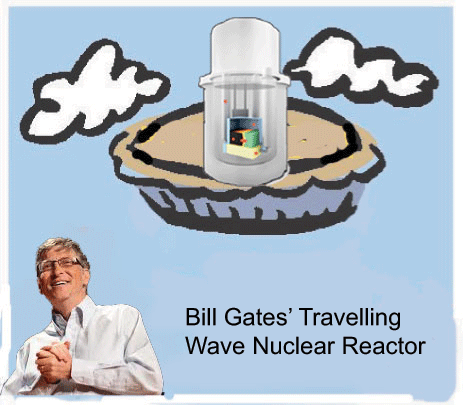
Bill Gates is wrong. Nuclear power will not save the climate.
according to the International Energy Agency (IEA), the largest share of this  [needed greenhouse gas] reduction – almost 40 percent – could come from improved energy efficiency….One third of that could be covered by renewable energies, while in this scenario, nuclear power would account for
 five percent.
..Indeed, in order to actually deliver on such a contribution, hundreds of new reactors would have to be built. “It would involve a gigantic nuclear dimension just to make a minimal contribution to the climate,”
One of the questions that has received very little attention so far is how reliable nuclear power plants will be in a warmer world……This year, reactors were again disconnected from the grid in Europe as a result of heat waves.
|
Bill Gates is wrong. Nuclear power will not save the climate. Beyond Chernobyl and Fukushima, there’s too much speaking against it, German Times, By Christoph von Eichhorn, October 2019 Nuclear power? No, thank you! “That chapter is over,” a spokesperson recently proclaimed. Nuclear power isn’t even a topic anymore, she argued. And this spokesperson wasn’t from some environmental organization or the like; she was representing RWE, one of three large corporations in Germany that still produces electricity from nuclear energy. The two other companies, EnBW and Eon, have issued similar sentiments, pointing to the fact that their priority is now the decommissioning of nuclear power plants and the switch to renewable energies.Just prior to those comments, members of Germany’s industrial community had joined up with the WerteUnion – a group of conservative parliamentarians from the CDU – to suggest longer running times for the remaining German nuclear power plants. But this suggestion was greeted with a unanimous negative response from electricity corporations: the use of nuclear energy in Germany was over, they argued. Period……..
One of the most prominent advocates of a nuclear renaissance is Bill Gates. Late last year, in an open letter to employees, the Microsoft founder wrote: “Nuclear is ideal for dealing with climate change, because it is the only carbon-free, scalable energy source that’s available 24 hours a day.” The problems associated with today’s reactors, he argued, “can be solved through innovation.” In the United States, the question of what to do with nuclear energy is particularly acute. Nuclear fission currently accounts for roughly 11 percent of global electricity, and for around 20 percent in the United States. As the Union of Concerned Scientists (UCS) points out in a recent study, one in every three of the approximately 60 nuclear power plants in the US might have to be shut down in the next few years because they are either too old or are already losing money today…… The decline in the price of renewables is seen as one of the major reasons why nuclear energy is less and less viable. Some states in the US, including Illinois, New Jersey and New York, have nonetheless subsidized unprofitable nuclear power plants in order to secure their operations. This is by all means a daring investment. The UCS estimates that it takes an average of $4 billion to make an unprofitable power plant profitable again. Equipping nuclear reactors to continue running only 20 years longer than planned usually requires expensive modernization measures designed to keep the aging technology in good condition, says Frank Peter, co-head of the think tank Agora Energiewende. “These investments often make no economic sense.” UCS researchers advise against the construction of any new power plants due to the high investment costs. “The fundamental problem is the cost,” says a recent report by the Massachusetts Institute of Technology on the future of nuclear energy. While technologies such as photovoltaics and wind power have consistently become cheaper, new nuclear power plants have become more expensive. The MIT researchers calculated the costs of nuclear energy for several regions and came up with very clear results: In terms of the cost of generating energy, wind and photovoltaics always beat nuclear power. In order to make nuclear competitive again, there would have to be massive changes in the way the technology is developed and managed. To this end, the MIT experts suggest producing components on an assembly line and testing innovative new reactor prototypes in huge “reactor parks” as quickly as possible. They even mention the idea of simplifying regulations for nuclear power plants. In the face of disasters such as those in Chernobyl and Fukushima, it is unlikely that the regimen of having lower safety standards and test sites for non-mature reactors will be able to be enforced in many countries. Even the standardization of reactors has not yet brought the savings many had hoped for. For example, European Pressurized Water Reactors are currently being built in Finland, France and the UK, and in all three cases, the costs and construction time have long since moved beyond the original scope. Construction on the third unit of the nuclear power plant in the Finnish city of Olkiluoto has already taken 10 years longer than planned. According to calculations by Greenpeace, the British plant Hinkley Point C is set to cost €108 billion in subsidies over a period of 35 years. There is one question above all that dominates the discussion, and it revolves around whether or not nuclear energy can even contribute to reducing greenhouse gas emissions. This issue has been investigated by the International Energy Agency, among others. In order to limit global warming to two degrees higher than pre-industrial levels by 2100, world emissions would have to drop from 37 billion tons today to less than five billion tons by 2050. And, according to the International Energy Agency (IEA), the largest share of this reduction – almost 40 percent – could come from improved energy efficiency. One third of that could be covered by renewable energies, while in this scenario, nuclear power would account for five percent. That would involve a reduction of more than one billion tons a year, but it would still not be enough to fundamentally shift the direction in climate policy. Indeed, in order to actually deliver on such a contribution, hundreds of new reactors would have to be built. “It would involve a gigantic nuclear dimension just to make a minimal contribution to the climate,” says Manfred Fischedick, energy expert at the Wuppertal Institute for Climate, Environment and Energy. One of the questions that has received very little attention so far is how reliable nuclear power plants will be in a warmer world. In the drought-plagued summer of 2018, several reactors in Germany and France had to be shut down because the surrounding rivers had overheated. Plant operators were no longer allowed to feed in cooling water so as not to endanger the already stressed ecosystems. This year, reactors were again disconnected from the grid in Europe as a result of heat waves. All we can do now is hope for new reactors, such as the traveling wave reactor sponsored by Bill Gates. Similar to the very slow burn of a glowing cigar, this type of reactor would produce its own fuel and consume it for decades. As it would use old fuel rods from light-water reactors and depleted uranium, this reactor type would be able to eliminate high-level nuclear waste, for which there are still no good solutions – even seven decades after the beginning of the nuclear age. If this concept were to actually work, it would certainly be a blessing. But we would be well-advised not to actually rely on this approach in our efforts to stop global warming. The concept for this type of reactor dates back to the 1950s, and the basic foundations have yet to be fully researched. For example, nuclear engineers would have to deal with enormous amounts of material that is generated in reactions involving temperatures exceeding 500 degrees Celsius. TerraPower is aiming for a prototype by the mid-2020s, and it would most likely take another 10 years to achieve a reactor that actually produces electricity. This is a very important timeframe – one in which we will have to have already shifted gears and set a course for a climate-neutral energy supply. Christoph von Eichhorn is a science editor at the Süddeutsche Zeitung. http://www.german-times.com/bill-gates-is-wrong-nuclear-power-will-not-save-the-climate-beyond-chernobyl-and-fukushima-theres-too-much-speaking-against-it/?fbclid=IwAR3CJIEaecAlk05MgeVsPCuBSCJPEDDweL9RzCxzsVRCeso5_vQPRVjiyy8 |
|
Scrutiny on Britain’s nuclear plans: small modular reactors uncompetitive

UK nuclear: a Golden Egg or Poisoned Chalice? UK nuclear power isunder  intense scrutiny as costs balloon on the controversial Hinkley Point C station in southwest England
Hanford nuclear waste cleanup unlikely ever to be complete, and with a poor safety culture
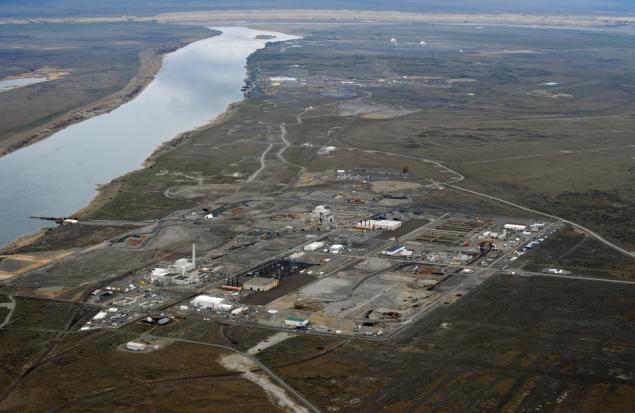
Now, a core piece of the cleanup program nears a milestone after 17 years and $17 billion of construction: startup of the first phase of a new production complex to transform much of Hanford’s 56 million gallons of long-stored radioactive waste from weapons-making into inert glass for safe disposal and future decay.

Nearly 3,000 on-site employees are attached to Hanford’s Tank Waste Treatment and Immobilization Plant, dubbed Vit Plant, including 1,500 trades workers. But as it pushes to meet court-imposed mandates, the project and its innovative technology still face big technical and funding uncertainties and stakeholder skepticism.
The project was conceived nearly two decades ago to pump the radioactive waste from 177 aging underground storage tanks, about 60 of which have leaked to the subsurface and likely into groundwater.
Using vitrification technology, the pumped waste will be heated to 2,100° F and blended with glass-forming materials. The molten mixture then will be poured into stainless steel canisters to cool and solidify, protecting humans and the environment from radioactivity as it dissipates over hundreds to thousands of years……..
the project—based on a design in a 1997 environmental impact statement—has been plagued by technical challenges and delays, and its cost now is about four times its original projection.
Project and government managers and regulators sparred regularly over scope changes, and progress and cost impacts that affected Bechtel performance incentives, most recently for 2018, says an April report in Tri-Cities-Herald, the regional newspaper that has followed the Vit Plant closely since its start. The newspaper notes improvements this year.
Even so, the current project price tag remains a moving target more than a decade from full completion, Years and billions of dollars beyond the original scope, DOE has tamped down expectations as safety and quality assurance issues emerged in the high-level waste (HLW) treatment process, some raised by whistleblowers, including one whose alarms resulted in his firing by site subcontractor URS, now part of AECOM, and a subsequent $4-million wrongful termination judgement.
Originally intending to treat all waste in a single stream, DOE in 2013 moved to create what is now called the Direct-Feed Low-Activity Waste (DFLAW) process, which will allow treatment of what the agency says is 90% of tank waste, which is considered “low-activity”, through a designated vitrification plant as engineers work out technical and design issues for high-level waste treatment.
Last month, Brian Vance, who heads DOE operations at Hanford, told the Washington state Dept. of Ecology in a “notice of serious risk” that his agency “cannot project with certainty” when the high-level waste or pretreatment plants will be completed…….
a congressionally mandated National Academies of Science draft report issued in mid-September raises concerns about the plant’s ability to treat the large amount of site low-level waste in time to meet the deadlines, based on existing design……..
Future Doubts
Tom Carpenter, executive director of leading site watchdog group Hanford Challenge, says no part of the Vit Plant should operate short of a complete and independent inspection that validates and verifies nuclear treatment quality.
“DOE seems to be doing everything in its power to simply walk away from its legal and moral obligations to deal with Hanford’s extraordinary radioactive waste inventories,” he contends, related to the proposed waste reclassification.
“I seriously doubt the HLW facility will ever operate for numerous reasons, and DOE will simply find that the waste is low-level, not high-level, dump concrete on the whole mess and call it good.”
While Carpenter supports vitrifying tank waste, he has concerns with what he calls consistent design flaws, a lack of quality control and a “poor nuclear safety culture” at the site.
Carpenter cites whistleblower lawsuits and reassignment of employees who raised safety concerns.
For DOE and Bechtel, the focus remains on the 90% of waste they say they can successfully treat via the DFLAW process.
“There have been quality issues in the past that slowed things, but those have been addressed,” McCain says. “Having legacy issues behind us was a big burden off the project.”
David Reeploeg, vice president of federal programs for local economic development group TRIDEC, is encouraged with progress made in recent years, but says funding remains the “single biggest challenge.”
Not only does the project need hundreds of millions of dollars every year to meet milestones and agreements, he says it will be “critically important for DOE and its regulators to identify ways to reduce the long-term cost and schedule for Hanford cleanup,” something that the Vit Plant’s history has already shown won’t be an easy task.https://www.enr.com/articles/47720-worst-us-nuclear-waste-dump-inches-closer-to-cleanup
Nuclear Scandal Hangs Over Japan’s Abe as Parliament Opens
 Nuclear Scandal Hangs Over Japan’s Abe as Parliament Opens, By
- Abe seeks to pass U.S. trade pact, work to revise constitution
- Opposition want to use Kansai Electric scandal to derail plans
Questions in parliament about a nuclear payoff scandal threaten to delay Japanese Prime Minister Shinzo Abe’s bid to pass a U.S. trade pact and make progress toward changing the country’s pacifist constitution.
Opposition lawmakers have pledged to hammer Abe’s ruling Liberal Democratic Party as the new session opened Friday over revelations that executives at Kansai Electric Power Co. took millions of dollars in payments, including gold coins hidden in a box of sweets, from a former local official in a town that hosts a major nuclear plant. Minority parties want to summon the executives for questioning in parliament….. (subscribers only) https://www.bloomberg.com/news/articles/2019-10-04/nuclear-scandal-hangs-over-japan-s-abe-as-parliament-opens
India and Pakistan sliding toward potential nuclear war
 Kashmir crackdown: A warning of nuclear war between India and Pakistan, Axios, Dave Lawler $ Oct 19, India and Pakistan are sliding toward potential nuclear war, according to the president of Pakistani-controlled Kashmir. The warning comes as Pakistan attempts to rally global outrage against its neighbor and rival.
Catch up quick: On Aug. 5, India revoked the constitutional autonomy of Jammu and Kashmir — the state it controls within the disputed Himalayan territory — while instituting a communications blackout and a curfew enforced by hundreds of thousands of troops.
A new process supplies medical isotope 99Mo: no need for a nuclear reactor

Nuclear fusion process could create US supply of Mo-99 https://www.dotmed.com/news/story/48759, by Lisa Chamoff, Contributing Reporter | October 04, 2019 A new nuclear fusion process may shore up supply of the rapidly-decaying, cancer-detecting radioisotope molybdenum-99 (Mo-99) without the need for reactor facilities.
Nuclear technology company Phoenix and SHINE Medical Technologies, a medical isotope production company, this week announced that in July it surpassed a record for a nuclear fusion reaction in a steady-state system.
The reaction at SHINE’s medical isotope production facility produced 46 trillion neutrons per second, surpassing the previous record set at a California facility by nearly 25 percent.
The companies say the eight Phoenix systems will help address limited accessibility to nuclear reactors for producing medical isotopes, used for cardiac stress testing and cancer detection, and meet a third of the global demand.
The companies expect to produce 20 million doses per year once the plant is up and running. SHINE has already sent Mo-99 samples produced by this method to GE Healthcare to be tested and verified.
Mo-99 is created by accelerating a particle beam into a target and generating a nuclear fusion reaction. The company developed a proprietary nuclear fusion process that uses a gaseous target instead of solid one, said Evan Sengbusch, president of Phoenix.
Nuclear waste awareness tour begins

 stories/nuclear-waste-awareness-tour-begins,586462 October 3, 2019
BRATTLEBORO — Leona Morgan isn’t in Vermont this week for leaf peeping, but for environmental justice.
 The Navajo woman from Albuquerque, N.M., is an indigenous community organizer and she wants the people of Vermont and New England what getting rid of the nuclear waste from the Vermont Yankee nuclear power plant means to her community.
Morgan, along with a group of anti-nuclear activists are touring New England this week to draw attention to what they concede is an oft-forgotten or ignored problem — where does the nuclear waste go?
Pulling a giant wooden mock cask that was built to resemble a cask used to transport — not store — high level radioactive waste, the activists are hoping the large dumbbell-looking prop will prompt discussion of the unsolved issue.
“It’s our job to wake them up,” Deb Katz, the executive director of the Citizens Awareness Network, said of residents.
Morgan said the nuclear industry — whether it is the existing 14,000-acre Waste Control Specialties (WCS) facility in west Texas, or its proposed expansion or a proposed Holtec nuclear storage facility just over the border in New Mexico — was overwhelming the communities in that region.
She said putting nuclear waste in that area, which she said is geologically unstable from a huge amount of oil and gas drilling, is dangerous and racist. The area is already home to the U.S. Department of Energy’s waste isolation pilot plant, which houses government-generated nuclear waste, including low-level plutonium. All those projects, Morgan said, are within 50 miles.
It is a largely Hispanic and Navajo area, she said, and the companies and politicians who are behind the nuclear project are “old, white men.”
“We are specifically targeted,” Morgan said.
The six-day tour has been organized by Citizens Awareness Network, a regional anti-nuclear organization based in Shelburne Falls, Mass. Katz and others made a brief stopover in Brattleboro on Wednesday with its large mock canister, as the group was making its way from the Vermont Law School to Greenfield, Mass., for a rally and concert.
“It is vital that citizens understand the issues and what’s at stake,” said Katz. “Until the criteria of sound science and environmental justice are the drivers behind any disposition, high-level nuclear waste must remain onsite,” she said.
All three members of Vermont’s congressional delegation have supported consolidated interim storage facilities, Katz said. Their support, she said, is based on the desire to get the high-level radioactive waste out of Vermont.
But she said that inherently unfair and short-sighted.
The stalled construction of a national depository at Yucca Mountain outside Las Vegas is still stalled, despite statements by President Donald Trump that he supports it. The project had been suspended during the Obama administration.
“This is an old bad idea,” said Diane D’Arrigo, the radioactive waste project director for the Nuclear Information and Resource Service in Washington, D.C.
Vermont Yankee emptied its spent fuel pool and completed the transfer of its thousands of spent fuel rods — the most dangerous of the radioactive waste — last year into a storage facility on the grounds of Vermont Yankee in Vernon. The fuel is now in large concrete and steel canisters called dry cask storage and will remain there until the federal Department of Energy builds a nuclear waste facility to store it for the thousands of years it remains dangerous. Yucca Mountain was once targeted as that facility.
But the anti-nuclear activists said a new push for interim waste storage facilities in west Texas and eastern New Mexico would be dangerous and that the nuclear fuel “should only be moved once.”
Moving the waste comes with many complications and potential dangers, Katz said, not to mention that thousands of shipments would come from dozens of nuclear power plants that have either shut down or will be shutting down.
The “Environmental Justice and Nuclear Waste Tour” started in Burlington on Tuesday, and made appearances in Montpelier, South Royalton, Brattleboro and Greenfield, Mass., on Wednesday. On Thursday, there is a legislative briefing at the Massachusetts State House, and afterwards a series of meetings in Massachusetts communities near the now-closed Pilgrim nuclear station. Then on Sunday, it’s back to western Massachusetts for an event and concert in Florence, Mass.
Contact Susan Smallheer at ssmallheer@reformer.com or at 802 254-2311, ext. 154.
International Atomic Energy Agency reports improved cooperation with Iran
|
Nuclear watchdog reports improved cooperation with Iran https://thehill.com/policy/international/464352-nuclear-watchdog-reports-improved-cooperation-with-iran
BY JOHN BOWDEN – 10/04/19, The International Atomic Energy Agency (IAEA) on Friday said Iranian officials have increased their cooperation with the United Nations agency after the organization raised questions reportedly related to traces of uranium found at an undeclared site.Reuters reported that the IAEA’s acting chief said progress being made between Iran’s government and U.N. officials was a “step in the right direction.” “Some engagement is ongoing, and this engagement is currently taking place,” acting IAEA chief Cornel Feruta said, adding, “This is an ongoing process … I cannot prejudge how this is going to end. The engagement doesn’t mean that the issues are completely addressed, but it’s a step in the right direction.” The IAEA is responsible for judging whether a facility Iran’s government claims was used for carpet-cleaning was actually a secret nuclear facility as alleged by Israel’s prime minister, Benjamin Netanyahu. Iran’s government has also been accused for weeks of stonewalling IAEA inspectors attempting to examine environmental samples of the facility. The status of Iran’s nuclear program is a controversial topic and led to the Trump administration abandoning a 2015 nuclear agreement signed by the U.S. and Iran, claiming that the Iranian government had forsaken the spirit and letter of the agreement. Iran has denied that it violated the agreement prior to the U.S.’s exit, and has refused to negotiate with the Trump administration following the president’s decision. Its government has also warned European nations still bound to the deal that Iran will abandon the agreement and ramp up uranium enrichment if Iran is not allowed access to the global economy. The U.S. and Iran, meanwhile, have seen significantly increased tensions for weeks following the destruction of a U.S. surveillance drone and other attacks in the region blamed on Iranian forces, including the destruction of oil tankers and Saudi oil facilities. |
|
Bribery scandals in Japan’s nuclear power sector
Executives in Japan Nuclear Scandal Blame Dead Local Official. By Aaron Clark. Stephen Stapczynski, and Shiho Takezawa news,com,au October 3, 2019
-
Kansai Electric officials took $3 million in cash and gifts
- Payments came from deputy mayor of town hosting nuclear plant
Top Japanese utility executives who admitted to taking illicit payments related to their nuclear business sought to deflect blame onto a deceased local official and vowed to stay in their roles, potentially deepening the nation’s latest corporate governance scandal.
Kansai Electric Power Co.’s Chairman Makoto Yagi and President Shigeki Iwane spent more than three hours Wednesday detailing in a public briefing how they and 18 other executives received nearly 320 million yen ($3 million) in cash and gifts, including suits and gold, from a former deputy mayor in the western town Takahama, which hosts the company’s biggest nuclear plant. They didn’t return the payments because the official, who died in March at the age of 90, wielded influence and intimidated employees, they said.
The Kansai Electric payments are the latest-high profile exposure of corporate malfeasance in Japan, which include the arrest last year of Nissan Motor Co.’s chairman for concealing more than $140 million in compensation and Kobe Steel Ltd.’s indictment in 2018 for falsifying quality data. It also follows the acquittal last month of executives charged with negligence related to the Fukushima meltdown, which has loomed in the background of the nation’s worst nuclear scandal since the 2011 disaster…….
Nuclear Nerve
That the drama is playing out in the nuclear power industry touches a raw nerve in Japan, where the technology has been shunned since the trauma of Fukushima. Public opinion has consistently been opposed to restarting the nation’s reactor fleet, once the biggest source of atomic power in Asia, as trust in the both the industry and regulators hasn’t recovered………
Gold, Suits, Cash
The company also revealed new details Wednesday of the gifts and cash Moriyama gave to executives from 2006 to 2018. Satoshi Suzuki, director of the utility’s nuclear power division, received the most at 123.7 million yen, which included 500 grams of gold and 14 suits, as well as $35,000 in U.S. currency.
Kyodo News also reported that Yoshida Kaihatsu, a local company that paid Moriyama money that was funneled to officials, won contracts worth at least 2.5 billion yen for work at Kansai’s nuclear power plant. Moriyama was also a part-time adviser for a Kansai Electric unit from 1987 through December last year. https://www.news.com.au/technology/environment/climate-change/climate-action-summit-greta-thunberg-rips-into-leaders-over-mass-extinction/news-story/2c8d4aac13cb60507a41b48c2ef3d8f2
USA’s stranded plutonium nuclear wastes
Post & Courier 30th Sept 2019 Dogged by faulty assumptions and lacking political will, the federal
 government squandered billions of dollars and an opportunity to dispose of the nation’s most dangerous nuclear material by chasing a massive construction project in South Carolina that was doomed from the start.
Instead, the U.S. Department of Energy stranded a huge stockpile of plutonium — the lethal metal at the core of nuclear weapons — at a federal installation on the state’s wooded western edge, with plans to
leave it there for decades. https://www.postandcourier.com/news/how-the-us-government-wasted-billion-and-stranded-tons-of/article_24bc000a-da1d-11e9-bb44-87644323c969.html
.wordpress.com/
Nuclear company EDF denounced by France’s economy minister as a “state within a state”
 Times, 30 Sept 19 President Macron’s economy minister has accused the French state-owned
company building Britain’s new nuclear plant of “unacceptable” failings as he threatened sweeping change at the group.
denounced cost overruns and delays in the construction of the Hinkley Point C nuclear reactor in Somerset and similar projects in Flamanville in Normandy and Olkiluoto in Finland. “We will not accept this drift month after month, year after year,” Mr Le Maire said.
four-year term as chief executive of EDF by Mr Macron in February. Mr Le Maire said that he had ordered an independent audit into the French nuclear industry, which provides about 75 per cent of nation’s electricity, and into the decision to build a new generation of the increasingly questioned European pressurised reactors in Britain, France, Finland and China.
that Hinkley Point C would cost £3 billion more than expected and may not meet its latest launch date of 2025, which is already eight years late.
https://www.thetimes.co.uk/article/2a8ccefa-e2e8-11e9-bc3e-661ff0438ed9
North Korea launches missile into waters near Japan days before nuclear talks set to resume with U.S.
LA Times By VICTORIA KIM, STAFF WRITER OCT. 1, 2019, SEOUL — North Korea fired a ballistic missile Wednesday that landed in the Sea of Japan, also known as the East Sea, less than 200 miles from the Japanese coast, according to the South Korean military and the Japanese coast guard.
The launch came a day after North Korea said it would resume nuclear talks with the U.S. this weekend. The last time a North Korean missile landed in Japan’s exclusive economic zone was LA Times November 2017……. https://www.latimes.com/world-nation/story/2019-10-01/north-korea-launches-missile-into-waters-near-japan-days-before-nuclear-talks-set-to-resume-with-u-s
UK energy chief advises that Hinkley Point nuclear project should be scrapped
Telegraph 28th Sept 2019 Scrap Hinkley Point: nuclear plant is expensive and out of date, says Ovo Energy chief, Britain’s next nuclear power plant should be scrapped because it is wastefully expensive and out of date, according to the boss of Ovo Energy. The industry should instead look to the future with ever-cheaper renewable energy, said Stephen Fitzpatrick, the founder and chief executive of the group that will soon be the UK’s second-biggest supplier as Ovo acquires SSE’s consumer business.
“We should just call it a day. I thought at the time the deal was struck at £92.50 per megawatt
hour (MWh), inflation-linked, that it was a bad deal for customers. Unfortunately the technology, the design it is based on, is unproven,” he said. “Looking at the cost for customers of renewables, solar, and wind, the cost just keeps coming down. The cost for nuclear keeps going up.
It strikes me that this does not represent value for money for consumers, never more so than this week when the cost went up by £2.9bn.” The Hinkley Point C reactor will cost up to £22.5bn to build as costs keep rising above initial plans.
Mr Fitzpatrick would prefer the industry to invest in restructuring the energy network to handle more renewables, including the variable supply of wind and solar. This could be handled in
part with a “smart network” using batteries to handle shifting supply and demand.
“If you think about the £39/MWh that was achieved at the last auction for offshore wind, and when Hinkley Point goes live it is going to be about £100 more per MWh some time in the late 2020s,” he said. “If we make smart decisions and focus on value for money and what is best for the end consumer, I am quite sure we can keep costs [of decarbonising thenetwork] under control.” https://www.telegraph.co.uk/business/2019/09/28/scrap-hinkley-point-nuclear-plant-expensive-date-says-ovo-energy/
Nuclear waste is piling up – governments need to stop dithering and take action
Nuclear waste is piling up – governments need to stop dithering and take action https://theconversation.com/nuclear-waste-is-piling-up-governments-need-to-stop-dithering-and-take-action-123977 Claire Corkhill
Research Fellow in nuclear waste disposal, University of SheffieldSeptember 26, 2019 The UK government has launched a process to find a volunteer community who would be willing to host a £12 billion geological disposal facility for nuclear waste. It’s about time – the initiative comes after seven decades of successive governments putting the decision off. The situation is similar in many other countries, with dangerous nuclear material being stored unsafely because of political inaction.
In the UK, nuclear waste is currently kept in safe but high-maintenance conditions, with some canisters deteriorating, at Sellafield in Cumbria. This is costing tax payers £3 billion per year.
The new geological disposal facility is a vast underground bunker, to be buried around 500m below the Earth’s surface. It is intended to safely store approximately one Wembley Stadium’s worth of highly radioactive waste that has been generated over the past 70 years. Here, it will be isolated from the biosphere – and human populations – for the 100,000 years it will take for the radioactivity to decay to safe levels.
Radioactive waste is generated from nuclear energy, military uses and also the extensive use of isotopes in medicine. The most highly radioactive portion comes from spent nuclear fuel – the used uranium fuel from inside nuclear reactors and the materials produced through recycling of spent nuclear fuel. The latter includes fission products that are transformed to glass and plutonium (which is currently neither a resource nor a waste).
These materials contain radioactive isotopes that have half-lives (the amount of time taken for half of the radioactivity to decay) of tens to hundreds of thousands of years. This means any storage solution must be extremely long-lived. That’s a significant challenge – the oldest known man-made materials are of the order of several thousands of years old.
The principle of geological disposal of nuclear waste is to use multiple barriers, much like a set of Russian Dolls. This makes it possible to contain the waste and prevent it from meeting with groundwater which would start to dissolve it – releasing radioactive materials to the environment. Engineered barriers are intended to contain the waste until most of the radioactivity has decayed.
If the disposal vaults are dug in a good, impermeable rock (such as clay or mudstone), the geology provides a natural barrier that will isolate the waste from the biosphere. This will reduce the likelihood of human intrusion into the facility. Being several hundreds of metres below the ground, there will also be long transport pathways to delay any significant migration of radioactive materials from the waste to the biosphere until far into the future.
International issue
The UK is not the only country opting for this solution. In Finland, construction of the Onkalo facility has already begun. A licence application has even been made to start disposing of spent nuclear fuel.
But progress in other nations has stalled: in France protesters surround the disposal facility in the village of Bure, while in Sweden, the Environmental Court has rejected the construction licence for a facility near the coastal town of Forsmark, due to safety concerns over the corrosion resistance of copper canisters.
In the USA, senators are suing the Federal Government for not building a disposal facility. The lack of a disposal facility has meant that thousands of metric tonnes of spent nuclear fuel, have built up – stored temporarily in dry casks at sites across the country.
The controversy is expected to extend to the UK’s new geological disposal siting process. Recent media articles have criticised the idea that see all areas of the UK – including national parks – could be suitable to host a facility. A previous siting process, launched in 2003, failed to find a site. Although two local authorities from near the Sellafield site came forward, Cumbria County Council was able to veto the vote.
The government hopes that new communities will step forward in this second process. It has proposed an incentive package offering communities £1m per year for having discussions about hosting the facility. This will increase to £2.5m per year when geological investigations are undertaken.
But environmentalists are likely to object, as they fear a better storage facility will only lead to more nuclear power stations. And indeed, Oliver Eden, former parliamentary undersecretary for energy under Theresa May’s government between 2017-2019, highlighted the disposal facility as being “the key to the future of the UK’s new nuclear build programme … providing a safe and secure way to dispose of the waste new nuclear reactors produce.”
Whatever the outcome of the current siting process, something must be done about nuclear waste. Leaving it for our grandchildren to deal with is simply not fair. What’s more, we can’t assume that future civilisations will be able to keep it safe.
The first step on the road to a solution is to initiate a public conversation about what we should do with the world’s most dangerous materials in the long term. If you are interested, a good first step could be to watch the video above and start discussing the topic with your friends, family and local authorities.
The 2019 World Nuclear Industry Status Report (WNISR)
with a summary on page 19, and a country by country analysis p 200 – 208, closing with a devastating conclusion on SMRs.
www.global2000.at/events/conference-climate-crisis
1 This Month
19 November – Webinar – The Reality of Reprocessing
Time: 11:00 AM Pacific Time (US & Canada) / 2:00 PM Eastern / 7:00 PM UK / 8:00 PM CET
Register for the Zoom Event Here

Tell Congress: Prevent Nuclear Catastrophe in Iran

Tell Congress: Prevent Nuclear Catastrophe in Iran

Read the Public Inquiry Report, the Commissioners’ report, Surrendering Australia: The AUKUS Deception is available to download for free at aukuspublicinquiry.com. Or just watch the replay of the National Press Club Luncheon.


Shut down the radiation-damaged Heysham nuclear reactors now
To see nuclear-related stories in greater depth and intensity – go to https://nuclearinformation.wordpress.com

Say No to NASA’s Reckless Nuclear Reactor on the Moon
Say No to NASA’s Reckless Nuclear Reactor on the Moon
-
Archives
- November 2026 (190)
- October 2026 (302)
- September 2026 (339)
- August 2026 (330)
- July 2026 (355)
- June 2026 (287)
- May 2026 (306)
- April 2026 (356)
- March 2026 (251)
- February 2026 (267)
- January 2026 (308)
- December 2025 (358)
-
Categories
- 1
- 1 NUCLEAR ISSUES
- business and costs
- climate change
- culture and arts
- ENERGY
- environment
- health
- history
- indigenous issues
- Legal
- marketing of nuclear
- media
- opposition to nuclear
- PERSONAL STORIES
- politics
- politics international
- Religion and ethics
- safety
- secrets,lies and civil liberties
- spinbuster
- technology
- Uranium
- wastes
- weapons and war
- Women
- 2 WORLD
- ACTION
- AFRICA
- Atrocities
- AUSTRALIA
- Christina's notes
- Christina's themes
- culture and arts
- Events
- Fuk 2022
- Fuk 2023
- Fukushima 2017
- Fukushima 2018
- fukushima 2019
- Fukushima 2020
- Fukushima 2021
- general
- global warming
- Humour (God we need it)
- Nuclear
- RARE EARTHS
- Reference
- resources – print
- Resources -audiovicual
- Weekly Newsletter
- World
- World Nuclear
- YouTube
-
RSS
Entries RSS
Comments RSS

