A rude concrete sign indicates a deadly truth about nuclear radiation and cancer

|
Nuclear tomb leaking radioactive waste into oceans has ‘rude message’ beneath crumbling shell https://www.thesun.co.uk/tech/9986929/nuclear-tomb-radioactive-waste-message-shell/
Harry Pettit, Senior Digital Technology and Science Reporter 23 Sep 2019, A CONCRETE tomb that’s haemorrhaging radioactive waste into the world’s oceans has a very rude hidden message beneath its shell.  The men who built the dome in the 1970s sculpted a hand flipping the middle finger, which they buried inside the structure before it was sealed and left to crumble on a remote Pacific island. The Enewetak atoll in the South Pacific was used by the US government to test 30 megatons of atomic weapons – equivalent to 2,000 Hiroshima bombs – between 1948 and 1958. After 43 nuclear detonations, thousands of people were sent to clean the islands, shifting 3million cubic feet of contaminated soil and debris into a blast crater. He said: “The dome is a monumental size, so we wanted to put something inside there, but this was during the Cold War so the idea of an official time capsule wasn’t going to work. “So… a rubber glove? Well, we had plenty of those so that worked.” But if Mr Griego and his comrades left their mark on the island, it also left its mark on them. Our members were dying,” he said. “Dying of cancer. Given the damage wrought by the dome, the middle-finger message turned out to be more apt than anyone realised at the time. “The Runit salute turned out to be the right message in several ways,” said Paul, 62.
“One message is what’s happened to the men that were actually tasked to build this dome? What happens now to the Marshallese, the islanders? “What happens now to the Pacific Ocean, to the rest of the world? The dome is leaking and it has been leaking from the beginning.” The US government does not recognise those who worked to clean Enewetak as atomic veterans, so they cannot receive radiation exposure compensation from the Department of Veterans Affairs. |
|
Leaders of world’s largest emitting economies do not have real plans to meet goal of net zero emissions
The UN asked for climate plans. Major economies failed to answer Climate Change News, 24/09/2019, Delivering on a goal of net zero emissions is a ‘daunting’, ‘civilisational’ task, which a summit on Monday showed leaders do not have plans to meet, By Chloé Farand
World leaders were asked to come to the UN with concrete plans to cut emissions to net zero.
But on Monday, the presidents and prime ministers of the world’s largest emitting economies stumbled. Signalling just how difficult the work of removing CO2 will be compared to setting targets.
The tougher 1.5C goal of the Paris Agreement, backed by UN chief António Guterres and the majority of the world’s nations, requires achieving net zero global emissions by 2050.
Guterres asked leaders to come to UN headquarters in New York and tell the world how they would meet that goal.
A coalition of 77 smaller countries said they were committed to achieve net zero emissions by 2050 and 70 countries expressed their intention to set a more ambitious climate plan next year, evidence of “a boost of momentum and ambition,” Guterres said in his closing remarks.
While there were “inspiring signs of progress”, with “the private sector and subnational actors moving faster than national governments”, “most of the major economies fell woefully short” of enhancing their ambition, said Andrew Steer, president and CEO of the World Resources Institute.
“Much more it still needed to reach carbon neutrality by 2050,” Guterres warned.
The “how” of the question, which requires countries to integrate climate action into economy-wide policies, was left unanswered. Fully decarbonising the world economy is a gargantuan task, even for the world’s richest countries.
The path to net zero emissions “is something we are just discovering,” former French climate ambassador and CEO of the European Climate Foundation Laurence Tubiana told CHN. But the top levels of government are not yet engaged.
“I haven’t met any leaders who know… how to get there. Most [countries] haven’t started really seriously” and most leaders “don’t have a clue” how they will meet a 1.5C compatible target.
According to Elina Bardram, head of unit for climate action at the EU Commission, while “numbers and slogans are very easy to go by but the hard work of actually implementing is what drives the process forward”.
Both the UK and France, which have already legislated to become carbon neutral by 2050, have been warned by their climate advisors that without new and robust carbon-cutting measures, they won’t be on track to meet the 2050 goal……….https://www.climatechangenews.com/2019/09/24/un-asked-climate-plans-major-economies-failed-answer/
Nuclear power is on the skids: it’s really not going to help address climate change
 some of the groups advocating for strong action to address climate change question whether more nuclear energy is necessary. Over the past 20 years, as nuclear power generation has declined, renewable sources have expanded by some 580 GW—more than the output of all the world’s nuclear power plants—to make up the difference.
Globally, nuclear power is on the skids. Its contribution to electricity generation is in a free fall, dropping from a mid-1990s peak of about 18% of worldwide electricity capacity to 10% today, according to the International Energy Agency (IEA). The agency expects the downward spiral to continue, hitting 5% by 2040 unless governments around the world intervene…….
In the US, the European Union, and Russia, plants average 35 years or more in age, nearing their designed lifetimes of 40 years.
There is more potential for nuclear energy expansion in developing nations with state-controlled, centralized economies. China is the world’s third-largest nuclear generator, with 45 reactors capable of producing 46 GW of electricity. China also has the biggest plans for new power plants, with 11 at various stages of construction, the IEA says. India is building 7; Russia, 6; and the United Arab Emirates, 4, with a sprinkling of other new plants coming throughout the rest of the world. All will be state owned, the IEA says.
In the US, the Nuclear Regulatory Commission (NRC) has already renewed and extended the operating licenses from 40 to 60 years for 90 of the 98 operating reactors. The industry is now focusing on renewals to operate for up to 80 years. Similarly, other countries are considering extending existing reactor operations but for shorter periods, the IEA reports.
Aging nuclear plants
Underlying the debates about power plant costs and operating lifetimes are questions of safety and risks—real and perceived—of nuclear reactors and radioactivity. These concerns have made nuclear power unpopular in the US, Germany, Japan, and elsewhere.
The San Onofre Nuclear Generating Station (SONGS), resting on the US West Coast north of San Diego, provides an example of why. Seven million people live within 80 km of the plant.
A stormy relationship between SONGS and its surrounding community goes back decades. Most recently, the facility was completely shut down in 2013 after two nearly new steam generators failed. The replacements were part of a $670 million overhaul that was supposed to provide 20 more years of life for the plant.
Then, during decommissioning operations last year, contractor Holtec International mishandled and nearly dropped a 50-metric-ton spent fuel canister. Neither Holtec nor plant owner Southern California Edison reported the incident. Instead, the NRC and the public learned about the slipup from a whistle-blower speaking at a community meeting. As a result, the NRC froze cleanup operations that are just now restarting. ……..
some of the groups advocating for strong action to address climate change question whether more nuclear energy is necessary. Over the past 20 years, as nuclear power generation has declined, renewable sources have expanded by some 580 GW—more than the output of all the world’s nuclear power plants—to make up the difference. Consequently, the overall share of low-carbon electricity sources—hydropower, nuclear, solar, and wind—has stayed even at about 36%…….
energy researchers at the World Resources Institute and the UCS, speaking at a recent US congressional hearing, say renewable sources will continue to expand, and major increases in energy efficiency are on the horizon. In addition, the researchers expect that as more renewable energy facilities come on line, new technologies will be developed to address the challenge of variable output from renewable energy sources, such as with solar on an overcast day.
Overreliance on nuclear might in fact stall development and installation of technologies needed for a transition to a low-carbon future, Cleetus argues. Her modeling shows that capital investment needed for renewable energy development—building high-voltage power lines, advanced batteries and other storage systems, and of course, renewable resources themselves—could be funneled off to build and retrofit more nuclear power plants. And then there are those who question whether nuclear energy can even be called low carbon if greenhouse gas emissions are considered for the full energy cycle, including plant construction, uranium mining and enrichment, fuel processing, plant decommissioning, and radioactive waste deposition……. https://cen.acs.org/energy/nuclear-power/nuclear-power-help-save-us/97/i37
Exasperation in South Korea as US-North Korea nuclear talks are failing
US-North Korea nuclear talks are sputtering. South Korea is furious. “The US position has been really harmful,” said a senior adviser to South Korean President Moon Jae-in. Vox, By Alex Ward@AlexWardVoxalex.ward@vox.com Sep 23, 2019, SEOUL — The Trump administration likes to say that all is going well with its effort to rid North Korea of its nuclear weapons. As long as Pyongyang doesn’t test long-range missiles or the bomb, negotiations remain mostly on track, President Donald Trump consistently claims.
But one country is clearly bristling at America’s management of the North Korea problem: South Korea.
That became immediately clear during my trip to Seoul this week, just days before South Korean President Moon Jae-in plans to meet with Trump at the United Nations. After chats with multiple government officials and experts, the sense in the capital is that the US proceeded with its own North Korea agenda without much thought for its staunch ally’s positions.
“We’re not at the negotiating table,” a top South Korean official told me on the condition of anonymity. “That bothers me.”
That’s not only making it harder for Washington to strike a nuclear deal with Pyongyang, these people say, but could also potentially doom Moon’s top project: improving inter-Korean ties……… https://www.vox.com/2019/9/23/20875380/south-korea-north-korea-usa-nuclear-negotiations-moon-unga
Shadowy sources, dark money, funding Chinese conspiracy ads against Ohio’s nuclear referendum
 Who’s behind the Chinese conspiracy ads against Ohio’s nuclear referendum? Ohio law lets political action groups keep funders secret during drive to let voters get a say on nuclear subsidies. Energy News Network, Kathiann M. Kowalski -23 Sept 19 The video ad starts like a horror film trailer.
“They” are “coming for our energy jobs. The Chinese government is quietly invading our American electric grid.”
Troops march in Tiananmen Square and Chinese President Xi Jinping appears as the announcer’s deep voice speaks.
“Don’t sign the petition allowing China to control Ohio’s power.”
The ads have circulated in recent weeks along with a massive print and mail campaign, all attempting to undercut a potential referendum on FirstEnergy power plant subsidies.
The ads imply that signing the petition would give voters’ personal information to the Chinese government — a conspiracy theory that has been substantially debunked.
Yet questions remain about where the money is coming from to fund both the petition drive for a public vote on FirstEnergy’s subsidies and the inflammatory campaign against it by a group called Ohioans for Energy Security.
“The group operates largely in the shadows in terms of their funding,” Dave Anderson, policy and communications manager for the Energy and Policy Institute, said of Ohioans for Energy Security.
Here’s what’s known so far — and what’s not known.
Ohioans for Energy Security is aggressively campaigning against a petition effort to put the state’s nuclear bailout law to a public vote.
The ads aim to prevent a referendum on a new law, House Bill 6, which will add charges to electric customers’ bills to subsidize nuclear and coal plants while gutting the state’s clean energy standards.
Ohio lawmakers passed the law in July, and a group called Ohioans Against Corporate Bailouts began working on a referendum initiative soon after. Ohioans’ right to seek a referendum on legislation is guaranteed by Article II of the state’s Constitution.
On Aug. 30, the group got a go-ahead from the Ohio secretary of state to start collecting signatures for the referendum petition. Supporters need to collect approximately 266,000 signatures to get the issue on the ballot next year.
Even before that approval came, Ohioans for Energy Security began its aggressive ads aiming to keep voters from getting a say on the bill’s coal and nuclear bailouts.
And less than a week later, FirstEnergy’s bankrupt generation subsidiary, FirstEnergy Solutions, filed a lawsuit asking the Ohio Supreme Court to stop the referendum petition effort. FirstEnergy Solutions stands to lose roughly $900 million in subsidies for its nuclear plants if voters eventually reject HB 6.
Ohio campaign finance laws let Ohioans for Energy Security keep its funding sources secret during the petition drive.
It’s not clear who’s behind Ohioans for Energy Security, and the group isn’t required to disclose the funders for any of its anti-referendum ads during the petition drive. The group has filed incorporation papers with the Ohio Secretary of State, which serve to limit its legal liability under state law.
Those papers, filed on July 30, show attorney Donald Brey as the sole “authorized representative.” Patrick Pickett signed on behalf of statutory agent IW Agent, LLC. Pickett and Brey are both partners at the Isaac Wiles law firm in Columbus, which shares its business address with IW Agent.
The group’s lawyers won’t answer questions about its funding.
Brey, Pickett and their partner Mark Weaver did not answer the Energy News Network’s questions about who pays for the firm’s services for Ohioans for Energy Security. The lawyers likewise declined to identify the officers, directors and shareholders of the corporation.
The firm’s lawyers “cannot ethically discuss information within the attorney-client privilege,” Weaver replied via email……..
Public records reveal associations between the anti-referendum group’s spokesperson and another group with connections to FirstEnergy Solutions.
Public relations for Ohioans for Energy Security are being handled by Carlo LoParo at LoParo Public Relations in Columbus. LoParo did not respond to questions from Energy News Network about the identity of the funders for Ohioans for Energy Security and his client contacts for that organization.
LoParo has also acted as spokesperson for the Ohio Clean Energy Jobs Alliance. The group’s website describes it as a “coalition of Ohio community leaders and organizations committed to preserving the jobs, economic benefits, carbon-free energy and electricity grid reliability” of nuclear energy. The group ran ads in favor of the nuclear and coal subsidy bill, House Bill 6, when it was pending in the legislature.
“Powered by FirstEnergy Solutions,” says a note at the bottom of the alliance’s home page, though it does not provide details about what that means.
LoParo has told the Energy and Policy Institute that the Dewey Square Group lobbying firm had acted “on behalf of FES [FirstEnergy Solutions] and the Ohio Clean Energy Jobs Alliance to advocate for keeping the state’s nuclear plants open.” And bankruptcy case filings show charges by consultants for FirstEnergy Solutions supporting the launch of the alliance and coordinating with it………
FirstEnergy Solutions won’t say if it’s funding Ohioans for Energy Security………
Ohioans for Energy Security used one of the same contractors that Generation Now used for its ads pushing for passage of the nuclear subsidy bill………
Generation Now is also reported to have made substantial “dark money” contributions to elect Ohio Speaker of the House Larry Householder and others sympathetic to nuclear subsidies. At least one donor to that group is the International Union of Operating Engineers, Local 18, based in Cleveland. Some of the union’s members likely work at FirstEnergy Solutions plants.
It’s unclear who else is funding Generation Now The union’s $295,000 in 2019 spending for the group is less than a sixth of the more than $1.9 million the group reportedly spent on ads supporting HB 6. The group is not required to disclose its funders.
The group has been paying people to hover near folks seeking to collect signatures for the referendum petition. Those “field staffers” are sometimes referred to as “blockers,” because their presence can discourage voters from listening to those who seek to explain a referendum.
Referendum supporters’ funding is also a secret, but may be revealed later…….
Sizewell C nuclear plan puts iconic British nature reserve in danger

The battle of nature versus nuclear: will Sizewell C destroy Minsmere nature reserve? Sophie Atherton Telegraph 22nd Sept 2019 Almost anywhere you walk at the RSPB’s Minsmere nature reserve, you get a view of the Sizewell nuclear power stations. They are a curiously ambivalent landmark, a somewhat menacing presence on the skyline, but also lending a moody, sci-fi edge to the landscape – especially on grey days when the dome of Sizewell B seems to appear and disappear depending on the passing clouds. It’s impossible not to notice the industrial behemoths, but because Minsmere is such a carnival of wildlife, you can, to a degree, ignore them. For now.
However, French energy company EDF and partner China General Nuclear Power Corporation want to build a nuclear power station to the north of the two already there.
Almost anywhere you walk at the RSPB’s Minsmere nature reserve, you get a view of the Sizewell nuclear power stations. EDF and partner China General Nuclear Power Corporation want to build a nuclear power station to the north of the two already there. Construction is due to start in 2021 and
going on for 10 to 12 years. “The plans EDF have shared have tried to indicate that the visual impact won’t be that great because of this bank of woodland,” says Rowlands, gesturing to a line of trees beyond the water overlooked by the Island Mere bird hide. “We’re trying to ascertain what
that means in reality.
I think at Hinkley – which they are modelling this station on – it’s something like 56 cranes at the peak of the construction but what does that look like – and even if the visual is somewhat obscured,
how does the noise travel? How does that affect the wildlife if it becomes more noisy?” The RSPB feels that EDF’s plans for Sizewell C throw up as many questions as answers and is concerned about the lack of information on the environmental impact of such a huge construction project so close to sites that are internationally renowned for their wildlife importance.
As well as the power station itself, building it requires new roads (for the daily journeys of hundreds of HGV lorries), a new rail link, a double-deck car park for 1,500 vehicles and several three and four-storey accommodation blocks providing 2,400 bed spaces for workers.
That’s merely a flavour, rather than an exhaustive list, of what will happen to this Area of
Outstanding Natural Beauty – on supposedly protected land – if Sizewell C goes ahead. One of the things that makes Minsmere so remarkable is that it has such a variety of different habitats. Some nature reserves are predominantly one type of landscape, but Minsmere has everything. The fate
of its reed beds, wet grassland, scrapes and lagoons, woodland, heath, vegetated shingle and beyond that the sea, along with all the thousands of species that live there, are all inextricably interconnected.
It is like a microcosm of the whole of the UK’s ecology. If one part is damaged, the whole will be affected as creatures and plants lose the conditions and then the food they need to survive.
Nuclear power is supposed to be a part of the UK’s plans for phasing out fossil fuels and moving to sustainable, eco-friendly, renewable energy sources. But if a new power station threatens to destroy the very things we are trying to protect, we have to consider carefully where to put it.
The latest stage of the Sizewell C public consultation closes on Sept 27. Details of how to respond can be found at sizewellc.co.uk
Nature is being exterminated. The Climate Strikes are just the beginning of our fight back.

This isn’t extinction, it’s extermination: the people killing nature know what they’re doing, The climate strike must be a beginning and not an end. Warming won’t be stopped by symbolism, Guardian, @Jeff_Sparrow, 21 Sep 2019 “………. an international rebellion led by the young against generations of betrayal. We know that, as far back as the late 50s, researchers for the oil industry understood the effects of carbon on the atmosphere but did nothing about it.
In 1988 George HW Bush promised on the campaign trail to fight climate change. “I am an environmentalist,” he declared. “Those who think we are powerless to do anything about the greenhouse effect are forgetting about the White House effect.”
There was, of course, no White House effect.
In 1997 the world’s leaders signed the Kyoto protocol, with Bill Clinton declaring “a commitment from our generation to act in the interests of future generations”. More emissions have been released since that agreement than in all of previous history.
How petty, how small, how childish do those politicians with the temerity to attack Greta Thunberg look! She speaks for science, idealism and hope; they embody an ignorance or cynicism so deep as to constitute depravity.
The ecological disaster that confronts us today extends way beyond climate. Some scientists speak of the “sixth extinction event” – but, as Justin McBrien argued, that phrase isn’t accurate.
We might less euphemistically discuss a “first extermination event”. Nature is not dying so much as being killed, by people who know perfectly well what they’re doing.
The need for protests could not be more urgent – and, at last, they’re happening. The global strike provides a perfect antidote to the despair so many of us have felt for so long.
There’s a nightmarishness to the isolated experience of climate change: a sense of paralysis and horror at a world sleepwalking into disaster. By coming together on the streets, we shake that off, and we grasp something of our collective strength.
In day-to-day life, there are few sections of society more powerless than schoolchildren. And yet, despite teachers and parents and politicians, they’ve spurred a movement that’s growing in almost every nation.
If they can do that, what else could be possible? What might the rest of us do, if we all act together?
Fairly obviously, the strike must be a beginning and not an end. This is not an issue where you can express your disapproval in a single rally and then go back to your daily life.
Atmospheric physics doesn’t care if we’re tired of marching or we feel that “done our bit”. Warming won’t be stopped by symbolism or fervent hopes: we need, as, the Intergovernmental Panel on Climate Change argues, “rapid, far-reaching and unprecedented changes in all aspects of society”.
That’s no small task, especially given the vested interests in the status quo. It would be foolish not to expect difficult times ahead……… https://www.theguardian.com/environment/commentisfree/2019/sep/20/this-isnt-extinction-its-extermination-the-people-killing-nature-know-what-theyre-doing?CMP=share_btn_tw
Donald Trump keen to build a military partnership with Australia’s PM ‘man of titanium’
 Donald Trump suggests China ‘a threat to the world’ while praising Scott Morrison as a ‘man of titanium’ US president signalled he would raise with Morrison a military contribution in Iran but then indicated he did not do so, Guardian, Katharine Murphy Political editor
 Morrison, as a “man of titanium”.
Following a ceremonial welcome for Morrison on Friday Washington time attended by more than 4,000 guests, Trump praised Morrison’s personal fortitude, describing him as “a man of real, real strength, and a great guy”.
The American president signalled he would raise with Morrison a possible military contribution in Iran beyond the current freedom of navigation commitment in the Strait of Hormuz, but later in the day indicated he had not, in fact, raised the issue during a bilateral meeting at the White House.
The Australian prime minister made a point of praising the president’s restraint in relation to Iran to date and made no commitment beyond saying the government would consider any request from the administration on its merits. …….
Trump said he was interested in building a coalition for military action with Australian participation, but then told reporters at a subsequent press conference Iran wasn’t discussed, and Morrison then described Australia’s possible participation as “moot”…….. https://www.theguardian.com/australia-news/2019/sep/21/donald-trump-suggests-china-a-threat-to-the-world-while-praising-scott-morrison-as-a-man-of-titanium
Ever cheaper wind energy a big threat to UK’s nuclear white elephants
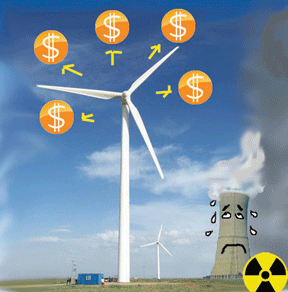 Times 21st Sept 2019, Alistair Osborne: Who wouldn’t prefer clean energy from Dogger than, say, Hinkley Point C: the £20 billion nuclear disaster in leafy Somerset?
The latest round of offshore wind contracts is quite a moment. For the first time, it looks like being subsidy-free. Companies have agreed to build 5.5 gigawatts of new capacity, enough to power almost seven million homes, for a guaranteed price of as little as £39.65 per megawatt hour – in 2012 prices. Compare that to the price for when the turbines start whirring in 2023-24, also in 2012 money: £48.13/MWh. In short, clean energy without any extra cost to the consumer.
In just five years, wind has blown the competition away. It was only in 2014 that Dong Energy, now Orsted, signed up to build the 1,200MW Hornsea 1 project at a strike price of £140/MWh.
By September 2017, the guaranteed price for the 1,386MW Hornsea 2 was down to £57.50. And now it’s 30 per cent cheaper again: a dizzying drop that drives home two things.
First, that Britain, blessed with a nice bit of breeze, leads the world in offshore wind: by next year it’ll have 10GW of installed capacity. Second, that the more you build, the cheaper it gets.
If only the same thing could be said for nuclear power. The strike price for Hinkley Point, in the same 2012 money, is a rapacious £92.50/MWh: a socking bribe to get France’s EDF and its Chinese partner to build the thing. It’s set to rip off consumers for 35 years. Naturally, it’s at least eight years late: now shooting for operations in 2025, not 2017. Its French prototype in Flamanville, where building costs have more than trebled to €10.9 billion, is at least ten years late. Oh, and its welding’s dodgy, too.
And nuclear’s not even green: it comes with a vast clean-up bill. True, it brings baseload energy that wind can’t yet match. But storage technology is advancing all the time.
So why’s the government persisting with last century tech that comes at a radioactive price? Yes, offshorewind might endanger a seabird that’s forgotten its specs. But, luckily, it’s a bigger threat to another species: nuclear white elephants.
https://www.thetimes.co.uk/article/597b8770-dbdf-11e9-9cfd-b79996a387b0
Shutdown of Three Mile Island’s infamous nuclear plant symbolises the end of the nuclear energy era
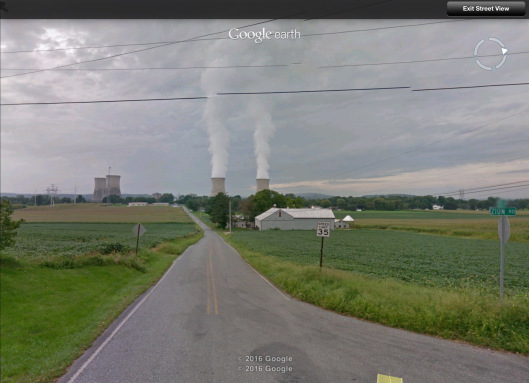 Three Mile Island’s infamous nuclear plant shuts down after 45 years https://www.engadget.com/2019/09/21/three-mile-island-nuclear-plant-shuts-down/
This doesn’t mark the end of the overall story, however, as it’ll take decades to clean up. Some of the teardown will take place quickly. Staff will remove the reactor’s fuel supply in the next few weeks and store it in the used fuel pool. It’ll take much longer to fully decommission the reactor, however. Exelon estimated that the plant won’t be fully clear of radioactive material until 2078, or more than a century after it entered service. Unit 2 is expected to close in 2036.
Unit 1 has been relatively safe, with the only notable incident being an air pressure change that briefly exposed 20 employees to a mild amount of radiation. However, the reactor has long lived in the shadow of Unit 2, whose partial meltdown exposed nearly 2 million people to radiation. There don’t appear to have been any publicly disclosed health effects, but the incident led to stricter oversight and, along with the Chernobyl disaster, defined the public perception of nuclear energy.
Exelon wasn’t shy in trying to pin the blame on local government. It claimed that Pennsylvania law “does not support the continued operation” of the reactor, and that rules “fail to evenly value clean energy resources” while dirty power sources could “pollute for free.” It doesn’t think nuclear is getting a fair shake compared to renewables and other clean energy sources, in other words. It has also complained about low natural gas prices that make Unit 1 difficult to run.
It’s not certain just what happens next, but the odds aren’t high for a revival. While nuclear is relatively clean, the rises of both renewables and natural gas have reduced the demand for it. Like it or not, the industry has moved on — the closure is a symbol of that transition.
Surface melting causes Antarctic glaciers to slip faster towards the ocean
Direct link between surface melting and short bursts of glacier acceleration in Antarctica
- Date:
- September 20, 2019
- Source:
- University of Sheffield
- Summary:
- Study shows for the first time a direct link between surface melting and short bursts of glacier acceleration in Antarctica. During these events, Antarctic Peninsula glaciers move up to 100% faster than average. Scientists call for these findings to be accounted for in sea level rise predictions…….
https://www.sciencedaily.com/releases/2019/09/190920111355.htm
Despite previous warnings, and findings, court finds Tepco executive not guilty after Fukushima nuclear disaster
Fukushima trial ends in not guilty verdict, but nuclear disaster will haunt Japan for decades to come, By James Griffiths, CNN, September 19, 2019 The only criminal prosecution stemming from the 2011 Fukushima nuclear disaster has ended in not guilty verdicts, in a blow to families displaced by the meltdown, as the fallout promises to haunt northern Japan for decades to come.
CNN’s Yoko Wakatsuki contributed reporting from Tokyo. https://edition.cnn.com/2019/09/19/asia/japan-fukushima-trial-intl-hnk/index.html
The ‘advanced’ nuclear power sector is dystopian
Problems arose during the long gestation of New Fire. Transatomic Power gave up on its plan to use nuclear waste as reactor fuel after its theoretical calculations were proven to be false, and the waste-annihilating reactor was reinvented as a waste-producing, uranium-fuelled reactor.
Worse was to come: just before the release of New Fire, Transatomic Power went broke and collapsed altogether. An epic fail.
Reactor
The Australian parliament’s ‘inquiry into the prerequisites for nuclear energy‘ is shaping up to be another epic fail. The conservative chair of the inquiry claims that “new technologies in the field are leading to cleaner, safer and more efficient energy production.”
But the ‘advanced’ nuclear power sector isn’t advanced and it isn’t advancing.
The next ‘advanced’ reactor to commence operation will be Russia’s floating nuclear power plant, designed to help exploit fossil fuel reserves in the Arctic ‒ fossil fuel reserves that are more accessible because of climate change. That isn’t ‘advanced’ ‒ it is dystopian.
Russia’s enthusiastic pursuit of nuclear-powered icebreaker ships (nine such ships are planned by 2035) is closely connected to its agenda of establishing military and economic control of the Northern Sea Route ‒ a route that owes its existence to climate change.
China General Nuclear Power Group (CGN) says the purpose of its partly-built ACPR50S demonstration reactor is to develop floating nuclear power plants for oilfield exploitation in the Bohai Sea and deep-water oil and gas development in the South China Sea.
God-awful
‘Advanced’ nuclear reactors are advancing climate change. Another example comes from Canada, where one potential application of small reactors is providing power and heat for the extraction of hydrocarbons from tar sands.
Some ‘advanced’ reactors could theoretically consume more nuclear waste than they produce. That sounds great ‒ until you dig into the detail.
An article in the Bulletin of the Atomic Scientists ‒ co-authored by Allison Macfarlane, a former chair of the US Nuclear Regulatory Commission ‒ states that “molten salt reactors and sodium-cooled fast reactors – due to the unusual chemical compositions of their fuels – will actually exacerbate spent fuel storage and disposal issues.”
The subclass of sodium-cooled fast reactors called ‘integral fast reactors’ (IFRs) could theoretically gobble up nuclear waste and convert it into low-carbon electricity, using a process called pyroprocessing.
But an IFR R&D program in Idaho has left a god-awful mess that the Department of Energy (DOE) is struggling to deal with. This saga is detailed in a 2017 article and a longer report by the Union of Concerned Scientists’ senior scientist Dr. Edwin Lyman, drawing on documents obtained under Freedom of Information legislation.
Breeder
Dr. Lyman writes: “Pyroprocessing has taken one potentially difficult form of nuclear waste and converted it into multiple challenging forms of nuclear waste. DOE has spent hundreds of millions of dollars only to magnify, rather than simplify, the waste problem. …
The FOIA documents we obtained have revealed yet another DOE tale of vast sums of public money being wasted on an unproven technology that has fallen far short of the unrealistic projections that DOE used to sell the project”.
Some ‘advanced’ reactors could theoretically consume more fissile (explosive) nuclear material than they produce. Instead of contributing to weapons proliferation risks and problems, they could contribute to the resolution of those problems.
That sounds great ‒ until you dig into the detail. After Russia’s floating nuclear plant, the next ‘advanced’ reactor to commence operation may be the Prototype Fast Breeder Reactor (PFBR) in India.
 Weapons
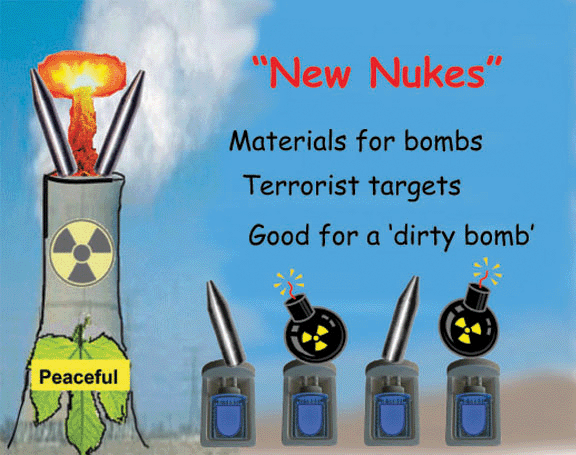
The PFBR has a blanket with thorium and uranium to breed fissile uranium-233 and plutonium respectively ‒ in other words, it will be ideal for weapons production.
India plans to use fast breeder reactors (a.k.a. fast neutron reactors) to produce weapon-grade plutonium for use as the initial ‘driver’ fuel in thorium reactors.
As John Carlson, the former Director-General of the Australian Safeguards and Non-proliferation Office, has repeatedly noted, those plans are highly problematic with respect to weapons proliferation and security.
There’s nothing “cleaner, safer and more efficient” about India’s ‘advanced’ reactor program. On the contrary, it is dangerous and it fans regional tensions and proliferation concerns in South Asia ‒ all the more so since India refuses to allow International Atomic Energy Agency safeguards inspections of its ‘advanced’ nuclear power program.
And if those regional tensions boil over into nuclear warfare, catastrophic climate change will likely result. Fossil fuels provide the surest route to catastrophic climate change; nuclear warfare provides the quickest route.
Reactors
The ‘advanced’ nuclear power sector isn’t advanced ‒ it is dystopian. And it isn’t advancing ‒ it is regressing.
The Russian government recently clawed back US$4 billion from Rosatom’s budget by postponing its fast neutron reactor program; specifically, by putting on hold plans for what would have been the only gigawatt-scale fast neutron reactor anywhere in the world.
France recently abandoned plans for a demonstration fast reactor. Pursuit of fast reactor technology is no longer a priority in France according to the World Nuclear Association.
And funding is tight because of yet another failing project: a 100-megawatt materials testing reactor that is 500 percent over-budget (and counting) and eight years behind schedule (and counting).
Other fast reactor projects have collapsed in recent years. TerraPower abandoned its plan for a prototype fast reactor in China last year due to restrictions placed on nuclear trade with China by the Trump administration, and requests for US government funding have reportedly received a negative reception.
The US and UK governments have both considered using GE Hitachi’s ‘PRISM’ fast reactor technology to process surplus plutonium stocks ‒ but both governments have rejected the proposal.
Failed
Fast reactors and other ‘advanced’ concepts are sometimes called Generation IV concepts.
But fast reactors have been around since the dawn of the nuclear age. They are best described as failed Generation I technology ‒ “demonstrably failed technology” in the words of Allison Macfarlane.
The number of operating fast reactors reached double figures in the 1980s but has steadily fallen and will remain in single figures for the foreseeable future.
Currently, just five fast reactors are operating ‒ all of them described by the World Nuclear Association as experimental or demonstration reactors.
 Modular
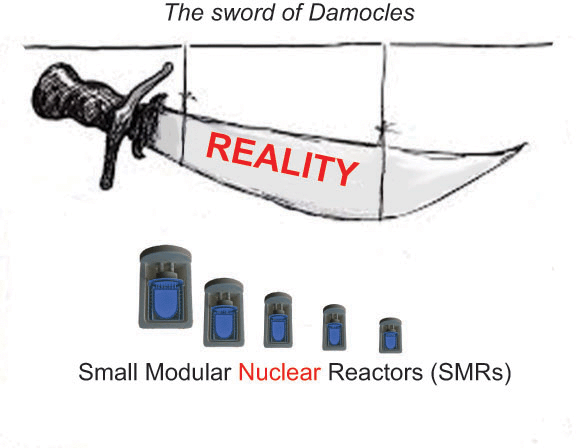
As discussed previously in The Ecologist, most of the handful of small modular reactors (SMRs) under construction are over-budget and behind schedule; there are disturbing connections between SMRs, weapons proliferation and militarism more generally; and about half of the SMRs under construction are intended to be used to facilitate the exploitation of fossil fuel reserves.
SMRs aren’t leading to “cleaner, safer and more efficient energy production”. And SMRs aren’t advancing ‒ projects are falling over left, right and centre:
- Babcock & Wilcox abandoned its mPower SMR project in the US despite receiving government funding of US$111 million.
- Westinghouse sharply reduced its investment in SMRs after failing to secure US government funding.
- China is building a demonstration high-temperature gas-cooled reactor (HTGR) but it is behind schedule and over-budget and plans for additional HTGRs at the same site have been “dropped” according to the World Nuclear Association.
- MidAmerican Energy gave up on its plans for SMRs in Iowa after failing to secure legislation that would force rate-payers to part-pay construction costs.
- Rolls-Royce sharply reduced its SMR investment in the UK to “a handful of salaries” and is threatening to abandon its R&D altogether unless massive subsidies are provided by the British government.
Zombie reactors
Fast reactors are demonstrably failed technology. SMRs have failed previously and are in the process of failing yet again. What else is there in the ‘advanced’ nuclear sector?
Fusion? At best, it is decades away and most likely it will forever remain decades away. Two articles in the Bulletin of the Atomic Scientists by Dr. Daniel Jassby ‒ a fusion scientist ‒ comprehensively debunk all of the rhetoric spouted by fusion enthusiasts.
Thorium? There are no fundamental differences between thorium and uranium, so building a thorium fuel cycle from scratch to replace the uranium fuel cycle would be absurd ‒ and it won’t happen.
High-temperature gas-cooled reactors (HTGRs) including the pebble-bed modular reactor sub-type? This zombie concept refuses to die even as one after another country embarks on R&D, fails, and gives up. As mentioned, China is building a prototype but has dropped plans for further HTGRs.
Paper reactors
Claims that new nuclear technologies are leading to “cleaner, safer and more efficient energy production” could only be justified with reference to concepts that exist only as designs on paper.
As a nuclear industry insider quipped: “We know that the paper-moderated, ink-cooled reactor is the safest of all. All kinds of unexpected problems may occur after a project has been launched.”
There’s nothing that can be said about ‘advanced’ reactor rhetoric that wasn’t said by Admiral Hyman Rickover ‒ a pioneer of the US nuclear program ‒ all the way back in 1953.
“An academic reactor or reactor plant almost always has the following basic characteristics: (1) It is simple. (2) It is small. (3) It is cheap (4) It is light. (5) It can be built very quickly. (6) It is very flexible in purpose (‘omnibus reactor’). (7) Very little development is required. It will use mostly off-the-shelf components. (8) The reactor is in the study phase. It is not being built now.
“On the other hand, a practical reactor plant can be distinguished by the following characteristics: (1) It is being built now. (2) It is behind schedule. (3) It is requiring an immense amount of development on apparently trivial items. Corrosion, in particular, is a problem. (4) It is very expensive. (5) It takes a long time to build because of the engineering development problems. (6) It is large. (7) It is heavy. (8) It is complicated.”
This Author
Dr. Jim Green is the national nuclear campaigner with Friends of the Earth Australia and editor of the Nuclear Monitor newsletter.
Who is secretly funding campaign to bail out Ohio’s nuclear reactors?

Voters need to know who’s behind nuclear campaign, groups argue, https://www.toledoblade.com/local/politics/2019/09/19/voters-need-to-know-who-s-behind-nuclear-campaign-groups-argue/stories/20190919150 JIM PROVANCE,
COLUMBUS — Holes in Ohio’s campaign finance law allow corporations to secretly fund campaigns battling over Ohio’s new nuclear bailout, which undermines direct democracy and intimidates voters, government watchdog groups said on Thursday.
They called on lawmakers to update the state’s campaign finance law to prevent such groups from hiding behind nebulous nonprofit and limited liability corporations to shield the identities of the deep pockets behind them.
“It’s fear-mongering,” said Jen Miller, director of the League of Women Voters of Ohio. “It’s this idea that somehow China wants our information. … They probably wouldn’t make those kinds of statements if they would be held accountable by their shareholders or by the public if we knew who they were.”
The U.S. Supreme Court held in its 2010 Citizens United decision that corporations may exercise political speech through money and blocked states from limiting that speech. But the court left the door open for government to require public disclosure of those putting up the cash.Ohio talked about doing that but never followed through.
Most of the criticism on Thursday focused on Ohioans for Energy Security, the group trying to thwart efforts by petitioners to put House Bill 6 on the November, 2020, election ballot in hopes voters will reject it.
As tracked by Columbus-based Medium Buying, the group has purchased nearly $3.4 million in TV, cable, and radio airtime through Friday as it seeks to convince would-be petition signers that the Chinese are behind the repeal effort. Through these ads and direct mail, they’ve also said signing the petitions would amount to turning over personal information to the Chinese government.
“We’re asking for a light to be shown on all the money,” said Catherine Turcer, executive director of Common Cause Ohio. “… We’re really interested in understanding the political landscape and to be able to follow the money no matter who spends it.”
House Bill 6 is set to go into effect Oct. 21. It would surcharge consumers on their electricity bills to create a $170 million-a-year fund through 2026. Of that, $150 million would go to support FirstEnergy Solutions’ Davis-Besse nuclear plant near Oak Harbor and Perry plant east of Cleveland.
The law also separately would impose statewide surcharges through 2030 to support two 1950s-era coal-fired power plants owned by a multiutility corporation. Those plants are in southern Ohio and southeast Indiana.
There is no official campaign yet. Ohioans Against Corporate Bailouts, the entity hoping to ask voters to repeal House Bill 6, has until Oct. 21 to file at least 265,774 valid signatures of registered voters to put the law on hold at least through the 2020 vote.
That group will have to file its first report 30 days after the filing of signatures detailing its petition circulation activities, but it remains to be seen how specific that filing will be in terms of individual names and amounts.
Nothing would prevent either side from voluntarily disclosing their donors.
“We will exercise our First Amendment rights as any citizen is allowed to do,” said Carlo LoParo, spokesman for Ohioans for Energy Security. “When the law requires us to disclose, we will disclose, just like the other side.
“… They’re not letting you know that it’s a handful of natural gas companies … ” he said. “When the law requires them to disclose, they will disclose. When the law requires us to disclose, we will certainly disclose.”
The group maintains that a bank tied to the government of China is financially backing natural gas operations in Ohio and, therefore, the petition effort.
On the other side, the conjecture has been that FirstEnergy Solutions or its investors is behind the campaign.
“We are left assuming the worst about FirstEnergy Solutions, but we don’t actually know,” Ms. Turcer said. “It could be FirstEnergy Solutions. We should not be in a time period where we receive something in the mail about elections and we don’t actually understand what it’s about.”
Radioactive debris to stay above vital aquifer in Idaho for 20 years more?
Agency could keep Three Mile Island nuclear debris in Idaho, https://abcnews.go.com/Technology/wireStory/agency-mile-island-nuclear-debris-idaho-65652583 ByKEITH RIDLER, ASSOCIATED PRESS BOISE, Idaho — Sep 16, 2019,
Nuclear waste stored in underground containers at the Idaho National Laboratory near Idaho Falls, Idaho. Federal authorities want to store the partially melted core from one of the United States worst nuclear accident for another 20 years in Idaho.
The U.S. Nuclear Regulatory Commission said Monday, Sept. 16, 2019 it’s considering a request from the U.S. Department of Energy to renew a license to store the radioactive debris from the Three Mile Island nuclear power plant. The core of a reactor south of Harrisburg, Pa., partially melted in 1979.
The partially melted reactor core from the worst nuclear accident in U.S. history could remain in Idaho for another 20 years if regulators finalize a license extension sought by the U.S. Energy Department, officials said Monday.
The core from Three Mile Island in Pennsylvania partially melted in 1979, an event that changed the way Americans view nuclear technology.
The U.S. Nuclear Regulatory Commission has determined there would be no significant impact from extending the license to store the core at the 890-square-mile (2,305-square-kilometer) site that includes Idaho National Laboratory.
“No significant radiological or non-radiological impacts are expected from continued normal operations,” the commission said about its finding.
The agency would also have to complete a safety evaluation report before renewing the license. Commission spokesman David McIntyre said that will likely happen in the next several days.
Holly Harris, executive director of the Idaho-based nuclear watchdog group Snake River Alliance, wasn’t immediately available to comment.
The Energy Department site sits atop the Eastern Snake Plain Aquifer, a Lake Erie-size underground body of water that supplies cities and farms in the region with water.
The new license would be good through 2039, four years past a deadline the Energy Department initially set with Idaho to remove the radioactive waste.
State and federal officials say the waste could still be shipped out of Idaho ahead of the 2035 deadline and would not affect the 1995 agreement that contains penalties for missed deadlines.
Idaho is already fining the Energy Department for missing a deadline involving radioactive liquid waste stored at the site.
It’s not clear where the Three Mile Island waste could be moved, as the U.S. doesn’t have a designated repository.
The U.S. Energy Information Administration says there’s some 77,000 tons (70,000 metric tons) of spent nuclear fuel stored at commercial nuclear sites around the country because there’s no place else to put it.
The Department of Energy said no additional material would be added to the waste storage site in Idaho.
The previous license expired in March. It said the maximum amount of Three Mile Island debris that could be stored at the Idaho site was 183,000 pounds (83,000 kilograms) of damaged nuclear fuel assemblies and 308,000 pounds (140,000 kilograms) of material removed from the reactor vessel.
Court battles between Idaho and the federal government culminated with the 1995 agreement requiring the Energy Department to clean up the Idaho site as well as prevent the area from becoming the nation’s nuclear waste dump.
Exelon Generation, the company that owns the remaining nuclear power plant at Three Mile Island, has said it will shut down the facility by the end of this month.
The company blamed economic challenges and what it said are market flaws that fail to recognize the value of nuclear plants.
Agency keeps Three Mile Island nuclear debris in Idaho By KEITH RIDLER, ASSOCIATED PRESS
BOISE, Idaho — Sep 16, 2019,
The Energy Department site sits atop the Eastern Snake Plain Aquifer, a Lake Erie-size underground body of water that supplies cities and farms in the region with water.
The new license would be good through 2039, four years past a deadline the Energy Department initially set with Idaho to remove the radioactive waste.
State and federal officials say the waste could still be shipped out of Idaho ahead of the 2035 deadline and would not affect the 1995 agreement that contains penalties for missed deadlines.
Idaho is already fining the Energy Department for missing a deadline involving radioactive liquid waste stored at the site.
It’s not clear where the Three Mile Island waste could be moved, as the U.S. doesn’t have a designated repository.
The U.S. Energy Information Administration says there’s some 77,000 tons (70,000 metric tons) of spent nuclear fuel stored at commercial nuclear sites around the country because there’s no place else to put it.
The Department of Energy said no additional material would be added to the waste storage site in Idaho.
The previous license expired in March. It said the maximum amount of Three Mile Island debris that could be stored at the Idaho site was 183,000 pounds (83,000 kilograms) of damaged nuclear fuel assemblies and 308,000 pounds (140,000 kilograms) of material removed from the reactor vessel.
Court battles between Idaho and the federal government culminated with the 1995 agreement requiring the Energy Department to clean up the Idaho site as well as prevent the area from becoming the nation’s nuclear waste dump.
Exelon Generation, the company that owns the remaining nuclear power plant at Three Mile Island, has said it will shut down the facility by the end of this month.
The company blamed economic challenges and what it said are market flaws that fail to recognize the value of nuclear plants.
THE BIG LIE AS USUAL
“No significant radiological or non-radiological impacts are expected from continued normal operations,” the commission said about its finding. THE WASTE IS IMPROPERLY STORED IN BARRELS OVER ONE OF THE LARGEST AQUIFERS IN THE NW USA
1 This Month
19 November – Webinar – The Reality of Reprocessing
Time: 11:00 AM Pacific Time (US & Canada) / 2:00 PM Eastern / 7:00 PM UK / 8:00 PM CET
Register for the Zoom Event Here

Tell Congress: Prevent Nuclear Catastrophe in Iran

Tell Congress: Prevent Nuclear Catastrophe in Iran

Read the Public Inquiry Report, the Commissioners’ report, Surrendering Australia: The AUKUS Deception is available to download for free at aukuspublicinquiry.com. Or just watch the replay of the National Press Club Luncheon.


Shut down the radiation-damaged Heysham nuclear reactors now
To see nuclear-related stories in greater depth and intensity – go to https://nuclearinformation.wordpress.com

Say No to NASA’s Reckless Nuclear Reactor on the Moon
Say No to NASA’s Reckless Nuclear Reactor on the Moon
-
Archives
- November 2026 (190)
- October 2026 (302)
- September 2026 (339)
- August 2026 (330)
- July 2026 (355)
- June 2026 (287)
- May 2026 (306)
- April 2026 (356)
- March 2026 (251)
- February 2026 (267)
- January 2026 (308)
- December 2025 (358)
-
Categories
- 1
- 1 NUCLEAR ISSUES
- business and costs
- climate change
- culture and arts
- ENERGY
- environment
- health
- history
- indigenous issues
- Legal
- marketing of nuclear
- media
- opposition to nuclear
- PERSONAL STORIES
- politics
- politics international
- Religion and ethics
- safety
- secrets,lies and civil liberties
- spinbuster
- technology
- Uranium
- wastes
- weapons and war
- Women
- 2 WORLD
- ACTION
- AFRICA
- Atrocities
- AUSTRALIA
- Christina's notes
- Christina's themes
- culture and arts
- Events
- Fuk 2022
- Fuk 2023
- Fukushima 2017
- Fukushima 2018
- fukushima 2019
- Fukushima 2020
- Fukushima 2021
- general
- global warming
- Humour (God we need it)
- Nuclear
- RARE EARTHS
- Reference
- resources – print
- Resources -audiovicual
- Weekly Newsletter
- World
- World Nuclear
- YouTube
-
RSS
Entries RSS
Comments RSS

