Kim Jong Un refers to North Korea being ‘prepared’ for war, hinting at nuclear capabilities
|
Kim Jong Un stresses nuclear capabilities during meeting https://www.dailynk.com/english/kim-jong-un-stresses-nuclear-capabilities-during-meeting/The Third Expanded Meeting of the Central Military Commission was held on Sunday, according to Rodong Shinmun, By Lee Sang Yong, 2019.12.27 North Korean leader Kim Jong Un recently presided over an expanded meeting of the Central Military Commission of the Workers’ Party of Korea (WPK). At the meeting, Kim made references to readying North Korea’s nuclear capabilities for war, Daily NK has learned.
Although Kim did not explicitly say so, his remarks on “launchers,” the reorganization of the military, as well as his emphasis on self-reliant defense capabilities, can all be seen as a roundabout reference to the country’s nuclear capabilities. NO EXPLICIT MENTION OF NUCLEAR CAPABILITIES AT MEETING At the meeting, Kim stressed that rockets (missiles) and artillery capabilities should be strengthened, according to a high-ranking North Korean source speaking to Daily NK on Monday. These are the “decisions on organizational matters” alluded to in the North Korean media, which were also presumably the main issues of the meeting. “They say that Kim Jong Un issued a direct order calling for the reinforcement of military divisions where relevant to rocket and artillery capabilities,” a source in North Korea told Daily NK. “This essentially translates to an order to improve every aspect related to the strengthening of rocket and artillery capabilities, and can be seen as very relevant to ensuring nuclear weapons are battle-ready.” ”There was no explicit mention of nuclear weapons, but those present understood the order to mean that Kim Jong Un should be able to launch whatever he makes up his mind to launch, should he decide to do so,” continued the source. “Thus, whether it’s rockets or weapons of mass destruction, we must be prepared for every possibility.” In this context, “rocket” is a catch-all term that refers to both short-range and long-range missiles. Since Kim Jong Un came into power, North Korea has invested in the operational capabilities of various missiles, such that a dedicated branch was formed, called the Strategic Rocket Forces (currently Strategic Forces Command). The Strategic Forces Command reportedly consists of three divisions: the Scud missile division, the Rodong missile division, and the Musudan missile division. The announcement that there is to be a new division in addition to these three can be read as a move to create a separate division for strategic weapons, including intercontinental ballistic missiles (ICBM) like the Hwasong-15. A MOVE TOWARD MORE CONFRONTATION WITH SOUTH KOREA? North Korea also recently conducted a series of tests at the Sohae Satellite Launch Site in Dongchang-ri, Cholsan County in North Pyongan Province. The tests involved a new solid-fuel engine for its ICBMs as well as a stability test. This has led to speculation over whether this is an indicator of North Korea’s determination to construct a system with the ability to stealthily launch both short- and long-range missiles at any hour of the day. “It’s been made clear that North Korean rockets must be shown as a force to be contended with,” said a source. “Apparently there was considerable emphasis on the sanctions against North Korea, and the fact that the military must take the lead in developing a self-reliant defense system.” “The order to strengthen artillery capabilities seems to indicate that they’re more interested in a confrontation with South Korea, rather than dialogue,” continued the source. “Given the emphasis on being prepared for every possibility in a fight, it seems they will continue to conduct tests with the aim of improving the relevant technologies.” On Sunday, the Korean Central News Agency (KCNA) reported that North Korean leader Kim Jong Un had presided over the Third Expanded Meeting of the Seventh WPK Central Military Commission and discussed issues pertaining to the strengthening of “self-reliant defense capabilities.” This meeting is presumed to have taken place on Saturday, given that top military officials assembled in Pyongyang on Friday morning. *Translated by Violet Kim Please direct any comments or questions about this article to dailynkenglish@uni-media.net. |
|
Philippines prone to natural disasters, but still contemplates nuclear power
Philippines seeks to relaunch nuclear power ambitions, Country prone to natural disasters eyes potential suppliers including Russia and US, Ft.com 27 Dec 19. The Philippines plans to revive its long-discontinued nuclear energy programme to combat the threat of a future power supply crunch — a prospect likely to raise safety concerns in a country prone to typhoons and earthquakes. The country is working with the International Atomic Energy Agency to meet the UN watchdog’s safety and other requirements, and investigating potential suppliers from Russia, South Korea, China and the US, said Alfonso Cusi, the energy secretary.
Growing concern over safety of aging Browns Ferry Nuclear Plant
Aging Alabama nuclear plant worries critics, Al Alabama, Dec 25, 2019; By The Associated Press Critics are raising alarms over the age of Browns Ferry Nuclear Plant, which opened 46 years ago on the banks of the Tennessee River and is still operating.
Some say equipment at the three-reactor plant is being forced to generate power longer than originally intended and that the storage of spent nuclear fuel is a growing problem, The Decatur Daily reported……..
The first reactor at Browns Ferry opened on Dec. 20, 1973 as the U.S. nuclear industry was growing. The plant has had major problems since, including a serious fire in 1975 and poor operating reviews in 2010.
Stephen Smith, executive director of the Southern Alliance for Clean Energy, called the age of the plant “a huge issue looming on the horizon.”
“TVA is making the equipment and the plant work longer and harder than it was originally designed for,” said Smith, who also serves on a council that advises TVA directors. “People need to be very concerned about this.”
The Washington-based Union for Concerned Scientists said that having 46 years of spent fuel stored onsite in pools could be a threat to the entire region.
“Our main concern is that creates an unacceptable higher risk for fire,” said Edwin Lyman, acting director of nuclear safety projects for the group. Lyman said “a terrorist attack could reach a cooling pool with an explosive device and could breach the liner of the cooling pool.”
Ohio court to weigh group’s effort to block nuclear plant rescue
By: Associated Press December 27, 2019 The state Supreme Court has agreed to hear arguments from a group attempting to overturn the roughly $1 billion financial rescue of Ohio’s two nuclear power plants…. (subscribers only) https://journalrecord.com/2019/12/27/ohio-court-to-weigh-groups-effort-to-block-nuclear-plant-rescue/
Faith leaders, heed pope’s call on nuclear weapons
https://www.heraldnet.com/opinion/commentary-faith-leaders-heed-popes-call-on-nuclear-weapons/ Washington state’s legacy is tied to nuclear weapons; its religious leaders have a duty to oppose them. Sunday, December 22, 2019 By Carly Brook / For The Herald
Just a few weeks ago, Pope Francis called for the global abolition of nuclear weapons while paying homage to the victims of the bombings of Hiroshima and Nagasaki. Japan. Nagasaki was destroyed by atomic weapons with plutonium produced in Washington state’s Catholic Diocese.
The Holy Father declared: “With deep conviction I wish once more to declare that the use of atomic energy for purposes of war is today, more than ever, a crime not only against the dignity of human beings but against any possible future for our common home. The use of atomic energy for purposes of war is immoral, just as the possessing of nuclear weapons is immoral, as I already said two years ago. We will be judged on this. Future generations will rise to condemn our failure if we spoke of peace but did not act to bring it about among the peoples of the earth. How can we speak of peace even as we build terrifying new weapons of war?”
Washington state has the largest collection of deployed nuclear weapons in the Western Hemisphere at Naval Base Kitsap-Bangor on Hood Canal, just 20 miles from Seattle. This nuclear weapons installation, added to Washington state’s large city centers and many other military installations, makes our state a primary target in the event of a nuclear exchange.
Washington state is also home to the Hanford Nuclear Reservation, the most contaminated nuclear site in the Western Hemisphere, and the Midnite Mine, a former nuclear weapons uranium mine located on the Spokane Tribe of Indians Reservation, and it hosts one of the largest communities of Marshall Islanders in the United States, whose home was the site of67 atmospheric nuclear weapons tests during the Cold War.
The legacy of nuclear weapons and their production in Washington has — and continues to — disproportionately affect communities of color and indigenous people, none of whom has been adequately compensated for the environmental and health consequences of nuclear weapons activities pursued by the United States government during the 50 years of the Cold War.
Congress recently approved funding to deploy a new kind of nuclear weapon: the W76-2 warhead. This gateway nuke, which is being called “useable” will be deployed on Trident nuclear submarines just 20 miles from Seattle in the coming months.
As a person of faith, and coordinator of the Washington Against Nuclear Weapons Coalition, we call on religious leaders in Seattle, especially the Seattle Archbishop, to heed the words of Pope Francis in Nagasaki. We call on faith leaders to join other faith-based members of the Washington Against Nuclear Weapons Coalition and actively preach to your congregants that the continuing possession and so-called modernization of nuclear weapons is immoral.
As the pope said, “Future generations will rise to condemn our failure if we spoke of peace but did not act to bring it about among the peoples of the earth.” I respectfully suggest that Seattle Archbishop Paul Etinne and other faith leaders should act accordingly.
Carly Brook is a member of the Washington Against Nuclear Weapons Coalition
No to nuclear: Japan wants reactors phased out, post-Fukushima
Japan is less reliant on atomic energy, but concerns are growing about its return to climate-damaging fossil fuels.
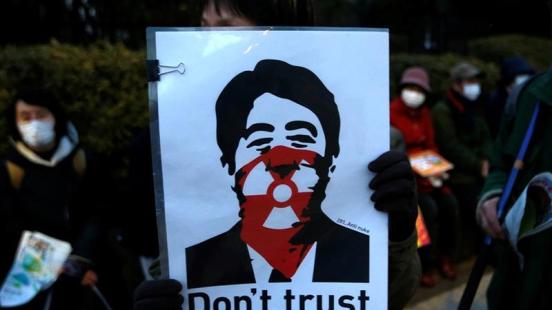 Japan’s anti-nuclear movement grew rapidly after the Fukushima disaster. Experts doubt that the country’s nuclear plants will ever generate the same levels of energy as they once did.
December 20, 2019
Tokyo, Japan – At the end of a decade in which northeastern Japan was devastated by a tsunami that triggered a nuclear disaster at Fukushima, atomic energy looks unlikely to make a comeback.
In the nearly nine years following the world’s worst nuclear accident since Chernobyl, the country’s reliance on atomic power for electricity generation has plummeted to between 3 and 5 percent from about 30 percent before the disaster, according to the Tokyo-based Citizens’ Nuclear Information Center.
And despite a period of uncertainty in the immediate aftermath of the meltdowns triggered when Fukushima’s cooling systems were overwhelmed by the tsunami created by the magnitude 9.0 undersea earthquake, the world’s third-largest economy has shown it can function with radically less nuclear power.
The public mood turned dramatically after Fukushima and the national trauma that ensued and combined with the increasing costs from aligning ageing plants with stringent post-disaster safety requirements, it is unlikely the nuclear industry will return to previous levels, according to experts, even as the government envisions nuclear power accounting for about 20-22 percent of electricity generation in 2030.
“It is obvious that it is very difficult to meet this target,” said Hajime Matsukubo, secretary-general of the Citizens’ Nuclear Information Center.
And while experts say while the anti-nuclear movement may seem to have quietened down, anti-nuclear feeling is firmly entrenched.
‘They say no’
“Japanese people’s sentiment (has) changed after Fukushima Daiichi and it is continuing until now,” said Matsukubo, whose non-profit organisation was established in 1975 by concerned atomic scientists to gather and publicise nuclear information and raise public awareness on the industry.
He said that even if people appear not as focused, if they are asked pointedly if they agree with nuclear power: “They say no.”
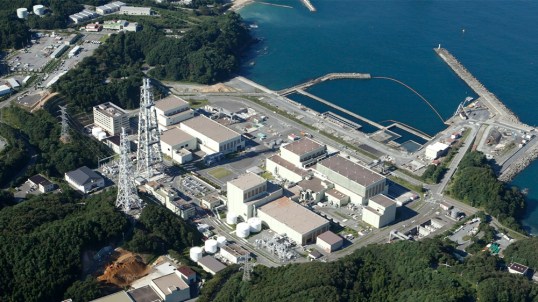 The Onagawa Nuclear Power Plant avoided the disaster at Fukushima, two-and-a-half hours’ drive south, and the government has said its No 2 reactor could be up-and-running by late next year
Before Fukushima, Japan had 54 operational reactors and for a brief time in the accident’s aftermath, not a single one was in operation. So far, nine have been restarted and authorities are considering the cases of a dozen more, according to Ministry of Economy, Trade and Industry figures. A further 24 are either under decommissioning or lined up for it.
Late last month, regulators gave initial approval for the restart of a reactor at the facility closest to the epicentre of the March 2011 quake. The No 2 reactor at the Onagawa nuclear plant could be running again late next year if further conditions are met. Onagawa was damaged in the double disaster, where the tsunami wave rose as high as 13 metres, but avoided Fukushima’s catastrophic meltdowns.
Japan imports nearly all its crude oil and natural gas. Underscoring such dependency, Prime Minister Shinzo Abe told a nationally televised news conference in 2016 that the nation could not “do without” nuclear power.
But Shinjiro Koizumi, minister for the environment and nuclear issues and the son of anti-nuclear former prime minister Junichiro Koizumi, said after his appointment in September that the country needed to wean itself off the atom.
“We will be doomed if we let nuclear accidents recur,” he said, according to Kyodo News.
Safety costs
Japan’s mass-circulation newspaper Mainichi Shimbun in an editorial after the Onagawa decision cited the newspaper’s own research that found 11 top power suppliers had spent in excess of 5 trillion yen ($45.7bn) on nuclear safety since Fukushima.
“As costs balloon, it is becoming increasingly difficult, even absurd, for the government and power companies to maintain the argument that nuclear power is ‘cheap’,” the editorial said.
“The more thoroughly safe the plants become, the more time and money is needed,” it continued. “We must ask, then: is it realistic to press on with the safety upgrade and reactor restart policy? We cannot dispel our suspicions that the answer is, in fact, ‘no’.”
Japan has clearly shown it can function on less nuclear-generated power, but the shift has come at a cost: an increasing reliance on fossil-fuel alternatives such as coal, oil and natural gas. And with concerns over climate change intensifying, that is drawing international attention.
“I’m very much aware of the challenges of Fukushima to the Japanese electrical sector,” said Paul Simpson, CEO of London-based non-profit CDP, which runs a global disclosure system that aids investors, companies and local governments in managing their environmental footprint.
Simpson, speaking at a forum on decarbonisation in Tokyo last month, stressed that coal was simply no longer an option and countries still using it must search for alternatives, citing Germany’s plan for no new coal use by 2040.
Alternative energies
“Japan needs to find a transition pathway from this, and I know this is challenging,” he said. “But coal is socially unacceptable … from a climate-risk perspective but also from an air pollution perspective.”
 Customers browse in a Tokyo shop that specialises in products from Fukushima
According to Matsukubo, about 30 percent of Japan’s electricity generation comes from coal and 43 percent from natural gas. And the country has moved to build new coal-fired power plants since Fukushima.
“It’s disastrous,” Matsukobo said, stressing that Japan needs to move to renewable sources of energy; an area in which Simpson also pointed out Japan is lagging, even though the government has promised to increase the country’s use of renewables by 2030.
There was always some ambivalence about atomic energy in Japan – the only country to suffer a nuclear weapon attack when the United States dropped bombs on the cities of Hiroshima and Nagasaki in the closing days of World War II.
Pope Francis, visiting Japan in November, surprised no one when he condemned nuclear weapons. But the pontiff, the first to venture to the country since 1981, went so far as to suggest that nuclear energy itself was a problem.
“I have a personal opinion: I wouldn’t use nuclear energy until it is totally safe to use,” the leader of the world’s 1.3 billion Roman Catholics said in comments to reporters during his flight back to Rome from Tokyo, Kyodo reported.
Ramping down
Alexander Brown, who has studied the anti-nuclear protest movement in Japan, said that because Japan had supported atomic power for so long, there was a sense of inertia despite post-Fukushima opposition, ageing infrastructure and the remote chance of new reactors getting the green light.
“There’s a sort of built-in time limit to how long the industry as a whole can continue,” said Brown, currently a Japan Society for the Promotion of Science international research fellow at Japan Women’s University.
He also emphasised, however, that Japan’s turn against nuclear energy had also coincided with a key change in its domestic economy; less industrially robust and therefore not as hungry for energy as before.
“Why have the lights stayed on,” Brown asked rhetorically. “One is, yes, increased fossil fuel use, but another is there’s just less demand than there was in the peak time of manufacturing onshore in Japan.”
Brown calls that an “uncomfortable truth” for much of Japan’s ruling establishment – including the prime minister and his eponymous “Abenomics” economic revitalisation programme – which clings to a belief in a model of vigorous growth.
“And I think one of the amazing things when I look at the anti-nuclear movement, to me, was it was full of people looking at what are other ways that we can live,” he said.
“How can we embrace other values other than high consumption, high pollution, extreme overwork and look at things like de-growth economics.”
Toshiba warns it may not continue as ‘going concern‘

USA House Democrats let Jared Kushner suck them in to a very bad space weapons deal
|
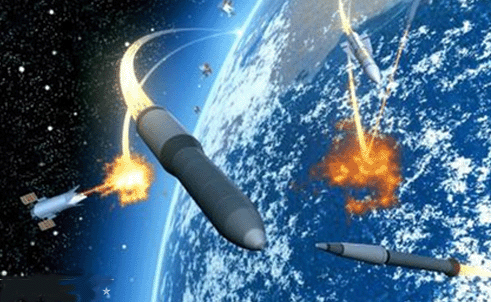
The Very Bad Space Force Deal, https://www.counterpunch.org/2019/12/18/the-very-bad-space-force-deal/ by KARL GROSSMAN Unless grassroots action somehow stops it, it looks likely that the Trump scheme for a Space Force, a sixth branch of United States armed forces, will happen. The U.S. House of Representatives last week passed the $738 billion military policy bill that gives Trump his sought-for Space Force as he moves for what he terms “American dominance in space.”The vote for what is titled the National Defense Authorization Act (NDAA) for 2020 was 377 to 48. Some 189 Republicans and 188 Democrats voted for it. Six Republican House members voted no, along with 41 Democrats and one independent. The large Democratic yes vote came as a result of a trade-off for 12 weeks of paid parental leave for civilian federal employees. The New York The U.S. Senate now will consider the measure and pass it considering the Trump-controlled majority in the Senate, and Trump will sign it. Indeed, last week Trump tweeted: “Wow! All our priorities have made it into the final NDAA: Pay Raises for our Troops, Rebuilding our Military, Paid Parental Leave, Border Security, and Space Force!” Establishment of a U.S. Space Force would come despite the landmark Outer Space Treaty of 1967, put together by the U.S., then Soviet Union and the U.K., designating space as a global commons to be used for peaceful purposes. The U.S. move to negate the intent of the Outer Space Treaty will cause Russia and China to respond in kind—especially considering Trump’s declaration that “it is not enough to merely have an American presence in space. We must have American dominance in space.” This will lead to an arms race in space. The Trump administration and the U.S. military have been claiming that a Space Force is necessary because of Russia and China moving into space militarily but, in fact, Russia and China and U.S. neighbor Canada have been leaders for decades in pushing for an expansion of the Outer Space Treaty. It bans weapons of mass destruction in space. The Prevention of an Arms Race in Outer Space (PAROS) treaty that the three nations have sought to expand would prohibit the placement of any weapons in space. The U.S.—under both Republican and Democratic presidential administrations—has opposed the PAROS treaty and effectively vetoed its enactment at the United Nations. The leading organization internationally in opposing the plan for a U.S. Space Force has been the Global Network Against Weapons & Nuclear Power in Space (www.space4peace.org). Commenting on the House vote, Bruce Gagnon, the network’s coordinator, said: “It is not surprise, but still disheartening, to see that 188 Democrats joined with Republicans to pass the NDAA bill in the House.” He noted that “the Democrats were led by Rep. Adam Smith from the Seattle area which means that the aerospace giant Boeing Corp., which stands to make a gold mine off Space Force, clearly pulls Mr. Smith’s chain.” (Smith, chairman of the House Armed Services Committee, called the bill “the most progressive defense bill we have passed in decades.”) Gagnon continued: “Another Democrat, Rep. Jim Cooper from Tennessee chimed in saying, ‘Trump’s belated support for a Space Force does not make this a Republican idea.’ Cooper chairs the House Armed Services Strategic Forces Subcommittee and clearly is trying to stake out Democratic Party ‘bragging rights’ on passage of this proposal to move warfare into the heavens.” Gagnon said, “About three-dozen progressive and anti-war groups worked hard to stop this NDAA and called the Democrats support for it ‘near complete capitulation.’” “With this newly enshrined Space Force—the NDAA will easily pass in the Senate—Trump will now be poised to tweet that Washington will be able to ‘control and dominate’ space on behalf of corporate interests,” Gagnon stated. “With technology now nearly in place to allow ‘mining the sky’ for precious minerals on planetary bodies, the Space Force fits in nicely with the long-planned Pentagon ability to control which nations, corporations and wealthy individuals will be able to venture into space and which will not. The idea was spelled out in a 1989 Congressional study called ‘Military Space Forces: The Next 50 Years.’” “Thus, Space Force would have two primary missions—give the Pentagon full control of the Earth and control the pathway on and off the Earth—both on behalf of corporate interests,” he said. “These provocative, expensive and destabilizing plans to control space will not be taken lightly by the rest of the world’s space faring nations. Even the Pentagon has lately been predicting the inevitability of war in the heavens.” Gagnon recounted: “In 1989 at a protest I organized at the Kennedy Space Center in Florida, Apollo astronaut Edgar Mitchell, the sixth man to walk on the moon [who took part in the protest] told the assembled that any war in space would be the one and only. By destroying satellites in space massive amounts of space debris would be created that would cause a cascading effect and even the billion-dollar International Space Station would likely be broken into tiny bits. So much space junk would be created, Mitchell told us, that we’d never be able to get a rocket off the planet again because of the mine field of debris orbiting the Earth at 15,000 mph.” “That would mean,” said Gagnon, “activity on Earth below would immediately shut down—cell phones, ATM machines, cable TV, traffic lights, weather prediction and more—all hooked up to satellites, would be lost. Modern society would go dark.” “The aerospace industry has long claimed that Star Wars would be the largest industrial project in the history of our planet,” said Gagnon. “So much money would be needed that the industry has identified the ‘entitlement programs’ for defunding to pay for ‘everything space.’ That means Social Security, Medicare, Medicaid and the remaining tattered social safety net would be cut to pay for Space Force.” “Everything has an Achilles heel,” said Gagnon. He said that “if you want to help defeat plans for Space Force, fight for social and environmental progress. Demand that the compromised Congress not fund this disastrous plan to move the arms race into space. It is going to cost all of us dearly.” A return in many respects to President Reagan’s “Star Wars” scheme of the 1980s, the Space Force notion “started as a joke,” National Public radio reported in August in a report by correspondent Claudia Grisales titled, “With Congressional Blessing, Space Force Is Closer to Launch.” She related: “Early last year President Trump riffed on an idea he called ‘Space Force’ before a crowd of Marines in San Diego. It drew laughs, but the moment was a breakthrough for a plan that had languished for nearly 20 years.” She continued: “’I said maybe we need a new force, we’ll call it the Space Force,’ Trump said at Marine Corps Air Station Miramar in March 2018. ‘And I was not really serious. Then I said, ‘What a great idea, maybe we’ll have to do that.’” The Outer Space Treaty was spurred, as Craig Eisendrath, involved as a U.S. State Department officer in its creation, by the Soviet Union launching the first space satellite, Sputnik, in 1957, as he noted in the 2001 TV documentary that I wrote and narrate, “Star Wars Returns.” Eisendrath said “we sought to de-weaponize space before it got weaponized…to keep war out of space.” The Reagan “Star Wars” program also used a defense rationale—it was formally called the Strategic Defense Initiative. It was based on orbiting battle platforms with nuclear reactors or “super” plutonium systems on board providing the power for hypervelocity guns, particle beams and laser weapons. Despite its claim of being defensive, it was criticized for being offensive and a major element in what the U.S. military documents then and since have described as “full spectrum dominance” over the Earth below which the U.S. has been seeking by taking the “ultimate high ground” of space. Among those voting against the NDAA bill last week were Representatives Jerry Nadler, chair of the House Judiciary Committee which has just approved articles of impeachment against Trump; Alexander Ocasio-Cortez; Tulsi Gabbard; and Ro Khanna, who earlier, with Senator Bernard Sanders, issued a joint statement decrying it as a “bill of astonishing moral cowardice.” Meanwhile, the U.S. military is gearing up for a selling campaign for a Space Force. On a website called “Space War Your World At War” , Barbara Barrett, Air Force secretary, is quoted as saying that the Air Force has come up with a “strategy to find support among not just U.S. lawmakers, but also among the public for Trump’s new branch of the country’s armed forces, the Space Force. She opined that this could clarify to the broader public what the U.S. is doing in this domain and why exactly it needs a separate force for operations in space, as well as funding. More articles by:KARL GROSSMAN
Karl Grossman, professor of journalism at State University of New York/College at Old Westbury, and is the author of the book, The Wrong Stuff: The Space’s Program’s Nuclear Threat to Our Planet. Grossman is an associate of the media watch group Fairness and Accuracy in Reporting (FAIR). He is a contributor to Hopeless: Barack Obama and the Politics of Illusion. |
|

Scientists track down the source of radioactive plume, – Russian cover-up of a nuclear accident

|
Russia appears to have kept a major nuclear accident secret. But scientists called the ‘Ring of 5’ tracked the plume of radiation to its source. https://www.businessinsider.com.au/russia-nuclear-accident-radiation-timeline-2017-2019-12?r=US&IR=T, ARIA BENDIX DEC 21, 2019
A group of scientists called the “Ring of Five” noticed something unusual in the atmosphere in late 2017: Air across Europe showed “unprecedented” levels of the radioactive isotope ruthenium-106.
The isotope is often made when reprocessing nuclear fuel. “We were stunned,” Georg Steinhauser, a professor at the University of Hanover in Germany who is part of the group, told Business Insider in August. “We did not have any anticipation that there might be some radioactivity in the air. We were just measuring air filters as we do on a weekly basis, 52 times a year, and suddenly there was an unexpected result.” The Ring of Five, which had been monitoring Europe’s atmosphere for elevated levels of radiation since the mid ’80s, spent the next two years looking for the cause of the spike.
The culprit, according to a study released in July, was an undisclosed nuclear accident at the Mayak nuclear facility in Russia, which was once the centre of the Soviet nuclear-weapons program. Mayak was also the site of the 1957 Kyshtym explosion, the world’s third-worst nuclear accident. More than 10,000 nearby residents were forced to evacuate at the time. Russia has never acknowledged that any nuclear accident happened at the Mayak facility in 2017, and has not responded to any findings from the Ring of Five. But now, the scientists have unravelled the mystery even further.A second study published last month offers even more evidence that an accident occurred at Mayak in 2017. It even pinpoints a timeline: Most of the ruthenium was emitted on September 26, 2017.
Tracing a radioactive plume across EuropeThe Ring of Five is so named because the group was originally made up of scientists from five nations – Sweden, Germany, Finland, Norway, and Denmark – but it now includes researchers from 22 countries. Their monitoring work takes takes place 24 hours a day, 365 days a year. The new study suggests that the Mayak facility likely released 250 terabecquerels (a measurement of radioactivity) of ruthenium into the atmosphere. The Kyshtym explosion, by comparison, released around 2,700 terabecquerels of ruthenium. The world’s worst nuclear accident, Chernobyl, released around 5.3 million terabecquerels of radioactive material, according to a 2013 analysis.
To find out where the 2017 radioactive plume came from, scientists traced the path of the wind at the time using more than 1,100 measurements from the fall of that year. That required studying the wind’s altitude and direction, as well as weather conditions that may have changed its course.
The scientists determined that the plume started out in the Southern Urals, where the Mayak facility is located, then was driven towards southwest Russia. It arrived in Romania on September 29, then split in two. The main part of the plume spread toward Central Europe, where it encountered rain in Bulgaria. Plant and soil samples taken in the country showed elevated levels of ruthenium at the time. After that, the plume moved north to Scandinavia before arriving in Italy on October 2, 2017. That day, Italian scientists sent an alert to the Ring of Five about elevated levels of ruthenium in Milan. Steinhauser called this the “single greatest release from nuclear-fuel reprocessing that has ever happened.” Russia has not responded to the Ring of Five’s findingsAt the time of the alleged accident in 2017, Russian officials said the Mayak facility wasn’t the source of the release, even though the nation showed elevated levels of ruthenium. Instead, officials in Russia attributed the radiation to a satellite that burned up in the atmosphere. Russia still hasn’t issued a response to either of the studies the Ring of Five published this year. “We should not forget that Mayak is a military facility – and, of course, the Russian Federation is very reluctant when it comes to talking about military facilities,” Steinhauser said. “I presume this would not be much different for other superpower nations.” The scientists don’t consider the levels of radiation they detected to be an immediate threat to people’s health. Last year, France’s Institute for Radiological Protection and Nuclear Safety determined that the levels of ruthenium-106 in the atmosphere do not pose danger to human health or the environment. But the long-term consequences are unknown. Another unanswered question, Steinhauser said, is whether the population near the Mayak facility breathed any radiation into their lungs. He added that there could be reason to monitor food safety if radiation leaked into the soil and water. “We would like to get some more in-depth information on what actually happened,” he said. “There’s a good chance that we’ll catch every single accident – but, in the present case, surprise was on our side.” |
|
Tepco (once again) saying they will put a giant cover over Fukushima No.1 reactor

|
Fukushima Daiichi No.1 reactor to be covered, https://www3.nhk.or.jp/nhkworld/en/news/20191220_12/ The operator of the damaged Fukushima Daiichi nuclear power plant says it will install a giant cover over one of the reactors that underwent a nuclear meltdown as part of its dismantling process.Tokyo Electric Power Company announced the decision on Thursday regarding the No.1 reactor building, which was affected by the 2011 earthquake and tsunami.
The covering will measure 65 meters high, 65 meters long and 50 meters wide. Its ceiling will have cranes that can be used to remove debris. The reactor’s fuel storage pool still holds 392 nuclear fuel units. As part of their removal process, TEPCO is clearing scattered debris from the building. TEPCO says that by installing the cover, it aims to lower the risks of radioactive dust spreading outside during the debris removal process. It added that the device will also prevent rainwater from getting into the reactor building, thereby helping to reduce the volume of newly contaminated water. TEPCO says it cannot tell when the device will be completed, as it is still in the process of making a detailed construction plan. |
|
Kyrgyzstan bans uranium, thorium mining

Above – radioactive tailings mountain in Central Asia
|
Kyrgyzstan bans uranium, thorium mining http://www.xinhuanet.com/english/2019-12/16/c_138635832.htm 2019-12-16 BISHKEK, Dec. 16 (Xinhua) –– President of Kyrgyzstan Sooronbai Jeenbekov signed a decree banning the mining of uranium and thorium deposits in the Central Asian country, his press service reported on Monday.The law, aimed at ensuring radiation and environmental safety, prohibits geological exploration and development of uranium and thorium deposits in Kyrgyzstan, as well as dumping and transfer of the material, the report said.
Meanwhile, the import of raw materials and waste containing the two radioactive substances is not allowed by law, it said. Earlier this year, protests arose against the development of uranium deposits after reports that exploration work had begun in the Kyzyl-Ompol area in the Issyk-Kul region. |
|
Yet more delay – Finland’s Olkiluoto 3 nuclear reactor already 12 years behind schedule
|
Olkiluoto 3 nuke delayed yet again, now 12 years behind schedule https://yle.fi/uutiset/osasto/news/olkiluoto_3_nuke_delayed_yet_again_now_12_years_behind_schedule/11128489
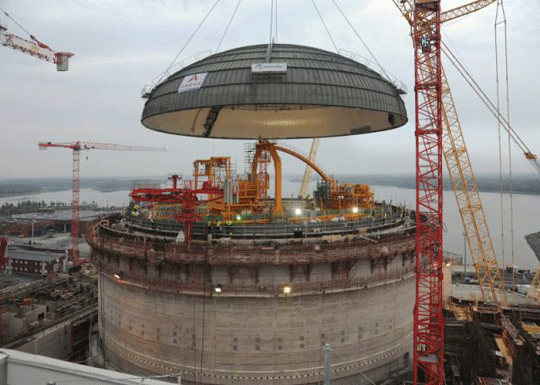
– 20 Dec 19, Finland’s fifth nuclear reactor will not begin regular operations before 2021, rather than 2009 as originally planned. The startup date for the Olkiluoto 3 (OL3) nuclear reactor on Finland’s southwest coast has been pushed back again. Plant owner Teollisuuden Voima (TVO) said on Thursday that it had been informed of the new schedule by the main supplier, the Areva-Siemens Consortium.The supplier now says that fuel will be loaded into the reactor next summer ahead of grid connection in November 2020. Regular electricity production would start in March 2021, instead of September 2020 as most recently announced. Faulty components foundTVO says the latest delays are due to slow progress in system testing and shortcomings in spare part deliveries. For instance auxiliary diesel generators were found to have faulty components. “Because of numerous delays we have to do maintenance to equipment and components already installed to ensure fluent start-up and continuous operation. The manufacturing and deliveries of the spare parts take time,” OL3 Project Director Jouni Silvennoinen said in a TVO statement. Construction work on OL3 started nearly 15 years ago. According to the original timetable, it was to have gone online in 2009. Since then there have been many delays, lawsuits and massive cost overruns. With a total cost estimate of at least 8.5 billion euros, it has been described as the second-most expensive building in human history, behind a hotel complex in Mecca. Construction of the original atomic power station began in 1973. The first unit began commercial operations six years later, becoming the country’s second reactor after one in Loviisa. The Fennovoima consortium hopes to build Finland’s first entirely new nuclear plant since the 1970s in Pyhäjoki, near Raahe. That project too has been beset by delays and is yet to receive a construction permit.
|
|

Iran and US both undermining nuclear deal says UN political affairs chief
|
Iran and US both undermining nuclear deal says UN political affairs chief, UN News , 19 December 2019
Both Iran and the United States have been putting strain on the groundbreaking 2015 deal to monitor Iran’s nuclear programme, which remains a “cornerstone of international peace and security”, said the UN’s political affairs chief on Thursday. Rosemary DiCarlo was briefing the Security Council on nuclear non-proliferation, and resolution 2231 that specifically backed the Joint Comprehensive Plan of Action (JCPOA), agreed in July 2015, by China, France, Germany, Russia, The United Kingdom, the United States, the European Union, and Iran (see fact box below for full details). She said the “full and effective implementation” of the Plan was “key to ensuring the peaceful nature of Iran’s nuclear programme and to secure tangible economic benefit to the Iranian people.” Ms. DiCarlo said the US decision to pull out of the deal was a source of “regret” as well as “the recent steps taken by Iran to reduce its nuclear-related commitments”. “Certain actions taken by the United States, since its withdrawal from the Plan, are contrary to the goals of the Plan”, she said and the re-imposition of its national sanctions lifted under the Plan, and decision not to extend waivers for the trade in oil with Iran. But according to the IAEA, she added, Iran since July “has surpassed JCPOA-stipulated limits on its uranium enrichment level, as well as limits on its stockpiles of heavy water and low-enriched uranium.” Steps have also been taken on centrifuge research and development: “Iran has stated that all these steps are reversible and that it intends to remain in the Plan. It is important that Iran returns to full implementation of the Plan, and refrain from further steps to reduce its commitments”, said the UN Political and Peacebuilding Affairs chief. Rising regional tensions…….Summing up the importance of the JCPOA, Ms DiCarlo said that António Guterres considers the full implementation of resolution 2231, by all Member States “as an integral component of our collective conflict prevention efforts.” Given the year of tension in the Gulf, “this has assumed greater importance” she noted, adding that it was the Secretary-General’s wish for all countries “to avoid confrontational actions and explore avenues for dialogue and cooperation in the interest of international peace and security.” https://news.un.org/en/story/2019/12/1054071 |
|
A quarter of Russia’s Andreeva Bay’s spent nuclear fuel stack removed, with Norway’s help
Norway helps pay for transporting old Russian navy nuclear waste
A shipment of 14 containers with spent nuclear fuel from Andreeva Bay to Atomflot in Murmansk took place this week. Barents Observer By Thomas Nilsen December 20, 2019
|
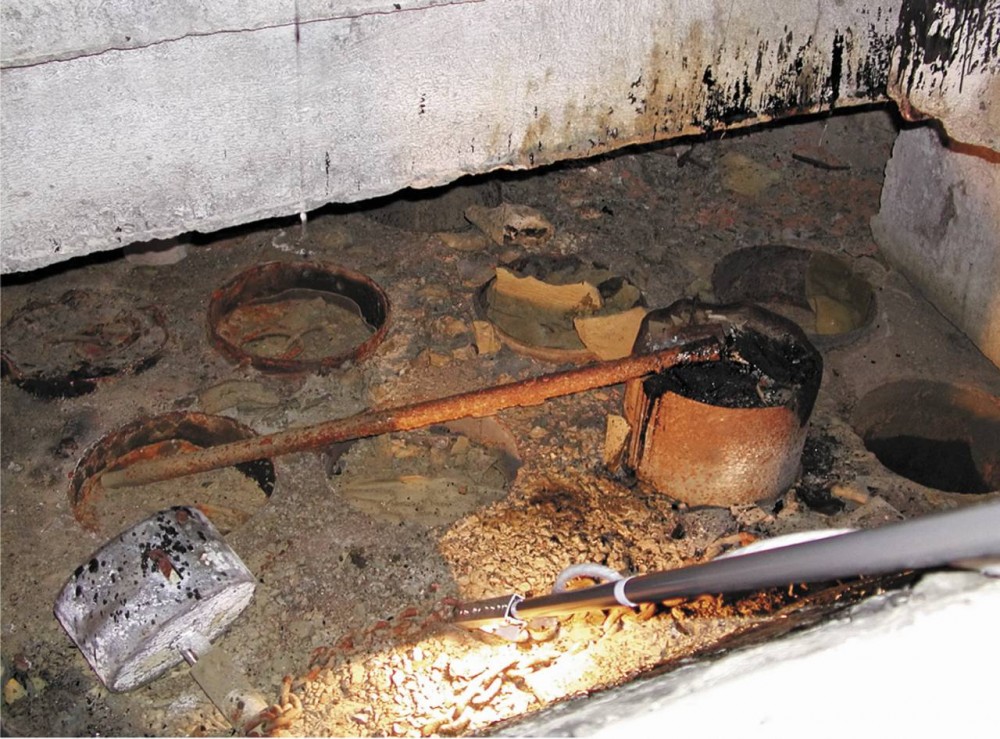
“This is the first time we will pay for removing. The ship was fully loaded. 14 containers with spent nuclear fuel,” says project coordinator Per-Einar Fiskebeck to the Barents Observer. The removed waste contained about one million Curie (37.000 TBq) of long lived isotopes. Unloading the 40-years old spent uranium fuel elements from the rundown storage tanks and repacking them to transport containers came with a price-tag of 5 million kroner (€500.000), while the shipment from Andreeva Bay to Murmansk will cost additional 2,5 million kroner (€250.000). This week’s shipment is the fourth this year, but the first one paid by Norway. Per-Einar Fiskebeck, an engineer with the County Governor of Troms & Finnmark, has since the 1990s worked in close cooperation with SevRao, Russia’s regional enterprise in charge of cleaning up the nuclear waste site on the western banks of the Litsa fjord. Here, only 65 kilometers from the border to Norway, the Soviet navy packed away its lethal leftovers. Without too much thought for the costs of future clean up. In Norway, like in Russia, the demand for action came out of fears for possible radioactive leakages that could have potentially negative impact on the important fisheries in the Barents Sea. So far, isotopes contamination has only been discovered in the sediments in the near proximity off the shore and not further out in the bay. Concerns of nuclear accidents and radioactive leakages are also why Norwegian authorities have granted hundres of millions kroner in aid to secure and clean up the site……. In 2017, the first load of containers with spent nuclear fuel left Andreeva Bay towards Murmansk, from where it go by rail to Mayak, Russia’s reprocessing plant north of Chelyabinsk east of the Ural Mountains. So far in 2019, three shipments paid by Russia and one shipment paid by Norway have left Andreeva Bay. “25% of the original amount of spent nuclear fuel is now removed,” says Per-Einar Fiskebeck. With one-fourth of the waste removed in two and a half years doesn’t mean the remaining will be shipped away with the same speed. «The fuel elements lifted out and re-packed so far have been undamaged,” Fiskebeck says. Both tank No. 1 and No. 2 are believed to hold mostly unproblematic elements. He explains how some of the other elements will be a much more challenging task. Tank 3A holds numerous rusty, partly destroyed steel pipes where concrete of poor quality was filled in the space between. Some of those fuel assemblies are stuck in the canisters, while some of the canisters are stuck in the cells. This is high level nuclear waste with radiation levels close to the uranium fuel comparable to the melted fuel rods inside the ill-fated Chernobyl reactor. Risk-assessments give a clear recommendation: Do not try to lift any of the assemblies before you are sure nothing falls out.
A worst case scenario is uranium pellets falling to the bottom, becomes unstable, creating an uncontrolled nuclear fission chain reaction with radionuclides being airborne. Three different kind of containers to handle damaged elements are now under development and testing, a work Fiskebeck estimates will take all of 2020 and 2021. “Risk assessment and environmental safety studies are core to all Norwegian funded projects,” Fiskebeck tells……… Another groundbreaking milestone in the clean up work took place earlier this fall when the retrieval of six abandoned, highly radioactive spent nuclear fuel assemblies from the bottom of Building No. 5 were successfully completed. Building No. 5 is a former pool storage, where several elements fell to the floor following a water-leakages in 1982. Traces of uranium and other radionuclides remained in the sludge at the bottom of the pool. The radiation on site was too high for humans to work safely. “You can’t have humans there. Robotics were needed to do the job,” Per-Einar Fiskebeck explains. Such remote controlled equipment were made and the six elements are now safely transferred to the nearby storage building No. 151 in Andreeva Bay……. https://thebarentsobserver.com/en/ecology/2019/12/norway-helps-pay-transporting-40-years-old-russian-navy-nuclear-waste |
|
PG and E face bankruptcy- transparency needed on decrepit Diablo Canyons nuclear reactors

|
December 18, 2019, by Common Dreams
The same pattern of lethal neglect and deferred maintenance that made PG&E the proven culprit in murderous wildfires is being repeated at Diablo Canyon. by Mimi Kennedy, Harvey Wasserman But in the interim, it must be brought to light that no squaring of PG&E’s accounts—with the people of California, the utility’s fire victims, the governor, the Public Utilities Commission, the banks, or the planet – will be complete unless there is a transparent public inspection of, and credible mechanical and fiscal accounting for, Diablo Canyon’s two aging reactors (see our petition at www.solartopia.org). The two central coast nukes are scheduled to shut by 2025, a fact that gives some policymakers a false sense of safety and a convenient cover to avoid thinking about the devastating possibility of an earthquake that would render a major population center uninhabitable and its agricultural economy barren. Why kick up a fuss if the problem’s going away in five years? Here’s why: The same pattern of lethal neglect and deferred maintenance that made PG&E the proven culprit in murderous wildfires is being repeated at Diablo Canyon. But the nuclear reactor units are more than thirty years old. Diablo Unit One was long ago found to be seriously embrittled, which means its piping is almost certainly cracked due to age. Its list of deferred maintenance procedures is a by-now notorious PG&E trademark. Its waste management procedures are suspect. The site is surrounded by more than a dozen interlinked earthquake faults. Can we really trust the operation of these immensely complex machines over the coming sixty months to a company we don’t trust to safely deliver electricity in a light breeze? We don’t need to: the power Diablo generates can be made up for by truly renewable energy sources. Now is the time—before PG&E’s bankruptcy is resolved—for the governor, the California Public Utilities Commission, and other public authorities to conduct a transparent inspection of PG&E’s nuclear facility at Diablo. A truthful appraisal of the reactors—what PG&E might claim as its biggest single asset—is impossible without a thorough inventory of the reactors’ structural liabilities Technically, such inspections are the bailiwick of the Nuclear Regulatory Commission. The NRC is currently a captive agency, with three of its five commissioners appointed by Trump. They have advocated a drastic scale-back of on-site safety inspections, allowing the nation’s 96 aging reactors to become progressively more dangerous to our population. But PG&E’s bankruptcy creates a condition outside the NRC’s purview: the court must ensure that the aggrieved parties are given a full understanding of the financial value and risks of the assets at stake. All US reactors, Diablo among them, lack private insurance. A federal fund to which providers contribute to cover their liability for catastrophic accidents contains less than $13 billion, a drop in the bucket compared to what even one such accident would cost. And who will run these two hotly contested nukes after the bankruptcy settlement? Public ownership is being hailed as a possible, progressive solution. Does that mean We the People unwittingly assume liability for the incalculable health, ecological, and property damages if the San Andreas fault (or any other) reduces Diablo to radioactive rubble and sends an apocalyptic Chernobyl cloud through the central valley, down to Los Angeles, up to the Bay Area, and into Northern California, so recently reduced to ash by PG&E? The high-stakes debate over what to do with what was once the world’s largest electric utility has been suspiciously silent on Diablo’s two 800-pound gorillas. So hear this scream: The question of ownership – private or public – cannot be answered without accounting for the structural safety and potential liabilities of the two decrepit megaliths at San Luis Obispo. The governor, the CPUC, the courts, and the company must provide the public with a detailed, independent, and credible look at the innards of these two immense machines before any bankruptcy proceedings can conclude or any future for California’s electric supply can be mapped out. Call them all now!!! |
|
|
1 This Month
19 November – Webinar – The Reality of Reprocessing
Time: 11:00 AM Pacific Time (US & Canada) / 2:00 PM Eastern / 7:00 PM UK / 8:00 PM CET
Register for the Zoom Event Here

Tell Congress: Prevent Nuclear Catastrophe in Iran

Tell Congress: Prevent Nuclear Catastrophe in Iran

Read the Public Inquiry Report, the Commissioners’ report, Surrendering Australia: The AUKUS Deception is available to download for free at aukuspublicinquiry.com. Or just watch the replay of the National Press Club Luncheon.


Shut down the radiation-damaged Heysham nuclear reactors now
To see nuclear-related stories in greater depth and intensity – go to https://nuclearinformation.wordpress.com

Say No to NASA’s Reckless Nuclear Reactor on the Moon
Say No to NASA’s Reckless Nuclear Reactor on the Moon
-
Archives
- November 2026 (178)
- October 2026 (302)
- September 2026 (339)
- August 2026 (330)
- July 2026 (355)
- June 2026 (287)
- May 2026 (306)
- April 2026 (356)
- March 2026 (251)
- February 2026 (267)
- January 2026 (308)
- December 2025 (358)
-
Categories
- 1
- 1 NUCLEAR ISSUES
- business and costs
- climate change
- culture and arts
- ENERGY
- environment
- health
- history
- indigenous issues
- Legal
- marketing of nuclear
- media
- opposition to nuclear
- PERSONAL STORIES
- politics
- politics international
- Religion and ethics
- safety
- secrets,lies and civil liberties
- spinbuster
- technology
- Uranium
- wastes
- weapons and war
- Women
- 2 WORLD
- ACTION
- AFRICA
- Atrocities
- AUSTRALIA
- Christina's notes
- Christina's themes
- culture and arts
- Events
- Fuk 2022
- Fuk 2023
- Fukushima 2017
- Fukushima 2018
- fukushima 2019
- Fukushima 2020
- Fukushima 2021
- general
- global warming
- Humour (God we need it)
- Nuclear
- RARE EARTHS
- Reference
- resources – print
- Resources -audiovicual
- Weekly Newsletter
- World
- World Nuclear
- YouTube
-
RSS
Entries RSS
Comments RSS

