Risks in incorporating artificial intelligence into nuclear weapons systems
|
As the US, China, and Russia build new nuclear weapons systems, how will AI be built in? Bulletin of the Atomic Scientists, By Matt Field, December 20, 2019 Researchers in the United States and elsewhere are paying a lot of attention to the prospect that in the coming years new nuclear weapons—and the infrastructure built to operate them—will include greater levels of artificial intelligence and automation. Earlier this month, three prominent US defense experts published a comprehensive analysis of how automation is already involved in nuclear command and control systems and of what could go wrong if countries implement even riskier forms of it.
The working paper “A Stable Nuclear Future? The Impact of Autonomous Systems and Artificial Intelligence” by the team of Michael Horowitz, Paul Scharre, and Alexander Velez-Green comes on the heels of other scholarly takes on the impact artificial intelligence (AI) will have on strategies around using nuclear weapons. All this research reflects the fact that militaries around the world are incorporating more artificial intelligence into non-nuclear weaponry—and that several countries are overhauling their nuclear weapons programs. “We wanted to better understand both the potentially stabilizing and destabilizing effects of automation on nuclear stability,” Scharre, a senior fellow at the Center for a New American Security, told the Bulletin. “In particular, as we see nations modernize their nuclear arsenals, there is both a risk and an opportunity in how they use automation in their nuclear operations.” The report notes that nuclear weapons systems already include some automated functionality: For example, warning systems automatically alert nuclear weapons operators of an attack. After the Cold War, Russian missiles were programmed to automatically retarget themselves to hit US targets if they were launched without a flight plan. For its part, the United States at one point designed its entire missile arsenal so that it could be retargeted in seconds from its peacetime default of flying into the ocean. Even these forms of automation are risky as an accidental launch could “spark a nuclear war,” the report says. But some countries, the report warns, might resort to riskier types of automation. Those risks could come from a variety of different sources. Countries could develop unmanned vehicles carrying nuclear weapons; with no one on board and responsible for deploying a nuclear weapon, the systems could be hacked or otherwise “slip out of control,” the authors say. In fact, the report notes, Russia is already reportedly developing an autonomous nuclear torpedo. Horowitz, a University of Pennsylvania political science professor, told the Bulletin that the weapon, called Poseidon or Status-6, could be the start of a trend, though it’s not yet clear how or if AI will be included. “While so much about it is uncertain, Russia’s willingness to explore the notion of a long-duration, underwater, uninhabited nuclear delivery vehicle in Status-6 shows that fear of conventional or nuclear inferiority could create some incentives to pursue greater autonomy,” Horowitz said. Countries might also build more artificial intelligence into the so-called early warning systems that indicate whether a nuclear attack is underway, or insert more powerful AI into the strategic decision support systems they use to keep tabs on other militaries and nuclear forces. Even simple forms of automation in such systems have, in the past, exacerbated nuclear tensions. The report cites a famous 1983 incident where a Soviet officer, Lt. Col. Stanislav Petrov, had to disregard automated audible and visual warnings that US nuclear missiles were inbound. Fortunately, Petrov chose not to trust what his systems were telling him and defied the powerful cognitive phenomenon known as automation bias. Another problematic form of early automation was the Soviet strategic decision support system known as VYRAN. It was a computer program in place to warn Soviet leaders when the United States had achieved a level of military superiority that required Moscow to launch a nuclear attack. But Soviet intelligence agents were inputting information that often confirmed their pre-existing beliefs about US intentions. “This feedback loop amplified and intensified those perceived threats, rather than providing Soviet leaders with a clearer understanding of US intentions,” the report notes. There is evidence that countries including Russia and China are placing more emphasis on developing these sorts of so-called computational models for analyzing threats. Despite all these drawbacks, however, the report’s authors believe there could be reasons to implement more AI and automation into nuclear weapons systems. They note how artificial intelligence systems could process more data and allow officials in charge of nuclear weapons greater situational awareness. Automation could also be useful in communicating commands in “highly contested electromagnetic environments,” as the report dryly puts it—perhaps, say, during a war. But, the report says, “many of these ways that autonomous systems could increase the resiliency and accuracy of [nuclear command and control systems] are speculative.” ……… Horowitz believes that incorporating artificial intelligence in nuclear weapons systems themselves poses mostly low probability risks. In fact, what concerns him most is how AI in non-nuclear military systems could affect nuclear weapons’ policies. “The risk I worry most about is how conventional military applications of AI, by increasing the speed of war, could place pressure on the early warning and launch doctrines of nuclear weapons states that fear decapitation in conventional war,” Horowitz told the Bulletin. Or, as the report puts it, AI-induced time pressure could lead to a chain of decision-making that, in the worst cases, could result in a country launching a pre-emptive nuclear attack. “Fear of losing quickly could create incentives for more rapid escalation to the nuclear level.”……… https://thebulletin.org/2019/12/as-the-us-china-and-russia-build-new-nuclear-weapons-systems-how-will-ai-be-built-in/ |
|
The Japanese want to phase out nuclear power
|
No to nuclear: Japan wants reactors phased out, post-Fukushima
Japan is less reliant on atomic energy, but concerns are growing about its return to climate-damaging fossil fuels. Aljazeera, by Kelly Olsen -20 Dec 19, Tokyo, Japan – At the end of a decade in which northeastern Japan was devastated by a tsunami that triggered a nuclear disaster at Fukushima, atomic energy looks unlikely to make a comeback. In the nearly nine years following the world’s worst nuclear accident since Chernobyl, the country’s reliance on atomic power for electricity generation has plummeted to between 3 and 5 percent from about 30 percent before the disaster, according to the Tokyo-based Citizens’ Nuclear Information Center. And despite a period of uncertainty in the immediate aftermath of the meltdowns triggered when Fukushima’s cooling systems were overwhelmed by the tsunami created by the magnitude 9.0 undersea earthquake, the world’s third-largest economy has shown it can function with radically less nuclear power. The public mood turned dramatically after Fukushima and the national trauma that ensued and combined with the increasing costs from aligning ageing plants with stringent post-disaster safety requirements, it is unlikely the nuclear industry will return to previous levels, according to experts, even as the government envisions nuclear power accounting for about 20-22 percent of electricity generation in 2030. “It is obvious that it is very difficult to meet this target,” said Hajime Matsukubo, secretary-general of the Citizens’ Nuclear Information Center. And while experts say while the anti-nuclear movement may seem to have quietened down, anti-nuclear feeling is firmly entrenched. ‘They say no’“Japanese people’s sentiment (has) changed after Fukushima Daiichi and it is continuing until now,” said Matsukubo, whose non-profit organisation was established in 1975 by concerned atomic scientists to gather and publicise nuclear information and raise public awareness on the industry. He said that even if people appear not as focused, if they are asked pointedly if they agree with nuclear power: “They say no.” Before Fukushima, Japan had 54 operational reactors and for a brief time in the accident’s aftermath, not a single one was in operation. So far, nine have been restarted and authorities are considering the cases of a dozen more, according to Ministry of Economy, Trade and Industry figures. A further 24 are either under decommissioning or lined up for it….. Safety costsJapan’s mass-circulation newspaper Mainichi Shimbun in an editorial after the Onagawa decision cited the newspaper’s own research that found 11 top power suppliers had spent in excess of 5 trillion yen ($45.7bn) on nuclear safety since Fukushima. “As costs balloon, it is becoming increasingly difficult, even absurd, for the government and power companies to maintain the argument that nuclear power is ‘cheap’,” the editorial said…….. “There’s a sort of built-in time limit to how long the industry as a whole can continue,” said Alexander Brown, currently a Japan Society for the Promotion of Science international research fellow at Japan Women’s University. He also emphasised, however, that Japan’s turn against nuclear energy had also coincided with a key change in its domestic economy; less industrially robust and therefore not as hungry for energy as before. “Why have the lights stayed on,” Brown asked rhetorically. “One is, yes, increased fossil fuel use, but another is there’s just less demand than there was in the peak time of manufacturing onshore in Japan.” Brown calls that an “uncomfortable truth” for much of Japan’s ruling establishment – including the prime minister and his eponymous “Abenomics” economic revitalisation programme – which clings to a belief in a model of vigorous growth. “And I think one of the amazing things when I look at the anti-nuclear movement, to me, was it was full of people looking at what are other ways that we can live,” he said. “How can we embrace other values other than high consumption, high pollution, extreme overwork and look at things like de-growth economics.” https://www.aljazeera.com/news/2019/12/japanese-turn-nuclear-decade-wrought-fukushima-191220000003532.html |
|
Elizabeth Warren caves in to the nuclear lobby. Bernie Sanders stands firmly anti nuclear
 ‘We need to keep some’: Warren backtracks on
 nuclear power plants, Washington Examiner, by Josh Siegel, December 19, 2019 Elizabeth Warren would keep existing nuclear plants online to combat climate change, she said at Thursday night’s presidential primary debate, marking a shift in her position on an issue that has divided the Democratic field……..
Warren’s liberal rival Bernie Sanders is perhaps the most skeptical of nuclear, citing concerns about storing nuclear waste, and the high cost of building new plants, in opposing it.
Tom Steyer, the billionaire environmentalist, seemed to echo that position at Thursday night’s debate, saying nuclear costs too much and presents too many risks.
Is anyone really interested in Small Modular Nuclear Reactors? (- only those selling them)
comment on article below
Someone should have challenged the headline. Whose interest in Small Modular Reactors is growing?
Not the major nuclear firms.
At the graveyard wherein resides the “nuclear renaissance” of the 2000s, a new occupant appears to be moving in: the small modular reactor (SMR). … Over the past year, the SMR industry has been bumping up against an uncomfortable and not-entirely-unpredictable problem: It appears that no one actually wants to buy one.”
Overton notes that in 2013, MidAmerican Energy scuttled plans to build an SMR-based plant in Iowa. This year, Babcock & Wilcox scaled back much of its SMR program and sacked 100 workers in its SMR division. Westinghouse has abandoned its SMR program. As he explains:
“The problem has really been lurking in the idea behind SMRs all along. The reason conventional nuclear plants are built so large is the economies of scale: Big plants can produce power less expensively per kilowatt-hour than smaller ones.
“The SMR concept disdains those economies of scale in favor of others: large-scale standardized manufacturing that will churn out dozens, if not hundreds, of identical plants, each of which would ultimately produce cheaper kilowatt-hours than large one-off designs.
“It’s an attractive idea. But it’s also one that depends on someone building that massive supply chain, since none of it currently exists. … That money would presumably come from customer orders – if there were any. Unfortunately, the SMR “market” doesn’t exist in a vacuum.
“SMRs must compete with cheap natural gas, renewables that continue to decline in cost, and storage options that are rapidly becoming competitive. Worse, those options are available for delivery now, not at the end of a long, uncertain process that still lacks [US Nuclear Regulatory Commission] approval.
 Interest in Small Modular Nuclear Reactors Is Growing. So Are Fears They Aren’t Viable, SMRs are the future of nuclear. Will they always be the future? GTM JASON DEIGN MARCH 14, 2018 The slow-moving small modular reactor (SMR) market saw some positive activity in recent weeks, even as one expert predicted the technology would never achieve commercialization.
Earlier this month, the World Nuclear Association reported that Ukraine had signed a memorandum of understanding with SMR developer Holtec International, aiming to turn the Eastern European nation into a manufacturing hub for Holtec’s SMR-160 reactors.
The Association said Holtec is planning a Ukrainian manufacturing plant to allow for partial localization of its 160-megawatt SMRs, so Ukraine’s nuclear operator Energoatom can use the design to replace two aging Russian VVER-440 reactors at its Rivne nuclear power plant.
The news came a week after the government of Canada announced a road-mapping exercise to explore the potential of SMRs in the country.
“The road map will be an important step in positioning Canada to advance next-generation technologies and become a global leader in the emerging SMR market,” said Natural Resources Canada, a federal institution.
This was welcome news for a technology that has been slow to achieve commercialization — and which some believe might never take off.
In the December 2017 edition of the National University of Singapore’s Energy Studies Institute Bulletin, for example, Canadian academic Professor M.V. Ramana provided a detailed argument for why SMRs could never be a viable technology.
Nuclear plants in general require high levels of capital, he noted, and high construction costs mean the electricity they provide ends up being more expensive than coal, gas and, more recently, wind and solar.
SMRs may be able to overcome the first problem, said Ramana, who is a professor at the University of British Columbia’s School of Public Policy and Global Affairs.
But SMRs could end up with even higher energy costs because the smaller reactors can’t take advantage of economies of scale unless they’re manufactured “by the thousands, even under very optimistic assumptions about rates of learning.”
Experience indicates such rates of learning may be rare in the nuclear industry. In France and the U.S., according to Ramana, reactor construction costs have historically risen rather than falling.
Also, mass production would need the industry to settle on a single SMR design. As of 2016 there were 48 listed by the International Atomic Energy Agency.
Finally, said Ramana, for all the interest in SMRs, no country has yet got behind the technology enough for it to be commercialized. This likely indicates demand for the reactors is not as solid as proponents imagine.
“SMRs seem appealing to many countries at first sight,” Ramana told GTM. “But once they get into the actual nitty gritty of planning an SMR project, they realize that there are numerous problems.
“Economics are a significant challenge, as is the problem of finding sites to construct the many units that would have to replace a single nuclear reactor.” ….. https://www.greentechmedia.com/articles/read/interest-in-small-modular-nuclear-grows?utm_source=dlvr.it&utm_medium=twitter
Safety costs increase for Tokai No. 2 nuclear plant
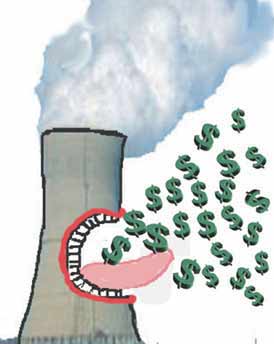 Contractors want 70 billion yen more for safety at nuclear plant http://www.asahi.com/ajw/articles/AJ201912170067.html By TAKASHI ICHIDA/ Senior Staff Writer, December 17, 2019 TOKAI, Ibaraki Prefecture–-Costs to safeguard the Tokai No. 2 nuclear plant here will run at least 70 billion yen ($642 million) more than the plant operator’s estimate, raising the likelihood that consumers will get stuck covering the difference through their power bills.
Japan Atomic Power Co. (JAPC) is seeking to restart the plant, idled since the 2011 Fukushima nuclear disaster, as soon as possible to secure much-needed revenue by selling power from it to electric utilities.
The plant operator has been negotiating with leading general contractors over the cost of work to increase safety at the single-reactor plant along the coast of Ibaraki Prefecture. It aims to ink contracts for the work by March 2020. But the difference over the cost between the two sides has rarely narrowed.
Construction of a 20-meter-tall seawall and an emergency facility to protect the plant from possible tsunami and other natural disasters are among the protective measures scheduled.
In October 2018, the Nuclear Regulation Authority approved the plan to implement the measures under more stringent regulations that went into force in July 2013 after the triple meltdown at the Fukushima No. 1 nuclear plant.
JAPC estimated that the project would cost 174 billion yen, according to officials at some construction companies.
Six major general contractors–Kajima Corp., Taisei Corp., Obayashi Corp., Shimizu Corp., Hazama Ando Corp. and Penta-Ocean Construction Co.–were asked to give quotes for each portion of the project. Only one company will be chosen for each portion.
Their quotes, all submitted by around November 2018, pegged the overall cost at least 250 billion yen more than JAPC envisaged.
The plant operator is also required to build a facility to respond to a possible terror attack, estimated at costing 61 billion yen, bringing the overall cost to protect the plant to more than 300 billion yen.
The ballooning price tag is blamed on a spike in the cost of civil engineering materials, machine tools and workers, according to officials familiar with the matter.
The plant operator urged contractors to rethink their estimates, but they refused, maintaining that the higher price was inevitable in order to complete the project on time.
With JAPC’s self-imposed March deadline to conclude contracts fast approaching, industry analysts say the operator will likely give in to the contractors’ demands.
In October, five regional electric utilities, including Tokyo Electric Power Co. and Tohoku Electric Power Co., which used to purchase electricity from JAPC, announced they would increase financial support to the company to 350 billion yen from the 300 billion yen they pledged in March.
The rise is attributed to a surge in the costs for the seawall and emergency facility.
JAPC and the six contractors declined to comment when asked by The Asahi Shimbun to provide more details of specific cost overruns.
Japan’s major electric power companies usually directly select individual contractors for projects and do not open contracts for bidding.
Under such contracts, disparities between estimates and final costs rarely emerge.
An official at one of the power companies who is familiar with the matter called the 70 billion yen cost overrun “extremely unusual.”
JAPC maintains that its initial 174 billion yen estimate is more than adequate for contractors to complete the work.
But an official at one of the construction companies accused the power company of low-balling the amount needed for the project.
An official close to a utility financially supporting JAPC said the operator should have contractors compete for each project segment and require them to submit estimates.
The Tokai No. 2 nuclear plant started operations in 1978. The Nuclear Regulation Authority authorized a 20-year extension on the reactor’s life in November 2018.
Fukushima Unit 3 Spent Fuel Damage Identified
Fukushima Unit 3 Spent Fuel Damage Identified, Simply Info [excellent photos], December 16, 2019
TEPCO has identified twelve fuel assemblies with damaged lifting handles. Further damage can not be identified at this point as the assemblies are still in the fuel racks in the spent fuel pool. The location of the newer 6 damaged assemblies are from the location where the fuel handling crane and a concrete hatch fell into the pool…. http://www.simplyinfo.org/?p=17842
Switzerland to shut down uneconomic Mühleberg nuclear reactor
|
Switzerland to shut down first nuclear reactor le News18/12/2019 BY LE NEWS
On 20 December 2019, Switzerland will shut down the Mühleberg nuclear reactor in the canton of Bern. The plant went into operation in 1972, making it the nation’s second oldest nuclear power station after Beznau, which started its first reactor in 1969. The Mühleberg power station, which takes its cooling water from the Aare river, was originally scheduled for shutdown in 2012. This date was later extended to 2019. Fissures in the mantle surrounding the reactor and rising operating costs mean the plant is no longer economically viable. Groups concerned about the safety of the reactor are celebrating. The safety justification for the nation and it neighbours for shutting down this reactor has existed for a long time, according to Philippe de Rougemont, a spokesperson for the group Sortir du nucléaire, a group that organised an unsuccessful referendum in 2016 to precipitate the phaseout of Switzerland’s nuclear power industry. The Mühleberg reactor, which is the closest Swiss reactor to Lausanne and Geneva, must now be decommissioned. Radioactive material must be cooled, processed and disposed of safely. The organisation Sortir du nucléaire said it will keep a close eye on this process, which it considers a major risk. Switzerland has five nuclear reactors on four sites. After the 2011 nuclear accident at Fukushima in Japan, the Federal Council, Switzerland’s executive, said it would build no new nuclear reactors and decommission existing nuclear power plants at the end of their safe operational lifespans. It estimated the safe operational lifespan to be about 50 years, which means Beznau I would be taken offline in 2019, Beznau II and Mühleberg in 2022, Gösgen in 2029 and Leibstadt in 2034. However, the government made no commitment to close any nuclear reactor by a specific date. The Federal Council was supported by parliamentary and upper house majorities……. https://lenews.ch/2019/12/18/switzerland-to-shut-down-first-nuclear-reactor/ |
|
Hazards of Russia’s nuclear colonialism- example South Africa
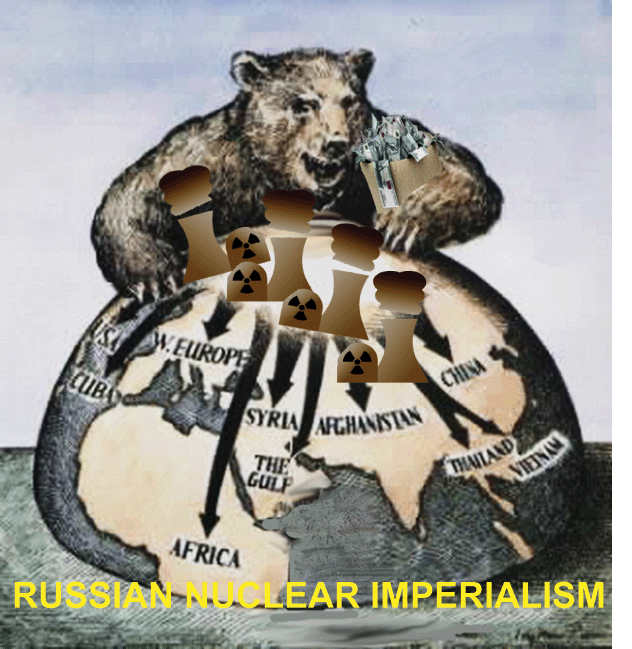
 Africa, Russia squandered close ties with the South African government by overplaying its hand and getting caught up in a corrupt nuclear energy pact. Carnegie Endowment For International Peace (thoroughly researched and referenced) 16 Dec 19,
SUMMARY
 Amid the widespread attention the Kremlin’s recent inroads in Africa have attracted, there has been surprisingly little discussion of South Africa, a country which, for nearly a decade, unquestionably represented Russia’s biggest foreign policy success story on the continent. As relations soared during the ill-starred presidency of Jacob Zuma (2009–2018), the Kremlin sought to wrest a geopolitically significant state out of the West’s orbit and to create a partnership that could serve as a springboard for expanded influence elsewhere in Africa. Continue reading
Male dominated climate talks falter, while women’s perspective is excluded
|
The first step to achieving this aim would be gender parity at international climate conferences such as the Madrid COP. While we don’t yet know how many of the 13,000 registered governmental delegates were women, based on past numbers they are unlikely to make up more than a quarter. This is not the only forum where the experiences of women are ignored. Our research, spanning Kenya, Cambodia and Vanuatu, has found women are working collectively to strengthen their communities in the face of climate change. But their knowledge about climate risk is dismissed by scientists and political leaders. Bridging climate awareness When women are excluded from local and national-level governance, the absence of their voices at regional and global levels, such as COP meetings, is virtually assured. Our work across Africa, Asia and the Pacific found scientists – generally male – lack awareness of the knowledge women hold about the local consequences of climate change. At the same time, those women had little access to scientific research. In places where the labour is divided by gender, women and men learn different things about the environment. Though the women in our research generally did not know about government policies or programs on climate change and disaster risk reduction, they were very aware of environmental change. In Kenya, the pastoralist women we spoke to are acutely aware of the link between their physical insecurity and extreme drought. Continue reading |

European Union’s “taxonomy” of sustainable activities includes nuclear
 Green-Finance Deal Reached by EU States on Nuclear Compromise https://www.bloomberg.com/news/articles/2019-12-16/green-finance-deal-reached-by-eu-states-on-nuclear-compromise
By Alexander Weber, December 16, 2019,
Diplomats from the European Union’s 28 countries agreed to advance with key legislation for green financial products, bringing the bloc a step closer to embedding environmental goals in standards for banks, money managers and insurers. Envoys signed off on a deal on the EU’s list of sustainable activities after more lenient wording on the inclusion of nuclear energy won the backing of countries including France and the U.K., according to an official involved in the talks, who asked not to be named, in line with policy. A first attempt to strike a deal last week failed amid divisions over the role that nuclear energy should play in the framework. The EU’s list of sustainable activities for investment purposes, dubbed “taxonomy,” is the centerpiece of its push to regulate the fast growing market of green finance, in the hope of directing trillions of euros to fund a radical revision of the region’s economy. It’s meant to define what’s green and what’s not, an effort that could find a range of uses and serve as an example for governments around the world. The difficulty of agreeing on the rules shows what kind of obstacles the EU has to overcome to meet its ambitious climate targets. Leaders last week agreed that the bloc should achieve zero net emissions in 2050, paving the way for a flurry of legislation that’s needed for the unprecedented clean-up of the economy. The member states now have to present their compromise to the European Parliament, which has been critical of allowing fossil fuels and nuclear power to be classified as sustainable and thus eligible to be financed with green bonds and similar financial products. |
|
Pentagon goes ahead with ballistic missile test, bringing on deadly arms race
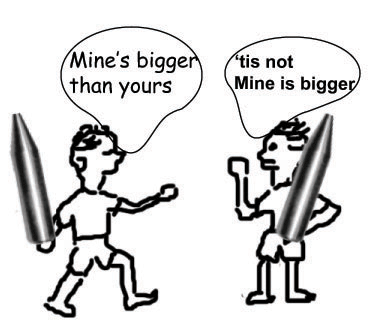 US shuns treaty, sends chilling nuclear message In the second test since the US pulled out of the INF treaty, the prototype ballistic missile flew more than 500km before crashing into the ocean, Asia Times, By DAVE MAKICHUK 16 Dec 19, In a sobering doomsday signal to Moscow, Beijing, and Pyongyang, the Pentagon again showed it plans to leave the INF treaty behind and boldly risk sparking a new arms race by launching a prototype ballistic missile that blew past the old pact’s range limits, Breaking Defense reported.
In the second test of its kind since the US pulled out of the Intermediate-Range Nuclear Forces treaty in August, the prototype ballistic missile flew more than 500 km before crashing into the ocean, as planned, while “data collected and lessons learned from this test will inform the Department of Defense’s development of future intermediate-range capabilities,” Pentagon spokesman Lt. Col. Robert Carver said in a statement.
In a previous test conducted just two weeks after withdrawing from the treaty, the Navy launched a Tomahawk Land Attack Cruise Missile from an island off the California coast, marking the first time a missile breached the 500-5,000km range barred by the treaty, putting competitors on notice that the US was ready to push ahead quickly, the report said.
That does not bar prototypes or other research and development work. The Pentagon can keep working on them for the next year, but must submit a report to Congress with an Analysis of Alternatives for a future INF-busting missile.
Lawmakers also want more information on potential basing options in Europe and a rundown of what conversations the Pentagon has had with allies about plans for basing and deployment locations in the future…… https://www.asiatimes.com/2019/12/article/us-shuns-treaty-sends-deadly-nuclear-message/
Idaho nuclear waste processing project to close – not commercially viable
Federal officials will shut down an Idaho nuclear waste treatment project after determining it would not be economically feasible to bring in radioactive waste from other states.
The U.S. Department of Energy in documents made public this week said the Advanced Mixed Waste Treatment Project that employs 650 workers will end next year.
A $500 million treatment plant handles transuranic waste that includes work clothing, rags, machine parts and tools that have been contaminated with plutonium and other radioactive elements. The U.S. Nuclear Regulatory Commission says transuranic wastes take much longer to decay and are the most radioactive hazard in high-level waste after 1,000 years.
The Energy Department said that before the cleanup began, Idaho had the largest stockpile of transuranic waste of any of the agency‘s facilities. Court battles between Idaho and the federal government culminated with a 1995 agreement requiring the Energy Department to clean up the Idaho site.
The Idaho treatment plant compacts the transuranic waste, making it easier to ship and put into long-term storage at the Waste Isolation Pilot Plant in New Mexico.
Federal officials earlier this year floated the idea of keeping the $500 million treatment plant running in Idaho with waste from other states. The bulk of that would have been 8,000 cubic meters (6,100 cubic meters) of radioactive waste from a former nuclear weapons production area in Hanford in eastern Washington.
Local officials and politicians generally supported the idea because of the good-paying jobs. The Snake River Alliance, an Idaho-based nuclear watchdog group, said it had concerns the nuclear waste brought to Idaho would never leave.
A 38-page economic analysis the Department of Energy completed in August and released this week found “it does not appear to be cost effective due to packaging and transportation challenges in shipping waste” to Idaho.
“As work at the facility will continue into 2019, no immediate workforce impacts are anticipated,” the agency said in an email to The Associated Press on Friday. The Energy Department “recognizes the contribution of this facility and its employees to DOE‘s cleanup mission and looks forward to applying the knowledge gained and experience of the workforce to other key activities at the Idaho site.”
The agency said it would also consider voluntary separation incentives for workers.
With the Idaho treatment plant scheduled to shut down, it‘s not clear how the transuranic waste at Hanford and other sites will be dealt with.
The Energy Department “will continue to work to ensure a path forward for packaging and certification of TRU (transuranic) waste at Hanford and other sites,” the agency said in the email to the AP.
The Post Register first reported the closure.
Maryland’s Back From the Brink” resolution to support the U.N. Nuclear Ban Treaty
 The Montgomery County Council has joined Baltimore and Washington, D.C. with its own “Back From the Brink” resolution to support the U.N. Nuclear Ban Treaty, alongside the U.S. Conference of Mayors and 40 municipalities and state legislatures from California to Maine calling on the Trump Administration and Congress to exercise global leadership in preventing nuclear war by:
- Renouncing the option of using nuclear weapons first;
- Ending the President’s sole, unchecked authority to launch a nuclear attack;
- Taking U.S. nuclear weapons off hair-trigger alert;
- Canceling the the $1.7 trillion dollar plan to replace the entire U.S. nuclear arsenal with enhanced weapons;
- Supporting the U.S. entry into the Treaty on the Prohibition of Nuclear Weapons; and
- Requiring the U.S. to pursue a verifiable agreement among nuclear-armed states to eliminate their nuclear arsenals.
The U.N. treaty is two-thirds of the way toward the 50 ratifying nations needed to make it operational, whereupon nuclear weapons will be prohibited, stigmatized and eventually eliminated.
Maryland jurisidictions join “back from the brink” nuclear war movement Baltimore Sun, By DAVID GROSSO, BILL HENRY and TOM HUCKER, BALTIMORE SUN |, DEC 16, 2019 “A nuclear war cannot be won and must never be fought.”
— President Ronald Reagan in his 1984 State of the Union address
U.S. presidents have always understood the calamitous power of nuclear weapons. They held the fate of our planet and human civilization in their hands with sole authority to launch a nuclear warhead that could not be recalled.
Under President Donald Trump, the danger of putting planetary fate of the world in the hands of one person has never been clearer. He refuses to listen to, or abide by, the advice of our career military and diplomatic experts. His ill-advised and impetuous withdrawal of U.S. forces from Syria is only the most recent example. Since taking office, President Trump has abandoned the multilateral agreement that constrained Iran’s nuclear program. He also announced plans to withdraw from the Intermediate-Range Nuclear Forces Treaty, which for more than 30 years banned intermediate range missiles and has contributed to stability in Europe.
According to the Bulletin of Atomic Scientists: “The INF treaty’s potential death foreshadows a new competition to deploy weapons long banned. Continue reading
USA rejects North Korea’s ‘hostile’ deadline over nuclear talks
|
Top US diplomat rejects North Korea’s ‘hostile’ deadline over nuclear talks and says Washington will not bow to Pyongyang’s ominous threat of a ‘Christmas Gift’ provocation,
By ROSS IBBETSON FOR MAILONLINE and AFP 17 Dec 19, A senior US diplomat has today slammed North Korea for making ‘hostile demands’ over nuclear talks and warned Kim Jong-un against his planned ‘Christmas Gift’ provocation. US special representative Stephen Biegun told reporters in Seoul that Washington would not bow to Pyongyang’s increasingly strident demands for concessions by 2020. ‘Let me be absolutely clear: The United States does not have a deadline. We are fully aware of the strong potential for North Korea to conduct a major provocation in the days ahead,’ Biegun said. ‘To say the least, such an action will be most unhelpful in achieving lasting peace on the Korean Peninsula.’….. Pyongyang has said that if Washington fails to make it an acceptable offer, it will adopt a so far unspecified ‘new way’. It has carried out a series of static tests at its Sohae rocket facility this month, after a number of weapons launches in recent weeks, some of them described as ballistic missiles by Japan and others – which Pyongyang is banned from testing under UN sanctions……Pyongyang has said that if Washington fails to make it an acceptable offer, it will adopt a so far unspecified ‘new way’. It has carried out a series of static tests at its Sohae rocket facility this month, after a number of weapons launches in recent weeks, some of them described as ballistic missiles by Japan and others – which Pyongyang is banned from testing under UN sanctions…https://www.dailymail.co.uk/news/article-7797205/Top-diplomat-rejects-North-Koreas-deadline-says-Washington-not-bow-threats.html |
|
|
In France, over the next decade renewable energy is ‘on track to overtake nuclear’
 Renewables ‘on track to overtake nuclear’ in France https://www.powerengineeringint.com/2019/12/16/renewables-on-track-to-overtake-nuclear-in-france/ Kelvin Ross A new study claims that renewables are on track to overtake nuclear power as the dominant energy source in France in the next decade.The share of renewables in France will hit 42.9 per cent of the country’s power mix by 2023, up from 19.9 per cent in 2018, according to analytics company GlobalData. And the research suggests that renewables will continue to rise as nuclear reactors come offline. The report examining France’s power outlook to 2030 reveals that in 2018 nuclear power dominated the capacity mix by 47.2 per cent, followed by renewables, hydropower and thermal power. In the non-hydro renewable energy mix, wind contributed 56.7 per cent followed by solar PV with 35.6. GlobalData analyst Piyali Das said that France “is aiming to boost the renewable energy sources through tender mechanism. Renewable power sources are expected to increase at a compound annual growth rate of 8.9 per cent between 2019 and 2030 with a net capacity addition of around 50 GW. “Installed capacity for onshore wind will double from its current levels of 15.1 GW by 2026, and to support the expansion the government has announced doubling of the renewable energy budget. Solar PV is not behind by much in terms of growth and will witness an addition of more than 24 GW during the same period.” Das said that in the long-term, the French government has decided to cut down its fossil fuel dependency and is replacing coal and oil power stations with gas-fired plants. The government also has wants to reduce nuclear generation to 50 per cent of net generation by 2035, with a plan to decommission around 14 reactors by 2035 and fill the gap with renewable sources. “To date the development of renewable energy is largely supported by public support mechanisms,” explained Das. “These mechanisms finance the difference between the remuneration of their production on the wholesale market and the purchasing price guaranteed by the state to the renewable producer. |
|
1 This Month
19 November – Webinar – The Reality of Reprocessing
Time: 11:00 AM Pacific Time (US & Canada) / 2:00 PM Eastern / 7:00 PM UK / 8:00 PM CET
Register for the Zoom Event Here

Tell Congress: Prevent Nuclear Catastrophe in Iran

Tell Congress: Prevent Nuclear Catastrophe in Iran

Read the Public Inquiry Report, the Commissioners’ report, Surrendering Australia: The AUKUS Deception is available to download for free at aukuspublicinquiry.com. Or just watch the replay of the National Press Club Luncheon.


Shut down the radiation-damaged Heysham nuclear reactors now
To see nuclear-related stories in greater depth and intensity – go to https://nuclearinformation.wordpress.com

Say No to NASA’s Reckless Nuclear Reactor on the Moon
Say No to NASA’s Reckless Nuclear Reactor on the Moon
-
Archives
- November 2026 (178)
- October 2026 (302)
- September 2026 (339)
- August 2026 (330)
- July 2026 (355)
- June 2026 (287)
- May 2026 (306)
- April 2026 (356)
- March 2026 (251)
- February 2026 (267)
- January 2026 (308)
- December 2025 (358)
-
Categories
- 1
- 1 NUCLEAR ISSUES
- business and costs
- climate change
- culture and arts
- ENERGY
- environment
- health
- history
- indigenous issues
- Legal
- marketing of nuclear
- media
- opposition to nuclear
- PERSONAL STORIES
- politics
- politics international
- Religion and ethics
- safety
- secrets,lies and civil liberties
- spinbuster
- technology
- Uranium
- wastes
- weapons and war
- Women
- 2 WORLD
- ACTION
- AFRICA
- Atrocities
- AUSTRALIA
- Christina's notes
- Christina's themes
- culture and arts
- Events
- Fuk 2022
- Fuk 2023
- Fukushima 2017
- Fukushima 2018
- fukushima 2019
- Fukushima 2020
- Fukushima 2021
- general
- global warming
- Humour (God we need it)
- Nuclear
- RARE EARTHS
- Reference
- resources – print
- Resources -audiovicual
- Weekly Newsletter
- World
- World Nuclear
- YouTube
-
RSS
Entries RSS
Comments RSS

