Russia’s Poseidon thermonuclear torpedo being tested
Russia’s New Nuclear Torpedo Is A Threat To More Than Just America’s Aircraft CarriersBut its coastal cities as well. National Interest. by Michael Peck, 4 Mar 20, Key point: Or is this just more hype? You make the call. Russia has begun underwater tests of its Poseidon thermonuclear torpedo.
The Poseidon is an 80-foot-long nuclear-powered submersible robot that is essentially an underwater ICBM. It is designed to travel autonomously across thousands of miles, detonate outside an enemy coastal city, and destroy it by generating a tsunami.
“In the sea area protected from a potential enemy’s reconnaissance means, the underwater trials of the nuclear propulsion unit of the Poseidon drone are underway,” an unnamed Russian defense official told the TASS news agency.
The source also said the “the reactor is installed in the hull of the operating drone but the tests are being held as part of experimental design work rather than full-fledged sea trials at this stage.”
TASS also reports the Poseidon, — the name was chosen in a Web contest held by Russia’s Ministry of Defense – will be armed with a 2-megaton warhead. That’s more than enough to destroy a city. But that leaves the question of why Russia would choose to nuke an American city with an underwater drone – even one that allegedly travels 100 miles an hour – when an ICBM can do the job in 30 minutes.
Russia suggests the Poseidon is a retaliatory weapon that would revenge a U.S. first strike even if American missile defenses were capable of stopping hundreds of Russian ICBMs. But even in the unlikely event that the U.S. could intercept 500 or more Russian ballistic missiles, a delivery system that could take days or weeks to reach its target seems hardly an efficient deterrent.
TASS also reports the Poseidon, — the name was chosen in a Web contest held by Russia’s Ministry of Defense – will be armed with a 2-megaton warhead. That’s more than enough to destroy a city. But that leaves the question of why Russia would choose to nuke an American city with an underwater drone – even one that allegedly travels 100 miles an hour – when an ICBM can do the job in 30 minutes.
Russia suggests the Poseidon is a retaliatory weapon that would revenge a U.S. first strike even if American missile defenses were capable of stopping hundreds of Russian ICBMs. But even in the unlikely event that the U.S. could intercept 500 or more Russian ballistic missiles, a delivery system that could take days or weeks to reach its target seems hardly an efficient deterrent…..
The puzzle is why a giant robot submarine would be needed to detonate a nuclear warhead near a U.S. aircraft carrier ….. https://nationalinterest.org/blog/buzz/russias-new-nuclear-torpedo-threat-more-just-americas-aircraft-carriers-129207
Nuclear power project Bradwell B public consultation to go live this week
 Nuclear power project Bradwell B public consultation to go live this week, Maldon Standard , 4 Mar 20, By Pape Gueye @PMGueye “……… Proposals for Bradwell B were unveiled today as the first stage of consultation gets under way.
The consultation will run for 12 weeks until May 27, with exhibitions taking place at 15 venues across Essex…..
The proposals for Bradwell B will be developed over several years before the project submits an application to the UK Planning Inspectorate.
The final decision whether to grant permission will be taken by the Secretary of State.
A group campaigning against Bradwell B is urging residents to attend the EDF energy and Chinese General Nuclear stage one consultation events and make their views known.
Blackwater Against New Nuclear Group (BANNG) has been campaigning against the power station plan.
A spokesman said: “Any support will be gratefully welcome, ranging from just turning up to spending the whole time at a venue demonstrating your concern.”
The first consultation takes place tomorrow at Steeple Village Hall from 2pm until 8pm.
To see the other consultation dates, visit banng.info. https://www.maldonandburnhamstandard.co.uk/news/18280459.nuclear-power-project-bradwell-b-public-consultation-go-live-week/
Visit bradwellb.co.uk.
Poland’s nuclear power development with USA to cost $15.56 billion
|
Poland faces $15 bln nuclear power bill over 20 years – minister , https://www.reuters.com/article/poland-energy-nuclear/poland-faces-15-bln-nuclear-power-bill-over-20-years-minister-idUSL8N2AX3G7 RUDA SLASKA, Poland, March 4 (Reuters) – Poland will have to spend 60 billion zlotys ($15.56 billion) on its planned nuclear power plants over the next 20 years, the Polish minister responsible for energy infrastructure Piotr Naimski said on Wednesday.Poland generates most of its electricity from carbon-intensive coal and is the only EU state that has not pledged to achieve climate neutrality in 2050.
But facing pressure from the European Union to reduce emissions, it has planned to build 6-9 gigawatts (GW) of nuclear generation by 2040. “This will require spending 60 billion zlotys. These are huge amounts but our state can afford it,” Naimski told a conference in Silesia, a coal region in south of Poland. Poland hopes to cooperate with the United States on its nuclear energy project. Also French President Emmanuel Macron said last month that France supports Poland’s transition away from coal by using nuclear technology to produce electricity. ($1 = 3.8564 zlotys) (Reporting by Wojciech Zurawski; writing by Agnieszka Barteczko; editing by Barbara Lewis) |
|
EXPERTS: NUCLEAR WEAPONS SHOULD BE FRONT-BURNER ISSUE IN 2020 RACE FOR WHITE HOUSE

Bulletin of the Atomic Scientist Briefing Audience Told: “We Are Living in a World Where the Next President Will Decide if the Number of Nuclear Weapons Go Up or Down.”
 CHICAGO, IL///March 2, 2020///Two leading experts raised serious concerns today about the lack of substantive discussion among U.S. presidential candidates about their plans for U.S. nuclear weapons and related threats around the globe. They noted that arms control agreements resulted in the number of nuclear weapons in the world being slashed from 70,000 to 14,000, with that progress now in danger of being reversed.
The Bulletin of the Atomic Scientists briefing held one day before Super Tuesday included an appeal to both candidates and the news media to move nuclear weapons to the forefront of the 2020 elections.
Former Obama science adviser John P. Holdren said: “We live in a soundbite and Twitter culture. It’s difficult to express nuclear weapons threats in 240 words or an eight-second quote … We should be talking about embracing a no-first-use policy. We have much cheaper and safer ways to deal with conventional and biological attacks than using nuclear weapons and therefore launching a much wider nuclear war. That threat is not worth it. Candidates should be talking about their views on ‘no first use.’”
Holdren now is the Teresa and John Heinz Professor of Environmental Policy at Harvard’s Kennedy School of Government, Co-Director of the School’s Science, Technology, and Public Policy program, Professor of Environmental Science and Policy in the Department of Earth and Planetary Sciences, and Affiliated Professor in the John A. Paulson School of Engineering and Applied Science. Holdren also is Visiting Distinguished Professor at Tsinghua University in Beijing, China, and Senior Advisor to the President at the Woods Hole Research Center, a pre-eminent scientific think tank focused on global climate change. From January 2009 to January 2017, he was President Obama’s Science Advisor and Senate-confirmed Director of the White House Office of Science and Technology Policy (OSTP).
Alexandra Bell, the senior policy director at the Center for Arms Control & Non-Proliferation, said: “There are well over 4,000 nuclear weapons in the U.S. stockpile. Anyone running for President is asking the public to trust them … The next President is going to decide if we live in a world when the number of nuclear weapons is going up or going down. If we lose the (arms control) agreements, we are definitely headed to a world where that number is going up. That is why this should be a major issue in the 2020 election cycle.”
Previously, Bell served as a senior adviser in the Office of the Under Secretary for Arms Control and International Security. She has also worked on nuclear policy issues at the Ploughshares Fund.
Holdren said that the issue of “no first use” was considered at length during the Obama Administration and that a decision was deferred in the President’s second term “on the assumption that Hillary Clinton would win” the 2016 election.
Bell noted that President Trump is the first U.S. president since John F. Kennedy to fail to initiate a major arms control agreement in their first term in office. She said: “Whoever the next person is to sit behind that Resolute Desk is going to having to deal with a number of issues that have been left behind to them.”
Both Holdren and Bell agreed that the news media (except for a handful of key outlets) are not paying enough attention to nuclear weapons issues. But they also agreed that it is incumbent on experts to find a way to talk about nuclear weapons that engages presidential candidates, elected officials, the media, and the public.
John Mecklin, editor-in-chief of the Bulletin of the Atomic Scientists, moderated the expert panel discussion.
For more background information, see Nuclear Weapons Policy and the U.S. Presidential Election, an edition of the Bulletin of the Atomic Scientists available free online until March 31, 2020.
ABOUT THE BULLETIN OF THE ATOMIC SCIENTISTS
December 2020 marks the 75th anniversary of the first edition of the Bulletin of the Atomic Scientists, initially a six-page, black-and-white bulletin and later a magazine, created in anticipation that the atom bomb would be “only the first of many dangerous presents from the Pandora’s Box of modern science.” The Bulletin of the Atomic Scientists’ iconic Doomsday Clock was reset on January 23, 2020 to 100 seconds to midnight. www.thebulletin.org.
MEDIA CONTACT: Max Karlin, (703) 276-3255 and mkarlin@hastingsgroup.com.
EDITOR’S NOTE: A streaming recording of the Bulletin of the Atomic Scientists’ briefing will be available at www.thebulletin.org/nukes2020vote as of 5 p.m. CST/6 p.m. EST/2300 GMT on March 2, 2020.
The Olympic torch relay promoting “radiation recovery” – not so popular in Fukushima
 In Fukushima, Olympic torch relay faces cool welcome from nuclear evacuees WTVB,
FUTABA, Japan (Reuters) – Dressed in protective plastic coveralls and white booties, Yuji Onuma stood in front of the row of derelict buildings that included his house, and sighed as he surveyed his old neighborhood.
On the once-bustling main street, reddish weeds poked out of cracked pavements in front of abandoned shops with caved-in walls and crumbling roofs. Nearby, thousands of black plastic bags filled with irradiated soil were stacked in a former rice field.
“It’s like visiting a graveyard,” he said.
Onuma, 43, was back in his hometown of Futaba to check on his house, less than 4 kilometers from the Fukushima nuclear power plant, which suffered a triple meltdown in 2011 following an earthquake and tsunami, leaking radiation across the region.
The authorities say it will be two more years before evacuees can live here again, an eternity for people who have been in temporary housing for nine years. But given the lingering radiation here, Onuma says he has decided not to move back with his wife and two young sons.
Most of his neighbors have moved on, abandoning their houses and renting smaller apartments in nearby cities or settling elsewhere in Japan.
Given the problems Futaba still faces, many evacuees are chafing over the government’s efforts to showcase the town as a shining example of Fukushima’s reconstruction for the 2020 Tokyo Olympics.
While there has been speculation that the global spread of the coronavirus that emerged in China last month might force the cancellation of the Olympics, Japanese officials have said they are confident the Games will go ahead.
The Olympic torch relay will take place in Fukushima in late March – although possibly in shortened form as a result of the coronavirus, Olympic organizers say – and will pass through Futaba. In preparation, construction crews have been hard at work repairing streets and decontaminating the center of town.
I wish they wouldn’t hold the relay here,” said Onuma. He pointed to workers repaving the road outside the train station, where the torch runners are likely to pass. “Their number one aim is to show people how much we’ve recovered.”
He said he hoped that the torch relay would also pass through the overgrown and ghostly parts of the town, to convey everything that the 7,100 residents uprooted of Futaba lost as a result of the accident.
“I don’t think people will understand anything by just seeing cleaned-up tracts of land.”
UNDER CONTROL”
In 2013, when Prime Minister Shinzo Abe was pitching Tokyo as the host of the 2020 Games to International Olympic Committee members, he declared that the situation at the Fukushima nuclear plant was “under control”.
The Games have been billed as the “Reconstruction Olympics” – an opportunity to laud Japan’s massive effort to rebuild the country’s northeastern region, ravaged by the earthquake and tsunami, as well as the meltdowns at the nuclear plant owned by Tokyo Electric Power Co.
After the disaster, the government created a new ministry to handle reconstruction efforts and pledged 32 trillion yen ($286.8 billion) in funding to rebuild affected areas.
Signs of the reconstruction efforts are everywhere near the plant: new roads have been built, apartment blocks for evacuee families have sprouted up, and an imposing tsunami wall now runs along the coastline. An army of workers commutes to the wrecked plant every day to decommission the reactors.
In March, just days before the Olympic relay is scheduled to be held across Fukushima, Japan will partially ease a restriction order for Futaba, the last town that remains off-limits for residents to return.
This means that residents like Onuma will be able to freely come and go from the town without passing through security or changing into protective clothing. Evacuees will still not be able to stay in their homes overnight.
After a few years bouncing between relatives’ homes and temporary apartments, Onuma decided to build a new house in Ibaraki, a nearby prefecture. His two sons are already enrolled in kindergarten and primary school there.
“You feel a sense of despair,” said Onuma. “Our whole life was here and we were just about to start our new life with our children.”
When Onuma was 12, he won a local competition to come up with a catchphrase promoting atomic energy. His words, “Nuclear Energy for a Brighter Future” was painted on an arch that welcomed visitors to Futaba.
After the nuclear meltdowns, the sign was removed against Onuma’s objections.
“It feels like they’re whitewashing the history of this town,” said Onuma, who now installs solar panels for a living.
The organizing committee for the Tokyo 2020 Olympics did not respond to requests for comment from Reuters.
“BACK BURNER”
Other residents and community leaders in nearby towns say the Olympics may have actually hindered the region’s recovery.
Yasushi Niitsuma, a 60-year-old restaurant owner in Namie, said the Olympics stalled local reconstruction projects because of surging demand and costs to secure workers and materials ahead of the games in Tokyo.
“We need to wait two years, three years to have a house built because of the lack of craftsmen,” said Niitsuma. “We are being put on the back burner.”
Fukushima’s agriculture and fisheries industries have also been devastated.
“I was astonished by the “under control” comment made in a pitch to win the Olympic Games,” said Takayuki Yanai, who directs a fisheries co-op in Iwaki, 50 kilometers south of the nuclear plant, referring to Abe’s statement.
“People in Fukushima have the impression that reconstruction was used as a bait to win the Olympic Games.”
A government panel recently recommended discharging contaminated water held at the Fukushima plant to the sea, which Yanai expects to further hurt what remains of the area’s fisheries industry……..
Radiation readings in the air taken in February near Futaba’s train station were around 0.28 microsieverts per hour, still approximately eight times the measurement taken on the same day in central Tokyo.
Another area in Futaba had a reading of 4.64 microsieverts per hour on the same day, meaning a person would reach the annual exposure upper limit of 1 millisievert, recommended by the International Commission on Radiological Protection, in just nine days.
Despite the official assurances, it’s hard to miss the signs of devastation and decay around town.
The block where Takahisa Ogawa’s house once stood is now just a row of overgrown lots, littered with concrete debris. A small statue of a stone frog is all that remains of his garden, which is also scattered with wild boar droppings.
He finally demolished his house last year after he failed to convince his wife and two sons to return to live in Futaba.
Ogawa doubts any of his childhood friends and neighbors would ever return to the town.
“I’ve passed the stage where I’m angry and I’m resigned,” he said.
(Reporting by Mari Saito and Kiyoshi Takenaka; Writing by Mari Saito; Editing by Philip McClellan) https://wtvbam.com/news/articles/2020/mar/02/in-fukushima-olympic-torch-relay-faces-cool-welcome-from-nuclear-evacuees/990039/
Nuclear testing left a signature of radioactive carbon all around the world
Even after childhood, bomb radiocarbon chronicles the history of our body.
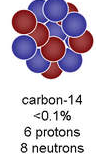 Your Inner H-Bomb Nuclear testing left a signature of radioactive carbon all around the world—in trees and sharks, in oceans and human bodies. Even as that signal disappears, it’s revealing new secrets to scientists. The Atlantic, Story by Carl Zimmer, 2 Mar 20,
Big climate change policy unlikely no matter who wins the White House

Big climate change policy unlikely no matter who wins the White House
Amy Harder Don’t hold your breath for big climate policy changes — even if a Democrat wins the White House.Why it matters: Congress is likely to remain gridlocked on the matter, leading to either more of the same with President Trump’s re-election or a regulatory swing back to the left no matter which Democrat wins — but far short of a legislative overhaul.
The big picture: Climate change is reaching a new high-water mark as a political concern for American voters, and Democratic presidential nominees are promising aggressive policies.
- That in and of itself is a sea change from prior elections. Even still, these worries and pledges are unlikely to translate into any major new laws in the next few years (at least).
Here’s why, with potential scenarios mapped out.
Trump wins re-election
While Trump is uniquely unpredictable in presidential history, he’s made it clear since moving into the White House that he’s not interested in pursuing any sort of actual climate legislation on Capitol Hill.
More of the same is most likely, in two important ways:
- More curtailing of environmental regulations — and defending them in court.
- More pressure on other actors — like companies, states and other countries — to take bigger action on their own as the void of U.S. presidential leadership grows.
Any Democrat wins
All Democrats have aggressive climate plans, but it’s an open question whether any would first push climate legislation over other priorities — especially health care………
Regardless of congressional priority, any Democratic president would swing Washington’s executive-action pendulum far back in the other direction. …..
A progressive Democrat wins
… like Bernie Sanders or Elizabeth Warren. ……This type of all-encompassing and hyper-aggressive legislation is unlikely to get universal support among Democrats (to say nothing of universal Republican opposition) — which makes them extremely unlikely to get through the Senate.
- This is because Democrats with more moderate ideologies or those representing energy-intensive states are unlikely to support the broader socioeconomic measures and such aggressive moves away from fossil fuels, partly because many of those jobs are represented by unions……..
A more moderate Democrat wins
… like Joe Biden, Amy Klobuchar or Michael Bloomberg.
I anticipate these politicians would be (relatively) more open to trying to work with Republicans on climate change than their progressive counterparts……
As Congress talks climate policy, carbon price gets no love
New lobbying urging Congress to support a price on carbon emissions is not convincing lawmakers to warm up to the policy.
Why it matters: A carbon price is widely considered one of the most economically efficient ways to tackle climate change. But, economics be damned, its politics remain deeply unpopular. https://www.axios.com/climate-policy-changes-unlikely-7ecf6cc3-c42c-4d7c-b492-41d73433a015.html?utm_source=newsletter&utm_medium=email&utm_campaign=newsletter_axiosam&stream=top
Veterans groups not happy -France wants to abolish the National Commission for Monitoring the Consequences of Nuclear Tests.
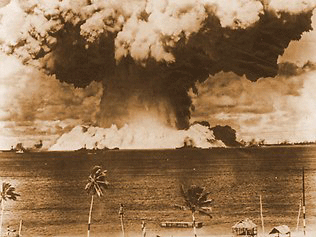 Dismay over plans to scrap French nuclear monitoring commission, https://www.rnz.co.nz/international/pacific-news/410780/dismay-over-plans-to-scrap-french-nuclear-monitoring-commission 2 March 2020 Nuclear test veterans groups in French Polynesia have reacted with dismay at reports that Paris wants to abolish the National Commission for Monitoring the Consequences of Nuclear Tests.
Last week, the French publication Canard Enchaine reported that as part of administrative changes and cost-cutting measures, dozens of commissions would be disestablished.
The commission is the body bringing together state authorities, representatives of the French Polynesian government and veterans associations to work on the list of radiation-induced illnesses deemed to be relevant for compensation.
The head of the group Moruroa e tatou Hiro Tefaarere has told the broadcaster La Premiere the move was inadmissible yet not surprising for the Macron government.
He said the French president on one hand described colonialism as a crime against humanity and on the other everything was suppressed which would recognise the consequences of the tests.
France carried out more than 190 nuclear weapons tests in the Pacific and until 2010 maintained that they were clean and posed no threat to human health.
Nuclear power not economic, nor safe, but it bolsters a secretive autocratic regime, United Arab Emirates
|
In February, the UAE government in Abu Dhabi licensed the first of four 1.4 gigawatt nuclear reactors after 12 years of construction on the Persian Gulf coast at Barakah, just east of the UAE border with Saudi Arabia. When the remaining three reactors at the $25 billion plant are completed, Barakah will reach its total nameplate capacity of 5.6 gigawatts. As the South Korea-led consortium loads fuel rods and tests the reactor’s output, the UAE will finally have a major source of zero-carbon [?] electricity on a power grid that relies upon fossil fuels—mainly natural gas—for 97 percent of its electric power generation, a much higher percentage than that of other countries where consumption is high. …… The UAE is now the third nuclear-competent state in the Middle East. Israel, with its stockpiles of nuclear weapons, was the first. Iran, with its single one-gigawatt nuclear power plant at Bushehr (just across the Gulf from the UAE’s) was second. Iran’s uranium enrichment program has extended to levels beyond that needed for electricity production, suggesting that it might follow the secretive Israeli path toward weaponization. The UAE is leveraging nuclear power in a different way. It has committed to the nuclear Non-Proliferation Treaty and the International Atomic Energy Agency’s Convention on Nuclear Safety to secure international cooperation. The UAE’s 2009 agreement with the United States explicitly bans the Gulf country from developing technologies needed to enrich uranium and reprocess spent reactor fuel. Advocates tout the “Abu Dhabi model” as a path to climate-friendly electricity while safeguarding against proliferation and the potential for development of a breakout nuclear weapons capability. The drawbacks. Abu Dhabi’s experience with nuclear power has been difficult, and the country’s National Energy Strategy 2050 suggests that no further nuclear development is in the cards. Cost thresholds and completion deadlines fell by the wayside years prior to completion of the first reactor. The complexity, toxicity, and strategic sensitivity of nuclear power make it an uncompetitive choice based solely on competitive cost calculations. Abu Dhabi’s difficulties with Barakah began at launch in 2008 with the over-ambitious nine-year start-up deadline, then set for 2017. Unrealistic expectations were undermined during construction by revelations that the main South Korean contractor KEPCO justified its low bid for the plant by dropping post-Chernobyl safety features, including an extra wall in the reactor containment building. KEPCO was also said to have built Barakah’s prototype reactor in South Korea using counterfeit cables and other parts procured using forged safety documents. Retrofitting of the Korean plant delayed the training of the team of UAE operators. Some counterfeit Korean parts were apparently installed in the Barakah plant as well, but few details have emerged about whether they have been replaced. Separately, inspectors were said to have found that all four reactor containment buildings suffered cracks in concrete walls that required repair. These issues contributed to the three-year delay in bringing the all four Barakah rectors online. The project has been subject to criticism by analysts who argue that the plant’s reduced safety features and other deficiencies render it more susceptible to a radiation release, including in the event of a military strike. The latter is not a remote possibility; in 2017, Houthi rebels battling UAE forces inside Yemen claimed to have targeted the Barakah plant in an apparently unsuccessful cruise missile strike…….. From the perspective of an autocratic regime like that in Abu Dhabi, there are further political benefits from civil nuclear power. Nuclearization tends to involve measures that bolster the strength and control of the state through increased internal security and enhanced coercive apparatus, justified by the technology’s inherent hazards. Vulnerabilities in nuclear systems also create new requirements for secrecy and surveillance, and less tolerance for dissent. In these ways, protecting the fuel cycle does double duty in bolstering regime security and vigilance..….. https://thebulletin.org/2020/03/for-uae-the-political-perks-of-nuclear-power-eclipse-economics/# |
|

Japan to close temporary all schools nationwide to control spread of virus
 Prime Minister Shinzo Abe announces the government’s plan to ask all schools in Japan to cancel classes from March 2 until spring break amid the spread of the new coronavirus in the country, during a meeting of the coronavirus task force headquarters at the prime minister’s office in Tokyo, on Feb. 27, 2020.
Abe asks all schools in Japan to temporarily close over coronavirus
February 27, 2020
TOKYO (Kyodo) — Prime Minister Shinzo Abe said Thursday the government will request all elementary, junior high and high schools in Japan to close from Monday until the end of a spring break through early April amid concern over the spread of the new coronavirus.
In a meeting of a government task force to fight the virus, Abe cited “children’s health and safety” as the top priority and said the measure, which also includes schools for special needs education across Japan, is intended to better cope with a risk of infection to be generated by students and teachers spending long hours together.
Abe also asked schools to take the best possible steps to prevent infection, such as minimizing the number of participants, if they are to hold entrance exams and graduation ceremonies in the coming weeks.
Japan’s school year ends in March and a new academic year typically starts in early April.
Abe announced the measure as opposition parties have stepped up criticism of his administration for not responding quickly enough, with the number of confirmed COVID-19 patients continuing to rise in Japan and the end of the outbreak of the China-originated, pneumonia-causing virus not yet in sight.
The number of confirmed infections in Japan topped 900 on Thursday, including over 700 from the Diamond Princess, a virus-hit cruise ship docked in Yokohama near Tokyo.
Given that schoolchildren are expected to stay home in the coming weeks, Abe requested that government agencies and companies allow workers to take days off so they can spend more time with their families.
Nursery schools will be excluded from the nationwide closure request, according to the Ministry of Health, Labor and Welfare.
Abe also instructed the government to “prepare necessary legislation to curb the spread of infections and minimize the impact on the lives of people as well as the economy.”
Meanwhile, some schoolteachers expressed concern about the prime minister’s request as they have to adjust class and event schedules.
“A one-month closure is unheard of and its impact will be significant,” said a teacher at a public elementary school in Tokyo.
“I’m in the middle of discussions with my colleagues on how to determine grades for students and distribute them,” he said.
Abe’s announcement came as a number of schools have already decided to close or scale down their activities.
Earlier Thursday, the Osaka city government said it will temporarily close all city-run elementary and junior high schools, and kindergartens from the following day through March 13 amid the coronavirus outbreak.
It will diminish the scale of graduation ceremonies scheduled during the closure period by limiting the number of participants and shortening program hours as well, according to the most populated city in Japan outside the Tokyo metropolitan area.
“We will conduct a simultaneous shutdown to ensure safety and prevent expansion of infections,” Osaka Mayor Ichiro Matsui said at a meeting with senior city officials.
During the closure, schools will gather information on health conditions of students from parents and report to the education board if they find any concerns.
In Tokyo, Ochanomizu University said the state-run institution will close affiliated kindergarten, elementary school, and junior and senior high schools from Friday for about a month until early April, following a spring break.
Prince Hisahito, the 13-year-old nephew of Emperor Naruhito, attends the junior high school affiliated with the university.
“I believe it’s an unprecedented closure for such an extended period of time,” a university official said.
Similarly, most of the 1,600 elementary and junior high schools on Japan’s northernmost main island of Hokkaido were already closed Thursday for a week.
The action came a day after the Hokkaido board of education urged local authorities to temporarily close all public and private elementary and junior high schools in an effort to contain the spread of the virus.
Machiko Inari, a 40-year-old resident of Hakodate, said she will take a week off to look after her daughter, a fifth-grader, and son, a kindergarten student.
“Although it will affect my work and co-workers, it’s better if it reduces the risk of infection for children as the disease is still relatively unknown,” she said.
 Japan’s Prime Minister Shinzo Abe, center, speaks during a meeting of a task force on the new coronavirus at his official residence in Tokyo Thursday, Feb. 27, 2020. Abe was asking all elementary, middle and high schools to remain shut until spring holidays begin in late March.
Japan to close schools nationwide to control spread of virus
February 27, 2020
TOKYO — Japan will close schools nationwide to help control the spread of the new virus, the government announced Thursday.
Prime Minister Shinzo Abe asked all elementary, middle and high schools to remain shut until spring holidays begin in late March.
The measure affects 12.8 million students at 34,847 schools nationwide, the education ministry said.
It does not affect DODEA schools for now, said Todd Schlitz, the DODEA-Pacific chief of staff.
Abe’s announcement came hours after several local governments announced their own decisions to suspend classes.
“The coming week or two is an extremely important time,” Abe said. “This is to prioritize the health and safety of the children and take precautions to avoid the risk of possible large-scale infections for many children and teachers who gather and spend hours together every day.”
The decision comes amid growing concern about the rise in the number of untraceable cases of the virus in northern Japan and elsewhere. Japan now has more than 890 cases, including 705 from a quarantined cruise ship. An eighth death from the virus was confirmed Thursday in Japan’s northernmost island of Hokkaido, now considered a site of growing cluster.
Officials in the northernmost main island of Hokkaido said they were closing all 1,600 elementary and middle schools. Hokkaido now has 54 confirmed cases, the largest in in the country outside the cruise ship.
The emergency school closures come as schools were busy preparing for graduation ceremonies at the end of the school year. Koizumi primary school Vice Principal Norinobu Sawada said the decision to suspend classes was unavoidable.
“The most important thing is to prevent infections, so there aren’t many other options,” he said.
Rise in COVID-19 cases in Japan prompts 9 countries to restrict travel to and from Japan
A significant uptick in COVID-19 cases across Japan has triggered a flurry of advisories worldwide about travel to the country, with at least nine governments calling on their citizens to refrain from nonessential visits or to exercise increased caution during trips.
Foreign Minister Toshimitsu Motegi confirmed Friday that the nine countries — Israel, the Solomon Islands, Thailand, Samoa, Tonga, Micronesia, Kiribati, Bhutan and South Korea — had issued warnings against travel to Japan, one of the nations hit hardest by the new coronavirus epidemic.
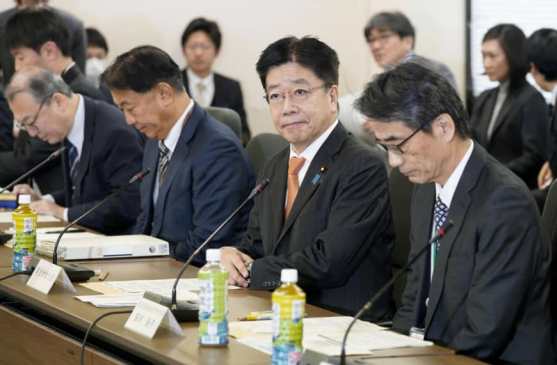 Health minister Katsunobu Kato (second from right) attends a meeting of infectious disease experts held Monday at the ministry to discuss measures to tackle the new coronavirus outbreak in Japan
Rise in COVID-19 cases in Japan prompts travel advisory revisions
Feb 24, 2020
A significant uptick in COVID-19 cases across Japan has triggered a flurry of advisories worldwide about travel to the country, with at least nine governments calling on their citizens to refrain from nonessential visits or to exercise increased caution during trips.
Foreign Minister Toshimitsu Motegi confirmed Friday that the nine countries — Israel, the Solomon Islands, Thailand, Samoa, Tonga, Micronesia, Kiribati, Bhutan and South Korea — had issued warnings against travel to Japan, one of the nations hit hardest by the new coronavirus epidemic.
On its official website, the Samoan government strongly recommends that all persons intending to travel to China and any country affected by the coronavirus “postpone their travel arrangements unless necessary.” Samoa also warned that Japanese passport-holders must self-quarantine for at least 14 days at their point of departure, and must undergo medical clearance within three days prior to their trip to Samoa.
Thai media outlets have widely reported that the country’s Public Health Ministry is advising Thais planning to visit Japan to postpone their trips. The Thai government said the coronavirus outbreaks in Japan and Singapore had reached “the third stage” in which a growing number of infected residents have no record of contact with Chinese people or any history of traveling to China, where the virus is thought to have originated.
Israel’s safety measures follow reports that two Israelis were found to have contracted the virus after they were evacuated from the virus-hit Diamond Princess cruise ship docked in Yokohama Port, where they had spent around two weeks under quarantine.
About 10 Israelis were aboard the ship. Israel was one of about a dozen countries that arranged chartered flights to bring their citizens home last week, in an emergency measure aimed at protecting the evacuees from the virus.
All the evacuees had boarded the charter planes on condition that they tested negative for COVID-19. But at least 14 Americans, six Australians, four U.K. nationals and two Israelis have tested positive so far after returning home from Japan.
On Sunday, after the viral infections were confirmed in the evacuees from the Diamond Princess, Israel announced its entry ban for Japanese travelers and residents of Japan who had visited Japan or South Korea 14 days prior to their arrival, effective from Monday.
Micronesia has also barred direct entry for people from Japan.
Until last weekend, the Diamond Princess remained the biggest COVID-19 cluster outside of China with nearly 700 people found to have developed symptoms of COVID-19 or been infected with SARS-CoV-2, the new coronavirus that causes the disease.
On Monday, the total number of 763 cases reported in South Korea, which is struggling to contain a snowballing coronavirus outbreak of its own, surpassed that of the Diamond Princess.
But with 149 cases reported within Japan as of Monday evening the nationwide total including those from the ship was brought to 840, prompting other governments to upgrade their health advisories concerning travel to the nation.
The U.S. Centers for Disease Control has also issued a low-level travel advisory for Japan, warning of “sustained community spread” of the virus across the country through unknown routes of transmission.
In its notice, the CDC suggested older adults and those with chronic medical conditions — who may be at higher risk from severe disease — should discuss their plans with a health care provider and consider postponing nonessential travel. They also warned Americans considering trips to Japan of possible travel delays, quarantine and extremely expensive medical costs if they are suspected to have become infected with the virus.
Australia has also adjusted its advice for Japan. The Australian Government announced Sunday on Twitter that it recommends Australians exercise a high degree of caution in Japan due to an increased risk of sustained local transmission of the new coronavirus.
https://www.japantimes.co.jp/news/2020/02/24/national/japan-covid-19-travel-advisories/#.Xlf7OEpCeUl
 A tea ceremony is held during an ume-viewing festival at Kitano Tenmangu shrine in Kyoto, western Japan, on Feb. 25, 2020.
7 countries restrict entry from Japan to thwart new virus spread
February 25, 2020
TOKYO (Kyodo) — Seven countries have restricted entry to Japanese nationals and those traveling from Japan in an effort to prevent the spread of the novel coronavirus, Foreign Minister Toshimitsu Motegi said Tuesday.
The countries are Israel, Samoa, Micronesia, Kiribati, Comoros, Tuvalu, and the Solomon Islands, Motegi said at a news conference.
The virus, which originated in China and causes a disease known as COVID-19, has spread across the globe infecting more than 78,000 people. There are over 800 confirmed cases of infection in Japan, with many from a cruise ship docked in Yokohama.
Japan has asked Israel to remove the travel restrictions, and briefed each country about Tokyo’s fight against the virus outbreak.
Motegi asked people to check the Japanese Foreign Ministry’s website before making travel plans.
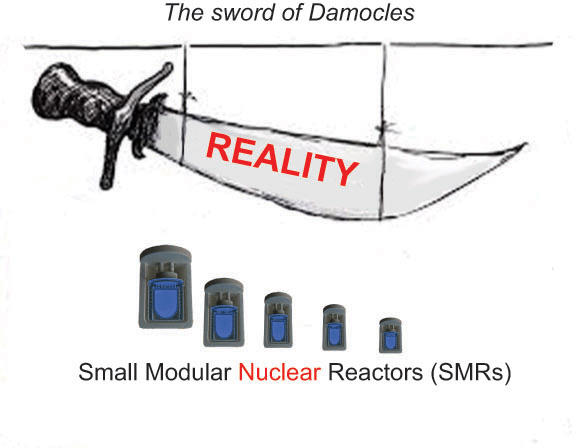
USA desperately pushing the fantasy of Small Nuclear Reactors to India
|
“………Ahead of Trump’s recent visit to India, officials of the US Department of Energy were quoted as saying that they are strongly encouraging Westinghouse Corporation to ensure further progress on the nuclear projects already in the pipeline.
Another addition to the nuclear bucket list this time are the Small Modular Reactors (SMRs), which the industry has been fervently pushing both within and outside the United States. While US-based corporations have individually attempted to introduce their SMR business in India in recent years, this is the first time these reactors have been formally introduced as part of the official US-India nuclear dialogue. Globally, nuclear lobbies have promoted SMRs as an innovation that will help address the perennial problems of cost, feasibility, environmental impacts, and scalability associated with conventional large reactors.
However, as independent experts in the field suggest, SMRs are an old and discredited idea – a make-believe renaissance after the Fukushima accident thwarted dreams of building massive-sized nuclear power parks across the globe. SMRs are neither cheap nor innovative nor green, as a number of leading experts in the field have pointed out. In particular, SMRs will be disastrous in densely populated countries like India, which already has an electricity surplus, and whose problems in the power sector owe more to its people’s lack of purchasing power, messy regulatory frameworks that do not allow it to take advantage of renewable energy sources despite their increasing efficiency and competitiveness, and the larger questions surrounding its neoliberal growth model. India has also been desperately trying to position itself as an exporter of SMRs, and the reaffirmation of US support for India’s accession to the Nuclear Suppliers’ Group (NSG) “without any delay” in the joint statement is expected to boost this ambition.
However, much like the other projections made by the Indian nuclear establishment, the pipedream of India becoming a nuclear exporter reflects its postcolonial aspirations of becoming a big player internationally, rather than being grounded in any realism. India does not have much to offer beyond the sub-300MWe capacity Pressurized Heavy Water Reactors (PHWRs) that it mastered in the 1970s by reverse engineering the Canada-imported reactors called CANDUs. Invariably these reactors had huge cost and time overruns, and India is now building their larger versions, 700MWe each, at sites such as Gorakhpur, Chutka, and Kaiga. The smaller designs are evidently unattractive for potential SMR buyers for reasons of cost, safety and reliability. However, simply pitching them in the foreign market will bring to India the tag of a major nuclear player, which is enough international recognition for the chest-thumping present regime. Despite the hype that Trump’s recent visit generated – of an upgrade of US-India relations to a ‘Comprehensive Global Strategic Partnership’ and so on – there is very little that India stands to gain. In the absence of any new meaningful and people-centric cooperation on trade, environment, education or technology, this nuclear tango will only remain a farcical buildup at the cost of the safety and livelihoods of Indian citizens.
Not long ago, Modi’s own home state of Gujarat had rejected a US-imported nuclear project labeling it unacceptably risk-prone, especially in the wake of the 2011 Fukushima accident. This leaves the Modi government with no moral right to impose the US reactors on people in other parts of the country. Kumar Sundaram is founding editor of DiaNuke.org, an international platform for nuclear-related discussions and campaigns. https://www.thecitizen.in/index.php/en/NewsDetail/index/6/18388/Namaste-Nukes-Trumps-Toxic-Sales-Pitch-for-the-Stalled-Westinghouse-Nuclear-Project-in-India
|
|
|

Kazakhstan local residents may be stuck with costs of decommissioning nuclear reactor
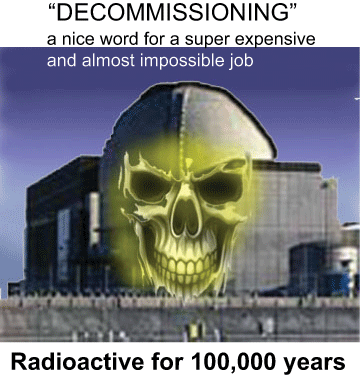 Local residents pay for decommissioning of Kazakhstan’s BN-350 reactor https://www.neimagazine.com/news/newslocal-residents-pay-for-decommissioning-of-kazakhstans-bn-350-reactor-7796914 27 February 2020 During a public hearing of the feasibility study on the environmental impact of decommissioning of the BN-350 fast reactor in Kazakhstan, Bulat Zhumakanov, representative of regional utility MAEK-Kazatomprom, said residents Aktau in Mangystau province, where the reactor is sited, will continue to pay for its maintenance.The BN-350, a sodium-cooled industrial fast neutron reactor, was physically launched in 1972, and was connected to the Mangystau power system in 1973. In 1998, it was closed down and formally began decommissioning the following year. MAEK-Kazatomprom has supplied Mangystau region of Kazakhstan with electricity, heat and water since 1967. It is responsible for three gas and oil power plants with total installed capacity 1330MWe, a desalination plant and for decommissioning the BN-350 reactor. According to representatives of the development company, METR, preliminary information, puts the total cost of decommissioning the BN-350 at KZT125 billion ($330m) excluding inflation. Zhumakanov said this year Kazakhstani Wealth Fund Samruk-Kazyna has allocated KZT1.2 billion for the maintenance of the reactor. However, funds will still be taken from local residents through the electricity tariff for repair work. An application has been made to the federal budget, but whether money will be allocated from the republican budget in future “remains open”, he said. The tariff has been in place for 20 years and residents have been pressing the government to provide the necessary funding. Decommissioning of the BN-350 reactor is planned in three stages:
From 1999 to 2016, with the financial support of the US government, nuclear fuel was removed, primary circuit sodium was treated to remove from caesium radionuclides, a project was implemented to process the used fuel, to passivate sodium residues in the first circuit, and other work. The decommissioning process must be continued and cannot be delayed, said representatives of MAEK-Kazatomprom. The tanks in which radioactive waste is stored have been in operation since 1972, and need upgrading. Some 3000 cubic metres of liquid radioactive waste, mainly sodium and caesium-137, which has a half-life of 30 years, are stored at MAEK-Kazatomprom. |
|
Sweden now faces years of nuclear reactor shutdowns and waste disposal problems
Sweden prepares for a decade of nuclear decommissioning, NS Energy, By Kristina Gillin 27 Feb 2020 ,
Sweden is preparing to dismantle and demolish six large power reactors on three sites over the coming years.
By the end of 2020, half of Sweden’s nuclear reactors will have been permanently shut down for decommissioning. The six large reactors are expected to undergo nuclear decommissioning in Sweden over the next decade.
Besides these, the Ågesta prototype reactor, a combined heat and power plant is about to commence dismantling.
Nuclear decommissioning at Sweden’s Barsebäck nuclear power plant
The twin units at Barsebäck, a few miles across the straight from Denmark, ceased to generate power in 1999 and 2005, respectively.
After shutdown, all spent fuel was removed and shipped to Sweden’s central interim storage facility (Clab) in Oskarshamn. Major decontamination of systems was also done early. However, dismantling had to wait, due to a lack of facilities for storage or disposal of decommissioning waste………
Funding and nuclear waste disposal in Sweden
Owners of nuclear power plants in Sweden have a statutory duty to dispose of their wastes. They are also required to set aside funding for waste management and nuclear decommissioning in Sweden. The funding is held in the Nuclear Waste Fund, a segregated Swedish government fund.
To fulfil the obligations, they jointly own the Swedish Nuclear Fuel and Waste Management Co (SKB). SKB’s scope covers disposal of most radioactive waste streams, interim storage of spent fuel and transportation between the various sites.
SKB is also responsible for compiling cost estimates for decommissioning and waste management every three years.
This to ensure that payments into the Nuclear Waste Fund are sufficient to cover future costs.
According to the 2019 estimates, the total cost of waste disposal, spent fuel storage and decommissioning is approximately SEK 147 billion (around €14 billion). Of this, about SEK 53 billion (around €5 billion) has been spent to date.
These figures include most of SKB’s scope but exclude the costs of near-surface disposal facilities for very low-level waste at Oskarshamn, Ringhals and Forsmark.
The majority of low- and intermediate-level waste from all Swedish reactors will be disposed of in SFR, a shallow geological repository for short-lived waste on the Forsmark nuclear site.
SFR has been in operation since 1988 but is currently licensed for operational waste only. To accommodate decommissioning waste, SKB plans to expand SFR’s capacity from 63,000 to 180,000 m3. An application for the expansion was submitted in 2014.
Pending regulatory approvals, construction of the new rock vaults will take place from 2023 to 2029. https://www.nsenergybusiness.com/news/nuclear-decommissioning-sweden/?fbclid=IwAR1me9D6hKLIPYP8Hp9tRS7Fgt6ksTbZ9t0Gvpo8IHCHgjIkeBqRnDgO79
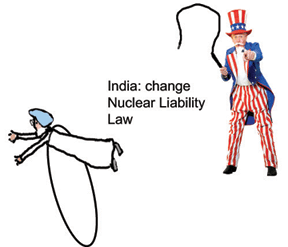
Trump’s toxic nuclear sales pitch to India- undermining India’s nuclear liability law
|
In a rush to please the Americans, no matter the cost The recently concluded US President’s visit to India was marked by the odious displays of pomposity for which both Modi and Trump are known to have a soft spot. Even as Delhi burned, with deadly riots engineered and unleashed by majoritarian mobs backed by the ruling party, Modi and Trump continued their photo-ops around the Taj Mahal and Gandhi Ashram. What risks being ignored amid this deafening cacophony are crucial issues concerning the US-imported nuclear reactor project in India, to which both the media and civil society have not paid adequate attention, perhaps due to the fact that these nuclear negotiations have been in the pipeline for more than twelve years now and their mention in bilateral summits and statements appears little more than ceremonious. However, there are additional twists to the India-US nuclear story that deserve our attention. To recap, in 2008, in exchange for the American heavy-lifting of the decades-long nuclear embargo that India faced internationally for testing atomic weapons, a massive contract for a 6-unit nuclear power park was signed with the US nuclear giant, Westinghouse. In a reciprocal gesture for this diplomatic favour, India announced the project without any cost-benefit calculation, safety or environmental impact analysis, and in the stark absence of dialogue, negotiations or the consent of the local communities in Kovvada, a site on India’s eastern coast in Andhra Pradesh. Although the Indian government, in a rush to please its American counterpart, has already pushed through land acquisition in Kovvada, bulldozing grassroots dissent and even resolutions passed by democratically elected local bodies, the project has been stalled by a number of other factors, including the global decline of the nuclear industry post-Fukushima, which led Westinghouse to first sell its stakes to Toshiba and then eventually, declare itself bankrupt.
Additionally, certain other India-specific factors have stalled the nuclear power projects which corporations in the US, France and Russia have been eyeing in order to resurrect themselves. Nuclear liability tops the list here – foreign vendors have been wary of the 2010 liability law enacted by the Indian parliament, which they view as overly restrictive, even as civil society activists and safety experts consider the legislation extremely weak. The Indian law provides for a ‘right of recourse’ in Clause 17(b) under which, in case of a future nuclear accident, the nuclear operator can demand liability from the equipment suppliers.
The nuclear industry lobbies have found this provision to be an anathema and the US government has taken the lead in pressuring successive Indian governments to do away with it.
Despite his party’s vociferous criticism of such moves
 by the earlier Singh-led government when in opposition, Modi’s unabashed dalliance with the US has barely remained under wraps – he and Obama jointly declared in 2015 that India would actively take steps to limit liability in the case of a nuclear accident. However, Modi didn’t stop at that. Not only did his government ensure that the liability rules were dubbed ‘ultra vires’ and against the spirit of the law by former Solicitor-General Soli Sorabjee, entered into force in 2016, it also went on to ratify the Convention on Supplementary Compensation (CSC) – an international template promoted by the nuclear lobbies to ensure a liability-free market, thereby deliberately creating a contradiction between India’s domestic law and its international commitments. Ever since it assumed power, the Modi government has consistently undermined nuclear liability provisions meant to safeguard the interests of the Indian people.
If the recent utterances of senior officials from the US Department of Energy offer any clues, the American nuclear vendors do not want to settle for anything short of amending the original Nuclear Liability Act – “to be clear, there are still open issues around the liability issue,” the US DoE Assistant Secretary is reported to have said in a Reuters report published last week. As the street protests by indignant survivors of Bhopal’s gas accident during Trump’s recent visit suggest, Indian citizens have had an agonising experience due to the apathy of governments and judicial processes, with the most vulnerable sections having been denied both compensation and justice in the case of the world’s worst industrial disaster. Successive governments in both the US and India have managed to ensure that concerned corporations remain unscathed and that their owners go unpunished.
Neither the routine exhortations of India-US summits being spaces for a rendezvous between two democracies, nor Modi’s much celebrated cleanliness drive, have translated into an open dialogue with the victims of the Bhopal disaster, or the detoxification of the accident site even three decades after the horrific chemical industrial accident.
Trump’s domestic energy policy and budget allocations disproportionately favour the nuclear industry, and exporting American nuclear reactors to developing countries is also a key part of this policy shift. The US under Trump has concluded nuclear deals with the UAE despite massive proliferation concerns………. Despite the hype that Trump’s recent visit generated – of an upgrade of US-India relations to a ‘Comprehensive Global Strategic Partnership’ and so on – there is very little that India stands to gain. In the absence of any new meaningful and people-centric cooperation on trade, environment, education or technology, this nuclear tango will only remain a farcical buildup at the cost of the safety and livelihoods of Indian citizens.
Not long ago, Modi’s own home state of Gujarat had rejected a US-imported nuclear project labeling it unacceptably risk-prone, especially in the wake of the 2011 Fukushima accident. This leaves the Modi government with no moral right to impose the US reactors on people in other parts of the country. Kumar Sundaram is founding editor of DiaNuke.org, an international platform for nuclear-related discussions and campaigns. https://www.thecitizen.in/index.php/en/NewsDetail/index/6/18388/Namaste-Nukes-Trumps-Toxic-Sales-Pitch-for-the-Stalled-Westinghouse-Nuclear-Project-in-India |
|



1 This Month
19 November – Webinar – The Reality of Reprocessing
Time: 11:00 AM Pacific Time (US & Canada) / 2:00 PM Eastern / 7:00 PM UK / 8:00 PM CET
Register for the Zoom Event Here

Tell Congress: Prevent Nuclear Catastrophe in Iran

Tell Congress: Prevent Nuclear Catastrophe in Iran

Read the Public Inquiry Report, the Commissioners’ report, Surrendering Australia: The AUKUS Deception is available to download for free at aukuspublicinquiry.com. Or just watch the replay of the National Press Club Luncheon.


Shut down the radiation-damaged Heysham nuclear reactors now
To see nuclear-related stories in greater depth and intensity – go to https://nuclearinformation.wordpress.com

Say No to NASA’s Reckless Nuclear Reactor on the Moon
Say No to NASA’s Reckless Nuclear Reactor on the Moon
-
Archives
- November 2026 (156)
- October 2026 (302)
- September 2026 (339)
- August 2026 (330)
- July 2026 (355)
- June 2026 (287)
- May 2026 (306)
- April 2026 (356)
- March 2026 (251)
- February 2026 (267)
- January 2026 (308)
- December 2025 (358)
-
Categories
- 1
- 1 NUCLEAR ISSUES
- business and costs
- climate change
- culture and arts
- ENERGY
- environment
- health
- history
- indigenous issues
- Legal
- marketing of nuclear
- media
- opposition to nuclear
- PERSONAL STORIES
- politics
- politics international
- Religion and ethics
- safety
- secrets,lies and civil liberties
- spinbuster
- technology
- Uranium
- wastes
- weapons and war
- Women
- 2 WORLD
- ACTION
- AFRICA
- Atrocities
- AUSTRALIA
- Christina's notes
- Christina's themes
- culture and arts
- Events
- Fuk 2022
- Fuk 2023
- Fukushima 2017
- Fukushima 2018
- fukushima 2019
- Fukushima 2020
- Fukushima 2021
- general
- global warming
- Humour (God we need it)
- Nuclear
- RARE EARTHS
- Reference
- resources – print
- Resources -audiovicual
- Weekly Newsletter
- World
- World Nuclear
- YouTube
-
RSS
Entries RSS
Comments RSS

