Big, fat waste of lawmakers’ time: US Congress trying to block Iran nuclear accord
What makes such votes all the more myopic is that while some in Congress perform as if they are starring in a re-make of “Groundhog Day” set on Capitol Hill, the world has witnessed transformativebreakthroughs in U.S.-Iran relations over the past month.
The Iran accord is now fully implemented, with Iran dramatically shrinking its nuclear program. Iran defied all expectations on how quickly it would shrink-wrap its program. Tehran has already dismantled centrifuges, shipped out its stockpile of enriched uranium overseas and poured concrete in its Arak reactor, cutting off its ability to make plutonium for a bomb. For the first time in a decade, Iran doesn’t have enough fuel for a nuclear weapon. 53 national security leaders praised the agreement for subjecting Iran to “some of the most sweeping inspections and transparency obligations in history, many of which will remain in place for decades.”
And if that wasn’t enough good news to celebrate, five U.S. citizens who were jailed in Iranian prisons are now free, in a stunning display of what diplomacy can accomplish.
Yet despite these breakthroughs, Congress went ahead with an attempt to vote down the Iran accord. With the bill lacking enough votes to override the president’s promised veto or even guarantee Senate support, this is clearly nothing more than a poorly-executed partisan gimmick…….http://www.usnews.com/opinion/blogs/world-report/articles/2016-02-03/congress-vote-to-block-the-iran-nuclear-deal-hurts-real-progress
Georgia State panel to do detailed probe of costs of Nuclear Plant Vogtle
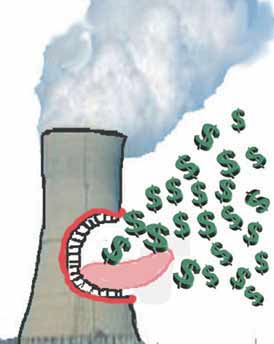 State panel to review Plant Vogtle costs http://chronicle.augusta.com/news/business/2016-02-02/state-panel-review-plant-vogtle-costs By Walter Jones ATLANTA, 4 Feb 16 — Electricity customers and the public will get a detailed look at what’s to blame for cost overruns in the construction of two nuclear reactors slated for power generation after a divided Public Service Commission voted Tuesday to begin its examination.The detailed probe of what Georgia Power has spent is expected to take 14 months to examine the delays that have added nearly $1 billion to the Plant Vogtle expansion.
Strange progress of Class Action lawsuit against Brookhaven National Lab
 “The Brookhaven scientific culture still doesn’t understand the interrelationship between humans and the natural world and the lethal consequences their work in nuclear technology imposes on the population and environment of the world. They still don’t understand that nuclear power is a polluting, deadly technology”
The book “Welcome to Shirley: A Memoir from an Atomic Town” by Kelly McMasters links widespread cancer in neighboring Shirley to radioactive releases from BNL.
Class action lawsuit against Brookhaven National Lab moving ahead, Enformable, Karl Grossman 2 Feb 16 A class action lawsuit—begun 20 years ago—that charges Brookhaven National Laboratory (BNL) with contaminating neighborhoods adjacent to it will be moving ahead again in New York State Supreme Court this month.
Court action is scheduled for the last week in February. Since it was first brought in 1996, the lawsuit has gone back and forth between the State Supreme Court and the Appellate Division several times, as BNL has fought it.
In July the Appellate Division—the judicial panel over the Supreme Court in New York State —ruled the case can move towards trial. It declared that “the causes of action of the proposed intervenors are all based upon common theories of liability.” In other words, it stated that the plaintiffs could sue for damages.
But, outrageously, the radioactive contamination caused by BNL—documented in the 2008 book “Welcome to Shirley: A Memoir from an Atomic Town” and focused upon by the award-winning 2012 documentary “The Atomic States of America”—can no longer be part of the case. Continue reading
USA govt funds “new nukes’

Energy Department Funds Two Advanced Nuclear Programs MIT Technology Review, 21 Jan 16, In the latest sign of the U.S. government’s determination to help push nuclear power technology beyond conventional reactors, the Department of Energy is providing $80 million in funding to two advanced reactor programs. At $40 million each in matching funds over the next five years, the grants will go to X-energy, a little-known Maryland-based startup that is developing a new version of a pebble-bed reactor, and to Southern Company, the Atlanta-based utility that is working with TerraPower on molten-salt reactors. ……https://www.technologyreview.com/s/545586/energy-department-funds-two-advanced-nuclear-programs/
Why the Nuclear Lobby and Australian Politicians want Australia as world’s radioactive trash dump
from CaptD 31 Jan 16 The first reason is MONEY and I mean BIG Money. Politicians are always gear for Nuclear  Payback*
* http://www.urbandictionary.com/define.php?term=Nuclear+payback
Those that support nuclear power because nuclear power somehow supports them; no matter what the health implications or other “costs” are for others.
The “other” reason is that the Nuclear Industry and their Utilities are desperate to create a radioactive waste dumping site for waste is that they are going to want to site Small Modular Reactors (SMRs) very soon, which companies like SD’s General Atomic are now working on. Since CA has a law that says no more nuclear reactors, until a waste site is developed, the lack of a disposal site is the biggest roadblock they face preventing them from deploying SMRs in CA.

I believe that most Utilities will want to phase out Nat. Gas fired Peaker plants and install SMR’s “because they don’t emit CO2.” That is, unless they are going to be making big money using nat. gas like SDG&E will be, since they already have a contract to import Nat. Gas from Mexico (which Sempra owns a share of, so they will be kind of buying Nat. Gas from themselves) for use in their two new state of the art Billion Dollar Peaker Plants that the CPUC just approved for them (despite the fact that the cost of Wind and Solar generation continues to drop almost monthly)!
SCE just had the CPUC decide against approving a Nat. Gas Peaker plant for them, so you can bet that they are now getting “very excited” about installing one or more SMR’s at San Onofre, since the grid wiring connection is already in place and they are going to be guarding that “nuclear waste” site for decades to come.
http://www.kpbs.org/news/2016/jan/08/oceanside-takes-stand-relocating-san-onofres-nucle/
BTW: All waste facilities should be run by the Government, that way they will always be responsible for it, since Big Waste Corp.’s can go out of business any time they want as as everybody knows Radiation is FOREVER since 50 or more than 100 years is forever to everyone living today.
Pierce County, USA not happy with DOE plan for a deep bore feasibility study for nuclear waste
 Rocky road for nuclear waste bore hole study, http://bismarcktribune.com/news/state-and-regional/rocky-road-for-nuclear-waste-bore-hole-study/article_7698d465-0316-5031-83e9-bc727d3592b9.html By Lauren Donovan, 29 Jan 16 A plan to explore deep ancient rock in Pierce County for its potential to store nuclear waste hit a bumpy road if not a rock wall in its first introduction to state officials Thursday.
The State Board of University and School Lands heard from the Energy and Environmental Research Center at Grand Forks that its team was awarded $35 million by the federal Department of Energy to drill 16,000 feet down into crystalline rock to learn whether the rock could suitably store spent nuclear fuels.
John Harju, project liaison, said the bore hole is for study purposes only, no waste would be stored there and that such storage isn’t even yet legal under federal rules.
Harju said the bore hole would be an opportunity to analyze rock core that’s rarely ever been looked at for minerals or geothermal properties. The chance to go that deep, into the oldest rock on the planet, “may never present itself again,” Harju said.
The issue was presented to the land board because EERC is proposing to drill on 20 acres of state-owned land about 15 miles south of Rugby.
Pierce County commissioners were at the meeting and said they were startled to read about the project before anyone from EERC even came to the county.
Commissioner Duane Johnston said, if the issue had come up at a local zoning meeting, “half the county would have been there to say no.” Commission chairman Dave Migler said it was tough to take calls from residents and not have much information to share. “It’d be nice to be in the loop,” he said.
While there was no formal application on the table, land board members didn’t hesitate to weigh in with worries that a federal project could become a federal mandate.
In the end, it was far from clear how the EERC would proceed with getting approval to use public land for the project in Pierce County, or perhaps anywhere in the state.
Afterward, Harju said he was a little surprised by his reception. “Plan B? We don’t have one. If the project is not able to proceed, the DOE will have to evaluate” alternatives, he said.
The five-year project was awarded to the Battelle Memorial Institute of Ohio, along with EERC and Schlumberger, a familiar drilling service company in the Bakken. The crystalline rock formation underlies much of the continent.
Bernie Sanders calls for total phaseout of nuclear energy

LA gas disaster – a mini Chernobyl?
Breaking: They may have “lost control entirely of entire field” involved in LA gas disaster, and it’s coming up everywhere… We learned there’s many other leaks -Attorney — Officials: Loud sound of gas escaping heard half mile away; A “mini-Chernobyl” — AP: Leak “out of control”… amount released “seriously underestimated” (VIDEO)http://enenews.com/breaking-company-entirely-lost-control-entire-gas-field-involved-la-methane-disaster-leaking-everywhere-learned-many-other-wells-leaking-attorney-official-mini-chernobyl-ap-leak-control-tv-a?utm_source=feedburner&utm_medium=email&utm_campaign=Feed%3A+ENENews+%28Energy+News%29
Porter Ranch Town Hall Meeting, Jan 22, 2016 (emphasis added) — Patricia Oliver, attorney (at 11:30 in): “Now it’s kind of simple — if you have a well blow-out, you quit injecting [more gas] underground… No order had been issued [to stop this] though… We sent a letter [to the Division of Oil, Gas & Geothermal Resources (DOGGR)] saying, “Stop all of the injections, until you can stop the leak”… So we sent a letter on Dec. 1 asking them to stop all injections… Nine days later, they said, “Stop injecting gas”… You’d think that at least temporarily settled it — because if [SoCalGas] didn’t like that, SoCalGas could have temporarily appealed… I have no record of appeal… AQMD [Air Quality Management District] inspected the facility on Nov. 10… and they found all these wells that weren’t accessible — 16 approximately… We don’t know yet why they were inaccessible. We also learned that 15 wells were leaking. We also don’t know why that happened. I spoke at the AQMD hearing this last week and said, “I’m concerned that the fact that now you guys are looking at these injection wells — you don’t know what that means.” You see, DOGGR knows what that means — and that’s a sign that SoCalGas lost control entirely of the entire field and it’s leaking everywhere… So we were like, “We want proof. Now if it’s just coincidental, and you show us why that’s not what’s happening, that’s fine, but provide the evidence”… Families have a right to know what’s going on in that oil field.” (Audience applauds)
Rep. Brad Sherman, U.S. House of Representatives, Jan 21, 2016 (at 17:45): “This the largest natural gas leak in history. We were up there yesterday… what we heard was a loud sound of natural gas escaping that you could hear quite loudly from over half a mile away.”
The Guardian, Jan 11, 2016: Residents attack slow response to what official called ‘a mini-Chernobyl’… “This is a mini-Chernobyl,” Mike Antonovich, the LA county supervisor, told a public hearing at the weekend… [It] is the largest leak of… methane known to experts.
CBS/AP, Jan 15, 2016: A new report shows the level of toxins released… has been seriously underestimated, state regulators said… The findings were released in response to [SoCalGas’ admission that they] underestimated the number of times the cancer-causing chemical benzene has spiked.
AP, Jan 22, 2016: AP, Jan 22, 2016: Officials Waited Months To Monitor California’s Massive Gas Leak — A massive natural gas leak… had been out of control for more than a month when the county’s acting health director said in November that long-term impacts of the cancer-causing chemical benzene should be measured. It took many more weeks to implement the testing… “We can always look back and say, ‘Why didn’t we start with an expanded monitoring program?’” said Angelo Bellomo, deputy county director for health protection… Rob Jackson, an environmental scientist at Stanford University, said… it had undermined the ability to measure health impacts.
Crapo’s crap nuclear amendment passed by USA Senate
 Senate overwhelmingly approves Crapo nuclear energy legislation http://www.clearwatertribune.com/news/online_only_news/senate-overwhelmingly-approves-crapo-nuclear-energy-legislation/article_0ceb9f8e-c6c2-11e5-b5cf-871b59e94614.html
Washington, D.C. – The U.S. Senate today approved overwhelmingly legislation written by Idaho Senator Mike Crapo that would increase nuclear research efforts at the Idaho National Laboratory and other national labs through new partnerships between the public and private sectors. The vote of 87 to 4 to approve the amendment makes it a part of a larger energy policy reform bill before the Senate.
Crapo, along with Senators Jim Risch, Sheldon Whitehouse, (D-Rhode Island), Cory Booker (D-New Jersey) and Orrin Hatch (R-Utah), Mark Kirk (R-Illinois) and Dick Durbin (D-Illinois) originally introduced the Nuclear Energy Innovation Capabilities Act (NEICA), which was the foundation of the Crapo amendment voted on today. The legislation, S. 2461, directs the U.S. Department of Energy (DOE) to prioritize partnering with private innovators on new reactor technologies and the testing and demonstration of reactor concepts. Under the agreement today, the Nuclear Regulatory Commission (NRC) would report to Congress on any barriers that would prohibit the licensing of new reactors within a four-year time period……….. (registered readers only )
New research shows USA could economically cut emissions by 80% with wind and solar energy
But that might not be the case anymore. New research suggests it might actually be feasible to use solar and wind power across the United States. In fact, researchers propose a new model that could cut emissions by up to 80 percent by 2030 from 1990 levels, without developing new technologies or raising prices.
How would it work? Power from solar, wind, and other existing technologies would all contribute to a grid across the continental United States to share the burden of power production. That combination would make it economically feasible to cut carbon emissions significantly in the electricity sector, according to a study published Monday in the journalNature.
……The trick, according to this model, is to use multiple power sources together on the national scale.
National Oceanic and Atmospheric Administration, NOAA, scientists built this model based on the weather system. Some regions, like the southwest, might be particularly sunny. Others, like the Dakotas, might have just the right wind conditions.
“If you can trade power over the whole US at the same time, then there’ll always be someplace that’s generating power like crazy,” study co-lead author Alexander MacDonald tells the Monitor. …..
MacDonald adds that it will be up to policymakers and the people. “Our job is to show that there is a system that is possible with existing technology, technology available right now.”
It could all hinge on that political will, Jeff Deyette, assistant director of energy research at the Union of Concerned Scientists, who was not involved in the study, tells the Monitor. He explains that creating a national scale power system would “require a major shift in how we transmit and distribute power across the country.” Currently, the electricity sector is largely controlled by regional transmission organizations. To employ the system proposed by the NOAA researchers, discussion would have to happen on the federal level too. “I think it comes down to the political will to make it happen,” Mr. Deyette says……
With new systems like these, all hope is not lost. “Technological advances can take us a long way toward solving the climate crisis,” Deyette says. This new model “is certainly a very strong positive step in the right direction.”http://www.csmonitor.com/Science/2016/0129/Could-wind-solar-slash-carbon-emissions-affordably
Criminal investigations into Department of Energy, Lockheed Martin, the Department of Labor and more
 Please share this ongoing investigation which will re-open the case against the many criminal acts committed by multiple government agencies. Numerous others will be coming forth with similar incidents handled improperly by these same agencies. The cover-up will no longer be tolerated.
Excerpt:
Jeff Walburn, Chick Lawson, Dr. David Manuta and Paul Brogdon share over 3 hours of criminal investigations into the Department of Energy, Lockheed Martin, the Department of Labor, NIOSH, USEC, OSHA, CDC, NRC, EEIOC and numerous other government agencies contributing to an ongoing cover-up at Portsmouth Gaseous Diffusion Plant in Piketon, OH (Nuclear Enrichment).
Records were destroyed and falsified, perjury, racketeering and many other criminal acts have been recorded with the documents to back them up.
Those who have not already lost their lives are either suffering without compensation or have just given up on the system that has infected their bodies and 4 generations to follow. The nuclear radiation the workers were exposed to and took home to their families was not only hidden from their knowledge, but covered up for billions of dollars by greedy corporations and government officials.
Direct link to article http://www.acalltoactions.com/#!Nuclear-Whistleblowers-Spill-Documented-Proof-of-Criminal-Acts-by-Multiple-Government-Agencies/c7j3/566f73980cf275ddd6e548a1
Direct link to interview https://www.youtube.com/watch?v=CevglCV6qY4
Experts concerned in debate on Wisconsin lifting moratorium on new nuclear stations
Energy Experts Are Split On Whether Wisconsin Should Lift Ban On New Nuclear Power Plants Earlier This Month, Assembly Passed A Bill That Would Make It Easier To Bring Nuclear Facilities To State WPR, By Scottie Lee Meyers Wednesday, January 27, 2016 Energy experts are taking different sides on whether Wisconsin should pass new legislation that would allow for the construction of new nuclear power plants.
Earlier this month, the state Assembly passed a measure that would effectively lift Wisconsin’s ban on new nuclear power plants by eliminating two essential clauses. The clauses stipulate that nuclear power would be proven to be a cheaper source of energy to residents and requires a federal repository site for spent nuclear waste. ……..
energy experts like Al Gedicks, of the Wisconsin Resources Protection Council, said they would rather see the state invest in renewable energy systems. While Gedicks said he agrees that nuclear energy is better than coal, natural gas and oil in terms of overall greenhouse gas emissions, he worries that nuclear plants take years to construct and get operating — years we can’t afford to spend when faced with such devastating consequences of climate change. Moreover, he said he fears extreme weather incidents could disrupt radioactive waste stored at nuclear power plants.
Gedicks also believes the bill would open the door to Wisconsin itself becoming a federal repository site.
“If you lift the restriction on no nuclear power plants without a waste disposal site, you are setting up the state of Wisconsin to become if not the first, then certainly the second nuclear waste repository,” he said.
Wisconsin already was targeted by the U.S. Department of Energy as a potential repository site to compliment Yucca Mountain back in the 1980s, according to Gedick. But massive opposition, including from four tribal nations, eventually led for the federal agency to look elsewhere. Soon after, Wisconsin implemented the moratorium.
Gedick said Wisconsin could remain an attractive location for a waste dump site because of granite rock formations in the northern part of the state.
“Wisconsin was high on the list in the 1980s and it is still high on the list now,” Gedlick said. “We are essentially going into this blindfolded because we haven’t had a discussion on whether this is what the citizens of Wisconsin want if they lift that nuclear power moratorium.”…… http://www.wpr.org/energy-experts-are-split-whether-wisconsin-should-lift-ban-new-nuclear-power-plants
Encinitas Council votes for moving San Onofre spent nuclear fuel
 Encinitas supports bill to move spent nuclear fuel http://www.encinitasadvocate.com/news/2016/jan/28/encinitas-council-nuclear-fuel/ .By Jared Whitlock11 .JAN. 28, 2016.
Federal legislation to relocate spent nuclear fuel from the shuttered San Onofre power plant has the support of the Encinitas City Council.
The Encinitas council on Jan. 27 voted unanimously to approve a resolution backing H.R. 3643, which would let the federal Department of Energy transfer spent nuclear waste at San Onofre and other areas to an interim storage facility.
“It seems critical that we move that waste from the coastline,” Councilman Tony Kranz said, adding the need is clear given the 2011 earthquake and tsunami that damaged the Fukushima Daiichi nuclear power plant.
The legislation came about because federal law only allows the Department of Energy to move spent fuel to a permanent depository, yet such a facility isn’t on the horizon. In 2010, the Obama Administration shelved plans for a long-planned permanent storage site at Yucca Mountain in Nevada.
Oceanside Councilman Jerry Kern, who is on the San Onofre Decommissioning Community Engagement Panel, has urged North County cities to support the federal bill. So far, Oceanside and Encinitas have joined the cause
Kern told the Encinitas council on Jan. 27 that if the federal government doesn’t take action soon, the spent nuclear fuel would remain in cask storage and cooling pools at San Onofre for decades.
“This is a once-in-a-generation opportunity for us to act,” Kern said.
Kern during the Encinitas council’s Jan. 13 meeting said the waste poses a threat, given the plant’s proximity to the ocean and so many people.
San Onofre waste has been on the council’s radar for a while. Prior to the federal legislation, Kranz and Councilwoman Lisa Shaffer last spring asked that the council weigh in on whether nuclear fuel should be stored at the plant.
Neither a temporary nor permanent site for spent nuclear fuel has been settled on. However, a company plans to build an interim facility in Texas and there’s another proposal in New Mexico. In Texas, environmental groups have raised concerns over the impact to aquifers. In New Mexico, opponents have said transporting the waste could be dangerous.
The bill has been assigned to a congressional subcommittee, according to Kern. Rep. Congressman Darrell Issa, R-Vista, co-sponsored the legislation.
Faulty steam generators led to the plant’s closure in 2013, heightening worries over the nuclear waste.
In September, the San Diego County Board of Supervisors asked the federal government to remove and relocate the waste. Later that month, H.R. 3643 was introduced.
With no plan in place for moving the spent fuel, the California Coastal Commission in October approved a measure to bury it in concrete bunkers at the San Onofre plant.
North Carolina Environment Chief aims to restrict solar power, promote nuclear power!
NC environmental chief backs restriction on solar farms, incentives for nuclear plants. WRAL.com By Laura Leslie 28 Jan 16 RALEIGH, N.C. — The solar industry has blossomed in North Carolina since lawmakers granted solar farms tax breaks nine years ago as part of renewable energy standards that require utilities to get a portion of their power from renewable sources.
Brian O’Hara, senior vice president of Chapel Hill-based Strata Solar, said the state and other stakeholders have already drafted a model ordinance to help local officials negotiate. He said the solar industry wasn’t consulted about the proposed state permit.
Chatham County homeowner Sharon Garbutt, who lives 17 miles from the Shearon Harris nuclear plant in southwest Wake County, told the panel
Wisconsin won’t get nuclear power, whether or not they lift the moratorium
 Tom Still: Repeal nuclear moratorium — but don’t expect new power plants in Wisconsin, Madison.com TOM STILL | Wisconsin Technology Council president, 24 Jan 16
It’s hard to find a more knowledgeable advocate of nuclear energy than Michael Corradini, a professor of engineering physics at UW-Madison, a past president of the American Nuclear Society and a longtime advisor to governments at home and abroad.
But if you ask Corradini whether a bill lifting a 1983 moratorium on building nuclear plants in Wisconsin will make a tangible difference any time soon, his answer is a starkly practical “no.”
The reasons for his pessimism reflect the reality of the costs of building such a plant in a state where incentives to do so are virtually non-existent. Barriers include the low global cost of oil and natural gas, decades of planning and approval time, continued opposition by most environmental groups and a state regulatory structure that doesn’t allow owners of a nuclear plant to recover costs in any reasonable amount of time.
Toss in the fact that energy demand in Wisconsin is relatively stagnant – the result of conservation efficiencies as well as economic trends – and the prospects for a “next-generation” nuclear power plant popping up in the Badger state are dimmer than a candle in a coal mine……..
- Some utility companies are adopting wind and solar power more quickly than others as they strive to stay a step ahead of current regulations, not to mention those they may face if President Obama’s Clean Power Plan and international standards take hold. Costs are falling for wind and solar, although low oil and gas costs are slowing adoption in some cases.
- Breakthroughs in energy storage technologies can help smooth out the bumps in intermittent energy sources such as wind and solar. Mechanical, thermal, compressed air and other technologies can make it possible to efficiently store electricity produced when the wind is blowing and the sun is shining…….. http://host.madison.com/wsj/business/tom-still-repeal-nuclear-moratorium-but-don-t-expect-new/article_4af610da-8dbc-55e7-a720-1ffb0f82f3af.html
1 This Month
15 October. Joint Appeal for Nuclear Abolition Day -presentation to the UN on October 15 will be live on UNWebTV
Endorse the Nuclear Abolition Day Appeal
23-25 October – on Zoom – World BEYOND War’s annual global conference

To see nuclear-related stories in greater depth and intensity – go to https://nuclearinformation.wordpress.com
-
Archives
- October 2026 (139)
- September 2026 (339)
- August 2026 (330)
- July 2026 (355)
- June 2026 (287)
- May 2026 (306)
- April 2026 (356)
- March 2026 (251)
- February 2026 (267)
- January 2026 (308)
- December 2025 (358)
- November 2025 (359)
-
Categories
- 1
- 1 NUCLEAR ISSUES
- business and costs
- climate change
- culture and arts
- ENERGY
- environment
- health
- history
- indigenous issues
- Legal
- marketing of nuclear
- media
- opposition to nuclear
- PERSONAL STORIES
- politics
- politics international
- Religion and ethics
- safety
- secrets,lies and civil liberties
- spinbuster
- technology
- Uranium
- wastes
- weapons and war
- Women
- 2 WORLD
- ACTION
- AFRICA
- Atrocities
- AUSTRALIA
- Christina's notes
- Christina's themes
- culture and arts
- Events
- Fuk 2022
- Fuk 2023
- Fukushima 2017
- Fukushima 2018
- fukushima 2019
- Fukushima 2020
- Fukushima 2021
- general
- global warming
- Humour (God we need it)
- Nuclear
- RARE EARTHS
- Reference
- resources – print
- Resources -audiovicual
- Weekly Newsletter
- World
- World Nuclear
- YouTube
-
RSS
Entries RSS
Comments RSS

