Renewable generation eclipses coal, nuclear for 2nd straight month in April, S and P Global Market Intelligence, Krizka Danielle Del Rosario, 26 June 20, Although U.S. net generation in April fell 6.6% below the same month in 2019, renewable generation has continued to grow as a source of the nation’s supply and surpassed nuclear and coal for the second month in a row.
Renewables accounted for 23.3% of the total, expanding its lead on nuclear generation as the second-largest source of power supply. Nuclear generation made up 21.5% of the nation’s electricity, while gas-fired generation remained the largest supplier of power with a 39.3% share……. https://www.spglobal.com/marketintelligence/en/news-insights/blog/essential-energy-insights-june-11-2020
June 27, 2020
Posted by Christina Macpherson |
renewable, USA |
Leave a comment
Sad to see tax-payers” money going to the co-option of universities into promoting a dirty,
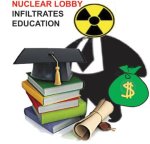
dangerous and absurdly uneconomic nuclear industry.’ The claim about combatting climate change is laughable. These “new generation” nuclear reactors would never be in operation in time to have any effect on climate change – even if they dis work against global heating (which they don’t, anyway)
DAHO FALLS – During a visit to the Idaho National Laboratory last week, U.S. Secretary of Energy Dan Brouillette announced more than $65 million in nuclear energy research for projects across the country. ……. The funds are being awarded to 93 projects across 28 different states. More than $800,000 has been allocated for projects in eastern Idaho. …..An undetermined amount is being awarded to the INL for various research experiments.
Idaho State University in Pocatello will be awarded $59,262 to replace the control rod drive for its nuclear reactor. The project will focus on improving its design to make it more reliable and safe, as well as decrease its complexity.
June 27, 2020
Posted by Christina Macpherson |
Education, USA |
Leave a comment
Report: Company Decommissioning Pilgrim Nuclear Plant Under Criminal Investigation, June 25, 2020, Colin A. Young, State House News Service
Holtec International, a subsidiary of which owns and is decommissioning the inactive nuclear plant in Plymouth, is under criminal investigation, Politico New Jersey reported based on a legal brief filed by the New Jersey Economic Development Authority.
According to the report, New Jersey-based Holtec International sued the NJ EDA in March over the payment of $26 million of a $260 million New Jersey tax incentive, which the agency held up because Holtec allegedy gave a false answer on its 2014 tax credit application.
“Holtec’s misrepresentations — which include its failure to disclose a prior government debarment by the Tennessee Valley Authority (the ‘TVA’) for bribing an official of that agency — first came to light during an investigation conducted by the Governor’s Task Force on the Economic Development Authority’s Tax Incentive Program, and they are now the subject of an ongoing criminal investigation,” the brief read, according to Politico.
A spokesperson and a lawyer for Holtec did not respond to Politico New Jersey, and the company did not immediately return a News Service email seeking a response.
Last week, two Holtec subsidiaries — Holtec Decommissioning International and Holtec Pilgrim LLC — agreed to a settlement with Attorney General Maura Healey and the Baker administration that requires the company to maintain a decommissioning trust fund at a minimum balance and puts other guardrails on the decommissioning of Pilgrim Nuclear Power Station.
Last September, Healey and Baker’s Executive Office of Energy and Environmental Affairs sued the U.S. Nuclear Regulatory Commission over the agency’s decision to approve the transfer of Pilgrim’s license from Entergy to Holtec.
The attorney general, Baker’s administration and members of the state’s Congressional delegation mounted an effort to block the transfer unless the NRC held a full hearing on concerns over Holtec’s ability to safely decommission the nuclear plant, the company’s financial stability and its alleged involvement in a kickback scheme. No hearing was held before the NRC approved the transfer.
Holtec has said that it can complete decommissioning work in Plymouth by the end of 2027 and is in the process of removing all spent nuclear fuel from the plant’s spent fuel pool and placing it on a newly constructed Independent Spent Fuel Storage Installation by early 2022. AT TOP https://www.wbur.org/earthwhile/2020/06/25/plymouth-nuclear-plant-decommissioning-company-criminal-investigation
June 27, 2020
Posted by Christina Macpherson |
Legal, USA |
Leave a comment
Nuclear Coverup
A physicist who was fired by the Lawrence Livermore National Laboratory is suing over an alleged coverup that he claims could have compromised the U.S.’s ability to predict the behavior of nuclear weapons.
Peter Williams, the plaintiff, claims in the lawsuit that he was terminated in retaliation after complaining that his superiors tinkered with his models of nuclear weapon explosions, Science Magazine reports. In doing so, Williams alleges, his superiors were trying to make data align with the models rather than improving their accuracy — leaving the U.S. clueless as to how the weapons would actually behave when actually detonated.
Difficult Math
While he was at Livermore, Williams modeled the behavior of an explosive called a PBX 9502. When equipped to a nuclear warhead, the explosive first triggers a nuclear fission explosion that, in turn, sets off an even more powerful fusion blast, Science reports.
It’s a particularly-difficult dynamic to model, especially because the PBX 9502 is relatively slow-burning, and models also need to account for how the explosion travels through the sample of PBX.
Routine Maintenance
Williams’ central allegation, Science reports, is that supervisors would adjust the parameters of tests after the fact to make the models seem more accurate than they were — rendering them incapable of making meaningful predictions.
But astrophysicist Robert Rosner, a Livermore board member, told Science that modeling adjustments of that sort are commonplace and an expected part of improving them. Still, Williams sees his lawsuit as a matter of duty.
“I couldn’t look myself in the mirror if I didn’t do it,” he told Science.
June 27, 2020
Posted by Christina Macpherson |
legal, secrets,lies and civil liberties, USA |
Leave a comment
 Trump administration says it won’t carry out a nuclear weapons test ‘at this time’, By Kylie Atwood, CNN, June 24, 2020 Washington ,
 The US told Russia that that there is no reason for the Trump administration to carry out a nuclear weapons test “at this time,” during
nuclear negotiations in Vienna this week, but reserved the right to conduct one if they see a need to do so.
“We made very clear, as we have from the moment we adopted a testing moratorium in 1992, that we maintain and will maintain the ability to conduct nuclear tests if we see any reason to do so, whatever that reason may be,” said Marshall Billingslea, the top US envoy for nuclear negotiations, as he spoke to reporters on Wednesday. “But that said, I am unaware of any particular reason to test at this stage.”
The top nuclear negotiator said the Russians had asked him about the possibility of a US nuclear test during their meetings, based on a media report about a test being discussed by US officials last month.
“I won’t shut the door on it, because why would we,” Billingslea said………
China currently has far fewer nuclear weapons than the stockpiles of the cold war foes. The US and Russia both have at least 5,000 nuclear warheads while it is estimated that China only has about 320,
according to the Stockholm International Peace Research Institute (SIPRI).
The Trump administration has recently focused on developing some new nuclear weapons.
The US military deployed a new submarine-launched low-yield nuclear weapon
earlier this year, the first new US nuclear weapon in decades. The weapon was called for in the Trump administration’s 2018 Nuclear Posture Review, which warned that adversaries might believe they could use a smaller nuclear weapon against the US or its allies without fear of the US launching a nuclear retaliation due to American weapons being disproportionately more destructive.
June 25, 2020
Posted by Christina Macpherson |
politics, USA, weapons and war |
Leave a comment
IAEA mildly reprimands Iran over suspect nuclear sites, Atlantic Council, JUN 22, 2020 by Mark Fitzpatrick After more than a year of stonewalling about apparently undeclared nuclear material at a site in Iran—and months of refusing access to two other sites—the Islamic Republic of Iran could have been in for harsh condemnation when the International Atomic Energy Agency (IAEA) Board of Governors met on June 19.
Iran hawks in and outside the US government wanted a finding of non-compliance with Iran’s safeguards agreement with the IAEA and a report to the UN Security Council to buttress their campaign of “maximum pressure.”
That did not happen. Instead, the board on June 19 issued a
mild rebuke, echoing IAEA Director General Rafael Grossi’s expression of “
serious concern” that Iran has not provided access to two locations where unreported nuclear activity allegedly took place nearly two decades ago. He added that Iran has not clarified Agency questions related to possible undeclared nuclear material and nuclear-related activities……..
Iran has found international sympathy since US President Donald Trump’s unilateral withdrawal from the JCPOA two years ago and re-imposition of draconian sanctions. It must not be easy for Iranian citizens to distinguish between the illegitimate pressure waged by Washington and the IAEA’s entirely legitimate insistence on knowing what happened with unreported nuclear material—reportedly traces of natural (not enriched) uranium. But being bullied by Trump does not obviate Iran’s obligations under its safeguards agreement, predating the JCPOA, to answer IAEA questions. ……..
June 25, 2020
Posted by Christina Macpherson |
politics international, USA |
Leave a comment
Brattleboro Reformer 22nd June 2020, An oversized flatbed truck carrying an empty nuclear waste cask headed to the Vermont Yankee nuclear power plant drove onto a soft shoulder on Route 11 in Andover and tipped over Friday morning, setting off a 36-hour effort to retrieve the cask and reopen the busy east-west highway. The cask is slated to be used at the Vernon nuclear power plant which is undergoing demolition and decommissioning. The cask, which weighs upwards of 50 tons, is used as an on-site cask to transfer waste on site, according to Curtis Roberts, a spokesman for Orano, one of the companies involved in the
decommissioning project with main owner NorthStar Vermont Yankee LLC.
He said the cask is owned and manufactured by Orano [Ed note: formerly AREVA, which went bankrupt] . Orano is disassembling the nuclear reactor core, which contains high levels of radioactivity.
https://www.reformer.com/stories/truck-carrying-empty-nuclear-waste-cask-crashes,607654
June 25, 2020
Posted by Christina Macpherson |
incidents, USA |
Leave a comment
 Daily on Energy, presented by API: Inside the new US policy on financing nuclear abroad, Washington Examiner, by Josh Siegel, Energy and Environment Reporter & Abby Smith, Energy and Environment Reporter | June 22, 2020
INSIDE NEW POLICY ON FINANCING NUCLEAR ABROAD: The U.S. International Development Finance Corporation mostly had small nuclear reactors in mind when it proposed this month lifting its ban on funding nuclear projects overseas. But a senior official from the DFC – a greatly expanded successor to the Overseas Private Investment Corporation – says the agency also envisions select situations for funding traditional large reactors, despite recent projects being delayed or canceled by cost overruns……..
The official cited a move by Congress a year after lawmakers passed the BUILD Act in 2018, which authorized the DFC, that called on the U.S. government to support energy diversification projects in Europe as a counter to Russia’s “energy dominance.”
It’s worth noting that some European Union member states, like Germany, are strongly anti-nuclear. Nuclear plant construction is currently underway in only three EU member states — Finland, France and Slovakia — according to the
World Nuclear Association).
Opening the door for SMRs: Small modular nuclear reactors, meanwhile, are still under development and a decade or so from becoming widely operational. This has critics of the DFC’s move questioning the timing of it. The DFC official countered the new policy puts the U.S. in the game with China and Russia, which are already aggressively promoting their advanced nuclear technologies in developing countries……..
the policy shift commits DFC to nothing if small reactors end up being a flop. The DFC met with small reactor developers such as NuScale, an Oregon-based company seeking to be the first to have its license approved by the Nuclear Regulatory Commission, that were pushing for the agency to change its policy……
The DFC offers direct equity financing, loans, and political risk insurance, while Ex-Im can only offer credit or lending. The DFC has a total investment limit of $60 billion, amounting to about a $1 billion maximum per project, the official said.
He acknowledged the DFC does not have in-house expertise on nuclear power at the moment, but he said it’s not uncommon for the young agency to work with independent engineers and experts from other agencies to assess financing opportunities.
June 23, 2020
Posted by Christina Macpherson |
business and costs, politics international, Small Modular Nuclear Reactors, USA |
Leave a comment
-
U.S. conversion factory’s equipment is on the auction block
-
After $8 billion spent, critics see sale at ‘giveaway prices’
Need some parts for a nuclear plant? The government has a few to spare.
Electrical transformers, motors, and pieces of special glove boxes designed to safely handle radioactive material are available as the government auctions off equipment from a now-abandoned nuclear project that was supposed to turn weapons-grade plutonium into fuel for commercial nuclear reactors.
The online fire sale, which ended Thursday evening, is part of an effort to recoup some of the nearly $8 billion taxpayers spent on the so-called Mixed Oxide (MOX) Fuel Fabrication Facility in Aiken, South Carolina, which sits partially finished.
The Trump administration pulled the plug on the project in 2018 following years of ballooning cost estimates and delays. Envisioned in 1999 with a price-tag of $620 million, it swelled to nearly $48 billion with an estimated completion date in the 2040s. Metric tons of plutonium transferred to the site for conversion remain there.
The thousands of items up for grabs are in their original packaging and “present a rare opportunity to acquire brand new equipment that is top nuclear grade,” said Diana Peterson, president of the auction company AW Properties Global, which has been awarded the subcontract to sell off the goods.
Plutonium Handling
Among the items are 101 pallets of glove box assembly kits — sealed boxes with two arm-length gloves attached to holes in the side, used to handle plutonium and other radioactive materials. The high bid was $20,000 as of Thursday afternoon.
A pair of 3,750 kilo-volt-ampere transformers is going for $70,000. Also available are 300,000 pounds of ventilation equipment, as well as reams of switches, control panels, valves, and electrical equipment.
To critics, the sale is a fitting capstone to a project they say has been beset by waste from the start.
“This give-away sale of equipment from the MOX debacle highlights the massive waste of money spent on equipment that was stockpiled willy-nilly just to spend annual budgets and enrich contractors,” said Tom Clements, director of Savannah River Site Watch, a non-profit public-interest group that monitors work at the sprawling site that made nuclear bomb materials in the 1950s.
There should be a “full accounting to the public about how much was spent on stockpiled MOX equipment, how much has been given away or scrapped, and how much is being sold at pennies on the dollar,” Clements said.
The National Nuclear Security Administration, the Energy Department arm responsible for the site, said the auction was being held in accordance with all government property regulations.
“Any inventory that could not be reused by our government, is going to auction as part of our commitment to recapitalize project value,” the agency said in a statement.
(Adds comment from NNSA in final two paragraphs.)
June 22, 2020
Posted by Christina Macpherson |
- plutonium, business and costs, reprocessing, USA |
Leave a comment
 Debunking Trump and Corporate Media’s WHO/China Coverup Conspiracy Theories FAIR
JOSHUA CHO FAIR has criticized the plausibility of various origin theories regarding Covid-19 (4/17/20, 5/7/20), and of unfounded allegations of a Chinese cover-up laundered by corporate media (4/2/20, 4/9/20). Other persistent myths are allegations of Chinese manipulation of the World Health Organization (WHO), and blaming Chinese secrecy for the lack of early action on containing the coronavirus.
The Trump administration suspended funding to WHO in April—the UN’s primary infectious disease–fighting body—accusing it of “severely mismanaging and covering up the spread of the coronavirus,” and of taking China’s allegedly deceptive claims about its handling of Covid-19 at “face value.” But corporate media had already been boosting these same talking points.
The Wall Street Journal’s “The World Health Organization Draws Flak for Coronavirus Response” (2/12/20) effectively accused WHO of being “too deferential to China in its handling of the new virus,” and criticized WHO Director-General Tedros Ghebreyesus for “bending to Beijing” after lauding China’s unquestionably effective swift quarantine of 60 million people, and for declaring that “China is actually setting a new standard for outbreak response” and identifying the virus in “record time.” The Journal further expounded the conspiracy theory of a seemingly omnipotent China having WHO under its thumb:
Over its decades of battling epidemics, the WHO has rarely had to deal with an entity as politically and economically powerful as China today. It can’t afford to alienate the country’s leadership, whose clout and financial largess it aims to attract to global health causes. It needs Beijing’s cooperation in preventing a full-blown pandemic—and this may not be the last time. China is the source of many emerging pathogens, which jump from animals to humans in its teeming live markets and can cause deadly epidemics.
According to the Journal’s logic, when WHO praises China for an effective response containing Covid-19 and giving the rest of the world ample time to take health precautions, it is “compromising its own epidemic response standards, eroding its global authority, and sending the wrong message to other countries that might face future epidemics.” When Dr. Bruce Aylward—a Canadian medical expert with 30 years of experience combating polio, Ebola and other global health emergencies—concluded that he “didn’t see anything that suggested manipulation of numbers,” after leading a team of experts visiting China for WHO, that can’t be an accurate observation. For corporate journalists, it can only be because he was duped by the devious Chinese government “underreporting both total cases and deaths it’s suffered from the disease” (Bloomberg, 4/1/20).
The Journal flimsily explained that China wields such formidable control over the WHO because China is a “future source of funds and a partner with which to tackle the biggest global health problems,” and not as a “current donor.” That would be because a cursory examination of WHO’s funding would reveal that the US donated more than 10 times more money to WHO ($893 million) than China ($86 million), despite the US having almost $200 million in arrears before suspending payments (Axios, 4/15/20).
Neither does the Journal explain how or why WHO could possibly withhold information from Western nations even if it wanted to, when its leadership is stacked with Americans and Europeans, and 15 US officials were embedded with the WHO in Geneva, given that the US is the most “politically and economically powerful” nation on Earth. This makes the Trump administration’s declaration of the US terminating its membership in WHO after threats to permanently cut funding especially egregious.
Nor can the Journal explain the source of China’s fearsome influence over independent and prestigious medical journals like Nature (5/4/20), Science (3/28/20) and the Lancet (3/7/20), which also credited the effectiveness and transparency of China’s response for saving thousands of lives (CGTN, 5/1/20, 5/10/20). Does China’s mysterious and awe-inspiring influence extend over Western medical journals as well?
When Foreign Policy (5/12/20) reported on the exclusive scoop of a leaked dataset of coronavirus cases and deaths from the Chinese military’s National University of Defense Technology, it confirmed that the leaked information “matches” the publicly available numbers the Chinese government posts online—which poses an inconvenience to those spouting conspiracy theories of a Chinese government coverup. Corporate media accounts of Chinese deception and fake statistics also fail to explain how the Chinese government possesses the fantastical ability to deceive governments and independent medical experts around the world, even if it wanted to. As FAIR’s Jim Naureckas (4/2/20) pointed out earlier:
The reality is that it’s very hard to hide an epidemic. Stopping a virus requires identifying and isolating cases of infection, and if you pretend to have done so when you really haven’t, the uncaught cases will grow exponentially. Maintaining a hidden set of real statistics and another set for show would require the secret collusion of China’s 2 million doctors and 3 million nurses—the kind of improbable cooperation that gives conspiracy theories a bad name…. If China is merely pretending to have the coronavirus under control, the pathogen will rapidly surge as people resume interacting with their communities. Once international travel is restored, it will be quite obvious which countries do and don’t have effective management of Covid-19.
Countries revising their figures upon receiving new information is to be expected, and is not necessarily evidence of deceit, as plenty of nations besides China revise their data upwards. Yet only China is singled out as being exceptionally deceptive. For example, in the same week New York revised its death toll upwards by nearly 3,800, China’s adding almost 1,300 dead to its Wuhan data was presented as a possible coverup (Politico, 4/14/20; Guardian, 4/17/20). The Moon of Alabama blog (4/1/20) explained some of the complexities in reporting numbers during a pandemic in real-time:
Does one include co-morbids or not in the count? What about casualties of a car accident that also test positive for Covid-19 when they die? What about those who died with Covid-19 symptoms but could not be tested for lack of test kits? Are the tests really working reliably?… What about asymptomatic cases that test positive. Are these false positives, or do these people really have the virus? One can only know that by testing them a month later for antibodies………
this manipulation of public opinion by the US government and corporate media appears to be working. According to a recent Ipsos survey, more than 30% of Americans have witnessed someone blaming Asian people for the coronavirus pandemic (even though new research indicates that travel from New York City was the primary source of the US outbreak, with New York’s outbreak originating in Europe). Pew Research (4/21/20) found that around two-thirds of Americans have an unfavorable view of China, which is the most negative rating for the country since Pew began asking the question in 2005. This suggests that public opinion has been turned against China, despite it being the first to detect the virus, alert the world and provide a model for containing it.https://fair.org/home/debunking-trump-and-corporate-medias-who-china-coverup-conspiracy-theories/
June 22, 2020
Posted by Christina Macpherson |
China, secrets,lies and civil liberties, spinbuster, USA |
Leave a comment
BOLTON BOOK: Trump Endorsed Israeli Airstrike On Iranian Nuclear Reactors https://www.theyeshivaworld.com/news/featured/1874761/bolton-book-trump-endorsed-israeli-airstrike-on-iranian-nuclear-reactors.html
June 21, 2020 President Donald Trump wholeheartedly endorsed a potential Israeli military attack targeting Iran’s nuclear installations, according to the controversial new book of his former former national security advisor.In “The Room Where It Happened: A White House Memoir,” the famously hawkish Bolton wrote that “On Iran, I urged that he press ahead to withdraw from the nuclear agreement and explained why the use of force against Iran’s nuclear program might be the only lasting solution. ‘You tell Bibi [Israel’s Prime Minister Benjamin Netanyahu] that if he uses force, I will back him. I told him that, but you tell him again,’ Trump said, unprompted by me.”
June 22, 2020
Posted by Christina Macpherson |
secrets,lies and civil liberties, USA |
Leave a comment
A heavy chunk of the San Onofre nuclear plant is slowly moving to Utah, San Diego Tribune,
The 770-ton reactor pressure vessel from Unit 1 is part of the plant’s decommissioning efforts, By ROB NIKOLEWSKI, JUNE 19, 2020
A 770-ton portion of the now shuttered San Onofre Nuclear Generating Station, known as SONGS for short, is slowly making its way to a final resting place at a disposal facility in Utah.
A reactor pressure vessel that helped Unit 1 at SONGS generate electricity left the plant’s premises May 24 via railand is now at an industrial park in North Las Vegas, Nevada, about to be taken some 450 miles north on roads, accompanied by a pair Nevada Highway Patrol trooper pilot cars, to the Utah border.
The shipment will then continue, reaching the Energy Solutions disposal site in the town of Clive, Utah, located about 75 miles west of Salt Lake City.
The old reactor vessel and its contents are designated as Class A low-level waste, considered by the U.S. Nuclear Regulatory Commission as the least hazardous of radioactive waste classifications. Encased in a carbon steel cylinder for the trip, the vessel contains pieces of radioactive metal and grout.
Officials with the Utah Department of Transportation are awaiting a permit from Emmert International, a company based in Oregon contracted to move the vessel to its final destination…..
According to the Las Vegas Review-Journal, officials expect the vessel to leave North Las Vegas June 29 and arrive in Clive seven days later.
The vessel will be loaded onto a trailer 122 feet long, with 45 axles. The trailer’s eight pieces are being put together with cranes at the Apex Industrial Park. Once assembled, the trailer will then take to the road, avoiding Interstate 15 by traveling on U.S. Highway 93, state Route 318, U.S. Highway 6, back to Highway 93 and eventually taking Interstate 80 into Utah.
Six heavy-duty Class 8 trucks with combined 4,000-horsepower will haul the vessel. The entire configuration will use 460 tires that are 18 inches wide to prevent damaging roads, bridges and public infrastructure. Emmert International will use hydraulic jacks to reinforce drainage culverts.
“It’s the heaviest load to ever traverse Nevada roadways,” Nevada Department of Transportation spokesman Tony Illia told the Review-Journal. ….. https://www.sandiegouniontribune.com/business/story/2020-06-19/a-heavy-chunk-of-the-san-onofre-nuclear-plant-slowly-moving-to-utah
June 21, 2020
Posted by Christina Macpherson |
safety, USA |
Leave a comment
REVEALED: The US wanted to detonate a nuclear bomb on the MOON in 1959 to counter the Soviet lead in the space race and show dominance
- New details of an astonishing scheme, first detailed in 1999, have been revealed
- John Greenewald, Jr writes in Secrets from the Vault about numerous plans
- He says a nuclear bomb on the moon was ‘one of the stupider things’ considered
- The US government also wanted to build a military base on the moon by 1966
By HARRIET ALEXANDER FOR DAILYMAIL.COM
PUBLISHED: 10:28 AEST, 21 June 2020 | UPDATED: 15:01 AEST, 21 June 2020
New details about a U.S. plan to blow up a nuclear bomb on the moon as a Cold War ‘show of dominance’ have been revealed in a recently-published book.
The secret mission, code-named Project A119, was conceived at the dawn of the space race by an Air Force division located at New Mexico‘s Kirtland Air Force Base.
A report authored in June 1959 entitled ‘A Study of Lunar Research Flights’ explained plans to explode the bomb on the moon’s ‘terminator’ – the area between the part of the surface that is illuminated by the sun, and the part that’s dark.
The explosion would have likely been visible with the naked eye from Earth because the military had planned to add sodium to the bomb, which would glow when it exploded
A nuclear bomb on the surface of the moon was definitely one of the stupider things the government could do,’ said John Greenewald, Jr., author of Secrets from the Vault.
The book, published in April, details some of the more surreal suggestions made in history.
Greenewald, 39, has been interested in U.S. government secrets since he was 15 and has filed more than 3,000 Freedom of Information Requests……… https://www.dailymail.co.uk/news/article-8443569/US-wanted-detonate-nuclear-bomb-moon-1959-dominance.html
June 21, 2020
Posted by Christina Macpherson |
history, politics international, secrets,lies and civil liberties, USA |
Leave a comment
Horrific’ Ad Suggesting Nuclear Attack From ‘Islam’ Appears In Nashville Newspaper, Paper Apologies
Nicholas ReimannForbes StaffBusinessI’m a news reporter for Forbes, primarily covering the U.S. South.
The Tennessean issued an apology Sunday after “a bizarre, pseudo-religious” full-page ad appeared in the newspaper’s Sunday edition claiming that “Islam” was planning a nuclear strike on the city of Nashville, Tennessee, on July 18, saying that the ad violated the paper’s standards forbidding hate speech and that it is investigating how the ad from a “fringe religious group” was able to be published in the Sunday paper.
The paper said Sunday that it immediately pulled the ad from future editions, which appeared in the “A” section—the front section—of Sunday’s newspaper. …… https://www.forbes.com/sites/nicholasreimann/2020/06/21/horrific-ad-suggesting-nuclear-attack-from-islam-appears-in-nashville-newspaper-paper-apologies/#138034315c03
June 21, 2020
Posted by Christina Macpherson |
Religion and ethics, spinbuster, USA |
Leave a comment
|
Decommissioned nuclear reactor coming to Nevada roads, Las Vegas Review-Journal, June 14, 2020 By Mick Akers You may have heard the term “wide load,” but one load hitting Silver State highways later this month will take that to another level.
The load is a 1.5 million-pound, 16.5-foot-diameter decommissioned reactor pressure vessel from Southern California Edison’s San Onofre Nuclear Generating Station that will set out on Nevada highways starting June 29, according to Tony Illia, Nevada Department of Transportation spokesman.
The reactor will mark the largest item to ever travel on Nevada roads when it begins the final leg of its retirement journey, heading for Utah.
“This record-sized move over state highways marks the culmination of over a year of planning and coordination,” Illia said. “It’s the heaviest load to ever traverse Nevada roadways.”
The vessel arrived May 28 in North Las Vegas and is being staged at Apex Industrial Park. It will be loaded onto a custom-made, 122-foot-long, 45-axle over-the-road trailer, which arrived on site in eight pieces and is being assembled by cranes.
“The load is being moved across the state using six heavy-duty Class 8 trucks with four tractors pushing and two pulling using a series of interconnecting tow bars to create a 23-foot-tall by 306.5-foot-long train that will be the same length as the Statue of Liberty laid on its side,” Illia said.
There will be combined 4,000-horsepower used to transport the configuration, which will weigh in at a massive 2.4 million pounds.
The load will be dispersed across 460 total tires, up to 18 inches in width to prevent damage to state roads, bridges or drainage facilities, according to Illia.
The truckload will be accompanied by a pair Nevada Highway Patrol trooper pilot cars, traveling at a speed of 5 to 10 mph. Emmert International, which specializes in moving large equipment, is contracted to deliver the massive object to its burial ground.
The contractor will reinforce up to nine drainage culverts along the route using hydraulic jacks to prevent damage to public infrastructure, Illia said.
With the speed restrictions, it’s anticipated it will take seven days to travel the approximately 450 miles to reach its destination at Energy Solutions’ Nuclear Waste Facility in Clive, Utah, about 75 miles from Salt Lake City……… https://www.reviewjournal.com/news/news-columns/road-warrior/decommissioned-nuclear-reactor-coming-to-nevada-roads-2053253/
|
|
June 20, 2020
Posted by Christina Macpherson |
safety, USA |
Leave a comment