Scepticism over USA Dept Energy report that the Runit nuclear waste dome is “safe”
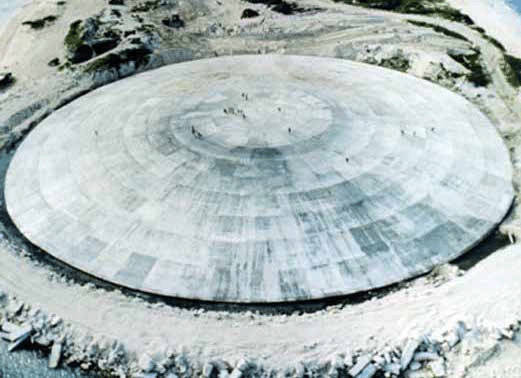
The new report does not include a plan to repair the dome, which was required by Congress.
In 1981, the U.S. government declared in a report that the island should be quarantined indefinitely and that the “possibility would always exist that high levels of plutonium-contaminated subsurface soil could be exposed by wave or storm action.”
The DOE report found that Runit Dome, a repository for atomic waste the United States produced during Cold War weapons testing, is sound and that radioactive leakage into the nearby lagoon is not significant.
After Congress grew concerned last year about the leaking dome, it ordered the DOE to produce a report on the dome’s structural integrity amid climate change and rising sea levels.
The report noted that while sea level rise could increase storm surge, swells, and “lead to wave-induced over-wash of lower sections of the dome,” there is not enough definitive data to determine “how these events might impact on the environment.”
One Marshallese leader was disappointed the DOE again downplayed the risks and declined to take responsibility for Runit Dome and its leaking contents.
“We don’t expect the Enewetak community to feel any safer based on this report as it doesn’t contain any new information from what they’ve seen…and don’t trust,” said Rhea Christian-Moss, the chairperson of the Marshall Islands’ National Nuclear Commission, a government-operated nuclear waste and radiation oversight panel.
“The report offers nothing new and is more or less what we expected to see,” she said, lamenting the Senate’s redaction of a critical line in the House’s mandate, which stipulated that the Department of Energy provide a plan detailing the removal of the radioactive waste into a “safer and more stable location.”
The Department of Energy report is signed by Dan Brouillette, the agency’s secretary. Terry Hamilton, the department’s lead contractor on the project, was not available for comment.
In November last year, The Times published an investigation of the lingering radiation legacy in the Marshall Islands, and the refusal of U.S. authorities to take ownership for the hazards posed by Runit Dome
In December, Congress signed the National Defense Authorization Act for 2020, which required the DOE to provide a plan to repair the dome, evaluate the environmental effects of the dome on the lagoon over the next 20 years, and assess its structure and the potential risk to the people who live near it.
The department was also required to assess how rising sea levels could affect the dome.
Christian-Moss noted data gaps in the report, as well, including the level of radiation in groundwater leaking from the dome into the lagoon.
In 2019, at a presentation delivered in the Marshall Islands to Marshallese and U.S. officials, the DOE’s contractor, Hamilton, mentioned elevated levels of radioactivity in giant clams living near the dome.
The new report does not mention the clams but states that not enough information is available to understand how leakage from the dome is affecting marine life. However, according to the energy department, studies of people living nearby show normal levels of radiation — suggesting they are not being adversely affected.
“The absence of data to show any risk does not mean that there is no risk.” she said. “So my main takeaway from the report is that many risks are still ‘unknown.’”
Nowhere else has the United States saddled another country with so much of its nuclear waste, a product of its Cold War atomic testing program.
The waste site, known alternatively as the Tomb, holds more than 3.1 million cubic feet — or 35 Olympic-size swimming pools — of U.S.-produced radioactive soil and debris, including lethal amounts of plutonium.
The radioactive material was collected, moved and contained by U.S. soldiers during the late 1970s. Many of those veterans say they were unaware of the contents and did not wear protective equipment.
“All in all the message seems to be that we should be concerned but not alarmed,” said Michael Gerrard, a legal scholar at Columbia University’s law school. “It is as if Runit is like a radioactive sore in the middle of the Pacific, but one that can get by with band-aids for the foreseeable future unless they find more bleeding.”
The DOE authors also maintain that the lagoon’s sediments are so contaminated with radioactive elements that any additional spillage from the dome would be undetectable.
“It remains to be seen whether the Marshallese will accept this report by the Americans, given how poorly the U.S. has treated the Marshallese in so many ways since 1945,” said Gerrard.
In July 2019, DOE officials responded claiming they didn’t have the funding to build a fence and installation of a perimeter would be logistically too complex.
In 1981, the U.S. government declared in a report that the island should be quarantined indefinitely and that the “possibility would always exist that high levels of plutonium-contaminated subsurface soil could be exposed by wave or storm action.”
Temporary Injunction Slows Holtec’s Work at Closed Nuclear Plant
Temporary Injunction Slows Holtec’s Work at Closed Nuclear Plant, By STEPHANIE A. FAUGHNAN, June 29, 2020 LACEY, NJ – Holtec’s decommissioning work of the former Oyster Creek Nuclear Plant has slowed down since the beginning of this month in compliance with a court-ordered mandate. Ocean County Superior Court Judge Francis R. Hodgson, Jr.’s imposition of temporary restraints on Holtec, puts a temporary hold on work – other than that permitted by the Nuclear Regulatory Commission.
Attorneys for the Township of Lacey filed the court application requesting judicial intervention, citing what it calls Holtec’s refusal to obtain necessary permits or approvals from the municipality.
The Verified Complaint filed by Jerry J. Dasti, of Dasti, Murphy. McGucklin, Ulaky, Koutsouris & Murphy incorporated a letter the firm sent to Holtec’s legal counsel. An excerpt accuses Holtec of already initiating the process of “building structures into the ground, by excavating a substantial area, which presumably will thereafter house the spent fuel rods.”…….
LACEY, NJ – Holtec’s decommissioning work of the former Oyster Creek Nuclear Plant has slowed down since the beginning of this month in compliance with a court-ordered mandate. Ocean County Superior Court Judge Francis R. Hodgson, Jr.’s imposition of temporary restraints on Holtec, puts a temporary hold on work – other than that permitted by the Nuclear Regulatory Commission.
Attorneys for the Township of Lacey filed the court application requesting judicial intervention, citing what it calls Holtec’s refusal to obtain necessary permits or approvals from the municipality.
The Verified Complaint filed by Jerry J. Dasti, of Dasti, Murphy. McGucklin, Ulaky, Koutsouris & Murphy incorporated a letter the firm sent to Holtec’s legal counsel. An excerpt accuses Holtec of already initiating the process of “building structures into the ground, by excavating a substantial area, which presumably will thereafter house the spent fuel rods.”…….. https://www.tapinto.net/towns/barnegat-slash-waretown/sections/government/articles/temporary-injunction-slows-holtec-s-work-at-closed-nuclear-plant
Many experts question Trump’s claim on China’s nuclear weapons buildup
- When negotiators from the United States and Russia met in Vienna last week to discuss renewing the last major nuclear arms control treaty that still exists between the two countries, American officials surprised their counterparts with a classified briefing on new and threatening nuclear capabilities — not Russia’s, but China’s.
….. Many outside experts question whether China’s buildup — assessed as bringing greater capability more than greater numbers — is as fast, or as threatening, as the Trump administration insists.
The United States conducted more nuclear tests during the Cold War than the rest of the world combined. Over decades of experimentation, and more than 1,000 tests, its bomb designers learned many tricks of extreme miniaturization as well as how to endow their creations with colossal destructive force. Compared with the atomic bomb that leveled Hiroshima, the nation’s first explosive test of a hydrogen bomb, in 1954, produced a blast 1,000 times as powerful.
Because of that history, many nuclear experts now argue that if Mr. Trump begins a new wave of global testing, it would aid American rivals more than the United States.
For years, some Republicans have urged preparations for a test and poured money into the effort. One instrument now being prepared for the Nevada complex costs $800 million; it would test the behavior of plutonium.
Today, Republicans are still urging more upgrades and speedups, including at the Nevada complex. This month, Senator Tom Cotton, Republican of Arkansas, offered an amendment to a defense bill that would add at least $10 million to “carry out projects related to reducing the time required to execute a nuclear test.”
Top Democrats in the House told the Pentagon and the Energy Department in a recent letter that the idea of a renewal in nuclear testing was “unfathomable,” as well as “shortsighted and dangerous.”
But Mr. Billingslea thinks he succeeded in getting the Russians to think about what is happening in China, not in the Nevada desert. During his meeting last week, the Russians were taking copious notes on China’s buildup, while reviewing classified slides. He insists they want to sit down and talk more later in the summer.
They will do so without the Chinese….https://www.nytimes.com/2020/06/30/us/politics/trump-russia-china-nuclear.html
Groups in 5 other States challenge Holtec’s plan to transport nuclear waste to New Mexico
USA adds a new indictment to its charges against Julian Assange
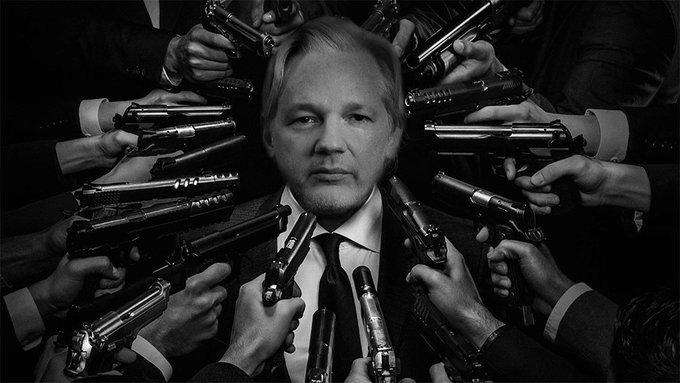 WikiLeaks founder Assange faces new indictment in US, By ERIC TUCKER, 29 June 20, WASHINGTON (AP) — WikiLeaks founder Julian Assange sought to recruit hackers at conferences in Europe and Asia who could provide his anti-secrecy website with classified information, and conspired with members of hacking organizations, according to a new Justice Department indictment announced Wednesday.
The superseding indictment does not contain additional charges beyond the 18 counts the Justice Department unsealed last year. But prosecutors say it underscores Assange’s efforts to procure and release classified information, allegations that form the basis of criminal charges he already faces.
Beyond recruiting hackers at conferences, the indictment accuses Assange of conspiring with members of hacking groups known as LulzSec and Anonymous. He also worked with a 17-year-old hacker who gave him information stolen from a bank and directed the teenager to steal additional material, including audio recordings of high-ranking government officials, prosecutors say.
Assange’s lawyer, Barry Pollack, said in a statement that “the government’s relentless pursuit of Julian Assange poses a grave threat to journalists everywhere and to the public’s right to know.”
“While today’s superseding indictment is yet another chapter in the U.S. Government’s effort to persuade the public that its pursuit of Julian Assange is based on something other than his publication of newsworthy truthful information,” he added, “the indictment continues to charge him with violating the Espionage Act based on WikiLeaks publications exposing war crimes committed by the U.S. Government.”
Assange was arrested last year after being evicted from the Ecuadorian Embassy in London, where he had sought refuge to avoid being sent to Sweden over allegations of rape and sexual assault, and is at the center of an extradition tussle over whether he should be sent to the United States.
The Justice Department has already charged him with conspiring with former U.S. Army intelligence analyst Chelsea Manning in one of the largest compromises of classified information in U.S. history by working together to crack a password to a government computer.
Prosecutors say the WikiLeaks founder damaged national security by publishing hundreds of thousands of classified documents, including diplomatic cables and military files on the wars in Iraq and Afghanistan, that harmed the U.S. and its allies and aided its adversaries.
Assange maintains he was acting as a journalist entitled to First Amendment protection. His lawyers have argued the U.S. charges of espionage and computer misuse were politically motivated and an abuse of power.
Assange generated substantial attention during the 2016 presidential election, and in investigations that followed, after WikiLeaks published stolen Democratic emails that U.S. authorities say were hacked by Russian military intelligence officials. An investigation by special counsel Robert Mueller revealed how Trump campaign associates eagerly anticipated the email disclosures. One Trump ally, Roger Stone, was found guilty last year of lying about his efforts to gain inside information about the emails. Assange, however, was never charged in Mueller’s Russia investigation.
The allegations in the new indictment center on conferences, in locations including the Netherlands and Malaysia in 2009, at which prosecutors say he and a WikiLeaks associate sought to recruit hackers who could locate classified information, including material on a “Most Wanted Leaks” list posted on WikiLeaks’ website.
According to the new indictment, he told would-be recruits that unless they were a member of the U.S. military, they faced no legal liability for stealing classified information and giving it to WikiLeaks “because ‘TOP SECRET’ meant nothing as a matter of law.”
At one conference in Malaysia, called the “Hack in the Box Security Conference,” Assange told the audience, “I was a famous teenage hacker in Australia, and I’ve been reading generals’ emails since I was 17.”
The Shoshone people and nuclear bomb testing
 Nuclear tests and the Shoshone people, https://www.reviewjournal.com/opinion/nevada-views-nuclear-tests-and-the-shoshone-people-2063105/ By Ian Zabarte June 27, 2020 -REGARDING Gary Martin’s June 15 Review-Journal article, “Nuke test rumors spur Nevada lawmakers”: As a Shoshone, we always had horses. My grandfather always told me, “Stop kicking up dust.” Now I understand that it was because of the radioactive fallout.
To hide the impacts from nuclear weapons testing, Congress defined Shoshone Indian ponies as “wild horses.” There is no such thing as a wild horse. They are feral horses, but the Wild Horse and Burrow Acts of 1971 gave the Bureau of Land Management the affirmative act to take Shoshone livestock while blaming the Shoshone ranchers for destruction of the range caused by nuclear weapons testing. My livelihood was taken and the Shoshone economy destroyed by the BLM. On the land, radioactive fallout destroyed the delicate high desert flora and fauna, creating huge vulnerabilities where noxious and invasive plant species took hold.
Nuclear weapons testing at the Nevada National Security Site has left a dark legacy of radiation exposure to Americans downwind from the battlefield of the Cold War. Among the victims are the Shoshone people, whom, by no fault of our own, were exposed to radiation in fallout from more than 924 nuclear tests. The Shoshone people never consented to the nuclear weapons testing.
Nuclear testing is a violation of the peace treaty with the Shoshone, the Treaty of Ruby Valley, and the U.S. Constitution, Article 6 Section 2, the treaty supremacy clause. Nothing in the treaty contemplated the secret massacre of Shoshone people with radioactive poison from nuclear weapons testing within our own homelands. My tribe and family are the victims.
The enduring purpose of nuclear technology is the creation of weapons of mass destruction. Their tests within the Shoshone homelands are deliberate acts that destroy the Shoshone people. No Shoshone, not one person, should be sacrificed for the benefit of some Americans and the profit of the military industrial complex.
Nuclear weapons development in Shoshone homelands violates humanitarian law, human rights law and environmental law and is racist. Racism is a crime. It is called genocide, “a crime against humanity.”
To prove intent to commit genocide, we have only to look at the culture of secrecy of the military occupation of Shoshone homelands during and since the Cold War at the test site. The acts committed in nuclear weapons development and testing against the Shoshone people benefit other Americans. The Shoshone people suffer without relief or acknowledgement of our silent sacrifice. Secrecy is not transparent. Secrecy is not democratic and is unconstitutional when the acts are conducted in and upon the Shoshone land and people.
Nevada took hundreds of millions of dollars for characterization studies from the federal government in grants equal to taxes from Shoshone property and gave nothing to the Shoshone. A clear case of taxation without representation to defraud the Shoshone people of our property interests.
What is needed now are hearings on and support for the extension and funding of the Radiation Exposure Compensation Act of 2019. The Shoshone people need DNA testing and funding for tribal community health education on radiation basics and information on appropriate protective behavior to mitigate radiation exposure.
The Shoshone people are committed to the enforcement of law in the service of justice and human dignity. That is human growth and development, not nuclear weapons.
Ian Zabarte is Principal Man for the Western Bands of the Shoshone Nation of Indians.
Instead of funding health, care, U.S. Senate approves big increase to funding nuclear weapons

We have allowed our tax dollars to be spent in continued efforts to dominate the world. Instead of taking care of our citizens, we create weapons of mass destruction at great cost to all living things.
This quote from the late Congressman Stewart Udall is still as applicable now as it was in 1993: “There is nothing comparable in our history to the deceit and the lying that took place as a matter of official government policy in order to protect this [nuclear weapons] industry. Nothing was going to stop them and they were willing to kill our own people. … The atomic weapons race and the secrecy surrounding it crushed American democracy. It induced us to conduct government according to lies. It distorted justice. It undermined American morality.
Step up against expansion of LANL’s nuclear mission https://www.santafenewmexican.com/opinion/my_view/step-up-against-expansion-of-lanls-nuclear-mission/article_d8414dbc-b7ce-11ea-aecc-3b8d2fa29a01.html, By Lydia Clark, 28 June 20
-
- The U.S. Senate just approved a 20 percent increase for the fiscal year 2021 defense budget that could go into effect this October. For New Mexico, this is devastating. It gives Los Alamos National Laboratory approximately $837 million for nuclear weapons production.
The U.S. government has far too long ignored the oppression exerted from militaristic efforts to control its citizens and its effects worldwide. This “knee on the neck” of humanity must stop.
We have allowed our tax dollars to be spent in continued efforts to dominate the world. Instead of taking care of our citizens, we create weapons of mass destruction at great cost to all living things. This is not a knee, but an anvil around our necks.
The current plan for 80 plutonium pits (the cores of nuclear weapons) per year at LANL will create another Rocky Flats, the last big plutonium pit factory in the U.S. Colorado is still paying the price environmentally for the Rocky Flats pit production factory. The devastation to workers’ lives from plutonium contamination will never be fully compensated. The contamination of the environment, workers and the public is what this pit factory at LANL creates, not security and safety for our nation.
We, the people, can say “no” to spending our tax dollars in this manner. There is still time to stop this insanity. As we see now and have seen in the past, together we can create change. Businesses and individuals must stand up and demand positive change. Oppose nuclear weapons production, oppose nuclear weapons use. Demand a Sitewide Environmental Impact Statement. It creates transparency. Only this statement will encompass all Northern New Mexico in the far-reaching impacts of a plutonium pit factory at LANL.
This quote from the late Congressman Stewart Udall is still as applicable now as it was in 1993: “There is nothing comparable in our history to the deceit and the lying that took place as a matter of official government policy in order to protect this [nuclear weapons] industry. Nothing was going to stop them and they were willing to kill our own people. … The atomic weapons race and the secrecy surrounding it crushed American democracy. It induced us to conduct government according to lies. It distorted justice. It undermined American morality. Until the cold war, our country stood for something.” — New York Times, June 8, 1993.
I implore the citizens of Santa Fe, Northern New Mexico and the entire state to take action by opposing production of nuclear weapons at LANL, asking for a Sitewide Environmental Impact Statement and demanding sustainable benefits for our city, region and state.
Let us once more stand for something. Equality, social justice, real democracy and compassion. By definition, compassion means a sympathetic consciousness with a desire to alleviate it. Let us stand together in consciousness and show compassion for our environment, our humanity and our future.
Judge orders temporary stop to decommissioning Oyster Creek Nuclear Generating Station
Judge Orders Decommissioning Temporarily Halted at Former Nuclear Plant
Lacey Officials, Oyster Creek Generating Station Owners Disagree on Land Use Oversight, The Sandpaper, June 24, 2020, By Gina G. Scala Ocean County Superior Court Judge Francis R. Hodgson issued an order of temporary restraint to the owners of the shuttered Oyster Creek Nuclear Generating Station on June 2, stopping all decommissioning activities unrelated to site security and maintaining the dry cask storage of spent nuclear fuel.
Hodgson’s order came after counsel for Lacey Township filed a complaint against Holtec International and Holtec Decommissioning International in late May.
Holtec is a Camden-based global energy technology company that assumed ownership and licensee status of Oyster Creek in June 2019 after a near 10-month application review by the Nuclear Regulatory Commission. The plant had previously been owned by Exelon Generation, part of the Exelon Corp. nuclear fleet. Lacey Township is the host community of the shuttered nuclear plant, which went online in December 1969 and sits on 779 acres of land in the Forked River section of the township.
In his finding, Hodgson ordered that pending a future court date, Holtec is temporarily prohibited and restrained from continuing any and all work at the facility unless or until permits are provided to plaintiff’s attorney documenting that the work being undertaken is permitted by the appropriate regulatory authority.
At issue is whether the Atomic Energy Act of 1954 and other federal law supersedes the uniform construction code and municipal oversight from mandating a building permit, local planning board approval and site plan approval, among other approvals, prior to construction beginning, according to Jerry J. Dasti, head counsel for Lacey Township, writing in a June 11 supplemental memorandum of law argument filed with Hodgson.
Citing the U.S. Constitution and numerous state and federal Supreme Court cases, Dasti argued determining preemptive status of state laws is well established and Holetc’s argument doesn’t meet the criteria. ……..
Holtec has until June 24 to respond, in writing, to Hodgson’s order, including a request for relief from his determination. The township has until June 29 to file its written response in opposition, according to the June 2 order of temporary restraint.
In the meantime, Holtec officials have come to an agreement with the state of Massachusetts on key issues related to the safe decommissioning of the Pilgrim Nuclear Station, located on Cape Cod Bay in Plymouth. ……
Both Oyster Creek and Pilgrim were boiling water reactors powered by General Electric. The nuclear power plants both used local water sources as their cooling method, as opposed to cooling towers. Oyster Creek permanently ceased operations on Sept. 17, 2018. Pilgrim was shuttered on May 31, 2019. https://www.thesandpaper.net/articles/judge-orders-decommissioning-temporarily-halted-at-former-nuclear-plant/
Trump’s Justice Department drumming up new allegations against Julian Assange
ASSANGE EXTRADITION: Assange Hit With New Superseding Indictment, Reflecting Possible FBI Sting Operation The U.S. Justice Department on Wednesday unveiled the new superseding indictment against the WikiLeaks publisher, adding to existing computer intrusion charges. By Joe Lauria, Consortium News June 24, 2020 The Justice Department on Wednesday said it had filed a second superseding indictment against imprisoned WikiLeaks publisher Julian Assange, adding to existing computer intrusion charges.“The new indictment does not add additional counts to the prior 18-count superseding indictment returned against Assange in May 2019,” the DOJ said in a press release.
“It does, however, broaden the scope of the conspiracy surrounding alleged computer intrusions with which Assange was previously charged,” the release said. “According to the charging document, Assange and others at WikiLeaks recruited and agreed with hackers to commit computer intrusions to benefit WikiLeaks.”…….
The indictment quotes Assange at hacking conferences encouraging hackers to obtain a “Most Wanted Leaks” list of classified materials that WikiLeaks sought to publish.
It provides new allegations that Assange instructed a “teenager” from an unnamed NATO country to conduct various hacks “including audio recordings of phone conversations between high-ranking officials” of the NATO nation as well as members of parliament from that country. The indictment claims Manning “downloaded classified State Department materials” about this country.
WikiLeaks has identified the “teenager” as Sigurdur Thordarson, “a diagnosed sociopath, a convicted conman, and sex criminal” who had impersonated Assange to embezzle money from WikiLeaks………..
Thordarson, an Icelander, became an FBI informant, and was flown to Washington in May 2019 for an interview with the FBI.
The superseding indictment says Assange was allegedly able to learn from “unauthorized access” to a website of this government that police from that country were monitoring him. The indictment says the source of this information was a former member of Anonymous who worked with WikiLeaks named Sabu, identified in the press as Hector Monsegur, who became an FBI informant after being arrested in June 2011.
In the same month, Iceland’s Interior Minister Ögmundur Jonasson prevented FBI agents from entering Iceland, testifying that “FBI dirty-tricks operations were afoot against WikiLeaks.” He said the agents had been sent to seek “our cooperation in what I understood as an operation to set up, to frame Julian Assange and WikiLeaks.” The possibility remains that the new evidence against Assange was obtained in an FBI sting operation.
Jeremy Hammond, a hacker arrested for obtaining the Stratfor files, is named in the new indictment has having revealed information about his activities with Assange to Sabu in December 2011. Last September, Hammond, who was serving a 10-year sentence in Memphis, TN, was brought by prosecutors investigating Assange to Alexandria, VA to compel him to give testimony against Assange. Hammond has refused.
Reiterates Original Charges
The new indictment repeats the existing espionage and computer intrusion charges………
In 2010, Robert Parry, one of the best investigative reporters of his era, and the founder of this website, wrote that the then pending plans of the Obama administration to indict Assange “for conspiring with Army Pvt. Bradley Manning to obtain U.S. secrets strikes at the heart of investigative journalism on national security scandals.”
Parry added:
“That’s because the process for reporters obtaining classified information about crimes of state most often involves a journalist persuading some government official to break the law either by turning over classified documents or at least by talking about the secret information. There is almost always some level of ‘conspiracy’ between reporter and source.” [Emphasis added.]
Parry thus admitted to encouraging his sources to turn over classified information even if it meant committing the lesser crime of leaking classified information if it could help prevent a larger crime from being committed. In this way Assange encouraged Manning to turn over material such as the “Collateral Murder” video in the hope that it could end the illegal war in Iraq…….
The New York Times reported at the time that “federal prosecutors were reviewing the possibility of indicting Assange on conspiracy charges for allegedly encouraging or assisting Manning in extracting ‘classified military and State Department files from a government computer system,’” Parry wrote.
“The Times article by Charlie Savage notes that if prosecutors determine that Assange provided some help in the process, ‘they believe they could charge him as a conspirator in the leak, not just as a passive recipient of the documents who then published them,” wrote Parry.
This is precisely what the Trump Justice Department has done in the first computer intrusion indictment against Assange and now with this superseding one. https://consortiumnews.com/2020/06/24/assange-extradition-assange-hit-with-new-superseding-indictment-broadening-computer-intrusion-charges/?fbclid=IwAR3uZdqQkMLxeheGyUVLpkUYPIo0ywUZwFiQcu6pD9woYSYyPhZtyh3kiw4
Grave concerns in New Mexico about nuclear waste plan
|
State of New Mexico says nuclear waste project poses disproportionate risk, locals supportive, Albuquerque Journal BY ADRIAN HEDDEN / CARLSBAD CURRENT-ARGUS, N.M. (TNS), Thursday, June 25th, 2020 New Mexico’s Executive Branch and activist groups continued their fight against a nuclear waste repository proposed to be built near the Eddy-Lea county line while supporters touted promises of economic benefits to the region and southeast New Mexico’s role in addressing the nation’s nuclear waste.The debate came during a Tuesday virtual public hearing hosted by the federal Nuclear Regulatory Commission (NRC) to seek public comments on an environmental impact statement (EIS) issued by the NRC for Holtec International’s application for a license to build a consolidated interim storage facility (CISF) that would temporarily hold spent nuclear fuel at the surface while a permanent underground repository is developed…….
A second public hearing was scheduled via teleconference on July 9, with in-person meetings expected in August pending the COVID-19 health crisis. The 40-year license application represented the first phase of the project, including 500 canisters of waste, but the entire project could comprise of 20 phases holding up to 173,000 metric tons of waste when complete. All 20 phases were analyzed by the EIS, but not included in the first license application. Canisters would be positioned in tunnels about 40 feet deep, and would be gradually cooled, reducing radiation. Public comments already submitted during numerous 2018 NRC scoping meetings voiced concerns for transportation, the location near the Permian Basin oilfield, along with potential groundwater and soil contamination and the safety of the facility during an incident such as a fire or flood……. State officials and residents spoke at the meeting, with some voicing support as others cited “grave concerns” for the project they contended could become permanent although it was pitched as temporary. New Mexico Gov. Michelle Lujan Grisham voiced opposition in the past, calling the proposal “economic malpractice” for the perceived risk it posed to local industries such as agriculture and oil and gas. Opposition cites environmental risk of more nuclear waste in New Mexico New Mexico Environment Department Cabinet Secretary James Kenney said New Mexico already holds risk associated with nuclear activities through Sandia and Los Alamos national laboratories along with the Waste Isolation Pilot Plant and the URENCO nuclear enrichment facility near Eunice. He said vulnerable populations reside near the proposed sight, many minority groups also reliant on groundwater that could be impacted by the project. Cabinet Secretary of the New Mexico Energy, Minerals and Natural Resources Department Sarah Cottrell Propst voiced similar concerns as Kenney, that the project could unduly impact New Mexicans by foisting nuclear waste onto the state. “New Mexicans have shouldered a disproportionate burden of the waste associated from nuclear weapons development. Holtec is asking the NRC to have New Mexico shoulder more burden with the waste from nuclear generators,” Kenney said. “The location suggested is in an area where people rely on groundwater and that is known for having sensitive karstic features.” State Sen. Jeff Steinborn (D-36) of Las Cruces expressed concerns that the project could be in operation for much longer than the 40 years stipulated in the license application. He argued that the opposition from people outside of Eddy and Lea counties was valid as the transportation routes for the waste brought to the site passed throughout New Mexico and the nation. Other state senators and representatives, mostly Republicans representing southeast New Mexico districts, were supportive of the project. Steinborn introduced legislation during New Mexico’s January Legislative Session to increase state oversight of nuclear projects, but the bill was defeated in committee. “The draft EIS cannot adequately analyze the long-term impacts of the project as there is no permanent repository. The application is for 40 years, but clearly the facility could be there much longer,” he said. “And I have to take some exception when its characterized that outsiders’ opposition is not relevant. It is an issue for all New Mexicans.” Camilla Feibelman, director of Rio Grande Chapter of Sierra Club said the project was not just an issue for southeast New Mexico to consider. She also argued that Holtec should be required to make financial assurances in case of an accident. “We believe that this waste should be stored as close to its original site as possible,” she said. “New Mexicans should not be put at risk for any sum of money.” Local leaders look to diversify economy through nuclear………. https://www.abqjournal.com/1469762/state-of-new-mexico-says-nuclear-waste-project-poses-disproportionate-risk-locals-supportive.html |
|
Marketing man Trump trying to sell U.S. nuclear reactors to Poland
 Duda, Trump announce nuclear energy deal, Presidents Andrzej Duda and Donald Trump announced on Wednesday the signing of a deal on development of nuclear energy in Poland, which Duda said would be signed as soon as possible.US President Donald Trump talked of the purchase of American technology.
At a press conference with Duda at the White House, Trump said they were working on a deal that would facilitate the development and building of a nuclear power plant in Poland, adding that it would work with the use of American technology bought from a large US company……… https://www.thefirstnews.com/article/duda-trump-announce-nuclear-energy-deal-13601
USA adds new indictment to charges against Julian Assange
WASHINGTON (AP) — WikiLeaks founder Julian Assange sought to recruit hackers at conferences in Europe and Asia who could provide his anti-secrecy website with classified information, and conspired with members of hacking organizations, according to a new Justice Department indictment announced Wednesday.
The superseding indictment does not contain additional charges beyond the 18 counts the Justice Department unsealed last year. But prosecutors say it underscores Assange’s efforts to procure and release classified information, allegations that form the basis of criminal charges he already faces.
Beyond recruiting hackers at conferences, the indictment accuses Assange of conspiring with members of hacking groups known as LulzSec and Anonymous. He also worked with a 17-year-old hacker who gave him information stolen from a bank and directed the teenager to steal additional material, including audio recordings of high-ranking government officials, prosecutors say.
Assange’s lawyer, Barry Pollack, said in a statement that “the government’s relentless pursuit of Julian Assange poses a grave threat to journalists everywhere and to the public’s right to know.”
“While today’s superseding indictment is yet another chapter in the U.S. Government’s effort to persuade the public that its pursuit of Julian Assange is based on something other than his publication of newsworthy truthful information,” he added, “the indictment continues to charge him with violating the Espionage Act based on WikiLeaks publications exposing war crimes committed by the U.S. Government.”
Assange was arrested last year after being evicted from the Ecuadorian Embassy in London, where he had sought refuge to avoid being sent to Sweden over allegations of rape and sexual assault, and is at the center of an extradition tussle over whether he should be sent to the United States.
The Justice Department has already charged him with conspiring with former U.S. Army intelligence analyst Chelsea Manning in one of the largest compromises of classified information in U.S. history by working together to crack a password to a government computer.
Prosecutors say the WikiLeaks founder damaged national security by publishing hundreds of thousands of classified documents, including diplomatic cables and military files on the wars in Iraq and Afghanistan, that harmed the U.S. and its allies and aided its adversaries.
Assange maintains he was acting as a journalist entitled to First Amendment protection. His lawyers have argued the U.S. charges of espionage and computer misuse were politically motivated and an abuse of power.
Assange generated substantial attention during the 2016 presidential election, and in investigations that followed, after WikiLeaks published stolen Democratic emails that U.S. authorities say were hacked by Russian military intelligence officials. An investigation by special counsel Robert Mueller revealed how Trump campaign associates eagerly anticipated the email disclosures. One Trump ally, Roger Stone, was found guilty last year of lying about his efforts to gain inside information about the emails. Assange, however, was never charged in Mueller’s Russia investigation.
The allegations in the new indictment center on conferences, in locations including the Netherlands and Malaysia in 2009, at which prosecutors say he and a WikiLeaks associate sought to recruit hackers who could locate classified information, including material on a “Most Wanted Leaks” list posted on WikiLeaks’ website.
According to the new indictment, he told would-be recruits that unless they were a member of the U.S. military, they faced no legal liability for stealing classified information and giving it to WikiLeaks “because ‘TOP SECRET’ meant nothing as a matter of law.”
At one conference in Malaysia, called the “Hack in the Box Security Conference,” Assange told the audience, “I was a famous teenage hacker in Australia, and I’ve been reading generals’ emails since I was 17.”
US, Russia nuclear arms talks end with plans for second round
US, Russia nuclear arms talks end with plans for second round, Aljazeera, 26 June 20,
US says any new agreement on curbing nuclear weapons should include China, a condition Russia calls ‘unrealistic’. US and Russian negotiators have concluded a round of nuclear arms control talks in Austria’s capital, Vienna, aimed at producing a new agreement to replace the New START treaty that expires next year.
US negotiator Marshall Billingslea told reporters on Tuesday that the day of high-level “marathon discussions” ended late on Monday.
Billingslea said the talks had been productive enough to establish several technical working groups to delve deeper into the issues in order to pave the way for a second round of talks by late July or early August…… https://www.aljazeera.com/news/2020/06/coronavirus-deaths-children-extremely-rare-live-updates-200626000914304.html
Resequencing of Vogtle nuclear plant expansion activities is credit negative: Moody’s

Resequencing of Vogtle nuclear plant expansion activities is credit negative: Moody’s, Author, Joniel Cha , Editor, Richard Rubin , 26 June, Washington — Georgia Power’s resequencing of construction activities for the Vogtle nuclear plant expansion project is credit negative, Moody’s said June 24.
“The unexpected, late-stage changes to these planned activities is credit negative for Georgia Power because it signals that challenges with the project continue, increasing the likelihood of additional cost overruns and further schedule delays,” Moody’s said in a statement. ….. https://www.spglobal.com/platts/en/market-insights/latest-news/electric-power/062420-resequencing-of-vogtle-nuclear-plant-expansion-activities-is-credit-negative-moodys
Outer space beginning to look like a new area of nuclear conflict, according to Pentagon
 THE PENTAGON IS WORRIED A SPACE NUKE WILL FRY ITS SATELLITES, https://futurism.com/the-byte/pentagon-worried-space-nuke-fry-satellites JUNE 18TH 20__DAN ROBITZSKI__
Space Nukes
The U.S. Department of Defense released a new space strategy report on Wednesday. In it, the military revealed that it’s concerned that nukes detonated in space could wipe out its fleet of satellites.
It’s not a new concern, since space nukes were originally banned in the 1967 Outer Space Treaty. But all the same, Business Insider reports that the Pentagon is particularly concerned that China and Russia might strike — a dire warning for the future of combat.
The report specifically identified China and Russia as immediate threats. Such an attack could potentially devastate military communication networks as well as the myriad other systems that depend on satellites.
“The challenge of a nuclear detonation is that it creates an electromagnetic pulse and a signal that could then take out indiscriminately many satellites in space and essentially fry the electronics,” Deputy Assistant Secretary of Defense for Space Policy Stephen Kitay said at a press conference on the report, according to BI.
“That is a threat that we have to potentially be prepared for — a nuclear detonation in space,” he added.
If nothing else, the report is yet another sign that the idea of space remaining peaceful seems to be slipping away.
“I wish I could say that space is a sea of tranquility, but the fact of the matter is that space is contested,” Kitay said. “Outer space has emerged as a key arena of potential conflict in an era of great power competition.”
-
Archives
- October 2026 (129)
- September 2026 (339)
- August 2026 (330)
- July 2026 (355)
- June 2026 (287)
- May 2026 (306)
- April 2026 (356)
- March 2026 (251)
- February 2026 (267)
- January 2026 (308)
- December 2025 (358)
- November 2025 (359)
-
Categories
- 1
- 1 NUCLEAR ISSUES
- business and costs
- climate change
- culture and arts
- ENERGY
- environment
- health
- history
- indigenous issues
- Legal
- marketing of nuclear
- media
- opposition to nuclear
- PERSONAL STORIES
- politics
- politics international
- Religion and ethics
- safety
- secrets,lies and civil liberties
- spinbuster
- technology
- Uranium
- wastes
- weapons and war
- Women
- 2 WORLD
- ACTION
- AFRICA
- Atrocities
- AUSTRALIA
- Christina's notes
- Christina's themes
- culture and arts
- Events
- Fuk 2022
- Fuk 2023
- Fukushima 2017
- Fukushima 2018
- fukushima 2019
- Fukushima 2020
- Fukushima 2021
- general
- global warming
- Humour (God we need it)
- Nuclear
- RARE EARTHS
- Reference
- resources – print
- Resources -audiovicual
- Weekly Newsletter
- World
- World Nuclear
- YouTube
-
RSS
Entries RSS
Comments RSS

