Huge federal subsidies to nuclear power, but few to renewables
Ask Saint Onofrio discusses the significance of the Price-Anderson Nuclear Industries Indemnity Act, which limits the costs for nuclear plants by shifting a portion of the liability for an accident from plant operators to taxpayers. Also discussed are decommissioning costs, which fall largely on ratepayers. In the case of San Onofre, closing estimates are in the range of $4.1 billion.
New Report Finds California Nuclear Energy Has Received $8.2 Billion in Federal Subsidies http://www.heraldonline.com/2013/08/26/5149320/new-report-finds-california- nuclear.html DBL Investors examines rationale for subsidizing mature, declining energy sources By DBL Investors SAN FRANCISCO, AUG. 26, 2013 — /PRNewswire/ – DBL Investors, a double bottom line venture capital firm, today announced a report revealing that the California nuclear industry has received $8.21 billion in federal subsidies over the last 50 years. The report, Ask Saint Onofrio: Finding What Has Been Lost in A Tale of Two Energy Sources, compares federal subsidies for nuclear energy to those provided for distributed solar energy.
“In keeping with our nation’s tradition of supporting the emergence of new energy sources, federal subsidies were necessary and highly-effective for the early growth of the nuclear industry and have been vital to the recent growth of the nascent distributed solar industry,” said report co-author and Managing Partner of DBL Investors Nancy E. Pfund,
Nuclear energy has received four times more federal support than distributed solar over a period six times as long. While solar is beginning to comprise a significant portion of installed capacity in California, it has received less support than nuclear did in its earliest years. At the same time, the closure of the San Onofre Nuclear Generating Station (SONGS) has reduced California’s in-state nuclear generation by almost 50 percent.
Pfund adds, “The difference is that despite the declining role of nuclear power in the Golden State, federal subsidies for nuclear have become a perpetuity. Meanwhile, solar subsidies are at risk of ending during the industry’s infancy, even as solar creates thousands of California jobs.” Continue reading
USA West Coast Tuna, Salmon and Herring contaminated by radiation?
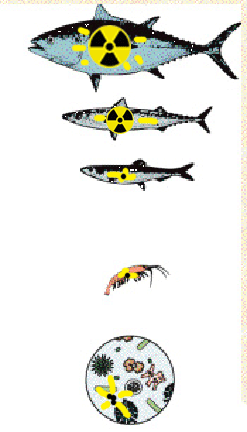 The bottom line – as nuclear experts said 4 days after the Japanese earthquake and tsunami – is that we all need to demand that fish be tested for radiation.
Is Fukushima Radiation Contaminating Tuna, Salmon and Herring On the West Coast of North America?
By Washington’s Blog Global Research, August 26, 2013 Demand that Fish Be Tested for Radiation
We’ve extensively documented that radioactivity from Fukushima is spreading to North America.
More than a year ago, 15 out of 15 bluefin tuna tested in California waters were contaminated with radioactive cesium from Fukushima.
Bluefin tuna are a wide-ranging fish, which can swim back and forth between Japan and North America in a year. But what about other types of fish?
Sockeye salmon also have a range spanning all of the way from Japan to Alaska, Canada, Washington and Oregon: Associated Press reports that both scientists and native elders in British Columbia say that sockeye numbers have plummeted:…….
Another example – pacific herring – is even more dramatic. Pacific herring is wide-ranging fish, spanning all the way from Japan to Southern California:
Every single pacific herring examined by a biologist in Canada was found to be hemorrhaging blood. As Ene News reports:
See also: Alexandra Morton via Vancouver 24 hrs, Vancouver 24 hrs, Alexandra Morton)
The Globe and Mail, Aug 13, 2013 (Emphasis Added):
Independent fisheries scientist Alexandra Morton is raising concerns about a disease she says is spreading through Pacific herring causing fish to hemorrhage. […] “Two days ago I did a beach seine on Malcolm Island [near Port McNeill on northern Vancouver Island] and I got approximately 100 of these little herring and they were not only bleeding from their fins, but their bellies, their chins, their eyeballs. […] “It was 100 per cent … I couldn’t find any that weren’t bleeding to some degree. And they were schooling with young sockeye [salmon]”
Sun News, Aug 12, 2013: Continue reading
Republican Congressman Steven Palazzo opposes nuclear waste dump for Mississippi
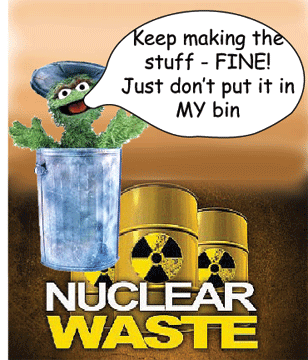 Miss. nuclear waste plan sparks early opposition http://www.miamiherald.com/2013/08/26/3587346/miss-nuclear-waste-plan-sparks.html BY JEFF AMY ASSOCIATED PRESS JACKSON, Miss. –– The Mississippi Energy Institute is pushing for more exploration of storing and reprocessing used nuclear fuel in Mississippi at the same time that one of the state’s congressmen is coming out against it.
Leaders of the institute, which promotes energy development, pitched ideas Monday to the state Senate Economic Development Committee. Jason Dean, who works for a unit of the Butler Snow law firm, says Mississippi should explore interim storage and reprocessing of fuel rods.
The Energy Institute also touts Mississippi’s “unique geologic salt domes.” That’s an echo of a proposal to entomb nuclear waste in the Richton salt dome that sparked public opposition starting in the 1980s.
Congressman Steven Palazzo, a Biloxi Republican who represents Richton, is voicing opposition. “Not now, not ever,” Palazzo says in a Monday statement.
USA’s Minuteman missiles – supremely dangerous – to the USA
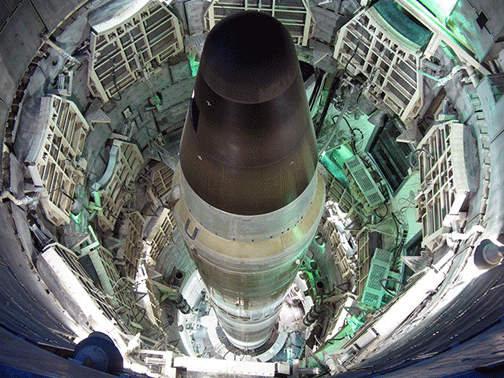 US nuclear weapons poised for catastrophe By James Carroll BOSTON GLOBE AUGUST 26, 2013
The vulnerability is there for all to see. The United States nuclear establishment has been wracked with problems for years. These are especially acute among thousands of officers at the controls of three bases where 450 Minuteman III missiles stand in buried silos on high alert.
In 2008, a Pentagon review found “a dramatic and unacceptable decline” in the way the Air Force was handling its nuclear mission. Senior officials were cashiered. Their replacements were ordered to fix the problems. They have failed to do so. What should be the most rigorously disciplined element in the US military is repeatedly found unworthy of its awesome responsibility. That’s a wake-up call, yet the nation sleeps on……..
supremely dangerous. The missiles are positioned in easily targeted fixed silos across a wide-open western landscape. They are poised for launch on moments’ notice less because of strategic necessity than because they are bound by the rule of “use them or lose them.” The scenario was conceived 50 years ago, under circumstances that are now forgotten. The land-based ICBMs, more than nuclear armed submarines or aircraft, have become the thread from which hangs the sword of accidental holocaust. Fail-safe “right procedures” are the only protection — yet current crews are proving incapable of following those procedures. Fail-safe is the joke that is not funny……… http://www.bostonglobe.com/opinion/2013/08/26/nuclear-tipped-missiles-posed-for-nightmare-holocaust/VZ3KQOUsAUFm4qfuchjmCI/story.html
USA’s nuclear reactors are excellent terrorist targets

 How U.S. nuclear reactors are vulnerable to terrorists By Alan J. Kuperman, CNN, 26 Aug 13 Editor’s note: Kuperman is editor of Nuclear Terrorism and Global Security: The Challenge of Phasing out Highly Enriched Uranium, and coordinator of theNuclear Proliferation Prevention Project (NPPP) at the LBJ School of Public Affairs, University of Texas at Austin, where he is an associate professor. The views expressed are his own.
Nearly a dozen years after the al Qaeda strikes of September 11, 2001, America’s nuclear power plants – and civilian research facilities with bomb-grade uranium – are still not required to protect against a maximum credible terrorist attack of this scale. It is time for policymakers to act, if they want to prevent disaster.
The vulnerability to a terrorist strike was a key finding of a year-long study that I co-authored, as part of a larger interdisciplinary project at the University of Texas at Austin, under a contract for the Office of the Secretary of Defense (which has no responsibility for the final contents of the study)…….
More from CNN: How nations risk nuclear terrorism
Nominally, our government is supposed to protect us against threats that exceed what utilities must defend against. Unfortunately, that is not happening. A terrorist attack could penetrate a facility in minutes to induce a meltdown, while government SWAT teams would not fully engage for at least an hour and a half, according to Congressional testimony by the Project on Government Oversight.
A second danger is the potential theft of bomb-grade, highly enriched uranium from this country’s three civilian research reactors that still use such fuel. The good news is that these facilities have committed to convert to safer, low-enriched uranium fuel, which is not suitable for nuclear weapons. Unfortunately, the conversion program is delayed by technical snags, so the reactors will continue to use bomb-grade uranium for another decade or more.
Most troubling, these research sites are exempt from defending against the modest, posited terrorist attack that utilities must protect against. So, our civilian facilities with bomb-grade uranium are even less secure than nuclear power plants. The amount of bomb-grade uranium at each site might not be sufficient for a nuclear weapon, depending on the sophistication of the bomb-maker, but the U.S. government has been assiduously vacuuming up even smaller amounts of such material around the world, to prevent the spread of nuclear weapons, as detailed in my latest book…… http://globalpublicsquare.blogs.cnn.com/2013/08/26/how-u-s-nuclear-reactors-are-vulnerable-to-terrorists/
Whingeing about nuclear wastes, (but still not stopping making them)

the best plan is to just stop making the stuff
inaction is no longer an option. Twelve states, including California, Massachusetts and Wisconsin, have banned the construction of new nuclear plants until the waste problem is resolved. The byproducts of electricity production and the manufacture of nuclear weapons cannot stay forever in scores of de facto repositories. The public has a right to an efficient and safe long-term waste storage system.
U.S. must commit to permanent, safe disposal of nuclear waste NJ.com By James McGovern 26 Aug 13If someone had suggested 30 years ago that electricity users would be contributing billions of dollars to a government trust fund — and getting nothing in return — the idea would have been dismissed as fantasy.
But this is not made up. It’s really happening, and there’s a possibility it will continue indefinitely unless an effort is made to put a stop to it……..
Here in New Jersey, we have paid more than $665 million into the waste fund — and the money keeps flowing. Nationally, the payments exceed $35.7 billion — and they are growing at a rate of $300 million each year.
What’s more, the Department of Energy was legally obligated to take possession of the used fuel rods no later than 1998, but the used fuel remains where it always has been, in engineered water pools and concrete-and-steel casks at nuclear plants. Reactors such as Salem 1 and 2, Hope Creek and Oyster Creek in New Jersey were not designed to hold used fuel indefinitely. Rather, their mission is electricity production for homes and industry. Continue reading
Closed door meeting between nuclear regulators and — FirstEnergy Corp
FirstEnergy’s nuclear security an issue in an NRC closed-door meeting, Cleveland.com By John Funk, The Plain Dealer August 26, 2013 KING OF PRUSSIA, Pa — FirstEnergy Corp.’s nuclear operating company has asked for a closed-door meeting with top federal regulators about security issues at the company’s nuclear reactor near Pittsburgh.
The Nuclear Regulatory Commission said on Monday that it would meet with company representatives on Sept. 5 at an NRC regional headquarters near Philadelphia.
Security forces at FirstEnergy’s Beaver Valley power plant apparently failed part of a routine “force-on-force” exercise in April. Beaver Valley contains two reactors.
The details of the force-on-force exercise are classified and may never be made public, but the NRC earlier this month warned the company in a public letter that it was considering a citation against the company because the security failure looked significant….. http://www.cleveland.com/business/index.ssf/2013/08/firstenergys_nuclear_security.html
USA nuclear weapons units – not so safe at all
Military removes commander of nuclear weapons unit KHON 2, By The Associated Press August 25, 2013, MALMSTROM AIR FORCE BASE, Mont. (AP) — The Air Force has removed the commander of a nuclear weapons unit at a Montana base following a failed safety and security inspection this month that marked the second major misstep this year for one of the military’s most sensitive missions.
Military leaders say the decision to relieve Col. David Lynch of command at Malmstrom Air Force Base stems from a loss of confidence. They say it is not the result of the failed inspection first reported by The Associated Press on Aug. 13.
The 341st Missile Wing operates land-based nuclear missiles known as 450 Minuteman 3 intercontinental ballistic missiles. The unit failed a review of its adherence to rules that ensure the safety, security and control of its nuclear weapons. Lynch’s removal was announced Friday.
This is the second time in recent months that an Air Force nuclear commander was replaced following a high-profile security problem…… http://www.khon2.com/2013/08/25/military-removes-commander-of-nuclear-weapons-unit/
Radiation concentrates as it goes up the ocean’s food chain
Canadian University Scientist: Test seafood for Fukushima contamination — Continuous inputs for 2 years and counting will lead to ample opportunity for re-concentrating up food chain — Simply not enough being done on this side of Pacific http://enenews.com/canadian-university-scientist-continuous-input-of-fukushima-contamination-for-two-years-and-counting-will-lead-to-ample-opportunity-for-re-concentrating-up-food-chain-simply-not-enough-tests-being
Title: Nuclear meltdown’s effect on B.C. fish unclear
Source: Times Colonist
Author: Judith Lavoie
Date: August 21, 2013
[…] Nikolaus Gantner, an ecotoxicologist affiliated with Trent University in Peterborough, Ont., said the challenge is to discover how much radiation is accumulating in migratory or long-lived fish, such as halibut, salmon and tuna.
“There are simply not enough measurements being done in water and biota on this side of the Pacific Ocean,” he said.
“Continuous input to water for two years — and counting — will lead to ample opportunity for re-concentrating … up the food chain.”
[…] Gantner would like testing extended to seafood eaten frequently by First Nations, such as oysters and crab.
Gantner doubts whether studies will find dangerous levels of radiation in fish, and said he has no hesitation in eating fish from the Pacific. […]
Businessman caught with plan to sell uranium to Iran
Man caught in ‘uranium for Iran’ sting Sierra Leone man lured to New York with uranium ore hidden in his shoes after US federal agent offered him 1,000-tonne deal Reuters in Miami theguardian.com, Friday 23 August 2013 US prosecutors have charged a man from Sierra Leone with trying to sell undercover agents 1,000 tonnes of yellowcake uranium he thought would be shipped to Iran. He was arrested in New York with a sample of the toxic material hidden in his luggage, authorities said.
Patrick Campbell, 33, of Freetown, was arrested at John F Kennedy airport on Wednesday after he arrived from Sierra Leone with the sample of uranium concealed in the soles of shoes in his luggage, according to a criminal complaint filed in a Florida federal court on Thursday.
He allegedly responded to an ad in May 2012 on the websitealibaba.com seeking to purchase uranium that was placed by an undercover US agent posing as an American broker representing persons in Iran, according to an affidavit by Homeland Security agent Louise Miller.
Campbell agreed to travel to Miami to meet the supposed buyer, who could then analyse the purity of the uranium. Continue reading
Legal complications surround the issue of Yucca nuclear waste dump proposal
 As the court concedes, this leaves open a number of future questions: What will the Energy Department do next, as it continues to attempt to abandon its Yucca application? What if the NRC’s remaining $11 million fund runs out, and Congress fails to appropriate any more money? Furthermore, the NRC might decide to comply with its decision deadline by simply rejecting the Energy Department’s application
 The D.C. Circuit Goes Nuclear AUG 23, 2013 • BY ADAM J. WHITE To write about the D.C. Circuit this week is to join a much broader discussion about the court’s role in American law and policy…….In a case titled In re Aiken County, the court took the extraordinary step of ordering the Nuclear Regulatory Commission to continue reviewing the Energy Department’s proposal for a federal nuclear waste repository at Yucca Mountain, Nevada.
I say “extraordinary” not because the court overstepped its bounds, but because the case presents truly rare questions of the D.C. Circuit’s role at the intersection of congressional power, executive duty, agency discretion, and judicial responsibility.
Radioactive leak shuts down New Jersey nuclear plant
NJ Nuclear Plant Shutdown After Radioactive Water Leak. (includes video) August 23, 2013 By Mike DeNardo SALEM, N.J. (CBS) – The Salem Unit-One nuclear plant in South Jersey remains shut down, after radioactive water leaked in a containment building Thursday night. Salem’s Unit-One nuclear plant was shut down around 7:30 p.m., when radioactive water started to leak, says Nuclear Regulatory Commission spokeswoman Diane Screnci:
“They had a valve on one of the systems within the containment. And that valve was leaking, and it reached what are called their technical specification limits, and caused them to begin a shutdown.”
The leak was measured at four gallons a minute — above the one gallon per minute threshold to force a shutdown…. http://philadelphia.cbslocal.com/2013/08/23/nj-nuclear-plant-shutdown-after-radioactive-water-leak/
America could get to 75% renewable energy quite quickly

Billions of solar panels and millions of wind turbines
The good news is we are already getting these.
With An ‘All-Out’ Federal Renewable Energy Strategy, How Long Before We Could Be 100% Renewably Powered?, Forbes, Mark Rogowsky, Internet Entrepeneur, 22 Aug 13, Probably 20-30 years to get to 70-80%, but 80 years to get the last 20-30%.
Let’s clarify that the assumption here is that the United States actually decides to do this per the hypothetical. That means that for whatever reason, the politics has shifted massively from where it currently stands. There are a lot of roadblocks to 100% renewable energy, but relatively few toward mostly renewable energy — assuming you’ve solved the politics problem. Here’s what you need:
An integrated long-distance grid
You’ll be carrying a lot of wind from the Midwest, possibly from offshore in the East, and tons of solar from the Southwest long distances. So you’re going to want much better long-distance power lines, maybe even with superconducting trunks. This will let you use Arizona’s 5 pm sun to power Florida’s air conditioners at 8 pm. Is this trivial? No. Is it technologically impossible? Absolutely not.
Millions of electric cars
We use a lot of non-renewable fuel for transportation. We’re going to need electric vehicles to fix that. Continue reading
Breakthrough in solar energy storage battery
 No Mem-Brainer Flow Battery Delivers Big http://www.energymatters.com.au/index.php?main_page=news_article&article_id=3904 23 Aug 13, A palm-sized experimental flow battery developed by Massachusetts Institute of Technology researchers has the potential to solve intermittency challenges in utility-scale renewable energy systems.
The MIT team has engineered a prototype flow battery storage system without the expensive membrane usually required. Continue reading
Low level nuclear alert issued at Hanford
Hanford issues low-level nuclear alert http://q13fox.com/2013/08/22/hanford-issues-low-level-nuclear-alert/#ixzz2cp68IuEI BENTON COUNTY, Wash. — An alert was issued late Wednesday night at the Hanford Nuclear Site in southeast Washington for the lowest level emergency following the detection of radiation on Hanford’s grounds.
The low-level emergency was issued at 10:32 a.m. when higher than expected levels of radiation were found on a routine test of the C Tank Farm, indicating the “potential of a waste transfer leak.” All operations were halted, and personnel were evacuated from the C Tank Farm area. Other affected facility personnel were instructed to take cover, or shelter in place.
Benton and Franklin Counties’ Emergency Operations Centers were activated shortly after the first reading, but the emergency alert was relegated to Hanford’s grounds. Additional radiological tests found no detectable levels of contamination, and the alert-level emergency was lifted at 5:05 a.m. Higher than expected levels of radiation were confirmed, but there was no indication of a leak or spill, and the levels were less than originally discovered, officials with Hanford said. Workers were instructed to report to the site as normal. C Tank Farm prepared to return to normal operations.
Built by early Hanford scientists, engineers, and constructors, single-shell and double-shell storage tanks were constructed throughout Hanford’s 200 Area to store the radioactive liquid wastes generated from the processing facilities on site.
1 This Month
Tell Congress: Prevent Nuclear Catastrophe in Iran

Tell Congress: Prevent Nuclear Catastrophe in Iran

Read the Public Inquiry Report, the Commissioners’ report, Surrendering Australia: The AUKUS Deception is available to download for free at aukuspublicinquiry.com. Or just watch the replay of the National Press Club Luncheon.


Shut down the radiation-damaged Heysham nuclear reactors now
To see nuclear-related stories in greater depth and intensity – go to https://nuclearinformation.wordpress.com

Say No to NASA’s Reckless Nuclear Reactor on the Moon
Say No to NASA’s Reckless Nuclear Reactor on the Moon
-
Archives
- November 2026 (246)
- October 2026 (302)
- September 2026 (339)
- August 2026 (330)
- July 2026 (355)
- June 2026 (287)
- May 2026 (306)
- April 2026 (356)
- March 2026 (251)
- February 2026 (267)
- January 2026 (308)
- December 2025 (358)
-
Categories
- 1
- 1 NUCLEAR ISSUES
- business and costs
- climate change
- culture and arts
- ENERGY
- environment
- health
- history
- indigenous issues
- Legal
- marketing of nuclear
- media
- opposition to nuclear
- PERSONAL STORIES
- politics
- politics international
- Religion and ethics
- safety
- secrets,lies and civil liberties
- spinbuster
- technology
- Uranium
- wastes
- weapons and war
- Women
- 2 WORLD
- ACTION
- AFRICA
- Atrocities
- AUSTRALIA
- Christina's notes
- Christina's themes
- culture and arts
- Events
- Fuk 2022
- Fuk 2023
- Fukushima 2017
- Fukushima 2018
- fukushima 2019
- Fukushima 2020
- Fukushima 2021
- general
- global warming
- Humour (God we need it)
- Nuclear
- RARE EARTHS
- Reference
- resources – print
- Resources -audiovicual
- Weekly Newsletter
- World
- World Nuclear
- YouTube
-
RSS
Entries RSS
Comments RSS

