Protest against dangerous shipment of nuclear wastes from Scotland to South Carolina
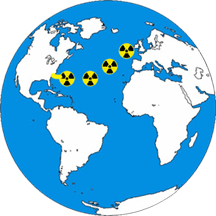 Groups protest plan to ship UK nuclear waste to South Carolina http://chronicle.augusta.com/news/metro/2013-08-29/groups-protest-plan-ship-uk-nuclear-waste-south-carolina?v=1377827799 By Rob Pavey Staff Writer Aug 29, 2013 Environmental groups want to halt a plan to ship spent nuclear fuel from Scotland to Savannah River Site, saying it could make bomb-grade uranium more vulnerable to terrorists. The spent fuel would be moved from the Dounreay research facility in Scotland to SRS, where its highly enriched uranium could be removed at the South Carolina site’s H Canyon facilities, said Tom Clements, southeastern nuclear campaign coordinator for Friends of the Earth.
The material should instead be processed at Sellafield, a former weapons plant in Cumbria, United Kingdon, said Clements and another environmental group – Cumbrians Opposed to a Radioactive Environment. Continue reading
Radiation protection measures for female astronauts seen as DISCRIMINATION !!

 Space radiation concerns holding back female astronauts, they say NBC News, Miriam Kramer, 31 Aug 13, “……….Depending on when you fly a space mission, a female will fly only 45 to 50 percent of the missions that a male can fly,” Peggy Whitson, the former chief of NASA’s Astronaut Corps, said. “That’s a pretty confining limit in terms of opportunity. I know that they are scaling the risk to be the same, but the opportunities end up causing gender discrimination based on just the total number of options available for females to fly. (That’s) my perspective.” [Radiation Threat for Mars-Bound Astronauts (Video)]……..
“I think that the current standards are too confining for exposure limits based on my personal experience and because I think it limits careers more than it is necessary,” Whitson said during an Institute of Medicine Workshop on Ethics Principles and Guidelines for Health Standards for Long Duration and Exploration Class Spaceflights requested by NASA on July 25.
“In my case, if I had a Y chromosome, I would be qualified,” Whitson added. “Because I have two X’s, I’m not.”…. http://www.nbcnews.com/science/space-radiation-concerns-holding-back-female-astronauts-8C11043076
USA tuan contamnated by Fukushima radiation
 Fukushima Radiation Affecting U.S. Tuna http://www.energyrefuge.com/blog/fukushima-radiation-affecting-u-s-tuna/?utm_source=feedburner&utm_medium=feed&utm_campaign=Feed%3A+EnergyrefugecomBlog+%28EnergyRefuge.com+Blog%29
by ANTONIO PASOLINI on AUGUST 28, 2013
Recent reports have exposed what some people had predicted at the time of theFukushima nuclear disaster: that radiation would spread. And it has, through fish that migrates between North America and Japan.
Reuters recently reported that “low levels of radioactive cesium from Japan’s Fukushima Daiichi nuclear accident turned up in fish caught off California in 2011”. The statement was based on a recent report compiled by Stanford University’s Hopkins Marine Station.
Bluefin spawn off the Japanese coast and many migrate across the Pacific. The researchers analyzed tissue samples collected in August 2011, five months after the nuclear spill. All samples contained reactor byproducts cesium-134 and cesium-137 at levels that produced radiation about three percent higher than natural sources.
According to this report, anada and the U.S. are feeling the effects of the radiation in food and water, with babies born with thyroid issues. Government has increased acceptable levels of certain toxic substances in the food imported from Japan.
Most of the radiation leaked in April 2011. Radioactive cesium does not quickly sink to the sea bottom but remains dispersed in the water column, from the surface to the ocean floor. Fish can swim right through it and will ingest it through seawater or by eating contaminated organisms. Bluefin tuna typically have low levels of natural radiation such as potassium 40.
Lawsuit alleges Nuclear Regulatory Commission cover-up
 NRC sued over documents related to Oconee Nuclear Greenville online.com , 30 Aug 13 A n advocacy group for public employees is suing federal nuclear regulators over documents they say are unlawfully withheld — documents they say would prove Duke Energy and the government have been covering up concern over what would happen to Oconee Nuclear Station should the Jocassee Dam ever fail.
The lawsuit has been filed in the U.S. District Court for the District of Columbia by Public Employees for Environmental Responsibility against the U.S. Nuclear Regulatory Commission……..
The suit alleges that the NRC has improperly cited the Freedom of Information Act to withhold internal communications that show just how concerned NRC engineers have been over Oconee’s plans for fending off floodwaters unleashed in the unlikely event of a dam failure.
The suit involves FOI requests for 11 records the group filed.
The group alleges that the NRC refused to release some records, released edited versions of others and did so citing concerns over security that the agency couldn’t prove.
Last fall, two NRC whistle-blowers publicly challenged their agency’s secrecy behind two decades worth of concerns. …… http://www.greenvilleonline.com/article/20130830/NEWS/308300066/NRC-sued-over-documents-related-Oconee-Nuclear
Big salt deposits suggested as dumping place for nuclear wastes

The reasonable thing to do is to stop making nuclear wastes
 Where On Earth Do We Put Spent Nuclear Fuel? Forbes, 29 Aug 13 If Nevada’s Harry Reid is right and Yucca Mountain is flattened, then what will happen to the nation’s 70,000-plus tons of nuclear waste? The Senate Majority Leader is adamant that such spent fuel from the country’s 102 nuclear plants will never find a permanent home in that area that is 90 miles outside of Las Vegas…….
Consider: the U.S. Department of Energy’s Waste Isolation Pilot Program (WIPP), a massive salt formation in southeastern New Mexico that has been accepting waste from nuclear weapons for 14 years. But it is not permitted to take in low-level spent fuel from commercial nuclear reactors.
As Conca explains, WIPP is 16 square miles of a 10,000-square mile, 2,000-foot thick salt layer. Those materials that are placed there are engulfed by the natural geology — the tightest rock on earth. The main obstacle, he adds, is the administrative changes necessary to allow the transport and disposal of spent fuel from the current interim sites to WIPP. Political resistance would also arise.
But massive salt formations are better repositories than the hard rock at Yucca Mountain, he insists, noting that rocks can fracture whereas salt does not. The best salt formations are in New Mexico and Texas.
Conca agrees that taking reprocessed nuclear fuel and using it in a nuclear power plant is less difficult than applying the same material to an atomic weapon. But WIPP changes the equation, he says, noting that, “there is so much uranium in the world that we don’t need to reprocess it. Mining the uranium is so much easier and so much cheaper than reprocessing it.”…..
Legally, Yucca Mountain remains a live topic but politically, it stands little chance of becoming permanent repository, especially because the Senate Majority Leader represents Nevada. But that debate over what to do with spent nuclear fuel has spawned some compelling ideas, some of which have been around for a while.
Reconciling the reprocessing fissures is likely to take decades. But broadening the use of massive salt deposits such as WIPP to include not just weapons-grade material but also radioactive fuel from commercial reactors would be an easier gulf to bridge.
Look at this – World’s largest solar thermal energy plant
Take A Tour Of This Insane Solar Thermal Energy Plant (Excellent photos) GIZMODO ALISSA WALKER 30 AUG 13 Sometime in the next few months, the Ivanpah Solar Electric Generating System will flip the switch on the largest solar plant of its kind in the world: a 377-megawatt, 3500-acre solar thermal energy system. It’s located in California’s Mojave Desert, near the Nevada border, and it’s ridiculously big. ‘

‘I would suggest going to check it out in person during your next Vegas binge weekend, but from the 15 freeway it’s little more than a silvery blur — a rippling, mirage-like, silvery blur that feels like it might sear your retinas if you look at it too long. So it’s a good thing they’ve just posted this incredible virtual tour……. HTTP://WWW.GIZMODO.COM.AU/2013/08/TAKE-A-TOUR-OF-THIS-INSANE-SOLAR-THERMAL-ENERGY-PLANT-IN-THE-CALIFORNIA-DESERT/
The citizens of Vermont show us the benefits of just saying NO to Nuclear
 The profound consequences of the Fukushima Daiichi nuclear-power accident are still unfolding,…….. Fukushima shows us the intolerable costs of nuclear power. The citizens of Vermont show us the benefits of just saying no.
Just say no to nuclear power – from Fukushima to Vermont , the Guardian Amy Goodman, 29 Aug 13 Fukushima showed us the intolerable costs of nuclear power. The citizens of Vermont show us the benefits of shutting it down Welcome to the nuclear renaissance.
Entergy Corp, one of the largest nuclear-power producers in the US, issued a surprise press release Tuesday, saying it plans “to close and decommission its Vermont Yankee Nuclear Power Station in Vernon, Vermont. The station is expected to cease power production after its current fuel cycle and move to safe shutdown in the fourth quarter of 2014.”
Although the press release came from the corporation, it was years of people’s protests and state legislative action that forced its closure. At the same time that activists celebrate this key defeat of nuclear power, officials in Japan admitted that radioactive leaks from theFukushima Daiichi nuclear catastrophe are far worse than previously acknowledged. Continue reading
Debate on Georgia’s nuclear power plant costs may be delayed until 2018
 Ga. regulators to vote on nuclear plant agreement http://www.bellinghamherald.com/2013/08/29/3174468/ga-regulators-to-vote-on-nuclear.html August 29, 2013 ATLANTA — The debate over the rising cost of building a new nuclear power plant in eastern Georgia would be deferred several years under a deal that Georgia regulators will consider Tuesday.
The members of the Public Service Commission decided Thursday to consider the preliminary agreement between agency regulators and Southern Co. subsidiary Georgia Power at the PSC’s meeting next week.
Under the proposed deal, Southern Co. would withdraw its request to increase its budget to build two more nuclear reactors at Plant Vogtle (VOH’-gohl), southeast of Augusta. The power company had previously asked to increase its budget by $737 million to $6.85 billion.
Instead, the debate over whether to formally raise the construction budget would not happen until the first of the two reactors comes online, probably January 2018 at the earliest, according to the latest timelines from a state monitor. The deal shifts some financial risk onto Southern Co. If the utility exceeds its budget, then the burden would be on Georgia Power to persuade regulators that the excess spending should be passed along to its customers. But if the PSC votes to raise the project budget, then the law would assume Georgia Power was entitled to collect all of its budgeted costs from customers, so long as regulators couldn’t prove the spending was imprudent, reckless or somehow criminal.
The preliminary agreement also helps Southern Co. avoid a politically charged fight over project spending while it deals with a separate rate case in Georgia and an over-budget coal gasification plant in Mississippi.
low-dose ionizing radiation’s higher cancer risk for women
Cancer risk found higher in women exposed to low-dose ionizing radiation than men, Healio.com, Lawler PR. Am J Cardiol. 2013;doi:10/1016/j.amjcard.2013.07.009. August 29, 2013 Women exposed to low-dose ionizing radiation after an acute MI were more susceptible to cancer than men, according to new study data. Patrick R. Lawler, MD, of McGill University Health Center and the Jewish General Hospital, Montreal, Quebec, and colleagues previously found a linkage between the low-dose ionizing radiation from cardiac imaging and therapeutic procedures and an increased risk for cancer. They sought to further this linkage by identifying the specific risks for women and younger patients……..
after adjusting for age and noncardiac radiation, women were more likely to develop cancer for each mSv of exposure (HR=1.005; 95% CI, 1.002-1.008) than men (HR=1.002; 95% CI, 1.001-1.004; P=.014). Women were more likely to have cancer of the thorax, whereas hematologic cancer rates were higher in men.
The increased incidence of cancer found in women “may relate to relatively smaller body sizes for the same amount of radiation,” the researchers wrote.
Despite these findings, the researchers noted that the RRs for cancer incidence were small.
“We and others have shown that [low-dose radiation ionizing radiation] incurred after MI is primarily comprised of therapeutic procedures with known clinical benefit,” the researchers wrote. “Indeed, the benefits of many medical procedures likely outweigh the potential risks, and clinicians should be very wary of deferring useful interventions for the fear of [low-dose radiation ionizing radiation] risk, doing so only when procedures are truly unnecessary or when alternative non-[low-dose radiation ionizing radiation]-emitting technology is available.”http://www.healio.com/cardiology/intervention/news/online/%7Ba76cf3db-a740-44e5-af92-c68086348df5%7D/cancer-risk-found-higher-in-women-exposed-to-low-dose-ionizing-radiation-than-men
Nuclear waste from France to be dumped in Mississippi?
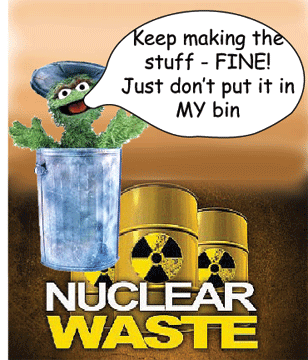 Cottonmouth – Is Mississippi going to be storing France’s Nuclear Waste? http://yallpolitics.com/index.php/yp/post/35788/ 28 Aug 13, While Bryant and his entourage were having a good time in Paris sampling the French lifestyle, did they take a moment to consider how most of the lights are powered there? You may be surprised to find out it’s nuclear power. France generates about 75 percent of its electricity needs from nuclear power. Their nuclear waste has to go somewhere, right? Why not Mississippi?
During their trip to France, did Bryant and his MDA director negotiate a deal with the French government to house that country’s nuclear waste?
Representatives from the Mississippi Energy Institute noted that they know of communities, that they did not specify, which are interested in this project. Were they referring to communities in France instead of Mississippi?
Radioactive plume will arrive at uneven times and concentrations on USA West Coast
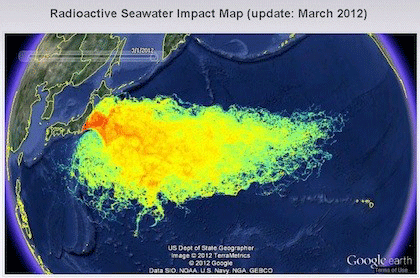 Fukushima radioactive plume to reach US in three years Phys Org 28 Aug 13“….While atmospheric radiation was detected on the US west coast within days of the incident, the radioactive particles in the ocean plume take considerably longer to travel the same distance.
In the paper, researchers from the Centre of Excellence for Climate System Science and others used a range of ocean simulations to track the path of the radiation from the Fukushima incident.
The models identified where it would likely travel through the world’s oceans for the next 10 years…… Observers on the west coast of the United States will be able to see a measurable increase in radioactive material three years after the event,” said one of the paper’s authors, Dr Erik van Sebille…… Eddies and giant whirlpools – some tens of kilometres wide – and other currents in the open ocean continue this dilution process and direct the radioactive particles to different areas along the US west coast.
“Although some uncertainties remain around the total amount released and the likely concentrations that would be observed, we have shown unambiguously that the contact with the north-west American coasts will not be identical everywhere,” said Dr Vincent Rossi.
“Shelf waters north of 45°N will experience higher concentrations during a shorter period, when compared to the Californian coast. This late but prolonged exposure is due to the three-dimensional pathways of the plume. The plume will be forced down deeper into the ocean toward the subtropics before rising up again along the southern Californian shelf.”
Interestingly, the great majority of the radioactive material will stay in the North Pacific, with very little crossing south of the Equator in the first decade. Eventually over a number of decades, a measurable but otherwise harmless signature of the radiation will spread into other ocean basins, particularly the Indian and South Pacific oceans……. For those interested in tracking the path of the radiation, we have developed a website to help them.
“Using this website, members of the public can click on an area in the ocean and track the movement of the radiation or any other form of pollution on the ocean surface over the next 10 years.”
Read more at: http://phys.org/news/2013-08-fukushima-radioactive-plume-years.html#jCp
Inherent dangers in Mississippi as a nuclear waste storage place
Reject nuclear waste storage http://www.clarionledger.com/article/20130827/OPINION01/308270012/Reject-nuclear-waste-storage Aug. 26, 2013 Some ideas are so bad they don’t deserve consideration, and such is the case with the Mississippi Energy Institute’s proposal to build a permanent nuclear waste storage facility in Mississippi.
Yucca Mountain in Nevada was designated the nation’s nuclear waste repository in 1987, but federal funding for the project ended in 2010 after extreme political pressure was placed on Congress and the Obama administration. The pressure came from concerned citizens and activists who feared having the highly radioactive material shipped through their hometowns to the site.
The Energy Department continues to look for a new site, and in 2012, released a blue ribbon study outlining the urgency for determining a new geological repository to consolidate the nuclear waste that is currently being housed in temporary locations across the country.
While nuclear energy itself faces its share of controversy, we believe that it is a safe, viable energy source when properly monitored and maintained. The same could be argued about storing nuclear waste, but we feel doing so overlooks inherent dangers indirectly associated with making Mississippi a temporary or long-term storage facility. Spent fuel rods from nuclear reactors are the most radioactive material of nuclear waste. These rods produce 99 percent of the radiation from nuclear waste, even though they make up a minority of the actual volume of nuclear waste. Nuclear waste can take anywhere from 100 years to thousands of years — in some cases 1 million years — to reach a point where it is no longer radioactive enough to pose a threat.
It’s the presence of such material — not to mention the transportation of it from all across the country to the Magnolia State — that has many people concerned. We tend to agree with those concerns. Despite the nation’s spotless record in transporting nuclear waste, we don’t want to become the destination for U.S. nuclear waste. It would take only one accident to do irreparable damage for decades or longer.
Of course, Mississippi becoming the consolidated geological dumping site for the nation’s nuclear waste is not something that will happen overnight. It would likely take a decade or longer for such a designation to be decided by the federal government. However, short-term storage can happen much sooner.
MEI wants to bring short-term storage of nuclear waste to Mississippi and use emerging technologies to develop a nuclear waste recycling program. Being able to recycle such material is better than burying it thousands of feet underground, and we support the research into such technologies. However, Mississippi does not have to become a short-term storage site for U.S. nuclear waste to conduct such studies.
The nuclear power plant in Port Gibson already stores nuclear waste. It, like other plants, has no place to send the waste for storage. Without a more permanent solution, Port Gibson and other facilities will face real issues. The Energy Department was right in 2012 to insist that the federal government move forward with deliberate speed in finding a permanent, national solution.
However, we hope that Gov. Phil Bryant and state lawmakers will politely remove Mississippi from any consideration — short-term or long-term — as a site to store the nuclear waste from across the country. Some risks are just too great, especially for returns that will not be fully realized for at least 15 years.
And now, Vermont Yankee nuclear power plant bites the dust
 Plan to close Vermont Yankee marks latest blow to nuclear power http://www.csmonitor.com/USA/USA- The Vermont Yankee nuclear power plant will shut down by the end of 2014, its owner said Tuesday, citing ‘financial factors.’ It is the fifth nuclear plant this year to close or to have plans made for closure. By Chelsea B. Sheasley, Correspondent / August 27, 2013
The Vermont Yankee nuclear power plant in Vernon, Vt., will be shut down by the end of next year due to financial factors, the company that owns the plant 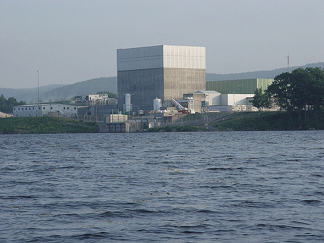 announced Tuesday, in the latest sign of a difficult economic climate for nuclear power companies.Entergy Corp., the New Orleans-based company that owns Vermont Yankee, plans on closing and decommissioning the plant by the fourth quarter of 2014, in cooperation with the US Nuclear Regulatory Commission. It is the fifth nuclear plant this year to close or to have plans made for its closure. The company said the decision to close was based on “a number of financial factors” including sustained lower power prices stemming from the natural-gas revolution, a high cost structure for the plant, and what it called “wholesale market design flaws” that artificially deflate energy prices. Some 630 people work at the plant.
Likely also a contributing factor was the ongoing legal battle with the state of Vermont, where state officials had been trying to shutter the plant on their own authority. In 2006 the state legislature granted itself the authority to close the plant and in 2010 voted to do so
The legal dispute had been turning in Entergy’s favor. Earlier this month a federal appeals court ruled that the Vermont Legislature did not have the authority to close the plant. Entergy had indicated in 2010 that it was considering selling the plant, a single unit boiling water reactor, The Wall Street Journal reports.
Entergy Corp. isn’t the only nuclear power company facing economic challenges. In June, Southern California Edison pulled the plug on the San Onofre Nuclear Generating Station, a 45-year-old facility in northern San Diego County, because of the high cost of repairs needed less than three years after the company invested $780 million in upgrades.
Small Modular Nuclear reactors (SMRs) promoted by hoax film “Pandora’s Promise”
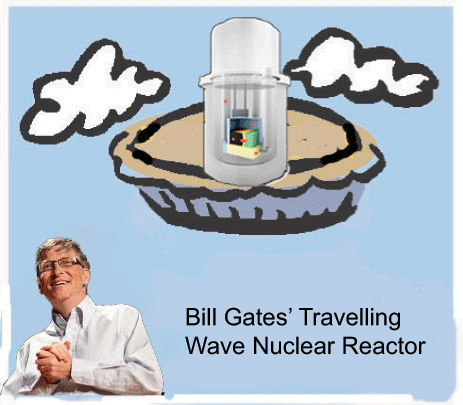 the most obvious deal killer is economic. Even by current calculations, any new reactor design would have difficulty competing with renewable energy sources, especially solar panels that can be installed on rooftops, thus avoiding transmission costs.
The SMR’s primary customer, the Tennessee Valley Authority, has now pushed back to 2015 the target date for submitting its construction permit application. Even if wildly successful, the SMR could not meaningfully affect climate change for another 20 years—this in the midst of a crisis Hansen and so many others see as critical and immediate. The SMR blueprint hinges on technologies that have already failed. Continue reading
Massive radioactive air pollution from Savannah River Nuclear Site.
 Group calls for air pollution investigation at SRS http://www.aikenstandard.com/article/20130821/AIK0101/130829945/1004/group-calls-for-air-pollution-investigation-at-srs Derrek Asberry, August 21, 2013 A nonprofit environmental group is challenging a government study of air pollutants by calling for an investigation of toxic air pollution from Savannah River Site.
The Blue Ridge Environmental Defense League filed a letter with the Agency for Toxic Substances and Disease Registry, criticizing the toxic agency’s evaluation of SRS.
“The amount of airborne radioactive pollution from SRS is massive,” said Luis Zeller, the director of the environmental group, in a recent press release. “It is greater than the liquid releases to streams and groundwater by at least an order of magnitude. How could the ATSDR miss this?”
The group cited the toxic agency’s July 1 public health evaluation of the Site, which concluded that airborne emissions of radioactive materials and most chemical pollutants from SRS were below levels that could potentially cause harmful health effects.
“The ATSDR’s study is contradictory and inconclusive,” said Charles Utley in the press release.
Utley is the environmental justice campaign coordinator for the Blue Ridge Environmental Defense League. He conducted separate field investigations around SRS and followed up with a report entitled “Sow the Wind.”
“The League’s own investigations centered on the air toxics emitted from hundreds of large and small smokestacks at SRS and how they interact to raise downwind pollution levels in Jackson, New Ellenton, Williston and other communities,” the group stated in the release.
The group continued by recommending the Agency for Toxic Substances and Disease Registry take one of two actions: conduct an analysis and produce conclusive results on radioactive air pollutions, or require the Department of Energy to determine the public health impact of radioactive air pollutants in the Central Savannah River Area.
“Our report indicates that operations at SRS have had, and will continue to have, a negative impact on the health of residents in the Central Savannah River Area,” Utley added in the press release.
SRS did not issue a comment on the issue.
1 This Month
Tell Congress: Prevent Nuclear Catastrophe in Iran

Tell Congress: Prevent Nuclear Catastrophe in Iran

Read the Public Inquiry Report, the Commissioners’ report, Surrendering Australia: The AUKUS Deception is available to download for free at aukuspublicinquiry.com. Or just watch the replay of the National Press Club Luncheon.


Shut down the radiation-damaged Heysham nuclear reactors now
To see nuclear-related stories in greater depth and intensity – go to https://nuclearinformation.wordpress.com

Say No to NASA’s Reckless Nuclear Reactor on the Moon
Say No to NASA’s Reckless Nuclear Reactor on the Moon
-
Archives
- November 2026 (246)
- October 2026 (302)
- September 2026 (339)
- August 2026 (330)
- July 2026 (355)
- June 2026 (287)
- May 2026 (306)
- April 2026 (356)
- March 2026 (251)
- February 2026 (267)
- January 2026 (308)
- December 2025 (358)
-
Categories
- 1
- 1 NUCLEAR ISSUES
- business and costs
- climate change
- culture and arts
- ENERGY
- environment
- health
- history
- indigenous issues
- Legal
- marketing of nuclear
- media
- opposition to nuclear
- PERSONAL STORIES
- politics
- politics international
- Religion and ethics
- safety
- secrets,lies and civil liberties
- spinbuster
- technology
- Uranium
- wastes
- weapons and war
- Women
- 2 WORLD
- ACTION
- AFRICA
- Atrocities
- AUSTRALIA
- Christina's notes
- Christina's themes
- culture and arts
- Events
- Fuk 2022
- Fuk 2023
- Fukushima 2017
- Fukushima 2018
- fukushima 2019
- Fukushima 2020
- Fukushima 2021
- general
- global warming
- Humour (God we need it)
- Nuclear
- RARE EARTHS
- Reference
- resources – print
- Resources -audiovicual
- Weekly Newsletter
- World
- World Nuclear
- YouTube
-
RSS
Entries RSS
Comments RSS

