Look out – Nuclear Lobby ! – Christians are turning to Solar Energy
Roberta Combs, president of the group, titled her post “For God and Country, Indiana and America Need Better Energy Policies,” writing,
Indiana’s utilities are interested in keeping us reliant on traditional fuel sources that hurt our national security and weaken our economy. We must allow homes, businesses, public organizations, and churches to create local, American power by installing solar.
As conservatives, we stand up for our country’s national security and the health of our economy. And, as Christians, we recognize the biblical mandate to care for God’s creation and protect our children’s future

 Solar energy’s new best friend is … the Christian Coalition WP By Chris Mooney February 20 The politics of solar power keeps getting more and more interesting.
In Indiana, a fight over net metering — basically, whether people with rooftop solar can return their excess power to the grid and thereby lower their utility bills — has drawn out groups ranging from the state chapter of the NAACP to the conservative TUSK (Tell Utilities Solar won’t be Killed) in favor of the practice.
Arrayed on the other side of the issue, meanwhile, are the Indiana Energy Association, a group of utilities, and Republican Rep. Eric Koch, sponsor of a bill that would potentially change how net metering works in the state. The legislation, in its current form, would let utility companies ask the Indiana Utility Regulatory Commission to include various “tariffs, rates and charges, and credits” for those customers generating their own energy at home. Continue reading
Lavalin, the company promoting thorium nuclear reactors faces rare corporate fraud and bribery charges

 SNC-Lavalin faces rare corporate fraud and bribery charges LES PERREAUX, JEFF GRAY AND BERTRAND MAROTTE MONTREAL and TORONTO — The Globe and Mail, Feb. 19 2015, The RCMP have laid rare corporate fraud and bribery charges against SNC-Lavalin Group Inc. after protracted negotiations with prosecutors failed to reach a settlement, threatening the future of an enormous Canadian firm that builds infrastructure around the world.
While former company executives already face criminal charges related to bribing Libyan officials – former vice-president Riadh Ben Aissa has pleaded guilty to Swiss charges – a series of scandals has shown a culture of breaking ethics rules in the company’s executive suite prior to 2012. These are the first charges targeting the company as a whole.
SNC is accused of using at least $47.7-million to bribe Libyan officials. A second count is for fraud of about $130-million related to construction projects in Libya. SNC responded quickly, saying the alleged activities took place between 2001 and 2011 and the people involved have been fired. The company says it has co-operated with authorities for the past three years and intends to plead not guilty.
A source familiar with the investigation said settlement talks between SNC-Lavalin and prosecutors were close to a deal in October.
As part of any deal, the company was expected to face a multimillion-dollar fine. But the possibility that a guilty plea could automatically trigger a 10-year ban on winning Canadian government contracts “complicated everything” and must have been among the factors that scuppered the settlement, the source said.
Long considered soft on anti-corruption enforcement, Canada’s international reputation may benefit from the charges, according to one of the country’s staunchest critics.
“This is a step in advance. Canada is actually gaining ground on its past,” said Mark Pieth, a criminal law professor at the University of Basel in Switzerland and the former chairman of the Organization for Economic Co-operation and Development’s bribery working group.
“Finally. I had waited for action against the company for a long time.”
Business analysts played down any immediate threat to the company, saying charges and an eventual fine of up to $300-million were expected. But chief executive Robert Card was unequivocal when he told The Globe and Mail last fall SNC could be broken up or “cease to exist” if the company were convicted and barred from Canadian government contracts for 10 years. He said even laying charges could be damaging enough to SNC’s reputation to pose a threat…..
Riyaz Dattu, a Toronto lawyer with Osler, Hoskin & Harcourt LLP who advises companies on corruption issues, said the charges for SNC-Lavalin are a dire warning for other Canadian companies that they need to bring in stronger anti-corruption controls and new training for employees to ensure bribes are not being paid around the world.
“The message is coming through loud and clear to corporate Canada,” Mr. Dattu said.
The Libyan allegations are not the only corruption troubles facing SNC. Ethics probes have involved SNC employees who worked on projects in Algeria, Bangladesh and Montreal. Mr. Ben Aissa is at the centre of many of the allegations, including fraud and corruption charges related to building a Montreal hospital……….http://www.theglobeandmail.com/report-on-business/snc-lavalin-faces-rare-corporate-fraud-and-bribery-charges/article23108284/
Nuclear Regulatory Commission to take over environmental review of Yucca project
 Energy Secretary Ernest Moniz recently reiterated that Yucca Mountain doesn’t have public support and is not a workable solution, a point that three Nevada lawmakers — Senate Democratic Leader Harry Reid and Republicans Sen. Dean Heller of Nevada and Gov. Brian Sandoval — hammered home in a letter to The Washington Post this week.
“If Yucca Mountain has taught us anything, it is that continuing to try to force the repository on Nevada only gets the nation further away from a real solution,” the senators and Sandoval wrote.
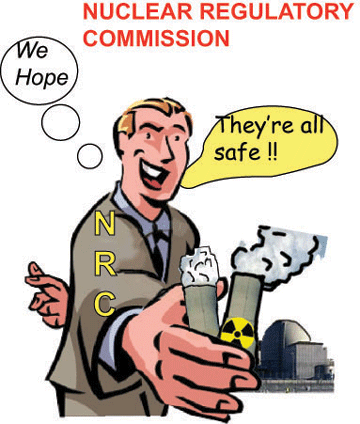 NRC will complete environmental review of Yucca project — chairman http://www.eenews.net/stories/1060013577 Hannah Northey, E&E reporter Greenwire: Tuesday, February 17, 2015 The Nuclear Regulatory Commission intends to complete an environmental review of the contentious waste repository under Yucca Mountain in Nevada because the Energy Department has refused to do so, the NRC’s chairman said today.
“The decision is we will do that since [the Department of Energy] told us they won’t be doing it,” NRC Chairman Stephen Burns told reporters at the Platts 11th Annual Nuclear Energy Conference in Washington, D.C., today. “We have the funds that are left over from the carryover for high-level waste, will cover the preparation of the supplemental [environmental impact statement].” Continue reading
USA’s Tea Party – 85 groups join movement for solar energy!
Floridians for Solar Choice, the group behind the initiative, is an inchoate alliance of libertarians, Christian Coalition conservatives, liberal environmentalists, and eighty-five Tea Party groups
 Greening the Tea Party, New Yorker BY CAROLYN KORMANN 18 Feb 15 The solar-energy business is booming. The average cost of installing solar panels has dropped by half since 2010, and a new solar electric system is now installed somewhere in the United States every four minutes.
The growth extends well beyond the rooftops of American homes and small businesses; last week, Apple announced that it is investing in an eight-hundred-and-fifty-million-dollar solar farm in Monterey County, California, which it says will power its operations in the state by the end of 2016. Although solar is still small, supplying less than one per cent of the country’s electricity, its growth has alarmed the energy industry’s old guard—coal, oil, and utility companies. Continue reading
Nuclear industry revving up campaign to win public support and public money
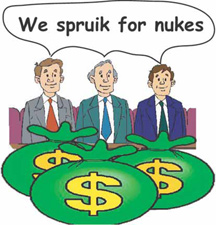 NRC will complete environmental review of Yucca project — chairman http://www.eenews.net/stories/1060013577 “……..’Right-sizing’ the NRC Burns is taking the agency’s reins at a critical time for both the NRC and the U.S. nuclear industry, which has embarked on a public campaign to tout the financial and climate benefits of reactors struggling in competitive power markets.
The industry is facing stiff competition from cheap gas, weak demand in the power markets, and new safety regulations after the 2011 Fukushima Daiichi nuclear disaster in Japan. While five new reactors are under construction and the NRC staff today recommended that another project move forward at DTE Energy Co.’s Fermi nuclear plant in southeastern Michigan, the industry has seen a recent spate of plant closures in California, Wisconsin, Florida and Vermont.
Touching on those closures, a number of executives from nuclear giants Exelon Corp. and FirstEnergy Corp. spoke at the conference about the need for market fixes to bolster struggling reactors.
Donald Moul, vice president of commodity operations for FirstEnergy Solutions, said at least 40,000 megawatts of baseload power — mostly older coal plants but also reactors — could be forced to prematurely retire in the Midwest and Mid-Atlantic, and grid operators and U.S. EPA need to do more to credit reactors under its Clean Power Plan. Moul said nuclear plants are facing a “lack of revenue certainty,” and their closure will only make it more difficult for states to comply with the Obama administration’s climate goals.
David Brown, senior vice president of government affairs for Exelon, the nation’s largest operator of commercial reactors, said there are no “silver bullets,” but market reforms in the PJM Interconnection are a “big start.” On the state level, Brown said, Illinois has developed a handful of options, and a low-carbon energy standard is most likely to gain traction.
“A lot of people thought [EPA’s Clean Power Plan] would be a real savior for the industry, but … that rulemaking was off the mark,” Brown said.
Burns signaled that the NRC in coming weeks and months intends to slim down to match a declining lot of license applications.
NRC senior staff, he said, is focused on “right-sizing” the agency — streamlining operations, making more timely decisions and establishing clearer agencywide priorities through a program dubbed “Project AIM 2020” that began last year.
NRC commissioners will be briefed on staff’s recommendations for slimming the agency tomorrow, and the proposal will be made public soon, he added.
Burns also noted that the agency’s fiscal 2016 budget proposal reflects a reduction of 140 full-time workers and of $27.3 million from the prior year’s request. Burns said the agency’s fiscal 2015 fee rule — expected in coming months — will also likely reflect a dip in licensee fees.
“No organization can remain static,” Burns said.
Twitter: @HMNorthey | Email: hnorthey@eenews.net
California’s solar industry boosting jobs
Report: California adds nearly 7,500 solar jobs to its nation-leading total http://www.sacbee.com/news/business/article10468988.html BY MARK GLOVER MGLOVER@SACBEE.COM 02/16/2015
California’s solar industry added nearly 7,500 jobs in 2014, boosting its nation-leading total to 54,690, according to a new report by the Washington, D.C.-based Solar Foundation.
That represented a 15.8 percent gain over 47,223 reported in 2013. Nearly 60 percent of the current jobs are in the solar installation sector, according to the report.
Massachusetts was a distant second in the 2014 job rankings, with 9,400 solar industry jobs.
“California’s solar industry has once again proven to be a powerful engine of economic growth and job creation,” Andrea Luecke, foundation president and executive director, said in a statement accompanying the figures.
The report also noted that California is projected to add nearly 10,000 more solar industry jobs in 2015.
The foundation said there were 2,094 solar companies in California as of November 2014, also No. 1 nationally. The Golden State also topped the nation in the number homes powered by solar energy, at more than 2.38 million.
Nationally, the foundation said 173,807 held jobs in the solar industry near the end of 2014, up 21.8 percent from the previous year.
“Clean Coal” not a goer, for White House – support withdrawn
 The White House Walks Away from Clean Coal A $1 billion Illinois project, meant to be the poster child for coal’s climate-friendly future, gets scuttled. Bloomberg, Feb 15, 2015 Jim Snyder Mark Drajem Matthew Philips
The resurrection was short-lived. On Feb. 3, the Department of Energy announced it was withdrawing support. Environmentalists who want investment in renewable power technologies rather than fossil energy cheered the decision. “We don’t need it, and we can’t afford it,” Bruce Nilles, head of the Sierra Club’s Beyond Coal campaign, says of carbon-capture projects……
The Illinois project, called FutureGen, was supposed to be a model for coal’s climate-friendly future. It was backed by some of the world’s biggest coal mining companies, who created a nonprofit, the FutureGen Industrial Alliance, to oversee the plant’s conversion. The White House saw FutureGen as a way to show leaders in China and India, where coal fuels more than half of electricity generation, that they can address their own carbon emissions without compromising economic growth. About 40 percent of man-made carbon emissions come from power plants……http://www.bloomberg.com/politics/articles/2015-02-14/the-white-house-walks-away-from-clean-coal
A Troubling Spike, Infant Deaths in Alaska: a Fukushima Effect?
A recent article from the Anchorage Alaska Dispatch News on 02-14-15, “Rash of sleep-related infant deaths troubles health officials” bears consideration.
Many of the infant deaths are attributed to babies sleeping with parents, alcohol abuse, poor parenting, etc. Notably, the article stated: “Almost of the families who suffered a recent baby death were low income.” But, has infant care and poverty varied that much in the past decade?
Infant mortality in Alaska has been falling for years, however 122 infants died in 2012-2013, compared to 85 deaths two years before.
Research of causes of this highly unexpected increase is needed, and consideration should be given to the arrival of radioactive fallout from Fukushima after the 2011 meltdown. Radiation levels were highest in Alaska, Hawaii and the Pacific west coast .
Since we know the un-born and young are at greater risk from exposure to nuclear radiation, effects that have been documented since the Marshall Islands nuclear tests, x-rays of pregnant women, and the Chernobyl catastrophe of 1986.
According to the CDC, infant (<1 year) deaths in Alaska have been falling steadily, but increaseds after 2011:
2010-2011 390.82 per 100,000 births(86 deaths)
2012-2013 533.66 per 100,000 births (122 deaths)
This is a 37% increase in the rate per 100,000
Few data exist, but CDC did collect gross beta in air (picocuries per cubic meter). The period March 15 to April 30 in 2011 was the peak period when Fukushima fallout entered the environment.
For Anchorage AK, the levels are:
March 15 to April 30, 2010 (14 measurements) .0029 pCi/m3
March 15 to April 30, 2011 (13 measurements) .0113 pCi/m3
Dividing .0113 / .0029 and you get a ratio 3.86 times higher in 2011.
The 2011/2010 ratio for the rest of the year was 0.79 (2010 was actually higher than 2011).
Gross beta isn’t the most precise measure, but it is indicative of other isotopes that are documented from Fukushima.
After Chernobyl, and significantly, in Belarus, data confirmed elevated Cs-137 levels and adverse effects upon the blood, blood vessels and hearts of children. This research, by Bandashevsky demonstrated the link between Cs-137 and heart damage in Belarus’ children and in laboratory animals, and earned him a prison sentence.
We know that high and continuing levels of isotopes, including Cs-137 are being released from the damaged Fukushima plants. Cs-137, like potassium becomes deposited in soft tissue.
As for the infant deaths in Alaska, we hope that careful and complete autopsies were performed on the dead children, and that levels of radioisotopes be measured in humans and wildlife.
Another $8 billion added to the $14 billion cost of Nuclear Plant Vogtle
 Monitors: Southern Co. might spend $8B on nuclear plant http://www.pennenergy.com/articles/pennenergy/2015/02/monitors-southern-co-might-spend-8b-on-nuclear-plant.html February 16, 2015 By Ray Henry, Associated Press ATLANTA (AP) — Southern Co. might spend more than $8 billion to finish building a nuclear power plant in Georgia, or roughly 30 percent more than it originally budgeted, according to a recent analysis prepared for state utility regulators.
Power company officials disclosed in January that builders expect it will take three years longer than first expected to construct two new reactors at Plant Vogtle. Construction delays can significantly run up the cost of building and financing a nuclear plant.
Southern Co. subsidiary Georgia Power would spend about $8 billion if construction is delayed just short of three years, according to an analysis that the head of the Public Service Commission’s utilities division sent Jan. 8 to an elected regulator. That estimate is consistent with the potential delays Southern Co. and other Vogtle owners announced later in January, after the analysis was written.
Ongoing lawsuits could raise costs. Georgia Power’s cost would rise to $8.3 billion if the power company paid half the money the plant’s designer, Westinghouse Electric Co., and builder, Chicago Bridge & Iron Co., are seeking in a lawsuit.
Georgia Power spokesman Brian Green said the company could not immediately comment on the state agency’s analysis. Utility officials last projected Georgia Power would spend $6.7 billion on its share of the plant. Company officials will file an updated budget Feb. 27 that is expected to show roughly $720 million in additional charges due to delays.
A project using the same plant design in South Carolina previously announced similar delays priced at more than $1 billion.
Overall we continue to maintain that building these units correctly, and safely, is more important than building them quickly,” Green said.
Georgia Power’s customers will pay for the cost of the new plant unless state regulators intervene. The documents show staffers at the Public Service Commission are compiling a record of testimony showing how Southern Co. executives promised the plant’s original cost estimate was reasonable and rejected suggestions they budget more for the possibility of delays or other difficulties.
Georgia Power owns a 46 percent stake in the new reactors at Plant Vogtle. The other owners include Oglethorpe Power Corp., the Municipal Electric Authority of Georgia and the city of Dalton.
The owners estimated the plant would cost a total of $14 billion. Estimating the precise cost now is difficult because each utility faces different borrowing costs and other charges. If the other companies faced costs similar to Georgia Power, the plant’s total price tag would stand at more than $17 billion.
Southern California Edison plotted to stop investigation into un-safety at San Onofre nuclear facility
 SCE Admits to plotting nuke fail cover-up Southern California Edison makes official admission of colluding with Peevey in nuke cover-up scheme Charles Langley <langleycharles@gmail.com>Mon, Feb 16, 2015
Southern California Edison Executives in planning a
cover-up to kill an investigation into the $5 Billion nuke
failure and near-miss safety disaster at San Onofre.
Peevey outlined key elements
of what Mr. Peevey regarded as
potential elements of a settle-
ment of the Commission’s
investigation into the technical
and shut-down issues at San
Onofre.”
Diego U~T. Contact Charles Langley at (858) 752-4600
Is a Connecticut nuclear facility changing the ecology of Long Island Sound by heat pollution?
 Suffolk legislator wants study on warming of LI Sound, NewsDay, February 17, 2015 By WILL JAMES AND RICK BRAND will.james@newsday.com,rick.brand@newsday.com A Suffolk lawmaker wants to know whether a Connecticut nuclear plant is warming the Long Island Sound and changing its ecology by discharging billions of gallons of heated water a day.
Legis. Jay Schneiderman (I-Montauk) has asked the county to spend $112,000 on a three-month study by Stony Brook University scientists that would examine the Millstone Power Station’s impacts on the Sound and… (subscribers only) http://www.newsday.com/long-island/towns/millstone-new-england-s-largest-nuclear-power-plant-could-be-warming-long-island-sound-says-pol-1.9948566
14 organisations urge against building a new nuclear reactor in Virginia
 No to nuclear nonsense: Groups call on Dominion to abandon plans for North Anna 3 reactorhttp://www.foe.org/news/archives/2015-02-groups-call-on-dominion-to-abandon-plans-for-north-anna-3-reactor Feb. 16, 2015 / Kate Colwell
WASHINGTON, D.C. — Friends of the Earth, with 13 other organizations, submitted a letter to Governor Terry McAuliffe, Members of the Virginia General Assembly, Nuclear Regulatory Commissioners and energy company Dominion Resources urging against building a third nuclear reactor at the North Anna Power Station in Louisa County, Virginia. This proposed reactor would sit on an active earthquake fault and lacks a reliable water supply for cooling three reactors. The letter also emphasized the project’s high cost, a lack of any safe waste disposal solution and other inherent safety concerns related to nuclear reactors.
Friends of the Earth’s former president Brent Blackwelder issued the following statement:
The nuclear tragedy at Fukushima should have made it clear that the risks of nuclear reactors are too great. Yet Dominion Virginia Power and the state of Virginia continue to flirt with disaster. It is unconscionable to spend a single cent on an energy source that carries the inherent risks of nuclear reactors. These risks are exacerbated at North Anna because the reactor sits on a known fault line. This is the same fault that just shook Washington, D.C. in 2011, damaging the Washington Monument and the National Cathedral. Safe, renewable and distributed energy alternatives already exist; and it is time that we stopped investing in false solutions.
Expert contact: Brent Blackwelder, (202) 422-7753, brentblackwelder@yahoo.com
Communications contact: Kate Colwell, (202) 222-0744, kcolwell@foe.org – See more at:http://www.foe.org/news/archives/2015-02-groups-call-on-dominion-to-abandon-plans-for-north-anna-3-reactor#sthash.hQ9lDM55.dpuf
Google’s big investment in renewable energy, $US1.5 billion and more
 Google joins Apple in turning to renewable energy, SMH February 12, 2015 Matt O’Brien Google has spent $US1.5 billion ($1.95 billion) around the world on clean energy projects cutting the pollution from millions of users clicking on search links, watching YouTube videos and sending emails, but now it’s found a powerful electricity source close to home. The company will announce Wednesday that it is buying power from the Altamont Pass, one of the nation’s oldest, largest and most iconic wind farms that is about to get a Google-funded makeover.
The tech giant has no plans to brand the blades with its multicolored logo, but its 20-year power purchase agreement with Florida-based NextEra Energy will dramatically transform the rolling, treeless landscape that connects the Bay Area with the Central Valley here. About 770 old turbines from the 1980s will be replaced this year by 48 new machines producing twice as much energy, enough to power Google’s corporate campus in Mountain View with 100 percent renewable power.
It’ll be majestic,” said Sam Arons, an energy strategist at Google. “Today there are many small turbines of all different sizes, all different vintages. It’s kind of a hodgepodge out there. Once this project is done, you’ll see a lot of tall, sleek, majestic turbines that will really de-clutter the landscape.”
Google’s involvement is the latest green power play from a company that has spent a decade dropping money on wind, solar and geothermal projects from West Texas to South Africa and the Netherlands, and is an investor in Ivanpah, the massive solar thermal power plant built by BrightSource Energy in the Mojave Desert. Google says it operates with 35 percent renewable power worldwide.
Last year, it spent $US3.2 billion to acquire Nest Labs, maker of the slick “learning thermostat.” It also quietly named John Woolard, the former CEO of Brightsource, as a vice president for energy. It has several previous deals with NextEra – for wind farms in Iowa, North Dakota and Oklahoma – and recently invested in Utah’s largest solar plant.
But unlike most of those projects, Google’s Altamont venture is more than a capital investment. Just 50 miles from Mountain View, it will do more to reduce the Googleplex’s carbon footprint than any of the quirky projects on the corporate campus, from the 1.9-megawatt solar array to the plant fueled by landfill gas.
Google is the second Silicon Valley tech giant this week to announce a major local green energy project. On Tuesday, Apple announced an $US850 million agreement to buy power and help build a 280-megawatt solar farm in Monterey County……..
The price of wind has declined very, very substantially over the past couple of years and the technology has improved,” said Ryan Wiser, a staff scientist who studies electricity markets at the Lawrence Berkeley National Laboratory. “The cost of wind energy is so low that it’s not as if these companies are taking an enormous financial risk in locking into these agreements. The price is stable.” http://www.smh.com.au/environment/climate-change/google-joins-apple-in-turning-to-renewable-energy-20150211-13cdge.html
Solar Powering your home, and perhaps the grid, too, with new Tesla battery
 This new Tesla battery will power your home, and maybe the electric grid too, WP, By Brian Fung February 12 Tesla is working on a battery that can power your home and even help large-scale utilities store energy more efficiently, according to company chief executive Elon Musk.
On an investor call Wednesday, Musk said the designs for a home or business battery are already complete and will likely be unveiled to the public “in the next month or two.” Production could be as little as six months away, he added…..
Tesla’s battery and charging technology could ultimately wind up saving you money on your electric bill. Although many of today’s homes draw energy directly from the electricity grid, the spread of cheap solar panels means it’s never been easier to generate some of your own energy. Storing renewables efficiently has been a big bottleneck for consumers and for utilities alike, but if Tesla’s stationary battery takes off, it could change the way electricity is priced and traded on a market scale…….http://www.washingtonpost.com/blogs/the-switch/wp/2015/02/12/this-new-tesla-battery-will-power-your-home-and-maybe-the-electric-grid-too/?tid=pm_business_pop
The battle by Indigenous Canadians against the uranium industry
the National Academies of Sciences have found conclusively that any exposure to ionizing radiation will increase the risks of developing cancer.
Calls for baseline and epidemiological health studies on the impacts of uranium mining and milling on nearby communities have gone unanswered by both government and industry since the 1970s.
 Indigenous Canadians Are Fighting the Uranium Mining Industry, VICE February 11, 2015 by Michael Toledano On November 22, 2014, a small group of Dene trappers called the Northern Trappers Alliance set up a checkpoint on Saskatchewan’s Highway 955, allowing locals to pass while blockading the industrial traffic of tar sands and uranium exploration companies. On December 1, officers of the Royal Canadian Mounted Police descended on the site with an injunction from the province and forcibly dismantled the blockade.
Eighty days later, the trappers remain camped on the side of the highway in weather that has routinely dipped below -40 C. They are constructing a permanent cabin on the site that will be a meeting place for Dene people and northern land defenders.
“We want industry to get the hell out of here and stop this killing,” said Don Montgrand, who has been at the encampment since day one and was named as one of its leaders on the police injunction. “We want this industry to get the hell out before we lose any more people here. We lose kids, adults, teenagers.”
“They’re willing to stay as long as it takes to get the point across that any of this kind of development is not going to be welcomed,” said Candyce Paul, the alliance’s spokesperson and a member of the anti-nuclear Committee for the Future Generations. “It’s indefinite.”
“We don’t want to become a sacrifice zone. That’s where we see ourselves heading.”
The trappers say an unprecedented rise in cancer is the legacy of contamination from nearby uranium mines. With significant tar sands and uranium deposits in their area, the trappers are developing a long-term strategy to halt the industrial growth threatening to deform their surroundings and scare away the wildlife they depend on for food, income, and culture.
About an hour north of the alliance’s location, a recent discovery by Fission Uranium Corp. could lead to the development of one of the world’s largest high-grade uranium mines.
Further north, abandoned and decommissioned uranium mines already host millions of tons of radioactive dust (also known as tailings) that must be isolated from the surrounding environment for millennia, while no cleanup plans exist for the legacy of severe and widespread watershed contamination that is synonymous with Uranium City, Saskatchewan. To the east, “an integrated uranium corridor spreading over 250 kilometers” hosts the largest high-grade uranium mines and mills in the world, with their own stockpiles of radioactive tailings and a decades-long history of radioactive spills…….
The province is looking to indigenous lands in the north for new bitumen and mineral mines, a high-level nuclear waste dump site, and the construction of nuclear reactors to encourage “environmentally responsible” tar sands extraction by exporting energy to Alberta.
“We know the government really doesn’t care about the northern people. They would rather see us move out of our region,” Continue reading
1 This Month
Tell Congress: Prevent Nuclear Catastrophe in Iran

Tell Congress: Prevent Nuclear Catastrophe in Iran

Read the Public Inquiry Report, the Commissioners’ report, Surrendering Australia: The AUKUS Deception is available to download for free at aukuspublicinquiry.com. Or just watch the replay of the National Press Club Luncheon.


Shut down the radiation-damaged Heysham nuclear reactors now
To see nuclear-related stories in greater depth and intensity – go to https://nuclearinformation.wordpress.com

Say No to NASA’s Reckless Nuclear Reactor on the Moon
Say No to NASA’s Reckless Nuclear Reactor on the Moon
-
Archives
- November 2026 (224)
- October 2026 (302)
- September 2026 (339)
- August 2026 (330)
- July 2026 (355)
- June 2026 (287)
- May 2026 (306)
- April 2026 (356)
- March 2026 (251)
- February 2026 (267)
- January 2026 (308)
- December 2025 (358)
-
Categories
- 1
- 1 NUCLEAR ISSUES
- business and costs
- climate change
- culture and arts
- ENERGY
- environment
- health
- history
- indigenous issues
- Legal
- marketing of nuclear
- media
- opposition to nuclear
- PERSONAL STORIES
- politics
- politics international
- Religion and ethics
- safety
- secrets,lies and civil liberties
- spinbuster
- technology
- Uranium
- wastes
- weapons and war
- Women
- 2 WORLD
- ACTION
- AFRICA
- Atrocities
- AUSTRALIA
- Christina's notes
- Christina's themes
- culture and arts
- Events
- Fuk 2022
- Fuk 2023
- Fukushima 2017
- Fukushima 2018
- fukushima 2019
- Fukushima 2020
- Fukushima 2021
- general
- global warming
- Humour (God we need it)
- Nuclear
- RARE EARTHS
- Reference
- resources – print
- Resources -audiovicual
- Weekly Newsletter
- World
- World Nuclear
- YouTube
-
RSS
Entries RSS
Comments RSS

