Obama – Modi discussions resulted in no deal for USA nuclear salesmen
The same stumbling block over parallel safeguards in perpetuity has held up India’s conclusion of nuclear deals with Japan and Australia
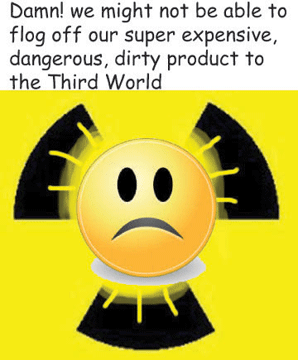 India’s bitter experience over the 1984 gas leak from an American-owned Bhopal city plant that killed about as many people as the Fukushima disaster. Indeed, Japan’s dual liability laws, which indemnify suppliers and make plant operators exclusively liable, should serve as a sobering lesson for India: GE built or designed all the three Fukushima reactors that suffered core meltdowns in 2011, yet the U.S. firm went scot-free, despite a fundamental design deficiency in the reactors.
With complex legal, pricing and other issues still pending, the deal’s commercialization is anything but imminent. In fact, the two sides are yet to sign the administrative arrangements, which they announced had been “finalized.”
It is an open question whether the deal will ever yield substantive energy benefits for India, given the exorbitant price of foreign-origin reactors, the concomitant need for India to heavily subsidize the electricity from such plants, and grassroots safety concerns over the Fukushima-type multi-plant nuclear parks earmarked by India for Westinghouse, GE-Hitachi and Areva, each of which is to sell prototype LWR models presently not in operation anywhere in the world.
The U.S.-India nuclear breakthrough that wasn’t, Japan Times 12 Feb 15 BY BRAHMA CHELLANEY During U.S. President Barack Obama’s recent India visit, a stalled, decade-old civil nuclear deal took center-stage, with the two sides announcing a breakthrough on the contentious issues blocking its implementation — a development that promised to potentially open the path for a Japan-India nuclear deal. It now appears that the breakthrough was more hype than reality and that there is little prospect of the U.S.-India deal’s early commercialization……..
it has now become apparent that the U.S. and India are still locked in negotiations to tie up loose ends and that the much-trumpeted breakthrough was little more than an effort to project a substantive advance during a presidential visit rich in pageantry and symbolism. Obama was the chief guest at India’s Jan. 26 Republic Day parade, a year after Prime Minister Shinzo Abe had that honor.
While claiming a breakthrough, neither side released any details, including on how another sticking point had been resolved: a U.S. demand that New Delhi accept nuclear-material tracking and accounting arrangements Continue reading
India’s Nuclear Liability Law is a major deterrent to USA Nuclear companies
for the U.S., the “right to recourse” clause remains a major deterrent.The law has stalled the implementation of deals for new reactors that India signed with the U.S., Russia, and France in 2008, when the Nuclear Suppliers Group (NSG) allowed India to import nuclear fuel technology without being a member of the multinational body concerned with reducing nuclear proliferation. India said the breakthrough deal with Russia reached this April after four years of negotiations takes into account the liability law when pricing four more Russian reactors meant for India’s Kundankulam plant in Tamil Nadu (each of which is valued at $2.5 billion) as well as four or six other VVER-1200 units planned for Haripur, West Bengal. The deal essentially calls for India’s public sector General Insurance Co. to evaluate each component of the Russian reactors and prescribe a 20-year insurance premium it will charge to cover Russia’s liability for an accident.
Russia’s state-owned nuclear firm Rosatom reportedly has indemnity from any liability arising from an accident at the VVER-1000s at Kundankulam Unit 1 (Figure 2), which attained criticality in July 2013 and is expected to come online later this year, and Unit 2, expected to be operational in October 2014. Observers note that contracts for those plants were signed in 1998, before India’s domestic liability legislation had even been contemplated.
Before Indian legislation on civil nuclear liability—The Civil Liability for Nuclear Damage Bill—finally passed both houses of parliament in August 2010, exempting suppliers from all liability had been India’s typical practice, starting in 1962, when India signed its first nuclear cooperation agreement with the U.S. to allow General Electric to supply two 200-MW reactors to India’s Tarapur site. The practice of liability exemption was modeled on America’s own 1957-passed nuclear liability law, the Price Anderson Act, and went on to extend indemnity protection to Atomic Energy of Canada Ltd. for two reactors in Rajasthan in 1965, and later to Russia. Continue reading
Risky Radioactive Trash Shipments Would be Terrorist Targets
Public Citizen outlined five key objections to the plan, most of which were raised by Texas’s own Commission on Environmental Quality (TCEQ) last year:
 1. Waste shipments would be targets for sabotage or blackmail by terrorists. TCEQ noted that the waste is more vulnerable to accidents or attacks while in transit than if left it where it is, because security is lighter then and fewer radiation shields would be available. Shipments from reactors around the country — passing through dozens of population centers — could last over 24 years. The Energy Dept. estimates that there would be about 10,700 shipments if done by rail; about 53,000 shipments (others say 100,000) if done by truck.
2. WCS would have only limited liability, while the public would be put at risk from transport accidents, leaks and terrorism.
3. So-called “short-term” storage may become permanent — an unearned trophy for the nuclear industry. The complex scientific analysis required for any permanent waste site would take about 10 years and has not been done.
4. The WCS site is too close to the Ogallala Aquifer, which provides water to eight states.

 High-Level Rad Waste Dump Called “All Risk and No Reward for Texas” http://www.counterpunch.org/2015/02/11/high-level-rad-waste-dump-called-all-risk-and-no-reward-for-texas/
A high-level radioactive waste “parking lot” — proposed for West Texas — poses both terrible and unnecessary risks for people throughout the country — Texas in particular — and should not be built.
That’s the position of a coalition of public interest groups that declared its opposition to the plan February 9. Continue reading
AREVA joins US Waste firm to cash in on radioactive trash storage
 AREVA and WCS Sign Agreement for Independent Interim Used Nuclear Fuel Storage Site http://www.newswiretoday.com/news/150345/ NewswireToday – /newswire/ – Paris, Ile-de-France, France, 2015/02/10 – AREVA has signed an agreement with Waste Control Specialists LLC (WCS) to assist with their license application and environmental report for the construction of an interim used nuclear fuel storage facility – WCSTexas.com / AREVA.com.
WCS filed a letter of intent on February 6, 2015 with the Nuclear Regulatory Commission (NRC) stating their intention to seek a license to operate an offsite Independent Spent Fuel Storage Installation at their 14,000-acre facility in Andrews, TX.
WCS filed a letter of intent on February 6, 2015 with the Nuclear Regulatory Commission (NRC) stating their intention to seek a license to operate an offsite Independent Spent Fuel Storage Installation at their 14,000-acre facility in Andrews, TX.
“AREVA is pleased to provide WCS with its licensing experience and global expertise for the safe storage, transport and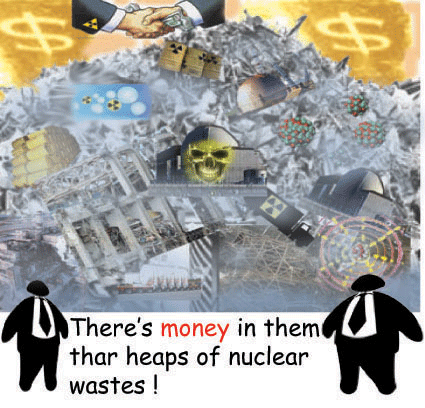 management of used nuclear fuel,” said David Jones, senior vice president, of AREVA’s Back End division, North America. “This initiative, which already has the consent of local stakeholders, will deliver an economically viable option for used fuel management while more permanent solutions are addressed.”
AREVA (areva.com) is a global leader in the transportation and storage of used nuclear fuel. More than 40% of American utilities use AREVA’s advanced NUHOMS® horizontal storage technology. The group has already sold 900 storage canisters in the U.S., making it the leading supplier for this solution.
Renewable Energy + Storage a better option for Ontario than Nuclear Power
Is nuclear refurbishment Ontario’s best option?, Corporate Knights, BY TYLER HAMILTON FEBRUARY 11, 2015 A renewables and energy storage combo could do the job and shouldn’t be ignored, a Navius Research analysis argues. ances are slim that shiny new nuclear plants will be built in Ontario. High upfront costs and a history of delays and cost overruns are among the reasons “new builds” will likely never happen in the province.
But there remains widespread debate over plans to refurbish existing reactors at the Darlington Nuclear Generating Station in Clarington, about an hour east of Toronto.
Ontario Power Generation, the province-owned electricity generator, is determined to rebuild the cores of four reactors at the Darlington site. Together, the four reactors represent about 3,500 megawatts of generating capacity and refurbishing them will extend their lives by about 30 years.
The utility estimates the project will carry a final price tag of $12.9 billion once completed a little over a decade from now. Is that a deal for Ontario ratepayers, or is there a better, less risky, and just as climate-friendly alternative?
Let’s put aside the standard anti-nuclear talking points about the risk of a Fukushima-style accident or the challenges and unknown costs involved with storing highly toxic nuclear waste far into the future. A new case study done by Vancouver-based Navius Research calls into question the wisdom of Ontario’s refurbishment plan in a world where solar power and energy storage costs are falling dramatically.
The Navius report, using a detailed model of Ontario’s electricity system that accounts for the current mix and performance of energy generation, simulated the grid for a full year under a variety of different conditions to see how it would respond.
It found that renewables in combination with the right amount of energy storage – in this case, compressed air energy storage (CAES) – and a small amount of natural gas generation would result in “equivalent GHGs and quite similar electricity system costs” compared to nuclear refurbishment……..
the findings are compelling enough that it should give Ontario pause before taking the plunge with Darlington, …….http://www.corporateknights.com/channels/utilities-energy/nuclear-refurbishment-ontarios-best-option/
One soldier’s story of radiation exposure on Pacific nuclear test site KALAMA ISLAND,
 by terryrs, 12 Feb 15 I am a first hand victim of radiation exposure when I was assigned to the DOE designated nuclear test site at KALAMA ISLAND, Johnston Island. I experienced many detonations and was on island where plutonium debree was bured both on island and in the ocean. Our nation admitted to their responsibility and enacted the EEOICPA ACT to provide for victims, unfortunately it was exclusive in that only DOE workers were provided, DISCRIMINATION!. I worked for the DOD which operated under a joint effort with DOE.
I applied for medical assistance under RECA but it also denied and failed to provide medical or equal compensation as that of EEOICPA.
Subsequently we have learned we are denied because we are just too “expensive”. Can you imagine when they needed us we were cheap and now we are to expensive?
President Clinton authorized continued funding for EEOICPA and cited that our nation must be responsible but still signed an act that denies and is exclusive.
Amendment legislation has been on going for many years only to die in committees. You wonder whether the authors are interested in votes or to really help victims harmed by America.
I lost my bladder and prostrate, stage 4 cancer and was given months to live without removal. I payed all medical expenses even though my employer was supposed to provide compensation. It appears they did not and now I am in a lawsuit. I wonder if the courts will be just as past history demonstrates they are not. Most all cases were dismissed for lack of evidence, “the cloak of secrecy” our nation uses.
The result of all of this is ” WE WILL DIE WAITING “
How the USA govt dismissed Nuclear Zero Lawsuit

 Bush-Appointed Judge Dismisses Nuclear Zero Lawsuit; Marshall Islands to Appeal http://www.truth-out.org/opinion/item/28997-bush-appointed-judge-dismisses-nuclear-zero-lawsuit-marshall-islands-to-appeal# Monday, 09 February 2015 By David Krieger, Truthout
The Republic of the Marshall Islands (RMI), a Pacific Islands country of 70,000, took bold action on April 24, 2014, on nuclear disarmament. It brought lawsuits at the International Court of Justice (ICJ), the world’s highest court, against the nine nuclear-armed countries, accusing them of violating their obligations under international law to negotiate in good faith to end the nuclear arms race and for total nuclear disarmament.
Because of the importance of the United States as a nuclear power and the fact that it does not accept the compulsory jurisdiction of the ICJ, the Marshall Islands at the same time brought a similar lawsuit against the United States in US federal district court in Northern California.
In the United States, rather than engaging in the case in good faith, the government responded by filing a motion to dismiss the case on jurisdictional grounds. Continue reading
Sending more nuclear weapons to Europe is the wrong move
The Wrong Move: Adding Nuclear Weapons to the Russia-Ukraine Conflict Defense One, FEBRUARY 9, 2015 BY LT. GEN. ROBERT GARDGREG TERRYN
Despite the wishes of two key Congressmen, more nuclear weapons in Eastern Europe is a bad idea.
You may have missed it, but last month two key members of Congress asked the military to move additional U.S. nuclear weapons and dual-capable aircraft into Eastern Europe. Reps. Mike Rogers, R-Ala., chairman of the House Armed Services Subcommittee on Strategic Forces, and Mike Turner, R-Ohio, chairman of the Tactical Air and Land Forces Subcommittee, sent a joint letter to Defense Secretary Chuck Hagel and Secretary of State John Kerry advocating the addition of new sites in Eastern Europe for the deployment of additional U.S. nuclear weapons and dual-capable aircraft.
In their letter, the two chairmen extend a Russian statement claiming its sovereign “right” to deploy nuclear weapons in Crimea to an “intention” to do so. They also assert Russian “moves to deploy nuclear-capable Iskander short-range ballistic missiles as well as nuclear-capable Backfire bombers in the illegally occupied territory [Crimea].”
There is no evidence that Russia has taken or is preparing to take any of these actions; but the letter alleges that they pose a new military threat to U.S. allies and our forces in Europe, and that the U.S. must respond “to change President [Vladimir] Putin’s calculus.”
Fortunately, nuclear weapons have played no overt role in Russia’s annexation of Crimea or its ongoing aggression in eastern Ukraine. And while the U.S. and its European allies must react, introducing a nuclear confrontation into the already dangerous situation is more likely to cause Putin to respond in kind than to change his calculus. Declared U.S. policy is to reduce the role of nuclear weapons in our national security, not to employ them in hopes of intimidating a hostile head of state……..
Deploying additional U.S. tactical nuclear weapons to Europe would make them more vulnerable to a Russian preemptive attack, even with conventional weapons, in the event of an escalating crisis. Also, it is well-known that Russia possesses a far larger stockpile of tactical nuclear weapons than the U.S.has in its inventory. Russia could be tempted to employ its tactical nuclear weapons superiority to take out the U.S.weapons deployed in Europe in the mistaken belief that it could confine the conflict to Western Europe. ……
Deploying additional U.S. tactical nuclear weapons and more dual-capable aircraft in Europe provides no advantage: It would be an expensive initiative that would add nothing to our security, divert funds from higher priority defense expenditures, likely provoke Russia to deploy nuclear weapons in Crimea, increase the possibility of nuclear war, and be divisive amongst our NATO allies http://www.defenseone.com/ideas/2015/02/wrong-move-adding-nuclear-weapons-russia-ukraine-conflict/104940/
Westinghouse cagey about paying more for delays in new nuclear power
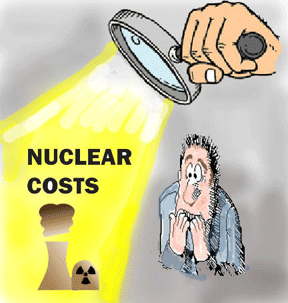 Will Westinghouse pay for another nuclear delay? Power Source, February 10, 2015 A strange argument went down on Dec. 16 among electric utility Georgia Power and its regulator, the Georgia Public Service Commission, and entangled local nuclear firm Westinghouse Electric Co.
Cranberry-based Westinghouse and its partners in the construction of the first two AP1000 reactors in the United States had, up to that point, resisted telling Georgia Power when the project would be completed. The company provided a list of activities planned through December 2015, but would not forecast further, Georgia Power told the commission.
The utility tried time and again to obtain an integrated project schedule, it told regulators. Already, the project originally set to be completed by April 2016 was 21 months behind.
The regulators, in turn, wondered who’s running the show — the utility that hired the consortium of nuclear builders for an estimated $14 billion project or its contractors.
When Westinghouse and its main construction partner, Chicago Bridge & Iron, finally submitted the long sought-after document in January, they revealed another 18-month delay, projecting the first plant would be ready for service in mid-2019 and the second in 2020.
Georgia Power has placed the estimated cost of the delay at $720 million, or $40 million a month. That’s on top of more than $1 billion in delay- and design-related costs that the two sides have been suing each other over since 2012.
The utility hasn’t agreed to the new dates, its parent company, Atlanta-based Southern Co. said in a public filing Jan. 29. Nor does it believe that Westinghouse and its partners have done everything possible to mitigate the delay. And, as has been the pattern with cost overruns in the project, Southern Co. told investors it expects the latest expenses to become part of the lawsuit.
The company’s CEO Tom Fanning said on Bloomberg Television last week, “Southern Co. won’t absorb those costs. The contractors will.”
Chicago Bridge & Iron has denied that claim. Westinghouse declined to address the comment………..
The likelihood of delays is so ingrained in nuclear construction that the Public Service Commission requires its analysts to continuously update the cost of potential delays spanning as many as four years.
Deviating from original construction schedules and budgets has been the norm for all past nuclear construction projects in this country, one of the main criticisms of undertaking such efforts.
As a result, a lot is seen as riding on the Vogtle construction. With cheap natural gas flooding U.S. markets, nuclear has to prove there’s an economic advantage to investing in such capital-heavy construction instead of throwing up a couple of natural gas power plants in a few years’ time at a fraction of the cost……..http://powersource.post-gazette.com/powersource/companies-powersource/2015/02/10/Will-Westinghouse-pay-for-another-nuclear-delay/stories/201502100014
A field guide to “nuclear environmentalists”
 Former Nuclear Regulatory Commissioner and state regulator Peter Bradford sees the finance issue as the nuclear industry’s Kryptonite.
“Trying to solve climate change with nuclear is like trying to solve world hunger with caviar,” he said
Straight.com. Peter Dykstra, 9 Feb 15 “…In recent years, some major science and environmental players have come forward to endorse nuclear power. Former EPA administrator and Obama climate czar Carol Browner is one of the glitziest.
Browner signed up for the newest and shiniest effort to sell nuke plants, the year-old Nuclear Matters, founded by electric giant Exelon in 2014.
Nuclear Matters is run by public relations agency Sloane & Associates. Critics call it a nuclear front group, but Sloane prefers to bill it as “starting a national conversation on nuclear power,” and adds that other utilities, nuke builders and suppliers have joined Exelon as sponsors.
The group recruited several other bipartisan political heavyweights as paid spokespeople but none that are catnip for the environmental community, where opposition to nuclear power is the rule, not the exception.
So when Nuclear Matters hauled in Browner as a spokesperson of its Leadership Council last year, she was a big catch.
Browner said she typically devotes a few hours a week to Nuclear Matters and is compensated for her time, but neither she nor Nuclear Matters will discuss her fee. Continue reading
For the first time, radioactive strontium found in Vermont Yankee Nuclear plant groundwater
 State Finds Radioactive Material In Vermont Yankee Groundwater, VPR, By JOHN DILLON • FEB 9, 2015 The Vermont Health Department says for the first time it has found the radioactive isotope Strontium-90 in ground water at the Vermont Yankee nuclear plant in Vernon……..While the health department says there is no immediate risk to health, Commissioner Harry Chen says the discovery shows the need for the state to closely monitor the site now and in the future……
Vermont Yankee shut down at the end of December and is now beginning the decades-long decommissioning process. http://digital.vpr.net/post/state-finds-radioactive-material-vermont-yankee-groundwater
Vermont’s largest city , Burlington, now on 100% renewable energy
Burlington, Vermont Now Runs on 100 Percent Renewable Energy, Triple Pundit, Leon Kaye | Monday February 9th, Burlington, Vermont, has been making waves for becoming the first city in the U.S. to be powered 100 percent by renewables. (Some may say Greenburg, Kansas was the first, but we are talking about a town of 800 people versus 42,000 in Burlington.) Reliant on coal a generation ago, Vermont’s largest city has slowly revamped its energy portfolio, culminating in the purchase of a hydropower plant late last year.
This milestone may not be surprising considering Vermont’s progressive politics and buy-in from residents who overall supported the plan of the local utility,Burlington Electric. But the fact that Burlington has been able to do this without raising rates since 2009 — while saving the city about $20 million over the next 20 years — creates a case study for communities that are interested in investing in renewables but skittish about making such an aggressive move………http://www.triplepundit.com/2015/02/burlington-vermont-runs-100-renewable-energy
Uranium company Cameco continues to get miserable results
 Uranium Producer Cameco Looks Depleted Full-Year Results Lowest Since 2006, WSJ, By SPENCER JAKAB Feb. 8, 2015 Customers shutting down in droves? Environmentalists creating headaches? Low cost competitors flooding the market? Nuke ‘em. ……
he nearly two-thirds decline in Cameco’s U.S.-listed share price since February 2011 is about more than a delayed earnings bonanza. Furthermore, fluctuations in uranium’s thinly traded spot market should be viewed cautiously.
Not only do utilities in Japan and elsewhere have substantial inventory on hand but other sources of uranium supply hang over the market. These include low-cost mines in Kazakhstan that now supply around 40% of the market as well as nuclear fuel derived from nonmine sources such as the waste “tailings” of previously processed uranium.
Assuming analysts’ 2018 scenario plays out in terms of output and prices, Cameco now fetches just under 10 times that year’s consensus forecast earnings according to FactSet—hardly a bargain in today’s depressed mining landscape. The cloud hanging over Cameco may not dissipate soon.http://www.wsj.com/articles/uranium-producer-cameco-looks-depleted-ahead-of-the-tape-1423421905
 The war on solar, which is real, is really a war over what kind of energy system we will have in the 21st century. Will it be the 21st century model we at GreenWorld and NIRS advocate, based on clean renewable energy, distributed generation and the rest? Or will it be a continuation of the 20th century model of large baseload power plants, whether they be coal or nuclear? That’s the fundamental issue and how it is resolved may well determine the future of our planet.
Clean energy vs nuclear: the battle intensifies http://safeenergy.org/2015/02/06/clean-energy-vs-nuclear/ Michael Mariotte February 6, 2015
In theory, the USA’s “all of the above” energy policy has a certain amount of appeal: why should government pick winners and losers? Why not–since no one knows the future–as a matter of policy pursue all energy sources?
One obvious issue is the availability of sufficient resources to effectively support all energy sources.
But there is a much more fundamental problem that makes “all of the above” a PR tagline, not a real energy policy: some energy sources are simply incompatible with others.
Specifically, the 20th century “baseload” power approach of electricity generation and distribution–reliant on large nuclear and coal plants–does not work in a 21st century energy system based on clean, distributed generation, energy efficiency, and a smart grid.
That’s a problem, especially for those who want to end fossil fuels and view both nuclear power and renewables as having a role to play in fighting climate change. The choice isn’t clean energy versus coal; it’s clean energy versus fossil fuels and nuclear because the baseload power model–which is the only model in which nuclear works–prevents the integration of all but a small percentage of renewables into the grid.
Germany and some other European countries already have reached that point. And some U.S. states are getting there rapidly.
Naive nuclear backers may not understand this reality, but the nuclear utilities (which are the same, by the way, as the fossil fuel utilities) do understand it. That’s why the nuclear industry isn’t going after natural gas, which is its main competitor in many locations at the moment. Instead, as this long and well-done article, titled Why the nuclear industry targets renewables instead of gas, from Midwest Energy News points out, the nuclear industry is going after renewables–and in a big way.
Others, focused more on fossil fuels, have noticed the same trend from the flip side. The Institute for Energy Economics and Financial Analysis (IEEFA) this week points out that while the media has been obsessed with the notion of a “war on coal,” the real war going on is the war on solar power. While IEEFA takes on the issue from the viewpoint of the fossil fuel industry going after solar, remember: the nuclear and fossil fuel utilities are one and the same. Continue reading
For investors – the ‘nuclear renaissance’ is all but dead
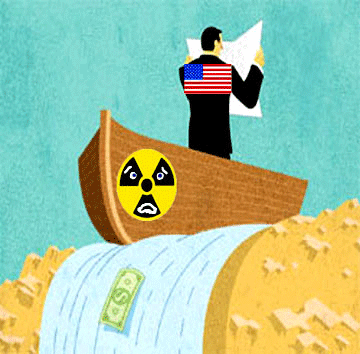 Nuclear Energy Renaissance Takes Another Blow and May Never Recover, The Motley Fool By Travis Hoium February 7, 2015 The nuclear renaissance some people hoped for took another big step backward this week when the Vogtle Nuclear Power Plant said it would be delayed another 18 months and cost at least $720 more than the $14.5 billion previously expected.
Nearly every nuclear plant that’s been proposed in the U.S. in the last decade has run into major cost overruns and delays, and without government support, the nuclear renaissance may already be dead. But the latest delay casts a shadow over an energy source that’s becoming increasing uncompetitive in today’s energy landscape.
What happened at Vogtle
The latest news from Southern Co.‘s (NYSE: SO ) subsidiary Georgia Power is that the Vogtle Plant will now be delayed until mid-2019 for the first reactor, and mid-2020 for the second. Costs could pile up to $720 million and could be as much as $1 billion.
Contractors Westinghouse Electric Co. and Chicago Bridge & Iron Co. alerted Southern Co. of the delays, adding to a long list of delays for Westinghouse plants that were supposed to help revitalize nuclear power in the U.S. Worse yet, it’s ratepayers, not Southern Co.’s shareholders, who will be footing most of the bill for this project, even if it’s never completed.
The kick in the gut to ratepayers
If you live in Georgia, the delay and additional cost will affect you more than you think. Under a plan called construction work in progress, or CWIP, Georgia Power gets to charge customers for the Vogtle plant before it’s even finished. Yes, today customers are paying an average of $6.60 per month for a plant that isn’t likely to produce any power until at least 2019. It’s a sweet deal for utilities, but one that’s becoming increasingly problematic for consumers.
What CWIP does is transfer the risk from the company building the nuclear plant to ratepayers. If the project is delayed or costs more than expected, Georgia Power still makes its money unless regulators intervene. In fact, without CWIP, we may not even be talking about nuclear plants being built in the U.S. If utilities had to take on the risk of nuclear themselves, they wouldn’t do it, something we’re already seeing across the country.
Nuclear energy’s problem in the U.S.
This isn’t the only nuclear plant running into these kind of issues. NRG Energy (NYSE: NRG ) abandoned a potential expansion of South Texas Nuclear Generating Station because of rising costs for nuclear plants and low cost natural gas. The project is still moving forward with regulatory approval, which partner Toshiba is funding, but it’s doubtful the plant will ever be built.
Duke Energy (NYSE: DUK ) canceled the Levy Nuclear Plant because of rising costs, but under CWIP, it still gets to keep a profit of about $150 million. Even Entergy closed the Vermont Yankee nuclear plant late last year because it wasn’t cost effective. Whether it’s new plants or upgrades to old plants, it’s costs that are sinking nuclear in the U.S. today.
In an analysis of the unsubsidized levelized cost of energy for various energy sources, investment bank Lazard found that nuclear energy would cost between 9.2 cents and 13.2 cents per kW-hr. Compare that to 6.1-8.7 cents/kW-hr for natural gas, 7.2-8.6 cents/kW-hr for utility scale solar, and 3.7-8.1 cents/kW-hr for wind energy.
Nuclear energy is also losing based on recent trends. The cost of solar and wind energy are falling rapidly, which is why over half of all energy generation installed in each of the last two years was solar or wind energy.
The nuclear renaissance is all but dead
Setbacks like the Vogtle Nuclear Plant faced this week have become all too predictable in the nuclear industry, and they’re the reason a nuclear renaissance is unlikely in the U.S. Costs have simply gotten too high, and low costs from competing energy sources like natural gas, solar, and wind will keep the industry from ever taking off.
For investors, the lesson comes down to where the energy industry and its costs are trending. Nuclear energy may seem like a great idea on the surface, but if costs are continually rising, it’s an energy source that’s doomed in this country. Solar energy, on the other hand, is cutting costs by double-digit percentage points per year and is now less costly than nuclear on a per kW-hr basis. Maybe it’s time to look at alternative energy more seriously, something utilities are already doing……….http://www.fool.com/investing/general/2015/02/07/nuclear-energy-renaissance-takes-another-blow-and.aspx
1 This Month
Tell Congress: Prevent Nuclear Catastrophe in Iran

Tell Congress: Prevent Nuclear Catastrophe in Iran

Read the Public Inquiry Report, the Commissioners’ report, Surrendering Australia: The AUKUS Deception is available to download for free at aukuspublicinquiry.com. Or just watch the replay of the National Press Club Luncheon.


Shut down the radiation-damaged Heysham nuclear reactors now
To see nuclear-related stories in greater depth and intensity – go to https://nuclearinformation.wordpress.com

Say No to NASA’s Reckless Nuclear Reactor on the Moon
Say No to NASA’s Reckless Nuclear Reactor on the Moon
-
Archives
- November 2026 (224)
- October 2026 (302)
- September 2026 (339)
- August 2026 (330)
- July 2026 (355)
- June 2026 (287)
- May 2026 (306)
- April 2026 (356)
- March 2026 (251)
- February 2026 (267)
- January 2026 (308)
- December 2025 (358)
-
Categories
- 1
- 1 NUCLEAR ISSUES
- business and costs
- climate change
- culture and arts
- ENERGY
- environment
- health
- history
- indigenous issues
- Legal
- marketing of nuclear
- media
- opposition to nuclear
- PERSONAL STORIES
- politics
- politics international
- Religion and ethics
- safety
- secrets,lies and civil liberties
- spinbuster
- technology
- Uranium
- wastes
- weapons and war
- Women
- 2 WORLD
- ACTION
- AFRICA
- Atrocities
- AUSTRALIA
- Christina's notes
- Christina's themes
- culture and arts
- Events
- Fuk 2022
- Fuk 2023
- Fukushima 2017
- Fukushima 2018
- fukushima 2019
- Fukushima 2020
- Fukushima 2021
- general
- global warming
- Humour (God we need it)
- Nuclear
- RARE EARTHS
- Reference
- resources – print
- Resources -audiovicual
- Weekly Newsletter
- World
- World Nuclear
- YouTube
-
RSS
Entries RSS
Comments RSS

