$10 billion bonanza to save Exelon nuclear plants in Illinois?
New power rules may preserve Exelon nuclear plants in Illinois, St Louis Post Dispatch, By Scott DiSavino Reuters , 30 July 15, New rules for U.S. electricity providers could save two money-losing nuclear power plants in Illinois from shutting down and may amount to a $10 billion bonanza to U.S. power producers.
A system of rewards and penalties is part of a requirement approved last month by federal energy regulators that applies to a power auction next month.
It may benefit some costly nuclear reactors in the PJM power region, which stretches from New Jersey to Illinois, that have had a tough time competing against the growing use of wind turbines and power plants fired with cheap natural gas.
That is particularly true for two plants operated by Exelon Corp., the biggest U.S. nuclear power plant operator. It has warned it might be forced to shut its Quad Cities and Byron nuclear plants in northern Illinois, unless the reactors’ revenues increase.
Thanks to the growth of alternative power sources and abundant gas from shale formations, PJM power prices have fallen an average of 20 percent over the past five years to around $50 per megawatt hour compared with the prior five years…….
The rule creates a niche for nuclear plants, which run consistently, unlike breeze-dependent wind turbines, and do not need potential upgrades to withstand harsh winter temperatures like gas plants.
Under so-called capacity performance requirements, generators will receive higher fees to keep plants available but face stiff penalties if their units don’t deliver power when needed during system emergencies. Fines for an average 100-megawatt plant would be around $350,000 an hour………
If analysts’ estimates are correct and all ten of Exelon’s reactors in northern Illinois are selected to provide capacity in the auction, the company could receive around $600 million for those reactors during the 2018-2019 delivery year………
Exelon has lost close to $1 billion over the past five years on its nuclear operations — about $350 million at Quad Cities alone. It expects those losses to continue, based on forward power prices, Dominguez said.
Even if Byron and Quad Cities clear the auction, Dominguez said they still face the risk of shutdown unless federal, state and regional policy makers find ways to compensate generators for the environmental and reliability benefits that non-carbon emitting nuclear plants provide.
In the meantime, extra revenues from the capacity auction could keep the money losing reactors operating for a few more years until possible new carbon standards are available. http://www.stltoday.com/business/local/new-power-rules-may-preserve-exelon-nuclear-plants-in-illinois/article_e4007591-df54-5795-9b5f-de5a1e6ab3f8.html
Exelon should shut down those uneconomic nuclear reactors – says former CEO
Former Exelon CEO says Exelon should shut those reactors Green World, Michael Mariotte
July 28, 2015 “………..Last Friday, we linked to one interview he gave recently where he said he would have been quicker to close Exelon’s uneconomic reactors than the current Exelon regime–which still hasn’t closed them and is still floundering around trying to get someone, anyone, to order ratepayers to bail them out. So far, unsuccessfully.
Yesterday, E&E Publishing ran another interview with Rowe, which expands on his thoughts and surely caused unpleasant abdominal pains and teeth-gnashing in Exelon’s executive suite and boardroom. You see, Rowe is one of those retired execs whose stature has only grown since he left the company and his thoughts carry weight, especially in Illinois. And he’s still got some clout, perhaps more than Exelon itself these days: for example, he’s actually friends with Chicago Mayor and former White House Chief of Staff Rahm Emanuel, unlike the current Exelon suits.
So here’s what Rowe said about Exelon’s uneconomic reactors:
I’m living in a fairy world because I don’t have the numbers and I’m not responsible for them anymore. But in my opinion, you shut those three plants down. You say they have become uneconomic just like some old coal plants are uneconomic. And in a world that’s driven by unfriendly market prices and unfriendly public policy, you shut them down………
As for the idea that EPA’s Clean Power Plan should encourage nuclear power:
…I don’t think it’s EPA’s job to encourage a new nuclear world. I think that would be one of the most expensive solutions it could pursue……
Rowe, unlike the current short-sighted and economically-challenged management at Exelon, understands electricity markets and finances and, also unlike Exelon’s current management, is not afflicted with the kind of greed mentality that insists they should get whatever they want just because they want it. Rowe understands that is not how the world works. Rather than trying to force the world to adapt to Exelon, as the current regime is attempting, Rowe’s history was one of trying to steer Exelon through the real world that was presented. http://safeenergy.org/2015/07/28/former-exelon-ceo-says-exelon/
USA’s government ignoring the continuing disaster of Fukushima
Fukushima Continues Out of Control – Obama Silent on Risks, DC Clothesline – #Airing Out America’s Dirty Laundry” July 28, 2015 by Suzanne Hamner The propaganda “ministry” of the federal government works feverishly and incessantly to focus attention on “issues” they design in order to keep Americans from investigating issues that pose real threats to the citizenry. It’s a well-oiled machine that Joseph Goebbels and Joseph Stalin would envy since it is from the Goebbels and Hitler model, with a littleStalin thrown in, this administration copied and perfected. To further confuse the public and keep emotions stirred, dog and pony shows occur in both chambers of Congress to the point it becomes hard to tell the difference between Republican, Democrat, GOP establishment, liberal, RINO, communist and socialist.
Despite the attempt to redirect attention away from the important issues to “contrived” ones, reports surface daily indicating multiple crises are imminent. One can almost guarantee the US government agencies, politburo (Senate and House), and the Liar-in-Chief are clueless as to action to be taken, if any can be taken at all, to quell the coming tide. Case in point remains the Fukushima Daiichi Nuclear Plant disaster of March 2011.
In April 2015, Melissa Dykes reported the media propaganda arm of the administration pushed the idea that radiation from Fukushima was “low risk” and “you could swim in the ocean for six hours every day for a year and receive a dose more than a thousand times less than a dental x-ray.” Melissa called “BS” then, as did the rest of us, and continuing reports coming out of Japan indicate the media, controlled by this administration, is lying. However, what’s a little radiation that could kill millions when that “racist” Confederate Battle Flag is stirring up trouble and sodomites are denied rights (rolls eyes).
A presentation by Fairewinds Chief Engineer and nuclear expert Arne Gundersen claims there is plenty to generate concern. The catastrophe is far from over despite the Japanese Government and Tokyo Electric Power Company push to decommission the Fukushima plant in 30 years. The closest cousin to the Fukushima disaster remains Chernobyl in Ukraine. The government there is waiting close to 100 years to decommission Chernobyl. Why the rush on Fukushima? The answer is more about politics and money than science.
According to Gundersen, problems exist at Fukushima that will last decades.
- Three of the nuclear cores at Fukushima Daiichi are in direct contact with groundwater, a problem “nuclear power designers and engineers never anticipated.
- Units 1, 2, and 3 were destroyed allowing the formation of holes and cracks; which withcontainment units breached, groundwater is allowed to come in contact with the nuclear cores.
- “23,000 tanker truckloads of radioactive water have leaked into the Pacific Ocean” with groundwater continuing to leak in and out at a rate “at least 300 tons per day;” so far more than 1500 days have passed and no end is in sight.
- The ice wall is a complete failure meaning Cesium, Strontium and Plutonium from Fukushima will bleed into the Pacific for decades due to unmitigated groundwater flow.
- Constraints of the press by the Japanese government’s secrecy act continue to hide the full human, financial and environmental costs of the disaster.
- Levels of Strontium-90 concentrations outside the destroyed plant spiked 1000 % in three months from April 2015 to July 2015.
According to Natural News:
Censored and heavily redacted emails [PDF] from US government scientists and officials reveal that there were major concerns among American policymakers shortly after the devastating Fukushima nuclear power plant disaster in March 2011 that there would be widespread radiological contamination and spikes in thyroid cancer rates.
“I would like to raise another issue which now merits expeditious, near term action. There is a short time window … during which it will remain possible to … measure I-131 that members of the public may have ingested,” said an email sent to John Holdren, senior adviser to Pres. Obama on science and technology, Secretary of Energy Steven Chu, DOE/NRC officials, and others whose names were redacted on March 23, 2011, 12 days after the disaster on March 11, according to a recently released trove of email documents, per a Freedom of Information Act request.
“Collecting this data … would be very valuable,” said the email.
[Using the Ctrl-F function, ability to readily access this cited email confirms the above.]
Nuclear science experts were clearly concerned that radioactive fallout from the disaster would not merely spread to the US West Coast but cause a spike in thyroid cancer rates there, as well — though none of those concerns were publicized by reports or expressed publicly by the Obama administration at the time. [Emphasis mine.]………..http://www.dcclothesline.com/2015/07/28/fukushima-continues-out-of-control-obama-silent-on-risks/
Problem for Modular Nuclear Reactors – they’re just as costly as the old ones
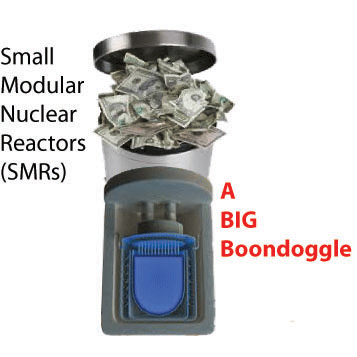 Prefab Nuclear Plants Prove Just as Expensive Modular method has run into costly delays and concerns about who will bear the brunt of the expense., WSJ, By REBECCA SMITHJuly 27, 2015
Building nuclear reactors out of factory-produced modules was supposed to make their construction swifter and cheaper, leading to a new boom in nuclear energy.
But two U.S. sites where nuclear reactors are under construction have been hit with costly delays that have shaken faith in the new construction method and created problems concerning who will bear the added expense.
“Modular construction has not worked out to be the solution that the utilities promised,” said Robert B. Baker, an energy lawyer at Freeman Mathis & Gary LLP in Atlanta and former member of the Georgia Public Service Commission, the state utility authority.
The new building technique calls for fabricating big sections of plants in factories and then hauling them by rail to power-plant sites for final assembly. The method was supposed to prevent a repeat of the notorious delays and cost overruns that marred the last nuclear construction cycle in the 1980s.
It hasn’t worked. Georgia Power Co., a unit of Southern Co. that is building one of the nuclear power plants, reports that construction is three years behind schedule, although it is making steady progress.
“The promise of modular construction has yet to be seen,” said Joseph “Buzz” Miller, executive vice president of nuclear development for Georgia Power. The Georgia plant’s delay will increase the project’s financing costs, potentially adding $319 annually to each residential bill, according to the public interest advocacy staff of the state utility commission. The utility is seeking to recover $778 million in total added financing costs from vendors. It hopes customer bills won’t rise more than 8% to pay for the plant.
Georgia Power expects to spend $7.5 billion for its 46% share in the Vogtle power plant, which is adding two nuclear reactors adjacent to an existing plant near Waynesboro, Ga. That tab is $1.4 billion higher than the spending limit state regulators approved in 2009.
The cost of the V.C. Summer plant that South Carolina Electric & Gas Co. is building near Jenkinsville, S.C., now stands at $6.8 billion for the company’s 55% stake, up $1.1 billion from a 2012 estimate. The company recently agreed to trim its profit margin on the project if regulators approve a revised construction schedule and cost estimate. The commission heard testimony last week but has yet to rule………
U.S. utilities proposed building more than two dozen reactors five years ago before the shale-gas revolution drove down the price of natural gas and made plants that burn gas a more attractive option for the power industry. Last month, the Nuclear Regulatory Commission said it was folding a division to manage construction of new reactors back into the division from which it was pulled a few years ago, acknowledging a nuclear renaissance hasn’t materialized. Write to Rebecca Smith at rebecca.smith@wsj.com http://www.wsj.com/articles/pre-fab-nuclear-plants-prove-just-as-expensive-1438040802
New and very dangerous nuclear bomb in USA’s arsenal
 This new nuclear-armed US bomb may be the most dangerous weapon in America’s arsenal, Business Insider,JEREMY BENDER, 27 July 15 The US just introduced a new type of bomb into its already extensive arsenal, and it may just be the most alarming US weapon yet, Zachary Keck writes for The National Interest.
The new bomb is the B61-12. On its surface, the bomb does not appear to be as dangerous as other weapons in the US arsenal. Although the B61-12 is nuclear-armed, it has a yield of 50 kilotons — tiny compared to the largest nuclear bomb that the US possesses, which has a yield of 1,200 kilotons.
But as Keck notes, that difference in explosive power doesn’t tell the entire story.
“What makes the B61-12 bomb the most dangerous nuclear weapon in America’s arsenal is its usability,” Keck writes. “This usability derives from a combination of its accuracy and low-yield.”…….http://www.businessinsider.com.au/this-bomb-may-be-the-most-dangerous-in-us-arsenal-2015-7
Even USA’s nuclear lobby has doubts about “next generation” nuclear reactors
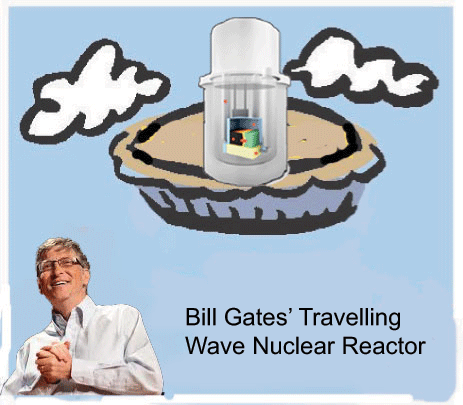
Could Next-Gen Reactors Spark Revival In Nuclear Power?, National Geographic By Wendy Koch, JULY 24, 2015 Tech titans like Bill Gates are helping fund a new generation of commercial nuclear reactors,………..These are complex systems…They look good on paper but could be difficult to realize in practice.
Matthew McKinzie “These are complex systems,” says Matthew McKinzie, director of the nuclear program at the Natural Resources Defense Council, an environmental group that prefers solar, wind and energy efficiency—rather than nuclear—as climate solutions.
“They look great on paper but could be difficult to realize in practice,” he says of the advanced reactors. “A lot of projects in the past have led to disappointment.” He says reactors that don’t use the light-water design common in today’s nuclear power plants will need prototypes for testing and their private funds aren’t enough to cover the cost.
In addition, “molten salt is corrosive and messy to work with,” says McKinzie, who holds a doctorate in experimental nuclear physics..
Russ Bell, senior director of new plant licensing for the Nuclear Energy Institute says many new reactor designs are safe and “extremely innovative,” but since they need to be prototyped, it will take 20 to 25 years to bring them to market……
Bill Gates has visited China several times to seek its cooperation in developing a next-gen reactor. He chairs TerraPower, which has designed a traveling wave reactor that runs on depleted uranium and produces very little nuclear waste……
“It’s American technology. I personally want the United States to get it first,” says Leslie Dewan. Her company, Transatomic, plans five more years of experimental and design work before aiming to build a 20-megawatt prototype.
“We’ve been talking with the national labs about it,” she says, noting the Department of Energy has a new loan guarantee program for advanced nuclear reactors. “There’s really good buy-in from DOE for developing a wide range of technologies.”
Even if all goes well, Dewan says, it will take at least a decade to develop a commercial molten salt reactor.
USA to sell nukes to China. Profit for corporations versus national security
 Congress’s Other Nuclear Test A pending 30-year deal with China requires oversight too. WSJ 26 July 15 “……The deal’s basic purpose is to allow China to keep buying nuclear power plants from U.S. suppliers such as Westinghouse Electric, a slice of bilateral trade responsible for thousands of U.S. jobs, according to industry estimates. Yet civil-nuclear business carries proliferation risks, as technology used in power plants can also serve various military purposes.
Republican Senators Marco Rubio and Tom Cotton oppose the deal given China’s record of proliferating to Iran, North Korea and Pakistan. China has also secretly diverted U.S.-produced nuclear-reactor cooling pumps to make its naval submarines more quiet and therefore more stealthy, as confirmed in Congressional testimony by Assistant Secretary of State Thomas Countryman in May. Such diversion violated China’s commitment to “peaceful use” of imported nuclear technology……..
A House amendment to the defense spending bill would require that the DNI and the Chief of Naval Operations weigh in on interagency approvals of future civil-nuclear sales to China, with the aim of mitigating risks of military diversion.
The Nuclear Energy Institute and other industry lobbyists protest that this provision would add needless bureaucratic review. …http://www.wsj.com/articles/congresss-other-nuclear-test-1437910661
US Navy Sailors: Third death from exposure to Fukushima fallout
Attorney for US Navy Sailors: Third death from exposure to Fukushima fallout — Baby with brain cancer has died — Reporters afraid to publish stories related to case — Professor: USS Reagan sailors were first people to be hit by plume outside of plant (VIDEOS) http://enenews.com/attorney-navy-sailors-third-death-exposure-fukushima-fallout-baby-brain-cancer-died-reporters-worried-about-publishing-stories-related-case-professor-uss-reagan-sailors-first-be-hit-plume-plant?utm_source=feedburner&utm_medium=email&utm_campaign=Feed%3A+ENENews+%28Energy+News%29
Attorney Charles Bonner, representing US service members exposed to Fukushima fallout, Jul 21, 2015 (at 10:45 in): We now have a 250+ young sailors with all kinds of illnesses, we’ve had three die. We had one of the sailors who came home and impregnated his wife. They gave birth to a little baby born with brain cancer and cancer down the spine, lived for two years, and just died in March of this year.
Q&A with Charles Bonner, Jul 21, 2015 (at 4:45 in): I was just interviewed by some reporter about this case, he said, “Now, I want to interview you about this case and the current status of your lawsuit — but, you all have won, so do I have anything to worry about? Do I have to look over my shoulder if I do this story, if I publish this story?” I said, “Yeah you do.” Because trillions of dollars do not go away easily. It’s amazing that people are afraid to even do a story on this because they’re afraid of these corporations.
Kyle Cleveland, sociologist at Temple University’s Japan Campus, published Apr 29, 2015 (at 2:00 in): Like everyone else we were seeing what was on the media. The media was very alarmist, and I think ironically, some of what were taken as an overreaction or a panic in the first couple of weeks of the crisis subsequently have been vindicated to be in some ways quite reasonable claims and worries as more information have been revealed, as gov’t reports have been written… Those reports have demonstrated that the situation was really quite more serious at the time than certainly what the government was saying, and certainly what TEPCO was saying at the time. My starting point for my research was looking into the government’s FOIA documents. I was very surprised to see that there is a big difference within the United States government as they were trying to determine just how bad this was. And what I realized in those documents is that the Nuclear Regulatory Commission… was recommending a 50-mile (80 km)exclusionary zone. This was an stark contrast to the Japanese government’s recommendation of 30 km. And also I was very interested to see that the the US Navy Pacific Command and particularly naval reactors, was recommending a 200-mile exclusionary zone. So that’s a rather profound gap between 30 kilometers on the one hand with the Japanese government 80 km from the NRC [and] something like over 300 km for the US Navy… But ironically aside from the staff at the Daiichi plant maybe some at the very first people who were hit by the radioactive plume were sailors who run the United States Ronald Reagan Carrier Strike Group… They detected the plume at about 132 miles distance from the Daiichi plant. The FOIA documents… demonstrate that these government officials… were very concerned about the levels that they were reading. They were indicating that they were about 30 times above background levels, and that they would exceed a ‘protective action guideline’ criteria within about a 10 hour period… The reason the US Navy had recommended a 200-mile exclusionary zone was that the Yokosuka naval base is about a 163 miles from the Daiichi plant… at the same time that the Ronald Reagan aircraft carrier was detecting the nuclear plume, the George Washington aircraft carrier which was ported down near Yokosuka was also detecting a plume and the result that they were getting were really quite alarming to them.
Scientist: Whale deaths off Alaska island remains mystery
« Other test results also are pending, however. A muscle-tissue sample is being tested for the possibility of radionuclides from the 2011 Fukushima nuclear disaster. Scientists also have looked at other possibilities, including sonar and seismic exploration. »
 In this June 8, 2015 photo, provided by the University of Alaska Fairbanks Gulf Apex Predator Prey project, a fin whale lies dead on Kodiak Island, Alaska. Researchers may never solve the recent deaths of 18 endangered whales whose carcasses were found floating near Alaska’s Kodiak Island, a scientist working on the case said Monday, July 27. (Bree Witteveen/University of Alaska Fairbanks via AP)
ANCHORAGE, Alaska (AP) — Researchers may never solve the recent deaths of 18 endangered whales whose carcasses were found floating near Alaska’s Kodiak Island, a scientist working on the case said Monday.
Samples taken from one of the 10 fin whales were at least a week old, which could throw off test results, said Kate Wynne, a marine mammal specialist for the University of Alaska Sea Grant Program. The carcasses of eight humpback whales also were found.
The carcasses of the marine mammals were discovered between Memorial Day weekend and early July. Most of the animals were too decomposed for sampling.
Both species of whales feed close together, and scientists speculate the animals might have eaten something toxic in waters that were significantly warmer than average at the time. One test came back negative for one toxin that would be present in harmful algal blooms, and another test is still pending, Wynne said.
“That’s my leading hypothesis,” Wynne said of an environmental toxin as a cause. “The carcasses unfortunately are getting older and less sample-able. So we never will find out what killed those whales, in my mind.”
Other test results also are pending, however. A muscle-tissue sample is being tested for the possibility of radionuclides from the 2011 Fukushima nuclear disaster. Scientists also have looked at other possibilities, including sonar and seismic exploration.
The deaths are an unusual occurrence, Wynne said. She said she’s never heard of anything similar occurring among large baleen whales in the U.S.
The National Oceanic and Atmospheric Administration also is looking into the deaths of a slightly larger number of whales over a larger area. NOAA is requesting the deaths to be designated nationally as an unusual mortality event, which would free of federal funding for further studying the deaths, NOAA spokeswoman Julie Speegle said.
Along with the dead whales, dead birds including murres and shearwaters were reported earlier in the investigation. Tests showed the shearwaters had a high parasite count and were starving, Wynne said. The murres were not sampled, but Wynne said those deaths could be part of a die-off that occurs periodically.
Source: Tucson.com, Arizona Daily Star
Many $millions later, Los Alamos Weapons Engineering Tritium Facility still not safe
Audit: Nuclear lab lets safety gaps languish for years, Center For Public Integrity
Multi-billion-dollar Los Alamos contractor tells investigators it needs more money to meet basic safety expectations By Patrick Malone July 22, 2015
An obscure facility at Los Alamos National Laboratory for nine years provided vital scientific data about a critical gas used in America’s arsenal of nuclear weapons, until it was shuttered four years ago due to a raft of safety problems that have stubbornly persisted.
The Energy Department, which oversees and finances the lab’s work, has poured tens of millions of dollars into fixing the problems, but so far, the expenditures haven’t borne much fruit. The facility – known as the Weapons Engineering Tritium Facility – is “vital” to the lab’s national security mission, but it remains closed, the department’s inspector general said in a report released July 20.

In fact, Los Alamos managers have been unable – after seven years of effort – even to prepare a sound analysis of the site’s safety hazards and the steps being taken to ensure that the radioactive gas at issue does not leak or explode and harm either workers or those living nearby, according to the DOE report.
DOE Inspector General Gregory H. Friedman said in the report that poor hazard analysis has been a recurrent problem at the lab, and said weaknesses in other projects have remained unfixed from one annual evaluation to the next. The lab, he wrote, “lacked sufficient qualified staff to resolve certain safety issues.”
The purpose of the tritium facility is to refine, mix and analyze that high-hazard gas, which is used in small amounts to boost a nuclear bomb’s pulverizing force. Those who worked at the facility struggled to ensure that monitoring equipment accurately tracked oxygen levels, to avert any chance of a sudden combustion during processing, according to the report. The lab’s own assessments, dating back to 2007, warned that the oxygen monitoring system in the building was unreliable. Energy Department staff in April 2013 cited the oxygen monitoring as one of 450 issues that needed to be addressed there.
Although the lab fixed the oxygen monitoring system last year, and so far has spent $17 million to prepare a comprehensive safety plan, it hasn’t completed the task. “There had been higher safety-related priorities” at the lab, Energy Department staff told auditors……..http://www.publicintegrity.org/2015/07/22/17702/audit-nuclear-lab-lets-safety-gaps-languish-years
Canada Environment Minister to decide on Lake Huron nuclear waste plan before court case happens ?
 Challenge to nuclear waste bunker near Lake Huron on hold until new year http://www.610cktb.com/OntarioCP/Article.aspx?id=474127 Colin Perkel, The Canadian Press, 26 July 15 TORONTO – A court challenge to the preliminary approval of a plan to bury dangerous nuclear waste near Lake Huron has been put on hold now until next year — well after the next federal election.
The delay means that Environment Minister Leona Aglukkaq will have made her decision on whether to green light the proposed storage before the case is heard.
Initially, Aglukkaq was to render her decision by Sept. 2, but she instead moved that back to December — ostensibly to allow for public input on any conditions that should be imposed.
“The minister decided to in effect give herself more time, which took the time period until after the federal election,” Rod McLeod, with Save our Saugeen Shores, said from Southampton, Ont., on Wednesday.
“We were put in a position of being required to comply with rather stringent procedural rules of Federal Court … when the minister in fact had unilaterally delayed the whole thing to suit her convenience.”
Save the Saugeen Shores had turned to Federal Court to overturn a review panel’s approval of the Ontario Power Generation proposal on the grounds that its recommendation to Aglukkaq was illegal and unreasonable. The group argues the panel was biased, failed to consider Canada’s international obligations, and violated Canadian environmental rules.
Approval of the billion-dollar deep geological repository near Kincardine, Ont., along with any conditions rests with Aglukkaq.
All the parties involved agreed to put the judicial review in abeyance, and Federal Court Prothonotary Roger Lafreniere issued the relevant order. Doing so also makes sense in terms of efficiency, McLeod said.
“If (Aglukkaq) decides in favour, then the judicial review in effect becomes a judicial review not just of the (panel) decision (but) of her decision.”
The citizens’ group now has until Jan. 16, 2016 to file its materials.
The waste proposal calls for permanently storing hundreds of thousands of cubic metres of so-called low and intermediate level nuclear waste in bedrock 680 metres underground at the site at the Bruce nuclear plant. Storage would be about one kilometre from Lake Huron.
While the company argues the rock is stable and would provide a hermetic seal to prevent any radioactivity reaching the lake for tens of thousands of years, opponents decry the plan as too risky.
More than 150 communities — many in the United States — have passed resolutions against any storage of nuclear waste near the Great Lakes.
Content Provided By Canadian Press.
Summary of the issues in “Low Level” Nuclear Waste
 “Low Level” Nuclear Waste Summary by NIRS-Sierra Club-SEED: Comment to US NRC by one minute to midnight, NYC-DC-ET, tonight USNRC Comment: Low-Level Radioactive Waste Disposal (aka nuclear waste burial) ID: NRC-2011-0012-0077 Due Jul 24 2015, at 11:59 PM EThttp://www.regulations.gov/#!documentDetail;D=NRC-2011-0012-0077Document for comment: http://www.gpo.gov/fdsys/pkg/FR-2015-03-26/pdf/2015-06429.pdf Docket ID: NRC-2011-0012 Nuclear Regulatory Commission (NRC), 10 CFR 60 and 61
The US is burying deadly, long-lived nuclear waste, including plutonium and depleted uranium, in Utah and west Texas. As discussed yesterday, the cost charged is so outrageous that it could be put in good quality containers, in proper above ground facilities, making this burial deadly highway robbery.
The following excellent summary of the so-called “low level” nuclear waste problem was submitted by NIRS, SEED and Sierra Club of South Carolina, for a similar comment period last September. These are some important highlights: “Obviously the NRC is fully committed to deregulating nuclear waste. The public, however, is more committed to preventing it. We ask NRC to stop pushing all the many creative forms of Below Regulatory Concern or BRC.
After NRC’s BRC policies were overturned by Congress in the Energy Policy Act of 1992, NRC sought international nuclear agency assistance to set clearance standards could be used to force the US to deregulate nuclear waste. The public has fought repeated efforts by NRC and other agencies in various forms over a dozen times in the past 29 years. Cities, counties, states, community, religious and environmental groups, labor unions and individuals have passed resolutions, petitioned, written, demonstrated and in every other democratic way expressed opposition to the deliberate release of manmade radioactive waste from regulatory control.”
“We call in NRC to stop wasting its resources trying to come up with more ways to let nuclear waste out of control and to charge those who make the wastes with whatever costs are needed to isolate and regulate them for at least 10 to 20 half-lives of the radionuclides present.”……………….https://miningawareness.wordpress.com/2015/07/24/low-level-nuclear-waste-summary-by-nirs-sierra-club-seed-comment-to-us-nrc-by-one-minute-to-midnight-nyc-dc-et-tonight/
Potassium Iodide pills to be distributed to residents in area of nuclear facility
 Department of Health distributing free Potassium Iodide to Pennsylvanians near Nuclear power plants, Pittsburgh Actio News,
KI is also available for those who work within the 10-mile radius, but do not live there. Employers can contact the Department of Health at 1-877-PA-HEALTH to make arrangements to pick up tablets for their entire workforce.
School districts within the 10-mile radius have the option of deciding whether to distribute KI for their students. Interested schools work directly with the department to obtain their supply of tablets…….http://www.wtae.com/news/department-of-health-distributing-free-potassium-iodide-to-pennsylvanians-near-nuclear-power-plants/34335576
Increased radiation levels, leak shuts down US nuclear facility
Local News: “Breaking… Alert… leak shuts down US nuclear plant” — Gov’t: Radiation levels ‘above normal’ — ‘Steam plume’ seen in reactor building, workers can’t find where leak is coming from due to safety concerns — Flood warnings issued for area http://enenews.com/newspaper-breaking-news-alert-leak-shuts-down-nuclear-plant-govt-radiation-levels-above-normal-steam-plume-reported-workers-find-leak-coming-due-safety-concerns-flood-warnings-issued-area?utm_source=feedburner&utm_medium=email&utm_campaign=Feed%3A+ENENews+%28Energy+News%29
US NRC Event Notification Report, Jul 23, 2015 (emphasis added): Callaway Plant initiated a shutdown required by Technical Specifications (TS)… TS 3.4.13 Condition A was entered due to unidentified RCS [reactor coolant system] leakage being in excess of the 1 gpm TS limit. The leak was indicated by an increase in containment radiation readings… A containment entry identified a steam plume; due to personnel safety the exact location of the leak inside the containment building could not be determined. At this time radiation levels inside [the] containment are stable and slightly above normal. There have been no releases from the plant above normal levels.
AP, Jul 23, 2015: Missouri Nuclear Plant Shut Down After ‘Non-Emergency’ Leak… Jeff Trammel, a spokesman for St. Louis-based Ameren, called it a “minor steam leak.”… Ameren officials are investigating the cause… it was unclear when the plant would restart… [NRC] inspectors are at the plant.
Missouri Times, Jul 23, 2015: Unplanned Shutdown & Elevated Radioactive Levels at Ameren Missouri’s Callaway 1 Nuclear Reactor Containment Building… Nuclear Regulatory Commission (NRC) issued an event notice for the unplanned shutdown of the Callaway 1 nuclear reactor… The NRC notes that radiation is above normal in the containment building.
Jefferson City News Tribune, Jul 23, 2015 at 2:26p: Alert – Steam leak shuts down Callaway…
Jefferson City News Tribune, Jul 23, 2015:Breaking News – Steam leak shuts down Callaway Plant… Company officials are trying to determine the cause of the problem, which they said “has been contained.”
ABC 17, Jul 23, 2015 — Callaway FLOOD WARNING: Issued at: 9:52 am CDT on July 23, 2015, expires at: 4:00 AM CDT on July 26, 2015. The Flood Warning continues for the Missouri River near Chamois until Friday afternoon. At 7:00 am Thursday the stage was 19.5 feet. Flood stage is 17.0 feet. Minor flooding is occurring.
Previous event at Callaway: Emergency declared at US nuke plant: Fire shuts down reactor — “Reports of black smoke” — Company says no radiation release “above normal operating limits”
Safety concerns about the San Onofre site as a long-term waste-storage site
 Nuke storage by the sea http://www.sandiegoreader.com/news/2015/jul/21/ticker-nuke-storage-plan-san-onofre/# Aguirre equates Southern California Edison to “drunken frat boys” By Dave Rice, July 21, 2015 Concerns over nuclear waste generated by the now-defunct San Onofre Nuclear Generating Station expressed by environmental activists for years took another turn in the spotlight on Monday (July 20), as local activist attorney Mike Aguirre called attention to what he terms “SCUD,” or Southern California Uranium Dump.
Today, July 21, county supervisors are considering a $1.6 million agreement with San Onofre operator Southern California Edison to provide offsite emergency planning in the event of an on-site catastrophe. The specter for such an event looms as long as spent nuclear fuel, which remains highly volatile for millions of years, remains stored at the former power-generating facility.
Concerns about the San Onofre site as a long-term waste-storage site include several nearby earthquake faults. Experts have called for the fuel to be stored in dry casks after an initial five years’ cooling-off period in open pools of water, which Edison officials say they’ll do. Still, the casks are only expected to safely contain radioactive waste for about 25 years, though no long-term waste-storage facility exists and, even if one were cleared for construction immediately, it could be decades before waste is ready to leave the seaside locale near a public beach and within a potential evacuation zone that could displace millions of residents in a worst-case scenario.
“It is ludicrous that the same company that created the disaster by skirting safety rules is now responsible for the cleanup,” decried Aguirre in a release Monday afternoon. “They have behaved like drunken frat boys, leaving a mess on the beach for the adults to clean up. Can we really trust them to do it properly?”
1 This Month
Tell Congress: Prevent Nuclear Catastrophe in Iran

Tell Congress: Prevent Nuclear Catastrophe in Iran

Read the Public Inquiry Report, the Commissioners’ report, Surrendering Australia: The AUKUS Deception is available to download for free at aukuspublicinquiry.com. Or just watch the replay of the National Press Club Luncheon.


Shut down the radiation-damaged Heysham nuclear reactors now
To see nuclear-related stories in greater depth and intensity – go to https://nuclearinformation.wordpress.com

Say No to NASA’s Reckless Nuclear Reactor on the Moon
Say No to NASA’s Reckless Nuclear Reactor on the Moon
-
Archives
- November 2026 (224)
- October 2026 (302)
- September 2026 (339)
- August 2026 (330)
- July 2026 (355)
- June 2026 (287)
- May 2026 (306)
- April 2026 (356)
- March 2026 (251)
- February 2026 (267)
- January 2026 (308)
- December 2025 (358)
-
Categories
- 1
- 1 NUCLEAR ISSUES
- business and costs
- climate change
- culture and arts
- ENERGY
- environment
- health
- history
- indigenous issues
- Legal
- marketing of nuclear
- media
- opposition to nuclear
- PERSONAL STORIES
- politics
- politics international
- Religion and ethics
- safety
- secrets,lies and civil liberties
- spinbuster
- technology
- Uranium
- wastes
- weapons and war
- Women
- 2 WORLD
- ACTION
- AFRICA
- Atrocities
- AUSTRALIA
- Christina's notes
- Christina's themes
- culture and arts
- Events
- Fuk 2022
- Fuk 2023
- Fukushima 2017
- Fukushima 2018
- fukushima 2019
- Fukushima 2020
- Fukushima 2021
- general
- global warming
- Humour (God we need it)
- Nuclear
- RARE EARTHS
- Reference
- resources – print
- Resources -audiovicual
- Weekly Newsletter
- World
- World Nuclear
- YouTube
-
RSS
Entries RSS
Comments RSS

