Stephen Harper, Canada’s PM blocking action on climate change

 Canada’s PM blocking climate reform, says Ontario premier Kathleen Wynne, Guardian, Suzanne Goldenberg , 21 July 15 Leader of country’s biggest province condemns Stephen Harper ahead of elections: ‘There isn’t a collaborative process around any of this’ The leader of Canada’s biggest province has escalated her feud with the country’s prime minister, accusing Stephen Harper of obstructing efforts to fight climate change and calling on Canadians to make global warming a decisive issue in the coming elections.
In an interview with the Guardian, Kathleen Wynne, the Liberal premier of Ontario, brought long-simmering tensions with Harper over energy and economic policy to a rollicking boil, repeatedly calling out the Conservative prime minister for blocking efforts to cut carbon pollution.
When it came to fighting climate change, Harper was an obstruction rather than a help, she said……….
Wynne called on Canadians to vote on climate change in the October elections. “I hope that climate change and taking action on climate change is an election issue,” she said.
As premier, Wynne has championed the efforts of Ontario and other provinces to deal with climate change. Last week’s meeting of 22 states, provinces and territories called for setting a price on carbon.
Ontario won positive attention when it phased out the use of coal in its power plants last year.
But the environmental commissioner said on 7 July that theprovince would have to do much more to meet its 2020 target for cutting greenhouse gas emissions.
Wynne’s advisers said she hoped to cut carbon pollution from transport by investing in public transit and easing congestion.
Climate change looms even larger over Harper, who faces increasing criticism at home and abroad tying Canada’s economic future to the development of the tar sands.
At international climate conferences, the Harper government now is routinely handed out mock “fossil” awards for its failure to deal with climate change. Campaigners have accused Harper of treading on the rights of government scientists……..
Wynne said Canada should have put forward a more ambitious climate pledge ahead of the UN negotiations in Paris.
Canada will not meet its 2020 target for cutting emissions because of the tar sands, and it has retreated still further from those earlier promises in its pledge ahead of the Paris climate talks……..http://www.theguardian.com/world/2015/jul/21/canada-climate-change-kathleen-wynne-stephen-harper-ontario
US Military Industrial companies benefit greatly from aggravating US-Russian tensions
 Nuclear Buildup in EU: Who Benefits From Aggravating US-Russian Tensions? Sputnik News, 23 July 15 While beefing up NATO’s military presence in Europe Washington should refrain from deploying more US nuclear weapons in EU countries, senior fellow of the Brookings Institution Steven Pifer said.
what forces are playing the first fiddle in Washington, urging the White House to drag the country into new overseas conflicts and increase its military spending? US investigative journalist Robert Parry is pointing the finger at US neocons, who “still dominate Official Washington’s inside-outside game.” The journalist underscored that wars have long become a profitable business for transnational corporations and their influential lobbyists in the White House.
“So, to understand the enduring influence of the neocons… you have to appreciate the money connections between the business of war and the business of selling war,” Parry remarked.
These wars cost trillions and trillions of dollars and multinational corporations including the US military-industrial complex benefit a lot from them. ……..: http://sputniknews.com/politics/20150723/1024969193.html#ixzz3gkc7anUQ
USA Nuclear Regulatory Commission seriously considering quack science of “radiation hormesis” !
Linear No-Threshold Model and Standards for Protection Against Radiation, Office of the Federal Register USA
A Proposed Rule by the Nuclear Regulatory Commission on 06/23/2015 This document has a comment period that ends in 46 days (09/08/2015)
ACTION
Petition For Rulemaking; Notice Of Docketing And Request For Comment.
SUMMARY
 The U.S. Nuclear Regulatory Commission (NRC) has received three petitions for rulemaking (PRM) requesting that the NRC amend its “Standards for Protection Against Radiation” regulations and change the basis of those regulations from the Linear No-Threshold (LNT) model of radiation protection to the radiation hormesis model.
The radiation hormesis model provides that exposure of the human body to low levels of ionizing radiation is beneficial and protects the human body against deleterious effects of high levels of radiation.
Whereas, the LNT model provides that radiation is always considered harmful, there is no safety threshold, and biological damage caused by ionizing radiation (essentially the cancer risk) is directly proportional to the amount of radiation exposure to the human body (response linearity). ………The NRC is examining the issues raised in these petitions to determine whether they should be considered in rulemaking.
The NRC is requesting public comments on these petitions for rulemaking………
Submit comments by September 8, 2015. Comments received after this date will be considered if it is practical to do so, but the NRC is able to assure consideration only for comments received on or before this date.
ADDRESSES:
You may submit comments by any of the following methods (unless this document describes a different method for submitting comments on a specific subject):……. https://www.federalregister.gov/articles/2015/06/23/2015-15441/linear-no-threshold-model-and-standards-for-protection-against-radiation
USA’s reputation at stake, if Congress votes against Iran nuclear deal
 White House: Congressional vote against Iran nuclear deal would be ‘devastating’ By Dave Boyer – The Washington Times – Friday, July 17, 2015
The White House said Friday that Congress would devastate the U.S. leadership role in the world if lawmakers vote to reject the Obama administration’s historic nuclear deal with Iran.
“For the United States, because of a congressional action, to isolate our country on such an important issue, would be devastating to our standing in the world,” said White House press secretary Josh Earnest. “If Congress killed this agreement, it would have a terrible impact.”
The U.S. struck the deal in cooperation with Russia, China, Germany, France and the United Kingdom.
Republicans and some Democrats are expressing serious concerns about the agreement, which will lift economic sanctions against Tehran in exchange for imposing limits on Iran’s nuclear program. President Obama said it’s the best way to ensure that Iran cannot build a nuclear weapon for at least the next 10 years.
Mr. Earnest said international sanctions “would collapse” if the U.S. kills the agreement.
“Iran would still obtain the financial benefits of sanctions relief,” he said. “Iran will get all the benefits of this deal without having to give up anything.”
Such action by Congress would “allow Iran to get off scot-free,” Mr. Earnest said……….
The president’s spokesman also said the administration isn’t trying to disregard Congress by requesting the U.N. Security Council to approve the agreement before Congress can review it. Congress has 60 days to debate the accord.
Nuclear power station running out of space for radioactive trash fuel rods
 Peach Bottom nuclear power plant could run out of spent fuel storage space in 2019 There is no available off-site storage for spent fuel rods, ydr.com Local News, By Brett Sholtis bsholtis@ydr.com @BrettSholtis on Twitter 07/18/2015 Most
 people will never get a chance to stare down at nuclear fuel rods submerged in the eerie blue water of a spent fuel pool.
For Peach Bottom Atomic Power Station employees, however, working near tens of thousands of used fuel rods — still lethally radioactive — is business as usual.
Some of those rods have been in the fuel pool since 1976, according to Krista Connelly, spokeswoman for the southern York County power plant.
But with nowhere off-site to store the fuel, Connelly said Peach Bottom is running out of places to put it. Continue reading
Legal action against Canada’s plan for radioactive trash dump near Lake Huron
 Group taking battle over nuclear waste burial plan to court http://london.ctvnews.ca/group-taking-battle-over-nuclear-waste-burial-plan-to-court-1.2419411 Scott Miller, CTV London June 12, 2015
Plans to build Canada’s first permanent nuclear waste storage facility are heading to court.
A citizen’s group called Save Our Saugeen Shores has asked the Federal Court of Canada to put the project on ice.
They are appealing for a judicial review of the Joint Review Panel decision of May 7th, which recommended approval of the multi-million dollar project. Following six weeks of public hearings and months of deliberation a three-person panel recommended Ontario Power Generation be allowed to build an underground facility near Lake Huron to house all of Ontario’s low- and intermediate-level nuclear waste.
If approved by the federal government, it would be Canada’s first permanent nuclear waste storage facility.
Save our Saugeen Shores argues the Joint Review Panel erred in their decision because of “multiple legal errors, bias-tainted process, and its acceptance of evidence of, and reliance on, deceptive and unlawful conduct.”
Jill Taylor is president of Save our Saugeen Shores. She says “If the federal government is not prepared to respect its own environmental laws and processes, how can they expect Canadian industry and the Canadian public to do so?”
The federal environment minister has moved a deadline to make a final decision on the project until early December. The deadline was initially early September, before October’s federal election.
Save our Saugeen Shores wants the Joint Review Panel decision quashed and a new, more thorough process to be undertaken before allowing Ontario Power Generation to proceed with construction.
If built, 200,000 cubic metres of low- and intermediate-level nuclear waste would be buried within 1.5 kilometres of Lake Huron on the Bruce Power site north of Kincardine. If approved by the federal Ministry of the Environment, construction could begin by 2018.
Canada’s nuclear safety plans don’t stand up to scrutiny
 Are Canada’s nuclear power plants ready in case of disaster?, The Star.com
Meltdown at Fukushima forced nuclear facilities across the country to review their fail-safe measures, but the modifications being put in place might still be inadequate. By: Kevin Bissett The Canadian Press, Jul 18 2015
FREDERICTON—More than four years after an earthquake and tsunami triggered a meltdown of three nuclear reactors in Japan, lessons learned are still being put into place at nuclear power plants in Canada.
But one critic is questioning whether the industry and the Canadian Nuclear Safety Commission have gone far enough in preparing for potential disasters, particularly in light of climate change.
Shawn-Patrick Stensil, a nuclear industry observer with Greenpeace, said that, while the technical changes mandated by the commission are good, there also needs to be a new mindset in the nuclear industry after what happened at the Fukushima Dai-ichi facility.
Using a recent licence-renewal hearing for the Bruce nuclear plants in Ontario as an example, he said discussions on tornado strengths were inadequate and more severe weather must be considered as a result of climate change.
“Fukushima should be a warning that we should be looking at these new, more extreme weather events in the risk assessments of all plants globally, and we haven’t done that yet,” Stensil added.
Ramzi Jammal, executive vice-president of the commission, said it launched a review of Canadian nuclear power plants shortly after the March 2011 accident at Fukushima. Two years later, it produced a report and identified changes that must be completed by the end of this year.
“We need to expect the unexpected,” he said.
Before Fukushima, Jammal said the emphasis in the nuclear industry was on design and prevention, but now it’s on prevention and mitigation. “Now we’re saying accidents are going to occur. We are going to design and put into place emergency measures to deal with off-site consequences,” he said.
The effort is to make nuclear power plants completely self-sufficient in situations that would stress a facility beyond most reasonable and probable scenarios, Jammal said.
He said that means making each facility able to provide its own backup power, cooling water and other key safety measures to protect a reactor in the event of earthquakes, tornadoes, blackouts and even terrorism. They need to be self-sufficient for three days to a week, depending on how remote the facility is located.
At New Brunswick’s Point Lepreau nuclear power plant, it has meant a number of measures including increasing the number of diesel generators to four from two, adding a new building for emergency equipment, installing a large diesel storage tank, and adding pumps and hoses to ensure a supply of water to maintain cooling of radioactive fuel…………
Stensil said the industry in Canada must not dismiss possible events because they have a low probability of happening.
There has also been little examination by the nuclear safety commission of an accident involving multiple reactors, said Stensil, who is based in Toronto.
“We have 10 reactors in the GTA (Greater Toronto Area). They’ve never provided data on whether emergency planning can cope with that scale of accident,” he said……..http://www.thestar.com/news/canada/2015/07/18/are-canadas-nuclear-power-plants-ready-in-case-of-disaster.html
21 years after shutdown, USA’s Experimental Breeder Nuclear Reactor-II (EBR-II) is entombed
USA’s Experimental Breeder Reactor-II now permanently entombed, World Nuclear News
01 July 2015 The main clean-up contractor at the US Department of Energy’s (DOE’s) Idaho Site, has entombed an historic nuclear reactor in place and treated the reactor’s remaining sodium coolant….CH2M-WG, Idaho, LLC (CWI) said yesterday that crews with the Decontamination and Decommissioning (D&D) Program recently completed pouring more than 3400 cubic yards of concrete grout into the basement of the Experimental Breeder Reactor-II (EBR-II) building to fill in any remaining void spaces and effectively entomb the reactor.
Workers also removed and treated the last of the sodium coolant from the reactor’s nine heat exchangers. The exchangers were used to cool the liquid metal and direct the steam to a generating turbine to produce electricity when the reactor was operating.
The EBR-II was the basis of the US Integral Fast Reactor (IFR) program…….. The reactor was shut down in 1994 and its fuel was removed and transported to another site facility for safe storage.
The DOE grouted the reactor in place instead of removing it to protect workers from industrial hazards and radiological risks, CWI said. Crews filled the reactor vessel with grout over two years ago and recently completed the remainder of grouting at the facility under CWI’s contract.
Concern for health, as radiation found in Greene County stream near water supply
Radia tion found in Greene County stream near water supply Biologist concerned about residents’ health By Paul Van Osdol, Pittsburgh’s Action News Jul 16, 2015 FREDERICKTOWN, Pa. —Action News Investigates has learned high levels of radiation — up to 60 times higher than the maximum allowed in drinking water — have been found in a stream that feeds into a water treatment plant. VIDEO: Watch Paul Van Osdol’s report
The high levels of radiation were found in a Greene County stream that flows into the Monongahela River. Ultimately, that water ends up in Pittsburgh.
Ken Dufalla of the Izaak Walton League conservation group has been taking samples from 10 Mile Creek for years, frequently finding high levels of total dissolved solids.
“I wouldn’t touch it. As you can see, I try to keep my hands off it all I can because I don’t know what’s in this water,” Dufalla said.
To find out exactly what is in the water, he pressed the state Department of Environmental Protection to do comprehensive testing.
The results showed levels of radium 226 and radium 228 totaling 327 picocuries per liter at one location, and 301 picocuries per liter of radium 226 at another location.
In plain English, that means both samples had 60 times the EPA drinking water standard of 5 picocuries per liter.
“There’s something in here that’s not supposed to be here,” Dufalla said.
Ten Mile Creek feeds into the Mon River near Fredericktown. Less than a mile down river is a water treatment plant, and that is a major concern for regulators and area residents.
John Stolz, a biologist at Duquesne University, says radium can be hazardous.
“The reality is, if it’s getting into the water that is being used as a source of drinking water, then it is a problem,” Stolz said.
One big problem is water authorities cannot easily get rid of radium through the standard filtering process.
Tests by the Tri-County Joint Municipal Authority last year found low levels of radium 228 — just 1 picocurie per liter. But the authority did not test for radium 226, and it did not do any radium testing in 2012 or 2013.
It’s not just drinking water that’s a concern. The Izaak Walton League canceled plans to stock 10 Mile Creek with trout this year after consulting with state officials.
“Do you want to eat fish that has radiation in it? It’s that simple,” Dufalla said………
The DEP is concerned enough that it is also doing additional testing of water, fish and wildlife in the area.
“We’re trying to attack this from every possible angle to see what the extent of the contamination is, if there is extensive contamination, what it’s affecting, and tracking it down,” Poister said.
The DEP is especially interested in finding the source of the radiation. Stolz says the test results offer a clue.
“It’s highly suggestive that it may be due to drilling operations, or at least the wastewater,” Stolz said……… http://www.wtae.com/news/radiation-found-in-greene-county-stream-near-water-supply/34205428
The Cree Nation backs the report advising against uranium mining in Northern Quebec
 The Cree Nation urges the Quebec Government to heed the BAPE’s recommendations regarding the uranium sector in northern Quebec http://www.newswire.ca/en/story/1572491/the-cree-nation-urges-the-quebec-government-to-heed-the-bape-s-recommendations-regarding-the-uranium-sector-in-northern-quebec
NEMASKA, EEYOU ISTCHEE, QC, July 17, 2015 /CNW/ – The Cree Nation welcomes the recommendations of the Bureau d’audiences publiques sur l’environnement (BAPE) regarding the uranium sector in Quebec. The BAPE’s report was released to the public today, following a year-long, province-wide inquiry and public consultation process, which included the largest number of public submissions ever received by the BAPE.
“The BAPE’s report confirms what the Cree Nation has long maintained: that uranium development poses unique and significant risks for our lands, our environment, our communities and our future generations,” said Grand Chief Dr.Matthew Coon Come. “The report reflects what we observed in the consultation process, that the overwhelming majority of the population, in Cree communities and across Quebec, oppose uranium development.”
“We have said from the start that once Quebecers learn the facts about uranium, the risks it poses, and the questions that cannot be adequately answered, they would join with us in opposing uranium development,” Grand Chief Coon Come continued. “The Cree Nation greatly appreciates the support we have received on this issue from other Aboriginal peoples and from individuals, groups and municipalities across Quebec.”
In its report, the BAPE Commission concluded that there remains significant uncertainty and gaps in existing scientific and technological knowledge regarding uranium mining, the management of uranium waste, and the associated health and environmental impacts. In regard to the territory subject to the James Bay and Northern Quebec Agreement, including the Cree Nation’s territory of Eeyou Istchee, the BAPE Commission recommended that social acceptability must be a priority consideration in any future decisions regarding uranium development.
“The social acceptability of proposed development projects in Eeyou Istchee is a fundamental part of the successful relationship of partnership and respect between the Crees and Quebec,” Grand Chief Coon Come noted. “The BAPE has recognized that the special legal framework and social institutions that govern in Eeyou Istchee must play a central role in legitimate decision-making about development in our territory.”
The Cree Nation’s stand against uranium development began in 2008 when Strateco Resources applied to the Quebec Government to pursue the Matoush advanced uranium exploration project. Located on the family hunting grounds of the Cree Nation of Mistissini, at the crest of two major watersheds that bring water throughout Eeyou Istchee, the Matoush project was the most advanced uranium project to date in Quebec. The Government of Quebechas since denied the required permit for the Matoush project, due largely to its lack of social acceptability amongst the Cree Nation.
For more information on the Cree Nation’s position on uranium development, please visit:http://standagainsturanium.com/
Bureau d’audiences publiques sur l’environnement (BAPE) – no go ahead for uranium mining in Quebec
BAPE cites ‘uncertainties’ and ‘low acceptability’ in report on future of uranium mining in Quebec, Montreal Gazette, PRESSE CANADIENNEJuly 17, 2015 By Stéphanie Marin
The Bureau d’audiences publiques sur l’environnement (BAPE) concluded that would be inappropriate to give the green light to uranium mining in Quebec right now. Their findings were presented to the provincial government on Friday afternoon.
According to the BAPE, there are too many uncertainties and unanswered questions regarding the risks posed by uranium mining to human health and the environment.
“These uncertainties are compounded by the radioactivity of uranium residues, which may remain problematic for thousands of years,” the agency wrote in its 600-page report, dated May 2015 and entitled “The challenges of the uranium industry in Quebec.”
The report noted that social acceptability is also an issue for uranium mining.
“Because of the uncertainty and sometimes significant gaps and limitations in scientific and technological knowledge, we are very far from reaching a social and political consensus and there is very low acceptability in Quebec.”
And in areas where the potential mines would be located, “the rejection of the uranium industry is almost unanimous.”
The city of Sept-Îles, which is near a uranium mining project, has been the scene of many protests in recent years. In 2009, 20 doctors resigned from a Sept-Îles hospital to protest the construction of a uranium mine on the North Shore.
The BAPE notes that the Institut national de santé publique du Québec states that the presence of a uranium mine could create additional exposure to radiation for people living nearby.
Quebec’s environment minister asked the BAPE to address the mining industry in March 2014. Uranium mines are considered different from other mines because they emit radiation……….http://montrealgazette.com/news/quebec/bape-cites-uncertainties-and-low-acceptability-in-report-on-future-of-uranium-mining-in-quebec
New impediments to plans for Yucca nuclear waste storage
The Plan for Storing US Nuclear Waste Just Hit a Roadblock Wired 16 July 15 AMERICA’S FAVORITE PROBLEM to ignore—what to do with radioactive waste—just got worse. Since 1987, the grand (and controversial) idea was to put it all in one place, a series of tunnels deep below Nevada’s Yucca Mountain. Well, last week America got three new national monuments, including the 704,000 acres of the Basin and Range National Monument. And guess what? The train that was supposed to carry all that nuclear guck to Yucca Mountain runs right through it.
“It’s another nail in the coffin for Yucca Mountain,” says Timothy Frazier, a former Department of Energy official who now works on nuclear waste for the Bipartisan Policy Center. “It certainly adds time, and would require more money to resolve.”………
radioactive waste doesn’t disappear if you ignore it. The US has 75,000 tons of high-level radioactive waste—spent reactor fuel and the byproducts of processing it—that now sit in pools or dry casks at nuclear power plants, facilities never intended for long-term storage. The risk of leaks is high. Because the stuff stays radioactive for millennia, the safest course of action is supposed to be entomb ingit in rock like at Yucca Mountain, where it can remain inaccessible to future humans.
Now, Yucca Mountain plans have dragged on so long that all the high-level radioactive waste in the country exceeds its storage capacity. The Department of Energy hasn’t even built the repository yet, and the country already needs a second…….http://www.wired.com/2015/07/plan-storing-us-nuclear-waste-just-hit-roadblock/
Language of USA’s Republicans give away their desire to bomb Iran
Who cares if no Republican has read the full text of the deal, which won’t be given to Congress for days?
 Many of the Republicans’ statements on Iran in the past few months have just a word salad of insults – “evil”, “malevolent”, “corrupt”, “terrorists”, “the devil” – as though there were a contest to see how many despicable adjectives they could fit into one paragraph.
Republicans hate the Iran nuclear deal because it means we won’t bomb Iran Trevor Timm,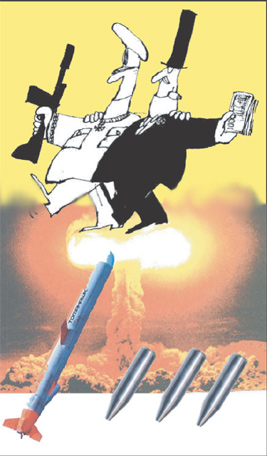 Guardian 14 July 2015
The Administration’s agreement with Iran would curtail the latter’s nuclear program. The only people who can hate that are the kind who just love war As soon as President Obama announced the historic nuclear agreement between the US and Iran on Tuesday, Republican presidential candidates raced to see who could get out the most hyperbolic, foaming-at-the-mouth condemnation of the potential for peace.
Republicans frontrunner Jeb Bush was first out of the gate, more than 24 hours before the deal was actually signed. He boasted on his YouTube channel: “History is full of examples of when you enable people or regimes who don’t embrace democratic values you get a bad result…it’s called appeasement.” Continue reading
The staggeringly huge problem of Los Alamos’ radioactive contamination

 ‘Los Alamos will never be clean’, Local News, Santa Fe New Mexican, By Staci Matlock 13 July 15 “……….The scientists knew this canyon was contaminated back in the 1950s and ’60s,” said Greg Mello, a former inspector with the state Environment Department and now a partner in the nuclear watchdog Los Alamos Study Group with his wife, Trish. “Their children played here.”
As people this year commemorate the 70th anniversary of the first atomic bomb, which helped lead to the end of World War II, often left out of the conversation is the legacy of environmental waste left behind from the making of that bomb and the thousands that followed.
Acid Canyon is among more than 2,000 dumpsites around the lab’s 43-square-mile property and thousands of other dumpsites at 108 locations in 29 states around the nation where waste from the Manhattan Project and subsequent nuclear weapons research was discharged, tossed or buried.

Efforts to clean up the contamination have taken decades and billions of dollars. The work isn’t finished yet, and it may never be complete in some places. Millions of cubic meters of hazardous waste still await cleanup, along with hundreds of contaminated buildings demolished or awaiting demolition at Savannah River in South Carolina, the Hanford plutonium processing plant along Washington’s Columbia River, Los Alamos and a dozen other sites.
A legacy of waste
Air, land, water and people all were exposed to hazardous and radioactive waste products while scientists and engineers were producing the Trinity test bomb and subsequent nuclear weapons.
Uranium miners, scientists, lab technicians and people living near research facilities or test sites around the United States during the heyday of the Manhattan Project were exposed to the highest immediate levels of radiation. They’ve sought compensation from the federal government for a litany of maladies and cancers related to their work on nuclear weapons.
The waste dumped in canyons, buried in unlined trenches or discarded in out-of-the-way places has represented longer-term hazards to people living in or near places where the components of nuclear weapons were processed. In the 1980s, the U.S. Department of Energy and the Army Corps of Engineers began cleaning up the waste sites around the country.
The danger from the waste depends on its radioactivity and how much of it people or animals are exposed to. People regularly are exposed to some level of radiation, which occurs naturally in the environment, such as uranium in soil and radon gas. The legacy waste adds to natural radiation levels in the environment and, left untreated, can increase the risks of cancers and other health problems.
At Los Alamos, lab workers dumped waste in trenches and pits, including those at Area G, a 63-acre dumpsite that opened in 1957. This includes thousands of cubic feet of low-level and mixed transuranic waste such as old lab coats, tools and other debris.
Nuclear waste is exempt from many federal environmental laws such as the Clean Water Act. The New Mexico Environment Department, after a court battle, gained some measure of regulatory control over the lab’s legacy waste only because it is mixed with other hazardous chemical waste. Under an agreement with the state, the lab in 2014 was on track to remove 3,706 cubic meters of hazardous and radioactive waste stored in above-ground containers and ship it to the nation’s only underground nuclear waste repository near Carlsbad when a lab container ruptured at the underground facility, halting operations.
A lab official said last year LANL still had thousands of cubic feet of contaminated waste left in 35 pits and 200 shafts at Area G. “The main concern is that Area G is smack dab over the regional aquifer,” said Scott Kovac, of Nuclear Watch New Mexico, noting the groundwater table is between 900 and 1,000 feet below the surface.

The Department of Energy and state environment officials are grappling with whether the increasing costs of cleanup at the lab and at other legacy waste sites outweighs the health risks of leaving waste where it is and capping it. Mello, who issued the first notice of violation to the lab for noncompliance with federal hazardous waste regulations in 1984, contemplated the trade-off: “Los Alamos will never be clean. It will always have tons of buried waste. Whether the waste is a health hazard is debatable.”
Costs of nuclear cleanup
The legacy costs of the Trinity Site test and the Cold War can be counted in human and environmental price tags……….
“It is costing a lot of money, taking a lot of time, and we’re leaving behind a lot of workers who have suffered,” Alvarez said.
Uranium miners and millers developed lung cancer and kidney cancers, among other illnesses. Scientists and other workers exposed to radiation from above-ground tests developed cancers of the lung, thyroid, esophagus, stomach and pancreas, as well as leukemia and other maladies.
More than 107,141 nuclear research workers and their families have received some of more than $11.6 billion in compensation and medical coverage as of July 5, according to the U.S. Department of Labor. More than a fourth of workers filing claims have cancer types recognized by the federal government as ones that can be caused by exposure to radioactive materials.
More than 4,900 former Los Alamos National Laboratory workers from World War II to the present have received $566 million for health problems related to their work at the lab……..
The costs of cleaning up legacy waste continue to climb. The Department of Energy’s life-cycle environmental liability for thousands of contaminated facilities and management of massive quantities of radioactive waste rose to $427 billion in 2014 from $297 billion in 2006, according to the agency’s fiscal report. The life cycle includes all of the department’s liabilities until the waste is finally cleaned up to federal standards — a process still years away in some locations.
The estimated liability for the legacy waste is higher than the combined state budgets of New Mexico, Texas, California, Arizona and Colorado.
The total life-cycle costs of managing environmental cleanup of legacy waste at Los Alamos were estimated at $2.9 billion in the Department of Energy’s fiscal year 2016 budget request to Congress. For Hanford, it is $63 billion, and for the Savannah River site, it is $71 billion.
“We keep on spending and yet the estimated environmental liability keeps growing,” said Jay Coghlan, executive director of Nuclear Watch New Mexico…………. Contact Staci Matlock at 986-3055 or smatlock@sfnewmexican.com. Follow her on Twitter @StaciMatlock. http://www.santafenewmexican.com/news/local_news/los-alamos-will-never-be-clean/article_a3cc7ce1-8af0-5113-8f38-5d4aa673fd7a.html
World a little safer as deal agreed on with Iran – Obama
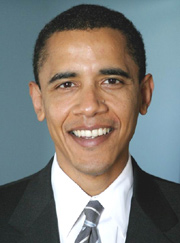 Obama praises diplomacy of Iran nuclear deal, Sky News, , 15 July 2015 US President Barack Obama has lauded a landmark nuclear agreement with Iran as vindication of his diplomatic approach and a chance for a ‘new direction’ in decades of vexed relations with Tehran.
Obama said the deal – which would curb Iran’s nuclear program in return for substantial international sanctions relief – cut off ‘every pathway’ to an Iranian atomic weapon. ‘Today, because America negotiated from a position of strength and principle, we have stopped the spread of nuclear weapons in this region,’ he said in a White House address on Tuesday.
Describing a ‘difficult history’ between Iran and the United States that ‘cannot be ignored,’ Obama shaped it as a diplomatic victory that showed ‘it is possible to change.’ ‘This deal offers an opportunity to move in a new direction. We should seize it,’ he said……..
Obama came to office vowing to talk directly to Tehran and to try to reach a negotiated deescalation – a marked shift from his predecessor, who rejected a similar deal struck by European countries. ‘This deal demonstrates that American diplomacy can bring real and meaningful change,’ he said.
But, he warned, if Iran steps back from measures agreed in the lengthy agreement, all sanctions ‘will snap back into place.’ Obama insisted the alternative to diplomacy was more violence in a region already beset by instability. ‘Put simply, no deal means a greater chance of more war in the Middle East,’ he said………
Obama said the deal was based on verification, not trust, and noted that differences between the two countries were ‘real.’
Analysts have also warned that Iran’s leaders may need to toughen anti-American rhetoric to ensure the backing of regime hardliners angered at the prospect of a deal with a power they view as the ‘Great Satan.’http://www.skynews.com.au/news/top-stories/2015/07/15/obama-lauds-diplomacy-of-iran-nuclear-deal.html#sthash.xM86hsdW.dpuf
1 This Month
Tell Congress: Prevent Nuclear Catastrophe in Iran

Tell Congress: Prevent Nuclear Catastrophe in Iran

Read the Public Inquiry Report, the Commissioners’ report, Surrendering Australia: The AUKUS Deception is available to download for free at aukuspublicinquiry.com. Or just watch the replay of the National Press Club Luncheon.


Shut down the radiation-damaged Heysham nuclear reactors now
To see nuclear-related stories in greater depth and intensity – go to https://nuclearinformation.wordpress.com

Say No to NASA’s Reckless Nuclear Reactor on the Moon
Say No to NASA’s Reckless Nuclear Reactor on the Moon
-
Archives
- November 2026 (224)
- October 2026 (302)
- September 2026 (339)
- August 2026 (330)
- July 2026 (355)
- June 2026 (287)
- May 2026 (306)
- April 2026 (356)
- March 2026 (251)
- February 2026 (267)
- January 2026 (308)
- December 2025 (358)
-
Categories
- 1
- 1 NUCLEAR ISSUES
- business and costs
- climate change
- culture and arts
- ENERGY
- environment
- health
- history
- indigenous issues
- Legal
- marketing of nuclear
- media
- opposition to nuclear
- PERSONAL STORIES
- politics
- politics international
- Religion and ethics
- safety
- secrets,lies and civil liberties
- spinbuster
- technology
- Uranium
- wastes
- weapons and war
- Women
- 2 WORLD
- ACTION
- AFRICA
- Atrocities
- AUSTRALIA
- Christina's notes
- Christina's themes
- culture and arts
- Events
- Fuk 2022
- Fuk 2023
- Fukushima 2017
- Fukushima 2018
- fukushima 2019
- Fukushima 2020
- Fukushima 2021
- general
- global warming
- Humour (God we need it)
- Nuclear
- RARE EARTHS
- Reference
- resources – print
- Resources -audiovicual
- Weekly Newsletter
- World
- World Nuclear
- YouTube
-
RSS
Entries RSS
Comments RSS

