Nuclear bombing of Japanese cities the”opening salvo of the Cold War”
Hiroshima survivor Keiko Ogura wants people to come and see for themselves.
 historians like Dr Kinston said the bombs were also about sending a message to the Soviets.
“We have this incredible new weapon, we have a monopoly on it and we are going to emerge as the strongest superpower. In a sense, this was the opening salvo of the Cold War,” he said.
Hiroshima atomic bombing did not lead to Japanese surrender, historians argue nearing 70th anniversary http://www.abc.net.au/news/2015-08-05/hiroshima-bombing-did-not-lead-japanese-surrender-anniversary/6672616 By North Asia correspondent Matthew Carney The world changed forever when a US bomber dropped the first atomic bomb on the Japanese city of Hiroshima 70 years ago.
The Americans said they took the drastic step to put an early end to World War II and save the lives of hundreds of thousands of US soldiers, but this official narrative is now being overturned.
On August 6, 1945 the world’s first atomic bomb exploded over Hiroshima, wiping out the city centre and killing about 140,000 people by the years’ end.
Keiko Ogura was eight-years-old at the time and only 2.4 kilometres from the hypocentre.
She remembers being engulfed in flames.
“A flash of light and the blast slammed me to the ground and I lost consciousness,” she said.
“I woke up, it was dark and everyone was crying.”
Keiko said the atomic bombing of Hiroshima and another at Nagasaki three days later, which killed 70,000 more, were war crimes.
Many historians say the bombings did not lead to the Japanese surrender, and the Soviet declaration of war on Japan two days later was a bigger shock.
It put an end to any hope the Soviets would negotiate a favourable surrender for Japan. Continue reading
New nuclear reactor technologies benefit from the U.S. Environmental Protection Agency’s Clean Power Plan
 New Nuclear Power Seen as Winner in Obama’s Clean Power Plan, Bloomberg by Jonathan CrawfordMark Chediak , 4 Aug 15, The Obama administration gave the struggling U.S. nuclear industry a glimmer of hope this week by allowing new reactors to count more toward meeting federal emissions limits.
States can take more credit for carbon-free electricity to be generated by nuclear power plants under construction as they work to comply with emission-reduction targets set in the U.S. Environmental Protection Agency’s Clean Power Plan released Monday. Cuts from existing reactors won’t count, casting the fate of units at risk of premature retirement in doubt………
“We tend to view new rules as potentially the first bit of good news for the struggling nuclear industry,” Julien Dumoulin-Smith, an analyst for UBS, wrote on Monday in a research note…….
Existing Reactors
The Nuclear Energy Institute, a Washington-based trade group, said it was “pleased” that the EPA recognized that nuclear plants under construction “should count toward compliance when they are operating.”
Marvin Fertel, president of the group, said by e-mail that the industry was disappointed that existing reactors won’t get credit for their carbon-reduction value, given that some are at risk of early retirement. States would have been allowed to count 6 percent of nuclear generation toward clean energy targets under the EPA’s draft rule released last year.
“The final rule does not incorporate the carbon-abatement value of existing nuclear power plants…..
New Reactors
New reactor projects, the first in decades, have been plagued by delays and cost increases.
Beneficiaries of the rule changes would include Southern Co. and Scana Corp., which are building new reactors in Georgia and South Carolina, respectively. The Tennessee Valley Authority, which is building a reactor at its Watts Bar facility near Spring City, Tennessee, would also get a boost.
“Nuclear facilities will be credited because it’s new, zero-carbon generation that will be credited as part of a compliance strategy,” said U.S. EPA Administrator Gina McCarthy. “That’s entirely consistent and appropriate.”……… http://www.bloomberg.com/news/articles/2015-08-03/new-nuclear-power-seen-as-big-winner-in-obama-s-power-plan
President Obama’s Clean Power Plan does not support existing nuclear reactors
Final Clean Power Plan Drops Support For Existing Nuclear Plants, Forbes, Jeff McMahon, 3 Aug 15 vThe final version of President Obama’s Clean Power Plan does not include aid to existing nuclear power plants at risk of closing because they can’t compete with cheaper natural gas and renewables—a list that includes some of the nation’s most controversial reactors, including Indian Point and Three Mile Island.
In the draft version, EPA had proposed allowing states to count 6 percent of existing nuclear generation toward their clean energy goals, a provision designed to rescue the 6 percent of nuclear capacity considered at risk.
“On further consideration, we believe it is inappropriate to base the BSER (Best System of Emission Reduction) on elements that will not reduce CO2 emissions from affected electric generating units below current levels,” EPA states in the final rule.
“Existing nuclear generation helps make existing CO2 emissions lower than they would otherwise be, but will not further lower CO2 emissions below current levels. Accordingly… the EPA is not finalizing preservation of generation from existing nuclear capacity as a component of the BSER.”
Accordingly, states will not be able to meet their clean energy goals by extending the licenses of existing nuclear plants…………
In 2013, Morningstar identified six nuclear plants that could be next to shut down because of economic conditions:
2. Ginna, NY, Exelon
3. Fitzpatrick, NY, Entergy
4. Three Mile Island, PA, Exelon
5. Davis Beese, OH, FirstEnergy
6. Pilgrim, MA, Entergy
Exelon has also identified its Byron, Quad Cities, and Clinton plants in Illinois as at risk and has campaigned against tax credits for wind energy.
The nuclear industry had campaigned for stronger support for nuclear power in the Clean Power Plan…..http://www.forbes.com/sites/jeffmcmahon/2015/08/03/final-clean-power-plan-drops-support-for-existing-nuclear-plants/
Postponed indefinitely – the opening of U.S. government’s Waste Isolation Pilot Plant
The opening of an underground nuclear waste dump in New Mexico just got delayed indefinitely http://www.businessinsider.com.au/r-officials-delay-reopening-of-new-mexico-nuclear-waste-site-2015-8 JOSEPH J. KOLB ALBUQUERQUE, N.M. (Reuters) – The planned March 2016 reopening of an underground nuclear waste dump in New Mexico has been pushed back indefinitely because of unanticipated challenges, U.S. officials said.
A radiation leak at the U.S. government’s Waste Isolation Pilot Plant that originated in a disposal chamber half a mile (1 km) below ground at the center near Carlsbad, New Mexico, exposed more than 20 workers to small amounts of radiation in February 2014, officials have said.
The accident led to the suspension of key operations at the site, the Energy Department’s only permanent underground repository for certain types of radiological waste tied to U.S. nuclear labs and weapons sites.
Dana Bryson, acting manager for the Department of Energy’s Carlsbad Field Office, said in a statement on Friday: “We are disappointed that we will not meet the original target date for beginning waste emplacement.”
He did not provide a date for reopening the facility.
“While the WIPP recovery program continues to make significant progress, the original target date of March 2016 for resuming waste emplacement operations is no longer viable due to a variety of unanticipated issues,” said a news release from the U.S. Department of Energy that contained Bryson’s statement.
Key challenges that remain include the need to implement heightened safety standards from the Department of Energy and to resolve problems with the ventilation system, officials said.
“The department is committed to resuming operations at the Waste Isolation Pilot Plant as soon as it is safe to do so,” Bryson said.
(Editing by Alex Dobuzinskis)
Special NRC inspection of leak from A southern Illinois uranium-conversion plant
NRC inspecting Illinois uranium-conversion plant after leak, WT By – Associated Press – Tuesday, August 4, 2015 METROPOLIS, Ill. (AP) – A southern Illinois uranium-conversion plant is undergoing a special inspection after a weekend leak of uranium hexafluoride, a gas used to produce enriched uranium for nuclear power plants, Nuclear Regulatory Commission officials said.
A valve installed during maintenance at the Honeywell plant in Metropolis began to leak just before 6 p.m. Saturday, triggering an emergency alert and activation of large water sprays, the NRC said in a news release. The leak was stopped almost two hours later; the company said nobody was injured and the leak did not leave the site.
Honeywell’s Metropolis plant, about 5 miles northwest of Paducah, Kentucky, is the only place in the U.S. that converts uranium ore to uranium hexafluoride, which can be toxic when exposed to moisture in the air………
The company has experienced other uranium hexafluoride leaks, including last October, the (Carbondale) Southern Illinoisan reported (http://bit.ly/1MKIM2G ). In December 2013, Illinois Attorney General Lisa Madigan fined Honeywell $90,000 for three prior releases, in December 2008, December 2010 and October 2011. http://www.washingtontimes.com/news/2015/aug/4/nrc-inspecting-illinois-uranium-conversion-plant-a/
Indian Point nuclear station not safe – should be closed down
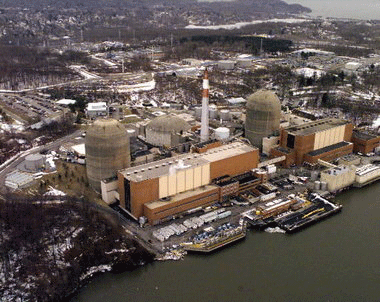 Aging Nuclear Power Plant Must Close Before It Closes Us http://ecowatch.com/2015/06/22/indian-point-aging-nuclear-plant/ Paul Gallay | June 22, 2015 We must face facts regarding the Indian Point nuclear plant. It’s infrastructure is aging, its safety is dubious and most everyone knows it. What many people don’t know is that it can be replaced at little cost to ratepayers—and energy technologies taking its place would create new economic opportunities for New York.
Indian Point—just 38 miles north of New York City—is vulnerable to terrorism, has 2,000 tons of radioactive waste packed into leaking pools and relies on an unworkable evacuation plan. While some argue that transformer accidents—such as the one that occurred last month—can happen at any power facility, they happen with astonishing frequency at Indian Point. Its age is problematic: You wouldn’t rely on a 40-year-old appliance, why extend this trust to a nuclear plant? Moreover, the Nuclear Regulatory Commission (NRC) says Indian Point 3 has the highest risk of earthquake damage of all the nation’s reactors. About 20 million people live within 50 miles of Indian Point. If a catastrophic accident occurred, the consequences would be unimaginable.
The NRC permits Indian Point to evade its own safety standards requiring that electrical cables controlling emergency reactor shutdowns have insulation that lasts 60 minutes in a fire. When the NRC found that the plant’s insulation lasted just 27 minutes, it gave Indian Point an exemption. Your own home likely has more insulation on its electrical cables than does the plant. Continue reading
Decommissioned sites need MORE protection against wildfires, not less!
 In Light of Fast Moving Wildfires; Evacuations, US Senators call on NRC to Stop Waiving Emergency Response Measures at Decommissioned Nuclear Sites (to no avail) miningawareness51 July 15
http://cdfdata.fire.ca.gov/incidents/incidents_current
 Despite calls by Senators in 2014 to stop elimination of emergency response measures at decommissioning nuclear reactors: “In June 2015, the Nuclear Regulatory Commission (NRC) approved elimination of off-site emergency planning for San Onofre, even though they know the waste is extremely dangerous. This means fewer emergency planning staff, reduced funding and less radiation monitoring. … The San Onofre fire staff has been reduced. The nuclear plant’s fire and rescue vehicles will be donated to new homes soon, according to Patrick Baughman, San Onofre fire marshal. San Onofre now has an agreement that makes the Camp Pendleton Fire Department the primary firefighting force for the nuclear plant. No details were provided about how this may affect ratepayers and local emergency services in this Southern California Edison July 9, 2015…” Read the rest here: http://sanonofresafety.org/emergency-planning-resources/ Learn more here: Sanonofresafety.org
Unfortunately, the Dry Cask Storage is not the miracle solution which the Senators and many others wish for. (See more at post bottom. [in original] )…..
Unfortunately, the Dry Cask Storage is not the miracle solution which the Senators and many others wish for. This is especially true due to the thin, flimsy nature of the inner, unvented, casks, which are also of questionable quality, and are set out unprotected on parking lots. Furthermore, Holtec requests NRC exemptions which impact safety and quality on a routine basis! For more info, do a search for Holtec within our blog, and consult Sanonofresafety.org Although most of the focus has been Holtec, the other licensed dry casks do not appear better. A Manhattan-like project for nuclear waste is needed. In the meanwhile, there appears need for adding more spent fuel pools to reduce crowding, and reinforcement of the existing ones, and somehow covering them (vented) against earthquake seiche. The spent fuel must spend some time in the pools anyway. A solution must be quickly implemented. https://wordpress.com/read/post/feed/4410547/767161082
Canada’s pro nuclear government keeps mum about the dangers of radioactive strontium 90
The government puts labels on cigarettes and warns of the danger to health. People have the right to know and the right to smoke cigarettes if they choose. People have the right to know what is in their milk and decide whether or not they want to drink it.
Could it be that the Canadian government’s involvement in the mining, processing and selling of uranium to other countries, its selling of nuclear technology to the world as well as its profiting from Canada’s own nuclear power plants and nuclear research reactors, makes it not want to draw attention to the dangers of radioactivity?
Canada’s Land of Milk and Strontium 90, Enviro reporter, February 28, 2013
 We live on the Pacific Northwest coast of Canada. By many accounts, our area was particularly hard hit by the radioactive fallout that came directly over to us, in the jet stream, from the triple meltdown and hydrogen explosions at the nuclear power plant at Fukushima Daiichi, Japan, in March of 2011.
In Seattle, it was reported that the air was so contaminated after the accident that people were breathing in five “hot” radioactive particles a day!
The fallout was found to come down heavily in the rain that is so frequent in this rain forest we call home. Initially Simon Fraser University, in British Columbia, detected Iodine 131 in the rainwater on Burnaby Mountain They also found it in the seaweed on the shores of North Vancouver
Eventually we learned that the Air Monitoring Stations on Vancouver Island had picked up Radioactive Iodine 131 at levels 300 times higher than normal background.
A lab in Washington State found levels of radioactive xenon gas 40,000 times higher than normal levels.
So we knew the fallout had reached us. And we knew that there were at least 200 other radioactive substances that came along with the fallout from the nuclear plant accident. What we didn’t know was the level of contamination.
We learned that in California the tuna, milk, pistachios, naval oranges, prunes, wild mushrooms, strawberries, seaweed, beef, kale and spinach had been shown to be contaminated with radioactivity. However, having watched the jet stream patterns, we saw that our area in south western British Columbia was often missed by the atmospheric airflow from Japan.
After the initial study came out from Simon Fraser University, no more radioisotope studies were conducted by the researchers at that university So we set about trying to find out if anyone else was testing for radioactive fallout in Canada. Continue reading
Nuclear industry lobbying for tax=payer funding as a ‘carbon emissions cure’
U.S. nuclear operators try to save plants with carbon emission rule, Reuters, WASHINGTON | BY VALERIE VOLCOVICI , 31 July 15, The U.S. nuclear industry has made a last-minute push to urge the Obama administration to protect the country’s 100 nuclear units in its forthcoming carbon rule and prevent the early retirement of several plants.
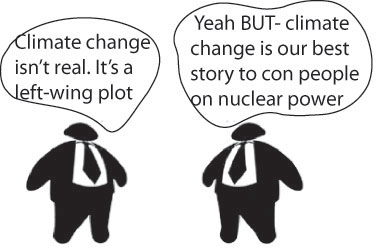
Representatives of the Nuclear Energy Institute met on July 21 with White House officials who are currently reviewing the final version of the Environmental Protection Agency’s Clean Power Plan. The industry contends the original version of the plan, released in mid-2014, fails to encourage states to keep some “at risk” plants from closing.
NEI and other industry officials said the final plan, which is expected as soon as Monday, should provide incentives for states to renew operating licenses and ramp up generation at nuclear plants.
The industry said eight plants – producing about 8,000 MW of generation – struggle to compete in competitive electricity markets. The lobby group argued that the loss of even one of these zero-carbon emission plants would be “a major blow to carbon reduction efforts.”
The details were posted on the White House Office of Management and Budget website.
The Clean Power Plan is the centerpiece of President Barack Obama’s climate change strategy, which seeks to slash power plant carbon emissions to 30 percent below 2005 levels by 2030……..
US State and federal agencies agree on plan to demolish southern Ohio uranium plant
Demolition plan OK’d in southern Ohio uranium plant cleanup, WT, By KANTELE FRANKO – Associated Press – Friday, July 31, 2015
COLUMBUS, Ohio (AP) – State and federal agencies have agreed on a plan for demolishing huge buildings and other facilities from a Cold War-era uranium plant in southern Ohio.
 It is the latest development in the lengthy decontamination and decommissioning process for the Portsmouth Gaseous Diffusion Plant in Piketon, which was built in the 1950s and produced enriched uranium for defense and commercial uses until 2001. Its shutdown left old buildings, chemicals and radioactive areas that must be addressed……..the structures slated for demolition include the three process buildings, each with more than 30 acres under one roof. The cleanup plans allow for recycling of equipment and building materials if that can be done in a safe, cost-effective way…….. http://www.washingtontimes.com/news/2015/jul/31/demolition-plan-okd-in-southern-ohio-uranium-plant/
Canada’s Nuclear Regulator doesn’t like Bureau d’audiences publiques
 Canada’s nuclear regulator slams Quebec uranium review, Resource Clips, by Greg Klein | July 30, 2015 A recommendation against uranium mining in Quebec has come under fire from the federal agency that regulates uranium mining and nuclear energy in Canada. In a July 27 letter to Quebec environment minister David Heurtel, the Canadian Nuclear Safety Commission criticized the province’s BAPE commission for “conclusions and recommendations that lack scientific basis and rigour.”
Earlier this month, following a year-long review, the provincial government-appointed Bureau d’audiences publiques sur l’environnement suggested Quebec “could decide to suspend uranium mining either temporarily or permanently.” Should the province decide to allow mining, BAPE recommended conditions including consensus-building and additional research that the bureau said would require years to complete……..
“BAPE’s recommendation not to proceed is based on the perceived lack of social acceptance and not on proven science.”
Quebec has no uranium mines. The former Parti Québécois government imposed a moratorium on uranium exploration in March 2013 following the James Bay Cree Nation’s opposition to Strateco Resources’ Matoush project. Saying it had spent $123 million on Matoush, the company launched legal action against the province and has since delisted from the TSX.
As the BAPE inquiry began last year, the Quebec Mineral Exploration Association called for the replacement of chairperson Louis-Gilles Francoeur, whom the association called a “former environmental journalist.”
A decision on BAPE’s recommendations will come from Quebec’s environment minister, who’ll review the report with a committee.
US Nuclear plants doing Problem Evaluation Reports on ‘complex and urgent’ situation of water seepage
Gov’t: Erosion is “undermining foundation” of major dam upstream of US nuclear plants — “Extensive network” of seepage paths found — “Water flowing through from multiple sources & multiple directions” — Nuclear plants doing Problem Evaluation Reports on ‘complex and urgent’ situation (VIDEO) http://enenews.com/govt-erosion-undermining-foundation-major-dam-upstream-nuclear-plants-extensive-network-seepage-paths-discovered-water-flowing-multiple-sources-multiple-directions-nuclear-plants-doing-proble?utm_source=feedburner&utm_medium=email&utm_campaign=Feed%3A+ENENews+%28Energy+News%29
TVA’s Boone Dam repair announcement, Jul 30, 2015 (emphasis added):
- 2:30 — The location of this sinkhole and the presence of the sediment… really raised the possibility of a safety concern with the dam… The initial investigation showed that we had internal erosion. A phenomenon called ‘piping’ where voids from water flowing through the dam — more of a stream-like effect — than just seepage. Internal erosion is one of the leading causes of dam failures around the world. So we knew that we had to do something here to protect the safety of the public… particularly downstream risk… Around the clock inspectors [are] keeping surveillance on the dam [and we have] sensors to monitor movements that might occur in the dam itself.
- 4:00 — One of the key findings so far is that water is flowing through the foundation from multiple sources, and in multiple directions. It’s actually seeping through porous rock — rainwater upstream, through porous rock, through the dam…
- 9:15 — There’s still a lot of unknowns as we move into the project.
- 21:30 — There’s only 3 companies in the world that do this kind of remediation.That’s the complexity we’re talking about.
- 24:00 — Reporter: You said that water was coming from multiple sources and moving in multiple directions. To the people who are watching… I would think they would think that seems like an impossible task to do. There are some… in this community who think… that Boone Dam can’t be fixed… Is there a possibility that these solutions that you’re proposing won’t work?
TVA’s Boone Dam Investigation and Analysis Summary: [There is] “internal erosion,” in which voids develop within a dam and/or its foundation because of the action of flowing groundwater… one of the leading causes of dam failures… March of 2015, TVA discovered a well-developed, complex network of groundwater seepage paths coming from sources other than the reservoir… surface runoff flows underneath the dam and is a leading contributor to the observed seepage and sinkhole… Further investigation has confirmed that deterioration of the cutoff trench has occurred as seepage flows continue to undermine the foundation of the embankment dam… If left unaddressed, continued internalerosion may lead to enlargement of the network of voids at which time a large influx of water into the voids could cause rapid acceleration of internal erosion and eventual breaching of the dam. Due to the complex and urgent nature of the situation at Boone Dam, TVA has complemented its own dam safety engineers with nationally recognized experts… In its current state, the dam cannot be relied upon to serve the functions for which it was constructed. In the unlikely event of a dam failure, risks to the public wouldinclude: … loss of critical infrastructure [and] potential loss of life… [We are] engaging local and state emergency management officials… developing specific plans to address potential emergencies and conducting mock exercises to execute those plans. TVA has also initiated efforts to reinforce downstream facilities in a way that will minimize potential risks from an unlikely failure of Boone Dam.
TVA’s Boone Dam Weekly Update, Jun 23, 2015: Our investigation has shown that more water is seeping through the foundation of the dam than would typically be expected. A contributor to the seepage is the high water table from the area just east of the dam. Both sources of seepage and subsequent erosion have created an extensive network of seepage paths beneath the dam… TVA Dam Safety experts [are] working to understand the extent of the seepage and erosion…
Sequoyah Nuclear Plant – NRC Integrated Inspection Report (pdf), Feb 4, 2015: For the five operability evaluations described in the problem evaluation reports (PERs) listed below, the inspectors evaluated the technical adequacy of the evaluations… The inspectors completed five samples [including] PER 952079 – Functional Evaluation of Boone Dam Sinkhole.
Watts Bar Nuclear Plant – NRC Integrated Inspection Report (pdf), Feb 9, 2015: The inspectors reviewed the operability evaluations affecting risk-significant mitigating systems listed below [including] PER 952103 for the discovery of a sinkhole and tailwater sediment at the Boone Dam.
Will USA’s Nuclear Regulatory Commission allow the nuclear lobby to set radiation standards?
If a pro-hormesis model is allowed to take hold, it will change things forever…
It could give the nuclear industry an excuse to release more radiation from nuclear power plants; an excuse for gov’t  agencies to allow even more radiation in food and water; allow doctors to give you more radiation…
It allows you to be exposed to low-level radiation because “it’s good for you.”
ALERT: NRC may rule radiation exposure is healthful, Heal Fukushima July 27, 2015 The Nuclear Regulatory Commission may decide that exposure to ionizing radiation is beneficial – the radiation from nuclear bombs, nuclear power plants, depleted uranium, x-rays, and Fukushima. It has opened a proceeding to consider adopting this “radiation is good for you” model. Continue reading
Failure of USA’s small scale reactor in Antarctica – costly and cancer-causing

Christina Macpherson’s websites & blogs
This is quite an old article, but I find it remarkable because, for once, it mentions the enormous cost of security measures needed for small nuclear reactors in remote areas.
That is what is being proposed for Australia – by both the thorium enthusiasts, and the overseas companies desperate to keep the nuclear industry alive by selling small reactors to Australa (or, even more insidiously, by providing them to Australia “for free”, in exchange for South Australia importing radioactive trash, as outlined by nuclear proponent Oscar Archer )
the PM-2A’s purpose was to test whether reactors could be built in remote locations using prefabricated parts.
After the reactor was closed down, the US shipped 7700 cubic metres of radioactive contaminated rock and dirt to California, but passed through Dunedin, with a population of 124,000, the second largest city on New Zealand’s South Island, where it stayed for four days, raising local concerns, the New Zealand news site stuff.co.nz.
Russia has found that the logistics of even finding customers for its ANPP’s outweigh even the logistics of operating the plants. Russia has staked a financial bonanza on prospective orders for the plants, but there are, simply, no takers. And if there were, the logistics of securing such a plant against terrorists or accidents in remote areas would require at least the staff of a stationary plant.

Small-scale US nuclear reactor blamed for spiking cancer rates, casting pall over Russia’s FNPP fetish AMSTERDAM – A small nuclear power plant operated the United States at Antarctica’s McMurdo Sound has been implicated in dozens of cases of an unusual cancer in personnel who worked at or near the station between the years 1964 and 1973, US and New Zealand media have indicated. March 7, 2011 by Bellona Continue reading
September – expected decision on closing Quad Cities nuclear plant
Decision of possibly closing Cordova Exelon plant expected in September, WQAD, JULY 30, 2015, BY KATRINA LAMANSKY The decision of whether to close the Quad Cities nuclear plant, Exelon, is expected in September of 2015.
This possibility came out during a conference call with analysts on Wednesday, July 29, 2015, according to a report by Crain’s Chicago Business. The company’s CEO Chris Crane said he didn’t see a way to keep the Cordova, Illinois plant open given the lack revenue from customers.
Click here to read the full conference call transcript.
According to the report, it would take a state law that charges utility customers more to keep the company afloat. Crane said the company’s six plants are losing money partly due to the low cost of natural gas.
According to Bill Stoermer, Communications Manager for the Cordova Exelon plant, no decisions regarding any of the Illinois nuclear plants have been made……….http://wqad.com/2015/07/30/decision-of-possibly-closing-cordova-exelon-plant-expected-in-september/
1 This Month
Tell Congress: Prevent Nuclear Catastrophe in Iran

Tell Congress: Prevent Nuclear Catastrophe in Iran

Read the Public Inquiry Report, the Commissioners’ report, Surrendering Australia: The AUKUS Deception is available to download for free at aukuspublicinquiry.com. Or just watch the replay of the National Press Club Luncheon.


Shut down the radiation-damaged Heysham nuclear reactors now
To see nuclear-related stories in greater depth and intensity – go to https://nuclearinformation.wordpress.com

Say No to NASA’s Reckless Nuclear Reactor on the Moon
Say No to NASA’s Reckless Nuclear Reactor on the Moon
-
Archives
- November 2026 (224)
- October 2026 (302)
- September 2026 (339)
- August 2026 (330)
- July 2026 (355)
- June 2026 (287)
- May 2026 (306)
- April 2026 (356)
- March 2026 (251)
- February 2026 (267)
- January 2026 (308)
- December 2025 (358)
-
Categories
- 1
- 1 NUCLEAR ISSUES
- business and costs
- climate change
- culture and arts
- ENERGY
- environment
- health
- history
- indigenous issues
- Legal
- marketing of nuclear
- media
- opposition to nuclear
- PERSONAL STORIES
- politics
- politics international
- Religion and ethics
- safety
- secrets,lies and civil liberties
- spinbuster
- technology
- Uranium
- wastes
- weapons and war
- Women
- 2 WORLD
- ACTION
- AFRICA
- Atrocities
- AUSTRALIA
- Christina's notes
- Christina's themes
- culture and arts
- Events
- Fuk 2022
- Fuk 2023
- Fukushima 2017
- Fukushima 2018
- fukushima 2019
- Fukushima 2020
- Fukushima 2021
- general
- global warming
- Humour (God we need it)
- Nuclear
- RARE EARTHS
- Reference
- resources – print
- Resources -audiovicual
- Weekly Newsletter
- World
- World Nuclear
- YouTube
-
RSS
Entries RSS
Comments RSS

