Three Mile Island: Legacy and Re-Opening Resistance
Witness the misadventure to reopen Pennsylvania’s “permanently closed,” uneconomical and age-degraded Three Mile Island Unit 1 nuclear power plant and opposition to stop it in this collaboration of the Clamshell Alliance(opens in new tab), Beyond Nuclear, Massachusetts Peace Action(opens in new tab) and TMI Alert(opens in new tab). The TMI nuclear power station near Harrisburg sited in the middle of the Susquehanna River is the nation’s most serious commercial nuclear power plant accident following Unit 2’s mechanical failure, human error, fuel damage, a hydrogen detonation and a partial meltdown that started on March 28,1979. The nuclear accident consequentially resulted in downwind and downstream radioactive releases with public exposures to harmful radiation. TMI Unit 1 was closed September 19, 2019 and federally certified for permanent defueling and decommissioning. Constellation Energy and Microsoft have instead embarked on an unprecedented and dubious restart of the closed Unit 1 to power AI data centers. Join Eric Epstein with TMI Alert, Patricia Longnecker, a TMI survivor, now activist and Aaron Datesman, an investigative scientist researching radiation induced suffering still prevalent decades later.
Is the much-hyped small nuclear reactor juggernaut REALLY picking up speed?
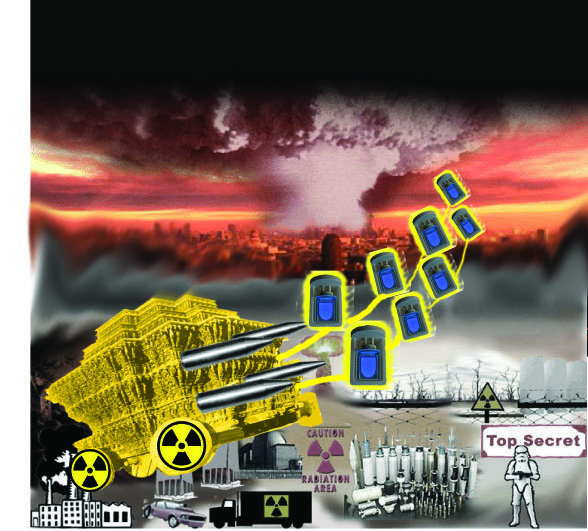
COMMENT. In this carefully worded story about SMRs, Haley Zaremba provides the required “enthusiasm”, but note where she points out the snags, and that main problem – COSTS.
Note that this predicted SMR boom is linked to the AI boom.
But one must wonder if the AI boom is headed for a bust?
“A key argument from SMR proponents is that the new reactors will be economically competitive,” says David Schlissel, IEEFA director of resource planning analysis. “But the on-the-ground experience with the initial SMRs that have been built or that are currently under construction shows that this simply is not true.”
IAEA Triples Nuclear Power Forecast as Small Reactors Finally Take Off
By Haley Zaremba – Sep 19, 2026, https://oilprice.com/Energy/Energy-General/IAEA-Triples-Nuclear-Power-Forecast-as-Small-Reactors-Finally-Take-Off.html
- The IAEA now projects SMRs will supply up to 28 percent of new nuclear capacity by 2060, a sharp jump from its prior high-case estimate of 24 percent.
- The NRC just fast-tracked construction on two SMRs at Michigan’s Palisades Energy Center, clearing the plant to break ground before a full work authorization is issued.
- Surging AI data center power demand is pushing the tech sector to back SMRs as a scalable, low-emissions alternative to the natural gas boom currently fueling AI growth.

After years of delays and plateaued development timelines, it might finally be time for the small nuclear revolution. In a brand new report, the International Atomic Energy Agency (IAEA) has once again increased its long-term nuclear power forecast, projecting that the world’s nuclear power generation capacity will fully triple by 2060. The Agency expects a whole lot of that increased capacity to come from a strong wave of small modular nuclear reactors connecting to power grids around the world, at long last.
For years, small modular reactors (SMRs) have been touted as a game-changer for clean energy, with the potential to offer round-the-clock, emissions-free electricity at a fraction of the up-front cost of traditional nuclear power plants. Typically, nuclear power plants are huge, bespoke operations with enormous up-front costs and long timelines for approval, construction, and connection. By contrast, SMRs would be factory-made and mass-produced to the same specifications, and then set up on-site. A bigger site would use more of them, and a smaller one would use less. Simple as that.
But these visions have been slow to materialize thanks to regulatory hurdles, funding gaps, and nuclear fuel supply chain issues, among other snags. The primary issue is that while these models are cheaper than traditional nuclear energy, that doesn’t mean that they’re cheap. While the nascent technology will likely continue to get cheaper over time, it is not yet genuinely competitive with other clean alternatives like large-scale hydropower and offshore wind projects.
“A key argument from SMR proponents is that the new reactors will be economically competitive,” says David Schlissel, IEEFA director of resource planning analysis. “But the on-the-ground experience with the initial SMRs that have been built or that are currently under construction shows that this simply is not true.”
While many of the world’s biggest economies – including The United States, the United Kingdom, China, and Russia – have all been investing heavily in the development of SMRs, Russia and China remain the only two nations in the world to have operational, grid connected models. The United States has approved a single patent for an SMR design, with an expected commercial deployment date slated for 2028.
But it would seem that the long slog toward commercial reality is finally picking up speed. The IAEA’s high growth scenario anticipates that 28 percent of all new nuclear capacity added by 2060 will come from SMRs. In the lowest nuclear power growth case, SMRs represent 23 percent of new capacity. In either case, their role is considerable, and both of these numbers represent a huge uptick in confidence compared to the Agency’s previous projections, in which SMRs represented 24 percent of new capacity in the high case and just 5 percent in the low case.
The IAEA report also includes a regional breakdown of where they expect to see this development occur by 2060. The Agency anticipates “particularly strong uptake in North America where about 60% of new nuclear capacity could come from SMRs.” Strong regional growth is also expected in South-Eastern Asia and in Latin America and the Caribbean, at 40 percent each in both high and low growth scenarios.
The wheels are already turning in the United States, where just this week the U.S. Nuclear Regulatory Commission approved a fast-tracked plan for the construction of two planned SMRs at the Palisades Energy Center in Michigan. The plant will be allowed to break ground on the project early, before a Limited Work Authorization is issued. Together, the two will produce a projected 680 megawatts of electricity.
In the United States and beyond, the SMR revolution is increasingly seen as a vital piece of the artificial intelligence energy puzzle. With a single hyperscale AI data center able to consume as much electricity as 50,000 homes, scalable, baseload, and low-emissions energy capacity additions are needed as quickly as possible. At present, the AI boom is leading to a massive natural gas boom, but the tech sector is also throwing money behind next-gen technologies like SMRs to more sustainably power its insatiable energy needs in the future. In that sense, the future can’t come fast enough.
Pentagon’s secret plan: Reviving Cold War doctrines to lower the threshold for nuclear war

The new review looks to resurrect these failed policies of the past.
A review nobody will see. Early indications suggest that the nuclear strategy review the Pentagon is conducting will call for new weapons to fill every niche of the so-called escalatory ladder.
Finally, Colby said the review will be kept secret: “[T]his is not designed to be a public-facing review.” It will be kept internal to the Defense Department.
Bulletin, By Joe Cirincione | Opinion | September 11, 2026
A new nuclear policy is taking shape in secret, crafted by a small group of Pentagon officials, that will give President Donald Trump more ways to start a nuclear war. Little is known about the strategic nuclear review now under way in the Trump administration, but officials’ comments suggest that it may bring back one of the most dangerous policies of the Cold War: the proliferation of battlefield nuclear weapons and their early use in a conventional war.
In the 1950s, a revolution occurred in military thinking about nuclear weapons. Rather than keeping the most destructive bombs ever invented as weapons of last resort in only the most extreme situations, military leaders began to see them as weapons usable in conventional conflicts, particularly in Europe.
Military services eager to acquire what they believed were the weapons of the future, coupled with corporations eager to develop them, led to the rapid production of atomic munitions for every conceivable military purpose. The Navy had nuclear torpedoes and depth charges; the Army had nuclear artillery and short-, medium-, and intermediate-range missiles; the Air Force got nuclear air-to-air missiles and multiple types of air-dropped bombs. By the early 1960s, the US military even deployed small “backpack nukes,” or Special Atomic Demolition Munitions, designed to be carried by one or two soldiers, as well as what might be the oddest of all: a nuclear “bazooka” called the Davy Crockett recoilless gun that fired a small nuclear weapon about a mile.
This nuclear insanity led to a world with almost 70,000 nuclear weapons at its peak in the late 1980s, the vast majority of which were possessed by the United States and the Soviet Union. Mass protests and a generation of wiser leaders led to sharp reductions in these arsenals. At first, the reductions primarily concerned long-range strategic weapons that could span the oceans. But massive reductions in short-range weapons soon followed.
In 1991, President George H.W. Bush unilaterally cut 14,000 of these so-called tactical weapons, denuclearizing the US Army and the US surface fleet. In all, the United States cut tactical nuclear weapons by 90 percent, down to about 200 today. Russia mostly followed suit, though it retained a larger arsenal. The two nuclear superpowers settled into a familiar triad of strategic weapons deployed primarily on long-range land-based missiles, submarines, and bombers.
The new review looks to resurrect these failed policies of the past.
A review nobody will see. Early indications suggest that the nuclear strategy review the Pentagon is conducting will call for new weapons to fill every niche of the so-called escalatory ladder. As Undersecretary of Defense for Policy Elbridge Colby explained in a speech in August, the main point of the review is “adding more options.” This means President Trump, who already has sole, unfettered authority to launch thousands of nuclear weapons on a moment’s notice, will soon have more types of weapons he could choose to launch.
The idea, developed in the nuclear posture review conducted during the first Trump administration, is to erase the divide between conventional forces and nuclear forces. Although the United States has long maintained so-called tactical nuclear weapons for battlefield use, including the air-dropped B-61 bomb and nuclear-tipped cruise missiles, new weapons must be added, proponents claim, to close supposed “deterrence gaps” and reduce a president’s fear of “going nuclear.”
The logic, nuclear hawks contend, is that by reducing the barriers to nuclear use, adversaries will not challenge the United States regionally, knowing that they would lose at every rung of the escalation ladder. They call this war-fighting strategy “escalation management.”
This strategy is poorly developed, and Colby’s talk did not help. It was meandering, confused, and jumbled, but a few points stand out.
First, despite the numerous weaknesses that the disastrous Iran war has exposed in the US armed forces and military leadership, Colby insists that “the modernization of our nuclear deterrent is the single most important initiative for the American military.”
Colby added that “we have to have a nuclear strategy… that’s connected to our conventional force strategy.” Although “the goal here is to deter and avoid” a large-scale conflict, Colby implies that the best way to do that is to build more nuclear weapons, new types of nuclear weapons, and couple them with new doctrines that would allow their use early in a conventional war. The point, he says, is that the enemy has “got to believe there’s some sense in which we would use” them. Colby even harkens back to the 1960s “flexible response” doctrine developed when the United States still had thousands of nuclear weapons in Europe and Asia ready to use.
Finally, Colby said the review will be kept secret: “[T]his is not designed to be a public-facing review.” It will be kept internal to the Defense Department. Unlike previous nuclear posture reviews, this one is not an inter-agency process. Instead, it is being run by a small number of Pentagon officials, who do not plan on making the results of the review public. Referring to the Cold War era, Colby said that “NSC 68, the most famous document of that period, was not declassified, I think, until the 1970s.” This memo, presented to President Truman in 1950, was the first document to detail a strategy of containment of the Soviet Union after WWII. Citing security concerns from a new era of “great power conflict,” Colby claims that we can no longer “openly talk about your military capabilities, your military problems, your military strategy in a very detailed way.”
But this secrecy is an authoritarian model of governance.
A handful of officials, probably helped by some contractor consultants, will decide policy on what the undersecretary says is the nation’s highest military priority. The press and the public will be forced to divine the new strategy from whatever pieces are released. Like so many other Trump administration initiatives, this policy is shielded from the normal democratic process of Congressional oversight or even basic public information.
Follow the money. Procurement requests to support a US policy of nuclear diversification will yield some clues about the new strategy and provide an opportunity both to force the release of more information and to resist the re-adoption of obsolete nuclear war-fighting doctrines.
This dangerous transition is already underway. The first Trump administration pushed through the deployment of the W76-2 warhead for the Trident ballistic missiles carried on strategic submarines. In contrast to the massive 455-kiloton W88 warheads on most of these missiles, one or two of the 20 missiles on each of the 14 deployed subs now carry this atomic bomb with an 8-kiloton yield, about half the size of the bomb that destroyed Hiroshima. The idea is that a president would be more willing to use a small nuclear weapon than a huge city-killer………………………………………………………………………………………………….
Perhaps the most complete rebuttal to this new strategy comes in the recent issue of Foreign Affairs. “The country already has a vast and diverse enough supply of nuclear weapons to unleash devastation on an adversary in the case of a nuclear attack,” argues Council on Foreign Relations scholar Erin Dumbacher. “The purpose of nuclear deterrence is not to have an answer for every weapon in an adversary’s arsenal, but to avoid crossing the nuclear threshold in the first place.”
Dumbacher is correct. The American public will need many more voices and new collective efforts to erect more barriers to nuclear war, not give a president more options for starting one.https://thebulletin.org/2026/09/pentagons-secret-plan-reviving-cold-war-doctrines-to-lower-the-threshold-for-nuclear-war/?utm_source=ActiveCampaign&utm_medium=email&utm_content=Pentagon%20s%20secret%20plan%20to%20lower%20the%20threshold%20for%20nuclear%20war&utm_campaign=20260914%20Monday%20Newsletter
Wall Street sounds alarm on nuclear stock with 40% downside
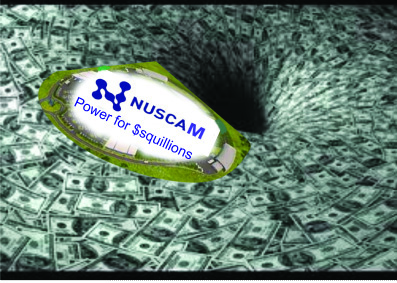
making a choice to invest and having a nuclear power plant that is up and running are completely different achievements.
NuScale has lost money since company was founded and recorded a cumulative deficit of $824.4 million as of June 30.
Cash spent in operating operations was $372.9 million during the first six months of 2026, compared with $56.1 million for the same period in 2025.
making a choice to invest and having a nuclear power plant that is up and running are completely different achievements.
NuScale has lost money since company was founded and recorded a cumulative deficit of $824.4 million as of June 30.
Cash spent in operating operations was $372.9 million during the first six months of 2026, compared with $56.1 million for the same period in 2025.
A key analyst has slashed its price target for the stock.
Sep 16, 2026,The Street, By Faizan Farooque
Nuclear energy has become one of Wall Street’s more closely watched investment themes as artificial intelligence and data centers put new pressure on the U.S. power grid.
Due to data centers, AI, and industrial growth, the U.S. Department of Energy expects electricity demand to rise significantly.
The federal government has supported that forecast with dollars.
In March of 2025, the Energy Department published a request for $900 million to assist the development of American-made Generation III+ small modular reactors.
The market opportunity is so much bigger.
The Energy Department has predicted the U.S. may need as much as 200 gigawatts of new nuclear capacity by 2050 to fulfill rising energy demand.
That suggests a potentially huge opportunity for those that can get new reactors into commercial operation.
One company aiming to get there is NuScale Power (SMR).
But Wall Street doesn’t think every nuclear stock will necessarily emerge as a winner.
UBS downgraded NuScale Power to Sell from Neutral and cut its price target to $6 from $10.
That implied roughly 40% downside from the stock’s level when the analyst call was issued.
And the questions raised by UBS go to the heart of the conundrum hanging over the growing small modular reactor industry: How soon can promising reactor technology be turned into a working commercial power plant?
UBS slashes NuScale Power stock price target
UBS’s negative argument is about execution.
Competitors are going into construction, whereas NuScale has an expected build time of more than five years and no concrete client commitments, the analyst said.
UBS said such circumstances presented “meaningful challenges.”
The bank now forecasts just one NuScale project breaks ground in 2028 and sees a cumulative cash burn of $700 million from 2026 through 2028.
That provides a stark contrast between excitement for nuclear power and the dangers of actually bringing a new reactor design to market.
Those dangers are not exclusive to NuScale.
Energy Department officials have recognized utilities’ and other prospective consumers’ worries about cost overruns in development and abandonment of projects.
DOE has also projected that order books of five to 10 deployments of at least one reactor type may be required to support advanced nuclear and reach commercial scale.
NuScale has already passed a big regulatory barrier.
NuScale’s US460 standard plant design received approval from the U.S. Nuclear Regulatory Commission in May 2025.
The design has six modules each generating 77 megawatts of power, making the overall plant capacity 462 megawatts.
The NRC said its clearance means the design may be cited in applications for building permits, operating licenses and combination licenses.
The agency finished its review in 22 months, two months ahead of schedule.
The NRC also has the underlying regulatory documentation for the approval of NuScale’s US460 design, giving investors the key record of the company’s regulatory development.
That gives NuScale a distinctive position.
We see concrete regulatory progress.
The bigger issue is the commercial timeframe.
NuScale Power has substantial liquidity but is burning cash
The $700 million cash-burn estimate from UBS is more substantial against NuScale’s most recently disclosed balance sheet.
NuScale reported $766.5 million in cash and cash equivalents as of June 30, 2026, in its quarterly filing with the Securities and Exchange Commission.
The company also held $305.7 million of short-term investments and $820.8 million of investments.
The total of these three categories is over $1.89 billion.
NuScale reported no debt and stated it anticipates that its cash, investments, and continuous access to capital markets would be adequate to satisfy its cash needs for at least the next 12 months and beyond.
But the other side of the company’s financials provides insight into why cash burn is critical to UBS’s theory.
NuScale has lost money since company was founded and recorded a cumulative deficit of $824.4 million as of June 30.
Cash spent in operating operations was $372.9 million during the first six months of 2026, compared with $56.1 million for the same period in 2025.
The increase was mostly due to a $259.9 million payment to commercialization partner ENTRA1 and reduced collections from customers and vendor prepayments for long-lead supplies, NuScale said.
NuScale too has gone to its stockholders for a big financial infusion.
The corporation sold roughly 89.7 million Class A shares via an at-the-market program in the first six months of 2026.
Those sales yielded $1 billion in gross profits, or around $984.5 million after issuance expenses, the document said.
The weighted average price of sales was $11.14 per share.
That funding gave NuScale a major cash boost but also speaks to a key portion of the investment equation.
Until commercial projects generate sufficient cash, access to capital markets remains an important source of funding.
NuScale’s annual report also gives further insight on the company’s commercialization agreements including its ties with RoPower Nuclear and ENTRA1 Energy.
NuScale’s Romania project offers a counterpoint to UBS concerns
The bearish thesis isn’t without important counterarguments.
But there are significant counterarguments to the pessimistic view. One of the biggest is Romania.
NuScale has been collaborating with RoPower Nuclear on a planned 6-module small modular reactor project at the old Doiceşti coal-power facility.
Next came a milestone of greater importance.
On Feb. 12, 2026, shareholders approved the final investment decision for the Doicești small modular reactor project.
That is substantial development for a corporation that is being challenged on its ability to transform technology into practical projects.
But making a choice to invest and having a nuclear power plant that is up and running are completely different achievements.
Nuclear plants take years to license, finance, build and complete before they generate power.
And that is the gap UBS regards as a concern.
NuScale also has a potentially far bigger possibility in the US.
TVA and NuScale have announced support for an ENTRA1 Energy initiative, with plans to install up to 6 gigawatts of NuScale small modular reactor capacity throughout TVA’s seven-state area in September 2025.
The size is substantial, but investors need to differentiate a projected deployment program from reactors currently under construction or in operation.
That divergence is especially noteworthy in light of UBS’s concern regarding solid customer agreements.
So whether NuScale can turn theoretical deployments into commercial off-take agreements and ultimately construction might be one of the most
NuScale Power faces competitors moving toward construction
The rivalry makes NuScale’s timeframe extremely relevant.
The Nuclear Regulatory Commission’s advanced-reactor docket shows other developers and utilities pushing projects through construction-related regulatory milestones.
For example, in May 2025, TVA filed the last part of its building permit application for a BWRX-300 small modular reactor at its Clinch River plant in Tennessee.
That helps explain why UBS is focused not simply on whether NuScale can eventually deploy its technology but on when that deployment can happen.
Timing is key in a market where utilities, IT corporations, and other big electrical consumers are looking for more dependable power.
The Department of Energy’s advanced-nuclear study projects the U.S. will require around 200 gigawatts of new nuclear power by 2050.
The agency also cautioned that the time it would take to ramp up deployment might make the ultimate buildout substantially harder.
A DOE scenario that begins large-scale deployment by 2030 and reaches 13 gigawatts per year by 2040 could put the U.S. on track to add 200 gigawatts of nuclear capacity by 2050.
A five-year delay might mean more than 20 gigawatts a year of deployment and could raise capital needs by as much as 50%.
Thus, the opportunity is potentially immense.
But speed counts.
Wall Street downgrade raises stakes for NuScale Power stock
The downgrading by UBS has left NuScale’s investors with two very different views of the company’s tale………………………………………………………………………………………………..
For NuScale stockholders, the more pressing issue is whether this specific nuclear business can transform regulatory clearances, alliances and planned projects into running reactors swiftly enough to justify its value.
UBS isn’t buying it. https://www.thestreet.com/investing/wall-street-sounds-alarm-on-nuclear-stock-with-40-downside
The Peril of Trump’s Final Act: Would He Use a Tactical Nuclear Weapon in Iran?

The real straits of Trump are dire: He is trapped in a war that has already been lost, a reality that he will never allow himself to admit. Under Republican control, the House has voted repeatedly to end the war. With Democrats likely to take the majority in the midterms, Trump faces the prospect minimally of investigative hearings that will bare the true extent of the losses, costs, and internal military opposition to his folly. He has to find a way to declare victory and get out, and soon.
Trump is trapped in a war that has already been lost, a reality that he will never allow himself to admit.
Robert L. Borosage, https://www.thenation.com/article/world/trump-iran-war-tactical-nuclear-weapon/
Donald Trump is trapped: His war of choice against Iran is lost, an abject strategic catastrophe. Now Trump has to choose: sustain another forever war until Iran breaks, a strategy his own generals oppose, or produce a grand finale to get out without admitting defeat. And there is the rub.
Reality has shattered Trump’s conceits. Instead of a few days, the war has lasted six months and counting. Instead of regime change and popular uprising, the Iranian regime stands with new hardened leadership. Instead of another display of US military prowess, the US military has been driven out of major bases across the region, stockpiles of vital offensive and defensive missiles have been depleted, and the US Navy has been overstretched and exhausted.
And Iran keeps ratcheting up the pressure. It controls the Strait of Hormuz, and its Houthi allies have just seized control of the alternative route through the Bab el-Mandeb Strait and blown up Saudi Arabia’s key east-west pipeline. Crude oil is now over $110 per barrel and rising; the price of diesel—the fuel of commerce—is at record levels. The cost of fertilizer, fuel, and virtually anything that requires transport is going up, with the global economy at risk.
In response, Trump grows ever more delusional. “The failing Nation of Iran,” he claims, “wants to make a deal, quickly and badly.” He suggests that Iran is waiting until after our midterm elections to sue for peace, at which point the price of gasoline will “drop like a rock.” Then he muses that we might just stay in Iran: “We’ll ultimately get out, unless we decide to stay and keep the oil like Venezuela.” He turned to Oman as a mediator on reopening the Strait of Hormuz and then threatened that if it “gets in the way, we’ll bomb the shit out of them.”
He dismisses the war as “small potatoes,” claims full control of the Strait, suggests that the “Countries of the World…should and will reimburse the United States of America when this SCAM Confligration [sic] is over,” and jokes that he might rename the Strait “Trump Strait,” saying, “I should get something out of it.”
The real straits of Trump are dire: He is trapped in a war that has already been lost, a reality that he will never allow himself to admit. Under Republican control, the House has voted repeatedly to end the war. With Democrats likely to take the majority in the midterms, Trump faces the prospect minimally of investigative hearings that will bare the true extent of the losses, costs, and internal military opposition to his folly. He has to find a way to declare victory and get out, and soon.
Many experts report that the United States and Israel are gearing up to launch another full-scale operation, probably just after the US midterms. The Trump administration has just approved a $2.8 billion Israeli arms package that includes 40,000 bombs, half of which are 2,000-pound bombs. Even so, skeptics question how much a new bombing wave could achieve, given the depletion of US weapons stocks, naval power, and base support, without the use of nuclear weapons.
And that caveat makes the situation truly alarming.
Recently released satellite photos are said to show renewed construction activity under Iran’s remote Pickaxe Mountain. Heavily fortified underground facilities are thought to be located there beneath hundreds of meters of solid granite rock, a ceiling deemed impenetrable by conventional weapons. This makes it a natural spot for Iran to rebuild its nuclear program. Trump recently warned that the US would be bombing the mountain “very soon.”
At the same time, Hegseth’s Pentagon has been moving to integrate tactical nuclear weapons into conventional war strategy. The aim, as Under Secretary of Defense Elbridge Colby put it in the chilling language of the megadeath intellectuals, is to provide “credible, rational nuclear options that a President of the United States adopting the simple principle of being a normal human being with common sense would actually implement.”
The United States, the only country ever to drop a nuclear weapon, has repeatedly refused to adopt a “no first use” policy. The president has sole authority to order the use of a tactical nuclear weapon. Neither Congress nor the public would be given prior notice. Would Trump use a tactical nuclear weapon on relatively isolated Pickaxe Mountain in Iran as his exit line?
According to the Bulletin of the Atomic Scientists, using a nuclear weapon against a non-nuclear nation is a violation of international customary law. But Trump, as his noxious deputy chief of staff, Stephen Miller, infamously asserted, dismisses international law and treaties as “international niceties,” arguing that “the real world…is governed by strength, by force…by power.” Trump boasts that the only limit on his international power is “one thing. My own morality. My own mind. It’s the only thing that can stop me.”
Long-standing US policy, reaffirmed in the Trump administration’s 2018 Nuclear Posture Review, states that the United States “will not use or threaten to use nuclear weapons against non-nuclear weapons states that are party to the NPT [Nuclear Nonproliferation Treaty] and in compliance with their nuclear nonproliferation obligations.” This promise extends to over 190 countries, including Iran —at least until last week, when the Trump administration pushed through an International Atomic Energy Agency resolution declaring Iran in violation of its obligations under the treaty. Iranian analysts warned, probably correctly, that the move presaged an imminent attack on Iranian nuclear facilities.
Dropping a nuclear weapon on Iran would not only be criminal; it would be incredibly dumb. Iran would respond by unleashing an assault on oil and desalination and energy platforms across the Emirates and an unprecedented assault on Israel.
It would also set off a race for nuclear weapons, as countries across the globe would understand that the reason Iran was targeted and not North Korea is that the latter has nuclear weapons and the former does not. Trump made that clear when he bizarrely told the zealots gathered at the Republican Midterm Convention that if Iran had nuclear weapons, “I’d be calling the supreme leader, and I’d be saying, ‘Mr. Supreme Leader, how are you, sir? Is there anything we can do for you?’ as opposed to bombing the crap out of him.” As one commentator noted, the video of that could serve as a nuclear proliferation promo ad.
Use of a tactical nuclear weapon would set a precedent for Russia or China to invoke if they chose to use or threaten the use of nuclear weapons against Ukraine or Taiwan or other adversaries. It would put the nuclear arms race, already gaining dangerous momentum, into hyperdrive. And it would indelibly brand the US as a dangerous, pariah nation, feared but despised across the globe.
For these and other reasons, it is hard to imagine any president making that decision. But Trump, trapped, desperate, angry, delusional, intent on punishing his enemies and displaying his prowess, could well be tempted. And the anticipated Democratic election victories this fall will corner him—and that will make him even more dangerous, as we saw with the sacking of the Capitol after his 2020 loss in the presidential race.
These harrowing prospects should intensify efforts to bring the war to an end, and to warn clearly against escalation. The war is already opposed by a growing majority of Americans. Congress will be out of session until the midterms, but citizens can make certain that candidates are pressed on this issue as they campaign. Editorialists should weigh in against escalation. China’s President Xi, slated to meet with Trump in September, could put ending the war high on the agenda. US Arab allies in the region have an existential stake in avoiding a final cataclysm in this misbegotten war and should both demand restraint from the US and intensify negotiations with Iran and its Houthi allies. Recently, progress toward a settlement on Iranian “administration” of the Strait of Hormuz was interrupted by the Houthi offensive in Yemen and attacks on Saudi Arabia. European leaders could play a role, publicly warning Israel’s Netanyahu not to sabotage negotiations.
The last weeks of reduced military activity and apparent stalemate have been misleading. The economic costs of the war—now with oil transport through both Hormuz and the Red Sea constricted—are escalating. The pressure on Trump to escalate, to unleash another round of bombing in order to declare victory and get out, is rising. Without a concerted movement toward a settlement, the unimaginable is becoming more conceivable.
Trump administration announces it has placed weapons in orbit, in major step in the militarization of space

The 1967 Outer Space Treaty, to which 118 states, including the United States, are party, commits its signatories “not to place in orbit around the earth any objects carrying nuclear weapons or any other kinds of weapons of mass destruction.”
Alison Storsve, the US delegate, told the committee that the United States “must vote NO on the resolution” titled “Prevention of an Arms Race in Outer Space.”
Andre Damon, 15 September 2026
The Trump administration has placed weapons in orbit around the earth, Air Force Secretary Troy Meink announced Monday. The United States “now has on-orbit space control weapons capable of defending the joint force against hostile adversary action,” Meink told the Air & Space Forces Association conference.
The announcement is a major step in the militarization of space and the escalation of war plans targeting nuclear-armed Russia and China. Meink spoke more than six months into the US-Israeli war on Iran, a day after Russian forces struck a passenger train near the Polish border and 10 days before Chinese President Xi Jinping is due at the White House.
The Trump administration has abandoned or bypassed a series of arms-control agreements. In 2018, Trump pulled out of the nuclear agreement with Iran, and in 2019, out of the Intermediate-Range Nuclear Forces Treaty, which had banned a class of US and Russian missiles. In 2020, he left the Open Skies Treaty, which had allowed unarmed surveillance flights.
New START, the last treaty limiting US and Russian strategic nuclear weapons, expired February 5; Trump had given no formal answer to Russian President Vladimir Putin’s offer to observe its limits for another year.
On October 30, 2025, Trump ordered the Pentagon “to start testing our Nuclear Weapons on an equal basis,” and the next day the United States cast, for the first time, the lone vote against the annual resolution of the UN disarmament committee backing the moratorium on nuclear testing. The United States has not set off a nuclear explosive test since 1992.
On November 4, Alison Storsve, the US delegate, told the committee that the United States “must vote NO on the resolution” titled “Prevention of an Arms Race in Outer Space.”
“I don’t want to tell Beijing and Moscow what I’ve done,” Lieutenant General Gregory Gagnon, head of Space Force Combat Forces Command, said of measures to protect US satellites in February. “We also need, as part of our joint force, the ability to attack.” In December 2025, the administration announced a record $11 billion arms package for Taiwan.
The Wall Street Journal, praising the move in a Tuesday editorial, noted that it takes place ahead of Xi’s arrival: “The timing of the space announcement may be no accident coming ahead of Chinese President Xi Jinping’s visit to Washington next week.”
Meink refused to say what the weapons are, how many there are or when they were launched. The Space Force said in a statement to ABC News published Tuesday that the weapons “can be employed for offensive and defensive purposes at the direction of combatant commands.”
Victoria Samson, chief director of space security and stability at the Secure World Foundation, a research group, told Defense One on Monday: “I don’t think any US government official has ever said that before. The US also now has to accept the Chinese and Russians doing/saying the same.” She told Al Jazeera Tuesday, “What this does is normalise weaponising space.”
Chinese Foreign Ministry spokesman Guo Jiakun said Tuesday, “We urge the US side to stop expanding its military capabilities and preparing for war in outer space,” and Kremlin spokesman Dmitry Peskov said the same day that “space must be free of any weapon.”
In January 2025, US President Donald Trump ordered the Pentagon to build “proliferated space-based interceptors,” a program named Golden Dome that he priced at $175 billion that May. The Congressional Budget Office estimated this May that such a system would cost $1.2 trillion over 20 years, most of it for about 7,800 space-based interceptors.
The administration is asking $71.3 billion for the Space Force next fiscal year, nearly double the $40.1 billion requested a year earlier, inside the $1.5 trillion military budget it requested in April, a 44 percent increase over this year’s and the largest since World War II.
The 1967 Outer Space Treaty, to which 118 states, including the United States, are party, commits its signatories “not to place in orbit around the earth any objects carrying nuclear weapons or any other kinds of weapons of mass destruction.”
It reserves the moon and other celestial bodies “exclusively for peaceful purposes” but says nothing about conventional weapons in orbit, and the Space Force said Monday that its operations comply with it.
The 1972 Anti-Ballistic Missile Treaty between Washington and Moscow barred each side from developing, testing or deploying missile-defense systems that are “sea-based, air-based, space-based, or mobile land-based.” US President George W. Bush withdrew from it in 2002, and Golden Dome’s space-based interceptors are the type of weapons it barred.
The Pentagon must prepare for battles around the moon: Joint Chiefs chair
Days after orbital weapons were revealed, Gen. Dan Caine ups the scope of the military’s desired reach.
Defense One, 16 Sept 26, Thomas Novelly
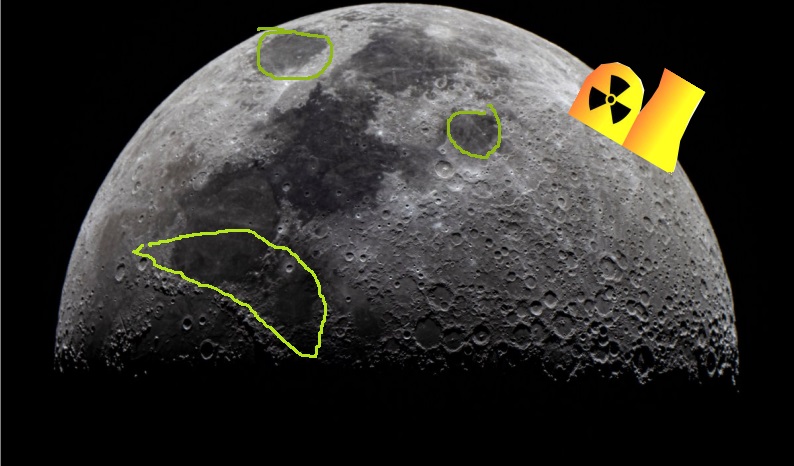
NATIONAL HARBOR, Md.— The U.S. military’s top uniformed leader says U.S. forces must be ready for war near or possibly even on the moon, a rhetorical leap that comes as service leaders are still wrestling with the legal frameworks surrounding its newly revealed orbital weapons.
“Our task, my friends, is to adapt right now, so the Joint Force is prepared to fight, endure, and win, in global contested environments, from the seabed to cislunar space,” Joint Chiefs Chairman Gen. Dan Caine told airmen, guardians, and industry figures during his keynote address at the Air, Space, and Cyber Conference.
Caine later repeated the thought—“today’s modern battlefield operates from the seabed to cislunar space”—but he did not clarify whether he meant on the moon’s surface. U.S. law is ambiguous, defining cislunar space as “the region of space from the Earth out to and including the region around the surface of the moon.” At least one Harvard Law Journal article interprets the clause to mean on the moon itself, and the White House’s National Cislunar Science and Technology Action Plan explicitly said in late 2024 that it includes the lunar surface. But the Air Force Research Laboratory’s 2021 “Primer on Cislunar Space” appears to treat space and the moon’s surface as two different domains.
Caine pointed to recent comments made about orbital weapons by the Air Force secretary and the Space Force’s chief of space operations. Top space force officials have been hesitant to provide more details on how they would operate in that domain and how they’d responsibly use space weapons in future conflicts………………………………..
The Outer Space Treaty of 1967, which the U.S. signed, outlaws certain military behaviors on the Moon and states that it shall be used “exclusively for peaceful purposes.”
“The establishment of military bases, installations and fortifications, the testing of any type of weapons and the conduct of military manoeuvres on celestial bodies shall be forbidden. The use of military personnel for scientific research or for any other peaceful purposes shall not be prohibited.”
Space Force Lt. Gen. Gregory Gagnon, the head of Combat Forces Command, told reporters during a media roundtable that the 18th and 19th Space Defense Squadrons are now both sharing the cislunar mission among each other. ………………………https://www.defenseone.com/threats/2026/09/pentagon-battles-moon-joint-chiefs-chairman/416021/?oref=d1-skybox-post
Meta Wants To Build A $50 Billion Data Center In Louisiana

A small, rural community in Louisiana is confronting what it means to become the home of Big Tech’s next industrial megaproject.
Kieran Spencer, Breakthrough News, September 11 2026
Meta wants to build one of the largest data centers in the world in rural Louisiana.
The facility, known as Hyperion, is being built to train and operate the artificial intelligence systems behind Meta’s products. What began as a $10 billion proposal has since ballooned into a more than $50 billion development spanning nearly 10 million square feet and roughly 3,650 acres. At full scale, Hyperion is expected to require 5 gigawatts of computing capacity, making it the largest data center in Meta’s global fleet and one of the largest ever built. According to Meta, the project is expected to employ around 7,500 workers during peak construction and support 1,000 permanent jobs once operational.
For residents of Richland Parish, the arrival of Meta has brought both desperately needed jobs and profound uncertainty about what the project will mean for the community. The enormous facility is being constructed on former farmland and will require an equally immense network of infrastructure to support it. In nearby Rayville, many residents view Meta as an economic lifeline after decades of limited employment opportunities, with local families securing jobs that pay far more than the parish’s median income. But the influx of highly paid, out-of-town workers has also driven up rent and the cost of living as landlords and businesses increasingly orient themselves toward Meta employees. Landlords routinely raise the rent of low-income housing in order to price out local tenants in favor of contractors, forcing residents to move out of the area to afford housing…………………………………………………………………………………………………………………………………………………………………..
Meta’s empty promises of economic growth
The public’s skepticism is warranted. Data centers routinely generate thousands of temporary construction jobs while creating only a fraction as many permanent positions once construction ends. Meta’s projects in Texas and Oklahoma, for example, are expected to leave only around 100 operational jobs each after thousands of construction workers leave. QTS similarly estimates that a data center campus in York County, North Carolina will produce roughly 1,000 construction jobs but only about 100 permanent onsite positions. Even Hyperion’s original proposal called for roughly 5,000 construction workers but only 500 permanent operational employees. None of these figures guarantee that the permanent positions will go to Richland Parish residents. Meta has offered assurances about local hiring, but there is no binding commitment requiring the company to employ local workers.
Meta also claims the data center will bring tens of millions of dollars in tax revenue to Richland Parish, an argument it bolsters by pointing to the 2,000% increase in sales-tax totals since construction began – $50,000 of which has funded bonuses for some local schoolteachers. But that windfall is largely a product of the construction boom itself, not a sustainable source of revenue generated by the completed data center. The teacher bonuses are distributed through Richland Parish’s longstanding one-cent sales-tax program, which provides annual “13th checks” to eligible school employees. As those construction workers spend money in the parish, that pool has temporarily grown; once construction ends, so will much of the revenue feeding it. The result is a temporary infusion of money that can obscure the longer-term fiscal consequences of the project. When the construction boom ends, Richland Parish will be left with the costs of a massive industrial project, and fewer public resources to pay for them.
Cementing Louisiana’s dependence on fossil fuels amid environmental devastation
The environmental impact of the Meta data center could also be deadly for residents of Richland Parish and Louisiana as a whole. The Hyperion AI data center is expected to consume roughly half of the state’s electrical capacity – approximately seven times the energy consumed by the entire city of New Orleans – placing enormous new demands on Entergy’s already overburdened power grid. Louisiana residents know what a fragile electrical system can mean in a disaster. After Hurricane Katrina, Entergy’s restoration efforts took 42 days to complete across its service territory. In 2021, Hurricane Ida left nearly 950,000 customers without power after an Entergy tower fell into the Mississippi River, a disaster that required 15 days of restoration work just to bring more than 90% of affected customers back online.
Rather than address these vulnerabilities, Entergy’s proposed solution to Hyperion’s unprecedented energy demands is to build an entirely new fossil-fuel energy infrastructure around the data center. The company plans to construct ten natural-gas power plants, including seven new facilities capable of generating roughly 5.2 gigawatts of electricity, alongside new transmission lines and a massive 500-kilovolt substation. Meta, Entergy, and the Louisiana state government are working to present these projects as investments that will strengthen Louisiana’s electrical grid and improve reliability for ordinary customers.
Louisiana is being asked to construct an enormous new fossil-fuel-based energy system so that a single private corporation can consume an unprecedented share of its electricity. More generation may increase capacity, but it does not eliminate the physical vulnerabilities that have repeatedly left Louisiana residents without power after hurricanes. Instead, the state is doubling down on a centralized, fossil-fuel-dependent grid whose infrastructure will remain vulnerable to the same storms that have already decimated Louisiana’s communities.
Entergy’s catastrophic deal with Meta has arrived as Louisiana is already on the front lines of an environmental crisis. The state has lost more than 2,000 square miles of coastal land since 1932 and continues to lose more than 16 square miles each year. The state has experienced 31 billion-dollar weather and climate disasters since 2018, leaving communities to repeatedly rebuild from hurricanes, flooding, and extreme weather. Meanwhile, along the Mississippi River between Baton Rouge and New Orleans, the area known as “Cancer Alley” contains a dense concentration of petrochemical and chemical facilities, exposing surrounding communities to significant air pollution and toxic emissions which have resulted in a cancer rate fifty times higher than the national average.
People of Louisiana reject corporate profiteering…………………………………………………………………..
The resistance emerging across Louisiana is more than a battle over a single data center. It is a decisive stand for the right of Louisianians to determine their own future, rather than surrender it to corporate interests. This is a battle for the future of working people everywhere, and the people have vowed to keep fighting https://breakthroughnews.org/2026/09/11/meta-wants-to-build-a-50-billion-data-center-in-louisiana/
Trump denials can’t hide $billions in US weapons sent to Ukraine

These continuing deliveries are not new awards, but they are still taxpayer-funded military aid to Ukraine that will add up to about $20 billion in aid over the 4 years of Trump’s term.
What Ukraine needs much more than weapons, and what the United States continues to provide in increasing amounts, is intelligence, logistics, and operational support. The details of this support are classified, but public reporting offers some insight.
Jennifer Kavanagh, 9 Sept 26, https://responsiblestatecraft.org/ukraine-weapons-aid/
Trying to pin the blame for the depletion of U.S. military stockpiles on something other than the war in Iran, President Donald Trump fell back on a usual scapegoat last week: Ukraine. “The Biden administration gave far more munitions away to Ukraine, at no cost to them whatsoever, than we have used in Iran,” Trump wrote on Truth Social.
This is a familiar refrain. Trump loves to remind his audience that because of him, Americans are “not spending on Ukraine anymore” and instead, Europe is footing the bill. In truth, most people in the United States don’t think about Ukraine much these days. But since Trump himself brought it up, it’s worth asking: What exactly is going on with U.S. military support to Ukraine?
The answer might surprise you. Despite Trump’s rhetoric, the United States remains deeply embroiled in Ukraine’s ongoing conflict with Russia in ways that create national security risks and run counter to Trump’s own foreign policy goals.
It is true that Trump has reduced U.S. support to Ukraine compared to its high mark under his predecessor, Joe Biden. First, his administration has stopped the use of Presidential Drawdown Authority to transfer weapons from U.S. stocks directly to Ukraine. The Biden administration used this mechanism to give Ukraine almost $35 billion in weapons free of charge. Second, the Trump administration has not requested additional funds for the Ukraine Security Assistance Initiative (USAI), which uses U.S. financing to purchase new weapons for Ukraine.
But Trump has not cut off all assistance to Ukraine. Several important channels remain. First, there are about $13 billion in outstanding USAI contracts as of June 2026, down from $20 billion in January 2025. These contracts, signed by Biden and now implemented by Trump, will procure weapons for Ukraine through about 2028. Weapons in the pipeline include longer-lead time systems like NASAMs, Patriot missiles and components (Ukraine is reportedly receiving at 10-20 PAC-3s per month under these contracts), counter-drone systems, artillery rockets, and ammunition.
These continuing deliveries are not new awards, but they are still taxpayer-funded military aid to Ukraine that will add up to about $20 billion in aid over the 4 years of Trump’s term. Weapons produced under these contracts come off overburdened U.S. production lines. This has a high opportunity cost given the limits of U.S. defense industrial capacity. Without obligations to Ukraine, industrial resources could shift to different weapons or systems that the United States needs more.
If the Trump administration were serious about ending U.S. spending on the Ukraine war, it could still recoup these funds and reallocate the money to support U.S. defense production needs. It has instead allowed the aid to continue.
There has also been some new funding approved since Biden left office. Congress included about $800 million of USAI funding in the 2026 and 2027 NDAAs. We can expect more in future bills as well.
And the State Department has continued to send military aid of its own. A portion of this aid goes through the Ukraine’s Ministry of Interior, including drones, armored vehicles, guns, grenade launchers, and similar equipment. Since this equipment ends up with Ukraine’s National Guard and border police it is often counted as non-military and intended for things like counterdrug operations, but today these personnel serve as combat units.
The State Department has also approved $3 billion of new arms sales to Ukraine in 2025 and 2026 that will be at least partially funded from foreign military financing (FMF), which means U.S. dollars supporting foreign government purchases of U.S. weapons. Some of these funds may come from money allocated but not spent under President Biden, but much of the funding will be new, coming from the State Department’s budget.
The bottom line is that U.S. weapons transfers to Ukraine continue under Trump, amounting to, on average, as much at $5 billion per year. But this is no longer the most important, or expensive, type of support that the United States gives to Ukraine
What Ukraine needs much more than weapons, and what the United States continues to provide in increasing amounts, is intelligence, logistics, and operational support. The details of this support are classified, but public reporting offers some insight.
For example, the United States gives Ukraine real-time targeting information, including on the movement of Russian troops and the location of key command centers. This information has been important to Ukraine’s mid-range strike campaign on Russian logistics as well as its deep strikes against military and energy targets inside of Russia. In addition, U.S. reconnaissance and surveillance assets in countries on the NATO border (including routine E-3 flights) are integrated with Ukraine’s air defense network, improving the accuracy and speed of Ukraine’s response.
Beyond intelligence, the United States also provides logistical and maintenance support, including forward and remote assistance to repair American-made equipment, necessary spare parts to keep older systems running, and training. It also facilitates the expensive transfer of European purchases of U.S. weapons.
The cost of the intelligence, logistics, and other operational support the United States provides to Ukraine does not show up anywhere as an itemized bill, even as U.S. assistance increases. But we can use available public information to draw some conclusions about the expenses incurred.
The 2024 defense supplemental bill, for instance, allocated about $15 billion to “military training, intelligence sharing, increased presence, and other support activities.” In theory, these funds are intended to cover activities conducted in support of Ukraine that would not occur if the United States remained uninvolved in that conflict. Some portion of this money will go to the salaries of military personnel who would be paid no matter where they work.
Since about a third of each military service’s budget is personnel costs, we could estimate the cost of extra activities conducted for Ukraine, excluding baseline manpower, at about $10 billion over the course of a year or so. If Trump has truly expanded intelligence sharing with Ukraine, this price tag may have increased over time.
The money included in the bill is likely only a portion of the actual burden the U.S. military and intelligence community have shouldered to support Ukraine’s war. Many intelligence activities, like tasking and analyzing satellite data and collecting signals intelligence, might be covered in classified national security budgets. Starting in 2023, in fact, the classified intelligence budget increased by 10%, a large jump over the 2022 total. The increase was justified by intelligence community leaders as resulting from shifts in the national security landscape, including especially concern about China’s rise and spillover from conflict in Ukraine. Since the total increase in funding was about $10 billion, we can guess that Ukraine-related expenditures might amount to $3-$5 billion per year, or about one-third to one-half of the total increase.
All told, then, U.S. taxpayers are still spending roughly $20 billion per year on Ukraine. Today, assistance to Ukraine comes primarily in the form of direct operational support, not weapons. But the shift in type of aid increases the risk of U.S. support to Ukraine to average Americans.
First, assisting Ukraine in striking energy targets inside of Russia has a perverse effect on the Trump administration’s efforts to keep gas prices low. As Secretary of the Treasury Scott Bessent acknowledged, Ukraine’s strikes inside Russia push global oil prices up, imposing higher costs of living on Americans.
Second, U.S. intelligence support deepens U.S. involvement in Ukraine’s war, making it an all-but-direct combatant. Russian assistance to Iran, both in terms of weapons and intelligence sharing, is a reaction to the comparable U.S. role in Ukraine, and it leaves U.S. servicemembers in the Middle East and elsewhere less safe. Growing U.S. participation in Ukraine also increases the risk that miscalculation leads to a direct U.S.-Russia confrontation, a nightmarish possibility given the degraded state of U.S. military readiness.
Trump promised to end the war in Ukraine in 24 hours. He has instead deepened U.S. entanglement in ways that create real risks and new fiscal costs for the United States. American interests would be best served if the United States were to walk away entirely, but if Trump instead opts for the status quo, he should at least be honest about it.
Dr. Jennifer Kavanagh is a senior fellow and director of military analysis at Defense Priorities. Previously, Dr. Kavanagh was a senior fellow at the Carnegie Endowment for International Peace and a senior political scientist at the RAND Corporation. She is also an adjunct professor at Georgetown University.
.
When War Comes Home: A Constitutional Warning

by Andrew P. Napolitano | Sep 10, 2026, https://ronpaulinstitute.org/when-war-comes-home-a-constitutional-warning/
A failed war does not end when the drones stop flying. It creates a new danger: A government that refuses to admit defeat and a president who, having failed abroad, seeks muscular victories elsewhere.
The war against Iran is a case study in the limits of military power, the dangers of presidential overreach and the enduring wisdom of the Constitution’s separation of powers. It was unauthorized, unconstitutional, illegal, strategically incoherent and — by the standards by which wars must be judged — a geopolitical failure.
The American people were told that force would achieve clear objectives. Iran would be compelled to surrender. Somehow, American security would be enhanced. The region would become more stable.
Instead, the United States expended enormous resources, consumed scarce munitions, deepened regional instability and failed to produce the political outcome President Donald Trump promised. Senior military officials just last week warned him that extending large-scale operations risked exhausting critical military capabilities and weakening America’s ability to respond elsewhere.
The United States can destroy buildings, eliminate targets, deploy aircraft, ships, missiles, drones and troops anywhere on the planet. But war is not a video game in which the destruction of enemy assets automatically produces political surrender. War is a contest of wills, societies, culture and endurance.
And here is the constitutional question that should have been asked before the first bomb was dropped: Who gave the president the authority to begin this war? The Constitution did not.
Article I, Section 8 gives Congress — not the president — the power to declare war. The framers deliberately rejected the British model in which kings could drag nations into conflicts based upon personal judgment, ambition or political convenience. James Madison warned that the executive branch was “the branch of power most interested in war,” and therefore the Constitution placed the decision to enter war outside the president’s constitutional reach.
The president is commander in chief. He commands forces after lawful congressional decisions have been made. He does not possess the power to transform his title into a personal authority to begin wars.
That principle has been repeatedly recognized by the Supreme Court. In cases such as Youngstown Sheet & Tube Co. v. Sawyer, the Court rejected the idea that President Harry Truman had unlimited power simply because he claimed national security. Justice Robert Jackson’s famous concurrence warned that executive power is most dangerous when it operates in a “zone of twilight” where presidents attempt to expand authority beyond constitutional boundaries and without congressional concurrence.
The Iran war belongs precisely in that twilight — where executive ambition collides with constitutional restraint.
The administration may argue that modern threats require flexibility. That argument has been made by presidents of both parties for decades. But flexibility is not the same as unlimited authority. The Constitution was written for difficult moments, not easy ones. It was designed to restrain presidents even when they believe they have compelling reasons to act.
The military failure abroad has created a political dilemma at home. A president who promised victory must now confront the reality that victory was never achieved.
The danger is what happens next.
History teaches that political leaders who suffer public humiliation abroad often seek demonstrations of strength elsewhere. Foreign-policy failure can produce domestic overreach. Leaders who cannot achieve the desired result overseas may attempt to prove their power through actions at home.
That is where the war comes home.
The president, frustrated by military limitations, may turn toward radical immigration enforcement, Supreme Court-prohibited tariffs, statutorily prohibited domestic deployments of military forces, stealing foreign-owned oil, and assertions of executive authority that collide with free speech and free association.
But the Constitution does not permit a president to substitute disappointment for law.
The Fifth Amendment guarantees that no person — not just Americans — shall be deprived of life, liberty or property without due process of law. The Sixth Amendment guarantees all persons — not just Americans — from whom the government seeks life, liberty or property the right to a public trial before an impartial jury, and other constitutional protections. These protections apply not because accused persons are necessarily innocent but because government power is too dangerous to operate without restraints.
Evidence is not conviction. Accusation is not guilt. Presidential assertion is not judicial judgment.
The executive branch cannot simply identify alleged criminals in speedboats or elsewhere, declare them enemies and impose punishment without trial. That is a system the American Revolution rejected.
The same principle applies to the use of military force inside the United States. The founders were deeply suspicious of standing armies being used for law enforcement. That suspicion produced constitutional protections and later statutes prohibiting the military’s role in civilian law enforcement.
The military exists to defend the nation from foreign threats. It is not a presidential police force.
Likewise, Congress — not the president — defines crimes and establishes punishments. A president cannot create new categories of enemies and decide their fate by executive command. The Constitution does not authorize a monarchy with aircraft carriers.
Every generation faces a temptation to exchange freedom for security. Every generation is told that normal rules cannot apply because a crisis is too serious, an enemy too dangerous and a moment too urgent.
The founders knew that argument well and they rejected it.
The Constitution was written precisely because government officials would sometimes believe that their objectives justified employing extraordinary power. The separation of powers, congressional war authority, judicial review and due process protections are not obstacles to effective government. They are safeguards against government becoming the threat it was created to prevent.
The ultimate question is not whether a president is strong enough to exercise power. The question is whether the president is restrained enough to obey the laws he has sworn to uphold.
That is the fear of a republic when the war comes home. To paraphrase the author Herman Melville, beware the president weeping when he bares an iron hand.
Covert Pentagon propagandists are tracking anti-war Americans, skirting the law
Wyatt Reed· The Grayzone, September 15, 2026
When a semi-anonymous social media user declared that the federal government had targeted her in a bizarre entrapment scheme, the paranoid claim snowballed into a more disturbing revelation: the Pentagon appears to be breaking the law by paying conservative influencers to track, surveil, and propagandize Americans. Who else is involved in the covert scheme?
In mid-August, a conservative activist using the digital moniker “Datarepublican” quietly admitted she was employed by the Pentagon as a “special government employee.” For months, she’d been pocketing a government paycheck while intensely lobbying for President Trump’s imperialist misadventures online and tracking their most vocal critics in a digital database.
Datarepublican was identified in 2025 as Jennica Pounds, a Utah-based mother with nearly a million followers whose stated raison d’etre is “fighting communists” – a moniker she applies liberally to anyone perceptibly to the left of Barry Goldwater.
And she’s not alone. Pounds has emerged as the face of a new wave of right-wing influencers who are being covertly employed by the US Department of War to spread pro-government propaganda. On August 29th, Washington Post reporters revealed at least three more digital activists are surreptitiously working for the Pentagon, which designates them as either special government employees (SGEs) or as what the US military calls “highly qualified experts” (HQEs).
Named in the Pentagon’s army of influencers were retired Air Force colonel Rob Maness, and retired Army colonels Kurt Schlichter and Thomas Anderson. Like Pounds, Anderson also operated in relative anonymity until recently, posting under the Twitter handle “Cynical Publius.” Schlicter, for his part, is a prolific right-wing troll who has frequently fantasized about the ethnic cleansing and extermination of Palestinians.
The operation appears to be in breach of two federal laws, the Hatch Act and the Smith-Mundt Act, which prohibit government employees from engaging in political activities while on the clock, and forbid them from directing their propaganda efforts at the US population, respectively.
The aforementioned right-wing activists are the only ones known to have been working secretly for the Department of War. But the revelations about paid Pentagon propaganda posters come as the US military pursues a flurry of murky partnerships with prominent conservative influencers like top TPUSA widow Erika Kirk, who was appointed to the Air Force Academy Board of Visitors by Trump in March in an effort to further slain conservative activist Charlie Kirk’s “legacy.”
Then there’s Laura Loomer, the obsessively anti-Muslim Trump ally, who is producing de facto press releases for self-proclaimed “Secretary of War” Pete Hegseth, enjoying Pentagon press credentials, and earning references as an “informal advisor to the Department of War.”
A propagandist accidentally outs herself as secret Pentagon employee
Like previous unflattering military disclosures, an apparently disgruntled employee was responsible for the revelation that Hegseth’s Department of War has quietly begun paying off online influencers.
In a since-deleted thread originally published on Twitter/X, Pounds – posting under the pseudonym Datarepublican – claimed that Trump’s undersecretary for public diplomacy at the State Department, Sarah B. Rogers, attempted to “set [her] up” by leaking documents to her in what she described as an effort to induce her to carry out a criminal act…………………………………………………………………………………………………………………………………………………………………………………………..
Tracking antiwar activists, raising further questions about legality
On August 28, the Pentagon special government employee unveiled a new digital database tracking those she accused of “orbiting the anti-imperialist spine,” called “DSA Explorer.”
Alongside the Democratic Socialists of America, the page displays a vast, near-impenetrable web of connections between groups like Black Lives Matter, CODEPINK, Pastors for Peace, Greek’s Syriza Party, and the NAACP. The site, Pounds wrote, catalogues the people and organizations comprising “the wider anti-imperialist solidarity network.”
Individuals listed include such disparate figures as the British Labour Party’s Dianne Abott, former Colombian President Gustavo Petro, and conscious rapper Talib Kweli. Clearly hoping to prompt investigation by federal authorities, Pounds accuses dozens of those listed of operating as “potential unregistered foreign agents.”
In an ironic twist of fate, Pounds’ efforts to censor and blacklist her opponents closely mirror those of the former disinformation czar Nina Jankowicz, who was also officially empowered by the US government to target the perceived political enemies of the regime. Desperate to criminalize leftists for imagined crimes, Pounds is now emulating the Deep State censors she once railed against.
But in pursuing American citizens by name with a McCarthyite surveillance scheme, Pounds could be opening herself up to litigation by her targets. Perhaps sensing the legal delicacy of her clumsy name-and shame project, she placed a fine-print legalese “disclaimer” on the page, claiming the material was for “research, educational, and journalistic purposes only.”……………………………………………………………………………..
Days after launching “DSA Explorer,” Pounds published a nearly-identical database focusing on anarchists and antifascist activists in the Americas and Europe who’d been using the “Noblogs” platform, showcasing information which appeared to have been stolen and handed to her by the US government…………………………………………………………………………………………………………………
Who is else secretly working for the Pentagon?
While Pounds, Maness, Schlichter, and Anderson have been forced to admit to having partnered with the Pentagon without prior public disclosure, It’s still unknown whether the Department of War is employing other special employees, or whether Pentagon may be paying others through third parties. But one extremely influential MAGA personality who appears to be close to the Pentagon – so close she hitched a ride to Guantanamo Bay with War Secretary Pete Hegseth – is Laura Loomer.
In addition to making headlines for accusing lawmakers of African descent of being “ghetto Black bitches,” Loomer has also recently launched a crusade against The Grayzone and its editor-in-chief, Max Blumenthal. While Blumenthal was reporting from Iran on the funeral of slain Supreme Leader Ayatollah Khamenei, Loomer demanded his arrest, writing on social media:……………………………………………………………………………………………………………………………………….https://thegrayzone.com/2026/09/15/covert-pentagon-propagandists-tracking-americans/
Michiganders Oppose Proposed LANL Data Center at the University of Michigan in Ypsilanti Township.
Last week residents of Ypsilanti Township expressed their anger over a proposed high-performance computing facility near the Huron River in a partnership between the University of Michigan and Los Alamos National Laboratory (LANL). Residents are concerned that the proposed project would fuel research into the nuclear arms race. https://www.youtube.com/watch?v=fE0fycQix-Q, https://www.youtube.com/watch?v=h1EVU54Zwbs
The proposed plan involves a $1.2 billion dollar computing facility of almost 300,000 square feet for classified federal research and non-classified university research in science and technologies. The Department of Energy (DOE) and the National Nuclear Security Administration (NNSA) Stockpile Stewardship Program would dedicate most of the space to LANL work that includes nuclear weapons research. The Stockpile Stewardship Program was developed after the end of the Cold War, has expanded and the NNSA has taken it over. https://www.energy.gov/nnsa/articles/stockpile-stewardship-and-management-plan-ssmp
Michiganders point out that the proposed research would go beyond maintaining the existing weapons stockpile.
Trump Plans New Sale of 2,000-Pound Bombs to Israel, Which Keeps Using Them to Massacre Gazans
SCHEERPOST, September 16, 2026, Brett Wilkins Common Dreams
The Trump administration is preparing to send Israel tens of thousands of 2,000-pound bombs, The Washington Post reported Tuesday—a move that would rank as the largest single sale of the highly destructive munitions, which the Israel Defense Forces have used in some of the deadliest US-backed airstrikes on Gaza and Lebanon.
According to the Post, the proposed $2.8 billion package includes 20,000 MK-84 bombs and 20,000 BLU-117 bombs, as well as 20,000 I-2000 penetrator warheads. The munitions would be purchased with US taxpayer funds through the Foreign Military Financing program. The proposal has been informally presented to congressional committees that review major arms transfers.
The MK-84 is among the largest conventional bombs in the US arsenal. The Post reported that its blast can propel metal fragments thousands of feet, penetrate thick concrete and metal, and create large craters.
“If Hezbollah or whoever is in a building, an MK-84 will bring down the whole building,” Trevor Ball, a former US Army explosive ordnance disposal technician, told the Post.
Following the Hamas-led attack of October 7, 2023, the Israel Defense Forces (IDF) loosened rules of engagement to effectively allow the killing of an unlimited number of civilians when targeting even a single low-ranking Hamas member in an airstrike.
Combined with the utilization of cutting-edge artificial intelligence technology to select targets at a far faster rate than humans alone could, IDF use of 1,000- and 2,000-pound bombs has contributed heavily to the staggering casualty toll in Gaza, where officials say that more than 250,000 Palestinians have been killed or wounded since October 2023.
That month, Israeli forces struck Gaza’s Jabalia refugee camp with such munitions, killing at least 126 Palestinians in a bid to assassinate a single Hamas commander.
Michael Lynk, who served as the United Nations special rapporteur on human rights in the Palestinian territories from 2016 to 2022, said early in the war that “the scale of Palestinian civilian deaths in such a short period of time appears to be the highest such civilian casualty rate in the 21st century.”………………………………………………………………………………………………………….https://scheerpost.com/2026/09/16/trump-plans-new-sale-of-2000-pound-bombs-to-israel-which-keeps-using-them-to-massacre-gazans/
Can America Build Enough Nuclear Reactors?

September 14, 2026, By: Paul J. Saunders, and Daniel Poneman, https://nationalinterest.org/blog/energy-world/can-america-build-enough-nuclear-reactors
A potential US–South Korea nuclear deal could bring eight new reactors to America. But can the US nuclear industry scale fast enough?
The United States may be preparing for one of its biggest nuclear construction pushes in decades.
Reports suggest Washington and Seoul are considering a nuclear energy cooperation agreement that could lead to the construction of as many as eight reactors in the United States, potentially including Westinghouse AP1000s and South Korean APR1400s.
Daniel Poneman, former US deputy secretary of energy and former CEO of Centrus Energy, calls the prospect “huge”—both for the US nuclear industry and the broader strategic relationship between the United States and South Korea.
The potential agreement comes as US electricity demand is growing after roughly two decades of relatively flat demand, driven in part by the rapid expansion of data centers. But Poneman argues that demand is not the biggest obstacle. The harder question is whether the US nuclear industry can build fast enough to meet it.
That challenge extends to nuclear fuel. As Washington works to reduce reliance on Russian uranium enrichment, the domestic enrichment industry will also need to scale. While there is a path forward, the United States needs to move quickly.
In this episode of Three Questions, Center for the National Interest president Paul Saunders and Poneman discuss the potential US–South Korea nuclear deal, the growing demand for nuclear power, and whether the US nuclear industry has the capacity to meet the moment.
Memories of Greenpeace and its anti-nuclear campaign
By Sarah Millington, 16 Sept 26, https://www.newsandstar.co.uk/news/26552830.memories-greenpeace-anti-nuclear-campaign/
GREENPEACE Day is observed every year on September 15, marking the 1971 voyage that launched the global environmental organisation.
A group of activists sailed from Vancouver, Canada, to protest against US nuclear weapons testing at Amchitka Island in Alaska.
Although they did not stop the test itself, their dramatic action attracted international attention and marked the birth of what would become one of the world’s most influential environmental organisations.
Greenpeace has a long association with Cumbria through its anti-nuclear campaigning around Sellafield. For decades, the organisation has raised concerns about radioactive waste, nuclear fuel reprocessing and the environmental impact of operations at the site.
In April 1995, around 250 Greenpeace activists entered and occupied parts of the Sellafield reprocessing plant in a protest timed to coincide with international nuclear non-proliferation talks.
1 This Month



Shut down the radiation-damaged Heysham nuclear reactors now
To see nuclear-related stories in greater depth and intensity – go to https://nuclearinformation.wordpress.com

Say No to NASA’s Reckless Nuclear Reactor on the Moon
Say No to NASA’s Reckless Nuclear Reactor on the Moon
-
Archives
- October 2026 (256)
- September 2026 (339)
- August 2026 (330)
- July 2026 (355)
- June 2026 (287)
- May 2026 (306)
- April 2026 (356)
- March 2026 (251)
- February 2026 (267)
- January 2026 (308)
- December 2025 (358)
- November 2025 (359)
-
Categories
- 1
- 1 NUCLEAR ISSUES
- business and costs
- climate change
- culture and arts
- ENERGY
- environment
- health
- history
- indigenous issues
- Legal
- marketing of nuclear
- media
- opposition to nuclear
- PERSONAL STORIES
- politics
- politics international
- Religion and ethics
- safety
- secrets,lies and civil liberties
- spinbuster
- technology
- Uranium
- wastes
- weapons and war
- Women
- 2 WORLD
- ACTION
- AFRICA
- Atrocities
- AUSTRALIA
- Christina's notes
- Christina's themes
- culture and arts
- Events
- Fuk 2022
- Fuk 2023
- Fukushima 2017
- Fukushima 2018
- fukushima 2019
- Fukushima 2020
- Fukushima 2021
- general
- global warming
- Humour (God we need it)
- Nuclear
- RARE EARTHS
- Reference
- resources – print
- Resources -audiovicual
- Weekly Newsletter
- World
- World Nuclear
- YouTube
-
RSS
Entries RSS
Comments RSS

