The Persistence of Israel First

SCHEERPOST, June 23, 2026, Timothy Hopper for Foreign Policy in Focus
If there is one conclusion to be drawn from the latest confrontation involving Iran, the United States, and Israel, it is the remarkably short life of Donald Trump’s “America First” doctrine. Trump returned to power promising to break with Washington’s foreign-policy establishment, avoid costly overseas commitments, and place the interests of American citizens above the demands of allies and foreign governments. For a brief moment, recent tensions involving Iran appeared to support that narrative. Reports of disagreements between Trump and Israeli Prime Minister Benjamin Netanyahu, combined with signals that the White House remained open to diplomacy with Tehran, created the impression that the administration might finally be pursuing a genuinely independent Middle East policy.
That impression did not last. The sudden hardening of the White House’s tone toward Tehran, followed by the decision to authorize military action against Iran, exposed the limits of Trump’s supposed break with the old order. The strike was more than a military operation; it was a test of whether “America First” could survive a direct collision with Israel’s security priorities.
The outcome suggested that it could not. More importantly, the episode highlighted a broader pattern that extends far beyond the current crisis. The Iran strike was not an isolated departure from “America First.” It was the latest example of a recurring reality: whenever American and Israeli priorities diverge in the Middle East, Trump’s record consistently shows a preference for the latter.
The evidence stretches across both Trump administrations. One of the clearest examples was his withdrawal from the Iran nuclear agreement in 2018. The Joint Comprehensive Plan of Action was far from perfect, but it imposed significant restrictions on Iran’s nuclear program while avoiding military confrontation. European allies overwhelmingly supported preserving the agreement because they viewed it as a mechanism for regional stability. American intelligence agencies repeatedly indicated that Iran was complying with its core obligations at the time of withdrawal.
Yet one government had long viewed the agreement as unacceptable regardless of compliance: Israel. Netanyahu devoted years to opposing the deal and publicly pressured Washington to abandon it. Trump ultimately did exactly that. The result was not greater American security but the collapse of diplomatic constraints, heightened regional tensions, and a path that eventually led toward direct military confrontation.
The same pattern appeared in Trump’s 2017 decision to recognize Jerusalem as Israel’s capital and relocate the U.S. embassy. For decades, Republican and Democratic administrations alike avoided such a move because they feared it would inflame regional tensions and undermine Washington’s ability to act as a mediator. The decision delivered a major symbolic and political victory to Israel while generating little measurable strategic benefit for the United States. It weakened America’s diplomatic position across much of the Arab and Muslim world without producing progress toward regional peace.
Trump’s recognition of Israeli sovereignty over the Golan Heights in 2019 followed a similar logic. No urgent American national-security interest required the move. The decision did not reduce threats to the U.S. homeland, strengthen the American economy, or improve the lives of American citizens. It did, however, fulfill a longstanding Israeli objective and further aligned U.S. policy with Israeli territorial preferences. Once again, Washington absorbed diplomatic costs while Israel obtained a strategic gain…………………………………………………………………………………………………………………………………………………. the Iran episode carries significance beyond the immediate military confrontation. It forces a reconsideration of the meaning of “America First” itself. If the doctrine can be suspended whenever Israeli security concerns become central to a crisis, then its practical limitations are far greater than its supporters acknowledged. The issue is not whether Trump supports Israel. Many American presidents have done so. The issue is whether support for Israel has become so deeply embedded within Washington’s political structure that even presidents elected on promises of strategic independence find themselves unable—or unwilling—to depart from it.
The most important question raised by the recent confrontation is therefore not about Iran. It is about the nature of American power and decision-making. Can American foreign policy in the Middle East be defined independently of Israeli preferences when significant disagreements emerge? Or has support for Israel become such a foundational principle that it overrides alternative conceptions of national interest regardless of who occupies the White House?
Trump’s record provides a revealing answer. From the nuclear deal to Jerusalem, from the Golan Heights to the recent strike on Iran, the pattern is difficult to ignore. The slogan “America First” may have transformed American political rhetoric, but when confronted with the most consequential Middle Eastern decisions, Washington repeatedly returned to a familiar reality. The durability of “Israel First” has proven far greater than the lifespan of the doctrine that promised to replace it. https://scheerpost.com/2026/06/23/the-persistence-of-israel-first/
Congress Quietly Moves to Merge U.S. and Israeli Militaries

In the end, the fight over Section 224 is about far more than a single provision in a single defense bill. It is a test of whether the United States will continue drifting toward a model of permanent, opaque military integration with a foreign power — one that bypasses public debate, weakens congressional authority, and embeds private industry interests deep inside national security decision‑making.
June 23, 2026, Joshua Scheer, https://scheerpost.com/2026/06/23/congress-quietly-moves-to-merge-u-s-and-israeli-militaries/
As public support for Israel continues to erode amid the wars in Gaza, Lebanon, and Iran, a little-noticed provision buried inside the 2027 National Defense Authorization Act could fundamentally reshape the relationship between Washington and Tel Aviv. Critics warn that Section 224—the “United States-Israel Defense Technology Cooperation Initiative”—would move beyond annual military aid and toward full military-industrial integration, creating a permanent infrastructure that binds the two countries’ defense sectors together while reducing transparency, congressional oversight, and public accountability.
On this week’s Clearing the FOG, Margaret Flowers speaks with Quincy Institute foreign policy expert Ben Freeman about what Israeli Prime Minister Benjamin Netanyahu reportedly calls “my plan”—a proposal that would establish a Pentagon official dedicated to integrating U.S. and Israeli military systems, supply chains, intelligence networks, artificial intelligence programs, cybersecurity operations, and weapons production. Freeman argues that the measure would make future efforts to limit U.S. support for Israel far more difficult, while opening the door to potentially unlimited taxpayer-funded contracts for Israeli defense firms.
Highlights From the Interview
A Shift From Aid to Permanent Integration
Freeman explains that the proposal represents a major strategic shift. Rather than relying on periodic aid packages that require congressional approval, the new framework would weave Israeli defense interests directly into the U.S. military-industrial complex. Once Israeli firms become embedded in American supply chains, he argues, disentangling the relationship becomes politically and economically difficult.Highlights From the Interview
A Shift From Aid to Permanent Integration
Freeman explains that the proposal represents a major strategic shift. Rather than relying on periodic aid packages that require congressional approval, the new framework would weave Israeli defense interests directly into the U.S. military-industrial complex. Once Israeli firms become embedded in American supply chains, he argues, disentangling the relationship becomes politically and economically difficult.
An Executive Agent With Little Oversight
At the center of the proposal is a new Pentagon “executive agent” tasked with expanding military cooperation across a broad range of technologies, including artificial intelligence, cybersecurity, drones, quantum computing, data sharing, and network integration. According to Freeman, this position would report to the Secretary of Defense rather than Congress, significantly reducing legislative oversight of U.S.-Israel military cooperation.
Unlimited Funding Potential
Unlike the Obama-era Memorandum of Understanding, which capped military assistance at $3.8 billion annually, Freeman warns that the new arrangement contains no meaningful financial ceiling. Israeli defense firms could potentially gain access to massive Pentagon programs—including missile defense initiatives such as the proposed “Golden Dome”—creating a new stream of taxpayer-funded contracts that could exceed current aid levels.
Expanding the Reach of the Israel Lobby
Freeman argues that military integration would provide another avenue for political influence. By placing Israeli-linked defense projects and jobs in congressional districts across the country, lawmakers could face increasing pressure to support Israeli interests regardless of public opinion. He describes the proposal as potentially putting “the Israel lobby on steroids” by adding Pentagon-linked economic leverage to existing lobbying and campaign-finance networks.
Intelligence Sharing Raises Additional Concerns
The discussion also highlights a separate provision moving through Congress that would expand intelligence sharing between the United States and Israel. Critics argue the measure could compel U.S. agencies to provide intelligence with minimal restrictions while limiting oversight over how that information is ultimately used or distributed.
What Can Be Done?
Despite the bill’s progress, Freeman says public pressure is already having an impact. Congressional offices have reportedly received significant constituent feedback opposing the measure, and some lawmakers are reconsidering their positions. He urges listeners to contact their representatives and senators and demand that Section 224 be removed before the NDAA reaches final passage.
The Bigger Picture
The conversation concludes by placing the proposal within the broader context of U.S. foreign policy and military spending. Freeman argues that Washington increasingly relies on military solutions while neglecting diplomacy and development. With annual U.S. military and national security expenditures approaching unprecedented levels, he contends that deeper military integration with Israel would further entrench a foreign policy driven by militarism rather than democratic accountability.
Listen to the full interview with Ben Freeman and Margaret Flowers to learn how Section 224 could transform the U.S.-Israel relationship—and why critics believe the measure deserves far more public scrutiny before becoming law.
In the end, the fight over Section 224 is about far more than a single provision in a single defense bill. It is a test of whether the United States will continue drifting toward a model of permanent, opaque military integration with a foreign power — one that bypasses public debate, weakens congressional authority, and embeds private industry interests deep inside national security decision‑making. As Ben Freeman warns, once these pipelines of technology, intelligence, and weapons production are fused, they will be extraordinarily difficult to unwind, no matter how sharply public opinion turns or how grave the humanitarian consequences become.
At a moment when Americans are increasingly questioning endless war, rising military budgets, and the political influence of defense contractors, Section 224 would lock in precisely the opposite trajectory. It would expand the reach of the military‑industrial complex, supercharge the political leverage of the Israel lobby, and commit U.S. taxpayers to an open‑ended stream of contracts and joint programs with little transparency and even less accountability.
Whether this provision survives the final NDAA will depend on how much pressure lawmakers feel from the people they represent. If the public remains silent, the Pentagon and its partners will move forward with an unprecedented integration project that reshapes U.S. foreign policy for a generation. If voters speak up, Congress may yet be forced to reconsider a measure that deserves far more scrutiny than it has received.
The stakes are simple: a democratic decision about whether the United States deepens its entanglement in a widening regional war, or whether it reasserts civilian oversight and a foreign policy grounded in accountability rather than automatic militarism.
Republican, Democratic criticism of Trump’s Iran peace initiative promotes renewed war not peace

Walt Zlotow West Suburban Peace Coalition Glen Ellyn IL 20 June 26
Not one of America’s 535 Congresspersons is sensible enough to applaud Trump’s surrender on Iran’s sensible terms in his lost war on Iran.
The Memorandum of Understanding signed June 19 is hanging by a thread due to Israel’s continued grisly bombing of Lebanon. This violates an Iranian red line that cancelled the first day of negotiations in the new 60 day ceasefire to resolve remaining issues to officially end hostilities. The peace process appears stillborn.
But congressional critics totally ignore Israeli perfidy in Lebanon blowing up the peace process. They’re laser focused on lambasting Trump’s refusing to complete his Iran war aims of regime change, ending Iranian nuclear enrichment, destroying Iranian offensive missile stocks and maintaining life suffocating economic sanctions.
Their hair is on fire Trump is going to release stolen Iranian billions and pay billions in reparations for the damage his thousands of bombs inflicted. They’re astonished, indeed horrified he’s pledged to respect the Iranian regime going forward.
To hear these congresspersons masquerading as sensible public servants, Trump has certified America’s war loss, something they view infinitely worse than ending a war America had no chance of winning against a peaceful country, with no nuclear weapons program, posing no threat to America whatsoever.
Republicans and Democrats both demand Iran requires regime change and subservience to US dominance. They differ only on strategy and tactics. Democrats prefer endless economic sanctions warfare, retaining Iran’s stolen billions, choking off their oil sales thru banking restrictions combined with political intimidation and isolation.
Republicans prefer outright war. They were all in for Trump’s aerial assault to decapitate and collapse the Iranian leadership to achieve his multiple war objectives. Now they are apoplectic Trump has surrendered to avert the worldwide economic collapse his blunder will inevitably cause. Without stating explicitly, their withering criticism implies Tramp should complete his promise to totally destroy Iran.
Not one of these 535 congressional fools will be honest enough to admit Trump is doing the right thing surrendering to bring peace to the region and economic survival to the world. Not one of them will admit the obvious truth that Israel conned Trump to commit political and military suicide in attacking a thoroughly prepared Iran. Not one will confess that Israel is blowing up the peace process which will prevent reopening the Strait of Hormuz risking further worldwide economic catastrophe. Not one will demand Trump cut off all military aid to Israel till Israel pulls out of Lebanon, pulls out of Gaza, stops slaughtering Palestinians in the West Bank and honestly negotiates a Palestinian state.
All they see is an imaginary, nuclear ready Iran they demonize while ignoring a massively nuclear armed, endlessly waring Israel they idolize.
In the Middle East Trump appears to have learned a hard lesson. Congress has not.
This Is Why Trump Was Necessary
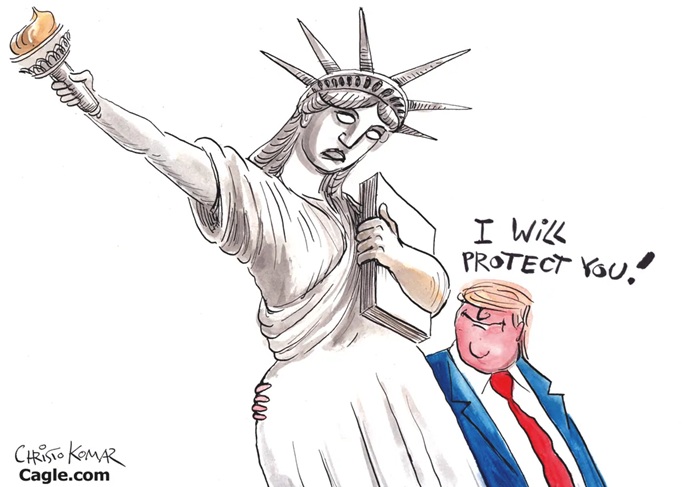
it is entirely conceivable that Israel, just like South Africa, will be globally ostracised and abandoned.
Trump was necessary. Necessary to strip away the niceties and reveal the true face of empire, to reveal its naked impunity, to showcase the war crimes in all their immoral bloodlust.
Nate Bear, Jun 19, 2026, https://www.donotpanic.news/p/this-is-why-trump-was-necessary
Iran has forced the US into one of the biggest strategic defeats in its short, violent and bloody history.
The memorandum of understanding with Iran, signed (symbolically or not), at Versailles yesterday, signalled, as I wrote earlier this week, that we’re witnessing the collapse of American hard power.
After it was signed, Trump made some extraordinary comments that wouldn’t have looked out of place in the handbook of anti-imperial critique, including that it’s not fair to tell Iran it can’t have missiles if all it’s neighbours have them and that it’s “common sense” that the country should be able to enrich uranium for energy. Trump also admitted oil reserves were running out and the world was approaching a depression, which slays the idea (an idea I never bought), that the US attack was a genius move to control the world’s oil and gas.
Iran has suffered some serious damage to its infrastructure as well as burying over 3,000 civilians, but it has checkmated the US strategically. And Trump has had to accept that. Iran’s ability to hit key regional infrastructure from deeply-buried missile cities, along with its ability to control the Strait, won the day. The US also appears to be reluctantly accepting some other realities. A few hours after the MoU was signed, after it was put to him that Israel wasn’t happy with the tentative deal, JD Vance said that Israel “is a country of nine million people that can’t just kill its way out of every national security problem.”
They read the polls, they see the way the wind is blowing, and they’re moving with it.
Israel of course is still a vital strategic outpost for empire, and it will not be abandoned yet. But there is absolutely a future in which the value of Israel to empire becomes less useful than the economic value empire can gain from a wider peace in the region, even if that peace runs counter to Israeli interests. And if Israel, not Iran or the resistance, comes to be seen as the main obstacle to this future, a position Trump and Vance appear to be moving towards, it is entirely conceivable that Israel, just like South Africa, will be globally ostracised and abandoned.
If this were to happen, the range of outcomes is extremely broad. Tensions between orthodox and secular Jews are already high in Israel, and you could reasonably argue that under conditions of global abandonment, civil war would break out. Before or after such a war, you might get a government run by Ben-Gvir and Jewish end-times fanatics who decide to fight the world and trigger a nuclear holocaust. Or the fanatics might lose, and you get a government which enters into international negotiations towards one state with equal rights for all. A former prime minister of Israel has, after all, just labelled Israeli actions in the West Bank ethnic cleansing.
I think we’re a long way from Israel ever giving up its colonial privileges. Civil war is a lot more likely than the negotiated end of the state, but we’re certainly a big step closer than we’ve ever been to whatever comes next for the genocidal colonial outpost.
Maybe this all seems too optimistic to you. And I hate to blow my own trumpet. But I was among the minority who predicted the start of the war before it started, who said Iran wouldn’t lose, that there’d be no regime change and no US victory via an air war was possible. When the ceasefire was announced I was among even fewer who said it would hold because the US was out of real options, while the consensus anti-imperial opinion said it was a ruse to buy time for a land invasion or other escalation.
And now, despite the calling off of talks in Geneva over the next stage of the process, my prediction, for what it’s worth, is that this won’t mean a return to war, and that in fact it will further the process of US-Israel estrangement, with Trump and Vance likely to see it as further confirmation that Israel, not Iran, is the impediment to peace.
Which is all to say, Trump was a necessary evil.
Of course we’ll never know if a Democrat as president would have launched an attack on Iran, but it would have come eventually. And given that an attack on Iran was inevitable, it was the best case scenario that it happened under Trump, an ideologically drifting narcissist without any real loyalties or attachments. A man motivated to protect his own personal financial interests above anything else (a number of which sit within the range of Iranian missiles). A man who was always going to be outmanoeuvred by a country led, literally, by men and women with PhDs, by philosophers, mystics and engineers. There were reports that in the process of negotiations, Iran drafted in the country’s top psychologists to craft messages to appeal to Trump’s ego and vainglorious personality. It appears to have worked.
From only ever acting retaliatorily, from closing the Strait of Hormuz to striking American bases and the oil and gas infrastructure of US proxies, to employing psychologists to sweet talk a narcissist, Iran bossed the process from day one.
And Israel knows it.
Its attacks on Lebanon are a final attempt to derail the process and regain some leverage over the negotiations. I don’t think it’ll work. We’re too far down the track. The Strait opens, the oil and gas starts flowing, or, with oil reserves at critical levels, we’re looking at a global depression. And Trump now appears motivated to avoid that, not least to protect his own wealth, above and beyond the objections of Israel. I don’t believe, as many still do, that the MoU, Trump’s comments and Vance’s criticisms of Israel, are all part of some drawn out psy-op before another attack on Iran.
This isn’t to give Trump any credit. It’s just to say empire isn’t omnipotent or strategically untouchable. You can, with the right war strategy, alongside favourable geography and propitious timing, force it to make concessions it doesn’t want to make.
Trump was necessary. Necessary to strip away the niceties and reveal the true face of empire, to reveal its naked impunity, to showcase the war crimes in all their immoral bloodlust. Yes, from Vietnam to Iraq to the so-called War on Terror, what Trump has shown us is nothing new, but through careful stage-management and competent administration, the myth of benign American empire has managed to endure. I’m not sure that myth will survive Trump. He’s also been necessary to reveal the limits of empire, to show it can be beaten, to expose its vulnerabilities, to detail its weaknesses.
Iran should have tied Gaza more closely to the MoU, as it has with Lebanon, but it has delivered a valuable blueprint in how to fight empire.
Trump has also been necessary to expose the plastic progressives, the liberal anti-Trump imperialists who, in their opposition to Trump’s deal with Iran, can only look like warmongering imperial psychopaths. From all those sharing memes on social media about surrender, from the Democrats and CNN talking heads decrying the deal, to Jimmy Fallon dragging Trump for giving Iran back the money the US stole, there is no articulation of an alternative to endlessly bombing Iran. There’s no anger from liberals over dead Iranians, or at the imperial state, at Zionism or the embedded death machinery that made this violence possible. No, they’re just embarrassed for empire. And they don’t want to recognise the limits of that empire.
With Israel still bombing Lebanon and oil reserves at critical thresholds, however, this is all far from over.
Iran has sketched out two futures for the US and it now has a decision to make: stand behind the deal which Trump has loudly proclaimed as necessary to save the world, and force Israel to stand down, or let Israel dictate the process, return to war and drag the world into an economic depression. Anything is still possible, of course, but I judge the latter extremely unlikely.
And Trump, in his egotism, venality and conceited self-interest, might just be the man for the moment.
What I do know is that those Iranian psychologists have some more work to do.
A Turning Point: What the Iran MoU Reveals About the Limits of US Power
June 19, 2026, By Iqbal Jassat, https://www.palestinechronicle.com/a-turning-point-what-the-iran-mou-reveals-about-the-limits-of-us-power/
The lessons from Iran, if incorporated in the study of international relations, will be that the era in which Washington could dictate terms without consequence is steadily eroding.
Events at the G7 Summit in Evian were overshadowed by news of the US-Iran Memorandum of Understanding (MoU). This was hardly surprising since the story broke about America’s dramatic turnaround and widespread speculation about the details of the MoU, as well as the reasons for it.
It would be fair to say, thus, that the most significant outcome of the G7 Summit in Évian was not the signing of the MoU. It was the public collapse of the illusion that military superiority automatically translates into political victory.
For months, Washington and Tel Aviv insisted that Iran would eventually be forced to surrender. The language was harsh, pointed and uncompromising. Iran’s missile program would be destroyed. Its nuclear capabilities would be dismantled. Its regional alliances would be broken. Its leadership would face collapse under the combined weight of military pressure, sanctions and international isolation.
None of those objectives were achieved.
The contradiction became impossible to conceal when President Donald Trump stood before the world at the G7 and defended Iran’s right to retain conventional ballistic missiles.
The same missiles that had been presented as an existential threat suddenly became acceptable. The same missile program that justified war was transformed into a reality that Washington was prepared to live with.
Contrary to the wishful thinking of some political pundits, this was not a minor adjustment in policy. It was a public admission that the original objectives could not be achieved.
Absent from much Western reporting is the extent of this reversal. The final agreement contains no dismantling of Iran’s missile deterrent. It contains no regime change. It contains no surrender of Iran’s political system. It contains no disarmament of Iran’s regional allies. Even the nuclear issue was largely deferred into future negotiations rather than resolved through force.
The shock registered on the gaping mouths of G7 leaders as well as Israel’s war criminals was obvious, for the outcome exposed the enormous gap between public rhetoric and strategic reality.
For years, American foreign policy has been built around the assumption that economic pressure, military dominance and international isolation can force adversaries to comply with Washington’s demands. Iraq was supposed to demonstrate that reality. Libya was supposed to reinforce it. The sanctions architecture imposed on Iran was designed around the same logic.
The MoU signed by Trump at the G7, demonstrates the limits of that model.
Iran’s leadership calculated that surrender would be more dangerous than resistance. Despite suffering enormous military and economic damage, Tehran retained enough leverage to make continued escalation prohibitively expensive for its adversaries.
The critical factor was not military strength alone.
The Strait of Hormuz exposed a vulnerability that military planners could not bomb away. As energy markets reacted and global supply chains faced disruption, the economic consequences of a prolonged conflict became increasingly unacceptable. Oil prices surged. Shipping costs escalated. Insurance markets were shaken. European governments demanded an end to the crisis. Gulf states that had quietly supported pressure on Iran suddenly became advocates for de-escalation.
The beneficiaries of the original confrontation were clear. Arms manufacturers secured contracts. Security establishments expanded their authority. Lobbying organizations intensified demands for escalation. Media institutions repeated assumptions about inevitable Iranian defeat. A vast ecosystem of political and economic interests promoted the belief that only one outcome was possible.
Though the MoU demolished that narrative, the reaction from Israel was even more revealing. The Israeli political establishment expected the conflict to fundamentally alter the regional balance of power in its favor.
Instead, Netanyahu and his criminal gang of genocidaires found themselves confronting an agreement negotiated largely without their input and one that preserved many of Iran’s capabilities Israel had spent years attempting to eliminate.
The frustration expressed by them and echoed across the regime’s media was not simply about the agreement itself.
It reflected the recognition that military escalation had failed to produce the strategic transformation that had been promised.
This is why the agreement carries implications far beyond Iran, particularly for governments across the Global South who are expected to study the outcome closely.
Indeed, so will Russia and China. The lesson they will draw is not that America lacks power. The lesson is that American power now operates within constraints that did not exist during the unipolar era.
The lessons from Iran, if incorporated in the study of international relations, will be that the era in which Washington could dictate terms without consequence is steadily eroding.
The MoU therefore marks something larger than the end of a conflict. It marks another stage in the transition from a unipolar order to a multipolar one. The significance of the MoU lies not in what was announced. It lies in what was conceded.
The campaign to impose American terms concluded with Washington accepting realities it once declared unacceptable.
America’s Hidden Casualties: The Pentagon’s Iran War Numbers Still Don’t Add Up
June 17, 2026. Joshua Scheer, https://scheerpost.com/2026/06/17/americas-hidden-casualties-the-pentagons-iran-war-numbers-still-dont-add-up/
As the Trump administration moves toward a second ceasefire agreement with Iran and officials in Washington attempt to declare the conflict a success, new reporting suggests the human cost of the war remains far higher than the Pentagon is willing to admit.
According to investigative journalist Nick Turse, the official U.S. military casualty count from the war with Iran has quietly climbed again. Yet even the latest figures appear to exclude hundreds of known casualties, raising serious questions about transparency, accountability, and whether the American public is being told the truth about the real cost of the conflict.
The Pentagon’s official Defense Casualty Analysis System (DCAS) now lists 426 dead and wounded U.S. personnel connected to the war—an increase from earlier tallies. But Turse reports that the true figure likely exceeds 625, with numerous injuries and even some deaths seemingly absent from the official record.
The discrepancies are not minor bookkeeping errors. Earlier this year, fifteen wounded troops reportedly vanished from Pentagon casualty statistics without explanation. Despite repeated inquiries from journalists, military officials have failed to provide a coherent account of why those casualties disappeared from public records. One defense official quoted by The Intercept suggested the situation raises an uncomfortable possibility: either Pentagon analysts are extraordinarily incompetent or someone higher up ordered the numbers altered.
Among the missing cases are two soldiers injured when an Iranian drone reportedly downed a U.S. Army Apache helicopter earlier this month. Central Command publicly acknowledged the wounded crew members were receiving medical treatment, yet they do not appear in the official casualty database.
The questions extend beyond battlefield injuries. Turse notes that the Pentagon’s death count also appears incomplete. Major Sorffly Davius of the New York Army National Guard was publicly mourned by elected officials and military leaders after dying while deployed in Kuwait. Yet his death reportedly remains absent from official casualty totals.
Even more striking is the exclusion of more than 200 sailors treated after a major fire aboard the USS Gerald R. Ford. Because those injuries were categorized outside traditional combat wounds, they are effectively invisible in the official accounting despite occurring during an active wartime deployment.
The story highlights a pattern that has followed many American wars: casualty figures become political numbers rather than simple facts. Governments eager to sustain public support often emphasize military successes while minimizing costs. The result is a widening gap between the realities experienced by service members and the version of events presented to the public.
This matters because casualty counts are not merely statistics. They shape congressional oversight, influence public opinion, determine veterans’ benefits, and form the historical record by which future generations judge a war. If those numbers are manipulated—or selectively reported—the public loses one of the few objective measures available for evaluating the true consequences of military action.
The Iran war has already produced catastrophic consequences across the region, including thousands of reported Iranian civilian deaths. Now, according to Turse’s reporting, Americans may also be learning that the costs borne by U.S. troops have been systematically understated.
For an administration that repeatedly promised transparency and accountability, the unanswered questions surrounding the Pentagon’s casualty reporting are becoming increasingly difficult to ignore. Before Washington writes the final chapter on this conflict, the public deserves a full accounting—not only of what was achieved, but of what was lost.
The Nuclear Reactors Coming to a Small Town Near You
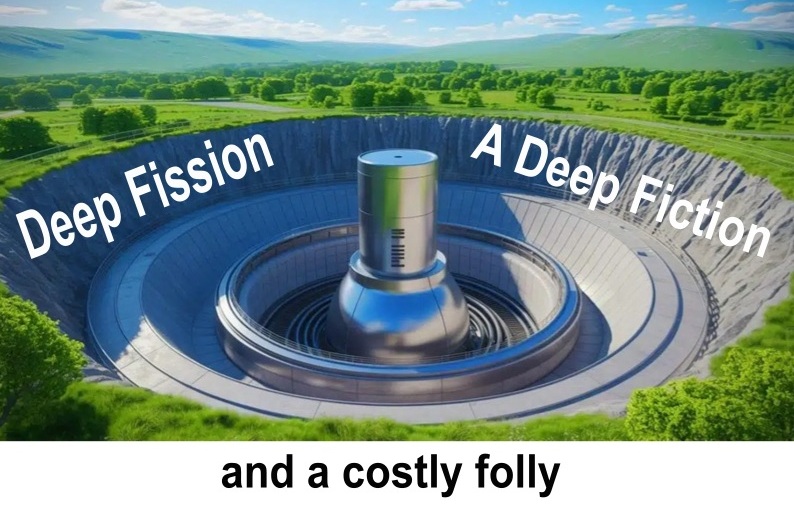
As a disruptive new nuclear power project embeds itself in Parsons, Kansas, residents are divided on whether it’s worth the potential risk.
The New Republic Finn Hartnett, June 16, 2026
Parsons, Kansas …… With a population of about
9,600 ………
……………………………………The Parsons Sun had it first: a deal struck between industrial park board members and the nuclear company Deep Fission. A first-of-its-kind nuclear reactor was coming to the park. “I saw it on Facebook, and I thought it was a joke,” Marjorie Reynolds, a home nurse who lives in the area, said. The public was not informed before the deal was completed: Even county commissioners were only told “a week or two” prior, according to Commissioner Terry Weidert. “They just announced it in the newspaper December 4, like it was a done deal,” anti-nuclear activist Ann Suellentrop said. “So arrogant and so dismissive of the public.”
Park officials said they could not inform the public because they were under nondisclosure agreements with Deep Fission and the Department of Energy. “You’ve got intellectual property that … they like to keep under wraps,” Reams said. “If you’re the DOE, it’s a national security risk. It’s an energy project that has national implications.” Zaleski concurred, arguing that the agreement with Deep Fission was a standard one. “That’s just how the cookie crumbles in this industry,” he said.
Holger Meyer, a particle physics professor at Wichita State University with a background in nuclear energy, said the public should have been informed regardless. “There sometimes are good reasons for the desire for nondisclosure agreements,” he said. “But this isn’t something that just impacts the land it is on. It impacts the entire county—the entire region.… There is obvious public interest.”
It didn’t matter. Five days later, park officials, executives of Deep Fission, a smattering of locals, and roughly 40 TV stations gathered in the park for a groundbreaking. Parsons may not have liked it, but it was going nuclear.
Founded three years ago, the California-based start-up Deep Fission was thrust into prominence last August, when its reactor project became one of 11 selected as part of Donald Trump’s “Nuclear Reactor Pilot Program.” The pilot program, created by executive order, fast-tracks the companies’ ability to receive commercial operating licenses. The stated goal at the time was for three reactors to achieve criticality by July 4, 2026; one already has, and the DOE claims two more are on track. Deep Fission is not among them.
This rapid schedule is possible in part because Trump has overhauled the Nuclear Regulatory Commission since the start of his second term, relaxing regulations and inspections to meet demand from data centers.
In May 2025, the president ordered the theoretically independent NRC to submit to the White House’s Office of Management and Budget, and cut the annual hours spent on nuclear inspections by an estimated 38 percent. Hundreds of staff members have since departed the agency, and the two remaining Democrats on its board have expressed fear they could be fired after Democratic Chair Christopher Hanson was canned last year. Suellentrop warned that the NRC will be “gutted” if Trump continues to get his way. “The DOE will rubber-stamp whatever he wants, and to hell with people’s safety, their health, the environment,” she said.
………………….For advocates of Deep Fission, the government’s promotion of the project is evidence of its safety.
But others warned against such implicit trust. Meyer said “industry interest” was behind the Trump administration’s embrace of nuclear power. “Environmental regulations are being dismantled in all areas,” he said. “It’s clear that nuclear safety isn’t prioritized by the Trump administration.” Kent Rowe, a retired professor of aeronautics and anti-nuclear activist from near Parsons, stated that the Deep Fission project was “a scheme to bury [reactors] haphazardly and worry about consequences later.”
A March letter signed by 11 state attorneys general condemned the DOE for creating an exemption allowing certain nuclear projects to skip previously mandated environmental reviews. Paul Gunter, director of the group Beyond Nuclear, said he was concerned the exemption would allow Deep Fission to bypass proper safety measures.
“There should be no question about whether or not a novel nuclear technology without a designed reactor containment system can avoid an environmental review for potential severe accidents and the long-term consequences,” he said. When asked whether Deep Fission would indeed be exempt from the review, a DOE spokesperson said, “No determination has been reached.”
While the other nuclear companies in Trump’s pilot program are working on more or less traditional reactors, Deep Fission is getting weird with it, forecasting a reactor it has described as both “discreet” and “bespoke.” A laudatory Forbes profile on company founders Richard and Liz Muller outlines the plan: “Drill a 30-inch-diameter borehole a mile into the earth, fill it with water, then insert a teeny-tiny nuclear reactor that will boil the water at the bottom and send it up a separate pipe to run a steam turbine. Each hole will generate 15 megawatts, enough to power 12,000 homes.” (The profile fails to note some less savory details from Richard’s past: He was a vocal global warming skeptic until 2012, and has been criticized for taking research funding from the oil and gas tycoon Charles Koch.)
A small, scalable reactor is Deep Fission’s Theranos-esque goal, perfect for supporting Silicon Valley’s new obsession: AI data centers. Seventy in-house reactors can power one data center, according to Forbes. Deep Fission has been open about a desire to “meet the explosive demand for power from artificial intelligence” with a system “designed to scale modularly.” They have already seduced the likes of Palantir co-founder Joe Lonsdale, who owns an 8 percent stake in the company.
Speed is one of the company’s core tenets, which is concerning to some critics. Deep Fission’s website proudly states its reactors take an “estimated six months” to build, and the company told Parsons in December it aimed to have a test reactor running by July. “We have to build fast enough to meet data center demand before they decide to go with something else,” Liz Muller told Forbes.
It turns out, though, that building a nuclear reactor is quite difficult. The company now will not say when its test reactor will be ready, and is unsure on whether it will be able to open a commercial reactor at all. Deep Fission recently completed a test well in Parsons 6,000 feet deep and eight inches in diameter. That may sound impressive, but it’s far smaller than the mile-deep, 30 to 50 inch–wide borehole that will be needed for the real thing.
While a white paper sent to the NRC gives insight into the proposed reactor blueprint, Deep Fission’s design is not final yet. The company has not submitted a preliminary safety analysis to the DOE, nor applied for the NRC license it will need to sell energy, according to federal officials. Deep Fission declined to speak with The New Republic for this piece, with vice president of communications Chloe Frader citing the “active registration process.”
Reams said Deep Fission was never going to hit the deadline it set for itself. “I think even if it had gone perfectly, they probably wouldn’t have hit July 4,” he said. As to why the company may not be selling its energy anymore? “They weren’t sure [of] all the P’s and Q’s that they had to make sure were covered,” Reams said. “It’s been a learning process for them.”
…..some have been vocal in their opposition to Deep Fission, particularly Reynolds, who founded a local group called Prairie Dog Alliance for the express purpose of fighting the development. In a matter of months, Reynolds has assembled a hodgepodge of community members, among them farmers, business owners, activists, and professors. (Suellentrop, Meyer, Rowe, and Gunter have all been in contact with the group.) Prairie Dog Alliance now boasts over 500 Facebook followers and about 15 members who attend regular meetings.
Some locals say Prairie Dog represents the majority opinion. Librarian Heather Fouts estimated that “at most 25 percent” of residents support the nuclear project. “I would say most of Parsons is against the reactor,” echoed Beachner, who recently joined the group. “But I also feel … nobody believes they can do anything.” In contrast, Zaleski and Parsons Sun editor Hannah Emberton cast Prairie Dog as a vocal minority.
The group forced a public meeting with Deep Fission in March after rejecting private talks. There have been a handful of meetings since, but Prairie Dog still wants more transparency. Member Jill Blankinship said the March meeting was “turned into a meet-and-greet”; at a later May in-person meeting where company officials took questions, participants were made to write them down ahead of time. Deep Fission also promotes a “community advisory group” in Parsons, which has no public facing presence at the moment, though Deep Fission says has met twice.*
Deep Fission is also drilling its boreholes at the edge of the Roubidoux aquifer, an underground water source that’s part of the larger Ozark system. While Parsonites get their drinking water from nearby Lake Parsons, the Ozark system is used for commerce, farming, and rural water districts all over the shop. “If something did happen, there’s potential that it could contaminate groundwater, which then contaminates the Neosho River, which goes … all the way down to Oklahoma,” Blankinship said. “Thirty-six towns, all kinds of people.”…………..
There’s also the issue of nuclear waste. Deep Fission’s founders said in April they wanted to just abandon their spent fuel rods underground after each reactor’s six-year lifespan. “Instead of pulling them out of the hole, they’ll pour in a mix of cement and rock to seal it all in place,” the Forbes profile states happily. Activists called the idea dangerous.
A month after the Forbes piece, Deep Fission seemingly changed its tune. Chief Operating Officer Mike Brasel said in a May public meeting that the company will only leave spent fuel underground temporarily and that “we do not plan on disposing fuel down in that hole.” While the federal government is “contractually required to take the fuel,” Brasel said, Deep Fission aims to have a recycling or disposal facility in place before its boreholes begin to collapse in “40 to 50” years.
By then, things could already be going very wrong. Reynolds’s doomsday scenario is that radiation poisoning of the city’s soil and water will turn Parsons into something akin to Picher, Oklahoma, a small town 35 miles away. Once a bastion of lead and zinc mining, the town underwent dangerous corporate practices that caused irreconcilable environmental damage to the land; Picher was soon declared uninhabitable, and the municipality was officially dissolved in 2013.
In the event of a disaster, Deep Fission is seeking liability insurance under the Price-Anderson Act, which indemnifies the company in the event of a nuclear accident, providing costs fall above a certain threshold. “They’re going to … look for being indemnified from an accident that they’re saying will never happen,” Gunter said. “That’s a clear no-confidence vote.”…………………………………………………………..https://newrepublic.com/article/211643/nuclear-reactor-parsons-kansas-safety
US Finally Capitulates with ‘Memorandum’ of Surrender

Simplicius, Jun 17, 2026
The US has finally capitulated in its disastrously failed war against Iran, reportedly drafting a memorandum of understanding which is highly favorable to the Islamic Republic, and gains as concession nothing more than the promise that “Iran will not obtain nuclear weapons”—a position Iran had already long held.
The most explosive detail is the alleged $300 billion “reconstruction fund” that Iran will be entitled to once the deal is sealed.
Trump has downplayed or denied this point, with everyone seemingly perplexed as to what this massive sum entails, exactly. In the above article, Reuters writes the following:
The new fund is a private investment vehicle, not a reconstruction or reparations program and will not include any government money or grants, the source said, adding that companies based in the U.S., the Gulf Arab states, Asia, South America and Africa have agreed to commit financing.
Investments pledged span energy, logistics, manufacturing and transport, the source said.
They claim it’s not a reparations program, yet the official name of the fund is the ‘Reconstruction and Development Fund’. It appears to revolve around regional entities—both corporate and governmental—providing credit lines, direct financing, etc., to Iran. As can be seen above, over half of the fund is claimed to be already committed.
Some American propaganda pundits had claimed that this fund is being pulled from Iran’s frozen assets abroad, but Reuters begs to differ, citing that as an entirely separate negotiating track:
The investment fund is entirely separate from a parallel negotiating track over the lifting of U.S. sanctions and the release of Iranian sovereign assets frozen abroad, the source said, describing the two as distinct financial mechanisms with different purposes and timelines.………………………………………………………………………………………………………………………………………………………………………………………………………………………………………. https://simplicius76.substack.com/p/us-finally-capitulates-with-memorandum?utm_source=post-email-title&publication_id=1351274&post_id=201961444&utm_campaign=email-post-title&isFreemail=false&r=c9zhh&triedRedirect=true&utm_medium=email
Georgia nuclear power plant cleared for 80-year operating life

The two boiling water reactor units at Georgia Power’s Edwin I Hatch plant
have been cleared by the regulator to operate until the mid-2050s. Hatch
unit 1 began commercial operation in December 1975, with Hatch 2 following
in September 1979. The units were originally licensed to operate for 40
years, with the NRC approving a previous 20-year licence extension in 2002.
The plant is operated by Southern Company subsidiary Southern Nuclear on
behalf of its co-owners Georgia Power, Oglethorpe Power Corporation, the
Municipal Electric Authority of Georgia and Dalton Utilities.
World Nuclear News 16th June 2026, https://www.world-nuclear-news.org/articles/georgia-nuclear-power-plant-cleared-for-80-year-operating-life
Trump’s ‘nuclear bros’ race to deliver US atomic revival
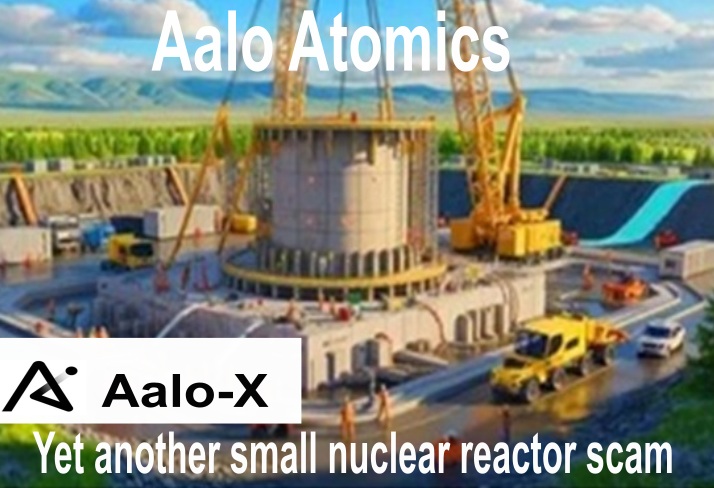
At a factory in Texas, Matt Loszak is building a new type of nuclear reactor he
hopes will allow the US to reclaim leadership in an industry dominated by
Russia and China. “Our goal is to ship hundreds and possibly thousands of
reactors every year,” the 35-year-old founder of Aalo Atomics said as he
inspected components for the Aalo-X, designed to power AI data centres.
Aalo is one of several US start-ups planning to switch on new reactors this
month ahead of a July 4 deadline set by President Donald Trump to mark the
250th anniversary of America’s independence.
Antares Nuclear and Valar
Atomics have already announced they have achieved “criticality” — the
moment a nuclear chain reaction becomes self-sustaining. Radiant Nuclear
and Oklo told the FT they were in the final stages of receiving safety
clearances under Trump’s pilot programme, which aims to have at least
three test reactors reach criticality by the target date. Many of the
founders leading the charge are under 40 and come from outside the nuclear
industry, while some have ties to the Trump administration. Backed by
Silicon Valley, they say small reactors can help meet soaring electricity
demand from AI data centres.
FT 18th June 2026,
https://www.ft.com/content/0d074795-e54a-41d7-9c97-baf2bd6deb94
Trump Administration Plans Major NATO Drawdown Of U.S. Jets, Tankers, Bombers And Warships In Europe
The reported reductions provide one of the clearest pictures so far of how far the Trump administration intends to go in scaling back the U.S. role within NATO
by yourNEWS Media Newsroom | Jun 13, 2026
A June document shared with allies reportedly outlines sweeping reductions in U.S. military assets assigned to NATO operations, including fighter jets, surveillance aircraft, tankers, naval forces and bomber units.
By yourNEWS Media Newsroom
The Trump administration is preparing to reduce key U.S. air and naval assets available for NATO missions in Europe, a move that would mark a broad shift in America’s military posture inside the alliance, according to The New York Times.
Two senior European officials familiar with the decision said the reductions were detailed in a document provided to allies in early June. The plan would cut the number of American aircraft and warships assigned to NATO operations and could limit the alliance’s capacity for aerial refueling, surveillance, long-range strikes and maritime monitoring.
Under the proposal described by the officials, U.S. F-16 and F-15E fighter jets available for NATO operations would fall from about 150 to 100. Maritime reconnaissance aircraft would be reduced from 26 to 15, and all eight aerial refueling tankers previously assigned to Europe would be withdrawn.
The drawdown would also involve the reassignment of a missile-launching submarine, an aircraft carrier and several supporting warships. One of the two bomber groups previously designated for Europe’s defense would also be reassigned.
The Pentagon declined to address the specific numbers in the document. It instead referred to a recent statement from U.S. European Command about plans to reduce American commitments in Europe.
The reported reductions provide one of the clearest pictures so far of how far the Trump administration intends to go in scaling back the U.S. role within NATO, the post-World War II alliance created for the collective defense of North America and Europe. European leaders continue to regard NATO as central to deterring Russian aggression, and the proposed shift comes as many governments on the continent remain concerned about Moscow’s military activity near alliance territory.
No public timetable has been announced for carrying out the reductions. However, U.S. officials have signaled that the changes could occur sooner than many European governments had expected.
The impact could be felt across several NATO missions. Fewer aircraft and ships could affect the alliance’s ability to track Russian submarine movements, support long-distance air operations and conduct long-range strike missions.
Giuseppe Spatafora of the European Union Institute for Security Studies said the combined reductions would have consequences beyond any one category of equipment.
“While each of these cuts can be managed individually, together they represent a significant posture change and pose challenges to European deterrence readiness across the spectrum,” Spatafora said.
President Donald Trump has repeatedly argued that European NATO members rely too heavily on U.S. military power and should spend more on their own defense. His administration had already announced smaller adjustments to American troops and forces in Europe, but the June document outlines wider reductions affecting NATO missions across the continent.
The United States would still maintain one of NATO’s largest military footprints in Europe after the planned cuts. At the same time, European governments have increased defense spending and moved to rebuild military capacity amid uncertainty over long-term U.S. support……………………………………………………………………………………………… https://yournews.com/2026/06/13/7053385/trump-administration-plans-major-nato-drawdown-of-u-s-jets-tankers/
Can Trump Restrain Israel?
Middle East Monitor06/13/2026, by Norliza binti Saleh, https://www.juancole.com/2026/06/trump-restrain-israel.html
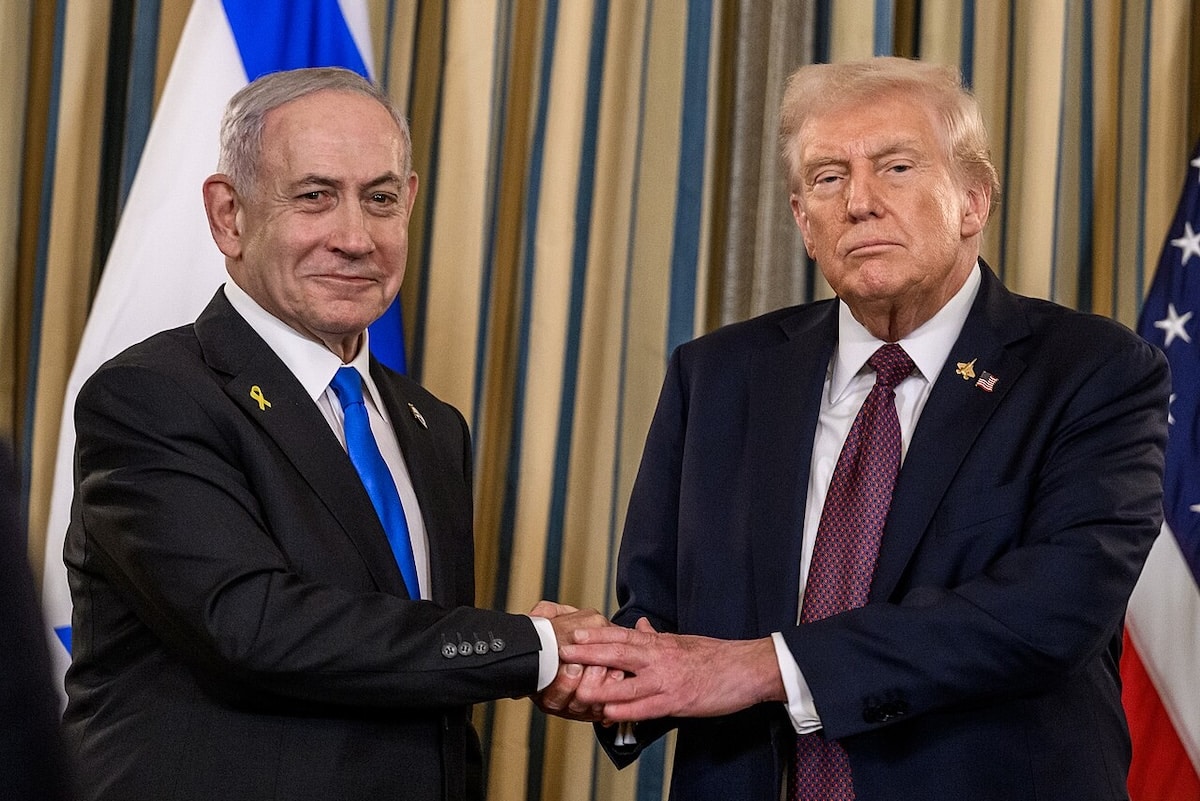
The latest exchange between Iran and Israel raises a fundamental question: Who is really driving events in the Middle East – Washington or Jerusalem?
Following Israeli strikes on targets in Beirut, Lebanon, Iran responded with strikes against northern Israel and military facilities around Haifa. Israel then immediately retaliated by attacking Tehran, Tabriz, Karaj and Isfahan. While the ceasefire between the United States and Iran is technically in place, the broader regional conflict continues to intensify. Throughout the crisis, President Donald Trump has repeatedly expressed support for de-escalation and urged all parties to avoid a wider war.
Yet events on the ground suggest that Washington’s desire for stability may not necessarily translate into restraint by its closest ally. The current crisis is becoming a test not only of regional security but also of American influence itself.
The Trump administration appears reluctant to become involved in another prolonged West Asian conflict. Unlike previous periods of direct American military engagement in the region, Washington’s priorities today are largely domestic and economic.
A wider regional war would almost certainly increase energy prices, disrupt global trade routes, and create uncertainty in international markets. Such instability would undermine economic recovery efforts and place additional pressure on American households.
For Trump, who has consistently portrayed himself as a leader focused on domestic prosperity rather than foreign military adventures, another regional war offers few political benefits.
This explains why Washington continues to advocate restraint and emphasize the importance of maintaining the ceasefire framework currently in place.
Israel, however, views the situation through a different lens.
From the Israeli perspective, Hezbollah and Iran remain immediate security threats that cannot be ignored. Israeli leaders claim that military pressure is necessary to weaken these adversaries, regardless of American concerns about regional escalation.
Yet security alone does not fully explain Israel’s actions.
“The conflict is also intertwined with political and ideological ambitions. The influential factions within the Israeli regime continue to be influenced by a broader vision of expanding Israel’s strategic footprint in the region, often associated with the concept of “Greater Israel”.
In this reading, Lebanon is not merely a battlefield but part of a wider Israeli expansionist project.
This creates an important divergence between American strategic interests and Israeli security calculations. The result is an increasingly visible gap between what the United States wants and what Israel is prepared to do.
Recent developments have also highlighted Iran’s growing strategic importance. Iran occupies a critical geographical position overlooking the Strait of Hormuz, through which a significant portion of the world’s oil and gas supplies passes. Any disruption to this maritime chokepoint would immediately affect global energy markets and international trade.
More importantly, external pressure has strengthened domestic unity within Iran. The groups that previously disagreed with the government have increasingly
rallied around the state in response to external threats. Regionally, Iran has demonstrated both military capability and strategic reach, reinforcing its position as a major regional power whose actions can no longer be ignored. Recent events have witnessed that Iran possesses significant leverage over regional security and global energy stability.
The central issue, therefore, is not whether Trump supports a ceasefire. He clearly does.
The real question is whether Washington possesses sufficient leverage to translate its preference into Israeli behaviour.
“If Israeli military operations continue despite American calls for restraint, observers will inevitably question the extent of US influence over its closest ally. “
This matters because American credibility remains a key pillar of regional stability. If Washington is unable to shape the actions of partners that depend heavily on American diplomatic, financial and military support, its broader influence across West Asia may also come under scrutiny.
Failure to contain the current escalation carries risks far beyond West Asia. A wider Iran-Israel confrontation could threaten critical energy routes, including the Strait of Hormuz and other regional maritime chokepoints. Rising energy prices would affect economies worldwide, including countries geographically distant from the conflict such as Malaysia.
At the same time, continued instability risks expanding the conflict across multiple fronts involving Lebanon, Syria, Iraq and the Red Sea region. The longer the crisis continues, the greater the likelihood of miscalculation by one or more actors.
For this reason, calls for a genuine ceasefire must be matched by meaningful diplomatic efforts and credible pressure on all parties involved.
“The current crisis has become a test of two things: regional stability and American influence. “
President Trump may genuinely prefer de-escalation, but preference alone is insufficient. The true measure of leadership lies in the ability to shape outcomes, not merely express intentions If Washington cannot persuade its closest ally to support a sustainable ceasefire, the risk of a wider regional conflict will continue to grow.
“The key question is therefore not whether Trump wants peace. The key question is whether he still possesses the leverage necessary to make it happen”
New Billionaire Jared Kushner Is Mired in Conflicts of Interest as “Peace Envoy”
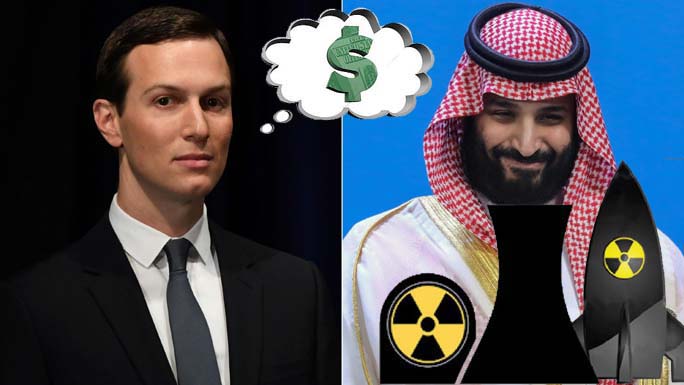
Kushner’s current fundraising efforts with Gulf state regimes, through which he aims to personally profit, raise serious concerns over conflicts between his business interests with regional states and his diplomatic role as a top Trump administration negotiator.
Jared Kushner, like the rest of the Trump family, uses the White House for personal enrichment.
By Derek Seidman , Truthout, June 12, 2026, https://truthout.org/articles/from-peace-envoy-to-billionaire-kushner-makes-a-killing-in-white-house-admin/?utm_source=Truthout&utm_campaign=8d7f421301-EMAIL_CAMPAIGN_2026_06_12_06_45_COPY_01&utm_medium=email&utm_term=0_bbb541a1db-16ee3bf6a0-650192793
Kushner is now a billionaire,” proclaimed Forbes in September 2025 of Donald Trump’s son-in-law Jared Kushner. While just over half of Kushner’s wealth — $560 million — comes from his family’s real estate empire, what’s catapulted Kushner into billionaire status is the growth of his private equity firm, Affinity Partners, formed in 2021.
“[T]hese days,” said Forbes, Kushner is “laser-focused on Affinity.”
Kushner is not an experienced investment manager. His key clients are Gulf state sovereign wealth funds — hugely wealthy state-owned coffers that invest revenue generated by fossil fuel sales — overseen by the same regimes with whom Kushner is now involved diplomatically as a U.S. “special envoy for peace.”
That Kushner personally profits from, and is currently trying to raise billions from, the same actors he’s negotiating with, raises code red-level alarms over potential conflicts of interest. Moreover, two of Trump’s sons, Donald Jr. and Eric, have been tied to a slew of business deals connected to companies that are benefitting handsomely from federal government contracts.
“The degree of shamelessness is unprecedented,” Jeff Hauser, founder and executive director of the Revolving Door Project, a watchdog group monitoring the U.S. executive branch, told Truthout. “The degree of unity among elected Republicans to not speak about the Trump progeny, and their corruption, is the worst conspiracy of silence in American political history.”
Affinity Partners
Jared Kushner founded Affinity Partners in 2021, and he is the firm’s sole owner. Forbes estimates Affinity was worth $215 million as of September 2025, up from $170 million in October 2024. Through Affinity, Kushner recruits wealthy clients and invests their money through funds that acquire stakes in different companies.
Affinity currently has $6.2 billion in assets under management. According to the Israeli financial paper Globes, Kushner earns “a commission of 1.25 percent on investors’ capital.” Forbes says that Affinity’s investors “pay about $60 million per year in fees.”
The New York Times also reports that Affinity has earned an estimated 25 percent rate of return on its investments since 2021. Private equity investment firms often get a double-digit percentage cut on client returns.
Affinity’s biggest clients are Gulf state sovereign wealth funds. According to The New York Times, Saudi Arabia’s Public Investment Fund, which invests the kingdom’s oil profits and is led by Crown Prince Mohammed bin Salman, is “already the largest and earliest investor in Affinity,” having invested $2 billion with the firm after Trump’s first term ended. As part of that investment deal, Saudi Arabia was also given “the first chance to invest during any subsequent attempts by Affinity to raise funds,” said The New York Times.
The sovereign wealth funds of both the United Arab Emirates (UAE) and Qatar were also early investors in Affinity Partners, with the UAE investing over $200 million in Kushner’s firm.
“Most of Affinity’s investors came through connections Kushner made while serving in the White House,” wrote Forbes.
Kushner is currently trying to raise $5 billion or more in new funds for Affinity. As part of this effort, The New York Times reported in March 2026 that Affinity representatives had met with Saudi Arabia’s Public Investment Fund and that the United Arab Emirates and Qatar “are also expected to be asked for more” as the fundraising efforts should “stretch on for the better part of this year,”
“Staggering Conflicts of Interest”
Kushner’s current fundraising efforts with Gulf state regimes, through which he aims to personally profit, raise serious concerns over conflicts between his business interests with regional states and his diplomatic role as a top Trump administration negotiator.
“There’s an enormous conflict of interest when you have somebody who had never been a money manager like this before, and who is all of a sudden building massive funds based off a handful of foreign investors with an interest in buttering up the Trump administration,” said Hauser.
Hauser said it’s “not unprecedented” for well-connected family members or friends of presidents to influence U.S. diplomacy. But, he adds, “it is very susceptible to abuse, and I think it’s being abused here,” and government reforms are needed in the wake of Kushner’s current “diplomatic exploits.”
The potential conflicts of interest have been highlighted by some members of congress. Rep. Jamie Raskin (D-Maryland) has opened an investigation into what he labels Kushner’s “foreign entanglements and staggering conflicts of interest.”
“From the standpoint of the American people, your decision to act in these two roles — one public for the government and one private for personal profit — creates a glaring and incurable conflict of interest,” Raskin wrote in a letter to Kushner.
Kushner’s diplomatic efforts have included helping to design and advance the Abraham Accords, which aims to normalize relations between Israel and key Gulf States; carrying out negotiations with Iran, whose retaliatory strikes have been aimed at nations like Saudi Arabia and the UAE; and working on Donald Trump’s “Board of Peace,” which several Gulf states, including top Affinity clients, have joined.
Kushner’s Portfolio Companies
Read more: New Billionaire Jared Kushner Is Mired in Conflicts of Interest as “Peace Envoy”Affinity Partners’ most significant deal has been its $55 billion acquisition in 2025, in partnership with Saudi Arabia and other investors, of the video game giant Electronic Arts, maker of popular franchises like Madden and Sims. The transaction, which has garnered protests from gamers and developers, would be the largest-ever private buyout of a publicly-traded company. It’s currently in its final stages of approval.
Under the deal’s terms, Saudi Arabia’s sovereign wealth fund — which already had a 10 percent stake in Electronic Arts — will own 93.4 of EA, while Affinity Partners will own 1.1 percent. For Saudi Arabia, the deal advances two separate but intertwined aims: diversifying its economy away from overreliance on oil revenue, and partnering with a member of the Trump family as the deal seeks regulatory approval from the U.S. Committee on Foreign Investment, chaired by Trump’s Treasury Secretary Scott Bessent
Affinity Partners also invests in smaller AI and financial companies, including U.K. digital bank OakNorth, AI infrastructure firm Universal AGI, and the fintech start-up company Revolut. Forbes reports that Kushner recently launched a new San Francisco-based AI start-up with the prominent Israeli-born venture capitalist Elad Gil. The firm, Brain Co., also raised funds from Coinbase’s Brian Armstrong and LinkedIn’s Reid Hoffman.
Raising more potential for conflicts with his diplomatic role, Kushner also has stakes in several Israeli companies, including $1.68 billion in Phoenix Financial, one of Israel’s leading insurance and financial companies. Affinity is Phoenix’s top shareholder and has seen a five-times return on its investment.
Affinity is also invested in the Israeli Shlomo Group, one of Israel’s largest holding groups with big investments in the auto sector.
Kushner, TikTok, and the Trump Web
Jared Kushner is also embedded in a wide web of business figures advancing the Trump agenda — which could be seen in the January 2026 deal that created a U.S. spinoff of TikTok.
Kushner’s Electronic Arts deal is co-led by Silver Lake, a Los Angeles-based private equity firm. As Truthout previously reported, Silver Lake is also a 15 percent stakeholder in the new U.S. TikTok. The firm’s co-CEO Egon Durban sits on the seven-member board of U.S. TikTok.
In 2025, the Wall Street Journal reported that acquiring Electronic Arts was Durban’s “dream deal,” but that “the pieces began to fall into place” for the acquisition only after Durban “began spending time with Jared Kushner.”
Silver Lake also owns Endeavor, whose portfolio includes TKO Group Holdings, the parent company of Ultimate Fighting Championship (UFC), the mixed martial arts corporation that is chummy with Donald Trump.
Durban and Silver Lake are close business partners with Michael Dell, the megabillionaire chairman and CEO of Dell Technologies who is also part of the U.S. TikTok ownership group with Durban. Dell has cast himself as a Trump ally by donating $6.25 billion toward the president’s so-called “Trump Accounts” program, which creates investment accounts for U.S. children.
Billionaire Yuri Milner, another U.S. TikTok investor, previously invested $850,000 in a real estate company started by Kushner in 2015. Jon Winkelried, the billionaire CEO of TPG Global, a private equity firm represented on U.S. TikTok’s board, also previously served as a strategic adviser and partner for Thrive Capital, an investment firm overseen by Jared Kushner’s brother, Josh Kushner.
The Trump Sons
If Kushner, Donald Trump’s son-in-law, may be personally benefiting from his closeness to the president, so too might be two of the president’s own children.
Donald Trump Jr. is a partner with an investment firm called 1789 Capital, which he says is dedicated to “patriotic capitalism,” and which has seen its assets under management boom from $200 million to $3.5 billion over the past year.
1789 Capital has made investments in companies that have gone on to benefit from federal contracts. For example, the Trump administration helped secure a $620 million loan for Vulcan Elements, a rare earths firm, months after 1789 Capital acquired a stake. Other 1789 Capital portfolio companies that benefit from federal contracts include rocket propulsion start-up Firehawk Aerospace, quantum computing company PsiQuantum, and AI group Cerebras Systems, as well as SpaceX and Anduril. Donald Trump Jr. and Eric Trump have also been linked to other drone makers, including Unusual Machines and Powerus, that have secured federal contracts.
Trump Jr. told the Financial Times that he is “very involved in the strategic decisions regarding where to invest” the resources of 1789 Capital.
The Financial Times also reported that Eric Trump accompanied his father on his recent state visit to China at the same “a company linked to him and the US president’s family” — Alt5 Sigma, a Las Vegas-based financial technology company — “explores a deal” with Chinese chipmaker Nano Labs that U.S. lawmakers says is tied to the Chinese Community Party. Eric Trump is an “observer” on the board of Alt5 Sigma, while Zach Witkoff, the son of top Trump aide Steve Witkoff, chairs Alt5’s board.
The Financial Times also reports that a shell company backed by Donald Trump Jr. and Eric Trump is set to merge with a critical minerals group that last year secured up to $1.6 billion in U.S. government backing to mine tungsten in Kazakhstan. Now, that group is asking for $400 million more from the government.
Holding Politicians to Account
While Donald Trump may be struggling in the polls, his family, financially, is doing just fine.
Hauser told Truthout that much of Donald Trump’s “economic interest” is tied to “increasing the wealth of his kids,” including his son-in-law Kushner. “When they are engaged in these types of overseas actions, they are carrying Trump’s interests with them inherently,” said Hauser.
But, Hauser adds, the law treats adult children of presidents as wholly independent from their parents, allowing “relative impunity” for their intermixing of business transactions with diplomatic roles or close familial relations.
“The law is just not written to address this type of situation,” said Hauser.
But Hauser sees hope in past U.S. history, which he says has always experienced vicissitudes of political corruption and revulsion against corruption that propels reform through both legal avenues as well as social ostracization of bad actors.
“Political corruption cycles tend to be cyclical,” he said. “Hopefully this is [the] nadir, and we can all be angry enough and hold our politicians to account such that they start to clean this up, and we can switch from a vicious cycle of ever-increasing corruption to a virtuous cycle of greater integrity.”
Senate wants to force US to share sensitive intel with Israel

A measure in a must-pass bill would dramatically increase Israeli access to American secrets
Paul R. Pillar, Responsible Statecraft, Jun 10, 2026
Buried deep inside a 192-page intelligence authorization bill is Section 622, titled “United States-Israel Intelligence Sharing Enhancement.” It would require the president, acting through the director of national intelligence and as necessary the secretary of defense, to “expand and enhance intelligence sharing with the Government of Israel” on a list of subjects that encompasses almost every topic of intelligence interest in the Middle East.
The bill, put forward by Sen. Tom Cotton (R-Ark.), the chairman of the Senate Intelligence Committee, would prohibit any suspension, reduction, or limitation of such sharing “except on the basis of a specific and identifiable national security concern determined by the President.” Any such exception would require a report to Congress within fifteen days detailing not only the reason for the change but also the categories of information involved. The same report would require an assessment of the anticipated impact on regional security and various other matters.
This proposal is one of several recent moves by those in Washington who carry the Israeli government’s water to keep the United States tied to Israel despite plummeting support for the country among the American public. The most salient form of U.S. support to Israel has been more than $300 billion in economic and especially military assistance. Israeli Prime Minister Benjamin Netanyahu has tried to get ahead of the declining public support and avoid embarrassing losses by suggesting it would be fine with him to phase out the military aid.
Israel’s strategy and that of its U.S. supporters is now to rely on ties with, and support from, the United States that are not as salient as the military aid with its prominent price tag. The strategy includes forms of military integration that are less visible than congressionally appropriated grant aid and therefore less publicly accountable. Section 224 of a defense authorization bill currently in the House of Representatives embodies this form of integration.
The mandating of intelligence sharing carries this strategy further by moving it into the shadowy world of relations between intelligence agencies. That world is even farther removed from public visibility and accountability than the defense integration, and even less likely to stimulate thoughts about American taxpayers’ money going to a foreign country. So far, Section 622 of the intelligence bill has received less attention than Section 224 of the defense bill.
The notion of legislating an intelligence liaison relationship in this way, with any foreign country, is bizarre……………………………………………………………………………………………………………………………………………………………………………….
The current ill-advised war with Iran demonstrates the sharp divergence of U.S. and Israeli interests. After being the principal influence on President Donald Trump’s decision to launch the war, Netanyahu’s government has been sabotaging efforts to end it.
It currently is doing so mainly with relentless attacks in Lebanon that have killed thousands and displaced over a million people. The divergence of objectives was reflected in an expletive-laden phone call last week between Trump and Netanyahu that was mainly about those attacks.
Attacks that sabotage diplomacy are among the Israeli operations that might use shared U.S. intelligence. The United States also will be blamed for aiding other violent Israeli operations because of the “enhanced” intelligence sharing, even if it were no longer paying for Israeli arms.
The supposed escape clause in Section 622 of the intelligence bill would in practice be so cumbersome as to be useless. The required report to Congress would dump the issue on Capitol Hill, where the Israel lobby would quickly depict it as a question of being for or against the security of Israel. The mandated intelligence sharing in the bill thus would tie the president’s hands and prevent any administration from using management of the intelligence liaison relationship as leverage to deter destructive conduct by Israel. https://responsiblestatecraft.org/us-intelligence-israel/
SMRs axed from New Brunswick Power’s energy plan

it has become increasingly clear that faith in small modular technology is fleeting.
Looming integrated resource plan likely to leave out new nuclear, a dramatic change from the last plan the utility released
Adam Huras, Telegraph Journal, Jun 09, 2026
NB Power’s new plan to meet New Brunswick’s electricity needs likely won’t include any new nuclear power, according to the utility.
It’s a dramatic change from the last plan the utility released just three years ago that relied heavily on adding small modular nuclear reactors over the next decade as a linchpin to meeting demand.
And it’s a move that raised eyebrows when first delivered by NB Power CEO Lori Clark at a major industry forum last week in Saint John set up to push forward new nuclear power in the province.
“In the short term, our integrated resource plan would say it’s gas plants, batteries are part of the solution going forward,” Clark said at the Pioneering New Nuclear in Atlantic Canada forum at the Saint John Trade & Convention Centre. That’s despite her openly backing new nuclear as the solution.
Clark also stated that legislation calls on the utility to pick the lowest-cost option to meet demand.
It means new nuclear power will largely be ruled out in a plan that’s soon to be released.
In a statement to Brunswick News, NB Power spokesperson Tracey Stephenson confirmed a new integrated resource plan, to be released in early fall, “focuses on least cost options” and, as a result, “it is likely that new nuclear will not be a part of the base case.”
Stephenson added that “existing nuclear” will be included in the plan.
“Sensitivities will be provided for new nuclear.”
Clark made clear her interest in pursuing additional nuclear capabilities in New Brunswick………………………………………………………………………..
Regardless, the new plan looks to say something different.
NB Power must release a new integrated resource plan every three years to reflect the changing energy landscape and customer expectations.
It ultimately lays out several likely scenarios NB Power can take in the decades ahead to balance demand for more power, calls from customers to keep rates stable, federal mandates, and provincial government direction.
The plan just three years ago was based heavily on small modular nuclear reactor development.
“SMRs are a critical part of the future of electricity in New Brunswick,” reads the 2023 plan. “They provide a unique opportunity for New Brunswick to offer stable and predictable carbon-free generation.”
Four scenarios developed by NB Power in 2023 banked on at least 450 megawatts of power from SMRs by 2034-35.
That ranged upward to 750 megawatts.
The only analysis that removed SMRs from future projections suggested the need for “extreme volumes of wind and solar builds,” over 4,000 megawatts, would be needed in its place.
Under the province’s Electricity Act, NB Power is legally required to seek out the lowest-cost options for energy generation.
That said, amendments to the act passed into law by the former Higgs government in December 2023 mandated the utility to purchase electricity generated by small modular nuclear reactors, even if it wasn’t the lowest-cost option.
Then-Energy Minister Mike Holland said that may have prevented power purchase agreements with SMR operators.
NB Power said in an email that “the mandate regarding the purchase of electricity from small nuclear reactor technology remains,” while pointing to the provincial government for further clarity.
With the Holt government in power, it has become increasingly clear that faith in small modular technology is fleeting.
Two SMR companies that have set up in New Brunswick have both pushed back timelines.
Amid delays, NB Power has said it’s completing pre-development work at Lepreau to accommodate a wide variety of SMRs working towards commercialization, giving the utility the flexibility to eventually choose a viable winner that might not be a made-in-New Brunswick design.
Energy Minister René Legacy said last October that the Holt government wasn’t interested in building a “first-of-a-kind” SMR at Lepreau, adding they’re “always the most expensive.”
Those words came after the federal government pledged $2 billion toward the building of four small modular nuclear reactors at Ontario’s Darlington nuclear plant, with that model now becoming an eventual option for New Brunswick.
More recently, Premier Susan Holt unveiled what she called an “action plan” in response to an independent review of the troubled utility’s finances and its recent pattern of large rate increases for customers.
That said, it delays decisions on things like splitting the Point Lepreau nuclear generating station into its own separate company, as well as a recommendation to build a second larger nuclear reactor at Point Lepreau.
Clark also stated that legislation calls on the utility to pick the lowest-cost option to meet demand.
It means new nuclear power will largely be ruled out in a plan that’s soon to be released. https://tj.news/new-brunswick/smrs-axed-from-nb-powers-energy-plan
1 This Month

To see nuclear-related stories in greater depth and intensity – go to https://nuclearinformation.wordpress.com
-
Archives
- September 2026 (184)
- August 2026 (330)
- July 2026 (355)
- June 2026 (287)
- May 2026 (306)
- April 2026 (356)
- March 2026 (251)
- February 2026 (267)
- January 2026 (308)
- December 2025 (358)
- November 2025 (359)
- October 2025 (375)
-
Categories
- 1
- 1 NUCLEAR ISSUES
- business and costs
- climate change
- culture and arts
- ENERGY
- environment
- health
- history
- indigenous issues
- Legal
- marketing of nuclear
- media
- opposition to nuclear
- PERSONAL STORIES
- politics
- politics international
- Religion and ethics
- safety
- secrets,lies and civil liberties
- spinbuster
- technology
- Uranium
- wastes
- weapons and war
- Women
- 2 WORLD
- ACTION
- AFRICA
- Atrocities
- AUSTRALIA
- Christina's notes
- Christina's themes
- culture and arts
- Events
- Fuk 2022
- Fuk 2023
- Fukushima 2017
- Fukushima 2018
- fukushima 2019
- Fukushima 2020
- Fukushima 2021
- general
- global warming
- Humour (God we need it)
- Nuclear
- RARE EARTHS
- Reference
- resources – print
- Resources -audiovicual
- Weekly Newsletter
- World
- World Nuclear
- YouTube
-
RSS
Entries RSS
Comments RSS
 nuclear-news