Trump threat to hit Pickaxe renews calls in Iran for nuclear bomb, NPT exit
Official position remains unchanged
Before Ali Khamenei’s death, Iranian officials and nuclear negotiators consistently maintained that his fatwa was a permanent religious ruling rather than a temporary political decision.
According to their interpretation, not only the production and use of nuclear weapons but even their possession solely for deterrence is forbidden under Islamic law. They argued that Iran’s deterrence should instead rest on missile capabilities, technological advances and human capital.
Maryam Sinaiee, Iran International, Jul 23, 2026, https://www.iranintl.com/en/202607237263
President Donald Trump’s threat to strike Iran’s Pickaxe Mountain nuclear-linked facility has intensified hardline calls for Tehran to withdraw from the Nuclear Non-Proliferation Treaty and develop a nuclear weapon.
The debate gained fresh momentum after Trump warned Tuesday that the United States would target the deeply buried facility, known in Persian as Mount Kolang Gaz La, if Iran sought to restore its nuclear program there.
Advocates of this view argue that the recent wars demonstrated that conventional military capabilities alone no longer provide sufficient deterrence, making a nuclear option increasingly necessary. Others stop short of openly advocating nuclear weapons but argue that Iran should at least leave the NPT in response to growing US threats.
The arguments echo comments made by Fereydoun Abbasi, the former head of the Atomic Energy Organization of Iran and a politician closely associated with Saeed Jalili’s hardline camp, months before he was killed in Israeli strikes during the 12-day war in June 2025.
In January 2025, Abbasi argued that under the new security environment, “the dangers of not building a bomb and lacking strong deterrence are far greater than the costs of acquiring it,” warning that weak deterrence would only encourage direct aggression.
Abbasi also maintained that Iran had long ago crossed the scientific and technical threshold required to build a nuclear weapon, arguing that the remaining obstacle was no longer technical but rather “a strategic decision.”
In his view, when threats from Israel and its allies become existential, missile deterrence and reliance on regional allies are no longer sufficient, leaving the country increasingly vulnerable without a nuclear deterrent.
Social media campaign targets negotiating officials
Many hardline social media users now argue that Iran should build a nuclear bomb as quickly as possible. They have also criticized officials they describe as “eager for negotiations”—including President Masoud Pezeshkian, Parliament Speaker Mohammad-Bagher Ghalibaf and Foreign Minister Abbas Araghchi—for failing to put withdrawal from the NPT on the government’s agenda.
One X user writing under the name Ayyar reacted to Foreign Ministry spokesman Esmaeil Baghaei’s statement that Iran remained committed to the NPT.
“Just hours after Baghaei declared that Iran is still a member of the NPT, Trump threatened to bomb the Pickaxe Mountain nuclear facility,” the user wrote. “They killed the country’s leader along with thousands of Iranians and repeatedly struck our nuclear facilities. What exactly must the enemy do before we leave the NPT? Are you asleep?”
Another user, writing under the name Sam, argued: “Why are we afraid of leaving the NPT? Afraid of a global consensus against Iran? Staying in the treaty hasn’t prevented that. We have no choice but to build nuclear weapons for comprehensive deterrence. Nuclear weapons could be the final answer.”
Another account, Seyed Mehrdad, wrote: “The answer to a nuclear threat is not threatening regional infrastructure. Deterrence lies in leaving the NPT and conducting a live nuclear test.”
Other users argued that Iran should not remain without nuclear weapons if countries such as Turkey or Saudi Arabia eventually acquire them, insisting that “missile power alone cannot guarantee deterrence.”
Another post claimed that nuclear-capable bombers would not threaten Iran if the country already possessed nuclear weapons, reflecting a broader argument among hardliners that only an atomic arsenal could prevent further US or Israeli attacks.
Debate spreads beyond social media
The discussion has also spread into conservative media. On June 28, the IRGC-affiliated Fars News Agency published an opinion piece titled “There Is No Alternative but to Build an Atomic Bomb,” arguing that Iran required nuclear deterrence to secure the “peace of mind” necessary to resolve other disputes through negotiations.
Fars later clarified that the article had appeared in its interactive opinion section and did not represent the agency’s official editorial position.
Other conservative outlets, including Kayhan, and hardline members of parliament have generally avoided explicitly endorsing nuclear weapons. They have, however, increasingly referred to concepts such as “redefining deterrence,” “reviewing nuclear commitments” and “revising the country’s defense doctrine.”
Calls for NPT withdrawal intensify
Trump’s latest warning against Pickaxe Mountain has also prompted some conservative figures to publicly raise the possibility of leaving the NPT.
Political analyst Mohammad Hossein Khoshvaght, who has close ties to the late supreme leader’s family, questioned whether conventional responses to US attacks would simply encourage further aggression, asking whether such a cycle could continue “until Iran is brought down.”
Former senior Revolutionary Guards commander Ghorbanali Salavatian urged Iranian authorities to formally notify international organizations that Iran would withdraw from the NPT if the United States attacked Pickaxe Mountain.
He added that such a withdrawal should occur “without delay” if an attack took place.
Khamenei’s fatwa returns to focus
The debate has also reopened questions surrounding the religious prohibition on nuclear weapons issued by the late Supreme Leader Ali Khamenei.
Following Khamenei’s death, some social media users argued that Mojtaba Khamenei, as the new supreme leader, should revoke or revise his father’s fatwa declaring nuclear weapons religiously forbidden in light of the changed security environment.
One user wrote in March that because Ali Khamenei was no longer a living source of emulation, his fatwa was no longer binding. The user described the pursuit of nuclear deterrence as “a national demand and the right of the Iranian people.”
The issue had already surfaced in September 2025, when 70 members of parliament argued that Khamenei’s previous ruling should be changed or reinterpreted and demanded authorization for the development and possession of an atomic bomb to establish “nuclear deterrence.”
The lawmakers argued that while the use of nuclear weapons could remain religiously forbidden, producing and possessing them solely for deterrence should be treated differently.
Official position remains unchanged
Before Ali Khamenei’s death, Iranian officials and nuclear negotiators consistently maintained that his fatwa was a permanent religious ruling rather than a temporary political decision.
According to their interpretation, not only the production and use of nuclear weapons but even their possession solely for deterrence is forbidden under Islamic law. They argued that Iran’s deterrence should instead rest on missile capabilities, technological advances and human capital.
Under Shiite jurisprudence, however, a new marja, or source of emulation, may issue rulings that differ from those of his predecessors.
Araghchi acknowledged this possibility in an interview with Al Jazeera in April, saying any change to the nuclear fatwa would depend on the position adopted by Iran’s new supreme leader.
For now, the government’s formal position remains unchanged. Baghaei said Monday that Iran remained a member of the NPT and recognized its obligations under the treaty, although he added that Tehran continually reviewed its foreign policy and national security options.
Baghaei also said Wednesday that no nuclear activity was taking place at Pickaxe Mountain, accusing Washington of using the site as a “fabricated pretext” for further attacks and sabotage.
Proposed US-Saudi nuclear energy deal: What we know so far
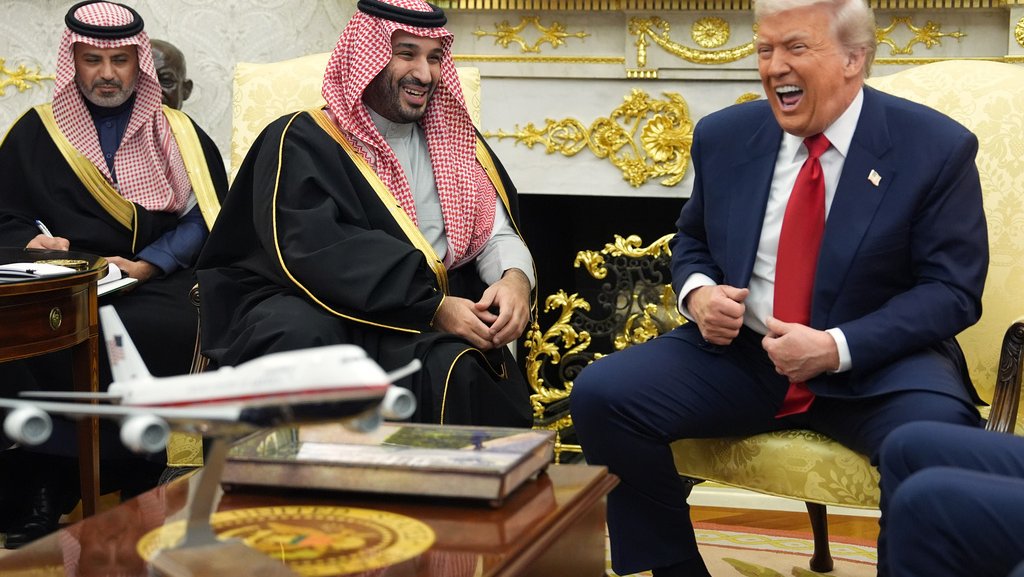
Reports suggest the Trump administration backs a pact with Saudi Arabia allowing it to enrich uranium.
22 Jul 2026, https://www.aljazeera.com/news/2026/7/22/proposed-us-saudi-nuclear-energy-deal-what-we-know-so-far
United States President Donald Trump has approved an agreement that would allow Saudi Arabia to develop a civilian nuclear programme with the potential to enrich uranium on its own soil, marking a significant shift in longstanding US non-proliferation policy, according to media reports.
Citing people familiar with the discussions, the Wall Street Journal and The New York Times reported on Tuesday that Trump is expected to ask Congress to approve the agreement, which could pave the way for US companies to help build Saudi Arabia’s nuclear industry.
The timing is likely to prove controversial, with the US saying one of the objectives of its military campaign against Iran is to prevent it from acquiring the ability to build a nuclear weapon. Critics say that allowing Saudi Arabia to enrich uranium could weaken that message, even if the programme is intended for civilian use, while other commentators fear that raising nuclear enrichment levels could be misused.
Here’s what we know.
Why is this significant?
Saudi Arabia has long sought a civilian nuclear programme as part of plans to diversify its economy and reduce its dependence on oil.
Negotiations over US nuclear cooperation have stretched across multiple administrations. Under former President Joe Biden, talks were tied to a broader package that included Saudi recognition of Israel, according to The Times.
Those negotiations stalled after Israel’s genocidal war on Gaza, but the Trump administration revived discussions, removing the normalisation requirement.
During Saudi Crown Prince Mohammed bin Salman’s visit to the US last year, the two countries announced a framework for civilian nuclear cooperation, laying the groundwork for what they described as a long-term partnership built on non-proliferation standards.
What does the reported agreement say?
According to the reports, the agreement would last for 30 years and allow US companies, including Westinghouse, a Pittsburgh-based nuclear energy giant, to help develop Saudi Arabia’s civilian nuclear sector.
One of its most significant provisions would permit Saudi Arabia to pursue domestic uranium enrichment following a joint US-Saudi study.
Enriching uranium is not illegal and is used to produce fuel for nuclear power plants. However, the same technology can also produce highly enriched uranium suitable for nuclear weapons if enrichment continues to much higher levels.
Saudi Arabia has previously said it would seek a nuclear weapon if Iran were ever to acquire one, although Tehran insists its nuclear programme is peaceful.
Why are some experts concerned?
The reported agreement is expected to fall short of the standards accepted by some other US partners.
In 2009, the United Arab Emirates signed a so-called “123 Agreement” with Washington before opening its Barakah nuclear power plant, agreeing not to enrich uranium or reprocess spent nuclear fuel – a model that non-proliferation experts have often described as the “gold standard”.
Reports suggest the Saudi agreement would instead allow enrichment and may not require the International Atomic Energy Agency’s (IAEA) Additional Protocol, which gives inspectors broader powers to verify that nuclear material is not being diverted for military purposes.
Michael Horowitz, a geopolitical analyst, said the Saudi agreement would be “very consequential” for a number of reasons.
“The US reportedly agreed to a deal that falls both below the gold standard and doesn’t include the Additional Protocol – both of which are made to ensure a civilian programme doesn’t turn into a military one,” he said.
“This isn’t a detail: If Riyadh had wanted to just have US backing for a civilian programme, it would have done so years ago – with Washington’s blessing. In other words, the goal is to get US support for a deal that doesn’t fully exclude a pathway to a nuclear programme,” he added.
“That’s not to say that there aren’t guarantees. But guarantees are purely bilateral, and that means they will be entirely dependent” on the state of US-Saudi relations, said Horowitz.
Why would the US agree?
Supporters argue the agreement would strengthen US influence in the Gulf.
In a report submitted to Congress earlier this year, the Trump administration argued that expanding civilian nuclear cooperation would help maintain US leadership in the global nuclear industry while preventing strategic competitors from gaining influence in the kingdom.
The administration has also argued that Saudi Arabia’s growing electricity demand makes nuclear energy an increasingly important part of its long-term energy strategy, despite its vast oil resources and climate well suited for solar power.
Will Congress approve it?
Any civilian nuclear cooperation agreement must be submitted to Congress, which has the power to review and block so-called “123 agreements”.
Congress would need a two-thirds majority to block the proposed agreement and override any presidential veto.
The proposal is expected to face scrutiny from lawmakers in both parties over the safeguards governing Saudi uranium enrichment.
Some members of Congress and Israeli officials have said that permitting enrichment could leave open a future pathway to a Saudi nuclear weapons capability, even if the programme begins for civilian purposes.
Andrea Stricker, deputy director of the Foundation for Defense of Democracies’ Nonproliferation Program, urged Congress to “block” the proposed agreement.
“If it does not, one hopes the policy will be reversed by a subsequent administration before too much damage is done in terms of watering down safeguards, setting negative precedents for other states, and failing to contain the spread of enrichment,” said Stricker.
The Chris Hedges Report: Is Iran Becoming Another ‘Forever War’?
July 22, 2026, https://chrishedges.substack.com/p/is-iran-becoming-another-forever
The Trump administration has embroiled the United States in another quagmire, similar to the Vietnam War and recent wars in the Middle East, by going to war against Iran. Now that the June 17th Memorandum of Understanding (MOU) with Iran is dead, the US and Iran seem to be stuck in a tit for tat war where the US bombs Iran and Iran retaliates against US and allies’ in the region. As Gulf States that are being targeted by Iran mount pressure on President Trump to stop the attacks, and a global economic crisis looms, the US is running out of options and time.
For a greater understanding of the balance of power in the region, the US’ military capacity and possible outcomes of the US-Iran War, Chris Hedges speaks with Professor John Mearsheimer in this episode of The Chris Hedges Report. Mearsheimer argues that what happens in the coming week is crucial in determining whether there can be a peaceful resolution to the conflict. At present, Iran has the upper hand, and the United States lacks the capacity to follow through on President Trump’s threats to escalate if Iran doesn’t acquiesce to Trump’s demand that it concede. If the US does escalate, then there is a real risk that in addition to a renewed closure of the Strait of Hormuz, Yemen may close the Bab-el-Mandeb Strait, cutting off oil flows as strategic reserves around the world dwindle, which could trigger a global depression.
Hedges and Mearsheimer discuss the similarities between the war on Iran and the Vietnam War. Leadership in the United States knew early on that they could not win in Vietnam, but they continued escalating anyway. It is likely that the Trump administration knows that they have failed in Iran, but they refuse to give in even though they lack an exit strategy. Mearsheimer frames the June 17th MOU as the first concession by the US and says, “The idea that we have a newfound advantage over the Iranians now that we didn’t have when we signed the June 17th MOU agreement makes no sense at all.”
Hedges summarizes the potential paths available to the United States: “One, if the United States does continue to attack infrastructure, we are headed for a humanitarian disaster in the Gulf. If it doesn’t, then it leaves open the possibility of some kind of a negotiated settlement that is even more advantageous to Iran than the memorandum of understanding.” A glimmer of hope, Mearsheimer offers, is that President Trump halted further attacks on Iranian infrastructure this week, but what happens next is uncertain.
US Troops Always Die For The US Alone
July 22, 2026, Nate Bear, https://www.donotpanic.news/p/us-troops-always-die-for-the-us-alone
In the wake of the death of three American troops on a base in Jordan following a retaliatory attack by Iran, I’ve seen a lot of commentary online stating that they “died for Israel.”
This idea that Americans are dying for Israel has become an oft-repeated narrative since the US and Israel began their illegal war of aggression on Iran.
I understand the impulse, attraction and utility of this argument.
Yes, Zionists and their apartheid death state have a huge amount of slaughter, blood and destruction on their hands.
And yes, the entity and its supporters have established a symbiotic relationship with US governance which has allowed them to advance the genocide of the Palestinian people and their project of regional domination.
And I think it’s likely that convincing Americans that Americans are dying for another country helps undermine support for Israel and brings us closer to the day that the relationship is severed for good.
But the apartheid entity and its supporters are merely the parasite feeding from the lifeblood of the host. The host is providing the weapons and money as well as the global political cover for the grossly engorged entity to act with impunity.
And it is doing it wilfully.
The most revealing comment ever made about Israel didn’t come from Donald Trump, it came from Joe Biden, who as far back as 1986 said, loudly and proudly from the floor of the Senate, that “if Israel did not exist the United States would have to invent an Israel to protect our interests in the region.”
This should tell you absolutely everything you need to know.
The Middle East and West Asia is a vital zone of influence for empire, and Israel is just one of the on-shore aircraft carriers that enables imperial power projection thousands of miles from its shores.
The US soldiers died in Jordan, just one of the nodes in a broad network of bases spanning Kuwait, Oman, Bahrain, Iraq, the UAE, Saudi Arabia, some of which have been in existence since the 1940s. While Israel is particularly useful to the imperium because it shares the expansionist, colonial instincts of its host, all these countries have friendly relations with the entity, the Gulf Arabs having long ago decided to choose Zionism and the siren call of empire over regional solidarity and Palestine. These bases don’t exist for Israel or the protection of Israel, they exist, exactly as Joe Biden said, to advance American interests.
Arguing that Americans are dying for Israel feels to me like a way to offload responsibility for a globe spanning empire, to indulge a fantasy that a benign America exists, and to deny the historical reality of American barbarism. It feels, ultimately, like a way for Americans to absolve themselves of their imperial sins.
Israel is a vital component of empire, but its crimes flow from the impunity and barbarity of US empire, not the other way around.
And for sure, the dismantling of a proxy regime like Israel is a necessary step on the road to a more just world, but that’s exactly what Israel is. A proxy. The tip of a spear. And an important one at that, but it isn’t the throwing arm. From Ukraine to Taiwan to its mercenaries and local insurgent groups across the globe, empire has plenty of other spear tips.
Did the apartheid state make the US invade Vietnam, commit genocide in Korea, bomb Panama, destroy clinics in Sudan or murder Venezuelans in Caracas just seven months ago? Did the Jewish ethno-state make it so that rape followed by the murder of Vietnamese women was so common that US soldiers had a special term for it: double veteran?
I don’t think so.
If Israel ceased to exist, the US regime wouldn’t pack away its toys, dissolve its one trillion dollar military death machine and go home. It would find or create another Israel.
The US resumed bombing Iran all on its own, after all.
The tragedy isn’t that American empire gets impressionable young men and women to die for Israel, the tragedy is that it gets them to die for it. For empire.
I don’t mean a tragedy we should be particularly sad about. I mean a tragedy in the original meaning of the world.
A Latina (as one of the dead soldiers, Isabella Gonzalez, was) dying for an empire of white nationalist supremacy currently trying to deport her neighbours, an empire which will never mourn her, is a genuinely classical level of tragedy, one the Greeks would be proud of.
Framing the deaths of soldiers in the Middle East as deaths for Israel makes it sound as if there would be some other just cause for which US troops could die.
There isn’t. All American troops die for empire.
The goal shouldn’t be to get Americans to stop dying for Israel.
The goal should be to get Americans to stop dying for the United States of America.
The Israeli crimes against Palestinians did not “start” in October 2023
Israel was born of Zionist terrorism (Irgun, Stern, Lehi) against the original, indigenous, inhabitants of Palestine

Eva Karene Bartlett, Jul 23, 2026, https://evakarenebartlett.substack.com/p/the-israeli-crimes-against-palestinians?utm_source=post-email-title&publication_id=3046064&post_id=208173581&utm_campaign=email-post-title&isFreemail=true&r=1ise1&triedRedirect=true&utm_medium=email
I lived in Gaza for 3 years (and 2 Israeli wars on Gaza) and spent a lot of time with farmers and fishers (who came under Israeli fire near-daily when they simply tried to fish or work their land), also lived in central Gaza, took public transit, and spoke directly with people. International organizations that worked there tended—from what I saw—to be cut off from the reality, living in expensive apartments, dining at one of a handful of expensive restaurants, driving around in their own SUVs…really not interacting meaningfully with people there (I’m sure there were exceptions, but from my experience this was the reality).
I wrote an overview after leaving Gaza, which is relevant today as it outlines the many ways Israel has been slow genociding Gaza over a decade and a half before it began its current, ongoing, horrific genocide—by ensuring Palestinians only just survived: bombing, burning or destroying their agricultural land, firing on farmers: bombing or stealing their fishing boats, firing on or abducting fishers; ensuring the sewage was untreated and pumped into the sea, or overflown into the streets; ensuring the water was almost completely undrinkable; deliberately starving Palestinians by denying the adequate entry of aid (and destroying their food sources, as above); denying exit for urgent medical care; and on and on…
During the December 2008/January 2009 Israeli war on Gaza, I was in Northern Gaza, riding in ambulances, documenting civilians injured and murdered by Israeli bombing, drone strikes, sniping…
During the November 2012 Israeli war on Gaza, I was in Deir al-Balah documenting the destruction and also at al-Aqsa hospital documenting the injured and the murdered.
This page has links to various articles I wrote at the time, also follow up investigations, including documentation of:
-Israel’s widespread use of White Phosphorous on civilians
-Israel’s deliberate sniping and shelling of Palestinian medics, maiming and killing numerous
-Israel’s deliberate sniping or point blank assassination of civilians, including children and infants
-Israel’s deliberate drone striking of civilians, including children
and more.
But before going (by boat) to Gaza in November 2008, in 2007 I spent 8 months in various West Bank communities which were being aggressed, abused, harassed by the Israeli army and by illegal Jewish colonists.
My overview of that time includes:
–Israeli army invasions into Nablus and into nearby villages, during which the Israeli army terrorized Palestinian civilians, shot up their homes, killed, injured and abducted Palestinian civilians (including a medic)
-Documenting some of the hundreds of Israeli checkpoints and roadblocks, and the impact (including deadly) they have on Palestinian civilians trying to move from one point to the next, for work, medical care, study, or other.
-The savagery of illegal Jewish colonists—usually enabled by accompanying Israeli soldiers, including attacks on farmers I was with, attacks on Palestinian civilians whose tents I slept in in Susiya, menacing and threatening Palestinian civilians (including children) in Khalil/Hebron (where illegal Jewish colonists have violently taken over Palestinian homes and occupy the streets, beating civilians, including children
-The brutality of the Apartheid Wall
-The courageous non-violent resistance of Palestinians in communities throughout the West Bank, especially in the village of Bil’in, whose demonstrations I joined nearly a dozen times. There, we immediately came under high velocity tear gas canisters fired at close proximity from invading Israeli soldiers, as well as rubber-coated bullets and even live ammunition (as such unarmed protests in Gaza, the Israeli army usually didn’t bother with tear gas but started immediately firing live ammunition at us, as they did to unarmed Palestinian farmers—elderly, young men and women, children—and myself).
The daily crimes I saw in the West Bank and Gaza continue today and impact every facet of Palestinians lives and existence. Post 2023, people who don’t even follow closely are aware of the ongoing Israeli genocide and land theft of Gaza, though that said the media has largely moved on. The crimes in the West Bank get less coverage, and are fully enabled top down in order for Israel to continue ethnic cleansing of indigenous Palestinians and continued illegal expansion.
US signs landmark nuclear deal with Saudi Arabia
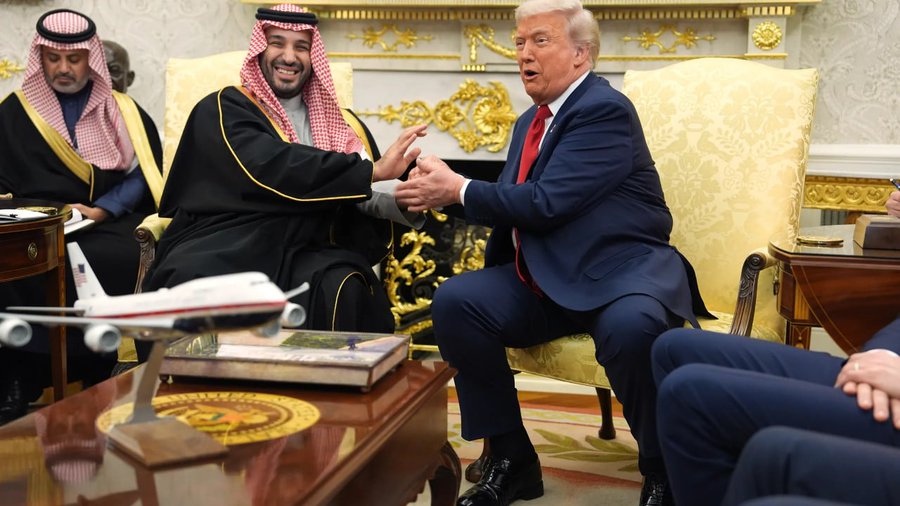
Nuclear experts and former officials in Israel – the US’s top ally in the Middle East – have voiced concern that the plan could ultimately lead to Saudi Arabia being able to develop a nuclear weapon – though other experts say that path would likely take decades and spark pushback from the international community.
James FitzGerald and Max Matza
The US and Saudi Arabia have signed a landmark deal that will allow the Gulf kingdom to develop a civilian nuclear programme.
The deal is described as a “peaceful nuclear co-operation agreement” that will provide “great access for American companies in the Saudi nuclear energy program” by the US energy department.
Text from the deal has not been made public, but US media report that it could allow Saudi Arabia to enrich uranium in the future – which can be used as fuel for power plants, but also to make nuclear bombs.
Experts say that would mark a first for the US and could run the risk of future nuclear proliferation in an already unstable region.
Trump’s nuclear deal with Saudis jettisons longstanding US demands
The US Department of Energy said a “bilateral safeguards agreement” had been signed along with the co-operation deal.
“Together, these two agreements lay the legal foundation for a decades-long, multi-billion-dollar partnership that advances several priority economic and strategic objectives, including nuclear nonproliferation,” the statement said.
The Saudi government also released a statement saying the deal “represents an extension of existing co-operation between the two countries in the energy sector”, noting that it comes after the Saudi leader visited Washington last November.
The nuclear issue has been at the centre of the months-long US-Israeli conflict with Iran. The two nations say one of the reasons they attacked Iran in February was to prevent the country from ever developing a nuclear weapon – something that Tehran denies planning to do.
Saudi Arabia’s de facto ruler, Crown Prince Mohammed bin Salman, told CBS News in 2018 that his own nation was not planning to acquire a nuclear weapon, but that “without a doubt if Iran developed a nuclear bomb, we will follow suit as soon as possible”.
Wednesday’s announcement came as fighting escalates between the US and Iran. Saudi Arabia, a longtime US ally, hosts several US bases that have been targeted by Iranian attacks. It also comes two days after Iran’s allies in Yemen, the Houthis, announced a “maritime blockade” against the kingdom.
Specific details of the nuclear deal have not been given but earlier media reports suggested that, after undertaking a joint study with the US, Saudi Arabia may be allowed to enrich uranium on its soil to produce fuel at a US-built enrichment facility, instead of relying on imported fuel.
This could be worth billions of dollars to the US, whose companies could be involved in building a facility to produce enriched uranium, which can be used as fuel for power plants but also to make nuclear bombs.
“Rest assured, these agreements uphold the highest standards of nuclear safety and nonproliferation, while relying on the world’s best nuclear technology and scientists, designed right here in the United States,” US Secretary of Energy Chris Wright said.
The energy department said the deal would advance both “US and regional security”, and would strengthen America’s “competitive edge in civil nuclear technology”.
Nuclear experts and former officials in Israel – the US’s top ally in the Middle East – have voiced concern that the plan could ultimately lead to Saudi Arabia being able to develop a nuclear weapon – though other experts say that path would likely take decades and spark pushback from the international community.
Israeli Economy Minister Nir Barkat said his country “can manage it” if Saudi Arabia had nuclear power for peaceful means.
Israel itself is widely believed to have nuclear weapons, but it neither confirms nor denies that this is the case.
Rosemary Kelanic, the director of the Middle East programme at the US-based Defense Priorities think tank, said it would be “quite shocking” if the US were to allow Saudi Arabia uranium enrichment facilities.
“The US has never done that before. We have never helped another country enrich on their own soil,” she said, adding that this was because “if you can produce your own nuclear fuel, you become a much bigger risk” for building nuclear weapons.
The agreement will now be sent to the US Congress for review.
‘Gaza Is One Giant Graveyard’
SCHEERPOST, July 21, 2026, Marah Abdel Jaber Prism
A seasoned humanitarian aid worker directing distributions to Gaza since the start of Israel’s genocide in October 2023 went on their first mission to the Strip last winter. During the two-week mission, they conducted a ground assessment: testing the efficacy of aid, recording field interviews with residents, and surveying the functionality of local hospitals. They have requested anonymity in order to share what they learned publicly, and minimize the risk of retaliation from Israeli officials.
In a Q&A with Prism in February, they reflected on the direct role of global humanitarian aid organizations in escalating the dehumanization of Palestinians under Israel’s genocide, the lack of a true ceasefire, and the world’s abandonment of Palestinians.
This interview has been edited for clarity and brevity.
Marah Abdel Jaber: What were the conditions of Gaza upon your arrival?
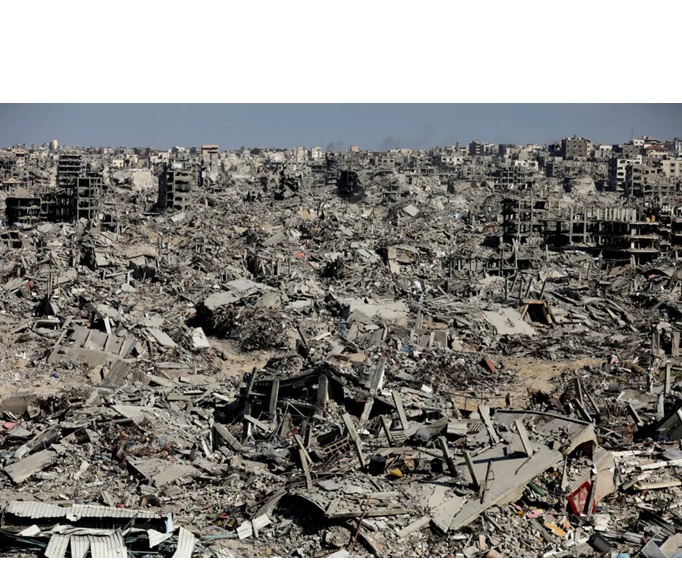
Humanitarian Aid Worker: When entering, we crossed through the Karem Abu Salem border and drove straight across the militarized yellow zone through Rafah. If I didn’t know any better, I wouldn’t think that it was an actual city before. It’s almost entirely flattened, and most of it has been bulldozed. As we made our way up towards Khan Younis, we saw some demolished buildings and rubble. You would never think that there were people living there before. It was obvious that the Israeli forces were bulldozing away evidence of war crimes, the genocide, and the dead. That was all I could think about while driving through it.
Abdel Jaber: What was a typical day in the field for you?
HAW: My role required visiting different programs that [a medical NGO] was running and giving feedback. I also looked into some of their pilot programs or their areas of interest for launching new programs. I visited a lot of different clinics, hospitals, a school, and even an orphanage. I spoke with different parts of the population dealing with orphaned or unaccompanied separated children, the elderly, amputees, or those receiving therapy. I had quite a diverse exposure to the issues that the population is facing there, in addition to the aid situation and the distribution.
Abdel Jaber: What was most striking about the reality on the ground?
HAW: The living conditions are horrendous. Many people don’t know about the reality on the ground because mainstream media is pushing the narrative of a ceasefire to distract from the next phase of the colonial project: to build on top of a cemetery. Gaza is essentially one giant graveyard. Airstrikes are happening in the dozens, day and night; the Israeli military ships would still shoot out from the sea; and fighter jets and drones were everywhere. Oftentimes people would tell me that I should have visited Gaza before the genocide, because it was heaven. It would stop me. I couldn’t bear the thought of that. It was still occupation, injustice, and apartheid, but they would say it was better than now. They want the Palestinian people to choose which level of oppression they have. You can have minimal or maximum oppression, because you will never have absolute freedom. These are your options. Genocide, or apartheid and occupation.
“People would tell me I should have visited Gaza before the genocide, because it was heaven. … I couldn’t bear the thought of that. It was still occupation, injustice, and apartheid, but they would say it was better than now.”
Abdel Jaber: How would you qualify the ceasefire in Gaza during your mission?
HAW: There was nothing that would indicate an actual ceasefire. People outside of Gaza view this as a successful ceasefire for two reasons. First, the idea that aid is flowing in daily. It is, but it is still incredibly minimal while being distributed inefficiently and ineffectively. Israeli forces are also allowing in consumer goods. This signals that residents can now purchase goods, but the vast majority in Gaza have been without work for two and a half years. And a lot of people lost their money in the banks because the [Israeli Occupation Forces (IOF)] destroyed them, so they could no longer access the systems.
The secondary narrative being pushed is that, before the ceasefire, we would hear of hundreds upon hundreds of Palestinians being killed every day. Now you don’t hear as much of that. People assume that there isn’t any more killing, when really dozens will get killed in a day. That’s not a ceasefire…………………………………………………………………………………………..
HAW: Everything that we’re seeing in this genocide in Gaza, everything that the Israeli forces have implemented, is intentional. It is by design. There is nothing coincidental about it. The intentional deprivation and inhumane conditions are meant to squeeze every ounce of hope out of Palestinians in Gaza. They signaled to people that if they want to stay in Gaza, they would have to get their aid in this way. The killing was intentional to serve as a warning for everyone else watching that they either starve or die trying to access essential aid. They don’t want them to have options. At first, it seemed like the only option was to leave. Now it looks like what is being done with this Board of Peace, and building this Riviera on a graveyard, is to use Palestinians as cheap labor………………………………………………………………………………………
HAW: Someone asked me the other day, if Israel is hellbent on getting rid of the Palestinian population, why not just drop a bomb and get it over with? Why are they torturing them? Everyone knows the IOF is killing them. Why not just do it? Well, first of all, that would make the genocide too obvious. But what a lot of people miss, and we really have to stress this as often as we can, is that genocide, ethnic cleansing, apartheid, occupation, injustice—and everything all within that realm—is not only physical, it’s psychological. The psychological aspect is crucial. You can control a population through psychological torture. It explains why, even before the genocide, Israel denied the entry of chocolates, wedding gowns, construction paper, and other menial things into Gaza. Cutting off food and medication, not allowing a catheter to come in for a dialysis patient, banning menstrual pads, and more—they want to remind you at every opportunity that they are in control of everything. There is a psychological toll that has detrimental, long-term impacts. The trauma, the lack of education, the epigenetic changes that are going to happen over the years, birth defects, and mental health will take forever to deal with. They want to ensure every aspect of Palestinian society, physical and psychological, has been damaged…………………………………………………………………………………………… https://scheerpost.com/2026/07/21/gaza-is-one-giant-graveyard/
Top Israeli Minister: ‘Best For Us’ If US Fights Iran While Israel Sits Out New Round of War
‘by Tyler Durden, Thursday, Jul 23, 2026, https://www.zerohedge.com/geopolitical/top-israeli-minister-best-us-if-us-fights-iran-while-israel-sits-out-new-round-war
As four more American families grieve the deaths of soldiers killed in the war on Iran, one of the top-ranking ministers in Israel’s cabinet told an Israeli audience that having America do all the fighting and dying is “the best for us.” Israel had intensely lobbied President Trump to launch a joint war on Iran on Feb 22, and traded blows with Iran up until early June. Since Trump restarted intense, daily bombardment of Iran 11 days ago, however, Israel has sat out the action, sparing Israelis from lethal Iranian retaliation.
“The State of Israel has no interest in joining the contained confrontation between Iran and the United States,” far-right finance minister Bezalel Smotrich said in a session at the Katif Conference for National Responsibility, which endorses Jewish settlement in Palestinian territories. “The current situation is the best one for us.”
Smotrich is generally regarded as the second-most powerful cabinet member in Israel, and is a vital linchpin in Netanyahu’s government that took power in January 2023. Lacking an outright majority, Netanyahu was forced to build a ruling coalition that gives unprecedented power to religious and ultra-nationalist extremists. Smotrich leads the Religious Zionism party. He personally aspires to make Israel a theocracy, wants Israel to annex the West Bank and Gaza while barring most Palestinians from citizenship, and has said it would be “just and moral” to starve two million Palestinian men, women and children in Gaza.
In his latest remarks, Smotrich candidly acknowledged that Israel and the United States have different goals vis a vis Iran, but said America’s continued military engagement furthers the Israeli agenda. “[We] must remember that the ultimate goal of Israel, and not necessarily the United States, is to undermine and weaken the regime in Iran – to the point of overthrowing it,” Smotrich said.
Disregarding the widespread victimization of innocents that the strategy entails, Smotrich said destruction of Iran’s economy will help precipitate the Iranian government’s collapse. “Currently, inflation in Iran is at 85 percent, food inflation of over 134 percent in a total of four months, and the Iranian rial is trading at an exchange rate of 1.9 million to the dollar – and it’s going up.” He then reiterated that “the current situation is good for us, and there’s no point in pushing ourselves inward.”
Here’s how Israeli journalist Hagai Amit recently described the benefits of Israel allowing the United States to plunge forward alone in the war that Israel urged America to start:
It reduces the risk of [Israeli] casualties and allows daily life to continue largely as normal, without midnight sirens, trips to bomb shelters or major disruptions. The Finance Ministry is also relieved not to have to burden the state budget with billions of additional shekels for air operations and the interception of ballistic missiles.
Meanwhile, as Amit warmly describes the cost savings for Israel, various analysts say America’s cost of the Iran quagmire is now close to or even exceeding $100 billion, which is upwards of triple what the Pentagon has owned up to at this point.
Of course, the highest price is being paid by American service members who’ve been thrown into an unconstitutionally-initiated war launched on false premises. Four more US soldiers have been killed since Trump re-escalated the war. In addition to US Army SGT Michael Swinton being killed in Iraq when a controlled detonation of an Iranian drone went wrong, three more soldiers were killed in an Iranian strike that hit prefabricated housing units at Muwaffaq Salti Air Base in Jordan.
Initially, the Pentagon confirmed only two fatalities in Jordan: 19-year-old PVT Isabella Gonzales and 1LT Tyler Feehan. The third was classified as MIA, but the Pentagon is now saying SGT Angel Rampersad is “believed to be deceased.” The grim implication is that Rampersad’s body was devastated by an Iranian missile — nearly five months after US Defense Secretary Pete Hegseth declared that Iran’s military had been “made combat-ineffective,” and almost two months after Sen. Ted Cruz said US forces had “destroy[ed] all of their missiles and drones.”
[;’p
by Tyler Durden
Thursday, Jul 23, 2026
Trump approves 30-year nuclear enrichment deal with Saudi Arabia ‘without safeguards’: Report
The new reports coincide with an illegal war on Iran, framed by the US as an effort to ‘prevent’ Tehran from acquiring nukes
News Desk, JUL 22, 2026, https://thecradle.co/articles/trump-approves-30-year-nuclear-enrichment-deal-with-saudi-arabia-without-safeguards-report
Washington is seeking congressional approval for a nuclear energy pact with Saudi Arabia that does not include safeguards aimed at preventing the development of an atomic bomb, two sources told Reuters on 22 July.
US President Donald Trump’s government is planning to submit “to Congress a pact with Saudi Arabia to share nuclear power technology that does not include safeguards the US has long said would stop materials being used in nuclear weapons programs,” the sources said.
“The administration would submit to Congress within days a document known as a 123 Agreement that will be signed by US Energy Secretary Chris Wright and Saudi energy minister Abdulaziz bin Salman,” they added.
he White House and US Energy Department did not immediately respond to requests for comment.
A source told CNN on 22 July that “the deal would last 30 years and could be announced as soon as Wednesday.”
CNN had reported the news first over the weekend, citing sources who discussed the matter on 18 July
The outlet cited documents and sources as saying that Trump has agreed to allow Saudi Arabia to enrich uranium without the need for international safeguards arrangements, like the ones that have been imposed on Iran for years.
That report said that the draft nuclear deal from last year is still awaiting Trump’s signature despite the conclusion of US–Saudi nuclear negotiations in October last year.
“The ongoing war with Iran … has played a role in delaying Trump’s signature … the Trump administration is delaying sign-off because it could face a bipartisan disapproval resolution blocking the deals from going into effect,” the sources stated.
CNN cited experts as saying that the deal “could potentially provide Saudi Arabia with a path to nuclear weapons.”
The US president and Israel have largely justified the current illegal war on Iran as an effort to prevent the Islamic Republic from obtaining a nuclear weapon.
Iran is a member of the Nuclear Non-Proliferation Treaty (NPT), and operates under a religious fatwa outlawing the development of atomic bombs. US intelligence reports have also repeatedly concluded that Tehran is not seeking to weaponize its nuclear program.
Nonetheless, Tehran continues to refuse demands that it hand over its enriched uranium, which was raised to higher purity levels as a response to Trump’s 2018 withdrawal from the Joint Comprehensive Plan of Action (JCPOA) – an Obama-era US-Iran deal reached in 2015.
Israeli officials, including Prime Minister Benjamin Netanyahu, have been saying for decades that Tehran was close to developing a nuclear weapon.
Several years ago, Saudi Crown Prince Mohammed bin Salman (MbS) stated that if Iran acquires a nuclear bomb, “we will have to get one” as well.
Iran accuses US of violating international law after strike on nuclear plant
Energy watchdog says Darkhovin nuclear plant symbolises Iranian nation’s dignity and self-reliance
MEE staff, Middle East Eye, 19 July 2026
Iran’s nuclear energy watchdog condemned the United States for bombing the construction site of the Darkhovin Nuclear Power Plant.
In a statement, the Atomic Energy Organisation of Iran (AEOI) said the US had targeted a symbol of the Iranian nation’s dignity and its efforts to achieve self-reliance.
“The terrorist and criminal US regime, whose nature is nothing but bullying and lawlessness, carried out an aggressive and barbaric act in violation of international law,” the organisation said in a statement.
The AEOI did not disclose the extent of the damage but described the attack as a violation of international law.
The power plant is located in Khuzestan province in southwestern Iran. Construction of the current reactor began in 2022 at a site on the Karun River, about 70km south of Ahvaz and roughly 100km north of the Persian Gulf.
The International Atomic Energy Agency (IAEA) said it was looking into reports of the overnight attack.
“The facility is in the very early stages of construction and contained no nuclear material when last visited by the IAEA,” the UN agency said, adding that the attack is not believed to pose any radiological risk.
IAEA Director General Rafael Grossi reiterated a call for “military restraint in the vicinity of all nuclear-related sites”.
Earlier on Saturday, Iranian officials said Iran had withdrawn from a memorandum of understanding with the Trump administration after the US resumed its bombardment of the country.
Iran and the US have intensified their attacks since an interim ceasefire deal signed a month ago fell apart last week, raising the possibility of a return to all-out war.
US Central Command (Centcom) said the latest air strikes began at 6pm ET (10pm GMT) on Saturday at the direction of President Donald Trump……………………………………….https://www.middleeasteye.net/news/iran-accuses-us-violating-international-law-after-strike-nuclear-plant
US greenlights Saudi nuclear enrichment without safeguards: Report
MEE staff, 20 July 2026, https://www.middleeasteye.net/news/us-greenlights-saudi-nuclear-enrichment-without-safeguards-report
Crown Prince Mohammed bin Salman previously said he would acquire a bomb if Iran did
Crown Prince Mohammed bin Salman previously said he would acquire a bomb if Iran did.
The Trump administration has greenlit Saudi Arabia’s nuclear enrichment project, but with no safeguards in place to prevent the development of a bomb, CNN reported on Friday.
The draft deal, viewed by the news outlet, showed Washington’s support for Riyadh’s civilian nuclear programme is still awaiting President Donald Trump’s signature, despite US-Saudi negotiations concluding in October.
Unnamed officials cited in the story indicated that the documents, which include the mandatory “123 agreement” and safeguards protocols, have not yet been sent to Congress, potentially for fear of bipartisan pushback.
It is unclear how long the president will wait, given Congress is likely to switch hands to a Democratic majority after the November elections, stymying his policy agenda.
Crown Prince Mohammed bin Salman and his advisors have long pushed for a deal that would allow them to enrich uranium, which they say the kingdom holds vast reserves of.
“We will enrich it and we will sell it and we will do a ‘yellowcake’,” Saudi Energy Minister Prince Abdulaziz bin Salman said last year, referring to a step in the process that comes after mining but before enrichment.
Nuclear umbrella
The Saudi push to be included under the US’s nuclear umbrella was a key issue during the Saudi crown prince’s visit to the White House in November last year.
Days after Israel attacked Hamas negotiators in Qatar earlier in the year, Saudi Arabia signed a defence pact with Pakistan, the only nuclear-armed state in the Muslim world.
Pakistan is estimated to possess around 170 nuclear warheads. Saudi and Pakistani descriptions of the deal said it encompassed all military options.
The Americans’ nuclear talks with Saudi Arabia have been kept under tight wraps, but one former US intelligence official previously told Middle East Eye that the idea of extending protection to the kingdom could serve a purpose.
“It would pull them out of the Pakistanis’ nuclear umbrella and make the Saudis feel better than the Qataris,” he said at the time.
In February, the Trump administration notified Congress it is pursuing a civil nuclear pact with Riyadh that does not include non-proliferation safeguards it has traditionally imposed on countries to prevent them from developing nuclear weapons.
The language in the document also leaves room for Saudi Arabia to enrich uranium, as it stipulates “additional safeguards and verification measures to the most sensitive areas of potential nuclear cooperation” between the two countries, including enrichment and reprocessing, the report said.
A nuclear deal with Saudi Arabia that does not explicitly prohibit the kingdom’s potential to enrich uranium in the future would be much more transformative for the region than a separate deal for F-35 warplanes that the Trump administration is pursuing.
In nuclear agreements with foreign governments, for example, the UAE, the US made cooperation conditional on commitments that they will not enrich uranium or reprocess spent nuclear fuel.
The UAE, Morocco and dozens of European and Asian countries have signed the so-called “123 Agreements” with the US.
US law generally requires a 123 Agreement to be in force before licensing significant exports of US-origin nuclear material or equipment to a foreign country.
In addition to a 123 Agreement, US lawmakers have insisted that the US require Saudi Arabia to submit to what is called the “Additional Protocol”, which allows the United Nations’ International Atomic Energy Agency (IAEA) additional access to nuclear facilities, data, and undeclared sites.
The UAE, the only other Gulf state to have officially partnered with the US in nuclear energy, signed the Additional Protocol to its IAEA agreement in 2009.
Reuters reported, however, that the Trump administration sent a preliminary report to some heads of congressional committees in November, which it is required to send if it is not pursuing the Additional Protocol.
The Reuters report underscores how Trump is putting deal-making at the centre of his diplomacy, even if it means chafing at the traditional concerns of the US foreign policy establishment.
The Fall of Israel’s Longest-Serving Leader: Is This the End for Netanyahu?
Aleena Im , July 20, 2026, https://journal-neo.su/2026/07/20/the-fall-of-israels-longest-serving-leader-is-this-the-end-for-netanyahu/
Israel may be witnessing the twilight of Netanyahu’s era as security failures, war fatigue, and the rise of the Yashar party erode his aura of indispensability. In geopolitics, leaders who build their legacy on security often fall when that very promise collapses.
In the world of geopolitics, even the strongest of leaders can be dethroned by just one crisis. For almost two decades, PM Netanyahu has held on as the leader of the Israelis. Considered to be the longest-serving prime minister of Israel, Netanyahu’s foreign policy revolves around security and regional monopoly. However, now in 2026, he is facing serious political backlash. It seems like his policies are now backfiring, and the situation is getting out of hand.
From domestic political circles to the international ones, hatred against Netanyahu has been increasing at an alarming rate. Whether it’s the October 7 attack or the recent war with Iran, Israel has been caught in a protracted conflict where it has become too costly to win the war. Is Israel witnessing the end of Netanyahu’s era, or is he preparing for a bigger comeback? The unfolding of Israel’s domestic circumstances would direct the ultimate result.
Israel’s Multi-Party System
There are various political factions in Israel, divided into right-wing, left-wing, and centre-wing parties. However, due to intense political fragmentation, no single party has ever been able to secure a majority in the Knesset. Therefore, coalition-based politics have become central to Israel’s domestic political structure. Bibi Netanyahu belongs to the right-wing political party named Likud, while the centrists include the alliance of opposition leaders Yair Lapid and Naftali Bennett. The leftist parties include Arab-Israeli factions, which never secured a majority.
The major reason why Netanyahu has remained in power for almost two decades is that he has mastered coalition politics and has made alliances with nationalist and religious parties. However, the same coalition-based politics that allowed Netanyahu to remain in power are now creating vulnerabilities for him. A new political party, ‘Yashar,’ has been established by the former IDF Chief Gadi Eisenkot. Although he belongs to the centrist faction, his popularity has seen a boom in recent months, even more than that of his predecessors, Lapid and Bennett. This ever-increasing political fragmentation would now decide the future trajectory of Israel’s foreign policy…………………………………………………………………………………………………………………………………………….
Conclusion
“The old order changeth, yielding place to new.” (Alfred, Lord Tennyson)
The upcoming elections in Israel would decide the fate of Netanyahu’s political career. However, one thing would be permanent: any future administration would continue to pursue the aims of dismantling Iran and its regional partners in one way or another. Their strategies and policies might be different, but their ultimate objective would be the same. The newly emerged Yashar party is gaining momentum at an alarming rate. Although Netanyahu remains the most influential political personality in Israel, the combination of security failures and political fragmentation has caused a serious dent to his indispensability. Whether he will survive this challenge or not remains uncertain. The fact is that, for the first time in years, Israel is seriously contemplating a future beyond Benjamin Netanyahu. https://beyondnuclearinternational.org/2026/07/21/fatal-fallout/
Nuclear deal that would permit uranium enrichment by Saudi Arabia in limbo awaiting Trump admin sign-off
18 July By Davis Winkie, Zachary Cohen, https://edition.cnn.com/2026/07/18/politics/saudi-arabia-trump-nuclear-enrichment
The Trump administration has tentatively agreed to allow Saudi Arabia to enrich uranium without enacting international safeguards intended to prevent nuclear weapons development, according to sources familiar with the matter and documents reviewed by CNN.
The draft nuclear accord that outlines US support for Riyadh’s civilian nuclear program is awaiting President Donald Trump’s signature despite US-Saudi negotiations concluding in October 2025.
Two sources familiar with the matter indicated that the ongoing war with Iran — which according to Trump was launched in part to prevent Tehran from using its enriched uranium to build nuclear weapons — has played a role in delaying Trump’s signature. Some on Capitol Hill also believe the Trump administration is delaying sign-off because it could face a bipartisan disapproval resolution blocking the deals from going into effect, said one of the sources.
Experts told CNN the deal could potentially provide Saudi Arabia with a path to nuclear weapons unless stringent safeguards are put in place. The country’s Crown Prince, Mohammed bin Salman, has previously threatened to build his own nuclear weapons should Iran, his country’s principal regional rival, acquire the bomb.
Four sources said the agreement, which includes a civil nuclear cooperation deal known as a 123 agreement and a mandatory nuclear safeguards agreement, still have not been sent to Congress for review, as federal law requires the White House to do once signed.
The White House did not answer questions regarding the agreements and instead referred CNN to an October 2025 statement from Energy Secretary Chris Wright announcing the end of negotiations.
“We’ve come together on a deal for civil nuclear cooperation,” Wright said at the time. “Together, with bilateral safeguard agreements, we want to grow our partnership, bring American nuclear technology to Saudi Arabia and keep a firm commitment to nonproliferation.”
The Saudi Arabian Embassy in Washington, DC did not respond to a request for comment.
American forces struck a nuclear power plant under construction in southern Iran,
President Trump said American forces ‘hit Iran hard’ in honour of the US service members killed in Jordan on Friday
The state atomic energy
agency called the attack a “clear violation of international law”. The Atomic
Energy Organisation said that several projectiles hit the Darkhovin nuclear
power plant in Khuzestan province, but did not give details about possible
damage from the attack.
The United Nations’ International Atomic Energy
Agency (IAEA) called for restraint, adding that it was looking into the
reports. It also highlighted that the plant was in the “very early stages
of construction” and “contained no nuclear material when last visited
by the IAEA”.
Times 20th July 2026,
https://www.thetimes.com/world/europe/article/iran-claims-us-strikes-hit-nuclear-power-plant-0kb7cpghx
Satellite images show damage inside Iran’s Bushehr nuclear power plant

Satellite images [on original] reveal strikes between July 7 and 12 on Iran’s largest nuclear power plant
By Al Jazeera Staff, 17 Jul 2026, https://www.aljazeera.com/news/2026/7/17/satellite-images-show-damage-inside-irans-bushehr-nuclear-power-plant
Satellite imagery reveals new damage inside Iran’s Bushehr nuclear power plant complex following the latest wave of US strikes during renewed military escalation between Washington and Tehran.
A comparison of European Sentinel-2 satellite images captured on July 7 and July 12 shows newly formed impact scars inside the Bushehr complex, along with another apparent strike site within nearby support facilities.
The open-source unit of Al Jazeera Network compiled satellite imagery, field footage and official data from the US Central Command (CENTCOM) to map the locations of US strikes across Iran between July 7 and July 15.
Ehsan Jahanian, deputy governor of Bushehr province, had said on July 9 that several locations across the province had been struck, including areas surrounding the Bushehr nuclear power plant, a military site in Choghadak and a fishing port in the south of the province, according to Iran’s state news agency IRNA.
Jahanian later denied reports that the nuclear power plant itself had been hit, saying the reactor remained unaffected and continued operating normally.
The strikes came during a broader US military campaign against Iran. US Central Command (CENTCOM) said it struck about 90 military targets on July 7-8, including air defence systems, missile and drone storage sites, naval assets and military infrastructure along Iran’s southern coast.
The US did not identify Bushehr or any nuclear facility among the announced targets.
Iran’s only operating nuclear power plant
Bushehr is Iran’s only operating nuclear power plant. Located about 17km (11 miles) south of the city of Bushehr, the 2.5-square-kilometre (one-square-mile) complex includes reactor buildings, cooling-water channels connected to the ocean, assembly halls and a harbour used to receive equipment and materials for construction and reactor operations.
The site contains two reactor buildings, one operational and another that has remained unfinished for years.
According to the International Atomic Energy Agency’s Power Reactor Information System (PRIS), Bushehr-1 has a net electrical capacity of about 915 megawatts.
It was first connected to Iran’s electricity grid in September 2011 before entering commercial operation in September 2013.
Unlike uranium enrichment facilities such as Natanz or Fordow, the operating Bushehr reactor contains nuclear fuel and radioactive materials associated with power generation, making any damage to its cooling, power supply or containment systems significantly more sensitive.
Previous incidents
The July strike was not the first reported projectile incident near the Bushehr plant in 2026.
The IAEA event reports submitted by Iran’s nuclear regulator recorded multiple incidents, including projectiles striking inside the plant’s premises on March 17, March 24 and March 27, as well as another impact near the fence surrounding the reactor’s first unit on April 4. In each case, Iranian authorities reported that the reactor continued operating normally and that no damage to the reactor itself had been recorded.
The IAEA has repeatedly stressed that nuclear facilities should never become targets of armed attacks because of the potential consequences for people, the environment and regional nuclear safety.
1 This Month
23-25 October – on Zoom – World BEYOND War’s annual global conferenc


Shut down the radiation-damaged Heysham nuclear reactors now
To see nuclear-related stories in greater depth and intensity – go to https://nuclearinformation.wordpress.com

Say No to NASA’s Reckless Nuclear Reactor on the Moon
Say No to NASA’s Reckless Nuclear Reactor on the Moon

-
Archives
- October 2026 (247)
- September 2026 (339)
- August 2026 (330)
- July 2026 (355)
- June 2026 (287)
- May 2026 (306)
- April 2026 (356)
- March 2026 (251)
- February 2026 (267)
- January 2026 (308)
- December 2025 (358)
- November 2025 (359)
-
Categories
- 1
- 1 NUCLEAR ISSUES
- business and costs
- climate change
- culture and arts
- ENERGY
- environment
- health
- history
- indigenous issues
- Legal
- marketing of nuclear
- media
- opposition to nuclear
- PERSONAL STORIES
- politics
- politics international
- Religion and ethics
- safety
- secrets,lies and civil liberties
- spinbuster
- technology
- Uranium
- wastes
- weapons and war
- Women
- 2 WORLD
- ACTION
- AFRICA
- Atrocities
- AUSTRALIA
- Christina's notes
- Christina's themes
- culture and arts
- Events
- Fuk 2022
- Fuk 2023
- Fukushima 2017
- Fukushima 2018
- fukushima 2019
- Fukushima 2020
- Fukushima 2021
- general
- global warming
- Humour (God we need it)
- Nuclear
- RARE EARTHS
- Reference
- resources – print
- Resources -audiovicual
- Weekly Newsletter
- World
- World Nuclear
- YouTube
-
RSS
Entries RSS
Comments RSS

