‘Sip your coffee while watching the sunrise’: How Israel is colonizing the West Bank by selling Palestinian land to Jewish Americans
Israeli real estate companies are marketing land belonging to Palestinians in the West Bank to Jewish American buyers. We spoke to the Palestinians who are being displaced in order to make way for new Jewish settlement construction.
Mondoweiss By Majd Jawad July 17, 2026
In mid-May, protesters gathered outside a synagogue in Brooklyn to demonstrate against a real estate expo being held inside. The properties advertised for sale were not located in New York City, but in illegal Israeli settlements in the occupied West Bank, and the target clientele was members of the Jewish American community.
The “Great Israeli Real Estate Event,” organized by the Israeli company, My Home in Israel, was one of many property fares held across the U.S., Canada, and the UK, targeting prospective Anglophone Jewish buyers. A recently scheduled London event carrying the same name drew widespread condemnation last June from human rights groups and over 100 British lawmakers.
The settlements at the top of the event’s promoted property listings included Ma’ale Adumim, Givat Ze’ev, Karnei Shomron, and Kfar Eldad. Each listed area is undergoing urban expansion and new construction, concurrent with seizure and confiscation orders targeting the Palestinian lands surrounding them — a systematic process aimed at entrenching settlement dominance.
The promotional advertising for these settlements deploys seductive language to attract investment. An advertisement for a real estate project in Kfar Eldad, located within the Gush Etzion Regional Council southeast of Bethlehem, pitches a rural lifestyle “close to Jerusalem, far from the routine.” The ad reads: “Time flows a bit differently around here. In the morning you can sip your coffee while watching the sunrise, and just 12 minutes later, before your coffee has even cooled, find yourself in Jerusalem. And in the evening, you’ll return to soothing tranquility. This makes Kfar Eldad the perfect alternative for those seeking reasonably priced housing close to Jerusalem, but away from the noise and traffic of city life.”
Behind the glossy brochures and manicured images of “modern residential communities” lie painful chapters of systematic Palestinian land confiscation — a process that has expanded in recent years to encompass nearly half of the total area that Israeli occupation authorities have declared “state lands” since the Oslo Accords were signed.
The “soothing tranquility” in the hills and open terrain of Bethlehem was, until recently, home to Palestinian and Bedouin communities who practiced seasonal farming and herding. Those original inhabitants were barred from accessing their land, which was confiscated under military orders decades ago, before settlement projects were built on it…………………………………………………………………………………………
Palestinians forced out, Jewish settlers brought in
……………………….At the start of this year, the Israeli government decided to confiscate approximately 700 dunams (70 hectares) of Palestinian land for the construction of a new settlement neighborhood in Karnei Shomron, built east of Qalqilya in the northern West Bank and overlooking the Mediterranean coastal plain 10 to 15 kilometers away.
This confiscation falls within what Israel calls its “Roof plan,” an all-encompassing agreement for expanding the settlement by adding 6,000 new housing units and accompanying infrastructure in the northern West Bank…………………………………………………………………………………………………………………………………………………………………………………………………………………………..
How land goes from ‘state land’ to the real estate market
Khalil Tafakji, a researcher specializing in settlement and Jerusalem affairs and director of the cartography department at the Arab Studies Society, told Mondoweiss that Palestinian land is seized in a way that often takes roundabout legal avenues to strip Palestinians of their rights to it before it is offered for sale on the market.
“At that stage, the land is not offered for sale directly,” he explained. “Rather, it is excluded from the scope of private Palestinian ownership altogether.” The Israeli state does this by declaring the land “insufficiently cultivated to establish ownership,” Tafakji said, or by sealing it off and designating it a closed military zone reserved for army training. These areas are rendered “state lands” under the administration of the Israel Land Authority.
The first administrative step in this designation process rests on Israel’s interpretation of Ottoman land law, which has historically governed land ownership in Palestine. . Only then are properties marketed to potential homebuyers ahead of construction. The state effectively leases the land to prospective homeowners, and what buyers acquire is the property, not the land itself. “A buyer can own the property for 99 renewable years, while the land remains in the state’s name under what is called a land leasehold arrangement,” …………………………………………………………………………………………………..
Jerusalem as a settlement magnet
In settlement promotional campaigns, proximity to Jerusalem is often a cornerstone of their marketing strategy, presenting settlement properties in the Gush Etzion bloc as a natural geographic and urban extension of the city. This falls under Israel’s “Greater Jerusalem” project, which has necessitated the ethnic cleansing of countless Palestinian communities stuck in administrative “no-man’s-lands” inside the West Bank. These areas technically fall under the jurisdiction of Israel’s Jerusalem municipality, yet receive virtually none of its services. ……………………………………………………………………………………………………………………………………………………………………………………………………………………………… https://mondoweiss.net/2026/07/sip-your-coffee-while-watching-the-sunrise-how-israel-is-colonizing-the-west-bank-by-selling-palestinian-land-to-jewish-americans/
Hamas’s Governance Exit Exposes Israel’s Real Objectives
Abbas Hashemite, July 15, 2026, https://journal-neo.su/2026/07/15/hamass-governance-exit-exposes-israels-real-objectives/
Hamas’s decision to relinquish governance of the Gaza Strip appears to be derived from domestic and international strategic needs, and to further weaken the Israeli propaganda.
Hamas’s Administrative Withdrawal Amid Gaza’s Humanitarian Catastrophe
After ruling Gaza for around two decades, Hamas recently announced that it was prepared and willing to hand over the Strip’s governance to the National Committee for the Administration of Gaza, the technocratic administration set up under US President Donald Trump’s so-called Board of Peace. According to the spokesperson of Hamas, the decision was made to “remove any pretexts for the [Israeli] occupation.” Indeed, the Israeli genocide, war crimes, occupation, and war of extermination against the Palestinian people persist despite the ceasefire, which took effect in October 2025.
According to a UNOCHA report, “nearly all of Gaza’s current population of 2.1 million people has been displaced, lacking access to sufficient shelter, food, life-saving medical services, clean water, education, and livelihoods.” According to some reports, the IDF has butchered more than 80000 Palestinians from October 7, 2023, to January, 2025; the actual figure is estimated to be much higher, as many bodies are still buried under rubble. The Israeli Defense Forces have also committed many other war crimes, such as raping Palestinian women and intentionally bombing hospitals, mosques, churches, and educational institutions, along with targeting journalists and welfare workers.
There are several indications that the Zionist regime may resume its full-scale genocidal operations in Gaza, using the resistance group’s refusal to surrender its arms and weapons as a pretext. Nonetheless, it appears that the Western nations have put the onus of honoring the deal only on Hamas, and Tel Aviv enjoys the freedom to violate the ceasefire at its will. This is evident from the fact that the IDF continues to kill Palestinian civilians, including women and children, despite the ceasefire. Moreover, it continues to control around 70 percent of the Gaza Enclave.
Why Relinquishing Governance Is a Strategic Calculation, Not a Defeat
Considering these developments, Hamas, in a strategic move, has decided to dissolve the Government Emergency Committee in Gaza. However, considering it as a surrender or defeat would be erroneous. In the current regional and domestic scenario, this was the most accurate move that Hamas could make. Through this move, the resistance group has reaffirmed its commitment to implementing the ceasefire deal and fulfilling Hamas’s objectives.
Even after one of history’s most horrific wars, the Zionist occupational regime has failed to achieve its primary objective: eliminating Hamas. The resistance’s decision to relinquish Gaza’s administration allows Hamas to reorganize its operational and institutional structures, minimize its institutional exposure, and focus on its fundamental objective, the struggle of Palestinian national liberation from the Zionist occupation. The Israeli government has long leveraged on the political, geographical, and ideological division between the West Bank and Gaza. This move would end this leverage and allow the two sides to unite.
A New Test for Israel and International Mediators
Despite this decision, the new administration would not mean complete foreign control over the Strip or exclusion of native Palestinians from politics, as Gaza belongs to its native population, not to any foreign-backed administration. Therefore, the most crucial challenge for the Western mediators will be to rebuild a representative and deeply rooted Palestinian leadership capable of raising the genuine concerns of the native people in the West Bank and Gaza. Otherwise, this new administrative structure will lose its credibility and domestic acceptance.
Another significant point to understand is that resisting and governing are two distinct functions. Therefore, this move must not be mistaken for a withdrawal from resistance. Hamas took this decision to advance its broader strategic objectives. For years, the Zionist regime of Israel has justified its war crimes, genocidal operations, and blockade of the Strip under the pretext of Hamas’s so-called threatening presence for the state.
After the resistance group’s complete compliance with the terms of the ceasefire and its announcement to transfer the administration of the Strip, the Zionist regime now seeks to hinder the implementation of the deal and hamper the National Committee from assuming the administrative responsibilities, to amplify the sufferings of the Palestinian people. This further exposes the propaganda of the Israeli government. It demonstrates that the actual ambition of the occupational regime was never to eliminate Hamas from the government; it was to deprive the Palestinians of their fundamental rights and resistance.
According to the Israeli government, the objective of this recent war was to end Hamas’s government in Gaza. After the recent decision by Hamas, the Israeli government has no reason left to blockade or bomb the Strip. Through this strategic move, Hamas is now confronting all the mediators and actors with their responsibilities. Moreover, this decision has further increased complications for the Zionist regime to legitimize its military aggression and genocidal operations in Gaza. It has been revealed once again that Hamas’s government was never the actual problem, but the refusal of the Palestinians to submit to the Israeli occupation. Through this decision, Hamas has not only gained strategic leverage but also achieved an opportunity to reorganize and restructure itself.
Аbbas Hashemite is a political observer and research analyst for regional and global geopolitical issues. He is currently working as an independent researcher and journalist
Iran Accuses Kushner, Witkoff of Pursuing Profits Over Peace in Diplomatic Talks
Drop Site reported that Iran warned Vice President JD Vance that “the pair were more interested in exploiting insider knowledge of the negotiations to profit in financial markets than they were in reaching a deal.”
Jake Johnson, Common Dreams, Jul 16, 2026
Iranian officials reportedly warned US Vice President JD Vance late last month that two officials leading the Trump administration’s diplomatic efforts in the Middle East—special envoys Steve Witkoff and Jared Kushner—were trying to profit from their proximity to critical negotiations rather than working to secure a lasting peace agreement.
According to Drop Site, which cited an unnamed Iranian official, “Iran conveyed to Vance that the pair were more interested in exploiting insider knowledge of the negotiations to profit in financial markets than they were in reaching a deal.” The Iranian side also “expressed concern about repeated leaks from Kushner to Israeli Prime Minister Benjamin Netanyahu.”
Iranian officials reportedly warned US Vice President JD Vance late last month that two officials leading the Trump administration’s diplomatic efforts in the Middle East—special envoys Steve Witkoff and Jared Kushner—were trying to profit from their proximity to critical negotiations rather than working to secure a lasting peace agreement.
According to Drop Site, which cited an unnamed Iranian official, “Iran conveyed to Vance that the pair were more interested in exploiting insider knowledge of the negotiations to profit in financial markets than they were in reaching a deal.” The Iranian side also “expressed concern about repeated leaks from Kushner to Israeli Prime Minister Benjamin Netanyahu.”
Iranians estimated that people with inside information have raked in $9 billion in profits stemming from financial market moves related to the US-Israeli war on Iran, which sparked significant volatility in energy and equity prices.
On several occasions during the war, massive trading volumes have closely preceded major conflict-related announcements by US President Donald Trump. (Kushner is Trump’s son-in-law, and Witkoff is a close personal friend of the president.)
Mohammad Bagher Ghalibaf, speaker of the Iranian Parliament and the country’s top negotiator, accused the Trump administration in March of peddling “fake news” to “manipulate the financial and oil markets and escape the quagmire in which the US and Israel are trapped.”……………………………………………..
“The public has no reason to trust Jared Kushner’s integrity as a government official to put their interests above his financial benefit,” Donald Sherman, president of Citizens for Responsibility and Ethics in Washington, said after Trump formally named Kushner a special peace envoy in February.
Less than a month later, The New York Times reported that Kushner was trying to raise at least $5 billion in funding for his private equity firm, Affinity Partners, from Middle East governments. Saudi Arabia’s Public Investment Fund is the largest investor in Affinity.
Witkoff, a real estate investor, has also faced scrutiny for potentially massive conflicts of interest.
Rep. Greg Stanton (D-Ariz.) noted during a House hearing last month that Witkoff “co-founded the cryptocurrency venture firm World Liberty Financial, alongside President Trump and President Trump’s children.”……………………………………. https://www.commondreams.org/news/kushner-witkoff-profit-iran-war
The West Won’t Punish The Settlements. Its Two-State Solution Was Always a Sham.
Western elites cannot imagine a world without Israel as their military thug in the oil-rich Middle East any more than you can imagine life without your arm.
If Israel wants the settlements to continue expelling Palestinians off their lands until there are no Palestinians left on those lands, then the West is not going to naysay it.
July 15, 2026, Jonathan Cook Substack, https://jonathancook.substack.com/p/the-west-wont-punish-the-settlements
For decades, the EU has devised ever more convoluted ways to avoid penalising Israel’s illegal settlements, even as they devour a two-state solution it claims is the only path to regional peace
If I asked you to cut off your arm, would you do it?
What if I pointed out that that your arm regularly punched a neighbour in the face so violently that it broke their nose and teeth, and left them unconscious? Would you cut your arm off then?
I’m guessing the answer to both questions is a firm, “No.”
Which is exactly why the European Union, Britain and the United States have precisely no intention of severing their support for Israel’s illegal Jewish settlements in the West Bank and East Jerusalem, however violent the Jewish colonisers who live on stolen Palestinian land prove to be.
For decades, settler militias – backed by Israeli soldiers – have beaten up Palestinians, shot them, poisoned their wells, chopped down their olive groves, torched their homes, all in an attempt to ethnically cleanse them from their historic homeland.
The relentless expansion of these illegal settlements has left any hope of a two-state solution in tatters. The West Bank is now an archipelago of Palestinian villages and towns isolated from one another by marauding violent settlers, apartheid roads only for Jews, steel and concrete barriers, and army checkpoints.
All of this has happened in full view of western states over many decades. The International Court of Justice, the world’s highest court, ruled back in 2004 – nearly a quarter of a century ago – that these Jewish settlements violated international law and needed to be dismantled.
It reiterated that demand in a decision two years ago in which it identified Israel as an apartheid state ruling over Palestinians. It warned states to “take steps to prevent trade or investment relations that assists in the maintenance of the illegal situation created by Israel in the occupied Palestinian territory”.
And yet the West has done nothing meaningful year after year as the settlements have stolen more land from Palestinians, made their lives there ever more miserable, and trashed any chance of the West’s supposed ambition of two states living alongside each other.
Remember this when Israel’s apologists tell you to wait for the same court’s definitive ruling – in a year or two, or maybe three – on what it deemed in early 2024 to be a “plausible” genocide in Gaza, just three months into Israel’s mass slaughter there.
Not only will any such ruling be far too late to make any difference to the victims of the genocide, but the US, Britain and Europe will do precisely no more to punish Israel for this crime of crimes – one we can see for ourselves without an ICJ ruling – than they have done in punishing Israel for the settlements.
Punching fist
Why? Because most western states no more wish to impose a penalty on Israel for its crimes than you would want to amputate a healthy arm.
If they refuse to lift a finger to stop a live-streamed genocide of Palestinians in Gaza, why on earth would anyone imagine they are ready to do anything to stop Israel’s violent settlers ethnically cleansing the West Bank?
The settlements are as deeply integrated into Israel as your arm is attached to your shoulder. And in turn, Israel is as much the punching fist of the imperial West’s war machine as the City of London – and its former tax-haven colonies – are the beating heart of the imperial West’s financial machine.
Western elites cannot imagine a world without Israel as their military thug in the oil-rich Middle East any more than you can imagine life without your arm.
That explains why no one really believed that EU foreign ministers, meeting once again this week to discuss banning settlement products – the bare minimum they have long been obligated to do under international law – would reach an agreement.
More than 100 legal scholars had earlier written to the European Commission’s top trade and foreign policy officials stressing the EU’s “international legal obligation”.
But as everyone predicted, EU ministers kicked the can down the road – until at least October, when they agreed to more talks about talks.
The EU has been delaying meaningful action on dealing with the settlements since at least 2004, when the ICJ ruled them illegal.
A year after that ruling, the EU issued a Technical Agreement that removed preferential trade tariffs of the kind Israeli goods enjoy from any items produced in the illegal settlements. Israel agreed only because there were so many loopholes and workarounds it had no practical effect whatsoever.
It was another seven years – in 2012 – before the EU started to express concern about these loopholes, including the fact that Israel was routinely mislabelling settlement products as “Made in Israel”.
Fast forward another three years and the EU finally got around to pretending to be closing the loopholes. In November 2015, 11 years after the ICJ ruling, the EU issued an “interpretative notice” requiring labels on settlement goods to state: “Product from the West Bank (Israeli settlement).”
Again, Israel simply ignored the notice and continued mislabelling products, or blended them with products made in Israel, making it hard to determine the provenance.
Pure pantomime
Remember, these lengthy, meaningless battles were not about banning settlement products or even imposing punitive tariffs. They were simply about labelling them correctly.
To this day, the overwhelming majority of consumers across the EU have no idea, even if items are correctly labelled, which they almost never are, that they are buying products supporting Israel’s violent campaign to ethnically cleanse Palestinians from their homeland.
It was because of this utter farce that civil society organisations started to noisily accuse the EU of complicity in Israel’s ethnic cleansing of Palestinians from the West Bank and East Jerusalem, and demand instead the outright banning of all settlement products.
These critics have now been banging their heads against a brick wall for over a decade. They have still achieved nothing, as this week’s EU meeting once again confirms.
Even were they to win a victory a year or two hence on banning settlement products, Israel would still be able to use the same workarounds it has been for the past 22 years to avoid any meaningful impact. European consumers would still be directly subsidising the violence of Jewish settler militias and the expulsion of Palestinians from their homes.
All of this has been pure theatre – or more accurately, pantomime – to suggest that some kind of administrative process is in hand, that legal avenues are being pursued, that Israel will one day pay a price for its decades-old programme of ethnically cleansing Palestinians.
And yet nothing ever actually happens. The most the EU is prepared to do is throw a sop to its critics by imposing symbolic sanctions on a couple of dozen of the most violent settlers – out of a total settler population of nearly 700,000.
Those settlers did not end up in the West Bank and East Jerusalem by accident. Most were encouraged there by the Israeli state with offers of cheap housing, lower mortgage rates and higher funding of educational and other municipal services.
Note too that this abject failure relates to Israel’s explicit goal in expanding its settlements: to eviscerate the two-state solution the West says it craves as the only way to bring peace to the region.
The fact is Europe, Britain and the US have no interest in the two-state solution. If they did, they would have used the ICJ ruling in 2004 as grounds to ban settlement products, give that ban real teeth, and threaten Israel with a loss of all preferential trade with the West until it abided by international law and removed all obstacles to Palestinian statehood, including the settlements.
They did none of this because that was never their intention.
Their only concern is keeping Israel – their pit bull in the Middle East – fed and watered.
If Israel wants the settlements to continue expelling Palestinians off their lands until there are no Palestinians left on those lands, then the West is not going to naysay it.
Just as if Israel wants to continue deliberately targeting Palestinian children in Gaza for death, as a United Nations inquiry recently determined, then the West will turn a blind eye to that too.
If Israel’s soldiers and Jewish settler militias want to take a US Congressperson hostage in the West Bank, as they briefly did to Democrat politician Ro Khanna last week, no western leader is going to make a fuss about it.
Israel may be a rogue state but it is a rogue state made entirely in the western elite’s image. The West’s only real concern is in ensuring its own publics don’t realise, as they watch a genocidal state disappear the Palestinians, that they are looking into the mirror.
Israel And The United States Are Merging Their Militaries. Here’s Why.
“From aid to partnership”, the US and Israel are set to become even more united in genocide
While the initial bill, the “United States-Israel FUTURES Act,” failed as a standalone bill, the core provisions have been included in the NDAA. This aims to “expand and accelerate bilateral defense technology research, development, testing, evaluation, integration, and industrial cooperation” between the US and Israel, led by an “executive agent” decided by the US Defense Secretary.
This merger would integrate the United States and Israeli occupation militarily, including “data fusion”, “network integration”, research and development, weapons and bio-manufacturing, and collaboration with AI, cyber, and quantum machine learning technologies. While the Israeli occupation forces and US military are already deeply connected and share many of their genocidal tactics, this represents a significant entanglement of the two most belligerent and murderous militaries in the world.
Nuvpreet Kalra, July 15, 2026, https://scheerpost.com/2026/07/15/israel-and-the-united-states-are-merging-their-militaries-heres-why/
In June 2026, Israeli Prime Minister Netanyahu wrote to Republican Representative Marlin Stutzman of California, saying that “the time has now arrived [for Israel] to move from aid recipient to partner” with the United States. Yesterday, on Fox News, Netanyahu again repeated the proposal to move “from aid to partnership“.
What Netanyahu proclaims is at the core of the proposed “United States-Israel Defense Technology Cooperation Initiative”, which has been included in a section of the National Defense Authorization Act (NDAA) that seeks to push the Pentagon budget to $1.5 trillion in 2027. This proposal to the annual military policy bill aims to essentially merge the Israeli and the US militaries.
In 2008, the US passed a law requiring it to protect Israel’s “military edge” against other countries in the region. The US is required to give Israel at least $3.8 billion a year in military funding until 2028. Israel has always been a major priority of the United States – this only makes that clearer.
This new integration differs from the way the US engages with its other allies. While NATO countries and partners share a degree of military integration with global weapons supply chains, intelligence sharing, military bases, and more, this removes the limitations in existence for military cooperation. Already, the US war drive through NATO has impacts across society beyond what might be recognised as purely military-related, given the military-industrial complex and integration of the US military in all aspects of life. In this case, the merger will deepen ruptures across the political, social, and economic system as the United States moves closer to its proxy. The main beneficiaries of this will be the weapons companies that profited immensely from and have made Israel’s genocide in Gaza possible, as they enter into new seamless contracts.
Israel is increasingly viewed across the world, and within the United States, as a pariah state. In the US, 60% of adults have an unfavourable view of Israel. This push to further integrate with Israel puts the US on the line in an attempt to ensure the continuation and longevity of the settler colonial project. By entrenching the US military with Israel’s own, it provides a layer of protection that goes even further than the impunity that has given Israel full rein to commit a holocaust in Gaza and further colonisation of the occupied West Bank. This integration will mean that Israel is given unfettered support to carry out its genocidal trajectory for the total colonisation of Palestine, inhibiting any future presidents from changing this relationship, if that were to ever occur.
This is the US empire defending itself, as the zionist state becomes isolated, by trying to make its proxy appear more robust and independent, while maintaining its unbreakable connection to the core. This is a clear response to the massive movements that have erupted across the world for nearly three years in opposing Israel’s genocide and the role of countries in facilitating it. The US is, in a way, absorbing Israel to provide the legitimacy being chipped away at internationally and domestically, ending the narrative opposition to unlimited foreign aid to Israel, which has garnered bipartisan support.
Israel is occupying at least 60% of Gaza. Palestinians are being pushed into a shrinking concentration camp, where they are bombed every single day and refused aid during what is described as a ceasefire. For US taxpayers, this merger would put even more of our money into funding this horrific genocide.
This NDAA is dangerous. Through the US-Israeli integration, it would facilitate more deadly technology, more weapons for genocide, and make it nearly impossible to sever support for Israel by the US. Through the $1.5 trillion Pentagon budget, it would funnel money out of welfare into more war and violence across the world. For the sake of humanity, we have to dismantle this apparatus of death that is the US empire, which is in a perpetual, ever-growing state of war to maintain its system of exploitation and plunder.
Nuvpreet Kalra is CODEPINK’s digital content producer. She completed a Bachelor’s in politics and sociology at the University of Cambridge, and an MA in Internet Equalities at the University of the Arts London. As a student, she was part of movements to divest and decolonize, as well as anti-racist and anti-imperialist groups. Nuvpreet joined CODEPINK as an intern in 2023 and now produces digital and social media content. In England, she organizes with groups for Palestinian liberation, abolition, and anti-imperialism.
While the initial bill, the “United States-Israel FUTURES Act,” failed as a standalone bill, the core provisions have been included in the NDAA. This aims to “expand and accelerate bilateral defense technology research, development, testing, evaluation, integration, and industrial cooperation” between the US and Israel, led by an “executive agent” decided by the US Defense Secretary.
This merger would integrate the United States and Israeli occupation militarily, including “data fusion”, “network integration”, research and development, weapons and bio-manufacturing, and collaboration with AI, cyber, and quantum machine learning technologies. While the Israeli occupation forces and US military are already deeply connected and share many of their genocidal tactics, this represents a significant entanglement of the two most belligerent and murderous militaries in the world.
While the initial bill, the “United States-Israel FUTURES Act,” failed as a standalone bill, the core provisions have been included in the NDAA. This aims to “expand and accelerate bilateral defense technology research, development, testing, evaluation, integration, and industrial cooperation” between the US and Israel, led by an “executive agent” decided by the US Defense Secretary.
This merger would integrate the United States and Israeli occupation militarily, including “data fusion”, “network integration”, research and development, weapons and bio-manufacturing, and collaboration with AI, cyber, and quantum machine learning technologies. While the Israeli occupation forces and US military are already deeply connected and share many of their genocidal tactics, this represents a significant entanglement of the two most belligerent and murderous militaries in the world.
What ceasefire? People still being killed and Gaza still under siege


by Cathy Peters | Jul 11, 2026 , https://michaelwest.com.au/what-ceasefire-gaza-still-under-siege/
As Jillian Segal denied the undeniable at the Bondi Royal Commission this week, not much is changing in Gaza, and Trump’s Board of Peace stands by idly. Cathy Peters with the latest.
In a move that’s been largely unreported here, Hamas announced earlier this week that it would dissolve its governing Emergency Committee with the resignation of its acting leader.
This move has been recognised as an attempt to hasten the transfer of administrative authority to the Trump-appointed Board of Peace’s National Committee for the Management of Gaza (NCAG), a body of Palestinian technocrats, assembled and waiting in Cairo to manage public administration, security, recovery and transition throughout the Gaza Strip as part of the agreed ceasefire plan.
However, despite being established in January this year, the NCAG has not yet been given access to enter Gaza by the Board of Peace or Israel.
Trump’s controversial Board of Peace predictably dismissed Hamas’ move, stating that the NCAG is not yet in a position to take on this role while Hamas retains control of weapons. Hamas maintains that while Israel is still killing Palestinians, it will not disarm.
Nine months since the Gaza ceasefire and Trump’s 20-point peace plan of October 2025, conditions throughout the Strip have remained unlivable and deadly for Palestinians, with more than 1000 killed by Israeli forces and more than 3,500 injured.
“Parents stay awake all night in their tents to stop rats feeding on their children”
The amount of humanitarian aid is far short of what is required, and there is a trickle of medical evacuations despite some 16,500 Palestinians needing urgent medical transfer out of Gaza.
A Board of inaction
The UN Security Council supported the establishment of the Board of Peace in November last year, noting that it would be temporary and transitional, although Trump subsequently declared it would address other world conflicts beyond Gaza.
The composition of the Board of Peace Executive and the Gaza Executive Board includes a number of Trump’s leadership team, plus other Republican operatives, wealthy U.S.businessmen and real estate magnates, as well as Tony Blair.
Donald Trump – Chairman for life
Marco Rubio – U.S. Secretary of State
Jared Kushner – U.S. presidential advisor and son-in-law
Steve Witkoff – U.S. Special Envoy to the Middle East
Tony Blair – Former Prime Minister of the United Kingdom
Marc Rowan – CEO of Apollo Global Management
Ajay Banga – President of the World Bank Group
Qatar and the UAE and more Republican government appointees. Susie Wiles, White House Chief of Staff and former Trump campaign adviser. and Robert Gabriel, U.S. Deputy National Security Advisor.
According to the UN Security Council Resolution 2803, this body has UN support to ‘set the framework and coordinate funding for the redevelopment of Gaza’ until the Palestinian Authority has ‘satisfactorily reformed’. It also authorised the Board to deploy a temporary International Stabilisation Force in Gaza; however, this has not occurred.
Israel has moved some of the anti-Hamas Palestinian militias it’s been arming and funding for three years now into the area it has occupied behind the yellow line. These various militias, led by factional gangs, drug lords and criminals, pose additional threats to Hamas disarming and the transition of power to a Palestinian-led reconstruction committee and the ultimate withdrawal of the IDF.
Yellow and orange lines
The Israeli-defined ‘yellow line ’, according to Israel’s legal NGO Gisha, pushes more than two million people into less than half of the Strip’s territory, exacerbating unbearable overcrowding that is harming public health, including outbreaks of disease and infestation of rats and other pests.
Israel’s seizure of such vast areas also prevents Gaza residents from returning to their homes and lands. Most of Gaza’s agricultural lands lie east of the Yellow Line, meaning they are within areas controlled by Israel. Continued denial of access for farmers to their lands prevents the rehabilitation of vital food sources.
From March 2025, Israel instituted the ‘orange’ line, a line that delineates almost 48% of Gaza’s land mass where any international organisations are prohibited from moving with prior coordination with Israeli authorities. Gisha reports that this orange line is now a new border that has expanded the area that Israel now directly controls.
While negotiations have stalled for 9 months on the initial implementation of the ceasefire agreement, the IDF, following on from Netanyahu’s call in May, has now occupied almost 70% of Gaza, with the yellow cement perimeter markers defining an ever-shrinking area where 2.1 million war-wounded and dispossessed Palestinians are helplessly surviving.
Remote-controlled machine guns
Everyone in Gaza is constantly monitored by drones, and now occupying the eastern perimeter of this dystopian landscape are 23 massive military cranes equipped with remote-controlled machine guns and high-tech surveillance cameras inside the Israeli IDF-defined yellow line. Gaza journalist Tamar Nahed posted this description of Israel’s latest killing apparatus,
“These cranes have turned the entire city into an open field. The latest military technologies are directed at civilians. We have become an open testing ground for their new weapons. The horror is not just in the sound… it is the constant feeling of being an exposed target at all times.”
In the first week of July, the Board of Peace declared that there was no role for the United Nations Relief and Works Agency for Palestine Refugees (UNRWA) in Gaza, which is a continuation of the Israeli ban on this aid organisation, which has supported Palestinians with essential humanitarian and educational aid in Gaza since 1948.
This announcement negates the Charter of the United Nations, international law principles and fundamental human rights standards.
Shelters or camps?
Despite the Board’s apparent refusal to allow the Palestinian committee of bureaucrats (NCAG) into Gaza, the Israeli news outlet Israel Hayom just reported on plans aimed at relocating Palestinian residents into barbed wire fenced designated areas. This will allow the IDF to ‘deepen its grip on areas outside of the yellow line’.
“Surviving Palestinians will be herded into fenced “humanitarian shelters” policed by foreign forces,” as reported by Israel Hayom on July 2.
Images of a camp that’s been described as a concentration camp have emerged in Tel Al-Sultan, an area near Rafah where a pilot project of ‘humanitarian shelters’ will be established. Civilians will be channelled into Tel Al-Sultan, which was a densely populated area of Rafah from which hundreds of thousands of Palestinians were ordered to flee in April last year.
This image of stark, freshly flattened land surrounded by barbed wire fences and covered with masses of metal box shelters and no evidence of any permanent cement structures (as directed by Israel) appears to be a horrific precursor to
“a very grim future for Palestinians in Gaza.“
It recalls Israel Defence Minister Katz’s plan of a year ago of a ‘humanitarian city’ on the ruins of Rafah, where the goal was to screen people before they were allowed to enter to ensure they were not Hamas and then refuse any exits except to third countries.
Legal immunity
The Board of Peace convened in Cyprus at the end of June for 3 days to “reset” after “the Iran war has completely shifted the attention in the last several months,” according to an official source. It sought to address the funding shortfalls, logistical delays and security challenges.
One of the more controversial draft resolutions was the Board’s plan to grant legal immunity to its members, contractors, and security forces; therefore
“shielding the whole enterprise from potential legal proceedings”.
As reported widely, human rights lawyers are highly critical of this proposal, including Palestinian American lawyer and academic, Noura Erakat, “They are basically saying there’s no external oversight, including applicable international law regarding occupation. It’s creating a legal system unto itself.”
At the same time, the IDF has reportedly called for fighting to resume as senior officers in the IDF claim that Hamas’ military wing is rebuilding. Hamas has maintained that it will only disarm under the auspices of the Palestinian NCAG and when Phase 1 of the ceasefire agreement is achieved, which includes the withdrawal of Israeli forces to agreed positions, full implementation of humanitarian measures and a complete end to Israel’s military attacks.
The nightmare on the ground in Gaza for Palestinians continues. The machinations of Trump’s Board of Peace appear to be
“stymying any chance for genuine reconstruction of Gaza“
led by Palestinians for Palestinians. The available evidence at this point is that the 1000-day-plus Israeli genocide in Gaza continues apace behind the veneer of Trump’s ‘peace’ plan and the continuing indifference of world powers.
Cathy Peters
Cathy Peters is a former ABC RN producer/executive producer and Greens councillor on the former Marrickville Council. She also worked for a state Greens MP and is a long-time advocate for Palestinian rights. In 2014, she co-founded PSNA / BDS Australia. She has Jewish heritage, has travelled and volunteered in the Occupied Palestinian Territories.
How Israel planned the Gaza genocide decades ago

Jonathon Cook, 12 June 2026
In October 2023, Israel found an excuse to breathe new life into an old story of slaughter and expulsion. The chief differences this time have been of scale and duration
The truth slowly comes to light: Israel‘s genocide in Gaza was planned decades ago.
Listen to the testimonies of four Israeli soldiers who served in Gaza.
Soldier 1: “Human lives didn’t matter. You could kill, there was no law. No one would say a word to you. But it’s not a good feeling. It mainly kills your humanity.”
Soldier 2: “At first I wasn’t willing to execute Arabs who weren’t resisting [that is, civilians]. Then we came to the conclusion that we had to kill. We went through the process of ceasing to see them as human beings.”
Soldier 3: “We caught guys, lined them up and eliminated them. In retrospect, it looks like murder.”
Soldier 4: “We would roam through refugee camps in Gaza and carry out purges… Every soldier who was there created a ‘concentration camp’, and they didn’t hesitate to kill people who caused a slight disturbance.”
No, these testimonies are not new. The whistleblowers did not serve in Gaza during the current, ongoing genocide there. These accounts are nearly 60 years old, published last week by the Israeli newspaper Haaretz under the headline “We were ordered to kill”.
Israeli soldiers interviewed shortly after the 1967 war – often referred to as the Six-Day War – not only confessed that they and others routinely committed war crimes but they pointed out that they did so under orders from their commanders.
The accounts were compiled into a book, The Seventh Day: Soldiers Talk About the Six-Day War, by Avraham Shapira, though many testimonies were not included because they were too shocking.
None of this should be simply of historical interest. These accounts are a vivid reminder that what Israel has been doing during its current, near three-year destruction of Gaza – levelling all homes, hospitals, schools, universities, bakeries and government offices; murdering tens of thousands, more likely hundreds of thousands, of Palestinian civilians; and blocking aid and starving the population – is part of a decades-old pattern of Israeli military conduct.
Nothing “started” on 7 October 2023, when Hamas broke out for a single day of the Gaza “concentration camp” – the plight of Gaza’s Palestinians noted 59 years ago by Soldier 4.
Rather, Israel found an excuse that day to breathe new life into an old story, one in which it has been slaughtering and expelling Palestinians for decades. The chief difference this time is simply one of scale and duration.
Washington and other western capitals have given Israel the time and space to finish in Gaza what, earlier, it had only been able to achieve in part. Israel’s much greater firepower today, provided by modern munitions supplied by the United States, has allowed Israel to realise what before it could only dream of doing: wiping Gaza off the map.
Starvation policy
The whistleblowing soldiers of 1967 admitted their job was not to “fight the enemy” – or “eradicate the terrorists”, as Israeli leaders now term it. It was to kill and terrorise Palestinian civilians under cover of war.
Few soldiers were shy of saying why they were committing atrocities. Their task was to create a reign of terror, integral to Israel’s efforts to expel as many Palestinians as possible from the last remaining parts of the Palestinian homeland, the territories captured by the Israeli military in 1967 and then illegally occupied.
This was seen as a new opportunity to complete the ethnic cleansing campaign begun by Zionist militias in earnest in 1947 and 1948 as the British Mandate authorities withdrew from Palestine. By the end of that campaign, some 80 percent of Palestinians had been expelled from their homes inside the borders of the newly declared Jewish state.
Many ended up in refugee camps in neighbouring states such as Lebanon and Syria. But some fled into the surviving pockets of historic Palestine in the West Bank, East Jerusalem and Gaza – the 22 per cent of their homeland that had been shielded from further Israeli advances in 1948 by Jordan and Egypt.
The 1967 war was seen by the Israeli leadership as a second bite of the cherry: a chance both to seize and colonise all of historic Palestine through military occupation and the establishment of Jewish militia settlements, and to expand the ethnic cleansing operation to rid historic Palestine of its native inhabitants.
Weeks after Israel seized the Palestinian territories, the prime minister of the time, Levi Eshkol, told his cabinet where the expulsions must begin. “We are interested in emptying out Gaza first,” he said.
Given international pressures, he was clear that the ethnic cleansing of Gaza would need to proceed by stealth, so as to attract less attention. Foreshadowing Israel’s 16-year siege of Gaza that started in 2007, he proposed that Palestinians could be forced out of Gaza “precisely because of the suffocation and imprisonment” Israel was imposing there.
The ethnic cleansing programme could be hastened, he suggested, by depriving the population of essentials like water. “Perhaps if we don’t give them enough water, they won’t have a choice, because the orchards will yellow and wither.”
In this spirit, 40 years later, Israel would go on to calculate the minimum number of calories to allow into Gaza so that the people there would grow steadily more malnourished. Or as senior government adviser Dov Weisglass explained in 2006: “The idea is to put the Palestinians on a diet, but not to make them die of hunger.”
Seventeen years after Gaza was forced on to its “diet”, when Hamas briefly broke out of the enclave, Israeli Prime Minister Benjamin Netanyahu and his generals seized their moment.
They destroyed those “orchards” and transformed the “diet” into a full-blown starvation blockade – a crime against humanity for which Netanyahu and his former defence minister, Yoav Gallant, are wanted by the International Criminal Court.
Targeting innocents
The crimes of 1967 were understood long ago by Palestinian historians, who were, of course, not listened to. Israeli historians took much longer to start piecing together the story as they gained access to parts of Israel’s military archives.
Haaretz’s new investigation, based on research by the Akevot Institute, provides details of the ruthlessness of the mass expulsions of Palestinians beginning in 1967.
As the paper reports: “The historical inquiry shows that Israel expelled and drove out some 300,000 Arabs from the West Bank, Gaza and the [Syrian] Golan Heights. And as in 1948, the expulsion included killing civilians, sowing terror in Arab communities, looting and ultimately, destruction.”
Having managed in 1967 to again expel large numbers of Palestinians, the next task – as in 1948 – was to prevent their return.
Uri Avnery, a journalist and member of the Israeli parliament, recorded testimonies from soldiers stationed at the borders with Jordan and Egypt, into which Palestinians had been expelled. The soldiers’ job was to murder any Palestinian families trying to get back to their homes.
Here is one soldier’s testimony, reported by Haaretz, that Avnery noted in his autobiography:
We blocked these crossings and received orders to shoot to kill, without prior warning. Indeed, such shots were fired every night at men, women and children, even on moonlit nights when it was possible to identify those crossing. That is, to distinguish between men and women and children.
In the morning, we would go out to scan the area, and we would kill, by explicit order of the officer present, those who were alive, including those hiding and the wounded. After the killing was over, we would cover the bodies with dirt until a tractor arrived.
Today’s Israeli whistleblowers warn that this military doctrine is unchanged…………………………………………………………………………………………………………………………………………..
Erasing context
As the US cosmologist Carl Sagan famously observed: “You have to know the past to understand the present.”
Which is precisely why western politicians and media have been so careful to strip out the past, excising the context and background, such as Israel’s violent ethnic cleansing campaigns of 1948 and 1967, that explain Israel’s behaviour in the present – in Gaza, the West Bank and south Lebanon.
Western audiences, deprived of the region’s history, have been more easily manipulated into believing that Israeli atrocities are a response – and a supposedly “proportionate” one, at that – to Hamas’ one-day attack on Israel in late 2023.
An obvious truth has been obscured: that for at least eight decades, Israel has been exploiting any opportunity it could find to expel the Palestinians from their homeland……………………………………………………………………………………………………………………………………………………
Prisons of complicity
Gaza is not an aberration. It is fully in accord with an eight-decade-long Israeli military strategy. Westerners aren’t aware of that only because their political and media class have worked strenuously to stop them from learning about it…………………………………………………………………………………………………………………………………………………………… https://www.jonathan-cook.net/2026-06-12/israel-gaza-genocide-planned/
Dennis Kucinich Warns Congress Is Quietly Merging the U.S. and Israeli War Machines

SCHEERPOST, July 13, 2026
The former congressman tells Robert Scheer that a provision buried in the 2027 National Defense Authorization Act could integrate the United States and Israel at the highest levels of military technology—without meaningful public debate or congressional scrutiny.
Former Congressman Dennis Kucinich has spent decades warning about the machinery of permanent war. But in a new conversation with Robert Scheer, he argues that Congress is now on the verge of crossing a line without precedent in American military history.
At the center of Kucinich’s warning is Section 219 of the 2027 National Defense Authorization Act, a provision he says would formally integrate key areas of U.S. and Israeli military development, including artificial intelligence, autonomous weapons, quantum sensing, cyber and electronic warfare, biotechnology, missile defense, drones and directed-energy systems.
“They call it integration, but I call it a merger,” Kucinich tells Scheer.
The implications, he argues, go far beyond traditional military aid or weapons sales. Kucinich warns that the provision could create new counterintelligence risks, deepen U.S. dependence on Israel’s military infrastructure and technology, blur questions of war powers and further entangle Washington in Israel’s expanding regional conflicts.
Even more alarming, Kucinich says, is how little debate the proposal has received. Rather than being considered through a separate treaty or subjected to extensive congressional hearings, the provision has been folded into a massive defense authorization bill that lawmakers will face enormous political pressure to support.
“This provision has been smuggled into the bill,” Kucinich argues. “There’s never been any debate.”
For Scheer, the contradiction is impossible to ignore. At the moment the United States marks 250 years since declaring its independence, Washington may be moving toward an unprecedented military dependence on another state—one whose conduct in Gaza, the West Bank and Lebanon has placed it at the center of international accusations of genocide and grave violations of international law.
In this urgent edition of Scheer Intelligence, Scheer and Kucinich examine what Section 219 could mean for American sovereignty, constitutional government and the future of war—and why a provision of such consequence has received so little attention from Congress, the Democratic opposition and the mainstream press.
The Secret U.S.-Israel Military Merger Hidden in Congress’ $1.5 Trillion War Bill
“They call it integration, but I call it a merger,” Kucinich tells Scheer. “Why do corporations have mergers? They have them to eliminate duplications, to be able to integrate operations. This is exactly what’s happening here.”
The provision, according to Kucinich, would deepen cooperation between the United States and Israel in artificial intelligence, autonomous weapons, quantum sensing, cyber and electronic warfare, biotechnology, missile and air defense, drones and directed-energy technology.
“We’re not only sharing now military potential with this legislation,” Kucinich warns. “We’re also integrating values with the IDF, the Israeli Defense Forces.”
For Scheer, the implications are staggering. U.S. support for Israel is hardly new. Washington has supplied Israel with billions of dollars in military assistance, weapons and diplomatic protection for decades. But Scheer repeatedly presses Kucinich on what makes Section 219 different.
“Do we have mergers with other countries?” Scheer asks. “Why Israel?”
Kucinich’s answer is unequivocal.
“The United States has never had this kind of an agreement with one other nation where they’ve merged the defensive and offensive capabilities,” he says. “Never.”
‘This Provision Has Been Smuggled Into the Bill’
Perhaps most disturbing to Kucinich is not simply what Section 219 proposes, but how he says it has moved through Congress.
“I would argue that this provision has been smuggled into the bill because there’s never been any debate,” Kucinich says. “There’s been no separate committee hearings on this. It just landed in a bill of about a thousand pages.”
Kucinich argues that an agreement of this magnitude more closely resembles a treaty—something that traditionally requires Senate approval.
“Treaties have to be approved by the Senate,” he tells Scheer. “But they’re just trying to slip this through—an unprecedented merging of function. It doesn’t exist. We’ve never done this with any other country.”
The political mechanism is familiar. The NDAA is a massive piece of legislation that lawmakers face enormous pressure to support. Voting against it can quickly be portrayed as voting against American troops or national defense.
Scheer calls the maneuver “treacherous.”
“You have to buy the whole package,” Scheer says. By burying the provision inside a sprawling defense bill, he argues, lawmakers who object to Section 219 risk being accused of refusing to “support the people protecting our country.”
Kucinich notes that Reps. Ro Khanna and Thomas Massie have attempted to force greater congressional consideration of the issue. But, he says, Section 219 has been “streamlined and expedited” inside the broader legislation.
A ‘Strategic Entrapment Into Forever Wars’
The risks Kucinich outlines are extensive………………………………………………………………………………………………………………………………………………………………………………….. https://scheerpost.com/2026/07/13/dennis-kucinich-warns-congress-is-quietly-merging-the-u-s-and-israeli-war-machines/
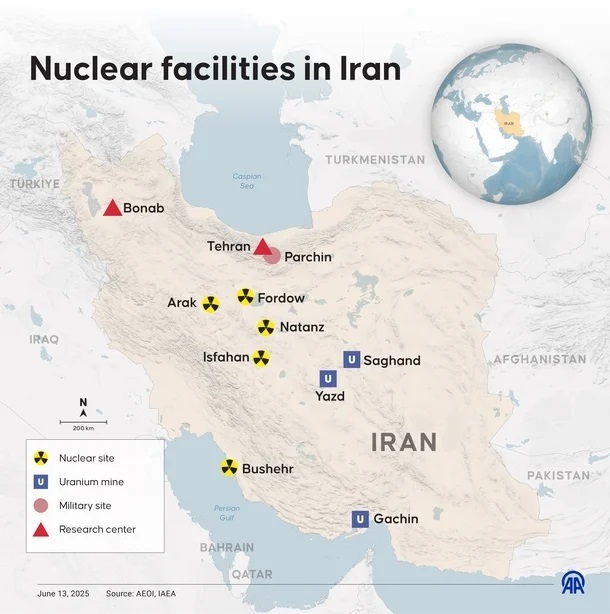
Trump says US will ‘take out’ Iran’s Pickaxe Mountain nuclear facility
:by Ellen Mitchell – 07/13/26, https://thehill.com/policy/defense/5966603-trump-threatens-pickaxe-mountain-iran/
President Trump on Monday said the U.S. could soon attack Pickaxe Mountain in Iran as American forces launched a new round of strikes against the country.
“Pickaxe is a possible target for a nice big fat shot right near the front door,” Trump said in an interview on “The Hugh Hewitt Show” Monday afternoon. “We’re going to take out Pickaxe Mountain. Tell the Iranians to be ready.”
Trump added that while the U.S. sees “no activity” at the heavily fortified site that hosts two deeply buried tunnel complexes, Washington will “probably give Pickaxe a shot relatively soon.”
Located near Iran’s damaged Natanz uranium enrichment facility in the Zagros Mountains, Pickaxe was not among the three nuclear sites targeted by the U.S. military in June 2025. But Trump told show host Hugh Hewitt that the U.S. has “a lot of eyes” on it.
Experts have assessed, however, that the depth of the facility means America’s most powerful bunker buster bombs are unlikely to penetrate it. The site is buried up to 2,000 feet below granite and is suspected to be housing uranium enrichment capabilities and stockpiles.
Trump’s threat comes as American forces launched a new round of strikes against Iran at 4:45 p.m. EDT on Monday and hours after the president declared the U.S. Navy would reinstate the naval blockade in the Strait of Hormuz.
“These strikes will continue imposing a heavy cost on Iranian forces and degrade their ability to attack innocent civilians and commercial shipping in the Strait of Hormuz,” U.S. Central Command said in a statement.
The strikes mark the third consecutive day of U.S. attacks against Iran, with forces last week conducting four separate rounds of strikes against Tehran in what U.S. officials characterized as retaliation for Iran’s targeting of commercial vessels attempting to transit the vital shipping lane.
“We’re going to hit them very hard tonight, and we’re going to hit them hard tomorrow. And there’s not a damn thing they can do about it,” Trump told Hewitt.
Trump Says Iran Deal Is “Over,” Signals More US Strikes Are Likely Coming
July 9, 2026, By Chris Walker, https://scheerpost.com/2026/07/09/trump-says-iran-deal-is-over-signals-more-us-strikes-are-likely-coming/
“Negotiators keep talking if they want, but I don’t see it,” Trump said on the status of future discussions.
In remarks at the NATO summit in Turkey on Wednesday, President Donald Trump claimed that the Memorandum of Understanding (MOU) between the U.S. and Iran, negotiated last month, was no longer in effect, citing the resumption of military attacks between the two countries.
Trump’s comments come as the U.S. and Iran have exchanged fire over the past several days, with U.S. Central Command announcing on Tuesday night that they had completed strikes on around 80 targets.
The president was visibly upset when responding to questions from reporters about the war.
“I think it’s over. I don’t want to deal with them anymore,” Trump said.
The U.S. president engaged in name-calling against Iran’s leaders, calling them “sick people” and “scum” — a noted departure from his positive descriptions of them when negotiations were going better.
The MOU was not a final peace deal, but rather an agreement between the U.S. and Iran that aimed to end hostilities while a larger agreement was being brokered. Trump derided Iran for denying negotiated deals he claimed were being made during those discussions.
“We make a deal. They [Iran] go outside, talk to the press, they say ‘we never even talked about it,’” Trump complained.
Over the past month, Trump has made several baseless claims about the dealmaking process without confirmation from Iran, including that Iran had agreed to give up control of the Strait of Hormuz and that the country would agree to destroy its enriched nuclear materials.
Asked whether he would engage in future negotiations with Iran, Trump demurred. “I don’t care,” he said, adding that he’d let “negotiators keep talking if they want, but I don’t see it.”
He also indicated that the U.S. would conduct more military attacks later on. “We hit them very hard last night. Probably hit them hard again tonight,” Trump said.
On Tuesday, Iran’s Foreign Minister Abbas Araghchi warned that the U.S.’s continued threats and attacks against Iran, which violate parts of the MOU, would impede “negotiations on a final deal.”
CENTCOM said it hit 80 targets on Tuesday, with one U.S. official calling the strikes bigger than previous retaliatory ones. While the U.S. insisted its targets are military posts, the attacks are happening near larger cities and close to civilian infrastructure.
Iran media reported explosions near military targets in Bushehr early on Wednesday morning, a port city near the northern edge of the Persian Gulf that has a population close to 250,000 people. The city is home to the only civilian nuclear power plant in the country.
The U.S. also appeared to bomb the city of Bandar Abbas, near the Strait of Hormuz, which has a population of over 526,000 people. Early morning footage showed fires from explosions and large smoke plumes over the city.
And Iranian media said several explosions were seen in Sirik, a port city in the southern part of the country, with attacks reportedly hitting commercial and fishing piers. Several people also suffered injuries from shrapnel due to the attacks.
According to figures compiled by Al Jazeera, around 3,468 Iranians have been killed in the U.S.-Israeli war on Iran since February 28. More than 26,500 Iranians have been injured due to the war. The true number of casualties is likely higher, as the figures were last updated in mid-June.
Deferring a Crisis: The Iran-US Ceasefire Cracks
9 July 2026 Dr Binoy Kampmark, https://theaimn.net/deferring-a-crisis-the-iran-us-ceasefire-cracks/
Ceasefires in the Middle East seem especially susceptible to revision, alteration and contradiction. Missiles still get fired; airstrikes initiated. Destruction to infrastructure, and death, follows. Yet despite the misunderstandings, the sniping and the harrying, these odd understandings are often described by those funny political coves as “holding”. In the case of the ceasefire between Tehran and Washington, articulated with some fanfare with a Memorandum of Understanding, only the most piously delusional would claim it was holding in any way.
The June 18 MoU stipulates from the outset that the US, Iran and their allies “declare the immediate and permanent termination of military operations on all fronts, including Lebanon, and undertaken from now on not to initiate any war or any military of operation against each other, and to refrain from the threat or use of force against each other, and ensuring the territorial integrity and sovereignty of Lebanon.” The parties further understood that Iran would commit to a gradual reopening of the Strait of Hormuz to commercial shipping; the US would grant modest sanctions relief on Iranian crude, refined products and petrochemical products as well as lift its own naval blockade. Further talks would take place to reach a final agreement in 60 days.
The Lebanon side of the bargain has, from the outset, been a wretched shambles, with Israel continuing its operations with various shades of intensity against Hezbollah even as it seeks to occupy the south of the country. The Lebanese government has been increasingly confined to the status of humiliated water carrier. As for Tehran and Washington, the Strait of Hormuz has again become an area of rattling contentiousness.Despite being a mere 33 kilometres at its at its narrowest point, this humble body of water was, prior to the February 28 US-Israeli assault on Iran, responsible for the transiting of 20 to 21 million barrels of oil a day, making up somewhere between 20% to 21% of the total global consumption of petroleum liquids. Liquified natural gas to the proportion of 22% of global trade also took place through the strait.
Iran has continued to target vessels in the strait’s southern corridor, notably those transiting near the Omani coastline. Iran’s chief negotiator Mohammad Bagher Ghalibaf has declared in rather purplish terms that the Strait was a “divine gift from God granted us during this war and our greatest instrument of power.” Iran maintained sovereignty over Hormuz, though it would coordinate management matters with Oman and the Gulf states. Indeed, pursuant to Clause Five of the MoU, Iran and Oman had “already reached agreement on all legal and service-related matters.” It was only at the insistence of the Gulf states that transit fees would not be charged for 60 days.
On July 7, the United Kingdom Maritime Trade Operations centre noted three attacks on commercial shipping in the strait. While Tehran is suspected of being behind these, given that the tankers were not seemingly travelling through Iran’s approved transit route, it has so far not claimed responsibility for the actions.
These incidents took place even as representatives gathered in the disagreeable atmosphere of the North Atlantic Treaty Organization (NATO) summit just concluded in Ankara. US Central Command (CENTCOM) was swift in initiating strikes conducted “in response to Iranian attacks on three commercial vessels” transiting through the Strait. On July 8, another wave of attacks was announced by CENTCOM “to further degrade” Tehran’s “ability to threaten the freedom of navigation in the Strait of Hormuz. The United States is holding Iran accountable for recent unjustified aggression against commercial shipping and civilian crews navigating a vital international waterway.” Sanctions have also been reimposed on Iranian oil sales.
The response from Iran was not long in coming, keeping to the script written at the start of the war. The Islamic Revolutionary Guard Corps (RGC) promptly announced drone and missile strikes against the US Fifth Fleet headquarters in Bahrain and Ali Al Salem Air Base in Kuwait. Again, the Gulf states must be rueing their misplaced reliance on Washington’s security guarantee.
The NATO summit provided the appropriate backdrop of perverse dysfunction for US President Donald Trump, who managed to berate bruised allies even as various arms deals were made. In responding to a question about whether the ceasefire with Iran had ended, he claimed, as far as he was concerned, “it’s over.” He had no further appetite to “deal with them anymore, they’re scum.” They were “sick people, they’re led by sick people, and they’re vicious, violent people. And if they had a nuclear weapon, they’d use it.”
Groping for some rationalisation of these latest US attacks – some 80 sites struck across southern Iran – military pundits sense a shift towards crippling Tehran’s maritime denial capability, notably the country’s menacing use of fast attack craft, small submarines and armed speedboats. (CENTCOM insists that 60 small boats had been targeted.) But the occluding language of Washington’s military-industrial complex, one so inured to the propaganda of muscular might over subtle sense (when in doubt, resort to the favoured word “degrade”), remains blinded to the continued resilience of Iran’s war machine.
Even Trump, for all his raging petulance, can see that the diplomatic trail has not gone entirely cold, if only because he has no other sensible option. At the summit, he made grumbling mention of his chief negotiators, Steve Witkoff and Jared Kushner. “I don’t care, they can talk. But I think they’re wasting their time.” The Iranians were “a bunch of lying guys.” Given that negotiations, especially covering Iran’s nuclear program, have been placed in cold storage for the duration of the funeral obsequies for the late supreme leader Ayatollah Ali Khamenei, those lying guys will be waiting full of anticipation.
U.S. launches ‘powerful strikes’ on Iran after tanker attacks in Strait of Hormuz
[your]NEWS, Tue, 07 Jul 2026, https://www.sott.net/article/507318-US-launches-powerful-strikes-on-Iran-after-tanker-attacks-in-Strait-of-Hormuz
U.S. Central Command said American forces began “powerful strikes” against Iran after three commercial vessels were attacked while transiting the Strait of Hormuz.
U.S. forces began launching strikes against Iran on Tuesday after Tehran attacked commercial ships moving through the Strait of Hormuz, according to U.S. Central Command.
CENTCOM announced the military action in a post on X, saying the strikes were aimed at imposing costs on Iran for targeting civilian-crewed commercial vessels in an international waterway.
“U.S. Central Command forces have begun launching a series of powerful strikes against Iran to impose heavy costs for targeting and attacking commercial shipping crewed by innocent civilians in an international waterway,” the command wrote. “The U.S. strikes are in response to Iranian attacks on three commercial vessels that were transiting the Strait of Hormuz.”
CENTCOM said Iran’s actions violated the ceasefire and created a dangerous escalation in one of the world’s most important shipping corridors.
“Iran’s demonstrated aggression was unwarranted, dangerous, and a clear violation of the ceasefire.”
Reuters reported that the strikes came after the vessel attacks, citing Central Command’s statement that the U.S. response was tied to Iranian targeting of commercial shipping in the strategic waterway.
Iran responded by saying it would take all necessary measures to protect its security and interests. The Iranian Foreign Ministry blamed the United States for any violations of the truce agreement and pointed to Washington’s revival of oil sanctions Tuesday as a breach of the agreement.
The confrontation came after maritime security warnings intensified around the Strait of Hormuz. CNBC reported Tuesday that the threat level near the waterway had been raised to “severe” after Iran attacked tankers traveling on a route protected by the U.S. Navy.
The Strait of Hormuz sits between Iran and Oman and serves as a critical passage for global energy shipments. A significant share of the world’s oil and liquefied natural gas moves through the narrow waterway, making disruptions there a major concern for energy markets and international shipping.
The military strikes also came as the Trump administration continued its broader pressure campaign against Tehran. That effort includes restrictions on Iran’s ability to generate revenue from oil exports.
The administration recently moved to end a waiver that had allowed certain countries to continue purchasing Iranian oil despite U.S. sanctions. The waiver had permitted limited transactions involving Iranian crude exports, and ending those exemptions was intended to further restrict Tehran’s access to oil income.
The Trump administration has argued that cutting off Iranian oil revenue is a key part of pressuring Tehran over its nuclear program and regional activities.
Iran has repeatedly warned that efforts to limit its energy exports could lead to retaliation, including actions affecting commercial shipping in the Persian Gulf and the Strait of Hormuz.
The latest tanker attacks and U.S. strikes have increased concerns that shipping through Hormuz could face further disruption. Any prolonged threat to traffic through the waterway could affect oil prices and raise costs for consumers.
Tuesday’s strikes mark another escalation between Washington and Tehran as tensions continue over Iran’s nuclear ambitions, regional conduct and oil revenue.
Gaza’s 1000-Day Siege: A Catastrophic Humanitarian Collapse Across Health, Food, and Human Life
Lee Siu Hin – Palestine Watch, Global South News, July 6, 2026
As the Israeli aggression on the Gaza Strip marks its 1000th day on July 2, 2026, the enclave of over 2.1 million Palestinians stands on the brink of total humanitarian collapse. 70 % The Gaza Strip is under occupation control following the expansion of the “Yellow Line,” amid ongoing displacement of border communities The Israeli Occupied Forces (IOF) siege has systematically dismantled every foundational pillar of human survival: healthcare infrastructure, food security, clean water access, educational systems, and psychological well-being.
Data compiled from the Palestinian Ministry of Health, the World Health Organization (WHO), UN humanitarian bodies, and Medics Worldwide’s periodic reports, compiled by Doban AI analysis, paints a harrowing portrait of sustained destruction, mass mortality, and intergenerational trauma. This article analyzes the multifaceted humanitarian crisis unfolding in Gaza after 1000 days of siege, integrating empirical statistical data, healthcare operational maps, and crisis trend charts to document the scale of human suffering and structural collapse.
Overall Demographic and Casualty Catastrophe After 1000 Days
The 1000-day IOF genocide and siege has inflicted unprecedented human loss, turning Gaza into a graveyard for ordinary civilians, with women and children bearing the brunt of the violence. According to the 2026 genocide repercussion report, the cumulative death toll since October 2023 has reached 73,066 fatalities, with total injuries soaring to 173,514. Among the victims, civilian children account for the most devastating proportion of casualties, highlighting the targeted destruction of Gaza’s future generations.
Child-specific mortality and injury data reveal a relentless humanitarian tragedy: 21,730 children have been killed, 45,113 children injured, and 59,054 children orphaned over the 1000-day period. On average, one child dies every 52 minutes in Gaza’s ongoing conflict. The crisis has also left permanent physical disabilities on thousands of young lives, with 1,134 children suffering amputations. Alarmingly, 565 infants have been born and killed amid the war, while 1,078 infants under one year old have lost their lives, reflecting the total breakdown of maternal and infant care systems across the strip.
Beyond direct violence, the siege has triggered a public health disaster for women and their reproductive health. Official statistics show the genocide had created 28,224 widows, 57% of pregnant women in Gaza suffer from severe anemia, while over 900 spontaneous abortions are recorded monthly, driven by environmental pollution, rodent infestations, and rampant epidemic outbreaks. The maternal mortality rate has surged dramatically in recent years, rising from 13.5 per 100,000 live births in 2022 to 33.4 per 100,000 live births in 2025, a more than twofold increase that underscores the collapse of reproductive healthcare services.
Systematic Collapse of Gaza’s Healthcare System
After 1000 days of targeted destruction and resource blockade, Gaza’s healthcare system is inches away from total standstill, with systematic attacks on medical infrastructure, severe drug shortages, and massive attrition of medical personnel. IOF have targeted every formal medical facility in the strip, with 40 out of 40 hospitals and 158 out of 158 primary healthcare centers (PHCs) subject to deliberate attacks. Of Gaza’s core medical facilities, only 29 Ministry of Health hospitals remain partially operational, while 11 are completely out of service; 94 PHCs function at reduced capacity, and 64 have been fully disabled.
The scale of medical infrastructure destruction extends far beyond building damage. Official records document 216 targeted attacks on ambulances, 825 overall violations of healthcare facility; 1,723 heath personal were killed, 362 were detained by Israel; and the destruction of critical medical equipment essential for life-saving care. Key destroyed assets include 25 of 35 oxygen stations, 61 of 110 power generators, all 7 MRI machines, and 13 of 17 CT scanners. Compounding equipment losses, the sector faces catastrophic supply shortages: 87% of laboratory consumables and diagnostic assays are completely depleted, eliminating the ability to conduct routine medical testing and disease diagnosis. Zero drug stock, a total depletion of medications for kidney, cancer, and hemophilia patients.
Dire Operational Situation of Gaza’s Regional Medical Facilities (June–July 2026)…………………………………………………………………………………………………………………………………………………………………..
Catastrophic Food Insecurity and Malnutrition Crisis…………………………………………………………………………………………………………………..
Environmental Degradation and Public Health Epidemics………………………………………………………………………………………………………….
Mental Health Collapse and Lost Generational Futures……………………………………………………………………………………………………………….
Conclusion: A Century of Displacement and Unresolved Human Suffering
Since the October 2023 “ceasefire” agreements—largely unenforced paper promises—1,031 additional martyrs and 3,309 new wounded civilians have been recorded as of late June, proving that temporary truces have failed to curb civilian mortality and medical suffering.
After 1000 days of relentless siege, the Gaza Strip has transitioned from a state of humanitarian crisis to a state of structural societal collapse. The systematic destruction of healthcare, food, water, education, and economic systems has created an intergenerational catastrophe whose impacts will persist for decades. Gaza’s Palestinian refugee crisis, already the longest-running modern displacement crisis, has been exponentially exacerbated: 42% of Palestine’s total population are refugees, with 6.2 million UNRWA-registered Palestinian refugees worldwide, and over 9 million total displaced Palestinians globally.
Every statistical indicator, infrastructure assessment, and human story confirms that Gaza stands inches away from absolute ruin—on the brink of total famine, healthcare shutdown, environmental collapse, and generational psychological destruction. Despite international humanitarian efforts and temporary medical support from regional teams, the ongoing siege, infrastructure destruction, and resource blockades continue to kill civilians, medical staffs, humanitarian workers and journalists dare to speak, daily.
We need more aid, but more important, we need justice: Free Palestine, break the siege and end of the genocide.
Palestine Watch https://www.PalestineWatch.net
Panda Aid https://www.PandaAid.org
Refence:
1) August 22, 2025 IPC: Gaza Strip Acute Food Insecurity Malnutrition July- Sept 2025 Special Snapshot
2) July 3 2026: MWW-Periodic Report NO. 35
https://www.immigrantsolidarity.org/Gaza/July2026_1000Days/July_3_26–MWW-Periodic_Report_NO35.pdf
3) July 3 2026: Genocidal repercussions of the Israeli aggression 2026(1000 Day) English
The Zionist Plan for a Concentration Camp in Gaza

Israel moves to intern 600,000 Palestinians in the “most moral concentration camp in the world.”
Kurt Nimmo, Another Day in the Empire Jul 10, 2026
Auschwitz-Birkenau, Treblinka, Belzec, Sobibor, and Chełmno. These should be destinations Israeli Jews remember and abhor, and yet we are told, by the Israeli newspaper Haaretz (PDF), that a concentration camp in the works on the ethnic cleansed ruin of Rafah is somehow not only moral, but the most moral concentration camp in the world.
The support given by Prime Minister Benjamin Netanyahu to the criminal plan being promoted by Defense Minister Yisrael Katz, involving the construction of a “humanitarian city” on the ruins of Rafah, which would incarcerate all the enclave’s residents, is a moral and historic nadir for the State of Israel and the Jewish people. No matter how they try in Israel to wrap this move with laundered epithets, they are talking about a concentration camp.
The Zionist state, according to Katz, plans to herd 600,000 Palestinians currently forced to shelter in tents and makeshift homes within the coastal al-Mawasi area of southern Gaza to an area in the ruins of Rafah city. “Eventually, the entire civilian population of over two million in Gaza would be confined to this small ‘city,’” the Middle East Eye reports.
Katz said that once concentrated in the new city, Palestinians would be encouraged to “voluntarily” leave the Gaza Strip for other countries, as part of an “emigration plan” he said “will happen”.
In July, 2025 the US-backed Gaza Humanitarian Foundation (GHF) proposed a “Humanitarian Transit Area” where Gaza residents would “temporarily reside, deradicalise, re-integrate and prepare to relocate if they wish to do so,” Al Jazeera reported. GHF operated food distribution sites outside the United Nations system.
Humanitarian aid organizations and UN-affiliated experts say GHF previously violated humanitarian principles by directing civilians to hazardous militarized aid sites instead of establishing a neutral network. The BBC reported that more than 500 Palestinians have been killed while seeking aid since the GHF began operating in May, 2025. Oxfam and Save the Children report Israeli forces and armed groups “routinely” fired on Palestinians seeking aid. GHF ended its operation in late 2025.
In March, the RAND Corporation published Pursuing Disarmament, Demobilization, and Reintegration in Gaza: A Critical Pathway to a Durable Peace. The white paper follows a Disarmament, Demobilization, and Reintegration (DDR) three-stage strategy used by UN Peacekeeping to transition war-torn societies to peace.
The RAND report does not take into account Israeli policies of settlement expansion, collective punishment, arbitrary imprisonment, and periodically “mowing the grass,” that to say conducting violent raids into Gaza. Decades of Zionist mistreatment of Palestinians naturally perpetuates radicalization and determined resistance.
The Strategic Hamlet Program
In 1962, the administration of Ngo Dinh Diem, in collaboration with the Kennedy administration, initiated the counterinsurgency Strategic Hamlet Program in South Vietnam. This rural pacification initiative involved relocating South Vietnamese villagers into barbed-wired “protected hamlets,”…………………………………
The French constructed “protective villages” in Tonkin, later known as agrovilles,…………
The Malaysian strategic villages were established in the 1950s under the Briggs Plan, a British counterinsurgency population-control and resettlement program……………….
British Concentration Camps in South Africa………………………………
Violation of the Fourth Geneva Convention
Israeli Defense Minister Israel Katz’s “New Rafah” plan is a high-tech version of previous concentration camps. In a similar fashion to the Strategic Hamlet Program and the Boer camps in South Africa, “New Rafah” is primarily intended to separate Palestinian civilians from Hamas and prepare for the forced migration of two million people (despite the fact few if any countries are willing to take ethnically cleansed Palestinians)……………………………………. https://anotherdayintheempire.substack.com/p/the-zionist-plan-for-a-concentration
Why Israel fears a US-Iran Deal far more than Conflict
The same policies that sought to guarantee Israel’s survival may now be undermining its future
By Paul Rogers. July 7, 2026, https://www.opendemocracy.net/israel-fears-united-states-iran-peace-more-than-conflict-netanyahu/
The US/Iran Memorandum of Understanding remains just about intact despite several exchanges of fire. Oman’s recent decision to release $6bn in frozen Iranian assets has helped to ease tensions, but it is also a reminder that the Strait of Hormuz issue is only one of the problems ahead.
Another is the vexed issue of the proxy wars, with the Israeli/Hezbollah conflict being the most difficult. The on-off discussions between Israel and the Lebanese government might imply that this conflict is also subject to talks, but this is simply not so. Beirut does not control Hezbollah, which acts as a state within a state and does not see itself as bound by the US/Iran talks – a view shared by Israel.
For Israel, this is a core issue. Binyamin Netanyahu and those around him view Donald Trump’s behaviour as little short of a betrayal. They would greatly prefer the whole peace process to collapse as they attempt to convince the electorate that only the current Israeli prime minister can keep Israeli Jews safe.
Understanding this requires looking beyond today’s diplomacy to the security doctrine that has shaped Israeli policy since 1948. This doctrine is rooted in a desire to keep the state safe by whatever means are deemed necessary, whether the use of extreme force, irregular warfare, assassination or short- and long-term occupation.
These violent methods have often led to the mass deaths and injuries of Palestinian civilians, as well as their detention without trial, and have slowly but surely dragged Israel into an insecurity trap of its own making.
Take the current disastrous conflict in Gaza. Three months from now will be the third anniversary of Hamas’s 7 October assault on southern Israel, which killed 1,195 people. The shock of what happened shattered most Israelis’ presumption of control, but few were able to see the wider context.
From afar, some analysts noted that the Hamas attacks followed more than 15 years in which the Israeli Defence Forces had employed rigorous control over the two million Palestinians in Gaza, including through four conflicts that killed at least 5,000 Palestinians and wounded thousands more, many of them maimed for life.
While these conflicts might have helped preserve an Israeli perception of security, in one sense they made Israel’s response to the 7 October assault even more violent. Many within Israel concluded that if even this high level of control could fail, then much greater force would be needed. Gaza’s Palestinians were framed as “human animals” against whom any amount of force was legitimate.
Many millions of people across the world have since come to view Israel’s actions over the past three years – which have killed many tens of thousands in Gaza, the occupied West Bank, East Jerusalem and Lebanon – as terrifyingly excessive.
In reality, it is little more than a continuation of an Israeli security posture dating back 80 years and in the wake of the killing of six million Jews in the Holocaust. As Israel is competing for the right to land that can be achieved only by denying that right to Palestinians, it is fundamentally insecure and therefore has to be “impregnable in its insecurity”.
In the late 1940s and early 1950s, the new state of Israel rapidly consolidated its hold on the land assigned by the UN partition and the additional land it gained in the war of independence. For Palestinians, this was the Nakba, the ‘catastrophe’, in which at least 700,000 people were forced to flee their homes.
By 1956, Israel was sufficiently secure in its support from the UK and France to take part in the Suez crisis. While that was disastrous for the UK and France, Israel came out of it stronger. A decade later, it fought the Six-Day War against surrounding Arab states to take control of the West Bank, the Golan Heights, Gaza, and the whole of Jerusalem, while further displacing Palestinians. Many thousands living in refugee camps in the Jordan Valley were forced to flee once more, mostly east to Jordan.
Over the past 60 years, Israel has fought more wars, both large and small, and suppressed internal revolts in two intifadas – all in pursuit of a peace that never comes, yet still with the memory of the Holocaust.
The country maintains a vigorous and well-funded lobby in the US and works hard to maintain its standing in the UK, so that it can be argued that any opposition to modern-day Israel and the current Netanyahu government is antisemitic.
Yet on both sides of the Atlantic, a disaster is unfolding for Israel: public support is fraying. Some US polls now show more support for Palestinians than Israelis, and in the UK Keir Starmer’s support for Israel has been one factor in his downfall.
Back in Israel, many Israeli Jews vigorously reject much of Netanyahu’s politics, yet simply want the Palestinian problem to go away by just about any means. There are a few exceptions, including a small peace movement and some determined human rights groups. Very recently, former prime minister Ehud Barak has been bitterly critical of settler violence across the occupied West Bank.
These efforts have not so far led to a domestic mood change, but this could change as the international community increasingly regards Israel as a rogue state. In time – possibly in the coming months – there is likely to be a full-fledged campaign of economic damage, boycotting and social isolation that Israel will not be able to ignore.
That may end up being Netanyahu’s crowning, if bitter, achievement.
1 This Month


Shut down the radiation-damaged Heysham nuclear reactors now
To see nuclear-related stories in greater depth and intensity – go to https://nuclearinformation.wordpress.com

Say No to NASA’s Reckless Nuclear Reactor on the Moon
Say No to NASA’s Reckless Nuclear Reactor on the Moon
-
Archives
- October 2026 (247)
- September 2026 (339)
- August 2026 (330)
- July 2026 (355)
- June 2026 (287)
- May 2026 (306)
- April 2026 (356)
- March 2026 (251)
- February 2026 (267)
- January 2026 (308)
- December 2025 (358)
- November 2025 (359)
-
Categories
- 1
- 1 NUCLEAR ISSUES
- business and costs
- climate change
- culture and arts
- ENERGY
- environment
- health
- history
- indigenous issues
- Legal
- marketing of nuclear
- media
- opposition to nuclear
- PERSONAL STORIES
- politics
- politics international
- Religion and ethics
- safety
- secrets,lies and civil liberties
- spinbuster
- technology
- Uranium
- wastes
- weapons and war
- Women
- 2 WORLD
- ACTION
- AFRICA
- Atrocities
- AUSTRALIA
- Christina's notes
- Christina's themes
- culture and arts
- Events
- Fuk 2022
- Fuk 2023
- Fukushima 2017
- Fukushima 2018
- fukushima 2019
- Fukushima 2020
- Fukushima 2021
- general
- global warming
- Humour (God we need it)
- Nuclear
- RARE EARTHS
- Reference
- resources – print
- Resources -audiovicual
- Weekly Newsletter
- World
- World Nuclear
- YouTube
-
RSS
Entries RSS
Comments RSS

