South Korea helps Egypt expand Russian-built nuclear plant
South Korea’s growing role in Egypt’s Russian-built El Dabaa nuclear plant has helped shield the project from sanctions and enabled expansion
The New Arab Staff, 22 August, 2026
South Korea’s growing role in Egypt’s Russian-built El Dabaa nuclear power plant has helped Cairo shield the project from Western sanctions and paved the way for a major expansion of the site, according to senior Egyptian energy officials.
Electricity and Renewable Energy Minister Mahmoud Esmat said in televised remarks that Egypt was studying the addition of at least two more nuclear units at El Dabaa, with the possibility of eventually expanding the complex from four reactors to six or even eight.
Senior sources at Egypt’s Ministry of Electricity and Energy told The New Arab that the proposed expansion reflected “a state of confidence” surrounding the project following South Korea’s entry as a partner alongside Russia’s Rosatom.
They said South Korean involvement had enabled Egypt to gain access to Western-linked technology while limiting the exposure of companies working on El Dabaa to US and European sanctions imposed on Russian firms following Moscow’s invasion of Ukraine in 2022.
According to the sources, the South Korean government is expected to provide financial and technical support for future expansions of El Dabaa, alongside its existing role in completing control systems and turbine-related work.
The arrangement has allowed Russia to retain control of the project’s nuclear core while South Korean companies handle major elements of its conventional power-generation infrastructure.
The sources said South Korea had taken on work that US company General Electric did not proceed with following the outbreak of the Ukraine war.
Egypt currently plans four Russian-designed VVER-1200 reactors at El Dabaa, with a total capacity of 4.8 gigawatts.
The proposed expansion could eventually increase capacity to 9.6 gigawatts by 2040, according to the sources.
Nuclear energy experts said Esmat’s remarks “open the door to transforming El Dabaa from a four-unit plant into a larger nuclear complex”.
No cost estimate, reactor models or timetable have yet been announced for the additional units.
However, the experts said Cairo increasingly views El Dabaa as “the nucleus of a long-term nuclear programme, rather than a standalone project that ends with the operation of four reactors”.
South Korea’s involvement in the project expanded rapidly after Russia’s invasion of Ukraine complicated Western-linked supply chains.
Experts at Egypt’s Nuclear Energy Authority told The New Arab that Russian nuclear energy company Rosatom accelerated moves to bring Korea Hydro & Nuclear Power into El Dabaa as the key supplier for the turbine island and associated control systems for the four Russian units.
Korea Hydro & Nuclear Power signed a $2.25 billion contract with Russia’s Atomstroyexport in Cairo on 25 August 2022, months after the outbreak of the war and the introduction of Western sanctions…………………………………………………
https://www.newarab.com/news/south-korea-helps-egypt-expand-russian-built-nuclear-plant
Nuclear material found in Syria will remain in the country, minister says
By Reuters, August 19, 2026
Nuclear material found at an undisclosed site in Syria was not dangerous and would remain in Syrian custody, subject to the International Atomic Energy Agency’s guarantees, Syria’s foreign minister said on Tuesday.
Asaad al-Shibani added in a joint press conference with IAEA chief Rafael Grossi in Damascus that Syria had the right to use the material for civil and peaceful purposes.
Since the ouster of President Bashar al-Assad in late 2024, Syria’s new authorities have committed to working with the United Nations’ nuclear watchdog to address the legacy of nuclear activities during decades of Assad family rule.
Grossi said the agency was able to access the site after the Syrian government notified it.
Syria is not known to hold operational stockpiles of nuclear material for a weapons programme, but Israel bombed a suspected Syrian nuclear reactor in 2007 in the country’s eastern province of Deir al-Zor.
Reporting by Nayera Abdallah; Editing by Alex Richardson
Today In Dystopia: Burning Books For Israel, Burning Books For AI
Caitlin Johnstone, Aug 20, 2026
I’ve been putting out more and more of these “today in dystopia” write-ups because our society is plunging into iron-fisted authoritarianism and AI-induced idiocracy so rapidly that it’s hard to keep up with how it’s unfolding day by day without shoveling multiple stories into a single essay.
Today in dystopia they’re really going after books. A library in Sydney has removed the book “How to Sell a Genocide” by Adam Johnson from its shelves after Zionists complained about its criticisms of Israeli mass atrocities in Gaza.
The Guardian reports:
“A Sydney library has removed a book critical of Israel called How to Sell a Genocide, following a complaint reportedly from a survivor of the Bondi beach terror attack.
“Waverley library at Bondi Junction is in the same council area as Bondi beach.
“A Waverley council spokesperson said: “The book has been removed from library shelves for review, and council will further consider processes to ensure closer oversight of book selection.”
“They seem to be objecting largely based on the title using the word ‘genocide’,” Johnson commented. “But ‘genocide’ is not my word, or my finding. The fact of genocide in Gaza is the overwhelming consensus of the human rights world, and it is a wholly mainstream opinion among those tasked with studying and determining such matters.”
So in Australia they’re now banning books for Israel. I guess it was only a matter of time.
Also today in dystopia, Amazon is buying and destroying rare books in a secret facility to train AI.
404 Media has been doing some great reporting on how companies like Google and Anthropic have been buying up rare and out-of-print books to train their LLM models before destroying them, and now 404 has a new article out describing how its reporters placed a tracking device on a shipment of books and followed it to an Amazon warehouse where the books are being scanned and shredded.
Here’s an excerpt:
“That final destination was an Amazon warehouse in Las Vegas, Nevada. Amazon employees who work at this location say all they do is receive massive shipments of printed books which they then cut the bindings off in order to scan the books more quickly. The printed book is destroyed in the process. The logo of the Amazon team that works at this warehouse, called VGT3, is a dinosaur, brandishing its teeth and with a book in its hands.”
That’s right: the logo for Amazon’s book-destroying location is an angry tyrannosaurus preparing to rip apart a book…………………………………
Today in dystopia, the Israeli government is working harder and harder to manipulate the information AI chatbots feed their users about Israel and its myriad military projects in the middle east.
Politico reports:
“Israel has launched a new campaign to influence how large-language models like ChatGPT are answering questions about Gaza and the Israel Defense Forces amid declining public support for the country across the U.S. political spectrum.
“French PR firm Havas Media, which runs the lion’s share of Israel’s FARA-registered foreign influence work in the U.S., appears to have stood up an ‘institute’ aimed at feeding LLMs positive information about Israel via one of its subcontractors, boutique ad agency Piro, Inc.”
This builds on previous reporting from Drop Site News about FARA revelations showing that former Trump campaign manager Brad Parscale secured a lucrative deal with Israel to set up dummy pro-Israel websites designed to be read not by humans, but by the web crawlers that LLMs get their information from. Drop Site found that Microsoft Copilot, Google Gemini, and Perplexity were the AI companies most vulnerable to Parscale’s manipulations.
Today in dystopia it’s becoming more and more common for online commenters to accuse me of using AI to write my essays, which I have never done and will never do.
I hate that this is a thing now. I’ve been writing essays every day for a decade, and nobody who’s been reading me for a long time believes I use AI. But now that so many people are using these creepy chatbots to do everything for them, people believe it’s impossible for a human brain to produce a few paragraphs of text.
I don’t mind the accusations, I just hate what it says about where we’re heading as a species. These things have only existed for a few years, but some people are already forgetting what it was like to be able to use your own mind to complete simple cognitive tasks. I find it deeply disturbing.https://www.caitlinjohnst.one/p/today-in-dystopia-burning-books-for?utm_source=post-email-title&publication_id=82124&post_id=211937785&utm_campaign=email-post-title&isFreemail=true&r=1ise1&triedRedirect=true&utm_medium=email
Jared Kushner: US will back Israeli resumption of war if Hamas fails to honor disarmament commitments

Kushner said Hamas could surrender weapons and tunnels within 60 to 90 days, calling demilitarization a potential major security gain for Israel.
Jerusalem Post, ByJAMES GENN, AUGUST 18, 2026
Hamas must honor its commitments to disarm or face an IDF operation to “finish the job,” US special envoy Jared Kushner told FOX News’s Trey Yingst on Monday.
Kushner’s comments came after meetings with Hamas and the National Committee for the Administration of Gaza (NCAG) in Cairo on Sunday, and respective meetings with Prime Minister Benjamin Netanyahu and President Isaac Herzog in Jerusalem on Monday.
“If they [Hamas] don’t follow through now on their commitment, everyone will see that they’re not genuine about peace, and then Israel will have a lot more support from the US and others to go and finish the job in the appropriate way,” Kushner stated………………………………
“For Israel, we think this is a win-win situation because if Hamas actually gives over the weapons and the tunnels willingly over the next 60 to 90 days, that obviously would be the elimination of a huge security threat for Israel, almost an unthinkable achievement,” he stated.
Trump admin. will not allow Gaza to be rebuilt until Hamas demilitarizes, Kushner says
The Trump administration will “not allow Gaza to be rebuilt until demilitarization occurs,” Kushner stated……………….. https://www.jpost.com/middle-east/article-905880
Saudi Arabia in no hurry to bow to Trump’s demands on nuclear deal
For decades, Arab states held fast to the belief that the road to America
goes through Israel. Establishing ties with their Jewish neighbour, so the
theory went, was the surest way to gain the White House’s favour.
The Saudi-American agreement on nuclear co-operation announced last month tests that theory. A day after the deal was signed, President Trump, stung by
Israeli criticism, added a new condition. There would be no civil nuclear
plant for Saudi Arabia unless the kingdom joined his Abraham Accords, the
agreements under which the Gulf states would make peace with Israel.
The belated demand has thrown the future of the agreement into doubt. Officials
and analysts say the slow process to have the deal ratified by the US
Congress is under way, but the White House has tied itself into knots by
announcing a new condition that was not in the original agreement.
Times 20th Aug 2026,
https://www.thetimes.com/world/middle-east/article/saudi-us-nuclear-deal-trump-israel-demand-ppplvcts0
Senior Israeli official calls for killing of “30 to 40” people in Gaza every night: “They’re not even people”

By Frank Andrews, August 17, 2026 , CBS News
Israel’s far-right national security minister Itamar Ben-Gvir, in a podcast published over the weekend, called for “30 to 40” people to be killed per night in targeted assassinations in the Gaza Strip.
Discussing Israel’s response to the Hamas-led terrorist attack on Oct. 7, 2023, which sparked the war in Gaza, and Israel’s recent move to reduce the number of strikes being carried out in the decimated Palestinian territory, Ben-Gvir said: “It’s no secret, I disagree with the prime minister … I think targeted assassinations should be carried out in Gaza, taking down 30 to 40 every night.”
“Not just those who pose an immediate threat,” added the Israeli cabinet member. “There are people there who are not worthy of life. They shouldn’t live. They’re not even people.”
The security chief made the comment to Rom Braslavski, who was previously held as a hostage in Gaza, on his Sunday podcast.
Israel once had a block of 21 settlements — known as Gush Katif — in the Gaza Strip, but the settlers and Israeli forces pulled out of the enclave two decades ago.
“I see all of Gaza as ours,” Ben-Gvir said in the taped interview. “Settlements not just in Gush Katif but throughout Gaza, encouraging as much emigration as possible, sending them to their countries. And for the terrorists, no emigration, nothing, just to kill them one by one.”
Legal experts and the Secretary-General of the United Nations have warned that any move to force Palestinians to leave Gaza could amount to ethnic cleansing.
Israel’s vast network of settlements in the occupied West Bank — the other, much larger Palestinian territory — are considered illegal by the United Nations, the International Court of Justice and many other entities and nations. Israel’s current government has encouraged new construction in the West Bank, however, and it disputes the illegality of most of the settlements in the territory.
“Inciting violence”
Iranian Deputy Foreign Minister Kazem Gharibabadi posted about Ben-Gvir’s comments on X Monday. “These confessions must be recorded and preserved for the day of reckoning and trial of these criminals,” he wrote.
Similar statements by Ben-Gvir and other senior Israeli officials have been presented to the U.N. as evidence of an alleged genocidal intent by Israel’s government in Gaza.
The national security minister is no stranger to controversy…………………………..
Ben-Gvir is a follower of Kahanism, a movement named after a long-dead rabbi who espoused violent ethnonationalism and advocated for the expulsion of Palestinians from Gaza and the West Bank.
The security chief’s first moment in the spotlight came in 1995, when he stole the Cadillac emblem off then-Israeli leader Yitzhak Rabin’s car. Rabin was hated among the Israeli far-right for signing the Oslo Peace Accords with the Palestinians. Ben-Gvir held up the badge to a TV camera and said: “Just as we got to his car, we will get to him.”
Rabin was assassinated weeks later by a Jewish far-right nationalist. https://www.cbsnews.com/news/israel-ben-gvir-gaza-netanyahu-kill-every-night/
Walt Zlotow – 21ST century David v. Goliath: Iran’s $8 billion military whups America’s $1 trillion military
Walt Zlotow West Suburban Peace Coalition GlenEllyn IL , 19 Aug 26, https://theaimn.net/21st-century-david-v-goliath/
What’s going on in the Middle East is not a Biblical fairy tale. Irans’s piddly military has delivered a devastating defeat to America’s gargantuan trillion dollar military.
Iran’s David does not need to squander a trillion annually on 750 bases housing over 160,000 soldiers in 80 countries. Nor does Iran’s David need 287 naval ships including 11 nuclear powered aircraft carriers that have suddenly become obsolete in the era of drone and missile warfare. Those carriers have been steering clear of Iran’s missiles and drones least they be sent to Davy Jones Locker.
The US is flummoxed at how Iran’s minuscule military has made mincemeat out of all 18 US bases in US Gulf State allies Kuwait, Saudi Arabia, UAE, Qatar and Bahrain. After plastering Iran with thousands of bombs for 39 days, it was the US, not Iran that was running out of offensive and defensive missiles and bombs, so much so Trump cried ‘Uncle’ and demanded a ceasefire.
When Trump signed the Iran’s ‘Unconditional Surrender’ document, the Memorandum of Understanding, on June 17, it was equivalent to Goliath being smitten by the stone puny David fired from his sling.
Of course, the story of David and Goliath is a fairy tale that allegedly occurred over 3,000 years ogo. The 21st century version is no fairy tale. Now in its 173rd day with no end in sight, it still represents the most catastrophic military blunder in US history. It will likely push the US out of the Middle East. The 5 Gulf States housing now damaged or destroyed US bases may seek more reliable countries to rely on for their security. Iran will emerge a stronger power in the region. The entire world economy still teeters on possible decline from US intransigence and refusal to admit defeat.
Trump still doesn’t get it. He’s seeks another half trillion bucks for his wildly bloated military for fiscal ’27 in hopes of prevailing over Iran’s tiny $8 billion dollar military. Mayne he should start reading something he’s never read before…the Bible. He should start with 1 Samuel 17:1–50.
Trump ‘weighing nuclear attack on Iran’ as peace deal expires.

Plus: Why the Iran war has prompted Trump to scale back key US-South Korea military drills
As the US-Iran ceasefire officially expires and the Strait of Hormuz
remains closed, is Donald Trump considering using nuclear weapons to break
the war’s stalemate? On today’s episode of Iran: The Latest, Venetia Rainey
and Roland Oliphant discuss why US politician Marjorie Taylor Greene’s
bizarre nuclear claim may be less crazy than it first appears and how an
underground nuclear facility at Pickaxe Mountain could be the potential
target. They also look at the state of the war 60 days on from the
ill-fated Memorandum of Understanding peace deal and why Iran is more
bullish than ever.
Telegraph 17th Aug 2026, https://www.telegraph.co.uk/world-news/2026/08/17/trump-weighing-nuclear-attack-on-iran-as-peace-deal-expires/
Delusional’: Iran Fires Back At Trump’s Make ‘Hormuz Strait A Territory Of The US’ Ambitions
by Tyler Durden, Monday, Aug 17, 2026 – https://www.zerohedge.com/geopolitical/iran-fires-back-trumps-make-hormuz-strait-territory-us-ambitions-delusions
Predictably, Iran has on Saturday issued a full-throated rejection of President Trump’s Friday evening words related to the status on the conflict and energy transit in the region.
In a speech on New York’s Long Island, Trump introduced the idea of declaring the Strait of Hormuz a US territory. “After we finish defeating Iran, which is being very badly defeated — pretty soon, I’ll be declaring the Hormuz Strait a territory of the United States,” Trump told a crowd of law enforcement officer
“Essentially, that’s what it is. We have the blockade. No ships get through unless we want them to,” he added. He claimed oil prices were coming “way down”.
Some pundits pointed to what seemed like classic hyperbole and his penchant for floating extreme scenarios in off-the-cuff fashion; however, Trump made the statement without any qualifiers other than it will happen when Iran is “badly defeated” by the United States. That seems to be the big if in the future scenario.
A Saturday X response from Iranian Deputy Foreign Minister Kazem Gharibabadi asserted the US has zero authority to claim the strait:
“The Strait of Hormuz has been Iranian, is Iranian, and will remain Iranian,” he wrote, as translated from Persian to English. “This strait will only be closed and opened under Iran’s command.”
The Iranian official then claimed all of Trump’s assumptions about the conflict were delusional, showing that Washington does “not accept the reality of defeat” and so must stop indulging in its “delusions”.
The Iranians have been reiterating that they will continue to enforce their blockade, also as the US Navy continues blocking imports and exports from Iranian ports.
Tehran continues to present the Oman deal – still pending finalization – as completely independent of US desires and conditions, and so better not interfere:
Iran has reached an agreement with Oman on a shipping route map for the Strait of Hormuz after weeks of technical negotiations, Foreign Ministry spokesman Esmaeil Baghaei has told state-run Defa Press.
“Despite US obstruction, the talks have made positive progress over the past three weeks and an agreement has been reached on the shipping route map.”
He added that both sides were still negotiating outstanding issues, including a statement to be issued by Tehran and Muscat, noting that exchanges between the two countries would continue until the process was finalized.
Given the two sides continue holding to conflicting absolutist demands and conditions, there’s a likelihood of further fighting – though it could continue to at a limited, tit-for-tat and slow pace.
Some Republican hawks are calling for some kind of bold military action by Trump, such as ordering the takeover of Kharg Island in order to show the Iranians and the American public that Tehran does not have the upper hand ahead of US November midterm elections.
However, the nearly six months of war so far has tended to demonstrate that each new escalation has not tended to go well for Washington, as Iran digs in its heels and escalates a response in turn.
Colluding with Violence: Aiding Israeli Settlers in the West Bank
18 August 2026 Dr Binoy Kampmark , https://theaimn.net/colluding-with-violence-aiding-israeli-settlers-in-the-west-bank/
The latest incidents of Israeli settler violence in the villages of Qusra and Kour, located in the northern occupied West Bank, have again caught international attention, reaching the halls of the United Nations with a gravity that, sadly, is unlikely to have much effect. Towards the end of July, the settlers had set their sights on local mosques, which they set on fire. From August 9, three families in Qusra – making up 15 people in all – were confined to their homes in terror, running out of food and necessities. (Settlers had deprived them of access to water and power.)
When Palestinian Red Crescent ambulances attempted to deliver food and water to these homes, they were attacked.
Unusually, this conduct drew public commentary from the US ambassador to Israel, Mike Huckabee, a devout Christian Zionist not normally given to criticising Israeli actions in the West Bank, let alone anywhere else. “Actions by those who carried out this horrific act of terror meant to intimidate and harass this family are disgusting,” wrote Huckabee in a post on X. “No excuse for such thuggish behaviour.” The US embassy had been “VERY involved & the IDF & Israel Police have gone at our request to remove the Israeli terrorists doing this.” (More to the point, interest might have been encouraged by the fact that one of the besieged family members was a dual US citizen.)
Rather than restraining the agitators, the Israeli military proceeded to force two of the besieged families, along with six other neighbouring families, to exit their homes for several hours on August 13. UN News reported that families were subsequently relocated to just one home, also imperilled by the settlers. According to the testimony of one resident, “instead of removing the attackers, the Israeli forces removed the attacked families, while allowing the settlers to stay all this time.”
The mayor of Qusra, Abdel Azim Wadi, regarded the role of the Israeli military as pernicious and distinctly not committed to removing the settlers. “We saw them praying together, barbecuing together and dancing together.” They were hardly “interested in helping the besieged families.” The IDF even goes so far as to run a hotline known as War Room C, intended for use by settlers to report on building activities by Palestinians in Area C. The insinuation of fault is clear. The UN Human Rights Office of the High Commissioner summed up matters: “These criminal actions by the settlers, supported or acquiesced to by Israel, the Occupying power, are making life unbearable for these Palestinian families and are clearly aimed at forcing them to leave their home and their land.”
On August 11, Ramiz Alakbarov, the UN Deputy Special Coordinator for the Middle East Process, told the 15-member Security Council that what was unfolding in the West Bank was the result of “decades of unresolved conflict that has deepened the unlawful Israeli occupation, driven the Palestinian Authority to the brink of collapse and undermined the prospects of an independent, viable and sovereign Palestinian State.”
The picture sketched by Alakbarov is a dismal one, rendering Israeli authorities complicit with the unruly urges of the settlers. (Some 26% of territory in the West Bank is already regarded as “state land,” a status enabling it to be turned over for the construction of new settlements.) Since the start of 2026, approximately 12,360 housing units have beenapproved or advanced by the Israeli authorities in the West Bank. Hefty sums are being allocated for expanding the settlements, including $431 million in aid of 34 new settlements.
The year has also seen the deaths of 76 Palestinians in the territory, due to the work of Israeli forces or settlers. Of this complement, 18 have been children. Three Israelis have also been killed in confrontations with Palestinians. The displacement of the Palestinian population due to settler violence, demolitions and evictions continues with inexorable remorselessness: some 3,800, almost half of them children, have suffered that fate.“Many incidents occurred in the presence of Israeli forces,” insists Alakbarov.
The momentum towards annexation is also being given impetus by plans announced by the Israeli Defence Minister, Israel Katz, to replace the army in the West Bank with civilian police forces. Police would, according to Katz’s office, “establish an appropriate force to handle and address civilian matters,” with the military exclusively tasked with combating “Palestinian terrorism” and protecting borders and communities. The move received much support from various settler figures, with Yisrael Ganz, head of the Regional Binyamin Council in the West Bank, proposing that the next step be “full Israeli sovereignty” over the territory. “The time has come to move from temporary management to the full application of Israeli law.”
The official policy of the Netanyahu government is to regard the attacks as the nasty work of errant juveniles or delinquents who should know better. The thesis on delinquency is not one that holds up when placed alongside the official support for settlement expansion and de facto annexation stemming from Israel proper. The events in Qusra, as with elsewhere in the West Bank, suggest a script of insidious collaboration against the Palestinians, delivered with a forked tongue. The painful implication here is that temporary measures involving the besieging of villagers, and half-hearted efforts by the IDF to combat them, can only inevitably result in dispossession. And that, in the end, is the point.
US says lower oil prices, not Iran’s nuclear program, are now top priority in war
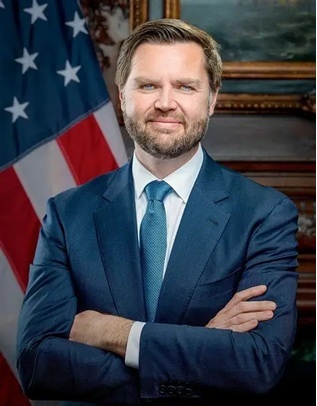
The top US priority now in the Iran war is no longer its nuclear program but to bring gasoline prices down for American consumers, the vice president said Thursday, with the treasury secretary adding that new economic punishment to wear down Tehran is imminent.
The comments by Vice President JD Vance and Treasury Secretary Scott Bessent illustrate the powerful leverage Tehran has gained by shutting down the Strait of Hormuz.
Preventing Iran from obtaining a nuclear weapon – consistently touted by President Donald Trump as his main reason for the war – now takes a back seat to getting oil flowing again freely through the strait, Vance said on Fox News.
Vance’s comments underscored the stark reality that the war now centers on control of the strait, the critical fuel supply conduit that was open before Trump started the war along with Israel in late February.
Iran has all but shut it down in retaliation and thus found a crucial bargaining chip against Trump as he struggles to find a way out of the war and shies away from resuming large-scale attacks.
The 80-year-old president’s approval rating is plummeting, the war is unpopular among Americans and midterm elections are approaching in November.
Republicans fear Trump and the war, which has caused gasoline prices to soar, will cost them their control of Congress.
“I know that oil is down today and it’s way down from the highs in the early days of the conflict,” Vance said on Fox News. “That’s goal number one – keep oil and gas cheap for Americans all over our country.”
“And then obviously goal number two is ensure that Iran never gets a nuclear weapon,” he added.
‘Low-keying it’
The vice president has been among the members of the administration most skeptical of the offensive launched against Iran in late February.
These remarks, however, appear to confirm the more cautious approach now favored by the US president, which involves maintaining strong economic pressure on Iran by blockading its ports and preventing it from selling oil.
Heralding more economic punishment, Bessent threatened to subject Iran to economic isolation “like the world has never seen before.” He said new measures are expected next week.
Only days ago Trump had said an agreement to reopen the strait was imminent. Now his administration seems to be digging in, with diplomacy on hold as he hopes economic suffering will cause Iran to yield.
“We are low-keying it,” Trump said Sunday. “We are only semi-negotiating with them. We are just watching Iran with its huge inflation and the fact they have no money,” Trump told the news outlet Axios.
The US military reportedly burned through stockpiles of costly high-tech missiles and other weapons in the months since the war started at a cost of billions and is now reportedly running low, limiting Trump’s options for resuming attacks on Iran.
“Sometimes we’re focused on the energy piece of it because we want Americans to be able to afford the price of oil and gas. Sometimes we’re obviously focused on the military… on the nuclear program,” Vance also said.
Trump had said recently he would hold off on attacking Iran again only if an agreement were reached quickly to reopen the strait.
Now Iran has set a list of conditions for reopening the passageway that the Trump administration is unlikely to accept: an end to the war on all fronts, the lifting of the US blockade of Iranian ports, the end of sanctions, the release of frozen assets and compensation for wartime damage.
Those conditions echo the terms of a so-called memorandum of understanding which was reached in June and collapsed as fighting resumed. It included a provision to create a $300 billion reconstruction fund for Iran.
Benjamin Netanyahu describes UK as ‘first Islamic republic to get a nuclear weapon’
Israeli PM criticised by political rival for attacking an international ally and overseeing ‘horrific diplomatic failure’
Emma Graham-Harrison in Jerusalem and Rowena Mason, https://www.theguardian.com/world/2026/aug/14/benjamin-netanyahu-describes-uk-first-islamic-republic-to-get-nuclear-weapon
The Israeli prime minister, Benjamin Netanyahu, called the UK “the Islamic republic of Britain” in a podcast interview, where he also described the country as the “first Islamic republic to get a nuclear weapon”.
His comments, made during an interview for Israel’s army radio, played into a common far-right Islamophobic trope about Britain’s small Muslim population.
Netanyahu praised positive coverage of Israel by the journalist Randolph Churchill, the son of former prime minister Winston Churchill, over half a century ago, then said: “Go find that in today’s Britain, in what is called the Islamic republic of Britain.”
Rather than challenge Netanyahu’s comments, the host questioned whether he is unfairly singling out the UK, asking: “Isn’t all of Europe is like that?”
Netanyahu replies by doubling down. “Yes, but you know someone said the first Islamic republic with nuclear weapons will be the Islamic republic of Britain.”
Pakistan, officially the Islamic Republic of Pakistan, has had a nuclear arsenal since the 1990s.
Relations between the UK and Israel have been increasingly strained in recent months, especially since Andy Burnham took over in No 10. Shortly before becoming prime minister, he apologised for Labour’s initial response to Israel’s military action in Gaza, saying the party “didn’t get it right” and needed to “do better” under his leadership, signalling a significant shift in the UK’s approach to the Middle East.
In July, he said he would “do more to put pressure on the Israeli government”, including through further sanctions on individuals and entities, as well as a potential ban on the trade of goods with illegal settlements.
The US vice-president, JD Vance, made remarks similar to Netanyahu’s comments during the 2024 presidential campaign, saying the UK could become the first “truly Islamist country that will get a nuclear weapon”.
London’s mayor, Sadiq Khan, has also been a frequent target of racialised attacks from rightwing leaders abroad, including Donald Trump, seeking to gain political advantage from Islamophobic lies.
Muslim leaders in the UK have said that hate crimes targeting their community are hitting new levels amid a rise in far-right rhetoric and growing support for anti-immigrant political parties.
Avi Dabush, who is running for the Knesset with Israel’s opposition Democrats party, attacked Netanyahu for mocking a critical ally at a time when Israel faces unprecedented global isolation. “That’s what happens when there’s a horrific diplomatic failure, and an inability to rally countries in the world in favour of our interests,” he said in a social media post.
Leading the most far-right government in Israel’s history, Netanyahu has alienated traditional allies while aligning with far-right figures, including some with a history of antisemitism.
The British Foreign, Commonwealth and Development Office said: “These comments are completely unacceptable and we have raised them with the Israeli government.”
The Prime Minister’s Office did not respond to requests for comment on whether Netanyahu’s statement represented the official position of the Israeli government.
The invisible geography of Israeli power
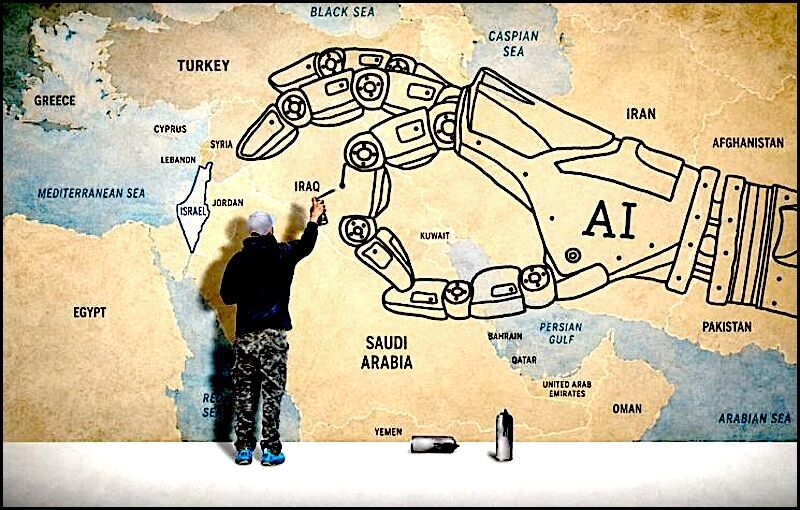
Real power belongs to whoever is able to access, process, transfer, restrict, or legally compel the disclosure of the information.
Countries that are rapidly building their own digital systems are entering a market already structured around dependency. A government may require that citizens’ data remain within national borders while simultaneously entrusting a foreign company with managing the platform, updating the software, providing the AI model, or controlling critical layers of the system. This creates the appearance of sovereignty without its substance.
Nowhere are the consequences of this hidden geography more evident than in occupied Palestine.
Data sovereignty is the new oil – but West Asia is pumping raw material while foreign tech giants refine it.
Strategic Culture Foundation, Lorenzo Maria Pacini, August 13, 2026, https://strategic-culture.su/news/2026/08/13/the-invisible-geography-of-israeli-power/
On June 10, 2025, two executives from Microsoft France appeared before a French Senate investigative committee tasked with examining public procurement and digital sovereignty. The hearing proceeded in the usual reassuring tone until a question that completely shifted the mood: Could the company guarantee that the data of French citizens – even if hosted on servers located in France – would never be transferred to a foreign authority without the consent of the French government? Anton Carniaux, the subsidiary’s director of public and legal affairs, responded under oath with six words: “No, I cannot guarantee that.”
That statement cut through years of corporate rhetoric built around phrases such as “local cloud regions”, “reliable infrastructure”, and “data residency”. France could host the servers, French citizens could generate the data, and French institutions could pay for the service – yet ultimate authority could still reside elsewhere. The commission drew a clear conclusion. Microsoft was unable to guarantee sovereignty over the data it hosted. That exchange reveals a reality with specific consequences, including – and perhaps above all – for West Asia: the physical location of data no longer coincides with its political location.
Classical power geography teaches that sovereignty occupies territory. Oil belongs to the state beneath whose soil it lies; ports fall under the authority of the country on whose shores they stand; oil pipelines follow the borders they cross. In this tradition, power is read on the surface of the earth. Data follows a different geography.
A medical record can be created in Riyadh, stored in Bahrain, processed by an algorithm trained in the United States, and managed through a European subsidiary. Which state truly controls it? The conventional answer attributes the data to the individual, company, or government that generated it. In practice, ownership matters less than control. Real power belongs to whoever is able to access, process, transfer, restrict, or legally compel the disclosure of the information.
This principle is stated unambiguously by the U.S. Department of Justice itself. Under the CLOUD Act, providers subject to U.S. jurisdiction can be compelled to hand over data through valid legal proceedings, “regardless of where the company stores it”. Washington presents the law as a legitimate tool for obtaining electronic evidence. On a geopolitical level, it allows U.S. jurisdiction to extend through corporate control, reaching information stored far beyond U.S. territory. The new map of power is drawn not only by borders, cables, and data centers, but by registered offices, encryption keys, legal obligations, system administrators, and the states capable of compelling them to cooperate.
Across Western Asia, governments are investing heavily in cloud computing, artificial intelligence, digital identity, smart cities, and data-driven public services. Saudi Arabia aims to become a leading data economy; the United Arab Emirates, Qatar, Bahrain, Oman, and Turkey are expanding their information management and governance capabilities. Physical capacity is also concentrated in a few regional hubs: a 2025 assessment by the World Bank counted thirty-nine data centers in the UAE and thirty-three in Saudi Arabia – figures lower than the average for high-income countries (eighty-one) but significantly higher than the rest of the region.
The transition is measurable. According to the International Telecommunication Union, in 2024, 70 percent of the population of Arab states used the Internet, compared to 68 percent globally. The regional average, however, masks an 82-percentage-point gap between the least-connected and most-connected economies, while fixed broadband subscriptions remain less than half the global figure. Digital expansion is rapid and, at the same time, deeply unequal.
The provider landscape, on the other hand, is highly concentrated. According to Synergy Research Group, in the third quarter of 2025, Amazon, Microsoft, and Google accounted for 63 percent of global enterprise spending on cloud infrastructure, in a quarterly market that had grown to $107 billion from $68 billion just two years earlier. Countries that are rapidly building their own digital systems are entering a market already structured around dependency. A government may require that citizens’ data remain within national borders while simultaneously entrusting a foreign company with managing the platform, updating the software, providing the AI model, or controlling critical layers of the system. This creates the appearance of sovereignty without its substance.
Data localization answers only one question: where is the information stored? It leaves the crucial questions open. Who controls the encryption keys? Who updates the software? Who can suspend the service? Which country’s laws govern the provider? Who can compel its disclosure, and who possesses the computing power necessary to extract strategic value from it? Keeping servers within national borders does not place them under national control.
Palestine and data as a weapon
Nowhere are the consequences of this hidden geography more evident than in occupied Palestine. Modern warfare increasingly depends on the collection, cross-referencing, and interpretation of enormous amounts of information. Phone records, biometric identifiers, intercepted communications, location histories, and aerial imagery can be transformed into military intelligence through cloud computing and artificial intelligence.
The combined use of Microsoft and OpenAI products by the Israeli military in March 2024 had reached a level nearly two hundred times higher than that of the week preceding October 7, 2023. The data stored on Microsoft servers had more than doubled, exceeding 13.6 petabytes by July 2024, while server usage grew by nearly two-thirds during the first two months of the war. The Azure platform was reportedly used to compile, transcribe, and translate information obtained through mass surveillance, with some of the intelligence cross-referenced with target-acquisition systems.
In September 2025, Microsoft deactivated certain cloud and AI services provided to an Israeli military unit after an internal audit confirmed that its products were being used for mass surveillance of Palestinians; the data in question was stored in the company’s cloud facilities located in Europe. This chain of events is revealing: information collected in Palestine, processed by an Israeli military unit, hosted in Europe, and ultimately subject to a decision made by a U.S. company. The limitation of this measure is equally telling. As Hossam Nasr, a former Microsoft employee and advocate for the No Azure for Apartheid campaign, noted, the bulk of the contract with the Israeli military apparatus remained intact. Big tech companies now occupy positions once reserved almost exclusively for states: they provide capabilities used in intelligence operations, decide whether a customer retains access, investigate alleged abuse, and impose restrictions across borders.
Israel itself recognizes the strategic importance of control over the cloud. The Nimbus project, awarded to Google and Amazon Web Services, was designed to provide Israeli ministries and related public agencies with a comprehensive cloud infrastructure. The contract, worth $1.2 billion, required local infrastructure and was presented as a means of keeping government information within the country’s borders. The main providers, however, remain U.S. companies, embedded in American legal and technological systems.
Nimbus embodies the central paradox of data sovereignty: a government can demand that information remain within its territory while entrusting the storage, computing, and platform management to companies headquartered elsewhere. Israel negotiated hard to reduce this vulnerability. Most countries in West Asia lack Israel’s bargaining power, its technological integration with Washington, or its ability to exert pressure on major American corporations. Here, sovereignty is also a function of negotiating power.
The dispute over data is ultimately a struggle over three strategic rights. The first is the right to collect: governments, digital platforms, telecommunications operators, banks, and security services accumulate information on identity, movements, communications, health, consumption, and behavior. The second is the right to process: raw data acquires strategic value only if the actor possesses the chips, algorithms, cloud platforms, and qualified personnel necessary to process it. The third is the right to compel: the authority, claimed by governments and courts, to force providers to disclose, retain, remove, or restrict information.
The economic concentration behind these three rights is intensifying. UNCTAD reports that the five largest digital multinationals have increased their combined share of industry sales from 21 percent in 2017 to 48 percent in 2025, while their share of assets rose from 17 to 35 percent. Control over data and computing is accumulating faster than infrastructure is spreading. A country that controls only the first right is a supplier of digital raw materials; one that controls data collection and computing can become a digital power; an actor capable of exercising all three possesses something close to digital sovereignty.
The economic stakes are rising rapidly. UNCTAD estimates that the global artificial intelligence market will grow from $189 billion in 2023 to $4,800 billion in 2033 – a twenty-five-fold increase over a decade. Regions that supply data but lack the computing infrastructure and intellectual property necessary to process it risk retaining only a minimal portion of that value. In the 20th century, strategic value lay not only in extracting oil, but in refining it, transporting it, pricing it, and financing it. In the 21st century, the same distinction applies to data: West Asia can generate the raw material, but the decisive power lies in the “data refineries” – that is, in the cloud platforms, AI models, and computing systems that convert information into profit, intelligence, and geopolitical leverage.
Beyond digital colonialism
The solution is not technological isolation. No single West Asian state can reproduce every layer of the global technology stack on its own, and replacing dependence on U.S. suppliers with total reliance on Chinese or other platforms would merely shift the external center of gravity. The risk to avoid is that breaking free from oil dependence could turn into digital colonialism: a scenario in which companies in the region generate the data while foreign platforms own the infrastructure, extract its value, and retain control over access. What is needed is distributed technological autonomy.
On this basis, a concrete order of priorities can be established. The procurement of cloud services must be treated as a national security decision, not as routine IT business: contracts must specify who controls the encryption keys, how foreign legal requests will be handled, and whether data and applications can be migrated to another provider. Health, defense, biometric, judicial, and civil registry data require stricter protection than ordinary commercial information. Governments must invest in interoperable regional cloud capabilities, open standards, independent auditing, and the ability to maintain essential services should a foreign provider revoke access. Above all, data sovereignty must extend beyond storage to encompass the entire chain: collection, classification, computation, access, sharing, and deletion.
For over a century, the geopolitical importance of West Asia has been mapped through oil fields, pipelines, ports, straits, and military bases. Those structures remain central, but another strategic network has spread over them – one made up of databases, cloud contracts, legal jurisdictions, identity systems, AI models, and invisible authorizations. Control over data gives states and corporations the power to map societies, interpret their behaviors, anticipate their political and economic shifts, and translate that knowledge into action.
The states of Western Asia are rapidly building the digital infrastructure upon which their economies and public institutions will rest. Much of the authority governing those systems, however, remains outside the region. In the 21st century, control over a territory will increasingly depend on control over the data that reveals its people, institutions, and resources.
The question posed to the French Senate in June 2025 clearly extends far beyond France: those who cannot guarantee where their data will end up do not fully govern their own territory. And with that data, literally anything can be done.
Walt Zlotow – Israel mimicking Nazis at end of WWII…destroying evidence of genocide

Walt Zlotow West Suburban Peace Coalition Glen Ellyn IL, 13 August 26
As the Nazis were collapsing in the spring of 1945, they furiously tried to cover up their massive genocide of Jews and other undesirables they engaged in during WWII.
Eighty-one years on we’re learning that Israel appears to be practising a similar cover up of its genocide of Palestinians in Gaza that, astonishingly, is still going on ten months after the Trump brokered ceasefire that he trumpeted to end it.
Once the massive bombing stopped, the World Court issued an order for Israel to preserve evidence of genocidal acts committed in Gaza. But in a new report by the Geneva-based Euro-Mediterranean Human Rights Monitor said that Israeli forces and contractors “are conducting a wide and organized operation to process and clear the rubble from neighborhoods and facilities they have destroyed in the Gaza Strip and relocate it from areas under their military control to outside the strip. This is occurring without any official record of the quantities removed or independent oversight, and before international and local investigative committees have had the chance to survey, examine, and document the sites. This risks destroying crucial evidence of genocide and the remains of victims still unaccounted for under the rubble. The systematic removal of rubble at this pace conceals the evidence of appalling crimes Israel committed in Gaza, especially those related to genocide, including summary executions and killing unarmed civilians.”
What did the Israeli genocide in Gaza look like?
In April the World Bank, UN and EU jointly published a report that estimated around 68 million tons of rubble from over 200,000 buildings are spread across Gaza’s 141 square miles after relentless bombing that left more than 250,000 Palestinians dead, injured or missing and up to 2 million forcibly displaced, starved or sickened. That’s the entire Palestinian population.
The Euro-Med report says at least 10 million tons of rubble “have been removed, crushed, or moved from their original sites within the areas under Israel’s unlawful military control, which encompass about 66% of the Gaza Strip by approximately 400 heavy pieces of excavation, demolition, crushing, and transport machinery, operated by Israeli civilian companies under military protection, that are active across eastern and southern Gaza.”
While it’s impossible to understand why any nation, be it Hitler’s Germany or Netanyahu’s Israel, would commit genocide, it’s certainly understandable why both would feverishly seek to cover it up.
1 This Month
23-25 October – on Zoom – World BEYOND War’s annual global conferenc


Shut down the radiation-damaged Heysham nuclear reactors now
To see nuclear-related stories in greater depth and intensity – go to https://nuclearinformation.wordpress.com

Say No to NASA’s Reckless Nuclear Reactor on the Moon
Say No to NASA’s Reckless Nuclear Reactor on the Moon

-
Archives
- October 2026 (247)
- September 2026 (339)
- August 2026 (330)
- July 2026 (355)
- June 2026 (287)
- May 2026 (306)
- April 2026 (356)
- March 2026 (251)
- February 2026 (267)
- January 2026 (308)
- December 2025 (358)
- November 2025 (359)
-
Categories
- 1
- 1 NUCLEAR ISSUES
- business and costs
- climate change
- culture and arts
- ENERGY
- environment
- health
- history
- indigenous issues
- Legal
- marketing of nuclear
- media
- opposition to nuclear
- PERSONAL STORIES
- politics
- politics international
- Religion and ethics
- safety
- secrets,lies and civil liberties
- spinbuster
- technology
- Uranium
- wastes
- weapons and war
- Women
- 2 WORLD
- ACTION
- AFRICA
- Atrocities
- AUSTRALIA
- Christina's notes
- Christina's themes
- culture and arts
- Events
- Fuk 2022
- Fuk 2023
- Fukushima 2017
- Fukushima 2018
- fukushima 2019
- Fukushima 2020
- Fukushima 2021
- general
- global warming
- Humour (God we need it)
- Nuclear
- RARE EARTHS
- Reference
- resources – print
- Resources -audiovicual
- Weekly Newsletter
- World
- World Nuclear
- YouTube
-
RSS
Entries RSS
Comments RSS

