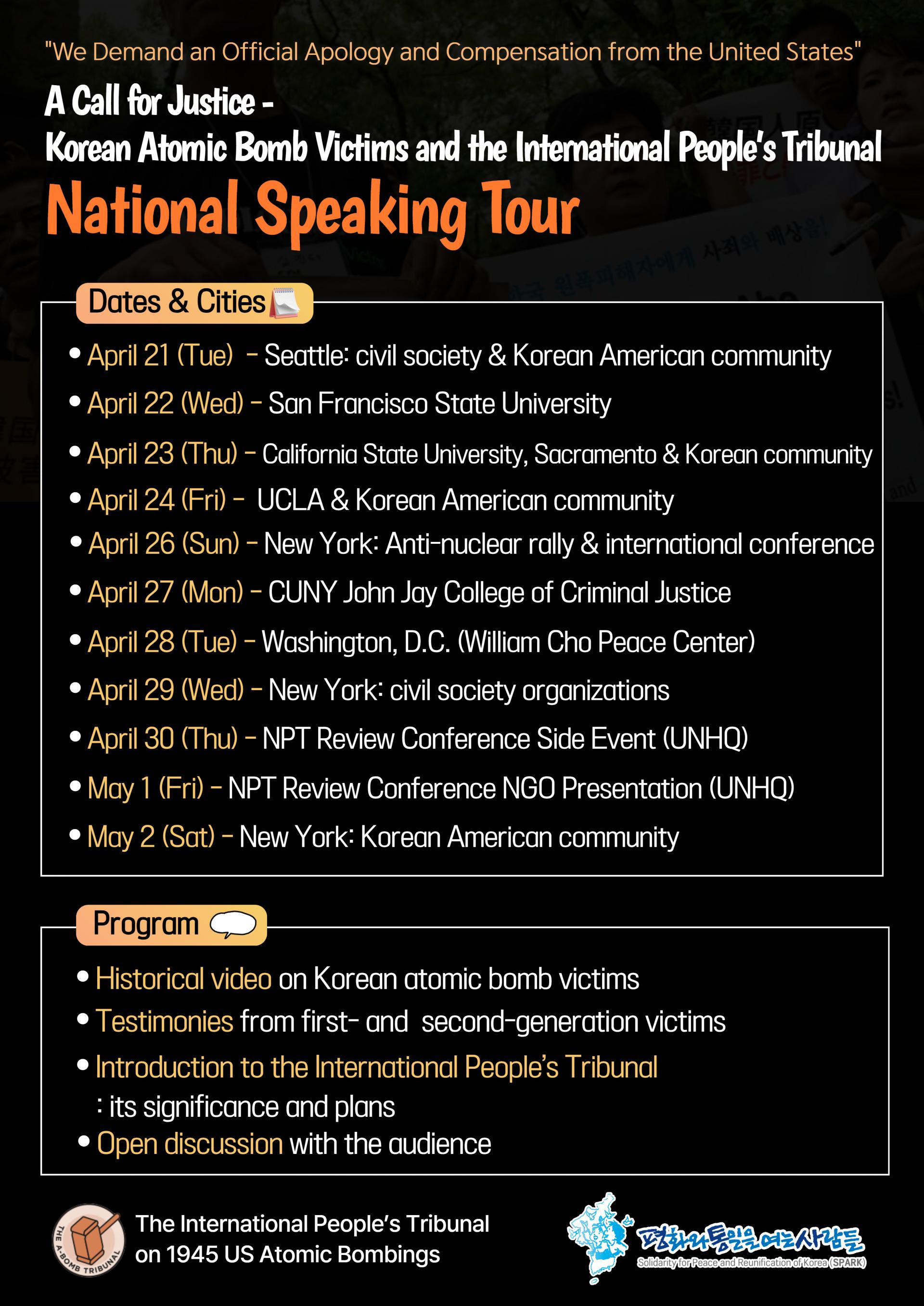
The International People’s Tribunal on 1945 US Atomic Bombings
Key Highlights:
First- and second-generation Korean atomic bomb victims will undertake a U.S. speaking tour from April 21 to May 3, visiting major cities
Survivors will share their long-overlooked experiences and call for a U.S. apology and compensation for the 1945 atomic bombings
“Victims exist, but no one takes responsibility” — testimonies highlight ongoing inter-generational suffering and struggle for redress more than 80 years after the bombings of Hiroshima and Nagasaki.
Organizers will invite global civil society to participate in the upcoming International People’s Tribunal on the 1945 Atomic Bombings (“A-Bomb Tribunal”), to be held in Seoul from November 13 to 15, 2026.
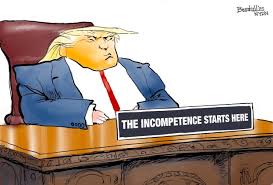
Many people are saying that Donald Trump is insane. He may be. So too Benjamin Netanyahu. But if so, it is a form of insanity that includes the calm sanity of Adolf Eichmann and Harry Truman as they went about their business of mass extermination.
Crazy, to use the vernacular, is an elusive word nearly impossible to define, especially when an entire society can be crazy, as Erich Fromm, the German-American social-psychologist, has argued. Obedience is a much touted virtue, not only in overt police regimes but in so-called democracies – but obedience to whom? To mass murderers?
Obedience can be imbibed through osmosis. I remember Regis, my Jesuit high school’s motto – Deo et Patriae, for God and country – and how it linked obedience to God with obedience to the United States. I am certain that such a linkage would be denied by school authorities, but of course the Jesuits are known for their guile. So it didn’t surprise me when I was applying for a discharge from the Marines during the Vietnam War and was being questioned by a group of Marine Officers and one starting screaming at me: “What the hell kind of God are you talking about? I’m a Catholic, too, and my God supports the Marines and the war in Vietnam.” It was hard not to laugh sardonically, especially as he gesticulated with his large cigar for emphasis. I was then sent to a psychiatrist for evaluation who told me, to my great surprise, that he agreed with me and that the country’s leaders were insane.
Adolf Eichmann was declared “perfectly sane” by a psychiatrist who examined him when he went on trial for his routine daily tasks of carrying out Hitler’s orders to exterminate Jews. It was just another day at the office for Eichmann.
Harry Truman was not examined after he ordered the dropping of atomic bombs on Hiroshima and Nagasaki; he was assumed to be sane in committing these satanic crimes of mass murder. Just another state executive doing his duty by carrying out the orders of his puppet masters.
Those were the good old days when everyone knew who was sane and who was nuts. Now we seem very confused. Perhaps Vietnam, Iraq, Afghanistan, Libya, Syria, Gaza, Ukraine, Iran, etc. have discombobulated many minds about who is sane or not, who is a mass murderer, who evil and who good, depending on which functionary is in the White House. Perhaps not.
If Trump is insane, how did he twice become the president of the United States? Do “sane” people – the well-adjusted ones? – not realize that Trump is the nominal head of an immense system whose history is one of mass murder from Wounded Knee to the recent U.S. slaughter of hundreds, mostly young girls, at the elementary school in Minab, Iran.
Trump gave the orders, but he did not launch those missiles. Nor did Netanyahu massacre Palestinians with his own hands. These fat boy killers prefer to keep their dainty hands clean of blood – to have their functionaries do the killing. I think of other functionaries and the names they gave to the atomic bombs they dropped on Japan: “Fat Man” and “Little Boy.” And we talk about sanity.
The “sane” obedient ones do the killing; the soldiers who carry out orders. As the Trappist monk Thomas Merton wrote in his profound book of essays, Raids on the Unspeakable, in 1966:
It is the sane ones, the well-adapted ones, who can without qualms and without nausea aim the missiles and press the buttons that will initiate the great festival of destruction that they, the sane ones, have prepared. What makes us so sure, after all, that the danger comes from a psychotic getting into position to fire the first shot in a nuclear war? Psychotics will be suspect. No one suspects the sane, and the sane ones will have perfectly good reasons, logical, well-adjusted reasons, for firing the shot. They will be obeying sane orders that have come sanely down the chain of command. And because of their sanity they will have no qualms at all. When the missiles take off, then, it will be no mistake. We can no longer assume that because a man is “sane” he is therefore in his “right mind.” The whole concept of sanity in a society where spiritual values have lost their meaning is itself meaningless.
Our problem, as the historian Howard Zinn once said, is civil obedience, surely not civil disobedience, that people everywhere are so submissive to authority that they will dutifully obey the orders of people like Trump and Netanyahu. Such obedience, all false rhetoric to the contrary, is drilled into us from birth through overt and covert methods of fear inculcation.
My dear departed mother’s father was a New York City cop. When she was young, he made her and her mother, trembling with fear, sit at the kitchen table, upon which he put his revolver, and warned them to obey him or else. Such tyrannical behavior was slightly mitigated decades later when he and my grandmother lived with us. When he heard that any of us eight kids were misbehaving, he, old, feeble, and long retired, would don his police uniform and stomp down the stairs waving his long baton to frighten us. I never got to ask my mother why she tolerated this. Such is the long life of fear.
There are reports that by April’s end the U.S. will have 60,000 troops in Iran’s vicinity. If Trump gives the orders to invade Iran, how many will refuse? How many will refuse to send missiles into more Iranian schools and homes? If Trump gives orders for a nuclear strike, can we expect military individuals with consciences to disobey? Will any heed Pope Leo’s voice about this war? That it is immoral.
It takes a system to wage war, and civil and military obedience to support it. That system – what former CIA analyst Ray McGovern has adroitly named MICIMATT: The Military-Industrial-Congressional-Intelligence-Media-Academia-Think-Tank system – is so deeply woven into American society and therefore the hearts and minds of its citizens and military personnel that one can only hope against hope that Trump’s orders will be disobeyed by many. It is a desperate hope, I realize.
War Is A Racket, as Marine Major General Smedley Butler once put it. It is waged for the tyrannical oligarchs and always kills mostly civilians. Over ninety percent now, probably more. Innocent people, little girls at school, babies in their mothers arms – it is organized state terror. War is immoral. It is not complex. It is simple. Like the gospel message the Pope is conveying.
Like all tyrants, Trump is surrounded by sycophants, fearful little people like Karoline Leavitt, JD Vance, Marco Rubio, Peter Hegseth, Robert Kennedy, Jr., et al. The whole crew groveling at his feet are implicated in his war crimes. To hear Kennedy defend Trump’s war on Iran, his Ukraine and other policies, by claiming his father, Senator Robert Kennedy, and his uncle, President Kennedy, would agree with Trump is to pass through the looking glass. Kennedy, also a staunch defender of Israel and its savage policies, makes me shake my head in wonder. Was his political conversion, like St. Paul’s, from a light from heaven that sent him to the ground where Trump’s divine voice asked him to hop on the MAGA train? Or was the voice more insidious and subtle, a quiet call from someone else late in the night? However it happened, it is complete, and he is now fully marching to the drums of war along with Trump’s ass-kissing entourage. I, once Bobby Kennedy, Jr.’s ardent supporter when he announced his run for the presidency, feel like a fool.
Let me recommend an important film – Terence Malik’s A Hidden Life – about a different type of man, Franz Jägerstätter, an Austrian peasant farmer from an isolated small mountainous village who refuses to take an oath to Hitler and fight in the German army. He knew that his refusal would not stop Hitler; but he also knew his conscience came from God and not the state. So he said no. NO! I will not follow orders, despite everyone telling him to do so. For his refusal, he suffered terribly and was beheaded. In my review of this film which I wrote six years ago as Joseph Biden was three weeks into his presidency, I said:
While Franz is eventually put on trial by the German government, it is we as viewers who must judge ourselves and ask how guilty or innocent are we for supporting or resisting the immoral killing machine of our own country now. Hitler and his Nazis were then, but we are faced with what Martin Luther King called ‘the fierce urgency of now.’
Many Americans surely ask with Franz, ‘What has happened to the country that we love?’ But how many look in the mirror and ask, “Am I a guilty bystander or an active supporter of the United States’ immoral and illegal wars all around the world that have been going on for so many years under presidents of both parties and have no end? Do I support the new cold war with its push for nuclear war with its first strike policy? Do I support, by my silence, a nuclear holocaust?’
The questions still linger. Let first Thomas Merton and then the twenty-two years-old Bob Dylan have the last words:
“For since man has decided to occupy the place of God he has shown himself to be by far the blindest, and cruelest, and pettiest and most ridiculous of all the false gods. We can call ourselves innocent only if we refuse to forget this, and if we also do everything we can to make others realize it.“
Anti renewable energy messages are no longer winning the battle of ideas, for now, as sovereignty and independence become the new buzzwords, says marketing expert Ed Coper.
The nays were gaining ground, albeit from a small base, before the start of the Iran war, he says. But rapidly rising fuel prices and shortages, as the Strait of Hormuz remains blocked to most of the world’s oil and gas tankers, have supercharged the already-powerful idea that renewable energy equals independence. “Already, before Iran, energy independence was the most resonant [message]. Now that the conflict has happened, it’s even more resonant. The scores are going off the charts,”
Coper, the CEO of communications agency Populares, tells Renew Economy. “Our assumption is that those messages are only going to increase in strength over time. We’re certainly seeing that with our testing at the moment.” Coper is basing his view on the company’s in-house algorithm, which he says captures millions of social media impressions on ideas and images being tested in the market.
In April 1986, Sergei Belyakov was fishing along the Dnieper River when he noticed that the water level had dropped significantly, a sign of an industrial accident further upstream.
Just days before, he’d seen the state news broadcaster briefly mention an incident at Chernobyl, a nuclear power plant in the north of the country.
“They were casually saying there was an accident at the nuclear power plant, and there were a few casualties, but it had all been taken care of,” Sergei recalled.
The assistant professor initially believed there had been some form of industrial accident at the plant, but what would unfold would go on to be one of the worst nuclear disasters in history.
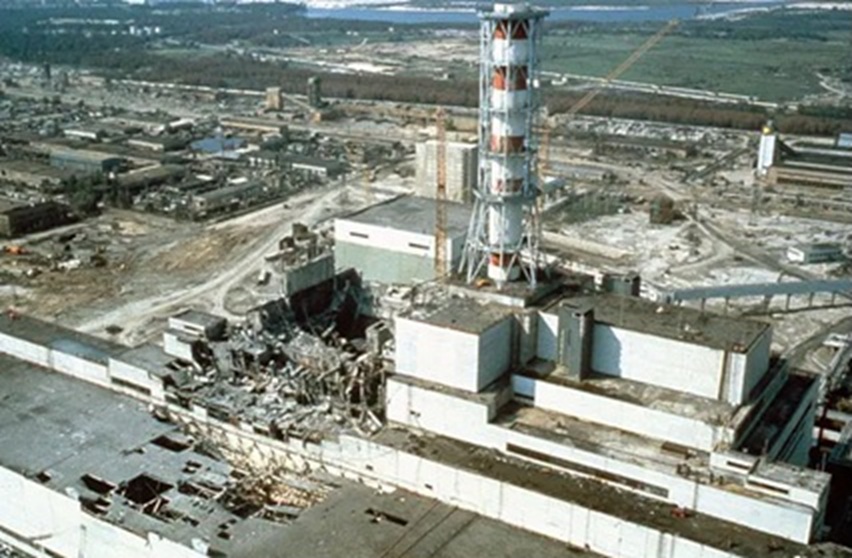
Chernobyl disaster: 40 years on
In the early hours of the morning on 26 April 1986, technicians at Chernobyl Nuclear Power Plant in Pripyat, Ukraine, were performing a routine test on the reactor when a fatal design flaw caused it to explode, releasing more than 100 radioactive elements into the atmosphere.
The consequences of the explosion would be catastrophic, with harmful radiation spreading as far north as Sweden and even reaching the US East Coast.
Four decades on from the disaster, National Geographic has released a four-part documentary series, titled Chernobyl: Inside the Meltdown, featuring first-hand accounts from those who witnessed the disaster and its aftermath.
After initially attempting to cover up the worst of the disaster, government officials leaned on national pride and propaganda to entice volunteers to help in the cleanup.
Around 600,000 people, referred to as liquidators, were drafted in from across Ukraine and the wider Soviet Union to assist with the clean-up, each receiving a radiation dose of 2000 roentgen an hour, equivalent to four times the lethal dose, in exchange for their work.
Sergei, then an assistant professor from the Ukrainian State Chemical Technology University in Dnipro, was one of such volunteers. Believing his background in military chemistry would be beneficial to the clean-up, Sergei travelled to the exclusion zone and worked for several weeks between July and September. With the job title of ‘biorobot liquidator’, Sergei’s work involved turning over top-level soil, spraying down buildings and shovelling graphite from the roof of reactor No. 4.
His work on the roof brought him just footsteps away from the open reactor, an area where experts say just 30 to 45 seconds of exposure would be lethal. With only a respirator and two sheets of lead for protection, Sergei made six trips up onto the roof – and the health consequences of his work still linger today.
“I still have some [problems], yes,” Sergei explained in an interview with LADbible. “Strangely enough, now, after all these years, and it’s… this is one of the things people don’t realise, that how radiation hits you.”
The impact of radiation exposure on his health was near instant. Aged 30 at the time, he began to experience immediate headaches, nasal congestion and difficulty looking into the sunlight.
After his 42 days in the exclusion zone ended, Sergei returned home with 1,000 Rubles, roughly £2,500 in today’s money and the equivalent of ‘five times’ his monthly salary at the time.
However, the health issues would continue. A ‘high-level’ basketball player before the explosion, Sergei also suffered with ‘severe fatigue’, with it taking around ‘a year and a half’ for the university professor to get back onto the court.
“[My] immune system suffered, I had problems with [my] kidneys,” he said.
“[I] had problems with my liver, my blood work was laughable at the time when I came back. I mean, white blood cells were miserable.”……………………………………………………………
It seems clear that Donald Trump realizes that this war has been a catastrophe for him, regardless of what he says publicly. As the global economy barrels toward recession, he sees little use in persisting. His only option is to increase pressure on Iran with more destruction, which would only bring more Iranian retaliation and lead to an even greater global economic catastrophe.
Iran is not willing to sacrifice what it sees as its national right to enrich its own uranium for civilian use, something permitted them under the Nuclear Non-Proliferation Treaty (NPT) to which they are a signatory, and, notably, Israel is not.
When U.S. Vice President JD Vance took to the podium after a long day of talks to end the American and Israeli war of choice on Iran, he made one thing clear. This had not been a serious attempt to reach a deal.
Although the talks went on for more than twenty hours, it’s just one day of negotiations. The very fact that the headline was that there had been no “breakthrough” in just one day displayed a fundamental lack of seriousness.
Despite Vance’s attempt at drama, neither side shut the door on continuing negotiations. The U.S. has even proposed extending the ceasefire, as Pakistani emissaries have arrived in Tehran to arrange further talks. Washington has even pressed Israel for a ceasefire in Lebanon, something that does not sit well with either Israeli Prime Minister Benjamin Netanyahu or the Israeli Jewish population.
At the same time, the United States has moved to block Iranian ships from using the Strait of Hormuz, a sort of counter-blockade, and has dispatched thousands more troops to the region.
What does all of this mean?
Trump wants a way out of this war, but does he have one?
It seems clear that Donald Trump realizes that this war has been a catastrophe for him, regardless of what he says publicly. As the global economy barrels toward recession, he sees little use in persisting. His only option is to increase pressure on Iran with more destruction, which would only bring more Iranian retaliation and lead to an even greater global economic catastrophe.
In that context, Trump’s move to “blockade Iran’s blockade” in the Strait of Hormuz is best understood as an attempt to appear strong before being forced to accept terms that end this war with Iran in a stronger position than it was before.
Trump even went so far as to force Netanyahu to accept a brief pause in Lebanon. That’s not an easy feat, as Netanyahu is reeling in Israel from the lack of positive results from the wars in both Iran and Lebanon. Israeli Jews support both wars but believe Netanyahu has not handled them correctly, based on the lack of tangible political gains for Israel since they began, in contrast to what they see as military triumphs.
But while Trump may want a way out of the war, finding that exit may still be difficult.
One option is for Trump to simply leave the ceasefire in place without an agreement. That means the Strait of Hormuz remains blocked, whether by Iran alone or by both Iran and the United States. Iran and Israel would continue to fight, but the fighting would likely be limited to those two countries, leaving the Gulf Arab states out.
That isn’t a very appealing option for Trump. He could talk about having “changed the Iranian regime,” but the reality of economic depression, ongoing fighting, and a strengthened Iran would be clear.
Moreover, Israel has been more vulnerable to both Iranian and Hezbollah attacks, as their supply of interceptors has dwindled. The U.S. can replenish them, but probably not at prior levels and not as quickly as Israel would need. The image of Israel getting pounded by Iranian and Hezbollah missiles is not one Trump wants his constituents to see.
Another option is simply to double down on force. Iran has already shown what the result would be if Trump chooses that option. Their recent attacks on Saudi Arabia’s East-West Pipeline, which serves as an alternative to the Strait of Hormuz for the export of oil, were a warning of Iran’s ability to do a lot more damage to oil exports from the region. Iran has also threatened to close the Bab al-Mandeb Strait in the Red Sea. Ansar Allah (the Houthis) in Yemen have shown they can do this at will and that there is little the U.S. can do about it.
The third option is a realistic agreement. This seems to be the one Trump wants to take. The problem he faces is that American demands are unrealistic, and the compromises he would have to make would be extremely hard to sell as anything but capitulation.
According to reports, the talks in Islamabad crashed on the key issues of Iran’s nuclear program, its support of armed non-state actors in the region, and control of the Strait of Hormuz.
Dismantle all major nuclear enrichment facilities;
Surrender all highly enriched uranium;
Accept an American peace, security and de-escalation framework that includes regional allies;
End funding for regional allies like Hamas, Hezbollah, and Ansar Allah;
Fully open the Strait of Hormuz, charging no tolls for passage.
If the American spokesperson was accurate in calling those “red lines” rather than negotiating points, they’re non-starters.
Iran has offered to suspend all nuclear enrichment activity for five years, countering a U.S. demand that they agree to a twenty-year suspension. Iran had, before the war, agreed not to stockpile enriched uranium, which would make it impossible for them to ever accumulate enough nuclear material for a bomb.
But Iran is not willing to sacrifice what it sees as its national right to enrich its own uranium for civilian use, something permitted them under the Nuclear Non-Proliferation Treaty (NPT) to which they are a signatory, and, notably, Israel is not.
Demanding Iran give up that option is not realistic. Yet that very unrealistic demand has been made more pressing by the war itself. By attacking Iran, Israel and the United States have reinforced the evidence for what happens to countries that abandon the pursuit of nuclear weapons. Iran can look at itself along with Libya, Iraq, Syria, and Ukraine on one hand and North Korea on the other to see this obvious logic.
The path out of that paradox is Iran’s returning to the nuclear monitoring that it agreed to before Trump tore up the nuclear deal, and the U.S. accepting that Iran can enrich its own uranium, within reasonable limits. That creates a mutual deterrence; Iran would have to break off the inspections to even begin enriching uranium beyond its immediate needs, which it wouldn’t do unless the U.S. and Israel continue their belligerence.
It appears that such a resolution would be acceptable to Iran, but it would mean a significant climbdown for Trump. And, obviously, Israel will not accept it and would have to be strictly restrained by the United States. Yet it remains the only reasonable way out.
It is notable that there was no mention of Iran’s missile and drone capabilities among the red lines. That seems to imply that the United States has already backed away from a condition that amounts to convincing Iran to disarm itself in the face of not only American and Israeli aggression but also the understandably renewed hostility toward it from the Gulf Arab states.
That realization by the Americans reflects someone getting in Trump’s ear and making some headway on issues that are just absurdly unrealistic. Similarly, while Vance might have included support for non-state allies in his talks, that has not featured prominently in White House statements or in Trump’s stream-of-consciousness ramblings since the talks in Islamabad.
The nuclear issue seems to have the most prominent position, and that is always better. It is the issue on which Iran has the most flexibility, largely because it is based on Western fears and propaganda more than it has been based on reality until now. Yes, the war has probably made Iran’s nuclear ambitions much more real. The death of Ayatollah Ali Khamenei means his fatwa against nuclear weapons is no longer in effect, and, as noted, Iran has been given much more incentive to pursue a nuclear weapon than ever before.
Still, the fact that they were even willing to offer a five-year suspension of nuclear activity and have not stated any opposition to the idea of international inspectors would indicate that Iran is open to significant compromise on the nuclear issue.
The Strait of Hormuz may be more problematic. Iran has always and will always have the ability to disrupt shipping in the Strait. No American threat or international anger can change that simple fact of geography.
On the other hand, while neither Iran nor the United States has ratified the UN Convention on the Law of the Sea, which guarantees safe and unimpeded passage to peaceful vessels through many waterways including the Strait, most of the world views Iran’s threats to passage in the Strait and to its plan to collect tolls for passage as unacceptable.
Iran wants to use its ability to threaten passage through the Strait to help press for the reparations they need and, more importantly, to ease the sanctions that have restricted Iran’s ability to participate in the global economy, particularly regarding trade with Asia and Europe. It is likely that they would abandon the legally dubious idea of collecting tolls in the Strait if they can re-enter the Asian and European markets and receive reparations for this war.
Again, though, this would be a huge concession from the United States. It would be impossible to sell such a concession as anything but a massive defeat, even to Trump’s most sheepish supporters. Iran would be significantly stronger and economically healthier than it was before the war. There’s no way to dress that up.
Israel’s Lebanon land grab
Finally, there is Lebanon. Trump surely had to exert extreme pressure to get Netanyahu to agree to a ceasefire, even a brief one.
Israel has not tried to hide the fact that this aspect of the war is a pure land grab. Netanyahu intends to extend Israeli control, if not its border, north to the Litani River. He is not about to abandon that goal lightly, even if he is forced to accept that his long-sought war on Iran is a failure.
The talks in Washington between Israel and Lebanon are a farce. No agreement there is possible, because what Israel wants is a permanent presence in Lebanon and the disarmament of Hezbollah.
This Lebanese government would be open to a reasonable agreement with Israel, but those terms are obviously unreasonable. No country, especially not one as small as Lebanon, would simply give up a huge chunk of its territory.
But this Lebanese government wanted to address Hezbollah. They wanted to bring Hezbollah into the Lebanese military, thus disarming them and integrating them into a single, national force. That was never going to be easy, but Israel never stopped attacking Lebanon during the so-called “ceasefire” brokered in late 2024. If they really wanted the Lebanese government to eliminate Hezbollah as an independent fighting force, that was exactly the opposite of what they would have done.
The Lebanese are attending these meetings to help convince Trump to rein Israel in. Israel is doing it to convince Trump that they are willing to cooperate with his effort to end the Iran war. In both cases, the effort is merely a show.
Trump will take the exit from Iran as soon as he can find it, and Israel will find it hard to bring him back in again now that he has seen why all other U.S. presidents didn’t fall for Netanyahu’s “bomb Iran” pitch. But he will have little reason to exert the political influence that would be needed to keep Israel from occupying southern Lebanon permanently. Israel and Iran will also likely continue lobbing missiles at each other, even though Israel’s ability to fight Iran without direct American support is extremely limited.
That’s the best-case scenario for Trump, and it’s not a good one. It is entirely possible that, rather than admit a huge defeat, he will decide to keep fighting Iran to no possible better outcome.
Trump made this bed. He can either lie in it or take one of the less disastrous options to get out of it. Unfortunately for the world, he is not a man prone to making good decisions. .Plitnick is correct a fatwa in shiism if comes it from your marja is considered binding and upon his death is rescinded, apologies. I asked an al khoei who called for an unrelated reason. it’s not like that in sunni practise, can one never safely assume, i thought it would be ok this time.
Workers at two Fukushima nuclear power plants in Japan were forced to evacuate to higher ground following earthquake and tsunami warnings today (20 April). Japan’s nuclear power company Tepco (Tokyo Electric Power Company) issued statements where they sought to reassure the public about its plants. “At around 16.53 [local time] on April 20, 2026, an earthquake with a magnitude of 7.5 on the Richter scale struck off the coast of Sanriku, Japan”, it said. “As of now, there is no abnormality with our main power system. “In response to the tsunami advisory issued for Fukushima Prefecture, evacuation orders have been issued to workers at the Fukushima Daiichi and Fukushima Daini Nuclear Power Stations.
On Wednesday night, the Senate rejected a pair of resolutions that would have blocked the sale of bombs and bulldozers to Israel.
Although the Joint Resolutions of Disapproval, which were introduced by Sen. Bernie Sanders (I-VT) failed to pass, a record number of Senators backed the effort. 40 Senators backed a resolution would have blocked the sale of $295 million in D9R and D9T Caterpillar bulldozers to Israel and 36 members voted for a resolution that would have stopped a $151.8 million sale of 1,000-pound bombs to Israel.
“The fact that 40 of 47 Democratic Senators voted to withhold military hardware from Israel is a new high water mark in holding Israel accountable for violating US and international law,” tweeted Center for International Policy Vice President for Government Affairs Dylan Williams.
Sanders has attempted to pass similar resolutions on three other occasions. Last April, just 15 Senators voted for them, while 27 Senators supported them in July.
In a statement released after the vote, Sanders pointed out that 80% of the Democratic caucus backed the measures.
“When we started this effort there were just 11 votes,” said Sanders. “Now, there are 40.”……………………………………………………………………………………………………………………………………………………
Ahmad Abuznaid, Executive Director of the US Campaign for Palestinian Rights (USCPR), told Mondoweiss that activists have to keep pushing for a full arms embargo.
“The writing is on the wall, and we see politicians reacting to the fact that aid to Israel and AIPAC are toxic,” said Abuznaid. “But we have to dig deeper because there is a distinction. We need to control the narrative. We need to end support for genocide and occupation. That’s the moral, ethical, and legal position.”
Israel is approving the construction of new West Bank settlements at an unprecedented rate because it knows its window of impunity is closing — especially if Iran emerges intact from the war and the Republicans lose the U.S. midterms.
The Israeli cabinet approved the construction of 34 new West Bank settlements last week, bringing the total number approved by the ruling coalition led by Israeli Prime Minister Benjamin Netanyahu up to 103. The cabinet decision is the largest batch of new settlements approved in decades, breaking the record set by a previous landmark decision in June 2025, which approved 22 new settlements.
While the latest decision has been overshadowed by the regional conflagrations related to the U.S.-Israeli war on Iran, its timing indicates that Israel perceives a closing window for its ability to entrench its colonial project in its own backyard — the West Bank — in light of shifting realities that might see Iran emerging from the war intact and in a strengthened position regionally.
These developments come as Israel has reportedly been “coerced” to halt its onslaught against Lebanon by U.S. President Donald Trump, forcing it to accept a ceasefire with Hezbollah. Meanwhile, the very fact that the U.S. agreed to a temporary ceasefire with Iran was condemned by the entirety of the Israeli political establishment, both from within Netanyahu’s camp and from the Israeli opposition, who lambasted Netanyahu’s “failure” to overthrow the Iranian government.
While Israel will attempt to use the ceasefire in Lebanon to force the hand of the Lebanese government to accept the ongoing occupation of the southern part of the country, little military progress has been made against Hezbollah, which has reportedly rebuilt its military capabilities since it was bloodied by Israel in October 2024. Iran has also continued to show strength in the region through exerting control over the Straits of Hormuz, and has been described by analysts as an emerging “major world power.”
This is the crucial backdrop to Israel’s moves in the West Bank. It seeks to further cement its de facto annexation of the territory in a race against time to entrench its colonial project in the only geographic region where it can proceed with comparatively minimal resistance.
The closing window
The impatience of the Israeli decision is not only suggested by the magnitude and speed of the cabinet approval, but also by the fact that Israel is in an election year, with polls indicating that Netanyahu and his hardline allies, Finance Minister Bezalel Smotrich and National Security Minister Itamar Ben-Gvir, show a low chance of winning…………………………………………………………………………………………………………………………………………………………………………………. https://mondoweiss.net/2026/04/israel-races-against-time-to-expand-west-bank-settlements-before-it-is-limited-by-new-regional-realities/
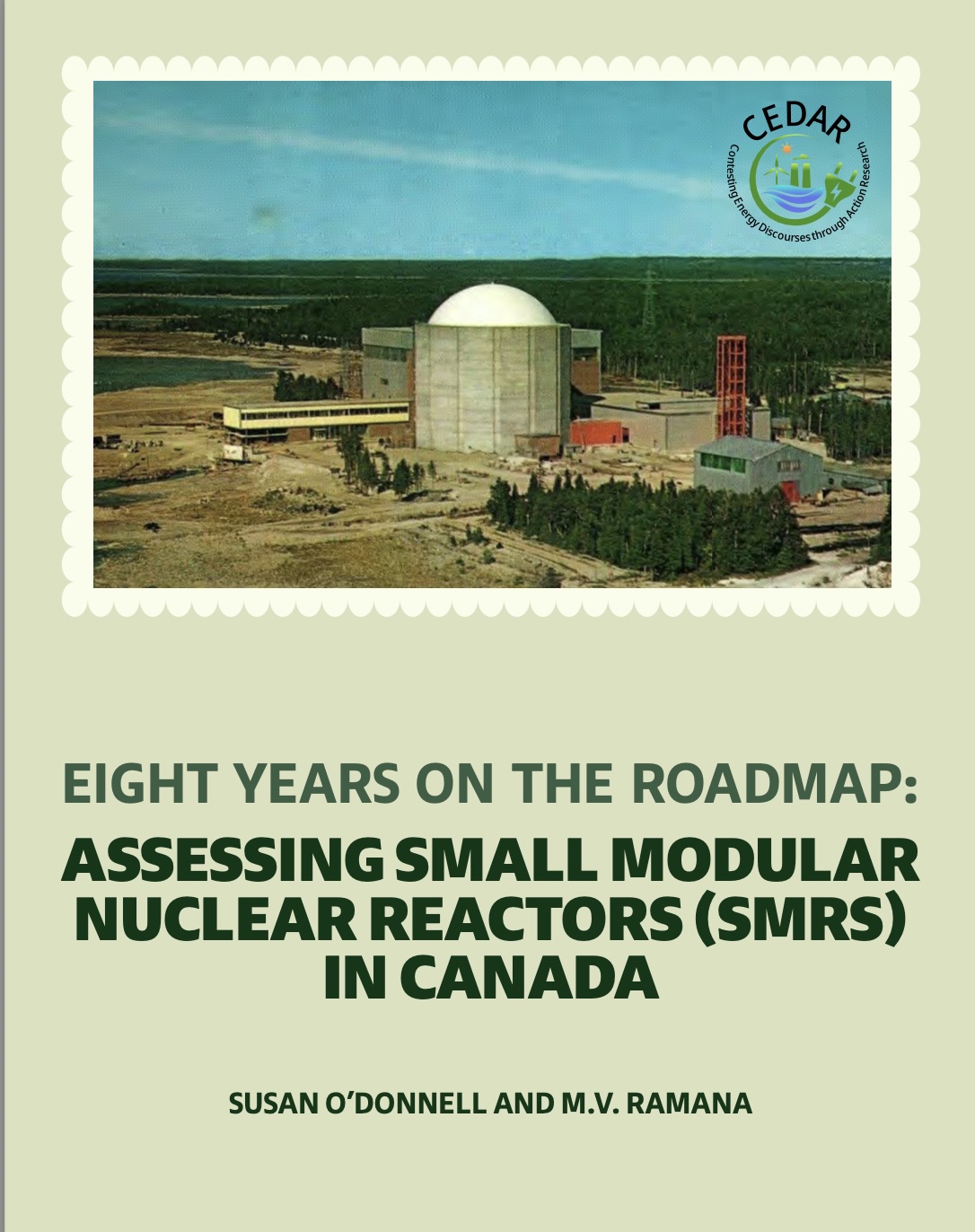
In 2018, Canada published a strategic plan – a roadmap – to develop small modular nuclear reactors (SMRs) across the country. An SMR is one designed to generate 300 megawatts (MW) of electricity or less, compared to Canada’s existing CANDU power reactors which generate 500 MW or more.
According to the “SMR Roadmap,” the first demonstration SMR was expected to be operating in 2026. In this milestone year, our report analyzes the financial and developmental status of the 10 SMR designs with some kind of presence in Canada.
On this page are the report and the recording of the report launch webinar on March 18, 2026.
The report authors are Susan O’Donnell, PhD, St. Thomas University and M.V. Ramana, PhD, University of British Columbia. The report was published by the CEDAR research project at St. Thomas University.
Report launch webinar
The SMRs report was launched during a webinar on March 18, 2026, An assessment of SMR projects: the case of Canada. The speakers were the report authors, Susan O’Donnell, PhD, St. Thomas University and M.V. Ramana, PhD, University of British Columbia with moderator Madis Vasser, PhD, Senior expert on SMRs for Friends of the Earth Estonia.
A fresh opinion poll conducted in the middle of the Scottish election campaign has found widespread support for renewable energy sources to reduce energy bills and tackle climate change.
When asked about Scotland’s energy security needs, support for a uranium-fuelled nuclear future polled a ‘miserable’ 14%, compared to 55% support for harvesting home grown wind, water and solar sources. The findings will likely make grim reading for Scottish Labour and Libdem campaign bosses who are promoting new nuclear power stations, due to resounding support for renewables compared to nuclear, from their own voters.