Normalizing zionist terrorism against Palestine, Lebanon, Sudan, Syria, Yemen, Iraq, Iran
Organizing Notes, Bruce Gagnon, April 09, 2026
Pakistan confirmed US and Iranian delegations will meet Friday in Islamabad, with V-P Vance supposedly leading the American team and Ghalibaf heading Iran’s. However, Iran informed mediators its participation is conditional on a Lebanon ceasefire—a condition Washington explicitly rejected. Trump named Jared Kushner and Steve Witkoff as special envoys for behind-closed-doors negotiations.
- New footage documents the effects of the occupation’s bombing of a building in the Tellat al-Khayat area of Beirut, Lebanon.
- The Pentagon: Operation Epic Fury is currently paused, objectives have been achieved, and US forces remain on high alert.
- Sheikh Ali Reza Panahian (Iranian Twelver Shia Scholar & official): “If we leave Lebanon to its fate, God will leave us to ours. If we withdraw from the temporary Zionist regime, it will not withdraw from us. We must secure a possible agreement with the U.S. by destroying Israel”.
- Tehran Metro displays slogans and banners including the phrase ‘We will not abandon Lebanon’. A lot of anger among Iranians tonight for ceasefire violations in Lebanon. One man on the street says, ‘We don’t want this cursed ceasefire if our brothers & sisters in Lebanon are being slaughtered. They stood by us, now we should stand by them’.
- Terrorist Netanyahu: The Zionist entity announces its withdrawal from the ceasefire agreement with Iran. The ceasefire will not include Hezbollah, and we will continue striking them. Yesterday we dealt Hezbollah its biggest blow since Operation Siren (the Pager).
- The United States officially announces that the agreement does not include Lebanon and threatens Iran with escalation if it reneges on the agreement. Trump on Lebanon: ‘That’s part of a separate skirmish, okay?’ And the Trump admin says they will be discussing their 15 points, not Iran’s 10 points. (Recall the Native Americans told us that the ‘White man speaks with a forked tongue’.)
- White House spokesperson, Karoline Leavitt: ‘Iran submitted a 10-point proposal, which was ignored by the President’. JD Vance will not be able to take part in negotiations with Iran in Pakistan due to security concerns —Trump told the New York Post. That leaves perennial liars Witcoff and Kushner. Both real estate crooks and not statesmen which are needed but the US doesn’t have any.
- The ceasefire already going down the hill – fast. The death cult bombed a Chinese New Silk Roads railway INSIDE Iran. US-Israel don’t want peace. They are out to take down all BRICS+ nations. The collective west is in a war to stop the fall of the colonial genocide project. This is a war of massive desperation.
- Iranian National Security Expert Mostafa Najafi: ‘Pakistan’s mediation should be approached with skepticism and caution. It is a country heavily reliant on Saudi Arabia financially, and since Trump came to power, it has sought various ways to curry favor with Washington! It is not unlikely that what is happening in Lebanon is the result of Pakistan’s cunning, acting as a covert agent for the Saudis! The Saudis harbor animosity toward Hezbollah in Lebanon no less than that of Israel! To what extent can Pakistan be relied upon to convey messages’?
- Don’t forget Pakistan’s very popular Imran Khan, the former Prime Minister, is rotting in prison on trumped up charges because he dared support true peace in regional hotspots around the globe.
- Iran has emerged as victorious in the public mind throughout the entire world.
- New York Times: ‘Trump faces political pressure preventing him from resuming the war’. Who could be exerting pressure? The American people? Yes. Global public opinion? Yes. The Iranians, Lebanese, Palestinians, people in Yemen and Iraq? Yes. Then who wants Trump to keep the war going? Israel, Wall Street and the military industrial complex….along of course with the Epstein class. ………………………………………………………………………………………………………………………………………………………………………………………………………………………………………………….https://space4peace.blogspot.com/2026/04/normalizing-zionist-mobster-terrorism.html
Mass Destruction in Southern Lebanon as Israeli Forces Use ‘Gaza Tactics,’ Level Villages
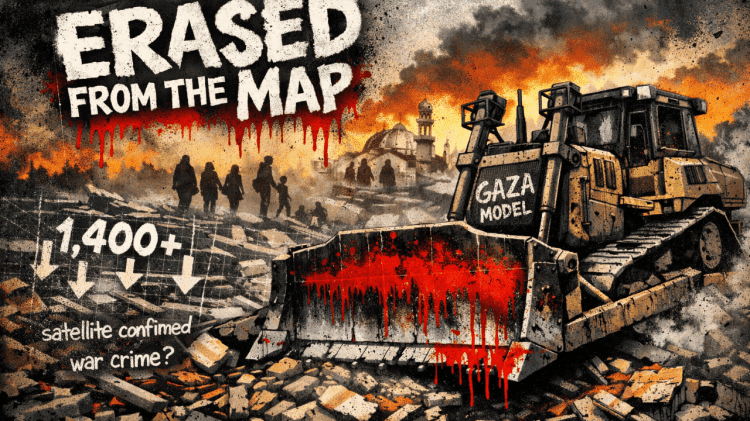
Satellite images confirm over 1,400 buildings destroyed in Israeli invasion
by Jason Ditz | April 16, 2026, https://news.antiwar.com/2026/04/16/mass-destruction-in-southern-lebanon-as-israeli-forces-use-gaza-tactics-level-villages/
Israeli officials have been saying they intended to apply a Gaza Strip model to the invasion of Lebanon, but the extent of the destruction inflicted on the southern part of Lebanon in the first month and a half of the war is even bigger than initially feared.
New reports from the BBC are that they’ve visually confirmed more than 1,400 buildings destroyed in the course of the Israeli offensive using satellite imagery and that, given the limited access on the ground, the true number is potentially far higher.
Images show that villages like Taybeh have been effectively erased, and while it’s being done concurrently with an invasion and occupation, much of the actual destruction is being inflicted by Israeli military bulldozers and demolition crews, explicitly destroying the buildings.
That’s illegal under international law, though the IDF maintains they do “not allow the destruction of property unless there is an imperative military necessity.” In as much as Israel is wiping entire villages off the map systematically and demolishing civilian residences, it would be a real legal challenge to argue that was actually a military necessity above and beyond territorial ambitions on the Israeli far-right.
It’s not only the villages. Part of a UNESCO-listed historical site in Shamaa, the shrine of Prophet Shimon al-Safa, was bulldozed by Israeli forces before its ruins were further leveled by artillery fire. It’s a religious site that includes a Shi’ite mosque.
Here again, the destruction of a shrine with aspects dating back to the 11th century is going to fuel long-term resentment about the Israeli offensive, but importantly, it would also be difficult to argue that such an ancient shrine had any specific, immediate military requirement to be destroyed.
Israel’s promise of Gaza tactics seems definitely to have come to pass, but beyond Israeli military intentions to install more permanent military bases on Lebanese soil, practical policy has been forced mass displacement and systematic destruction of civilian infrastructure, both war crimes under international law.
Jason Ditz is Senior Editor for Antiwar.com. He has 20 years of experience in foreign policy research and his work has appeared in The American Conservative, Responsible Statecraft, Forbes, Toronto Star, Minneapolis Star-Tribune, Providence Journal, Washington Times, and the Detroit Free Press.
Netanyahu Doctrine: How one man’s war addiction is consuming Israel, Lebanon, and the World

The concept of Greater Israel – a territory stretching from the Nile to the Euphrates, encompassing all of modern-day Israel, the Palestinian territories, Lebanon, Jordan, Syria, Iraq, Kuwait, Saudi Arabia, and parts of Turkey – is not a fringe fantasy. It is the stated aspiration of the Netanyahu government.
Israel is not being destroyed by its enemies. It is being destroyed by its own internal contradictions. The addiction to war, the messianic ideology, the economic unsustainability, the exodus of the educated – these are not external threats. They are internal cancers.
15 April 2026 Dr Andrew Klein, https://theaimn.net/the-netanyahu-doctrine-how-one-mans-war-addiction-is-consuming-israel-lebanon-and-the-world/
From the ‘Villa in the Jungle’ to the ‘Greater Israel Nightmare’
I. Introduction: The Doctrine of Perpetual War
On October 7, 2023, Israel suffered the worst terrorist attack in its history. Hamas militants crossed from Gaza, unimpeded, and killed and tortured Israeli civilians. That day alone should have disqualified Benjamin Netanyahu from office. In most political systems, he would have been driven from power long ago.
Instead, he did what he has always done: he escalated.
What emerged from the ashes of October 7 is what analysts now call the Netanyahu Doctrine – a security strategy based not on containment, not on deterrence, but on perpetual war. As Netanyahu himself told military officers:
“No more containment of threats. No more the idea of the ‘villa in the jungle’, where one hides from predators beyond the wall. On the contrary: if you don’t go into the jungle, the jungle comes to you.”
The doctrine is simple: preventive attacks against every perceived threat, the creation of buffer zones through the seizure of neighbouring territories, and the constant use of force as the only guarantee of security. It is a doctrine born of trauma, shaped by political expediency, and devoid of any long-term diplomatic vision.
This article examines the Netanyahu Doctrine in action: in Gaza, in Lebanon, in Syria, and against Iran. It documents the destruction, the displacement, and the erosion of Israel’s international standing. It argues that Netanyahu is not a strategist – he is an opportunist. He does not plan for the long term. He plans for the next distraction.
And the world is always distracted.
II. The Greater Israel Dream: From the Nile to the Euphrates
The doctrine is not about security. It is about expansion. The buffer zone is not the goal. The settlements are the goal. The land clearance is not for defence. It is for colonisation.
The concept of Greater Israel – a territory stretching from the Nile to the Euphrates, encompassing all of modern-day Israel, the Palestinian territories, Lebanon, Jordan, Syria, Iraq, Kuwait, Saudi Arabia, and parts of Turkey – is not a fringe fantasy. It is the stated aspiration of the Netanyahu government.
This is not a fringe position. It is the official policy of the Netanyahu government. And it is being executed.
III. Lebanon: The Pattern Repeats
The same pattern as Gaza. The same destruction. The same rubble.
On March 2, 2026, Israel launched an offensive against Hezbollah in Lebanon. The stated goal was to create a “buffer zone” up to the Litani River, approximately 30 kilometres north of Israel’s border, to protect northern Israeli communities from Hezbollah rockets.
The reality is different. The buffer zone is not a buffer. It is a land grab. The territory up to the Litani is not needed for defence. It is needed for settlements.
Defence Minister Israel Katz has been explicit:
“All houses in villages near the Lebanese border will be destroyed, in accordance with the model used in Rafah and Beit Hanoun in Gaza, in order to permanently remove the threats near the border.” Displaced residents will not be allowed to return south of the Litani “until the safety and security of residents of northern Israel is guaranteed” – a condition that may never be met.
The human cost in Lebanon (as of April 2026):
- 1,268 people killed in Israeli strikes, including 125 children and 52 medics
- 303 killed in a single day (April 8, 2026) – one of the deadliest bombings ever inflicted on Lebanon
- 1,200+ killed and 1.2 million displaced since March 2
- 1,094 confirmed martyrs and 3,119 injured according to the Lebanese Ministry of Health.
The air force can project power anywhere. The ground troops are not needed for security. They are needed for clearance.
IV. Conflicting Views: Military vs. Political Leadership
The Israeli military and political leadership are not aligned. The military leaders want a buffer zone. The political leaders want settlements.
In early April 2026, the Israeli army proposed a revised set of objectives for its operations in Lebanon, limiting the goal of disarming Hezbollah to areas south of the Litani River, rather than across the entire country. The proposal triggered sharp disagreements with Israel’s political leadership, leading to the postponement of a cabinet meeting.
Foreign Minister Israel Katz was among those who opposed the plan. Under the alternative military approach, the army would focus on the large-scale destruction of villages in South Lebanon and the forced displacement of their citizens to establish a buffer zone.
The gap is not a failure of communication. It is a feature. The ambiguity provides cover. The confusion provides deniability.
The military leaders can say: “We were only establishing a buffer zone.”
The political leaders can say: “The military recommended it.”
And the settlers move in.
V. The Economic Cost: Israel Cannot Afford This War
The Netanyahu Doctrine is not sustainable. The economic numbers are stark.
The cost to Israel:
The defence budget has ballooned. The army needs approximately 15,000 more soldiers, half of them for ground combat units. Chief of Staff Eyal Zamir warned the government: “I am raising 10 red flags. If this continues, the Israeli army will collapse from within.”- The ultra-Orthodox community, which relies heavily on state benefits, is expected to triple by 2065, pushing the burden on non-Orthodox households to the equivalent of 60,000 shekels ($19,370) a year.
- Foreign investment is down. Institutional investors have been moving money out of the country since the 2008 financial crisis.
- More than 150,000 people have left Israel in the past two years, and more than 200,000 since the current government took office in December 2022. The educated upper class are more able to leave – they speak English, can find jobs, and are more exposed to international media.
The cost to Lebanon:
The Lebanese economy, already in freefall, is being shattered. The destruction of infrastructure, the displacement of 1.2 million people, and the loss of agricultural land in the south will take decades to repair.- Sectarian tensions are rising. Non-Shi’a Lebanese are increasingly ostracising the Shi’a community, viewing them as a liability that brings Israeli bombs. The country’s fragile social fabric is tearing apart.
The Netanyahu Doctrine is not about security. It is about expansion. And expansion costs money that Israel does not have.
VI. The Sabra and Shatila Precedent
This is not the first time Israel has invaded Lebanon. It is not the first time the world has been distracted. And it is not the first time the consequences have been catastrophic.
In 1982, Israeli forces invaded Lebanon and besieged Beirut. On 16 September, under Israeli supervision and protection, Lebanese Forces militias entered the Palestinian refugee camps of Sabra and Shatila. For 43 hours, they tortured and killed everyone they came across. They crushed the heads of children and babies against walls. They raped women and girls before slaughtering them. They dismembered their victims.
An estimated 3,500 to 4,500 Palestinian and Lebanese civilians were killed.
The Israeli government did not deny that it had overseen the camps. It denied knowledge of the massacre, despite order number 6 of the Israel Defense Forces command stating that “the refugee camps are not to be entered” and that “searching and mopping up the camps will be done by the Phalangists/Lebanese Army.”
The Kahan Commission found Israeli Defence Minister Ariel Sharon “personally responsible for ignoring the danger of bloodshed and revenge.” He was forced to resign.
The world was shocked. The world moved on. And Israel invaded Lebanon again.
The Netanyahu Doctrine is not new. It is the same doctrine, dressed in new clothes, enabled by a distracted world, and executed with unprecedented brutality.
VII. The UN Warning: ‘The Gaza Model Must Not Be Replicated’
The international community is not silent. But its warnings are being ignored.
UN Secretary-General Antonio Guterres has issued a warning cry, stressing that the model of destruction witnessed in the Gaza Strip must not be repeated in Lebanese territories. He described the humanitarian repercussions as severe and requiring immediate intervention to prevent a slide towards a comprehensive catastrophe.
Stanford Law Professor Tom Dannenbaum warned that destroying all homes near the Lebanese border would not meet the standard of “absolute military necessity” required by the laws of war. “The unnecessary destruction of property can qualify as a war crime,” he said. Katz’s comments barring residents from returning home “strongly indicate an illegal policy of long-term or permanent displacement.”
European countries have called on Israel to avoid further escalation. Canadian Prime Minister Mark Carney said Israel’s occupation of Lebanese territory was a “violation of their territorial sovereignty” and condemned it.
The world is not silent. But the world is distracted.
VIII. The Netanyahu Doctrine: A Record of Failure
Jonathan Freedland, writing in The Guardian, sums up the Netanyahu record:
“This is now the fourth time in a row – in Gaza, once in Lebanon and twice in Iran – that Netanyahu’s boasts of total victory and the removal of existential threats have been exposed as empty promises.”
The failures are clear:
Gaza: Netanyahu promised “total victory” over Hamas. After a two-year campaign that killed approximately 70,000 people, Hamas still rules the ruins of half of Gaza.- Lebanon (first round): Netanyahu boasted that he had “vanquished” Hezbollah, destroying its ability to menace northern Israel. Hezbollah continues to fire rockets.
- Iran (first round, June 2025): Netanyahu described the 12-day confrontation with Iran as a “historic victory that will stand for generations.” Eight months later, Tehran was once again said to pose an existential threat.
- Iran (second round, February-April 2026): Iran still has a stockpile of enriched uranium. Its rulers remain in place, more hardline than before. Tehran has demonstrated a mighty deterrent – a chokehold on the global economy in the form of the Strait of Hormuz.
As Yair Golan, the Israeli opposition politician and former general, observed: Netanyahu “does not know how to turn military achievements into political security.” There is no attempt to seize diplomatic openings, no effort to turn Israel’s enemies’ enemies into friends.
The Lebanese government and much of its people are desperate to be rid of the Hezbollah cuckoo in their nest. But Netanyahu speaks to them only through bombs.
IX. The Strait of Hormuz Distraction
The timing of the Lebanon escalation is not accidental. The world is focused on Trump and Iran. The media is focused on oil prices. The public is focused on the cost.
On February 28, 2026, the US and Israel launched joint military strikes against Iran. The war has spread across the Middle East. The Strait of Hormuz is effectively blockaded. Oil prices have spiked. Inflation is rising. The global economy is bleeding.
Netanyahu is taking advantage. He always does.
The Iranian threat is not existential. It is useful. The fear is the tool. The distraction is the opportunity.
Netanyahu has been playing this game for decades. He is very good at it.
X. What This Means: The Erosion of Israel’s Standing
The Netanyahu Doctrine has gained nothing. And it has come at a monstrously high price.
Most obviously, in the lives of all those killed – whether in Rafah or the Bekaa Valley or Israel itself. But it has also inflicted perhaps irreparable damage on Israel’s standing in the world. Every day Netanyahu remains in post, he makes his country more of a pariah.
The Knesset has passed a racist law that will, in effect, impose the death penalty on Palestinians convicted of terrorist murderers – but not Jews. The bill was driven by Itamar Ben-Gvir, but Netanyahu went out of his way to vote for it.
Israel is not being destroyed by its enemies. It is being destroyed by its own internal contradictions. The addiction to war, the messianic ideology, the economic unsustainability, the exodus of the educated – these are not external threats. They are internal cancers.
The collapse will not be dramatic. It will be bureaucratic. The economy will contract. The allies will defect. The public will turn. The reservists will refuse. The militias will fight each other.
The Strait of Hormuz crisis will pass. The oil prices will stabilise. The media will move on.
But the land in Lebanon will not return. The settlements will not be dismantled. The buffer zone will become permanent .
The Netanyahu Doctrine is not about security. It is about expansion. The existential threat is not a threat. It is an excuse.
And the world is too distracted to notice.
XI. A Final Word
The Netanyahu Doctrine is a death spiral – for Israel, for Lebanon, for the region. It is a doctrine of perpetual war, sustained by distraction, enabled by silence, and paid for with the bodies of the innocent.
The question is not whether Israel will collapse. The question is how many more must die before the world stops looking away.
Sources……………………………………..
Not a Ceasefire—A Reset: The Quiet Expansion of Palestinian Incarceration
April 14, 2026, ScheerPost Staff, https://scheerpost.com/2026/04/14/not-a-ceasefire-a-reset-the-quiet-expansion-of-palestinian-incarceration/
While global attention drifts, the machinery of occupation does not slow—it tightens. Arrests replace releases. Silence replaces scrutiny. And behind it all, a system of incarceration continues to expand, largely out of view.
In this episode of Rattling the Bars, host Mansa Musa sits down with scholar-activist Dr. Rabab Abdulhadi to expose what they describe as a revolving door of detention shaping daily life for Palestinians. What emerges is not simply a prison system—but an architecture of control that extends far beyond prison walls, touching every aspect of Palestinian existence.
More than 9,000 Palestinians are currently held in Israeli custody—a number that continues to climb even after high-profile prisoner releases.
Despite the release of nearly 2,000 Palestinian prisoners during what was labeled a ceasefire in October 2025, a new wave of arrests has already erased that moment. Today, more than 9,000 Palestinians are again held in Israeli custody, according to Dr. Rabab Abdulhadi, with the total constantly shifting as new detentions replace those released.
“It’s a revolving door,” she explains. “You release prisoners—and then you arrest more.”
At the center of that system is administrative detention—imprisonment without charge, without trial, and often without end. Detainees may never be told what they’re accused of, while access to lawyers, family, and even basic information is severely restricted.
Two legal systems operate side by side: one for Israeli settlers, another for Palestinians. Even children are caught in it—Palestinian minors can be prosecuted as adults under military law, stripped of protections others receive.
Inside prisons, conditions continue to deteriorate: reduced food, denied medical care, and near-total isolation since October 2023.
But the system doesn’t end at the prison gates.
Night raids, arbitrary arrests, and movement restrictions turn daily life into an extension of confinement—what Abdulhadi describes as a reality where prison becomes a condition, not just a place.
Children grow up inside it. Families are fractured by it. Entire communities are shaped around it.
And still, the cycle continues.
“The people will resist because they want to live,” Abdulhadi says. This is not a story of what has happened—but of what is still happening, in front of our very eyes.
About children who can identify military aircraft before they can read. Children who grow up navigating checkpoints, raids, and the constant threat of arrest.
“They should not be scared every night,” Abdulhadi says. “They should not have nightmares.”
Ceasefire Exemptions and Quarries of Death: Israel’s War on Lebanon
11 April 2026 Dr Binoy Kampmark, https://theaimn.net/ceasefire-exemptions-and-quarries-of-death-israels-war-on-lebanon/
In the Devil’s Dictionary, Ambrose Bierce defines peace as a period of cheating between two periods of fighting. The Israeli version of a ceasefire might be defined as a moment of war deceptively halted to enable conflict to continue. War as cosplay and camouflage. Under such fragile conditions, military objectives can still be pursued with a ruthlessness offensive to international law, custom and common sense.
Seeing as Israel was a central, if not the central power in pushing the crime of aggression on February 28 against Iran, wooing with seductive voice and lurid promise a deranged egoist in the White House (glory and oil awaits thee, Mr President), not to mention the dedicated thorn in any Middle East peace process that threatens sabotage to any enduring arrangements, the continued attacks on Lebanon seemed quotidian. With a war crimes habit well and truly formed, Israel had already issued displacement orders for some 14% of Lebanon, including areas south of the Zahrani River, a majority chunk of Beirut’s southern suburbs and cuts of the Beqaa region.
With their campaign hitting its strides, the Israeli Defense Forces showed no intention of ceasing operations, despite a Pakistan mediated ceasefire that had paused hostilities between Tehran and Washington. While the parties wrangled over what conditions the Strait of Hormuz would be opened under and what a more lasting peace agreement might look like, Israel exempted itself. While not striking Iran, it would continue its onslaught in Lebanon, despite statements from Pakistan Prime Minister Shehbaz Sharif that the ceasefire would also apply to Lebanon. In the words of Israeli Prime Minister Benjamin Netanyahu, “Israel supports President Trump’s decision to suspend strikes against Iran for two weeks subject to Iran immediately opening the straits and stopping all attacks on the US, Israel and countries in the region.” However, the “ceasefire does not include Lebanon.”
Even homicidal routines can shock with spikes of freakish, callous intensity. These included the 100 strikes within 10 minutes on April 8 that resulted in the deaths of at least 303 people, with 1,150 injured. The Israeli authorities claimed that the majority of those killed were members of Hezbollah, though even a two-third fraction takes it into less than principled territory. The targets lay in the southern suburbs of Beirut, southern Lebanon and the eastern Bekaa Valley. In justifying the slaughter, the IDF expressed the usual pride akin to tribes seeking scalps: the raids had “eliminated Ali Yusuf Harshi, the personal secretary and nephew of Hezbollah Secretary-General Naim Qassem.” Another official dead, only for another to take his place in due course.
The usual, casual destruction of infrastructure that would rankle most justice departments was also celebrated, with the IDF striking “two key crossings used by Hezbollah terrorists and commanders for movement from north to south of the Litani River in Lebanon to transfer thousands of weapons, rockets, and launchers.” Use of such crossings by civilians was of no interest, though the United Nations Office for the Coordination of Humanitarian Affairs (OCHA) did state on March 23 that the destruction of crucial bridges had “significantly [disrupted] movement and humanitarian access,” with certain strikes severing the link between Tyre and Nabatieh, while also limiting “movement between south Lebanon and West Bekaa, including Marjayoun and Hasbaya.”
The previous night, Israeli forces struck a building in front of Hiram Hospital in Al-Aabbassiye, near Tyre. This damaged the hospital and cost the lives of four people. Another strike on the Islamic Health Authority in Qlaileh hit an ambulance, resulting in three deaths. When it comes to targeting and the IDF, categories are highly mutable.
The scale of such killings astonished the United Nations Human Rights Chief Volker Türk. “The scale of the killing and destruction in Lebanon today is nothing short of horrific,” stated the High Commissioner on April 8. “Such carnage, within hours of agreeing to a ceasefire with Iran, defies belief. It places enormous pressure one a fragile peace, which is so desperately needed by civilians.” In truth, they need far more than a fragile peace, and certainly not the targeting pedantry that appears in IDF briefings and justifications, the sort that see corpses as more useful and living civilians. Even in war, Türk states in firm reminder, “Each and every attack must comply with international humanitarian law fundamental principles of distinction, proportionality and precautions to protect civilians.”
The UN official must surely know by now that Israel operates in a vacuum all who have committed crimes in international law inhabit, the quarry of the necropolis, the architectural vision of the Grim Reaper. Even the names for Israel’s military operations are drawn increasingly from the dark – literally. “Operation Eternal Darkness was a very powerful blow to Hezbollah, leaving it stunned and confused by the depth of the penetration and the scale of the track,” glowed Israeli Defence Minister Israel Katz in his video statement. “More than 200 terrorists were eliminated yesterday, bringing the number of those eliminated in this campaign to 1,400.” This was “more than double the number in the Second Lebanon War.” It’s all about thanatotic accounting.
This butchery has taken place in conjunction with the establishment of a four-line security zone in Lebanon. The first is the unimaginative and common destruction of Lebanese villages that might serve as launching posts for Hezbollah attacks and briefing notes for prosecutors of international criminal law; the second constitutes a “defensive line” in Lebanon, currently made up of five forward army posts, and set to bulk to 15. The third comprises the “anti-tank” line and the fourth the Litani River, a goal of security so cherished as to be fetishised in Israeli military objectives. There, according to Katz, the IDF will “prevent further infiltration of terrorists and the return of residents southbound.”
A stunning volte face in these arrangements would be the acceptance of a ceasefire and a genuine affirmation that peace is preferable to war. But the Israeli military-political complex seems to relish the view of US President Theodore Roosevelt, who proudly thundered that the benefits of a prosperous peace would never eclipse or exceed those of war, especially waged with a righteous temper. But budgets for killing and conquest thin over time, as do the support of powers who, for all their abundant hypocrisy, may finally relinquish their backing. The momentum is against Israel, however slow the turning.
A Case for War? Iran’s Non-Existent Nuclear Weapons Program

ByWilliam O. Beeman, Apr 14, 2026, https://americancommunitymedia.org/oped/a-case-for-war-irans-non-existent-nuclear-weapons-program/
The United States’ repeated attacks on Iran over more than 40 years are based on a lie: that Iran has a nuclear weapons program.
Vice-President J.D. Vance, who led the U.S. delegation in cease-fire talks with Iran on April 10-11, once again repeated this lie in his demand that Iran declare that it “will not seek a nuclear weapon, and they will not seek the tools that would enable them to quickly achieve a nuclear weapon.”
The current Iranian regime has done much that has disturbed the world community since the Islamic Revolution of 1978-1979. They have supported Hezbollah in Lebanon, the Houthis in Yemen, the Assad Regime in Syria, and militant groups throughout the Middle East. They have repressed dissent in their own country, including incarceration and execution of many thousands of Iranian citizens, with little justification. For these actions the regime deserves severe condemnation.
However, what Iran has not done and has never done is to develop nuclear weapons.
Iran’s critics hide behind the phrase “Iran’s nuclear ambitions” as if that vague phrase constitutes proof that a nuclear weapons program exists. It does not exist and has never existed. So why does this unsubstantiated accusation remain a live issue?
The answer is surprisingly simple. When Iran was an ally of the United States during the reign of Shah Mohammad Reza Pahlavi, who was re-installed from exile in a CIA-led coup in 1953, the United States fervently encouraged Iran to develop nuclear technology. After the Iranian Revolution of 1978-79, when Iran was seen as opposed to the United States, its nuclear program was suddenly seen as suspect and dangerous.
Iranian nuclear development started during the Eisenhower administration as part of the “Atoms for Peace” program. In 1957, the United States signed a Civil Nuclear Cooperation Agreement with Iran stipulating that the United States would provide Iran with technical assistance, nuclear fuel, and a small research reactor. This resulted in the establishment of the Tehran Nuclear Research Center in 1959. In 1967, under the Johnson administration, the United States delivered a five-megawatt research reactor to Iran along with weapons-grade highly enriched uranium to fuel it.
In 1968, Iran and the United States were founding signatories to the Nuclear Non-Proliferation Treaty (NPT) which was eventually signed by virtually every nation on earth except for Israel, India, and Pakistan. (North Korea initially signed and then withdrew. South Sudan, founded in 2011, never signed the treaty).
The NPT prohibits nations that did not have a nuclear weapons program at the time of signing from ever developing nuclear weapons. At the same time, the NPT guarantees the right of all countries to pursue non-nuclear-weapons programs to develop nuclear technology for peaceful purposes. The treaty also requires nations that already had nuclear weapons to protect the rights of other nations to develop their own nuclear technology, including the right to enrich uranium for peaceful purposes. (Aside from Iran, Germany, Netherlands, Japan, Brazil, and Argentina all have active nuclear enrichment programs today).
From this point on, until the 1978-79 Revolution, the United States encouraged nuclear development in Iran, urging companies like Westinghouse and General Electric to sell nuclear power reactors to the Shah’s government. At one point 23 nuclear power plants were envisioned.
But following the Iranian Revolution and the 444-day hostage crisis when U.S. officials were held at the U.S. Embassy in Tehran, Iran became suspect in the eyes of the United States. The nuclear program that had once been so fervently encouraged became a point of attack against the Islamic Republic.
The idea that Iran was developing a nuclear weapon stems from a 1984 United Press International article entitled “Ayatollah’s Bomb in Production for Iran.” On April 26, 1984, the U.S State Department under the Reagan administration — with no evidence that Iran had the equipment or the capability to produce a bomb — nevertheless urged a world-wide ban on providing nuclear materials to the country.
The eight-year Iran-Iraq war was then underway, and the Reagan administration feared that Iran could develop a weapon to use against Iraq. Another press article from The Washington Post in 1987 entitled “Atomic Ayatollahs” continued the alarm.
Even though Western intelligence agencies repeatedly insisted that Iran did not have a nuclear weapons program, U.S. officials — buoyed by negative public opinion of the Iranian regime — continued the accusation. The first U.S. imposed economic sanctions levied on Iran in relation to its nuclear program were imposed by President Bill Clinton in 1995.
In 2003 the George W. Bush administration, under urging from neo-conservatives bent on effecting regime change throughout the Middle East, again accused Iran of having a nuclear weapons program.
From this point on, the specter of Iran’s “nuclear ambitions” became a mantra in Washington, despite Iranian Supreme Leader Ayatollah Ali Khamenei having issued a religious edict prohibiting nuclear weapons development that same year. President Bush imposed further U.S. economic sanctions, increasing tensions between the two nations.
After more than 10 years, the Obama administration was able to create the Joint Comprehensive Plan of Action (JCPOA). As part of the agreement, Iran agreed to curtail its uranium enrichment program as a “confidence building” measure to assure that it would not violate the provisions of the longstanding NPT.
After President Trump canceled the JCOPA during his first presidential term in 2017, the idea that Iran still had “nuclear ambitions” became the baseline excuse for continued U.S. sanctions. No matter Iran’s transgressions, this one accusation remains the principal reason for continued hostilities culminating in the current war between the two nations.
The base fact is that Iran has never been shown to have had a nuclear weapons program. All intelligence organizations involved with nuclear containment agree on this fact. Nevertheless, as was seen in the failure of the Islamabad talks, Iran’s “nuclear ambitions” continue to be the pretext for U.S. attacks.
Will Trump nuke Iran?
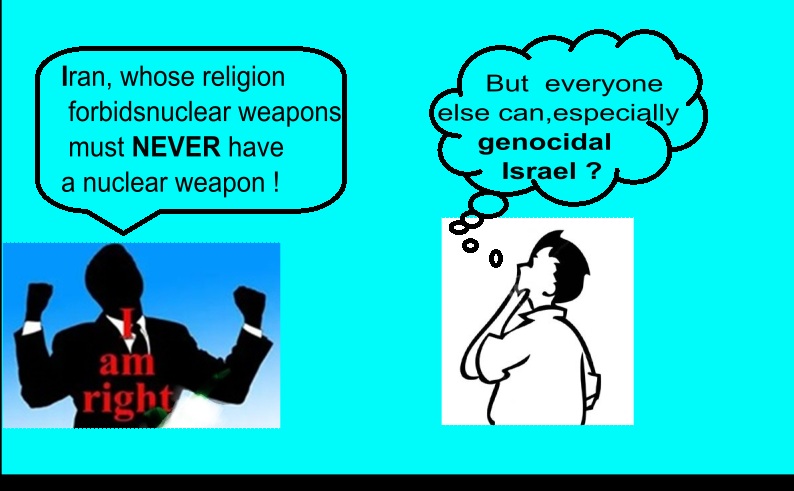
Never has humankind seen so much power concentrated in the hands of one so capricious. Whether the ceasefire will hold, for how long, and in what ways is for the days ahead to tell. No one—not even Donald Trump—knows the end game. But the constant is the man whose finger can push the nuclear button. A man used to quick, vacuous victories through bullying and unbridled force is rancorous, thwarted, and vengeful.
What once seemed preposterous is now a palpable possibility.
When Trump, echoing Gen. Curtis LeMay’s 1965 threat toward North Vietnam, threatened to “obliterate” Iran and bomb it “back into the Stone Age”—rhetoric repeated by Defense Secretary Pete Hegseth—he wasn’t just posturing. In fact he was signaling that in an administration which respects no norms, mushroom clouds may be acceptable.
By Pervez Hoodbhoy | Opinion | April 10, 2026, https://thebulletin.org/2026/04/will-trump-nuke-iran/?utm_source=ActiveCampaign&utm_medium=email&utm_content=Will%20Trump%20nuke%20Iran%3F&utm_campaign=20260413%20Monday%20Newsletter
No one—not even Donald Trump—knows the end game as the six-week old US-Israeli war on Iran enters a temporary ceasefire. Just look at the head-spinning time-line:
Sunday, April 5 (infrastructure destruction-I): “Tuesday will be Power Plant Day, and Bridge Day, all wrapped up in one, in Iran. There will be nothing like it!!! Open the fucking strait, you crazy bastards, or you’ll be living in Hell — JUST WATCH! Praise be to Allah.”
Monday, April 6: (infrastructure destruction-II): “Their infrastructure could be taken out in one night. I’m telling you, no bridges, no power plants. I’m considering blowing everything up and taking over the oil.”
Tuesday, April 7 (morning) (threat to commit genocide): “A whole civilization will die tonight, never to be brought back again. I don’t want that to happen, but it probably will. However, now that we have Complete and Total Regime Change… maybe something revolutionarily wonderful can happen, WHO KNOWS?”
Tuesday, April 7 (evening): Announcement of two-week Pakistan-mediated ceasefire.
Never has humankind seen so much power concentrated in the hands of one so capricious. Whether the ceasefire will hold, for how long, and in what ways is for the days ahead to tell. No one—not even Donald Trump—knows the end game. But the constant is the man whose finger can push the nuclear button. A man used to quick, vacuous victories through bullying and unbridled force is rancorous, thwarted, and vengeful. He has been stymied by a recalcitrant theocratic state that has taken blow after blow, withstood the killing of its venerated leader, the bombing of its cities, the destruction of vital infrastructure, and the systematic targeting of its schools and universities.
Weeks later, when it should rightly be on its knees, Iran still controls the Strait of Hormuz and refuses to negotiate while it is being bombed. Instead, it continues to cause mayhem among America’s allies and take potshots at Israel. Imagine Trump’s frustration, especially after his bloodless victory in Venezuela.
But a so-far-unbroken taboo, inviolate since the nuclear ash settled over Hiroshima and Nagasaki, may crack. What once seemed preposterous is now a palpable possibility. When Trump, echoing Gen. Curtis LeMay’s 1965 threat toward North Vietnam, threatened to “obliterate” Iran and bomb it “back into the Stone Age”—rhetoric repeated by Defense Secretary Pete Hegseth—he wasn’t just posturing. In fact he was signaling that in an administration which respects no norms, mushroom clouds may be acceptable.
The “how” and “when” remain open questions, but if the ceasefire ceases to hold the crosshairs are likely fixed on the Fordow Fuel Enrichment Plant or, just as probably, Isfahan, where Iran’s fissile material was allegedly transferred before the June 2025 attack. Buried deep beneath a mountain of solid rock, Fordow is the nuclear facility that Trump had earlier claimed to have “obliterated.”
The math of escalation is inexorable: Iran reportedly holds roughly 450 kilograms of 60 percent enriched uranium. While a rudimentary gun-type nuclear weapon would be assembled using 80-100 kilograms of this material, a sophisticated implosion-type bomb needs 20-25 kilograms of uranium enriched to contain 90 percent of the uranium 235 isotope, a process requiring only some weeks. If Iran has mastered the complex engineering required for the latter, its current reserves represent a potential arsenal of eight to 10 nuclear warheads.
The game hinges on the upgrade. Iran can push its stockpile to weapons-grade in a matter of weeks. Conventional “bunker busters” like the GBU-57 have already failed; 14 were dropped on Fordow and Natanz in 2025, yet the heart of the program kept beating. To achieve absolute destruction, the hammer would have to be nuclear.
If the United States chooses to go nuclear in Iran, the Pentagon’s solution would likely be an earth-penetrating warhead like the B61-11 or the newly deployed B61-12. Washington would frame such a strike not as a Hiroshima-style apocalypse but as a “clinical necessity”—a tactical operation designed to kill hundreds rather than tens of thousands.
But Iran will not surrender quietly and would retaliate with everything it has. A lucky strike from a sophisticated missile could sink an American aircraft carrier; a coordinated swarm of drones and missiles could turn major Arab oil terminals into pillars of fire. At that point, the “clinical” experiment could end, and the apocalypse might begin as the United States reaches for its next nuclear target.
Even for a man who finds gratification in the suffering of others—who celebrated the recent destruction of Iran’s biggest bridge followed by cars plummeting down—Trump’s nuclear ambitions are constrained by American electoral politics and the upcoming November elections, a potentially hostile public reaction, and a somewhat reluctant military.
For now, America and Israel are operating in lockstep. They reportedly executed coordinated strikes on Iran’s Bushehr nuclear power plant—which has nothing to do with bomb-making—on March 18 and April 4. These were presumably “signaling strikes” since they destroyed only an auxiliary building and killed a single guard. Their intent was clear—even if the endgame is not. The message has been received: In coordination with the Israeli Defence Forces, over 200 high-level Russian technicians have already evacuated Bushehr, leaving behind only a skeleton crew to manage a potential emergency shutdown.
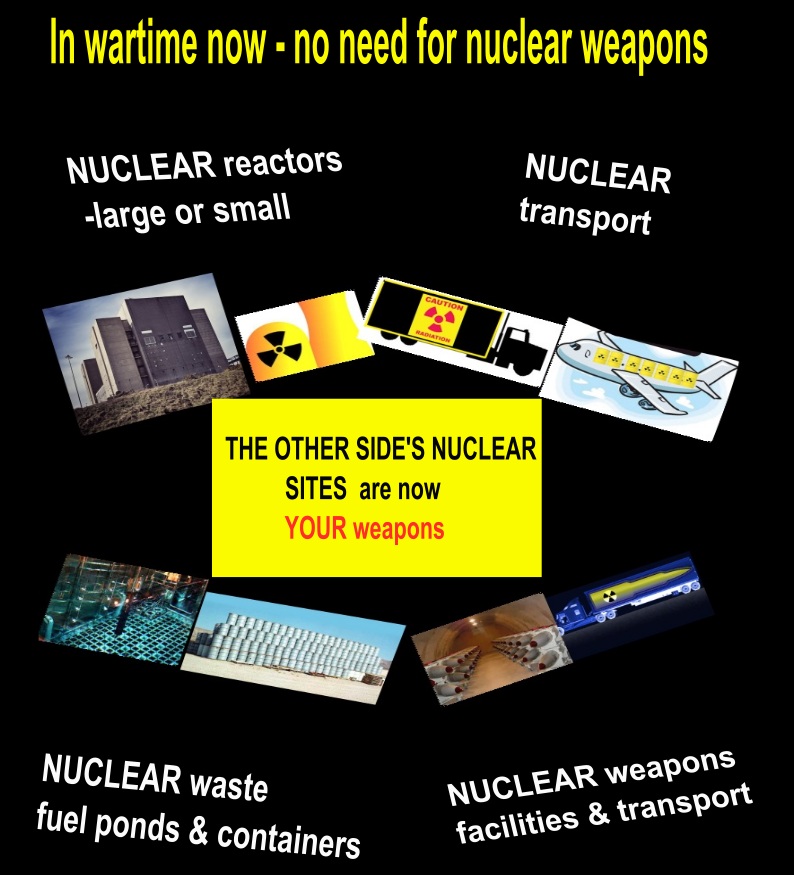
But “signaling” near a live reactor is a high-stakes gamble with an unclear ultimate purpose. While the plant continues to feed the grid, a direct hit on its containment dome would trigger a radiological catastrophe far exceeding that of Chernobyl or Fukushima. With 70-80 tons of uranium dioxide in its core and a massive inventory of spent fuel lying in nearby cooling ponds, a breach would shroud the Persian Gulf with a lethal miasma of radioiodine and cesium-137. This wouldn’t just be a strike against a regime; it would be a death sentence for the region’s environment and its people.
Israel—which pulverized Gaza to rubble and seeks a similar outcome in South Lebanon—may have fewer inhibitions than the United States. Where Washington might hesitate, Israel may well aim for the dome. For America’s Gulf allies—the UAE, Kuwait, Bahrain, Qatar, Saudi Arabia, and Oman—the fallout would range from the devastating to the permanent, the outcome depending on wind direction and speed.
With an undeclared arsenal of over 150 warheads and reliable means to deliver them to any corner of Iran, Israeli nuclear strikes on Iranian population centers are no longer a fringe theory; they would become a live strategic option in Jerusalem if somehow Iran manages to breach the Israel’s Iron Dome missile defenses more regularly and with greater effectiveness.
Operation Epic Fury is now entering its sixth week. As yet there are no direct negotiations, just a temporary ceasefire. With optimism in short supply, the world is watching a grim lesson unfold. The takeaway for every middle power and so-called rogue state is becoming undeniable: If you have the bomb, you don’t get bombed. The race is on to get it while they still can.
Jeffrey Sachs: Ending Israel’s War on Peace
To make lasting peace in the Middle East, the US must end its blank check to Israel’s perpetual wars and join with the rest of the world to force Israel to live within its internationally recognized borders of June 4, 1967.
Jeffrey D. SachsSybil Fares, Apr 09, 2026, https://www.commondreams.org/opinion/israel-war-on-peace
A two-week ceasefire has partially halted the Israel-US war on Iran. The war accomplished precisely nothing that a competent diplomat could not have achieved in an afternoon. The Strait of Hormuz was open before the war and it is open again now, but with more Iranian control.
Meanwhile, the chaos continues. Israel is intent on blowing up the ceasefire, as this was Israel’s war from the start. Israel dazzled Trump with the prospect of a one-day decapitation strike that would put Trump in charge of Iran’s oil. Israel, in turn, was out for bigger prey: to bring down the Iranian regime and thereby become the regional hegemon of Western Asia.
The foundation of the ceasefire is Iran’s 10-point plan, which Trump (perhaps unwittingly) called a “workable basis on which to negotiate.” The plan makes sense, but it is a major climbdown for the US, and probably a redline for Israel. Among other points, the plan calls for an end to the wars raging in the Middle East, almost all of which have Israel at their root cause. The plan would also resolve the nuclear issue, essentially by going back to the JCPOA that Trump ripped up in 2018.
The Iran War, and the other wars raging across the Middle East, trace back to one core Israeli idea, that Israel will permanently and steadfastly oppose a sovereign Palestinian state and will topple any government in the Middle East that supports armed struggle for national sovereignty. It is crucial to note that the UN General Assembly has passed multiple resolutions, such as Resolution 37/43 (1982), affirming that political self-determination is so vital, that armed struggle in the quest for self-determination is legitimate. The UN was born, in part, out of the determination to end the centuries of European imperial domination over Africa and Asia. Of course, there would be no cause for armed struggle if Israel would accept a political solution, notably the two-state solution that has overwhelming support throughout the world.
The peace is within reach, if the US grasps it.
Netanyahu’s core goal may be summarized as Greater Israel. This means no Palestinian sovereignty, and no clear boundaries for Israel even beyond the boundary of historical Palestine under British rule after WWI. Zionist extremists like Netanyahu’s political allies, Ben-Gvir and Smotrich favor Israeli control over parts of Lebanon and Syria, as well as permanent control over all of what was British Palestine. America’s Christian Zionists, exemplified by the US Ambassador to Israel Mike Huckabee, and a strong voter base of Trump, speak of God’s promise to Israel of the lands between the Nile and the Euphrates. Crazy stuff, but these are real beliefs, nonetheless, and they are conveyed in the White House.
Israel’s strategy is therefore regime change in every country that resists Greater Israel, a plan already foreshadowed in the famous political document “A Clean Break: A New Strategy for Securing the Realm,” written by US Zionist neocons as a platform for Netanyahu’s new government in 1996. We’ve had constant wars in the Middle East since then to implement the Clean Break vision. This has included the war in Libya to overthrow Moammar Qaddafi, the wars in Lebanon, the war to overthrow Syria’s Bashar al-Assad, the war to overthrow Iraq’s Saddam Hussein, and now the war to topple the Iranian regime.
This is not to say that the US lacks its own grandiose ideas. Israel wants regional hegemony, this is not a secret. Netanyahu confirmed these ambitions in his recent remarks about Israel becoming “a regional power, and in certain fields a global power.” On the other hand, American officials dream of global hegemony. And Trump dreams of money. He craves the Iranian oil and repeatedly said so.
In any event, it’s clear that this war was Netanyahu’s creation. He and the Mossad chief came to Washington to sell Trump a bill of goods. It’s not hard. Trump was suckered, while everybody else had their doubts about Netanyahu’s claims of an easy one-day decapitation strike—essentially a replay of the US operation in Venezuela.
It’s pathetic to “listen in” on the White House discussion, as revealed by the New York Times. Netanyahu, a con man, presented rosy scenarios of regime change that US intelligence contradicted, yet Trump foolishly accepted. Trump and Netanyahu were cheered on by Christian Zionists (Hegseth), Jewish Zionists and real-estate developers (Kushner and Witkoff), a faith healer (Franklin Graham), and high-level sycophants (Rubio and Ratcliffe).
While Trump was telling the world that Iran was begging for a ceasefire, it was Trump himself who was begging for a ceasefire.
Until Tuesday evening, it looked like Trump might lead the world blindly to World War III. The vulgarity and brutality of his public rhetoric was unmatched in US presidential history. Now we know that he was desperately seeking an off-ramp and using Pakistan for that purpose. While Trump was telling the world that Iran was begging for a ceasefire, it was Trump himself who was begging for a ceasefire. The Pakistani leader delivered it.
The ceasefire is good, and the 10-point plan is good, even if perhaps Trump didn’t know what was in it when he said that it was a good basis for negotiation. Israel will, in any event, work overtime to break it, and has already started to do so, with carpet bombing of Beirut that is killing hundreds of civilians, and with other strikes. A permanent US-Iran agreement is the last thing that Netanyahu wants. That would end his dream of Greater Israel.
Yet there is a way to peace and that is for the US to face reality. Israel is the real “terror state,” waging perpetual war throughout the Middle East for a wholly indefensible reason—to have unchecked freedom to terrorize and rule over the Palestinian people and to expand its borders as Israel’s zealots see fit. To make lasting peace in the Middle East, the US must end its blank check to Israel’s perpetual wars and join with the rest of the world to force Israel to live within its internationally recognized borders of June 4, 1967. Iran’s 10-point plan can be the basis of a comprehensive regional peace—if the US accepts the reality of a state of Palestine. In that case, Iran would likely agree to stop funding non-state belligerents, and Israel, Palestine, Lebanon, and the entire region could live in mutual security and peace. That outcome should be the basis of a negotiated agreement of the US and Iran in the next two weeks.
Israel is the real “terror state,” waging perpetual war throughout the Middle East for a wholly indefensible reason…
The American people have made their views clear. A 2025 Pew survey finds most Jewish Americans lack confidence in Netanyahu and back the two-state solution. Most Americans now view Israel unfavorably, the highest unfavourability in history. Sympathy for Israel has hit a 25-year low. Now the political class must catch up with the public.
The peace is within reach, if the US grasps it. Iran’s proposal is serious and the ceasefire is a fragile opening for a comprehensive settlement. The question is whether the US will, once again, allow Israel to destroy the peace, or rather this time stand up for America’s interests and the world’s interests in a lasting peace.
When Flotillas Fight for Life, Not Empire
April 10, 2026 , Olivia DiNucci for Codepink, https://scheerpost.com/2026/04/10/when-flotillas-fight-for-life-not-empire/
Flotillas have historically been fleets of military vessels—tools of empire designed for swift offensive or defensive operations at sea. The images they evoke are ones of imperial power and looming violence. Just look at the massive US naval buildup that surrounded Iran as part of the recent US attacks.
But peace activists have also developed a new kind of flotilla.
Instead of instruments of war, flotillas have become symbols of peace—acts of humanitarian direct action, civil resistance, and cross-border solidarity. Take the flotillas that have tried to reach Gaza, like the Global Sumud Flotilla. Even though they have been illegally intercepted by the Israeli military, they have educated millions of people worldwide about Israel’s atrocities, activated entire cities to shut down, and offered a beacon of hope to the beleaguered people of Gaza.
As U.S. policy continues to sanction and blockade Cuba—causing immense hardship for the Cuban people—I, along with many others, felt compelled to escalate our own tactics of solidarity by joining the recent flotilla to Cuba as part of the Nuestra América Convoy. Our boat carried 15 tons of aid, part of the more than 40 tons delivered by the convoy.
The United States is currently imposing some of the harshest sanctions on Cuba in recent history, compounding a 67-year blockade that has restricted access to medicine, fuel, and food. But in recent months, the US added another dimension: a naval blockade to severely limit fuel imports, leading to a humanitarian crisis.
In an ideal world, we wouldn’t need fossil fuels—we would already have made a just transition to renewable energy. And while Cuba is working at lightning speed to expand solar power, the current reality is stark: people still need fuel to cook, to transport food, to operate ambulances, to power hospitals, and to keep ventilators running.
The international community has responded to this escalation in U.S. economic warfare with intensified solidarity. Hundreds of thousands of people around the world have been mobilizing to send aid and condemn the US blockade. In March, Progressive International, CODEPINK, and The People’s Forum launched the Nuestra América Convoy, bringing together over 600 people from 33 countries. We came with millions of dollars’ worth of aid—from urgently needed medical supplies to longer-term solutions like solar panels.
While many of my friends boarded planes to Havana, packing every inch of their luggage with medicine, hygiene products, vitamins, and art supplies, I traveled to Mexico to meet the flotilla crew. We spent four days at sea together—activists, journalists, organizers. Some had helped organize the Gaza Sumud Flotilla; others had taken part in mass protests in solidarity with Palestine.
Our goal was to deliver much-needed aid to the people of Cuba. But just as important was challenging the dominant narrative—that Cuba’s suffering is the result of its own government, rather than decades of U.S. cruel policy.
Even though the boat was full of journalists documenting the trip, their cameras could not fully capture the sense of community among strangers united by a shared mission. I remember being nervous about the cold and the possibility of seasickness, but within minutes, people were offering ginger chews, acupressure bracelets, and rain gear.
Our departure was delayed due to weather, boat repairs, and the logistics of loading the aid. In the meantime, we stayed with supporters in Mexico who couldn’t join the voyage but found other ways to contribute. We shared a send-off dinner at an Egyptian restaurant whose owner had followed the Gaza flotillas. He told us how proud he was to see a flotilla to Cuba leaving from his small town.
On the boat, we shared cooking, dishwashing, and night watch shifts—standard practice in occupations, encampments, and direct actions where resources are limited but creativity and collaboration are abundant. At sea, a simple breakfast of rice, beans, eggs, guacamole, and toast tastes like a feast. We slept under galaxies of stars, woke to sunrises on the horizon, and at sunset made music with whatever we had—a guitar, a bucket drum, water bottles filled with dry beans.
Meanwhile, I stayed connected to those traveling by plane, watching group chats fill with photos of carefully packed bags and urgent questions: Who can fit more supplies? How many solar batteries can we carry on? The coordination was constant, collective, and inspiring.
The blockade severely limits what goods can reach Cuba. While US citizens can still travel there under certain categories, they face restrictions and often risk questioning upon return. But solidarity is not tourism. It is not about swooping in, taking photos, and leaving. It is about building relationships, listening, and committing to ongoing struggle from our home countries.
We had a beautiful reception from the Cuban people when we landed, and then had the opportunity to speak directly with community groups about current conditions.I learned how they overcome so much by placing value in community over the individual.
The US empire is indeed dying, and it is up to us to not just reimagine the better world we need and want, but to actually put that world into practice. Reflecting on my experience, I started thinking — if we can turn flotillas from a force of evil into vessels of hope and solidarity, then what else can we change? What if we built schools around the world instead of sending bombs? What if, like the Cubans, we funded healthcare over warfare and sent doctors to cure people instead of soldiers to kill them?
You don’t have to board a boat with humanitarian supplies to show solidarity. Flotillas are one tactic, but we need a variety and diversity of tactics right now, and always. You can move forward by showing solidarity to your neighbors at home, as well as to our neighbors 90 miles off our shores. Because what we build together, in community—whether through a peace flotilla or local mutual aid—is stronger than anything built through force.
Olivia CODEPINK’s DC Coordinator, who seeks to build and bridge connections from issues to people. She came to this work after living and working abroad as an experiential learning facilitator with college students. She is active in arts and creative communities, direct action, and building out more local to global solidarity in DC through deepening and weaving relationships.
War has given Iran new leverage for nuclear programme, say US former envoys

Negotiators of 2015 deal say Tehran has seen how cutting off Hormuz strait can help it counter asymmetry of power
Andrew Roth in Washington. 10 Apr 26, https://www.theguardian.com/world/2026/apr/10/middle-east-crisis-has-given-iran-new-way-to-resist-nuclear-limits-say-former-us-iran-envoys
Former US envoys who dealt with Iran have said that the US-Israeli attack on Iran and Tehran’s subsequent closure of the strait of Hormuz have given Iran new tools and resolve to resist pressure to shutter its nuclear programme.
Two senior negotiators for the Joint Comprehensive Plan of Action (JCPOA), the Obama-era agreement to limit Iran’s nuclear uranium enrichment in exchange for sanctions relief, said the Trump administration’s war had handed Iran a coveted weapon by demonstrating its ability to cut off the strait of Hormuz, an economic chokehold that one negotiator said would help Iran “balance the asymmetry of power” with the US.
“This administration, to say it more politely, cannot unsoil the bed,” said Alan Eyre, a former diplomat who helped negotiate the JCPOA. “There’s no way to get back to the status quo ante before this war started.”
In 2018, Donald Trump withdrew the US from the JCPOA, which barred Tehran from enriching its uranium to weapons-grade. Trump called the deal, which lifted some sanctions on Iran, “one of the worst and most one-sided transactions” the US had ever entered into.
But after a strategy of high pressure – first through returning sanctions and then, after Trump’s return to power in 2025, a war that was meant to destroy Iran’s nuclear and ballistic missile capabilities – the current US administration has found itself in more complex negotiations than before its campaign of economic and military strikes.
“The strait of Hormuz is such a good strategic deterrent [and] to an extent it makes the nuclear programme less crucial,” said Eyre. “It would have taken a lot of time and a lot of risk for them to weaponise [nuclear arms] … But they’ve got a really cool threat now, which is incredibly easy to turn on and off.”
Diplomatic sources have indicated that the Iranian delegation believes this is an unprecedented set of circumstances to negotiate on favourable terms, as the Trump administration appears keen to exit the conflict quickly.
A US delegation led by JD Vance will meet Iranian negotiators in Islamabad, Pakistan this weekend. The vice-president has been a less vocal booster of the war than other members of the administration such as the secretary of defence, Pete Hegseth, and the secretary of state, Marco Rubio.
But while the US could withdraw its air power from the conflict, it has not presented a clear plan for reopening the strait of Hormuz – either through force or a negotiated settlement.
Robert Malley, a Yale lecturer who was former special envoy to Iran under Joe Biden and a lead negotiator on the JCPOA, said: “The strait of Hormuz wasn’t an issue before the US decided to strike. You have all the issues inherited from the past, but you just added a few, because the US has handed Iran a tool that it always had, but it never thought of using, or never felt it could.”
The chances for a comprehensive agreement addressing all of the US and Iran’s grievances appear slim. While the Obama administration sought to negotiate exclusively on Iran’s nuclear programme in the lead-up to the 2015 agreement, the Trump administration has sought a broader deal limiting Iran’s ballistic missiles programme and its support for regional proxies, such as Hezbollah in Lebanon and the Houthis in Yemen.
But a catch-all deal appears to be fraying at the edges. Israel’s continued strikes on Lebanon, a country which Iran believed was part of the deal but the US has said was not, have already threatened its full collapse, with Iran’s Islamic Revolutionary Guard Corps maintaining its blockade on shipping and top officials publicly questioning the ceasefire.
As Malley noted, the Obama administration had chosen to seek a more limited deal with Iran because “for every element that the US and others will put on the table, Iran will put a reciprocal element on the table. This is not a one-way street.”
“I think Trump has been driven by two objectives that were in clear tension,” said Malley. “One was he wanted to be able to declare outright victory, and the other one is he wanted a quick exit.”
“Even though he may claim victory … It’s being contradicted every hour by what’s happening on the ground.”
All Wars Are Bankers’ Wars: Iran and the Bankers’ Endgame
As for Iran, it is not only the largest and strongest of the Islamic countries but operates the world’s only fully interest-free (riba-free) banking regime. This stands in direct contrast to the conventional Western model, which relies on interest as its primary revenue mechanism. “Money making money out of itself” underpins the global derivatives complex, which is built on rehypothecated, collateralized debt-at-interest.
April 10, 2026 Ellen Brown ScheerPost
“The powers of financial capitalism had another far reaching aim, nothing less than to create a world system of financial control in private hands able to dominate the political system of each country and the economy of the world as a whole.” —Prof. Caroll Quigley, Georgetown University, Tragedy and Hope (1966)
In February 2026, the United States and Israel launched surprise airstrikes on Iran. The officially proffered reasons — preventing Iran’s acquisition of a nuclear weapon and forestalling its aggression — have not held up under scrutiny. As James Corbett documented in recent Corbett Report episodes, the nuclear pretext appears to be recycled propaganda, and the scale and timing of the strikes raise deeper questions about motive.
The thesis that “All Wars Are Bankers’ Wars” was popularized by Michael Rivero in a 2013 documentary by that name. His accompanying article begins with a quote from Aristotle (384-322 BCE):
The most hated sort [of moneymaking], and with the greatest reason, is usury, which makes a gain out of money itself, and not from the natural use of it. For money was intended to be used in exchange, but not to increase at interest.
Rivero then traces how private banking interests have financed and profited from conflicts on both sides for centuries — from the founding of the Bank of England in 1694 to fund William III’s wars to modern regime-change wars.
Full-Spectrum Financial Dominance
Other commentators point to the report of the Project for the New American Century (PNAC) titled “Rebuilding America’s Defenses” (September 2000), which called for “full-spectrum” U.S. military forces to achieve global preeminence. It postulated the need for a “catastrophic and catalyzing event — like a new Pearl Harbor” to accelerate the military transformation the authors envisioned.
This was followed by a 2007 Democracy Now interview in which Gen. Wesley Clark revealed that weeks after 9/11, he had been shown a classified Pentagon memo outlining plans to “take out seven countries in five years”: Iraq, Syria, Lebanon, Libya, Somalia, Sudan, and finishing off with Iran. The first six have since been destabilized or regime-changed. Iran, considered the ultimate prize for Middle East dominance and oil control, remains the last one standing.
Why those seven, and why was Iran the ultimate prize? Greg Palast’s 2013 article titled “Larry Summers and the Secret ‘End-Game’ Memo” supplied the missing financial logic. In 1999, the world was opened to unregulated derivatives trading, so that sovereign bonds, oil flows, shipping routes, and war-risk policies could all be collateralized, rehypothecated (pledged multiple times over), and gambled upon. The lynchpin was the 1997 WTO Financial Services Agreement (the Fifth Protocol to GATS), which became operational in 1999.
None of the seven targeted countries joined the WTO, and they were also not members of the Bank for International Settlements (BIS). That left them outside the long regulatory arm of the central bankers’ central bank in Switzerland. Other countries that were later identified as “rogue states” were also not members of the BIS, including North Korea, Cuba, and Afghanistan.
As for Iran, it is not only the largest and strongest of the Islamic countries but operates the world’s only fully interest-free (riba-free) banking regime. This stands in direct contrast to the conventional Western model, which relies on interest as its primary revenue mechanism. “Money making money out of itself” underpins the global derivatives complex, which is built on rehypothecated, collateralized debt-at-interest.
The last piece in the financial control grid was detailed in David Rogers Webb’s 2024 book The Great Taking. The Everything Bubble, including what some commentators estimate to be more than a quadrillion dollars in derivative bets, is just waiting for a pin. When it bursts, it will trigger large institutional bankruptcies; and under the legal machinery Webb documents, the derivative players will take all.
The 2026 Hormuz insurance crisis triggered by Lloyd’s of London could be that pin. More on all that below.
The City of London and Lloyd’s Weaponize Chaos
For more than three centuries, the City of London – the “Square Mile” that is London’s financial center — has financed both sides of wars and sold insurance against the destruction that would follow. Lloyd’s of London is the insurance pillar of the City’s financial control grid. It is not actually an insurance company but is a corporate body that “operates as a partially-mutualized marketplace within which multiple financial backers, grouped in syndicates, come together to pool and spread risk.” …………………………………………………………………………………………………………………………………………………………………………………………………………………………………………………………………….
Iran’s system was designed to eliminate usury and align finance with real economic activity and risk-sharing rather than speculative debt. It has long been viewed as structurally incompatible with the interest-based, collateral-heavy architecture of City of London and Wall Street finance — an architecture that requires perpetual debt servicing and easily rehypothecated assets to feed the derivatives machine.
By rejecting interest at the national level, Iran has thus insulated itself and its financial partners from the control grid that has made the global “Great Taking” possible……………………………………………………………………………………………………………….
But the immediate need in the current context is to settle the conflict with Iran, and settle it fast, before another black-swan shock ignites the derivatives daisy chain and activates the final Great Taking on a global scale. https://scheerpost.com/2026/04/10/all-wars-are-bankers-wars-iran-and-the-bankers-endgame/
Ellen Brown is an American author, attorney, and activist known for her work on financial reform and public banking. She is the founder of the Public Banking Institute and the author of books like Web of Debt and The Public Bank Solution, advocating for publicly owned banking systems.
The World Can Have Peace Or Israel, But Not Both
And Other Notes
Caitlin Johnstone, Apr 09, 2026, https://www.caitlinjohnst.one/p/the-world-can-have-peace-or-israel?utm_source=post-email-title&publication_id=82124&post_id=193682839&utm_campaign=email-post-title&isFreemail=true&r=1ise1&triedRedirect=true&utm_medium=email
Israel is already aggressively sabotaging the Trump administration’s two-week ceasefire with Iran by slaughtering huge numbers of civilians in Lebanon, a nation which is explicitly off-limits for any attack under the ceasefire conditions agreed to by Tehran.
The US and Israel are trying to claim that Lebanon is not part of the ceasefire agreement, but Pakistan, whom the US appointed to mediate the agreement, says this is false. The New York Times reports that the White House took part in Pakistan’s public messaging which explicitly included Lebanon in the ceasefire conditions, before changing its tune after Israel attacked.
Iran has reportedly responded to these violations by again halting traffic through the Strait of Hormuz.
This serves as yet another reminder that the world can have peace or it can have Israel — but it cannot have both. Israel is a genocidal apartheid state whose entire existence is premised upon a strategy of unceasing violence and abuse in the middle east. As long as that state continues to exist in its present iteration, peace will never be attainable.
❖
If your job hired a guy who kept getting into fights with your coworkers and saying it’s because they are racist against him, for a week you might believe him.
After a month, you’d have doubts.
After two months, you’d realize he’s probably just an asshole.
Israel has been doing this for eighty years.
Democrats in the House and Senate are finally moving on a War Powers Act to stop the US president from going to war with Iran, and I’d say better late than never but at this point that would barely even be true.
Democrats like Chuck Schumer and Chris Murphy are currently slamming the president not for his horrifying mass atrocities in Iran but for losing the Strait of Hormuz and failing to achieve objectives like completely disarming their conventional missile program.
As I have said here previously, it’s clear that the reason the Democratic Party failed to oppose Trump’s warmongering with Iran was because they supported it too.
The actual, official 2024 Democratic Party platform accused Trump of “fecklessness and weakness” for failing to go to war with Iran during his first term. Kamala Harris labeled Iran the #1 enemy of the United States. In their 2024 debate, Harris repeatedly slammed Trump for being too soft on America’s enemies and announced that she “will always give Israel the ability to defend itself, in particular as it relates to Iran and any threat that Iran and its proxies pose to Israel.”
I’ve seen a lot of people trying to argue that Trump’s depravity in Iran proves everyone should support Democrats, but it’s clear the Democratic Party is just the more polite-looking face on the same evil power structure.
The Grayzone’s Wyatt Reed has an article out about a freakish BBC article which cited an anonymous Iranian who allegedly told them he supports the US and Israel “hitting energy infrastructure, using an atomic bomb, or leveling Iran.” Following public outcry, the quote was removed and replaced with completely different words — initially without any editor’s note of any kind.
Reed documents how the BBC reporter behind the story, Ghoncheh Habibiazad, is a London-based Iranian monarchist with an extensive history of agitating for regime change war against her home country, including with the US government propaganda operation Radio Free Europe/Radio Liberty.
Last month The Times ran an article titled “Some Iranians say one thing’s worse than bombs: no bombs”. Western powers are always aggressively pushing this self-evidently false claim that people in empire-targeted countries want bombs dropped on them, in much the same way slavery proponents argued that Africans were happiest as slaves because God made it their nature to serve.
I’ve said it before and I’ll say it again: it’s impossible to have enough disdain for the western press.
Israel Carpet Bombs Lebanon After Announcement of Iran Ceasefire
Israeli forces announced on Wednesday that it struck 100 sites in Lebanon over 10 minutes.
By Sharon Zhang , Truthout, April 8, 2026
Israeli forces launched some of the most intense bombardments of Lebanon in recent years on Wednesday, striking Beirut and towns and cities across the country just hours after a ceasefire deal that reportedly includes Lebanon was announced.
The Israeli military announced on Wednesday that it targeted over 100 sites with strikes over just the course of 10 minutes in Lebanon. The UN also reported that it has recorded over 60 locations struck. The intensity of the strikes was unprecedented in recent times, one Al Jazeera reporter said, reminiscent of the scale of Israel’s invasion of Beirut in 1982 or Israel’s beeper attack in 2024.
Video of the strikes circulated online. One showed a massive fire in the wreckage of destroyed buildings in Beirut, sending plumes of dark smoke into the air. Another video purportedly taken in Beirut showed the top floors of a building completely destroyed and smoking, while the streets below were covered in flaming debris…………………………………………………………………………………………………………………………………………………………………………………………………………………………………………………..
Since the latest escalation in Lebanon on March 2, Israeli strikes have killed over 1,450 people, including 126 children, Lebanese officials have said. Israel’s bombardments and expanded ground invasion have displaced 1.2 million people, or over a fifth of the population, in just weeks. https://truthout.org/articles/israel-carpet-bombs-lebanon-after-announcement-of-iran-ceasefire/
100 Strikes in 10 Minutes: Lebanon Bombed as Gaza Burns and Journalists Are Killed

April 8, 2026 , Joshua Scheer, https://scheerpost.com/2026/04/08/100-strikes-in-10-minutes-lebanon-bombed-as-gaza-burns-and-journalists-are-killed/
Al Jazeera English reports that Israel has carried out one of its most intense assaults on Lebanon since March 2, unleashing a rapid and coordinated wave of airstrikes that hit roughly 100 locations in just 10 minutes on April 8. The scale and سرعة of the bombardment underscore a sharp escalation in the conflict, raising urgent concerns about civilian safety, infrastructure destruction, and the potential for a wider regional crisis. The strikes reflect not only a show of overwhelming military force but also a deepening instability that threatens to push the situation beyond containment, with devastating humanitarian consequences to follow.
With more from Eye on Palestine reports extensive destruction following an intense and unprecedented wave of Israeli bombardment, with more than 100 airstrikes striking the Lebanese capital, Beirut, and multiple مناطق across the country. The масштаб and ferocity of the attacks have left widespread devastation in their wake, raising alarm over civilian casualties and the deepening humanitarian crisis as entire neighborhoods are reduced to rubble.
The killing of journalists is not collateral damage—it is the silencing of truth in real time.
While Israeli forces were busy carrying out attacks on Lebanon today, they also found time to kill yet another journalist. In 2025 alone, more than 120 journalists were killed worldwide, with the Committee to Protect Journalists reporting that Israel was directly responsible for two-thirds of those deaths. This is an unspeakable record—one that must not be ignored, but exposed and condemned.
Today on April 8, 2026, in Gaza City, Mohammed Washah, a correspondent for Al Jazeera, was killed in an Israeli airstrike that targeted his vehicle along Al-Rashid Street in western Gaza. He was not on a battlefield carrying a weapon—he was documenting one, doing the work of bearing witness as the world watched from afar.
His killing comes amid a day of overwhelming devastation across Gaza, where relentless bombardment has reduced neighborhoods to rubble, overwhelmed hospitals, and pushed civilians deeper into crisis. The scale and intensity of today’s attacks reflect a pattern of destruction that extends beyond military targets, raising urgent questions about the protection of civilians, journalists, and the very possibility of reporting from within the strip.
When journalists are killed, it is not only a life lost—it is a lens shattered. It is fewer images, fewer stories, fewer truths reaching the outside world. And in that silence, destruction becomes easier to carry out, and harder to challenge.
What is unfolding in Gaza and Lebanon cannot be viewed as separate crises—they are chapters of the same expanding catastrophe. From the shattered streets of Gaza City to the bombed neighborhoods of Beirut, the pattern is unmistakable: overwhelming force, collapsing civilian infrastructure, and entire populations pushed deeper into fear and displacement. The scale of destruction across both غزة and لبنان signals not just parallel conflicts, but a widening regional trauma where the lines between battlefield and المدني life are erased. As the violence stretches across borders, so too does the human cost—binding these tragedies together in a single, escalating reality that the world can no longer afford to treat in isolation. Even as the opposition party in the United States—the Democratic Party—refuses to even say the words
1 This Month
1 June Webinar – The High Cost of Nuclear Power – Register
6 June – WEBINAR- Get Inspired by Protests Against Military Bases!


Cuba Is Not a Failed State – It Is a Besieged State
PETITION: “Global Appeal to Endorse Palestinian Right of Return of Refugees”
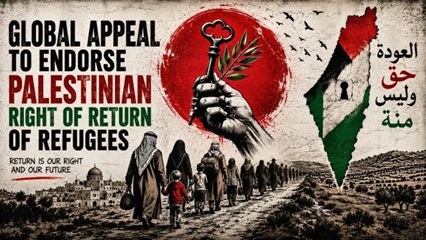
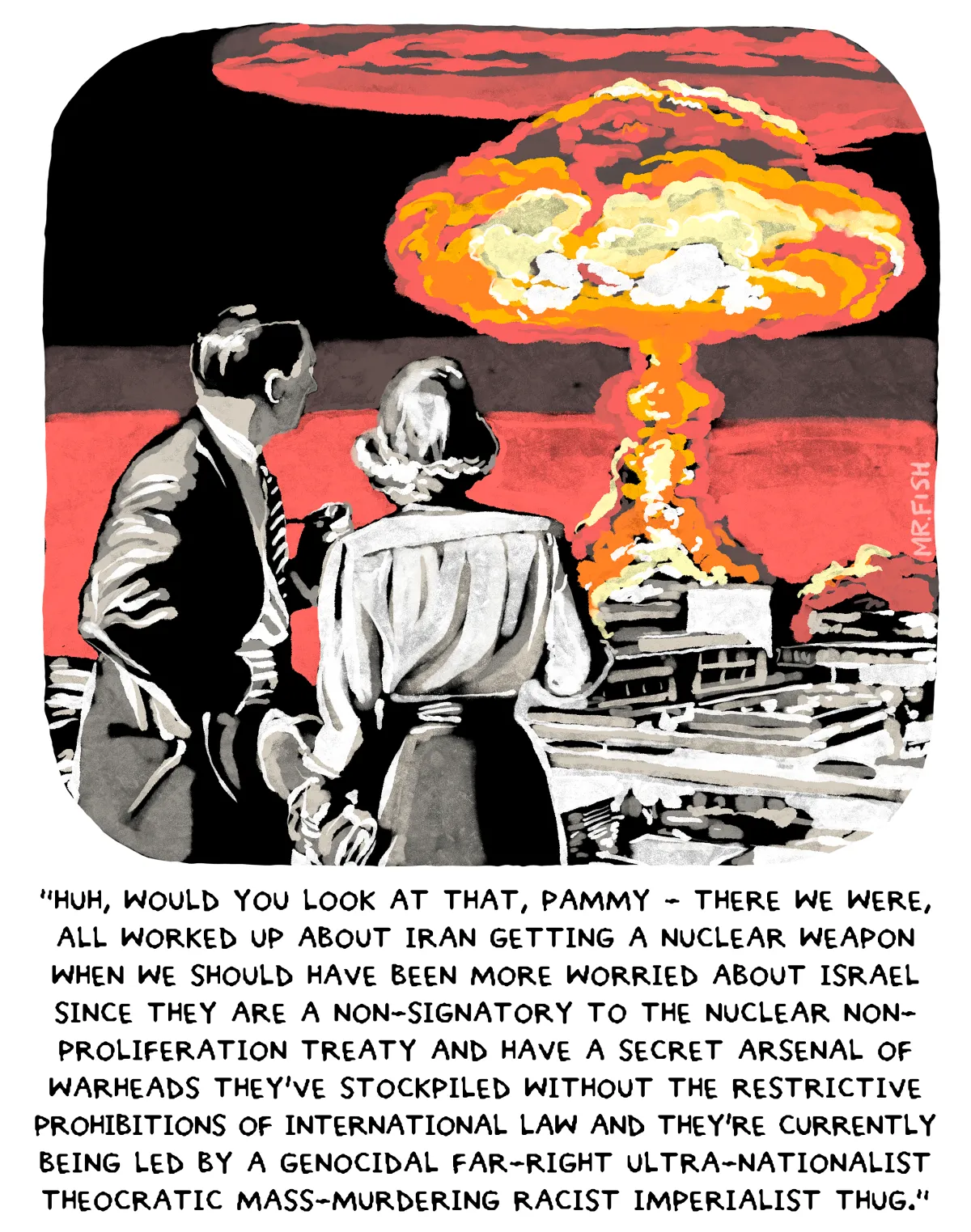

of the week– Nuclear Reactor Information Task Force
To see nuclear-related stories in greater depth and intensity – go to https://nuclearinformation.wordpress.com
-
Archives
- June 2026 (27)
- May 2026 (306)
- April 2026 (356)
- March 2026 (251)
- February 2026 (268)
- January 2026 (308)
- December 2025 (358)
- November 2025 (359)
- October 2025 (376)
- September 2025 (257)
- August 2025 (319)
- July 2025 (230)
-
Categories
- 1
- 1 NUCLEAR ISSUES
- business and costs
- climate change
- culture and arts
- ENERGY
- environment
- health
- history
- indigenous issues
- Legal
- marketing of nuclear
- media
- opposition to nuclear
- PERSONAL STORIES
- politics
- politics international
- Religion and ethics
- safety
- secrets,lies and civil liberties
- spinbuster
- technology
- Uranium
- wastes
- weapons and war
- Women
- 2 WORLD
- ACTION
- AFRICA
- Atrocities
- AUSTRALIA
- Christina's notes
- Christina's themes
- culture and arts
- Events
- Fuk 2022
- Fuk 2023
- Fukushima 2017
- Fukushima 2018
- fukushima 2019
- Fukushima 2020
- Fukushima 2021
- general
- global warming
- Humour (God we need it)
- Nuclear
- RARE EARTHS
- Reference
- resources – print
- Resources -audiovicual
- Weekly Newsletter
- World
- World Nuclear
- YouTube
-
RSS
Entries RSS
Comments RSS
 nuclear-news