US treasury chief claims Washington ‘unlikely to restart’ large-scale hostilities against Iran
Bessent said that illegal US sanctions are a replacement for a war of aggression that has failed to break Tehran
News Desk, AUG 20, 2026, https://thecradle.co/articles/us-treasury-chief-claims-washington-unlikely-to-restart-large-scale-hostilities-against-iran
US Treasury Secretary Scott Bessent told CNBC on 20 August that Washington will likely “not restart” large-scale military operations against Iran, as the White House shifts to a campaign of maximum economic sanctions.
If we are doing the maximum economic pressure, then that means that likely there will not be a large-scale kinetic restart,” Bessent said in an interview with CNBC’s Squawk on the Street news program.
Trump had announced hours earlier on Truth Social that Washington would impose major economic penalties on any country extending Tehran what he called “any type of lifeline.”
“This will be an ECONOMIC D-DAY, and we need all of our Allies to stand with the United States of America to isolate, and defeat, the Iran threat,” Trump wrote.
Bessent said he would lay out the details of the plan at a press conference, telling CNBC that the message to every US ally would be: “You are either with us or against us.”
“If you insist on doing business with [Iran], either transferring money, buying their oil or doing seaborne ship transfers, then the US Treasury and the US government … will put its full might and force toward enforcing against you,” he said.
He described the campaign as “the greatest coordinated economic isolation in the history of the world.”
Iranian Foreign Minister Abbas Araghchi dismissed the campaign the same day, writing on X that it would deliver Washington nothing but “further defeat.”
“The so-called ‘Economic D-Day’ is a diversion from America’s own crisis: unprecedented debt & surging interest costs,” Araghchi wrote, describing US “economic terrorism” as a threat to the global economy.
Iranian Deputy Foreign Minister Kazem Gharibabadi said Washington had reached for economic warfare only after its military campaign failed to deliver.
“They claim Iran is on the verge of defeat and hanging by a thread, yet they are begging all their allies to help them,” he wrote on X, adding that the US had “named their next failure an ‘economic war.’”
Vice-Chairman of the Belt and Road Institute in Sweden Hussein Askary notes that the US naval blockade imposed in April has pushed Iran to shift its trade overland, sharply increasing freight traffic on the China–Iran railway and raising the strategic value of Eurasian land corridors as Tehran works to keep supply routes open beyond the reach of maritime pressure.
The Pentagon is reviewing whether to scale back its presence in Persian Gulf states after Iranian retaliatory strikes battered the largest US bases overseas, with sources saying a westward pullback is under consideration.
A regional intelligence source told Press TV that the Pentagon has concluded no military plan exists that could guarantee open shipping through the Strait of Hormuz, which carries roughly one-fifth of the world’s oil.
Documents Reveal Trail of Unreported Millions From Israeli Military to U.S. Universities

Research funding by Israel’s Ministry of Defense and arms manufacturers often fails to appear in national databases intended to track foreign funding.
Murtaza Hussain, Aug 25, 2026, https://www.dropsitenews.com/p/israel-military-funding-universities?utm_source=post-email-title&publication_id=2510348&post_id=212599104&utm_campaign=email-post-title&isFreemail=false&r=5mo6u&triedRedirect=true&utm_medium=email
The Israeli Ministry of Defense and Israeli defense companies have directed millions in unreported funding to U.S. university research programs for weapons development, sponsoring research directly or serving as the pass-through entity for the funding, a Drop Site investigation has found.
A sample of state and university audits, foreign-funding disclosures, and other institutional records identified millions of dollars in financial ties over the last two decades between the Israeli Ministry of Defense (MOD), Israeli weapons manufacturers, and American universities, much of which does not appear consistently in national databases intended to track foreign funding into U.S. universities.
An analysis of audit records, building on findings compiled by the Antiwar Initiative, an academic research group that documents the connections between universities and the global arms industry, found more than $15 million of unreported or inconsistently reported entries for funding tied to the Israeli MOD or defense manufacturers.
The true scale of Israeli support is difficult to determine because entries for such funding were often not reported in public filings mandating disclosure of foreign gifts, but were discovered by manually cross-referencing public and internal databases, audit records, and acknowledgments in academic papers. Some projects listed in university materials as being sponsored by the Israeli MOD or defense companies also did not include the amounts of funding provided, or contained inconsistent or contradictory records in audit databases.
Drop Site reviewed and verified public records that showed research grants, tuition payments, and receipts of gifts totalling millions of dollars to dozens of colleges and universities around the country. The data shows examples of financial support and sponsorship for American researchers from the Israeli Ministry of Defense as well as Israeli weapons manufacturers like Elbit Systems.
Records dating from 2004 to 2025 point to a large number of schools that have had financial relationships with the Israeli MOD or Israeli weapons manufacturers, including Columbia, Cornell, Princeton, Harvard, Northwestern, Georgia Tech, Texas Tech, the University of Connecticut, the University of Tennessee, the University of Maryland, the University of Florida, the University of California at Berkeley, the University of Rhode Island, the University of New Mexico, the Washington University in St. Louis, and the State University of New York.
The recorded financial relationships include time-bound research contracts and do not indicate whether relationships with the MOD are still ongoing. Previous reporting has documented MOD funding of programs at MIT and student protests there over the relationship.
In addition to financial support from the MOD and Elbit, records also showed sponsorship of individual research projects related to military technologies by Israeli defense manufacturers Rafael and Israel Aerospace Industries.
Taken together, the records reveal an opaque defense-research pipeline spread across some of the country’s most prominent universities.
In one example that illustrates the typical nature of these ties, an Israeli MOD-sponsored project at the University of Connecticut was listed in public audit records with the title, “Impact Point Prediction Research for Short & Medium Range Thrusting Projectiles.”
Connecticut’s annual federal-award schedules record $668,456 in funding under that title across nine fiscal years between 2013 and 2023 with the funder listed as Israel’s Ministry of Defense. Another Israeli MOD-linked research project at the school titled, “High Sensitivity SQUIDs for Magnetic Field Detection,” received $251,336 in funding across the same time period.
Federal law requires colleges and universities receiving federal assistance to disclose gifts and contracts totaling at least $250,000 in a calendar year from a foreign source, though transactions below that threshold may remain outside the public reporting system. But these multi-year contributions do not consistently appear in federal databases intended to help the public track foreign money flowing into American universities. The Education Department’s latest public disclosure of foreign gifts and funding contains no Israel-attributed entry for the University of Connecticut, even as entries for MOD funding show up in other databases and audit documentation.
The Israeli government and its allies in Congress are now seeking to transform relationships like these from a scattered research pipeline into formal American defense policy. The fiscal 2026 National Defense Authorization Act already directed the Pentagon to establish a U.S.-Israel Defense Industrial Base Working Group to consider integrating Israel into what it calls “the American National Technology and Industrial Base.”
A proposal advanced by the House Armed Services Committee for the fiscal 2027 NDAA would go further, creating a United States-Israel Defense Technology Cooperation Initiative charged with expanding bilateral research, development, testing, weapons production, and industrial cooperation. If these measures become law, the scattered funding connections documented in American university audit trails and research papers would become part of the architecture of the American military-industrial base.
Gears of War
Israeli forces have used drones, automated intelligence tools, persistent aerial surveillance, precision-guided projectiles, and large-scale data analysis throughout the genocide in the Gaza Strip, as well as wars in Lebanon, Iran, Syria, and Yemen.
Those operations draw upon the technologies originating in the same research fields that the Israeli government and weapons manufacturers have paid American academics to advance: video surveillance, human-activity recognition, autonomous flight, network analysis, target identification, magnetic sensing, and projectile impact modeling. At the University of Central Florida, researchers have received funding from Elbit Systems to develop algorithms to recognize human activity and detect objects in video.
Records from the University of Tennessee show that a U.S. subsidiary of Elbit also provided $514,500 in payments to the school between 2023, 2024, and 2025. The available public documentation does not identify what programs or researchers the contributions are intended to support, with the description listing the purpose of the funding as simply “tuition payments for various students.”
“For relatively small sums—like the price of funding a single PhD—Israel has gained major new capabilities that have bolstered its capacity to commit genocide in Gaza, carry out a brutal occupation of Lebanon, and spark a war with Iran that has escalated to a region wide conflict,” said William Hartung, a political scientist and expert on the U.S. arms industry and Pentagon budgetary practices.
Many awards from the Israeli MOD are classified as U.S. Department of Defense expenditures, with the Israeli ministry identified as the pass-through entity that administers the grants. MIT, for example, has stated that the money for its projects funded by the Israeli ministry originated with the U.S. Department of Defense. The U.S. provides an estimated $3.8 billion in annual military aid to Israel on top of other forms of assistance.
Some audit records identify the Pentagon’s Defense Security Cooperation Agency, which administers U.S. security assistance and weapons-transfer programs, as the primary agency providing the funding that was ultimately directed by the Israeli MOD. The public documents do not establish whether every dollar for particular research support at a school came from Israel’s treasury, from U.S. military assistance placed under Israeli procurement authority, or from some combination of the two.
Audit Trail
In the summer of 2025, MIT professor Markus Buehler withdrew from an Israeli Defense Ministry grant after a student-led campaign publicized the project. The decision followed more than a year of protests over MIT’s defense relationships with Israel, which the university says amounted to $4 million for individual ministry-linked projects between fiscal 2015 and fiscal 2024, plus $290,000 in fiscal 2025.
A trail of open source records traces similar financial and research relationships between the Israeli defense establishment and schools in Connecticut, New York, Maryland, Florida, New Jersey, Texas, California, and Virginia.
At Columbia University, annual audits name two ministry-linked projects and record $799,190 in grants. One MOD-funded project for “Direct 3D Printing of Integrated Electro Mechanical Systems” accounted for $469,999 from 2016 through 2021, while another for “Optimizing Micro Resonators Based Sensor” accounted for another $329,191 from 2021 through 2024. Columbia’s fiscal 2024 audit lists the latter project under the U.S. Department of Defense, with the “Israeli Ministry of Defense” as the “pass-through name,” and records $25,327 in funding.
The Research Foundation for the State University of New York shows audit entries for five Israeli MOD-linked projects totaling $949,915 from 2010 through 2021.
Florida’s statewide audits record $1,195,795 in expenditures passed through the Ministry of Defense from 2012 through 2021, while not identifying the schools that received all of this funding.
Campus records connect at least some of the awards to the University of Central Florida and the University of Florida. One University of Florida engineering publication names an Israeli MOD-sponsored project, “Coupled Size and Rate Effects in Ultra-High-Performance Concrete,” beginning in 2012. While listing the project under “Sponsored Research,” the newsletter did not identify the amount the school received from the MOD for the study.
In response to a request for comment about another $150,000 contract beginning in March 2015 that named the Israeli Ministry of Defense at UC Berkeley, a spokesperson said that, “UC Berkeley complies with all of the statues and regulations that apply to contracts and gifts from foreign sources,” noting that the school is only involved in fundamental research and adding that, “every government, every researcher, every person in the world is able to read the results of our research in freely available scientific publications.”
UC Berkeley did not respond to additional questions about the purpose of the MOD funding. Other schools contacted by Drop Site did not respond to requests for comment or stated that they could not provide information about the cited funding.
In addition to records from audits, public information from individual researchers provides more hints of the scope of Israeli military’s U.S. research funding.
In February, The Nation reported that computer-vision researchers Mubarak Shah and Abhijit Mahalanobis received a $200,000 Elbit Systems of America grant in 2020 to develop “human activity recognition” technology, while Mahalanobis received another $60,000 for algorithms involving object detection and human-activity recognition.
At the University of Maryland, aerospace engineering professor Inderjit Chopra’s research page lists two Israeli ministry grants: $150,000 for “Autonomous Operation of Micro-Helicopters,” from 2011 to 2012, and $300,000 for “Aeromechanics of Rotorcraft in High Speed Flight,” from 2014 to 2016.
A curriculum vitae filed by another researcher in a separate U.S. Patent and Trademark Office proceeding lists Israeli MOD funding of $150,000 for “Functional Targeting of Terror Networks: A Big Data Approach,” from February 2017 through December 2018, and $153,520 for “Fast Algorithms for Group Between-ness Centrality in Massive Social Networks.”
Princeton University records identify physicist Michael Romalis on a $600,000 contract called “Pulsed Scalar Atomic Magnetometer.” The university’s fiscal 2018 sponsored-awards report names the Government of Israel’s Ministry of Defense and the Defense Security Cooperation Agency as sponsors and gives a contract period from July 2015 through June 2019.
Texas Tech University’s engineering newsletters list yet another award for $400,000 from the Israeli Defense Ministry to research a “Sealed Vircator HPM System,” naming James Dickens, John Mankowski, and Andreas Neuber as researchers. The same amount and title appear in both the January 2014 and April 2015 newsletters.
The vircator technology has a clear military application: Texas Tech’s Center for Pulsed Power and Power Electronics describes vircators as compact, high-power microwave sources and says its work includes coordinating vehicle-mounted emitters with GPS timing to place a microwave “hot spot” at a desired location—an application potentially useful for combatting drone swarms.
The purpose of a separate Israeli Defense Ministry-linked funding stream at the University of Texas at Austin is less clear from the public records. UT Austin’s fiscal 2013 financial report identifies $58,992 in expenditures under an Israeli Ministry of Defense purchase order. Statewide audit schedules record expenditures under the same purchase order reappearing in public audit records from 2010 through 2014, for a total of $299,952.
The audit archive contains still more Israeli military-named expenditures, including recorded contributions to Northwestern University and Washington University in St. Louis, and repeated entries for the MOD in audits for the state of Virginia.
But the opaque nature of some support that turned up in public records means that financial and in-kind support to universities may not even be recorded in any audit trail at all.
At the University of Texas at Dallas, Haoran Wei and Nasser Kehtarnavaz produced a video-surveillance system in a study that the published paper indicated was “funded by Elbit Systems of America through a contract with the University of Texas at Dallas” without mentioning the amount of financial support. The report also noted that the company had provided “far-field video clips” to help conduct their research on target recognition.
The researchers did not respond to requests for comment about the nature of their work and ties to Elbit.
Disclosure Gap
Section 117 of the Higher Education Act generally requires a federally assisted university to report covered gifts and contracts from a foreign source when they meet or exceed $250,000, including multi-year contracts meeting that threshold over their duration. Under the Education Department’s example, a five-year research contract worth $50,000 a year is reportable at signing because its lifetime value is $250,000.
The Education Department’s inspector general warned in February 2025 that oversight of the system was weak with insufficient controls to ensure reporting requirements were being met. The current disclosure thresholds also make it easier for foreign countries to contribute amounts below that number to avoid triggering reporting requirements but can be significant for individual research projects.
That lack of oversight contributes to a situation in which millions of dollars from a foreign military under increasing scrutiny in the U.S. for human rights abuses and facing genocide charges from international courts has been able to spend millions of dollars funding military research at American universities.
These relationships are now coming under greater scrutiny at a time when public opinion on Israel has soured in the U.S. due to the genocide in Gaza and Israeli conduct in other regional conflicts.
“No self-respecting university should accept funding from Israel, given its destabilizing, destructive, and inhumane use of U.S. weapons,” said Hartung.
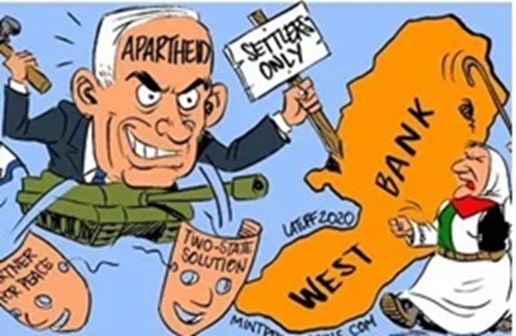
Netanyahu declares West Bank ‘our land’
Wed, 26 Aug 2026, https://www.rt.com/news/644673-netanyahu-west-bank-settlement-expansion/
The Israeli prime minister has vowed to annex more territory for Jewish immigrants.
Israel will continue building illegal settlements in the West Bank in preparation for a“major”wave of Jewish immigration, Prime Minister Benjamin Netanyahu has said. Israel’s most recent settlement expansion triggered rebukes from its Arab neighbors and Western partners.
Netanyahu said in Jerusalem on Tuesday:
“Today, many of our brothers and sisters around the world understand: This is our land and it will remain ours. And when I say our land, every Jewish man and every Jewish woman, the door is open. We are waiting for you. We are preparing the door for major Aliyah (Jewish immigration to Israel).“
It is unclear whether the “major Aliyah” predicted by Netanyahu is actually coming. Israelis have emigrated in growing numbers since Hamas’ 2023 attack and the subsequent war on Gaza. More than 150,000 Israelis left the country from 2024 to 2025, according to a report by 972 magazine.
The Israeli prime minister spoke at an event organized by the Binyamin Regional Council, which governs 47 Jewish settlements in the West Bank. All of these settlements, which are located outside Israel’s 1967 borders, are considered illegal by the UN, and Israel’s transfer of population to them has been deemed a breach of the Geneva Convention by the International Criminal Court.
Although the Israeli state sometimes pre-authorizes the construction of settlements, they typically begin as outposts on Palestinian land, until they are retroactively legalized by the Israeli government. During his speech on Tuesday, Netanyahu boasted that his government has established and regularized “104 settlements and 160 farms and we continue to do more.”
“It isn’t easy, it’s never easy,” he continued. “The land of Israel is acquired through suffering. Sometimes also through smiles, sometimes also through arguments, but it is being acquired by us. We are not giving up, we have a vision, this is our land, and it will remain ours.”
Last week, Israel opened bidding for the construction of more than 1,200 homes in the E1 settlement project, located east of Jerusalem. Named after its designation on Israeli planning maps, the project will comprise more than 3,400 homes, and was green-lit by Netanyahu’s government last year.
The E1 plan will establish a land corridor between East Jerusalem and the existing settlement of Ma’ale Adumim, both of which are built on Palestinian land. It will also sever road links between the Palestinian cities of Ramallah and Bethlehem, located to the north and south of Jerusalem, respectively.
It is unclear whether the“major Aliyah”predicted by Netanyahu is actually coming. Israelis have emigrated in growing numbers since Hamas’ 2023 attack and the subsequent war on Gaza. More than 150,000 Israelis left the country from 2024 to 2025, according to a report by 972 magazine.
The Israeli prime minister spoke at an event organized by the Binyamin Regional Council, which governs 47 Jewish settlements in the West Bank. All of these settlements, which are located outside Israel’s 1967 borders,are considered illegal by the UN, and Israel’s transfer of population to them has been deemed a breach of the Geneva Convention by the International Criminal Court.
Although the Israeli state sometimes pre-authorizes the construction of settlements, they typically begin as outposts on Palestinian land, until they are retroactively legalized by the Israeli government. During his speech on Tuesday, Netanyahu boasted:
Eight Arab and Muslim states, including Mecca Pact members Saudi Arabia, Pakistan, and Türkiye, “categorically” rejected the plan, describing it as “a dangerous escalation.” The UK, Canada, Australia, New Zealand, European Commission, and 15 European states also condemned the project.
“The E1 settlement will undermine the prospect of the two-state solution by driving a wedge through the West Bank,” they said in a statement last Thursday. “At a time of grave instability in the West Bank with unprecedented levels of violence by settlers against civilians, and serious restrictions on the Palestinian economy, this decision is even more concerning.”
Netanyahu has suggested for years that he intends to annex the entirety of the West Bank, describing the option as “on the table” even as he signed peace accords with Arab states in 2020. Netanyahu’s hardline coalition partners have been more explicit, with Finance Minister Bezalel Smotrich urging the prime minister in June to “apply sovereignty here in Judea and Samaria [the West Bank] before the elections” in October.
Trump Sends Nuclear Agreement With Saudi Arabia to Congress
The president still insists that the deal is contingent on the kingdom normalizing relations with Israel
By Michael R. Gordon and Robbie Gramer,
President Trump has submitted a landmark nuclear
accord with Saudi Arabia to Congress for review, but hasn’t dropped his
last minute condition that the kingdom normalize relations with Israel, an
administration official said.
Wall St Journal 25th Aug 2026,
https://www.wsj.com/world/middle-east/trump-sends-nuclear-agreement-with-saudi-arabia-to-congress-7f01af2c
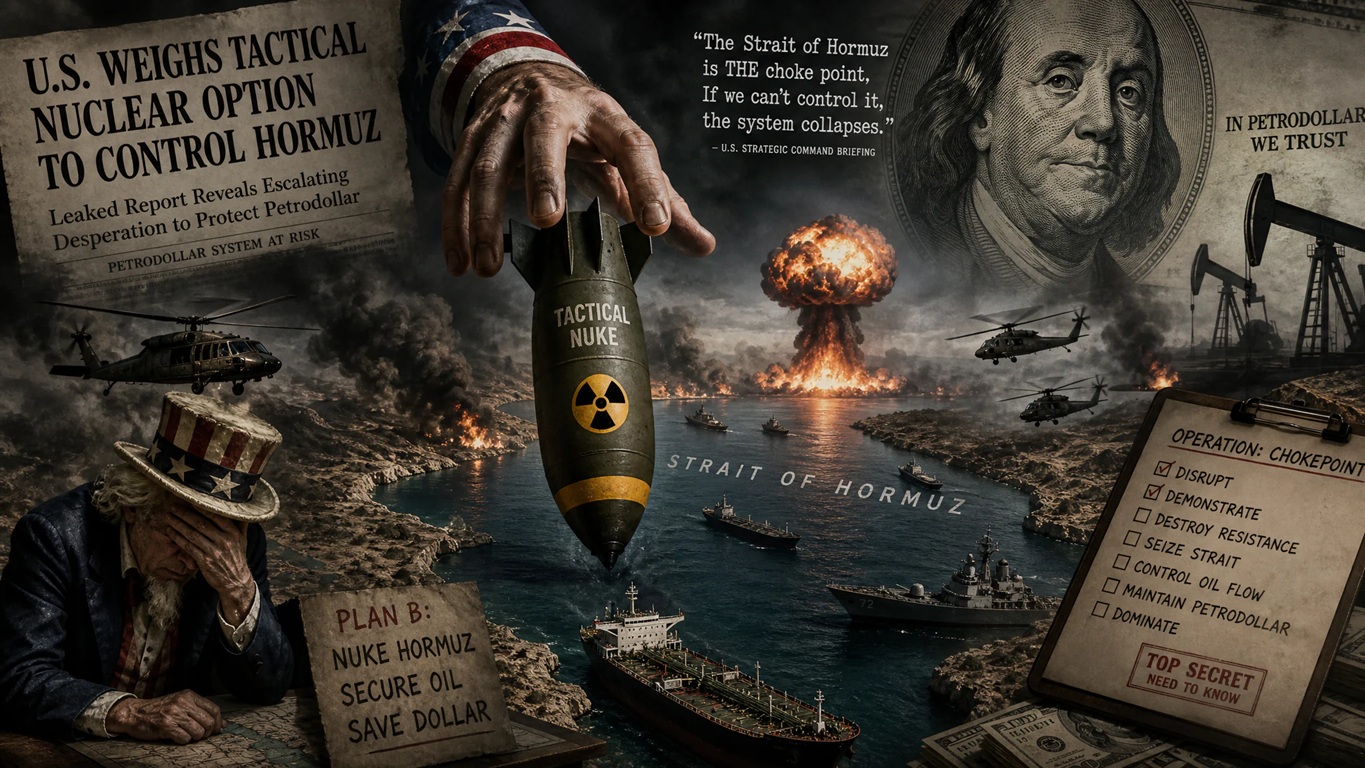
A Nuclear Option Against Iran Would Be a Catastrophe – Not a Solution
Taut Bataut, August 21, 2026, https://journal-neo.su/2026/08/21/a-nuclear-option-against-iran-would-be-a-catastrophe-not-a-solution/
Driven by desperation after failing conventionally in West Asia, the U.S. demonstrates reckless foreign policy by entertaining the use of tactical nuclear weapons to forcibly capture the Strait of Hormuz and preserve petrodollar hegemony.
his reliance on nuclear blackmail reflects a long-standing U.S. pattern of resorting to aggressive, unconventional force whenever its global military dominance is challenged.
A line in the sand that, once crossed, cannot be uncrossed. “They are discussing using nuclear weapons on Iran in strategy meetings. Yes, you read that correctly. It’s real. I’m not speculating; I know. And it’s pure evil.” This is what former US Congresswoman Marjorie Taylor Greene wrote on her X account on 17 August 2026. Although this statement is neither confirmed by the White House nor does it unveil any implicit information, the mere consideration of such an option signals a dangerous psychological shift in U.S. foreign policy. Heading towards any such move against Iran could result in global catastrophe, and the consequences would then be out of control. The real query here is whether the ongoing Middle Eastern volatility is paving the way for a nuclear holocaust or not.
Historical Perspective
To understand the ongoing situation in the Middle East, it is necessary to look into the historical perspective. When the US used nuclear weapons against Japan in World War II, we were told that the Japanese surrendered because of the nuclear weapons. This is false. Anyone who has studied World War II carefully will understand that the Japanese forces were already surrendering. So why was there a need to use nuclear weapons? The reason is that the US was running a secret project called the ‘Manhattan Project.’ Under this project, Americans were developing both uranium and plutonium bombs. So, the US wanted to test its weapon and thus bombed Japan. That’s why two bombs were dropped; however, only one could be enough. And thus, the US claimed itself as the number one military power in the world.
Later on, in the 1950s, Americans once again found that Soviet military dominance had surpassed them. So, the US introduced the tactical nuclear weapons to surpass the Soviet’s conventional superiority. However, till the 1970s, Soviets also developed tactical nuclear weapons in large numbers. In retaliation, the US started investing in space projects to develop long-range conventional missiles. By 2010, now the US military concluded that the Chinese military had become equal to ours. So, now the US is introducing artificial intelligence and autonomy in its military. But the PLA, without any doubt, has significantly outpaced the US military in this regard. This clears one thing: the US establishment did not want President Trump to sign an MoU with Iran, which was a clear surrender of the US military. So, as the US has completely failed against Iran in conventional terms, it might opt for some unconventional means to maintain its military superiority in the region.
Why the U.S. Might Opt for Tactical Nuclear Weapons
As of now, it is clear that there is no way to stop Iran through conventional capabilities. So, the statement made by Greene actually depicts the current strategic thinking inside the US: that even if the 50,000 US troops stationed at the 19 airbases in West Asia withdraw, if they do, and the US maintains control of the Strait of Hormuz, which could then be declared as US territory, then the petrodollar will remain intact. Therefore, the plan is to move out of the region and capture the Hormuz region through tactical nukes.
The next question then becomes, how is this going to be done? When one talks of tactical nuclear weapons, they mean the weapons whose power ranges from sub-kilotons to 50 kilotons. Just to remind you, the weapons the US dropped on Japan during WWII were tactical and weighed 15 kilotons. But now through modern technology, one can create a critical mass with just using a few kgs of uranium or plutonium, which could result in a chain reaction, and a nuclear weapon can be used.
Technically, this is possible today. If the Strait of Hormuz’s chokepoint could be opened with the use of a very small, limited-range, sub-blast, or sub-kiloton nuclear weapon. So, the US could capture the Strait of Hormuz in this way, declare it its own territory, and continue to generate petrodollars. This is the reason President Donald Trump recently said, “After we finish defeating Iran, which is being very badly defeated, pretty soon I’ll be declaring the Hormuz Strait a territory of the United States.”
The Devastating Consequences
Elbridge Colby, Under Secretary of War for Policy, has recently warned, “What I would fear more is a regional war, a kind of local war, a conventional war that might have local employment, God forbid, of nuclear weapons that could escalate from there as it expanded outward.” The consequences would be catastrophic. We know that many countries in the world today possess nuclear weapons, and we are also aware that North Korea has openly declared that if nuclear weapons are used against Iran, it will stand in solidarity with Iran. In addition, many analysts are of the view that Iran might have already developed nuclear weapons. But here the question is, could Iran have done this?
There are two reasons for which it can be concluded that Iran would not have done it. First, Iran is trying to develop a regional security framework, and the Mecca Defense Pact is its best manifestation, which could be expanded in the near future. Iran wants every regional country to see it as a partner nation. Thus, if Iran pursues developing nukes, it could start an arms race in the region where countries like Saudi Arabia would also demand a bomb. Second, Iran is a signatory of the NPT. So, Iran would first announce its withdrawal from the treaty, and then it will head forward in this direction.
China’s Role and Supremacy
Here China can play a pivotal and powerful role. Today China has approximately $800 billion in US Treasury bonds. If the Chinese were to tell Americans today that they were selling half or a large amount of their Treasury bonds, it would create problems with the US’s indebted economy. Inflation would spike, the stock market would crash, and the economy would be in dire condition. Moreover, China also has dominance over the world’s rare earth minerals, on which American conventional capabilities are highly dependent. Also, the PRC could also pressurize the US over the upcoming visit of Chinese President Xi Jinping to the US in September 2026. Thus, China has a lot to do in this regard, and it’s already doing it in one way or another to preserve the world’s peace.
A Nuclear Strike is not a Solution
A nuclear attack against Iran is not an answer; it is a recipe for disaster that is bound to happen sooner rather than later. This policy of desperation would be a betrayal of principles and a failure of our ideals and would not help to bring peace. The rest of the world should make its voice heard and condemn such rhetoric before it normalizes something unimaginable. There are reasons that dictate that we should rely on diplomacy and patience, no matter how desperate the situation becomes. The unthinkable should remain unthinkable; to think about such an option is to play with fire.
How the Media Sells Genocide

Joy to the World – by Mr. Fish
Chris Hedges ScheerPost, August 25, 2026, https://scheerpost.com/2026/08/25/how-the-media-sells-genocide/
Western media, by employing double standards, censorship, deceptive language, amplifying Israeli lies and dehumanizing Palestinians, facilitates the genocide in Gaza.
Chris Hedges ScheerPost
The Western media manufactures consent for genocide. It normalizes Israel’s decades-long military occupation and apartheid. It erases Israel’s flagrant violations of international law. It perpetuates the fallacy of Israeli victimhood. It betrays, discredits and demonizes the work of Palestinian journalists and media workers in Gaza, at least 220 of whom have been killed by Israel between Oct. 7, 2023, and August 2025. It supinely accepts draconian Israeli censorship. It acquiesces with tepid letters of protest at Israel’s refusal to allow foreign reporters in Gaza — an effort by Israel to mask its war crimes. It amplifies Israeli lies, from beheaded babies to widespread sexual assault of Israeli women on Oct. 7, to obfuscate the truth.
When writing about Gaza, verbs are in the passive tense. There is no subject. No one is accountable. Genocide, it seems, is an act of God. No different from an earthquake or tsunami. Clichés and opaque adjectives such as the “cycle of violence” or “clashes” distort and falsify reality.
“If thought corrupts language, language can also corrupt thought,” George Orwell warned.
Terms such as “genocide,” “atrocity,” “ethnic cleansing” and “occupied territories” magically disappear from media reports on Palestinians, whose resistance is routinely described as “savage” and “barbaric.” New York Times reporters are instructed by editors to avoid terms such as “Palestine,” “genocide,” “carnage,” “refugee camp,” “slaughter” and “massacre,” when referencing Palestinians.
The media slavishly regurgitates what Israel feeds it. Saturation bombing becomes “surgical air strikes.” Israel’s weaponization of famine becomes a “food shortage.” The killing of unarmed civilians — including children — becomes “clashes.” The hilltop fortress-like compounds of Jewish colonists becomes “neighborhoods.” Extrajudicial assassination of a journalist or a doctor becomes “died.”
Genocide, referred to as the “Israel-Hamas war” is justified as “self-defense,” part of the mantra of Israel’s “right to defend itself.” When schools, hospitals, clinics, ambulances, mosques, churches and other civilian targets are obliterated, they are labeled “Hamas command centers” or targeted because Hamas is “using civilians as human shields” — something Israel does routinely, when the army binds detained Palestinians and forces them to enter potentially booby-trapped buildings and tunnels ahead of Israeli troops.
When Israelis are held by Hamas, they are “hostages,” even if they serve in the military. When Palestinians — including children — are held without charges or trial and disappeared into Israeli detention centers, where torture is “widespread” and “systematic,” they are “prisoners.”
Missile attacks on tent cities or hospitals are blamed on Palestinian armed groups firing errant rockets. If Israel acknowledges the attacks — which very rarely happens — they are described as a “tragic mistake.”
Civil institutions in Gaza are characterized as “Hamas-run” to cast doubt on the veracity of what they report. The New York Times routinely qualifies announcements from the Gaza Health Ministry by noting it “does not distinguish between civilians and combatants,” masking the slaughter of tens of thousands of civilians.
The result is some of the most convoluted writing in the history of journalism, including the Nov. 5, 2023 New York Times headline that reads: “Explosions Gazans Say Was Airstrike Leaves Many Casualties in Dense Neighborhood.”
“When Middle East Eye journalists Mohamed Salama and Ahmed Abu Aziz, along with Reuters photojournalist Hussam al-Masri, and freelancers Moaz Abu Taha, and Mariam Dagga — who had worked with several media outlets, including the Associated Press — were killed in a “double tap” strike — designed to kill first responders arriving to treat casualties from initial strikes — at Nasser Medical Complex, how did Western news agencies respond?” I asked in my column The Betrayal of Palestinian Journalists.
“Israeli military says strikes on Gaza hospital targeted what it says was a Hamas camera,” the Associated Press reported.
“IDF claims hospital strike was aimed at Hamas camera,” announced CNN.
The camera belonged to Reuters, which said Israel was “fully aware” the news agency was filming from the hospital.
“When Al Jazeera correspondent Anas Al Sharif and three other journalists were killed on Aug. 10 in their media tent near Al Shifa Hospital, how was it reported in the Western press?” I asked.
“Israel Kills Al Jazeera Journalist It Says Was Hamas Leader,” Reuters titled its story, despite the fact al-Sharif was part of a Reuters team that won a 2024 Pulitzer Prize.
The German newspaper Bild, published a front page story headlined: “Terrorist disguised as a journalist killed in Gaza.”
“The linguistic gymnastics employed by the media went as far as redefining words, making them meaningless,” writes Assal Rad in “Don’t Say Palestine: How the Media Manufactured Consent for Genocide:”
‘Mainstream media failed to describe Israel’s repeated breaches of the ceasefire with the language of violation. Instead, the coverage followed the same patterns of rationalizing Israel’s attacks and uncritically parroting Israel’s claims to justify its actions. As Palestinians continued to be killed — during a ‘ceasefire’ — and the flow of aid did not reach the level of need or what was agreed to, Western media framed these flagrant violations as ‘tests’ or ‘challenges’ to a ‘shaky ceasefire.’ As leading human rights organizations like Amnesty International warned that the genocide was, in fact, not over, legacy media continued to frame it as a war with a ‘fragile ceasefire.’
Words matter. Words justify actions. If there is no genocide, if Israel is defending itself in a war, the U.S. and Israel’s European allies have the right to provide tens of billions of dollars in military aid. If this is a war begun by Hamas on Oct. 7 then it is possible to lament the obliteration of Gaza and mass slaughter by Israel as the regrettable result of the Hamas attack.
This corruption of language is designed, as Orwell noted, to defend the indefensible:
“Things like the continuance of British rule in India, the Russian purges and deportations, the dropping of the atom bombs on Japan, can indeed be defended, but only by arguments which are too brutal for most people to face, and which do not square with the professed aims of political parties. Thus political language has to consist largely of euphemism, question-begging and sheer cloudy vagueness. Defenseless villages are bombarded from the air, the inhabitants driven out into the countryside, the cattle machine-gunned, the huts set on fire with incendiary bullets: this is called pacification. Millions of peasants are robbed of their farms and sent trudging along the roads with no more than they can carry: this is called transfer of population or rectification of frontiers. People are imprisoned for years without trial, or shot in the back of the neck or sent to die of scurvy in Arctic lumber camps: this is called elimination of unreliable elements.“
Adam Johnson in “How to Sell a Genocide: The Media’s Complicity in the Destruction of Gaza,” examined over 12,000 articles from The New York Times, The Washington Post, CNN.com, Politico, Axios, USA Today, and The Associated Press, along with 5,000 TV segments aired on CNN and MSNBC. His carefully researched book is a damning indictment of the “liberal” media’s justification of the genocide.“
CNN and The New York Times instructed their editors and journalists that attacks could only be attributed to Israel after confirmation from the IDF and GPS coordinates. Johnson quotes a source at CNN:
Whether it’s in the newsroom or in the field, we couldn’t credit anything to Israel unless we were held to this impossibly high bar of having to call it an “explosion,” until we geolocated the site of the explosion, sent the coordinates to the Israelis and asked them for comment.
You can see an interview with Johnson about his book at The Electronic Intifada here.
CNN journalists reporting on Israel and Palestine must submit their work for review to the network’s Jerusalem bureau prior to airing. The CNN bureau, like all news bureaus in Israel, is required to abide by restrictions imposed by Israeli military censors.
The very few Palestinians who appear on CNN and other legacy media outlets, are routinely asked — usually before they are even permitted on air — if they “condemn” Hamas. Guests who express even tepid criticism of Israel are asked whether Israel “has a right to exist.”
No one is ever asked if they condemn Zionism, apartheid, ethnic cleansing, genocide or Israel’s 100 year war on Palestine. Nor are they asked if the Palestinians have a right to defend themselves — which under international law they do, including with weapons.
Our domesticated journalists and news organizations are, as Robert Fisk pointed out, “prisoners of the language of power.” They dutifully parrot the official lexicon. This makes them not only propagandists, but accomplices to genocide.
Those who protest the genocide, including students on university campuses — many of whom are Jewish — are smeared as “Hamas supporters” and “antisemites.” Journalists ferret out Zionist students, usually found esconced in campus Hillel houses, who claim to be “fearful for their safety,” because of the protests. The media pays little attention to the rise in anti-Muslim bigotry or the repression meted out to student protestors, which includes not only police brutality and 3,000 detainments and arrests, but suspensions, probations, expulsions, withholding of diplomas and the firing of sympathetic faculty.
Slogans which call for Palestinian liberation — including “From the river to the sea, Palestine will be free” — along with the Palestinian flag, have been criminalized.
The message is clear: Jewish lives matter. Palestinian lives do not.
“The reports of UN agencies, of respected human rights monitors, of medical journals, and of professional medical personnel, are generally treated with respect and given prominence in the mainstream media,” writes the historian Rashid Khalidi in the introduction to Robin Anderson’s book, “The Complicit Lens: US Media Coverage of Israel’s Genocide in Gaza:”
“Not in this war: instead, if such sources are cited at all, equal media treatment is given to the outrageous slanders and calumnies against these organizations and individuals, smears that are produced in profusion by Israel’s legion of professional propagandists and its myriad of defenders in the US. Besides smearing critics of Israel’s genocide as supporters of Hamas or terrorist sympathizers, the main weapon in their arsenal of defamation is their systematic and outrageous misuse of the deadly accusation of antisemitism.”
The massive defections of readers and viewers from mainstream media to social media platforms that do not filter news through the Israel lobby, the U.S. government or corporations, are a stark indicator of the media’s bankruptcy. The response to these defections has been “platformicide” — the use of algorithms, shadow banning, restriction of live streaming capabilities and the closing of accounts by social media giants such as Facebook, Instagram, X, YouTube and TikTok, to dramatically reduce the reach of reporting on Palestine.
This censorship is part of a coordinated effort to hide the horror of the genocide from the public.
By constantly referencing Oct. 7, the Western media decontextualizes the genocide. It ignores Israel’s 19-year siege of Gaza. Oct. 7 is characterized in the Western media as “unprovoked.” Israel’s massacres of unarmed Palestinians in Gaza in the winter of 2008 and 2009, along with its attacks on Gaza in 2012, 2014 and during the Great March of Return in 2018 and 2019 are ignored.
The 1948 Nakba — when European Zionists seized more than 78 percent of historic Palestine, violently expelled 750,000 Palestinians, destroyed more than 530 Palestinian villages and killed 15,000 Palestinians — is rarely referenced. Seventy percent of those driven from their homes in 1948 were forced into Gaza.
The Zionist project is predicated on fostering historical amnesia.
“Once Hamas was established as a brutal, terrorist group whose members gleefully tortured, dismembered, and beheaded babies without conscience, no further explanation was needed,” writes Anderson in her book. “The media simply avoided reporting Israel’s history of violence and as a result, establishment media also avoided the conditions of everyday life for Palestinians.”
The fiction that there is currently a ceasefire in Gaza — Israel has killed at least 1,286 Palestinians and injured 4,257 since it supposedly went into effect — has become the excuse used by Western media to turn its back on Gaza. This genocide denial has characterized the coverage since its inception. It masks not only Israel’s crimes, but Israel’s stated intention to ethnically cleanse all Palestinians from Gaza. It effectively neuters international law. And it makes a mockery of the profession of journalism.
When the last act of ethnic cleansing happens, Western media will, I am sure, continue to bombard us with Israeli agitprop, euphemisms and clichés.
It will justify the genocide until the end.
Israel Took Another Major Step Towards West Bank Annexation
August 25, 2026, Qassam Muaddi, Mondoweiss. https://scheerpost.com/2026/08/25/israel-took-another-major-step-towards-west-bank-annexation/
Settlers besiege Palestinian families in Qusra.
Israel’s government responds by handing settlement security to the police of hardline minister Ben-Gvir- a move seen to further entrench Israeli annexation of the West Bank.
Israel’s Defense Minister, Israel Katz, has moved to transfer security authority over Israeli settlements and settlers in the occupied West Bank from the Israeli army to the civil police, a decision Palestinians read as a decisive step toward the de facto annexation of the territory, and one that places the settler movement, in effect, in charge of policing itself.
Katz gave the Israeli army two weeks to draft a plan to transfer powers to the police, while the army’s role in the West Bank would be limited to “managing” Palestinians and controlling borders.
The announcement, made last Monday, came after ten days of settlers besieging three Palestinian families in the village of Qusra, south of Nablus. Since August 9, Israeli settlers have cordoned off the families — including three women, one of whom is elderly, and two children — inside three houses, cutting off water, electricity, and blocking access by Palestinians and Israeli anti-occupation activists who tried to deliver food to them.
The Israeli army deployed troops to the area and declared it a closed military zone, evacuating the settlers’ tent, only for the settlers to re-establish it the following day. Israeli soldiers were filmed praying and shaking hands with the settlers, sparking a public controversy over the collusion between the army and the settlers.
While the army’s failure to resolve the crisis is seen by some to have triggered Katz’s decision, the decision’s implications extend far beyond Qusra.
Another step to annexation
On the surface, transferring security powers from the army to the civil police looks like a measure to restore order and rein in settler violence that has spiked since 2022 — well before October 7 — and sparked global condemnation, even from Israel’s staunchest allies.
However, in his first public response to Katz’s announcement, Mustafa Barghouti, leader of the Palestinian National Initiative, called the move “the actual beginning of Israel’s de facto annexation of the West Bank.” Talking to Alaraby TV, Barghouthi also noted that the Israeli police is controlled by Israel’s National Security Minister, Itamar Ben-Gvir, who is a hardline settler himself. “All security powers over settlers in the West Bank will pass into the hands of settlers themselves,” Barghouthi said.
Ben-Gvir, a key ally of Benjamin Netanyahu, has systematically expanded settlers’ influence within the Israeli police since taking power.
More broadly, the decision fits a pattern that has been accelerating since the current Israeli government took office. Finance Minister Bezalel Smotrich, who holds sweeping authority over the West Bank’s civilian administration, has systematically inserted Israeli settlers into the decision-making structures of the occupation. In 2024, Smotrich said that he had “changed the DNA of the system” by creating a civilian body — staffed by settlers — inside the Israeli army’s Civil Administration, the body responsible for running the occupation’s civilian affairs in the West Bank.
This effectively replaced the military with a settler-run civilian government in an occupied territory, treating the West Bank as sovereign Israeli territory rather than occupied land. After assigning civilian governance of the West Bank to settlers and transferring security authority to police, which is all in line with the path to annexation, what remains is the formal imposition of Israeli law on the territory.
Opportunism or election politics?
The timing of Katz’s announcement is not coincidental.
The ongoing siege of Palestinian families in Qusra attracted international attention over the past week, after U.S. Ambassador to Israel, Mike Huckabee, slammed the actions of Israeli settlers in Qusra, calling them “terrorists” — an unusually sharp reaction from an official in U.S. President Donald Trump’s administration. The apparent trigger for the stern criticism is that several of the Palestinians trapped inside the three homes in Qusra were U.S. citizens.
On Monday, Palestinian-American Luai Abu Ridah arrived in Qusra from Ohio to join his family in their besieged house in the village. Once inside, Abu Ridah raised a U.S. flag on the rooftop, asserting his U.S. citizenship and deepening the crisis.
Although the logical end to the crisis would be the removal of settlers from the area surrounding the three houses and ending the siege, the political price associated with removing them is one that the current Israeli government wants to avoid at all costs, particularly with decisive Israeli elections being months away. Given that the settler movement is a main part of the voter base that is keeping Netanyahu’s right-wing coalition in power, images of Israeli forces evacuating settlers — however violent or illegal their conduct is — a few months ahead of Israeli elections, would cost the contested prime minister crucial votes.
In that sense, transferring security powers to the Israeli police, as a move, gives the impression that the Israeli government is taking decisive action. In practice, it does nothing to end the siege in Qusra: the settlers remain, and the Palestinian families stay trapped, and the new framework hands authority to a force whose minister is ideologically aligned with the settler movement. Simultaneously, the move manages the international optics of the crisis while advancing the annexation agenda, without resolving either.
Larger plan
Despite the media emphasis on the siege of Palestinian families in Qusra, it is only a moment of a sustained settler offensive, targeting and reshaping the eastern part of the West Bank.
Following October 7, Israeli settler groups launched a systematic campaign against Palestinian Bedouin communities in the eastern slopes of the Nablus and Ramallah hills, displacing almost all Palestinians from the area, and cutting off the central West Bank from the Jordan Valley.
Since last year, settler attacks have begun to focus more on the villages east of Ramallah and Nablus, particularly in the southeast of the Nablus governorate.
In July, Israeli settlers seized a house in Jaloud, southeast of Nablus, located in Area B, the 22% of the West Bank which falls under Palestinian Authority (PA) civil jurisdiction and Israeli security control under the 1993 Oslo Accords. Such attacks on built-up houses in these villages, which have escalated dramatically over the past year, achieve the strategic logic of establishing a continuous settler presence east of Nablus. This isolates the city from both the east and the south, thereby achieving geographic contiguity for settlements across the northern West Bank. This, ultimately, further fragments any prospect of a coherent Palestinian territory.
As settler violence intensified and went unchecked, the displacement of families from their houses became the defining feature of this phase. The siege of the two families in Qusra is its most extreme expression and its most internationally visible.
But beyond the immediate crisis, the Israeli government and its settler support base are claiming every opportunity to entrench annexation measures that would be very difficult for any future government to undo or reverse.
Transferring security powers in settlements to the Israeli police is one such measure. It is not an emergency response to a local incident, but a continuation of a plan that has been in the making for years.
Hormuz Catastrophe: Netanyahu & Trump Knew Risks, Escalated Anyway
SCHEERPOST, August 25, 2026, Dan Steinbock Informed Comment
Iran has not collapsed, while Hormuz has become a global economic choke point. The central failure was not ignorance of the risks, but the political decision in Washington and Tel Aviv to gamble that coercive military power could overcome them.
So, why did they set the stage for the catastrophe that was both unwarranted and unnecessary?
The Israeli conventional war game
In February 2024 – after 4 months of the Israeli obliteration of Gaza – over 100 senior military and government officials participated in a report by Reichman University’s Institute for Counter-Terrorism which outlined in painful detail how unprepared the Israeli home front was for an all-out war with Hezbollah.
This lethal scenario was written long before Hamas’ October 7th attack on Israel. It is the result of a three-year study. The 130-page report was the work of six think tanks made up of over 100 terrorism experts, former senior security officials, academics, and government officials who examined critical aspects related to the level of preparedness for the IDF and the home front in the event of a multi-front war.
The project was led by Professor Boaz Ganor, a world-renowned counter-terrorism expert. In the months leading up to October 7, he presented his research to relevant military and political authorities in an attempt to rouse intelligence and decision-makers from complacency and misconceptions.
The Netanyahu government ignored him and the analysis.
The Israel-Iran nuclear war game
In late 2023 – almost in parallel with the Hamas attack – a high-level U.S. war game was conducted in Washington. The participants included members of U.S. executive branch, Republicans and Democrats in the Congress, leading academics, think-tank experts and Pentagon officials. The game started in 2027 with Israeli intelligence reports that Iran was mating nuclear warheads to its long-range missiles. Consequently, Israel targets Iran’s key nuclear and missile sites with U.S. standoff hypersonic missiles.
Intriguingly, initially the U.S. participants presumed that self-restraint would prevail in this high-level war game. Yet, the simulation’s cold logic compelled them into a sequence of steps that quickly went nuclear. The adverse consequences were felt by millions of civilians in both Israel and Iran.
The lessons of the war game were ignored by both the Netanyahu government and the Trump administration.
Why did Netanyahu court the U.S. into the Iran conflict fully knowing the consequences?
Both war games were common knowledge among the US and Israeli military elites well before October 7, 2023. I referenced each in my book The Fall of Israel (2024). So, why were the lessons of these games effectively ignored?
The evidence points less to strategic ignorance than to political and strategic risk-taking. In particular, The Fall of Israel shows that Netanyahu’s government repeatedly treated regional escalation as a means of escaping an increasingly untenable post-October 7 position: prolong Gaza invasion, weaken Hezbollah, expand Israel’s northern security zone and ultimately confront Iran.
I argued that Netanyahu rejected a Gaza ceasefire while expecting Trump’s return to provide greater freedom of action against Gaza, Lebanon and Iran.
But the risks were hardly invisible even in 2023. The high-level U.S. war game in late projected that an Israel-Iran confrontation could rapidly escape Israeli and American control and go nuclear. The Hezbollah scenario likewise anticipated thousands of rockets, saturation of Israeli defenses, attacks on infrastructure and paralysis of ports and trade.
Netanyahu’s calculation therefore appears brutally simple: the risks of escalation were judged preferable to the political risks of de-escalation. A wider war could restore deterrence, destroy adversaries, preserve his coalition and keep the strategic initiative.
The catastrophic externalities—Lebanon, Iran, Hormuz, the Gulf and the world economy—were treated as manageable collateral risks. They were not Israel’s problem. They were the world’s problem.
Why did Trump take the bait when Washington understood the stakes?
Trump inherited an enormous institutional warning system. U.S. officials, Pentagon planners and bipartisan experts had already modeled escalation from an Israeli attack on Iran through retaliation, Israeli counterstrikes, nuclear signaling and ultimately nuclear exchange.
The war game initially assumed rational self-restraint; but its own sequence demonstrated how quickly that assumption could collapse.
Yet Trump appears to have made the classic great-power error: confusing overwhelming tactical superiority with strategic control.
To the interventionists, the political attractions were obvious—destroy Iran’s nuclear capacity, reinforce Israel, demonstrate American dominance and claim a decisive victory where previous administrations had failed.
But the premise that Iran could be compelled to surrender under bombardment underestimated asymmetric retaliation, regional proxies, geography and the extraordinary leverage of Hormuz.
The result is the opposite of the promised quick victory. By August, Trump’s approval had fallen to 33%, while 80% of Americans said they expected the war to be prolonged. Earlier Pew polling found 59% of Americans believed using force against Iran was the wrong decision and 62% disapproved of Trump’s handling of it.
Ironically, Washington has converted a military operation into a strategic endurance contest in which Iran possesses an exceptionally powerful economic weapon: Hormuz.
Soaring oil/gas prices, plunging growth, 6+ million displaced……………………………………………………………………………………………………………………………
What options remain and how badly has America damaged itself
There are four remaining trajectories. First, negotiated de-escalation: reopen Hormuz, freeze attacks, restore oil/LNG flows and negotiate Iran’s nuclear status.
Second, prolonged managed conflict: intermittent strikes, sanctions and restricted shipping, producing structurally higher energy prices.
Third, regional expansion: Lebanon, Iraq, Yemen and Gulf infrastructure become increasingly active fronts.
Fourth, the tail risk: escalation toward nuclear confrontation—the scenario the war games warned could arise from supposedly controlled conventional operations.
What is urgently needed is an internationally mediated settlement involving Iran, the Gulf states, Europe, China, Russia and the UN—not another unilateral U.S. military ultimatum. As I argued in The Fall of Israel, unipolar solutions are increasingly incapable of managing a multipolar Middle East………………………………………………… https://scheerpost.com/2026/08/25/hormuz-catastrophe-netanyahu-trump-knew-risks-escalated-anyway/
Miscarriages and stillbirths in Gaza surge as Israel’s siege, malnutrition, toxic exposure and displacement ravage mothers

Eva Karene Bartlett, Aug 22, 2026
August 20, 2026, RT.com, Shocking news of a sudden over-threefold year-on-year increase of the number of miscarriages and stillbirths should be front page on global media. But because it is one of the latest consequences of the ongoing Israeli genocide of Palestinians in Gaza, it will probably go ignored by most Western corporate media.
In fact, since a ‘ceasefire’ supposedly came into effect in October 2025, media coverage of Gaza has decreased dramatically. But – as with ceasefires prior – Israel has continued to kill Palestinians in Gaza on a near-daily basis, by bombing, machinegun fire, quadcopter fire, drone strikes, and by (continuing its near twenty-year siege on Gaza) not allowing in adequate amounts of humanitarian aid, medical supplies, and other things needed to just sustain life at the very basic level.
As of August 19, the Gaza Health Ministry reports 1,273 Palestinians have been killed, 4,223 wounded since October 11, 2025.
In mid-July, Ahmad Abu Foul, a Palestinian medic who I’ve known since I lived in Gaza, told me of the sudden increase in miscarriages, primarily among women living in displacement tents across the Gaza Strip.
He cited Dr. Mohammed Al-Bashiti, an obstetrics and gynecology specialist at Nasser Medical Complex in Khan Younis, as warning of this disturbing increase and attributing it to various environmental and physical factors, notably, severe malnutrition and anemia, and “extreme physical fatigue due to repeated displacement from one place to another. Many are forced to carry heavy loads beyond their physical capacity, putting their pregnancies at greater risk.”
But it’s also caused by exposure to toxic chemicals – explosive residues, TNT-related materials, smoke – which put the baby at risk. Ahmad said that his sister just had a miscarriage at four months pregnant, and his niece had a stillbirth at eight months.
The Israeli newspaper, Haaretz, on July 30 published an article highlighting the dramatic rise in miscarriages. It cited a recent UN report stating from January to June 2026, 3,950 miscarriages had been reported. This is over triple the 1,197 miscarriages reported from July to December 2025. The miscarriage rate, it notes, is one-sixth of all pregnancies.
Haaretz cited Dr. Ahmed al-Farra, head of the pediatric department at Nasser Hospital as likewise saying the contributing factors to the increase in miscarriages are malnutrition and stress and also water shortages: “We have reached a point where each person has three liters of water a day, far below the minimum required. Ninety percent of the water is not fit for drinking. The water shortage leads to infections, weakening the immune system and worsening malnutrition.”
With the complete destruction of the Gaza Strip by Israel, and with Palestinians constantly forced to suddenly move their inadequate tents elsewhere, the lack of clean drinking water, and the near-complete dependence on financial and humanitarian aid from the outside world set the stage for a host of food-, water-, and hygiene-related illnesses, and now this dramatic increase in miscarriages.
Although it was stipulated in the ‘ceasefire’, Israel hasn’t been allowing sufficient food, water and medicines to enter Gaza.
Euro-Med Human Rights Monitor reported on August 9, 2026, that, “Israel enforces a comprehensive policy that disrupts the entire supply chain, starting from the entry of goods and aid through crossings until they reach the population.”
It notes the dearth of aid trucks entering Gaza in the first place, and that those which are permitted entry are not guaranteed to reach those in need, “due to the destruction or impairment of the transportation, storage, and distribution infrastructure.” It also notes that delays in shipping “cause frozen food, medicine, and other vital materials to spoil before reaching those in need.”
Euro-Med points out that Israel, “as the occupying power, has an obligation under Articles 55 and 59 of the Fourth Geneva Convention to guarantee that the population receives food and medical supplies when local resources are insufficient.”
From a logistical perspective, many of the illnesses plaguing Gaza could be eradicated were Israel to adhere to international law and allow in sufficient food, water and medical aid.
Israel is of course aware of this, as it has been since enforcing a full siege on Gaza in 2007. But the Israeli authorities know no international body or state – certainly not its biggest backer, the US – will force it to stop its genocide and allow in aid.
The invisible, creeping ‘Yellow Line’
Israel has been expanding its control of Gaza via a constantly-expanding, mostly-invisible, ‘Yellow Line’ – a demarcation line set out in the Israeli-US ‘peace plan’ of 2025. The Palestinians can mainly only guess at where it lies, aside from some yellow cement blocks which are periodically moved still further into Gaza, to claim more land………………………………………………………………………………………
Nonstop killing continues…………………………………………………………………………… https://evakarenebartlett.substack.com/p/miscarriages-and-stillbirths-in-gaza?utm_source=post-email-title&publication_id=3046064&post_id=212152652&utm_campaign=email-post-title&isFreemail=true&r=1ise1&triedRedirect=true&utm_medium=email
South Korea helps Egypt expand Russian-built nuclear plant
South Korea’s growing role in Egypt’s Russian-built El Dabaa nuclear plant has helped shield the project from sanctions and enabled expansion
The New Arab Staff, 22 August, 2026
South Korea’s growing role in Egypt’s Russian-built El Dabaa nuclear power plant has helped Cairo shield the project from Western sanctions and paved the way for a major expansion of the site, according to senior Egyptian energy officials.
Electricity and Renewable Energy Minister Mahmoud Esmat said in televised remarks that Egypt was studying the addition of at least two more nuclear units at El Dabaa, with the possibility of eventually expanding the complex from four reactors to six or even eight.
Senior sources at Egypt’s Ministry of Electricity and Energy told The New Arab that the proposed expansion reflected “a state of confidence” surrounding the project following South Korea’s entry as a partner alongside Russia’s Rosatom.
They said South Korean involvement had enabled Egypt to gain access to Western-linked technology while limiting the exposure of companies working on El Dabaa to US and European sanctions imposed on Russian firms following Moscow’s invasion of Ukraine in 2022.
According to the sources, the South Korean government is expected to provide financial and technical support for future expansions of El Dabaa, alongside its existing role in completing control systems and turbine-related work.
The arrangement has allowed Russia to retain control of the project’s nuclear core while South Korean companies handle major elements of its conventional power-generation infrastructure.
The sources said South Korea had taken on work that US company General Electric did not proceed with following the outbreak of the Ukraine war.
Egypt currently plans four Russian-designed VVER-1200 reactors at El Dabaa, with a total capacity of 4.8 gigawatts.
The proposed expansion could eventually increase capacity to 9.6 gigawatts by 2040, according to the sources.
Nuclear energy experts said Esmat’s remarks “open the door to transforming El Dabaa from a four-unit plant into a larger nuclear complex”.
No cost estimate, reactor models or timetable have yet been announced for the additional units.
However, the experts said Cairo increasingly views El Dabaa as “the nucleus of a long-term nuclear programme, rather than a standalone project that ends with the operation of four reactors”.
South Korea’s involvement in the project expanded rapidly after Russia’s invasion of Ukraine complicated Western-linked supply chains.
Experts at Egypt’s Nuclear Energy Authority told The New Arab that Russian nuclear energy company Rosatom accelerated moves to bring Korea Hydro & Nuclear Power into El Dabaa as the key supplier for the turbine island and associated control systems for the four Russian units.
Korea Hydro & Nuclear Power signed a $2.25 billion contract with Russia’s Atomstroyexport in Cairo on 25 August 2022, months after the outbreak of the war and the introduction of Western sanctions…………………………………………………
https://www.newarab.com/news/south-korea-helps-egypt-expand-russian-built-nuclear-plant
Nuclear material found in Syria will remain in the country, minister says
By Reuters, August 19, 2026
Nuclear material found at an undisclosed site in Syria was not dangerous and would remain in Syrian custody, subject to the International Atomic Energy Agency’s guarantees, Syria’s foreign minister said on Tuesday.
Asaad al-Shibani added in a joint press conference with IAEA chief Rafael Grossi in Damascus that Syria had the right to use the material for civil and peaceful purposes.
Since the ouster of President Bashar al-Assad in late 2024, Syria’s new authorities have committed to working with the United Nations’ nuclear watchdog to address the legacy of nuclear activities during decades of Assad family rule.
Grossi said the agency was able to access the site after the Syrian government notified it.
Syria is not known to hold operational stockpiles of nuclear material for a weapons programme, but Israel bombed a suspected Syrian nuclear reactor in 2007 in the country’s eastern province of Deir al-Zor.
Reporting by Nayera Abdallah; Editing by Alex Richardson
Today In Dystopia: Burning Books For Israel, Burning Books For AI
Caitlin Johnstone, Aug 20, 2026
I’ve been putting out more and more of these “today in dystopia” write-ups because our society is plunging into iron-fisted authoritarianism and AI-induced idiocracy so rapidly that it’s hard to keep up with how it’s unfolding day by day without shoveling multiple stories into a single essay.
Today in dystopia they’re really going after books. A library in Sydney has removed the book “How to Sell a Genocide” by Adam Johnson from its shelves after Zionists complained about its criticisms of Israeli mass atrocities in Gaza.
The Guardian reports:
“A Sydney library has removed a book critical of Israel called How to Sell a Genocide, following a complaint reportedly from a survivor of the Bondi beach terror attack.
“Waverley library at Bondi Junction is in the same council area as Bondi beach.
“A Waverley council spokesperson said: “The book has been removed from library shelves for review, and council will further consider processes to ensure closer oversight of book selection.”
“They seem to be objecting largely based on the title using the word ‘genocide’,” Johnson commented. “But ‘genocide’ is not my word, or my finding. The fact of genocide in Gaza is the overwhelming consensus of the human rights world, and it is a wholly mainstream opinion among those tasked with studying and determining such matters.”
So in Australia they’re now banning books for Israel. I guess it was only a matter of time.
Also today in dystopia, Amazon is buying and destroying rare books in a secret facility to train AI.
404 Media has been doing some great reporting on how companies like Google and Anthropic have been buying up rare and out-of-print books to train their LLM models before destroying them, and now 404 has a new article out describing how its reporters placed a tracking device on a shipment of books and followed it to an Amazon warehouse where the books are being scanned and shredded.
Here’s an excerpt:
“That final destination was an Amazon warehouse in Las Vegas, Nevada. Amazon employees who work at this location say all they do is receive massive shipments of printed books which they then cut the bindings off in order to scan the books more quickly. The printed book is destroyed in the process. The logo of the Amazon team that works at this warehouse, called VGT3, is a dinosaur, brandishing its teeth and with a book in its hands.”
That’s right: the logo for Amazon’s book-destroying location is an angry tyrannosaurus preparing to rip apart a book…………………………………
Today in dystopia, the Israeli government is working harder and harder to manipulate the information AI chatbots feed their users about Israel and its myriad military projects in the middle east.
Politico reports:
“Israel has launched a new campaign to influence how large-language models like ChatGPT are answering questions about Gaza and the Israel Defense Forces amid declining public support for the country across the U.S. political spectrum.
“French PR firm Havas Media, which runs the lion’s share of Israel’s FARA-registered foreign influence work in the U.S., appears to have stood up an ‘institute’ aimed at feeding LLMs positive information about Israel via one of its subcontractors, boutique ad agency Piro, Inc.”
This builds on previous reporting from Drop Site News about FARA revelations showing that former Trump campaign manager Brad Parscale secured a lucrative deal with Israel to set up dummy pro-Israel websites designed to be read not by humans, but by the web crawlers that LLMs get their information from. Drop Site found that Microsoft Copilot, Google Gemini, and Perplexity were the AI companies most vulnerable to Parscale’s manipulations.
Today in dystopia it’s becoming more and more common for online commenters to accuse me of using AI to write my essays, which I have never done and will never do.
I hate that this is a thing now. I’ve been writing essays every day for a decade, and nobody who’s been reading me for a long time believes I use AI. But now that so many people are using these creepy chatbots to do everything for them, people believe it’s impossible for a human brain to produce a few paragraphs of text.
I don’t mind the accusations, I just hate what it says about where we’re heading as a species. These things have only existed for a few years, but some people are already forgetting what it was like to be able to use your own mind to complete simple cognitive tasks. I find it deeply disturbing.https://www.caitlinjohnst.one/p/today-in-dystopia-burning-books-for?utm_source=post-email-title&publication_id=82124&post_id=211937785&utm_campaign=email-post-title&isFreemail=true&r=1ise1&triedRedirect=true&utm_medium=email
Jared Kushner: US will back Israeli resumption of war if Hamas fails to honor disarmament commitments

Kushner said Hamas could surrender weapons and tunnels within 60 to 90 days, calling demilitarization a potential major security gain for Israel.
Jerusalem Post, ByJAMES GENN, AUGUST 18, 2026
Hamas must honor its commitments to disarm or face an IDF operation to “finish the job,” US special envoy Jared Kushner told FOX News’s Trey Yingst on Monday.
Kushner’s comments came after meetings with Hamas and the National Committee for the Administration of Gaza (NCAG) in Cairo on Sunday, and respective meetings with Prime Minister Benjamin Netanyahu and President Isaac Herzog in Jerusalem on Monday.
“If they [Hamas] don’t follow through now on their commitment, everyone will see that they’re not genuine about peace, and then Israel will have a lot more support from the US and others to go and finish the job in the appropriate way,” Kushner stated………………………………
“For Israel, we think this is a win-win situation because if Hamas actually gives over the weapons and the tunnels willingly over the next 60 to 90 days, that obviously would be the elimination of a huge security threat for Israel, almost an unthinkable achievement,” he stated.
Trump admin. will not allow Gaza to be rebuilt until Hamas demilitarizes, Kushner says
The Trump administration will “not allow Gaza to be rebuilt until demilitarization occurs,” Kushner stated……………….. https://www.jpost.com/middle-east/article-905880
Saudi Arabia in no hurry to bow to Trump’s demands on nuclear deal
For decades, Arab states held fast to the belief that the road to America
goes through Israel. Establishing ties with their Jewish neighbour, so the
theory went, was the surest way to gain the White House’s favour.
The Saudi-American agreement on nuclear co-operation announced last month tests that theory. A day after the deal was signed, President Trump, stung by
Israeli criticism, added a new condition. There would be no civil nuclear
plant for Saudi Arabia unless the kingdom joined his Abraham Accords, the
agreements under which the Gulf states would make peace with Israel.
The belated demand has thrown the future of the agreement into doubt. Officials
and analysts say the slow process to have the deal ratified by the US
Congress is under way, but the White House has tied itself into knots by
announcing a new condition that was not in the original agreement.
Times 20th Aug 2026,
https://www.thetimes.com/world/middle-east/article/saudi-us-nuclear-deal-trump-israel-demand-ppplvcts0
1 This Month





PLEASE OPPOSE HR 8255 AND S.3639 – bills would accelerate satellite deployment, with no environmental review or safeguards – https://ncstd5li.quorum.us/campaign/169331/
To see nuclear-related stories in greater depth and intensity – go to https://nuclearinformation.wordpress.com
-
Archives
- October 2026 (49)
- September 2026 (339)
- August 2026 (330)
- July 2026 (355)
- June 2026 (287)
- May 2026 (306)
- April 2026 (356)
- March 2026 (251)
- February 2026 (267)
- January 2026 (308)
- December 2025 (358)
- November 2025 (359)
-
Categories
- 1
- 1 NUCLEAR ISSUES
- business and costs
- climate change
- culture and arts
- ENERGY
- environment
- health
- history
- indigenous issues
- Legal
- marketing of nuclear
- media
- opposition to nuclear
- PERSONAL STORIES
- politics
- politics international
- Religion and ethics
- safety
- secrets,lies and civil liberties
- spinbuster
- technology
- Uranium
- wastes
- weapons and war
- Women
- 2 WORLD
- ACTION
- AFRICA
- Atrocities
- AUSTRALIA
- Christina's notes
- Christina's themes
- culture and arts
- Events
- Fuk 2022
- Fuk 2023
- Fukushima 2017
- Fukushima 2018
- fukushima 2019
- Fukushima 2020
- Fukushima 2021
- general
- global warming
- Humour (God we need it)
- Nuclear
- RARE EARTHS
- Reference
- resources – print
- Resources -audiovicual
- Weekly Newsletter
- World
- World Nuclear
- YouTube
-
RSS
Entries RSS
Comments RSS

