A Case for War? Iran’s Non-Existent Nuclear Weapons Program

ByWilliam O. Beeman, Apr 14, 2026, https://americancommunitymedia.org/oped/a-case-for-war-irans-non-existent-nuclear-weapons-program/
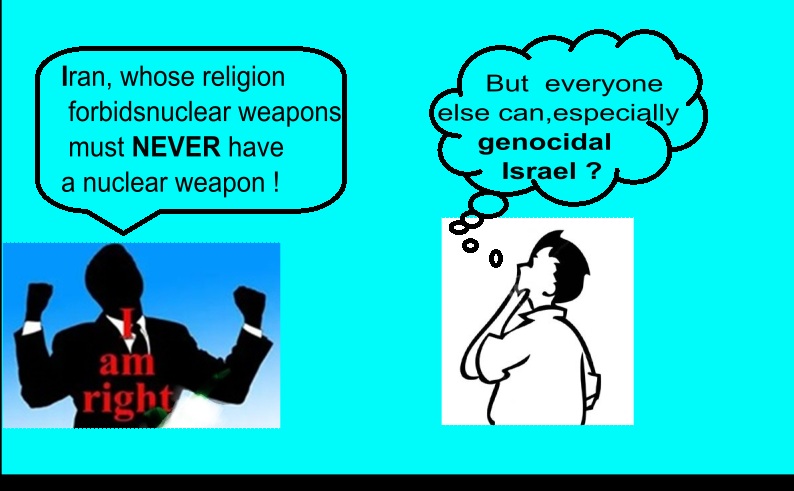
The United States’ repeated attacks on Iran over more than 40 years are based on a lie: that Iran has a nuclear weapons program.
Vice-President J.D. Vance, who led the U.S. delegation in cease-fire talks with Iran on April 10-11, once again repeated this lie in his demand that Iran declare that it “will not seek a nuclear weapon, and they will not seek the tools that would enable them to quickly achieve a nuclear weapon.”
The current Iranian regime has done much that has disturbed the world community since the Islamic Revolution of 1978-1979. They have supported Hezbollah in Lebanon, the Houthis in Yemen, the Assad Regime in Syria, and militant groups throughout the Middle East. They have repressed dissent in their own country, including incarceration and execution of many thousands of Iranian citizens, with little justification. For these actions the regime deserves severe condemnation.
However, what Iran has not done and has never done is to develop nuclear weapons.
Iran’s critics hide behind the phrase “Iran’s nuclear ambitions” as if that vague phrase constitutes proof that a nuclear weapons program exists. It does not exist and has never existed. So why does this unsubstantiated accusation remain a live issue?
The answer is surprisingly simple. When Iran was an ally of the United States during the reign of Shah Mohammad Reza Pahlavi, who was re-installed from exile in a CIA-led coup in 1953, the United States fervently encouraged Iran to develop nuclear technology. After the Iranian Revolution of 1978-79, when Iran was seen as opposed to the United States, its nuclear program was suddenly seen as suspect and dangerous.
Iranian nuclear development started during the Eisenhower administration as part of the “Atoms for Peace” program. In 1957, the United States signed a Civil Nuclear Cooperation Agreement with Iran stipulating that the United States would provide Iran with technical assistance, nuclear fuel, and a small research reactor. This resulted in the establishment of the Tehran Nuclear Research Center in 1959. In 1967, under the Johnson administration, the United States delivered a five-megawatt research reactor to Iran along with weapons-grade highly enriched uranium to fuel it.
In 1968, Iran and the United States were founding signatories to the Nuclear Non-Proliferation Treaty (NPT) which was eventually signed by virtually every nation on earth except for Israel, India, and Pakistan. (North Korea initially signed and then withdrew. South Sudan, founded in 2011, never signed the treaty).
The NPT prohibits nations that did not have a nuclear weapons program at the time of signing from ever developing nuclear weapons. At the same time, the NPT guarantees the right of all countries to pursue non-nuclear-weapons programs to develop nuclear technology for peaceful purposes. The treaty also requires nations that already had nuclear weapons to protect the rights of other nations to develop their own nuclear technology, including the right to enrich uranium for peaceful purposes. (Aside from Iran, Germany, Netherlands, Japan, Brazil, and Argentina all have active nuclear enrichment programs today).
From this point on, until the 1978-79 Revolution, the United States encouraged nuclear development in Iran, urging companies like Westinghouse and General Electric to sell nuclear power reactors to the Shah’s government. At one point 23 nuclear power plants were envisioned.
But following the Iranian Revolution and the 444-day hostage crisis when U.S. officials were held at the U.S. Embassy in Tehran, Iran became suspect in the eyes of the United States. The nuclear program that had once been so fervently encouraged became a point of attack against the Islamic Republic.
The idea that Iran was developing a nuclear weapon stems from a 1984 United Press International article entitled “Ayatollah’s Bomb in Production for Iran.” On April 26, 1984, the U.S State Department under the Reagan administration — with no evidence that Iran had the equipment or the capability to produce a bomb — nevertheless urged a world-wide ban on providing nuclear materials to the country.
The eight-year Iran-Iraq war was then underway, and the Reagan administration feared that Iran could develop a weapon to use against Iraq. Another press article from The Washington Post in 1987 entitled “Atomic Ayatollahs” continued the alarm.
Even though Western intelligence agencies repeatedly insisted that Iran did not have a nuclear weapons program, U.S. officials — buoyed by negative public opinion of the Iranian regime — continued the accusation. The first U.S. imposed economic sanctions levied on Iran in relation to its nuclear program were imposed by President Bill Clinton in 1995.
In 2003 the George W. Bush administration, under urging from neo-conservatives bent on effecting regime change throughout the Middle East, again accused Iran of having a nuclear weapons program.
From this point on, the specter of Iran’s “nuclear ambitions” became a mantra in Washington, despite Iranian Supreme Leader Ayatollah Ali Khamenei having issued a religious edict prohibiting nuclear weapons development that same year. President Bush imposed further U.S. economic sanctions, increasing tensions between the two nations.
After more than 10 years, the Obama administration was able to create the Joint Comprehensive Plan of Action (JCPOA). As part of the agreement, Iran agreed to curtail its uranium enrichment program as a “confidence building” measure to assure that it would not violate the provisions of the longstanding NPT.
After President Trump canceled the JCOPA during his first presidential term in 2017, the idea that Iran still had “nuclear ambitions” became the baseline excuse for continued U.S. sanctions. No matter Iran’s transgressions, this one accusation remains the principal reason for continued hostilities culminating in the current war between the two nations.
The base fact is that Iran has never been shown to have had a nuclear weapons program. All intelligence organizations involved with nuclear containment agree on this fact. Nevertheless, as was seen in the failure of the Islamabad talks, Iran’s “nuclear ambitions” continue to be the pretext for U.S. attacks.
Will Trump nuke Iran?
Never has humankind seen so much power concentrated in the hands of one so capricious. Whether the ceasefire will hold, for how long, and in what ways is for the days ahead to tell. No one—not even Donald Trump—knows the end game. But the constant is the man whose finger can push the nuclear button. A man used to quick, vacuous victories through bullying and unbridled force is rancorous, thwarted, and vengeful.
What once seemed preposterous is now a palpable possibility.
When Trump, echoing Gen. Curtis LeMay’s 1965 threat toward North Vietnam, threatened to “obliterate” Iran and bomb it “back into the Stone Age”—rhetoric repeated by Defense Secretary Pete Hegseth—he wasn’t just posturing. In fact he was signaling that in an administration which respects no norms, mushroom clouds may be acceptable.
By Pervez Hoodbhoy | Opinion | April 10, 2026, https://thebulletin.org/2026/04/will-trump-nuke-iran/?utm_source=ActiveCampaign&utm_medium=email&utm_content=Will%20Trump%20nuke%20Iran%3F&utm_campaign=20260413%20Monday%20Newsletter
No one—not even Donald Trump—knows the end game as the six-week old US-Israeli war on Iran enters a temporary ceasefire. Just look at the head-spinning time-line:
Sunday, April 5 (infrastructure destruction-I): “Tuesday will be Power Plant Day, and Bridge Day, all wrapped up in one, in Iran. There will be nothing like it!!! Open the fucking strait, you crazy bastards, or you’ll be living in Hell — JUST WATCH! Praise be to Allah.”
Monday, April 6: (infrastructure destruction-II): “Their infrastructure could be taken out in one night. I’m telling you, no bridges, no power plants. I’m considering blowing everything up and taking over the oil.”
Tuesday, April 7 (morning) (threat to commit genocide): “A whole civilization will die tonight, never to be brought back again. I don’t want that to happen, but it probably will. However, now that we have Complete and Total Regime Change… maybe something revolutionarily wonderful can happen, WHO KNOWS?”
Tuesday, April 7 (evening): Announcement of two-week Pakistan-mediated ceasefire.
Never has humankind seen so much power concentrated in the hands of one so capricious. Whether the ceasefire will hold, for how long, and in what ways is for the days ahead to tell. No one—not even Donald Trump—knows the end game. But the constant is the man whose finger can push the nuclear button. A man used to quick, vacuous victories through bullying and unbridled force is rancorous, thwarted, and vengeful. He has been stymied by a recalcitrant theocratic state that has taken blow after blow, withstood the killing of its venerated leader, the bombing of its cities, the destruction of vital infrastructure, and the systematic targeting of its schools and universities.
Weeks later, when it should rightly be on its knees, Iran still controls the Strait of Hormuz and refuses to negotiate while it is being bombed. Instead, it continues to cause mayhem among America’s allies and take potshots at Israel. Imagine Trump’s frustration, especially after his bloodless victory in Venezuela.
But a so-far-unbroken taboo, inviolate since the nuclear ash settled over Hiroshima and Nagasaki, may crack. What once seemed preposterous is now a palpable possibility. When Trump, echoing Gen. Curtis LeMay’s 1965 threat toward North Vietnam, threatened to “obliterate” Iran and bomb it “back into the Stone Age”—rhetoric repeated by Defense Secretary Pete Hegseth—he wasn’t just posturing. In fact he was signaling that in an administration which respects no norms, mushroom clouds may be acceptable.
The “how” and “when” remain open questions, but if the ceasefire ceases to hold the crosshairs are likely fixed on the Fordow Fuel Enrichment Plant or, just as probably, Isfahan, where Iran’s fissile material was allegedly transferred before the June 2025 attack. Buried deep beneath a mountain of solid rock, Fordow is the nuclear facility that Trump had earlier claimed to have “obliterated.”
The math of escalation is inexorable: Iran reportedly holds roughly 450 kilograms of 60 percent enriched uranium. While a rudimentary gun-type nuclear weapon would be assembled using 80-100 kilograms of this material, a sophisticated implosion-type bomb needs 20-25 kilograms of uranium enriched to contain 90 percent of the uranium 235 isotope, a process requiring only some weeks. If Iran has mastered the complex engineering required for the latter, its current reserves represent a potential arsenal of eight to 10 nuclear warheads.
The game hinges on the upgrade. Iran can push its stockpile to weapons-grade in a matter of weeks. Conventional “bunker busters” like the GBU-57 have already failed; 14 were dropped on Fordow and Natanz in 2025, yet the heart of the program kept beating. To achieve absolute destruction, the hammer would have to be nuclear.
If the United States chooses to go nuclear in Iran, the Pentagon’s solution would likely be an earth-penetrating warhead like the B61-11 or the newly deployed B61-12. Washington would frame such a strike not as a Hiroshima-style apocalypse but as a “clinical necessity”—a tactical operation designed to kill hundreds rather than tens of thousands.
But Iran will not surrender quietly and would retaliate with everything it has. A lucky strike from a sophisticated missile could sink an American aircraft carrier; a coordinated swarm of drones and missiles could turn major Arab oil terminals into pillars of fire. At that point, the “clinical” experiment could end, and the apocalypse might begin as the United States reaches for its next nuclear target.
Even for a man who finds gratification in the suffering of others—who celebrated the recent destruction of Iran’s biggest bridge followed by cars plummeting down—Trump’s nuclear ambitions are constrained by American electoral politics and the upcoming November elections, a potentially hostile public reaction, and a somewhat reluctant military.
For now, America and Israel are operating in lockstep. They reportedly executed coordinated strikes on Iran’s Bushehr nuclear power plant—which has nothing to do with bomb-making—on March 18 and April 4. These were presumably “signaling strikes” since they destroyed only an auxiliary building and killed a single guard. Their intent was clear—even if the endgame is not. The message has been received: In coordination with the Israeli Defence Forces, over 200 high-level Russian technicians have already evacuated Bushehr, leaving behind only a skeleton crew to manage a potential emergency shutdown.
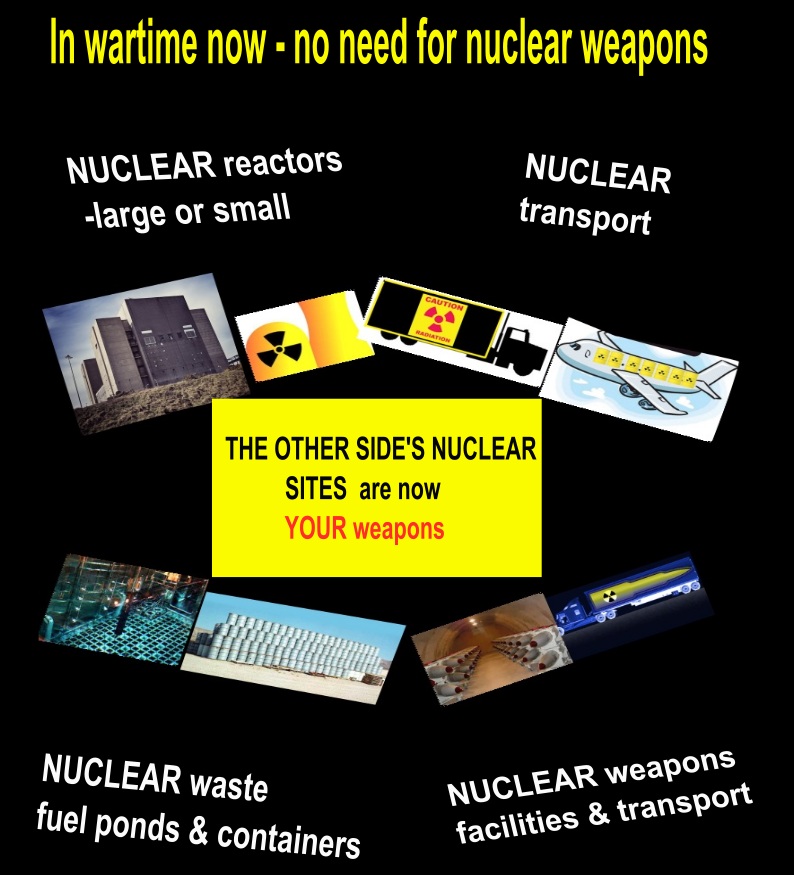
But “signaling” near a live reactor is a high-stakes gamble with an unclear ultimate purpose. While the plant continues to feed the grid, a direct hit on its containment dome would trigger a radiological catastrophe far exceeding that of Chernobyl or Fukushima. With 70-80 tons of uranium dioxide in its core and a massive inventory of spent fuel lying in nearby cooling ponds, a breach would shroud the Persian Gulf with a lethal miasma of radioiodine and cesium-137. This wouldn’t just be a strike against a regime; it would be a death sentence for the region’s environment and its people.
Israel—which pulverized Gaza to rubble and seeks a similar outcome in South Lebanon—may have fewer inhibitions than the United States. Where Washington might hesitate, Israel may well aim for the dome. For America’s Gulf allies—the UAE, Kuwait, Bahrain, Qatar, Saudi Arabia, and Oman—the fallout would range from the devastating to the permanent, the outcome depending on wind direction and speed.
With an undeclared arsenal of over 150 warheads and reliable means to deliver them to any corner of Iran, Israeli nuclear strikes on Iranian population centers are no longer a fringe theory; they would become a live strategic option in Jerusalem if somehow Iran manages to breach the Israel’s Iron Dome missile defenses more regularly and with greater effectiveness.
Operation Epic Fury is now entering its sixth week. As yet there are no direct negotiations, just a temporary ceasefire. With optimism in short supply, the world is watching a grim lesson unfold. The takeaway for every middle power and so-called rogue state is becoming undeniable: If you have the bomb, you don’t get bombed. The race is on to get it while they still can.
Trump is trying to distract us from Pope Leo’s calls for peace. Don’t take the bait.
Not only does Pope Leo not think Iran should have nuclear weapons, he does not think any country should have them, including the United States.)
American Magazine, by Sam Sawyer, S.J.April 13, 2026
If you are outraged—which would be both understandable and justifiable—by President Donald Trump’s social media attack last night on Pope Leo, take a moment to step back and follow the pope’s example rather than taking the president’s bait.
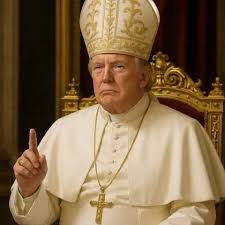
You may remember that at the beginning of May, during the preparation for the conclave that elected Pope Leo XIV, the president posted an A.I.-generated image of himself as pope dressed in a white cassock and miter, his hand raised in blessing. The White House’s official X account later reposted the image, which remains up on the account.
As the America team in Rome and back at home discussed how much to cover that story, I reminded my colleagues that to the degree that the Trump-as-pope meme meant anything, it meant that Mr. Trump was unable to tolerate anyone other than himself commanding the world’s attention.
As the America team in Rome and back at home discussed how much to cover that story, I reminded my colleagues that to the degree that the Trump-as-pope meme meant anything, it meant that Mr. Trump was unable to tolerate anyone other than himself commanding the world’s attention.
Mr. Trump posted a screed against Pope Leo late on the evening of Sunday, April 12. It was, as my colleague James Martin, S.J., posted last night, “unhinged, uncharitable and un-Christian.” It was immeasurably beneath the dignity of the office of the president. (Not satisfied with merely attacking the Vicar of Christ, Mr. Trump posted another A.I.-generated image, this one seeming to depict himself as Jesus.)
Mr. Trump’s post also makes little sense. It achieves the almost impressive feat of becoming less coherent the longer you think about it.
It slams Pope Leo as “WEAK on crime,” probably Trumpian code for Leo’s opposition to the administration’s immigration policy. It then veers into a tirade about priests and ministers being arrested for holding services during the pandemic, followed by Mr. Trump’s praise for the pope’s brother Louis as “all MAGA.” Finally, turning to the foreign policy disagreements that probably triggered the post, it accuses Leo of thinking “it’s OK for Iran to have a Nuclear Weapon.” (Not only does Pope Leo not think Iran should have nuclear weapons, he does not think any country should have them, including the United States.)
In the most muddled part of the attack, Mr. Trump says he is the reason that Leo got elected as pope and that the cardinals in conclave thought that was “the best way to deal with President Donald J. Trump.” This manages to be wrong both coming and going. It is farcical as an account of the motives of the cardinals and, as I will explain below, it misunderstands the purpose of Leo’s own witness entirely.
Far more telling than anything in the president’s post was the timing of it. During a weekend full of bad news for Mr. Trump, his post followed a lack of progress in negotiations with Iran and the resounding electoral loss of his favorite European leader, Viktor Orban, in Hungary. Relative to the Catholic world, his post came the day after Pope Leo XIV led a prayer vigil for peace in St. Peter’s and was joined in prayer all around the world. It came within hours of a “60 Minutes” broadcast of an unprecedented joint interview by three U.S. cardinals, in which they clearly laid out the church’s moral objection to both the Iran war and the administration’s mass deportation agenda.
Mr. Trump, however, was not responding to any of those events in kind. Mr. Trump’s outburst is not trying to convince anyone of his claims but rather to make people angry. In that sense, its incoherence is more a feature than a bug.
The way his attack on the pope functions best for Mr. Trump, like so much of the ragebait with which he pollutes our collective consciousness, is by pulling attention back to him so that we talk about him within terms that he has set. If we are doing that, Mr. Trump does not much care, I suspect, whether we agree with him or oppose him, because at least we are back in orbit around him.
Perhaps the way in which Pope Leo presents the greatest challenge to President Trump is in his consistent demonstration of what it looks like to remain morally centered on the Gospel instead of acting for or against Mr. Trump’s interests. In general, even when offering critiques that respond to American foreign policy moves, as in his description of Mr. Trump’s threat to destroy Iranian civilization as “truly unacceptable,” Pope Leo does not mention the president by name. In part, this follows well-established Vatican diplomatic practice, but it is also meant to remind us that the pope is speaking more from principle than he is in response to persons, even the most powerful person on earth. When Leo is speaking more explicitly about persons, it is to call our attention back to people who are suffering: the poor and the victims of war or violence.
Leo has also encouraged U.S. bishops to speak up more forcefully and more frequently. As can be seen in recent days, both from the “60 Minutes” interview by Cardinals Cupich, McElroy and Tobin and the swift response by Archbishop Paul Coakley, the president of the national bishops’ conference, to Mr. Trump’s threat against Iranian civilization, the pope has been strikingly successful in encouraging the bishops to exercise such leadership……………………………………………………………………………………………………………….. https://www.americamagazine.org/many-things/2026/04/13/trump-pope-leo-truth-social/?utm_source=ActiveCampaign&utm_medium=email&utm_content=Trump%20is%20trying%20to%20distract%20us%20from%20Pope%20Leo%20s%20calls%20for%20peace%20%20Don%20t%20take%20the%20bait&utm_campaign=Daily%204%2013%2026
Sea-level rise is a health crisis and we must hold polluters accountable
There are moments in history when a crisis long treated as distant reveals
itself to be intimate, immediate and profoundly human. Sea-level rise is
one of those moments.
For years it has been discussed in the abstract
language of centimetres, coastal infrastructure and future projections.
This can make it seem like a technical challenge – something for
engineers and planners to grapple with.
But rising seas are already
damaging bodies, minds, livelihoods and cultures. Sea-level rise is a
present-day health crisis. When saltwater intrudes into freshwater
supplies, health suffers. When floods overwhelm sanitation systems,
diseases spread. When farmland is inundated by king tides, nutrition
deteriorates. And when people are forced to contemplate leaving the land of
their ancestors, they face a painful mix of physical, financial, emotional,
cultural and spiritual harm. The effect of sea-level rise on property lines
and insurance procurement is clear.
But what is being lost goes far deeper
– it’s safety, dignity, continuity and belonging. Across low-lying
coastal regions and small island states, including throughout the Pacific,
communities are living with this reality today. For Indigenous peoples
especially, land is identity, memory, law, kinship, sustenance today and
connection to a shared future.
Guardian 7th April 2026,
https://www.theguardian.com/commentisfree/2026/apr/07/sea-level-rise-health-crisis-christiana-figueres
Trump’s Extreme Use of Military Is Stirring a Crisis of Conscience Among Troops
US soldiers have a rich history of questioning the wars they’re told to wage abroad.
By Sam Carliner , Truthout, April 13, 2026
s President Donald Trump increasingly uses the U.S. military to carry out his agenda through brute force, organizations that provide counseling services for U.S. servicemembers are reporting growing numbers of calls. These calls have further spiked in response to Trump’s war on Iran, one of the most unpopular in U.S. history.
The United States has carried out the war through intense attacks on densely populated civilian areas, the impact of which was clearly shown in the bombing of a girls’ school, killing well over 100 children. Not even concerned with selling the war to the public, Secretary of Defense Pete Hegseth has leaned into treating the intervention as a “holy war” for Christianity.
Mike Prysner, an Iraq War veteran and executive director at the Center on Conscience & War (CCW), told Truthout that troops are telling his organization that they don’t want to be involved in the killing.
“That’s pretty much all of the cases that we have,” Prysner said. “It’s all people who don’t want to take part in killing in a war that they don’t believe in, and this war has made them realize that they can’t take part in any kind of U.S. military action ever again.”
The CCW, formerly the National Interreligious Service Board for Conscientious Objectors, was founded in 1940 to assist religious communities whose beliefs prohibited them from participating in war. Over time, and as a result of broadening criteria for who can qualify as a conscientious objector (CO), the organization evolved to assist troops of all backgrounds whose values prevent them from being able to participate in war.
Prysner told Truthout that in recent weeks CCW has already been able to help several servicemembers become COs to avoid being deployed.
To reach more servicemembers experiencing crises of conscience, CCW and other organizations including the Quaker House founded the GI Rights Hotline in 1994. Steve Woolford, a resource counselor at the Quaker House, has taken calls for the hotline since 2001 and agreed that the war on Iran, and Trump’s broader use of the military, has caused a spike in calls.
“The biggest increase has come from people who are feeling a lot of opposition to the ways the military’s currently being used,” Woolford said. “That includes people who feel like they don’t want to be sent into cities and point a weapon at U.S. citizens, they don’t want to be part of what to many of them look like war crimes, shooting down speedboats in Venezuela that wouldn’t be able to make it to the United States, and I would say with the invasion, or whatever you want to call it, ‘Operation Epic Fury’ in Iran, there’s been significant opposition to that.”
Woolford clarified that not all troops who call the hotline are able to leave the military by filing as COs. While every member of the military has that right, the process requires applicants to prove that they have deeply held antiwar beliefs. This means that even if someone is opposed to certain orders or operations, they don’t qualify as CO if they aren’t opposed to participation in all wars.
Prysner said that the social pressure in the military can also make it difficult for troops to declare themselves COs.
“Especially for people who have deployments happening, you’re telling all of your brothers and sisters in uniform that you don’t believe in what you’re doing and you’re not gonna be able to do it with them,” Prysner said. “The thing is, the people that we’re dealing with, they simply don’t have any other choice … They cannot live with themselves participating.”
Echoes of Antiwar History
This is not the first time that members of the military have questioned their role in U.S. wars. In fact, there is a rich history of GI dissent throughout U.S. history.
The role of antiwar veterans was especially important in bringing about the end of the Vietnam War. …………………………………………………………………………………………………………………………….. https://truthout.org/articles/trumps-extreme-use-of-military-is-stirring-a-crisis-of-conscience-among-troops/?utm_source=Truthout&utm_campaign=de92a70740-EMAIL_CAMPAIGN_2026_04_13_09_27&utm_medium=email&utm_term=0_bbb541a1db-de92a70740-650192793
Israel is losing its grip on U.S. politics
By Dave Reed , Mondoweiss, April 12, 2026
We’ve been covering the shift in American politics on Israel for years. Donald Trump’s disastrously failed war on Iran has accelerated it.
For years, conventional wisdom held that support for Israel was a third rail in U.S. politics. Phil Weiss has written a library of analysis and coverage on that here at Mondoweiss over the past 20 years. Uncritical support for Israel was toxic for politicians to touch, impossible to oppose, and self-reinforcing across both parties through the combined pressure of donor money, media consensus, and institutional loyalty. That consensus is broken forever. It didn’t break because of a sudden moral awakening in Washington. That will never happen, on virtually any issue. If you need any more proof of that, just look at the way the survivors of Jeffrey Epstein are being treated, or refer to the fact that even massacres of schoolchildren haven’t moved Congress to do something about guns in the country. The consensus across the political elite on Israel broke because Israel’s conduct in Gaza, Lebanon, and now in its open effort to torpedo an end to the war with Iran, has become a liability that American politicians can no longer ignore.
Michael Arria, our U.S. correspondent, documented this week how military aid to Israel has finally become a true litmus test in Democratic Party primaries. Alexandria Ocasio-Cortez announced she will vote against all military aid to Israel, including weapons classified as “defensive,” a position she had previously hedged. Even J Street, the organization meant to offer a counter to AIPAC’s extremism but locked in perpetual confusion about its identity, is even now opposing U.S. support for the Iron Dome missile defense system. AIPAC, once considered the most powerful of all the many lobby groups, is now a liability in Democratic races, losing key primaries and watching candidates run against it by name. A recent NBC News poll shows just 13 percent of Democrats view Israel positively. These numbers are not marginal; they represent a fundamental and permanent realignment of the Democratic base. Politicians, candidates, and political institutions are paying attention.
This fracturing is thankfully not limited to the left. The Iran war has cracked open the MAGA coalition in ways that the genocide in Gaza could not. Powerful conservative commentators commanding huge audiences and figures closely aligned with the MAGA movement have been openly and harshly critical of Trump over the war. The widespread, and correct, view is that Netanyahu manipulated Trump into a conflict that serves Israeli interests, not American ones. The critique of the tail wagging the dog is now being advanced loudly by people who would never have entertained it two years ago. The political ground is moving, dramatically, in the months before an all-important mid-term election. Republican figures with aspirations for more power, such as J.D. Vance and Marco Rubio, are beginning to distance themselves from the Iran debacle………………………………………………………………………………………………………. https://mondoweiss.net/2026/04/weekly-briefing-israel-is-losing-its-grip-on-u-s-politics/
Hormuz Dateline
What Iran Actually Understands
Iran does not need to win a naval war in the classical sense. It only needs to make transit uncertain, costly, and politically radioactive. Mines, drones, missiles, fast boats, electronic piracy, and the psychology of fear are enough to turn a chokepoint into a garotte. That is the essence of asymmetry: a state under pressure parlays geography into power. Tehran does not need to dominate the sea. It needs only to make everyone else remember that the sea is not theirs.
The US-Israeli axis has long acted as if the region were a board and its opponents pieces. Hormuz shreds that assumption with the patience of geography.
14 April 2026 David Tyler AIM Extra, https://theaimn.net/hormuz-dateline/
The war now has the smell of salt, oil, and old empires trying to defy the tide.
Thirty-three kilometres. That is the width of the Strait of Hormuz at its narrowest navigable point: two shipping lanes, each two miles wide, one in, one out, with a median strip of Iranian territorial water between them. Through those lanes passes approximately 21 million barrels of oil every single day. That is one barrel in every five consumed anywhere on earth. Add the liquefied natural gas, and you have roughly 20 percent of all the LNG traded on global markets squeezing through a corridor you could drive across in less than half an hour. A fifth of the world’s energy supply running through a gap that geography, not American naval doctrine, placed there.This is not a side theatre. This is the throat of the world economy, and in this war it has become the place where the old American order goes from swagger to strain. What was once sold as a system of irresistible reach; US power, Gulf oil, the dollar, the naval umbrella, the client-state arrangement, now looks clapped-out, ruinously costly, and exposed as it is caught, hoist by its own petard, dependent on a choke point that cannot be bullied out of geography.
No aircraft carrier in the world can widen the Strait of Hormuz by a single metre.
The Arithmetic of Vulnerability
The numbers matter because official language exists precisely to hide that fact.
When the Iran-Iraq war threatened these waters in the 1980s, oil prices doubled within months. When Houthi attacks on Red Sea shipping began in late 2023, global shipping insurance rates for Gulf-adjacent routes increased by up to 600 percent within weeks. Lloyd’s of London has now quietly tripled war risk premiums for vessels transiting the Gulf. That is not a diplomatic assessment or a Pentagon briefing. That is the financial system’s hard-nosed verdict on what is actually happening, stripped of all the official language about deterrence and security and the rules-based order.
While Trump posts to Truth Social about erasing civilisations and US admirals post to Facebook about historic firsts, the insurance market is pricing the reality that the propaganda is designed to conceal.
Australia has a particular stake in this arithmetic that the Albanese government would prefer its citizens not examine too carefully. Australia sends approximately 80 percent of its LNG exports through or near the Gulf corridor. When Hormuz is threatened, Woodside’s share price moves. The war that Albanese insists Australia is not involved in is directly affecting the income of Australian energy companies and, through them, the superannuation balances of ordinary Australians. Pine Gap processes targeting data for the strikes. Australian-made F-35 components are in the payload. And Hormuz is where the bill arrives.
What Iran Actually Understands
Iran does not need to win a naval war in the classical sense. It only needs to make transit uncertain, costly, and politically radioactive. Mines, drones, missiles, fast boats, electronic piracy, and the psychology of fear are enough to turn a chokepoint into a garotte. That is the essence of asymmetry: a state under pressure parlays geography into power. Tehran does not need to dominate the sea. It needs only to make everyone else remember that the sea is not theirs.
This is a strategic fact Washington cannot deny. Or lie about. The US-Israeli axis has long acted as if the region were a board and its opponents pieces. Hormuz shreds that assumption with the patience of geography. Israel can strike, assassinate, bomb, and escalate, but it cannot turn the Gulf into a risk-free zone. The US can threaten, sanction, and deploy, but it cannot guarantee the one thing the market demands most: confidence. That is the precise point at which imperial force runs into imperial limits. Empires can break things. Claim to rule the world. But it’s not so easy to rebuild trust once the world has called your bluff.
The ruling classes of all three powers; American, Israeli, Iranian are happy to gamble with systems they do not themselves live inside. They talk deterrence but they mean coercion. They may say security but they mean control. They may invoke peace but they build the conditions for the next war. It is the coastal fishermen, the dockworkers, “sea-gulls”, the tanker crews, and the families living with the knowledge that a misfire, a mine, or a drone can change the day in an instant who live inside the system these men are gambling with. That distinction matters. It is, in fact, the only distinction that matters.
The Petrodollar’s Exposed Seam
The petrodollar order was always more fragile than its keepers cared to admit. It rests on a Faustian bargain: Gulf oil will flow, the US will police the sea lanes, the dollar will stay as the world’s reserve currency, and regional rulers will play along so long as the deal suited them. Hormuz is where that bargain begins to fray.
The petrodollar system requires that oil be priced and settled in US dollars. That settlement runs through SWIFT, the global payments network, from which Iran has been excluded as an act of economic warfare. That exclusion has produced a direct, rational, and accelerating response: China, Russia, India, and an expanding coalition of the economically non-aligned are developing alternative settlement systems specifically designed to route around the dollar’s dominance.
This is not ideological posturing. It is financial self-defence against a system that has been openly weaponised. Hormuz is where that process becomes visible to everyone simultaneously.
The dollar’s centrality has depended on the belief that US power could secure the energy arteries while underwriting the financial order that prices global risk. But every threat to Hormuz chips at that belief. Every disruption reminds the world that this system is not floating on neutrality. It is anchored in force. And once force has to be constantly displayed, the myth of effortless supremacy begins to crack along every seam.
This is also why Hormuz looks, feels and even sounds like the end of an era. Not a stagey, Hollywood end of empire, but something slower and more repugnant: the fish rotting from the head, the end of imperial pretension publicly betrayed by the geography it claimed to master. The old style assumed that military reach could substitute for political legitimacy, that sanctions could replace diplomacy, that client regimes could be managed indefinitely, and that publics could be disciplined through spectacle and fear. Hormuz answers all of that with one simple fact: you can command the skies and the seas and still be strategically cornered. You can own the ocean narrative and still depend on a narrow strait you do not fully control.
The Scene Itself
Picture the actual scene, because power loves to use abstraction uses to hide from accountability.
Tankers move slow and dark under a white-hot sky. Naval escorts shadow them like anxious bodyguards. Insurance underwriters in distant offices recalculate exposure in real time. Traders watching screens flicker red. Refineries in South Korea, Japan, and India scramble to secure alternative supply. And in the waters themselves, and on the shores, and in the cities behind those shores, the people who have no choice but to live in the world that distant men are gambling with.That is Hormuz. Not a metaphor first, but a machine for making the abstract painfully concrete. It is thirty-three kilometres of water through which the pretensions of three nuclear-adjacent powers, and the complicities of a dozen client states including our own, are being tested against the oldest and most indifferent judge available: physical reality.
The old imperial language can still speak loudly, but it cannot hide the fact that the world runs through exposed conduits. It can still threaten, but it cannot guarantee outcome. It can still destroy, but it cannot stabilise what it has broken. That is the end-of-era feeling: not the end of power, but the end of the illusion that power can be made clean, automatic, and permanent.
The Narrowness of the Waterway, the Narrowness of Official Thinking
Hormuz is where the lie breaks down. It is where the empire finds the edge of its own reach. It is where the petrodollar shows its dependence, where military supremacy meets strategic vulnerability, and where thirty-three kilometres of salt water becomes a lesson in the catastrophic narrowness of the thinking that brought three powers to this point.
The old order still speaks in the voice of inevitability. Hormuz answers with a counter-argument that has been making the same point since the first trading dhow passed through it: no empire, no doctrine, no naval task force gets to abolish geography.
The market knows it. The insurance actuaries know it. The tanker captains threading those two-mile lanes know it. The fishermen on the Iranian shore know it.
The men ordering the strikes are the last to learn it. They always are.
This article was originally published on URBAN WRONSKI WRITES
Papal authority, now featuring Donald J. Trump
13 April 2026 Roswell AIM Extra, https://theaimn.net/papal-authority-now-featuring-donald-j-trump/
The Vatican has long maintained that the selection of a new Pope is guided by the Holy Spirit, a sacred process steeped in centuries of ritual, prayer, and secrecy.
This week, however, that understanding was dramatically revised.
According to Donald J. Trump, the election of Pope Leo had very little to do with God, and almost everything to do with himself.
In a characteristically humble statement, Trump revealed that the College of Cardinals – presumably after lighting incense and checking the latest polling – decided that the best way to navigate the modern world was not through theology, diplomacy, or moral leadership, but by selecting “an American” who could somehow manage the President of the United States.
“If I wasn’t in the White House,” Trump pontificated, with the quiet restraint we’ve come to expect, “Leo wouldn’t be in the Vatican.”
There it is – laid bare with the subtlety of a wrecking ball. Not just a claim of influence, but of gravitational dominance. Vatican City, reduced to a satellite orbiting the ego of a single man.
Historians are now scrambling to update their records. The Sistine Chapel ceiling, once admired for Michelangelo’s depiction of divine creation, may soon be reinterpreted as an early campaign mural.
The smoke that rises from the Vatican chimney – black for no decision, white for a new pope – has also taken on new meaning. Sources close to Trump suggest a third, previously undocumented colour was briefly considered: gold, to properly reflect the true architect of papal destiny.
Meanwhile, theologians are grappling with the implications. If the Holy Spirit has indeed been replaced by a former real estate developer with a social media account, centuries of doctrine may require revision. The concept of papal infallibility, for instance, could soon be expanded to include Truth Social posts.
At press time, Trump was reportedly preparing a follow-up statement clarifying that he would have made an excellent pope himself – “tremendous pope, maybe the best” – but declined out of respect for the separation of church and state, a principle he has always, of course, held very dearly.
1 This Month

9 September – online public forum THREE MILE ISLAND:
7-8:30 PM ET,
Legacy, resistance to reopening – https://us02web.zoom.us/webinar/register/WN_-LGJU4j6TD2Hgf0rpgAr1A#/registration
The nuclear industry and the U.S. Nuclear Regulatory Commission are threatening to restart Pennsylvania’s permanently closed and decommissioning Three Mile Island Unit 1 nuclear power station. Three expert speakers will present the resistance to this dangerous misadventure in a webinar hosted by the Clamshell Alliance, Beyond Nuclear and Massachusetts Peace Action.

No Nuclear in Cwm Llynfi! Stop the nuclear power station near Maesteg.
To see nuclear-related stories in greater depth and intensity – go to https://nuclearinformation.wordpress.com
-
Archives
- September 2026 (116)
- August 2026 (330)
- July 2026 (355)
- June 2026 (287)
- May 2026 (306)
- April 2026 (356)
- March 2026 (251)
- February 2026 (267)
- January 2026 (308)
- December 2025 (358)
- November 2025 (359)
- October 2025 (375)
-
Categories
- 1
- 1 NUCLEAR ISSUES
- business and costs
- climate change
- culture and arts
- ENERGY
- environment
- health
- history
- indigenous issues
- Legal
- marketing of nuclear
- media
- opposition to nuclear
- PERSONAL STORIES
- politics
- politics international
- Religion and ethics
- safety
- secrets,lies and civil liberties
- spinbuster
- technology
- Uranium
- wastes
- weapons and war
- Women
- 2 WORLD
- ACTION
- AFRICA
- Atrocities
- AUSTRALIA
- Christina's notes
- Christina's themes
- culture and arts
- Events
- Fuk 2022
- Fuk 2023
- Fukushima 2017
- Fukushima 2018
- fukushima 2019
- Fukushima 2020
- Fukushima 2021
- general
- global warming
- Humour (God we need it)
- Nuclear
- RARE EARTHS
- Reference
- resources – print
- Resources -audiovicual
- Weekly Newsletter
- World
- World Nuclear
- YouTube
-
RSS
Entries RSS
Comments RSS
 nuclear-news