Israeli authorities order total shut down of West Bank
Many Palestinians feel that the comprehensive closure Israel imposed aims to push them to permanently leave their homeland by escalating the already stifling restrictions on movement in the occupied West Bank.
Aseel Saleh, September 30 2026, https://breakthroughnews.org/2026/09/30/israeli-authorities-order-total-shut-down-of-west-bank/
On Sunday, September 27, the Israeli occupation authorities announced a multi-day comprehensive closure of all crossings into and out of the West Bank, coinciding with the Jewish holiday of Sukkot.
The closure will continue until at least Saturday, October 3, further exacerbating already stifling restrictions on movement across the occupied territories.
The move came days after the Israeli forces blocked the main entrances and exits to the central West Bank governorate of Ramallah and Al-Bireh, which constitutes a major commercial hub and connects the territory’s northern governorates with those to the south.
In recent days, thousands of Palestinians were stranded at Israeli military checkpoints due to these restrictions that eventually culminated with the holiday-related closure. This includes vulnerable people such as patients, elderly people, pregnant women, and even preschoolers unaccompanied by their parents.
On Friday, September 25, media outlets reported that kindergarten students waited at the Atarah military checkpoint in northern Ramallah for nine hours the previous night, with their bus finally managing to bring them home after 10:30 PM.
Meanwhile, BreakThrough News documented the delay an ambulance of the Palestine Red Crescent Society (PRCS) faced at the same checkpoint on Monday, September 28.
BreakThrough News also spoke to some Palestinian citizens at the checkpoint, who affirmed that they had to wait for many hours at each checkpoint inside the governorate on a daily basis.
A cargo driver from the southern governorate of Hebron, who travels to Ramallah every day, said that he sometimes has no other choice but to sleep in his car when facing extended delays.
Another Palestinian, who spoke on condition of anonymity, suggested that the Israeli measures in place aim to make the Palestinian people in the West Bank feel frustrated about their daily life, pushing them to leave their homeland permanently.
Illegal Israeli settlers storm different parts of Ramallah during the holiday
The provocative acts related to the current holiday were not limited to the comprehensive closure. On Tuesday, September 29, over 100 illegal Israeli colonists stormed the town of Beitunia and the nearby Ein Jaryout area, west of Ramallah, under protection of the Israeli forces.
Palestinian movement was heavily restricted and the entrances to the targeted areas were blocked by the Israeli military to clear the way for a large convoy of settler vehicles.
Moreover, the event involved the assault and detention of Palestinian residents and damage to property, alongside a religious march and prayers by settlers.
Journalists were also reportedly prevented from covering the events, under the direct threat of firearms.
On that same day, a group of settlers entered the Al-Tireh neighborhood and the adjacent town of Surda, situated just a short distance from Beitunia. During the incident, they raised Israeli flags at Al-Awda Square, obstructed traffic intersections, and hurled stones damaging vehicles.
The incursions in Ramallah were carried out one day after Israel’s National Security Minister Itamar Ben-Gvir led hundreds of Israelis in a raid on Al-Aqsa Mosque.
During the assault, they performed dances inside the courtyards of the Al-Aqsa Sanctuary.
Referring to the Al-Aqsa Mosque as the Temple Mount (a biblical name), Ben-Gvir declared from there:
“October 7 was massive and enormous pain, great pain. But today, three years later, on the holiday of Sukkot. We can rejoice in many things.We are the masters of the Temple Mount. We are the masters of the prisons. We turned the lives of terrorists into hell.”
The statement of Ben-Gvir is seen by analysts as nothing but a blatant affirmation that Israel is an apartheid colonial state, which systematically seeks to ethnically cleanse Palestinians.
40 years later: The Abduction of Mordechai Vanunu
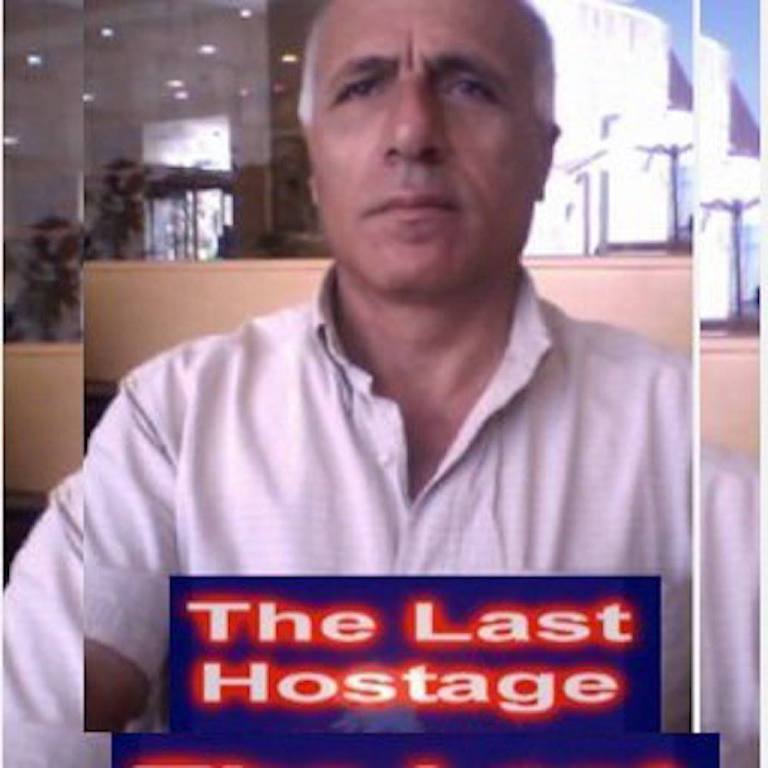
Vanunu began to become critical of government policy, opposing the 1982 Lebanon war and campaigning for equal rights for Arab-Israelis.
In September 1986, Vanunu handed over these photographs and shared his knowledge of the Israel nuclear programme with the British newspaper The Sunday Times.
Daniel Ellsberg, the Pentagon Papers whistleblower, called Vanunu “the preeminent hero of the nuclear era”
September 29, 2026, by Xanthe Hall, https://peaceandhealthblog.com/2026/09/29/40-years-later-the-abduction-of-mordechai-vanunu/
Few whistleblowers have risked as much as Mordechai Vanunu did when he handed over covertly taken photographs of the Dimona nuclear facility in Israel to The Sunday Times in 1986. 40 years ago, on 30 September 1986, he was drugged and abducted by Mossad, taken back to Israel and sentenced to 18 years in prison, 11 of them in solitary confinement. Vanunu was released in 2004 but has not been allowed to leave the country or speak to a foreign person. For 40 years he has been punished for telling the world that Israel has nuclear weapons.
Mordechai Vanunu aka John Crossman is a former Israeli nuclear technician, born on 14 October 1952 in Marrakesh. Vanunu was the son of a Jewish-Moroccan grocer, who moved with his family to Israel in 1963. After serving with the Israeli army during the Yom Kippur war, he began studying physics in Tel Aviv but did not complete his studies.
In 1976 he began working at the highly secret Negev Nuclear Research Center in the Negev Desert, south of Dimona. He began to study economics at Ben-Gurion University in Beersheba in 1979, and in the early 1980s he travelled through Europe and North America, the latter of which was not allowed by the Nuclear Research Center as his employer.
At around this time Vanunu began to become critical of government policy, opposing the 1982 Lebanon war and campaigning for equal rights for Arab-Israelis. During 1984 he was questioned three times by the security office at Dimona, once after a trip to France. In early 1985 he was laid off from the Nuclear Research Center but got his job back with the help of the trade union.
After resuming work at Dimona, Vanunu covertly took photographs of the site before quitting his job on 27 October 1985. In September 1986, Vanunu handed over these photographs and shared his knowledge of the Israel nuclear programme with the British newspaper The Sunday Times.
Vanunu’s information led to the conclusion that Israel, among other things, was producing tritium, enriching uranium and processing plutonium, enough for up to 150 nuclear weapons. Although the information was not new to informed circles in the UK and US, it was the first time that the extent of the Dimona secret nuclear weapons programme became known to the public. There was deep concern about the fact that Israel, not a member of the Non-Proliferation Treaty, was in possession of nuclear weapons.
Two leading nuclear experts — Frank Barnaby and Theodore Taylor — needed weeks to verify the information. But before the information could be published, Mordechai Vanunu was drugged and abducted by Mossad agents while he was in Rome. He had been lured there by a Mossad ‘honeytrap’ operation, using a woman calling herself ‘Cindy’ who was posing as a tourist from the USA. From there he was taken to Israel. While he was held on a cargo ship travelling to Israel, The Sunday Times published the information he had given them, on 5 October 1986. Two days later, Vanunu was in Gedera prison being interrogated. A month later, after first denying it to the British authorities, Israel confirmed they had him in detention.
Vanunu was released on 21 April 2004 but was prohibited from leaving Israel, and of speaking to foreigners without permission. He was not allowed to come within 500 metres of an airport or border crossing, or 90 metres from a foreign embassy. His phone and internet continue to be monitored.
He returned to prison for three months in 2010 after he was convicted in 2007 of having contact with foreigners and violating the terms of his release.
An application for asylum to Norway was turned down, as were applications to Sweden and Ireland, because applications cannot be considered from outside of the asylum country. Repeated calls by supportive organisations for him to be allowed to leave Israel have been rejected by Israel, including by the Supreme Court. On 19 May 2015 Vanunu married Norwegian professor Kristin Joachimsen in Jerusalem and in August 2015 applied for family reunification to Norway via the embassy in Tel Aviv. The Israel High Court denied his application to have the restrictions on his movements lifted. He appealed to the Supreme Court. On 3 December 2019, the appeal was denied. The court cited as justification “a concern about the probability of closeness to the certainty that if the restrictions imposed on Vanunu are removed, he will act to publish this information”. The information that Vanunu had was, by then, more than 30 years out of date.
On the first day of every month, Vanunu posted on Twitter:
“One more year without freedom since 1986. Now I am waiting for my freedom, freedom to leave Israel. I will continue to wait until my freedom comes. Born to be free. See you in freedom.”
In July 2024 he posted that all restrictions had been renewed for another year and he would only write his next post when free. The account no longer exists.
Daniel Ellsberg, the Pentagon Papers whistleblower, called Vanunu “the preeminent hero of the nuclear era”. Now himself a world-famous whistleblower, Mordechai Vanunu has won several awards, including the Right Livelihood Award in 1987 and the Nuclear Free Future Award in 2002 in the category of “Resistance”. He was nominated for the Nobel Peace Prize in 2009 but removed from the nominations list on his own request, as Shimon Peres was also listed that year.
Sources and further reading………………………………………………………………………………………………………….
Israeli opposition leaders sign pact to replace Netanyahu

Opposition leaders pledge cooperation despite ideological differences ahead of the vote.
Sakina Fatima Follow on Twitter| 27th September 2026 , https://www.siasat.com/israeli-opposition-leaders-sign-pact-to-replace-netanyahu-3549129/
Yair Lapid, Gadi Eisenkot, Naftali Bennett, Avigdor Lieberman and Yair Golan signed the principles document at Lapid’s home in Tel Aviv on Saturday, September 26
The leaders acknowledged their ideological differences but agreed that forming a new government focused on “repair and rebuilding” was their shared objective.
Under the agreement, none of the leaders, or anyone acting on their behalf, will attack another party in the bloc or its leader until a new government is formed.
They also pledged to cooperate immediately after the election and work to increase voter turnout across different sections of the electorate.
Opposition bloc sets up three joint working groups
The pact requires three joint working groups to be established within 48 hours.
The first will handle voter mobilisation, election-day preparations and measures to safeguard the integrity of the vote.
The second will formulate the basic guidelines for a potential new government. Its agenda includes equal sharing of service obligations, a state commission of inquiry into the October 7, 2023 events, term limits for the prime minister, a constitution and a plan for the government’s first 100 days.
The third group will coordinate communications between the parties and work to counter fake news and smear campaigns.
Prime minister candidate decision deferred
The parties have not selected a joint candidate for prime minister. Disagreements over the issue have emerged particularly among Eisenkot, Bennett and Lieberman.
The agreement instead focuses on cooperation before and immediately after the election, leaving the leadership question to be addressed after the vote.
Benny Gantz’s Blue and White party was not part of the meeting.
Netanyahu responds
Netanyahu criticised the agreement in a post on X, claiming that Eisenkot would seek to form a government with the other opposition leaders and Arab parties.
He also shared an AI-altered version of the leaders’ group photograph that added United Arab List leader Mansour Abbas and Hadash-Ta’al leader Ahmad Tibi, neither of whom attended the meeting.
Israel is scheduled to elect all 120 members of the Knesset on October 27. The results will determine the composition of the next parliament and the parties involved in forming the government.
Israel Damaged 82 Percent of Gaza’s Buildings. Collapses Are Burying Us Alive.

Residents of the recently collapsed six-story high rise knew they were in danger but could find nowhere else to sleep.
By Shahad Ali , Truthout, September 23, 2026
Khaled Al Soutari, who was inside the six-story residential building in western Gaza City that collapsed on September 16, is now sleeping on the street without a tent, devastated by the loss of 21 of his neighbors.
“They were more than just neighbors to me,” Al Soutari told me when I interviewed him two days after the building collapse, sitting on the street with a group of his neighbors next to the collapsed building. “They were my best friends. We shared food and laughter and had endless talks despite the harsh reality we were living through. It is hard for me to imagine life without them.”
Al Soutari told me that for more than six months, the building, which had previously been damaged by Israeli bombardment, had been weakening further because of wastewater seepage. The walls had also developed deeper cracks, and pieces of concrete had begun to fall. Then, one night, the building itself suddenly crumbled.
“We were sleeping when suddenly the ground started to shake as if an earthquake had hit. I started screaming at my wife and children to jump through a hole in the wall, but we could not because the building collapsed,” Al Soutari told me. “I found myself under the rubble within seconds, surrounded by the screams of my family and others shouting, ‘We are here. We do not want to die. Help us.’ I could not breathe or shout. For a moment, I thought this was the end.”
“Luckily, one of my neighbors noticed me and managed to free me from the concrete pressing on my back,” he continued. “However, my wife and my three children spent hours under the rubble before the Civil Defense intervened and managed to rescue them.”
Al Soutari added that his daughter, Sham, suffered a leg injury in the collapse and had to undergo surgery to have a plate inserted.
The municipality had inspected the building a few days before it collapsed and asked residents to leave, Al Soutari said, explaining that his family tried to do so, but they could not find any other place to go.
“I always talked with my neighbors who lived in the building about my fear that it could collapse on us at any moment, but we were helpless. We could do nothing but stay,” he told me………………………………………………………….
As Winter Approaches, More Building Collapses Are Imminent
The collapse of the Al-Sadah building was not an isolated case. Mahmoud Bassal, spokesperson for Gaza’s Civil Defense, said in a statement after the collapse of the Al-Sadah building that around 2,000 other buildings across the Gaza Strip are also at risk of complete collapse………………………………………………………………………. https://truthout.org/articles/israel-damaged-82-percent-of-gazas-buildings-collapses-are-burying-us-alive/?utm_source=Truthout&utm_campaign=1319f0e1c1-EMAIL_CAMPAIGN_2026_09_23_08_15_COPY_01&utm_medium=email&utm_term=0_bbb541a1db-66fc42c01f-650192793
Walt Zlotow – How does US fund Israeli genocide? Let us count the billions
Walt Zlotow West Suburban Peace Coalition Glen Ellyn IL, 21 Sept 26, https://theaimn.net/how-does-us-fund-israeli-genocide-let-us-count-the-billions/
President Biden hopped on the Israeli genocide campaign to destroy Gaza and its Palestinian population the day after the October 7, 2023, Hamas attack on Isreal.
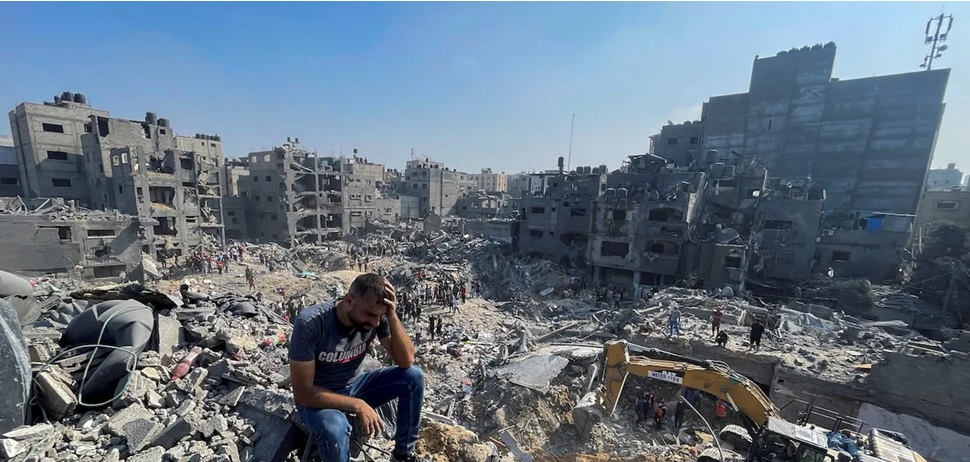
Approaching three years this October 8, Gaza’s 141 square miles are a pile of rubble covering up tens of thousands of dead Palestinians among the hundred thousand plus dead. The remaining 2.2 million survive agony in an ever tightening area as Israeli forces occupy over half of Gaza and shoot any Palestinian who get close to the Israeli zone.
None of this genocidal atrocity would have been possible without President Bidenn gifting Israel with over $20 billion in weapons to inflict the most grotesque genocide this century.
Even after the January 2025 ceasefire which released the remaining Israeli hostages, Israel continues to bomb and kill Palestinians daily.
Now President Trump, even tho running out of weapons to fight his lost war on Iran, plans to gift Israel with another $2.8 billion in 2,000 lbs. bombs to continue the slaughter of Palestinians in Gaza and Lebanese in Lebanon.
“The Trump administration’s proposed sale of 40,000 2,000-pound bombs, some of the most destructive munitions in our arsenal, raises grave, unresolved concerns about how these munitions could be used in densely populated areas of Gaza and Lebanon. The Trump administration has not provided sufficient assurances that these weapons will be used by the Netanyahu government in accordance with US law and with appropriate protections for civilians. I therefore will not clear this sale at this time.”
Rep. Meeks knows full well that the proposed $2.8 billion, just like the previous $20 plus billion from Biden, will be used to further obliterate Gaza and Southern Lebanon in furtherance of expanding Greater Israel.
Why Trump continues the weapons flow to Netanyahu after he suckered Trump into launching his disastrous attack on Iran will forever remain a mystery.
The US economy is facing disaster, possibly even collapse over Trump’s lost war against Iran. We’re not bombing Iran anymore because we’ve largely run out of weapons. Our debt has raced past $40 trillion. Inflation is out of control. Yet, Trump has enough loyalty to his masters in Israel to find $2.8 billion in genocide weapons for Israel to complete the project his predecessor enabled 3 years ago.
That is not ‘America First’. It is ‘Genocide First…America Last.’
Israeli officials fume over award-winning death-by-AI documentary
Mon, 14 Sep 2026 , https://www.sott.net/article/508401-Israeli-officials-fume-over-award-winning-death-by-AI-documentary
Israeli Culture Minister Miki ZoharCulture Minister Miki Zohar has called for NAZA’s directors to be stripped of citizenship while accusing them of “betrayal against the state”
Several senior Israeli politicians have lashed out at the filmmakers behind a documentary accusing the IDF of using AI-assisted systems in the mass killing of Palestinians in Gaza. Zohar went so far as to accuse the two Oscar-winning directors of treachery and threatened to have them stripped of Israeli citizenship.
The controversy erupted after the 80-minute-long film NAZA – the name alludes to an Israeli military shorthand for expected “collateral casualties” – received a 25-minute standing ovation at the Venice Film Festival last week and won the Special Jury Prize.
The film, directed by Yuval Abraham and Rachel Szor, is based on the accounts of anonymous Israeli military and intelligence insiders alleging that the IDF heavily relied on AI systems to identify people and homes for attack on a massive scale, often disregarding collateral civilian casualties. Some insiders described the process as “insanely fun” and akin to a “videogame.”
The IDF has categorically rejected the film’s portrayal, saying the selection and approval of strikes are carried out “by human personnel only.”
Comment: Israel’s AI systems tech did exactly that…movement…noise...bombed.
The film also caused a stir among senior Israeli officials. Zohar called the accolade “shocking,” accusing the directors of seeking to “harm their homeland just to get applause from anti-Semites around the world.”
He wrote on X on Sunday:
“[This] is inconceivable and constitutes a betrayal of the state… As Minister of Culture, I will act immediately to revoke the Israeli citizenship of these despicable creators.”
Former Israeli Prime Minister Naftali Bennett had attacked the documentary even before the award, calling it a “horrific blood libel” and saying it was particularly infuriating that the accusations had come from Israeli filmmakers. He also acknowledged civilian casualties in Gaza, but argued that “there is no magic button that can destroy Hamas, or any terrorist organization hiding behind” ordinary people.
National Security Minister Itamar Ben-Gvir – widely regarded as one of the most hardline figures of Israel’s right-wing camp – called the directors a “disgrace,” suggesting Hamas would welcome them, while former Defense Minister Avigdor Lieberman branded the pair “enemies of Israel.”
Neither Israeli Prime Minister Benjamin Netanyahu nor his office commented on the matter.
Despite Zohar’s threat, there is no precedent of Israeli filmmakers being stripped of citizenship for producing a critical documentary, while the minister himself does not have a mandate to take such a measure.
Israeli law allows a court to strip citizenship for a “breach of loyalty,” including terrorism, treason, and serious espionage, but in the past the power was treated extremely cautiously. In 2022, as Israel’s Supreme Court considered two cases involving citizens convicted of serious terrorist attacks, it ruled against the revocation, citing flaws in the proceedings and stressing that the measure could only be applied in exceptional circumstances.
However, Israeli filmmakers have faced other legal consequences in the past over similar work. In 2022, the Supreme Court upheld a ban on screenings of the documentary Jenin, Jenin – a film by Palestinian-Israeli director Mohammad Bakri which portrayed alleged IDF abuses. The court ordered Bakri to pay around $57,000 in damages after he was sued for defamation.
In 2012, Haaretz journalist Uri Blau was sentenced to four months of community service for unauthorized possession of classified IDF documents used in reporting on targeted killings, even though his articles had passed military censorship. Meanwhile, his military source was sentenced to several years in prison.
Trump Plans New Sale of 2,000-Pound Bombs to Israel, Which Keeps Using Them to Massacre Gazans
SCHEERPOST, September 16, 2026, Brett Wilkins Common Dreams
The Trump administration is preparing to send Israel tens of thousands of 2,000-pound bombs, The Washington Post reported Tuesday—a move that would rank as the largest single sale of the highly destructive munitions, which the Israel Defense Forces have used in some of the deadliest US-backed airstrikes on Gaza and Lebanon.
According to the Post, the proposed $2.8 billion package includes 20,000 MK-84 bombs and 20,000 BLU-117 bombs, as well as 20,000 I-2000 penetrator warheads. The munitions would be purchased with US taxpayer funds through the Foreign Military Financing program. The proposal has been informally presented to congressional committees that review major arms transfers.
The MK-84 is among the largest conventional bombs in the US arsenal. The Post reported that its blast can propel metal fragments thousands of feet, penetrate thick concrete and metal, and create large craters.
“If Hezbollah or whoever is in a building, an MK-84 will bring down the whole building,” Trevor Ball, a former US Army explosive ordnance disposal technician, told the Post.
Following the Hamas-led attack of October 7, 2023, the Israel Defense Forces (IDF) loosened rules of engagement to effectively allow the killing of an unlimited number of civilians when targeting even a single low-ranking Hamas member in an airstrike.
Combined with the utilization of cutting-edge artificial intelligence technology to select targets at a far faster rate than humans alone could, IDF use of 1,000- and 2,000-pound bombs has contributed heavily to the staggering casualty toll in Gaza, where officials say that more than 250,000 Palestinians have been killed or wounded since October 2023.
That month, Israeli forces struck Gaza’s Jabalia refugee camp with such munitions, killing at least 126 Palestinians in a bid to assassinate a single Hamas commander.
Michael Lynk, who served as the United Nations special rapporteur on human rights in the Palestinian territories from 2016 to 2022, said early in the war that “the scale of Palestinian civilian deaths in such a short period of time appears to be the highest such civilian casualty rate in the 21st century.”………………………………………………………………………………………………………….https://scheerpost.com/2026/09/16/trump-plans-new-sale-of-2000-pound-bombs-to-israel-which-keeps-using-them-to-massacre-gazans/
Hubris in Action: Netanyahu and the Warnings of October 7

As with previous disasters in history, he may well have been found out.
15 September 2026 Dr Binoy Kampmark, https://theaimn.net/hubris-in-action-netanyahu-and-the-warnings-of-october-7/
Whatever awaits him this coming November, few politicians could claim to have the endurance, bloody mindedness and sense of granite staying power than Israel’s Benjamin Netanyahu. With some prowess, he has wooed, deceived, and lied his way to power, and, for the most part, stayed the course for the best part of a generation. He bloomed in arid soil when sceptics thought him dead. He offers lessons of Machiavellian proportions almost unsurpassed.
What, then, of being found out for falling short ahead of the October 27 elections? Errors in the making, the sundering blunder to soil the image of strength? History offers the guidance of tragic and foolish mistakes. The British failure to anticipate their routing in Singapore by the Imperial Japanese Army in 1942 is always a topic of interest (they wagered on a sea attack, not a jungle incursion); even, dare one say, the failure of the United States to anticipate an attack on Pearl Harbour in December 1941 despite doing much to aggravate a power that had done so much to put the Western powers on edge. Did, in other words, the individual in a position of power and influence know and, for whatever said reasons, not take the threat seriously? Self-confidence, or, as the ancient Greeks might put it, hubris, bulks complacency and places it on a pedestal. This is the case being made about Netanyahu. And more besides.
The latest bruising claim by Haaretz, based on research for a book Hostages: 843 Days of Abandonment by Shlomi Eldar and Ruth Yuval, involving “dozens of sources in Israel and worldwide, including very senior officials, as well as sound recordings, internal documents and recordings”, is chastening.
Netanyahu was, according to the authors, told, in unequivocal terms, that an attack by Hamas was being planned. According to the report, a 45-minute conversation took place between UAE President Sheikh Mohamed bin Zayed (MBZ) and Netanyahu, in which the Emirati leader warned of the intentions of the late Hamas leader Yahya Sinwar that could lead to an exaction of bloodiness from Israel and a destabilising of the Abraham Accords. This came after the stymieing of negotiations between Hamas and Netanyahu’s office that had begun in 2023 in pursuit of a temporary truce, known as a hudna, that would pave the way for a more durable arrangement regarding the Gaza Strip. Ghazi Hamad took the lead for Hamas, as he did in 2014 when talks are also said to have taken place between Netanyahu and Hamas, unbeknown to security officials.
The paper notes the views of Israeli President Isaac Herzog on MBZ on the escalation taking place in the West Bank and Gaza in September 2023. Bin Zayed is said to have, according to Herzog, spoken to him “about this often in the months leading to the war.” He “constantly conveyed messages that the situation needed to be defused. “
He even sent a special envoy to Israel who met with the prime minister. The emir seemed to sense that the area was on the verge of explosion.”
To dilute the scorching acid in the mix, a senior Fatah official, cast in the role of “Coal Eyes” to both Hamas and the internal intelligence agency Shin Bet, was brought in. Talks proceeded. It seemed that some semblance of an agreement was made. “The atmosphere was so optimistic that Fatah’s Coal Eyes repeatedly reported that an agreement with Israel was closer than ever and that both sides viewed the proposals as ‘feasible options’.”
Netanyahu, however, baulked. “Perhaps,” speculate the logically minded scribblers, “he did so out of fear of reaching an agreement with Hamas, or perhaps out of fear from the reaction of his extremist partners in his new government.” His right-wing coalition partners, cut and dried fanatics as they are, were not likely to have approved. Sinwar remained sly, fielding his options: he was still conducting negotiations with Hezbollah and Iran in the context of an attack on Israel. “He simply vanished from our radar, evaporated,” Haaretz records a senior Shin Bet official as saying. The journalists float the suggestion that Iran, Hamas and Hezbollah, bound in that axis of growling resistance, thought Israel vulnerable at that particular point n time. “In September 2023, Coal Eyes has a meeting with Sinwar: ‘Tell the Israelis that if they don’t make progress, I’m preparing a huge surprise for them.’ They could expect a ‘zilzal’ (earthquake).”
Events transpire with dull inevitability, but Coal Eyes eventually readies himself to tell Shin Bet about the ominous developments. Its head, Ronen Bet, seeks Netanyahu for discussions. Briefings take place on the “earthquake” threat. The defence establishment remained largely phlegmatic, almost cocky. The threat by Sinwar was, according to an Israeli intelligence official, something of a prodding tease, a scouting exercise: “due to being tired about Israel’s delays, placing pressure on seeking an arrangement and not so eager to start a war. Or, as we prefer to think, it was part of his ‘Great Deception’ plan, and he wanted to test the IDF’s readiness.”
To cloud matters further for Netanyahu, the Egyptian intelligence chief Gen. Abbas Kamel is also said to have warned the PM’s office that Hamas was readying to launch “something unusual, a terrifying operation.” The CIA-director William Burns is also said to have been told by bin Zayed about “something there […] about to explode.” The jam spread of imminent attack, in other words, becomes harder to avoid. Following the October 7, 2023 attack, Netanyahu, according to a report by Smadar Perry writing for Ynet, is said to have told Kamel that, “In Gaza, we are in the picture, we are in control. Our problem is with the West Bank, and that’s where we are diverting our forces.”
The PM’s office poured corrosive scorn on the Haaretz report, describing it as “a complete lie. Prime Minister Netanyahu did not speak with the president of the United Arab Emirates during the period in question and did not receive a warning from him.” The opposition leaders thought far more of the revelations, eager to pluck the fruits of electoral opportunity. “Netanyahu bears personal and direct responsibility for the failure that led to the deaths of thousands of Israelis on his watch,” former Prime Minister Naftali Bennett stated. “His ignoring of the warnings is criminal negligence, and therefore he is doing everything to prevent the establishment of a state commission of inquiry that will expose the truth.”
In a joint statement, opposition leaders Bennett, Gadi Eisenkot, Yair Golan and Avigdor Lieberman demanded that, “The Israeli public is entitled to know: What did Netanyahu know, and when did he know, why he didn’t update the security establishment, and why he didn’t act to protect Israeli civilians?” Reasons await from the wily Netanyahu, a man so confident he thought he could outwit oppressive precedent and damn Clio. As with previous disasters in history, he may well have been found out.
Ten days before October 7, MBZ had informed Netanyahu of a major Hamas offensive.
Voltaire Network|September 11, 2026, https://www.voltairenet.org/article224921.html
According to חטופים – 843 ימים של הפקרה (Abducted: 843 Days of Abandonment), a
new book by Shlomi Eldar and Ruth Yuval (Kinneret Zmora Publishing), the President of the United Arab Emirates, Mohammed bin Zayed Al Nahyan (MBZ), telephoned Israeli Prime Minister Benjamin Netanyahu a few days before the October 7 attack.
He informed him that Yahya Sinwar, the Hamas military chief, was preparing a major offensive against Israel. The call lasted 45 minutes. The Prime Minister replied that Israel was already prepared and that the attack would come from the West Bank, not Gaza.
According to the authors, MBZ’s call came after Netanyahu broke off negotiations between Israel and Hamas. The call reflected a direct threat from Yahya Sinwar, who was furious about the breakdown of talks. Sinwar spoke of ” Zinzal ” (earthquake), a word Arabs use to refer to wars and revolutions. Deeply concerned by Netanyahu’s dismissive attitude, MBZ reported the situation to William J. Burns, the CIA director . Burns then sent a confirming report to the Prime Minister.
Furthermore, the same book claims that Sheikh Mohammed bin Abdulrahman al-Thani, Prime Minister of Qatar, telephoned David Barnea, Director of Mossad, on October 7, the day of Operation Al-Aqsa Flood. He told Barnea that he had forced Hamas to release all its hostages in exchange for Israel’s commitment not to launch any further incursions into Gaza. However, Barnea replied: “If they want to release the civilians, let them release them. We are not ready to talk with Hamas.”
Furthermore, Yahya Sinwar had his right-hand man, in his presence, phone an associate of Mohammed Dahlan on October 8th. Dahlan pledged to release all civilian hostages, whether minors or over 50 years old, without any conditions. The offer was relayed to the Shin Bet, which responded: “Netanyahu doesn’t want to talk about anything anymore. He only wants war and the elimination of Hamas.”
Former Prime Minister Naftali Bennett commented on X: “This morning’s [Haaretz] article stating that Netanyahu was warned ten days before the October 7 massacre about Sinwar’s intentions is true.”
Netanyahu bears direct and personal responsibility for the failure that led to the deaths of thousands of Israelis under his watch.
His disregard for the warnings constitutes criminal negligence, and therefore he is doing everything he can to prevent the creation of a state commission of inquiry that will reveal the truth […]
If we do not replace this government, we will never know the truth, which will only be revealed by a state commission of inquiry, because it is preventing its establishment for fear that we will discover the terrible truth.
• General Yair Golan, former deputy chief of staff and chairman of the Democrats, had provided aid to victims on the day of the attack. He commented on X: “The ‘They didn’t wake me up’ excuse is over; he knew it. He was warned […]
The investigation reveals that Netanyahu received an explicit warning from the Emir of the [United Arab] Emirates and deliberately concealed it from the army chiefs and the Shin Bet. This shatters all the lies he told us.
Now it’s clear: Netanyahu is unfit and illegitimate. He belongs in prison for his crimes against the State of Israel.
We need to replace it now!
Pack your suitcases’: Israel’s far right unveils its blueprint for emptying Gaza

Ben-Gvir’s party is demanding a new ministry dedicated to “voluntary migration.” Those living amid the rubble say they will not leave.
8 Sep, 2026 , By Elizabeth Blade, RT Middle East correspondent, https://www.rt.com/news/645274-pack-your-suitcases-israels-gaza/
Israel’s far-right national security minister has put a seven-year timetable on emptying Gaza of most of its people, and dressed it up as choice. Gazans RT spoke to call it what international law already names it: forced displacement.
Last week, Jewish Power chairman and National Security Minister Itamar Ben-Gvir unveiled ‘Disengagement 710’, a policy blueprint for what he calls the voluntary migration of Gaza residents to countries willing to take them. Destinations floated by his party include Türkiye, unspecified Arab states, Ethiopia, and Congo.
The numbers are not modest. The plan foresees the departure of about 250,000 people in the first year, 1.11 million within three years, and some 1.86 million within seven, encompassing the bulk of the Strip’s population.
To run it, Jewish Power wants the next government to create a dedicated ministry for “voluntary migration,” complete with a minister, a director-general, its own budget, an international negotiating team, and an implementation apparatus.
Ben-Gvir vows to make the ministry a coalition demand after Israel’s October 27 election. “Instead of illusions of peace now, we need actions of emigration now,” he said. “Instead of them digging tunnels, it’s time to pack suitcases.”
This idea is not new for the Jewish state.
A Zionist through-line
In 1937, David Ben-Gurion, then a leading Zionist figure, promoted the transfer of Palestinians and argued they should be moved to Transjordan. In the 1980s, the same ‘voluntary’ formula was championed by far-right politicians Rehavam Ze’evi – nicknamed ‘Gandhi’– and Meir Kahane. Their schemes never left the drawing board.
Ben-Gvir now presents his version as newly realistic, citing earlier public backing from US President Donald Trump. Trump floated mass relocation from Gaza in early 2025, then walked the idea back under Arab and international pressure.
His later 20-point framework stated that no one would be forced to leave and that residents should be encouraged to stay. Ben-Gvir treats the first Trump remark as political cover and the second as an inconvenience.
Gazans RT interviewed rejected the initiative as illegal under international law and a crime against humanity.
”People in Gaza and across Palestine know Ben-Gvir’s plans go far beyond our existence in the Strip,” said Abdallah Ali, a resident of central Gaza.
Ali said that is why Gazans, himself included, intend to stay put.
Rami Al Meghari, from Al-Maghazi camp in central Gaza, reached the same conclusion for a different reason: memory of exile.
“Many Palestinians found life in other countries, especially Arab states, awkward and humiliating,” he said. “They will not leave Gaza for a destination that cannot guarantee dignity, whether an Arab capital or some African country Israel has long suggested, like Somalia.”
Polls, rubble, and the meaning of ‘voluntary’
A PCPSR poll last year found 56% of Gazans interviewed unwilling to emigrate. A substantial minority, some 43%, said they would.
Ali and Al Meghari were not surprised. Despair is real, and the findings of various UN reports show it clearly.
As of June 16, 2026, satellite analysis by the UN Satellite Centre found 201,290 structures damaged, an estimated 82% of all buildings in Gaza. Of those, 134,422 were assessed as destroyed, 13,848 severely damaged, 28,096 moderately damaged and 24,924 possibly damaged.
Most of Gaza’s 2.1 million people remain displaced. The Shelter Cluster, surveying in June 2026, said 1.98 million people, 94% of the population, need shelter and household items.
Food and water continue to be an issue. Between mid-April and June 30, 2026, more than 1.2 million people (59%) were still in dire need of assistance.
Assessments in 2026 found 43% of households below the 15-liter humanitarian minimum per person per day, and 62% below the 6-liter drinking-water floor.
But Ali and Al Meghari insist the pull of the land is much stronger.
“Whatever the suffering, even with around 97 percent of cropland destroyed and most of the built environment gone, people are putting up tents and staying in displacement camps. They are not packing to leave,” Ali said.
Al Meghari still hopes the political weather will change. “Life can move forward in Gaza if there is serious international and Arab pressure to implement the second phase of the ceasefire. The United States has a particular responsibility to make that happen. Russia also needs to play a pivotal role to bring the suffering of the Palestinians to an end.”
Reconstruction as leverage
There is little movement on reconstruction. Israel is blocking construction materials, demanding that Hamas disarm and demilitarize first. The Board of Peace has pushed for weapons to be collected and placed under international supervision, a formula Israel rejects.
Ali sees the stalled effort as a policy, not an accident. “This is taking a very long time. I do not think Israel will accept Gaza’s reconstruction anytime soon. It will keep complicating reality until leaving becomes the only realistic option.”
Ahmed Al-Masri, a lawyer in Gaza, argues Israel has played this hand before and lost. “We lived this in 2014 [Operation Protective Edge – ed.]. Israel said Gaza should not be rebuilt. Then, under international pressure and with UN supervision, it was forced to comply.”
And he also pins some hope on Israel’s October 27 parliamentary vote. “If the far-right government is removed, there might be a beginning, a glimmer on the horizon, and a better political reality for people here, if Palestinians also insist on rebuilding political, social and economic life.”
That is the wager Gaza is making: that endurance outlasts a plan that needs other countries to open their doors, Washington to revive an idea it already shelved, and two million people to accept that ‘voluntary’ means leaving home because the alternative has been made unlivable.
Ben-Gvir is betting the opposite – that the wreckage, a ministry, and a slogan about suitcases can finish what earlier transfer schemes could not. Gazans say they have heard that speech before.
The Dancing Israelis: Newly Released FBI Docs Shed Light on Apparent Mossad Foreknowledge of 9/11 Attacks
Signs of the Times, Whitney Webb, Mint Press News, Sun, 19 May 2019
Four of the Israeli nationals arrested for “puzzling behavior” during the September 11 attacks are seen casually posing together in front of the Manhattan skyline while the September 11 attacks were in progress
New information released by the FBI has brought fresh scrutiny to the possibility that the “Dancing Israelis,” at least two of whom were known Mossad operatives, had prior knowledge of the attacks on the World Trade Center.
For nearly two decades, one of the most overlooked and little known arrests made in the aftermath of the September 11 attacks was that of the so-called “High Fivers,” or the “Dancing Israelis.” However, new information released by the FBI on May 7thhas brought fresh scrutiny to the possibility that the “Dancing Israelis,” at least two of whom were known Mossad operatives, had prior knowledge of the attacks on the World Trade Center.
Shortly after 8:46 a.m. on the day of the attacks, just minutes after the first plane struck the World Trade Center, five men – later revealed to be Israeli nationals – had positioned themselves in the parking lot of the Doric Apartment Complex in Union City, New Jersey, where they were seen taking pictures and filming the attacks while also celebrating the destruction of the towers and “high fiving” each other. At least one eyewitness interviewed by the FBI had seen the Israelis’ van in the parking lot as early as 8:00 a.m. that day, more than 40 minutes prior to the attack. The story receivedcoverage in U.S. mainstream media at the time but has since been largely forgotten.
The men – Sivan Kurzberg, Paul Kurzberg, Oded Ellner, Yaron Shimuel and Omar Marmari – were subsequently apprehended by law enforcement and claimed to be Israeli tourists on a “working holiday” in the United States where they were employed by a moving company, Urban Moving Systems. Upon his arrest, Sivan Kurzberg told the arresting officer, “We are Israeli; we are not your problem. Your problems are our problems, The Palestinians are the problem.”
For years, the official story has been that these individuals, while they had engaged in “immature” behavior by celebrating and being “visibly happy” in their documenting of the attacks, had no prior knowledge of the attack. However, newly released FBI copies of the photos taken by the five Israelis strongly suggest that these individuals had prior knowledge of the attacks on the World Trade Center. The copies of the photos were obtained via a FOIA request made by a private citizen.
According to a former high-ranking American intelligence official who spoke to the Jewish daily Forward in 2002, the FBI concluded in its investigation that the five Israelis arrested “were conducting a Mossad surveillance mission and that their employer, Urban Moving Systems of Weehawken, NJ, served as a front.” At least two of the men arrested were determined to have direct links to the Mossad after their names appeared in a CIA-FBI database of foreign intelligence operatives. According to one of their lawyers, one of the men, Paul Kurzberg, had previously worked for the Mossad in another country prior to arriving in the United States. Another of those arrested, Oded Ellner, subsequently stated on Israeli TV that the five Israelis had been in New York at the time “to document the event,” meaning the attack on the World Trade Center.
The FOIA release of the photos is notable because responses to prior FOIA requests to the Department of Justice, which oversees the FBI, had previously claimed that all of the photos taken by the Israeli nationals had been destroyed in January 2014. The photos themselves are heavily redacted, making it impossible to see the Israelis’ facial expressions. However, previously declassified yet heavily redacted FBI reports state that the Israelis are “visibly happy” in nearly every photo, even when the burning towers are in the background. The photos released are also not original copies and instead appear to be photocopies of photocopies of the original pictures. In addition, of the original 76 pictures developed by authorities from the camera in the Israelis’ possession, only 14 were released.
FOIA Release of 9/11 Dancin… by on Scribd
However, three of these photos – despite the heavy redaction and poor quality – are damning. Since 2001, even though the photos were never released until now, it had been known that one of the Israelis arrested – Sivan Kurzberg – was seen in a photo “holding a lighted lighter in the foreground, with the smoldering wreckage [of the twin towers] in the background,” according to Steven Noah Gordon, then-lawyer for the five Israelis, as cited in a New York Times report from November 2001…………………………………………………………………………………………………………………………………………………………………………………………………………………………………………….. https://www.sott.net/article/413373-The-Dancing-Israelis-Newly-Released-FBI-Docs-Shed-Light-on-Apparent-Mossad-Foreknowledge-of-9-11-Attacks
Gazans Feel Despair as Israeli Officials Cement Plans for Permanent Occupation

September 12, 2026, By Shahad Ali, https://scheerpost.com/2026/09/12/gazans-feel-despair-as-israeli-officials-cement-plans-for-permanent-occupation/
Israeli Defense Minister Israel Katz has described a plan to remove Palestinians from the Gaza Strip to other countries.
Nearly a year after Donald Trump announced the creation of the “Board of Peace,” which was ostensibly charged with ending Israel’s genocidal assault on Gaza and overseeing reconstruction, one of the figures most centrally involved in the body has warned that a complete collapse of the so-called ceasefire in Gaza could lead to a “point of no return.”
Nickolay Mladenov, the Bulgarian diplomat who serves as Gaza’s High Representative on the Board of Peace, made the comments during a UN Security Council session on Wednesday, August 26. Casualty numbers in Gaza have dropped, he noted, but have not ceased, offering a pointed critique of Israel’s continued bombardment despite the supposed cessation of hostilities.
“If this ceasefire collapses and the strip spirals into another full escalation, there will be no road map to return to, there will be no administration to deploy, and there will be nothing left on the ground to rebuild,” he said.
In his remarks, Mladenov also noted that Hamas and armed factions in the Gaza Strip had agreed to disarm and transfer civilian and security responsibilities to a transitional authority recognized by the United Nations. This was the first time Hamas and the armed factions within Gaza had agreed to such a step, Mladenov announced, which is part of a plan for a new phase of the ceasefire in Gaza. The road map also includes the dismantling of all weapons in the Strip and its demilitarization, subject to verification and monitoring; the complete transfer of civilian and security governance in Gaza; the reconstruction of destroyed areas so people can return to normal life; and a gradual Israeli withdrawal from Gaza tied to progress in disarmament.
The full implementation of this 15-point comprehensive plan, which Mladenov had outlined to the council earlier this year, would provide an opportunity to “dramatically improve the lives of Palestinians in Gaza in a sustainable way, provide durable security for Israelis, and move from a conflict that has destabilized the region toward an environment that provides peace, prosperity and economic opportunities for the entire Middle East.”
These comments spread rapidly across Gaza. In displacement camps, Gazans gathered to discuss the details of the road map and the extent to which it might improve the horrific conditions they endure in overcrowded and flimsy tents, deprived of even the basic necessities of life. More than 2 million Palestinians concentrated in only around 30 percent of the Gaza Strip have been left so desperate that we scan news headlines for any indication of a possible end to our suffering. For many, the renewed interest in the Board of Peace plan became a lifeline they could cling to — hoping for a chance to live in peace, rebuild their destroyed lives, and return to areas now controlled by Israel beyond the so-called “Yellow Line.”
However, Mladenov’s announcement has been met with statements from Israeli officials that contradict the Board of Peace’s vision for Gaza’s future and reflect their unwillingness to withdraw from areas under Israeli control.
Before Mladenov’s address, Israeli Prime Minister Benjamin Netanyahu had already said he would reject the plan, despite the road map’s connection to U.S. President Donald Trump. During a September 2 visit to Israeli forces in the Gaza Strip, Netanyahu also said he had no plans to withdraw from territory under Israeli control. “We are not withdrawing. We are staying along this line, and we control more than 60 percent of the Strip, and there is more still to come,” he said, stressing that military operations against those he described as threatening Israel’s security would continue.
Israeli Defense Minister Israel Katz also confirmed in a statement on September 1 that Israeli troops would remain inside the Gaza Strip even after Hamas is disarmed and Gaza is demilitarized. Moreover, at a September 2 conference hosted by the Israeli news outlet Yedioth Ahronoth, Katz described a plan to remove Palestinians from the Gaza Strip to other countries — which some Israeli officials falsely describe as voluntary migration rather than ethnic cleansing.
“There is no real solution for Gaza in the end without this migration. Hamas isn’t allowing them to leave, and there are no countries in the world taking them in,” he said. He also added that Israel was prepared to carry out the plan “by sea, by air, and by any means,” and suggested that Trump had only “frozen” the plan for ethnic cleansing due to the lack of countries willing to receive Palestinians from Gaza.
These statements have crushed the little glimmer of hope Gazans had clung to and deepened our collective fear that we will be forced to continue living amid rubble, tents, and an ever-expanding Israeli military occupation for years, with no end in sight — all while also facing the even greater threat of being displaced entirely from the Gaza Strip.
Diana Al Ajoz, 41, was displaced from her neighborhood in Al-Zaytoun, which is now under Israeli military control, and is being forced to live in a tent near Gaza City beach. She told me she felt optimistic when she first heard about the Board of Peace’s plan for Gaza, hoping that she would be able to return to a normal life in her beloved neighborhood where she was born and raised. However, when she heard about Israel’s intention not to withdraw from the so-called “Yellow Line,” which encompasses Al-Zaytoun, she felt even more desperate.
“The statements I heard about Hamas disarmament, Israeli withdrawal, reconstruction, and the return of life to Gaza gave me hope that we might finally live in lasting peace, away from war and suffering. But then, when I hear statements from Israeli officials saying the opposite — that they intend to keep their forces in Gaza, seize more land, and continue our displacement — it deeply devastated me.”
“After hearing the Israeli statements, I doubt that our living conditions will improve quickly. My biggest fear is that we will continue living in tents for the coming years while dreaming of living in a home that protects us from the cold of winter and the heat of summer,” Al Ajoz added.
“At the same time, I fear that we might continue to suffer the same hardships we face every day just to access the basic necessities of life, whether it is standing in a long line to use the bathroom or to get our share of food or water. I also fear continuing to live away from my beautiful neighborhood, Al-Zaytoun, and keep thinking about the day when I might be able to return to it.”
Alaa Zuatair, 39, lives in a tent in Khan Younis after Israeli forces destroyed her home in Jabalia and took control of her entire neighborhood within the so-called “Yellow Line.” She also told me that she had lost all hope in the plan proposed by the Board of Peace.
“Each time negotiations and talks about improving living conditions in Gaza and bringing an end to our suffering begin, Israel meets them with delays and rejections,” she said.
“I could talk to you endlessly about the harsh reality we are living through here. We have written, appealed, and pleaded with the world to put an end to our suffering, but nothing changes. We are living a life deprived of any stability or even a sense of safety. We have literally reached a point where we think about death every minute and go to sleep without knowing what might happen tomorrow.”
Zuatair also added that her current location offers her no real safety. The area in which she and her family have been displaced to is near the Yellow Line, and they hear gunfire from Israeli forces almost every day and remain at risk of further displacement at any moment.
“We always hear a new statement and a new plan about ending our suffering, while ultimately, we continue to live through the same harsh reality,” she said. “So, honestly, when you talk to me about a ‘Board of Peace,’ I ask: What peace are you talking about? How can there be peace while, at the same time, Israeli officials are talking about displacing Palestinians and seizing more land? How are we supposed to make sense of this equation?”
“I do not have any answers about what our future will look like,” Zuatair concluded. “The only thing we ask for is to live in peace. We want to wake up knowing that the day ahead will pass without fear, without bombardment, and without new displacement.”
Three Major Revelations About The Gaza Holocaust In The Israeli Press
Caitlin Johnstone, Sep 10, 2026, https://www.caitlinjohnst.one/p/three-major-revelations-about-the?utm_source=post-email-title&publication_id=82124&post_id=214991965&utm_campaign=email-post-title&isFreemail=true&r=1ise1&triedRedirect=true&utm_medium=email
The Israeli press has published three significant revelations about the Gaza holocaust, reporting (1) that Benjamin Netanyahu concealed advanced knowledge of the Hamas attack on October 7, (2) that Israel rejected a Hamas offer to release all civilian hostages immediately after October 7, and (3) that according to an IDF drone operator, the Israeli military was intentionally firing on civilians throughout Gaza during its operations in the Palestinian territory.
The first two come from a Haaretz article titled “Revealed: Netanyahu Received an Explicit Warning Days Before Oct. 7. He Didn’t Brief Israel’s Security Chiefs”, which was released ahead of an upcoming Haaretz book about the hostage standoff in Gaza.
Haaretz describes a call between Netanyahu and UAE President Sheikh Mohamed bin Zayed, citing three foreign senior sources:
“A week and a half before October 7, 2023 the Emirati ruler called Netanyahu from the Presidential Palace in Abu Dhabi and spoke with him for 45 minutes. In that conversation, bin Zayed warned that Hamas’ leader in Gaza, Yahya Sinwar, was planning a major operation against Israel. Bin Zayed expressed concern that the event in question would not only lead to bloodshed but also destabilize the entire region and undermine the Abraham Accords.”
Haaretz reports that rather than pass these warnings on to Israeli national security officials, Netanyahu chose to sit on information which an unnamed Shin Bet official said could have “changed our entire assessment picture.”
Haaretz also notes that Israel had received similar warnings about a coming Hamas attack from Egyptian intelligence, which had been reported earlier. These are just two items in the mountains upon mountains upon mountains of evidence indicating that powerful people in Israel knowingly allowed Hamas to inflict as much damage as possible on October 7 2023 in order to advance the murderous ethnic cleansing objectives we’ve seen rolled out in the years since.
Nothing will turn you into a conspiracy theorist faster than learning basic facts about what happened on October 7. But even without knowing those facts it already strains credulity to believe Israel had no advance knowledge of a complex attack which would require extensive open-air training in one of the most heavily surveilled strips of land on our planet. Especially when you look at all the pre-existing military agendas Israel was able to push forward in the aftermath.
Later in that same article, Haaretz quotes a Palestinian politician named Samir Mashharawi describing what Hamas leadership told him during his mediation efforts between Israel and Hamas after October 7:
“He told me that in the first stage, they had no problem releasing all civilians without anything in return,” Mashharawi recounts. “I swear, those were his exact words: all civilians, without anything in return. They had only one condition: They wanted us to bring in an agreed-upon mediator as quickly as possible, so that negotiations could immediately begin over everything else.”
Mashharawi said Israel rejected the offer. A senior Israeli defense official corroborated this, telling Haaretz:
“The release of the hostages did not even enter the list of war objectives formulated by the government on the night of October 7. Could the proposal have been properly discussed and a decision reached? In substantive terms, the answer is yes. But the prevailing mood was like after Pearl Harbor: We had just suffered a brutal blow, we were in the midst of war, who had the bandwidth to talk about stopping the fighting and starting negotiations now, even if it was to save the lives of dozens of people, whose final number was still unknown?”
So all that hasbara about the hostages and the Bibas kids and how Hamas needed to be destroyed because they were refusing to release innocent civilian captives was complete bunk from the very beginning. Hamas offered to release them with no conditions but the opening of communication lines. Israel refused, because what they wanted was to steal more Palestinian land. It was never about the hostages, and anyone who said it was is a liar.
Lastly, a separate report in Hebrew from Haaretz quotes an Israeli air force reserve major describing how IDF policies and culture ensured the deaths of large numbers of civilians. Here are a few quotes, translated by Israeli-American political analyst Shaiel Ben-Ephraim:
1) He was involved in the March 23, 2025 paramedic killings in Tel al-Sultan, Rafah and said, “You could clearly tell these were rescue vehicles even as fire was opened on them from the ground. For no apparent reason, the force on the ground charged the convoy. They shot the first vehicle, the medical personnel got out, hid behind the ambulances and begged for their lives, and the soldiers shot them one after another.”
“On how the yellow line was used as an excuse to kill innocent people: “The Palestinians didn’t know it existed, and the Air Force wasn’t always updated either. From the perspective of a farmer walking onto his own land — he has no idea he’s stepping into an area the IDF suddenly decided is a fire zone. And then all kinds of retroactive justifications started coming up. ‘He came for an arms deal.’ ‘He touched the ground, maybe he’s planting an explosive.’ To me it looked like they were trying to incriminate people with no intelligence and no proof.”
On how all morals were lost in Gaza: “”The feeling was that something tore, everyone had already become cynical about death, you can’t understand it from the outside. It’s not just fatigue, it’s an erosion of morality, of responsibility, of the sense that someone is still managing the event. Very quickly this whole business of ‘collateral damage’ disappeared from the considerations. They fire on anyone they see. The atmosphere started to be like the stands at a soccer match. The way you shout at a player, ‘Yalla, score,’ that’s how they shout at a soldier, ‘Kill him, strike him.’”
Like the other revelations, this report further discredits the lies the public was sold about Israel’s reasons for its atrocities in Gaza. All those lies about how Israel is taking extraordinary measures to protect civilian life in Gaza and only kills civilians because Hamas “hides behind human shields” has been thoroughly discredited by copious amounts of evidence that Israel was going out of its way to kill noncombatants throughout the course of the onslaught.
The world was lied to about the Gaza holocaust, just like it was lied to about every other act of mass military slaughter that the US involves itself in. Please carry these lessons into the future.
Israeli war minister orders army to prepare for ‘all-out war’ on Palestinian Authority
Monday, 07 September 2026 , https://www.presstv.co.uk/Detail/2026/09/07/775858/Israeli-military-ordered-to-prepare-for–all-out-war–on-Palestinian-Authority
Israeli minister of military affairs Israel Katz says he and prime minister Benjamin Netanyahu have ordered the occupation army to prepare for an “all-out war” in the occupied West Bank.
Katz said on Monday that the offensive would be launched if Israel determines that Palestinian Authority (PA) security forces or groups affiliated with them are planning an attack similar to Operation Al-Aqsa Flood – the operation carried out by Gaza-based resistance groups on October 7, 2023.
Under the proposed plan, Israel would target senior PA officials, the Palestinian Authority’s security apparatus, and resistance infrastructure across the territory.
The assault could include targeted killings and the forced evacuation of residents from cities and villages in the occupied West Bank, “just as we did” in Gaza and southern Lebanon, where the Israeli military has flattened large areas and driven people from their homes.
“If the security apparatuses of the Palestinian Authority and the bodies associated with them launch, or we know for certain that they are about to launch, an October 7-style attack against forces and Jewish settlements, Prime Minister Benjamin Netanyahu and I instructed the army to prepare to launch an all-out war against senior officials and mechanisms of the [Palestinian] Authority, the bodies associated with them, and against all infrastructure in Judea and Samaria [the occupied West Bank] — in order to quickly bring about their complete defeat,” Katz threatened.
“We will not allow for a return to a reality of a continued intifada spanning years, as was the case in the past,” the Israeli war minister added.
The threat followed an incident on Monday morning in which a Palestinian reportedly stabbed an Israeli settler, about 20 years old, at a farming outpost in the occupied West Bank. Israeli troops later shot the Palestinian man dead after claiming he tried to stab them during a manhunt.
Hebrew-language media reported that the settler was stabbed at the Maoz Yehuda settlement farm near the village of Usarin in the northern West Bank and was wounded in the chest, back, and shoulders.
Hamas condemns surge in settler violence
The Gaza-based Hamas resistance movement condemned the sharp rise in settler attacks on Palestinians in the occupied West Bank, assaults carried out with the protection and backing of Israeli occupation forces.
“This is part of a systematic policy that targets our people and homeland, and intends to materialize annexation, forced displacement, and ethnic cleansing in the territory. This necessitates serious and effective action at all levels to put an end to such crimes, and hold the perpetrators to account,” Hamas said in a statement.
Hamas stressed that the blood of fallen resistance fighters will never be in vain, and that rising settler violence will not break the will of Palestinians or drive them from their ancestral land.
“Rather, it will strengthen their commitment to their rights. It will consolidate their resolve in the face of the occupying regime’s settlement and displacement plans,” the statement said.
Hamas called on Palestinians from all walks of life in the West Bank to confront Israeli military and settler attacks, protect their lands and properties, block plans for displacement, settlement expansion, and annexation, and defend their homeland and national rights.
About 750,000 Israeli settlers live in 156 illegal settlements and 360 settlement outposts in the occupied West Bank, including East al-Quds. They routinely carry out attacks aimed at forcibly displacing Palestinians, according to Palestinian figures.
The international community regards these settlements as illegal under international law and the Geneva Conventions because they are built on occupied land. The UN Security Council has condemned Israel’s settlement activity in several resolutions.
In July 2024, the International Court of Justice declared Israel’s decades-long occupation of historical Palestine illegal and demanded the evacuation of all existing settlements in the West Bank and East al-Quds. Those rulings, like so many before them, have remained mere words.
Israel’s Quadcopter Drones Have Become a Weapon of Everyday Killing in Gaza
September 9, 2026, By Malak Hijazi & Ohood Nassar, https://scheerpost.com/2026/09/09/israels-quadcopter-drones-have-become-a-weapon-of-everyday-killing-in-gaza/
No space, either on land or in water, sits outside the drones’ reach. The siege tightens by the day.
Sadeq Abdelhafiz, 26, noticed an unusual quiet around him as he stood in the Shujaiya neighborhood of Gaza near the cemetery on Salah al-Din Street. A small quadcopter drone (about the size of a floor tile) had fired a volley of bullets just minutes earlier, and it was still there, hovering over the minaret of the nearby Ibn Marwan Mosque, adjacent to the cemetery.
Abdelhafiz turned his head to see his friend Mustafa Mushtaha leaning against a tree. At first, he thought Mushtaha was tired from walking, or taking shelter out of fear. Then he realized his friend had been shot.
Abdelhafiz and Mushtaha had traveled to the cemetery on June 10, 2025, along with members of Mushtaha’s family and friends, to bury Mushtaha’s sisters, who had been killed in an Israeli strike days earlier. However, when they reached the cemetery, they found the Israeli quadcopter hovering above them.
They never expected it would open fire.
“We were only doing the burial, and it was obvious,” Abdelhafiz told Truthout. After they placed both of his sisters in a single grave due to the lack of space, the quadcopter started firing randomly at them. “We buried them quickly, in a rush, without any order,” Abdelhafiz said.
Abdelhafiz suggested leaving the cemetery separately, since the graves left only a narrow gap, barely enough for one person to pass. “Mustafa was behind me, five steps away. I could hear his footsteps, until I couldn’t,” Abdelhafiz said. Then he heard him say, “I feel a sharp stab in my back.” Abdelhafiz, with Mushtaha’s brother and uncle, carried him toward the exit as the quadcopter fired again. When he took off Mushtaha’s shirt, he found a bullet wound in his back.
By chance, a Palestinian Ministry of Health service vehicle was passing them. It was transporting employees but lacked first-aid supplies. They placed Mushtaha inside, and Abdelhafiz put his hand on his neck to check if he was breathing. Abdelhafiz told me, “I felt he had passed away while we were in the car.” When they arrived at Al-Ahli Arab Hospital, they brought Mushtaha into an emergency tent already overwhelmed with more than 100 wounded people. The doctor tried to give him first aid, but it was in vain: Mushtaha had already died.
The small drone that took Mushtaha’s life is part of an Israeli strategy to pull warfare down into the intimacy of everyday space.
A Killing Machine That Israeli Officials Say Is “Like a Video Game”
Quadcopters are small, multi-rotor tactical drones. According to Euro-Med Human Rights Monitor, Israel deploys two models of armed quadcopters: the Matrice 600, which was originally designed for civilian use before being converted into a tool for surveillance and lethal strikes, and the Lanius, a purpose-built AI-powered military drone. Zeteo further reported that Israel appears to be the first military in the world to deploy an armed quadcopter in actual combat.
While the term “quadcopter” is now deeply ingrained in daily life in Gaza, associated with sudden bursts of gunfire through alleyways and windows, Israel’s usage of these armed drones began before October 7, 2023.
The technology first became familiar to Palestinians in Gaza during the 2018 Great March of Return, when Israeli forces, including reservists activated as drone pilots, used the DJI Matrice 600 model to drop tear gas canisters on unarmed demonstrators, causing severe injuries.
By 2019, some quadcopter models were adapted for targeted assassinations, as in the killing of Islamic Jihad commander Baha Abu al-Ata. Three years later, in November 2022, the Israeli defense company Elbit Systems publicly unveiled Lanius, a palm-sized drone built for autonomous navigation and close-quarters strikes.
However, when Israel launched its assault on Gaza following the October 7, 2023, attack, these armed quadcopters moved from limited, targeted use, to broad deployment across the Strip.
Their use has intensified for multiple purposes: surveillance, issuing displacement directives, injuring, and killing. The drones have reportedly employed the tactic of terrorizing civilians with recorded sounds of crying infants, screaming women, and barking dogs to lure them into the open before opening fire.
Israeli security officials, speaking on Channel 14, confirmed the use of what they called “a new generation of lethal weapons.” They added that a quadcopter “does not hesitate, does not stop, and almost never makes mistakes,” comparing its operation to “watching a video game.”
Quadcopters Target Children
Children have paid a particular price as quadcopters have become more widespread. On August 12, 2026, despite the declared ceasefire, a quadcopter attack in Khan Younis wounded a father and critically wounded his 13-year-old son as they walked home after buying falafel. The father described a blast that scattered everyone nearby. He found his son on the ground, bleeding from shrapnel wounds to the head and leg.
A month earlier, on July 3, 2026, a quadcopter dropped a bomb on two children from the Tawtah family as they filled water containers behind Al-Omari Mosque, east of Gaza City. One child was killed and the other wounded.
The pattern repeats in hospital wards across Gaza. A report by the Costs of War project at Brown University documented 18 cases in a single month, from August to September 2024, of children admitted with single, small-caliber gunshot wounds to the head, neck, chest, or abdomen. In 90 percent of cases, families reported the children had been shot directly by quadcopter drones.
Sometimes the evidence comes from the perpetrators themselves. In May 2026, an Israeli soldier from the Kfir Brigade posted a video on his private Instagram account: a quadcopter firing upon two barefoot Palestinian children in Gaza. The children appear to survive a strike, but the video does not reveal their ultimate fate. A UN commission of inquiry later found that the Kfir brigade killed two brothers, aged 9 and 10, in a drone strike as they gathered firewood, more than 300 meters from any soldiers.
Enforcing the Siege
Today, these drones also serve as the primary enforcement mechanism of the so-called Yellow Line, a boundary originally marked by yellow blocks to delineate zones for expected Israeli withdrawal under the October 2025 ceasefire terms. But instead of receding, the line has expanded.
According to OCHA, the “Yellow Line” initially restricted Palestinians’ access to about 53 percent of Gaza after the October 2025 so-called ceasefire. Israel later introduced a further “Orange Line,” extending tighter restrictions to 64.9 percent of the Strip by June 2026, crowding more than 2 million people into a shrinking space. Quadcopters enforce these invisible boundaries, hovering over anyone who moves near them and blocking displaced people from returning home.
Israeli officials have given no indication this will change. On August 9, 2026, Netanyahu rejected the Board of Peace’s 15-point plan, declaring Israeli forces would not withdraw until Hamas is disarmed. With no mechanism to inform residents when the line advances, many Palestinians wake to find their area has fallen under fire overnight.
The threat is not confined to land. On August 14, 2026, Israeli naval boats and quadcopter drones opened fire on a fishing boat west of Gaza City, wounding three fishermen. No space, neither on land nor in water, sits outside the drones’ reach, drawing the siege tighter by the day.
Silencing the Witnesses
Journalists trying to document these killings have themselves become targets. Iman Al-Ajla, a 24-year-old Gaza-based journalist who has survived multiple drone attacks, told Truthout how these weapons are turned directly against media workers on the ground.
In October 2025, after refusing to displace south and remaining in Gaza City, Al-Ajla went alongside six fellow journalists to Al-Shifa Hospital to document an Israeli strike. As they arrived, a quadcopter opened fire directly at the group. “They shot at us to prevent us from documenting the truth,” she recalled.
Months later, in early July 2026, Al-Ajla faced the drones again while covering the advance of the Yellow Line in eastern Shujaiya alongside two photojournalists.
“We fled the area immediately and saw the gunfire strike the tents, injuring dozens inside,” Al-Ajla told Truthout. “It was a horrific situation, made worse by the fact that it happened during a declared ceasefire. We later saw serious injuries coming to the hospital after that same shooting.”
Iman’s experience is only one fragment of a far wider toll. The number of people killed in Gaza continues to rise despite the declared ceasefire, now exceeding 73,000 — roughly 3.4 percent of the Strip’s pre-war population of 2.1 million — a figure that does not include the more than 174,000 wounded. The quadcopter has been a central tool in this relentless campaign. It does not hesitate. Neither, it seems, does the impunity that follows it.
1 This Month
23-25 October – on Zoom – World BEYOND War’s annual global conferenc


Shut down the radiation-damaged Heysham nuclear reactors now
To see nuclear-related stories in greater depth and intensity – go to https://nuclearinformation.wordpress.com

Say No to NASA’s Reckless Nuclear Reactor on the Moon
Say No to NASA’s Reckless Nuclear Reactor on the Moon

-
Archives
- October 2026 (247)
- September 2026 (339)
- August 2026 (330)
- July 2026 (355)
- June 2026 (287)
- May 2026 (306)
- April 2026 (356)
- March 2026 (251)
- February 2026 (267)
- January 2026 (308)
- December 2025 (358)
- November 2025 (359)
-
Categories
- 1
- 1 NUCLEAR ISSUES
- business and costs
- climate change
- culture and arts
- ENERGY
- environment
- health
- history
- indigenous issues
- Legal
- marketing of nuclear
- media
- opposition to nuclear
- PERSONAL STORIES
- politics
- politics international
- Religion and ethics
- safety
- secrets,lies and civil liberties
- spinbuster
- technology
- Uranium
- wastes
- weapons and war
- Women
- 2 WORLD
- ACTION
- AFRICA
- Atrocities
- AUSTRALIA
- Christina's notes
- Christina's themes
- culture and arts
- Events
- Fuk 2022
- Fuk 2023
- Fukushima 2017
- Fukushima 2018
- fukushima 2019
- Fukushima 2020
- Fukushima 2021
- general
- global warming
- Humour (God we need it)
- Nuclear
- RARE EARTHS
- Reference
- resources – print
- Resources -audiovicual
- Weekly Newsletter
- World
- World Nuclear
- YouTube
-
RSS
Entries RSS
Comments RSS

