Dreams about Gaza: Israel’s Ethnic Cleansing Proposals
5 September 2026 Dr Binoy Kampmark, https://theaimn.net/dreams-about-gaza-israels-ethnic-cleansing-proposals/
I’m Let’s be done with the pretence of decency and soggy references to just resolution in the face of extreme circumstances. Be done with the hilarious stage acts of referring to legal doctrines that either do not exist or cannot exist in the bloodied context they are being forced to refer to. The State of Israel is intent, with every arm, administrative faculty and office bearer of consequence, to achieve ethnic effacing and utopic bliss with the removal of Palestinians from Gaza and the West Bank, with the former going first.
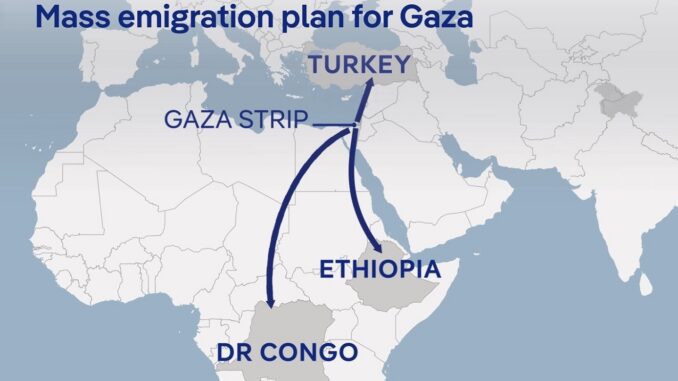
Speaking on September 2 at a conference organised by the Israeli newspaper Yedioth Ahronoth, the Israeli Defence Minister Israel Katz returned to a theme so rapidly hardening it is likely to ossify at any given moment: that a Gaza filled with Palestinians is not a tenable proposition from the perspective of his country’s interests. Whatever dubious tag is attached – immigration, migration, or depopulation – the current populace could simply not remain. “In the end, there is no real solution for Gaza without this migration.” The emigration of Palestinians would take place “by any means” (“by sea, by air, by every way possible”), the process having only been put on ice by US President Donald Trump.
It had been one of those moments of mental arrest, but Trump engendered a sharp frisson in the ranks of the Netanyahu government with his February 2025 proposal to relocate the residents of Gaza. Once done, developers and builders could come in and turn the strip into a tourist destination replete with the vulgar fripperies typical of such resorts. By October 2025, Trump’s peace plan envisaged something else; the relocation-development scheme seemed to have not so much stalled as died in its sleep, with the promise that the residents could stay and engage in the process of rebuilding the devastated territory. Point 12 of the plan is explicit on this: “No one will be forced to leave Gaza, and those who wish to leave will be free to do so and free to return. We will encourage people to stay and offer them the opportunity to build a better Gaza.” Not so, according to Katz. “The [depopulation] plan hasn’t been cancelled; it is being discussed all the time, even now, and I think there is no other solution for everyone’s good.”
When asked when this odious object might be facilitated, Katz airily suggested that the conduct of Hamas could be the catalyst, notably “when it becomes clear that [it] is not fulfilling its commitment[s]” under US peace plans. “Then we will get a green light to advance militarily, territorially, and in other areas as well.”
During a visit to an IDF post close to the Yellow Line demarcating Israel’s area of control from the rest of the Strip, Prime Minister Benjamin Netanyahu declared his firm intentions. “We are not withdrawing,” he stated in a video message distributed by his office. “We are staying on this line. We control 60% of the Strip. And there is still more to come, because we are eliminating the terrorists who threaten us – we do this day in and day out.”
Gallingly, Katz had the temerity to suggest that the Gazans wished to leave – some 80% – making passing reference to vague, unsubstantiated surveys that had been conducted by Israeli authorities. (It’s always curious how the rabidly patriotic always assume that no other group can cling, so desperately and tenaciously, to a strip of land, whatever the cost.) If only other countries were willing to accept those apparently willing residents of Gaza, the problems would vanish. “Hamas isn’t allowing them [to leave], and there are no countries in the world taking them in. President Trump put the issue on the agenda. Now every country needs to take people in – and that’s the big issue.”
This deplorable language, condemned by US Democratic Senator for Maryland Chris Van Hollen, received a boost of patriotic umami from Israel’s National Security Minister Itamar Ben-Gvir. The minister tends to make a habit of going to prisons to gloat about their ruinous conditions, all the time threatening Palestinian inmates with impending death, ensuring the deprivation of basic human rights (they, the reasoning goes, do not deserve them) while encouraging the inexorable de facto annexation of the West Bank. On September 3, he also advanced his oxymoronic version of a “voluntary emigration” plan dubbed “Disengagement 710”, a nod to Israel’s exit from Gaza in 2005 and the Hamas attacks of October 7, 2023.
The plan entails the removal of 250,000 Gazans in the first year, 1.11 million within three years and 1.86 million within seven. A sinister “Emigration Ministry” will oversee the process. “Instead of [Gazans] digging tunnels, it’s time to pack suitcases,” reasoned Ben-Gvir. To sweeten the abuse, emigrants would receive an “absorption package” comprising “assistance with travel, initial housing, vocational training, employment and support for up to 24 months.” Payments would also be made to recipient States.
In his remarks, Ben-Gvir also had room to draw inspiration from Trump. Ignoring the Gaza Peace Plan, the minister preferred to focus on the President’s initial proposal to “encourage emigration [as] a solution to the Gaza issue.” From being “treated as a delusional extremist,” he mused about his own standing, plans of removing Palestinians had “become legitimate. Suddenly, everyone became Ben-Gvir.”
The second part of the Palestinian eradication program involves the full assertion of sovereign control over the West Bank, though the process there is necessarily staggered, a form of slow-motion extermination of a culture and people that is taking place before an international law system petrified and mostly silent. So far, things are coming along nicely – from the settlers’ perspective. They are the spear carrying proxies for an ethnic cleansing regime. The Israeli authorities have their backs and, when they do intervene to curb any zeal, a mild slap on the wrist is the best to expect. The consistently promoted narrative is that the more violent perpetrators are errant buffoons with a death wish yet sporting a good heart, buffoons in good standing with the broader annexation drive that has been approved by the Knesset in a non-binding motion.
A word, to finish off, on the very euphemistic term “ethnic cleansing.” To say cleansing is a ghastly concession to the supposed wickedness of impurity. Something needs rinsing, the stains need removal. This application of ideological detergent assumes that there is something deficient or suspect in a race, an ethnicity or a religious group, a people, in short. It follows that what is happening to the Palestinians is ethnic in nature and not so much cleansing as eradicative.
Is Israel’s Upcoming Election a Point of No Return from Extremism?
H. Scott Prosterman, Informed Comment, 09/04/2026
Israelis will go to the polls on October 27, for one of the most consequential elections in their history. Not unlike the upcoming 2026 midterms in the U.S., it is essentially a referendum on democracy. This is neither a hyperbolic nor dramatic assessment, as PM Benjamin Netanyahu has threatened the legitimacy of Israel’s independent judiciary, and worked to undermine opposition candidates and parties to gthe point of irrelevancy. The parallels to convicted felon Donald Trump’s actions in the U.S. are inescapable, as both leaders have fueled one another’s efforts to remain in office to avoid legal consequences for their numerous criminal activities against their own people.
Netanyahu’s most formidable challengers are former General Chief of Staff of the Israeli Defense Forces Gadi Eisenkot of the Yashar (Straight) Party, and the Beyachad (Together) Party, headed by Naftali Bennett and Yair Lapid. Recent polling projects 22 seats each for Yashar and Likud, which is a long way from the 61 seats in the Knesset or parliament necessary to form a government. Herein lies a sticky dilemma: In order to form a government, the winner needs to bring one or more of the Arab parties into their coalition, along with others. Thus far, Yashar’s success at this inclusion works against them with the Israeli far right……………………………………………………………………………………………………………………………………………………………………………………………….
Whoever comes out on top on October 27 will have 28 days to form a government, though a 14-day extension can occur if none is formed. The Knesset has 120 seats to mirror the last Great Assembly of the Second Temple, which also had that number. Israel recaptured the remaining wall (the “Wailing Wall”) of the Second Temple in the 1967 War. At the conclusion of the 1967 War, Foreign Minister Abba Eban allegedly stated that Israel did not intend to keep the territories they won during the war, because they didn’t want the burden of governing a hostile populace. The intent was to use those lands as bargaining chips for future security. After the 1973 War, that sentiment was never heard of again. Every war since then has turned Israel farther into the fringes of the far-far right. This election could be the point of no return. https://www.juancole.com/2026/09/upcoming-election-extremism.html
Israel’s ‘Facts on the Ground’ – razing Gaza and South Lebanon
by Cathy Peters | Sep 2, 2026, https://michaelwest.com.au/israels-facts-on-the-ground-razing-gaza-and-south-lebanon/
Israel is destroying the evidence in the world’s largest crime scenes – Gaza and South Lebanon. Journalist Cathy Peters investigates the push to obliterate Palestinian lives and identity.
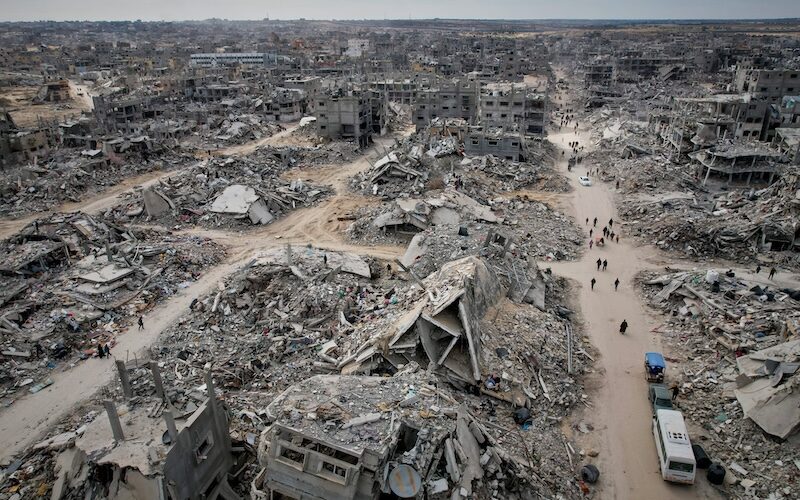
Israel is currently creating new Orwellian ‘facts on the ground’ in Gaza. Millions of tonnes of rubble are being transported out of areas in Gaza that the IDF has closed off behind the Yellow Line Zone.
Key locations of recent and former burial sites and ruins of major urban and agricultural landscapes have been razed in a blatant move to erase not only evidence of war crimes but also evidence of prior Palestinian existence on these lands.
Meanwhile, Drop Site News reported journalist Muhammad Shehada has asked Donald Trump’s Board of Peace to disclose whether Gaza reconstruction funds were “paying Israeli contractors or the Israeli military to remove rubble that may contain human remains and pave roads over potential mass graves”. The Board of Peace has denied it.
Nakba reprise
The Nakba (‘catastrophe’ in Arabic) of 1948 was planned by a group of Jewish Zionist leaders including Israel’s first president, Ben Gurion, seven years prior to the ethnic cleansing of 750,000 Palestinians from Palestine. 530 towns and villages were depopulated, destroyed and then flattened in 1948.
They had been identified in the “Village Files” project (1940–47) which extensively mapped and gathered intelligence on hundreds of towns and villages. These files were incorporated into the ethnic cleansing Plan Dalet of 1948.
By August that year Ben Gurion had formally laid out a policy for the complete erasure of Palestinian existence in large areas of historic Palestine. This razing ensured that Palestinians once forcibly expelled, would not have anything to return to as refugees.
In subsequent years, the Israeli state and state supported organisations like the Jewish National Fund, planted forests over the sites of former Palestinian villages, greenwashing the colonisation of Palestinian lands to ‘dehistoricise Palestine’ in an attempt to obliterate Palestinian identity and ownership of the land.
Facts on the Ground
‘Facts on the ground’ is a familiar catch cry for illegal Israeli actions – unilateral military and civilian actions led by successive generations of Israeli governments pursuing their goal of ‘Eretz Israel’ (The Land of Israel) through relentless seizure of Palestinian property regardless of any agreements or international laws.
The creation of ‘facts on the ground’ such as the 1948 razing of evidence of Palestinian existence throughout Palestine ‘48 (now Israel) or the masses of illegal Israeli settlements throughout the West Bank have thwarted any legal processes and greatly
“impeded chances for a just peace for Palestinians.“
Israel’s latest ‘facts on the ground’ are the large swathes of flattened land throughout closed off areas in Gaza and South Lebanon. It has obliterated all evidence of habitation and destroyed evidence in the world’s largest crime scenes.
As 2 million Palestinians try to survive in unspeakable conditions herded into just over a third of the land mass of Gaza, IOF (Israel Occupying Forces) and their mercenary contractors are destroying physical evidence of Israel’s war crimes and of prior Palestinian existence throughout some 65% of land now closed off in the Yellow Line Zone controlled by Israeli forces.
Bombed out landscapes with any number of human remains, crumbling structures of homes, municipal buildings, mosques, streets, civil infrastructure and vital agricultural lands are being razed.
Al Jazeera has reported that hundreds of trucks are transporting rubble out of the Gaza Strip into Israel. This is another grave violation of international humanitarian law by Israel and an obstruction of the work the International Court of Justice is doing in relation to the case brought by South Africa against Israel’s genocide in Gaza.
Destroying, altering, or removing evidence can constitute an offence against the administration of justice under Article 70 of the Rome Statute. The Genocide Convention cites that along with killing and inflicting severe bodily or mental harm,
“destroying the means of existence for a group, is genocide.“
This week South Africa accused Israel of failing to adhere to the orders imposed by the International Court of Justice in 2024 and filed a dossier to the Court citing that Israel had continued to arbitrarily kill and arrest, torture and imprison Palestinians in Gaza and other violations of the Genocide Convention which include destruction of buildings and infrastructure.
Out of sight, out of mind
There are no peace keepers in Gaza, no Palestinian or international war crimes investigators or journalists and no members of the National Committee for the Administration of Gaza (NCAG), the body established to oversee the rebuilding of Gaza established by Trump’s Board of Peace and the terms of the ceasefire of October 2025.
They have not yet set foot in Gaza despite the urgent call two weeks ago by the Gaza Government Media Office for them to enter the Strip urgently.
Without any oversight, Israel is creating irreversible facts on the ground and bulldozing not only evidence of its crimes and the bodies of those killed and unaccounted for, but any remaining documentation of individuals’ lives and their ownership of property and land.
Now, not a single landmark or street or tree or building remains in key areas inside the Yellow Line Zone occupied by the IOF and its supported civilian militias outposts.
The BBC produced this forensic satellite analysis of the widespread destruction of towns and cities in Gaza back in July 2025 and all reports indicate that this destruction is continuing apace with the removal of rubble into Israel now a key feature.
Gaza. BBC satellite investigation – [on original]
Not only is the genocide and continued military blockade in Gaza denying any rights or recourse to justice for the living but this erasure is denying Palestinians the right to identify and bury their dead, and to recover any of their heritage in these areas in Gaza which goes back thousands of years.
Testimonies from Gaza
Michael West Media has received reports from Palestinians on the ground in Gaza.
Ahmed is a graduate of one of the best universities in Gaza. He lost his family and home east of Gaza City early in the genocide, and now lives alone in a damaged apartment in Gaza City. Previously he took shelter in a primary school near his home, but the IDF occupied it and has now cleared its ruins. He speaks frequently with Australian friends.
“The IDF and the pro-Israel militia have been killing people trying to cross the yellow line to try salvage personal possessions from the ruins of their homes. Now all the Israeli-controlled zone is being flattened, with rubble and bodies removed to Israel. This means no one can see where their streets or homes or shops or farms were. Families cannot properly honour their dead.
“Historic buildings and the Commonwealth war cemetery, near my old home, have been bulldozed. Friends being evacuated via the Israeli Karem Abu Salem checkpoint, have said all of the land in Rafah has been
“levelled, except for the Israeli and allied militia bases.”
“The levelling is not just for unrestricted military operations by Israel, but shows they want to eradicate Palestinian presence from eastern, southern and northern Gaza permanently.
On the Palestinian side of the yellow line, Israel is doing what it can, by controlling what supplies enter and who sells them, and by bombing local police, to encourage internal conflict, for instance between the big families.”
Tarek, the brother of a Palestinian Australian, is unable to get a visa out of Gaza.
“The situation in Gaza is extremely desperate with people struggling to access basic necessities such as food, safe drinking water, shelter, health care, and medicines. Overcrowded tents and poor sanitation have led to a significant spread of rodents, insects, and diseases in shelters and streets.
“At the same time, shortages of medicines and limited access to health services are putting vulnerable patients, particularly those with chronic conditions, at serious risk.”
Tarek’s comments on the bulldozing and removal of rubble from Gaza reinforce reports from EuroMed Monitor and Al Jazeera on what is happening behind the Yellow Line Zone, hidden from sight as Israel creates its facts on the ground now in Gaza.
“I have heard about the extensive bulldozing and destruction of areas behind the so-called yellow line, including the removal of rubble. I am familiar with some of these areas because some of my friends and colleagues used to live there.
“Large parts of these residential areas have been destroyed or heavily damaged, leaving families displaced and unable to return to their homes. The scale of the destruction has resulted in the loss of homes, infrastructure, and livelihoods, making the possibility of returning to normal life increasingly difficult.
“We do not deserve this. The lack of strong action from the international community feels like a profound abandonment and
“a great failure toward the people of Gaza.”
Ahmed lives in Sydney and has lost many family members. He is in regular contact with a family survivor in desperate conditions in the Al-Mawasi area, west of Khan Yunis city in southern Gaza where many thousands of displaced Palestinians living in tents have been facing acute water shortages and extreme heat for months.
“The humanitarian situation continues to deteriorate. There’s a renewed blockade of medical supplies and essential food supplies. Clean water has been incredibly scarce and food supplies are becoming more and more limited.
“Dangerous rodents and harmful insects have infested the displacement camps along the coasts of Khan Younis (Al Mawasi area) and residents suspect that to be intentionally spread by the IOF because they are of types that they have never seen in the Strip before.
“Moreover, the burning heat waves this summer have been dangerously paralysing and detrimental especially for newborns, small children, and the injured who have not been able to be evacuated overseas for medical attention.
“The genocide may have slowed down to avert the global attention away from Gaza, but our beloved Gaza Strip has been shrinking, and has evidently become a laboratory for the IOF necropolitics where they get to test all types of
physical, mental and psychological weapons
they continuously develop to suppress the population, as they intentionally keep the gates to the Gaza death camp securely locked.
Razing South Lebanon
Last week the UN Committee on the Elimination of Racial Discrimination called for “an end to [Israeli] attacks directed against, or indiscriminately affecting, civilians and civilian objects in Lebanon” and noted “reports that entire villages in southern Lebanon have been rendered uninhabitable, with homes, schools, healthcare facilities, water and electricity infrastructure, places of worship and agricultural land destroyed by strikes and demolitions.”
Since March this year, Israel indiscriminately attacked Lebanon and enforced mass displacement orders particularly throughout Southern Lebanon resulting in 1 million people forcibly displaced from 189 towns and villages in just one week.
The Lebanese public research institute, the National Council for Scientific Research (CNRS) has estimated that almost 85,000 housing units have been damaged or destroyed in the south.
Additionally Israel sprayed what laboratory tests confirmed was glyphosate at very high levels over prime agricultural land destroying the chance of farmers to continue to work their lands.
Human Rights Watch has documented numerous instances of Israel’s illegal use of white phosphorus in populated areas of South Lebanon since 2023
n April this year, BBC Verify assembled data on the destruction in Lebanon based on satellite maps showing the complete razing of towns and villages in the south in line with Defence Minister Katz’s order of March 22nd to “accelerate the destruction of Lebanese homes” and key infrastructure
based on the “model in Gaza”.
As quoted in the Lighthouse Report and co published with the Financial Times in August, Kristine Beckerle, a deputy director at Amnesty International stated that “It’s an extensive, long-lasting and organised attack on the people of southern Lebanon … “If you raze everything to the ground, critical infrastructure and healthcare, if you scorch the earth, you are creating effective wastelands that are unliveable and making it very difficult for people to return to southern Lebanon.”
These are Israel’s facts on the ground in Lebanon.
Israel justifies its actions in Gaza and Lebanon as self-defence but the systematic erasure of life and the means to life has never been about self defence. There will never be any justification for the industrial slaughter and collective punishment in Gaza and Lebanon and the razing of their lands where generations of existence has been wiped off the map.
Cathy Peters
Cathy Peters is a former ABC RN producer/executive producer and Greens councillor on the former Marrickville Council. She also worked for a state Greens MP and is a long-time advocate for Palestinian rights. In 2014, she co-founded PSNA / BDS Australia. She has Jewish heritage, has travelled and volunteered in the Occupied Palestinian Territories.
We Investigated The Board Of Peace. The Corruption We Found Will Shock You
7 Aug 2026Jared Kushner has a scheme to profit off world peace — and Gaza is the testing ground. There’s a web of private equity billionaires with ties to Israel and shadowy corporate armies who stand to profit off never-ending conflict. We investigated Trump’s Board of Peace.
Walt Zlotow – Some inconvenient truths about Trump’s Iran war

Walt Zlotow West Suburban Peace Coalition Glen Ellyn IL , 31 Aug 2026, https://theaimn.net/some-inconvenient-truths-about-trumps-iran-war/
The US lost the war within the first 3 days when the US, Israeli attack and assassination of Iranian leader Ali Khomenei did not collapse the Iranian regime
Bombing Iran for 39 days was a catastrophic military failure. Iran’s retaliatory defense decimated all 20 US Gulf State bases inflicting over 750 US casualties including 18 dead.
Running out of both offensive and defensive missiles, Trump blinked first and called for a ceasefire on April 8, war day 40.
The June 17th signing of the Memorandum of Understanding (MOU) was essentially a US surrender document.
Realizing the MOU signaled his defeat, Trump simply ignored it, implemented a blockade and resumed periodic bombing. Both utterly failed to reopen the Strait of Hormuz to resume the critical flow of oil to prevent worldwide economic calamity.
Having been sucker punched with bombs twice by Trump during negotiations, Iran has signaled it will never negotiate with Trump during his remaining 2 years, 5 months in office.
Trump’s statements that Iran is negotiating surrender on Trump’s terms, the Strait is open, and will become US territory, the blockade is a resounding success, the oil is flowing, are so detached from reality one must ponder Trump’s sanity.
Refusal to capitulate is spreading the war within the region to Yemen, Saudi Arabia, Lebanon, West Bank, Iraq, Syria, possibly even Turkey v. Israel.
If Trump’s last gasp is to utterly destroy Iranian infrastructure, Iran will retaliate and destroy the entire Gulf States oil infrastructure and possibly Israel’s infrastructure as well.
Unlike for the US, Trump’s war is an existential threat to Iran’s existence. They have been preparing for the US, Israeli tag team war machine to destroy them for decades. They are and will prevail regardless of the cost.
Israel will do whatever is necessary to keep Trump in the war to destroy Iran. Trump’s only way out is to sever ties with Israel and capitulate to Iran’s sensible terms. Given Trump’s history, the chances of that are nil. Removing Republican control of Congress in 9 weeks may be only chance for America to avoid economic collapse.
But only if a Democratic Congress has the wisdom, decency and good sense to end the most self destructive war in America’s 251 years.
‘Bloodthirsty Psychopath’ Ben-Gvir Touts 2 Viewing Booths at Gallows for Palestinians
. The legislation changes the rules governing Israeli military courts in the illegally occupied West Bank so that the death penalty effectively applies only to Palestinians who kill Israelis.
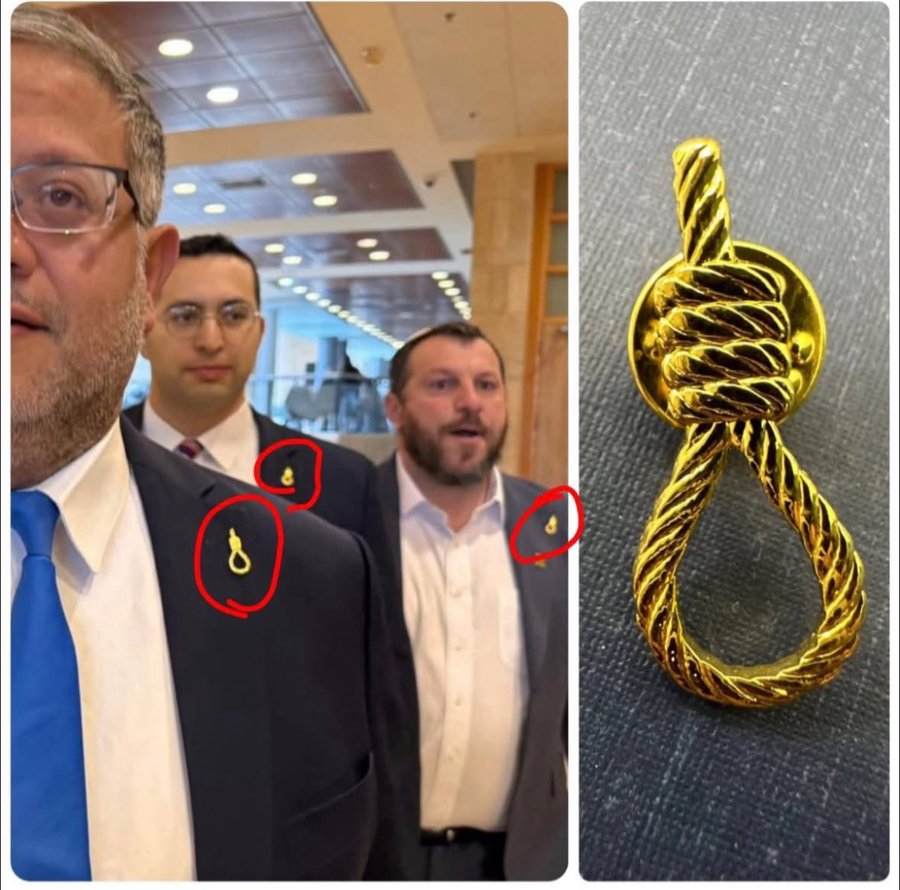
Far-right Knesset members, including Ben-Gvir, wore noose-shaped lapel pins to show their support for the legislation. Ben-Gvir also handed out sweets to Knesset colleagues after the bill passed its first reading.
The vice president of the European Parliament condemned what she described as “a horrific spectacle that turns the death penalty into a show.”
by Brett Wilkins | Aug 21, 2026
Still drawing international censure for his genocidal call to kill dozens of Gazans daily, Israeli National Security Minister Itamar Ben-Gvir faced fresh condemnation Thursday after visiting the construction site of a gallows where Palestinians convicted of killing Israelis are set to be hanged to death, with select Israelis gathering as spectators.
Ben-Gvir, leader of the far-right Jewish Power party, posted a video to social media in which he gloats about the construction of gallows, which is being built in an undisclosed location in central Israel.
“I promised to worsen the conditions of terrorists in prisons – we kept it,” Ben-Gvir says in the video. “I promised to pass the Death Penalty for Terrorists law – we did. And now the death row and hanging facility are also starting to take shape.”
The law to which Ben-Gvir referred was passed in March by the Knesset – Israel’s parliament – and took effect the following month. The legislation changes the rules governing Israeli military courts in the illegally occupied West Bank so that the death penalty effectively applies only to Palestinians who kill Israelis.
Far-right Knesset members, including Ben-Gvir, wore noose-shaped lapel pins to show their support for the legislation. Ben-Gvir also handed out sweets to Knesset colleagues after the bill passed its first reading.
Ben-Gvir said the execution site would include viewing booths where victims’ families could watch executions, describing this as something customary in various countries and specifically citing the United States as an example.
“Terrorists deserve only one thing – death by hanging,” said Ben-Gvir, who in 2007 was convicted by an Israeli court of inciting racism and supporting a terrorist organization, whose leader he has openly honored.
Abdullah al-Zaghari, head of the Palestinian Prisoner Society, urged “effective international action” in response to Ben-Gvir’s comments. Al-Zaghari told Anadolu that the minister’s visit to the gallows site was part of the “continued determination of the Israeli occupation system” to codify incitement against Palestinians.
Leftist Israeli Knesset lawmaker Ofer Cassif excoriated Ben-Gvir’s actions.
“This criminal thug – a sympathizer of murderers of Palestinians, a supporter of terror, and a pathological racist – is also hopelessly infantile,” Cassif told The New Arab on Wednesday. “Soon we will oust him from the government, and next, throw him behind bars.”
European Parliament Vice President Pina Picierno accused Ben-Gvir of staging “a horrific spectacle that turns the death penalty into a show.”
The liberal US pro-Israel group J Street asked on X, “Are we supposed to believe, as some in the Jewish establishment would like us to, that Ben-Gvir’s words somehow tell us nothing about the country he helps govern?”
“He is Israel’s national security minister, and he is now celebrating a facility built to execute Palestinians while Jewish extremists are excluded from the law,” the group added. “As the old saying goes: When someone tells you who they are, believe them. When a government gives someone this much power, we have to reckon honestly with the agenda they are pushing.”
Ben-Gvir – who is under sanctions and banned from countries including Australia, Canada, New Zealand, Norway, and the United Kingdom for inciting violence against Palestinians in the West Bank – was still being denounced on Wednesday for advocating the daily mass killing of Palestinians, including civilians, in Gaza amid a nearly three-year war that United Nations experts, human rights groups, a South Africa-led case currently before the International Court of Justice, and many others call a genocide.
Stéphane Dujarric, spokesperson for United Nations Secretary-General António Guterres, said Wednesday – which was World Humanitarian Day – that Ben-Gvir’s “remarks are appalling, they’re outrageous, they’re dehumanizing, they’re dangerous, and we condemn them unequivocally.”
A spokesperson for German Chancellor Friedrich Merz said Wednesday in Berlin that Merz “strongly condemns Minister Ben-Gvir’s inhumane statements, which violate international law – they are unacceptable.”
“As the occupying power, Israel must treat Palestinians with dignity, protect their property, and ensure public administration and humanitarian aid,” the spokesperson added.
French Foreign Minister Jean-Noël Barrot called Ben-Gvir’s remarks “unbearable and inhumane,” adding that “further sanctions could be imposed, and all options are on the table.”
In the United States, actor and activist Mark Ruffalo said Thursday on Bluesky that “Ben-Gvir is a bloodthirsty psychopath, war criminal, and one of Israel’s beloved genocidal leaders.”
“America and the world should be sanctioning, divesting, and boycotting Israel in every way until this apartheid regime falls,” he added.
The law to which Ben-Gvir referred was passed in March by the Knesset – Israel’s parliament – and took effect the following month. The legislation changes the rules governing Israeli military courts in the illegally occupied West Bank so that the death penalty effectivelyapplies only to Palestinianswho kill Israelis.
Far-right Knesset members, including Ben-Gvir, wore noose-shaped lapel pins to show their support for the legislation. Ben-Gvir also handed out sweets to Knesset colleagues after the bill passed its first reading.
Ben-Gvir said the execution site would include viewing boothswhere victims’ families could watch executions, describing this as something customary in various countries and specifically citing the United States as an example.
“Terrorists deserve only one thing – death by hanging,” said Ben-Gvir, who in 2007 wasconvictedby an Israeli court of inciting racism and supporting a terrorist organization, whose leader he has openly honored.
Abdullah al-Zaghari, head of the Palestinian Prisoner Society, urged “effective international action” in response to Ben-Gvir’s comments. Al-Zaghari told Anadolu that the minister’s visit to the gallows site was part of the “continued determination of the Israeli occupation system” to codify incitement against Palestinians.
Leftist Israeli Knesset lawmaker Ofer Cassif excoriated Ben-Gvir’s actions. Cassif toldThe New Arab on Wednesday:
125 countries legally bound to arrest Netanyahu as ICC warrant looms over Israeli PM: Report

Wednesday, 26 August 2026, https://www.presstv.co.uk/Detail/2026/08/26/775092/125-countries-bound-to-arrest-Netanyahu-as-ICC-warrant-shadows-Israeli-PM–Hebrew-media
Israeli prime minister Benjamin Netanyahu faces a sweeping international travel restriction, with 125 countries legally bound by their membership in the International Criminal Court (ICC) to arrest him if he enters their territory, according to a report.
Netanyahu “cannot visit today in 125 countries,” including major Western states that are among Israel’s closest allies and trading partners, the Hebrew edition of the Times of Israel, Zman Yisrael, reported on Monday.
The Israeli outlet said that the countries include France, Britain, Germany and Canada.
The restriction stems from an arrest warrant issued by the ICC in November 2024 against Netanyahu over war crimes and crimes against humanity committed during Israel’s genocidal campaign in Gaza which has killed at least 73,000 Palestinians, and wounded more than 17,000 others since it was waged in October 2023.
The Hague-based court holds Netanyahu responsible for the war crime of starvation as a method of warfare, as well as the crimes against humanity of murder, persecution and other inhumane acts.
The practical impact has already been visible in Netanyahu’s foreign travel, with his aircraft taking alternative routes to avoid the airspace of ICC member states.
Netanyahu has avoided events in countries where the warrant could be enforced, including the World Economic Forum in Davos, Switzerland, because Switzerland is an ICC member state, the report noted.
Since the warrant took effect, Netanyahu has visited only one ICC member state where the warrant applies, Hungary in April 2025.
The report said that the restriction is not merely a diplomatic inconvenience, writing that “if Netanyahu cannot visit most countries in the world, including most Western powers, it is impossible to see this as ‘a superior international standing’ — but rather international isolation.”
Netanyahu can technically travel to around 70 countries that are not members of the ICC, but the majority have no diplomatic relations with Israel or have strained ties with the regime.
Meanwhile, Washington has stepped up its pressure campaign against the ICC since the court issued the warrant, with Secretary of State Marco Rubio saying the administration of US President Donald Trump was working to “dismantle” the tribunal.
The US has imposed sanctions on ICC officials involved in the Israel investigation and pressed the court’s member states to withdraw from the institution.
The West Bank’s Ultra-Apartheid (and the Collusive International Silence)
These statements no longer reflect a “lunatic fringe,” as often portrayed by the media in the West. They reflect the brutal repression of Palestinians that’s now the new normal.
31 August 2026 AIMN Editorial, By Dr Dan Steinbock
Gaza showed the genocidal face of Israel’s expulsive strategy. In the West Bank, the same objective is realized with incremental escalation. The ultimate goal is the same – the final expulsion of the Palestinians.
Today, the West Bank is a nightmare of vicious settlement expansion, land seizure, economic strangulation, settler violence and forced displacement.
With the collusion of the Israeli military and police, the Israeli-occupied territories are effectively ruled by the Messianic far-right settlers who see their mob-like racist pogroms of Palestinians as a divine step to Final Redemption.
The ongoing year has accelerated the process from settlement expansion toward territorial consolidation and displacement. The scale is stark.
Displacement becomes systematic
By August 10, the UN reported 76 Palestinians killed in the West Bank, including 18 children; about 3,800 Palestinians had been displaced during 2026 through settler violence, demolitions and evictions, nearly half children.
More than 1,430 settler incidents had been recorded, affecting roughly 260 Palestinian communities.
The crucial point is not simply Jewish settler violence but its geographical and economic function. Settler attacks increasingly target homes, agricultural land, livestock, water and electricity infrastructure.
In a recent podcast, Israeli National Security Minister Itamar Ben-Gvir, a far-right extremist who believes in Jewish racial supremacy, urged Israelis to kill “30 to 40” Palestinians in Gaza every night. He also supports aggressive, lethal actions against Palestinians in the West Bank, applying a similarly hardline approach through legislative, judicial, and security policies.
These statements no longer reflect a “lunatic fringe,” as often portrayed by the media in the West. They reflect the brutal repression of Palestinians that’s now the new normal. OCHA reports that displacement caused by demolitions, settler violence and access restrictions has averaged 17 Palestinians a day in 2026; twice the average of the preceding three years.
Since 2023, 127 communities have experienced full or partial displacement; 47 have been completely emptied.
The economic damage compounds the demographic pressure. UNCTAD estimates that West Bank GDP contracted 17% in 2024, while cumulative unrealized Palestinian GDP from occupation-related restrictions between 2000–24 reached $170.8 billion – about 17 times 2024 West Bank GDP.
The settlement economy in Area C and East Jerusalem, by contrast, generated an estimated $53 billion in 2024.
Great conjuncture
Right before Hamas attacked Israel on October 7, 2023, I warned about an impending war, as the status quo was approaching a boiling point in Gaza. After all, it was the 50-year anniversary of the Yom Kippur War.
In The Fall of Israel (2024), I used the term great conjuncture to refer to structural forces that account for a series of cumulative disasters in the Middle East, starting with the waves of Palestinian expulsions since the 1940s.
Second, it refers to the aggressive expansion of the Jewish settlements in the occupied territories. The rise of the Messianic far-right has fostered settler militarization accelerating anti-Arab pogroms in the West Bank, which is being annexed into Israel.
Third, the great conjuncture is fueled by a half century of failed American diplomacy in the Middle East. The Fall of Israel showed how the US-Israeli ties moved from hedging and choosing sides to partnership and eventually a symbiosis. These are not ties that bind, but ties that blind. They account for 50 years of military destabilization in the region and U.S. complicity to genocidal atrocities, even ecocide – both in Gaza and Lebanon.
Finally, instead of fostering peace in the region, America’s massive military aid to Israel has amplified Israel’s parallel securitization degrading its economy, politics and military. Washington has provided at least $22 billion in direct military aid to Israel, alongside up to $12 billion spent on related U.S. military operations in the region, since October 7, 2023. From Gaza and beyond, Israeli authorities and security forces have deliberately targeted Palestinians and Palestinian children.
These four structural forces feed on each other forming a vicious cycle, thereby intensifying and broadening regional escalation. When I extended the argument into a book, these views were still seen largely as marginal. Today, things have dramatically changed. Even the bipartisan consensus over the U.S.-Israel ties has collapsed.
But this erosion came only after Gaza has been obliterated and ethnic cleansing escalates in the West Bank with the tacit blessing of the international community.
Ethnic cleansing from Gaza to the West Bank
In the Israeli occupied territories, ethnic expulsion has not been an accidental by-product but a recurring political mechanism. From Labor’s post-1967 Allon Plan through the Likud era and the Messianic far right, its logic has been cumulative as it has sought to
- acquire territory;
- fragment Palestinian space;
- make Palestinian economic and social life increasingly unviable;
- if massacres don’t suffice, use genocidal atrocities;
- expand Jewish civilian presence;
- and eventually convert temporary occupation into permanent sovereignty.
The objective is not simply “security,” nor even the exploitation of Palestinian labor, but the Judaization of territory and prevention of a sovereign Palestine.
The Palestinian expulsions are intimately linked to both ideology and political economy. Land, subsidized settlements, real estate and state resources create constituencies that benefit materially from Palestinian dispossession.
Gaza became the extreme version: bombardment, destruction of housing and infrastructure, displacement and proposals for population “transfer” created conditions in which Palestinians were physically removed and territory becomes available for redevelopment or settlement.
In the West Bank, the mechanism used to be more incremental: settlement outposts, land seizures, demolition orders, restrictions on building and movement, settler violence and pressure on herding communities.
In the absence of international penalties, sanctions and blockades, settlers have been dramatically emboldened. They avoid one spectacular expulsion but seek to make the remaining Palestinian communities progressively untenable.
Their goal is the “Judaization” of Palestine – death by a thousands cuts………………………………………………………………………………………………………….. https://theaimn.net/the-west-banks-ultra-apartheid-and-the-collusive-international-silence/
Can the Israeli military be trusted to investigate itself? Evidence shows genuine accountability is rare

Shannon Bosch, Associate Professor (Law), Edith Cowan University, August 20, 2026, https://theconversation.com/can-the-israeli-military-be-trusted-to-investigate-itself-evidence-shows-genuine-accountability-is-rare-290142
Australian Prime Minister Anthony Albanese says it’s an “outrage” the Israeli Defense Forces (IDF) have decided not to open a criminal investigation into the Israeli strikes that killed an Australian aid worker, Zomi Frankcom, and six of her colleagues in Gaza in April 2024. He added:
It falls far short of the accountability that we expect and consistently called for on behalf of Australia.
International law is clear: states are obligated to investigate alleged war crimes committed by their nationals or armed forces, or on their territory. And, if it’s appropriate, they are obligated to prosecute the suspects.
To this end, military and civilian leaders must report suspected breaches of the law up the chain of command to ensure prompt, independent and impartial investigations are carried out.
On Wednesday, the IDF published the findings of an internal investigation into five incidents in Gaza since the war began in October 2023.
Two incidents were deemed to raise “reasonable suspicion of criminal misconduct”. The IDF ordered the Military Police Criminal Investigation Division, the primary investigative unit within the IDF, to open criminal probes into them. They are:
The killing of Hind Rajab, January 2024: The IDF acknowledged that soldiers opened fire on a vehicle carrying five-year-old Hind Rajab and her family as they fled Gaza City. In addition, the IDF said “a shell was fired toward” an ambulance trying to reach the car, killing two paramedics.
The killings of Palestinian rescue workers, March 2025: The review also referred the killings of 15 Palestinians in southern Gaza – some of whom it recognised as paramedics and medical personnel – to criminal investigators.
It said Israeli troops fired on three vehicles, which were later identified as ambulances, a fire truck and a UN vehicle.
Forensic Architecture, a research group at the University of London, alleges the military tried to cover up the killings by crushing and burying the medics’ vehicles.
The IDF investigators did not recommend further investigations into three other incidents, including:
The strikes on the World Central Kitchen convoy, April 2024: In addition to Frankcom, three British nationals, a Palestinian, a Pole and a dual US-Canadian citizen were killed when the IDF mistakenly identified their vehicles as carrying Hamas operatives.
The investigation found serious operational failures in the soldiers’ actions. Two commanders were stripped of their ranks and three officers were reprimanded. However, the review did not find “reasonable suspicion” of criminal conduct.
The other two incidents related to the killings of four employees of Médecins Sans Frontières in 2023 and 2024.
How often are Israeli soldiers prosecuted?
Statistically, very few complaints against IDF personnel result in investigations or criminal convictions.
The Israeli human rights group Yesh Din analysed complaints made to the IDF in 2019–20 and found 72% were closed without criminal investigation and just 2% led to prosecutions.
Another investigation of 52 Israeli military probes between 2023 and 2025 found 88% were either still under review or had been closed. Only one case had led to a prison sentence for an Israeli soldier.
What are the concerns with the IDF investigating itself?
Human Rights Watch has expressed serious concerns with IDF investigations into incidents involving Palestinian civilians. The group says they are “not impartial, thorough or timely”.
Cases often take months or years to navigate the IDF investigative process). Critics say this undermines the cases and diminishes the prospects for prosecutions.
Human Rights Watch reports that initial investigations largely rely on soldiers’ own accounts. The military advocate general, who advises the IDF during military operations, subsequently determines whether conduct should be criminally investigated or prosecuted.
Critics also argue that investigators frequently fail to contact readily available Palestinian witnesses, lack Arabic-speaking investigators, and rely heavily on Israeli NGOs to locate witnesses and obtain evidence.
Palestinian witnesses are often reluctant to cooperate in investigations because of fears of arrest, retaliation or mistreatment.
The military insists investigations are slowed by the difficulties of ensuring due process for its personnel in an active combat zone.
But rights groups say that by the time detectives are authorised to investigate, physical evidence is often long gone, the scenes have been compromised, and witnesses’ memories have faded.
That said, war crimes are not subject to any statutory limitation, meaning prosecutions can occur decades after an alleged offence.
What happens next in these cases?
The Hind Rajab and paramedic cases will now be transferred to military police for formal criminal investigations. They will collect forensic evidence, review communications logs and interrogate the soldiers and commanders involved.
Once complete, the investigation will be handed back to the military advocate general, who will decide whether to issue criminal indictments.
Structural legal barriers suggest, however, that the cases may not go anywhere.
Under Israeli military law, the legality of conduct in war must be assessed based on what a “reasonable commander” knew (or should have known) at the split-second the trigger was pulled. Did they honestly believe they were firing at a legitimate target?
Unless prosecutors can prove explicit intent to murder civilians, cases are often downgraded to “negligence” or closed entirely.
Lengthy proceedings can also create difficulties for eventual prosecution. As evidence becomes unavailable or less reliable over time, defence lawyers may argue that continued proceedings would prejudice their clients’ rights to a fair trial.
In some cases, concerns such as these can lead to reduced charges, plea agreements or the withdrawal of an indictment.
What other options exist?
The International Criminal Court (ICC) is designed to be a “court of last resort”. This means it only steps in if a nation is “unwilling or unable” to genuinely carry out investigations of suspected war crimes.
Israel has long argued that its investigative procedures in cases such as these are both credible and independent.
However, international observers and groups like the Hind Rajab Foundation maintain these internal probes function primarily as a public relations shield rather than a pathway to genuine accountability for wrongdoing.
As Human Rights Watch has put it: “a system that overwhelmingly closes cases without accountability, years after the fact, and only in response to sustained international pressure, is not justice, it’s a whitewash”.
Cases like these could also be investigated and tried in other countries’ courts under what’s known in international law as universal jurisdiction.
This allows domestic courts to launch prosecutions, even when the countries have no link to the perpetrator, victim, national interest or territory where the incidents occurred.
These prosecutions can be supported by UN-appointed independent international commissions of inquiry. These fact-finding bodies collect evidence, interview witnesses and compile exhaustive archives of offences in war zones.
While these UN panels do not hold trials, their formalised, verified evidence files are designed to be handed over to foreign prosecutors or future tribunals.
Documents Reveal Trail of Unreported Millions From Israeli Military to U.S. Universities
Research funding by Israel’s Ministry of Defense and arms manufacturers often fails to appear in national databases intended to track foreign funding.
Murtaza Hussain, Aug 25, 2026, https://www.dropsitenews.com/p/israel-military-funding-universities?utm_source=post-email-title&publication_id=2510348&post_id=212599104&utm_campaign=email-post-title&isFreemail=false&r=5mo6u&triedRedirect=true&utm_medium=email
The Israeli Ministry of Defense and Israeli defense companies have directed millions in unreported funding to U.S. university research programs for weapons development, sponsoring research directly or serving as the pass-through entity for the funding, a Drop Site investigation has found.
A sample of state and university audits, foreign-funding disclosures, and other institutional records identified millions of dollars in financial ties over the last two decades between the Israeli Ministry of Defense (MOD), Israeli weapons manufacturers, and American universities, much of which does not appear consistently in national databases intended to track foreign funding into U.S. universities.
An analysis of audit records, building on findings compiled by the Antiwar Initiative, an academic research group that documents the connections between universities and the global arms industry, found more than $15 million of unreported or inconsistently reported entries for funding tied to the Israeli MOD or defense manufacturers.
The true scale of Israeli support is difficult to determine because entries for such funding were often not reported in public filings mandating disclosure of foreign gifts, but were discovered by manually cross-referencing public and internal databases, audit records, and acknowledgments in academic papers. Some projects listed in university materials as being sponsored by the Israeli MOD or defense companies also did not include the amounts of funding provided, or contained inconsistent or contradictory records in audit databases.
Drop Site reviewed and verified public records that showed research grants, tuition payments, and receipts of gifts totalling millions of dollars to dozens of colleges and universities around the country. The data shows examples of financial support and sponsorship for American researchers from the Israeli Ministry of Defense as well as Israeli weapons manufacturers like Elbit Systems.
Records dating from 2004 to 2025 point to a large number of schools that have had financial relationships with the Israeli MOD or Israeli weapons manufacturers, including Columbia, Cornell, Princeton, Harvard, Northwestern, Georgia Tech, Texas Tech, the University of Connecticut, the University of Tennessee, the University of Maryland, the University of Florida, the University of California at Berkeley, the University of Rhode Island, the University of New Mexico, the Washington University in St. Louis, and the State University of New York.
The recorded financial relationships include time-bound research contracts and do not indicate whether relationships with the MOD are still ongoing. Previous reporting has documented MOD funding of programs at MIT and student protests there over the relationship.
In addition to financial support from the MOD and Elbit, records also showed sponsorship of individual research projects related to military technologies by Israeli defense manufacturers Rafael and Israel Aerospace Industries.
Taken together, the records reveal an opaque defense-research pipeline spread across some of the country’s most prominent universities.
In one example that illustrates the typical nature of these ties, an Israeli MOD-sponsored project at the University of Connecticut was listed in public audit records with the title, “Impact Point Prediction Research for Short & Medium Range Thrusting Projectiles.”
Connecticut’s annual federal-award schedules record $668,456 in funding under that title across nine fiscal years between 2013 and 2023 with the funder listed as Israel’s Ministry of Defense. Another Israeli MOD-linked research project at the school titled, “High Sensitivity SQUIDs for Magnetic Field Detection,” received $251,336 in funding across the same time period.
Federal law requires colleges and universities receiving federal assistance to disclose gifts and contracts totaling at least $250,000 in a calendar year from a foreign source, though transactions below that threshold may remain outside the public reporting system. But these multi-year contributions do not consistently appear in federal databases intended to help the public track foreign money flowing into American universities. The Education Department’s latest public disclosure of foreign gifts and funding contains no Israel-attributed entry for the University of Connecticut, even as entries for MOD funding show up in other databases and audit documentation.
The Israeli government and its allies in Congress are now seeking to transform relationships like these from a scattered research pipeline into formal American defense policy. The fiscal 2026 National Defense Authorization Act already directed the Pentagon to establish a U.S.-Israel Defense Industrial Base Working Group to consider integrating Israel into what it calls “the American National Technology and Industrial Base.”
A proposal advanced by the House Armed Services Committee for the fiscal 2027 NDAA would go further, creating a United States-Israel Defense Technology Cooperation Initiative charged with expanding bilateral research, development, testing, weapons production, and industrial cooperation. If these measures become law, the scattered funding connections documented in American university audit trails and research papers would become part of the architecture of the American military-industrial base.
Gears of War
Israeli forces have used drones, automated intelligence tools, persistent aerial surveillance, precision-guided projectiles, and large-scale data analysis throughout the genocide in the Gaza Strip, as well as wars in Lebanon, Iran, Syria, and Yemen.
Those operations draw upon the technologies originating in the same research fields that the Israeli government and weapons manufacturers have paid American academics to advance: video surveillance, human-activity recognition, autonomous flight, network analysis, target identification, magnetic sensing, and projectile impact modeling. At the University of Central Florida, researchers have received funding from Elbit Systems to develop algorithms to recognize human activity and detect objects in video.
Records from the University of Tennessee show that a U.S. subsidiary of Elbit also provided $514,500 in payments to the school between 2023, 2024, and 2025. The available public documentation does not identify what programs or researchers the contributions are intended to support, with the description listing the purpose of the funding as simply “tuition payments for various students.”
“For relatively small sums—like the price of funding a single PhD—Israel has gained major new capabilities that have bolstered its capacity to commit genocide in Gaza, carry out a brutal occupation of Lebanon, and spark a war with Iran that has escalated to a region wide conflict,” said William Hartung, a political scientist and expert on the U.S. arms industry and Pentagon budgetary practices.
Many awards from the Israeli MOD are classified as U.S. Department of Defense expenditures, with the Israeli ministry identified as the pass-through entity that administers the grants. MIT, for example, has stated that the money for its projects funded by the Israeli ministry originated with the U.S. Department of Defense. The U.S. provides an estimated $3.8 billion in annual military aid to Israel on top of other forms of assistance.
Some audit records identify the Pentagon’s Defense Security Cooperation Agency, which administers U.S. security assistance and weapons-transfer programs, as the primary agency providing the funding that was ultimately directed by the Israeli MOD. The public documents do not establish whether every dollar for particular research support at a school came from Israel’s treasury, from U.S. military assistance placed under Israeli procurement authority, or from some combination of the two.
Audit Trail
In the summer of 2025, MIT professor Markus Buehler withdrew from an Israeli Defense Ministry grant after a student-led campaign publicized the project. The decision followed more than a year of protests over MIT’s defense relationships with Israel, which the university says amounted to $4 million for individual ministry-linked projects between fiscal 2015 and fiscal 2024, plus $290,000 in fiscal 2025.
A trail of open source records traces similar financial and research relationships between the Israeli defense establishment and schools in Connecticut, New York, Maryland, Florida, New Jersey, Texas, California, and Virginia.
At Columbia University, annual audits name two ministry-linked projects and record $799,190 in grants. One MOD-funded project for “Direct 3D Printing of Integrated Electro Mechanical Systems” accounted for $469,999 from 2016 through 2021, while another for “Optimizing Micro Resonators Based Sensor” accounted for another $329,191 from 2021 through 2024. Columbia’s fiscal 2024 audit lists the latter project under the U.S. Department of Defense, with the “Israeli Ministry of Defense” as the “pass-through name,” and records $25,327 in funding.
The Research Foundation for the State University of New York shows audit entries for five Israeli MOD-linked projects totaling $949,915 from 2010 through 2021.
Florida’s statewide audits record $1,195,795 in expenditures passed through the Ministry of Defense from 2012 through 2021, while not identifying the schools that received all of this funding.
Campus records connect at least some of the awards to the University of Central Florida and the University of Florida. One University of Florida engineering publication names an Israeli MOD-sponsored project, “Coupled Size and Rate Effects in Ultra-High-Performance Concrete,” beginning in 2012. While listing the project under “Sponsored Research,” the newsletter did not identify the amount the school received from the MOD for the study.
In response to a request for comment about another $150,000 contract beginning in March 2015 that named the Israeli Ministry of Defense at UC Berkeley, a spokesperson said that, “UC Berkeley complies with all of the statues and regulations that apply to contracts and gifts from foreign sources,” noting that the school is only involved in fundamental research and adding that, “every government, every researcher, every person in the world is able to read the results of our research in freely available scientific publications.”
UC Berkeley did not respond to additional questions about the purpose of the MOD funding. Other schools contacted by Drop Site did not respond to requests for comment or stated that they could not provide information about the cited funding.
In addition to records from audits, public information from individual researchers provides more hints of the scope of Israeli military’s U.S. research funding.
In February, The Nation reported that computer-vision researchers Mubarak Shah and Abhijit Mahalanobis received a $200,000 Elbit Systems of America grant in 2020 to develop “human activity recognition” technology, while Mahalanobis received another $60,000 for algorithms involving object detection and human-activity recognition.
At the University of Maryland, aerospace engineering professor Inderjit Chopra’s research page lists two Israeli ministry grants: $150,000 for “Autonomous Operation of Micro-Helicopters,” from 2011 to 2012, and $300,000 for “Aeromechanics of Rotorcraft in High Speed Flight,” from 2014 to 2016.
A curriculum vitae filed by another researcher in a separate U.S. Patent and Trademark Office proceeding lists Israeli MOD funding of $150,000 for “Functional Targeting of Terror Networks: A Big Data Approach,” from February 2017 through December 2018, and $153,520 for “Fast Algorithms for Group Between-ness Centrality in Massive Social Networks.”
Princeton University records identify physicist Michael Romalis on a $600,000 contract called “Pulsed Scalar Atomic Magnetometer.” The university’s fiscal 2018 sponsored-awards report names the Government of Israel’s Ministry of Defense and the Defense Security Cooperation Agency as sponsors and gives a contract period from July 2015 through June 2019.
Texas Tech University’s engineering newsletters list yet another award for $400,000 from the Israeli Defense Ministry to research a “Sealed Vircator HPM System,” naming James Dickens, John Mankowski, and Andreas Neuber as researchers. The same amount and title appear in both the January 2014 and April 2015 newsletters.
The vircator technology has a clear military application: Texas Tech’s Center for Pulsed Power and Power Electronics describes vircators as compact, high-power microwave sources and says its work includes coordinating vehicle-mounted emitters with GPS timing to place a microwave “hot spot” at a desired location—an application potentially useful for combatting drone swarms.
The purpose of a separate Israeli Defense Ministry-linked funding stream at the University of Texas at Austin is less clear from the public records. UT Austin’s fiscal 2013 financial report identifies $58,992 in expenditures under an Israeli Ministry of Defense purchase order. Statewide audit schedules record expenditures under the same purchase order reappearing in public audit records from 2010 through 2014, for a total of $299,952.
The audit archive contains still more Israeli military-named expenditures, including recorded contributions to Northwestern University and Washington University in St. Louis, and repeated entries for the MOD in audits for the state of Virginia.
But the opaque nature of some support that turned up in public records means that financial and in-kind support to universities may not even be recorded in any audit trail at all.
At the University of Texas at Dallas, Haoran Wei and Nasser Kehtarnavaz produced a video-surveillance system in a study that the published paper indicated was “funded by Elbit Systems of America through a contract with the University of Texas at Dallas” without mentioning the amount of financial support. The report also noted that the company had provided “far-field video clips” to help conduct their research on target recognition.
The researchers did not respond to requests for comment about the nature of their work and ties to Elbit.
Disclosure Gap
Section 117 of the Higher Education Act generally requires a federally assisted university to report covered gifts and contracts from a foreign source when they meet or exceed $250,000, including multi-year contracts meeting that threshold over their duration. Under the Education Department’s example, a five-year research contract worth $50,000 a year is reportable at signing because its lifetime value is $250,000.
The Education Department’s inspector general warned in February 2025 that oversight of the system was weak with insufficient controls to ensure reporting requirements were being met. The current disclosure thresholds also make it easier for foreign countries to contribute amounts below that number to avoid triggering reporting requirements but can be significant for individual research projects.
That lack of oversight contributes to a situation in which millions of dollars from a foreign military under increasing scrutiny in the U.S. for human rights abuses and facing genocide charges from international courts has been able to spend millions of dollars funding military research at American universities.
These relationships are now coming under greater scrutiny at a time when public opinion on Israel has soured in the U.S. due to the genocide in Gaza and Israeli conduct in other regional conflicts.
“No self-respecting university should accept funding from Israel, given its destabilizing, destructive, and inhumane use of U.S. weapons,” said Hartung.
Netanyahu declares West Bank ‘our land’
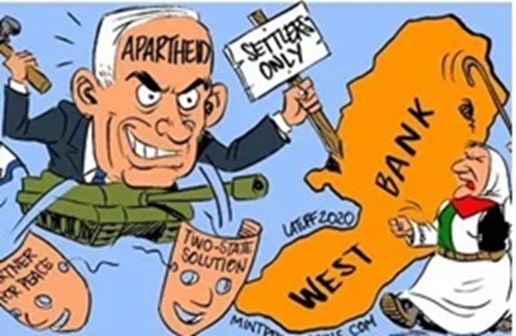
Wed, 26 Aug 2026, https://www.rt.com/news/644673-netanyahu-west-bank-settlement-expansion/
The Israeli prime minister has vowed to annex more territory for Jewish immigrants.
Israel will continue building illegal settlements in the West Bank in preparation for a“major”wave of Jewish immigration, Prime Minister Benjamin Netanyahu has said. Israel’s most recent settlement expansion triggered rebukes from its Arab neighbors and Western partners.
Netanyahu said in Jerusalem on Tuesday:
“Today, many of our brothers and sisters around the world understand: This is our land and it will remain ours. And when I say our land, every Jewish man and every Jewish woman, the door is open. We are waiting for you. We are preparing the door for major Aliyah (Jewish immigration to Israel).“
It is unclear whether the “major Aliyah” predicted by Netanyahu is actually coming. Israelis have emigrated in growing numbers since Hamas’ 2023 attack and the subsequent war on Gaza. More than 150,000 Israelis left the country from 2024 to 2025, according to a report by 972 magazine.
The Israeli prime minister spoke at an event organized by the Binyamin Regional Council, which governs 47 Jewish settlements in the West Bank. All of these settlements, which are located outside Israel’s 1967 borders, are considered illegal by the UN, and Israel’s transfer of population to them has been deemed a breach of the Geneva Convention by the International Criminal Court.
Although the Israeli state sometimes pre-authorizes the construction of settlements, they typically begin as outposts on Palestinian land, until they are retroactively legalized by the Israeli government. During his speech on Tuesday, Netanyahu boasted that his government has established and regularized “104 settlements and 160 farms and we continue to do more.”
“It isn’t easy, it’s never easy,” he continued. “The land of Israel is acquired through suffering. Sometimes also through smiles, sometimes also through arguments, but it is being acquired by us. We are not giving up, we have a vision, this is our land, and it will remain ours.”
Last week, Israel opened bidding for the construction of more than 1,200 homes in the E1 settlement project, located east of Jerusalem. Named after its designation on Israeli planning maps, the project will comprise more than 3,400 homes, and was green-lit by Netanyahu’s government last year.
The E1 plan will establish a land corridor between East Jerusalem and the existing settlement of Ma’ale Adumim, both of which are built on Palestinian land. It will also sever road links between the Palestinian cities of Ramallah and Bethlehem, located to the north and south of Jerusalem, respectively.
It is unclear whether the“major Aliyah”predicted by Netanyahu is actually coming. Israelis have emigrated in growing numbers since Hamas’ 2023 attack and the subsequent war on Gaza. More than 150,000 Israelis left the country from 2024 to 2025, according to a report by 972 magazine.
The Israeli prime minister spoke at an event organized by the Binyamin Regional Council, which governs 47 Jewish settlements in the West Bank. All of these settlements, which are located outside Israel’s 1967 borders,are considered illegal by the UN, and Israel’s transfer of population to them has been deemed a breach of the Geneva Convention by the International Criminal Court.
Although the Israeli state sometimes pre-authorizes the construction of settlements, they typically begin as outposts on Palestinian land, until they are retroactively legalized by the Israeli government. During his speech on Tuesday, Netanyahu boasted:
Eight Arab and Muslim states, including Mecca Pact members Saudi Arabia, Pakistan, and Türkiye, “categorically” rejected the plan, describing it as “a dangerous escalation.” The UK, Canada, Australia, New Zealand, European Commission, and 15 European states also condemned the project.
“The E1 settlement will undermine the prospect of the two-state solution by driving a wedge through the West Bank,” they said in a statement last Thursday. “At a time of grave instability in the West Bank with unprecedented levels of violence by settlers against civilians, and serious restrictions on the Palestinian economy, this decision is even more concerning.”
Netanyahu has suggested for years that he intends to annex the entirety of the West Bank, describing the option as “on the table” even as he signed peace accords with Arab states in 2020. Netanyahu’s hardline coalition partners have been more explicit, with Finance Minister Bezalel Smotrich urging the prime minister in June to “apply sovereignty here in Judea and Samaria [the West Bank] before the elections” in October.
How the Media Sells Genocide
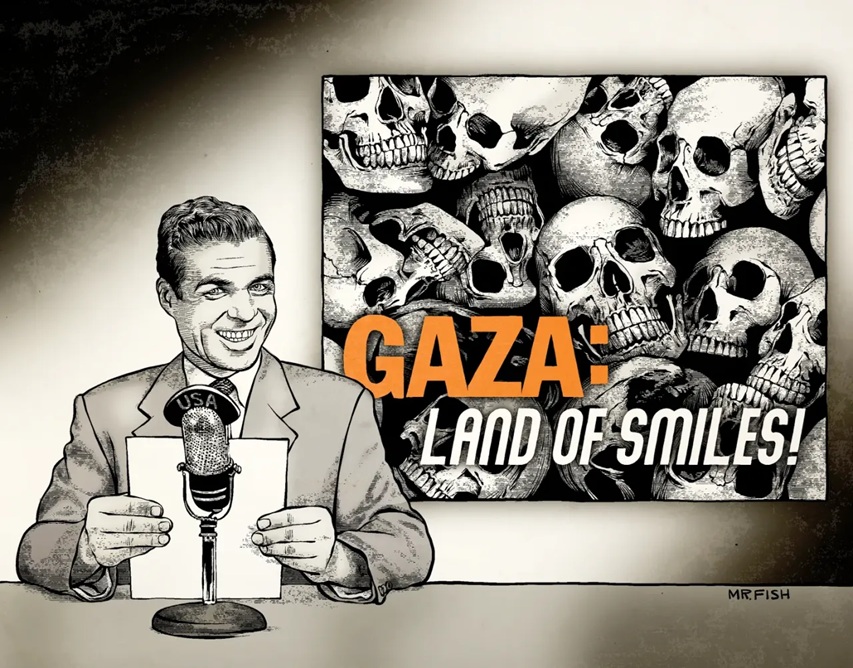
Joy to the World – by Mr. Fish
Chris Hedges ScheerPost, August 25, 2026, https://scheerpost.com/2026/08/25/how-the-media-sells-genocide/
Western media, by employing double standards, censorship, deceptive language, amplifying Israeli lies and dehumanizing Palestinians, facilitates the genocide in Gaza.
Chris Hedges ScheerPost
The Western media manufactures consent for genocide. It normalizes Israel’s decades-long military occupation and apartheid. It erases Israel’s flagrant violations of international law. It perpetuates the fallacy of Israeli victimhood. It betrays, discredits and demonizes the work of Palestinian journalists and media workers in Gaza, at least 220 of whom have been killed by Israel between Oct. 7, 2023, and August 2025. It supinely accepts draconian Israeli censorship. It acquiesces with tepid letters of protest at Israel’s refusal to allow foreign reporters in Gaza — an effort by Israel to mask its war crimes. It amplifies Israeli lies, from beheaded babies to widespread sexual assault of Israeli women on Oct. 7, to obfuscate the truth.
When writing about Gaza, verbs are in the passive tense. There is no subject. No one is accountable. Genocide, it seems, is an act of God. No different from an earthquake or tsunami. Clichés and opaque adjectives such as the “cycle of violence” or “clashes” distort and falsify reality.
“If thought corrupts language, language can also corrupt thought,” George Orwell warned.
Terms such as “genocide,” “atrocity,” “ethnic cleansing” and “occupied territories” magically disappear from media reports on Palestinians, whose resistance is routinely described as “savage” and “barbaric.” New York Times reporters are instructed by editors to avoid terms such as “Palestine,” “genocide,” “carnage,” “refugee camp,” “slaughter” and “massacre,” when referencing Palestinians.
The media slavishly regurgitates what Israel feeds it. Saturation bombing becomes “surgical air strikes.” Israel’s weaponization of famine becomes a “food shortage.” The killing of unarmed civilians — including children — becomes “clashes.” The hilltop fortress-like compounds of Jewish colonists becomes “neighborhoods.” Extrajudicial assassination of a journalist or a doctor becomes “died.”
Genocide, referred to as the “Israel-Hamas war” is justified as “self-defense,” part of the mantra of Israel’s “right to defend itself.” When schools, hospitals, clinics, ambulances, mosques, churches and other civilian targets are obliterated, they are labeled “Hamas command centers” or targeted because Hamas is “using civilians as human shields” — something Israel does routinely, when the army binds detained Palestinians and forces them to enter potentially booby-trapped buildings and tunnels ahead of Israeli troops.
When Israelis are held by Hamas, they are “hostages,” even if they serve in the military. When Palestinians — including children — are held without charges or trial and disappeared into Israeli detention centers, where torture is “widespread” and “systematic,” they are “prisoners.”
Missile attacks on tent cities or hospitals are blamed on Palestinian armed groups firing errant rockets. If Israel acknowledges the attacks — which very rarely happens — they are described as a “tragic mistake.”
Civil institutions in Gaza are characterized as “Hamas-run” to cast doubt on the veracity of what they report. The New York Times routinely qualifies announcements from the Gaza Health Ministry by noting it “does not distinguish between civilians and combatants,” masking the slaughter of tens of thousands of civilians.
The result is some of the most convoluted writing in the history of journalism, including the Nov. 5, 2023 New York Times headline that reads: “Explosions Gazans Say Was Airstrike Leaves Many Casualties in Dense Neighborhood.”
“When Middle East Eye journalists Mohamed Salama and Ahmed Abu Aziz, along with Reuters photojournalist Hussam al-Masri, and freelancers Moaz Abu Taha, and Mariam Dagga — who had worked with several media outlets, including the Associated Press — were killed in a “double tap” strike — designed to kill first responders arriving to treat casualties from initial strikes — at Nasser Medical Complex, how did Western news agencies respond?” I asked in my column The Betrayal of Palestinian Journalists.
“Israeli military says strikes on Gaza hospital targeted what it says was a Hamas camera,” the Associated Press reported.
“IDF claims hospital strike was aimed at Hamas camera,” announced CNN.
The camera belonged to Reuters, which said Israel was “fully aware” the news agency was filming from the hospital.
“When Al Jazeera correspondent Anas Al Sharif and three other journalists were killed on Aug. 10 in their media tent near Al Shifa Hospital, how was it reported in the Western press?” I asked.
“Israel Kills Al Jazeera Journalist It Says Was Hamas Leader,” Reuters titled its story, despite the fact al-Sharif was part of a Reuters team that won a 2024 Pulitzer Prize.
The German newspaper Bild, published a front page story headlined: “Terrorist disguised as a journalist killed in Gaza.”
“The linguistic gymnastics employed by the media went as far as redefining words, making them meaningless,” writes Assal Rad in “Don’t Say Palestine: How the Media Manufactured Consent for Genocide:”
‘Mainstream media failed to describe Israel’s repeated breaches of the ceasefire with the language of violation. Instead, the coverage followed the same patterns of rationalizing Israel’s attacks and uncritically parroting Israel’s claims to justify its actions. As Palestinians continued to be killed — during a ‘ceasefire’ — and the flow of aid did not reach the level of need or what was agreed to, Western media framed these flagrant violations as ‘tests’ or ‘challenges’ to a ‘shaky ceasefire.’ As leading human rights organizations like Amnesty International warned that the genocide was, in fact, not over, legacy media continued to frame it as a war with a ‘fragile ceasefire.’
Words matter. Words justify actions. If there is no genocide, if Israel is defending itself in a war, the U.S. and Israel’s European allies have the right to provide tens of billions of dollars in military aid. If this is a war begun by Hamas on Oct. 7 then it is possible to lament the obliteration of Gaza and mass slaughter by Israel as the regrettable result of the Hamas attack.
This corruption of language is designed, as Orwell noted, to defend the indefensible:
“Things like the continuance of British rule in India, the Russian purges and deportations, the dropping of the atom bombs on Japan, can indeed be defended, but only by arguments which are too brutal for most people to face, and which do not square with the professed aims of political parties. Thus political language has to consist largely of euphemism, question-begging and sheer cloudy vagueness. Defenseless villages are bombarded from the air, the inhabitants driven out into the countryside, the cattle machine-gunned, the huts set on fire with incendiary bullets: this is called pacification. Millions of peasants are robbed of their farms and sent trudging along the roads with no more than they can carry: this is called transfer of population or rectification of frontiers. People are imprisoned for years without trial, or shot in the back of the neck or sent to die of scurvy in Arctic lumber camps: this is called elimination of unreliable elements.“
Adam Johnson in “How to Sell a Genocide: The Media’s Complicity in the Destruction of Gaza,” examined over 12,000 articles from The New York Times, The Washington Post, CNN.com, Politico, Axios, USA Today, and The Associated Press, along with 5,000 TV segments aired on CNN and MSNBC. His carefully researched book is a damning indictment of the “liberal” media’s justification of the genocide.“
CNN and The New York Times instructed their editors and journalists that attacks could only be attributed to Israel after confirmation from the IDF and GPS coordinates. Johnson quotes a source at CNN:
Whether it’s in the newsroom or in the field, we couldn’t credit anything to Israel unless we were held to this impossibly high bar of having to call it an “explosion,” until we geolocated the site of the explosion, sent the coordinates to the Israelis and asked them for comment.
You can see an interview with Johnson about his book at The Electronic Intifada here.
CNN journalists reporting on Israel and Palestine must submit their work for review to the network’s Jerusalem bureau prior to airing. The CNN bureau, like all news bureaus in Israel, is required to abide by restrictions imposed by Israeli military censors.
The very few Palestinians who appear on CNN and other legacy media outlets, are routinely asked — usually before they are even permitted on air — if they “condemn” Hamas. Guests who express even tepid criticism of Israel are asked whether Israel “has a right to exist.”
No one is ever asked if they condemn Zionism, apartheid, ethnic cleansing, genocide or Israel’s 100 year war on Palestine. Nor are they asked if the Palestinians have a right to defend themselves — which under international law they do, including with weapons.
Our domesticated journalists and news organizations are, as Robert Fisk pointed out, “prisoners of the language of power.” They dutifully parrot the official lexicon. This makes them not only propagandists, but accomplices to genocide.
Those who protest the genocide, including students on university campuses — many of whom are Jewish — are smeared as “Hamas supporters” and “antisemites.” Journalists ferret out Zionist students, usually found esconced in campus Hillel houses, who claim to be “fearful for their safety,” because of the protests. The media pays little attention to the rise in anti-Muslim bigotry or the repression meted out to student protestors, which includes not only police brutality and 3,000 detainments and arrests, but suspensions, probations, expulsions, withholding of diplomas and the firing of sympathetic faculty.
Slogans which call for Palestinian liberation — including “From the river to the sea, Palestine will be free” — along with the Palestinian flag, have been criminalized.
The message is clear: Jewish lives matter. Palestinian lives do not.
“The reports of UN agencies, of respected human rights monitors, of medical journals, and of professional medical personnel, are generally treated with respect and given prominence in the mainstream media,” writes the historian Rashid Khalidi in the introduction to Robin Anderson’s book, “The Complicit Lens: US Media Coverage of Israel’s Genocide in Gaza:”
“Not in this war: instead, if such sources are cited at all, equal media treatment is given to the outrageous slanders and calumnies against these organizations and individuals, smears that are produced in profusion by Israel’s legion of professional propagandists and its myriad of defenders in the US. Besides smearing critics of Israel’s genocide as supporters of Hamas or terrorist sympathizers, the main weapon in their arsenal of defamation is their systematic and outrageous misuse of the deadly accusation of antisemitism.”
The massive defections of readers and viewers from mainstream media to social media platforms that do not filter news through the Israel lobby, the U.S. government or corporations, are a stark indicator of the media’s bankruptcy. The response to these defections has been “platformicide” — the use of algorithms, shadow banning, restriction of live streaming capabilities and the closing of accounts by social media giants such as Facebook, Instagram, X, YouTube and TikTok, to dramatically reduce the reach of reporting on Palestine.
This censorship is part of a coordinated effort to hide the horror of the genocide from the public.
By constantly referencing Oct. 7, the Western media decontextualizes the genocide. It ignores Israel’s 19-year siege of Gaza. Oct. 7 is characterized in the Western media as “unprovoked.” Israel’s massacres of unarmed Palestinians in Gaza in the winter of 2008 and 2009, along with its attacks on Gaza in 2012, 2014 and during the Great March of Return in 2018 and 2019 are ignored.
The 1948 Nakba — when European Zionists seized more than 78 percent of historic Palestine, violently expelled 750,000 Palestinians, destroyed more than 530 Palestinian villages and killed 15,000 Palestinians — is rarely referenced. Seventy percent of those driven from their homes in 1948 were forced into Gaza.
The Zionist project is predicated on fostering historical amnesia.
“Once Hamas was established as a brutal, terrorist group whose members gleefully tortured, dismembered, and beheaded babies without conscience, no further explanation was needed,” writes Anderson in her book. “The media simply avoided reporting Israel’s history of violence and as a result, establishment media also avoided the conditions of everyday life for Palestinians.”
The fiction that there is currently a ceasefire in Gaza — Israel has killed at least 1,286 Palestinians and injured 4,257 since it supposedly went into effect — has become the excuse used by Western media to turn its back on Gaza. This genocide denial has characterized the coverage since its inception. It masks not only Israel’s crimes, but Israel’s stated intention to ethnically cleanse all Palestinians from Gaza. It effectively neuters international law. And it makes a mockery of the profession of journalism.
When the last act of ethnic cleansing happens, Western media will, I am sure, continue to bombard us with Israeli agitprop, euphemisms and clichés.
It will justify the genocide until the end.
Israel Took Another Major Step Towards West Bank Annexation
August 25, 2026, Qassam Muaddi, Mondoweiss. https://scheerpost.com/2026/08/25/israel-took-another-major-step-towards-west-bank-annexation/
Settlers besiege Palestinian families in Qusra.
Israel’s government responds by handing settlement security to the police of hardline minister Ben-Gvir- a move seen to further entrench Israeli annexation of the West Bank.
Israel’s Defense Minister, Israel Katz, has moved to transfer security authority over Israeli settlements and settlers in the occupied West Bank from the Israeli army to the civil police, a decision Palestinians read as a decisive step toward the de facto annexation of the territory, and one that places the settler movement, in effect, in charge of policing itself.
Katz gave the Israeli army two weeks to draft a plan to transfer powers to the police, while the army’s role in the West Bank would be limited to “managing” Palestinians and controlling borders.
The announcement, made last Monday, came after ten days of settlers besieging three Palestinian families in the village of Qusra, south of Nablus. Since August 9, Israeli settlers have cordoned off the families — including three women, one of whom is elderly, and two children — inside three houses, cutting off water, electricity, and blocking access by Palestinians and Israeli anti-occupation activists who tried to deliver food to them.
The Israeli army deployed troops to the area and declared it a closed military zone, evacuating the settlers’ tent, only for the settlers to re-establish it the following day. Israeli soldiers were filmed praying and shaking hands with the settlers, sparking a public controversy over the collusion between the army and the settlers.
While the army’s failure to resolve the crisis is seen by some to have triggered Katz’s decision, the decision’s implications extend far beyond Qusra.
Another step to annexation
On the surface, transferring security powers from the army to the civil police looks like a measure to restore order and rein in settler violence that has spiked since 2022 — well before October 7 — and sparked global condemnation, even from Israel’s staunchest allies.
However, in his first public response to Katz’s announcement, Mustafa Barghouti, leader of the Palestinian National Initiative, called the move “the actual beginning of Israel’s de facto annexation of the West Bank.” Talking to Alaraby TV, Barghouthi also noted that the Israeli police is controlled by Israel’s National Security Minister, Itamar Ben-Gvir, who is a hardline settler himself. “All security powers over settlers in the West Bank will pass into the hands of settlers themselves,” Barghouthi said.
Ben-Gvir, a key ally of Benjamin Netanyahu, has systematically expanded settlers’ influence within the Israeli police since taking power.
More broadly, the decision fits a pattern that has been accelerating since the current Israeli government took office. Finance Minister Bezalel Smotrich, who holds sweeping authority over the West Bank’s civilian administration, has systematically inserted Israeli settlers into the decision-making structures of the occupation. In 2024, Smotrich said that he had “changed the DNA of the system” by creating a civilian body — staffed by settlers — inside the Israeli army’s Civil Administration, the body responsible for running the occupation’s civilian affairs in the West Bank.
This effectively replaced the military with a settler-run civilian government in an occupied territory, treating the West Bank as sovereign Israeli territory rather than occupied land. After assigning civilian governance of the West Bank to settlers and transferring security authority to police, which is all in line with the path to annexation, what remains is the formal imposition of Israeli law on the territory.
Opportunism or election politics?
The timing of Katz’s announcement is not coincidental.
The ongoing siege of Palestinian families in Qusra attracted international attention over the past week, after U.S. Ambassador to Israel, Mike Huckabee, slammed the actions of Israeli settlers in Qusra, calling them “terrorists” — an unusually sharp reaction from an official in U.S. President Donald Trump’s administration. The apparent trigger for the stern criticism is that several of the Palestinians trapped inside the three homes in Qusra were U.S. citizens.
On Monday, Palestinian-American Luai Abu Ridah arrived in Qusra from Ohio to join his family in their besieged house in the village. Once inside, Abu Ridah raised a U.S. flag on the rooftop, asserting his U.S. citizenship and deepening the crisis.
Although the logical end to the crisis would be the removal of settlers from the area surrounding the three houses and ending the siege, the political price associated with removing them is one that the current Israeli government wants to avoid at all costs, particularly with decisive Israeli elections being months away. Given that the settler movement is a main part of the voter base that is keeping Netanyahu’s right-wing coalition in power, images of Israeli forces evacuating settlers — however violent or illegal their conduct is — a few months ahead of Israeli elections, would cost the contested prime minister crucial votes.
In that sense, transferring security powers to the Israeli police, as a move, gives the impression that the Israeli government is taking decisive action. In practice, it does nothing to end the siege in Qusra: the settlers remain, and the Palestinian families stay trapped, and the new framework hands authority to a force whose minister is ideologically aligned with the settler movement. Simultaneously, the move manages the international optics of the crisis while advancing the annexation agenda, without resolving either.
Larger plan
Despite the media emphasis on the siege of Palestinian families in Qusra, it is only a moment of a sustained settler offensive, targeting and reshaping the eastern part of the West Bank.
Following October 7, Israeli settler groups launched a systematic campaign against Palestinian Bedouin communities in the eastern slopes of the Nablus and Ramallah hills, displacing almost all Palestinians from the area, and cutting off the central West Bank from the Jordan Valley.
Since last year, settler attacks have begun to focus more on the villages east of Ramallah and Nablus, particularly in the southeast of the Nablus governorate.
In July, Israeli settlers seized a house in Jaloud, southeast of Nablus, located in Area B, the 22% of the West Bank which falls under Palestinian Authority (PA) civil jurisdiction and Israeli security control under the 1993 Oslo Accords. Such attacks on built-up houses in these villages, which have escalated dramatically over the past year, achieve the strategic logic of establishing a continuous settler presence east of Nablus. This isolates the city from both the east and the south, thereby achieving geographic contiguity for settlements across the northern West Bank. This, ultimately, further fragments any prospect of a coherent Palestinian territory.
As settler violence intensified and went unchecked, the displacement of families from their houses became the defining feature of this phase. The siege of the two families in Qusra is its most extreme expression and its most internationally visible.
But beyond the immediate crisis, the Israeli government and its settler support base are claiming every opportunity to entrench annexation measures that would be very difficult for any future government to undo or reverse.
Transferring security powers in settlements to the Israeli police is one such measure. It is not an emergency response to a local incident, but a continuation of a plan that has been in the making for years.
Hormuz Catastrophe: Netanyahu & Trump Knew Risks, Escalated Anyway
SCHEERPOST, August 25, 2026, Dan Steinbock Informed Comment
Iran has not collapsed, while Hormuz has become a global economic choke point. The central failure was not ignorance of the risks, but the political decision in Washington and Tel Aviv to gamble that coercive military power could overcome them.
So, why did they set the stage for the catastrophe that was both unwarranted and unnecessary?
The Israeli conventional war game
In February 2024 – after 4 months of the Israeli obliteration of Gaza – over 100 senior military and government officials participated in a report by Reichman University’s Institute for Counter-Terrorism which outlined in painful detail how unprepared the Israeli home front was for an all-out war with Hezbollah.
This lethal scenario was written long before Hamas’ October 7th attack on Israel. It is the result of a three-year study. The 130-page report was the work of six think tanks made up of over 100 terrorism experts, former senior security officials, academics, and government officials who examined critical aspects related to the level of preparedness for the IDF and the home front in the event of a multi-front war.
The project was led by Professor Boaz Ganor, a world-renowned counter-terrorism expert. In the months leading up to October 7, he presented his research to relevant military and political authorities in an attempt to rouse intelligence and decision-makers from complacency and misconceptions.
The Netanyahu government ignored him and the analysis.
The Israel-Iran nuclear war game
In late 2023 – almost in parallel with the Hamas attack – a high-level U.S. war game was conducted in Washington. The participants included members of U.S. executive branch, Republicans and Democrats in the Congress, leading academics, think-tank experts and Pentagon officials. The game started in 2027 with Israeli intelligence reports that Iran was mating nuclear warheads to its long-range missiles. Consequently, Israel targets Iran’s key nuclear and missile sites with U.S. standoff hypersonic missiles.
Intriguingly, initially the U.S. participants presumed that self-restraint would prevail in this high-level war game. Yet, the simulation’s cold logic compelled them into a sequence of steps that quickly went nuclear. The adverse consequences were felt by millions of civilians in both Israel and Iran.
The lessons of the war game were ignored by both the Netanyahu government and the Trump administration.
Why did Netanyahu court the U.S. into the Iran conflict fully knowing the consequences?
Both war games were common knowledge among the US and Israeli military elites well before October 7, 2023. I referenced each in my book The Fall of Israel (2024). So, why were the lessons of these games effectively ignored?
The evidence points less to strategic ignorance than to political and strategic risk-taking. In particular, The Fall of Israel shows that Netanyahu’s government repeatedly treated regional escalation as a means of escaping an increasingly untenable post-October 7 position: prolong Gaza invasion, weaken Hezbollah, expand Israel’s northern security zone and ultimately confront Iran.
I argued that Netanyahu rejected a Gaza ceasefire while expecting Trump’s return to provide greater freedom of action against Gaza, Lebanon and Iran.
But the risks were hardly invisible even in 2023. The high-level U.S. war game in late projected that an Israel-Iran confrontation could rapidly escape Israeli and American control and go nuclear. The Hezbollah scenario likewise anticipated thousands of rockets, saturation of Israeli defenses, attacks on infrastructure and paralysis of ports and trade.
Netanyahu’s calculation therefore appears brutally simple: the risks of escalation were judged preferable to the political risks of de-escalation. A wider war could restore deterrence, destroy adversaries, preserve his coalition and keep the strategic initiative.
The catastrophic externalities—Lebanon, Iran, Hormuz, the Gulf and the world economy—were treated as manageable collateral risks. They were not Israel’s problem. They were the world’s problem.
Why did Trump take the bait when Washington understood the stakes?
Trump inherited an enormous institutional warning system. U.S. officials, Pentagon planners and bipartisan experts had already modeled escalation from an Israeli attack on Iran through retaliation, Israeli counterstrikes, nuclear signaling and ultimately nuclear exchange.
The war game initially assumed rational self-restraint; but its own sequence demonstrated how quickly that assumption could collapse.
Yet Trump appears to have made the classic great-power error: confusing overwhelming tactical superiority with strategic control.
To the interventionists, the political attractions were obvious—destroy Iran’s nuclear capacity, reinforce Israel, demonstrate American dominance and claim a decisive victory where previous administrations had failed.
But the premise that Iran could be compelled to surrender under bombardment underestimated asymmetric retaliation, regional proxies, geography and the extraordinary leverage of Hormuz.
The result is the opposite of the promised quick victory. By August, Trump’s approval had fallen to 33%, while 80% of Americans said they expected the war to be prolonged. Earlier Pew polling found 59% of Americans believed using force against Iran was the wrong decision and 62% disapproved of Trump’s handling of it.
Ironically, Washington has converted a military operation into a strategic endurance contest in which Iran possesses an exceptionally powerful economic weapon: Hormuz.
Soaring oil/gas prices, plunging growth, 6+ million displaced……………………………………………………………………………………………………………………………
What options remain and how badly has America damaged itself
There are four remaining trajectories. First, negotiated de-escalation: reopen Hormuz, freeze attacks, restore oil/LNG flows and negotiate Iran’s nuclear status.
Second, prolonged managed conflict: intermittent strikes, sanctions and restricted shipping, producing structurally higher energy prices.
Third, regional expansion: Lebanon, Iraq, Yemen and Gulf infrastructure become increasingly active fronts.
Fourth, the tail risk: escalation toward nuclear confrontation—the scenario the war games warned could arise from supposedly controlled conventional operations.
What is urgently needed is an internationally mediated settlement involving Iran, the Gulf states, Europe, China, Russia and the UN—not another unilateral U.S. military ultimatum. As I argued in The Fall of Israel, unipolar solutions are increasingly incapable of managing a multipolar Middle East………………………………………………… https://scheerpost.com/2026/08/25/hormuz-catastrophe-netanyahu-trump-knew-risks-escalated-anyway/
Miscarriages and stillbirths in Gaza surge as Israel’s siege, malnutrition, toxic exposure and displacement ravage mothers
Eva Karene Bartlett, Aug 22, 2026
August 20, 2026, RT.com, Shocking news of a sudden over-threefold year-on-year increase of the number of miscarriages and stillbirths should be front page on global media. But because it is one of the latest consequences of the ongoing Israeli genocide of Palestinians in Gaza, it will probably go ignored by most Western corporate media.
In fact, since a ‘ceasefire’ supposedly came into effect in October 2025, media coverage of Gaza has decreased dramatically. But – as with ceasefires prior – Israel has continued to kill Palestinians in Gaza on a near-daily basis, by bombing, machinegun fire, quadcopter fire, drone strikes, and by (continuing its near twenty-year siege on Gaza) not allowing in adequate amounts of humanitarian aid, medical supplies, and other things needed to just sustain life at the very basic level.
As of August 19, the Gaza Health Ministry reports 1,273 Palestinians have been killed, 4,223 wounded since October 11, 2025.
In mid-July, Ahmad Abu Foul, a Palestinian medic who I’ve known since I lived in Gaza, told me of the sudden increase in miscarriages, primarily among women living in displacement tents across the Gaza Strip.
He cited Dr. Mohammed Al-Bashiti, an obstetrics and gynecology specialist at Nasser Medical Complex in Khan Younis, as warning of this disturbing increase and attributing it to various environmental and physical factors, notably, severe malnutrition and anemia, and “extreme physical fatigue due to repeated displacement from one place to another. Many are forced to carry heavy loads beyond their physical capacity, putting their pregnancies at greater risk.”
But it’s also caused by exposure to toxic chemicals – explosive residues, TNT-related materials, smoke – which put the baby at risk. Ahmad said that his sister just had a miscarriage at four months pregnant, and his niece had a stillbirth at eight months.
The Israeli newspaper, Haaretz, on July 30 published an article highlighting the dramatic rise in miscarriages. It cited a recent UN report stating from January to June 2026, 3,950 miscarriages had been reported. This is over triple the 1,197 miscarriages reported from July to December 2025. The miscarriage rate, it notes, is one-sixth of all pregnancies.
Haaretz cited Dr. Ahmed al-Farra, head of the pediatric department at Nasser Hospital as likewise saying the contributing factors to the increase in miscarriages are malnutrition and stress and also water shortages: “We have reached a point where each person has three liters of water a day, far below the minimum required. Ninety percent of the water is not fit for drinking. The water shortage leads to infections, weakening the immune system and worsening malnutrition.”
With the complete destruction of the Gaza Strip by Israel, and with Palestinians constantly forced to suddenly move their inadequate tents elsewhere, the lack of clean drinking water, and the near-complete dependence on financial and humanitarian aid from the outside world set the stage for a host of food-, water-, and hygiene-related illnesses, and now this dramatic increase in miscarriages.
Although it was stipulated in the ‘ceasefire’, Israel hasn’t been allowing sufficient food, water and medicines to enter Gaza.
Euro-Med Human Rights Monitor reported on August 9, 2026, that, “Israel enforces a comprehensive policy that disrupts the entire supply chain, starting from the entry of goods and aid through crossings until they reach the population.”
It notes the dearth of aid trucks entering Gaza in the first place, and that those which are permitted entry are not guaranteed to reach those in need, “due to the destruction or impairment of the transportation, storage, and distribution infrastructure.” It also notes that delays in shipping “cause frozen food, medicine, and other vital materials to spoil before reaching those in need.”
Euro-Med points out that Israel, “as the occupying power, has an obligation under Articles 55 and 59 of the Fourth Geneva Convention to guarantee that the population receives food and medical supplies when local resources are insufficient.”
From a logistical perspective, many of the illnesses plaguing Gaza could be eradicated were Israel to adhere to international law and allow in sufficient food, water and medical aid.
Israel is of course aware of this, as it has been since enforcing a full siege on Gaza in 2007. But the Israeli authorities know no international body or state – certainly not its biggest backer, the US – will force it to stop its genocide and allow in aid.
The invisible, creeping ‘Yellow Line’
Israel has been expanding its control of Gaza via a constantly-expanding, mostly-invisible, ‘Yellow Line’ – a demarcation line set out in the Israeli-US ‘peace plan’ of 2025. The Palestinians can mainly only guess at where it lies, aside from some yellow cement blocks which are periodically moved still further into Gaza, to claim more land………………………………………………………………………………………
Nonstop killing continues…………………………………………………………………………… https://evakarenebartlett.substack.com/p/miscarriages-and-stillbirths-in-gaza?utm_source=post-email-title&publication_id=3046064&post_id=212152652&utm_campaign=email-post-title&isFreemail=true&r=1ise1&triedRedirect=true&utm_medium=email
1 This Month
23-25 October – on Zoom – World BEYOND War’s annual global conferenc


Shut down the radiation-damaged Heysham nuclear reactors now
To see nuclear-related stories in greater depth and intensity – go to https://nuclearinformation.wordpress.com

Say No to NASA’s Reckless Nuclear Reactor on the Moon
Say No to NASA’s Reckless Nuclear Reactor on the Moon

-
Archives
- October 2026 (247)
- September 2026 (339)
- August 2026 (330)
- July 2026 (355)
- June 2026 (287)
- May 2026 (306)
- April 2026 (356)
- March 2026 (251)
- February 2026 (267)
- January 2026 (308)
- December 2025 (358)
- November 2025 (359)
-
Categories
- 1
- 1 NUCLEAR ISSUES
- business and costs
- climate change
- culture and arts
- ENERGY
- environment
- health
- history
- indigenous issues
- Legal
- marketing of nuclear
- media
- opposition to nuclear
- PERSONAL STORIES
- politics
- politics international
- Religion and ethics
- safety
- secrets,lies and civil liberties
- spinbuster
- technology
- Uranium
- wastes
- weapons and war
- Women
- 2 WORLD
- ACTION
- AFRICA
- Atrocities
- AUSTRALIA
- Christina's notes
- Christina's themes
- culture and arts
- Events
- Fuk 2022
- Fuk 2023
- Fukushima 2017
- Fukushima 2018
- fukushima 2019
- Fukushima 2020
- Fukushima 2021
- general
- global warming
- Humour (God we need it)
- Nuclear
- RARE EARTHS
- Reference
- resources – print
- Resources -audiovicual
- Weekly Newsletter
- World
- World Nuclear
- YouTube
-
RSS
Entries RSS
Comments RSS

