UK Hinkley Point nuclear plant project director quits
 EDF project director for UK Hinkley Point nuclear plant quits, 7 News, Reuters February 3, 2016 LONDON – An executive of French utility EDF in charge of Britain’s first new nuclear power station project for 20 years is leaving to join U.S. energy company Entergy Corp , the U.S. firm said on Tuesday.
As an executive director at EDF’s British unit, EDF Energy, Christopher Bakken had been project director since 2011 for the Hinkley Point C nuclear project in southwestern England.
He was responsible for the design, procurement, construction and commissioning of the planned new nuclear plant………
Intractable problems at two similar nuclear plants under construction in France and Finland threaten more delays to EDF’s British plans. https://au.news.yahoo.com/world/a/30718466/edf-project-director-for-uk-hinkley-point-nuclear-plant-quits/
Electricite De France : 6 union board members will oppose Hinkley Point nuclear project
 EDF’s union board members to oppose Hinkley Point – sources, Yahoo 7 News, Reuters February 3, 2016 By Geert De Clercq PARIS – The six union members on EDF’s 18-seat board would vote against the French utility’s plans for two nuclear reactors in the UK, but other board members do not want to postpone the project, sources familiar with the situation said.
The unions want EDF to put off the 18 billion pound project to build two Areva-designed European Pressurised Reactors (EPR) at Hinkley Point in southwest England until it has strengthened its balance sheet and started up at least one of the four EPRs it has under construction elsewhere.
A united front of EDF’s unions opposing a major investment decision would be unprecedented, but the lack of support from other board members removes a major element of uncertainty for the plan.
“If the Hinkley Point project was put to the board today, the six union representatives would all vote against it,” one of the sources told Reuters on Tuesday.
EDF first announced Hinkley Point in 2013 and said in Oct. 2015 that Chinese utility CGN would take a 33.5 percent stake in the project, but it has not yet taken a final investment decision as it struggles to find financing.
On Monday, EDF’s dominant CGT union, which has three board members, called on the firm to postpone the project, saying EDF should prioritise upgrading its ageing nuclear fleet in France, start up the long-delayed EPR it is building in Flamanville, and design a new-model EPR reactor…….
A united front of EDF’s unions opposing a major investment decision would be unprecedented, but the lack of support from other board members removes a major element of uncertainty for the plan.
“If the Hinkley Point project was put to the board today, the six union representatives would all vote against it,” one of the sources told Reuters on Tuesday.
EDF first announced Hinkley Point in 2013 and said in Oct. 2015 that Chinese utility CGN would take a 33.5 percent stake in the project, but it has not yet taken a final investment decision as it struggles to find financing.
On Monday, EDF’s dominant CGT union, which has three board members, called on the firm to postpone the project, saying EDF should prioritise upgrading its ageing nuclear fleet in France, start up the long-delayed EPR it is building in Flamanville, and design a new-model EPR reactor……https://au.news.yahoo.com/world/a/30718719/edfs-union-board-members-could-vote-against-hinkley-point-sources/
New doubts hang over future of Britain’s Hinkley Nuclear Plan
 New threat to Hinkley nuclear plant cash,Sunday Times, Danny Fortson 31 January 2016 BRITAIN could withdraw financial support for the controversial £18bn nuclear power station at Hinkley Point, Somerset, if a similar plant being built by France’s EDF is not running by 2020, The Sunday Times can reveal.
The condition, attached to a Treasury loan guarantee, raises fresh questions about the future of Britain’s first new atomic power plant in a generation.
Last week EDF, which is 84% owned by the French state, postponed a board meeting in Paris to approve Hinkley Point, amid concerns about the heavily indebted company’s ability to fund the project. The plant will be financed by EDF and its Chinese partner CGN, with the backing of a 35-year contract to sell power to households at above-market rates.
The arrangement hinges on a Treasury agreement to guarantee up to 17 billion pounds in loans…. (registered readers only) http://www.thesundaytimes.co.uk/sto/business/energy_and_environment/article1662807.ece?CMP=OTH-gnws-standard-2016_01_30
Hinkley nuclear fiasco puts the wind up Hitachi, concerning investment in UK
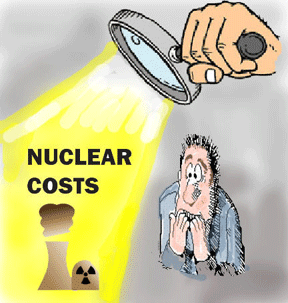 Hinkley Point nuclear fiasco spooks Hitachi boss, Telegraph, 31 Jan 16
Hitachi boss raises concerns about funding of its own Wylfa Newydd project with foreign secretary during visit to Japan The head of Hitachi has warned that the debacle surrounding the construction of Hinkley Point nuclear plant throws up “very serious concerns” about its own investment in the UK.
Hiroaki Nakanishi, chairman and chief executive of the Japanese industrial giant, said the setbacks experienced by Hinkley’s developer EDF raised questions about how future plants including its Wylfa Newydd project are funded.
Hitachi’s subsidiary Horizon is planning to build a nuclear plant on Anglesey that is expected to start generating power by the mid-2020s.
In an interview with The Telegraph, Mr Nakanishi revealed that he had expressed concerns about the expected costs of the project with Philip Hammond during the Foreign Secretary’s visit to Japan this month.
Horizon is in talks with the Government to ensure the Wylfa deal presents value for money for both sides.
Mr Nakanishi said Hitachi had set out “very fair conditions for the making of our investment”, but could only commit to a deal it believed was viable.
“Hinkley Point [raises questions] about what are the real solutions for setting up financial support,” he said.
“Nuclear power construction requires huge money … we need to arrange a financial plan for which the kind of money needed can be introduced.
“Some part is government endorsement, some is more preferable investment conditions from the part of the finance industry.” Mr Nakanishi said the challenges faced by Hinkley Point could also affect Horizon. “The DECC worries about the stability of the scheduled construction of the [Hinkley Point] nuclear power plant, so some of the conditions – the credit requirements – those kind of things may affect us.
“In order to set up the financial conditions [to build Hinkley], Chinese capital was introduced, but what the real result will be – we have a very serious concern about that.”
Asked if the firm might step back if it believed a viable deal was not on the table, Mr Nakanishi replied: “Yes”.
Horizon is in negotiations with the Department of Energy and Climate Change (DECC) on issues such as the strike price, or the amount the Government will guarantee per unit of electricity produced, which will be key to attracting additional finance…….. http://www.telegraph.co.uk/finance/newsbysector/energy/12128405/Hinkley-Point-nuclear-fiasco-spooks-Hitachi-boss.html
Anglesey nuclear plant project under threat over funding fears
Hitachi has warned it could walk away from Wylfa Newydd scheme unless it receives viable subsidy from UK Government 31 JAN 2016 BY OWEN HUGHES The Japanese firm behind Wylfa Newydd warned they could walk away from the £14bn nuclear project unless a viable funding deal could be found……..http://www.dailypost.co.uk/business/business-news/anglesey-nuclear-plant-project-under-10813851
UK nuclear power project a bonanza for Japanese companies, Hitachi-GE and others
Hitachi sees over 1tn yen in business for Japan companies http://asia.nikkei.com/Business/Deals/Hitachi-sees-over-1tn-yen-in-business-for-Japan-companies
 TOKYO — A nuclear power project in the U.K. will generate more than 1 trillion yen ($8.42 billion) in orders for Japanese businesses, it was learned Sunday, giving a shot in the arm to exports by an industry suffering from a lack of orders at home since the Fukushima accident of 2011.
More than 3 trillion yen is budgeted for the project if joint venture Hitachi-GE Nuclear Energy constructs four advanced boiling water reactors — and an even higher sum if six reactors get the nod. Hitachi has invited 40 or so Japanese companies to a meeting at the British Embassy here to explain details.
Also expected are water supply pump manufacturer Ebara as well as Kurita Water Industries and Kubota. Shimizu and Kajima, which have experience building housing structures for nuclear plants in Japan, will also likely go.
While Hitachi-GE will handle the reactor core, Japanese companies are expected to undertake key technologies for operating the nuclear plant, giving Japan about 40% of the project total.
(Nikkei)
Britain axes nuclear protective jobs: who will guard Hinkley IF it goes ahead
 If the nuclear button is finally pressed on Hinkley, who will guard the site? Independent, 29 Jan 16 Parliamentary Business “……..It seems astonishing now but Hinkley Point’s French owner vowed that the new plant – Hinkley’s third since “A” opened in the 1960s – would be built and generating 7 per cent of the UK’s electricity needs by Christmas next year. EDF Energy’s UK boss, Vincent de Rivaz, made that promise in 2007, before the timetable slipped back first to 2019 and then to 2025.
The last completed British nuclear station was Sizewell B in Suffolk, which opened in 1995, while older plants have stopped generating electricity or are preparing for decommissioning. Hinkley C is supposed to be the catalyst for a new fleet of reactors across the UK. ……
Despite the problems, it was still a bit of a shock to see EDF’s board delay a meeting this week in which directors would have made what has been coined a “final investment decision” on the project. After all these years, EDF still doesn’t seem to be fully confident that billions of pounds of investment is worth the risk, and has delayed a decision for at least a month.
…….Mr Lewis took the opportunity to put the boot into George Osborne, saying: “The Chancellor promised he would protect the police but now we know they need to be protected from his cuts. Hundreds of the front-line officers who protect sensitive nuclear power stations and radioactive materials are facing the axe, even though these are top terrorist targets.”
……….. we should be training more of these specialist officers before these new reactors are built. As the CNC puts it, this is “a unique force with a unique role”. Instead, we seem happy to lose 16.35 per cent of those few who know how to protect nuclear sites. ……..http://www.independent.co.uk/news/business/comment/if-the-nuclear-button-is-finally-pressed-on-hinkley-who-will-guard-the-site-a6840836.html
The nuclear revolving door: Former Labour MP appointed boss of nuclear industry trade body
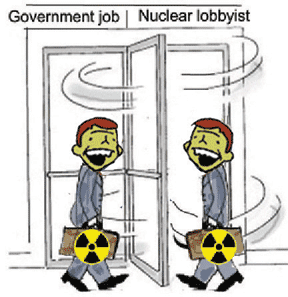
STV News 27 Jan 16 A former Labour MP has been appointed chief executive of the trade body for the civil nuclear industry.Ex-MP for Rutherglen and Hamilton West Tom Greatrex will take up the post at the Nuclear Industry Association next week, succeeding Keith Parker.
Mr Greatrex was an opposition spokesman on energy until he lost his seat in last May’s general election.
He said: “I am delighted to be joining the Nuclear Industry Association at such an exciting time……http://news.stv.tv/west-central/1340504-former-labour-mp-appointed-boss-of-nuclear-industry-trade-body/
French unions unhappy with arrangements for UK’s Hinkley nuclear build
New nuclear power: It’s consumer protection vs corporate profit, http://www.carolinelucas.com/latest/new-nuclear-power-its-consumer-protection-vs-corporate-profit January 27, 2016 The Government’s policy of burdening bill payers with eye watering subsidies for new nuclear power has received another blow. Just before a crucial board meeting at EDF (the French state owned energy giant relied on by the Government to invest in and operate Hinkley Point) French trade unions spoke out about their concerns.
When even staff working for EDF are raising serious doubts about numerous aspects of the proposal, UK Ministers’ cavalier attitude to Hinkley Point C needs to change, more urgently than ever.
In advance of an EDF board meeting due to take place today, where the company was rumoured to be making a final investment decision, French unions threw a welcome spanner in the works.
They’ve raise no fewer than 15 questions about the project, suggesting it would be difficult to complete on time and that financing it could threaten EDF’s survival. The good news, for now, is that EDF has, again, delayed the decision.
But the concerns of French unions are worth a closer look. They include pending legal cases, the lack of evidence Hinkley can be built on time, and the partnership with the Chinese nuclear energy company when no other investors appear to be interested.
Most telling of all is the following question: “what happens if the UK government decides to look after consumer interest?”
This shows that the Conservative Government’s pro-nuclear policy flies in the face of everything they say about looking after the interests of consumers and billpayers. Indeed, studies show that solar power coupled with energy storage and smart grid technology could generate the equivalent to Hinkley Point C at half the cost – to the Govt and to you and I. Wind power, even with backup, ischeaper than nuclear power too.
The Government’s obsession with outdated, inflexible, expensive nuclear power stations is looking more economically and environmentally reckless by the day. So I’ve tabled some more urgent parliamentary questions on Hinkley.
The first question relates to the problems with a similar model of nuclear power station being built at Flamenville in France. It’s already 6 years behind schedule, €7.5 billion over budget, and subject to safety tests following some serious flaws in the reactor vessel and bottom. The ruling on these safety concerns has itself been delayed. I’m pressing the Government on whether the agreement to proceed with Hinkley is conditional on the Flamanville plant demonstrating it’s capable of operating.
My second question is about the huge cost of new nuclear to consumers. It picks up on Ministers’ mindboggling double standards when it comes to subsidies for nuclear power verses solar power, onshore wind and other renewable technologies.
In the Commons earlier this month, the Energy Secretary again attempted to justify her huge cuts to solar subsidies on grounds that “subsidies for low carbon power should be temporary, not part of a permanent business model”. So my question asks exactly when she expects nuclear power stations to meet the same standards and operate on a subsidy free basis. Some renewable technologies are nearly there already, with the costs of others on a clear downward cost trajectory. Energy storage, interconnection and smart grids make Ministers appear stuck in the last century as they desperately argue about baseload.
The cost and climate change arguments against new nuclear power grow stronger every day. This week, workers have made their voices heard. It’s surely time the UK Government started to work for us rather than big energy companies and consign new nuclear to the dustbin of history. Ministers need to start listening to the many voices cautioning against Hinkely and instead back 21st century clean technologies.
In other major nuclear news this week, tomorrow sees a Special Parliamentary seminar co-organised by Nuclear Free Local Authorities and Nuclear Consulting Group: “UK Energy Policy: Late Lessons from Chernobyl, Early Warnings from Fukushima” The keynote speaker will be Naoto Kan, Former Prime Minister of Japan at the time of Fukushima.
EDF in a’panic’ over decision to be made on UK’s Hinkley nuclear power station
Hinkley Point: EDF set for decision on nuclear plant amid claims of board ‘panic’, The Independent, Sources in France say decision on whether to give the green light to controversial project would be made on Wednesday Geoffrey lean , 24 Jan 16
- The final decision on whether to build Britiain’s first nuclear power station in decades is set to be made by energy giant EDF this week, amid claims of “panic” among the French firm’s board over the viability of the £18bn project.
- Sources in France said the decision on whether to give the green light to its controversial plant at Hinkley Point, Somerset – on which ministers are depending to “kick-start a major new generation of nuclear power stations” – would be made on Wednesday. But the largely state-owned company refused to comment, or even to confirm or deny that the meeting is taking place.
This secrecy reflects the extreme sensitivity about the decision with practicalities and politics pulling in opposite directions. The project suffered a serious blow last week when French regulators delayed a decision on what to do about safety flaws in a similar reactor. But cancelling it would be a huge humiliation for British ministers, and could cause a cross-Channel diplomatic row.
- The “final investment decision” by EDF’s board – repeatedly delayed over the past two years – is the project’s only remaining hurdle.
Last October the government persuaded China to invest heavily in the plant, filling a funding shortfall, and the Energy Secretary Amber Rudd is awaiting the decision before signing a deal to allow the company to charge double the present price for the electricity generated from Hinkley’s twin reactors. Three similar European Pressurised Reactor (EPR) projects are planned for Britain if it succeeds…….
- there are signs of last minute jitters. Union leaders are reportedly warning the company of “financial, industrial and legal risks” in the project, while the French financial journal Boursier.com has suggested that there is “panic on board”.
Last week the French nuclear regulator delayed until the end of the year a decision on what to do about “very serious” weaknesses detected in the pressure vessel of a similar EPR being built at Flamanville, Normandy. The same fault – which could lead to a nuclear accident – was detected in the vessels for the Hinkley reactors, which had been built and will now have to be replaced.
- The Flamanville plant is five years behind schedule and its cost has trebled, while the only other EPR being built in Europe, in Finland, is almost a decade late, and the cost has more than doubled. Two other EPRs being built in China are also thought to be over-running while the cost of Hinkley has already soared.
EDF’s share price has plunged to record lows, and the company is considering selling billions of pounds of assets to fund building Hinkley. On top of all that, Austria is taking Britain to the European Court, alleging it is subsidising the plant illegally.Some British experts believe that, faced with all these difficulties, EDF will defer a final decision again. http://www.independent.co.uk/news/uk/home-news/hinkley-point-edf-set-for-decision-on-nuclear-plant-amid-claims-of-board-panic-a6830456.html
Senior Tories agree with Jeremy Corbyn on ditching Trident nuclear weapons system
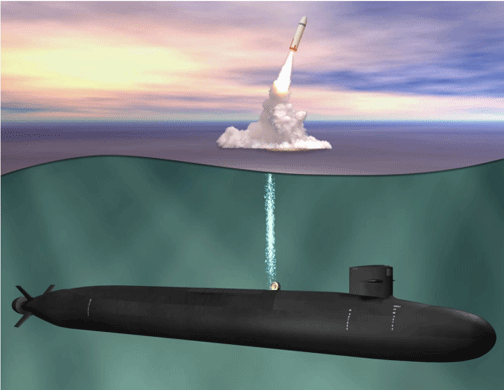 Not just Jeremy Corbyn – senior Tories also think ditching Trident might be a good idea https://tompride.wordpress.com/2016/01/18/not-just-jeremy-corbyn-senior-tories-also-think-ditching-trident-might-be-a-good-idea/18 Jan 2016 by Tom Pride
Perhaps the Cameron government should be more careful before labelling Jeremy Corbyn a national security ‘threat’ just for saying Trident should be scrapped. Because there are several influential people in the Tory Party who think Trident should be scrapped too.
Former Conservative Defence Secretary Michael Portillo agrees with Jeremy Corbyn:
“Our independent nuclear deterrent is not independent and doesn’t constitute a deterrent against anybody that we regard as an enemy. It is a waste of money and it is a diversion of funds that might otherwise be spent on perfectly useful and useable weapons and troops. But some people have not caught up with this reality.”
And Tim Montgomerie – who has been called one of the most influential Tories outside the cabinet – has also floated ditching Trident (from the Times last March): In fact, in 2009 Montgomerie praised the willingness of the Tory Party to discuss the scrapping of Trident as “tough thinking”.
Veteran Tory MP and former Tory Party chairman David Davis has alsoquestioned the affordability of Trident.
And before he was Prime Minister, David Cameron himself refused to rule outscrapping Trident.
But it’s not just senior Tories who agree with Corbyn.
Field Marshal Lord Bramall, General Lord Ramsbotham, General Lord Ramsbotham and General Sir Hugh Beach have denounced Trident as “irrelevant”.
And in 2009, that well-known hotbed of radical socialism, the Daily Telegraphdiscussed reasons why Trident should be scrapped.
Even the Daily Mail has in the past pondered getting rid of Britain’s nuclear deterrent.
OK. I think I’ve just about got the hang of this Trident discussion thing now.
Scrapping Trident is only a threat to national security when it’s not being proposed by a Tory?
Oh shit. Our nuclear deterrent runs on Windows XP. No, really, it does.
Inquiry into Litvinenko’s radiation murder points to Putin as instigator
 Vladimir Putin ‘probably’ ordered KGB defector Alexander Litvinenko’s death by radioactive poisoning: inquiry, SMH, January 22, 2016 Nick Miller London: Russian President Vladimir Putin “probably” ordered the murder of defected KGB spy Alexander Litvinenko in London, an official inquiry in Britain has found.
The finding will put pressure on the British government to take fresh measures against Russia, possibly including targeted sanctions and travel bans. It may also harm potential co-operation in military action against ISIS, and upcoming peace talks on the Syrian conflict.
Litvinenko died in November 2006 after a radioactive poison was slipped into his tea at a London hotel.
The inquiry examined expert evidence and heard testimony from forensic scientists and family members, as well as secret evidence that was not disclosed in the public report – but believed to be from Western intelligence agencies.
Sir Robert said he was “sure” that Litvinenko was deliberately poisoned with the radioactive element polonium 210, which he ingested on November 1, 2006.
That afternoon Litvinenko had met two men for tea at the Pine Bar of the Millennium Hotel in Mayfair, London.
The men were Andrey Lugovoy and his associate Dmitri Kovtun – former Russian army officers. Lugovoy was a former KGB agent.
Forensic evidence showed the Pine Bar was “heavily contaminated” with polonium 210, the inquiry found………http://www.smh.com.au/world/vladimir-putin-probably-ordered-kgb-defector-alexander-litvinenkos-death-inquiry-20160121-gmba0w
EDF Directors might delay UK Hinkley nuclear decision yet again
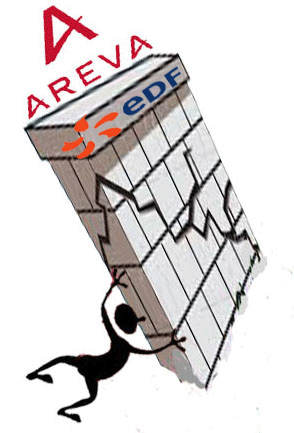 Hinkley Point – Edf to decide whether to build nuclear power station next week By Central Somerset Gazette January 19, 2016 A DECISION on whether a nuclear power station is built at Hinkley Point could be announced next week.
Reports in the French press indicate that the board of directors of the French state electricity generator EDF will meet on January 27 to make a final investment decision on the construction of two nuclear reactors at Hinkley Point near Bridgwater.
The final investment decision on the project has been delayed due to the lengthy negotiations with Chinese partners.
However even now there are concerns that the board might defer the decision for the ninth time……….
EDF is also locked in negotiations surrounding a complex deal to buy a French nuclear reactor builder, Areva, and in the disposal of it’s stake in eight current British nuclear power stations, five in the US, one in Finland and a number of Polish coal fired plants
Preparation of the site stopped last year when negotiations over the financing of the power station stalled.
Campaigners opposed to the building of Hinkley Point C are sceptical that the project will ever see the light of day.
Stop Hinkley spokesperson Roy Pumfrey said: “I’ll believe it when I see it. This is the ninth time EDF has said a final investment decision is imminent. Just last October the chairman of EDF, Jean-Bernard Levy, said work would be starting before the end of 2015. It would be completely reckless of the Board to give the go-ahead to this £25 billion project when the company is in such a parlous state.” http://www.centralsomersetgazette.co.uk/8203-Hinkley-Point-Edf-decide-build-nuclear-power/story-28559932-detail/story.html
Nuclear waste plans an abuse of democracy in Britain
This is basically an engineering project like no other. Its timescale will dwarf the oldest cathedrals.

this time they have legislation in place to make sure the county council can’t stop it. It’s an abuse of democracy.
 Hardest sell: Nuclear waste needs good home By Greig Watson BBC News 18 January 2016 “…….Steadily produced since the end of World War Two, the question of what to do with the nuclear waste from civil, military, medical and scientific uses has been causing equal measures of fear and frustration for decades. With a new generation of nuclear power stations on the way, a fresh search is under way for a community ready to take on the challenge.
Campaigner Eddie Martin says: “It’s very worrying, scary even. They have been looking for somewhere to put this material for decades and it keeps coming back to Cumbria.”…….
Nuclear power stations have been built in 31 countries but only a handful ,including Finland, Sweden, France and the US have started building permanent storage facilities.
All of these are purpose-built caves hundreds of metres below ground, known as a Geological Disposal Facility (GDF). Once the waste is treated and sealed inside containers, it is stacked in the caverns. GDFs are expected to remain secure for thousands of years.
Dr Robert says GDFs or deep boreholes are two possible options for the disposal of radioactive waste but there are still challenges to overcome, particularly in predicting their behaviour over hundreds or thousands of years.
“While there are natural examples of radiation being contained – think of the mines where uranium for nuclear fuel has been sat happily for millennia – the mix of isotopes in radioactive waste is much more complex so we need to know how the nuclear waste interacts with its storage material, be it glass, concrete or metal……… Continue reading
NuScale revs up its marketing propaganda for Small Modular Nuclear Reactors (SMRs)
 Mini-nuclear plants in UK by 2025, Fluor’s NuScale Says by Alex Morales, Financial Review, 18 Jan 16
UK ambitions to build small modular nuclear plants may be realised as soon as 2025, according to Fluor Corp’s NuScale unit, which is seeking to be a pioneer in the market.
 NuScale plans to submit its 50-megawatt reactor design for approval by US nuclear authorities towards the end of 2016. That would leave it well placed to seek the UK equivalent, called Generic Design Assessment, in 2017, Tom Mundy, executive vice-president for program development at the US company, said in an interview in London.
“Assuming the GDA is submitted and takes four years, we’d be looking at approval in 2021,” Mr Mundy said. “There’s then a 36- month construction time, so it’s plausible to expect that if all things line up, we could have a UK plant built by 2025.”
Britain is trying to secure new baseload power as it closes down all its coal-fired plants by 2025. Conventional nuclear power is proving expensive and time-consuming, while most companies don’t think it’s profitable to build new gas-fired stations. The Treasury in November said it will plow £250 million ($515 million) into research and development over the next five years aimed at building one of the world’s first small modular nuclear reactors in the 2020s………..
The global market for small modular reactors may total as much as £400 billion by 2035, according to a report in late 2014 by the National Nuclear Laboratory, which advises the UK government. It identified reactor designs that may meet UK requirements coming from NuScale, Toshiba.’s Westinghouse unit, China National Nuclear and the mPower venture by Babcock & Wilcox Enterprises. and Bechtel Group.
NuScale won’t manufacture its own reactors and has investigated the UK supply chain, according to Mr Mundy. Once established in Britain, the company could then export its modules to other European countries, he said………
When Chancellor of the Exchequer George Osborne announced the R&D funding for modular reactors, it was stated that a competition for funding will be held “early next year”. The Department of Energy and Climate Change said no fixed timetable has been set. Mr Mundy said he doesn’t doubt the government’s intentions.
“Nuclear power has a long legacy in this country, and our reactors are based on tried-and-tested light-water technology,” Mr Mundy said. “I’m optimistic that with what the chancellor said and the indications from DECC we’re going to continue to move forward.” http://www.afr.com/business/energy/nuclear-energy/mininuclear-plants-in-uk-by-2025-fluors-nuscale-says-20160118-gm89c4#ixzz3xd3bnLxN
1 This Month

Read the Public Inquiry Report, the Commissioners’ report, Surrendering Australia: The AUKUS Deception is available to download for free at aukuspublicinquiry.com. Or just watch the replay of the National Press Club Luncheon.


19 November – Webinar – The Reality of Reprocessing
Time: 11:00 AM Pacific Time (US & Canada) / 2:00 PM Eastern / 7:00 PM UK / 8:00 PM CET
Register for the Zoom Event Here



Shut down the radiation-damaged Heysham nuclear reactors now
To see nuclear-related stories in greater depth and intensity – go to https://nuclearinformation.wordpress.com

Say No to NASA’s Reckless Nuclear Reactor on the Moon
Say No to NASA’s Reckless Nuclear Reactor on the Moon
-
Archives
- November 2026 (103)
- October 2026 (302)
- September 2026 (339)
- August 2026 (330)
- July 2026 (355)
- June 2026 (287)
- May 2026 (306)
- April 2026 (356)
- March 2026 (251)
- February 2026 (267)
- January 2026 (308)
- December 2025 (358)
-
Categories
- 1
- 1 NUCLEAR ISSUES
- business and costs
- climate change
- culture and arts
- ENERGY
- environment
- health
- history
- indigenous issues
- Legal
- marketing of nuclear
- media
- opposition to nuclear
- PERSONAL STORIES
- politics
- politics international
- Religion and ethics
- safety
- secrets,lies and civil liberties
- spinbuster
- technology
- Uranium
- wastes
- weapons and war
- Women
- 2 WORLD
- ACTION
- AFRICA
- Atrocities
- AUSTRALIA
- Christina's notes
- Christina's themes
- culture and arts
- Events
- Fuk 2022
- Fuk 2023
- Fukushima 2017
- Fukushima 2018
- fukushima 2019
- Fukushima 2020
- Fukushima 2021
- general
- global warming
- Humour (God we need it)
- Nuclear
- RARE EARTHS
- Reference
- resources – print
- Resources -audiovicual
- Weekly Newsletter
- World
- World Nuclear
- YouTube
-
RSS
Entries RSS
Comments RSS

