UK Hinkley Point nuclear plant project director quits
 EDF project director for UK Hinkley Point nuclear plant quits, 7 News, Reuters February 3, 2016 LONDON – An executive of French utility EDF in charge of Britain’s first new nuclear power station project for 20 years is leaving to join U.S. energy company Entergy Corp , the U.S. firm said on Tuesday.
As an executive director at EDF’s British unit, EDF Energy, Christopher Bakken had been project director since 2011 for the Hinkley Point C nuclear project in southwestern England.
He was responsible for the design, procurement, construction and commissioning of the planned new nuclear plant………
Intractable problems at two similar nuclear plants under construction in France and Finland threaten more delays to EDF’s British plans. https://au.news.yahoo.com/world/a/30718466/edf-project-director-for-uk-hinkley-point-nuclear-plant-quits/
Germany’s costly nuclear waste dump correction
Environment state secretary Jochen Flasbarth, who described the situation in Asse II as “disastrous”, told journalists in Berlin that the current plan was to store the Asse waste, once retrieved, with the high-level radioactive waste for which the government is still searching a site…….
The Asse case shows how difficult it can be to undo a decision related to nuclear waste storage. It will take longer to retrieve the waste than it did to dump it

 Why Germany is digging up its nuclear waste, By PETER TEFFER , EU Observer, WOLFENBUETTEL, GERMANY, TODAY, 2 Feb 16 “….. in hindsight, the Asse II salt mine should never have been used in the 1960s and 1970s as a site to dump nuclear waste, said Ingo Bautz of the Federal Office for Radiation Protection………To anti-nuclear activists, Asse is a prime example of government not listening to citizens’ concerns. “Incidents were predicted,” said Wolfgang Ehmke, activist in the Gorleben region.
But the waste had to be stored somewhere, so the voices that warned against selecting Asse II were ignored.
“The potential risks for the future were accepted,” Bautz said, during a recent press visit to the mine organised by Clean Energy Wire, a non-profit group supported by the Mercator and European Climate foundations.
Road signs, deep underground
Until 1978, low and intermediate-level radioactive waste was stored in Asse II, the only such site in Germany.
Ten years later, the operator of the mine discovered leaks of radioactive brine. But it was not until 2008, when media reported about it, that the leaks became public knowledge.
The German government took control of the mine and tasked the Federal Office for Radiation Protection with its decommissioning.
The office concluded that the risk of groundwater contamination was too big, and the only truly safe option was to retrieve all the waste from the mine and store it elsewhere. In all, 126,000 containers filled with contaminated clothes, paper and equipment were stored in Asse, the office said.
“This task is very difficult,” said Bautz, who joined journalists to travel into the mine, 658m below the surface.
The lift plunged to the bottom at 36km/h. Inside the mine, the temperature was about 30C even though it was freezing above ground.
The mine is so large that workers have to use cars to get around. In one tunnel an LED road sign typically found in residential areas tells drivers to watch their speed……..
Since the mine is over a century old, it needs to be protected against a collapse or flooding. It will also need another lift to use for retrieving the waste.
And because of safety regulations regarding evacuation, only 120 people can be down in the mine at the same time. Workers are monitored for any exposure to radiation……..
In 2011, the EU adopted a rule obliging each country that has produced nuclear waste to have policies on how to manage their waste. Last August, all member states were due to report about their national programmes for the first time.
Germany told the commission it planned to put “all types of radioactive waste in deep geological disposal facilities with the aim to guarantee isolation from the biosphere in the long term, thus ensuring the safety of man and the environment without any need for maintenance”.
Environment state secretary Jochen Flasbarth, who described the situation in Asse II as “disastrous”, told journalists in Berlin that the current plan was to store the Asse waste, once retrieved, with the high-level radioactive waste for which the government is still searching a site…….
The Asse case shows how difficult it can be to undo a decision related to nuclear waste storage. It will take longer to retrieve the waste than it did to dump it…….
This is second part in a two-part series about Germany’s nuclear waste. Part one was about how Gorleben refused to be the country’s permanent waste repository. https://euobserver.com/beyond-brussels/132085
Electricite De France : 6 union board members will oppose Hinkley Point nuclear project
 EDF’s union board members to oppose Hinkley Point – sources, Yahoo 7 News, Reuters February 3, 2016 By Geert De Clercq PARIS – The six union members on EDF’s 18-seat board would vote against the French utility’s plans for two nuclear reactors in the UK, but other board members do not want to postpone the project, sources familiar with the situation said.
The unions want EDF to put off the 18 billion pound project to build two Areva-designed European Pressurised Reactors (EPR) at Hinkley Point in southwest England until it has strengthened its balance sheet and started up at least one of the four EPRs it has under construction elsewhere.
A united front of EDF’s unions opposing a major investment decision would be unprecedented, but the lack of support from other board members removes a major element of uncertainty for the plan.
“If the Hinkley Point project was put to the board today, the six union representatives would all vote against it,” one of the sources told Reuters on Tuesday.
EDF first announced Hinkley Point in 2013 and said in Oct. 2015 that Chinese utility CGN would take a 33.5 percent stake in the project, but it has not yet taken a final investment decision as it struggles to find financing.
On Monday, EDF’s dominant CGT union, which has three board members, called on the firm to postpone the project, saying EDF should prioritise upgrading its ageing nuclear fleet in France, start up the long-delayed EPR it is building in Flamanville, and design a new-model EPR reactor…….
A united front of EDF’s unions opposing a major investment decision would be unprecedented, but the lack of support from other board members removes a major element of uncertainty for the plan.
“If the Hinkley Point project was put to the board today, the six union representatives would all vote against it,” one of the sources told Reuters on Tuesday.
EDF first announced Hinkley Point in 2013 and said in Oct. 2015 that Chinese utility CGN would take a 33.5 percent stake in the project, but it has not yet taken a final investment decision as it struggles to find financing.
On Monday, EDF’s dominant CGT union, which has three board members, called on the firm to postpone the project, saying EDF should prioritise upgrading its ageing nuclear fleet in France, start up the long-delayed EPR it is building in Flamanville, and design a new-model EPR reactor……https://au.news.yahoo.com/world/a/30718719/edfs-union-board-members-could-vote-against-hinkley-point-sources/
Increasingly, it’s the “back end” of nuclear power that will be astronomically costly
 EU paints challenging picture of Europe’s nuclear future, Energy Post. February 2, 2016 by Sonja van Renssen “…..Paying for the aftermathIt is the back-end of the fuel cycle – waste management and decommissioning – that is going to claim a rising share of investments in the years ahead. More than 50 of the EU’s 131 reactors are likely to be shut down by 2025, the Commission says. Member States are moving “from research to action” on geological disposal. The first facilities are expected to be up and running in Finland, Sweden and France between 2020 and 2030 (Finland is in the lead with a due date of 2023). Almost all other Member States are at the “preliminary studies” stage. Public acceptance remains a challenge. So does deciding who is finally liable for the waste.
The projected costs of long-term geological storage depositories run from less than half a billion in Slovenia and Croatia to over €20 billion in France, the Commission says. It all adds up to €68 billion, or nearly half of the total estimated waste management costs of €142 billion out to 2050. For these, the average result of €3.23 per MWh is more than double what was estimated in recent studies, the Commission notes. Over a third of the total costs are for France.
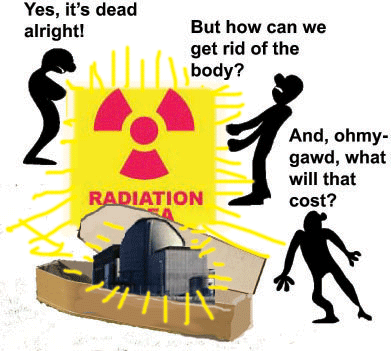 The other half of the end-of-life equation, decommissioning, is largely unknown terrain. When a nuclear site is decommissioned, it is released from regulatory oversight. Given “the ageing status of the European reactors, the capability of the industry and regulators to develop safe and cost effective decommissioning programs will determine to a great extent the future of nuclear commercial power in Europe”. This includes greater transparency in cost estimates, it adds. The Commission comes up with a total cost of €126 billion for decommissioning out to 2050. Some will argue that real costs are likely to be far higher.
Estimates of decommissioning costs per unit also vary “significantly” between Member States, from €0.20 billion in Finland to €1.33 billion in Lithuania. Germany and the UK are at the high end (€1.06 billion and €0.85 billion, respectively) while France is at the low end (€0.32 billion). The estimates depend on technology, the size and location of the reactor, and dismantling strategy, the Commission says.
Experience is scarce: although 89 reactors had been permanently closed in Europe as of October 2015, only three had been fully decommissioned. All three were in Germany. Worldwide, only 13 more have been decommissioned; all of them in the US. The Commission suggests a “European Centre of Excellence” to exchange best practice might help. http://www.energypost.eu/exclusive-eu-paints-challenging-picture-europes-nuclear-future/
EU paints challenging picture of Europe’s nuclear future, Energy Post. February 2, 2016 by Sonja van Renssen Not the full picture
In theory, the money for waste management and decommissioning is being accumulated throughout reactors’ lifetimes, primarily through a fixed contribution based on electricity sales. In most Member States, regulators define the method for securing funds (some, such as Germany however, rely on commercial law to require companies to build up reserves in their balance sheets).
Of the €268 billion needed in the EU by 2050, there is already €150 billion in the bank. In other words, as of 2014, European nuclear operators had dedicated assets that would cover 56% of the total estimated nuclear end-of-life costs, for reactors that were 64% of the way through their lives. A “possible explanation” for the difference is that some Member States are anticipating lifetime extensions.
The Commission concludes that “as a reliable low carbon technology and a major contributor to security of supply”, nuclear energy “is expected to remain an important component of the EU’s energy mix”. Maintaining EU technological leadership, including through the nuclear fusion project ITER, is “essential”. But this does not make nuclear energy competitive or affordable, nor does it ensure it can play a useful role in an EU power system dominated by renewables, where flexibility is central.
There are a few other things the draft PINC does not (yet) do. It does not advise on the involvement of foreign firms in supposedly strategic energy projects (e.g. China in Hinkley Point C). It does not draw lessons from recent upheavals in the nuclear industry (e.g. Areva’s bankruptcy). It does not tackle liability, although a former PINC suggested setting up a harmonised system of liability and financial mechanisms in case of an accident. And finally, it does not discuss harmonising strategies for decommissioning funds – also suggested in the former PINC – beyond proposing a European Centre of Excellence. http://www.energypost.eu/exclusive-eu-paints-challenging-picture-europes-nuclear-future/
Behind the Russia – South Africa nuclear love affair
World Nuclear Association strategist Steve Kidd said that it was highly unlikely that Russia would succeed in carrying out even half of the projects in which it claims to be closely involved.
While a world nuclear report by two independent international energy consultants concludes that, “the lack of realism and overblown market expectations drive nuclear companies and traditional utilities into ruin”.
This may explain why rating agencies consider nuclear investment risky and the abandoning of nuclear projects explicitly ‘credit positive’.
Over and above that, the project as it stands threatens our country’s sovereignty, since our energy supply will be solely in the hands of Russia, which Allister Sparks describes as a country with “one of the world’s nastiest dictatorships”
 Zuma, the Guptas and the Russians — the inside story RAND DAILY MAIL LILY GOSAM 02 FEBRUARY 2016 “………From Russia with love of all things nuclear Russia is Zuma’s “preferred partner” for the 9 600 MW nuclear build, according to energy experts, analysts and journalists. He has had numerous personal negotiations (some undisclosed) between 2009 and 2014 with his Russian counterparts — Vladimir Putin and Dmitry Medvedev[13] — and within that time two agreements were signed (and both concealed from public scrutiny[14] [15] [16]).
Should the nuclear programme go ahead as Zuma and his benefactors have planned, Rosatom — Russia’s state-owned nuclear company — will build the nuclear power plants.
Rosatom consists of 360 companies, with 34 reactors in operation, and 29 under construction, including nine in Russia [M&G][17]. It is a nuclear mass production machine designed and dependent on worldwide nuclear energy expansion and domination[18].
Over the past five years, Rosatom has quietly cornered the market in nuclear energy, systematically seeking out agreements and contracts with roughly 30 nations interested in the installation of nuclear power plants. According to Global Risk Insights, Russian-built nuclear power plants in foreign countries become more akin to embassies — or even military bases — than simple bilateral infrastructure projects. The long-term or permanent presence that accompanies the exportation of Russian nuclear power will afford president Vladimir Putin a notable influence in countries crucial to regional geopolitics[19] [20]. Continue reading
New doubts hang over future of Britain’s Hinkley Nuclear Plan
 New threat to Hinkley nuclear plant cash,Sunday Times, Danny Fortson 31 January 2016 BRITAIN could withdraw financial support for the controversial £18bn nuclear power station at Hinkley Point, Somerset, if a similar plant being built by France’s EDF is not running by 2020, The Sunday Times can reveal.
The condition, attached to a Treasury loan guarantee, raises fresh questions about the future of Britain’s first new atomic power plant in a generation.
Last week EDF, which is 84% owned by the French state, postponed a board meeting in Paris to approve Hinkley Point, amid concerns about the heavily indebted company’s ability to fund the project. The plant will be financed by EDF and its Chinese partner CGN, with the backing of a 35-year contract to sell power to households at above-market rates.
The arrangement hinges on a Treasury agreement to guarantee up to 17 billion pounds in loans…. (registered readers only) http://www.thesundaytimes.co.uk/sto/business/energy_and_environment/article1662807.ece?CMP=OTH-gnws-standard-2016_01_30
Hinkley nuclear fiasco puts the wind up Hitachi, concerning investment in UK
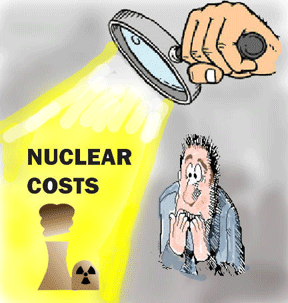 Hinkley Point nuclear fiasco spooks Hitachi boss, Telegraph, 31 Jan 16
Hitachi boss raises concerns about funding of its own Wylfa Newydd project with foreign secretary during visit to Japan The head of Hitachi has warned that the debacle surrounding the construction of Hinkley Point nuclear plant throws up “very serious concerns” about its own investment in the UK.
Hiroaki Nakanishi, chairman and chief executive of the Japanese industrial giant, said the setbacks experienced by Hinkley’s developer EDF raised questions about how future plants including its Wylfa Newydd project are funded.
Hitachi’s subsidiary Horizon is planning to build a nuclear plant on Anglesey that is expected to start generating power by the mid-2020s.
In an interview with The Telegraph, Mr Nakanishi revealed that he had expressed concerns about the expected costs of the project with Philip Hammond during the Foreign Secretary’s visit to Japan this month.
Horizon is in talks with the Government to ensure the Wylfa deal presents value for money for both sides.
Mr Nakanishi said Hitachi had set out “very fair conditions for the making of our investment”, but could only commit to a deal it believed was viable.
“Hinkley Point [raises questions] about what are the real solutions for setting up financial support,” he said.
“Nuclear power construction requires huge money … we need to arrange a financial plan for which the kind of money needed can be introduced.
“Some part is government endorsement, some is more preferable investment conditions from the part of the finance industry.” Mr Nakanishi said the challenges faced by Hinkley Point could also affect Horizon. “The DECC worries about the stability of the scheduled construction of the [Hinkley Point] nuclear power plant, so some of the conditions – the credit requirements – those kind of things may affect us.
“In order to set up the financial conditions [to build Hinkley], Chinese capital was introduced, but what the real result will be – we have a very serious concern about that.”
Asked if the firm might step back if it believed a viable deal was not on the table, Mr Nakanishi replied: “Yes”.
Horizon is in negotiations with the Department of Energy and Climate Change (DECC) on issues such as the strike price, or the amount the Government will guarantee per unit of electricity produced, which will be key to attracting additional finance…….. http://www.telegraph.co.uk/finance/newsbysector/energy/12128405/Hinkley-Point-nuclear-fiasco-spooks-Hitachi-boss.html
Anglesey nuclear plant project under threat over funding fears
Hitachi has warned it could walk away from Wylfa Newydd scheme unless it receives viable subsidy from UK Government 31 JAN 2016 BY OWEN HUGHES The Japanese firm behind Wylfa Newydd warned they could walk away from the £14bn nuclear project unless a viable funding deal could be found……..http://www.dailypost.co.uk/business/business-news/anglesey-nuclear-plant-project-under-10813851
Low dose ionising radiation takes its toll on living organisms – Timothy Mousseau
 Even low radiation dose can take toll: scientist http://www.chinapost.com.tw/taiwan/national/national-news/2016/01/27/457138/Even-low.htm By Enru Lin, The China Post TAIPEI, Taiwan–Animals exposed to even low doses of radiation suffer a higher incidence of physical abnormalities, a world-leading ecologist said in Taipei on Tuesday. Timothy Mousseau, an ecologist at the University of South Carolina, is a pioneering expert on what radiation does to organisms.
For decades, he and his research team have studied Chernobyl, Ukraine — site of the world’s worst nuclear disaster in 1986 — and Fukushima in Japan.
Their studies found that radiation exposure had significant effects on local populations, for instance causing tumors, small brain sizes, sterility and cataracts in birds in Chernobyl.
No Safe Dose?
Findings indicate that radiation, even at low doses, can increase mortality rates and the incidence of physical abnormalities.
“There is no threshold below which there is no effect on organisms,” Mousseau said.
“We need to be very concerned not only about the consequences of nuclear accidents, but also the regular day-to-day operations of nuclear power plants, where radiation is released on a regular basis.”
Call for Taiwan Research
Mousseau was speaking on invitation at a press briefing and forum at the Legislative Yuan, where he was joined by three Democratic Progressive Party (DPP) lawmakers including Tien Chiu-chin (田秋堇).
At the event, anti-nuclear activists called on the central government to commission an independent research team to study effects on people who live near Taiwan’s three operating nuclear power plants.
Birds, Butterflies First
Mousseau said his data suggested that some organisms were far more sensitive to radiation than others.
Studies from Chernobyl and Fukushima showed that the first significant effects of radiation occurred in the same taxonomic groups.
“Birds and butterflies are the two most sensitive groups — we saw immediate large responses in birds and butterflies in Fukushima,” he said.
Other animals, such as grasshoppers and spiders, are less susceptible to the effects of radiation.
On Humans
Meanwhile, there is insufficient research on the human population to make convincing assessments on the impact of low dose radiation.
Mousseau said that in the U.S., studies are thwarted when researchers can’t access the relevant health records.
“There are privacy issues related to health records that are so strong in the United States, and there is a lack of organization of the registries. That makes it very difficult to do solid, hard science,” he said.
Germany’s nuclear waste nightmare
Radioactive waste dogs Germany despite abandoning nuclear power https://www.newscientist.com/article/2075615-radioactive-waste-dogs-germany-despite-abandoning-nuclear-power/ Major problems at a salt mine where 126,000 drums of radioactive debris are stored are fuelling public distrust of long-term waste disposal plans, reports Fred Pearce from Asse, Germany
Half a kilometre beneath the forests of northern Germany, in an old salt mine, a nightmare is playing out. A scheme to dig up previously buried nuclear waste is threatening to wreck public support for Germany’s efforts to make a safe transition to a non-nuclear future.
Enough plutonium-bearing radioactive waste is stored here to fill 20 Olympic swimming pools. When engineers backfilled the chambers containing 126,000 drums in the 1970s, they thought they had put it out of harm’s way forever.
But now, the walls of the Asse mine are collapsing and cracks forming, thanks to pressure from surrounding rocks. So the race is on to dig it all up before radioactive residues are flushed to the surface.
“There were people who said it wasn’t a good idea to put radioactive waste down here, but nobody listened to them,” says Annette Parlitz, spokeswoman for the Federal Office for Radiation Protection (BfS), as we tour the mine.
This is just one part of Germany’s nuclear nightmare. The country is also wrestling a growing backlog of spent fuel. Continue reading
UK nuclear power project a bonanza for Japanese companies, Hitachi-GE and others
Hitachi sees over 1tn yen in business for Japan companies http://asia.nikkei.com/Business/Deals/Hitachi-sees-over-1tn-yen-in-business-for-Japan-companies
 TOKYO — A nuclear power project in the U.K. will generate more than 1 trillion yen ($8.42 billion) in orders for Japanese businesses, it was learned Sunday, giving a shot in the arm to exports by an industry suffering from a lack of orders at home since the Fukushima accident of 2011.
More than 3 trillion yen is budgeted for the project if joint venture Hitachi-GE Nuclear Energy constructs four advanced boiling water reactors — and an even higher sum if six reactors get the nod. Hitachi has invited 40 or so Japanese companies to a meeting at the British Embassy here to explain details.
Also expected are water supply pump manufacturer Ebara as well as Kurita Water Industries and Kubota. Shimizu and Kajima, which have experience building housing structures for nuclear plants in Japan, will also likely go.
While Hitachi-GE will handle the reactor core, Japanese companies are expected to undertake key technologies for operating the nuclear plant, giving Japan about 40% of the project total.
(Nikkei)
Britain axes nuclear protective jobs: who will guard Hinkley IF it goes ahead
 If the nuclear button is finally pressed on Hinkley, who will guard the site? Independent, 29 Jan 16 Parliamentary Business “……..It seems astonishing now but Hinkley Point’s French owner vowed that the new plant – Hinkley’s third since “A” opened in the 1960s – would be built and generating 7 per cent of the UK’s electricity needs by Christmas next year. EDF Energy’s UK boss, Vincent de Rivaz, made that promise in 2007, before the timetable slipped back first to 2019 and then to 2025.
The last completed British nuclear station was Sizewell B in Suffolk, which opened in 1995, while older plants have stopped generating electricity or are preparing for decommissioning. Hinkley C is supposed to be the catalyst for a new fleet of reactors across the UK. ……
Despite the problems, it was still a bit of a shock to see EDF’s board delay a meeting this week in which directors would have made what has been coined a “final investment decision” on the project. After all these years, EDF still doesn’t seem to be fully confident that billions of pounds of investment is worth the risk, and has delayed a decision for at least a month.
…….Mr Lewis took the opportunity to put the boot into George Osborne, saying: “The Chancellor promised he would protect the police but now we know they need to be protected from his cuts. Hundreds of the front-line officers who protect sensitive nuclear power stations and radioactive materials are facing the axe, even though these are top terrorist targets.”
……….. we should be training more of these specialist officers before these new reactors are built. As the CNC puts it, this is “a unique force with a unique role”. Instead, we seem happy to lose 16.35 per cent of those few who know how to protect nuclear sites. ……..http://www.independent.co.uk/news/business/comment/if-the-nuclear-button-is-finally-pressed-on-hinkley-who-will-guard-the-site-a6840836.html
Fatal rockfall at planned French repository site
World Nuclear News 26 January 2016 One person was killed and another injured today by a tunnel collapse within an underground laboratory operated by French waste management agency Andra. The laboratory, near Bure in the Meuse/Haute Marne area, is assessing the site for its suitability to house a national radioactive waste repository.
According to an Andra statement, the working face of the gallery within the laboratory collapsed at 12.20pm. Geophysical surveys were being carried out at the time and the rockfall is believed to have happened as drilling was taking place. The gallery has now been evacuated and its stability is being assessed……. http://www.world-nuclear-news.org/RS-Fatal-landslide-at-planned-French-repository-site-2601165.html
The nuclear revolving door: Former Labour MP appointed boss of nuclear industry trade body
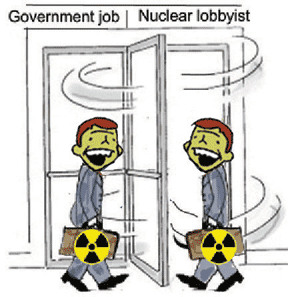
STV News 27 Jan 16 A former Labour MP has been appointed chief executive of the trade body for the civil nuclear industry.Ex-MP for Rutherglen and Hamilton West Tom Greatrex will take up the post at the Nuclear Industry Association next week, succeeding Keith Parker.
Mr Greatrex was an opposition spokesman on energy until he lost his seat in last May’s general election.
He said: “I am delighted to be joining the Nuclear Industry Association at such an exciting time……http://news.stv.tv/west-central/1340504-former-labour-mp-appointed-boss-of-nuclear-industry-trade-body/
French unions unhappy with arrangements for UK’s Hinkley nuclear build
New nuclear power: It’s consumer protection vs corporate profit, http://www.carolinelucas.com/latest/new-nuclear-power-its-consumer-protection-vs-corporate-profit January 27, 2016 The Government’s policy of burdening bill payers with eye watering subsidies for new nuclear power has received another blow. Just before a crucial board meeting at EDF (the French state owned energy giant relied on by the Government to invest in and operate Hinkley Point) French trade unions spoke out about their concerns.
When even staff working for EDF are raising serious doubts about numerous aspects of the proposal, UK Ministers’ cavalier attitude to Hinkley Point C needs to change, more urgently than ever.
In advance of an EDF board meeting due to take place today, where the company was rumoured to be making a final investment decision, French unions threw a welcome spanner in the works.
They’ve raise no fewer than 15 questions about the project, suggesting it would be difficult to complete on time and that financing it could threaten EDF’s survival. The good news, for now, is that EDF has, again, delayed the decision.
But the concerns of French unions are worth a closer look. They include pending legal cases, the lack of evidence Hinkley can be built on time, and the partnership with the Chinese nuclear energy company when no other investors appear to be interested.
Most telling of all is the following question: “what happens if the UK government decides to look after consumer interest?”
This shows that the Conservative Government’s pro-nuclear policy flies in the face of everything they say about looking after the interests of consumers and billpayers. Indeed, studies show that solar power coupled with energy storage and smart grid technology could generate the equivalent to Hinkley Point C at half the cost – to the Govt and to you and I. Wind power, even with backup, ischeaper than nuclear power too.
The Government’s obsession with outdated, inflexible, expensive nuclear power stations is looking more economically and environmentally reckless by the day. So I’ve tabled some more urgent parliamentary questions on Hinkley.
The first question relates to the problems with a similar model of nuclear power station being built at Flamenville in France. It’s already 6 years behind schedule, €7.5 billion over budget, and subject to safety tests following some serious flaws in the reactor vessel and bottom. The ruling on these safety concerns has itself been delayed. I’m pressing the Government on whether the agreement to proceed with Hinkley is conditional on the Flamanville plant demonstrating it’s capable of operating.
My second question is about the huge cost of new nuclear to consumers. It picks up on Ministers’ mindboggling double standards when it comes to subsidies for nuclear power verses solar power, onshore wind and other renewable technologies.
In the Commons earlier this month, the Energy Secretary again attempted to justify her huge cuts to solar subsidies on grounds that “subsidies for low carbon power should be temporary, not part of a permanent business model”. So my question asks exactly when she expects nuclear power stations to meet the same standards and operate on a subsidy free basis. Some renewable technologies are nearly there already, with the costs of others on a clear downward cost trajectory. Energy storage, interconnection and smart grids make Ministers appear stuck in the last century as they desperately argue about baseload.
The cost and climate change arguments against new nuclear power grow stronger every day. This week, workers have made their voices heard. It’s surely time the UK Government started to work for us rather than big energy companies and consign new nuclear to the dustbin of history. Ministers need to start listening to the many voices cautioning against Hinkely and instead back 21st century clean technologies.
In other major nuclear news this week, tomorrow sees a Special Parliamentary seminar co-organised by Nuclear Free Local Authorities and Nuclear Consulting Group: “UK Energy Policy: Late Lessons from Chernobyl, Early Warnings from Fukushima” The keynote speaker will be Naoto Kan, Former Prime Minister of Japan at the time of Fukushima.
1 This Month




Shut down the radiation-damaged Heysham nuclear reactors now
To see nuclear-related stories in greater depth and intensity – go to https://nuclearinformation.wordpress.com

Say No to NASA’s Reckless Nuclear Reactor on the Moon
Say No to NASA’s Reckless Nuclear Reactor on the Moon
-
Archives
- November 2026 (12)
- October 2026 (302)
- September 2026 (339)
- August 2026 (330)
- July 2026 (355)
- June 2026 (287)
- May 2026 (306)
- April 2026 (356)
- March 2026 (251)
- February 2026 (267)
- January 2026 (308)
- December 2025 (358)
-
Categories
- 1
- 1 NUCLEAR ISSUES
- business and costs
- climate change
- culture and arts
- ENERGY
- environment
- health
- history
- indigenous issues
- Legal
- marketing of nuclear
- media
- opposition to nuclear
- PERSONAL STORIES
- politics
- politics international
- Religion and ethics
- safety
- secrets,lies and civil liberties
- spinbuster
- technology
- Uranium
- wastes
- weapons and war
- Women
- 2 WORLD
- ACTION
- AFRICA
- Atrocities
- AUSTRALIA
- Christina's notes
- Christina's themes
- culture and arts
- Events
- Fuk 2022
- Fuk 2023
- Fukushima 2017
- Fukushima 2018
- fukushima 2019
- Fukushima 2020
- Fukushima 2021
- general
- global warming
- Humour (God we need it)
- Nuclear
- RARE EARTHS
- Reference
- resources – print
- Resources -audiovicual
- Weekly Newsletter
- World
- World Nuclear
- YouTube
-
RSS
Entries RSS
Comments RSS

