Court action against nuclear reactors in Belgium
 Lawsuits against nuclear reactors in Belgium kick off, DW 8 Feb 16 Cracked pressure vessels haven’t kept Belgium from restarting two nuclear reactors that many experts consider unsafe. Now, a lawsuit contesting that decision is underway. They are not safe: That is the basic argument brought forth by the Brussels-based lawyers Pierre and Maxime Chome on behalf of the NGO Nucleaire Stop Kernenergie, which is seeking to shut down two nuclear reactors in Belgium.
Last year, authorities turned off the reactors Doel 3, near Antwerp, and Tihange 2, close to the border with Germany, after tiny cracks were found in their pressure vessels. However, the reactors wererestarted at the end of 2015, when Belgium’s nuclear authority assessed that they were safe after all.
Public opposition to that decision has been building, and various legal actions have been launched.The German city and district of Aachen is planning to take its case to Belgium’s Constitutional Court.The Chomes are pursuing a different track and have taken Electrabel, the utilities operator running Doel 3 and Tihange 2, to court in Brussels. The trial is now adjourned, but a verdict is expected within a month. DW got some background from the lawyers after they appeared in court Monday.
DW: What are the legal grounds on which you are demanding that the Doel 3 and Tihange 2 reactors be stopped again?
Since 1993, Belgian law grants environmental NGOs that meet certain requirements the right to demand that the court find a solution for situations that create environmental dangers.
With regard to the reactors Doel 3 and Tihange 2, many scientists are saying that there is a risk of a nuclear accident – with all the consequences that would entail for the population – because of the cracks found in the pressure vessels. So we are asking the court to stop operations of these reactors or alternatively to appoint a panel of experts to re-examine the scientific evidence.
………We also argue that the authorization to restart the two reactors lacks a sound scientific basis because dissenting opinions among the scientists were not duly taken into account……. http://www.dw.com/en/lawsuits-against-nuclear-reactors-in-belgium-kick-off/a-19034309
£100 billion Trident nuclear weapons system could all too soon become obsolete
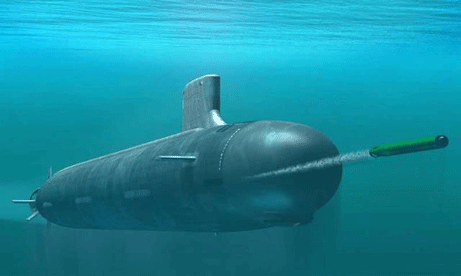
 The Trident nuclear weapons system could become obsolete during its lifetime, Labour warns The shadow defence secretary says new technologies are being developed to expose submarines, Independent Jon Stone @joncstone 9 Feb 16 The Trident nuclear weapons system could become technologically obsolete within its lifetime, Labour’s shadow defence secretary has warned.
Emily Thornberry said that emerging technologies could render Trident ineffective as a nuclear deterrent during its 30-year lifetime. She said the development of under-sea drones and other technologies on the horizon might make a long-term lifetime spending commitment of between £100 billion and £160 billion unwise.
“The idea of the Trident replacement is that it can hide in the sea – if technology is moving faster than that then it may well be that Trident is not able to hide,” she told BBC Radio 4’s Today programme. “If that’s right and we are to bet everything on mutually assured destruction then we have to be assured that it’s going to work. If it can’t hide any more that is a problem.
“It is right for the opposition to make sure that it works before voting for a commitment that according to Crispin Blunt would cost £167 billion.”
The shadow defence secretary is currently leading a review of Labour’s policy on nuclear weapons………
The independent Trident Commission estimated that the system would cost £100 billion over its lifetime, though estimates compiled by Reuters with the help of Tory MP Crispin Blunt and official Ministry of Defence statistics suggest the cost could be as high as £167 billion http://www.independent.co.uk/news/uk/politics/trident-labour-policy-nuclear-weapons-deterrent-obsolete-emily-thornberry-a6862501.html
Confusion about financing of UK’s Hinkley nuclear power project
 nuClear News, No 82 Feb 2016, Hinkley’s Troubles Continue ……..The original idea for financing Hinkley was for the promoters to put in £7.5bn in equity and then to borrow £17bn supported by UK Government Credit Guarantees (for which a premium would be paid). This £24.5bn total was made up of £16bn cost plus £8.5bn interest. Now the cost seems to have gone up to £18bn (or adjusted for today’s prices). But EDF Energy seems to be talking about largely funding this out of equity. EDF said on 21st October: “The project is due to be equity funded by each partner, at least during a first stage.” (19) Of course, there is no indication given by EDF of how long the “first stage” would last. However The Telegraph reported that EDF had originally been expected to use project financing for Hinkley, backed up by up to £16bn in UK Government guarantees via Infrastructure UK. But Mr Lévy announced in October a “radical change” to what he said was a “more efficient” option of delivering its £12bn share of the project from EDF’s own balance sheet. (20)
Sizewell A final investment decision on Hinkley is expected to trigger the launch of the next round of public consultation over plans for Sizewell C. (26) But if EDF is struggling to find its 66.5% share of Hinkley C, how will it ever find the 80% it is expected to put into Sizewell C? References ……http://www.no2nuclearpower.org.uk/nuclearnews/NuClearNewsNo82.pdf

Ukraine buying Western technology, plans to double its nuclear power
 Thirty Years After Chernobyl, Ukraine Doubles Down On Nuclear Power, Radio Free Europe, By Tony Wesolowsky February 08, 2016 Nearly 30 years after Chernobyl spewed nuclear dust across Europe and sparked fears of fallout around the globe, a strapped, war-torn Ukraine is opting for “upgrades” rather than shutdowns of its fleet of Soviet-era nuclear power reactors.
Kyiv is planning to spend an estimated $1.7 billion to bring the facilities, many of which are nearing the end of their planned life spans, up to current Western standards.
Ukrainian officials hope to further their energy independence from Moscow and potentially export some of the resulting electricity to Western Europe as part of an “EU-Ukraine Energy Bridge” that can further cement Kyiv’s ties with Brussels.
But can they allay fears, in Ukraine and beyond, that the plans will put Europe at risk of another Chernobyl?
The project has the backing of the West, including a $600 million contribution split evenly between the European Bank for Reconstruction and Development (EBRD) and Euratom, the EU’s nuclear agency…….
Most of the reactors came online in the 1980s, with the oldest — Unit 1 at the Rivne nuclear plant — generating power since December 1980, three years before the ill-fated reactor No. 4 at Chernobyl started churning out power……..
critics have their doubts.
They say Ukraine’s nuclear reactors should be shut down as soon as possible, noting that one of the reactors still churning out power is older than the unit that exploded at Chernobyl on April 26, 1986. They also raise doubts over whether the program will be carried out to the highest standards……..
The [Ukrainian] Nuclear Regulatory Commission is discussing the possibility of raising the extension period to 80 years.”
The upgrade work is just part of a bold plan to make Ukraine a major energy player in Europe beyond its decades-long role as a major transit country. In a state energy strategy document released in 2006 and covering the sector until 2030, Kyiv foresaw the construction of 11 new nuclear units.
Ukraine’s current financial straits could put such bold plans on hold. However, Kyiv appears to be moving ahead with intentions to make Ukraine part of the European power grid by 2017, a target set out by President Petro Poroshenko after he took office in mid-2014……..
Ukraine is also opening other doors with Western nuclear partners.
In November, Enerhoatom signed an agreement with the French engineering firm Areva “for safety upgrades of existing and future nuclear power plants in Ukraine, lifetime extension, and performance optimization.”
U.S.-based Westinghouse, which has been operating in Ukraine since 2003, signed a deal with Kyiv in December 2014 “to significantly increase” nuclear fuel deliveries to Ukraine until 2020.
Russia’s Foreign Ministry reacted to the deal between Westinghouse and Kyiv by calling it “a dangerous experiment.”
Ukraine still depends on TVEL, a nuclear-fuel subsidiary of Russia’s Rosatom, for fuel at 13 of its 15 reactors, highlighting Russia’s continuing sway over Ukraine’s nuclear program.
Westinghouse has been challenging TVEL for a bigger cut of the nuclear-fuel market in Eastern and Central Europe, where Russian-designed reactors are the norm.
The U.S. Export-Import Bank has offered significant loans for several Westinghouse projects in the region, and U.S. officials have lobbied governments to diversify away from dependence on TVEL, according to Statfor, a U.S.-based analytical center…….. http://www.rferl.org/content/thirty-years-after-chernobyl-ukraine-doubles-down-nuclear-power/27539152.html
UK govt spurns the success of renewable energy, follows the dodgy chimera of “Small Nuclear reactors”
 nuClearNews No 82 Feb 16 Progress on Small Modular Reactors as renewables head off the cliff , In response to a letter about energy policy in The Times on 26th January 2016, Energy and Climate Change Secretary Amber Rudd listed the top 10 things the government is doing to secure investment in clean secure energy. Besides committing to Hinkley Point C, Rudd also mentioned spending £250m for nuclear innovation and Small Modular Reactors. (1) Oddly enough there was no mention of the rest of the 19GW of new reactors proposed – (up from 16GW now that Bradwell B has been added to the theoretical list)…….
Busting the obsolete “baseload” myth, and other myths that hold back renewable energy
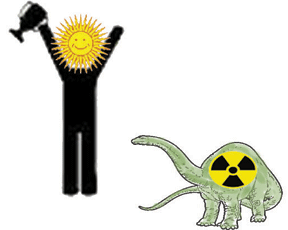 nuClear News No 82 Feb 16 Towards 100% Renewables As Shadow Secretary of State for Energy and Climate Change, Lisa Nandy, re-iterates the myth that nuclear power is an “important as part of the energy mix [if] we’re going to meet the commitments we made in Paris” we investigate how the UK could move to a 100% renewable energy system. Although Nandy says she is not happy with the Hinkley deal she says “we know we will need nuclear power as part of the mix”, but is she right? (1)
UK may be getting Beautiful Nuclear Cathedrals! (Amber Rudd will be pleased)
Moorside: Developers launch competition to design visually beautiful nuclear power station
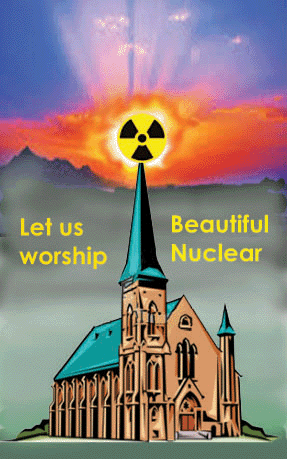
The shortlisted designs will be selected by an independent panel of architects, landscape designers and ecologists including Sir Terry Farrell, who created the MI6 building in London. Their challenge will be to come up with something striking and beautiful which can work around the sensitive construction of the site’s nuclear reactors.
Sebastien Ricard, a director at WilkinsonEyre architects who is currently involved with the multibillion-pound redevelopment of Battersea Power Station in London, said industrial buildings were increasingly regarded by architects as  the “cathedrals of the modern era” as they offered the chance to work with innovative technologies on a grand scale….
it is hoped that the winning plans will succeed in blending the site into its surroundings and perhaps even turn Moorside into a destination in its own right……http://www.independent.co.uk/news/uk/home-news/moorside-developers-launch-competition-to-design-visually-beautiful-nuclear-power-station-a6859311.html
The UK ghost ships with the deadly nuclear cargo
 Guarded from terrorists by Royal Navy sub and 50 commandos…the UK ghost ships with enough nuclear fuel for 80 missiles, Daily Mail,
- Pacific Heron and Pacific Egret ships will sail to Japan for plutonium
- Precious 331kg load could make an incredible 80 nuclear warheads
- Vessels are accompanied by military ships and armed with cannons
By MARK NICOL DEFENCE CORRESPONDENT FOR THE MAIL ON SUNDAY 7 February 2016
Two top secret British ‘ghost ships’ carrying enough plutonium for a huge nuclear arsenal wend their way through the world’s oceans –guarded against terrorists by 50 commandos.
It may sound like a tantalising target for a villain in a James Bond film, but what is potentially the most dangerous secret mission in history is deadly reality.
Two vast container ships – the Pacific Heron and the Pacific Egret – left Barrow-in-Furness, Cumbria, last month on the first leg of their incredible journey.
Their mission is to sail to Japan to collect 331kg of plutonium – enough to make 80 nuclear warheads – which was leased by the UK to a Japanese research facility.
The ships are almost certainly shadowed by a Royal Navy submarine and surface vessels and are heavily armed with 20mm cannon.
They are sailing across the Atlantic before passing through the Panama Canal and into the Pacific on their way to Japan.
Their ultimate destination is a US nuclear storage facility in South Carolina, and the return journey to the American eastern seaboard from East Asia would normally again be made via the Panama Canal.
But this would leave the vessels vulnerable to attack – and their terrifying radioactive cargo could in theory devastate much of Central America.
So instead, they are likely to take the long and dangerous journey around the storm-lashed Cape Horn at the tip of South America, one of the most hazardous shipping routes in the world.
The Heron and the Egret, which each weigh about 6,700 tons when fully loaded, belong to the UK’s Nuclear Decommissioning Authority (NDA). It is expected that each ship will be guarded by as many as 25 commandos.
Nuclear expert John Large told The Mail on Sunday last night: ‘The cargo is invaluable and part of a secret trade in fissile materials between the likes of the UK and US. The biggest risk is a fire or an external missile strike.
‘This is bomb-grade nuclear material and a terror group or rogue state would want to intercept it.’…..http://www.dailymail.co.uk/news/article-3435476/Guarded-terrorists-Royal-Navy-sub-50-commandos-UK-ghost-ships-nuclear-fuel-80-missiles.html
Britaion and Sweden rejecting UN panel’s finding on Julian Assange
 No release in sight despite UN panel decision. Julian Assange: ‘sweet’ victory soured by British and Swedish rejection Founding WikiLeaks founder is being arbitrarily detained at Ecuador embassy, Guardian, Esther Addley,Owen Bowcott,David Crouch in Gothenberg, andJessica Elgot A UN panel may have found that Julian Assange is subject to “arbitrary detention” and called for him to be allowed to walk free, but the WikiLeaks founder remains exactly where he has been for the past 44 months – inside Ecuador’s London embassy and locked in a three-nation war of words.
Britain and Sweden immediately rejected the UN report, which declared that Assange had been “arbitrarily detained” since his arrest in 2010 and during his lengthy stay in the embassy, where he sought asylum in June 2012. The British foreign secretary, Philip Hammond, described the findings as “ridiculous” and the Australian as a “fugitive from justice”.
However, the panel’s findings, leaked on Thursday and published in full on Friday morning, were a welcome victory for Assange, and a moment he intended to savour fully. At 4.01pm he emerged on to the balcony of the west Londonembassy to greet a crowd of several hundred supporters and journalists, pausing first, just briefly, to glance at the sky he has rarely seen for more than three years.
“How sweet it is,” said Assange, holding aloft a copy of the UN report while supporters shouted: “We love you, Julian!” It had been, he said, “a victory of historical importance”, and a decision reached after a process to which both Britain and Sweden had made submissions. “They lost. UK lost; Sweden lost.”
The Swedish government, however, has insisted the report changes nothing, and that it cannot interfere in an independent prosecutor’s ongoing attempt to extradite Assange for questioning over an allegation of rape dating from 2010, which he denies.
Meanwhile, for Ecuador – the Australian’s (mostly) willing host – the findings meant it was time for the two countries to allow Assange to walk free, and to compensate both him and them for the lengthy period he has been holed up in one of its few rooms……
After exhausting all his legal options in the UK and Sweden some time ago, there is no question that the report represents a boost for Assange’s legal team.
Reaching their conclusion by a three-to-one majority after a fifth member recused herself, the panel called on the Swedish and British authorities to end Assange’s “deprivation of liberty”, respect his physical integrity and freedom of movement, and offer him compensation.
Assange, they found, had been unable “to access the full-intended benefit” of the asylum status granted by Ecuador, and “the continuing and disproportionate denial to him of such access … had become cumulatively harsh and disproportionate”.
In particular, the panel offered an excoriating critique of Sweden’s prosecution process, which they said had been in a state of “indefinite procrastination”. With Quito and Stockholm still unable to agree on arrangements to allow Swedish prosecutors access to the London embassy, Assange has yet to be interviewed over the alleged offences. Britain said on Thursday it was “deeply frustrated” by the deadlock.
But for all Assange’s jubilation, he remains in the embassy, the extradition warrant still stands, and Britain and Sweden remain adamant that the report changes nothing.
Assange also remains fearful of a potential future extradition to the US, where a secret grand jury has been looking into whether to prosecute him over WikiLeak’s publishing activities……..
the former chair of the UN working group, Mads Andenas, defended its finding, saying: “There is no doubt that the normal course of action for the Swedish authorities would have been to interview Assange in London. The extradition request was disproportionate…….http://www.theguardian.com/media/2016/feb/05/julian-assange-sweet-victory-soured-by-british-and-swedish-rejection
Nuclear utility Vattenfall in crisis – third consecutive annual loss
 Nuclear tax and low prices continue to impact Vattenfall, World Nuclear News, 04 February 2016 Swedish utility Vattenfall has announced a loss of SEK19.8 billion ($2.4 billion) in 2015, its third consecutive annual loss. It attributed this partly to continued low electricity prices and unprofitable Swedish nuclear power reactors…….
Vattenfall CEO Magnus Hall said, “The major challenge in 2015 continued to be the impact that today’s very low electricity prices have on Vattenfall’s profitability and the valuation of our assets. Unfortunately, combined with new regulatory requirements, this led to further write-downs, mainly on the values of Swedish nuclear power and German lignite in the summer.”
He added, “Continued falling prices and a nuclear tax corresponding to SEK0.07 per kilowatt-hour have put Swedish nuclear power in a critical situation…….http://www.world-nuclear-news.org/C-Nuclear-tax-and-low-prices-continue-to-impact-Vattenfall-0402164.html
Costly, not available for decades, but Germany steps forward in nuclear fusion development
Nuclear fusion power has been the dream of many since the 1950s and on Wednesday German scientists took one step closer to making it possible.

German scientists at the Max Planck Institute in Greifswald, joined by German Chancellor Angela Merkel, injected hydrogen into the Wendelstein 7-X fusion device and heated the gas into plasma for a moment, according to the press release.
The device will not produce energy from the plasma, but the experiment is the first of many that could prove whether the design is capable of being used as a power plant. If so, it could answer one of the many questions surrounding nuclear fusion.
Only the ITER project, a tokamak, is thought to be able to produce plasma that supplies energy, according to the press release. The experiments begun Wednesday could prove that stellarator designs could produce comparable heat- and plasma-confinement.
Scientists working on the Wendelstein 7-X will perform similar experiments, heating gas to plasma and holding it in stasis, over the next four years, slowly increasing the temperature and the time of the discharges, according to the press release.
Eventually, in about four years, the Wendelstein 7-X will test its full heating power (20 megawatts) and discharges lasting 30 minutes………
Nuclear fusion is seen as a safe, efficient form of nuclear power and has been proposed as an eventual replacement for oil and fossil fuels, according to the press release.
But critics have pointed to the mounting cost of a technology that is still under development and likely remain unavailable for decades. Investments for the Greifswald fusion device have surpassed €1 billion over the last 20 years, CBS News reported.
The ITER project recently announced in November that it would take six years longer to construct than previously thought and would require additional funding from the €5 billion estimate in 2006. Science reports current estimates place the ITER project needing €15 billion. http://www.csmonitor.com/Science/2016/0203/How-Germany-took-big-step-toward-nuclear-fusion
French waste group Veolia moving into nuclear clean-up business
 Veolia expands in nuclear waste clean-up with Kurion acquisition http://www.reuters.com/article/us-kurion-m-a-veolia-idUSKCN0VC0V4, 4 Feb 16
French water and waste group Veolia (VIE.PA) said it bought U.S. nuclear waste clean-up company Kurion for $350 million as it chases a slice of a market seen worth $210 billion over the next 15 years.
Veolia said it expects the new business to contribute annual revenue of $350-400 million by 2020, including about $250 million from waste treatment and $100-150 from decommissioning nuclear installations.
Kurion, which was one of few international firms involved in the early stages of the clean-up of the Fukushima nuclear disaster in Japan in 2011, currently has annual sales of about $100 million. Veolia generates about $20 million from cleaning up nuclear waste.
“Bringing Kurion and its employees into Veolia is going to enable us to develop a world-class integrated offer in nuclear facility clean-up and treatment of low-level radioactive waste around the world,” Veolia Chief Executive Antoine Frerot said.
Veolia plans to target the United States, Britain, France and Japan, which together amount to a market of $118 billion by 2030, and will focus on low-level radioactive waste, which represents 97 percent of the volume but just 0.1 percent of the radioactivity.
There are about 400 nuclear plants in operation worldwide, of which 100 to 150 will be decommissioned by 2030. Another 50 nuclear research centres will also have to be dismantled, Veolia said. Frerot said Veolia would focus on concentrating the waste to reduce its volume so that it can be stored safely, mostly in glass.
Kurion was founded in 2008 and and now employs over 200 people. Veolia had total revenue of 23.88 billion euros ($26.05 billion) in 2014. (Reporting by Geert De Clercq; Editing by James Regan)
France’s plan for 1,000 kilometers of road paved with solar panels
 France to pave 1,000 kilometers of road with solar panels http://inhabitat.com/france-to-pave-1000-kilometers-of-road-with-solar-panels/?newgallery=true by Lucy Wang In a major step forward for green energy, the French government has announced plans to installsolar photovoltaic panels on 1,000 kilometers (621 miles) of road over the next five years. The goal is to supply renewable power to 5 million people—or about 8 percent of the French population. The solar roadways will use Wattway panels, a photovoltaic technology unveiled last October by the major French civil engineering firm Colas. According to Ségolène Royal, France’s minister of ecology and energy, the “Positive Energy” project will be funded by raising taxes on fossil fuels, a decision Royal says is “natural” given the low prices of oil.
Nuclear waste repositary still needed: reprocessing is no answer to radioactive trash problem
EU paints challenging picture of Europe’s nuclear future, Energy Post. February 2, 2016 by Sonja van Renssen “……….Limited prospects for recycling nuclear fuel
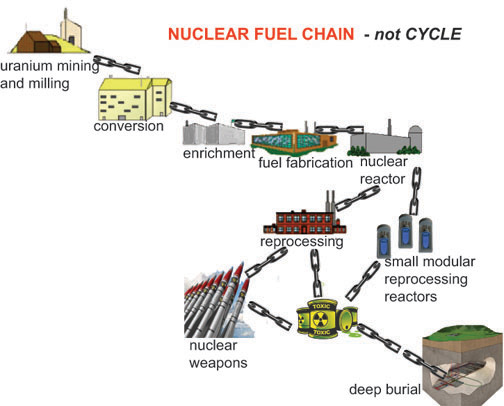
France is the only country in Europe that is still working towards a fully closed fuel cycle with fast neutron reactors and advanced reprocessing technology. Other countries use open cycles.
France will be the only country to operate reprocessing facilities after 2018 (when those in the UK are shut down). The partially closed cycle that technology currently permits “is not expected to give a major reduction of the final disposal solution footprint in comparison to an open cycle”.
The future of recycled nuclear fuel is limited by the lack of fast-breeder reactors, more safety requirements, a higher risk of proliferation, lower competitiveness, and the fact that it still requires a final waste depository……. http://www.energypost.eu/exclusive-eu-paints-challenging-picture-europes-nuclear-future/
European Commission faces the astronomic future costs of nuclear power
Without lifetime extensions, around 90% of the EU’s existing nuclear reactors would be shut down by 2030. But even with lifetime extensions, 90% of existing nuclear electricity production capacity will need to be replaced before 2050. This will cost €350-500 billion, estimates the Commission.
The Commission admits that the costs of new-build projects “are in the high range” of what analysts expected. Hinkley Point C tops the charts with €6.755 per KWe (vs. a €5.290 per KWe average for a “first of a kind” twin unit). There is a “historical trend of cost escalation”, the Commission concludes.

 EU paints challenging picture of Europe’s nuclear future, Energy Post. February 2, 2016 by Sonja van Renssen In a leaked draft document obtained by Energy Post, the European Commission outlines the investments in the EU nuclear industry that it believes are needed out to 2050. The document, originally announced for last year, but off the table again for February, paints a challenging picture for the European nuclear industry. €450-550 billion will have to be spent on new plants and lifetime extensions, costs of decommissioning and waste management are high, competitiveness is a challenge and nuclear’s share in the energy mix will decline from 27% today to 17-21%. Sonja van Renssen investigates.
The “Communication for a Nuclear Illustrative Programme” or PINC is a non-legislative document “periodically” produced by the European Commission, as required by the Euratom Treaty (article 40) that “provides an overview of investments in the EU for all the steps of the nuclear lifecycle”. The last PINC dates back to 2008 so the one currently under preparation will be the first since the Fukushima disaster in March 2011. It “provides a basis to discuss the role of nuclear energy in achieving the EU energy objectives”………
Globally, nuclear-related investment needs are estimated at around €3 trillion out to 2050, with most of that money due to be spent in Asia. ……
Total investments in EU nuclear energy approaching three-quarters of a trillion Euros are needed from now to 2050, the Commission calculates….
Escalating costs of new-build
Without lifetime extensions, around 90% of the EU’s existing nuclear reactors would be shut down by 2030. But even with lifetime extensions, 90% of existing nuclear electricity production capacity will need to be replaced before 2050. This will cost €350-500 billion, estimates the Commission.
“Different financing models are being examined or used in several EU Member States,” the Commission notes, citing the UK’s Contract for Difference for Hinkley Point C and the Mankala model in Finland. It does not give an opinion on state aid for nuclear, however, although this is fully within its remit. Then the understatement of the year: “Some new first of a kind projects in the EU, have experienced delays and cost overruns.” The Finnish Olkiluoto and French Flamanville projects are both at over three times their original budgets and years behind schedule.
The Commission admits that the costs of new-build projects “are in the high range” of what analysts expected. Hinkley Point C tops the charts with €6.755 per KWe (vs. a €5.290 per KWe average for a “first of a kind” twin unit). There is a “historical trend of cost escalation”, the Commission concludes. ……
Squeezing out lifetime extensions
The average age of the nuclear fleet in Europe is 29 years. By 2030, most of the EU’s nuclear fleet would be operating beyond its original design life. The Commission expects lifetime extensions of 10-20 years to require investments of €45-50 billion by 2050. Note that more than 80% of this would be spent from now to 2030. The post-Fukushima safety upgrades increase the cost of these lifetime extensions by some 5-25%, the Commission estimates……http://www.energypost.eu/exclusive-eu-paints-challenging-picture-europes-nuclear-future/
1 This Month




Shut down the radiation-damaged Heysham nuclear reactors now
To see nuclear-related stories in greater depth and intensity – go to https://nuclearinformation.wordpress.com

Say No to NASA’s Reckless Nuclear Reactor on the Moon
Say No to NASA’s Reckless Nuclear Reactor on the Moon
-
Archives
- November 2026 (12)
- October 2026 (302)
- September 2026 (339)
- August 2026 (330)
- July 2026 (355)
- June 2026 (287)
- May 2026 (306)
- April 2026 (356)
- March 2026 (251)
- February 2026 (267)
- January 2026 (308)
- December 2025 (358)
-
Categories
- 1
- 1 NUCLEAR ISSUES
- business and costs
- climate change
- culture and arts
- ENERGY
- environment
- health
- history
- indigenous issues
- Legal
- marketing of nuclear
- media
- opposition to nuclear
- PERSONAL STORIES
- politics
- politics international
- Religion and ethics
- safety
- secrets,lies and civil liberties
- spinbuster
- technology
- Uranium
- wastes
- weapons and war
- Women
- 2 WORLD
- ACTION
- AFRICA
- Atrocities
- AUSTRALIA
- Christina's notes
- Christina's themes
- culture and arts
- Events
- Fuk 2022
- Fuk 2023
- Fukushima 2017
- Fukushima 2018
- fukushima 2019
- Fukushima 2020
- Fukushima 2021
- general
- global warming
- Humour (God we need it)
- Nuclear
- RARE EARTHS
- Reference
- resources – print
- Resources -audiovicual
- Weekly Newsletter
- World
- World Nuclear
- YouTube
-
RSS
Entries RSS
Comments RSS

