EDF in a’panic’ over decision to be made on UK’s Hinkley nuclear power station
 Hinkley Point: EDF set for decision on nuclear plant amid claims of board ‘panic’, The Independent, Sources in France say decision on whether to give the green light to controversial project would be made on Wednesday Geoffrey lean , 24 Jan 16
- The final decision on whether to build Britiain’s first nuclear power station in decades is set to be made by energy giant EDF this week, amid claims of “panic” among the French firm’s board over the viability of the £18bn project.
- Sources in France said the decision on whether to give the green light to its controversial plant at Hinkley Point, Somerset – on which ministers are depending to “kick-start a major new generation of nuclear power stations” – would be made on Wednesday. But the largely state-owned company refused to comment, or even to confirm or deny that the meeting is taking place.
This secrecy reflects the extreme sensitivity about the decision with practicalities and politics pulling in opposite directions. The project suffered a serious blow last week when French regulators delayed a decision on what to do about safety flaws in a similar reactor. But cancelling it would be a huge humiliation for British ministers, and could cause a cross-Channel diplomatic row.
- The “final investment decision” by EDF’s board – repeatedly delayed over the past two years – is the project’s only remaining hurdle.
Last October the government persuaded China to invest heavily in the plant, filling a funding shortfall, and the Energy Secretary Amber Rudd is awaiting the decision before signing a deal to allow the company to charge double the present price for the electricity generated from Hinkley’s twin reactors. Three similar European Pressurised Reactor (EPR) projects are planned for Britain if it succeeds…….
- there are signs of last minute jitters. Union leaders are reportedly warning the company of “financial, industrial and legal risks” in the project, while the French financial journal Boursier.com has suggested that there is “panic on board”.
Last week the French nuclear regulator delayed until the end of the year a decision on what to do about “very serious” weaknesses detected in the pressure vessel of a similar EPR being built at Flamanville, Normandy. The same fault – which could lead to a nuclear accident – was detected in the vessels for the Hinkley reactors, which had been built and will now have to be replaced.
- The Flamanville plant is five years behind schedule and its cost has trebled, while the only other EPR being built in Europe, in Finland, is almost a decade late, and the cost has more than doubled. Two other EPRs being built in China are also thought to be over-running while the cost of Hinkley has already soared.
EDF’s share price has plunged to record lows, and the company is considering selling billions of pounds of assets to fund building Hinkley. On top of all that, Austria is taking Britain to the European Court, alleging it is subsidising the plant illegally.Some British experts believe that, faced with all these difficulties, EDF will defer a final decision again. http://www.independent.co.uk/news/uk/home-news/hinkley-point-edf-set-for-decision-on-nuclear-plant-amid-claims-of-board-panic-a6830456.html
France’s President Hollande visits India, hoping to market nuclear reactors
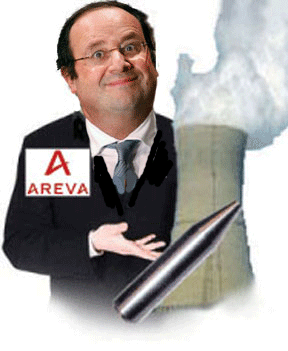 France Signals Rafale, Nuclear Progress as Hollande Visits India, Bloomberg, HeleneFouquet January 24, 2016 France signaled a state-to-state accord with India could be signed on Monday over a deal for 36 Dassault Aviation SA Rafale fighter jets, and that a six-year-old plan to build nuclear reactors in the South Asian nation would see some progress…………
The reactors are planned for Jaitapur, a coastal town in India’s western province of Maharashtra. Areva was seeking further clarity from India on its nuclear liability law before moving ahead with what would be India’s biggest nuclear plant.
The agreement India and the U.S signed recently over insurance-related issues for nuclear plants will help in overcoming certain hurdles, Royal said.
Senior Tories agree with Jeremy Corbyn on ditching Trident nuclear weapons system
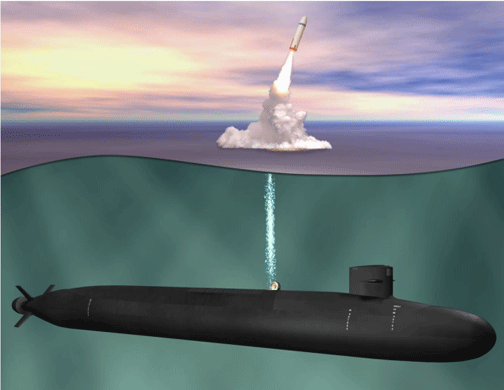
 Not just Jeremy Corbyn – senior Tories also think ditching Trident might be a good idea https://tompride.wordpress.com/2016/01/18/not-just-jeremy-corbyn-senior-tories-also-think-ditching-trident-might-be-a-good-idea/18 Jan 2016 by Tom Pride
Perhaps the Cameron government should be more careful before labelling Jeremy Corbyn a national security ‘threat’ just for saying Trident should be scrapped. Because there are several influential people in the Tory Party who think Trident should be scrapped too.
Former Conservative Defence Secretary Michael Portillo agrees with Jeremy Corbyn:
“Our independent nuclear deterrent is not independent and doesn’t constitute a deterrent against anybody that we regard as an enemy. It is a waste of money and it is a diversion of funds that might otherwise be spent on perfectly useful and useable weapons and troops. But some people have not caught up with this reality.”
And Tim Montgomerie – who has been called one of the most influential Tories outside the cabinet – has also floated ditching Trident (from the Times last March): In fact, in 2009 Montgomerie praised the willingness of the Tory Party to discuss the scrapping of Trident as “tough thinking”.
Veteran Tory MP and former Tory Party chairman David Davis has alsoquestioned the affordability of Trident.
And before he was Prime Minister, David Cameron himself refused to rule outscrapping Trident.
But it’s not just senior Tories who agree with Corbyn.
Field Marshal Lord Bramall, General Lord Ramsbotham, General Lord Ramsbotham and General Sir Hugh Beach have denounced Trident as “irrelevant”.
And in 2009, that well-known hotbed of radical socialism, the Daily Telegraphdiscussed reasons why Trident should be scrapped.
Even the Daily Mail has in the past pondered getting rid of Britain’s nuclear deterrent.
OK. I think I’ve just about got the hang of this Trident discussion thing now.
Scrapping Trident is only a threat to national security when it’s not being proposed by a Tory?
Oh shit. Our nuclear deterrent runs on Windows XP. No, really, it does.
Big anxieties with China and Russia’s plans for floating nuclear reactors
 China and Russia plan to cover the oceans with floating nuclear power plants http://www.marketwatch.com/story/china-and-russia-plan-to-cover-the-oceans-with-floating-nuclear-power-plants-2016-01-21 By JURICADUJMOVIC Jan 21, 2016
And the big problem: Human memory is short, even when it comes to disaster
In an effort to become the largest exporter of nuclear-energy technology, China has started building a reactor housed in a floating vessel, which is scheduled to be finished by 2020. If that sounds alarming, brace yourself: More than 100 additional nuclear reactors are planned for the next decade.
The idea behind this “micro” 200-megawatt reactor (1 megawatt can power 1,000 homes) was to create a mobile energy source for offshore oil and gas exploration, as well as provide electricity, heating, and facilitate desalination for islands and coastal areas.
I don’t know about you, but this certainly gets my Geiger counter beeping with unease. While some dismiss the danger, saying floating nuclear reactors aren’t all that dangerous — nuclear-powered submarines and aircraft carriers basically fit that description — the truth remains that it’s still a freaking nuclear reactor. History taught us the price we have to pay every time “highly unlikely” disasters happen, and now that another 100 of these will be built in the coming decade, the likelihood of yet another nuclear disaster will increase.
The Chinese government did its best to cover up the disaster, silencing local and foreign journalists. Now imagine if it were a floating nuclear reactor. Nothing would change, apart from more dire consequences and even more censorship.
Also looking to join the fun in the radioactive sun is Russia’s Akademik Lomonosov. This floating nuclear power plant will be ready for deployment in October. It’s going to be used to power port cities, industrial infrastructure, and oil and gas drilling rigs and refineries, which, according to Russian Deputy Prime Minister Dmitry Rogozin, will prove to be a great asset in Arctic exploration. The ship is 144 meters long with two reactors capable of producing 70 megawatts of electricity.
Although they have their fair share of nuclear “mishaps,” the Russians are kicking their nuclear efforts up a notch: Akademik Lomonosov is only the first of many floating nuclear power plants that will be built. Vessels will also be available to rent. So far, 15 countries have shown interest in having these power plants for their own use.
Here’s where things get scary: Imagine that out of hundreds of these floating nuclear power plants, just a dozen or so become targeted by terrorists or a military force. Regardless of the scenario, the resulting tragedy would be felt worldwide.
Of course, I could be wrong. Perhaps we’re ushering in a sort of a nuclear renaissance, an age in which nuclear energy really proves to be a safer and better solution than fossil-fuel sources.
But I doubt it. Humanity has proven that it understands the dangers of something only when the worst has already happened, and even then just for a brief while. ..
You can thank the Chernobyl disaster for 20 years of stagnation (1986-2006) during which time fewer nuclear power plants were built. In 2007, however, humanity tried its luck with nuclear energy again. Following a short increase, we saw yet another decline in 2011. Why? You guessed it: That was the year of the Fukushima disaster, and it took the world less than five years to forget the effects of the meltdown. It’s time for another adventure!
But what of Fukushima? As of 2013, the site in Japan remained highly radioactive, with some 160,000 evacuees still living in temporary housing, and tracts of land that will likely remain unsuitable for farming for centuries. The difficult cleanup job will take 40 years or longer to complete, and will cost tens of billions of dollars. Following the disaster, Japan shut down 54 nuclear power plants.
We’ve seen what happens when things go awry with just one nuclear power plant. Now, with hundreds in the making, will we live long enough to finally learn from our mistakes? Let’s hope so.
Inquiry into Litvinenko’s radiation murder points to Putin as instigator
 Vladimir Putin ‘probably’ ordered KGB defector Alexander Litvinenko’s death by radioactive poisoning: inquiry, SMH, January 22, 2016 Nick Miller London: Russian President Vladimir Putin “probably” ordered the murder of defected KGB spy Alexander Litvinenko in London, an official inquiry in Britain has found.
The finding will put pressure on the British government to take fresh measures against Russia, possibly including targeted sanctions and travel bans. It may also harm potential co-operation in military action against ISIS, and upcoming peace talks on the Syrian conflict.
Litvinenko died in November 2006 after a radioactive poison was slipped into his tea at a London hotel.
The inquiry examined expert evidence and heard testimony from forensic scientists and family members, as well as secret evidence that was not disclosed in the public report – but believed to be from Western intelligence agencies.
Sir Robert said he was “sure” that Litvinenko was deliberately poisoned with the radioactive element polonium 210, which he ingested on November 1, 2006.
That afternoon Litvinenko had met two men for tea at the Pine Bar of the Millennium Hotel in Mayfair, London.
The men were Andrey Lugovoy and his associate Dmitri Kovtun – former Russian army officers. Lugovoy was a former KGB agent.
Forensic evidence showed the Pine Bar was “heavily contaminated” with polonium 210, the inquiry found………http://www.smh.com.au/world/vladimir-putin-probably-ordered-kgb-defector-alexander-litvinenkos-death-inquiry-20160121-gmba0w
EDF Directors might delay UK Hinkley nuclear decision yet again
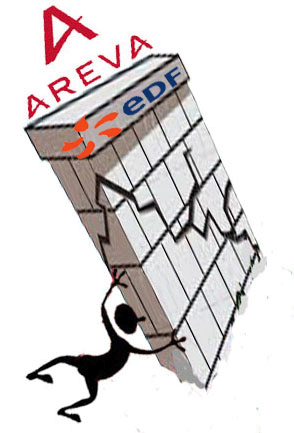 Hinkley Point – Edf to decide whether to build nuclear power station next week By Central Somerset Gazette January 19, 2016 A DECISION on whether a nuclear power station is built at Hinkley Point could be announced next week.
Reports in the French press indicate that the board of directors of the French state electricity generator EDF will meet on January 27 to make a final investment decision on the construction of two nuclear reactors at Hinkley Point near Bridgwater.
The final investment decision on the project has been delayed due to the lengthy negotiations with Chinese partners.
However even now there are concerns that the board might defer the decision for the ninth time……….
EDF is also locked in negotiations surrounding a complex deal to buy a French nuclear reactor builder, Areva, and in the disposal of it’s stake in eight current British nuclear power stations, five in the US, one in Finland and a number of Polish coal fired plants
Preparation of the site stopped last year when negotiations over the financing of the power station stalled.
Campaigners opposed to the building of Hinkley Point C are sceptical that the project will ever see the light of day.
Stop Hinkley spokesperson Roy Pumfrey said: “I’ll believe it when I see it. This is the ninth time EDF has said a final investment decision is imminent. Just last October the chairman of EDF, Jean-Bernard Levy, said work would be starting before the end of 2015. It would be completely reckless of the Board to give the go-ahead to this £25 billion project when the company is in such a parlous state.” http://www.centralsomersetgazette.co.uk/8203-Hinkley-Point-Edf-decide-build-nuclear-power/story-28559932-detail/story.html
Nuclear reactor Legal struggle continues between AREVA and Finland’s TVO
 Areva, TVO have month to settle nuclear reactor claims-minister http://af.reuters.com/article/commoditiesNews/idAFL8N154366 PARIS Jan 20 (Reuters) French nuclear reactor maker Areva and Finnish customer Teollisuuden Voima (TVO) will try to settle mutual claims over a long-delayed nuclear reactor within a month, French Economy Minister Emmanuel Macron said on Wednesday.
“I had the chance at the start of the week to speak to (Finnish Economy Minister) Olli Rehn, and we gave ourselves a month to let the companies and shareholders find the conditions for an agreement or way out,” Macron said on the sidelines of a New Year event.
Finnish utility TVO and an Areva-led consortium with Siemens are claiming billions of euros from one another in an arbitration suit over cost overruns and delays to the EPR reactor Areva is building in Olkiluoto, in Finland, for TVO.
The unsettled claims are holding up a planned takeover of Areva’s reactor arm by French utility EDF, which does not want to be responsible for them.
TVO has a 2.6 billion euro ($2.8 billion) claim against the Areva-Siemens consortium at the International Chamber of Commerce’s (ICC) arbitration court, while Areva-Siemens have a 3.4 billion euro counter-claim.
While the French state – which owns 85 percent of EDF and 87 percent of Areva – has a big stake in a speedy resolution of the Olkiluoto claims, TVO is a private company and the Finnish government’s position so far has been not to intervene.
TVO’s owners include paper companies UPM and Stora Enso as well as utility Fortum. (Reporting by Michel Rose and Yann Le Guernigou; Writing by Geert De Clercq; Editing by James Regan and Susan Thomas)
Anniversary of a nuclear disaster in Spain
 The day America dropped 4 nuclear bombs on Spain, [excellent photos] Daily Mail, 19 Jan 18 … but the disaster, 50 years ago, has been forgotten by all but its surviving victims
- On January 16 1966, a U.S. B-52 Stratofortress took off from Seymour Johnson Air Force base in North Carolina
- Bombers were continually flown on 24-hour missions across the Atlantic, to provide the States’ nuclear capability
- It was a routine mission for the crew but then disaster struck over Palomares, Andalucia, as the aircraft refuelled
- Four hydrogen bombs plummeted to earth at horrific speeds, which would have killed millions had they exploded
By GUY WALTERS FOR THE DAILY MAIL18 January 2016 “……the B-52 had overshot and the boom had missed the fuel nozzle in the top of the plane. Instead, the boom had smashed into the bomber with such force that its left wing was ripped off.
Fire quickly spread up the fuel-filled boom and ignited all 30,000 gallons of the tanker’s kerosene, causing it to plummet to the ground. Meanwhile, the bomber started to break up, and the crew did their best to get out of the plane using parachutes.
As for the hydrogen bombs, there was nothing that could be done. In less than two minutes, they would be crashing into the Earth at an enormous speed — potentially destroying much of the regions of Andalucia and Murcia.
Hundreds of thousands of people could be about to die, and the nuclear fallout would have the capacity to kill millions more all over Europe — not just from radiation poisoning but from cancers for decades to come……..
The nuclear payloads of the four American B28 hydrogen bombs mercifully did not detonate when they landed, even though the conventional explosives in two of the bombs did explode, showering some 500 acres around the fishing village of Palomares with three kilograms of highly radioactive plutonium-239. Continue reading
Nuclear waste plans an abuse of democracy in Britain
This is basically an engineering project like no other. Its timescale will dwarf the oldest cathedrals.

this time they have legislation in place to make sure the county council can’t stop it. It’s an abuse of democracy.
 Hardest sell: Nuclear waste needs good home By Greig Watson BBC News 18 January 2016 “…….Steadily produced since the end of World War Two, the question of what to do with the nuclear waste from civil, military, medical and scientific uses has been causing equal measures of fear and frustration for decades. With a new generation of nuclear power stations on the way, a fresh search is under way for a community ready to take on the challenge.
Campaigner Eddie Martin says: “It’s very worrying, scary even. They have been looking for somewhere to put this material for decades and it keeps coming back to Cumbria.”…….
Nuclear power stations have been built in 31 countries but only a handful ,including Finland, Sweden, France and the US have started building permanent storage facilities.
All of these are purpose-built caves hundreds of metres below ground, known as a Geological Disposal Facility (GDF). Once the waste is treated and sealed inside containers, it is stacked in the caverns. GDFs are expected to remain secure for thousands of years.
Dr Robert says GDFs or deep boreholes are two possible options for the disposal of radioactive waste but there are still challenges to overcome, particularly in predicting their behaviour over hundreds or thousands of years.
“While there are natural examples of radiation being contained – think of the mines where uranium for nuclear fuel has been sat happily for millennia – the mix of isotopes in radioactive waste is much more complex so we need to know how the nuclear waste interacts with its storage material, be it glass, concrete or metal……… Continue reading
France’s PM off to India to market nuclear reactors
 Defence & civil nuclear cooperation will dominate Francois Hollande’s visit Economic Times, By Dipanjan Roy Chaudhury, ET Bureau | 18 Jan, 2016, NEW DELHI: Defence and civil nuclear cooperation will not be the only things that will dominate the visit of Francois Hollande — the fifth French leader to be chief guest at India’s Republic Day celebrations — with India and Paris working to expand partnership in areas of smart cities, solar energy, counter-terrorism, rail infrastructure and space.
Companies involved in the project include Areva, Engie, Enel, HSBC France and Tata Steel. Areva is also setting up a nuclear power plant in Jaitapur, after France became the first country to conclude a civil nuclear deal with India following a clean waiver by Nuclear Suppliers Group in September 2008.
Nuclear hazards extend beyond a nation’s borders: Belgium a case in point

 Belgium’s neighbors concerned about nuclear safety, DW 18 Jan 16 Germany, the Netherlands and Luxembourg are all concerned about the re-starting of Belgian nuclear reactors. The government there promises better communication, but seems to feel little urgency to act.
One and a half hours by car – that’s how long it takes to drive from the site of Belgium’s nuclear reactors at Tihange to neighboring Luxembourg. One and a half hours, or 160 kilometers (100 miles), that’s not enough to put the mind of Luxembourg’s state secretary for infrastructure at ease. Which is why Camille Gira, together with parliamentarians and nuclear safety and health experts, came to Brussels on Monday, to meet Belgium’s interior minister, Jan Jambon, for an “exchange of views.”
“We had a couple of questions concerning the safety of Tihange 2,” spokesman Olaf Münichsdorfer told DW, “and we wanted to remind our Belgian counterparts that our citizens are also at risk should there be a nuclear accident there.”
Cracks prompted temporary shut-down
The Tihange 2 reactor had been shut down since March, 2014, following the discovery of tiny cracks in the reactor’s pressure vessel. But in November 2015, the Belgian nuclear authority saw “no obstacle” to restarting the reactor, which became operational again at the end of December 2015.
A recent study commissioned by the Green party group in the European parliament, on the other hand, said the steel used in the pressure vessels was of such poor quality that – had this been known at the time of licensing- the reactor would never have been allowed to start operations. “How is it then possible to license the continuation of the power plants now that we are aware of all these problems,” wondered the Greens EU parliament co-president Rebecca Harms……….
Aside from raising worries in Luxembourg, re-starting the Tihange 2 reactor has sparked great concern in neighboring Germany. With the city of Aachen a mere 70 kilometers from Tihange, some 100,000 citizens in the region had signed a petition initiated by anti-nuclear activists to stop the reactor from going on the grid again – to no avail. Aachen’s authorities are set to brief the public about the current situation, as well as about emergency plans, later this month………
For their part, citizens in neighboring Netherlands are also worried about another nuclear site called Doel. Same as at the Tihange 2 reactor, tiny cracks have also been found at the Doel 3 reactor’s pressure vessel, causing it to be taken off the grid until its restart shortly before the end of the year.
Only a short while later, the plant was closed again for a few days, after a water leak.
The Doel site is also home to Belgium’s oldest reactor, Doel 1, which had been shut down in February 2015, following its 40th anniversary. But the government then decided to extend the lives of Doel 1 and Doel 2 by another 10 years.
Widespread concern has prompted the Dutch minister for infrastructure, Melanie Schultz, to schedule a visit to Doel this Wednesday, together with Belgian Interior Minister Jambon, accompanied by inspectors from the Dutch nuclear authority……….
In Belgium itself, the scientific council of the nuclear authority – known by the initials of its Flemish name, ‘FANC’ – last Friday issued a report proposing to revise existing nuclear emergency plans.
 One recommendation is to distribute iodine pills to the entire Belgian population. Current plans limit the distribution of such pills to people living within a 20-kilometer-radius of nuclear sites.
The scientific body also recommends extending the safety zone around nuclear sites. Then, people living within 20 instead of 10 kilometers from a nuclear site would have to remain in their homes for 24 hours, with doors and windows closed.Already in March, 2015, Belgium’s National Health Council (CSS) had recommended distributing at no cost iodine pills to people living within a radius of 100 kilometers of nuclear plants………
on the whole, the Belgian government seems rather unfazed by the security concerns raised by its neighbors.
According to Jan Vande Putte of Greenpeace Belgium, that has to do with the fact that Belgium’s main utilities provider, Electrabel, still has a strong influence over politicians, especially in the country’s French speaking region of Wallonia – an influence dating back to the times when the state-owned utilities provider was the only player in the country’s energy market.
“This influence has declined over the past years, but it’s still there,” says Vande Putte. And, he adds, there is another interdependency to take into account: that between the nuclear authority and the nuclear sector………http://www.dw.com/en/belgiums-neighbors-concerned-about-nuclear-safety/a-18987796
NuScale revs up its marketing propaganda for Small Modular Nuclear Reactors (SMRs)
 Mini-nuclear plants in UK by 2025, Fluor’s NuScale Says by Alex Morales, Financial Review, 18 Jan 16
UK ambitions to build small modular nuclear plants may be realised as soon as 2025, according to Fluor Corp’s NuScale unit, which is seeking to be a pioneer in the market.
 NuScale plans to submit its 50-megawatt reactor design for approval by US nuclear authorities towards the end of 2016. That would leave it well placed to seek the UK equivalent, called Generic Design Assessment, in 2017, Tom Mundy, executive vice-president for program development at the US company, said in an interview in London.
“Assuming the GDA is submitted and takes four years, we’d be looking at approval in 2021,” Mr Mundy said. “There’s then a 36- month construction time, so it’s plausible to expect that if all things line up, we could have a UK plant built by 2025.”
Britain is trying to secure new baseload power as it closes down all its coal-fired plants by 2025. Conventional nuclear power is proving expensive and time-consuming, while most companies don’t think it’s profitable to build new gas-fired stations. The Treasury in November said it will plow £250 million ($515 million) into research and development over the next five years aimed at building one of the world’s first small modular nuclear reactors in the 2020s………..
The global market for small modular reactors may total as much as £400 billion by 2035, according to a report in late 2014 by the National Nuclear Laboratory, which advises the UK government. It identified reactor designs that may meet UK requirements coming from NuScale, Toshiba.’s Westinghouse unit, China National Nuclear and the mPower venture by Babcock & Wilcox Enterprises. and Bechtel Group.
NuScale won’t manufacture its own reactors and has investigated the UK supply chain, according to Mr Mundy. Once established in Britain, the company could then export its modules to other European countries, he said………
When Chancellor of the Exchequer George Osborne announced the R&D funding for modular reactors, it was stated that a competition for funding will be held “early next year”. The Department of Energy and Climate Change said no fixed timetable has been set. Mr Mundy said he doesn’t doubt the government’s intentions.
“Nuclear power has a long legacy in this country, and our reactors are based on tried-and-tested light-water technology,” Mr Mundy said. “I’m optimistic that with what the chancellor said and the indications from DECC we’re going to continue to move forward.” http://www.afr.com/business/energy/nuclear-energy/mininuclear-plants-in-uk-by-2025-fluors-nuscale-says-20160118-gm89c4#ixzz3xd3bnLxN
Anything to make nuclear look good – Russia’s asteroid plan
Scientists plan nuclear strike to save earth http://www.theaustralian.com.au/news/world/the-times/scientists-plan-nuclear-strike-to-save-earth/news-story/803d9da83072b44a5934fcb60f1a1268 MARC BENNETTS THE TIMES JANUARY 18, 2016
Russian scientists have come up with plans to protect the planet from asteroids heading towards Earth by launching nuclear missiles.
Although the use of nuclear weapons in outer space is prohibited under a 1967 treaty, Russian scientists say that the ban would be lifted if the planet was in genuine danger. “If the asteroid threat becomes a matter of massive destruction or even the very existence of life on the planet, that ban would naturally be lifted,” they said.
The plan would not be to destroy the asteroid but to deflect it off course to a safe distance from Earth.
The strategy was formulated as part of the 2012-15 European Union-funded NEOShield project. Researchers from Roscosmos, the Russian space agency, said: “Work was distributed among participants from different countries and organisations, and work on deflecting dangerous space objects with nuclear explosions was conducted by Russia.”
NEOShield, which received most of its funding from the EU, brought together researchers from Germany, France, Britain, Spain, Russia and the US. A three-year follow-up programme, NEOShield-2, began last March.
Other proposals developed as part of the project include a “kinetic impactor”, deflecting asteroids by crashing small unmanned spacecraft into them.
Jeremy Corbyn suggests submarines without warheads
Jeremy Corbyn hints at no-nuke subs in Trident compromise
Labour leader suggests  to protect defence jobs while maintaining his stance on disarmament, Guardian, Rowena Mason, 17 Jan 16, Jeremy Corbyn has suggested the UK could have Trident submarines without nuclear weapons, a move that would mean disarmament while protecting defence jobs in Scotland and Cumbria……..
Russia punishes environmental groups as “foreign agents”

 Russian green group labelled ‘foreign agent’ in crackdown on NGOs http://www.theguardian.com/environment/2016/jan/14/russian-green-group-labelled-foreign-agent-in-crackdown-on-ngos
Dauria, that has led ecological campaigns for 20 years, joins nearly 100 environmental and human rights groups hit by law preventing them from receiving funding from abroad, Guardian, Alex Luhn An ecological centre in Russia’s far east has become the latest environmental group to be declared a “foreign agent” amid a wider crackdown on NGOs.
The justice ministry ruled that Dauria, which has led environmental campaigns in Chita and the surrounding Zabaikalsky region for nearly two decades, was a foreign agent under a law that prohibits NGOs that allegedly engage in political activities from receiving grants from abroad. The label, which has all the connotations of the word “spy” in Russian, requires groups to undergo audits and declare this status on all their materials or face large fines.
The accusations stemmed from a joint programme between Dauria, Russian mining giant Polyus Gold and the UK-based Charities Aid Foundation. Dauria was in charge of selecting students for educational activities, while funding for the programme came from abroad.
Dauria head Natalya Kovalyonok, who is also a public chamber member, told local publication Zabaikalsky Rabochy that a hotline she ran for voters to report violations during elections had been deemed to be political activity, even though it did not agitate for any specific candidate.
“Obviously it was unbecoming for the region not to have its own foreign agent, and they really had to find one,”Kovalyonok said.
“Dauria is a conscientious organisation working to protect the earth, and declaring it a foreign agent is a result of … individual groups in the government trying to strengthen their position by cracking down on made-up threats,” Igor Shkradyuk of the Biodiversity Conservation Centre, who has frequently worked in the Zabaikalsky region, told the Guardian.
A growing number of environmental and human rights groups have been declared foreign agents in what Mikhail Fedotov, head of the presidential human rights council, has called a “witch hunt”. Nearly 100 organisations have been added to the foreign agent list, forcing many to cease activities, and the number of NGOs in Russia has reportedly decreased by a third since the law came into effect in 2012.
Last year, president Vladimir Putin signed a law banning “undesirable” foreign organisations that allegedly threaten national security.
Most recently, the Nizhny Novgorod-based Dront Ecological Centre was declared a foreign agent and fined 300,000 roubles (£2,700). Prior to that, the well-respected Sakhalin Environmental Watch was forced to return $159,000 (£110,000) it had received from Leonardo DiCaprio’s foundation after it wasdeclared a foreign agent in September. In recent weeks, the group has been fighting to contain an oil leak from a tanker that ran aground on a shoal off of Sakhalin island.
The environmental groups Bellona Murmansk, Ecodefense, and Planet of Hopes have also been added to the foreign agent list.
1 This Month




Shut down the radiation-damaged Heysham nuclear reactors now
To see nuclear-related stories in greater depth and intensity – go to https://nuclearinformation.wordpress.com

Say No to NASA’s Reckless Nuclear Reactor on the Moon
Say No to NASA’s Reckless Nuclear Reactor on the Moon
-
Archives
- November 2026 (12)
- October 2026 (302)
- September 2026 (339)
- August 2026 (330)
- July 2026 (355)
- June 2026 (287)
- May 2026 (306)
- April 2026 (356)
- March 2026 (251)
- February 2026 (267)
- January 2026 (308)
- December 2025 (358)
-
Categories
- 1
- 1 NUCLEAR ISSUES
- business and costs
- climate change
- culture and arts
- ENERGY
- environment
- health
- history
- indigenous issues
- Legal
- marketing of nuclear
- media
- opposition to nuclear
- PERSONAL STORIES
- politics
- politics international
- Religion and ethics
- safety
- secrets,lies and civil liberties
- spinbuster
- technology
- Uranium
- wastes
- weapons and war
- Women
- 2 WORLD
- ACTION
- AFRICA
- Atrocities
- AUSTRALIA
- Christina's notes
- Christina's themes
- culture and arts
- Events
- Fuk 2022
- Fuk 2023
- Fukushima 2017
- Fukushima 2018
- fukushima 2019
- Fukushima 2020
- Fukushima 2021
- general
- global warming
- Humour (God we need it)
- Nuclear
- RARE EARTHS
- Reference
- resources – print
- Resources -audiovicual
- Weekly Newsletter
- World
- World Nuclear
- YouTube
-
RSS
Entries RSS
Comments RSS

