Belgian terror suspect had video of high ranking nuclear official
 Belgium Finds Video of Nuclear Official at Home of Terrorism Suspect, NYT By MILAN SCHREUER and ALISSA J. RUBINFEB. 18, 2016 PARIS — A suspect linked to the Nov. 13 Paris attackers was found with surveillance footage of a high-ranking Belgian nuclear official, the Belgian authorities acknowledged on Thursday, raising fears that the Islamic State is trying to obtain radioactive material for a terrorist attack.
The existence of the footage, which the police in Belgium seized on Nov. 30, was confirmed by Thierry Werts, a spokesman for Belgium’s federal prosecutor, after being reported in the Belgian daily newspaper La Dernière Heure.
The news set off an immediate uproar among Belgian lawmakers, who charged that they and the country had been misled about the extent of the potential threats to the country’s nuclear facilities, as well as about the ambitions of the terrorist network linked to the Islamic State that used Belgium to plot the Paris attacks, which killed 130 people.
The International Atomic Energy Agency also confirmed on Thursday a report by Reuters that radioactive material had gone missing since November in Iraq, where the Islamic State controls broad areas of territory, adding to fears that the group may be able to acquire material for an attack with newly disconcerting dimensions.
The Belgian news media, citing sources close to the investigation, said that the surveillance footage had been retrieved from the home of Mohamed Bakkali, who was arrested after the attacks and is in detention on charges of terrorist activity and murder.
Belgian officials have asserted privately that Mr. Bakkali may have been involved in planning several attacks, not only those in Paris. There are currently eight people in detention in Belgium and charged with involvement in the November attacks.
The purpose of the footage retrieved by the Belgian police was not clear. But experts and officials speculated that it could have been part of a plot to abduct the nuclear official, who was not identified but had access to secure areas of a nuclear research facility in Mol, and force him to turn over radioactive material, possibly for use in a dirty bomb.
Sébastien Berg, a spokesman for Belgium’s Federal Agency for Nuclear Control, confirmed that the agency had been informed right away of the existence of the footage and said that employees had been told to increase their vigilance on the work floor. But he acknowledged that no additional guards had been hired or other measures taken to secure the perimeters of Belgium’s nuclear sites.
“We took increased security measures at all four Belgian nuclear sites, based on the general raised security alert in the country and on concrete indications that showed that the terrorists involved in the Paris attacks had the intention to do something involving one of our four nuclear sites,” Mr. Berg said.
Those sites include two power plants and a private company that produces medical isotopes, in addition to the facility in Mol, where scientists conduct research and experiments on radioactive waste to try to find safer ways to store it and reduce damage to the environment, Mr. Berg said.
One experiment being carried out involves the stocking of nuclear waste in bunkers dozens of meters underground, he said, adding that the facility had large stocks of nuclear waste on hand.
Members of Belgium’s Parliament expressed outrage in a regular session Thursday, saying that the interior minister, Jan Jambon, had told them in January that there was no specific threat to nuclear facilities……..
Extremist organizations have long expressed interest in obtaining radioactive material, and there is a market for stolen nuclear waste. News reports in October documented at least four attempts by Russian gangs to sell radioactive material in Moldova, which were thwarted by local officials in concert with the United States’ Federal Bureau of Investigation.
The International Atomic Energy Agency identified the material missing in Iraq as iridium-192, a highly radioactive isotope that is sometimes sought for use in dirty bombs.
Mr. Berg said that, if acquired, the material at the site in Mol could also be used to make a dirty bomb, which would spread radioactive material over the whole impact zone……. http://www.nytimes.com/2016/02/19/world/europe/belgium-nuclear-official-video-paris-attacks.html?_r=0
Paris terrorist attackers had planned to target Belgian nuclear reactors
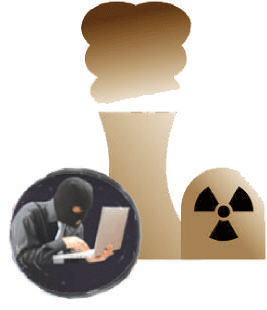 Jihadists who carried out Paris terror attacks had planned to target Belgian nuclear plants, investigators reveal, Daily Mail, 19 Feb 16
- Paris terrorist ‘spied on’ Belgian nuclear official using a video camera
- Target was a director of Belgium’s nuclear research and development
- It is believed the group were planing attacks on Belgian nuclear plants
- The attacks in Paris on November 13 left 130 dead and 352 injured
- For the latest on the Paris attackers visit www.dailymail.co.uk/ParisAttacks
By SARA MALM FOR MAILONLINE and AFP REPORTER
The Paris terrorist attackers had also planned attacks on Belgian nuclear plants, local media reports.
Belgian investigators have found hours of video footage of a senior Belgian nuclear official filmed at the person’s home in the Flanders region.
It is believed that the group that carried out the horrific Paris attacks on November 13 last year, killing 130 and injuring 352, had spied on the person as part of research for an attack.
The ten-hour long video footage obtained by Belgian officials showed the front door of the home of a director of Belgium’s nuclear research and development programme.
The footage was discovered ‘as part of seizures made following the Paris attacks,’ the prosecutor added, refusing to divulge the individual’s identity ‘for obvious security reasons’. ………http://www.dailymail.co.uk/news/article-3452454/Jihadists-carried-Paris-terror-attacks-planned-target-Belgian-nuclear-plants-investigators-reveal.html
Call on the British govt to hold a public enquiry on the murder of Hilda Murrell
The British Government: To open a public enquiry on the murder of Hilda Murrell https://secure.avaaz.org/en/petition/The_British_Government_To_open_a_public_enquiry_on_the_murder_of_Hilda_Murrell/?sFUDDfb Why this is important
The unsolved murder of Hilda Murrell, Anti-Nuclear Activist

 Hilda Murrell, Anti-Nuclear Activist, Abducted & Murdered 31 years ago, Mining Awareness Plus, “Hilda Murrell (3 February 1906 – 23? March 1984) was a British rose grower, naturalist, diarist and campaigner against nuclear power and nuclear weapons. She was abducted and found murdered five miles from her home in Shropshire,…” http://en.wikipedia.org/wiki/Hilda_Murrell
In the UK House of Commons, 1984:
“There is also the evidence of my friend, Mr. Gerard Morgan Grenville, whom I have known for nearly 40 years. Mrs. Morgan Grenville tells me how Hilda Murrell rang them up in a great state at the end of February, and how she fetched her husband. Mr. Morgan Grenville, with whom I have had a good deal to do and who is a deeply serious man, says that her parting words on the telephone were: “If they don’t get me first, I want the world to know that one old woman has seen through their lies“. One is reminded of Scudder, the diarist in John Buchan’s “The Thirty-Nine Steps”. Mr. Morgan Grenville had never heard Miss Murrell speak in that way before. Why should an old lady be prompted to say that?
There has been speculation that her death was connected with a paper that she had written on the problems of nuclear waste and reactor choice, which she hoped would be read at the Sizewell B inquiry. Arthur Osman, writing in The Observer on 2 December, began his article: Silkwood parallels in English woman’s death … Was anti-nuclear power campaigner Hilda Murrell murdered because she was becoming too much of a nuisance to the industry?” “House of Commons Sitting, Miss Hilda Murrell (Murder) HC Deb 19 December 1984 vol 70 cc458-72 458 3.51 am, Mr. Tam Dalyell (Linlithgow)” © Parliamentary Copyright, OPL:http://hansard.millbanksystems.com/commons/1984/dec/19/miss-hilda-murrell-murder [1]
Book Review of:
“A Thorn in Their Side – The Hilda Murrell Murder
Submitted by Anonymous on Fri, 01/27/2012 – 10:49 Reviewed by Nigel Chamberlain, January 2012………anybody who was involved in anti-nuclear activities during the 1980s was placed under Police Special Branch surveillance in their own localities. Those asking the more penetrating questions and those encouraging others to join them in actively opposing the nuclear state were subject to more intensive forms of intimidation – and worse – at the hands of MI5 and their sub-contractors. The ‘civil’ nuclear power industry also had a surveillance arm.
Hilda Murrell was one of those anti-nuclear activists whose research and writing was deemed dangerous enough by the security state to warrant their full attention and to prevent her ideas from spreading and challenging those who held power. Although it is hard to comprehend in our post-Cold War environment and less ideological times, those who held power decided that those who fundamentally challenged it, could legitimately be harassed, have their human rights suspended and be marginalised – all in the name of defending freedom and democracy.
The irony is that those who were campaigning for the abolition of nuclear weapons and the prevention of the expansion of the nuclear power industry were trying to achieve it by almost entirely democratic means. …………..
Read the book, visit the Hilda Murrell website, then make your own judgement. http://www.hildamurrell.org
Author: Rob Green, Publisher: Rata Books
Year published: 2011
ISBN: 978-0-473-19685-1“http://www.natowatch.org/node/611http://www.natowatch.org/legal http://creativecommons.org/licenses/by-nc-sa/2.0/uk/ [The book is available at Amazon, Ibooks, etc. Additional info is found at the Hilda Murrell web site.]……………https://miningawareness.wordpress.com/2015/03/22/hilda-murrell-anti-nuclear-activist-abducted-murdered-31-years-ago/
UK public conned by vested interests, into funding Trident nuclear weapons system
The whole nuclear weapons industry, the flaccid phallic posturing, the stern, brow-furrowing arguments for maintaining it – all are a con of epic proportions. We, the public, are being deceived left, right and centre into allowing fraudulent governments to squander our money on something which merely serves to inflate the wealth of those involved.
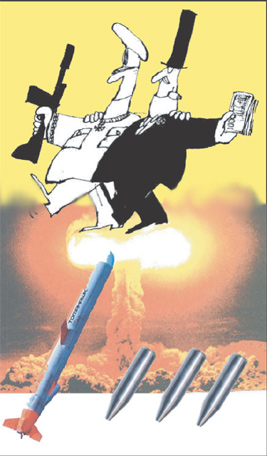 Trident: How the banks have their fingers on the button https://www.commonspace.scot/articles/3468/trident-how-the-banks-have-their-fingers-on-the-button CommonSpace columnist Steve Topple investigates the finance behind nuclear weapons
THE debate surrounding the renewal of the Trident nuclear ‘deterrent’ is a perpetual one that never appears to be out of the news in some way. Take last week. On Monday, Labour went into (another) nuclear-grade meltdown over the ‘thorny’ issue (pun intended) of the party’s stance on the matter, with the GMB Union wading into the debate on Tuesday.
Thursday saw Whitehall sources suggest David Cameron will be delaying the vote on its renewal until after the EU referendum, and on Saturday the US defence secretary blundered in, urging the UK to renew the programme to keep its “outsized” role in the world, like our country was some sort of fast-food meal deal you only get in America.
How much do we really know about the detail of the finance behind Trident and the networks of power?
The UK’s Trident system consists of four submarines, each capable of carrying 16 missiles (but in line with government policy only ever carry eight). These in turn carry up to 12 warheads each (although again, policy deems a maximum of 40). One is on constant patrol, while another is under maintenance and two are either in training or in port.
The cost of the Trident renewal programme is, as is always the case, subjective. The government claims it will be £31bn (up from £25bn last year); activists claim the figure will be a lot higher, and the top-end amount quoted was by Reuters, estimating that over its lifetime the system will cost £167bn.
But how much do we really know about the detail of the finance behind Trident and the networks of power? I delved deeper into the murky waters of vested and financial interests that surround the world’s nuclear weapons – and the results were telling.
To understand why the current UK Government and its predecessors are just so keen on keeping our ‘deterrent’ – ignoring the advice of so many independent bodies – as always the first place to begin is the House of Lords.
Lord Hollick, who was a member of the select committee on economic affairs which gave evidence against Scottish independence, is also a director of a company called Honeywell, which has a contract with the government to develop systems to extend the life cycle of Trident.
I delved deeper into the murky waters of vested and financial interests that surround the world’s nuclear weapons – and the results were telling.
Lord Hague, director of Intercontinental Exchange Inc. (a company which deals in the trading of stocks and shares, including defence) is also chair of the Royal United Services Institute (RUSI), which advises government on defence policy.
Meanwhile, Lord Hutton, adviser to nuclear weapons site security firm Bechtel Corporation, consultant for big-name weapons manufacturer Lockheed Martin and chair of the Nuclear Industries Association, was until last year chair of RUSI.
By my calculations (checking every member’s interests against those companies involved with the Trident), over 15 per cent have what can be deemed as ‘vested interests’ in either the corporations involved in the programme or the institutions that finance them, and this is just for our nuclear capability – one suspects the percentage for defence in general would be higher.
While we’re on the subject of RUSI, on 4 February this year Malcolm Chalmers, director of research there, participated in a debate on Newsnight where he asserted it was “most unlikely that [Trident] will be phased out … I see no evidence for that”, while promoting the myth that the main argument against nuclear weapons was a “moral” one – because we couldn’t spend £167bn in a better way, obviously…
This stance from Chalmers on Trident (and RUSI’s previous proposals of merely scaling back the programme) is unsurprising when you consider the links to the House of Lords I mention above – even less so when you take into account that RUSI is sponsored byfour companies directly involved in Trident – Babcock, Lockheed Martin, Raytheon and Rolls Royce.
The rot surrounding the rabid disease of cronyistic, chumocratical influence in Westminster putridly festers in the banks.
But there’s more. The rot surrounding the rabid disease of cronyistic, chumocratical influence in Westminster also putridly festers in the banks. A report by the International Campaign to Abolish Nuclear Weapons (iCan) cited 41 UK-based financial institutions that invested directly in the nuclear weapons industry (including Labour Party bankrollers the Cooperative); institutions which can be found splattered across the House of Lords register, riddling the government external appointments list (note HSBC’s former directors Lord Green, Rona Fairhead of the BBC Trust and Ruth Kelly of the FCA); and on the headers of numerous political party consultations.
But, here’s the real crux of the matter regarding financial institutions and the system as a whole’s involvement in the nuclear weapons industry – they don’t just bat for ‘our team’.
Almaz-Antey is a state-owned Russian defence industry manufacturer, responsible for at least 26 sub-operators, which predominantly develops anti-aircraft defence systems. It gained notoriety after it was suggested that it was one of its BUK surface-to-air missiles that shot down flight MH17 over Ukraine in 2014.
Funding for Almaz-Antey generally comes from either the Russian Government directly, or via the state-owned Vnesheconombank (VEB) development bank – for example, in 2012 Almaz received RUB 35bn from the Defence Ministry and 25bn from VEB to develop the S-500 Prometey air and missile defence system – touted to be the most advanced on the planet.
Being ‘state-owned’, however, doesn’t always mean state-funded, as an archived press release from 2011 shows. In April of that year VEB signed an agreement for a syndicated loan worth $2.4bn, from 19 banks – and they were all outside of Russia.
UK institutions included Barclays and HSBC, and other prominent contributors were JP Morgan, Morgan Stanley and Credit Suisse – five of the very same banks that were also listed on iCan’s report as funding/investing in Western nuclear programmes.
This example is not, however, some fluke. Uralvagonzavod, which develops Russia’s anti-aircraft tanks, deals with the country’s Sberbank. It, in turn, is 43 per cent retained by ‘international legal investors’ (the detail of which I cannot find), and owns £87bn of assets across the OECD countries. Furthermore, Barclays is also involved, having bid forthe contract to supply the bank with an RUB 3.5bn credit line.
Rostec State Corporation (an umbrella company for 663 other organisations, mostly relating to the military) owns and is part-financed by Novikombank – which in turn is financed by Deutsch Bank, Credit Suisse and – yes, you guessed it – Barclays.
Note also that the latter runs investment operations in the country, and has been assisting the Russian Government with the privatisation of state assets. But perhaps the most disturbing part of this is who finances Russia’s Trident equivalent – the Dolgorukiy class submarine programme.
Manufactured by a company called Sevmash, it receives its financing from the state-owned VEB bank. So yes, correct – Barclays and HSBC, both UK banks, are both directly funding Trident via investment and financing arrangements with Rolls Royce, BAE Systems and Babcock in the UK, while also indirectly funding the equivalent nuclear deterrent of UK ‘enemy’ Russia.
Get it yet?
Multinational corporate banks are playing one big chess game – except it’s all make-believe and there will never be a checkmate, because that would be unprofitable. Governments willingly participate – those in charge are invariably shareholders in weapons manufacturing companies or their financiers.
We are not living in some Sean Connery-era James Bond film. The world is intrinsically too financially entwined for either the East or West to ever press ‘the button’ – and to believe they would is, in my opinion, deluded.
You want a comparison of the current state of the planet and a Bond film? Try Spectre. A group of unelected corporate terrorists pulling the strings of government – or the‘military industrial complex’ if you prefer (although Eisenhower’s theory now pales in comparison with the reality).
Perhaps what sticks in the throat the most, however, is one bank I haven’t mentioned: the Royal Bank of Scotland.
The bank that we, the public, hold an 84 per cent stake in after the 2008 financial crash. A bank that invests not only in 10 companies that are involved in Trident, but is also a financier of Russia’s VEB bank. So therefore a bank which invests in Russia’s nuclear deterrent, as well as ours.
We are fundamentally providing the money to pay for both the East and the West’s nuclear weapons – and then to add insult to injury we pay for our own, again, via taxation.
The whole nuclear weapons industry, the flaccid phallic posturing, the stern, brow-furrowing arguments for maintaining it – all are a con of epic proportions. We, the public, are being deceived left, right and centre into allowing fraudulent governments to squander our money on something which merely serves to inflate the wealth of those involved.
There is no threat – except from our own foolhardiness for sleep-walking for decades and allowing this to continue happening.
The sooner we wake up, the better.
The case grows, for stopping Britain’s Hinkley Point nuclear project
 Britain’s nuclear strategy exposed at Hinkley Point EDF’s travails only add to the uncertainty over UK energy policy http://www.ft.com/intl/cms/s/0/9d484f08-d63c-11e5-829b-8564e7528e54.html#axzz40ZWJ8xlp February 18, 2016
It seemed an attractive proposition. Not only was this less than previous reactors, it was competitive with other power sources. New technology seemed to have opened the door to affordable carbonless electricity; Britain could meet its ever-tougher climate goals without shaking the public down.
A decade on and a major nuclear accident later, the world knows better. Nuclear projects elsewhere have been scrapped and existing stations shuttered or scheduled for early closure. Meanwhile stringent regulations have exposed Areva’s promise as a chimera. It turns out that the price of new nuclear for Britain is not £24 per MWh but nearly four times as much.
Even at these elevated prices, Britain’s first proposed new station, at Hinkley Point, is in difficulty. Despite agreeing a deal in 2013, EDF, the developer, has yet to commit to the £18bn project. There are concerns about technology and the French group’s financial capacity. Hinkley Point C — if it opens — may be materially delayed.
The government has done its best to make things easy. It eschewed a competitive bidding process and guaranteed to buy electricity from Hinkley Point at a £92.50 per MWh index-linked for 35 years after the station has been commissioned.
The French face several obstacles. First, there is the question of EDF’s balance sheet, groaning under a €37bn debt pile. The company’s share price has more than halved in the past year and its market capitalisation is now about €21bn. That is not much more than the company’s 67 per cent share of the cost of Hinkley C.
Linked to this are worries about the reactor technology it is employing. The two projects under construction, including EDF’s at Flamanville in France, are delayed and over budget. It might be difficult to entice lenders while it is possible that problems with Flamanville might cause construction to be halted or scrapped.
Politicians have come this far down the road with Hinkley Point because of the constraints they are under. Despite life-extensions, the UK’s existing nuclear stations are near to closing and its dirtiest coal plants are being shut to comply with EU rules. New capacity is needed. Replacing coal with gas would reduce carbon emissions but not enough to meet the targets the government has set itself.
New nuclear might not be needed were the UK to rethink its costly promises and reduce its carbon targets to match those of other EU states. If new reactors are to be considered, however, they must be subjected to the rigours of competition. That is the only way to get the right technology at acceptable cost.
Britain is saddled with the worst of all worlds. The government has effectively written the French a long-dated option to sell it unproven technology at an extremely generous price. Politically painful it may be, but the case for halting Hinkley Point C is becoming hard to refute.
Europe is more than 118 billion euros short of funds needed to decommission its nuclear reactors
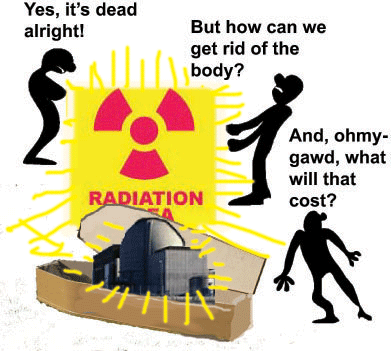 EU lacks 118 billion euros in nuclear decommissioning funds – draft http://www.reuters.com/article/us-europe-nuclear-idUSKCN0VP1S6
Assets covering only 150.1 billion euros in decommissioning costs – which includes the lengthy dismantling of stations as well as the removal and storage of radioactive parts and waste – are available, compared with 268.3 billion euros in expected costs, the paper shows.
The data is part of a broader analysis of Europe’s nuclear capacity, the so-called Nuclear Illustrative Programme of the Commission (PINC), the last of which has been published in 2007, before Japan’s Fukushima nuclear crisis five years ago.
As a result, Europe’s largest economy Germany has decided to fully abandon nuclear power by no later than 2022, relying on solar, wind as well as coal and gas-fired instead to eliminate the risk of a meltdown.
Among 16 EU member states still operating nuclear plants, only Britain’s operators have sufficient dedicated assets to cover the expected costs, 63 billion euros, according to the paper. France, which operates Europe’s largest fleet of nuclear plants, is heavily underfunded, having earmarked assets only worth 23 billion euros, less than a third of 74.1 billion euros in expected costs.
In Germany, an additional 7.7 billion euros in funds are needed on top of the current 38 billion euros.
Decommissioning costs vary according to reactor type and size, location, the proximity and availability of disposal facilities, the intended future use of the site and the condition of the reactor at the time of decommissioning.
Although technology used for decommissioning might gradually become cheaper, the cost of final waste depositories is largely unknown and costs might spiral over time. Reactor lifespans are measured in decades, which means financing costs and provisions depend strongly on unpredictable interest rate levels.
($1 = 0.8952 euros)
(Reporting by Barbara Lewis; Writing by Christoph Steitz; Editing by Tom Heneghan)
Limited liability for Germany’s nuclear operators in nuclear paseout
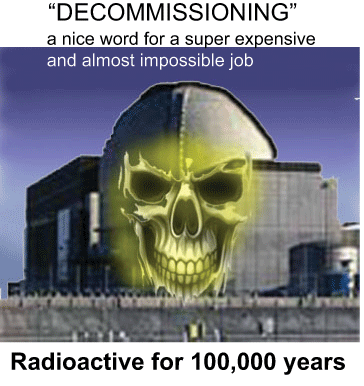
 German commission favours limited liability for nuclear phaseout-document http://www.reuters.com/article/germany-nuclear-idUSB4N11703M Feb 18 Germany’s nuclear operators could face only limited long-term liability for the costs of the country’s nuclear phaseout, according to a paper from a government-appointed commission seen by Reuters on Thursday.
The paper indicates that the commission took on board concerns of the four utilities – E.ON, RWE, EnBW and Vattenfall – which have earmarked nearly 40 billion euros in provisions to pay for the dismantling and storage of waste from their nuclear plants.
The last plant will be closed in 2022.
Worries over their financial health have raised fears that the companies may be unable to turn the provisions – including some illiquid assets – into liquid funds, eventually leaving taxpayers to foot some or much of the bill.
The paper said an unlimited liability would lead to excessive demands being made of the operators and that this would ultimately not be beneficial to society.
The paper said the operators may be asked to set aside additional funds on top of existing provisions for the costs of the nuclear phaseout, and that it favoured a state-controlled fund for the long-term costs.
A spokesman for E.ON said he did not want to comment before the final results of the commission are published. (Additional reporting by Tom Kaeckenhoff in Duesseldorf; Reporting by Markus Wacket; Writing by Madeline Chambers; Editing by Noah Barkin)
Greenpeace gives 8 reasons why UK should now give up on Hinkley nuclear station
 8 reasons George Osborne needs to let Hinkley nuclear plant go http://www.greenpeace.org.uk/blog/climate/8-reasons-george-osborne-let-hinkley-nuclear-go-20160216 by Richard Casson — 16 February 2016 George Osborne wants to build a new nuclear plant in Somerset — Hinkley Point C. If it goes ahead it’ll be the first nuclear power station to come online in the UK in 30 years.
But right now it’s increasingly looking like a big if. Because Hinkley is on the verge of becoming a national omnishambles. It’s suffered huge delays, safety concerns, and it’s clear the money could be far better spent. Here are eight reasons the Chancellor needs to #LetHinkleyGo.
1. The ‘unconstructable’ nuclear reactor
When Hinkley was first proposed in 2007, part of the Labour government’s sales pitch at the time was that it’d use a newfangled European Pressurized Reactor (EPR for short). Sounds appealing, right? Not so much. There are three sites where EPRs are under construction — and all three are experiencing serious difficulties. One academic even described the type of reactor as ‘unconstructable’. Not exactly encouraging is it, George?
2. The cost is astronomical
Back in 2008 the cost of the two Hinkley reactors was put at a princely £5.6 billion. The price kept going up and by 2015 that was revised to £18 billion. And now there are rumours it could clock in at a whopping £24.5 billion. That’d make Hinkley (wait for it)… the single most expensive object on earth.
3. About that reactor again…
Even if Hinkley’s “unconstructable” reactor is actually constructed, there are further concerns over how safe it’ll be. In Flamanville, France — where a power station with the same reactor design is being built — construction has suffered huge setbacks because of ‘anomalies’ in the reactor steel vessel. You don’t have to be a nuclear expert to know that the word ‘anomalies’ is NOT a good word to hear when talking about the centrepiece of a fission reactor.
4. Does anybody even want it anymore?
Like a fading teenage romance, everyone seems to be falling out of love with Hinkley. The Daily Mail called it the biggest white elephant in Britain. Financial creditors and investors have warned against building Hinkley. And now there are rumours that within EDF (the French company that will build Hinkley’s reactor), some of the board members who oversee the running of the company have spoken out against the project. And that’s just the tip of the iceberg (see here for a long list of newspaper articles opposing the Hinkley deal).
5. Onshore wind is already cheaper (and soon solar will be too)
The world of energy is changing. The cost of wind power and solar energy are falling fastand will only drop more in the future. Meanwhile, analysts have calculated that providing electricity from onshore wind would work out cheaper than Hinkley — even with the costs of providing for backup when the wind doesn’t blow. Meanwhile the construction costs for Hinkley only seem to go one direction — upwards.
6. It’s already 8 YEARS overdue
When Hinkley was first announced, we were told that electricity generated by the power station would be ‘cooking Christmas turkeys by 2017’. But then the operational date was pushed back to 2018. A few months later it became 2019. Last autumn EDF admitted it’ll be more like 2023… until they changed their mind and announced it’ll be even later. Contrast this with the London Array – the world’s largest offshore wind farm – which took less than three years to build, and it makes Hinkley look like the Christmas turkey.
7. We could be forced to pick up the cost
With all the delays and setbacks, some are starting to wonder if Hinkley could get canned completely. If it doesn’t go to plan, who will pick up the cost? The answer — taxpayers will. The funding mechanism the government put in place means that if Hinkley is abandoned, or doesn’t work when completed, UK citizens could be required to shell out a stonking £17 billion to French and Chinese backers to cover their costs.
8. The (not so) little matter of nuclear waste
We are nowhere near finding a storage solution for our existing nuclear waste, never mind future nuclear waste produced by Hinkley. It will take approximately 35 years to build a nuclear ‘storage solution’ (read: bury it underground). And even if it goes ahead soon the waste fuel from Hinkley would not be dealt with until near the end of the 22nd century. So far nobody knows where that will be or how it will happen. Oh and it will cost an estimated £12 billion.
EDF in its financial woes, extends the life of four nuclear reactors
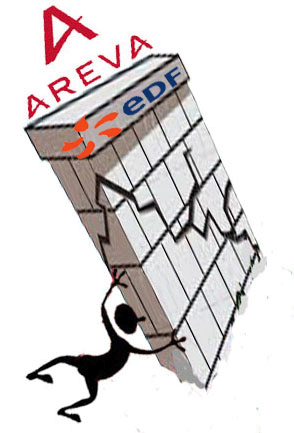 EDF extends life of four nuclear reactors Final decision on investment in Hinkley Point still pending, with analysts and activists casting doubt on the project, Guardian, Sean Farrell 16 Feb 16, EDF plans to extend the life of four nuclear power plants in the UK and has said it is close to announcing a decision on its investment in two new reactors at Hinkley Point.
The French energy company said the lives of the Heysham 1 and Hartlepool plants would be extended by five years until 2024, and the closure dates of Heysham 2 and Torness will be delayed by seven years to 2030………
EDF, which is 85% owned by the French government, announced the extensions as it reported a 68% plunge in profits last year and cut its annual dividend. The company, which has been hit by falling power prices, said net debt increased by €3.2bn (£2.5bn) to €37.4bn.
The fall in EDF’s annual net profit to €1.19bn was caused by a tripling of provisions, asset writedowns and other one-off items to €3.64bn. EDF surprised markets by cutting its dividend to €1.10 a share after paying €1.25 for the previous three years.
But the company restated the appeal of the £18bn Hinkley Point project in Somerset. EDF has delayed deciding on the plan due to funding problems, according to reports in France…….
Paul Dorfman of the UCL Energy Institute said EDF’s financial position cast doubt on the prospects for Hinkley Point. “Unfortunately, with the best will in the world, it may just not happen,” he told the BBC’s Today programme. “EDF shares have crashed to half their value a year ago; the budget for Hinkley alone is bigger than EDF’s entire market value.”
Greenpeace said EDF and the French government were in disarray over the cost and risk of the Hinkley project.
Doug Parr, Greenpeace UK’s policy director, said: “EDF’s accounts show growing debts and falling earnings. Hinkley is a bad investment and most people with an ounce of financial acumen have now come to realise this. George Osborne stands alone in defending Hinkley’s honour.” http://www.theguardian.com/business/2016/feb/16/edf-extends-life-of-four-nuclear-reactors-hinkley-point-decision
UK Nuclear “Beauty Pageant” Scheme: More Than Sheer Madness; Rudd Conflict of Interest

The UK is having an architectural contest to “beautify” the proposed Moorside Nuclear reactor Site, which we choose to call a “beauty pageant”. The image of the Toshiba owned Westinghouse AP 1000 looks like a milk churn or can, as seen here: https://en.wikipedia.org/wiki/File:AP1000Reactor.jpg
Milk Churn-Can and Pail https://www.gov.uk/government/news/rpa-releases-april-milk-production-figures
Cows at Moorside site on the Irish Sea, facing Sellafield Nuclear Site
Maybe they will stick a plastic cow in front of the Moorside visitors’ centre to replace the real cows, which they like to make graze near Sellafield and other nuclear sites?
While a Gothic Devil would be more appropriate,
it will not match the simplicity of the, almost 1000 year old, Old St. Bridget’s Church, seen in the distance with the Windscale chimney at Sellafield to the right.
nor the runic standing stone-crosses, which are estimated at around 900 to 1400 years old. This has been a Christian site since…
View original post 1,507 more words
Radiation causing Chernobyl’s wild animals to lose their sight
Radiation causes blindness in wild animals in Chernobyl http://linkis.com/phys.org/news/8dpbz
February 10, 2016 This year marks 30 years since the Chernobyl nuclear accident. Vast amounts of radioactive particles spread over large areas in Europe. These particles, mostly Cesium-137, cause a low but long-term exposure to ionizing radiation in animals and plants.
This chronic exposure has been shown to decrease the abundances of many animal species both after the Chernobyl and later Fukushima nuclear accidents. Damage caused by acute exposure to high radiation doses have been demonstrated in numerous laboratory studies, but effects of chronic exposure to low radiation in the wild remain largely unknown.
New research now suggests that chronic exposure to low radiation can cause damage to the eyes of wild animals. This is shown in an international study led by researchers Philipp Lehmann and Tapio Mappes from the University of Jyväskylä, Finland, which recently was published in the journal Scientific Reports.
In the study higher frequencies of cataracts were found in the lenses of bank voles which had lived in areas where background radiation levels were elevated compared to areas with natural radiation levels. Cataract frequency increased with age in the voles, similarly as in humans generally. In addition, the effects of aging intensified as a result of elevated radiation.

Interestingly the effect of radiation was significant only in female voles. Also in humans there are indications for high radiosensitivity of lenses. Persons with occupational exposure to radiation, such as radiology nurses, nuclear power plant workers and airline pilots have increased risk of cataract, but potential gender differences in radiosensitivity should be further studied.
Reasons for the gender differences in wild mammals are still largely hypothetical. However, the present study suggests that increased cataract risk may be associated with reproduction, as female bank voles who had severe cataracts received fewer offspring. Whether poorer reproductive success was caused by cataracts or by radiation is still unclear, and will require further experimental studies.
Nevertheless these new results support observations of negative consequences of chronic exposure to low radiation on wild animals and whole ecosystems. Studying effects of chronic exposure to low radiation in natural ecosystems is highly important, as it will help to prepare for new nuclear accidents and predict their consequences, which can entail widespread effects that can persist for hundreds of years in nature.
Britain’s nuclear power project to be derailed unless private investment magically comes to the party
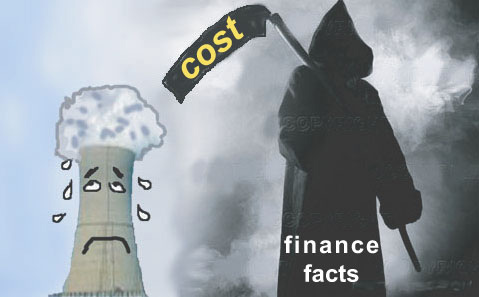 UK new nuclear plan will fail without private investors, says Horizon chief Britain cannot just rely on state-backed enterprises like EDF and its Chinese partners to build a fleet of new nuclear reactors, Alan Raymant warns , Telegraph UK By Emily Gosden, Energy Editor 14 Feb 2016 It wasn’t meant to be this way.
By now, construction of EDF’s new nuclear reactors at Hinkley Point in Somerset was supposed to be well underway, ready to fill the looming energy supply crunch as old coal plants close.
More reactors were supposed to be following on Hinkley’s heels, with 16 gigawatts – enough to meet about a third of peak winter UK electricity demand – up and running by 2025, replacing Britain’s existing nuclear plants as they retired.
Instead, cash-strapped EDF is still to take a final decision on Hinkley, with the latest hoped-for decision date, this Tuesday, likely to be missed.
First power from the Somerset plant is not due until 2025 and while other developers are aiming to start generating around the same time, they are years off investment decisions.
“Everybody would have liked the nuclear new build programme to have happened sooner,” admits Alan Raymant, chief operating officer of Horizon Nuclear Power, which plans to build two reactors at Wylfa on Anglesey, followed by two more at Oldbury in Gloucestershire……..
With new owners bringing a different reactor technology to the project – twin Advanced Boiling Water Reactors (ABWRs) with a combined capacity of 2.7GW – Horizon pushed its target for first power from Wylfa back to the “first half of the 2020”. This remains the aim, Raymant confirms: “We are looking at 2024, 2025.”
To do that, it needs to take a final investment decision on the plant in “early 2019”. That gives Horizon three short years to secure planning consent, safety approval for the ABWR design, a Government subsidy contract, EU state aid clearance, and the backing of investors……..
the biggest hurdle will be finding the money. If the UK wants to deliver16 gigawatts of new nuclear – now by a revised target of 2030 – it is going to need to secure many tens of billions of pounds of investment.
“We have to look to widen the pool of investors as far as we can,” says Raymant. “We can’t just rely on state-owned enterprises to provide that investment.”
The comment is a clear reference to Hinkley. EDF (85pc French state-owned) had hoped to build the plant in partnership with Centrica, the listed UK utility, but Centrica withdrew in 2013, citing spiralling costs and delays.
EDF set out to bring other investors on board: pension funds and Middle Eastern sovereign wealth funds were touted, but none signed up. “For third parties observing the announcements of delays and cost overruns for the EPRs [the Hinkley reactor technology] under construction, it is difficult to commit,” Jean Bernard-Levy, EDF chief, admitted.
Only China’s state nuclear corporation has so far agreed to invest, taking a lower share than EDF had hoped and even then only in return for a red carpet invitation to build its own reactor technology at Bradwell.
EDF also abandoned the idea of project-financing Hinkley, despite securing £17bn of Government loan guarantees; it has since emerged the loans had been awarded a sub-investment grade, BB+ rating by Infrastructure UK. EDF is now struggling to get the project over the lineby funding its share from its own balance sheet.
Hiroaki Nakanishi, the head of Hitachi, has already warned that the debacle raises “very serious concerns” about its own investment in the UK and questions over the “real solutions for setting up financial support”.
For Horizon, Raymant says, project-financing is a must. Hitachi only plans to retain a minority stake in the eventual construction.
“The challenge for us and for Government is to make sure that the framework that’s in place actually enables a wider range of investors to participate,” he says. “If it doesn’t do that, we won’t deliver a programme of new nuclear.”…… http://www.telegraph.co.uk/finance/newsbysector/energy/12156773/UK-new-nuclear-plan-will-fail-without-private-investors-says-Horizon-chief.html
EDF’s financial woes increases delay on decision about Hinkley nuclear plant
EDF funds shortfall adds to nuclear plant delay Michael Stothard in Paris and Kiran Stacey in London, Ft.com 14 Feb 16 High quality global journalism requires investment.
EDF has still not secured funding for a £18bn nuclear plant at Hinkley Point in Somerset, further delaying one of the UK’s biggest energy projects.
Board members at the French utility will meet on Monday to sign off on the company’s annual results. Some supporters of the Hinkley Point plant had hoped they would use the meeting to give the scheme their final approval, but two people close to the process told the Financial Times EDF has not secured the necessary funding.
The final investment decision is not on the formal agenda, those people said, with one person saying it could be several months before all the financing is lined up…….
The market turmoil this year has made discussions over the financing more difficult, one person close to the talks said. EDF is in discussions with the French government to help find financing.
EDF is also spending at least €1.25bn to buy a majority stake in Areva reactor unit, Areva NP, as part of a government-backed bailout. It also faces a €100bn bill to upgrade its ageing nuclear power stations by 2030.
EDF said in September last year that the plant it is building in Flamanville, Normandy — already years overdue — would be delayed another year until 2018 and would cost €10.5bn, up from an initial budget of €3bn.
The UK government and EDF executives had hoped a final investment decision would swiftly follow the company’s agreement in October with CGN, the Chinese state-owned nuclear group, on how much of the deal each would finance. http://www.ft.com/intl/cms/s/0/34a0fbee-d1a0-11e5-92a1-c5e23ef99c77.html#axzz40BFAOtmS
Defective pressure vessel could seal the tomb of the EPR nuclear reactor
 French Nuclear Safety Authority has discovered a serious fault in the construction of the pressure vessel http://www.bridgwatermercury.co.uk/news/14275656.LETTER__the_French_Nuclear_Safety_Authority_have_discovered_a_serious_fault_in_the_construction_of_the_pressure_vessel/ Allan Jeffery, Bridgwater 14 Feb 16 Before Hinkley C can be built, the EPR reactor of the same design being built at Flamanville in France must be completed and be established generating before 2020, or else the UK government’s guarantees and financial agreements fall apart.
So it is not surprising that EDF tried to go unnoticed as it drove a convoy carrying the steel lid and pressure vessel from Chalon, where it was produced across France to Flamanville, though this was documented and publicised by Greenpeace last week.
In April the French Nuclear Safety Authority, (the ASN) discovered a very serious default in the composition of the steel used in the pressure vessel. Tests showed excessive presence of carbon, which makes the steel more brittle and subject to breakage. The pressure vessel contains the huge amounts of atomic fission energy in the core.
EDF was quick to minimise the problem and promised other tests. If EDF was serious with the safety measures the company should await the validation of the ASN of the test results that might be released in late 2016 or early 2017.
As Yannick Rousselet from Greenpeace France quoted, “Once again, EDF is turning a blind eye to all the issues, continuing as though no one else would notice and going forward anyway until there is no turning back.”
The nuclear industry is desperate and that new failure in safety could have serious consequences, not only in France, but also in China (Taishan) and England at Hinkley Point, which are among the other vessels produced with the same steel.
If the tests confirm the safety problem, EDF would have to replace the whole vessel, and have to break open and remove the first pressure vessel at Flamanville, adding huge costs and further delays, which would bring the final blow to the industrial jewel already dying.
This defective lid could seal the tomb of the EPR reactor!
1 This Month




Shut down the radiation-damaged Heysham nuclear reactors now
To see nuclear-related stories in greater depth and intensity – go to https://nuclearinformation.wordpress.com

Say No to NASA’s Reckless Nuclear Reactor on the Moon
Say No to NASA’s Reckless Nuclear Reactor on the Moon
-
Archives
- November 2026 (2)
- October 2026 (302)
- September 2026 (339)
- August 2026 (330)
- July 2026 (355)
- June 2026 (287)
- May 2026 (306)
- April 2026 (356)
- March 2026 (251)
- February 2026 (267)
- January 2026 (308)
- December 2025 (358)
-
Categories
- 1
- 1 NUCLEAR ISSUES
- business and costs
- climate change
- culture and arts
- ENERGY
- environment
- health
- history
- indigenous issues
- Legal
- marketing of nuclear
- media
- opposition to nuclear
- PERSONAL STORIES
- politics
- politics international
- Religion and ethics
- safety
- secrets,lies and civil liberties
- spinbuster
- technology
- Uranium
- wastes
- weapons and war
- Women
- 2 WORLD
- ACTION
- AFRICA
- Atrocities
- AUSTRALIA
- Christina's notes
- Christina's themes
- culture and arts
- Events
- Fuk 2022
- Fuk 2023
- Fukushima 2017
- Fukushima 2018
- fukushima 2019
- Fukushima 2020
- Fukushima 2021
- general
- global warming
- Humour (God we need it)
- Nuclear
- RARE EARTHS
- Reference
- resources – print
- Resources -audiovicual
- Weekly Newsletter
- World
- World Nuclear
- YouTube
-
RSS
Entries RSS
Comments RSS


