Radiation causing Chernobyl’s wild animals to lose their sight
Radiation causes blindness in wild animals in Chernobyl http://linkis.com/phys.org/news/8dpbz
February 10, 2016 This year marks 30 years since the Chernobyl nuclear accident. Vast amounts of radioactive particles spread over large areas in Europe. These particles, mostly Cesium-137, cause a low but long-term exposure to ionizing radiation in animals and plants.
This chronic exposure has been shown to decrease the abundances of many animal species both after the Chernobyl and later Fukushima nuclear accidents. Damage caused by acute exposure to high radiation doses have been demonstrated in numerous laboratory studies, but effects of chronic exposure to low radiation in the wild remain largely unknown.
New research now suggests that chronic exposure to low radiation can cause damage to the eyes of wild animals. This is shown in an international study led by researchers Philipp Lehmann and Tapio Mappes from the University of Jyväskylä, Finland, which recently was published in the journal Scientific Reports.
In the study higher frequencies of cataracts were found in the lenses of bank voles which had lived in areas where background radiation levels were elevated compared to areas with natural radiation levels. Cataract frequency increased with age in the voles, similarly as in humans generally. In addition, the effects of aging intensified as a result of elevated radiation.

Interestingly the effect of radiation was significant only in female voles. Also in humans there are indications for high radiosensitivity of lenses. Persons with occupational exposure to radiation, such as radiology nurses, nuclear power plant workers and airline pilots have increased risk of cataract, but potential gender differences in radiosensitivity should be further studied.
Reasons for the gender differences in wild mammals are still largely hypothetical. However, the present study suggests that increased cataract risk may be associated with reproduction, as female bank voles who had severe cataracts received fewer offspring. Whether poorer reproductive success was caused by cataracts or by radiation is still unclear, and will require further experimental studies.
Nevertheless these new results support observations of negative consequences of chronic exposure to low radiation on wild animals and whole ecosystems. Studying effects of chronic exposure to low radiation in natural ecosystems is highly important, as it will help to prepare for new nuclear accidents and predict their consequences, which can entail widespread effects that can persist for hundreds of years in nature.
Britain’s nuclear power project to be derailed unless private investment magically comes to the party
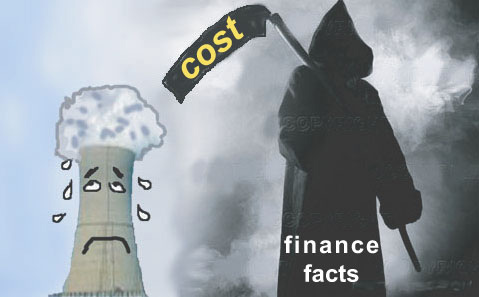 UK new nuclear plan will fail without private investors, says Horizon chief Britain cannot just rely on state-backed enterprises like EDF and its Chinese partners to build a fleet of new nuclear reactors, Alan Raymant warns , Telegraph UK By Emily Gosden, Energy Editor 14 Feb 2016 It wasn’t meant to be this way.
By now, construction of EDF’s new nuclear reactors at Hinkley Point in Somerset was supposed to be well underway, ready to fill the looming energy supply crunch as old coal plants close.
More reactors were supposed to be following on Hinkley’s heels, with 16 gigawatts – enough to meet about a third of peak winter UK electricity demand – up and running by 2025, replacing Britain’s existing nuclear plants as they retired.
Instead, cash-strapped EDF is still to take a final decision on Hinkley, with the latest hoped-for decision date, this Tuesday, likely to be missed.
First power from the Somerset plant is not due until 2025 and while other developers are aiming to start generating around the same time, they are years off investment decisions.
“Everybody would have liked the nuclear new build programme to have happened sooner,” admits Alan Raymant, chief operating officer of Horizon Nuclear Power, which plans to build two reactors at Wylfa on Anglesey, followed by two more at Oldbury in Gloucestershire……..
With new owners bringing a different reactor technology to the project – twin Advanced Boiling Water Reactors (ABWRs) with a combined capacity of 2.7GW – Horizon pushed its target for first power from Wylfa back to the “first half of the 2020”. This remains the aim, Raymant confirms: “We are looking at 2024, 2025.”
To do that, it needs to take a final investment decision on the plant in “early 2019”. That gives Horizon three short years to secure planning consent, safety approval for the ABWR design, a Government subsidy contract, EU state aid clearance, and the backing of investors……..
the biggest hurdle will be finding the money. If the UK wants to deliver16 gigawatts of new nuclear – now by a revised target of 2030 – it is going to need to secure many tens of billions of pounds of investment.
“We have to look to widen the pool of investors as far as we can,” says Raymant. “We can’t just rely on state-owned enterprises to provide that investment.”
The comment is a clear reference to Hinkley. EDF (85pc French state-owned) had hoped to build the plant in partnership with Centrica, the listed UK utility, but Centrica withdrew in 2013, citing spiralling costs and delays.
EDF set out to bring other investors on board: pension funds and Middle Eastern sovereign wealth funds were touted, but none signed up. “For third parties observing the announcements of delays and cost overruns for the EPRs [the Hinkley reactor technology] under construction, it is difficult to commit,” Jean Bernard-Levy, EDF chief, admitted.
Only China’s state nuclear corporation has so far agreed to invest, taking a lower share than EDF had hoped and even then only in return for a red carpet invitation to build its own reactor technology at Bradwell.
EDF also abandoned the idea of project-financing Hinkley, despite securing £17bn of Government loan guarantees; it has since emerged the loans had been awarded a sub-investment grade, BB+ rating by Infrastructure UK. EDF is now struggling to get the project over the lineby funding its share from its own balance sheet.
Hiroaki Nakanishi, the head of Hitachi, has already warned that the debacle raises “very serious concerns” about its own investment in the UK and questions over the “real solutions for setting up financial support”.
For Horizon, Raymant says, project-financing is a must. Hitachi only plans to retain a minority stake in the eventual construction.
“The challenge for us and for Government is to make sure that the framework that’s in place actually enables a wider range of investors to participate,” he says. “If it doesn’t do that, we won’t deliver a programme of new nuclear.”…… http://www.telegraph.co.uk/finance/newsbysector/energy/12156773/UK-new-nuclear-plan-will-fail-without-private-investors-says-Horizon-chief.html
EDF’s financial woes increases delay on decision about Hinkley nuclear plant
 EDF funds shortfall adds to nuclear plant delay Michael Stothard in Paris and Kiran Stacey in London, Ft.com 14 Feb 16 High quality global journalism requires investment.
EDF has still not secured funding for a £18bn nuclear plant at Hinkley Point in Somerset, further delaying one of the UK’s biggest energy projects.
Board members at the French utility will meet on Monday to sign off on the company’s annual results. Some supporters of the Hinkley Point plant had hoped they would use the meeting to give the scheme their final approval, but two people close to the process told the Financial Times EDF has not secured the necessary funding.
The final investment decision is not on the formal agenda, those people said, with one person saying it could be several months before all the financing is lined up…….
The market turmoil this year has made discussions over the financing more difficult, one person close to the talks said. EDF is in discussions with the French government to help find financing.
EDF is also spending at least €1.25bn to buy a majority stake in Areva reactor unit, Areva NP, as part of a government-backed bailout. It also faces a €100bn bill to upgrade its ageing nuclear power stations by 2030.
EDF said in September last year that the plant it is building in Flamanville, Normandy — already years overdue — would be delayed another year until 2018 and would cost €10.5bn, up from an initial budget of €3bn.
The UK government and EDF executives had hoped a final investment decision would swiftly follow the company’s agreement in October with CGN, the Chinese state-owned nuclear group, on how much of the deal each would finance. http://www.ft.com/intl/cms/s/0/34a0fbee-d1a0-11e5-92a1-c5e23ef99c77.html#axzz40BFAOtmS
Defective pressure vessel could seal the tomb of the EPR nuclear reactor
 French Nuclear Safety Authority has discovered a serious fault in the construction of the pressure vessel http://www.bridgwatermercury.co.uk/news/14275656.LETTER__the_French_Nuclear_Safety_Authority_have_discovered_a_serious_fault_in_the_construction_of_the_pressure_vessel/ Allan Jeffery, Bridgwater 14 Feb 16 Before Hinkley C can be built, the EPR reactor of the same design being built at Flamanville in France must be completed and be established generating before 2020, or else the UK government’s guarantees and financial agreements fall apart.
So it is not surprising that EDF tried to go unnoticed as it drove a convoy carrying the steel lid and pressure vessel from Chalon, where it was produced across France to Flamanville, though this was documented and publicised by Greenpeace last week.
In April the French Nuclear Safety Authority, (the ASN) discovered a very serious default in the composition of the steel used in the pressure vessel. Tests showed excessive presence of carbon, which makes the steel more brittle and subject to breakage. The pressure vessel contains the huge amounts of atomic fission energy in the core.
EDF was quick to minimise the problem and promised other tests. If EDF was serious with the safety measures the company should await the validation of the ASN of the test results that might be released in late 2016 or early 2017.
As Yannick Rousselet from Greenpeace France quoted, “Once again, EDF is turning a blind eye to all the issues, continuing as though no one else would notice and going forward anyway until there is no turning back.”
The nuclear industry is desperate and that new failure in safety could have serious consequences, not only in France, but also in China (Taishan) and England at Hinkley Point, which are among the other vessels produced with the same steel.
If the tests confirm the safety problem, EDF would have to replace the whole vessel, and have to break open and remove the first pressure vessel at Flamanville, adding huge costs and further delays, which would bring the final blow to the industrial jewel already dying.
This defective lid could seal the tomb of the EPR reactor!
English countryside dotted with nuclear bunkers from the Cold War
There are hundreds of secret nuclear bunkers in Britain ready and waiting for WW3
RUSSIA has announced that we are in a new Cold War after the relationship between the West and them have become more and more strained. http://www.dailystar.co.uk/news/latest-news/494567/cold-war-nuclear-apocalypse-world-war-three-how-could-you-survive-russia-north-korea-bomb By Helen Whitehouse [Good Photos] 14th February 2016 Russian president Dmitry Medvedev said: “One could go so far as to say we have slid back to a new Cold War” after describing NATO’s policies towards Russia as “unfriendly and opaque”.
The biggest ever bombing raid is currently taking place in Syria, pounding anti-Assad rebels.
But the US, Britain and France claim that air strikes against the rebels are helping ISIS, causing tensions to rise between them and Russia.
The last Cold War, spanning from the 1960s right to the 1990s saw the UK bracing for a nuclear attack – and this could be looking likely once again.
The doomsday clock is set very close to midnight, North Korea have recently announced they successfully tested the H-Bomb and Russia are claiming a new Cold War.
Should the UK be preparing for the nuclear apocalypse?
If that is the case, luckily there could be a specially re-enforced concrete bunker to protect you from atomic attack within minutes of your front door.
Thousands of bunkers were built in the last Cold War when nuclear attack seemed more a likelihood than a possibility.
And a lot of these structures still remain dotted around the English countryside – but the bad news is you would never be able to use them.
Instead of offering protection to normal people, these would be manned by teams of specially trained officers sending vital information across the country.
And although in the event of another nuclear war we might be able to use the remaining bunkers as protection, less than 1% of the general population would be able to seek shelter.
The biggest UK shelter in Burlington, Wilts, potentially had space for 100,000 people but only a fraction of that would be housed in the event of an attack.
In the last Cold War, those really desperate for a safe spot could volunteer at one of the 1,500 small boltholes dotted within ten miles of every home.These were manned by four members of the public who would gather information on what the world was looking like after the attack and send it into the bigger bunkers for officials to process.
People did volunteer for these positions – but if a bomb did go off, it would have meant leaving family behind.
One of the remaining sites is a bunker in York which gives an insight of what might go on as the UK braces for war.
It once would have housed staff and officials monitoring the dire situation on the outside – and had supplies and equipment stockpiled in the event of an attack.
It is open to the public and still in working order as it was in the 80s when tensions over nuclear war were last at the highest.
Rachael Bowers, English Heritage site manager said: “When a nuclear bomb explodes, it generates heat, blast and radiation – all of which are harmful to humans.
“The thick concrete walls of the bunker are covered with a layer of brick, three layers of asphalt to make it watertight and almost a metre of soil.”
She added that, like the other bunkers in the UK, all the doors are fitted with a seal to keep radioactive material out and the bunker would be pressurised – meaning no dust particles could end up inside.
In the event of a nuclear attack, radiation sickness would kill of those not immediately obliterated by the blast.
It would be a long, painful way to go – so in the event of a bomb, it’s important to have systems in place to keep people safe from the radiation.
The prospect of this was so terrifying in the last Cold War that police would have manned the bunker door if a bomb went off to stop general people attempting to rush inside.
There would be enough supplies stockpiled inside for occupants to survive 30 days, the most harmful period after a nuclear bomb hit.
There are still hundreds of these concrete shells around the UK. But if we came under threat of a nuclear attack, could we run and hide in these safe rooms?
Nick Catford, author of Cold War Bunkers, says the shelters were designed only to provide a place for officials to work safely through the crisis.
He says that the concrete shells could be used as protection against the aftermath of the bomb but would need kitting out with more up-to-date tech.
He also added that no bunker could ever take a direct hit from a weapon and survive especially with the stronger, more sophisticated bombs we have today.
“None of the shelters were designed to take a direct hit. Many of them would survive a near miss and those that are still in use would continue to function. The problem with the old bunkers is that all the life support plant, if it is still there, will no longer be operational so if any are to be brought back into use they would have to be completely refurbished and probably refitted.
“If we refurbished some of our old bunkers they would really only be any uses as fallout shelters as they equipment they were designed for would be totally obsolete.”
During the Cold War members of the public were advised to build their own shelters in their homes.Advice was to stock up on food, re-enforce the walls with sandbags and even paint windows white to reflect heat.
Whereas the specially built bunkers had air conditioning and sealed doors, the general public was encouraged to use sandbags and heavy objects to re-enforce walls and stop as much radiation seeping through as possible.
No nuclear weapon ever went off in the UK, so it was never tested how successful this advice would be.
200 of the shelters are still left in tact and dotted around the country but it would never ever be an option for civilians to use them as protection.
So anyone concerned about the Cold War heating up this time best get building their own bomb shelter.
Corporate elites push their toxic nuclear products onto India
Perverted Logic of Powerful Corporate Interests drive the India-France Nuclear Connection Mainstream Weekly, VOL LIV No 8 New Delhi by Harsh Kapoor The French President was in India as the chief guest at the surreal nationalist military parade of January 26, 2016. As is the practice, he was accompanied by a high-powered delegation and many multilateral deals got signed between the two countries. There are big ones that have been in the news, have been in the making for many years and may still take time to fructify. These concern the sale by France of nuclear power plants and of flying war toys to India.
India’s proposed purchase of military weaponry and nuclear power plants from France constitute the big centrepiece—attention and money involved in the overall scheme of Franco-Indian ties of the moment. These involve the sale of the Rafale-Multi Role Fighter jets, made by Dassault, said to be the most expensive in the world, and the sales of EPR (European Pressurised Reactors) nuclear reactors, made by Areva, also in the league of the most expensive.

Both these, that is, the civilian nuclear programme and defence procurement, are holy cows that are tightly sealed off by a firewall insulating them from reasoned public scrutiny; all this is managed and scripted by bureaucrats, lobbyists and keepers of ‘national interest’ who hold the keys. The Indian establishment of recent times seems to have grown very big pockets and a big-time ‘folie de grandeur’ where the bigger, more expensive, noisier, higher, shinier are seen as better benchmarks. (A sign of times we are in, that India’s Prime Minister walks about in clothes with his name printed on it all over.) Undue influence of foreign vendors and big Indian and foreign firms and lobbyists is a new reality in the corridors of our decision-making circles. That a new corporate-military industrial complex is shaping India’s drive down this road is a matter which should be the subject of social and economic enquiry by the academia. That is the Indian side of the picture.
But what is driving the French establishment in this foray into India?
The French authorities and the corporate elites see India (and China) as the new market to push their wares. It’s as banal and straight as that. It’s mostly about shoring up economic ties and in the process principally to bailout two crises-ridden sections of the French economy, namely, the civilian nuclear sector and the sagging military-industrial sector. Both of these continue to exercise a considerable hold over the French elites……..
Let us look at the story of the crisis-ridden French civilian nuclear programme to under-stand why the sale of the French EPR reactors for the proposed Jaitapur nuclear park is important to the French……..
The European Pressurised Reactor or EPR was a new generation design and a big bet of the French reactor-maker, Areva NP. The initial optimism from the EPR and the orders for new plants—first in Finland in 2003 (Olkiluoto), then in France in 2006 (Flamanville) and thereafter in China in 2007 (Taishan)—has dissolved with both Olkiluoto and Flamanville now nearly three times over-the-budget and at least 10 years and five years late respectively. Even the Chinese plants under construction are running late. Not a single functioning nuclear plant running the EPR reactor exists so far. There have been huge problems with the reactor design and construction quality despite years of experience in nuclear plant engineering in France. The highly trusted and independent-minded French nuclear safety agency (ASN) has found problems with the pressure vessel forgings in the Flamanville plant……..
The initial cost of the French EPR reactor was to be 3 billion euros but current estimates say it would be close to 11.5 billion euros. [One billion euros come to Rs 7000 crores and one French reactor would cost more then Rs 70,000 crores whereas the annual plan outlay for Maharashtra is Rs 47,000 crores.] The very largely state-owned company, Areva, that made the EPR has been running huge losses. In 2014 the losses were close to 5 billion euros. In July 2015 Areva sold off its reactor business to the French state-run electricity utility, EDF, which is also the biggest operator of nuclear power plants. Now the EDF, which has been economically sound, will have to manage the many very economically risky foreign projects of the former Areva. Experts say the EPR’s design problems and costs have dragged down Areva economically and the EDF is unlikely to want a similar fate for itself. The EDF has been developing its own designs for smaller nuclear reactors. Given the construction and operation problems of the EPR there is a possibility that the EDF could shelve the EPR’s giant reactor programme and place it in long-term cold storage.
The in-principle sale of six EPR reactors to India is a bet for the rescue of the crisis-marked French nuclear sector — imagine an injection of 60 billion euros if the price is, say, 10 billion dollars a piece. There was a joint venture by Areva and L & T, the Indian engineering major, which is negotiating the price of building the Jaitapur reactors with the Nuclear Power Corporation of India (NPCIL). They say the will bring down the price by sourcing the parts under a ‘make an India’ bid. All this will need to be reworked with the EDF being the new French entity in charge……….http://www.mainstreamweekly.net/article6209.html
UN ruling on Julian Assange, and Constitutional Law
Whether or not you believe Mr. Assange is guilty of a sexual offence, whether or not you think he is a self-publicist deliberately resisting arrest, the fact remains that the authorities could use less restrictive means without compromising the initial investigation into the allegations regarding his sexual conduct in Sweden
Liora Lazarus: Is the United Nations Working Group on Arbitrary Detention Decision on Assange ‘So Wrong’?UK Constitutional Law Association 13 Feb 16 The United Nations Working Group on Arbitrary Detention handed down its decision on Julian Assange on Friday 5 February 2015 (A/HRC/WGAD/2015/54). It has been met with almost universal ridicule from a line of British officials, legal academics and the press. The decision has been described as ‘ridiculous’ by the UK Foreign Secretary, Phillip Hammond, and former Director of Public Prosecution Ken MacDonald argues that describing Assange’s conditions as ‘arbitrary detention’ is ‘ludicrous’. The press is equally incredulous. ………
Factual background
Mr. Assange is wanted for questioning in Sweden to answer allegations of sexual assault. The Swedish prosecutorial authorities have issued a European Arrest Warrant (EAW) which the UK authorities are bound to implement. Mr. Assange, after arrest of 10 days and house arrest thereafter, was granted asylum by Ecuador after his appeal against the EAW failed. This is when he took up residence in the Ecuadorian Embassy in 2012. Assange argues that he fears ultimate extradition from Sweden to the USA on the grounds of his involvement in Wikileaks.
This is obviously no small fear, given the sentencing and treatment of Chelsea Manning in the USA, and the decision of Edward Snowden to take up asylum in Russia. The Swedish authorities refuse to grant Assange any guarantee of non-refoulement to the US, and his right to asylum has also not been recognized by the UK or Sweden. ……..
Mr. Assange argues that he is not free to leave the Embassy; he would have to accept the conditions of his immediate arrest, his extradition to Sweden and his subsequent questioning there. He would have to undertake the risk that he would be extradited to the US, and the subsequent risks to his rights were that to happen.
The mandate of the UN WGAD and the test for ‘deprivation of liberty’
In order to establish its competence, and to decide upon the case, the UN WGAD has to decide whether there is a ‘deprivation of liberty’ under Article 9 of the International Covenant on Civil and Political Rights (ICCPR). This involves a more severe restriction of motion within a narrower space than mere interference with liberty of movement. (This is explained in General Comment 35 by the UN Human Rights Committee, para. 5……..
The UN WGAD is given a very specific mandate by the United Nations and its Members to decide on these very issues. ……..
The European Arrest Warrant and the Swedish investigation
As easy as it might be in the press to simplify the issues surrounding this case, it is worth elaborating on some key technicalities. The UK authorities are acting pursuant to the conditions of a EAW issued by Sweden who are asking to question Mr. Assange on allegations of sexual assault in order to decide whether to charge him.
The prosecutorial authorities in Sweden re-opened the case against Assange, despite an earlier preliminary investigation (in which Assange had co-operated while in Sweden) that decided there was no case against him in respect of the alleged rape. There is to date no charge against Mr. Assange. The EAW has been at the core of Sweden’s approach, and there had been no attempt by Swedish prosecutors to make use of ‘mutual assistance protocols’ in which Mr. Assange could be interviewed by video-conference (a procedure available under Article 9 of Second Additional Procotol on ‘mutual assistance’)………
Assange’s lawyers have offered co-operation on this alternative a number of times. The Swedish prosecutorial authorities have refused to explore these alternatives, relying instead on the EAW they have issued. They have also failed to disclose the full case against Assange.
Assange has tried but failed to challenge the European Arrest Warrant against him in Sweden and in the UK. In a judgment handed down on 11 May 2015, the majority of the Swedish Supreme Court held that the EAW was valid, but a dissent in this case by Justice Svante Johansson also argued that the arrest warrant was ‘in violation of the principle of proportionality’, as the reasons for continued detention did not ‘outweigh the intrusion and inconvenience’ caused to Assange. According to the Guardian coverage of this case, the ‘Swedish Supreme court also stated … that the investigating authorities “must examine what alternative investigative opportunities are available to drive the investigation forward”. Former Legal Counsel to the United Nations and Legal Adviser to the Swedish Ministry of Foreign Affairs, Hans Corell, has stated that he “does not understand why the prosecutor had not questioned Julian Assange during all the years he has been at the Ecuadorian Embassy”………….
The main arguments of Assange’s lawyers
The central argument of Assange’s lawyers’ proceed on the basis that his confinement in the Ecuadorian embassy ‘cannot … be characterized as volitional’ (para 13). He is not free to leave, because he is protecting himself from the violation of other human rights: ‘the only way for Mr. Assange to enjoy his right to asylum was to be in detention’ (para 11). If Assange were to leave he would be arrested in the UK and extradited pursuant to a European Arrest Warrant (EAW) issued by Sweden. Consequently, he would expose himself to the risk of a ‘well founded fear of persecution’ were he to be extradited to the US from Sweden (para 12).
In the UK, Assange’s challenge goes to the validity of the EAW under UK law……….
Evaluation
In essence, the UN WGAD had to decide two questions. Firstly, whether there was a ‘deprivation of liberty’ as opposed to a ‘restriction of liberty’. Secondly, assuming the answer to the first question is in the affirmative, whether that deprivation of liberty was ‘arbitrary’.
In response to the first question, the UN WGAD clearly accepted the argument that Assange’s conditions are not volitional, or self-imposed……..
the UN WGAD was persuaded that the confinement was arbitrary. The most compelling grounds were those based on proportionality. In short, there could have been another, less restrictive way of proceeding. Before issuing a European Arrest Warrant, the Swedish authorities could have followed the normal practice of interviewing Assange in a British police interview room. After Assange, sought asylum in the Ecuadorian embassy they could have questioned Assange by video link. He could have been provided the chance to respond to the allegations against him, or provided with an assurance related to his refoulment to the US. But his conditions currently are based on the legitimacy of an EAW which two UK Supreme Court justices consider invalid under UK law, and which one Swedish Supreme Court judge considers disproportionate……….
There is still no charge against Mr. Assange. He has, under international, European, and domestic law, the right to be presumed innocent until proven guilty. He has offered to respond to the process in other ways, and would co-operate fully if he had a further guarantee of non-refoulment.
Whether or not you believe Mr. Assange is guilty of a sexual offence, whether or not you think he is a self-publicist deliberately resisting arrest, the fact remains that the authorities could use less restrictive means without compromising the initial investigation into the allegations regarding his sexual conduct in Sweden. ……….
Reasonable (and even judicial) minds have clearly differed on these issues, which suggests that the UN WGAD decision cannot fairly be described as ‘ridiculous’, ‘ludicrous’, or ‘so wrong’. No doubt views on this may be coloured by our particular position on the integrity of Assange’s himself. But human rights are not meant to favour the popular amongst us; they are meant to favour us all.
Liora Lazarus is a Fellow of St. Anne’s College and an Associate Professor in Law at Oxford University. https://ukconstitutionallaw.org/2016/02/09/liora-lazarus-is-the-united-nations-working-group-on-arbitrary-detention-decision-on-assange-so-wrong/
In France, Greenpeace activists blocked convoy to Flamanville nuclear project
Greenpeace activists block truck convoy from French nuclear plant, Euronews, 13 Feb 16 Greenpeace activists blocked a truck convoy from reaching a French nuclear plant early on Friday (February 12) to protest nuclear power in France.
The convoy was carrying the lid to the nuclear vat at the Flamanville EPR reactor (Evolutionary Power Reactor) in north-western France — the sole nuclear reactor under construction in France……..After the 2011 Fukushima disaster, the French government voted to cap nuclear capacity at current levels and to reduce its share in the power mix to 50 percent by 2025, but Greenpeace says they have done little to achieve that goal.
French President Francois Hollande would have to close four to five nuclear reactors by the end of his term in 2017 in order to stay on track, Greenpeace said in a statement. http://www.euronews.com/2016/02/12/greenpeace-activists-block-truck-convoy-from-french-nuclear-plant/
Russia’s aging nuclear reactors, and the Kola station shutdown
Kola nuclear plant shutdown blamed on deteriorated cable, ending silence on the malfunction, Bellona, February 11, 2016 by Charles Digges, The cause of a surprise reactor shutdown at Russia’s Kola Nuclear Power Plant’s No 4 reactor on Tuesday was finally explained by the station’s press service as “deterioration of the insulation of a power cable in the course of conducting scheduled tests on an auxiliary systems’ pump.
The initial emergency shutdown of the reactor on Tuesday morning at about 9:37 am Moscow time was originally reported without an explanation – something nuclear experts on Russia said is exceedingly rare, and cause for concern.
The reactor’s age and clearances to run above nominal generating capacity near the city of Murmansk added to worries during the day-long silence on why the No 4 unit had been pulled from the grid……..
To what extent the burnt-out cable represents any threats to safety, however, will only be clear after an investigation by a committee to be appointed by Rostekhnadzor, Russia’s Federal Service for Environmental, Technological and Nuclear Oversight.
According to Andrei Ozharovsky, a Moscow-based nuclear adviser with Bellona, such investigations can be protracted for months, and their results aren’t generally made public.
Worries arose about the sudden, and initially unexplained shutdown because of two aspects in the reactor’s operational history.
First, the reactor, which is a VVER- 440 unit, is running on a 25-year engineering lifespan extension, meaning it will not be taken out of service until 2039, when it’s 60 years old….
Second, the reactor since 2012 has been a part of an experiment to run at various intervals at 107 percent its nominal production capacity. The reactor had also been run at expanded capacities in 1986 and 1987 under Soviet rule, but the Chernobyl disaster of 1986 mothballed that for almost a decade and a half.
Alexander Nikitin, chairman of the Environmental Rights Center Bellona said on Thursday by email that, “it’s not important here how long the reactor has worked or will work – what’s important is that they allowed [such extensions] to begin with.”
As to the experiments in boosting No 4’s power output, Nikitin said, “Difficulties can arise when a reactor is operated at any power, even at the minimum controllable level – but the official decision to stretch the power output and all other corresponding parameters to above normal, of course, adds to risks.”……
The Kola Nuclear Plant’s No 3 reactor in 2011 received 25-year operational extension, pushing its closure back to 2036.
The plant is likewise expecting to get the nod to run the No 3 reactor at boosted power outputs of 104 to 107 percent.
The boosted power regimens are not specific to Russia’s Kola nuclear station. Another six of Russia’s 31 reactors are operating above nominal capacity.
All four of the Balakovo nuclear stations periodically operate at 104 percent, and one of the reactors at the Rostov nuclear plant has clearance to run at 107 percent. http://bellona.org/news/nuclear-issues/2016-02-kola-nuclear-plant-shutdown-blamed-on-deteriorated-cable-ending-silence-on-the-malfunction
Electricite De France (EDF) faces €100bn bill for upgrading ageing nuclear power stations
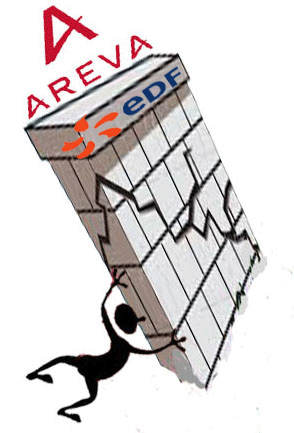 EDF faces €100bn bill for upgrading ageing nuclear power stations, Ft.com Michael Stothard in Paris , 11 Feb 16 French utility EDF is facing a €100bn bill for upgrading its ageing nuclear power stations at the same time as a new law could force it to close a third of its reactors, according to the country’s state audit office.
The report by the Cour des Comptes comes at a bad time for the world’s largest nuclear power generator as it scrambles to secure financing for a contentious £18bn nuclear project in the UK.
Unions and analysts have already raised concerns that EDF might be biting off more than it can chew with the proposed nuclear plant at Hinkley Point in Somerset. The utility is grappling with a large debt load as well as increased competition in its domestic market.
Shares in EDF, which is 85 per cent owned by the French government, have fallen 55 per cent in the past year, reducing its market capitalisation to €21bn. The group has net debt of €37bn.
The audit office said on Wednesday that the cost of increasing the life expectancy of the 58 nuclear plants in France from their current 40 years would be €100bn during the 2014-2030 period.
This is well above EDF’s €55bn estimate for the 2014-2025 period. The difference is in part because the €100bn also includes EDF’s operating expenses over that period.
The audit office also said that a law passed last year to reduce the share of nuclear in French energy production from 75 per cent at the moment to 50 per cent by 2025 could lead to the closure of 17 to 20 EDF reactors.
The law was set to “jeopardise planned investments” by EDF and “force it to close a third of its plants,” with possible consequences for jobs, said the report. It suggested that EDF might have to turn to the state for compensation………
EDF has said it wants to keep all of its 58 reactors running. It said that it wants the reduction of the share of nuclear in the French energy mix from 75 per cent to 50 per cent in the law to come from growing demand.
But the Cour des Comptes said this kind of growth in demand was unlikely. “Only a very significant increase of electricity use or power exports could limit the number of closures, but experts do not expect this will happen,” it said. http://www.ft.com/intl/cms/s/0/581cb61a-d00d-11e5-92a1-c5e23ef99c77.html#axzz3ztplMhin
The very secretive Transatlantic Trade and Investment Partnership (TTIP)
 WHAT I DIDN’T READ IN THE TTIP READING ROOM , War On Want, 7 February 2016 Katja Kipping was one of the first German MPs to gain access to the new TTIP reading room opened in Berlin this week, and she has written up a report of her experience. We thought it was well worth translating from the original, ‘The Opposite of Transparency’.
TTIP, the EU-US free trade deal, has secrecy written all over it. Those responsible for it live in dread of any public scrutiny. If it was up to me, I would give everyone who’s interested the chance to make up their own minds on the text of the agreement in its current form. Sigmar Gabriel, Minister for Economic Affairs and a top cheerleader for TTIP, has now set up a reading room in his ministry where since the beginning of February German MPs can each spend two hours looking at those texts on which consensus has already been reached.
A political friend of mine asked me the day before whether she could come with me into the reading room. I had to say no. After a long, tough struggle with the government, at least MPs are able to read the text, but they are the only ones. We are not even allowed to take security-cleared specialists with us into the reading room. As for members of the public, who will ultimately have to bear the brunt of TTIP, they are to have no access whatsoever to the secret text. Not what transparency looks like in my book!
Access ‘granted’
Even the registration procedure for the reading room speaks volumes. Once I’d registered, I was sent the instructions on how to use the room. The first thing that I noticed was that the terms and conditions had already been the subject of negotiations between the European Commission and the USA. Get your head round that: TTIP isn’t even signed yet, and already individual countries have lost the right to decide who gets to read the texts, and on what terms.
The following extract from the rulebook for MPs who, like me, want to use the reading room reveals the attitude towards democracy that lurks behind TTIP: “You recognise and accept that in being granted access to the TTIP texts you are being extended an exceptional degree of trust.”
Now I’d always thought that elected MPs have a right to information. Yet the TTIP negotiators (and who gave them their legitimacy?) reckon they are GRANTING us access out of the goodness of their hearts. Access as a sign of exceptional trust. Whoever wrote that – did they really think that we MPs would feel flattered? To me it smacks more of totalitarianism. ‘Granting access’ and ‘extending trust’ is not the language you use if you really believe in democracy. ………
I read nothing to alleviate my concern that the US side wishes to make life more difficult for public and community enterprises and to secure better terms for transnational corporations in the battle for public tenders. I also read nothing to calm my fears that EU negotiators are prepared to sacrifice our social and environmental standards for the prospect of winning lucrative contracts for big European firms.
I read nothing that would lead me to reconsider my previous criticism that consumer protection plays no part in TTIP other than to proclaim free market competition to be the highest form of consumer protection that exists………
It is revealing in itself that the Ministry for Economic Affairs is prepared to go to such lengths in order to keep the text of TTIP under wraps. And they have every reason for doing so. Anyone who was going into these negotiations to enhance environmental protection, consumer protection and labour standards would have nothing to fear from transparency. Anyone who’s engaged in selling out democracy, on the other hand, is obviously going to want to avoid public scrutiny. If Sigmar Gabriel and the negotiators are really so convinced of the benefits of TTIP, why don’t they just make the text available to everyone online? http://www.waronwant.org/media/what-i-didn%E2%80%99t-read-ttip-reading-room
Arbitrary detention of Julian Assange – United Nations finding
Julian Assange arbitrarily detained by Sweden and the UK, UN expert panel finds United Nations Human Rights Office GENEVA (5 February 2016) – WikiLeaks founder Julian Assange has been arbitrarily detained by Sweden and the United Kingdom since his arrest in London on 7 December 2010, as a result of the legal action against him by both Governments, the United Nations Working Group on Arbitrary Detention said today.
In a public statement, the expert panel called on the Swedish and British authorities to end Mr. Assange’s deprivation of liberty, respect his physical integrity and freedom of movement, and afford him the right to compensation (Check the statement: http://www.ohchr.org/EN/NewsEvents/Pages/DisplayNews.aspx?NewsID=17012&LangID=E)
Mr. Assange, detained first in prison then under house arrest, took refuge in Ecuador’s London embassy in 2012 after losing his appeal to the UK’s Supreme Court against extradition to Sweden, where a judicial investigation was initiated against him in connection with allegations of sexual misconduct. However, he was not formally charged.
“The Working Group on Arbitrary Detention considers that the various forms of deprivation of liberty to which Julian Assange has been subjected constitute a form of arbitrary detention,” said Seong-Phil Hong, who currently heads the expert panel.
– See more at: http://www.ohchr.org/EN/NewsEvents/Pages/DisplayNews.aspx?NewsID=17013&LangID=E#sthash.oPdlDR4g.dpuf
The experts also found that the detention was arbitrary because Mr. Assange was held in isolation at Wandsworth Prison, and because a lack of diligence by the Swedish Prosecutor’s Office in its investigations resulted in his lengthy loss of liberty.
The Working Group established that this detention violates Articles 9 and 10 of the Universal Declaration on Human Rights, and Articles 7, 9(1), 9(3), 9(4), 10 and 14 of the International Covenant on Civil and Political Rights.
Check the Working Group’s Opinion on Julian Assange’s case (No. 54/2015), adopted in December: http://www.ohchr.org/Documents/Issues/Detention/A.HRC.WGAD.2015.docx
NOTE TO EDITORS:
The Opinions of the Working Group on Arbitrary Detention are legally-binding to the extent that they are based on binding international human rights law, such as the International Covenant on Civil and Political Rights (ICCPR). The WGAD has a mandate to investigate allegations of individuals being deprived of their liberty in an arbitrary way or inconsistently with international human rights standards, and to recommend remedies such as release from detention and compensation, when appropriate.
The binding nature of its opinions derives from the collaboration by States in the procedure, the adversarial nature of is findings and also by the authority given to the WGAD by the UN Human Rights Council. The Opinions of the WGAD are also considered as authoritative by prominent international and regional judicial institutions, including the European Court of Human Rights.
……… http://www.ohchr.org/EN/NewsEvents/Pages/DisplayNews.aspx?NewsID=17013&LangID=E#sthash.oPdlDR4g.dpuf http://www.ohchr.org/EN/NewsEvents/Pages/DisplayNews.aspx?NewsID=17013&LangID=E
Hinkley Nuclear Project: trials and Tribulations Continue, and EDF is in dire financial straits
 nuClear News, No 82 Feb 2016, Hinkley’s Troubles Continue The resignation of the man in charge of building Hinkley Point C capped a month of very bad news for the proposed £18bn nuclear power plant. Chris Bakken announced that he would be returning home to the US to take up the post of chief nuclear officer for Entergy beginning on April 6 to “spend more time with his family.”
Huge production of radioactive trash would come from Hinkley point C nuclear reactor

 nuClear News No 82 Feb 16 The Impact of a New Reactor Programme on the UK’s Radioactive Waste Inventory The proposed Hinkley Point C nuclear power station would produce radioactive wastes and spent fuel with a radioactivity inventory equal to roughly 80% of the radioactivity in all of the UK’s existing radioactive wastes put together.
A catelogue of safety failures revealed in mock nuclear accident tests
 Top secret mock nuclear accidents reveal catalogue of failures, The Ferret, Rob Edwards on February 9, 2016 Top secret mock nuclear accidents testing the responses of the military and emergency services have revealed numerous mistakes that would have led to “avoidable deaths”, according to official assessments.
The Ministry of Defence (MoD) was so concerned about the problems that it carried out “an overarching, fundamental review” of arrangements for handling serious nuclear weapons incidents behind closed doors last year.
Assessments of emergency exercises by the MoD’s internal watchdog, theDefence Nuclear Safety Regulator (DNSR), expose a string of mishaps including life-threatening delays, equipment shortages, coordination failures and communication breakdowns. One report criticises officials for “substantially understating” the scale of the dangers facing the public in a staged briefing for the media.
The MoD took more than two years to agree to hand over reports on three nuclear bomb exercises in 2011 and 2012, despite freedom of information lawrequiring documents to be released within 20 working days. The reports, redacted by the MoD to keep details confidential, are being published today by The Ferret, in tandem with The Guardian (see below).
Two of the exercises imagined aircraft carrying nuclear weapons ingredients crashing and spreading plutonium and other radioactive contamination up to five kilometres away. They were both codenamed Astral Bend, one taking place at the Caerwent military base in south Wales on 24 February 2011, the other at Heyford Park in Oxfordshire on 27 March 2012.
At the 2011 exercise there was a major mix-up over how to deal with contaminated casualties. The fire service was criticised by DNSR for refusing to allow ambulance teams to take away seriously injured people until they had been decontaminated.
“The interpretation of the absolute necessity to decontaminate every casualty or person from within the determined “hot zone” did, and would in the event of such an incident, lead to avoidable deaths,” concluded the DNSR report………
DNSR pointed out that exercises had shown the need for “an overarching, fundamental review” of emergency response arrangements. This review was carried out in 2015, according to the MoD, but it has not been published.
The independent nuclear consultant,John Large, argued that if there were an accident close to an urban area the emergency response “would be totally inadequate to protect many hundreds if not thousands of members of public.”……….
Anti-nuclear groups claimed that the exercise assessments exposed “major weaknesses” in the MoD plans for responding to nuclear accidents. “The MoD’s rickety old nuclear safety arrangements are not up to the job of keeping the public, emergency responders, or MoD personnel safe,” said Peter Burt from the Nuclear Information Network.
He added: “While ministers are racing ahead to replace the Trident nuclear weapons system, work on improving nuclear emergency plans seems to be a much lower priority and is proceeding at a much more sedate place.”
An earlier Astral Bend exercise on 12 May 2010 envisaged a US plane carrying nuclear weapons crashing and spreading radioactive contamination. Official assessments released in 2011 concluded that the MoD specialist response team “struggled to manage”…….
John Ainslie from the Scottish Campaign for Nuclear Disarmament suggested that a nuclear weapons accident was “inherently very dangerous” and the emergency response was likely to be inadequate. He said: “If there is a real incident then we can expect there to be fatal delays in treating casualties and misleading information provided to the public,” he said.
The reports released by the Ministry of Defence…….. Photos thanks to Nukewatch. https://theferret.scot/nuclear-bomb-accidents-could-cause-avoidable-deaths-say-mod-reports/
1 This Month




Shut down the radiation-damaged Heysham nuclear reactors now
To see nuclear-related stories in greater depth and intensity – go to https://nuclearinformation.wordpress.com

Say No to NASA’s Reckless Nuclear Reactor on the Moon
Say No to NASA’s Reckless Nuclear Reactor on the Moon
-
Archives
- November 2026 (12)
- October 2026 (302)
- September 2026 (339)
- August 2026 (330)
- July 2026 (355)
- June 2026 (287)
- May 2026 (306)
- April 2026 (356)
- March 2026 (251)
- February 2026 (267)
- January 2026 (308)
- December 2025 (358)
-
Categories
- 1
- 1 NUCLEAR ISSUES
- business and costs
- climate change
- culture and arts
- ENERGY
- environment
- health
- history
- indigenous issues
- Legal
- marketing of nuclear
- media
- opposition to nuclear
- PERSONAL STORIES
- politics
- politics international
- Religion and ethics
- safety
- secrets,lies and civil liberties
- spinbuster
- technology
- Uranium
- wastes
- weapons and war
- Women
- 2 WORLD
- ACTION
- AFRICA
- Atrocities
- AUSTRALIA
- Christina's notes
- Christina's themes
- culture and arts
- Events
- Fuk 2022
- Fuk 2023
- Fukushima 2017
- Fukushima 2018
- fukushima 2019
- Fukushima 2020
- Fukushima 2021
- general
- global warming
- Humour (God we need it)
- Nuclear
- RARE EARTHS
- Reference
- resources – print
- Resources -audiovicual
- Weekly Newsletter
- World
- World Nuclear
- YouTube
-
RSS
Entries RSS
Comments RSS

