The horrendous truth about just how big a mess nuclear corporation EDF is in

 EDF’s leaked Board Agenda: Zombie nuclear projects and ‘beyond the grave’ reactors http://www.theecologist.org/blogs_and_comments/Blogs/2987305/edfs_leaked_board_agenda_zombie_nuclear_projects_and_beyond_the_grave_reactors.html Jonathon Porritt 29th February 2016
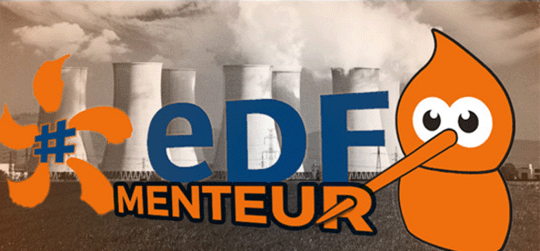
French nuclear parastatal EDF is facing problem after problem – zombie nuclear projects in the UK, Finland, China and France, a fleet of ‘beyond the grave’ reactors, a dropping share price and its drooping credit rating. But is it really as bad as all that? Jonathon Porritt has exclusive access to the leaked Agenda of its latest board meeting. And the answer is – no. It’s even worse.
You seriously wouldn’t want to be a Director of EDF at the moment. The agenda for an average Board Meeting must be seriously gloomy on each and every occasion.
And thanks to an EDF mole (and to judge by the number of leaks to the French press and the UK’sFT there’s a lot of them) I can now state this as fact, not mere opinion.
An annotated copy of the Agenda items for their last meeting on 16th February mysterious showed up in my email today, helpfully summarised byAlexandre Perra, EDF’s Executive Committee Secretary.
Item 1: Existing EPR construction projects
1.1 Olkiluoto (Finland)
Continuing, horrendous cost overruns, leading to ongoing legal stand-off with Finnish partners. Already delayed by seven years, but (hopefully!) could be finished by 2018.
1.2 Flamanville (France)
Continuing, horrendous cost overruns. Already delayed by nine years, but (hopefully!) could be finished by 2018.
1.3 Taishan (China)
Serious problems with both reactors under construction, but, this being China, everything’s shrouded in secrecy. WARNING: This could be much worse than we currently understand.
1.4 Pressure vessels
Still waiting for final safety assessment from French regulators. WARNING: There could be really serious problems here, despite our best efforts to ‘work with’ the regulator.
1.5 Deadlines/UK Treasury
These deadlines are now CRITICAL – as in EXISTENTIAL.
UK Treasury’s loan guarantees are linked to Flamanville operating successfully. And if it is not working properly by 2020, loan guarantee will be completely withdrawn.
Item 2: New reactors at Hinkley Point, Somerset
2.1 Final investment decision
Postponed again – for the eighth time. Still unable to raise the €23.3bn (£18bn), despite our Chinese backers agreeing last year to provide one-third of the total sum, and despite the UK Government offering all but limitless subsidies.
CAUTIONARY NOTE: The true cost is of course much closer to €31 (£24.5bn) taking into account both the cost of construction and the costs of finance. This has been recognised by the EU Commission.
Have just released new announcement: construction will now not start until 2019. We should know by then whether the EPR will ever produce any electricity, with Olkiluoto and Flamanville both due to come on stream in 2018.
2.2 Media strategy
Must keep up a good front: have blamed the latest delay on the Chinese New Year. Crucial that CEO maintains the line: “We estimate the investment decision is very close.”
‘Stop Hinkley Point’ protesters occupied our offices in Bridgewater yesterday. Need to handle with care. Negative coverage increasing all the time, and people have started to talk about our ‘zombie reactors‘ at Hinkley Point.
Regrettably, our cohort of ‘green ambassadors’ (led by renowned UK environmentalist George Monbiot) has fallen silent. Very few advocates now for EPR. Even the FT has now joined the ranks of the critics stating “Politically painful it may be, but the case for halting Hinkley Point C is becoming hard to refute.”
Item 3: Extending the life of our UK reactors
3.1 Some good-ish news: we’ve negotiated extensions for four of our eight reactors in the UK: Heysham 1 and Hartlepool, through to 2024, and Heysham 2 and Torness through to 2030. There will be a significant financial outlay here, which has not yet been properly accounted for, but still relatively ‘small beer’ (as the English say) when looking at our overall finances.
3.2 The longer we keep these reactors ticking over, more or less safely, the better it will be. As soon as they come offstream, all the liabilities associated with decommissioning kick in. Reminder to the Board: managing our rising liabilities is now our most critical priority!
Item 4: Extending the life of our French reactors
Current operating fleet: 58 reactors. The Board has already signed off on a major life extension programme, with an estimate of €55bn of costs. Recent external assessments have put total costs at €100bn. Crucial to hold the line in the media at €55bn. In reality, we have no idea what the total outlay will be.
Item 5: Energy Transition Law (France)
5.1 This now represents A MAJOR RISK, with a direct mandate from our principal shareholder (the French Government) that the country must reduce its dependence on nuclear generation from 75% to 50% of total electricity demand by 2025.
5.2 The Cour des Comptes (state Audit Office) has just issued a new report challenging our long-held expectation that demand for electricity in France will continue to grow significantly through to 2025. If they are right, the energy transition law will mean:
- Worst-case scenario: 20 reactors (35% of the fleet) will need to close.
- Best-case scenario: 17 reactors (29% of the fleet) will need to close.
5.3 Lobbying relevant Ministers and Prime Minister to amend the Energy Transition Law now a TOP PRIORITY.
tem 6: Financial position
- Current share price: down 50% on January 2015 position.
- Current market cap: €22.5 (symbolically and very uncomfortably, less than the total projected costs of the Hinkley Point project).
- Our €37bn net debt load also dwarfs our €18.5bn market capitalisation.
- Current credit rating still at risk. Standard & Poors and Moody’s both looking wobbly.
- Growing concern about perceived splits on the Board, especially as regards increasingly forceful hostility from our Trade Union representatives to Hinkley Point.
Merde alors! And now the FT reports that they have two EDF sources telling them that the final investment decision will be delayed until 2017! Nous sommes trahis! It will be soon! Very very soon! Call security!
The Champagne has lost its fizz
See what I mean? Not exactly a cheery occasion, even with the best of French lunches, and it must be a bit like that Board meeting after Board meeting.
So now shift the focus to London, to the Department of Energy and Climate Change. Imagine for a moment the Permanent Secretary, metaphorically shitting himself as the single biggest element in the UK’s future electricity supply slides, slowly but ever more inexorably, down the pan. Wouldn’t he just love to get access to the (real) Minutes of EDF’s Board meetings!
The implications of all this for the UK couldn’t possibly be more severe. Initially, Hinkley Point was meant to be on stream by 2025, generating a whacking great 7% of total electricity supply. Earlier delays meant that this had already slipped to 2030. Now that the start date has slipped again, to 2019, at the earliest, that 2030 date looks insanely optimistic.
And that’s just the start. EDF’s meltdown at Hinkley Point is already having a significant knock-on impact on other would-be nuclear prospects in the UK – with Horizon, NuGen and even China General Nuclear Corporation beginning to get cold feet.
If Hinkley Point does go down the pan, a project that has been given every conceivable financial inducement by both the UK and the French Government, who the hell is going to invest in different but equally dodgy reactor designs?
If the Permanent Secretary isn’t shitting himself about such a state of affairs, one has to ask where he’s getting his metaphorical Imodium from.
Jonathon Porritt is Co-Founder of Forum for the Future, and a writer, broadcaster and commentator on sustainable development. He is also Trustee of the Ashden Awards for Sustainable Energy, and is involved in the work of many NGOs and charities as Patron, Chair or Special Adviser.
This blog was originally published on Jonathon’s website.
The danger of flying nuclear materials between UK and USA
MoD admits flying nuclear materials http://www.theguardian.com/uk-news/2016/mar/01/mod-admits-flying-nuclear-materials-between-uk-and-us
Campaigners highlight safety risks after defence minister admits there have been 23 such flights in the last five years, Guardian, Rob Edwards, 1 Marc 16 , Materials used in nuclear weapons have been flown between the UK and the US 23 times in the last five years, the Ministry of Defence has admitted.
Though the MoD does not give details, the flights are believed to have carried tritium, plutonium and enriched uranium, all vital ingredients of Tridentwarheads. They probably started or ended at the RAF base at Brize Norton in Oxfordshire.
The flights have alarmed politicians and campaign groups, who are worried about accidents causing widespread radioactive contamination. The MoD, however, insists that the transports complied with stringent safety rules.
The Guardian reported on 9 February that two MoD emergency exercises in 2011 and 2012 codenamed Astral Bend envisaged planes carrying nuclear materials crashing. One imagined a leak of enriched uranium and plutonium spreading up to five kilometres across south Wales.
That prompted a question about the nuclear flights in the House of Commons last week by the Scottish National party’s defence spokesman, Brendan O’Hara MP. In response, the government admitted the frequency of such flights for the first time. “In the last five years, 23 flights carrying defence nuclear materials were undertaken,” the defence minister, Penny Mordaunt, told MPs in a written answer.
“All flights were between the UK and the United States on fixed-wing aircraft under the control of UK armed forces.” Details of the cargoes were kept secret “as disclosure would or would be likely to prejudice national security,” she said.
O’Hara said: “This answer is alarming and highlights a practice most of the public are unaware of. The MoD need to outline what risk and safety assessments they made about these flights and precisely when and what areas of UK airspace were used. I fear the MoD does not have a great track record on transparency when it comes to nuclear issues – and this answer clearly begs more questions.”
Experts say that the UK and the US regularly exchange tritium, plutonium and enriched uranium under a mutual defence agreement. Anti-nuclear campaigners have tracked road convoys transporting nuclear materials between the nuclear bomb plants at Aldermaston and Burghfield in Berkshire and RAF Brize Norton.
The independent nuclear engineer, John Large, argued that the MoD’s air shipments would not comply with international safety regulations for civil nuclear transports. A crash could “contaminate large tracts of land with potential radiological consequences for unprotected members of the public”, he said.
Tom Clements, who heads a group monitoring a nuclear weapons plant at Savannah River in South Carolina, claimed that the MoD flights would not meet US standards for civil nuclear shipments. The flights had “disturbing” implications for the world’s attempts to reduce the proliferation of nuclear weapons, he said.
Peter Burt from the UK Nuclear Information Service, a not-for-profit group, highlighted the high risks of air shipments. “The RAF regularly fly nuclear materials over large urban areas such as Bristol, Cardiff, and Swansea, which raises serious questions about what would happen in the event of an accident involving one of these flights,” he said.
The MoD maintained that the air transports were safe. “The transport of defence nuclear materials is carried out to the highest standard in accordance with stringent safety regulations,” said an MoD spokeswoman.
“In over 50 years of transporting defence nuclear materials in the UK, there has never been an incident that has posed any radiation hazard to the public or to the environment.”
Huge rally in Britain against Trident nuclear missile system
 Trident rally is Britain’s biggest anti-nuclear march in a generation
Thousands of protesters including Jeremy Corbyn and other party leaders gather in London for CND march and rally, Guardian, Mark Townsend, 28 Feb 16, Thousands of protesters have assembled in central London for Britain’s biggest anti-nuclear weapons rally in a generation.
Campaigners gathered from across the world: some said they had travelled from Australia to protest against the renewal of Trident. Others had come from the west coast of Scotland, where Britain’s nuclear deterrent submarines are based.
As the huge column of people began moving from Marble Arch after 1pm, the mood was buoyant and spirited despite the cold. Naomi Young, 34, from Southampton said: “You can’t use nuclear weapons. You would destroy the environment and kill hundreds of thousands of people. Why spend £100bn to buy a weapon unless you want to destroy the earth?”
Many waved placards with phrases including “Books Not Bombs”, “Cut War Not Welfare” and “NHS Not Trident”.
A common theme among protesters was the cost of renewing Trident during a period of austerity……..
Organisers of the march, the Campaign for Nuclear Disarmament, were confident the turnout would send a robust message of growing support against renewing the nuclear weapons system – at an estimated cost of least £41bn – and argued that worries about job losses were a red herring…….http://www.theguardian.com/world/2016/feb/27/cnd-rally-anti-nuclear-demonstration-trident-london
Germany’s nuclear utilities will have to transfer nuclear clean-up cash by 2022
 Nuclear commission proposes firms transfer cash by 2022 to pay for clean-up http://af.reuters.com/article/commoditiesNews/idAFB4N10000F
Mon Feb 22, 2016BERLIN Feb 22 (Reuters) – Germany’s utilities will have to transfer provisions set aside to pay for the interim and final storage of nuclear waste to a fund in cash by 2022, according to a draft report from a government-appointed committee seen by Reuters on Monday.
The report recommends that Germany’s “big four” utilities — E.ON, RWE, EnBW and Vattenfall — remain liable for the cost of up to double the 18 billion euros ($19.8 billion) allocated so far to pay for interim and final storage.
The companies will also have to set aside a further 1.3 billion euros in provisions, according to the report which is due to be presented at the end of the month. ($1 = 0.9084 euros) (Reporting by Markus Wacket; Writing by Caroline Copley; Editing by Christoph Steitz)
Russia and USA Pointing Nuclear Missiles at Asteroids – bonanza for Lockheed Martin etc
Why Is Russia Pointing Nuclear Missiles at Asteroids?Motley Fool 28 Feb 16
Surprise! Russia’s not the only one painting a bull’s-eye on space rocks. “…….Solid-fueled nuclear missiles, being on launch alert 24/7, are admirably suited for a last-minute launch to blast an asteroid before it turns into a meteor. Russia’s ICBMs aren’t currently programmed to aim at targets above the Earth, however, and will need to be repurposed for such missions. That’s what Russia hopes to do — and with Apophis swinging ’round in just over a decade, Russia thinks the asteroid makes a tempting target for testing its redesign.
Such an ambitious goal will cost money. Indeed, according to website DigitalTrends.com, “millions … in federal money is set to pour into detection efforts” over the coming years.National Defense magazine puts the number at at least $50 million annually, citing the recently passed fiscal year 2016 budget. This naturally raises the question in investors’ minds:
Who will get the loot?
ND identifies several likely suspects who could win these funds, including big defense contractors Lockheed Martin (NYSE:LMT) and Raytheon (NYSE:RTN). Lockheed is the company in charge of building NASA’s Space Fence, designed to keep track of man-made junk orbiting Earth. Lockheed and Raytheon both bid on the contract in 2013 — but only Lockheed won it. Similarly, Lockheed Martin and Ball Aerospace (NYSE:BLL) helped to build NASA’s NEOWISE infrared telescope,specifically designed to detect and track NEOs.
Multiple historic contract wins in the field of space-object detection make Lockheed Martin a logical beneficiary of any new contracts coming out of the PDCO office. Granted, $50 million might not sound like much to a company like Lockheed (which pulled down $46 billion last year, and is NASA’s single biggest publicly traded contractor). It might seem even less significant, given that Lockheed won’t win all the contracts coming up for bid, and might have to share some of the loot with Raytheon, Ball, or others. But $50 million could be only the starting point.
ND calls $50 million “a drop in the bucket” compared to what it will ultimately cost to categorize all NEO threats, much less develop a means of defeating them. To cite just one example of contracts moving in that direction, in 2022, NASA aims to send a spaceship to asteroid 65803 Didymous in an ambitious experiment to try to push the object into a new orbit far from Earth’s own………http://www.fool.com/investing/general/2016/02/28/why-russia-pointing-nuclear-missiles-at-asteroids.aspx
France’s nuclear giant AREVA in deep financial mess – again!
 Nuclear group Areva in the red again http://www.euronews.com/2016/02/26/nuclear-group-areva-in-the-red-again/ Nuclear power group Areva has reported a full-year net loss of 2.038 billion euros, its fifth consecutive annual loss.
The French state-controlled firm blamed extra costs at a reactor project in Finland for half of that.
The rest was due to restructuring expenses and other costs related to market conditions including reduced demand for uranium, nuclear fuel and services.
The group said it has enough funds for this year thanks to bank loans and will sell five billion euros worth of new shares by the first quarter of 2017 to stay afloat.
Areva is 87 percent state-owned and the French government has promised to subscribe to the new share issue.
Germany struggles with nuclear waste storage problem

 German nuclear exit plan fails to solve waste storage puzzle http://uk.reuters.com/article/uk-germany-nuclear-storage-idUKKCN0VW1Y9 Feb 23, 2016 FRANKFURT | BY CHRISTOPH STEITZ When Germany committed itself five years ago to phasing out nuclear power by 2022, there was one big gap in its plans — what to do with the waste that can remain toxic for hundreds of thousands of years.
That issue remains unresolved even after a government-appointed nuclear commission came up with ideas on how to ensure funding for shutting down all of the country’s atomic reactors.
According to a draft proposal, utilities E.ON, RWE, EnBW and Vattenfall [VATN.UL] could be saddled with up to 56 billion euros ($61.6 billion) in costs to cover their share of the cost of the nuclear exit.
But the final bill could climb even higher and the extra cost may have to be met by German taxpayers.
The main uncertainty centres on the difficulty of finding a permanent storage site to house highly radioactive material.
Local opposition has ruled out turning an interim waste storage site in salt formations in the small village of Gorleben in northwest Germany into a final site, with the location having ultimately been excluded by law.
The nuclear commission has proposed capping the utilities’ liability for storage costs at 36 billion euros — twice the size of current provisions made by the four utilities for that part of the process.
This proposal would put a ceiling on costs for the power firms and remove a major source of investor concern.
But there is caution that this is only a draft settlement which does not settle the practical problem of finding a storage site.
Analysts at Jefferies are among those who “remain concerned about the potential for future cost escalations and the negative balance sheet implications that it may have for German utilities”.
GOING UNDERGROUND?
Underlining the tensions around the storage issue, German utilities have sued the government over the Gorleben decision, claiming a ban is politically motivated and will force them to incur additional costs.
The OECD’s Nuclear Energy Agency says it is impossible to gauge the future costs of storage sites because each country’s geography is different and there are no previous projects to serve as examples.
In contrast, the dismantling of nuclear plants, for which utilities have set aside about 20 billion euros in provisions, is more predictable in terms of costs.
Several plants have already been torn down and several more are being dismantled after the German government decided to end nuclear in the wake of the Fukushima disaster in 2011.
More fanciful ideas to dispose of the nuclear waste include shooting it into outer space, but underground storage remains the most feasible option.
Finland and Sweden are most advanced in their preparations for such a solution to their own waste issues, hoping to be the first countries to put high-level waste into underground caverns in the next decade. ($1 = 0.9088 euros)
(Editing by Keith Weir)
The collapse of UK’s planned nuclear power programme ?
 Horizon boss’s statement exposes fantasy nature of UK nuclear power programme http://realfeed-intariffs.blogspot.com.au/2016/02/horizons-boss-statement-exposes-fantasy.html The boss of one of the three supposed consortia claimed to be building Britain’s nuclear power stations has all but admitted that his project is a fantasy one. As can be read in the Telegraph story below, the boss of the ‘Horizon’ project has said that new nuclear power in the UK depends on private investors. Well, that is not going to happen. Who would want to put shares in a venture that might (as in the case of its project in Taiwan) take 15 years not to be completed, or which may not work very well? Nobody. The only possible exceptions to this are (foreign) governments with political, rather than than money-making, objectives. Even they are disappearing! (France and China).
Of course, some people, breezily argue, the government could pay for the power stations. As if we need to spend billions and billions money on nuclear power stations that never seem to be finished instead of hospitals……
In reality the nuclear power programme collapsed in 2012 when it emerged that the Treasury insisted that nuclear power should not receive a state blank cheque. E.ON, RWE, SSE and Centrica all withdrew from nuclear power construction plans. But now for four years our energy and carbon reduction programmes have been distorted in order to preserve the British engineering establishment’s soft spot for nuclear power. The current government defends its lack of investment in real green energy by referring to its fantasy plans for new nuclear power stations.
EDF has announced once again (Feb 16th), that its decision on building Hinkley C will be taken ‘soon’ (soon has meant the same for the last 3 years) and in practice it is waiting, in effect, for the French Government to agree that French electricity consumers/taxpayers should subsidise nuclear power for the British! All to save the pride of the EDF leadership! It sounds bizarre, and I doubt whether even EDF’s hold on the French Government can engineer such an outcome.
EDF could still turn their ship around of course, by helping achieve France’s targets to expand renewable energy. But are they capable of dragging themselves away from their nuclear-dream-turned-sour, or will they waste what few reserves they have left in planning new reactor designs?
See the Telegraph article:
http://www.telegraph.co.uk/finance/newsbysector/energy/12156773/UK-new-nuclear-plan-will-fail-without-private-investors-says-Horizon-chief.html
Nuclear industry AND tax-payer funds both may be needed to cover nuclear shutdown costs
SHUTDOWN COSTS Picking Up the Nuclear Tab, Handelsblatt BY KLAUS STRATMANN 23 Feb 16, A leaked draft report on Germany’s exit from nuclear power recommends the nation’s four big utilities foot the €19.7 billion bill for decommissioning their power plants – but any costs above that may be carried by taxpayers.
FACTS In 2011, Germany announced a complete phase-out of nuclear power by 2022, with a target of 80 percent renewable energy by 2050.
The four major power firms in Germany, E.ON, RWE, EnBW and Vattenfall, and plant operator Krümmel have set aside €39.6 billion for their share of the phase-out costs.
A government financial commission has now devised a structure for dividing the responsibilities and clarifying the financial liabilities of industry and government. Germany moved a step closer this week to deciding how to pay for its forced exit from nuclear power. The government is moving toward requiring four nuclear plant operators pay the first €19.7 billion ($22 billion). Any costs above that — including hard-to-estimate expenses for storing nuclear fuel — would be paid for by taxpayers.
The recommendations are included in a draft of a government report on the issue obtained by Handelsblatt. The document was described as a preliminary recommendation and could have been leaked as a trial balloon.
The draft recommends making E.ON, RWE EnBW and Vattenfall, the four utilities, pay for “decommissioning and demolition” of their nuclear power plants. The government would then step in assume the costs of the trickier task of removing and storing radioactive waste.
The utilities together have set aside about €39.6 billion ($43.6 billion) to cover their costs of decommissioning. But there is a strong possibility that final costs may rise well beyond that.
The cost of waste disposal and storage, in particular, is seen as particularly difficult to gauge, promting fears among consumer advocates that the utilities could end up saddling taxpayers with the majority of costs.
The report recommends that a state fund be set up to pay for the waste disposal, financed in part by the four utilities, which would transfer in about half of their total reserves. But the report stops short of saying how costs would be divided between industry and taxpayers if disposal costs are greater than expected…… https://global.handelsblatt.com/edition/374/ressort/politics/article/utilities-wont-escape-nuclear-clean-up-costs
Germany’s “big four” utilities liable for nearly 40 billion euros for nuclear waste storage
Nuclear commission proposes firms transfer cash by 2022 to pay for clean-up http://af.reuters.com/article/commoditiesNews/idAFB4N10000F Feb 22, 2016 BERLIN (Reuters) – Germany’s utilities will have to transfer provisions set aside to pay for the interim and final storage of nuclear waste to a fund in cash by 2022, according to a draft report from a government-appointed committee seen by Reuters on Monday.
The report recommends that Germany’s — E.ON, RWE, EnBW and Vattenfall — remain liable for the cost of up to double the 18 billion euros ($19.8 billion) allocated so far to pay for interim and final storage.
The companies will also have to set aside a further 1.3 billion euros in provisions, according to the report which is due to be presented at the end of the month. ($1 = 0.9084 euros) (Reporting by Markus Wacket; Writing by Caroline Copley; Editing by Christoph Steitz)
69 safety incidents and “near misses” on UK nuclear submarines
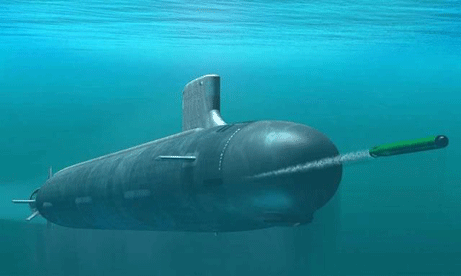 Reactor incidents on new nuclear subs double in one year, Herald Scotland, 21 Feb 16 The Royal Navy’s new nuclear-powered submarines have been plagued by 69 safety incidents and “near misses” over the last four years.
The Astute class of submarines based at Faslane on the Clyde has seen reported reactor incidents at sea or on shore almost double from 12 in 2014 to 21 in 2015. Though the MoD insists that the incidents are all minor, critics warn that they undermine the boats’ reliability and safety………
According to the independent nuclear engineer John Large, the submarines were suffering serious problems. “This continuing experience of the Astute class reactor problems not only imperils the boats when at sea but is likely to result in cutbacks to the number of patrols, voyage durations and the extent of roaming of the high seas,” he said.
John Ainslie, coordinator of the Scottish Campaign for Nuclear Disarmament, pointed out that Astute submarines had been involved in a series of mishaps, including running aground on the Isle of Skye. “It is only a matter of time before one of these incidents results in a serious nuclear accident,” he said……..http://www.heraldscotland.com/news/14291467.Reactor_incidents_on_new_nuclear_subs_double_in_one_year/
Russia is offering bribes for Egypt to buy its nuclear reactors
 Negotiations over establishment of Dabaa nuclear plant ongoing: Minister of Electricity, Daily News, Egypt, 21 Feb 16 Egyptian minister of Electricity and Renewable Energy, Mohamed Shaker, said the ministry is still negotiating with Russia’s Rosatom over technical, financial, and technological agreements to establish the first Egyptian nuclear power plant in the Dabaa area.
He told Daily News Egypt the Russian offer has better features than other offers from French, Chinese, and Korean companies. The offer includes providing nuclear fuel supply to the nuclear power plant throughout its operating period, which is estimated to be 60 years. In addition, it will be responsible for the management of spent nuclear fuel, operation and maintenance, and training human resources……http://www.dailynewsegypt.com/2016/02/21/negotiations-over-establishment-of-dabaa-nuclear-plant-ongoing-minister-of-electricity/
Britain’s nuclear project Hinkley Point C staggers again
 U.K.’s Nuclear Project Falters Again http://www.truthdig.com/report/item/uks_nuclear_project_falters_again_20160219 Feb 19, 2016 By Paul Brown / Climate News Network This Creative Commons-licensed piece first appeared at Climate News Network.
LONDON—The future of the nuclear industry in Europe took another blow this week when the French state-owned power company EDF again postponed a final decision on whether to build two large nuclear power stations in the UK. Construction will now not start before 2019, the company said.
This is the eighth time a “final investment decision” on building two European Pressurised Water Reactors (EPRs) has been postponed because the company has still to secure enough backing to finance the £18 billion (€23.26 bn) project.
The excuse this time was that the Chinese New Year celebrations had held up negotiations with the Chinese backers, who have agreed to put up one-third of the money.
Preparation of the site at Hinkley Point in the west of England was stopped last year while EDF sought partners for the project. Each time there has been a postponement the company has issued a statement saying it remains “fully committed” to building two 1,650 MW reactors (1 MW is enough to power 750-1,000 average US homes).
Decision close
This week was no different. “We have the intention to proceed rapidly with the investment decision for Hinkley Point,” EDF’s chief executive Jean-Bernard Levy told reporters. Adding that EDF had not yet finalised talks with its Chinese partners, he said: “Today we estimate this final decision is very close.”
Levy said it would take about three years, possibly a bit more, of study and work with sub-contractors before EDF will begin building the first permanent structures on the Hinkley Point C site, though it will do preparatory work between now and then.
“Definitive construction of what will be built on the site, what we call the first concrete, is on the horizon for 2019,” Levy said.
This date is a year after the reactors were originally due to be completed. The timetable has gradually slipped backwards. Last year the date for power to start being generated was put back to 2025, but this new date for pouring concrete makes 2030 more likely—if the reactors are built at all.
Problematic record
The new proposed start date of 2019 is very significant for reasons the company dare not spell out. This is because there is no evidence yet that these so-called Evolutionary Power Reactors will operate effectively. Four are under construction, but are years behind schedule, and costs have tripled. In Europe their earliest proposed start date is 2018—so it looks as though EDF is being careful not to begin building another one until it can prove the design actually works.
The EPRs are “third generation European Pressurised Water Reactors”—the largest nuclear plants in the world. They have a chequered history, even before any has actually produced a single watt of electricity. Construction of the first prototype began in 2005 in Finland: expected to be finished in 2009, it is still under construction.
The same is true of the second, at Flamanville in France, where construction began in 2007. It has also hit delays and cost over-runs of staggering proportions. It too is due to start in 2018.
The other two EPRs are being built in China. Both should have been in operation by this year, but both also have undergone unspecified delays.
Safety question
The biggest problem for EDF, which owns and is building the Flamanville reactor, is that there are safety issues over the strength of the steel used to build the pressure vessel. It contained too much carbon and is undergoing stress testing to see if it is safe. While the outcome of these tests remains unknown, a question mark hangs over the station’s future.
This, plus the vast amount of remedial safety work required by the French safety regulators from EDF on its fleet of 58 ageing reactors in France itself, has put the company under severe financial strain. It needs to find €100 bn for repairs, and to improve safety following the Fukushima disaster in Japan, to keep the plants operating until 2030.
As a result of fears that the company might overstretch itself and jeopardise jobs in France the six trade union representatives on EDF’s board have expressed opposition to the company going ahead with building reactors on British soil.
Unfilled gap
This further postponement of a start date for the new reactors leaves the UK government with a gaping hole in its energy policy, despite it offering to pay double the existing price of electricity for the output from Hinkley Point, a subsidy that will continue for 35 years.
The Conservative government has been relying on nuclear energy to replace fossil fuels from 2025, when it plans to phase out all its coal stations. Some renewable energy subsidies have been scrapped to make way for new nuclear stations.
In all, the Conservative government wants ten new nuclear stations in the UK—four EPRs and the rest from Japan and the US. None of these now seems likely to be built before 2030, if at all.
Perhaps to divert attention from the postponement of the new reactors, EDF announced that it was going to extend the life of four of the nuclear power stations it already operates in Britain. It bought eight ageing stations of British design in 2009 for £12.5 billion.
Longer lives
Some were already due to close in 2018 but have had their lives extended. Now another four will be kept open to bridge the gap left by the failure to build the new stations at Hinkley Point.
These are the Heysham 1 plant in northwest England and another at Hartlepool in the northeast, both of which had been due to be switched off in 2019 because of their advanced age. They will be allowed to keep producing electricity for another five years.
Two other reactors, Heysham 2 and Torness in Scotland, have been granted extensions of seven years to 2030. There is no reason—as long as the stations are deemed safe – why further life extensions should not be applied for, and granted.
Continuing to apply for life extensions for old nuclear stations also saves the company from technical bankruptcy. Once a station is closed its decommissioning costs become company liabilities. With the company’s debts already high, it would not take many closures for EDF’s liabilities to exceed its assets.
Paul Brown, a founding editor of Climate News Network, is a former environment correspondent of The Guardian newspaper, and still writes columns for the paper.
Belgian terror suspect had video of high ranking nuclear official
 Belgium Finds Video of Nuclear Official at Home of Terrorism Suspect, NYT By MILAN SCHREUER and ALISSA J. RUBINFEB. 18, 2016 PARIS — A suspect linked to the Nov. 13 Paris attackers was found with surveillance footage of a high-ranking Belgian nuclear official, the Belgian authorities acknowledged on Thursday, raising fears that the Islamic State is trying to obtain radioactive material for a terrorist attack.
The existence of the footage, which the police in Belgium seized on Nov. 30, was confirmed by Thierry Werts, a spokesman for Belgium’s federal prosecutor, after being reported in the Belgian daily newspaper La Dernière Heure.
The news set off an immediate uproar among Belgian lawmakers, who charged that they and the country had been misled about the extent of the potential threats to the country’s nuclear facilities, as well as about the ambitions of the terrorist network linked to the Islamic State that used Belgium to plot the Paris attacks, which killed 130 people.
The International Atomic Energy Agency also confirmed on Thursday a report by Reuters that radioactive material had gone missing since November in Iraq, where the Islamic State controls broad areas of territory, adding to fears that the group may be able to acquire material for an attack with newly disconcerting dimensions.
The Belgian news media, citing sources close to the investigation, said that the surveillance footage had been retrieved from the home of Mohamed Bakkali, who was arrested after the attacks and is in detention on charges of terrorist activity and murder.
Belgian officials have asserted privately that Mr. Bakkali may have been involved in planning several attacks, not only those in Paris. There are currently eight people in detention in Belgium and charged with involvement in the November attacks.
The purpose of the footage retrieved by the Belgian police was not clear. But experts and officials speculated that it could have been part of a plot to abduct the nuclear official, who was not identified but had access to secure areas of a nuclear research facility in Mol, and force him to turn over radioactive material, possibly for use in a dirty bomb.
Sébastien Berg, a spokesman for Belgium’s Federal Agency for Nuclear Control, confirmed that the agency had been informed right away of the existence of the footage and said that employees had been told to increase their vigilance on the work floor. But he acknowledged that no additional guards had been hired or other measures taken to secure the perimeters of Belgium’s nuclear sites.
“We took increased security measures at all four Belgian nuclear sites, based on the general raised security alert in the country and on concrete indications that showed that the terrorists involved in the Paris attacks had the intention to do something involving one of our four nuclear sites,” Mr. Berg said.
Those sites include two power plants and a private company that produces medical isotopes, in addition to the facility in Mol, where scientists conduct research and experiments on radioactive waste to try to find safer ways to store it and reduce damage to the environment, Mr. Berg said.
One experiment being carried out involves the stocking of nuclear waste in bunkers dozens of meters underground, he said, adding that the facility had large stocks of nuclear waste on hand.
Members of Belgium’s Parliament expressed outrage in a regular session Thursday, saying that the interior minister, Jan Jambon, had told them in January that there was no specific threat to nuclear facilities……..
Extremist organizations have long expressed interest in obtaining radioactive material, and there is a market for stolen nuclear waste. News reports in October documented at least four attempts by Russian gangs to sell radioactive material in Moldova, which were thwarted by local officials in concert with the United States’ Federal Bureau of Investigation.
The International Atomic Energy Agency identified the material missing in Iraq as iridium-192, a highly radioactive isotope that is sometimes sought for use in dirty bombs.
Mr. Berg said that, if acquired, the material at the site in Mol could also be used to make a dirty bomb, which would spread radioactive material over the whole impact zone……. http://www.nytimes.com/2016/02/19/world/europe/belgium-nuclear-official-video-paris-attacks.html?_r=0
Paris terrorist attackers had planned to target Belgian nuclear reactors
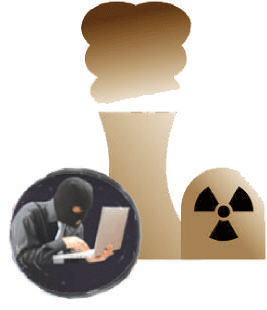 Jihadists who carried out Paris terror attacks had planned to target Belgian nuclear plants, investigators reveal, Daily Mail, 19 Feb 16
- Paris terrorist ‘spied on’ Belgian nuclear official using a video camera
- Target was a director of Belgium’s nuclear research and development
- It is believed the group were planing attacks on Belgian nuclear plants
- The attacks in Paris on November 13 left 130 dead and 352 injured
- For the latest on the Paris attackers visit www.dailymail.co.uk/ParisAttacks
By SARA MALM FOR MAILONLINE and AFP REPORTER
The Paris terrorist attackers had also planned attacks on Belgian nuclear plants, local media reports.
Belgian investigators have found hours of video footage of a senior Belgian nuclear official filmed at the person’s home in the Flanders region.
It is believed that the group that carried out the horrific Paris attacks on November 13 last year, killing 130 and injuring 352, had spied on the person as part of research for an attack.
The ten-hour long video footage obtained by Belgian officials showed the front door of the home of a director of Belgium’s nuclear research and development programme.
The footage was discovered ‘as part of seizures made following the Paris attacks,’ the prosecutor added, refusing to divulge the individual’s identity ‘for obvious security reasons’. ………http://www.dailymail.co.uk/news/article-3452454/Jihadists-carried-Paris-terror-attacks-planned-target-Belgian-nuclear-plants-investigators-reveal.html
1 This Month




Shut down the radiation-damaged Heysham nuclear reactors now
To see nuclear-related stories in greater depth and intensity – go to https://nuclearinformation.wordpress.com

Say No to NASA’s Reckless Nuclear Reactor on the Moon
Say No to NASA’s Reckless Nuclear Reactor on the Moon
-
Archives
- October 2026 (302)
- September 2026 (339)
- August 2026 (330)
- July 2026 (355)
- June 2026 (287)
- May 2026 (306)
- April 2026 (356)
- March 2026 (251)
- February 2026 (267)
- January 2026 (308)
- December 2025 (358)
- November 2025 (359)
-
Categories
- 1
- 1 NUCLEAR ISSUES
- business and costs
- climate change
- culture and arts
- ENERGY
- environment
- health
- history
- indigenous issues
- Legal
- marketing of nuclear
- media
- opposition to nuclear
- PERSONAL STORIES
- politics
- politics international
- Religion and ethics
- safety
- secrets,lies and civil liberties
- spinbuster
- technology
- Uranium
- wastes
- weapons and war
- Women
- 2 WORLD
- ACTION
- AFRICA
- Atrocities
- AUSTRALIA
- Christina's notes
- Christina's themes
- culture and arts
- Events
- Fuk 2022
- Fuk 2023
- Fukushima 2017
- Fukushima 2018
- fukushima 2019
- Fukushima 2020
- Fukushima 2021
- general
- global warming
- Humour (God we need it)
- Nuclear
- RARE EARTHS
- Reference
- resources – print
- Resources -audiovicual
- Weekly Newsletter
- World
- World Nuclear
- YouTube
-
RSS
Entries RSS
Comments RSS

