Letter from Stop Hinkley Campaign to EDF Energy
nuClear News Mar 16
Dear EDF Energy, We are writing to you before another EDF Board Meeting at which it is rumoured a final investment decision on Hinkley Point C could be made to urge you to scrap this project altogether.
- Debts of €37 billion (£28 billion) and its share price has fallen from €29 in April 2014 to €10.32 last week. Financing a massive project like Hinkley Point C will clearly place a significant strain on finances. (2) The union notes that the debt related to Hinkley Point C will need to be 100% fully consolidated into the EDF accounts – an amount which exceeds the market capitalization of the Group.
- EDF is now facing a €100m bill for upgrading its nuclear power stations in France according to a report by French Government auditor – the Cour des Comptes – rather than €55bn previously estimated. (3)
- EDF has also agreed to buy between 51 and 75% of the struggling French reactor builder Areva NP which is valued at €2.7bn. So will have to find at least €1.4bn for that.
- The French waste agency Andra has estimated that the cost of its deep geological disposal project could be as high as €30bn rather than the €20bn estimated by EDF. (4) French energy minister Ségolène Royal has signed a decree setting the ‘reference cost’ at €25 billion – still a jump of €5bn for EDF. (5)
Britain: Nuclear threat to renewables
 We have previously reported assertions by Dr Dave Toke that spending on Hinkley Point C would obliterate spending on renewables, because of the way the Levy Control Framework is organised. (19) At the moment it looks as though the UK will miss its European target which requires us to produce around 30% of our electricity supplies from renewable resources –about 108TWh in 2020 rising to 141TWh in 2030. The current Government doesn’t appear to have any ambition to go beyond this low level of renewable supply
 nuClear News Mar 16[excellent graphs on original] The Government’s National Policy Statement (NPS) on Energy, published in July 2011, foresaw a need for 113 Gigawatts (GW) of electricity generating capacity in 2025 compared with 85GW now. 59GW of this would be new capacity, of which 33GW would need to be renewable energy, mostly wind, to meet commitments to the European Union. This would leave 26GW for industry to determine. At the time there was 8GW of non-renewable capacity under construction leaving a balance of 18GW still to be determined. The Government said it wanted a substantial portion of this to be nuclear. (1)
Resignation of EDF’s finance director heralds crisis in UK Hinkley nuclear project
Hinkley Point C nuclear project in crisis as EDF finance director resigns
Proposed £18bn Somerset plant has been pushed by George Osborne but some on French company’s board fear risky spending, Guardian, Terry Macalister, 7 Mar 16, The £18bn Hinkley Point C nuclear project was in crisis on Sunday night after reports that the finance director of EDF, the company behind the scheme, had resigned.EDF tells contractors to restart work on Hinkley Point, report says
 Thomas Piquemal has stood down from his post after expressing trenchant opposition to those on the EDF board who want to give the green light to the project within weeks, sources said.
The resignation of such an important figure on the EDF board will make it much harder for the remaining executives to proceed with Hinkley in the short term……..
Piquemal is said to have been arguing that pursuing what would be the world’s most expensive power project at this moment could jeopardise the French group, which already has rising debts.
Union members on the EDF board are also implacably opposed to Hinkley Point, saying it is too expensive and a risk to the energy company’s future…….http://www.theguardian.com/environment/2016/mar/07/hinkley-point-c-nuclear-project-in-crisis-as-edf-finance-director-resigns?CMP=twt_a-environment_b-gdneco
Germany 2016: Expanding renewables, stagnating decarbonisation
 nu Clear News, Mar 16 . “……….Despite some short-term market and industry disruptions, the Energiewende policy has been largely successful in achieving its stated goals, and public support remains strong. As reported in a January 2016 by Agora Energiewende, a Berlin-based energy think tank from 2012 to 2015, public sentiment in Germany has been strongly supportive of the Energiewende, with 90% saying it is important or very important.
Burdened by the failure of AREVA, Electricite De France struggles for survival
French Mastery of Nuclear Power at Stake in U.K. Reactor Project, Bloomberg Francois De Beaupuy March 4, 2016
-
EDF faces dilemma of whether to proceed with $26 billion plant
-
Unions argue for a delay because company’s future is `at risk’
 Electricite de France SA, the world’s largest operator of nuclear power plants, is stuck in a multibillion-dollar quandary that will shape its future.
Going ahead with new EPR atomic plants in the U.K. would strain the limits of its balance sheet as slumping electricity prices across Europe reduce cash flow. Dropping the Hinkley Point venture in southwest England would further damage the image of a new French-designed reactor, already tarnished by delays and cost overruns at projects elsewhere…….
The EPR reactor design from French nuclear group Areva SA was once a symbol of the nation’s engineering prowess. EDF’s former Chief Executive Officer Pierre Gadonneix predicted it would sell “like hotcakes” around the world. Project setbacks and the safety fears following the Fukushima disaster in Japan in 2011 stymied those plans, while a flood of competing energy supplies from solar and wind has left one of the nation’s most important industries in distress. - The two 1,600-megawatt plants at Hinkley Point would cost about 18 billion pounds ($26 billion), with China General Nuclear Power Corp. paying for a third. Standard & Poor’s is threatening to downgrade EDF’s credit rating if the U.K. project, which has been planned for more than eight years, goes ahead……
- EDF shares, 85 percent of which are owned by the French state, have lost as much as 89 percent of their value since peaking in 2007 and hit a record low on Feb. 25. French year-ahead wholesale electricity prices dropped 60 percent over the same period…….
-
Areva Burden
Areva has complicated matters for EDF, accumulating 5.5 billion euros of losses on the construction of an EPR in Finland that’s already seven years late. Areva was due to take 10 percent of Hinkley Point, with EDF taking 45 percent to 50 percent and two Chinese partners holding the remaining 40 percent. As Areva’s finances worsened, it withdrew, forcing EDF to raise its stake to 66.5 percent. To make matters worse, EDF was called to rescue Areva by the French government by taking a majority stake in its troubled reactor unit.
EDF has its own problems with the EPR it’s building in Flamanville. Costs have more than tripled to 10.5 billion euros and construction is now six years behind schedule. The French nuclear watchdog has expressed concerns about the strength of the reactor vessel, forcing EDF and Areva to conduct tests to prove its safety.
“EDF is vulnerable to events over which it has no control: falling power prices following deregulation, and the balance sheet knock-on impact from Areva’s financial troubles,” said Adam Dickens, an analyst at HSBC Holdings Plc, in a March 1 report.
The company is borrowing money to pay its dividend and plans to sell assets to finance new developments. It cut annual operational expenditures by 300 million euros, or 1.4 percent, last year and plans to reduce them by a further 700 million euros by 2018. On Feb. 16, it reduced its estimate for how much it will spend to extend the life of its French reactors by 5 billion euros to 50 billion euros.
“Risks are way too high, ” Francis Raillot, a representative of the CFE-CGC union at EDF, said on Feb. 29. “We want the final investment decision to be delayed. The future of the company is at stake.” http://www.bloomberg.com/news/articles/2016-03-03/french-mastery-of-nuclear-power-at-stake-in-u-k-reactor-project
This year, France will close Fassenheim, its oldest nuclear power station
France’s oldest nuke plant ‘to close this year’ , The Local 7 Mar 16, France is to close down its oldest nuclear power plant, at the centre of a row with neighbouring Germany and Switzerland, by the end of this year, a green minister said Sunday.
- Germany demands France shut old nuclear plant (04 Mar 16)
- Swiss sue French over ‘dangerous’ nuclear plant (03 Mar 16)
”The timeline is one the president has repeated to me several times, it’s2016,” said Emmanuelle Cosse, who was named to President Francois Hollande’s cabinet last month, referring to the Fassenheim plant.
Cosse was speaking to French media after a row sparked Friday when Germanydemanded that France close down Fassenheim following reports that a 2014 incident there was worse than earlier portrayed……..
On Sunday, Cosse said that to reach its target, the government would have”to close other nuclear plants, other reactors, obviously, over several years.”
Hollande named Cosse, a member of the French Greens Party (EELV), housingminister as part of a reshuffle seen as a bid to broaden his appeal ahead of a re-election bid next year. http://www.thelocal.fr/20160306/frances-oldest-nuke-plant-to-close-this-year
Russia marketing nuclear reactors to Bolivia
 Bolivia agrees $300 million nuclear complex with Russia’s Rosatom, Reuters, 6 Mar 16, LA PAZ Bolivia and Russia’s state-owned atomic energy corporation Rosatom said on Sunday they had signed a provisional agreement for the construction of $300 million nuclear complex in the Andean nation.
Under the terms of the accord, which needs to be approved by Bolivia’s Congress, Rosatom will help Bolivia develop infrastructure for its embryonic nuclear program.
The center will include a research reactor, a cyclotron for radiopharmaceuticals and a multi-purpose gamma irradiation plant. Opposition politicians have criticized the project over fears of environmental risks……..http://www.reuters.com/article/us-bolivia-rosatom-idUSKCN0W80R3
Radiation exposure to 20 workers at Faslane nuclear base
Workers exposed to radiation at Faslane nuclear base, Scotsman, 5 Mar 16 Twenty workers were exposed to radiation at the Faslane nuclear base as a result of a safety breach, according to newly released documents.
The workers were inadvertently exposed to a low dose of ionising radiation as they were repairing a leaking tank on a Trident nuclear weapons submarine at the same time a nearby reactor was undergoing trials………[other radiation incidents at Faslane] ……
SNP defence spokesperson Brendan O’Hara MP said: “The MoD – once again – stands accused of a very poor approach to radiation safety at the Faslane base……..
‘’These incidents and how they were subsequently handled, pose real and serious questions , not just about nuclear safety procedures at the base – but also whether the regulator the ONR is doing enough – and quickly enough – to address these concerns.
‘’The MoD must investigate and explain why these failings occur and lay out precisely what it is doing to get it sorted.’’……..http://www.scotsman.com/news/workers-exposed-to-radiation-at-faslane-nuclear-base-1-4046659
Authorities withheld information on serious incident at Fessenheim nuclear facility in France
Reports: Fessenheim nuclear accident played down by authorities http://www.dw.com/en/reports-fessenheim-nuclear-accident-played-down-by-authorities/a-19093477
An incident at the Fessenheim nuclear facility in France in 2014 was more serious than previously known. German media reports claim the authorities withheld information detailing the gravity of the situation. Both the French nuclear authority, ASN, and the company operating the two Fessenheim nuclear reactors, French energy giant EDF, allegedly did not divulge the gravity of the incident on April 9, 2014, when one of the reactors had to be shut down after water was found leaking from several places.
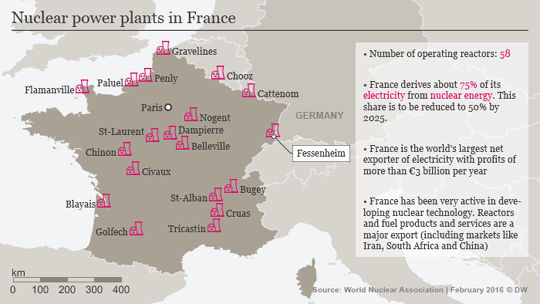
Researchers from German daily “Süddeutsche Zeitung” and public broadcaster WDR claim the incident at Fessenheim, which is in Alsace near the border with Germany, could turn out to be one of “most dramatic nuclear accidents ever in Western Europe.”
They are basing the claim on a document they say they have obtained, sent by ASN to the then-head of the facility on April 24, 2014.
The letter and subsequent reply reveal that the reactor could not be shut down in an ordinary fashion due to control rods being jammed. The reactor had to be shut down by adding boron to the pressure vessel, an unprecedented procedure in Western Europe, according to an expert.
“I don’t know of any reactor here in Western Europe that had to be shut down after an accident by adding boron,” Manfred Mertins, expert and government advisor on nuclear reactor safety, told WDR and Süddeutsche Zeitung.
The reports say the official report ASN released did not contain information on adding boron nor the jammed control rods. It was also not reported in that way to the International Atomic Energy Agency (IAEA).
The Fessenheim reactors went online in 1977 and 1978, making them France’s oldest. The government has repeatedly said it would shut down the facility after fierce criticism from politicians at home, as well as from neighboring Germany and Switzerland.
On Friday, Eveline Lemke, environment minister for the German state of Rhineland-Palatinate, which borders Alsace, called for Fessenheim to be shut down immediately. She said she was “dismayed to hear about yet another incident involving a French reactor,” adding that France’s nuclear watchdog was “evidently failing.”
Germany has also been at loggerheads with Belgium over the country’s Tihange nuclear reactor near their shared border. It was shut down in March 2014, but went back online in December last year, despite concerns over cracks in its pressure vessels.
Nuclear power still provides three-quarters of France’s energy needs, but the government passed legislation last summer to cut the country’s dependence on atomic energy.
UK govt urged to lower tax on energy efficient homes – report

 Report calls for lower stamp duty on UK’s energy-efficient homes Tax should be lowered by up to £5,000, according to Policy Exchange report, which says the government is doing far too little to cut energy waste, Guardian, Damian Carrington, 2 Mar 16 The stamp duty paid on energy efficient homes should be up to £5,000 less than on leaky, hard-to-heat homes, according to a new report that says the government is doing far too little to cut energy waste.
The report is from the thinktank Policy Exchange, which is close to the government, and ministers are considering the idea. It estimates the stamp duty change would lead to 270,000 households a year improving their energy efficiency.
“Improving home energy efficiency can save households money, as well as substantially reducing their carbon emissions,” said Richard Howard, author of the report, and a former chief economist for the crown estate. “Policies which link property values more closely to energy performance could kickstart an energy efficiency revolution in this country.”
The report heavily criticises ministers, who have cut back energy efficiency programmes which are widely seen as the cheapest way to cut energy bills and meet carbon targets. “The UK still has amongst the least efficient housing stock and highest rates of fuel poverty in Europe,” it states.
The government aims to improve the insulation of 1m homes this parliament, far fewer than the 4.5m in the last parliament. It has also abandoned the failed green deal programme, which was meant to reach millions of homes with unique loans but only taken up by 16,000 households. “This leaves a major policy gap,” says the report.
The Policy Exchange proposal is to lower the stamp duty on energy efficiency homes while increasing it by the same amount on inefficient homes, meaning the tax taken by the government remains the same overall……
The report says: “There is huge potential to improve domestic energy efficiency. Research shows that a more ambitious approach to energy efficiency could deliver carbon savings of 24m tonnes of carbon dioxide a year by 2030 – equivalent to taking more than 10 million cars off the road – and save households of £8.6bn a year in energy costs.”…….
Another report published on Wednesday indicates that a roll-out of energy storage technology could save energy customers £50 a year, as well as cutting emissions on improving energy security. Energy storage technologies, from liquid air to big batteries, are developing rapidly and can store excess renewable energy and cut the need to build new power stations and lines.
The report was written by the Carbon Trust and Imperial College London and commissioned by Decc and three of the UK’s big six energy energy companies. A spokesman for one, SSE, said: “The report shows that, with the correct market structures, price signals and policy certainty, projects such as SSE’s proposed pumped storage scheme at Coire Glas can make a valuable contribution to society.” http://www.theguardian.com/environment/2016/mar/02/report-calls-for-lower-stamp-duty-on-uks-energy-efficient-homes
Cornwall, UK, gets wind farm without any govt funding- community energy!
 “The benefits of the Big Field wind farm are too great for it not to go ahead just because subsidies are being withdrawn. Being community-owned will ensure that the economic benefit of the wind farm can be retained locally and re-invested in Cornwall.”
Good Energy promises UK’s first subsidy-free windfarm, http://www.theguardian.com/environment/2016/mar/02/good-energy-promises-uks-first-subsidy-free-windfarm Guardian, Fiona Harvey, 3 Mar 16
Green power company believes it can build onshore windfarm in Cornwall with local people helping finance it, despite government scrapping subsidies. The UK’s first onshore windfarm to be built without government subsidy is now under planning in Cornwall, to be financed in part by the local community.
The Big Field windfarm, near Bude, will consist of 11 turbines, none of more than 125m in height to the tip of the blade, and provide electricity for 22,000 homes. Its backers hope it will point the way to further such projects, after the damages to the onshore wind industry caused by the reversal of policy on government support for clean energy.
Likely to cost about £30m to build and install, Big Field is planned by the green power company Good Energy. While other wind and solar farms have been cancelled or left in limbo by the government’s scrapping of incentives for onshore wind, the company decided instead to try to raise funds locally to support the installation.
An initial application for planning permission for the turbines was filed under the previous subsidy regime. However, that was blocked, and with the withdrawal of government support for onshore wind, the plan looked at an end.
Good Energy revived its prospects with a new project that would use the same number of turbines, of the same size, but with 50% more generation capability, because of changes to the turbine technology.
The revised scheme will only go ahead if planning permission is granted, but the company is hopeful that the support of local residents in agreeing to co-finance the project will help to tip the balance. The inquiry will start in April and, if the green light is given, the windfarm could be operational in 2018.
Bill Andrews, who lives close to the site, said: “This is a very welcome development. A lot of my neighbours already support this wind farm, and giving local people the chance to invest in the project would mean the community will see even more of the benefit.”
The abrupt alterations to government support for wind and solar energy have caused severe disruption in the UK’s renewable energy industries. Thousands of jobs have been lost, companies forced to close, projects mothballed or abandoned, and future developments left in doubt.
Onshore wind technology has tumbled in price in recent years, a factor the government used to justify its withdrawal of support, but the economics of energy generation are complex. Ministers have also introduced new rules to make it more difficult to construct renewable energy projects, and increased subsidies to the fossil fuel industries through the “capacity market”.
Juliet Davenport, chief executive of Good Energy, said: “The benefits of the Big Field wind farm are too great for it not to go ahead just because subsidies are being withdrawn. Being community-owned will ensure that the economic benefit of the wind farm can be retained locally and re-invested in Cornwall.”
Good Energy said it was too early to decide how much of its own money and how much the local community would be expected to put into the project, or what returns investors could expect. However, if successful, it hopes this could provide a new blueprint for small onshore wind farms.
UK govt to spend £642 million developing new submarines for Trident nuclear missiles
 Anger as £642m Trident nuclear submarines investment is confirmed, Herald Scotland, 3 Mar 16 A further £642 million will be invested in developing the new generation of submarines carrying the UK’s nuclear deterrent, Michael Fallon has confirmed.
The defence secretary said the nuclear deterrent “provides the ultimate guarantee of our security” as he announced the extra spending on the boats which will carry the Trident weapons.
But he was condemned by anti-Trident campaigners for making the announcement before MPs have had a chance to give the final go-ahead for the project……… It takes spending on the project’s assessment phase to £3.9 billion……
Kate Hudson, general secretary of the Campaign for Nuclear Disarmament, said: “I ask Michael Fallon, what is the point of a parliamentary vote on Trident if the Government’s going to spend millions on replacement anyway?
“This is completely unacceptable. This is about huge amounts of money being spent on out-of-date technology that will be redundant by the time it is built.
“There is a growing body of evidence which shows that Trident is vulnerable to cyber warfare and attacks by underwater drones.
“The Government appears to be burying its head in the sand – stuck in a 1980s mindset that we are a great power fighting in the Cold War.
“We ask for some objectivity in considering Trident. It is time the Government thought very carefully about the real security threats we face from terrorism, climate change and global pandemics, but also be honest about the very real threat posed by our own nuclear weapons system.”……
the Trident missile system, which was launched in the 1990s as a replacement for the predecessor, Polaris, is due to end its service from 2028. It takes about a decade to build and prepare a new submarine for service. http://www.heraldscotland.com/news/homenews/14319629.Anger_as___642m_Trident_nuclear_submarines_investment_is_confirmed/?ref=rss
France sued by Geneva over dangerous and polluting nuclear station


 Geneva sues France over ‘dangerous’ nuclear plant, The Local, 03 Mar 2016 Geneva is taking legal action over a French nuclear reactor for “endangering lives and polluting water”. Some 70 kilometres from Geneva as the crow flies, Bugey, in the Ain department, is one of France’s oldest nuclear power plants, having come into service in 1972.
The site creates about 4.5 percent of France’s electricity using pressurized water reactors that harness water from the nearby Rhône River.
It has been the subject of controversy before, notably in 2013 when Greenpeace activists broke in to the plant to highlight alleged security weaknesses at the facility.
The current Swiss legal action is a joint initiative by Geneva’s city and cantonal authorities, which have teamed up on an issue that has preoccupied the region for some time, reports Swiss daily 24 Heures.
Back in 2012, the canton placed an official objection to French energy company EDF’s authorization to create a nuclear waste depot at the Bugey site, but the complaint was rejected by the French government. In March 2015 the city council engaged Corinne Lepage, environmental law specialist and a former French minister, to devise a legal strategy calling for the plant to be shut down.
This fresh Swiss campaign against Bugey, led by Lepage, comes as Switzerland decides to shut down one of its own nuclear plants, at Mühleberg.
The reactor in the canton of Bern will be disconnected from the Swiss electricity grid in 2019 and will be finally put out of service by September 2020 at the latest, its owner BKW Energy announced to the press on Wednesday.
Like Bugey, Mühleberg also dates from 1972, making it one of the oldest nuclear plants in the world.
No age limits
However, despite the old age of some of Switzerland’s nuclear installations, their lifespan should not be limited by law, the federal government said on Wednesday.
On Wednesday the Swiss parliament voted against a motion to set an age limit for nuclear plants………
Worse than before Fukushima’
Quashing the proposal angered some on the political left, however, including president of the Greens, Adèle Thorens.
Speaking to Le Matin, she said: “Instead of moving away from nuclear power it’s been decided to prolong the life of nuclear plants instead.”
Worse, she said, was the fact that parliament “had refused the recommendations of our own monitoring organization!”
“We are now in a security situation worse than before Fukushima,” she added. “That’s the incredible paradox of our energy strategy.” http://www.thelocal.ch/20160303/geneva-sues-france-over-dangerous-nuclear-plant
Russia to test launch ballistic missiles from nuclear-powered submarines
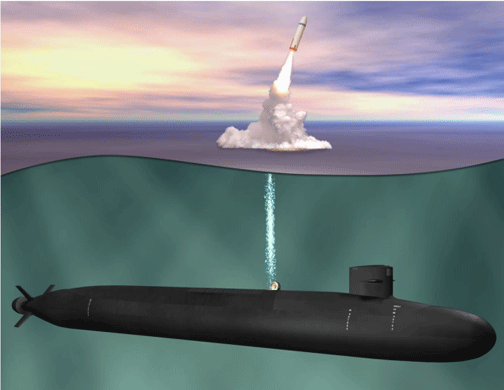 Russia to Launch Massive Ballistic Missile Test From Nuclear Subs
Solar power powers up; London – with World’s biggest floating solar farm
World’s biggest floating solar farm powers up outside London Five years in planning and due to be finished in early March, more than 23,000 solar panels will be floated on the Queen Elizabeth II reservoir near Heathrow and used to generate power for local water treatment plants, Guardian, Fiona Harvey 29 Feb 16 On a vast manmade lake on the outskirts of London, work is nearing completion on what will soon be Europe’s largest floating solar power farm – and will briefly be the world’s biggest.

But few are likely to see the 23,000 solar panels on the Queen Elizabeth II reservoir at Walton-on-Thames, which is invisible to all but Heathrow passengers and a few flats in neighbouring estates.
“This will be the biggest floating solar farm in the world for a time – others are under construction,” said Angus Berry, energy manager for Thames Water, which owns the site. “We are leading the way, but we hope that others will follow, in the UK and abroad.”
Five years in planning and due to be finished in early March, the £6m project will generate enough electricity to power the utility’s local water treatment plants for decades. The energy will help provide clean drinking water to a populace of close to 10 million people in greater London and the south-east of England, a huge and often unrecognised drain on electricity, rather than nearby homes.
Why put solar panels on water? The answer, according to Berry, is that the water is there, and might as well be used for this purpose. Floating panels, covering only about 6% of the reservoir, will have no impact on the ecosystem, he says……..
A similar floating solar farm with around half the capacity of the Thames Water project is being built by water company United Utilities on a reservoir near Manchester. Construction of an even bigger farm – at 13.7MW more than twice the QEII farm – is underway on a reservoir in land-scarce Japanand due to finish in 2018.
Putting solar panels on the water for the QEII scheme has not required planning permission, though big arrays of similar panels on land require official sanction. The government has decided to ban farmers who put solar arrays on agricultural land from receiving EU subsidies for the land.
More than 23,000 solar panels will be floated by developer Lightsource Renewable Energy at the reservoir near Walton-on-Thames, representing 6.3MW of capacity, or enough to generate the equivalent electricity consumption of about 1,800 homes………http://www.theguardian.com/environment/2016/feb/29/worlds-biggest-floating-solar-farm-power-up-outside-london
1 This Month




Shut down the radiation-damaged Heysham nuclear reactors now
To see nuclear-related stories in greater depth and intensity – go to https://nuclearinformation.wordpress.com

Say No to NASA’s Reckless Nuclear Reactor on the Moon
Say No to NASA’s Reckless Nuclear Reactor on the Moon
-
Archives
- October 2026 (302)
- September 2026 (339)
- August 2026 (330)
- July 2026 (355)
- June 2026 (287)
- May 2026 (306)
- April 2026 (356)
- March 2026 (251)
- February 2026 (267)
- January 2026 (308)
- December 2025 (358)
- November 2025 (359)
-
Categories
- 1
- 1 NUCLEAR ISSUES
- business and costs
- climate change
- culture and arts
- ENERGY
- environment
- health
- history
- indigenous issues
- Legal
- marketing of nuclear
- media
- opposition to nuclear
- PERSONAL STORIES
- politics
- politics international
- Religion and ethics
- safety
- secrets,lies and civil liberties
- spinbuster
- technology
- Uranium
- wastes
- weapons and war
- Women
- 2 WORLD
- ACTION
- AFRICA
- Atrocities
- AUSTRALIA
- Christina's notes
- Christina's themes
- culture and arts
- Events
- Fuk 2022
- Fuk 2023
- Fukushima 2017
- Fukushima 2018
- fukushima 2019
- Fukushima 2020
- Fukushima 2021
- general
- global warming
- Humour (God we need it)
- Nuclear
- RARE EARTHS
- Reference
- resources – print
- Resources -audiovicual
- Weekly Newsletter
- World
- World Nuclear
- YouTube
-
RSS
Entries RSS
Comments RSS

