Many people we spoke to say they are being used as human guinea pigs. They talk of a secret government experiment looking at the effects of radiation exposure on humans.
They say they have to go to a hospital in Chelyabinsk, the regional capital around 50km away, for treatment of the various radiation related illnesses they suffer.
 Living in a nuclear hell, Aljazeera, By Charles Stratford in Europe , 2012-04-04 The town of Muslymovo has to be one of the saddest places on earth. The thousands of people who have little choice but to live here, on the banks of the Techa river not far from Russia’s
southern border with Kazakhstan, are the victims of a nuclear disaster that began more than six decades ago.
They are still suffering with the consequences of life next door to the Mayak nuclear plant – still dying from the radiation-related illnesses that have claimed the lives of so many before them.
Mayak was constructed in the 1940s. Our driver knew how to avoid checkpoints. We stuck a small camera on our windscreen and drove to within a hundred metres of the plant gates.
It’s like a city. Families work and live here. Teenagers chased eachother in the snow just beyond the fence.
Mayak is surrounded by silver birch forests. Signs by the road warn people not to enter the woodland or pick the wild mushrooms. Mayak once provided the Soviet Union with around 40 per cent of the world’s
weapons-grade plutonium.
The country’s first atomic bomb was built here. Between 1949 and 1951, the plant dumped hundreds of tonnes of highly radioactive waste into the nearby Techa.
Hundreds of villages were resettled but incredibly, four remain in the contaminated area. Residents don’t know why they were never moved.
Many people we spoke to say they are being used as human guinea pigs. They talk of a secret government experiment looking at the effects of radiation exposure on humans.
They say they have to go to a hospital in Chelyabinsk, the regional capital around 50km away, for treatment of the various radiation related illnesses they suffer.
One woman described her visits.
“They must have tested new drugs on us. You come from the hospital where you spend a month then get sick for a month at home. They don’t treat you. They hurt you. They don’t say anything.”
Some of the old Muslymovo village has been moved in recent years but to a place which is only a less than a half hour walk from the highly radiation polluted river. The Geiger counter readings we took by the river showed radiation levels 50 times higher than the level experts say is safe for humans.
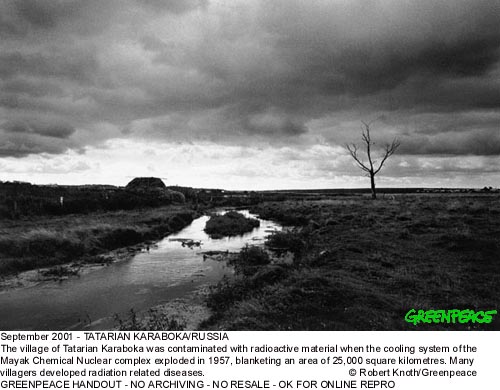
Our driver, who himself suffers chronic radiation illness pointed to a car tyre frozen solid in icy marsh. He said if we tested our Geiger counter there we would get a reading at least three times higher than
the one we had.
There were no barriers or fences to keep people out. And there were footprints in the snow everywhere. A rusty sign warned people not to enter or pick the berries. But fishermen still come here. In the summer children still swim…….
Most of the children in this area suffer some form or other of radiation related illness. Symptoms of Chronic radiation sickness include recurrent infections, swellings, anemia, unhealed wounds, hair
loss and bruises. Long term exposure to high rates of radiation causes birth defects and cancer.
Locals call it the “river sickness”.
The boy in our report with the growth on his neck is 17 years old. He has eight brothers and sisters. They all suffer from radiation related illness. His mother says she took him to the local doctor to get his neck checked.
She says the doctor told her the lump would disappear. She says her son was never even offered a biopsy.
This, in a place where people have died of cancer for decades. An area that has some of the highest levels of radiation pollution in the world.
“We are afraid, the consequences are terrifying. But where can we move
to?” she said… .. http://blogs.aljazeera.com/europe/2012/04/04/living-nuclear-hell
December 21, 2016
Posted by Christina Macpherson |
health, Russia |
Leave a comment
Dangerous neighbors: German-Belgian nuclear agreement doesn’t fix problem, DW 20 Dec 16
Can an agreement allay fears of a looming nuclear accident in Belgium? Two of its power stations, situated very close to Germany, are causing considerable alarm. Doel 3 and Tihange 2 are the names of the nuclear power stations that have got many people living along Germany’s border with Belgium very worried indeed. These reactor blocks belong to power stations that were first connected to the grid more than 40 years ago.
Over the years, the reactor pressure vessels have sustained damage. Germany’s environment minister, Barbara Hendricks (SPD), gives a forthright response when asked about the two reactors. “We know that there are a lot of hairline cracks in the reactor pressure vessels,” she says. It sounds very alarming.
Doel 3 and Tihange 2 are very close to the German-Belgian border. Doel, near Antwerp, is just 150 kilometers (93 miles) away; it’s only 60 kilometers to Tihange, near Liege. This is why Hendricks called on Belgium as early as last April to shut down both reactor blocks until they had been made safe. The Belgian government refused. It doesn’t deem its nuclear power plants to be a risk. This attitude has a lot to do with the fact that more than half of Belgium’s power is supplied by nuclear energy.
‘We can’t change that’
At least an agreement has been reached. Environment minister Hendricks and Belgium’s minister of the interior, Jan Jambon, have signed a new German-Belgian agreement to cooperate on nuclear safety. But what is it worth? The agreement is a compromise. The German side would have much preferred Belgium to shut down the damaged nuclear reactors immediately, but Brussels had little sympathy with Germany’s efforts to intervene. Whether or not reactors are shut down, and how long for, remains a national issue. “We can’t change that,” said Barbara Hendricks – and this was the German government’s dilemma before the agreement was even signed…….
Neubronner says the situation at both nuclear sites in Belgium is extremely alarming. “The number of incidents reported at the plants has risen dramatically. Stresses, such as a thermal shock, could enlarge the cracks in the reactor pressure vessels, which would drastically increase the danger of the pressure vessel bursting,” she says. “This would lead to a reactor core meltdown. There’s a risk of an MCA [maximum credible accident].”
North Rhine-Westphalia would be ‘more or less’ affected
A study has shown that, in the event of a nuclear accident in Tihange, the city of Aachen and the surrounding region could be severely irradiated. Just a few weeks ago, Professor Wolfgang Renneberg from the Institute of Safety and Risk Sciences at the University of Natural Resources and Life Sciences in Vienna calculated that “if an accident were to happen, there is a 10 percent likelihood that Aachen would become uninhabitable.” The whole of North Rhine-Westphalia would be “more or less” affected……….http://www.dw.com/en/dangerous-neighbors-german-belgian-nuclear-agreement-doesnt-fix-problem/a-36840437
December 21, 2016
Posted by Christina Macpherson |
EUROPE, Germany, safety |
Leave a comment

Ouch … the incredible Yannick Rousselet, the campaigner at Greenpeace against Nukes, Yannick Rousselet, whose ideas and actions of genius are no longer counted, is now a government target.
As everywhere, the state/establishment when under pressure resorts to authoritarianism and force. In France, Greenpeace anti-nuclear activist,Yannick Rousselet, has had his house raided in the early hours of the morning…with the police pulling up outside in their black vans and taking photos (including family photos), computers, USBs, files etc. on the basis that Yannick has been threatening state defence secrets.
It’s what happens when your campaigns are successful enough to threaten the state
By Yannick Rousselet:
“A few days ago, I informed you that I had been the victim of an act of “malevolence”. In fact, it was practiced by a state service, DGSI (Directorate General of Internal Security, the former DST).
Indeed, last Tuesday morning, these “good people” parked their black sedans in front of my home, donned their “police” armbands and came to search my family home.
They took all our digital media: phones, computers, internal and external hard drives, USB flash drives, SD cards. In this seizure, files related to our militant activities, but also all our photos and videos of families.
This is an investigation for “compromise of defense secrecy”, the initiative of which would come from the HFDS (Senior Defense and Security Official) and General Riac (National Nuclear Security Officer).
It is the Paris public prosecutor who is in charge of this investigation. They told me that I would be summoned for a police custody soon.”
December 19, 2016
Posted by dunrenard |
France | antinuclear, Greenpeace, State Repression |
1 Comment
 Nuclear plundering of the public purse – the Sellafield and Moorside billions, Ecologist, Martin Forwood 13th December 2016
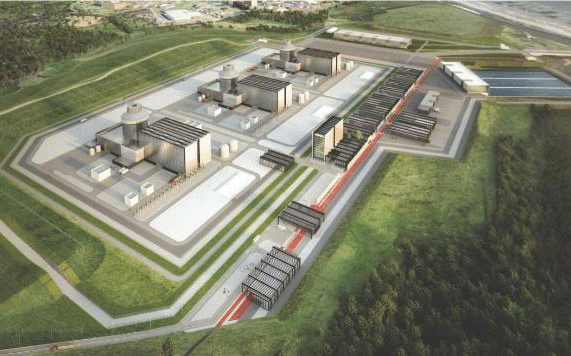
“………Largely under-reported by the media, Moorside’s developer NuGen told the House of Lords Economic Affairs Committee in early November that it had been calculating how elements of its proposed triple AP1000 reactor site might be carved up to allow the non-nuclear elements of the project to be paid for by the UK Government.
For despite casting its net far and wide in an attempt to drum up the additional finance to meet the clearly under-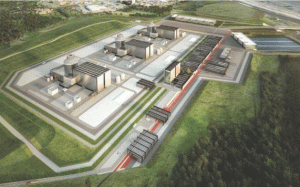 estimated £15 billion cost of building Moorside, the consortium of Japan’s Toshiba and France’s Engie is clearly struggling to attract support.
The struggle was intensified by the not unexpected news on 8th December that Engie itself has declared that it will pull out of the Moorside and other new-build developments because “it no longer has the resources to finance such expensive projects” and wants to concentrate on renewables instead.
Hoping that the Treasury’s taxpayer cavalry will ride to the rescue, NuGen’s CEO Tom Samson told the House of Lords that one non-nuclear element of the project has been identified by the consortium as the seawater system required to cool Moorside’s reactors.
Exactly how this vital component of reactor operation can be classified by NuGen as a non-nuclear element and thereby qualify for taxpayer support is as incomprehensible as is the further suggestion that major ‘civil works’ such as the removal of excavation spoil, could also qualify for Government largesse.
It’s a telling sign of NuGen’s dire financial straits, and one that will leave tax-paying observers wondering exactly which part it is of the Government’s erstwhile promise – that future developers would shoulder the whole cost of new-build in the UK – that NuGen doesn’t understand or seeks to circumvent in its hour of self-inflicted need.
And now – taxpayer-funded transport infrastructure and powerlines
Then there’s the suggestion of Government assistance in improving the transport infrastructure in the Cumbrian area to help support both the decommissioning operations at Sellafield and the proposed construction site at Moorside.
Leaving aside NuGen’s less than subtle ploy to boost its case for infrastructure improvements by lumping together Moorside and Sellafield decommissioning, local communities will nevertheless know to their frustration that pleas to improve West Cumbria’s chronic road and rail infrastructure have fallen on deaf Government and industry ears for decades.
Even the construction of the Thermal Oxide Reprocessing Plant (THORP) in the 1980’s and 90’s – a project of similar workforce size to that forecast for Moorside and with similar demands on the local infrastructure – saw no improvements whatsoever made to the outdated transport system.
With Sellafield’s commercial reprocessing operations in their death throes and the site in clean-up mode, it would be morally indefensible for the taxpayer to be expected to step in now to bank roll a Japanese / French private consortium that has clearly bitten off more than it can chew and finds itself short of funding for a project whose timetable and sums increasingly fail to add up.
The very notion that the Treasury should ride to the rescue of NuGen’s vested interest in a new-build project that has considerably less than full public support will be anathema to taxpayers, particularly as they witness hospital and community services in West Cumbria – whose survival is in everyone’s interest – being increasingly starved of Government support.
A thought must be spared too for those facing the double whammy of increased electricity bills as a result of the estimated £2.5 billion cost of connecting Moorside to an upgraded North West Coast grid system – a contentious and hugely disruptive and visually damaging upgrade that National Grid has confirmed again recently would not be necessary if the Moorside project was not on the table.
The government must pull back from this boondoggle project
Time will tell whether the historically apron-stringed – some would say incestuous – relationship between Government and UK Nuclear will come up trumps for NuGen.
But if it doesn’t there will be no public sympathy for a consortium that has walked open-eyed into a remote green field site well documented as being ‘less than optimum’ for new-build in construction, infrastructure and transmission terms.
Nugen has made its bed and should now lie in it or, as the other saying suggests, get out of the Cumbrian kitchen if it can’t stand the financial heat.
Martin Forwood is the Campaign Coordinator of CORE, Cumbrians Opposed to a Radioactive Environment.
This article was originally published on the CORE website. http://www.theecologist.org/News/news_analysis/2988449/nuclear_plundering_of_the_public_purse_the_sellafield_and_moorside_billions.html?utm_source=&utm_medium=&utm_campaign=
December 19, 2016
Posted by Christina Macpherson |
business and costs, politics, UK |
Leave a comment
 Nuclear plundering of the public purse – the Sellafield and Moorside billions, Ecologist, Martin Forwood 13th December 2016
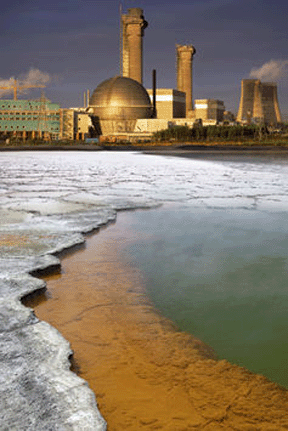
While the government is cutting vital public expenditure across the board there’s one industry for which no costs are too great, writes Martin Forwood. The price of an ‘evaporator’ at the Sellafield nuclear complex is escalating towards £1 billion, while billions more of taxpayer finance are being lined up to finance cooling systems, power lines and transport links for the adjacent Moorside new-build nuclear power plant.
The Brexit vote and Donald Trump’s elevation to the US Presidency have turned the international status quo upside down.
But some things – like the nuclear industry’s insatiable appetite for taxpayers’ money – never change.
Sellafield’s Evaporator D project, with NuGen’s Moorside in hot pursuit, is a prime example as it limps along, sustained only by ever increasing helpings from the public purse.
With nuclear power rightly acknowledged as being a hideously expensive way of boiling a kettle, then Evaporator D – known to the Sellafield workforce as the ‘Big Kettle’ – must be breaking all records.
Initially costed at £90 million (2007) and originally due to come into operation in 2010/11, the cost has increased eight-fold to £740m – as at September 2015. With a ‘challenging’ operational date currently pencilled in as 2017/18, and with updated figures yet to be published, the sky is clearly the limit for Evaporator D.
The tortured progress of the new Evaporator, designed to reduce (by evaporation) the volume of the dangerous liquid High Level Wastes (HLW) produced by spent fuel reprocessing, reveals a catalogue of project mismanagement and eye-watering cost hikes that show little sign of abating.
Promoted specifically by BNFL and subsequently by the NDA as being urgently needed to support continued reprocessing operations in the B205 (magnox fuel) and THORP (oxide fuel) plant, Evaporator D is currently being shoe-horned into the HLW complex.
There it will join its three fellow but semi-crippled evaporators (A,B & C) whose increasing unreliability through age and internal corrosion had underpinned the urgency for Evaporator D.
A tale of mismanagement and incompetence
Despite claiming not to recognise the £90m estimate of 2007, the NDA was nevertheless happy to confirm a price tag of £100m in 2008, since when the cost of Evaporator D has risen in almost annual increments – with the biggest hike to over £600m.
That number comes in a damning report by the National Audit Office that was highly critical of the NDA’s project management and that of its subsequently sacked contractor Nuclear Management Partners (NMP) who had acted for the NDA as Sellafield’s Parent Body Organisation since 2008. As the NAO reported,
“Gaps in the capability of subcontractors in the supply chain to undertake work to the standards required for nuclear installations have had direct consequences for the speed and efficiency of project delivery. For example, the Authority estimates that £50 million of the £244 million increase in the cost of evaporator D and part of the 18-month delay since 2009 is because the subcontractor lacked experience in welding to the necessary nuclear quality standards.
“The Authority was aware of these risks when it approved the start of construction. It relied on Sellafield Limited’s assurances that its subcontractor could manage the risks. The Authority did not obtain assurance from Sellafield Limited that it had put in place appropriate quality assurance and training.”
The cramped conditions in and around the HLW complex was a major factor in employing the novel option of having the main elements of the Evaporator built off-site (by Interserve at Ellesmere Port) and delivered by barge to Sellafield beach in the form of 11 modules, the largest weighing 500 tonnes and measuring 12.5 x 7.5 x 27 metres tall. The Evaporator, whose top and bottom sections are shown above being fabricated at Ellesmere Port, will operate in an upright position once installed at Sellafield.
Novel as the option was, it soon fell foul of a range of problems that included a disorganised supply chain, design changes, the quality of module fabrication, and seismic qualification.
With the modules delivered to Sellafield beach and hauled onto site between 2011 and 2013, Evaporator D’s cost increases from 2013 onwards are largely attributed by the NDA to the ‘transfer of incomplete modules to site’. This resulted in extensive additional cutting and welding work being needed – in a confined work space – to connect together the component parts of the Evaporator system.
And now Evaporator D looks set to miss the ‘reprocessing boat’
The greatest irony of all is, of course, that despite the early hullabaloo about its urgent and crucial support role for reprocessing at Sellafield, Evaporator D can be of service to THORP reprocessing (due to finish in 2018) for no more than one year at best.
At worst it will be of service only for THORP’s post-2018 clean out, the remnant days of B205 reprocessing which is due to end around 2020 and other site decommissioning work.
Faced with this prospect and the embarrassing reality that its much vaunted Evaporator D could indeed miss the THORP reprocessing boat for which it was primarily designed, the NDA and Sellafield Ltd damage limitation teams have recently swung into top gear – by stressing the Evaporator’s future decommissioning role through its ability to deal with the larger waste particles expected to be encountered during the coming years of clean-up work.
For a project whose £740m cost will undoubtedly escalate further, aggrieved taxpayers may take some comfort from Sellafield’s 2012 announcement that plans for a fifth (£600m) Evaporator E had been scrapped. But they should now cast a wary eye to NuGen’s new-build project just across the road from Sellafield where the prospect of further pilfering from the public purse is simmering on the back-burner.
Moorside nuclear power plant – another massive drain on taxpayers’ money …….
http://www.theecologist.org/News/news_analysis/2988449/nuclear_plundering_of_the_public_purse_the_sellafield_and_moorside_billions.html?utm_source=&utm_medium=&utm_campaign=
December 19, 2016
Posted by Christina Macpherson |
business and costs, UK, wastes |
Leave a comment

 Calls to ban ‘unsafe’ nuclear flights from Highland airport Sunday Herald, Rob Edwards, 18 Dec 16 FLIGHTS loaded with weapons-grade uranium that are being launched from a Highland airport are in dangerous breach of runway safety limits, according to documents released under Freedom of Information (FoI) law.
The revelations have led to angry accusations from politicians and environmental groups that a “horrific gamble” is being taken on these flights and calls for the nuclear transports to be banned immediately.
Bombs-grade uranium from Dounreay nuclear plant in Caithness is being flown from Wick John O’Groats Airport to America aboard 130-tonne C-17 US Air Force planes, which according to the documents, are too heavy for most of the runway.
The company that runs the airport denies these accusations and says the runway complies with current industry standards.
A deal to fly 700 kilograms of highly-enriched uranium waste from Dounreay to the US was announced by former UK Prime Minister, David Cameron, at a nuclear security summit in Washington DC in March. The first flight took place from Wick airport under armed guard on September 17 – and more are expected next year.
There were earlier reports that Wick’s runway was too short for C-17 aircraft and that the airport’s rescue and firefighting capability was inadequate. The flight from the US in September landed at RAF Lossiemouth in Moray, which experts say could have been to minimise the weight of fuel it was carrying for its short hop to and from Wick.
Now detailed technical reports obtained by the Sunday Herald disclose that the runway may not be strong enough to withstand the flights. Highlands and Islands Airports Limited (HIAL) had commissioned the US engineering firm AECOM to examine the structural suitability of Wick’s runway for C-17s, and it produced a 46-page report in October 2015.
Under safety standards used by the Ministry of Defence (MoD), the report found that most of the runway was deficient. “The movements of the C-17 will not meet the necessary criteria for normal overloading operations as stated in the guidance and thus should only be allowed in emergency situations,” it said……….
John Finnie MSP, transport spokesperson for the Scottish Greens, called for the flights to be suspended pending a safety review. “The public will rightly be alarmed by this disclosure,” he said.
“It clearly suggests that no legitimate risk assessment has been undertaken and a lower standard is being applied simply because of what the cargo is. I intend raising this matter in the Scottish Parliament.”
Friends of the Earth Scotland described the released documents as damning. “It is almost beyond belief that these flights are using a runway that is not fit for purpose,” said the environmental group’s director, Dr Richard Dixon.
“Gambling against the horrific consequences of one of these flights crashing is bad enough but vastly increasing the risk of a crash by using an unsuitable airport is almost too stupid to believe. Whoever thought this was an acceptable plan should lose their job and these flights should be banned immediately.”
Tor Justad, chairperson of the campaign group Highlands Against Nuclear Transport, demanded an “absolute assurance” that the C-17 aircraft would not damage the runway or suffer an accident. “Safety standards are being compromised to allow the uranium flights to go ahead,” he said………….. http://www.heraldscotland.com/news/14973582.Calls_to_ban___39_unsafe__39__nuclear_flights_from_Highland_airport/?ref=rss
December 19, 2016
Posted by Christina Macpherson |
safety, UK |
Leave a comment
 NuClear News No 91, Jan 2017 On 14th December some thirty Greenpeace activists blocked the EDF headquarters in Paris to denounce the financial scandal and technical bankruptcy of the Company. They hung a banner on the front of the HQ building which declared that EDF has a debt of 74 billion euros, but because of nuclear power, this figure will rise even higher. (1)
As we reported last month Greenpeace commissioned an audit by AlphaValue, the equity research company. The report indicated that EDF grossly underestimates the cost of nuclear electricity. If it disclosed the true cost of running its fleet of reactors in France while financing two new ones in the UK, it would be declared bankrupt. (2) (3)
France is set to have its usual nuclear power capacity almost completely restored by midJanuary, after a number of plants come back online following inspections. Only 4 out of 58 nuclear power plants will be offline by the middle of January, so worries about shortages have eased. EDF has confirmed that seven nuclear reactors shut down for safety checks would be up and running again by the end of December and there should be no problem with power supplies this winter.
Grid operator RTE said that three of the seven reactors offline – Gravelines 2, Dampierre 3 and Tricastin 3 – would resume production from December 20th and that four more would restart before December 31st. The seven reactors are among 12 that have been slated for inspections under orders from the nuclear regulator ASN following the discovery of high carbon concentrations, which could weaken their steel. (4)
EDF has asked ASN if it can postpone the outage of the 1.5-GW Civaux-1 and the 900-MW Tricastin-2 reactors to March and February respectively. The Civaux-1 and Tricastin-2 reactors are currently both due to go offline December 23 and return on January 15. (5)
While this particular crisis may appear to have an end in sight, the French industry’s problems are now moving overseas. Manufacturing problems and forged paperwork as identified at Le Creusot are rare in the nuclear industry, where strict adherence to production and operating rules are supposed to be a crucial buffer against nuclear accidents. Independent nuclear energy consultant Mycle Schneider says “Having worked for over 30 years in France, I did not think this was possible for this country, [but it is] likely we have seen only the tip of the iceberg.”
Inspectors from the U.S. China and four other countries are investigating the decades-long cover up of the manufacturing problems at Le Creusot to see whether flaws represent a safety threat to their reactors. After investigators discovered files suggesting Le Creusot employees had concealed for decades manufacturing problems involving hundreds of components sold to customers around the world, the French regulator, ASN, ordered Areva to check 6,000 manufacturing files by hand, covering every nuclear part made at Le Creusot since the 1960s. Finnish inspectors visiting Le Creusot said they learned of potential flaws in a component slated for the reactor at Olkiluoto. In the U.S., the NRC has identified at least nine nuclear plants that use large components from Le Creusot.
“I’m concerned that there keep being more and more problems unveiled,” said Kerri Kavanagh, who leads the U.S. Nuclear Regulatory Commission’s unit inspecting Le Creusot. Regulators are considering returning to Le Creusot or inspecting Areva’s Lynchburg, Va., offices to deepen their probe of the plant, a U.S. official said.http://www.no2nuclearpower.org.uk/nuclearnews/NuClearNewsNo91.pdf
December 17, 2016
Posted by Christina Macpherson |
business and costs, France |
Leave a comment
any UK financing would be “off balance sheet” to avoid inflating public debts
The UK’s willingness to consider government involvement reflects a change in thinking since Theresa May replaced David Cameron as prime minister last June. Her enthusiasm for “industrial strategy” — a term enshrined in Mr Clark’s formal job title — has already been widely interpreted as signalling a greater openness to intervention in business affairs.
 Public finance sought for Welsh nuclear plant, Hitachi in talks over state funding for Wylfa in Anglesey by: Andrew Ward and Jim Pickard in London, Ft.com, 16 Dec 16
Hitachi is in talks with the Japanese and UK governments about potential state financing for the multibillion-pound nuclear power station it is planning to build in Wales.
Government equity, loans and credit guarantees are among the options being explored by the Japanese conglomerate and officials in London and Tokyo, according to people briefed on the matter.
Any UK public finance for the power plant at Wylfa in Anglesey would represent a major change in policy; the British government has for years resisted the idea of exposing taxpayers’ money to the heavy expense and high risks involved in building nuclear reactors.
Philip Hammond, UK chancellor, is in Japan this week, and Greg Clark, business secretary, is expected to visit next week, with the Hitachi nuclear project high on the agenda for both.
Following a meeting with government officials and business leaders in Tokyo on Thursday, Mr Hammond that financing for the nuclear power project in Wales could total around £12bn, of which a portion would be contributed by Japan. Negotiations are continuing but bankers indicated the Japanese contribution could be on the order of ¥1tn ($8.5bn).
People involved in the process said talks still “have a long way to go” and it was far from certain that a deal with the two governments would be reached.
One person said that any UK financing would be “off balance sheet” to avoid inflating public debts. This could include the government taking a direct minority stake alongside Hitachi provided it did not bring the whole project on to the Treasury’s books. Japanese government support is likely to come in the form of loans.
UK government officials said they were “looking at options” for how the Wylfa project should be financed.
The UK’s willingness to consider government involvement reflects a change in thinking since Theresa May replaced David Cameron as prime minister last June. Her enthusiasm for “industrial strategy” — a term enshrined in Mr Clark’s formal job title — has already been widely interpreted as signalling a greater openness to intervention in business affairs.
Hitachi acquired Horizon Nuclear Power, the company planning to build the Wylfa plant, from German utilities Eon and RWE in 2012.
The scheme has been given fresh momentum by the government’s approval in September for the £18bn Hinkley Point nuclear plant in Somerset — a decision which confirmed Mrs May’s support for renewal of the UK’s nuclear power industry……. https://www.ft.com/content/8204883c-c2eb-11e6-9bca-2b93a6856354
December 17, 2016
Posted by Christina Macpherson |
politics, UK |
Leave a comment
 Hinkley Point C Wylfa Newydd NuClear News No 91, Jan 2017 Back at the Nuclear Industry Association’s annual conference EDF’s Humphrey Cadoux-Hudson tries to keep the delusion going telling delegates that “1,000 workers [are] currently on site” and “first nuclear concrete expected in Q1 2017”
In fact the first pour of concrete (for the reactors) will not start until 2019. At the moment a temporary jetty is being built but it will take about a year to complete and construction of workers’ accommodation may start in 2017. In the meantime about a 100 HGV lorry movements a day are carrying, spoil, limestone, rebar, metal shearing aggregate and plate material. 40 buses a day carry shift workers between Bridgwater and the site, but ironically these buses can’t be used by local residents who have had their local services scrapped.
So there will be two more years of falling renewable costs and rising nuclear costs before construction at Hinkley can get underway in earnest. And two more years of revelations about the mess that EDF and Areva have gotten themselves into. ) http://www.no2nuclearpower.org.uk/nuclearnews/NuClearNewsNo91.pdf
December 17, 2016
Posted by Christina Macpherson |
business and costs, UK |
Leave a comment
South Korea says minister, British counterpart discussed nuclear power cooperation http://www.reuters.com/article/us-southkorea-nuclear-uk-idUSKBN14508N 15 Dec 16 South Korea’s energy minister Joo

Hyung-hwan discussed cooperation on British nuclear energy projects in a meeting in London on Thursday with Britain’s business minister Greg Clark, South Korea’s energy ministry said in a statement.
The statement from Seoul didn’t disclose details of discussions on nuclear energy, but said the two countries will hold a follow-up meeting in the first half of next year.
A British government statement issued said the two countries underlined a commitment at the meeting to keep working together on science, innovation and technology, without mentioning nuclear power.
Korea, Asia’s fourth-largest economy and the world’s fifth-biggest user of nuclear power, is keen to export its nuclear reactor technology, developed through state-run utility Korea Electric Power Corp (KEPCO).
Earlier this year, Britain gave the green light to the $24 billion Hinkley Point C project, its first new nuclear power plant in decades.
Along with that project, NuGen, a joint venture between Toshiba and French utility company Engie, plans to build three reactors at the Moorside site on the coast of Cumbria, in northwest England.
According to Seoul’s statement on Friday, Korea’s energy minister also had a meeting with NuGen chief Tom Samson during his British visit. The minister said Korean participation in Nugen projects would contribute to their success.
Earlier this year a person familiar with the situation told Reuters KEPCO had engaged in talks with Toshiba and Engie about buying a stake NuGen. A NuGen spokesman declined to comment on whether talks were taking place with KEPCO, which also declined to comment.
(Reporting by Jane Chung; Editing by Kenneth Maxwell)
December 17, 2016
Posted by Christina Macpherson |
marketing, South Korea, UK |
1 Comment
The Japan Bank for International Cooperation and the Development Bank of Japan will provide financing for the project, the official told Reuters.
The funding plans are a boost for the project, one of several new nuclear plants planned in the UK, which is aiming to replacing its ageing fleet of atomic reactors.
Hitachi’s Horizon unit plans to construct at least 5.4 gigawatts of new nuclear capacity across two sites in Britain.
The funds will be provided for the first plant planned at Wylfa Newydd in Wales.
The Nikkei newspaper said Hitachi would invest about 10 percent of the expected 19 billion pounds ($24 billion) cost of the project. A Hitachi official declined to comment, saying the amount has not been announced.
($1 = 117.2600 yen)
($1 = 0.7971 pounds)
December 17, 2016
Posted by Christina Macpherson |
Japan, politics international, UK |
Leave a comment
 Moorside NuClear News No 91, Jan 2017 Unfortunately for nuclear supporters utilities in the UK are, like PGE, beginning to realise that the old utility model is dying. Engie, formerly GDF Suez, which owns 40% of NuGen, the Company which wants to build three new nuclear reactors at Moorside in Cumbria, next to Sellafield, is fully aware that “the future is going to be much more about decentralized energy”. The company is roughly one third owned by the French Government, and is the parent company of the Belgian utility, Electrabel, which operates all seven of Belgium’s nuclear reactors. But it is now trying to abandon its new reactor projects in Turkey and England because it no longer has the resources to finance such expensive projects. (8)
The Chief Executive of Engie UK, Wilfrid Petrie, says “It’s very difficult today to build a new power plant [in the UK] with current market conditions”. Instead, the Company offers localised services that could include installing insulation, district heating and solar panels on existing buildings as well as supplying gas and electricity. “We see the emergence of a new type of organisation within cities,” he says. Engie, he believes, can build on its relationships with councils and other commercial customers to expand its British business by developing local, decentralised energy in urban areas, where demand is high. “We don’t want to sell a huge amount of energy. Our big focus is on the demand side. The future is going to be much more about decentralized energy,” he says. (9)
If Engie does pull out of the NuGen consortium it will make it even harder to finance the construction of three new reactors at Moorside. NuGen has already told the House of Lords Economic Affairs Committee that it is hoping that certain non-nuclear elements of the project might be paid for by the UK Government. Despite casting its net far and wide in an attempt to drum up the required finance the consortium is clearly struggling to attract support. Hoping that the taxpayer will rescue the project, NuGen’s CEO Tom Samson told the House of Lords that one non-nuclear element of the project has been identified by the consortium as the seawater system required to cool Moorside’s reactors. Samson hopes that major ‘civil works’ such as the removal of excavation spoil, could also qualify for Government largesse. There’s also a suggestion there might be Government assistance to improve the transport infrastructure of Cumbria. The very notion that the Treasury should ride to the rescue when hospital and community services in West Cumbria are being increasingly starved of Government support is not going down too well in some quarters. (10) http://www.no2nuclearpower.org.uk/nuclearnews/NuClearNewsNo91.pdf
December 17, 2016
Posted by Christina Macpherson |
business and costs, UK |
Leave a comment
 Bradwell Notes NuClear News No 91, Jan 2017 Maldon District and Essex County Council are paving the way for Bradwell’s Chinese-built nuclear plant by offering free Mandarin lessons to councillors. Professor Andy Blowers, chairman of the Blackwater Against New Nuclear Group (BANNG), said “it may be that neither council possesses expertise in understanding what is proposed. And learning Mandarin will not compensate for that.” (1)
BANNG has been opposing new nuclear development at Bradwell for the last 8 years, on the grounds that the low-lying site is totally unsuitable for such development and, now, also because of concerns, shared with others, regarding security issues and Chinese involvement in such sensitive UK infrastructure. Professor Andy Blowers said: “There is a long process ahead before any new nuclear power station can be built at Bradwell. The rigorous Generic Design Assessment has not yet commenced and then there will be a planning process in which Maldon District and Essex County Councils will be consultees. By celebrating in any way, the County Council potentially compromises its disinterested role as a consulted planning authority. The suggestion that there is something to celebrate could give the impression that a new Chinese power station will simply be waved through”. (2)
Meanwhile the NDA’s policy of spreading nuclear waste around the country to save money continues. Essex County Council has voted to lift restrictions imposed only 4 years ago and to allow Magnox, operators of the Bradwell site, to transfer Intermediate-Level Waste (ILW) from Dungeness and Sizewell to the Bradwell Interim Storage Facility (ISF). The restriction had decreed that only Bradwell-generated waste could be stored there. Bradwell will now become a regional nuclear waste store for the indefinite future and a precedent for the import of further wastes may have been set. The planning approval means that the long-held principle of selfsufficiency, whereby each site hosts its own wastes, is contravened. (3)
In a surprise move EDF and Chinese nuclear company CGN have consulted Mersea Island residents over the proposed new nuclear power station at Bradwell. The previous official position was that Mersea Island was in the wrong planning area (despite being much closer to and directly downwind from the site). If people want to share their views on the project they can do so via the website: http://www.bradwellb.co.uk (4)
Sizewell C EDF Energy has launched its stage2 public consultation on the proposals for two EPRs to be built at Sizewell. The consultation is open until 3 February 2017. (1)
Community leaders who met to discuss the proposals agreed that the developers need to offer a better deal for Suffolk. Nearly 80 town and parish representatives along with members of the Joint Local Authority Group (JLAG) concluded that EDF Energy’s stage two consultation for Sizewell C has failed to make enough progress from its proposals four years ago. The key concerns raised at the summit focussed on the proposed accommodation campus, whose location near Therberton is feared to lack the required infrastructure to transport up to 2,400 workers to and from the construction site. Other issues included EDF’s alleged failure to “fully understand the communities of east Suffolk” and their concerns. The summit also heard that EDF’s proposals to have 35 metre high “spoil heaps” would have a significant impact on those living and visiting the area and it was not yet clear what mitigation would be provided. Transport routes for construction material were also said to be unclear, with EDF urged to provide more detail about how much would be brought in by road, sea and rail. (2) http://www.no2nuclearpower.org.uk/nuclearnews/NuClearNewsNo91.pdf
December 17, 2016
Posted by Christina Macpherson |
opposition to nuclear, UK |
Leave a comment
Bundestag approves nuclear waste deal with industry, DW, 15 Dec 16 An overwhelming majority in Germany’s parliament has given the go-ahead for a reponsibility-splitting deal to clean up nuclear waste. It’s the final chapter in a decades-long story. The deal will require four of Germany’s largest energy providers to pay more than 23 billion euros ($24.1 billion) into a state-administered fund to deal with the aftermath of nuclear power in return for legal immunity. The deal was passed with the votes of the ruling coalition of the conservative Christian Democrats (CDU) and the Christian Social Union (CSU), the Social Democrats (SPD) and the Green Party by a margin of 581 to 58.
The agreement is the latest step in Germany’s decision to phase out nuclear energy, which was made after the Fukushima disaster in 2011. Addressing the Bundestag before the vote, Economy Minister Sigmar Gabriel harkened back to the beginnings of the “no-nukes” movement among private citizens in Denmark, Germany and other parts of Europe in the mid-1970s.
“The stickers with the picture of the sun laughing became a symbol for a successful energy policy,” Gabriel said, promising that Germany would safely dispose of nuclear waste rather than simply exporting it to other parts of the world……..
Under the terms of the deal, power companies will only bear part of the costs of the clean-up. The German Institute for Economic Research in Berlin (DIW) estimates that the bill for the decades-long nuclear phase-out could reach 170 billion euros ($178 billion).
“The actual costs will be a lot more than the estimates,” DIW Energy Division Director Claudia Kemfert told Deutsche Welle in October, when the details of the arrangement were hammered out. “So the deal only covers a fraction of the actual costs, and society will have to pick up the rest.”
Kemfert said that the power companies had gotten a “free pass,” a sentiment echoed in parliament by the Left Party, which voted against the deal.
“The companies are being released from responsibility with a golden handshake,” said Left Party energy spokeswoman Eva Bulling-Schröter.”The costs are going to go up.”
The issue of lawsuits filed by energy companies against the German government’s nuclear phase-out has yet to be fully resolved. The government will now begin negotiations aimed at ending the various legal actions in return for the clean-up compromise. http://www.dw.com/en/bundestag-approves-nuclear-waste-deal-with-industry/a-36775793
December 17, 2016
Posted by Christina Macpherson |
Germany, politics |
Leave a comment
 Wylfa Newydd NuClear News No 91, Jan 2017 “The Government knows that solar and wind will be cheaper by the time Hinkley is generating” says Stop Hinkley spokesperson Roy Pumfrey. “It is blindingly obvious that solar and wind will win through in the end.” (21)
If the French nuclear industry managed to somehow get through its current difficulties ,EDF and China’s state-backed CGN can always appeal to their respective governments to help fund delivery of Hinkley Point C if things go pear-shaped, but Horizon, which is proposing to build two Advanced Boiling Water Reactors at Wylfa on Anglesey and two at Oldbury in Gloucestershire doesn’t have that luxury. Instead it will need to raise much more of its capital funding through attracting private investors – and proving to them it’s a safe bet. Horizon’s CEO Duncan Hawthorne admits this will be a challenge. “Quite honestly, we can’t point to a large parade of successful (nuclear) projects … We have to have a credible story in order to get financial support for the build costs”. He has got to somehow show that it is possible to construct a plant that will guarantee to investors it can be built on time and budget – and be commercially viable. (22) Given that there were only four ABWRs operating anywhere in the world before Fukushima with an average load factor of only 45%, and all have been closed since 2011, this might be a tall order for Hawthorne. (23)
The Japanese government and Hitachi are reported to be putting together a package worth £6.79bn to finance the Wylfa. The total cost of the project is expected to be around £19bn. There has been talk, according to the Nikkei Asian Review of the UK Government shouldering 25% of the cost. Even if that were the case that still leaves £11.5bn to be found from somewhere. (24)
While Wales and the global climate waits for Horizon to prove something that might well be impossible to prove the local economy on Anglesey has been “allowed to stagnate over decades due to a promise that nuclear power would come and save the day”. Robat Idris from People Against Wylfa B says residents are concerned about nuclear waste from the proposed Wylfa Newydd power plant and were not convinced that any new jobs would be for local people. He says focusing efforts on bringing renewable and community energy schemes to Anglesey would offer more long-term benefits. (25) http://www.no2nuclearpower.org.uk/nuclearnews/NuClearNewsNo91.pdf
December 17, 2016
Posted by Christina Macpherson |
business and costs, UK |
Leave a comment