The secret nuclear bunker built as the UK’s last hope, Dug for an underground ‘shadow factory’ for aircraft during World War Two, the Drakelow tunnels were re-purposed as a nuclear bunker to be used by the UK government. We went inside., BBC By William Park 4 January 2017
Deep beneath a hill in the Worcestershire countryside, about 20 miles west of Birmingham, lie a series of hidden tunnels. Once home to a secret aeroplane factory during World War Two, they were later repurposed to protect the UK in the event of a nuclear war: it’s from here that the government would have continued to run the country.
“This would have been the last resort of the UK government,” says Michael Scott, a volunteer with the Drakelow Preservation Trust, which is restoring the site. The Trust’s aim is to reopen parts of the tunnels as a museum to preserve their history in World War Two and the Cold War. But the organisation remains some years away from finishing the work, and without much funding, the volunteers are restricted mostly to repainting walls.
When cities across the UK came under siege during the war, the government needed to find a way to continue production of tanks, aircraft and ammunition. The solution was to build underground factories – also called shadow factories – away from large cities. The Drakelow Tunnels housed one of them. And the same remoteness and fortress-like qualities that made Drakelow an effective underground aircraft factory would later make it the location of choice for responding to nuclear attack in Britain.
Today, the entrance used by Scott and the other volunteers is called Adit A; it’s where the security office would have stood. Most of the hillside around the entrance is bare, revealing a sandstone mass towering above us that would have made this site virtually bomb-proof in World War Two.
Adit A shows many signs of the alterations that were made to Drakelow Tunnels to retrofit it for use as a nuclear bunker – including covered air vents that would have protected those inside from fallout. Through the heavy steel door, visitors would have had to strip, incinerate their clothes and shower as they decontaminated themselves……..
There are examples of similar subterranean shadow factories in Germany, too. The largest was Mittelwerk, Kohnstein, which produced V-1 and V-2 bombs from 1943 to 1945. The move underground was a direct result of the destruction of other, above-ground V-2 production plants, like Peenemunde in northern Germany. Unlike Drakelow, Mittelwerk was left in ruins after the war.
Perhaps the most intriguing underground network of Nazi military tunnels is the series of seven structures that make up Project Riese. Buried in the Owl Mountains – then part of Germany but now in south-west Poland near the Czech border – these sites were never finished and documents about their full purpose seem to have been destroyed…….
Cold comfort
Top-secret military construction did not end with World War Two. In 1949, as the Cold War bloomed, the UK government began to build 15 fortified war rooms across the country.
But in the case of the much bigger threat of a nuclear attack, these buildings would not have been enough to protect their inhabitants. They were too small, making them unable to support a workforce for the extended period of time they’d need to remain indoors to avoid the fallout of a nuclear explosion. They also were built too close to the major cities which could have been a target for an attack: five were built in London, for example.
Having seen the effect of a nuclear attack in Japan, the British government commissioned the Strath Committee, led by head of the Central War Plans Secretariat William Strath, to analyse the potential effects of a nuclear attack on the UK. In 1955 the committee published the Strath Report which found that even a ‘limited’ attack would have devastating consequences. Food and water would be contaminated, the NHS would be overwhelmed with four million serious casualties and 12 million deaths, and industry would shut down. In short, the “social and economic fabric of the country [would be] destroyed”.
Inside Glanrhyd, the first solar ‘eco hamlet’ in Wales Residents of the new eco hamlet in Pembrokeshire can expect greatly reduced fuel bills and shared use of an electric car, Guardian, Steven Morris, 6 Jan 17,
Most of the houses in the Welsh village of Glanrhyd are of traditional construction – walls made out of hefty local stone, roofs of grey slate. They can get chilly when the winter winds whistle through the gaps.
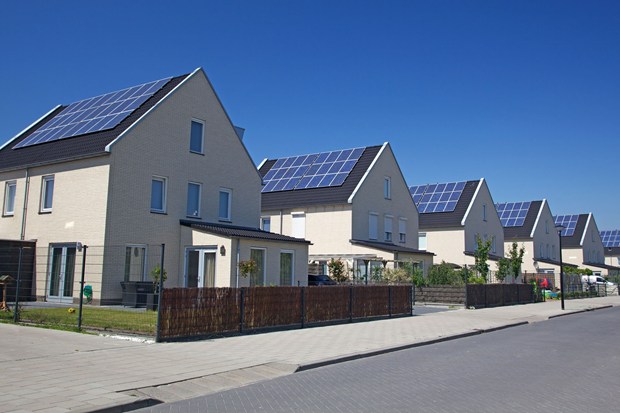
The six houses that make up the “eco hamlet” of Pentre Solar look and feel very different. They are built using light, bright timber sourced from a nearby valley. The houses are carefully insulated, airtight and powered by solar panels.
Over the next few weeks the first tenants, local people from Pembrokeshire county council’s housing list, will move into what is being billed as the only development of its kind in the UK.
Their fuel bills are expected to be a fraction of their neighbours’ – and they will even get the use of a shared electric car for the school run, the shopping trip to nearby Cardigan, or even for a jolly to one of the many glorious local beaches…….
If the project, which has been backed by the Welsh government, does work, the hope is that similar developments could be rolled out across Wales and eventually across the UK.
Western Solar’s first venture was a solar farm, five miles from the eco hamlet. Doubts that it was sunny enough in this part of the British Isles (after all, the nearby village of Eglwyswrw made headlines last year after it rained for more than 80 days in a row) proved unfounded and the project thrived…….
Using technology borrowed from Germany, Western Solar built a prototype eco home called TŷSolar (Tŷis Welsh for house). The idea was to produce a high-quality, brilliantly insulated, airtight house made of locally sourced timber and powered by solar energy…….
Labour chiefs urge voters to ignore Jeremy Corbyn’s nuclear views ahead of Copeland by-election, Mirror UK, BYBEN GLAZE5 JAN 2017 The Labour leader is a veteran anti-nuclear campaigner, which could be a problem for him in Copeland in Cumbria Labour chiefs are quietly urging voters to ignore Jeremy Corbyn’s anti-nuclear views in a crunch by-election.
The Labour leader, a veteran anti-nukes campaigner, faces his biggest electoral test when voters go to the polls in Copeland, Cumbria.
The constituency is home to the Sellafield nuclear plant and next-door to Barrow-in-Furness, home to the shipyard building the Navy’s new Trident nuclear submarines.
Labour is defending a slim 2,564 majority in the vote triggered by the resignation of MP Jamie Reed.
The Tories are favourites to win.
Senior Labour figures fear the Conservatives will highlight Mr Corbyn’s lifelong opposition to nuclear power and weapons. The Labour leader will “absolutely” visit the constituency during the campaign, according to party sources.
Copeland council’s Labour group leader Lena Hogg, who voted for Mr Corbyn in his successful leadership campaigns, hoped he would accept nuclear was popular locally.
Pro-nukes Mrs Hogg told the Mirror: “We have got it and it’s staying and people are quite happy about the fact we have had it since 1952.
France ready to save nuclear group Areva, regardless of election outcome, Globe and Mail, GEERT DE CLERCQ, PARIS — Reuters, Jan. 04, 2017 A government-led rescue of French nuclear group Areva and the wider atomic-energy industry may cost the state as much as €10-billion ($13.94-billion Canadian), but political support is almost certain whoever wins the presidential election in May.
While taxpayers will ultimately pick up the huge bill, the main election contenders – from the Socialists and conservatives to the far-right National Front – broadly back the bailout, which involves splitting up Areva.
On top of its dire financial state, Areva is beset by technical, regulatory and legal problems. But given its importance to a nuclear industry that generates three quarters of France’s electricity and employs 220,000 people, the next government probably has little choice but to stand by the scheme hatched under outgoing Socialist President Francois Hollande.
France has a small but fierce anti-nuclear movement and some critics oppose investing billions in extending the life of aging reactors. Nevertheless, nuclear energy is broadly accepted, even though neighbouring Germany has decided to ditch it altogether following the 2011 disaster at Japan’s Fukushima plant…….
The nuclear industry rescue also involves a cash injection for power utility EDF, which operates France’s 58 nuclear reactors and will buy part of Areva’s business. But for all the domestic support, Brussels must also rule on whether the bailout complies with European Union rules on state aid………
Once the champion of France’s nuclear industry, 87-per-cent state-owned Areva has seen its equity wiped out by years of losses. Among its biggest problems is a nuclear plant it is building in Olkiluoto, Finland. Work is almost a decade behind schedule and huge cost overruns have led to Finnish utility TVO and Areva claiming billions from each other.
A similar project in Flamanville, France is also running years late, with costs spiralling. Areva has also had to take heavy writedowns on its African uranium mines while foreign orders have generally slumped since the Fukushima accident.
On top of this, U.S. and other regulators are investigating possible safety problems related to the suspected falsification of documents at Areva’s Le Creusot plant, which makes components for reactors worldwide.
In a restructuring that means an end to Areva as an integrated nuclear group, the firm will sell its reactor unit Areva NP to EDF. The French state will effectively nationalize the Olkiluoto liabilities and Areva will receive a mainly state-funded cash injection of €5-billion to refloat it as a uranium mining and nuclear fuel group.
NuGen ‘remains committed’ to Moorside nuclear plant http://www.in-cumbria.com/NuGen-remains-committed-to-Moorside-nuclear-plant-b026a08f-7adb-4f7a-b6ff-c67aa3026e0a-ds by Duncan Bick January 5, 2017NUGEN says it “remains committed” to plans for a nuclear power station in Cumbria, despite the crisis affecting its majority shareholder Toshiba. Forty per cent was wiped off the Japanese company’s value in the last week of 2016 after it said that its US subsidiary, Westinghouse Electric, may have overpaid by several billions of dollars for another nuclear construction and services business.
To compound matters, the company is embroiled in an accounting scandal.
Its shares plunged to 259 yen (£1.81) on Thursday before staging a modest recovery on Friday. Yesterday they settled at slightly more than 277 yen when the Tokyo stock exchange closed.
Toshiba holds a 60 per cent stake in developer NuGen, alongside ENGIE of France.
They are due to decide next year whether to proceed. If the do, a £10bn power station will be constructed at Moorside, Sellafield. The credit agency Moody’s has downgraded Toshiba’s ratings and warned that the writedown could affect the company’s ability to pay its debts.
But a spokesman for NuGen said: “NuGen’s shareholders [Toshiba and ENGIE] remain committed to the development of our Moorside project.
“NuGen is actively engaged in exploring a universe of investment opportunities to bring in additional investments, including debt and equity, to help fund the construction of Europe’s largest new nuclear power station.”
He added: “NuGen welcomed the recent signing of a memorandum of cooperation between the UK and Japanese governments.
“The agreement shows confidence in the progress and deliverability of Moorside and commitment to nuclear as a solution to meeting the UK’s low carbon electricity requirements.”
NuGen has been seeking further backers for the scheme and is understood to have held talks about investment from the Korea Electrical Power Corporation.
If Moorside does go ahead, Westinghouse, once owned by British Nuclear Fuels, would supply three reactors.
They would have a capacity of up to 3.8GW, enough to supply 7.5 per cent of the UK’s electricity.
French watchdog deepens probes into Areva nuclear parts Concerns about quality and documentation could have knock-on effect on Hinkley Point Rt.com JANUARY 4, 2017 by: Michael Stothard in Paris
Investigators are widening probes into potentially faulty nuclear reactor components made at a factory operated by Areva, the struggling French manufacturer, after the problems contributed to multiple shutdowns of power plants last year.
Julien Collet, deputy director of the ASN, France’s nuclear regulator, said he wanted to “go much further” with investigations into Areva’s components, including one probe into the falsification of documents that certified the quality of certain parts.
Separately, the ASN is expected to issue a report this year about issues with components made by Areva for a new nuclear power plant at Flamanville in France. The report’s findings could have an impact on the proposed Hinkley Point C nuclear plant in the UK, which is due to use the same technology as Flamanville.
The ASN is leading investigations into two scandals relating to Areva’s supply of components for France’s existing nuclear power stations.
First, French investigators said in June that some steel components made at Areva’s Le Creusot factory — notably parts used in steam generators — had excessive carbon levels, which could make them vulnerable to cracking.
Second, Areva announced in May that it had found evidence suggesting employees had doctored quality-assurance documents relating to many different nuclear reactor components made at Le Creusot for up to 40 years.
Both affairs have contributed to French nuclear power plants run by EDF, the utility, being shut down last year………
Overseas regulators are monitoring events in France. David McIntyre of the US Nuclear Regulatory Commission said it was concerned by the revelations about doctored documents at Le Creusot, which has supplied some components to US nuclear power plants……..
Beyond Areva’s potentially faulty components in France’s existing nuclear power stations, there is another — potentially even larger — issue looming.
In 2014, the reactor vessel at the planned new nuclear power plant at Flamanville — which was made at Areva’s factory in Chalon/Saint-Marcel — was found to have potentially critical structural weaknesses as a result of excessive carbon levels……….
Any significant problems with the vessel could be catastrophic for EDF, as redoing this important piece of the plant would mean restarting much of the construction work, which is already billions of euros over budget and years late.
“If the reactor vessel is deemed faulty, it would be a disaster,” said Denis Florin, founder of Lavoisier Conseil, a consultancy.
Flamanville is a flagship project for EDF, using European Pressurised Reactor technology that is also earmarked for the Hinkley Point C power plant in the UK.
Any further delays at Flamanville could pose problems for Hinkley. This is partly because the financial support package the UK government has offered for Hinkley is premised on Flamanville being operational by 2020.
If Flamanville’s reactor vessel is found to be flawed, it could push back the completion date — currently scheduled for the end of 2018 — beyond 2020.
EDF has said it does not plan to use the UK financial support package, as it is financing the project from its own balance sheet, but this could still rob the company of room for manoeuvre should Hinkley face problems.
Full Documentary Films – Children of Chernobyl – Discovery Channel Documentaries
It’s Been 30 Years And Chernobyl Is Still Having An Impact – Especially On The Children http://goodstuffbuzz.com/30-years-chernobyl/ [excellent photos] On that fateful day in April of 1986, many already knew what the future would hold. While nuclear power we being sold as the “safe” alternative to our addiction to fossil fuels, we had already dodged a bullet with Three Mile Island. In fact, a meltdown was a more frightening (and possible) prospect than an all out global exchange of bombs with our enemies.
These Are The Faces Of Chernobyl, Both Good
And Not So
Still, when it happened, when Russia finally had to come clean and explain what had happened at Chernobyl, the writing was all over the wall. Nuclear power would become a pariah. An entire industry and science would have to answer for what happened halfway across the planet, and watchful eyes would be set on the city surrounding the power plant. How would this accident affect the population, and what lessons could we learn about the release of so much radiation into the atmosphere?
Many Feel The Russian Government Has Abandoned Them
Part of the answer comes in a terrifying documentary – included here – called The Children of Chernobyl. Both literal and figurative, the film follows the decades since a main reactor went down and sent fatal fallout throughout the countryside. It addresses both the international concerns and the local lies. Even now, in a more open society, Russia is still secret about the consequences of the leak. This movie makes it clear about what really happened.
Especially, The Children
Particularly, The Children
The high levels of radiation had random effects on the people of Chernobyl as well as those in the outlying areas. Animals died. Land became barren. And in one of the most heartbreaking consequences, children were born with various genetic and biological aberrations. These “mutants” became an embarrassment for the government and their treatment will anger you. Thirty years ago, the world got as close to a full blown nuclear meltdown as we are likely to ever see. The aftermath continues to linger, and anger.
All those terror attacks’: Sweden’s nuclear sites to get armed guards Rt.com 5 Jan, 2017 Sweden has decided to tighten up security around nuclear plants by requiring guards to be armed. The measures will be introduced following recent terrorists attacks across the globe.
“Just look at all the terror attacks, for example in Istanbul recently. We have to keep up and protect our operations as best we can,” Anders Österberg, spokesperson for OKG AB, a Swedish corporation which owns and operates the country’s Oskarshamn Nuclear Power Plant, said, according to Sveriges Radio on Thursday.
Starting from February 4, guards at three Swedish nuclear plants – in Ringhals, Oskarshamn, and Forsmark – will be equipped with guns, Österberg later told TT news agency. Under new regulations, security officers are required to use guard dogs for patrolling nuclear power sites.
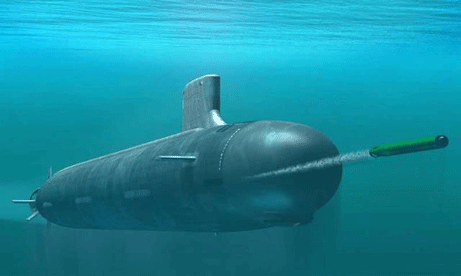
Did Sweden Make America’s Nuclear Submarines Obsolete? The National Interest, 30 Dec 16Nuclear-powered submarines have traditionally held a decisive edge in endurance, stealth and speed over cheaper diesel submarines. However, new Air Independent Propulsion (AIP) technology has significantly narrowed the performance gap on a new generation of submarines that cost a fraction of the price of a nuclear-powered boat……..
Nuclear vs. AIP: Who Wins?:
Broadly speaking, how do AIP vessels compare in performance to nuclear submarines? Let’s consider the costs and benefits in terms of stealth, endurance, speed and cost.
Stealth:
Nuclear powered submarines have become very quiet—at least an order of magnitude quieter than a diesel submarine with its engine running. In fact, nuclear-powered submarines may be unable to detect each other using passive sonar, as evidenced by the 2009 collision of a British and French nuclear ballistic missile submarines, both oblivious to the presence of the other.
However, there’s reason to believe that AIP submarines can, if properly designed, swim underwater even more quietly. The hydraulics in a nuclear reactor produce noise as they pump coolant liquid, while an AIP’s submarine’s engines are virtually silent. Diesel-powered submarines can also approach this level of quietness while running on battery power, but can only do so for a few hours whereas an AIP submarine can keep it up for days.
Diesel and AIP powered submarines have on more than one occasion managed to slip through anti-submarine defenses and sink American aircraft carriers in war games. Of course, such feats have also been performed by nuclear submarines.
Endurance:
Nuclear submarines can operate underwater for three or four months at a time and cross oceans with ease. While some conventional submarines can handle the distance, none have comparable underwater endurance.
AIP submarines have narrowed the gap, however. While old diesel submarines needed to surface in a matter of hours or a few days at best to recharge batteries, new AIP powered vessels only need to surface every two to four weeks depending on type. (Some sources make the unconfirmed claim that the German Type 214 can even last more than 2 months.) Of course, surfaced submarines, or even those employing a snorkel, are comparatively easy to detect and attack.
Nuclear submarines still have a clear advantage in endurance over AIP boats, particularly on the long-distance patrols. However, for countries like Japan, Germany and China that mostly operate close to friendly shores, extreme endurance may be a lower priority.
Speed:……..Obviously, high maximum speed grants advantages in both strategic mobility and tactical agility. However, it should be kept in mind that even nuclear submarines rarely operate at maximum speed because of the additional noise produced.
On the other hand, an AIP submarine is likely to move at especially slow speeds when cruising sustainably using AIP compared to diesel or nuclear submarines. For example, a Gotland class submarine is reduced to just 6 miles per hour if it wishes to remain submerged at maximum endurance—which is simply too slow for long distance transits or traveling with surface ships. Current AIP technology doesn’t produce enough power for higher speeds, and thus most AIP submarines also come with noisy diesel engines as backup.
By comparison, AIP powered submarines have generally cost between $200 and $600 million, meaning a country could easily buy three or four medium-sized AIP submarines instead of one nuclear attack submarine. Bear in mind, however, that the AIP submarines are mostly small or medium sized vessels with crews of around 30 and 60 respectively, while nuclear submarines are often larger with crews of 100 or more. They may also have heavier armament, such as Vertical Launch Systems, when compared to most AIP powered vessels.
Nevertheless, a torpedo or missile from a small submarine can hit just as hard as one fired from a large one, and having three times the number of submarine operating in a given stretch of ocean could increase the likelihood chancing upon an important target, and make it easier to overwhelm anti-submarine defenses.
While AIP vessels may not be able to do everything a nuclear submarine can, having a larger fleet of submarines would be very useful in hunting opposing ships and submarines for control of the seas. Nor would it be impossible to deploy larger AIP powered submarines; China has already deployed one, and France is marketing a cheaper AIP-powered version of the Barracuda-class nuclear attack submarine.
Japanese company Toshiba owns a 60 per cent stake in the planned £10billion NuGen nuclear power project in Moorside, Cumbria, which aims to supply power for about 6million homes from 2025.
But shares plunged at Toshiba for the third day running yesterday after it warned of a multi-billion dollar write-down involving its US nuclear subsidiary.
Forty per cent has been wiped off the company’s value since it said on Monday that its US nuclear subsidiary Westinghouse Electric may have overpaid by several billions of dollars for another nuclear construction and services business.
Westinghouse UK is providing the reactors for the planned project in Cumbria, the rest of which is owned by French company Engie, and would be one of Europe’s largest nuclear power plants.
Moody’s investor service has downgraded Toshiba’s ratings and warned the writedown could affect the company’s ability to pay its debts, little over a year after its finances were seriously hit by an accounting scandal.
Justin Bowden, the GMB union’s national secretary for energy, said: ‘It needs to be established as soon as possible whether or not the collapsing Toshiba share price, in particular in relation to its Westinghouse operation, has any implications, and if so what these are for the extremely important Westinghouse project.’
Masako Kuwahara, a Moody’s vice-president, said: ‘The downgrade of Toshiba’s ratings principally reflects Moody’s deepening concerns over the sustainability of Toshiba’s near-term liquidity, as well as the substantive and rapid erosion of its equity base.
‘Although Toshiba is still assessing the exact amount of the impairment loss, its financial metrics will likely deteriorate further, potentially resulting in a negative equity position.’
Moody’s added that if Toshiba breached its debt obligations, its ability to stay solvent would depend on banks’ support.
‘The availability of such support in such a situation, is currently uncertain,’ Moody’s added.
Bankers and analysts said the latest shock could force Toshiba to trim down its businesses.
‘If the company wants to survive, it needs to go through a scrap-and-build process,’ said Norihiro Fujito, senior investment strategist at Mitsubishi UFJ Morgan Stanley Securities.
Toshiba’s problems come after NuGen said it was in talks with potential investors for the Cumbria site, with a final investment decision due in 2018.
It is potentially a blow to the Government after ministers had described 2016 as a ‘year for the industry to look back on’ following backing for a new plant at Hinkley Point in Somerset.
Then UK energy minister Lucy Neville-Rolfe said Hinkley Point would ‘trigger this country’s nuclear renaissance’. But the GMB’s Bowden said: ‘We are one step away from the lights going out.’
NuGen yesterday declined to comment and Toshiba could not be reached for comment.
A Department for Business, Energy and Industrial Strategy spokesman said: ‘We are working closely with developers on a number of proposed new nuclear projects in the UK, as they develop their plans.’
Over the past three days wind power accounted for 26 percent of total electricity consumption, almost as much as six nuclear power plants, says Anders Enqvist, Director of Risk Management at Bixia.
Sweden currently has three nuclear plants with ten nuclear reactors in commercial operation, making it the only country in the world that has more than one reactor per million inhabitants, says the Swedish Institute.
In 2015 Sweden added 200 more wind turbines. More wind blows in Sweden during the winter.
Cabinet files reveal plan to shoot nuclear intruders By Nick Higham, BBC News, 30 Dec 16 Sentries at Faslane naval base were ordered to shoot suspected intruders after three people broke into a nuclear submarine, cabinet papers show.
PM Margaret Thatcher, who was told of the order, said she was “horrified” that the intrusion had succeeded.
The papers are among records filed in 1989 and 1990 and released on Friday……..
‘Grave danger’ at Faslane
Three anti-nuclear demonstrators successfully cut through the perimeter fence at Faslane, on the Clyde, in the early hours of 10 October 1988. The demonstrators went through an open submarine hatch to reach the control room of HMS Repulse, a ballistic missile submarine, where they sprayed anti-nuclear slogans before being arrested.
A fourth demonstrator attempted to swim into the base, but was caught…….
Torpedo fired at Plymouth nuclear submarine dock ‘posed no danger’ Plymouth Herald, By JLewis_Herald December 27, 2016A torpedo was inadvertently fired at the nuclear submarine dock in Plymouth.
And, in a separate incident, a dockyard worker in the city breathed in radioactive material, an investigation of incidents involving the nuclear industry has found.
But in both cases, The Times reports, the nuclear safety regulator deemed the incidents as being of no nuclear safety significance.
The decision that these and dozens more apparent safety breaches at nuclear installations around the country pose no danger has alarmed some scientists, who told the newspaper they should have been taken much more seriously.
Among the other incidents reported to the Office for Nuclear Regulation but dismissed as no more than ‘anomalies’ were three road accidents involving vehicles carrying nuclear material, the discovery of radioactive hydrogen in groundwater around the Dungeness nuclear power station in Kent and at least 70 safety incidents on the UK’s main nuclear warhead base at Aldermaston in Berkshire.
The Times reports that brief accounts of all the incidents were quietly published earlier this year.
They record events in the three years up to March 15 in what is said to be the first report of its kind.
the Prypiat River [Ukraine] flowing through the empty town and nuclear power plant was already a black, dead waterway. Not one bird flew or stray cat mewed….Reindeer [Norway] with ultra-high levels of radioactivity were killed that winter’s day. Many were calves.
Nuclear not for Tassie – The Mercury – The Voice of Tasmania, 26 March, 2011, Two of my own most memorable experiences as a journalist over the past three decades are linked to nuclear energy. The first was in late 1986 when, just a few months after the Chernobyl nuclear disaster in the Ukraine region of the then-Soviet Union, I visited the site as one of the first Australian journalists allowed into the area.The burnt and melted-down nuclear reactor had not then been encased in its final concrete sarcophagus; Geiger counters and special suits were mandatory, and the closest we could go was the nearby deserted town of Prypiat.
But it was Prypiat rather than glimpses of the Chernobyl power plant 4km away that left the most chilling impression.
A thriving town of 49,000 people think all of Hobart’s Eastern Shore suburbs combined prior to the April 25, 1986, nuclear catastrophe.
Its residents all had to abandon their homes the following day after radiation reached fatal levels.
Not that the Soviet authorities immediately told locals a disaster was unfolding on their doorsteps, despite the new “glasnost” era of openness and transparency just proclaimed by new-look president Mikhail Gorbachev.
It was only when elevated radiation levels were detected in clouds above Sweden that night that Soviet officials finally admitted an accident and a fire had occurred at Chernobyl’s number 4 nuclear reactor earlier in the afternoon.
Visiting Prypiat a few months later was a haunting experience. Mouldy lunches and mugs still sat on kitchen tables, dusty coats were thrown over armchairs and bedrooms with their crumpled blankets and family snaps looked as if their occupants might return at any moment.
Children’s toys and bikes were scattered around outside the concrete apartment blocks, as rampant weeds reclaimed the ghost town’s city square.
But the Prypiat River flowing through the empty town and nuclear power plant was already a black, dead waterway. Not one bird flew or stray cat mewed.
Just two months later, I was on assignment in the snowy wilds of northern Norway with a family of traditional reindeer herders, in the dark December days of early winter.
For these families, who have for generations grazed their herds up on the mountain tops and who eat reindeer meat for breakfast, lunch and dinner as part of their reindeer-centric tradition 1986 was a terrible watershed year.
Chernobyl’s radioactive cloud had drifted over Norway for several days in late April, dropping its deadly heavy caesium molecules in spring rain and mist.
The lichen that grow above the snowline absorbed the radioactive load; turning these hardy plants into deadly fodder for the deer, which rely on them as food.
For the first time, the semi-wild reindeer herds had to be removed from the mountains, possibly for decades, as the lichen would not be fit to eat for many years. Instead they were ordered into barns to be fed hay brought in from other areas of Norway.
Reindeer with ultra-high levels of radioactivity were killed that winter’s day. Many were calves.
And later that night Norwegian Government experts delivered another fatal blow. They told the same herders reindeer meat could not be safely eaten more than twice a week until years later, when their herds would be free of all radioactive contamination.
It has been impossible not to reflect on my own two sombre brushes with nuclear power gone wrong, as the world has held its breath over the past two weeks wondering how close Japan’s stricken Fukushima nuclear plant has been to the total core meltdown experienced at Chernobyl.
Already water and milk on parts of Japan has been declared unsafe for drinking, leafy vegetables and crops in surrounding farms banned from sale and seaweed from nearby waters found to be contaminated…….
Donald Trump and Vladimir Putin agree: Let’s revive the nuclear arms race, WP By Philip BumpDecember 22Russian President Vladimir Putin gave a speech Thursday in which he praised his country’s military operations on behalf of the government of Syria and made a case for how Russia could be stronger moving forward.
“We need to strengthen the military potential of strategic nuclear forces,” …… You can’t have a new nuclear arms race, of course, without someone to run against. Enter President-elect Donald Trump……..
The trend since the late 1980s has been in the opposite direction, winding down the stockpiles of weapons held by the United States and Russia…….
As always, it’s fraught to take one Trump tweet as a descriptor of where his presidency might be headed. (He has, for example, also tweeted that he never argued for other countries to get nuclear weapons, which is false.) It’s also not clear that “strengthen and expand” means more actual nuclear warheads. (The United States will spend an estimated $1 trillionover 30 years to modernize its weapons stockpile, in part because aging nuclear warheads require significant maintenance.) But Trump’s tweet stands in stark contrast to what President Obama said in May, at the site of the first atomic detonation in world history. In Hiroshima, Japan, Obama called for “a world without nuclear weapons.”…….