Renewable power critic is chosen to head energy price review, Government’s preferred choice of Oxford economist Dieter Helm is controversial owing to criticism of wind and solar power, Guardian, Adam Vaughan and Nick Hopkins, 13 Jul 17, An academic who is a vocal critic of the price of renewable power is the government’s preferred choice to head a review of the financial cost of energy in the UK.
Dieter Helm, an economist at the University of Oxford, has been chosen by the Department for Business, Energy and Industrial Strategy (BEIS) to carry out the review, the Guardian has learned.
The Conservative manifesto promised that the resulting report would be the first step towards “competitive and affordable energy costs”…..
Hannah Martin, head of energy at Greenpeace UK, said: “Dieter has a well-known preference for gas and has historically failed to grasp the full potential of renewables.
“At a time when the costs of offshore wind and solar are plummeting this review needs somebody with the vision to grasp the opportunities offered by clean energy to provide jobs, lower bills and slash carbon pollution.”
Other figures believed to have been in the frame for the job included Lord Turner, the former chair of a government advisory body, the Committee on Climate Change, who recently told the Guardian that Tory policy on onshore wind power was endangering cheap energy in the UK.
However, concerns that the review might be tilted against renewables could be allayed by Helm’s choice of colleagues to work on the report.Guardian
The Guardian understands that he will be aided by a former boss of the National Grid, Steve Holliday, who is a proponent of decentralised energy including batteries, and Richard Nourse of Greencoat Capital, an investment fund supporting clean energy.
Rounding out the proposed team would be Jim Gao, an engineer at an artificial intelligence company, Deepmind, owned by Google, which has been an enthusiastic supporter of renewables.
The review will look at all aspects of the energy industry and how they contribute to the cost of electricity, such as new technologies includingthe rollout of smart meters in millions of homes and the increasing number of electric cars drawing power from the grid………
Helm is also a strong critic of the cost of nuclear power, saying that just to get to the “starting line” of building a new atomic power station in the UK involves a “lengthy, complex and expensive process”.
He has also questioned whether any more new nuclear power plants will be built in the UK after Hinkley Point C in Somerset, which the public spending watchdog recently described as a “risky and expensive project”.
The new energy minister, Richard Harrington, has said the government is still committed to a new generation of nuclear power stations but Helm’s review could provide a justification for abandoning that ambition on cost grounds…… https://www.theguardian.com/environment/2017/jul/12/renewable-power-energy-costs-review-dieter-helm
July 15, 2017
Posted by Christina Macpherson |
ENERGY, UK |
Leave a comment
Business Green 13th July 2017, Hopes that the Scottish onshore wind industry could be revived over the
coming years received a major boost today with the news EDF Energy
Renewables has acquired 11 wind farm sites boasting the potential for up to
600MW of capacity. The company, which is a joint venture between EDF Energy
and EDF Energies Nouvelles, announced it had purchased the sites from
development specialist Partnership for Renewables. Financial details for
the deals were not disclosed. https://www.businessgreen.com/bg/news/3013757/edf-snaps-up-600mw-scottish-wind-farm-portfolio
July 15, 2017
Posted by Christina Macpherson |
renewable, UK |
Leave a comment


 Russia offers India latest third-generation reactors for post-Kudankulam nuclear project, First Post , 11 July 17 Moscow: Russia has offered India the latest “Generation 3-plus” nuclear reactor —the VVER-1200 — powered by advanced fuel, to be set up at a yet-to-be designated site in parallel to the ongoing 6,000 MW Kudankulam project in Tamil Nadu……
Both countries have agreed on a second nuclear power project to follow Kudankulam, which envisages the construction of six reactors of the earlier generation VVER type of 1,000 MW capacity each. The VVER-1200 has 20 percent more capacity than the VVER-1000.
Both countries have agreed on a second nuclear power project to follow Kudankulam, which envisages the construction of

six reactors of the earlier generation VVER type of 1,000 MW capacity each. The VVER-1200 has 20 percent more capacity than the VVER-1000.
“We are ready to enhance our cooperation for building the next six units of 1,200 MW capacity each at a second site in India with respective commitment for localisation and secured long-term fuel supply,” Evgeny Pakermanov, president of Rusatom Overseas, a subsidiary of the state atomic energy corporation Rosatom, which is constructing the Kudankulam Nuclear Power Plant (KNPP), told IANS…….
During Prime Minister Narendra Modi’s visit to Moscow in December 2015, India and Russia signed an agreement for the latter to construct 12 nuclear reactors at two sites in India, Kudankulam being one of them.
Following talks with Modi, Russian President Vladimir Putin had said in a statement: “We have agreed on India’s assigning another plot for the construction of Russian power units, where we intend to use the latest VVER-1200 reactors built with the application of the latest and safest technologies.”…….
The Russian said that with two fabrication plants and four enrichment units in the country, TVEL has the wherewithal to be a reliable fuel supplier globally.
“Today, our fuel assemblies are being supplied to 15 countries… and we undertake to supply end-to-end fuel,” he said.
Elaborating on this, he said: “When concluding separate contracts, customers have to search for suppliers of enriched uranium and fabrication and have to bear at least transactional costs.”
“We offer bundled supplies, which means we can be more flexible in commercial terms.”
The localisation of Russian-designed fabrication facilities in India is a priority for the company as per the commitments it has made, Grigoryev said.
“Given this, we have reached an agreement with our partners that we will build separate production facilities in India to later deepen localisation as we extend the VVER reactor fleet in India,” he said…….http://www.firstpost.com/india/russia-offers-india-latest-third-generation-reactors-for-post-kudankulam-nuclear-project-3799727.html
July 14, 2017
Posted by Christina Macpherson |
India, marketing, Russia |
Leave a comment
Egypt to sign nuclear power plant deal with Russia| 2017-07-12 Editor: Mu Xuequan CAIRO, July 11 (Xinhua) –– Egypt intends to finalize a deal with Russia to build four nuclear power stations in Egypt “soon,” said Minister of Parliamentary Affairs Omar Marwan on Tuesday, state-run Ahram news reported.
“The government has no intention of backtracking the deal because it’s very important to Egypt,” said Marwan in a press conference.
“The government wanted to ensure that the safety measures will be in place before signing the deal, so the stations would cause no harmful radiation in the future,” he added.
Egypt and Russia signed an agreement in 2015 to build four nuclear power stations in Egypt by 2022.
However, the final deal hasn’t been signed yet between the two sides……http://news.xinhuanet.com/english/2017-07/12/c_136436355.htm
July 14, 2017
Posted by Christina Macpherson |
Egypt, marketing, Russia |
Leave a comment
 Brexit clash looms over European court, nuclear power, British government says it wants ‘smooth and orderly’ end to jurisdiction of European Court of Justice in the UK.Politico, By ANNABELLE DICKSON AND SARA STEFANINI, 7/13/17, LONDON — Britain will go into next week’s Brexit negotiations staking out positions on the role of the European Court of Justice (ECJ) and on liability for nuclear materials in the U.K. that are squarely at odds with Brussels…….
On nuclear material (the fuel and waste associated with civil nuclear plants), the U.K. wants to make sure ownership remains with whoever has the right to use it regardless of where it currently is. With ownership comes legal liability for the material and the U.K. is trying to avoid taking on responsibility which it does not see as its own — for example when Switzerland, Germany or the Netherlands sends materials to the U.K. to be turned into higher quality nuclear waste, and the U.K. sends it back.
 The position would essentially lock in law what already happens under commercial contracts but it differs from the one the European Commission presented in June, potentially setting the scene for a tussle over who takes responsibility for special fissile material in the U.K. after it leaves the European Atomic Energy Community, or Euratom.
Euratom owns all of the EU’s special fissile materials such as uranium, which are used to generate nuclear power.
The U.K. said the ownership should be transferred to “the persons or undertakings with the right of use and consumption of the material,” and that it should apply “whether these are established in the U.K., EU or non-EU states.”
The Commission’s paper, in contrast, said “it seems appropriate” that ownership of special fissile materials and Euratom property used for safeguard inspections in the U.K. be transferred to Britain — making it more costly for the country.
Existing rights to use and consume special fissile material shouldn’t be affected by the U.K.’s withdrawal, and the Commission should be able to require that this material be deposited with the Euratom Supply Agency or another store that the Commission can supervise, it added.
The U.K.’s position paper said it would make sure all necessary equipment is in place to maintain safeguard inspections after it leaves Euratom.
As for ownership, it was a little less cut-and-dried than Brussels.
“Further consideration will be given to the possibility of the U.K. taking ownership of existing Euratom-owned equipment. This will need to be rooted in a common understanding of the fair value and liabilities of the equipment concerned, and interactions with the EU budget.”
The documents — which laid out the U.K. negotiating positions on nuclear issues, judicial matters and the privileges and immunities of EU institutions post Brexit — will form the basis of Brexit discussions next week……….http://www.politico.eu/article/uk-and-eu-on-collision-course-over-the-role-of-european-court-post-brexit/
July 14, 2017
Posted by Christina Macpherson |
politics international, UK |
Leave a comment
 Holyrood 12th July 2017, The Scottish Government has raised concerns over the future transfer of
radioactive materials in Scotland, after a Westminster debate saw Theresa
May’s government maintain its commitment to withdrawing from an
international nuclear treaty.
With May facing growing opposition from herown party over plans to withdraw the UK’s membership of the European
Atomic Energy Community (Euratom), which fosters cooperation on the safe
handling of nuclear materials, Environment Secretary Roseanna Cunningham
expressed irritation over a lack of consultation from UK ministers.
In a letter to the UK’s Secretary of State for Business, Energy and Industrial
Strategy, Cunningham reiterated calls from the Scottish Government for the
UK to retain membership of Euratom, or to seek associate membership if
continued membership is not possible. http://www.holyrood.com/articles/news/roseanna-cunningham-raises-concerns-over-uk-plans-withdraw-euratom
July 14, 2017
Posted by Christina Macpherson |
safety, UK |
Leave a comment
FT 11th July 2017, There are reports that MPs will insist on the UK government reversing its
intention to leave Euratom, the pan-European nuclear regulator.
If so, this creates a fascinating legal and political problem. How would the UK
government go about pulling back from leaving Euratom?

For the reasons set out below, I cannot see how the UK can do this without either revoking or
amending the Article 50 notification sent in March, and even that route may
not be possible.
The overall position is peculiar but many EU lawyers would
say Euratom is part of the EU, so if a member state leaves one then it
leaves both. No countries are members of the EU and not of Euratom (in
contrast to, say, non-EU members Norway being in the single market and
Turkey in part being in the customs union).
So when the UK sent its Article 50 letter in March, there was a view that leaving Euratom was a necessary
implication of leaving the EU. But the notification put the matter beyond
any doubt: the third paragraph of the letter, in the sort of legalistic
language that no normal person uses by accident, provided: ” In addition,
in accordance with the same Article 50(2) as applied by Article 106a of the
Treaty Establishing the European Atomic Energy Community, I hereby notify
the European Council of the United Kingdom’s intention to withdraw from
the European Atomic Energy Community. References in this letter to the
European Union should therefore be taken to include a reference to the
European Atomic Energy Community.”
Parliament can vote as much as it likes against parts of Brexit, but it is too late. The bag, the lamp, the
coop and the stable are now all empty. The country lost control of the
process the moment it made the Article 50 notification (which was cheered
on by a sizable majority of MPs). The EU may not not even notice, still
less care, what hesitant MPs now think and fear. The UK is on course for
getting the Brexit the EU decides it will have. https://www.ft.com/content/0f57f69d-305d-3f9f-834f-90e43e3f2633
July 14, 2017
Posted by Christina Macpherson |
politics, UK |
Leave a comment
 Fusion energy pushed back beyond 2050, BBC, By Edwin CartlidgeScience writer 11 July 2017, We will have to wait until the second half of the century for fusion reactors to start generating electricity, experts have announced.
A new version of a European “road map” lays out the technological hurdles to be overcome if the processes powering the Sun are to be harnessed on Earth.
The road map has been drawn up by scientists and engineers at EUROfusion.
This is a consortium of European laboratories and universities that funds research on fusion energy.
The original version of the road map, published in 2012, forecast that a demonstration fusion power plant known as DEMO could be operating in the early 2040s, in order to supply electricity to the grid by 2050.
But in the updated version, yet to be released, DEMO would not start running until “early in the second half of the century”.
A related document that provides more detail on DEMO’s design says that operations would start after 2054.
The setback has been caused largely by delays to ITER, a 20bn-euro reactor that is currently being built in the south of France to prove that fusion energy is scientifically and technically feasible.
In fact, according to EUROfusion’s programme manager, nuclear physicist Tony Donné, DEMO’s schedule could slip further, depending on progress both with ITER and a facility to test materials for fusion power plants that has yet to be built.
“2054 is optimistic,” he says. “It is doable but we need to align political decision makers and get industry involved.”
Fusion involves heating nuclei of light atoms – usually isotopes of hydrogen – to temperatures many times higher than that at the centre of the Sun so that they can overcome their mutual repulsion and join together to form a heavier nucleus, giving off huge amounts of energy in the process……
the project has been beset by delays and cost overruns. Originally foreseen to switch on in 2016 and cost around 5bn euros, its price has since roughly quadrupled and its start-up pushed back to 2025. Full-scale experiments are now not foreseen until at least 2035.
As well as being technically very demanding, ITER is also complex politically…..http://www.bbc.com/news/science-environment-40558758
July 14, 2017
Posted by Christina Macpherson |
EUROPE, technology |
Leave a comment
Guardian 13th July 2017,A dramatic growth in electric vehicles on Britain’s roads could see peak
electricity demand jump by more than the capacity of the Hinkley Point C
nuclear power station by 2030, according to National Grid.
The number of plug-in cars and vans could reach 9m by 2030, up from around 90,000 today,
said the company, which runs the UK’s national transmission networks for
electricity and gas.
The impact of charging so many cars’ batteries would
be to reverse the trend in recent years of falling electricity demand,
driven by energy efficiency measures such as better boilers.
National Gridacknowledged the cars’ batteries could also provide services andreturn
power for the grid at a time when managing the network is becoming
increasingly complex as variable sources of wind and solar power grow.
https://www.theguardian.com/business/2017/jul/13/electric-car-boom-power-demand-national-grid-hinkley-point-c
July 14, 2017
Posted by Christina Macpherson |
energy storage, UK |
Leave a comment
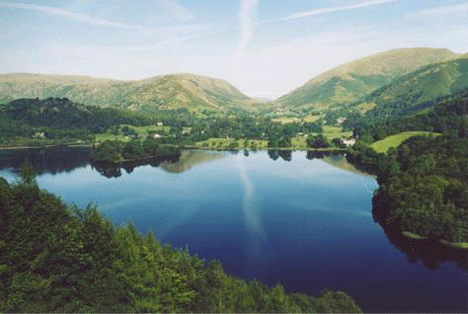
 Cumbria Trust 13th July 2017, Cumbria Trust welcomes UNESCO’s decision to make the Lake District a
World Heritage Site. In doing so, UNESCO has recognised the importance of
protecting the landscape for future generations.
It is striking that a global organisation based in Paris is more aware of the need to protect the
Lake District than Copeland and Allerdale Borough Councils, both of which
voted in 2013 to include the Lake District in a search for a burial site
for the UK’s vast stockpile of nuclear waste.
Copeland and Allerdalefailed in their duty to protect the Lake District as well as other special
areas such as the AONB near Silloth. Fortunately Cumbria County Council,
led by Eddie Martin, recognised the failure of the borough councils and
vetoed their decision. https://cumbriatrust.wordpress.com/2017/07/13/lake-district-a-world-heritage-site/
July 14, 2017
Posted by Christina Macpherson |
environment, UK |
Leave a comment
 EDF May Have to Shut Up to 17 Reactors, Ecology Minister Says, Bloomberg, By Francois De Beaupuy, July 10, 2017,
Electricite de France SA, the state-controlled operator of 58 nuclear reactors in France, may have to shut as many as 17 to fulfill government plans to reduce the share of atomic power in the country’s electricity output to 50 percent by 2025, Ecology Minister Nicolas Hulot said…….
While the government has pledged to boost renewables, it’s not yet evident how they would make up for the shutdown of almost a third of EDF’s reactors. The state would also face calls from the company to compensate it for potential loss of revenue and the cost of dismantling earlier than planned.
In January, EDF reached a compromise with the government in which the utility would receive 490 million euros ($559 million) and possible subsequent payments if the two reactors of the Fessenheim nuclear plant are taken offline.https://www.bloomberg.com/news/articles/2017-07-10/edf-may-have-to-shut-up-to-17-reactors-ecology-minister-says
July 14, 2017
Posted by Christina Macpherson |
France, politics |
1 Comment
 Suspects remanded in Israel-Germany submarine deal probe, JERUSALEM (Reuters) by Maayan Lubell, JULY 10, 2017- Three suspects were remanded in custody and a fourth ordered held under house arrest on Monday after Israeli police questioned six people on suspicion of corruption in a $2 billion deal to buy submarines and patrol craft from Germany.
The 2016 deal has been under public scrutiny since it emerged that Prime Minister Benjamin Netanyahu’s personal lawyer also represented the local agent of the German conglomerate ThyssenKrupp Marine Systems set to build the vessels.
The six, who were questioned under caution on suspicion of bribery, fraud and tax offences, include public officials and private citizens, police spokeswoman Luba Samri said. No further details were immediately available.
German authorities also are looking into the deal.
In June, German magazine Der Spiegel reported Germany’s national security council had approved the sale of the three nuclear-capable submarines to Israel and that authorities inserted a clause into the contract giving it the right to void it if corruption allegations were proven…… https://www.reuters.com/article/us-israel-corruption-germany-idUSKBN19V15U?il=0
July 14, 2017
Posted by Christina Macpherson |
Germany, Israel, secrets,lies and civil liberties |
Leave a comment
Reuters 11th July 2017 The U.N. global nuclear watchdog is about to open a uranium bank in the Central Asian state of Kazakhstan, but it may never have any customers.
The raw material used to make nuclear fuel and atomic bombs will be stored in aSoviet-era industrial plant where security was once considered so lax that all the highly enriched uranium kept there was removed in a covert U.S. operation in 1994.
The International Atomic Energy Agency’s goal now is the same as Washington’s 23 years ago as it prepares for next month’s launch of its Low Enriched Uranium Bank in the city of Oskemen — to prevent nuclear proliferation.
http://uk.reuters.com/article/uk-nuclear-kazakhstan-bank-idUKKBN19W0UV
July 14, 2017
Posted by Christina Macpherson |
Kazakhstan, safety |
Leave a comment
The steel anomalies in the reactor vessel of the EPR in Flamanville and
many steam generators have led to one of the most serious crises faced by
the French nuclear industry.
The report of the High Committee on Transparency and Information on Nuclear Safety (HCTISN) highlights the
absence of precise information from Areva and EdF on the serious problems
affecting the reactor vessel of the Flamanville EPR .
The finding would be the same for steam generators. ACRO, therefore calls for more transparency.
The association made an inventory of the available documentation and
reconstructed a chronology of the events on a dedicated website:
http://transparence-nucleaire.eu.org.
July 14, 2017
Posted by Christina Macpherson |
France, safety |
Leave a comment
Russian media tell us that Kirienko and his PR team are off to the Kremlin to prepare Putin’s next  election campaign. Looking at Kirienko’s 11 years as head of Russia’s nuclear power industry, we can say that in terms of spending and achievements on paper, Rosatom’s former head has few equals. Kirienko’s team are experts at working with the media, putting pressure on dissenters and forging loyalty
 Sergey Kirienko, from nuclear to political power, Open Democracy VLADIMIR SLIVYAK 11 October 2016 After ten years as head of Rosatom, Sergey Kirienko is now deputy head of Russia’s Presidential Administration. What will he bring to the job? “…….
Information and secrecy
News of these two appointments came out rather oddly. Prior to 24 September, when RBC broke the story of Kirienko’s appointment, there had been no rumours at all about Kirienko’s move, and another two weeks passed before he was officially given his new job…….
This fact illustrates the effectiveness of Kirienko’s PR team. All of Rosatom’s information channels are hermetically sealed, and if any important news appears, it is only by the grace of the residents of the agency’s enormous headquarters building on Moscow’s Bolshaya Ordynka street. There has been the odd information leak, but usually involving foreign media, which Rosatom has little control over.
The way Kirienko’s appointment has developed as a story demonstrates the level of openness, or rather lack of it, which Kirienko’s team has created in recent years. If a major accident had occurred at a nuclear power plant in Russia during Kirienko’s time at Rosatom, it is unlikely that anyone would have heard about it for some time. Instead, there would have been a scenario reminiscent of 1986, when the Soviet government tried to hush up the scale of the Chernobyl disaster for as long as possible.
This lack of transparency is dangerous precisely because in the case of another nuclear accident, it could be a matter of life and death. And this is not a question of official secrets or nuclear weapons. Rosatom is funded by Russia’s taxpayers and has to be accountable to them — not in terms of reporting how many “mini-Olympics” have taken place at nuclear power plants, but in terms of public safety.
Paper power plants
Kirienko’s legacy at Rosatom is a separate issue. Given this recent appointment, he is, it seems, highly regarded by the Kremlin.
There may have been two to three times fewer nuclear power plants built on his watch than were planned. There may have been plenty of corruption scandals involving the arrest of senior staff, including Kirienko’s deputies, on embezzlement charges. But the corporation’s “portfolio” for power plants to be built abroad is worth an astronomical $100bn. And for the Kremlin, which periodically uses energy supply threats to put pressure on countries it is displeased with, nuclear power is not just a question of prestige and money.
To assess Kirienko’s effectiveness as a manager, however, we need to look inside Rosatom’s commission portfolio. These “orders” are not contracts specifying delivery dates, costs and a clear timescale for loan repayments (in most cases the money lent by Russia for power plant construction comes with a repayment date). Eighty to ninety per cent of these reported arrangements are agreements in principle that are vague on details, and in the overwhelming majority of cases the contracts aren’t worth the paper they’re printed on.
Russian media frequently give the impression that Rosatom is building reactors all over the world. It is true that there have been orders from over 20 countries, but they are actually being built in only three places — China, India and Belarus. And in the case of the first two, international cooperation began long before Kirienko joined the nuclear energy sector.
So it is clear that Kirienko’s team has been excellent at drawing up and signing papers, and providing an information blockade for the industry. Actually building nuclear plants seems to be beyond them.
But only abroad… https://www.opendemocracy.net/od-russia/vladimir-slivyak/sergey-kirienko-from-nuclear-to-political-power
July 10, 2017
Posted by Christina Macpherson |
politics, Reference, Russia |
Leave a comment


 six reactors of the earlier generation VVER type of 1,000 MW capacity each. The VVER-1200 has 20 percent more capacity than the VVER-1000.