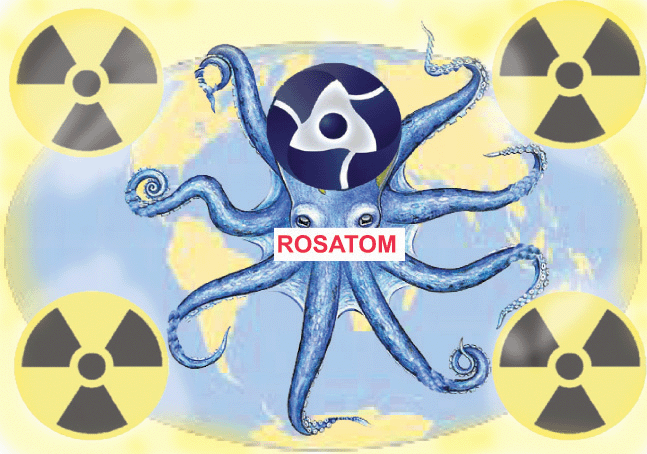
Global Meltdown? Nuclear Power’s Annus Horribilis, Jim Green, New Matilda, 9 July 2017 https://newmatilda.com/2017/07/09/global-meltdown-nuclear-powers-annus-horribilis/
This year will go down with 1979 (Three Mile Island), 1986 (Chernobyl) and 2011 (Fukushima) as one of the nuclear industry’s worst ever ‒ and there’s still another six months to go, writes Dr Jim Green.
Two of the industry’s worst-ever years have been in the past decade and there will be many more bad years ahead as the trickle of closures of ageing reactors becomes a flood ‒ the International Energy Agency expects almost 200 reactor closures between 2014 and 2040. The likelihood of reactor start-ups matching closures over that time period has become vanishingly small.
In January, the World Nuclear Association anticipated 18 power reactor start-ups this year. The projection has been revised down to 14 and even that seems more than a stretch. There has only been one reactor start-up in the first half of the year according to the IAEA’s Power Reactor Information System, and two permanent reactor closures.
The number of power reactors under construction is on a downward trajectory ‒ 59 reactors are under construction as of May 2017, the first time since 2010 that the number has fallen below 60.
Pro-nuclear journalist Fred Pearce wrote on May 15: “Is the nuclear power industry in its death throes? Even some nuclear enthusiasts believe so. With the exception of China, most nations are moving away from nuclear ‒ existing power plants across the United States are being shut early; new reactor designs are falling foul of regulators, and public support remains in free fall. Now come the bankruptcies…. The industry is in crisis. It looks ever more like a 20th century industrial dinosaur, unloved by investors, the public, and policymakers alike. The crisis could prove terminal.”
Pro-nuclear lobby groups are warning about nuclear power’s “rapidly accelerating crisis“, a “crisis that threatens the death of nuclear energy in the West“, and noting that “the industry is on life support in the United States and other developed economies“.
United States
The most dramatic story this year has been the bankruptcy protection filing of US nuclear giant Westinghouse onMarch 29. Westinghouse’s parent company Toshiba states that there is “substantial doubt” about Toshiba’s “ability to continue as a going concern”. These nuclear industry giants have been brought to their knees by cost overruns ‒estimated at US$13 billion ‒ building four AP1000 power reactors in the U.S.
The nuclear debate in the US is firmly centred on attempts to extend the lifespan of ageing, uneconomic reactors with state bailouts. Financial bailouts by state governments in New York and Illinois are propping up ageing reactors, but a proposed bailout in Ohio is meeting stiff opposition. The fate of Westinghouse and its partially-built AP1000 reactors are much discussed, but there is no further discussion about new reactors ‒ other than to note that they won’t happen.
Six reactors have been shut down over the past five years in the US, and another handful will likely close in the next five years. How far and fast will nuclear fall? Exelon ‒ the leading nuclear power plant operator in the US ‒ claims that “economic and policy challenges threaten to close about half of America’s reactors” in the next two decades. According to pro-nuclear lobby group ‘Environmental Progress‘, almost one-quarter of US reactors are at high risk of closure by 2030, and almost three-quarters are at medium to high risk. In May, the US Energy Information Administration released an analysis projecting nuclear’s share of the nation’s electricity generating capacity will drop from 20 per cent to 11 per cent by 2050.
There are different views about how far and fast nuclear will fall in the US ‒ but fall it will. And there is no dispute that many plants are losing money. More than half in fact, racking up losses totalling about US$2.9 billion a year according to a recent analysis by Bloomberg New Energy Finance. And a separate Bloomberg report found that expanding state aid to money-losing reactors across the eastern US may leave consumers on the hook for as much as US$3.9 billion a year in higher power bills.
Japan
Fukushima clean-up and compensation cost estimates have doubled and doubled again and now stand at US$191 billion. An analysis by the Japan Institute for Economic Research estimates that the total costs for decommissioning, decontamination and compensation could be far higher at US$443‒620 billion.
Only five reactors are operating in Japan as of July 2017, compared to 54 before the March 2011 Fukushima disaster. The prospects for new reactors are bleak. Japan has given up on its Monju fast breeder reactor ‒ successive governments wasted US$10.6 billion on Monju and decommissioning will cost another US$2.7 billion.
As mentioned, Toshiba is facing an existential crisis due to the crippling debts of its subsidiary Westinghouse. Toshibaannounced on May 15 that it expects to report a consolidated net loss of US$8.4 billion for the 2016‒2017 financial year which ended March 31.
Hitachi is backing away from its plan to build two Advanced Boiling Water Reactors in Wylfa, Wales. Hitachi recentlysaid that if it cannot attract partners to invest in the project before construction is due to start in 2019, the project will be suspended.
Hitachi recently booked a massive loss on a failed investment in laser uranium enrichment technology in the US. A 12 May 2017 statement said the company had posted an impairment loss on affiliated companies’ common stock of US$1.66 billion for the fiscal year ended 31 March 2017, and “the major factor” was Hitachi’s exit from the laser enrichment project. Last year a commentator opined that “the way to make a small fortune in the uranium enrichment business in the US is to start with a large one.”
France
The French nuclear industry is in its “worst situation ever” according to former EDF director Gérard Magnin. France has 58 operable reactors and just one under construction.
French EPR reactors under construction in France and Finland are three times over budget ‒ the combined cost overruns for the two reactors amount to about US$14.5 billion.
Bloomberg noted in April 2015 that Areva’s EPR export ambitions are “in tatters“. Now Areva itself is in tatters and is in the process of a government-led restructure and another taxpayer-funded bailout. On March 1, Areva posted a €665 million net loss for 2016. Losses in the preceding five years exceeded €10 billion.
In February, EDF released its financial figures for 2016: earnings and income fell and EDF’s debt remained steady at €37.4 billion. EDF plans to sell €10 billion of assets by 2020 to rein in its debt, and to sack up to 7,000 staff. The French government provided EDF with €3 billion in extra capital in 2016 and will contribute €3 billion towards a €4 billioncapital raising this year. On March 8, shares in EDF hit an all-time low a day after the €4 billion capital raising was launched; the share price fell to €7.78, less than one-tenth of the high a decade ago.
Costs of between €50 billion and €100 billion will need to be spent by 2030 to meet new safety requirements for reactors in France and to extend their operating lives beyond 40 years.
EDF has set aside €23 billion to cover reactor decommissioning and waste management costs in France ‒ just over half of the €54 billion that EDF estimates will be required. A recent report by the French National Assembly’s Commission for Sustainable Development and Regional Development concluded that there is “obvious under-provisioning” and that decommissioning and waste management will take longer, be more challenging and cost much more than EDF anticipates.
In 2015, concerns about the integrity of some EPR pressure vessels were revealed, prompting investigations that are still ongoing. Last year, the scandal was magnified when the French Nuclear Safety Authority (ASN) announced that Areva had informed it of “irregularities in components produced at its Creusot Forge plant.” The problems concern documents attesting to the quality of parts manufactured at the site. At least 400 of the 10,000 quality documents reviewed by Areva contained anomalies. Work at the Creusot Forge foundry was suspended in the wake of the scandal and Areva is awaiting ASN approval to restart the foundry.
French environment and energy minister Nicolas Hulot said on June 12 that the government plans to close some nuclear reactors to reduce nuclear’s share of the country’s power mix. “We are going to close some nuclear reactors and it won’t be just a symbolic move,” he said.
India
Nuclear power accounts for just 3.4 percent of electricity supply in India and that figure will not rise significantly, if at all. In May, India’s Cabinet approved a plan to build 10 indigenous pressurized heavy water reactors (PHWR). That decision can be read as an acknowledgement that plans for six Westinghouse AP1000 reactors and six French EPR reactors are unlikely to eventuate.
The plan for 10 new PHWRs faces major challenges. Suvrat Raju and M.V. Ramana noted: “[N]uclear power will continue to be an expensive and relatively minor source of electricity for the foreseeable future…. The announcement about building 10 PHWRs fits a pattern, often seen with the current government, where it trumpets a routine decision to bolster its “bold” credentials. Most of the plants that were recently approved have been in the pipeline for years. Nevertheless, there is good reason to be sceptical of these plans given that similar plans to build large numbers of reactors have failed to meet their targets, often falling far short.”
South Africa
An extraordinary High Court judgement on April 26 ruled that much of South Africa’s nuclear new-build program is without legal foundation. The High Court set aside the Ministerial determination that South Africa required 9.6 gigawatts (GW) of new nuclear capacity, and found that numerous bilateral nuclear cooperation agreements were unconstitutional and unlawful. President Jacob Zuma is trying to revive the nuclear program, but it will most likely be shelved when Zuma leaves office in 2019 (if he isn’t removed earlier). Energy Minister Mmamoloko Kubayi said on June 21 that South Africa will review its nuclear plans as part of its response to economic recession.
South Korea
South Korea’s new President Moon Jae-in said on June 19 that his government will halt plans to build new nuclear power plants and will not extend the lifespan of existing plants beyond 40 years. President Moon said: “We will completely re-examine the existing policies on nuclear power. We will scrap the nuclear-centred polices and move toward a nuclear-free era. We will eliminate all plans to build new nuclear plants.”
Since the presidential election on May 9, the ageing Kori-1 reactor has been permanently shut down, work on two partially-built reactors (Shin Kori 5 and 6) has been suspended pending a review, and work on two planned reactors (Shin-Hanul 3 and 4) has been stopped.
Taiwan
Taiwan’s Cabinet reiterated on June 12 the government’s resolve to phase out nuclear power. The government remains committed to the goal of decommissioning the three operational nuclear power plants as scheduled and making Taiwan nuclear-free by 2025, Cabinet spokesperson Hsu Kuo-yung said.
UK
Tim Yeo, a former Conservative politician and now a nuclear industry lobbyist with New Nuclear Watch Europe, saidthe compounding problems facing nuclear developers in the UK “add up to something of a crisis for the UK’s nuclear new-build programme.”
The lobby group noted delays with the EPR reactor in Flamanville, France and the possibility that those delays would flow on to the two planned EPR reactors at Hinkley Point; the lack of investors for the proposed Advanced Boiling Water Reactors at Wylfa; the acknowledgement by the NuGen consortium that the plan for three AP1000 reactors at Moorside faces a “significant funding gap”; and the fact that the Hualong One technology which China General Nuclear Power Corporation hopes to deploy at Bradwell in Essex has yet to undergo its generic design assessment.
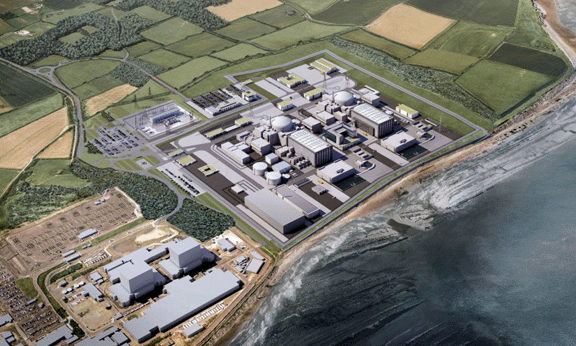
The only reactor project with any momentum in the UK is Hinkley Point, based on the French EPR reactor design. The head of one of Britain’s top utilities said on June 19 that Hinkley Point is likely to be the only nuclear project to go ahead in the UK. Alistair Phillips-Davies, chief executive officer of SSE, an energy supplier and former investor in new nuclear plants, said: “The bottom line in nuclear is that it looks like only Hinkley Point will get built and Flamanville needs to go well for that to happen.”
There is growing pressure for the obscenely expensive Hinkley Point project to be cancelled. The UK National Audit Office report released a damning report on June 23. The Audit Office said: “The Department for Business, Energy and Industrial Strategy’s deal for Hinkley Point C has locked consumers into a risky and expensive project with uncertain strategic and economic benefits… Today’s report finds that the Department has not sufficiently considered the costs and risks of its deal for consumers…. Delays have pushed back the nuclear power plant’s construction, and the expected cost of top-up payments under the Hinkley Point C’s contract for difference has increased from £6 billion to £30 billion.”
Writing in the Financial Times on May 26, Neil Collins said: “EDF, of course, is the contractor for that white elephant in the nuclear room, Hinkley Point. If this unproven design ever gets built and produces electricity, the UK consumer will be obliged to pay over twice the current market price for the output…. The UK’s energy market is in an unholy mess… Scrapping Hinkley Point would not solve all of [the problems], but it would be a start.”
And on it goes. Hinkley Point is one of the “great spending dinosaurs of the political dark ages” according to The Guardian. It is a “white elephant” according to an editorial in The Times.
EDF said on June 26 that it is conducting a “full review of the costs and schedule of the Hinkley Point C project” and the results will be disclosed “soon”. On July 3, EDF announced that the estimated cost of the two Hinkley reactors has risen by €2.5 billion (to €23.2 billion, or €30.4 billion including finance costs). In 2007, EDF was boasting that Britons would be using electricity from Hinkley to cook their Christmas turkeys in December 2017. But in its latestannouncement, EDF pushes back the 2025 start-up dates for the two Hinkley reactors by 9‒15 months.
Oliver Tickell and Ian Fairlie wrote an obituary for Britain’s nuclear renaissance in The Ecologist on May 18. Theyconcluded: “[T]he prospects for new nuclear power in the UK have never been gloomier. The only way new nuclear power stations will ever be built in the UK is with massive political and financial commitment from government. That commitment is clearly absent. So yes, this finally looks like the end of the UK’s ‘nuclear renaissance’.”
Switzerland
Voters in Switzerland supported a May 21 referendum on a package of energy policy measures including a ban on new nuclear power reactors. Thus Switzerland has opted for a gradual nuclear phase out and all reactors will probably be closed by the early 2030s, if not earlier.
Germany will close its last reactor much sooner than Switzerland, in 2022.
Sweden
Unit 1 of the Oskarshamn nuclear power plant in Sweden has been permanently shut down. Unit 2 at the same plant was permanently shut down in 2015. Ringhals 1 and 2 are expected to be shut down in 2019‒2020, after which Sweden will have just six operating power reactors. Switzerland, Germany and Taiwan have made deliberate decisions to phase out nuclear power; in Sweden, the phase out will be attritional.
Russia
Rosatom deputy general director Vyacheslav Pershukov said in mid-June that the world market for the construction of new nuclear power plants is shrinking, and the possibilities for building new large reactors abroad are almost exhausted. He said Rosatom expects to be able to find customers for new reactors until 2020‒2025 but “it will be hard to continue.”
China
With 36 power reactors and another 22 under construction, China is the only country with a significant nuclear expansion program. However nuclear growth could take a big hit in the event of economic downturn. And nuclear growth could be derailed by a serious accident, which is all the more likely because of China’s inadequate nuclear safety standards, inadequate regulation, lack of transparency, repression of whistleblowers, world’s worst insurance and liability arrangements, security risks, and widespread corruption.
Dr Jim Green is the national nuclear campaigner with Friends of the Earth, Australia, and editor of the World Information Service on Energy’s Nuclear Monitor newsletter.
July 10, 2017
Posted by Christina Macpherson |
2 WORLD, business and costs, China, France, Germany, India, Japan, politics, Russia, South Africa, South Korea, Sweden, Switzerland, Taiwan, UK, USA |
Leave a comment
Brexit will cause an ‘alarming mess’ for UK nuclear power, scientists warn, Independent, 9 Jul 17
Ben Kentish “….Scientists say leaving the Euratom agency that oversees nuclear safety in Europe will cause widespread confusion and have a potentially devastating impact on the industry in Britain.

Possible consequences include a reduction in foreign investment in UK nuclear power facilities, the loss of thousands of jobs and Britain losing its place as a world leader in new nuclear technologies.
Professor Roger Cashmore, chair of the UK Atomic Energy Agency, told Buzzfeed News the current situation was “alarming” and “a mess”.
Although the treaties relating to Euratom are separate to those keeping Britain in the EU, the agency requires members to be under the jurisdiction of the European Court of Justice (ECJ), which Theresa May has insisted the UK must withdraw from as part of Brexit.
It is unclear how the UK will replace the procedures and regulations currently managed by Euratom. These cover the transportation of nuclear materials around Europe. Britain is a major producer of enriched uranium, which is used in nuclear fuel, and exports much of the material to other EU countries. The UK Government also owns a third of Urenco, the European uranium-enrichment company.
Unless new treaties relating to the transportation of nuclear materials between Britain and the EU are agreed quickly, the UK could run out of nuclear fuel within two years, meaning nuclear power stations would be unable to produce energy…….http://www.independent.co.uk/news/uk/home-news/brexit-nuclear-power-euratom-hinckley-point-risks-nuclear-fusion-energy-bills-a7832136.html
July 10, 2017
Posted by Christina Macpherson |
politics, UK |
Leave a comment
Chernobyl nuclear reactor slated for billion-pound solar park despite radiation fears
Chernobyl was the scene of the world’s worst nuclear accident in 1986, Independent, Fiona Keating, 10 July 17 Ukraine is in talks with one of France’s biggest energy businesses to construct a £969m solar facility at the derelict Chernobyl nuclear reactor plant and its surrounding area.
Ostap Semerak, Ukraine’s minister of ecology, said Engie is starting a pre-feasibility survey, bankrolled by the French government, next week. The results should be published by the end of the year.
“France’s experience in nuclear is one of the reasons that we wanted to work with them,” Mr Semerak told The Washington Post. “They approached us after we announced our intention to develop renewables in Chernobyl.” An Engie spokesman verified that the company is in consultation with the Ukrainian government but refused to reveal any further details on the project.
July 10, 2017
Posted by Christina Macpherson |
renewable, Ukraine |
Leave a comment
 CORE 7th July 2017 CORE’s Janine Allis-Smith and Martin Forwood who have campaigned on Sellafield commercial operations since the 1980’s have been notified that they have won the international Nuclear Free Future Award (NFFA) for 2017
under the Education category.
Cited for their three decades of work ‘unmasking ‘ and disseminating information on operations at the West
Cumbrian site to a world-wide audience – and with CORE described as ‘an indispensable pillar of the British anti-nuclear movement’ – the award which carries a cash endowment of $10,000 will be made in Basel, Switzerland in September.
Commenting on the unexpected award the campaigners said today: ‘We are honoured to have received NFFA’s Education Award for 2017 and humbled to be joining the list of diverse and distinguished winners of the past. Since the 1980’s when Sellafield was preparing to double its commercial reprocessing activities, we have focused not only on acting locally but also being the ‘eyes and ears’ for the many interested parties world-wide on Sellafield and its many detrimentswhich include site accidents, environmental contamination, health risks, plutonium stockpiles and nuclear transports.
http://corecumbria.co.uk/news/anti-nuclear-campaigners-from-local-group-core-win-international-award/
July 10, 2017
Posted by Christina Macpherson |
opposition to nuclear, UK |
Leave a comment
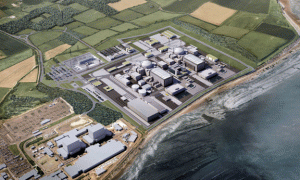 Hinkley Point C: UK censured for failing to consult German public British government failed to abide by Aarhus convention that says major projects must consult citizens on environmental impacts, Guardian, Adam Vaughan, 7 July 17, The UK has been censured by an international committee for its failure to notify the German public of the potential environmental impacts of Hinkley Point C, the new nuclear power station being built in Somerset, south-west England.
In a political embarrassment for the government, the verdict found that the UK had not complied with the Aarhus convention, an international agreement on involving citizens in environmental matters.
The Aarhus committee’s finding followed a complaint by a German Green party politician, who said the UK should now halt work on the project to properly consult with the public in neighbouring countries.
Sylvia Kotting-Uhl told the Guardian: “If the government does not want to ridicule the trans-boundary participation procedure that is now due, construction works should be suspended until the procedure is completed.”
While the ruling is very unlikely to affect the project, which began construction last year, the breach comes on top of a fortnight of bad news for the two atomic reactors.
EDF, the French state-owned developer of Hinkley Point C, admitted this week that costs were likely to rise by £1.5bn and there was a risk of a 15-month delay, just days after the public spending watchdog called the project “risky and expensive”.
Kotting-Uhl originally complained to Aarhus’s compliance committee in the summer of 2013, before the UK had agreed commercial terms with EDF.
She said the UK government had discriminated against Germans by not giving them opportunities to take part in the environmental impact assessment procedure for Hinkley, as the Aarhus convention requires. The committee agreed.
In conclusions published recently, the committee said: “By not ensuring that the public concerned in Germany had a reasonable chance to learn about the proposed activity and the opportunities for the public to participate in the respective decision-making, the party concerned failed to comply with article 6, paragraph 2, of the convention.”
Named after the Danish city of Århus, the convention covers the involvement of the public on environmental matters relating to developments such as power stations or new roads – including access to information, the public’s participation in decision-making, and access to justice. The UK ratified the agreement in 2005.
The former UN secretary general Kofi Annan called it “the most ambitious venture in the area of environmental democracy so far undertaken under the auspices of the United Nations”……https://www.theguardian.com/business/2017/jul/06/hinkley-point-c-uk-censured-german-public-edf
July 8, 2017
Posted by Christina Macpherson |
politics international, UK |
Leave a comment
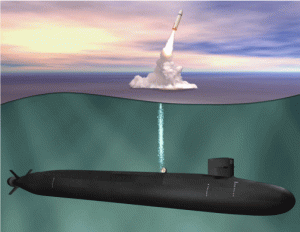 Russia’s nuclear submarine test-fires cruise missile successfully in Barents Sea http://news.xinhuanet.com/english/2017-07/05/c_136419955.htm, Editor: Yang Yi MOSCOW, July 5 (Xinhua) –– Russia’s Project 949A submarine Smolensk has carried out a test launch of a cruise missile and successfully hit its designated target during combat drills scheduled in the Barents Sea, the Northern Fleet’s press service said Wednesday.
“A Granit missile was fired against a marine target at depths of about 400 kilometers in the sea. According to the flight recorder’s data, the target was hit successfully,” said Northern Fleet’s spokesman and Captain Vadim Serga.
Built in 1990, Russia’s submarine Project 949A Antey (also known as the Oscar II class submarine) displaces 24,000 tons and has an underwater speed of 32 knots with a crew of 107.
They are armed with 24 launchers of Granit cruise missiles with a range of about 500 km and six torpedo tubes.
July 7, 2017
Posted by Christina Macpherson |
Russia, weapons and war |
Leave a comment
The original treaty [Non-Proliferation Treaty (NPT) ]is quite clear. Article VI reads as follows (emphasis mine):
“Each of the Parties to the Treaty undertakes to pursue negotiations in good faith on effective measures relating to cessation of the nuclear arms race at an early date and to nuclear disarmament, and on a treaty on general and complete disarmament under strict and effective international control.”
The “nuclear club” countries, however, have lately reneged on their end of the “let’s move toward disarmament” plan. The most recent news in the U.S., of course, is that both of our major political partieshave supported a massive, trillion-dollar “modernization” program that would significantly enhance rather than reduce existing stockpiles……..
North Korea Isn’t the Only Rogue Nuclear State Nuclear weapons are about to be made illegal worldwide, but good luck hearing about it at home, Rolling Stone, By Matt Taibbi, 6 July 17, As if the last few years weren’t bad enough, we now have a real nuclear crisis.
North Korea’s loony regime of Kim Jong-un conducted a successful missile launch test – landing about 60 miles south of the Russian city of Vladivostok, according to some reports – marking a frightening nuclear escalation that has heightened tensions across the planet.
That this first serious confrontation in ages is happening now is ironic, given that a little-reported showdown about the use of nuclear power will soon take place in the U.N.
A draft of a U.N. treaty to ban all nuclear weapons is about to be voted on. It has the support of 132 nations and is very likely to pass, at which point the United States will soon once again be in technical violation of a major international agreement, as it long has been with regard to the International Treaty banning land mines.
While practically the ban may not accomplish much, it matters a little when we violate treaties, at least intellectually speaking. North Korea’s violation of similar international agreements is at the crux of the international consensus against allowing the country to have a nuclear program in the first place.
This is what Steve Snyder, the senior fellow on U.S.-North Korea relations for the Council of Foreign Relations, wrote last year about why North Korea must never be allowed to have nukes:
“The United States cannot accept North Korea as a nuclear weapons state for normative reasons; North Korea had signed onto the Non-Proliferation Treaty (NPT) as a non-nuclear state and then abandoned the treaty in order to pursue nuclear capabilities. Tolerating North Korea’s nuclear status would be equivalent to setting a precedent for other NPT signatories to violate the treaty.”
The problem with this argument is that from the point of view of many non-nuclear countries, the United States itself, along with other nuclear club countries (particularly Russia), has been in continuing violation of the original nuclear non-proliferation treaty, as drafted in 1968.
The treaty has been mostly very successful. Since 1970, when it went into effect, only four more countries – Israel, India, Pakistan and North Korea – are known to have developed nuclear weapons, and only one, North Korea, was at any time a signatory.
Israel, India and Pakistan were three of just four U.N. member states to originally refuse to sign the treaty. North Korea, meanwhile, pulled out of the treaty in 2003, almost exactly a year after it was put in the crosshairs by George W. Bush in the infamous “Axis of Evil” speech. It had long been suspected of pursuing a secret development program.
One of the reasons the NPT was long seen as successful is that over the decades, it did inspire the main actors – particularly the United States and Russia – to move toward disarmament. Through a variety of programs, nuclear stockpiles have been drastically diminished, down to about 14,900 warheads worldwide, or two-thirds less than their high point in the mid-Eighties.
Russia and the United States didn’t just reduce their stockpiles out of goodwill. They did so in part because moving toward global disarmament was a major component of the original bargain of the non-proliferation treaty.
The original treaty is quite clear. Article VI reads as follows (emphasis mine):
“Each of the Parties to the Treaty undertakes to pursue negotiations in good faith on effective measures relating to cessation of the nuclear arms race at an early date and to nuclear disarmament, and on a treaty on general and complete disarmament under strict and effective international control.”
The “nuclear club” countries, however, have lately reneged on their end of the “let’s move toward disarmament” plan. The most recent news in the U.S., of course, is that both of our major political partieshave supported a massive, trillion-dollar “modernization” program that would significantly enhance rather than reduce existing stockpiles……..
A lack of dialogue on the nuclear front between Russia and America is an extremely negative development, given that our two countries have nearly blown up the planet by accident multiple times, in underreported incidents.
The most serious of these was probably 1983, when a Soviet satellite mistakenly detected the launch of five American minuteman missiles headed toward Russia. Only the high-stress judgment of a 44-year-old Soviet lieutenant colonel named Stanislav Petrov prevented a massive counter-launch and the probable deaths of millions.
“I had a funny feeling in my gut,” Petrov said years later, explaining his determination that the signal was faulty. “When people go to war, they don’t do it with five missiles.”…….
Nut-jobs like Kim Jong-un, and Trump for that matter, are the exact reason why 132 countries are right, and the only truly safe number of nuclear weapons is zero. Surely only dumber leaders await us in the future, and we should do our best to leave them with as small an arsenal as possible. http://www.rollingstone.com/politics/features/taibbi-north-korea-isnt-the-only-rogue-nuclear-state-w491060
July 7, 2017
Posted by Christina Macpherson |
politics international, Russia, USA, weapons and war |
Leave a comment
Russia makes new big cuts in Arctic spending The country’s Ministry of Economic Development wanted 209 billion rubles (€3.1 billion) for the new national Arctic Program. It might get only 12 billion (€177 million). Barents Observer, By Atle Staalesen July 05, 2017
The revised funding scheme for the Arctic program, which is to cover the period until year 2020, is 17 times lower than the original sum, RBC reports.
That is a serious blow to Russia’s ambitious development plans for the region. The Ministry of Economic Development originally wanted to include a number of grand investment projects in the program, among them the development of the new class of nuclear-powered icebreakers, the «Lider», as well as a fleet of vessels for Arctic environmental protection and shelf research. As much as 80 billion (€1.2 billion) was to be spent on the «Lider» alone.
None of that will come, for now. The increasingly strained Russian economy does not allow for the previously announced Arctic super-projects.
The key investment object in the revised program is the development and building of an ice-class drifting platform for Arctic research. The platform, which will get the name «North Pole», is to be used by the State Hydrometeorology Service for Arctic studies and ice measurements.
The platform has a preliminary price tag of seven billion rubles and will consequently consume more than half of the program budget.
The platform is increasingly needed by researchers as Arctic ice layers are getting thinner and traditional drifting ice stations can no longer be applied, the Russian Ministry of Natural Resources says.
Another one billion rubles of the revised program is reported to be spent on regional anti-terrorist measures managed by the Russian National Guard. …….https://thebarentsobserver.com/en/arctic/2017/07/russia-makes-new-big-cuts-arctic-spending
July 7, 2017
Posted by Christina Macpherson |
business and costs, politics, Russia |
Leave a comment
French ecology minister hopes to cut down on nuclear power by 2025, PARIS, July 6 (Xinhua) — French ecology minister Nicolas Hulot expressed his hopes on Thursday to meet the commitment of reducing the share of nuclear energy in the country’s electricity output by 2025.
Unveiling an action plan for the country’s energy transition, the environmental activist said cutting electricity generated by nuclear power to 50 percent by 2025 from the current 75 percent was France’s “objective.”
“I hope (the target) will be held. My wish is to engage irreversible trajectories and dynamics,” Hulot told reporters…….http://news.xinhuanet.com/english/2017-07/06/c_136423323.htm
July 7, 2017
Posted by Christina Macpherson |
France, politics |
Leave a comment
Solar Power Portal 4th July 2017, Aldi UK has marked the fourth Solar Independence Day with the announcement
that it will install a further 11,000 solar panels across more than 50 of
its stores by the end of the year.
The supermarket has already installed
more than 85,000 solar panels on all nine of its regional distribution
centres and more than 275 stores across the UK, generating over 17,500 MWh
of electricity a year.
This deployment will now be extended by the end of
the year, bringing its total store investment in solar to almost £17
million and saving more than 8,100 tonnes of CO2 in the process. https://www.solarpowerportal.co.uk/news/aldi_uk_marks_solar_independence_day_with_new_solar_rollout_pledge
July 7, 2017
Posted by Christina Macpherson |
renewable, UK |
Leave a comment

 Russia, China offer plan to ease N.Korea tension, abc news, 4 July 17 Russia and China have proposed that North Korea declare a moratorium on nuclear and missile tests while the United States and South Korea refrain from large-scale military exercises.
The call was issued in a joint statement by the Russian and Chinese foreign ministries on Tuesday following talks between Russian President Vladimir Putin and Chinese President Xi Jinping.
The statement came after North Korea tested a missile that flew higher and longer than previous ones, sparking concerns around the world.
Moscow and Beijing suggested that if North Korea halts nuclear and missile tests while the U.S. and South Korea freeze military maneuvers, the parties could sit down for talks that should lead to obligations not to use force and to refrain from aggression………..
North Korea says its latest missile test reached a height of 2,802 kilometers (1,740 miles) and flew 933 kilometers (580 miles) for 39 minutes before falling into the sea.
The country’s Academy of Defense Science said Tuesday in a statement that it was a successful test of an intercontinental ballistic missiles called Hwasong-14.
The statement was distributed by North Korea’s KCNA news service.
The reported trajectory was similar to that announced earlier by U.S., South Korean and Japanese officials, though the U.S. judged it to be an intermediate-range missile.
Either way, it would be a longer and higher flight than similar tests previously reported.
The U.S military says it tracked a North Korean missile for 37 minutes before it landed in the Sea of Japan.
The Hawaii-based U.S. Pacific Command said in a statement Tuesday that an intermediate-range ballistic missile was launched from near an airfield in North Korea.
NORAD, or the North American Aerospace Defense Command, said the missile did not pose a threat to North America.
South Korean and Japanese officials reported the North Korean missile launch earlier Tuesday. It is part of a string of recent tests as the North works to build a nuclear-tipped missile that could reach the United States………http://abcnews.go.com/International/wireStory/latest-north-korea-height-distance-missile-48430348
———
July 5, 2017
Posted by Christina Macpherson |
China, North Korea, politics international, Russia, weapons and war |
Leave a comment
 Rosatom loses hope in its international nuclear builds, eyes renewables http://bellona.org/news/nuclear-issues/2017-07-rosatom-loses-hope-in-its-international-nuclear-builds-eyes-renewables
Amid decreasing world demand for nuclear energy, Russia’s state nuclear corporation 
 last week warned it would likely be receiving fewer requests to build nuclear power plants abroad. July 3, 2017 by Charles Digges, The announcement marks a sharp departure for the corporation, which until recently has posed its contracts with other countries as the bread and butter of its bottom line – as well as a potent tool for broadening Moscow’s sphere of political influence.
But there’s a silver lining to the nuclear monolith’s recent disillusionment with its traditional lifeblood: A possible, albeit modest, shift in the direction of renewable energy and battery technologies.
Speaking at last month’s Tekhnoprom-2017 conference, a technical conference in the Siberian city of Novosibirsk, Rosatom’s deputy director Vyacheslav Pershukov called the market for nuclear power stations abroad “exhausted.” “We see that the market is contracting, and for the sustainable growth of the corporation…we must make our money on something other than nuclear technology,” he said, according to the RBK news agency.
His remarks dovetail with a worldwide nuclear sag.
In the United States, renewable energy output eclipsed nuclear for the first time during March and April. Meanwhile, huge nuclear corporations are trying to stave off going broke. Exelon, the country’s biggest nuclear operator, has seen its share prices plummet by 60 percent since 2008.
Westinghouse, meanwhile filed for bankruptcy in March, and Toshiba, its parent company, is trying to sell of its computer divisions to cover the debt. France’s Areva was saved from financial peril by a huge taxpayer infusion into its owner EDF, but that bailout will only stop the bleed the company is experiencing thanks to huge cost overruns on an ambitious but delayed reactor build in Finland.
Pershukov told the Tekhnoprom conference that Rosatom would shift some of its efforts to providing nuclear power plant services abroad, primarily to those it’s in the process of building.
For the past several years, Rosatom has touted its VVER-1200 reactor packages to international capitols and has worked vigorously to sign up customers even – if not especially – those who can barely afford it. On paper, the company has $130 billion in outstanding “memoranda of understanding” and other handshake type deals with foreign countries.
But many of the counties Rosatom counts among its potential contracts – like Jordan, Algeria, Nigeria and Bolivia, and most recently Uganda and Ethiopia – won’t have infrastructure to support nuclear power for decades.
In other cases, like Hungary, the Rosatom-built Paks-2 plant has been approved, but will leave Budapest’s right wing-government heavily indebted to Moscow for the $10 billion plant.
Another similar deal would have indentured South Africa to Rosatom for $76 billion, but that country’s high court torpedoed the deal before it got off the ground.
Other countries where Rosatom builds are already underway – like India’s Kudankulam, Iran’s Bushehr, China’s Tianwan and Belarus’s Ostrovets – are already familiar with Rosatom’s typical cost overruns and delays.
The company can pay for these huge loans because of the generous state subsidies it receives, but taxpayer injections are slated to dry up by 2020.
Oskar Njaa, a nuclear adviser with Bellona said curtailing Rosatom’s international nuclear ambitions represents a humbling moment for the company, and a dampening of its political influence abroad. “This is an economic blow,” he said. “For Russia, reducing an ability to make other countries dependent on Moscow’s nuclear fuel and expertise for energy needs is a blow to its geopolitical interests as well.”
As such, Rosatom is casting a wide net for other avenues of influence and revenue. In May, the company appeared in Chile’s Lithium Call Roadshow, and is reportedly pursuing inroads with Santiago to become a player in cell phone and electric car batteries. Other reports say the company is making a foray into fiber-optics.
More optimistically, Njaa noted, the company also seems to have discovered a bent for the renewable energy sector. He noted Rosatom’s recent interest in small hydroelectric plants and wind energy.
July 5, 2017
Posted by Christina Macpherson |
marketing, politics international, renewable, Russia |
Leave a comment
 The Hinkley C nuclear power plant will be a costly mistake – we can still stop it Spiralling bills and delays show why we should abandon this white elephant. http://www.newstatesman.com/politics/energy/2017/07/hinkley-c-nuclear-power-plant-will-be-costly-mistake-we-can-still-stop-it
4 Jul 17 With every day that passes, the proposed new Hinkley Point power station looks less flagship and more shipwreck. But we don’t have to go down with this one.
Yesterday’s announcement that the cost of building the new nuclear plant has risen again, this time by a staggering £1.5bn, came just ten days after the National Audit Office confirmed what campaigners have been saying for years – that the deal is overpriced and risky.
According to a 2015 report from the Nuclear Energy Agency (NEA), Hinkley would make new nuclear power in the UK the world’s most costly. In fact the power station would, according to Greenpeace, be the most expensive object in history.
French state-owned company EDF will join China in paying for the plant, but taxpayers and consumers will cough up £30bn in subsidies for the energy produced. This could rise to an eye-watering £50bn.
With the cost of renewable energy now falling faster than anyone anticipated, it’s hard to imagine a more expensive way of producing power, or indeed a common sense reason for continuing with such a folly.
In 2007, EDF chief executive Vincent de Rivaz said Hinkley C could be providing the power to cook Christmas turkeys by 2017. That slipped to 2025. Now we are told it could be another 15 months more – and this with a reactor design which has yet to be shown to work anywhere else in the world. The project threatens to sink into a whirlpool of expensive defensiveness and self-justification, all for a terrible deal which we will all be locked into, and paying for, for years to come.
But it doesn’t have to be like this. Over the past month, Theresa May’s administration has crumbled. Propped up by the Democratic Unionist Party, unable to implement its manifesto promises and derided in Europe, the disastrous election has left this government on its knees. But this moment of weakness creates an opportunity – we have the real chance to stop Hinkley in its tracks and think again.
The government appears committed, come what may, but if politicians from across political divides speak up against this expensive white elephant, we can force May to take the courageous decision needed to cancel the project.
It’s well known that politicians share a penchant for big projects like Hinkley – Heathrow expansion and HS2 to name but two – but even in this case it’s hard to see what is actually keeping the idea afloat.
Although the plans may be fatally holed, it is the lack of any real opposition holding the government to account that is stopping it going under completely. Labour and the Lib Dems both support the project. But it’s time to break away from the old school consensus around the often illusory benefits of building big new things. An opposition working together, along with a few sympathetic Tories, could consign Hinkley to the dustbin of history.
We know that alternative plans are available. There are many, much cheaper options. Germany, which is phasing out nuclear, is breaking renewable records and we can, too. You can’t have your cake and eat it when it comes to environment policy, any more than you can have your cake and eat it on Brexit. We need to make the right choices and ploughing such colossal subsidies into Hinkley sucks resources from where they are really needed: investment in renewables.
The New Economics Foundation has suggested we could provide more than six times our annual electricity needs through a Blue New Deal, getting renewable offshore energy through wind and wave while rejuvenating our coastal communities with 160,000 new jobs. Green MEP Molly Scott Cato has shown how the South West alone could meet all its energy needs through renewables, creating more than 100,000 new jobs. This puts the 900 full-time posts expected to be available at Hinkley, if construction is ever completed, into sharp perspective.
But to transition to this jobs-rich, decentralised, renewable energy economy, we need to make the right political choices now. In the case of Hinkley that means politicians holding the government to account when it is wasting taxpayers’ money on a project that is not fit for purpose – and simply won’t deliver what we need for the future. Jonathan Bartley is co-leader of the Green party. He was formerly the co-director of the thinktank Ekklesia.
July 5, 2017
Posted by Christina Macpherson |
politics, UK |
Leave a comment
 Fire breaks out on floating nuclear plant at Russia shipyard https://www.washingtonpost.com/world/europe/fire-breaks-out-on-floating-nuclear-plant-at-russia-shipyard/2017/07/04/a5d82a7e-60 By Associated Press July 4 MOSCOW — Russia’s emergency services ministry says a fire broke out on the floating nuclear power plant being built at a shipyard near the center of St. Petersburg, but was extinguished before anyone was injured.
Construction of the floating plant, which is to be deployed in Russia’s Far East, has caused concern among environmentalists. Rashid Alimov of Greenpeace’s Russian branch said Tuesday’s fire showed that plans for loading nuclear fuel into the plant’s reactors are “irresponsible.”
The shipyard is about two kilometers (1.25 miles) downriver from some of St. Petersburg’s most renowned tourist sites, including the State Hermitage Museum.
The ministry statement says the fire was caused by a short circuit in a storage battery.
July 5, 2017
Posted by Christina Macpherson |
incidents, Russia |
Leave a comment
The two countries with nearly all the world’s nuclear weapons have no intention of scaling back https://qz.com/1020437/the-two-countries-with-nearly-all-the-worlds-nuclear-weapons-have-no-intention-of-scaling-back/, 4 July 17 The US and Russia, which possess nearly 93% of all nuclear weapons in the world, don’t plan to continue reducing their nuclear arsenal, but instead are spending money to modernize and modestly expand their weapons systems.
The world’s nuclear arsenal has gradually declined since its peak of nearly 70,000 nuclear warheads in the mid-1980s, but reductions have slowed in recent years. According to a new report by the Stockholm International Peace Research Institute (SIPR), an independent think tank, in 2017, there were approximately 14,935 nuclear weapons, a slight reduction compared with 15,395 in early 2016. The report notes that both the US and Russia have failed to commit to further reductions. Just nine states possessed these weapons: the US, Russia, the UK, France, China, India, Pakistan, Israel, and North Korea.
States with nuclear weapons are spending billions on updating their systems and developing weapons. The US will spend approximately $400 billion over a 10-year period to maintain and modernize its arsenal; the US plans to buy replacement systems and build new nuclear weapon facilities. To maintain strategic parity with the US, Russia is limiting any further reduction in its nuclear arsenal and working to modernize its aging, Soviet-era missiles. The British government is investing £31 billion ($45.2 billion) to maintain its nuclear arsenal, while Pakistan and India are both gradually expanding the size of their nuclear weapon stockpile.
North Korea carried out high-profile tests of its nuclear weapons in the last year. The country has prioritized building a long-range ballistic missile that can deliver a nuclear warhead to the US (experts suggest there’s no independently verified evidence that the country currently has the capability to do so). US president Donald Trump has pressed president Xi Jinping of China to address what Trump called the “growing threat” (paywall) posed by North Korea’s nuclear weapons.
The United Nations drafted the first-ever treaty to ban nuclear weaponslast month. More than 130 countries currently support the initiative that would outlaw nuclear weapons. Unsurprisingly, not one of the nine countries currently possessing nuclear weapons support the proposed measure.
July 5, 2017
Posted by Christina Macpherson |
Russia, USA, weapons and war |
Leave a comment