French Minister Sticking to Planned Nuclear Power Cuts https://financialtribune.com/articles/energy/68481/french-minister-sticking-to-planned-nuclear-power-cuts., 17 July 17
France should define a clear roadmap to fulfill its pledge to cut the share of nuclear power in its electricity generation to 50% by 2025, French ecology minister said in an interview in the Sunday edition of regional daily Ouest-France.
A 2015 law requires France to reduce within eight years the share of atomic power generation to 50% from over 75% currently and include more renewable wind and solar generation, Reuters reported.
Nicolas Hulot also said in a radio interview that for France to meet that target, it might have to shut down up to 17 of its 58 nuclear reactors operated by state-controlled utility EDF.
His comments drew questions from observers on how nuclear-dependent France, a net power exporter in Europe, could possibly shut down 17 reactors and continue to guarantee adequate power supply.
Hulot clarified that he did not say 17 reactors must close, but that if the 2015 law were respected, the reactors would have to close.
Newly-elected French President Emmanuel Macron has maintained the target of cutting French nuclear production by 2025.
“We have to define realistic and possible scenarios, otherwise it will be brutal,” Hulot said. Hulot, an environmental campaigner who was appointed ecology minister by Macron, said that since the 2015 law was passed, little has been done and there was no clear strategy on how France would meet the 50% target.
“I want to engage in planned course of action, especially on a social and economic level,” Hulot said. “Nuclear power plants cannot be closed without taking into account the reality of jobs. We must model scenarios and build a roadmap.”
The closure of nuclear plants is a hot-button issue in France with trade unions and some political parties saying the plan would cripple the French nuclear sector.
Hulot also said state-controlled utility EDF would have to accelerate its development of renewable energies.
“The French authorities could stimulate the development of these energies by implementing tax incentives, easing regulatory processes and cutting the length of potential litigations,” he said.
July 17, 2017
Posted by Christina Macpherson |
France, Legal, politics |
Leave a comment
Brexit threatens Britain’s place at the nuclear top table, The UK is currently a world leader in fusion research; leaving Euratom would be calamitous, Guardian, Ian Chapman, Professor Ian Chapman is CEO of the UK Atomic Energy Authority, 16 Jul 17 “…..For decades, the UK has led the world in addressing this grand challenge. The fusion (or sticking together) of types of hydrogen to release energy requires the fuel to be heated to temperatures 10 times that of the sun. The harsh conditions required for fusion are a challenge for even the most robust of materials. International partnership has always been crucial to overcome these challenges; the complexity of the science and engineering and the cost of building large test reactors make it difficult for one nation to go it alone.
Currently, my organisation, the UK Atomic Energy Authority (UKAEA), operates the world’s largest fusion  experiment, Joint European Torus(Jet), on behalf of Europe. In so doing, we have acquired unique capabilities in critical areas for fusion – robotic maintenance, material testing and fuel handling to name just a few – enabling us to help UK industry to win contracts on Iter totalling more than £450m already (which could rise to more than £1bn)…..
both the operation of Jet and the UK’s participation in Iter are a result of our membership of the Euratom treaty, an agreement on European nuclear co-operation that dates back to 1957. On 29 March, the UK government declared an intention to leave Euratom at the same time as leaving the European Union.
For the UK, a pioneer of fusion research and development since the 1950s, it would be the worst possible time to take a back seat in the race to develop this transformative technology. …..https://www.theguardian.com/commentisfree/2017/jul/15/brexit-threatens-britains-place-at-nuclear-top-table-euratom
July 17, 2017
Posted by Christina Macpherson |
politics international, technology, UK |
Leave a comment
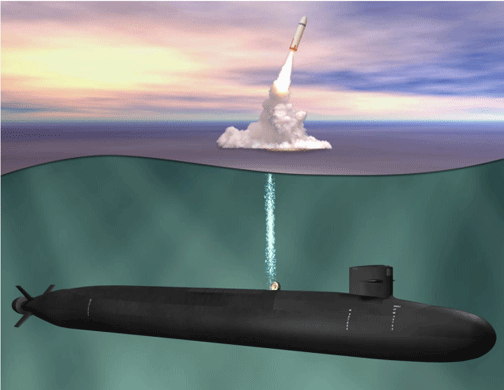
 Trident won’t protect us from terrorism. But it will still be renewed, Guardian, Richard Norton-Taylor, 15 July 17 While the biggest future threat to Britain is posed by jihadi groups, voting to keep nuclear weapons is a matter of irrational pride,
“……..Trident is described as a deterrent. The nuclear missiles will only be fired, and deterrence have failed, if the UK has already been obliterated. The question is not whether
Trident – whose missiles are leased from the US and whose warheads rely on US technology – could be used, but whether they would be. And are they actually needed?
Ministers and pro-Trident Labour MPs say a new Trident system is needed because the world is a dangerous place, and will remain so. Trident is the ultimate insurance, they argue. It is an argument devoted uniquely to nuclear weapons. The government is not building new hospitals or care homes, for example, in case of a pandemic or any other crisis affecting the health and wellbeing of its citizens.
Ministers say Putin’s Russia, and China, and North Korea, are posing a growing threat. The suggestion is that only Britain’s nuclear arsenal will deter these countries from launching a massive military attack on the UK. What conceivable interest would these countries have in doing so? If they were mad enough to do so, would Trident be a credible deterrent preventing them? Would there be any point in a retaliatory attack in the event of the Trident deterrent having failed?
Much more of a threat from these countries are massive cyber attacks. But the greatest threat to Britain’s security, and the government says it will be for a generation, is terrorism, in particular radical jihadi groups. Trident long-range inter-continental missiles with nuclear warheads are hardly a deterrent against them. The real danger is that they will get their hands on some of the nuclear material kept in less-than-safe stockpiles scattered around the world…..
Monday’s vote appears to be a foregone conclusion. Ministers, backed by the Whitehall establishment, will argue that with Trident Britain will count as much in the world as it ever did, despite Brexit. It is also a matter of British pride; Trident is worth the expense to remain a member of the nuclear club. https://www.theguardian.com/commentisfree/2016/jul/15/trident-protection-terrorism-renewed-threat
July 17, 2017
Posted by Christina Macpherson |
politics, UK, weapons and war |
Leave a comment
 Macron assures Israel of ‘vigilance’ on Iran nuclear pact, https://www.thelocal.fr/20170716/macron-assures-israel-of-vigilance-on-iran-nuclear-pact French President Emmanuel Macron on Sunday assured visiting Israeli Prime Minister Benjamin Netanyahu of his “vigilance” regarding the 2015 nuclear accord reached by Western powers with Iran.
Netanyahu “expressed his concerns regarding the Iranian regime,” Macron told reporters with Netanyahu at his side.
“I assured him of our vigilance, in particular over the strict implementation of the accord… in all its provisions.”
Netanyahu was a vocal opponent of the deal, which saw sanctions against Iran eased in return for curbs on its nuclear programme. The French presidency said Sunday’s meeting, the first official talks between Macron and Netanyahu, would be an occasion to “signal our lack of complacency towards Iran”.
Israel was rattled last month when Tehran launched fired six missiles from western Iran targeting bases of the Islamic State group in retaliation for attacks in Tehran that killed 17 people in the first Isis-claimed operations in the country.
Netanyahu has repeatedly said Iran is a threat to the Jewish state, the Middle East and potentially the world.
July 17, 2017
Posted by Christina Macpherson |
France, Israel, politics international |
Leave a comment
 French firm EDF fresh proposal to NPCIL for Jaitapur nuclear power plant http://www.livemint.com/Industry/Fk9FEP4mqUECOnAu5MkIpK/French-firm-EDF-fresh-proposal-to-NPCIL-for-Jaitapur-nuclear.html 15 July 17
French firm EDF, which is to build six atomic reactors at Jaitapur, submits a fresh plan to NPCIL proposing to share a larger role in the engineering aspect of the project New Delhi: A French firm, which is to build six atomic reactors at Jaitapur, has submitted a fresh plan to the NPCIL (Nuclear Power Corporation of India) proposing to share a larger role in the engineering aspect of the project, a top executive of the company said.
The firm, EDF, and NPCIL have also resolved to sign the general framework agreement (GFA) for the Jaitapur Nuclear Power Plant (JNPP) by the end of 2017.
French President Emmanuel Macron is likely to visit India by the year-end and the two sides are working to fast-track the negotiations so that the GFA could be signed during that time, the EDF official, who did not wish to be quoted, said.
The EDF is to build six reactors, each with a capacity of 1650 MW each. When operational, the proposed plant, some 500km south of Mumbai, will be the largest nuclear power generation park in the country.
Construction of a nuclear plant is usually discussed in terms of the EPC (engineering, procurement and construction). The EDF has proposed to take care of the engineering part and a large chunk of the procurement of equipment which have to be sourced from abroad, the official said.
This position has been different from what Areva, which has been taken over by EDF, had proposed when the negotiations had initially begun. However, EDF insists that NPCIL should take care of the construction part as it has the experience of building the Kudankulam Nuclear Power Plant (KKNPP).
The NPCIL, on the other hand, wants EDF to take the full responsibility of EPC, citing the reason that the EPR technology—EPR refers to third generation pressurized water reactor design—is new to India.
A senior Indian government official, on condition of anonymity, pointed out that GFA hinges on three aspects—lower tariff, credit and a functional reference plant. No call has been taken on the fresh proposal given by the NPCIL, the official said.
“Discussions are on between the ministry of finance and the French treasury department to resolve the issues related to credit. Some part of it will be in euros while the rest will be in rupees,” the EDF official said.
The Flamanville EPR nuclear power reactor, which has been shown as a reference plant for the JNPP, is expected to be commissioned by 2018, the French official hoped. The EDF is constructing another EPR plant at Taishan in Guangdong province of China and it is expected to be operational by the end of this year, the official added.
July 17, 2017
Posted by Christina Macpherson |
France, marketing |
Leave a comment
Modern Power Systems 13th July 2017,Engie has entered the UK’s offshore wind energy market with a deal to buy
a 23 per cent stake in the Moray East project in Scotland. The French
energy giant has purchased the stake from EDP Renewables (EDPR) for £21
million and will participate in the development and operation of the 1.1 GW
project.
EDPR and Engie are already partnering in the development of
offshore wind energy projects in France and Portugal, including floating
offshore wind projects. The Moray East project comprises three proposed
offshore wind farms located off the Caithness coast. The projects were
granted development consent in March 2014 and are expected to participate
in the UK’s CFD tender process. http://www.modernpowersystems.com/news/newsengie-buys-into-uk-offshore-wind-5870459
July 17, 2017
Posted by Christina Macpherson |
France, renewable, UK |
Leave a comment
 A press release received from Magnox confirms “the former Bradwell
nuclear power station has now successfully dealt with all of its Fuel
Element Debris (FED) waste – a major source of intermediate level
radioactive waste at the Essex site.
This is an important step towards itsplanned closure, as part of the Nuclear Decommissioning Agency’s (NDA)
mission to clean up and decommission the UK’s earliest nuclear sites.”
Three years of potential damage to our estuary ecosystem has finally
finished with as much controversy now at the end as when the process
started. During those three years BANNG, Mersea Island Environmental
Alliance, Marinet, The Blackwater Guardians, FAB and others have spent a
great deal of time and gone to a great deal of trouble to try to stop FED
dissolution to protect both people and the environment.
Meetings were held with the Environment Agency (EA), who seemed uneasy as to what was
happening at Bradwell. FED dissolution was highlighted in the media and
complaints lodged both in the UK and European Parliaments. BANNG organised
a Public Meeting in West Mersea in June, 2014, at which an expert in Marine
Biology explained his concerns about the release of FED effluent into the
Blackwater and at which the large audience made clear its opposition.
BANNG believes that the real reason the treatment project has ended now is that
the original analysis of the FED was wrong. Only a third of the 200 tonnes
total waste ie 65 tonnes could actually be processed. The other two-thirds
were comprised of Low-Level Waste (LLW) and have been taken to Drigg for
disposal.
This raises the question of whether the FED was properly characterised before it was decided to use an expensive and experimentaldissolution process. Peter Bank’s (Town Councillor. Colchester Green
Party) says the process of Fed Dissolution has left a bitter ‘taste’ of
potentially radioactive sludge in the Blackwater estuary.
Mersea Island Courier 30th June 2017
https://www.facebook.com/TheMerseaIslandCourier/
July 17, 2017
Posted by Christina Macpherson |
UK, wastes |
Leave a comment
 In conferences debating the number of victims of the Chernobyl accident, officials who draw paychecks
 from nuclear lobbies make similar arguments about alcohol abuse and “radiophobia”—stress-related illnesses caused by fear of radiation.
 Strange illnesses in one of the most contaminated towns in the world challenge what we think we know about the dangers of radioactivity.Slate, By Kate Brown, April 18, 2013, “……What do we know about communities living on contaminated terrain? Two years after the meltdown of three reactors in Fukushima, Japan, the World Health Organization forecasts that there will be no significant rise in cancers among people living nearby. These projections are based on guesses from models calculated from prior studies, mostly of Japanese people who survived Hiroshima and Nagasaki. Yet when Japanese scientists and inspected the bodies of 38,000 children living in the Fukushima Prefecture, they found 36 percent had abnormal growths on their thyroids a year after the accident.
We have grown accustomed to this scenario—media attention to nuclear accidents followed by a long, slow quarrel among scientists about whether the spilled fission products will damage human bodies or not. It will take decades to learn the public health impact of the 2011 meltdown. By then, most of the public will have lost interest. But there are other ways to get at this question of what it means to live on earth sullied with decaying radioactive isotopes.
No one has lived longer on contaminated terrain than people in the village of Muslumovo in the southern Russian Urals located downstream from the Maiak plutonium plant, built in 1948 to produce Soviet bomb cores. Unlike the S.T.A.L.K.E.R. game, daily life in Muslumovo is terrifyingly banal: long waits at medical clinics, worries over the price of prescriptions, reams of paperwork related to compensation and disability claims, sick kids, unemployment, poverty, and chronic illness.
I showed up in Muslumovo on a Saturday morning in August 2009. Muslumovo is a big village, sprawled inside a crooked elbow of the Techa River, which is slow, sluggish, and considered to be the world’s most radioactive. The village center has a train station, a few apartment buildings, and a corner store. Marat Akhmadeev met me at the station in his Soviet vintage car, dusty and dented. We jolted up and down on the choppy seas of the unpaved streets. Muslumovo is a strange village—half there and half gone. Many houses are abandoned, some partly dismantled, exposing weathered wallpaper and overturned appliances.
The Techa became a flowing radioactive reservoir in 1949 when engineers at the plutonium plant ran out of underground storage containers for high-level radioactive waste. A Dixie cup of this waste could kill everyone in a large ballroom. Compelled by the arms race, the plant director ordered it dumped in the Techa River. The men running the plant didn’t tell anyone about this decision. The 28,000 Russian, Bashkir, and Tatar farmers living on the river—drinking, cooking, and bathing with river water—had no idea. In the 1950s and ’60s special forces resettled most of the 16 contaminated villages on the Techa, but a few villages were too large and expensive to move, so they stayed. Muslumovo is one.
There’s no work in Muslumovo. A person either commutes 60 miles to the industrial city of Cheliabinsk or farms a patch of land of the long-defunct Muslumovo collective farm. Marat farms, living off the land—a term that takes on new meaning in Muslumovo, where in 2008, an American team found domestic interiors registering radiation at 40 times above the background level. After we pulled up at Marat’s house, his teenage son silently trailed us. Noticing a twitch in the boy’s step, I turned to look at him. His mouth drooped and fingers twisted, as he mouthed a stuttered greeting. Marat explained, “This is Kareem,nash luchevik,” meaning “our radiant one,” said in an off-hand manner, as if every family has a luchevik……
There is a legal contest going on over the health of the people of Muslumovo: whether they are sick and, if so, ill from the radioactive isotopes dumped in the river or from poor diets and alcohol abuse. Medical evidence has been contradictory. In 1959, Soviet scientist A. N. Marei wrote a dissertation in which he argued that the Techa villagers were in poor health because of their poor diets. In 1960, in contrast, local Soviet officials linked the river-dwellers’ illnesses to the contaminated river. This debate between nature (radiation) and nurture (lifestyle) has been going on a long time…….
Over the years, FIB-4 doctors had diagnosed 935 people on the Techa River with chronic radiation syndrome. But as thousands of people in Ukraine worried about their exposures from the Chernobyl blast, Soviet medical officials backpedaled on the FIB-4 doctors’ original findings. In 1991, Angelina Gus’kova, the chief official voice in evaluating Chernobyl health problems, argued that in fact there were only 66 cases of chronic radiation syndrome among the Techa River people. The rest, she claimed, suffered from more prosaic diseases such as brucellosis, tuberculosis, hepatitis, and rheumatism caused by poor diets and sanitation. As American researchers supported by the Department of Energy have taken over as lead researchers of studies in Muslumovo, the diagnosis of chronic radiation syndrome has largely dropped from the radar. Meanwhile, Russian officials, worried about lawsuits, charged that many people in Muslumovo had dreamed up illnesses in order to sue for compensation. These people, they said, had no chronic radiation disease but were chronic welfare cases looking for handouts.
The trope of ignorant, genetically deficient, and drunken villagers is a common one in Russia. In the southern Urals in the past few decades, the cliché has been useful in glossing over the human suffering connected to uncontrolled dumping into the Techa River. In conferences debating the number of victims of the Chernobyl accident, officials who draw paychecks from nuclear lobbies make similar arguments about alcohol abuse and “radiophobia”—stress-related illnesses caused by fear of radiation. It would be a mistake, however, to allow the longstanding politicization of medical studies to overtake this very important, yet overlooked, place for our understanding of radiation’s effects on human bodies. Reprinted from Plutopia: Nuclear Families, Atomic Cities, and the Great Soviet and American Plutonium Disasters by Kate Brown with permission from Oxford University Press USA. http://www.slate.com/articles/health_and_science/medical_examiner/2013/04/nuclear_contamination_in_former_ussr_radioactivity_in_muslomovo_on_techa.html
July 15, 2017
Posted by Christina Macpherson |
environment, Reference, Russia, secrets,lies and civil liberties |
1 Comment
 U.S., UK and France Denounce Nuclear Ban Treaty, CounterPunch, by DAVID KRIEGER, JULY 13, 2017 “…….In a joint press statement, issued on July 7, 2017, the day the treaty was adopted, the U.S., UK and France stated, “We do not intend to sign, ratify or ever become party to it.” Seriously? Rather than supporting the countries that came together and hammered out the treaty, the three countries argued: “This initiative clearly disregards the realities of the international security environment.” Rather than taking a leadership role in the negotiations, they protested the talks and the resulting treaty banning nuclear weapons. They chose hubris over wisdom, might over right.
They based their opposition on their belief that the treaty is “incompatible with the policy of nuclear deterrence, which has been essential to keeping the peace in Europe and North Asia for over 70 years.” Others would take issue with their conclusion, arguing that, in addition to overlooking the Korean War and other smaller wars, the peace in Europe and North Asia has been kept not because of nuclear deterrence but in spite of it.
The occasions on which nuclear deterrence has come close to failure, including during the Cuban missile crisis, are well known. The absolute belief of the U.S., UK and France in nuclear deterrence seems more theological than practical……
The three countries reiterate their commitment to the Non-Proliferation Treaty (NPT), but do not mention their own obligation under that treaty to pursue negotiations in good faith for an end to the nuclear arms race at an early date and to nuclear disarmament. ….
If the U.S., UK and France were truly interested in promoting “international peace, stability and security” as they claim, they would be seeking all available avenues to eliminate nuclear weapons from the world, rather than planning to modernize and enhance their own nuclear arsenals over the coming decades.
These three nuclear-armed countries, as well as the other six nuclear-armed countries, continue to rely upon the false idol of nuclear weapons, justified by nuclear deterrence. In doing so, they continue to run the risk of destroying civilization, or worse.
The 122 nations that adopted the nuclear ban treaty, on the other hand, acted on behalf of every citizen of the world who values the future of humanity and our planet, and should be commended for what they have accomplished.
The new treaty will open for signatures in September 2017, and will enter into force when 50 countries have acceded to it. It provides an alternative vision for the human future, one in which nuclear weapons are seen for the threat they pose to all humanity, one in which nuclear possessors will be stigmatized for the threats they pose to all life. Despite the resistance of the U.S., UK and France, the nuclear ban treaty marks the beginning of the end of the nuclear age.
David Krieger is President of the Nuclear Age Peace Foundation (www.wagingpeace.org). He is the author of Zero: The Case for Nuclear Weapons Abolition. https://www.counterpunch.org/2017/07/13/u-s-uk-and-france-denounce-nuclear-ban-treaty/
July 15, 2017
Posted by Christina Macpherson |
France, UK, USA, weapons and war |
Leave a comment
 Consumers could drive UK solar capacity as high as 44GW by 2050: National Grid, Solar Power Portal, 13 Jul 17 The UK’s solar capacity could soar to as much as 44GW by 2050 if consumers take command of their own power supply, National Grid has forecasted.
The UK’s transmission system operator today unveils its Future Energy Scenarios, charting how it considers the UK’s power market might evolve from now until both 2025 and 2050.
Using various models and insight, National Grid has compiled four principal scenarios of varying levels of ambition, dubbed ‘Steady State’, ‘Slow Progression’, ‘Consumer Power’ and ‘Two Degrees’.
Its most pessimistic scenario Steady State, a word in which security of supply takes precedence and short-term policies are pursued, the UK’s solar capacity will grow to 14.33GW by 2025, an increase of less than 2GW on current levels. Solar capacity will also decrease by 2050 as PV generators are not renewed past their current operational life.
However the most ambitious scenario for renewables deployment – ‘Consumer Power’ – expects the majority of UK consumers to become ‘prosumers’ and generate their own power. This will see 23.53GW of solar deployed by 2025 and 44.15GW – a near quadrupling of current levels – by 2050……..
National Grid has already been quick to highlight the consequences that record levels of solar generation have had on the grid. Earlier this year afternoon demand dipped below that of the night before for the first time in the UK, while solar generation records have been broken already this summer.
The operator said today that this was yet more evidence of the burgeoning evolution in the power market. “Last year I said that we were in the midst of an energy revolution, and this year it is even more evident,” Marcus Stewart, head of energy insights at National Grid, wrote in the document’s foreword, adding that cost reductions in solar and storage had already “driven major change in a short space of time”.
Emma Pinchbeck, executive director at RenewableUK, said: “This year’s report recognises that renewables have transformed our energy system, disrupting the status quo and displacing fossil fuels extraordinarily fast – and that this trajectory is set to continue, with the rapid development of energy storage.” https://www.solarpowerportal.co.uk/news/consumers_could_drive_uk_solar_capacity_as_high_as_44gw_by_2050_national_g
July 15, 2017
Posted by Christina Macpherson |
decentralised, UK |
Leave a comment
 HM Gov 13th June 2017, This paper outlines the United Kingdom’s (UK) position on the ownership and
responsibility for special fissile material and related safeguards
equipment.
The Treaty establishing the European Atomic Energy Community
(Euratom) provides the basis for the UK’s cooperation with the Euratom
Community on civil nuclear issues. It includes the provision of safeguards
arrangements for non-proliferation of nuclear materials, cooperation in
nuclear research and development, mobility of workers and trade in the
nuclear sector and wider nuclear regulatory cooperation.
The UK invoked Article 106(a) of the Treaty establishing Euratom at the same time as
Article 50 of the Treaty on European Union (TEU).
As the European Commission has stated in its recommendation for a European Council decision
authorising the Commission to open negotiations with the UK on an agreement
on its withdrawal from the European Union (EU): “It is recalled that in
accordance with Article 106(a) of the Treaty establishing the European
Atomic Energy Community, Article 50 of the Treaty on European Union applies
also to the European Atomic Energy Community”.
This reflects the fact that the Treaties of the EU and Euratom are uniquely legally joined.
https://www.gov.uk/government/uploads/system/uploads/attachment_data/file/627909/FINAL_OFF_SEN_Position_Paper_HMG_Nuclear_materials_and_safeguards_issues_Position_Paper_FINAL_120717__3_.pdf
July 15, 2017
Posted by Christina Macpherson |
politics international, safety, UK |
Leave a comment
 Institute of Economic Affairs 13th July 2017 Not many people would have
 heard of the European Atomic Energy Community(Euratom) until recently and even fewer will have had it in the front of
their minds when voting on the UK’s membership of the EU. And yet the current furore over nuclear cooperation has the potential to cause a chain reaction that derails Brexit, or at least fundamentally alters its shape.
https://iea.org.uk/fallout-from-euratom-scare-stories-shouldnt-be-allowed-to-derail-brexit/
July 15, 2017
Posted by Christina Macpherson |
politics international, UK |
Leave a comment
 Labour Must Put More Focus On Climate Change, Morning Star, 12 July 17
Though the election didn’t focus much on the environment, the Labour Party must now thrust it into the political arena, argues IAN SINCLAIR
THERE is a tendency in Britain to look contemptuously upon the US political system. And nowhere are the deficiencies of the “shining city on a hill” more glaring than its sidelining of climate change — “the missing issue” of the 2016 US presidential campaign, reported the Guardian. According to the US writer Bryan Farrell, the topic was discussed for just 82 seconds during the 2016 televised presidential debates, which was actually an improvement on the 2012 debates, when it wasn’t mentioned at all.
Tragically, this omission was mirrored in the recent general election here. “The issue of #climatechange was completely marginalised during the #GE2017 media coverage,” Loughborough University’s Centre for Research in Communication and Culture tweeted about its election analysis.
This absence, the media watchdog Media Lens noted, is “the great insanity of our time.” Why? Because climate change is arguably the most serious threat the world faces today.
In January 2017 writer Andrew Simms surveyed over a dozen leading climate scientists and analysts and found none of them thought global temperatures would stay below 2°C — the figure world leaders agree we cannot exceed if we wish to stop dangerous climate change.
Last year, top climate scientist Professor Kevin Anderson told the Morning Star the pledges made by nations at the 2015 Paris climate summit would likely lead to a 3-4°C rise in global temperatures. Frighteningly he also told the author George Marshall that it’s hard to find any scientist who considers four degrees “as anything other than catastrophic for both human society and ecosystems.”
Surveying the environmental policies of the main parties just before June 8, Friends of the Earth scored the Green Party top with 46 points, followed by Labour on 34, the Liberal Democrats on 32 and the Conservatives trailing last with a poor 11.
The environment and climate change did not play a significant role in the Labour Party’s hugely successful election campaign. And though Labour leader Jeremy Corbyn himself rarely mentioned the topic on the campaign trail, the manifesto was a pleasant surprise to many.
“I’ve been really encouraged by Corbyn’s commitment to safeguarding our environment,” Nancy Strang, the women’s officer in Brent Central Labour, tells me. “The 2017 manifesto pledges to increase renewable energy production and investment, to tackle our air quality with a Clean Air Act, to protect Britain’s wildlife, and to ban fracking are all huge steps in the right direction … these pledges go beyond those in any previous Labour Party manifesto that I remember.”
The Green Party’s Dr Rupert Read agrees. “Corbyn’s Labour have some good environmental policies,” he tells me. “For example, their new-found opposition to fracking is much to be welcomed.”
However, he highlights a “fundamental problem” with Labour’s manifesto. “It is their unreconstructed insistence on ‘faster economic growth’,” Read argues.
The environment and climate change did not play a significant role in the Labour Party’s hugely successful election campaign. And though Labour leader Jeremy Corbyn himself rarely mentioned the topic on the campaign trail, the manifesto was a pleasant surprise to many.
“I’ve been really encouraged by Corbyn’s commitment to safeguarding our environment,” Nancy Strang, the women’s officer in Brent Central Labour, tells me. “The 2017 manifesto pledges to increase renewable energy production and investment, to tackle our air quality with a Clean Air Act, to protect Britain’s wildlife, and to ban fracking are all huge steps in the right direction … these pledges go beyond those in any previous Labour Party manifesto that I remember.”
The Green Party’s Dr Rupert Read agrees. “Corbyn’s Labour have some good environmental policies,” he tells me. “For example, their new-found opposition to fracking is much to be welcomed.”
it is clear external political pressure from the Green Party — “they have led where others were not so bold,” says Van Coevorden — also has an essential role to play in pushing Corbyn’s Labour in the right direction on green issues. It should also be noted that Corbyn personally opposes some of the environmentally damaging policies the broader Labour Party currently supports, such as Heathrow expansion and Trident renewal.
So, arguably, increased backing for the Labour leader and sidelining his neoliberal opponents within the party will likely improve Labour’s environmental policies.
The stakes couldn’t be higher. First, because against all the odds Corbyn now has a realistic chance of becoming Prime Minister — YouGov’s latest poll has Labour on 46 per cent and the Tories on 38 per cent. And second, because climate change continues to be an existential threat to humanity, with the Guardian reporting “scientists said they feared for their children” after hearing of US President Donald Trump’s vow to pull out of the Paris climate agreement.
It is, therefore, essential the environment and climate change are thrust to the centre of the national political debate as soon as possible — something Green Party and Labour Party members can both agree on, surely?
It is, therefore, essential the environment and climate change are thrust to the centre of the national political debate as soon as possible — something Green Party and Labour Party members can both agree on, surely?
http://www.morningstaronline.co.uk/a-de1a-Labour-must-put-more-focus-on-climate-change
July 15, 2017
Posted by Christina Macpherson |
climate change, politics, UK |
Leave a comment
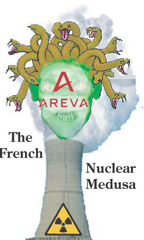
World Nuclear News 13th July 2017, The restructuring of France’s Areva group has taken a step forward with the implementation of a €2.0 billion ($2.3 billion) capital injection from the French state.
NewCo – Areva’s separated nuclear fuel cycle activities -is also to receive a €2.5 billion capital increase from the state by the end of this month. http://www.world-nuclear-news.org/C-Areva-implements-capital-increases-1307174.html
July 15, 2017
Posted by Christina Macpherson |
business and costs, France, politics |
Leave a comment
Actu Environnement 12th July 2017 The Nuclear Safety Authority (ASN) considers that the EDF file concerning the financing of its decommissioning costs “does not provide sufficient
information to enable it to take a position on the completeness of the
assessment”.
It would like the electrician to explain his calculations and
reconsider certain assumptions. It also considers it necessary for EDF to
present the reactor-to-reactor decommissioning assumptions, rather than an
overall cost estimate extrapolated from the study of a site.
This is themain conclusion of an ASN opinion on the financing of long-term nuclear
loads by French operators published on Wednesday 12 July. This opinion
comes as the level of provisions made up by EDF to cover the dismantling of
its reactors is questioned.
In February, a report from the NationalAssembly estimated that the dismantling costs calculated by EDF revealed a”plausible underestimation”. MEPs criticized among other things “the
optimistic assumptions [and] a number of heavy expenses neglected”.
Unlikemost operators of nuclear installations, EDF does not present an
installation-by-facility assessment. ASN can not therefore analyze the
electrician’s file accurately. For the time being, EDF is relying on the
“DA09” study, which assesses future loads by extrapolating a dismantling
scenario for the four 900-megawatt reactors at the Dampierre (Loiret)
plant. An audit requested by the ministry in charge of energy validated the
method in 2015.
However, the ASN refuses to rule on the accuracy of this
figure since it did not have access to study DA09 or to auditing. In this
case, the Nuclear Constable does not, as a matter of principle, oppose an
assessment to the entire fleet of an assessment based on the dismantling of
a reactor, but it wishes to have access to the documents before making a
decision. Before validating EDF’s estimates, ASN wants to study precisely
two points: the hypotheses considered for the dismantling of the Dampierre
reactor and the extrapolation method at each reactor.
https://www.actu-environnement.com/ae/news/asn-refuse-valider-evaluation-finaniere-demantellement-edf-29383.php4
July 15, 2017
Posted by Christina Macpherson |
business and costs, France, politics |
Leave a comment