University of Manchester 7th Nov 2017, ‘Business as usual’ is not an option for the UK’s nuclear energy
sector; our energy companies’ ‘regressive and unjust funding
approach’ is causing fuel poverty, and the Northern Powerhouse could play
a key role in shaping the UK’s climate change future. These are just some
of the opinions in a new publication, ‘On Energy: How can evidence inform
future energy policy?’, by The University of Manchester.
It is being launched on Wednesday 8th November at the House of Commons. The report
brings together some of the country’s leading energy, policy, and climate
change scientists, academics and experts to offer their opinions and
solutions for the UK’s most pressing energy issues. The publication draws
on expertise from across The University of Manchester and external
collaborators, including Lord Jim O’Neill, Director of the Dalton Nuclear
Institute, Professor Francis Livens, leading climate change researcher,
Professor Alice Larkin and SUPERGEN Bioenergy HubDirector, Professor
Patricia Thornley.
On the UK’s nuclear policy, Professor Livens and his
co-authors from DNI, Professors Tim Abram, Juan Matthews and Richard
Taylor, say the industry needs to recognise that its competitors in the
renewable sector, such as wind, solar and wave, are substantially cheaper.
To combat this he says more innovation is needed to reduce the cost if it
is to be taken seriously as an alternative to fossil fuels. http://www.manchester.ac.uk/discover/news/is-the-uks-energy-policy-fit-for-purpose/
* France drops 2025 target for reducing share of nuclear
* Hulot says new target to be drawn up in coming year
* Aim remains to reduce share of nuclear to 50 pct
* Greenpeace says Hulot giving in to nuclear lobby (Adds Hulot comments, background)
By Geert De Clercq and Michel Rose PARIS, Nov 7 (Reuters) – President Emmanuel Macron’s government on Tuesday postponed a long-held target to reduce the share of nuclear energy in France’s electricity generation.
Environment Minister Nicolas Hulot said it was not realistic to cut nuclear energy’s share in the power mix to 50 percent by 2025 from 75 percent now and said doing so in a hurry would increase France’s CO2 emissions, endanger the security of power supply and put jobs at risk.
He did not set a new deadline, but said that over the next year the government would draw up a “pluri-annual energy programme” to reach the 50 percent target “as soon as possible”.
“It will be difficult to maintain the target of reducing the share of nuclear to 50 percent by 2025,” Hulot told reporters following a cabinet meeting.
Hulot said that while the timing is delayed for now, in a year’s time the government would have a clear programme based on rational criteria to decide which reactors to close and when.
In 2015, the previous government of Socialist Francois Hollande had voted an energy transition law which set a target of reducing the share of nuclear in the power mix to 50 percent by 2025 from the current 75 percent. But Hollande had taken no concrete steps towards closing any reactors.
Centrist Macron, elected in May, had promised to respect this target and Hulot, France’s best-known environmentalist, said in July France might have to close up to 17 of its 58 reactors by 2025 to achieve the target.
Widely seen as the guardian of the Macron government’s green credentials, the popular Hulot – a former television documentary maker turned environmentalist – had in recent months repeatedly said France needed to close several nuclear plants.
But he received little public support from Macron, a strong supporter of nuclear, or Prime Minister Edouard Philippe, a former employee of state-owned reactor builder Areva.
Two weeks before the government was formed in mid-May, a source close to Macron told Reuters he was considering delaying the target for reducing France’s reliance on nuclear.
State-owned utility EDF, the world’s biggest operator of nuclear plants, has long said it made no sense to shut down functioning reactors and instead wanted to extend the lifespan of its nuclear fleet from 40 to at least 50 years.
EDF shares were up 1.2 percent after Hulot’s announcement, outperforming a flat French bourse.
EDF stock had plunged as much as 7 percent on the day Hulot was appointed environment minister on the expectation that he would push for less nuclear and more renewables. nL8N1IJ43S]
Hulot, who had made a failed bid to become the green candidate in the 2012 presidential election, had been courted by both Hollande and his conservative predecessor Nicolas Sarkozy to become environment minister.
Hulot told French daily Le Monde last month that he had given himself a year to see whether he could reform French energy and agricultural policies.
Greenpeace said Hulot had already shown weakness in fighting fossil fuel and was now jeopardising France’s energy transition.
“He should be a bulwark against the oil and nuclear lobbies,” the NGO said in a statement. (Reporting by Geert De Clercq and Michel Rose; Editing by Ingrid Melander and Edmund Blair)
China’s nuclear power play falters in Britain http://www.atimes.com/article/chinas-nuclear-power-play-falters-britain/ Beijing’s planned investment in UK’s civil nuclear program, part of its One Belt One Road initiative, is on increasingly shaky ground,By RICHARD COOKNOVEMBER 4, 2017 When it recently emerged that China General Nuclear Power Corporation (CNG) had refused to give a visiting team of UK government inspectors the security details for one its reactors, a slew of negative headlines followed in UK media about Chinese involvement in Britain’s power supply.
The inspectors, from the UK’s Office for Nuclear Regulation, had traveled to China to examine Fangchenggang’s Unit 3 nuclear power plant and its Hualong One third-generation pressurized reactor.
The Hualong One design is earmarked for a planned Chinese-built nuclear power plant at Bradwell on England’s east coast and the inspectors were in China to start a complex four-year Generic Design Assessment [GDA] process that will end, the Chinese hope, with the reactor’s approval for use in Britain.
China is the world’s fastest expanding nuclear power producer and has been clear about its desire to be a leading exporter, too. Exporting nuclear power is an objective of Xi Jinping’s Belt and Road initiative and nuclear is included as a core energy component in the country’s latest Five-Year Plan. At the center of this ambition is the Hualong One.
Developed though a state-led agglomeration of China’s main industry players and initially adapted in the 1990s from a French design, the Hualong One has since 2014 been packaged — along with a package of enticements comprising construction expertise, training support, competitive pricing and financing options — as China’s flagship power brand.
CNG says more than 20 countries have shown interest in the nuclear plant. While the first working Hualong One reactors will be in China, in what are revealingly described as “demonstration units,” two are currently under construction in Pakistan while an Argentinian one reported to be worth US$9 billion is due in 2020. After that should come Bradwell.
The UK has not commissioned a nuclear power station for almost 30 years, but now has plans for six sites. China currently has involvement in three, but that could become four after the bankruptcy of Toshiba’s nuclear arm.
The first two, Hinkley Point C and Sizewell, only saw Chinese involvement after the French state-owned Électricité de France (EDF) voiced concern about growing costs. China agreed to help with finance as long as it got to build a Hualong One at Bradwell, which will be the first wholly Chinese-designed reactor to be built in a western country.
Is this a good investment for China?” asks nuclear risk expert Jerzy Grynblat. “It is very hard to say because, as it comes from the Chinese government, some of the sums will remain hidden. But what is perhaps more important to ask is why the Chinese state wants to invest when no western government will?”
For Grynblat – who, before retiring in early 2017, was Nuclear Business Director at safety assurance consultancy Lloyd’s Register – it is “purely an expansion of political power.”
Grynblat explains that the UK is currently the only western country with a nuclear power program. “They needed to add capacity and replace existing capacity… In terms of power security, the UK was in a bad position and they had to do something.” That gave China an opportunity, says Grynblat. “Bradwell presented the Hualong One with an important foothold in the West.”
The design of the Hualong One, Grynblat believes, is reminiscent of a Swedish reactor from the 1980s. “It surprised me a little,” he says. “It really is quite old fashioned. I am not saying this makes it unsafe, certainly not, but what it does is make use of well known technology. And this makes approvals more straightforward… And the GDA process that they are starting now in the UK is crucial to them. They will be able use this all over the world.”
Antony Froggatt, senior research fellow at think-tank Chatham House and co-author of The World Nuclear Industry Status Reports, agrees. “It’s a first” says Froggatt. “It creates an important benchmark for China and it’s an important sales pitch. The GDA process alone brings kudos.”
Yet Froggatt is not convinced that Bradwell itself will be built. “The industry is changing rapidly. Even since China first got involved in the UK in 2015, the price of offshore wind and solar has got much cheaper. There is also recognition in the UK government that the Hinkley contract cannot be repeated at Sizewell because it has made the cost of the power so expensive… Hinkley is happening but very slowly. They originally said it would be built by 2018. Now they are saying 2025… As such, I am now thinking that Sizewell will not happen.”
“And Bradwell,” says Froggatt, “is a different story again…. It is a new reactor, it’s Chinese and there are the security issues.” He asks: “Will the Chinese ever be able to open up the design specifications?”
The UK’s inspectors were quick to brush off their access issues in China and instead praised CNG’s “high level of expertise and commitment.” But it is not the first time there has been negativity around the China-UK power deal.
Last year, amid rising public opposition, Prime Minister Teresa May felt compelled to suspend the Hinkley project while a “security review” was carried out. Nick Timothy, May’s joint chief of staff at the time, had bluntly warned that the Chinese might be able to “build weaknesses into computer systems which will allow them to shut down Britain’s energy production at will.”
There is a lot at stake here, for both China and the UK. And, much like a nuclear reactor, it looks like this story will run and run.
State of Green 31st Oct 2017, The Danish Minister for Energy, Utilities and Climate has given the green light to a 750-kilometre-long cable (Viking Link) that will connect Denmark with the United Kingdom. The cable, which will be the world’s longest direct current cable, will help provide Denmark with a highly secure supply and better potential for selling its wind-produced power.
The cable will run from Vejen in southern Jutland to Bicker Fen in Lincolnshire, around 170 kilometres north of London. At 1400 megawatts, its transmission capacity will be the equivalent to one third of Denmark’s total consumption. Strong electricity connections abroad are crucial for a small nation like Denmark.
We will be able to sell our power in a larger market when we have a surplus of renewable energy. At the same time, we get a larger supply of power to Denmark when the wind does not blow and the sun does not shine. Strong electricity connections to our neighbors thus contribute to ensuring cheap and reliable power for consumers and to keep the value of the wind power high. It is for the benefit of all Danes and companies in Denmark, says Minister for Energy, Utilities and Climate, Lars Christian Lilleholt. https://stateofgreen.com/en/profiles/state-of-green/news/world-s-longest-power-cable-to-connect-denmark-with-uk
Vladimir Putin and Emmanuel Macron team up to prevent NUCLEAR FALL-OUT
FEARS of a nuclear fall-out between Iran and the US has led to Vladimir Putin forming an unlikely alliance with France’s Emmanuel Macron. By DAN FALVEY Mr Putin teamed up with the French President to try and ease escalating tensions surrounding Iran’s nuclear capabilities. It comes as Donald Trump accused Iran of not upholding the Joint Comprehensive Plan of Action, also known as the Iran nuclear agreement, with the UK, US, Russia, France, China, and Germany in 2015 which aims to limit the country’s nuclear arsenal.
However, fears that the deal could collapse have increased in recent months after the US President threatened not to sign off on the agreement claiming that Iran had broken parts of the pact. Mr Putin and his French counterpart spoke on the phone yesterday to reaffirm their support for the implementation of the deal.
A press statement released by the Kremlin said the Russian leader and Mr Macron agreed on the importance that the deal went ahead.
Last month, the Norwegian Nobel Committee handed a group dedicated to abolishing nuclear weapons its Peace Prize. Now, the Swedish government is looking into expanding its existing network of nuclear fallout shelters, according to news website the Local. A first proposal was included in a report released several weeks ago and followed a review of existing shelters this year, Swedish officials confirmed Friday, saying that the proposed changes were still under consideration by the government.
Sweden has 65,000 shelters, which would provide space for up to 7 million people, but that leaves an estimated 3 million inhabitants without protection.
At least one European country takes the risk of a nuclear war even more seriously: Switzerland may have fewer people than Sweden, but it has built about four times as many nuclear shelters — easily enough for the country’s entire population and then some.
In Sweden and elsewhere, the nuclear shelters are also supposed to protect the population from other hazards, like a biological weapons attack or more-conventional warfare. Often located in publicly accessible buildings, such as schools or shopping centers, they can usually also be used as storage sites or garages and are funded with taxpayer money.
In contrast, in Switzerland all houses above a certain size must include shelters in the basement, putting the financial burden on citizens themselves. That rule was abolished in 2011 by the Swiss parliament, but reintroduced months later after the Fukushima nuclear accident in Japan.
The accident brought back memories of Chernobyl in 1986, and led to a renewed public debate in Europe over the risk of radiation. In Germany — where public shelters are far less common than in Sweden or Switzerland — Chancellor Angela Merkel decided to abandon nuclear energy entirely, despite having championed it for decades. It was her biggest political U-turn in her now 12 years in office.
Such preparations and protective measures may appear strange to Americans. Public nuclear shelters are practically nonexistent in the United States, although there have been recent reports of an increase in demand.
Until recently, few Swedes knew the location of the closest nuclear shelter in their neighborhood. (The government now offers an online map.) Sweden stopped expanding its shelter network almost two decades ago, when nonproliferation supporters appeared to be on the winning side of history. Then came Iran’s nuclear program, the Fukushima accident, Russian military operations, North Korea’s missile tests — and President Trump.
Whereas confidence among Europeans that President Barack Obama would “do the right thing regarding world affairs” ranged between 70 and 90 percent in a number of surveyed nations during his term, those numbers plummeted after Trump’s inauguration and have only gone down since. Only 7 percent in Spain and 11 percent in Germany now say they have confidence in Trump. Top officials in Germany have also directly contradicted Trump’s North Korea policies, and have voiced concerns that the White House may overreact to nuclear provocations and escalate the war rhetoric being exchanged with North Korea.
Europeans are similarly worried that decades-long nonproliferation efforts could be dismantled virtually overnight, leading to a new arms race. In 2009, the Obama administration negotiated a treaty with Russia in which both countries agreed to cap the number of deployed warheads. Trump reportedly called the agreement a bad deal in his first phone call with Russian President Vladimir Putin earlier this year, although administration officials have since backtracked.
Sweden’s new shelter locations indicate that at least some of the concerns are connected to Russia. One of the regions where most new shelters are expected to be constructed in the coming years is the island of Gotland, where military defenses were recently expanded with the declared aim of stopping a possible Russian invasion.
Radiation Free Lakeland 2nd Nov 2017,There is so much wrong with the BBC’s File on 4 programme that it is
difficult to know where to begin.
The narrrator takes us to “Moorside” which is described a a “barren agricultural land”. What nonsense! – this
land, ancient hedgerows, river, floodplain and what would be affected coast line/sea has several special designations (including international ones) Marine Conservation Zone, RAMSAR, SSSI, Habitats Directive, All of no
consequence apparently when it comes to nuclear who can override such piffling considerations with ‘Imperative Reasons of Overriding Public Interest’.
According to the nuclear industry spokesman Moorside would produce 20% of the UKs electricity – WHAT!!! This went unchallenged by the BBC.
Moorside would produce a mere 7% of the UKs electricity and that is a stretch. The only downside of new build according to the BBC is the finance – what utter nonsense – the profligate finance is the least of it …what about the fact that it is killing us with not only routine releases from reactors but now accelerating “decommissioning” projects which are finding ever more novel ways to dump radioactive waste into the environment. https://mariannewildart.wordpress.com/2017/11/02/bbc-on-nuclear-decommissioning-dumping-what-a-clever-piece-of-misdirection/
The UK’s race to get its own nuclear inspectors BBC News, 3 Nov 17, The government cannot guarantee Britain will have enough nuclear inspectors when it leaves the EU, MPs on the business committee were told.
The Office of Nuclear Regulation has recruited four new safeguards inspectors but says it needs more time to fill the specialised roles.
Nuclear minister Richard Harrington said there was “plenty of time” to recruit the staff needed.
But he stopped short of offering a firm guarantee.
The government has stressed that nuclear safeguards – the processes by which the UK shows its civil nuclear material is not diverted into weapons programmes – are different from nuclear safety – the prevention of nuclear accidents.
Mr Harrington said the UK was committed to leaving Euratom, the agency which has regulated the nuclear industry across Europe since 1957, at the same time as it left the EU in March 2019.
Industry figures have warned about significant disruption to energy production in the UK if there is not a new inspection regime ready to go to, to replace the one currently overseen by Euratom.
The four senior figures who gave evidence to the business committee on Wednesday said there was no benefit to the UK from leaving Euratom………
Mr Harrington was also quizzed by the MPs about feared shortages of less skilled workers needed to build new nuclear plants, such as steel workers and welders.
Ben Russell, of Horizon Nuclear, the Japanese-owned firm planning to build a new nuclear reactor at Wylfa Newydd, on Anglesey, called for a special visa for infrastructure workers post-Brexit so they could continue to be recruited from EU countries.
He said projects like HS2 and the third runway at Heathrow meant the demand for staff would outstrip supply and there was not enough time to train up British workers.
David Wagstaff, the civil servant leading talks for the UK on the withdrawal from Euratom, said it would be up to the British government to decide on a post-Brexit visa regime.
‘No relationship’
There was also concern about the future of the world-leading nuclear fusion laboratory based in Oxfordshire, the Joint European Torus (JET), which is mostly funded by the EU……. http://www.bbc.com/news/uk-politics-41836855
Boris Johnson to travel to US in bid to save Iran nuclear deal
Foreign secretary will try to convince senators to back deal he has labelled ‘an amazing triumph of diplomacy’, which Donald Trump is threatening to repeal, Guardian, Patrick Wintour, 2 Nov 17, Boris Johnson will travel to Washington next week in a bid to persuade US senators not to abandon the Iran nuclear deal or to impose fresh sanctions against Tehran that could jeopardise the deal…….
Romandie 31st Oct 2017,[Machine translation] NewCo, Areva’s entity resulting from the
restructuring of the nuclear group refocused on the fuel cycle, has had to
depreciate some of its assets, particularly the uranium mine Imouraren in
Niger, according to a statement released Tuesday.
NewCo published Tuesday its accounts for a shortened eight-month period (from January 1 to August
31, 2017), a decision taken as part of the restructuring of the group and
the exit of this entity from the tax consolidation perimeter so far
constituted around Areva SA. Although the published financial results
cannot be compared to the previous year of 12 months, the group
nevertheless indicated that it had spent 256 million euros in new
impairments between 30 June and 31 August.
Among them, 210 million euros concern mining assets, including 178 million euros for the only Imouraren
mine in Niger. The exploitation of this gigantic mine has been in abeyance
for several years, for want of a favorable conjuncture in civilian nuclear
power. Areva had already depreciated this asset twice, in 2015 and 2016, by
respectively 194 and 316 million euros. The new impairment losses are
linked to “both the unfavorable change in the euro-dollar exchange rate and
the unfavorable change in market price expectations” (of uranium), the
group said.
Washington Post 1st Nov 2017, About 20 miles from Armenia’s capital city of Yerevan sits the antiquated
Metsamor nuclear power plant. The plant (located in a town also called
Metsamor) has long been a cause for concern for at least two reasons: It
was built without containment vessels, and it sits in a seismic zone.
In fact, it was closed in 1989 after a devastating earthquake hit nearby. In
2011, National Geographic even suggested that it might be the world’s
most dangerous nuclear plant. According to a 1995 Washington Post article,
the plant was reopened because Armenia was desperate to have energy after
its neighbor, Azerbaijan, imposed an energy blockade. According to the
article, back then, “As many as one-third of Armenia’s 3.6 million
people have left, for months at a time or longer, because winters are
unbearable and factories stand idle.”
Independent 1st Nov 2017, Germany generated enough wind power at the weekend for consumers to get
free energy. So much was generated by wind turbines in weekend storms that
costs fell to below zero. Bloomberg reported that power prices turned
negative as wind output reached 39,409 megawatts on Saturday. To balance
supply and demand in this situation, energy producers close power stations
or pay consumers to take extra electricity from the network.
Russia AND the US send nuclear bombers to North Korea as tensions with Kim Jong-un soar
The US sent a nuclear-capable B-2 stealth bomber from Whiteman Air Force Base in Missouri on a long-range mission to the Pacific this weekend, The Sun, By Sam Webb, 31st October 2017,
RUSSIA and the US have flown nuclear bombers near North Korea as tensions grow over tyrant Kim Jong-un’s atomic threats.
President Donald Trump sent a nuclear-capable B-2 stealth bomber from Whiteman Air Force Base in Missouri on a long-range mission to the Pacific this weekend.
And the Russian Defence Ministry today announced that US and Japanese jets escorted Russia’s missile-carrying Tupolev-95MS strategic bombers during flights over the Sea of Japan and the Pacific.
A spokesman said: “Two strategic bombers Tupolev-95MS of Russia’s Aerospace Force have carried out routine flights over international waters of the Sea of Japan and the western part of the Pacific Ocean.
At certain sections of the route the Tupolev-95MS crews were accompanied by a pair of F-18 fighters (of the US Air Force), and a pair of F-15, F-4 and F-2A fighters (of the Japanese Air Force).”
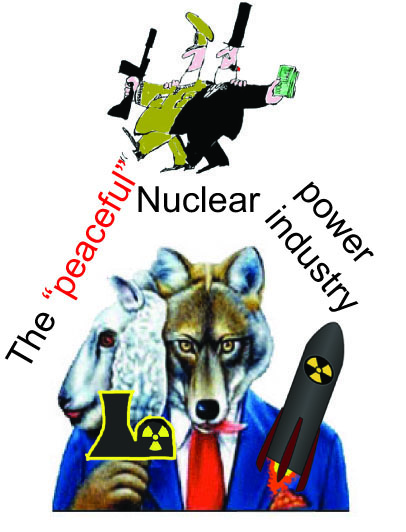
channelling revenues ultimately funded by electricity consumers towards a joint civil-military national nuclear industry base
Evidence from Andy Stirling and Philip Johnstone: As the early part of the process of the BEIS Committee Brexit Inquiry has unfolded, the salience of this civil/military link is being further underscored in statements in which a number of relevant senior civil servants and ministers are confirming that the priority attached to UK military submarine capabilities is deeply entangled in strategic commitments to civil nuclear industry strategy 6 . Several possibly serious implications therefore arise in relation to the particular circumstances of Brexit.
Written evidence from the University of Sussex, Science Policy Research Unit (BRN0015)
We submit this evidence to the inquiry on Brexit and the Implications for UK Business.s. The content draws on a detailed submission by the same authors to the Public Accounts Committee (PAC), discussed at the PAC witness session on Monday 9 th October 2017, which informed illuminating exchanges with senior civil service witnesses to that Committee and was subsequently published by PAC 1 . A number of potentially important implications arise in relation to issues under discussion around Brexit.
2: This earlier evidence to PAC addressed the otherwise difficult-to-explain intensity of Government commitments to civil nuclear power in the face of growing recognition of the relative competitiveness of alternative UK low carbon energy investments. Multiple grounds were found for inferring that this persistent Government attachment is due, at least in part (and with no public discussion), to perceived needs to engineer a cross-subsidy from electricity consumers to help cover costs of a national nuclear industrial base that is deemed to be essential for maintaining UK military nuclear infrastructures 2 .
3: The issues that arise are central to the general remit of the BEIS Committee. For instance, this recent evidence to the PAC documents significant statements by the National Audit Office, which suggest that UK military nuclear infrastructures are being bolstered by revenue flows to UK industry strategy in other sectors 3 . Many statements in support of this interpretation are cited from defence policy discussions, acknowledging incentives to “mask” costs of military industrial strategy behind civil energy programmes 4 . As a result, it is evident that Government-negotiated, high-price, guaranteed long-term contracts for civil nuclear power, are channelling revenues ultimately funded by electricity consumers towards a joint civil-military national nuclear industry base, whose full costs probably could not otherwise feasibly be covered by defence budgets alone. Resulting implications for wider industry strategy and energy policy have received effectively zero Parliamentary or other policy scrutiny.
4: Much other evidence was presented in submission to PAC, concerning this evidently significant-buthidden influence on civil industry policy by military nuclear considerations 5 . As a result, it seems that undetermined but likely large cross-subsidies are being engineered from UK electricity consumers, in order to cover otherwise insupportable costs of military nuclear industry strategies. In the present evidence we outline key implications for the BEIS Committee inquiry on nuclear implications of Brexit
5: As the early part of the process of the BEIS Committee Brexit Inquiry has unfolded, the salience of this civil/military link is being further underscored in statements in which a number of relevant senior civil servants and ministers are confirming that the priority attached to UK military submarine capabilities is deeply entangled in strategic commitments to civil nuclear industry strategy 6 . Several possibly serious implications therefore arise in relation to the particular circumstances of Brexit.
6: First, there are well-documented general concerns that Brexit-related pressures on the UK industrial base are likely to have a particular impact on large infrastructure projects, specifically including new nuclear build. If these developments unfold, then pressures are likely to intensify around the interlinkages between UK civil and military nuclear infrastructures. With foregone opportunities for industry strategy in other sectors (like offshore wind), the these Brexit-related implications for UK industrial strategy are central issues for the BEIS Committee, which remain unexplored elsewhere 7 .
7: Second, there are concerns that the economic effects of Brexit may include current and possible continuing future depreciation of Sterling. If these effects transpire as variously predicted, then economic pressures will likely intensify to find ways to cross-subsidise growing military nuclear costs in some fashion that mitigates the impact on public spending. Brexit may thus exacerbate incentives to ‘mask’ otherwise-unbearable wider industrial costs of military nuclear submarine infrastructures behind strategic support for civil nuclear supply chains ultimately funded by electricity consumers 8 .
8: Third, there are prospects that demand for UK access to overseas specialist nuclear skills may be aggravated by Brexit-related constraints on labour movement. If this occurs, then competition can be expected to accentuate between recruitment needs for national civil and military nuclear industries. Since key military nuclear skills in particular must for obvious reasons be disproportionately UKbased, so Brexit may reinforce upward pressures on costs of military nuclear infrastructures and so help further increase the pressures for cross-subsidy documented in the earlier PAC evidence 9
9: Fourth, there is the likely effect of Brexit in reinforcing pressures towards Scottish independence. If this transpires, then strong opposition in Scotland to continued associations with the current UK nuclear weapons infrastructure, mean that Brexit will make it more probable that a move will be required of key military nuclear facilities away from Scotland. The result will be a very large Brexitrelated increase in military nuclear costs, further exacerbating pressures for cross-subsidies 10 . 10: We hope it is useful to draw these emerging issues to the attention of the BEIS Committee – both in relation to the above specific repercussions around Brexit and to their wider implications for UK energy strategies, industrial policy and more general qualities of national democratic accountability 11 . October 2017
Extensive references are given on the original document .