BBC 10th Nov 2017, A drone is being used at a Scottish nuclear site for work that can involve
a risk of injury and cost thousands of pounds to be done by people. The
camera-equipped unmanned aerial vehicle is being flown on inspections of
Dounreay’s highest structures. Dounreay Site Restoration Limited (DSRL)
said it carries out about 50 such inspections every year. The nuclear power
site on the north Caithness coast near Thurso is in the process of being
decommissioned. http://www.bbc.co.uk/news/uk-scotland-highlands-islands-41947604
French institute says pollution suggests release of nuclear material in Russia or Kazakhstan in September, Guardian, Ian Sample and Kim Willsher, 10 Nov 17, A cloud of radioactive pollution over Europe in recent weeks indicates that an accident happened in a nuclear facility in Russia or Kazakhstan in the last week of September, the French nuclear safety institute IRSN has said.
The IRSN on Thursday ruled out an accident in a nuclear reactor, saying it was likely to be in a nuclear fuel treatment site or centre for radioactive medicine. There has been no impact on human health or the environment in Europe, it said.
IRSN, the technical arm of French nuclear regulator ASN, said in a statement it could not pinpoint the location of the release of radioactive material but that based on weather patterns, the most plausible zone lay south of the Ural mountains, between the Urals and the Volga river.
This could indicate Russia or possibly Kazakhstan, an IRSN official said………
Peres said that in recent weeks IRSN and several other nuclear safety institutes in Europe had measured high levels of ruthenium-106, a radioactive nuclide that is the product of splitting atoms in a reactor and does not occur naturally.
IRSN estimates a significant quantity of ruthenium-106 was released, between 100 and 300 terabecquerels, and that if an accident of this magnitude had happened in France it would have required the evacuation or sheltering of people in a radius of several kilometres around the accident site.
The ruthenium-106 was probably released in a nuclear fuel treatment site or centre for radioactive medicine, Peres said. Because of its short half-life of about a year, ruthenium-106 is used in nuclear medicine – for example in cancer therapy for eye tumours – but can also be released when nuclear fuel is reprocessed.
Jean-Christophe Gariel, director for health at the IRSN, said the responsibility for identifying the source of the nuclear cloud was now with the Russians or Kazakhs. If they failed to identify where the contamination had come from, the matter could be referred to the United Nations, he said.
“The matter is closed as far as France is concerned. It’s not a problem for France, what is not satisfactory is that ruthenium-106 has been detected across Europe and that poses a question,” Gariel told the Guardian……..
The IRSN ruled out an accident in a nuclear reactor, as that would have led to contamination with other substances. It also ruled out the crash of a ruthenium-powered satellite as an investigation by the International Atomic Energy Agency has concluded that no ruthenium-containing satellite has fallen back on Earth during this period.
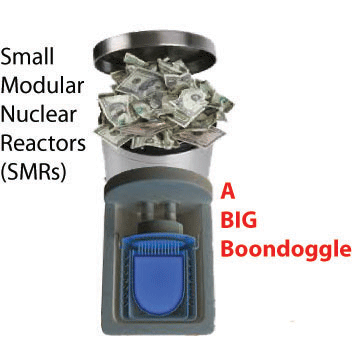
The Financial Times reports that the Government is preparing to revive the faltering effort to create a new generation of small-scale nuclear reactors in spite of an official analysis that cast doubt on the economic case for the technology. Talks have intensified in recent weeks between government officials and companies including Rolls-Royce, the UK engineering group, over potential public funding to support development of so-called small modular reactors (SMRs).
Development of SMRs is regarded as crucial to the future of the nuclear industry as it struggles to remain competitive against the rapidly falling cost of renewable wind and solar power. Support for SMRs is expected to be part of a wider commitment to nuclear engineering in a new industrial strategy to be unveiled by the government this month.
However, the enthusiasm has been complicated by a technology assessment, commissioned by the business department and carried out by EY, the accounting firm, which reached a negative verdict on the cost-effectiveness of SMRs. The findings are expected to be published in the coming weeks and will confront the government with awkward questions about why public money should be used to help commercialise the unproven technology.
Competitors are expecting the government’s funding for SMRs to be split into three areas, with the largest portion being committed to technology ready for rapid deployment over the next decade. In the future there may also be funding for more experimental technology, with a third area of potential financial support for suppliers working alongside SMR developers, according to people briefed on the government’s plans. The most intense competition for funding is in the first of these areas, with Rolls-Royce vying with rivals including NuScale and Westinghouse of the US. (1)
At the Tory Party Conference the Policy Exchange organised a fringe meeting entitled “A Nuclear Reactor in Every Town”. According to Matthew Rooney, who is the Policy Exchange’s Energy and Environment Research Fellow, “It is fair to say large nuclear reactors are not doing very well in the nuclear world” as evidenced by Hinkley Point C “It is very difficult in liberalized economies to fund large nuclear reactor projects these days and that is where small modular reactors could come in.” Small modular reactors (SMRs), he said, offer the potential to provide scalable and reliable low carbon power and heat. (2)
It’s easy to see why Rolls Royce and other companies in the nuclear engineering business are pushing the UK government finance the development a new generation of SMRs says Oliver Tickell, writing in the Ecologist. Whether the project succeeds or fails, there are juicy profits to be had for them at taxpayers’ expense. But it is much harder to see why the Government might fall for the industry’s techno-optimism which is pure fantasy for a second time in a little over a decade. (3)
According to a recent report by Rolls-Royce and its partners in the ‘SMR Consortium’ (SMRC), a UK SMR program could create 40,000 skilled jobs, contribute £100 billion ($132 billion) to the economy and open up a potential £400 billion global export market. Nuclear Industries Association chairman Lord (John) Hutton claims in the foreword that a UK SMR programme could “help the UK become a vibrant, world-leading nuclear nation.” He asserts his belief that “it is fundamental for the UK to meet its 2050 decarbonisation targets and will deliver secure, reliable and affordable electricity for generations to come.”
The SMRC report envisages an approximate doubling of the UK’s 9.5GW existing nuclear capacity by 2030, then another doubling by 2050 to around 40GW. That implies that come 2050, SMRs would be delivering some 30GW – the output of 100 300MW units scattered around the UK.
There are just two problems with the rosy scenario, says Tickell. First, the techno-optimism that oozes from every page is a fantasy. The cost of renewables is falling so fast that nuclear power will be utterly irrelevant in meeting decarbonisation targets. There is no £400 billion export market. Who would want SMRs in 2050, when their power will be 50-100 times more expensive than solar?
Secondly, nuclear power stations have got bigger to achieve economies of scale: it’s much cheaper to build a single 1.2GW unit than four 300MW units, or a dozen 100MW units. There is nothing new about SMRs – they have been powering submarines and aircraft carriers ever since the 1950s. If there really are huge cost savings to be achieved from the mass production of SMRs, how come they have not already been achieved?
We now know thanks to Andy Stirling and Philip Johnstone of Sussex University that the government wants to use the civilian nuclear programme to generate expertise, and technology, for military use, especially reactors for Trident nuclear submarines. Lord Hutton gave the game away in his introduction to the SMRC report when he wrote: “A UK SMR programme would support all 10 ‘pillars’ of the Government’s Industrial Strategy and assist in sustaining the skills required for the Royal Navy’s submarine programme.”
Senior civil servants revealed that the government’s decision to build a new generation of civil nuclear power stations starting with Hinkley Point is linked to maintaining enough skills to keep Britain’s nuclear deterrent. The disclosure came at a hearing of the Commons Public Accounts Committee looking at the huge cost of building Hinkley Point power station which critics see as uneconomic and not properly costed.
Stephen Lovegrove told the committee “I was in regular discussion with Jon Thompson, former Permanent Secretary at the MOD, to say that as a nation we are going into a fairly intense period of nuclear activity … We are building the new SSBNs (nuclear armed nuclear submarines) and completing the Astutes … We are completing the build of the nuclear submarines which carry conventional weaponry. We have at some point to renew the warheads, so there is very definitely an opportunity here for the nation to grasp in terms of building up its nuclear skills.” (4)
With regard to Hinkley, Stirling and Johnstone say there is a “remarkable persistence and intensity of UK Government attachments to what is increasingly recognised as an economically untenable project.” The persistence of this nuclear attachment looks to be at least partly due to a perceived need to subsidise the costs of operating and renewing the UK nuclear-propelled submarine fleet. (5)
The governments new Clean Growth Strategy includes, amongst other things, £20m R&D/innovation funding for low carbon heat and energy efficiency, but that is dwarfed by the £480m proposed for nuclear R&D including R&D on SMRs. In terms of low carbon research priorities there are arguably more urgent options to explore such as Power to Gas (P2G) especially. (see Balancing Green Energy, nuclear News No.100 http://www.no2nuclearpower.org.uk/nuclearnews/NuClearNewsNo100.pdf) The Government’s funding priorities need to be debated further. (6) http://www.no2nuclearpower.org.uk/nuclearnews/NuClearNewsNo101.pdf
The government cannot guarantee Britain will have enough nuclear inspectors when it leaves the EU. The Office of Nuclear Regulation has recruited four new safeguards inspectors but says it needs more time to fill the specialised roles. Nuclear minister Richard Harrington said there was “plenty of time” to recruit the staff needed. But he stopped short of offering a firm guarantee. The government has stressed that nuclear safeguards – the processes by which the UK shows its civil nuclear material is not diverted into weapons programmes – are different from nuclear safety – the prevention of nuclear accidents. Mr Harrington said the UK was committed to leaving Euratom in March 2019. (1)
Industry figures have warned about significant disruption to energy production in the UK if there is not a new inspection regime ready to go to, to replace the one currently overseen by Euratom.
Dr Mina Golshan gave evidence on behalf of the Office for Nuclear Regulation to the Safeguards Bill Committee on 31st October 2017. (2) Dr Golshan completely ducked addressing the most important aspect of the bill, according to nuclear security expert Dr David Lowry. It is- not the operational technicalities which concern Lowry, but the diplomatic acceptability of a nation state asserting that it will replace an independent international safeguards verification regime with a self verified regime, albeit one that intends to be populated by the appropriate expertise from a current recruitment drive.
Dr Golshan also overlooked the fact the current trilateral safeguards agreement (UK-EURATOMIAEA) has an opt out of safeguards application to fissile material, under its article 14, if the Government so decides; and this has actually been done over 600 times since September 1978, when the trilateral safeguards agreement came into force. Foreign states regard this as UK ‘doit-yourself’ nuclear proliferation on an industrial scale, as comments at successive NPT review conferences attest, but ministers routinely ignore.
India Wants Second Nuclear Submarine From Russia. Lies By Lobbyists Erupt
Russian news portal Kommersant reported that the Indian Navy allowed a US technical crew into top secret compartments of India’s existing Russian-built nuclear submarine, the INS Chakra NDTV All India by Vishnu Som : November 10, 2017 NEW DELHI:
HIGHLIGHTS
Russian website says US officials entered nuclear submarine in Vizag
India has leased that submarine, is in talks for another
Indian sources deny Russian website report
India’s attempt to buy a nuclear attack submarine from Russia appears to have triggered a misinformation campaign by defence lobbyists.
Yesterday, Russian news portal Kommersant reported that the Indian Navy had permitted a US technical crew into top secret compartments of India’s existing Russian-built nuclear submarine, the INS Chakra, in clear violation of the terms of the contract between India and Russia. India leased this submarine in 2012 for approximately US$700 million and is in talks to acquire another.
According to Kommersant, which referred to this as “an unprecedented scandal,” the incident “threatens to seriously complicate the negotiations both on the lease of the second nuclear submarine, and on other projects in the field of military-technical cooperation.”
The Chakra, an Akula-2 class submarine, widely considered among the world’s most sophisticated, has been leased by India for 10 years but all ownership rights reside with Russia.
Today, another Russian news portal, NEWS.ru, has debunked the account of the Kommersant and states that French lobbyists have an ulterior role in spreading misinformation to further their own chances of selling a nuclear-powered attack submarine to India. NEWS.ru quotes a source stating “there is complete confidence that the throw-in is organised by the lobbyists of France, and it’s pretty high quality.” According to this source, “In addition to the contract for the construction of non-nuclear boats such the Scorpene [now being inducted by the Indian Navy,] the French have a great desire to enter the Indian nuclear fleet.”
France, the article states, is also aggressively trying to participate in India’s programme to construct a second home-grown aircraft carrier. The first indigenous carrier, INS Vikrant is being built in Kochi using technology from a host of countries including Russia……..
This isn’t the first time that there have been reports of the involvement of international lobbyists in influencing key Indian defence deals. Last year, The Australian newspaper revealed the leak of classified data on the Indian Navy’s French-designed Scorpene class submarine, the first of which will be commissioned into the navy by the end of this year.
Russia’s Rosatom hopes to win Saudi nuclear plants’ tender, DANANG, Vietnam, Nov 10 (Reuters) – Russian state nuclear company Rosatom hopes to win a tender announced by Saudi Arabia to build nuclear plants in the kingdom, Alexei Likhachyov, head of Rosatom, told reporters.
“As far as I understand, they (Saudi Arabia) should make a decision next year about the construction and a constructor. We hope it will be us,” he said.
Rosatom has sent initial proposals to Saudi Arabia for nuclear power generation and would make a bid if a tender is announced, the company said earlier this month.
Saudi Arabia is considering building 17.6 gigawatts of nuclear capacity by 2032, the equivalent of about 17 reactors, making it one of the biggest prospects for an industry struggling after the 2011 nuclear disaster in Japan. (Reporting by Denis Pinchuk; writing by Katya Golubkova; editing by Vladimir Soldatkin)DANANG, Vietnam, Nov 10 (Reuters) – Russian state nuclear company Rosatom hopes to win a tender announced by Saudi Arabia to build nuclear plants in the kingdom, Alexei Likhachyov, head of Rosatom, told reporters.
“As far as I understand, they (Saudi Arabia) should make a decision next year about the construction and a constructor. We hope it will be us,” he said.
Rosatom has sent initial proposals to Saudi Arabia for nuclear power generation and would make a bid if a tender is announced, the company said earlier this month.
Saudi Arabia is considering building 17.6 gigawatts of nuclear capacity by 2032, the equivalent of about 17 reactors, making it one of the biggest prospects for an industry struggling after the 2011 nuclear disaster in Japan. (Reporting by Denis Pinchuk; writing by Katya Golubkova; editing by Vladimir Soldatkin)
Africa buys into nuclear dream, Mail and Guardian, Lynley Donnelly
Risky: Nigeria has oil but infrastructure maintenance is poor. It is considering the nuclear option. (Akintunde Akinleye, Reuters)
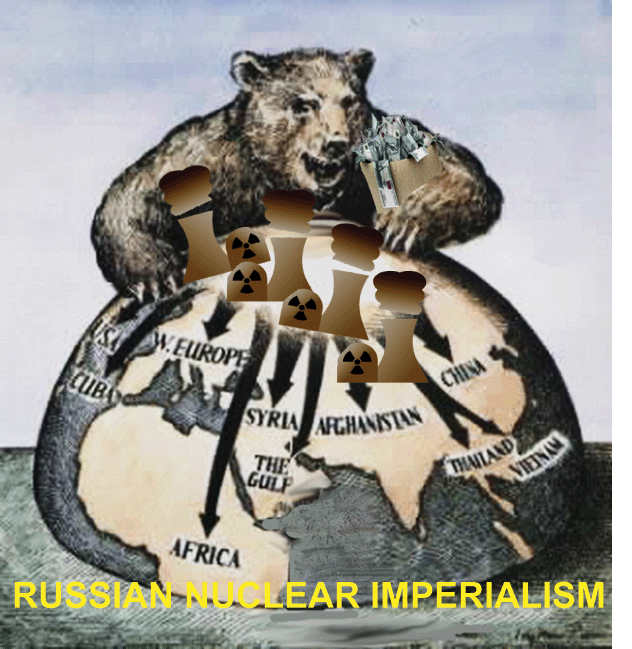
While questions swirl around the progress of South Africa’s nuclear plans, Russia’s state nuclear agency Rosatom is losing no time in selling the atomic dream to other African countries.
Last week the company signed project-development agreements with the Nigerian government for the construction and operation of a nuclear power plant and research centre housing a multipurpose research reactor.
Nigeria has extensive oil and gas reserves but suffers from chronic electricity shortages.
Media reports suggest the deal could cost about $20-billion, but Rosatom said the costs have yet to be determined.
The agreements were signed in order to adopt the appropriate approach and establish the project’s implementation details, a Rosatum official said. “Cost estimations and project specifications will be evaluated in accordance to this agreement,” the official said.
For many in the nuclear industry, having watched all their much-touted GW-scale reactors go down the pan, and having had to accept that their long-cherished dream of a new generation of fast-breeder reactors will never materialise, SMRs are almost the last resort.
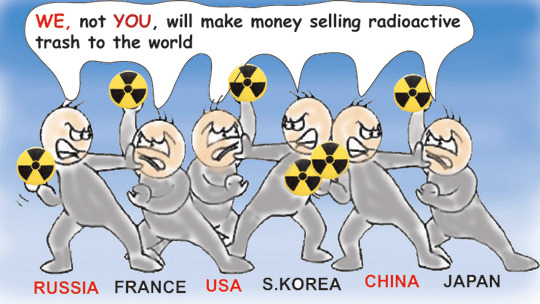
There are literally dozens of different SMR designs out there, with the USA, Russia, South Korea, China and now the UK bigging up the superiority of their particular whizz-bang design – but there are NO CLIENTS anywhere in the world….. billions of dollars ploughed into one prototype or another, but very little to show for it at the end of the day.
Just as I don’t believe we’ll ever see Hinkley Point finished and generating electricity, nor do I believe that a new generation of SMRs will ever materialise, ensuring that the insane dream of the UK as ‘a vibrant nuclear nation’ will remain just that – an insane dream.
Small Modular Reactors: The Nuclear Industry’s Latest Pipe Dream, http://www.jonathonporritt.com/blog/small-modular-reactors-nuclear-industrys-latest-pipe-dreamJonathon Porritt, 4 Nov 17 You’ve got to hand it to the nuclear industry: they’re one resilient bunch of never-say-die hard-arses! By any standards, 2017 has been an annus horribilis for the industry, with one body blow after another, all around the world. And 2016 wasn’t that much better either.
This is spelled out in almost excruciating detail in this year’s ‘World Nuclear Industry Status Report’ (WNISR), an annual stocktake that dispassionately lays out what’s been happening in the preceding year from technological, engineering, political and financial points of view. Continue reading →
FT 7th Nov 2017,British ministers are preparing to revive the UK’s faltering effort to
create a new generation of small-scale nuclear power plants in spite of an
official analysis that cast doubt on the economic case for the technology.
Talks have intensified in recent weeks between government officials and
companies including Rolls-Royce, the UK engineering group, over potential
public funding to support development of so-called small modular reactors
(SMRs).
Greg Clark, business secretary, is keen to put the UK at the
forefront of technology seen as a more affordable alternative to
large-scale nuclear reactors such as those under construction at the £20bn
Hinkley Point C plant in south-west England.
Development of SMRs is regarded as crucial to the future of the nuclear industry as it struggles
to remain competitive against the rapidly falling cost of renewable wind
and solar power. The UK faces competition from the US, Canada and China in
its effort to establish a leading position in the technology.
Support for SMRs is expected to be part of a wider commitment to nuclear engineering in
a new industrial strategy to be unveiled by the government this month.
However, the enthusiasm has been complicated by a technology assessment, commissioned by the business department and carried out by EY, the accounting firm, which reached a negative verdict on the cost-effectiveness of SMRs. The findings are expected to be published in the coming weeks and
will confront the government with awkward questions about why public money
should be used to help commercialise the unproven technology. https://www.ft.com/content/bddfda80-c314-11e7-b2bb-322b2cb39656
CORE 5th Nov 2017,NuGen’s updates on progress with its Moorside new-build project are an
extremely rare commodity these days in the UK. The last update, made six
months ago, reported CEO Tom Samson as saying that ‘a universe of
options’ remained available to NuGen – even with the bankrupt
Westinghouse and its AP1000 reactors apparently kicked into the long grass.
This starry-eyed view of available options must, in reality, be limited to
the current interest expressed in NuGen’s project by Chinese and South
Korean investors, both of whom are likely to insist on the deployment of
their own ‘in house’ reactors.
With little information on progress by the traditionally inscrutable Chinese Government and its state-backed China
General Nuclear (CGN) seeing the light of day recently, South Korea has
been busy number-crunching behind the scenes to work out how the $18Bn
(around £14Bn at today’s exchange rate) might be raised to buy out
Toshiba’s stake in the moribund West Cumbrian project.
A little reported article by Business Korea on 17th October states that a Nuclear Power Plant
Export Strategy meeting in Seoul on 10th October had devised a plan to
raise the $18Bn (around £14Bn at today’s exchange rate) required to take
control of Moorside. Under the plan – and through a ‘project financing
structure’ overseen by the South Korean Government – $7Bn in primary
financial arrangement would be provided by three export financial
institutions – the Export-Import Bank of Korea, the Korea Development
Bank and the Korea Trade Insurance Corporation. An additional $2.2Bn would
come from KEPCO itself and a further $5.6Bn raised jointly from the UK
Government (Infrastructure and Project Authority), the Japan Bank for
International Cooperation and the US Export/Import Bank.
The balance of $3.2Bn would be raised by ‘project operators’. Whether or not these
plans are turned into reality, they provide at least some clue as to what
is happening behind the scenes.
This is more than can be said for NuGen for, despite CEO Tom Samson’s astrological ‘110% certainty’
(curiously upgraded later to 120%) that Moorside would go ahead, its last
public pronouncement on 16th May 2017 advised that it had been forced to
hit the pause button on the project because of investor uncertainty, and
that a strategic review had been initiated on Moorside’s future.
Since then, having virtually disappeared as an entity from the Cumbrian radar
screen and consigned its local stakeholders and consultees to the darkest
black hole, NuGen’s sole website contributions have been confined to the
opening of a memorial beach garden north of Whitehaven and a cycle ride
around Moorside by students from NuGen’s ‘Bright Sparks’ educational
programme. http://corecumbria.co.uk/briefings/south-korea-number-crunching-its-way-to-moorside/
Wales Online 6th Nov 2017,The public are being asked for the views on how the radioactive waste from
the new nuclear power station at Wylfa is managed and disposed of. Natural
Resources Wales (NRW) is asking people for their views on Horizon Nuclear
Power’s application for an environmental permit.
The application is for a radioactive substances regulation permit which details how Horizon will
manage, discharge, transfer and dispose of radioactive material and waste
from the power station. As part of the process NRW is holding a public
consultation on the content of application. It’s the first in a series of
permits that the company needs to operate its planned Wylfa Newydd power
station at Tregele, Anglesey. To be granted this permit Horizon must
demonstrate how it will minimise the amount of radioactive waste it
generates and discharges. http://www.walesonline.co.uk/business/business-news/youre-worried-nuclear-waste-your-13863171
Rosatom talks up wind, solar power in quest for ‘diversified portfolio’ By Frédéric Simon | EURACTIV.com 7 Nov 17, Nuclear power remains the cornerstone of Rosatom’s expansion strategy, notably in emerging countries. But the Russian state-owned energy conglomerate is now also talking up renewables, citing wind, solar and batteries as part of a diversified low-carbon energy portfolio.
Ask the director of Rosatom Western Europe about the company’s diversification strategy, and he won’t hesitate a second – it’s all about nuclear…….
But ask again and Rozhdestvin will also mention wind, solar power and even batteries.
“We are the leaders in Russia when it comes to the wind industry. And why are we doing that? Because we believe we should diversify and add new CO2-free sources of energy to our portfolio.”
Rosatom decided to invest in wind power only recently, in 2016, believing that rapid cost reductions in the renewable industry will become a competitive threat to nuclear power. Two wind farms in Russia are currently under construction, in partnership with a Dutch company, Lagerwey.
Overall, Rosatom has an order to build 1 gigawatt of wind power capacity in Russia, Rozhdestvin says, a market share which is still tiny compared to the 27.89 gigawatts of installed nuclear capacity.
“But that’s the first step,” Rozhdestvin says. “We have to be a player on that market. Wind, solar, nuclear – they are all CO2 free. We want to be able to offer a diversified portfolio to meet concrete energy needs.”….
“We have not yet drawn on the Russian loan, but this will change in the coming hours,” Aszodi told an energy conference organized by financial news website portfolio.hu.
Russian company Rosatom will build two nuclear reactors in Hungary in a 12.5 billion euro project that has been delayed by at least a year as Hungary ironed out regulatory and financing issues with European regulators.
TV5Monde 4th Nov 2017, [Machine Translation]The French nuclear power plant Bugey is located only
70 km from Geneva. The Swiss Federal Government of Geneva is concerned
about the obsolescence of the cooling circuits of the four reactors of this
nuclear power plant, one of the oldest in the French park. Interview with
Antonio Hidgers, Minister of Energy of Geneva. http://information.tv5monde.com/info/surete-nucleaire-geneve-s-inquiete-de-la-centrale-de-bugey-201543
FT 5th Nov 2017, Some of Europe’s largest energy companies have accused the EU of lacking
ambition in the fight against climate change and urged more aggressive
targets for growth in renewable power. The declaration, by companies
including Iberdrola of Spain, Enel of Italy and SSE of the UK, came as
negotiators gathered in Bonn for the latest round of international talks on
tackling global warming. A proposed target for renewables to meet 27 per
cent of EU energy consumption by 2030, up from 16.7 per cent in 2015,
“lacks ambition and would slow down the current rate of renewables
deployment” in Europe, the companies said. https://www.ft.com/content/4d39bd72-c20c-11e7-a1d2-6786f39ef675