First Minister pressed over Welsh Government support for Wylfa small modular reactors
Wrexham.com 3rd June 2026
Wales’ new First Minister has been urged to provide clarity on the Welsh Government’s position on proposed small modular reactors at Wylfa.
During his inaugural First Minister’s Questions, Rhun ap Iorwerth, was asked by interim Welsh Labour Leader Ken Skates to confirm whether the new Plaid Cymru-led administration supports plans for up to eight small modular reactors at the Anglesey site……………………………………………………………………
Mr ap Iorwerth said he had “always taken the approach of fighting for the economic benefits” that could come from any development at Wylfa and stressed that the site remained a reserved matter for the UK Government.
The First Minister stopped short of explicitly backing the construction of eight SMRs, but said the government would “work positively” on proposals because of the potential economic benefits for Anglesey and the wider region…………………………………………………………………………………………… https://wrexham.com/news/first-minister-pressed-over-welsh-government-support-for-wylfa-small-modular-reactors-293228.html
Battle for Kiev 2022: The Battle That Never Was [i]
How the west got it wrong… again…
Mike Mihajlovic, Black Mountain Analysis, Jun 06, 2026
Since the opening days of the Special Military Operation (or often called Full-Scale Russian Invasion in the West), the dominant Western narrative has portrayed the Russian advance toward Kiev as the main effort of the invasion: a bold attempt to seize the Ukrainian capital, decapitate the government, and force a rapid Ukrainian surrender. According to this interpretation, the Russian withdrawal from northern Ukraine in March and April 2022 represented a major strategic defeat and one of the most consequential failures of the war.
However, a closer examination of the campaign raises a fundamental question: was the operation around Kiev ever intended to be the decisive battle that many believed it to be?
A realistic analysis suggests that what became known as the “Battle for Kiev” was not a battle for Kiev at all. Rather than constituting the main effort of the invasion, the operation appears to have functioned as a large-scale diversionary and fixing operation designed to tie down Ukrainian forces while Russia pursued its primary strategic objectives elsewhere, particularly in southern Ukraine.
Looking Beyond the Headlines
One of the fundamental problems in analyzing the war is that many commentators and self-proclaimed experts begin by defining Russia’s objectives according to their own assumptions rather than examining what Russian leaders and military planners actually stated or appeared to prioritize. Once these assumed objectives are established, it becomes easy to claim that Russia has failed simply because it did not achieve goals that may never have been part of its original strategy.
This approach often leads to circular reasoning. Analysts first decide what Russia intended to accomplish, then evaluate the campaign against those self-defined objectives. If the battlefield outcome differs from those expectations, the conclusion is presented as evidence of failure. However, serious military analysis requires a different methodology.
The starting point should be facts rather than assumptions. This means examining official statements, force deployments, operational patterns, logistics, resource allocation, and the strategic outcomes that were actually pursued and achieved. Military campaigns are rarely as simple as they appear in headlines, and intentions cannot be determined solely by observing the direction of an advance on a map.
The opening phase of the war provides a clear example. Much of the public discussion focused on the assumption that the capture of Kiev was Russia’s primary objective. Yet a closer examination of force ratios, operational priorities, and the enduring gains achieved elsewhere raises legitimate questions about whether the campaign was intended to accomplish what many Western observers believed.
Regardless of one’s conclusions, objective analysis requires separating assumptions from evidence. Before determining whether a strategy succeeded or failed, it is necessary to establish what the strategy actually was. Only then can the results be evaluated fairly and accurately.
In military history, appearances can be deceiving. Large troop movements, dramatic airborne assaults, and advances toward politically significant objectives often create perceptions that differ from actual operational intent.
The Russian advance from Belarus toward Kiev certainly appeared threatening. Columns of armored vehicles moved south, airborne troops attempted to seize Hostomel Airport, and Russian forces approached the capital from multiple directions. For political leaders, journalists, and outside observers, the conclusion seemed obvious: Russia intended to capture Kiev.
Yet military operations are not judged by appearances alone. They must be examined in terms of force structure, logistics, operational priorities, and the strategic outcomes ultimately achieved.
When viewed through this lens, the campaign begins to look very different.
The Force Problem
Capturing a modern city of nearly three million people is among the most demanding operations in warfare. History demonstrates that urban assaults require overwhelming manpower, extensive logistical support, sustained artillery operations, and sufficient forces not only to seize a city but also to occupy and control it afterward.
Kiev was not Baghdad in 2003, where coalition forces enjoyed complete air superiority and overwhelming technological advantages. Nor was it Prague in 1968, where Soviet forces entered a largely non-resistant city. Kiev was a large, heavily defended capital whose population and military were fully mobilized.
The force allocated to the northern axis raises important questions. While substantial enough to pose a credible threat, it appeared insufficient for the prolonged capture and occupation of a city the size of Kiev.
This discrepancy becomes difficult to ignore. If the objective was truly to seize and hold the Ukrainian capital, why was a force of such limited size assigned to the task?
The answer may lie in understanding what military planners call a fixing operation.
The Art of Fixing the Enemy
A fixing operation is designed not to capture territory but to compel an opponent to commit forces to a particular sector, preventing them from reinforcing other areas where decisive operations are taking place.
Throughout history, armies have used demonstrations, feints, and diversionary offensives to manipulate enemy decision-making. The goal is psychological as much as military. By creating a credible threat, a commander forces the opponent to react.
In the case of Kiev, the threat itself may have been the objective.
No government can risk abandoning its capital during the opening phase of a war. As long as Russian forces remained near Kiev, Ukrainian leaders had little choice but to keep substantial military formations defending the city and its approaches.
Every brigade positioned around Kiev was a brigade unavailable elsewhere.
From this perspective, the operation’s success did not depend on entering Kiev. It depended on convincing Ukraine that Russia intended to do so.
The Real Campaign in the South
While global attention focused on Kiev, some of the war’s most consequential developments occurred hundreds of kilometers away……………………………………………………………………………………………………………………………………………………………………..
Conclusion
The events of early 2022 are likely to remain the subject of debate for decades, especially among the “Western experts”. Access to additional Russian operational records may eventually provide definitive answers regarding Moscow’s intentions.
Yet one conclusion already appears increasingly difficult to ignore: the campaign around Kiev was not the decisive battle it was presented as in much of the Western media.
The threat to Kiev tied down Ukrainian forces, shaped strategic decisions, and dominated international attention. Meanwhile, the most significant territorial and operational gains were made in southern Ukraine, where Russia secured objectives that continue to shape the course of the war.
Whether one views the northern operation as a failed offensive, a successful diversion, or a combination of both, the notion that the war’s opening phase can be understood solely through the lens of a Russian attempt to seize Kiev is increasingly difficult to sustain.
The “Battle for Kiev” may ultimately be remembered not as the battle that determined the war, but as the battle that was never truly intended to be fought in the way the world believed.https://bmanalysis.substack.com/p/battle-for-kiev-2022-the-battle-that?utm_source=post-email-title&publication_id=1105422&post_id=200763450&utm_campaign=email-post-title&isFreemail=true&r=1ise1&triedRedirect=true&utm_medium=email
The Guardian view on NHS records: patients are not raw material for Palantir big tech
Ministers should end Palantir’s contract before medical confidentiality is sacrificed to Silicon Valley’s appetite for public data
Editorial, 5 June 26 https://www.theguardian.com/commentisfree/2026/jun/04/the-guardian-view-on-nhs-records-patients-are-not-raw-material-for-big-tech
Ministers should end Palantir’s contract before medical confidentiality is sacrificed to Silicon Valley’s appetite for public dataFri 5 Jun 2026 03.54 AESTShare
Alarm bells ought to have rung when it emerged last month that Palantir engineers could gain “unlimited access” to identifiable NHS patient data. Such sensitive medical information was only supposed to be available either to someone involved in a patient’s care or with the patient’s informed consent. NHS England’s new position appears to have changed that, extending access to private companies because it may make data processing easier. Convenience is not a basis for undermining medical confidentiality.
Nicola Byrne, the government’s national data guardian, clearly thought the NHS had broken its promise that its £330m deal with Palantir would see “identifiable patient information … limited to NHS staff with a legitimate need”. Patients tell doctors things they may tell no one else. If they think that sensitive details can be disclosed to US tech corporations, trust will suffer – and patients will say less when the truth matters most.
This risk helps explain why MPs on parliament’s science, innovation and technology committee warned this week that Palantir had become an “unacceptable point of weakness”. The business model is simple. Britain supplies the raw material: NHS patient data. Silicon Valley monetises it. The problem is that the benefits – better models, new products – accrue not to the British public, but to US shareholders.
The MPs also argued that Palantir is not just another software firm. In the US it has worked with the military and immigration authorities on controversial programmes. Its co-founder, Peter Thiel, the committee noted, has disparaged the idea of a national health service. The report recommends that ministers should activate the February 2027 break clause in its £330m NHS Palantir contract – ending its relationship with the company and moving to either an in-house or UK-owned provider. The government should heed this advice.
The committee ought to be thanked for making it clear that this is no one-off scandal, but part of a wider pattern. Public bodies, it warns, have become dependent on a few powerful technology companies which the state lacks the capacity to challenge or replace. Officials often struggle to understand the systems they buy. Allowing critical public infrastructure to rest on foreign-owned platforms undermines state autonomy. Accountability is blurred when decisions on data access and procurement are buried in technical briefings and dense contracts.
This is especially concerning when assessing the government’s claim that a new £1.8bn digital ID system would make “public services quicker, easier and more secure to access”. Given the chequered history of big government IT projects, it is unsurprising that the committee is sceptical of its successful launch. Its report, correctly, views mandatory adoption as wrongheaded. The public sector holds citizens’ data on trust, MPs say, “and should therefore hold itself to a higher standard”. With patient data, that seems not to be the case.
Ministers have offered various reasons for digital ID: stopping illegal working, easing access to vehicle records and even checking bin collection days. None has stuck. The deeper problem is that digital transformation is treated as an exercise in efficiency, not one requiring public consent and parliamentary scrutiny. Infrastructure built around a person’s identity must not expand by bureaucratic drift. The committee’s call for separate parliamentary votes on each use of digital ID is the democratic lock missing from the NHS’s Palantir deal.
Rolls-Royce under fire for outsourcing parts of UK nuclear project to South Korea

Multibillion-pound contract to build three small modular
reactors was signed with government body in April. Rolls-Royce is facing
mounting criticism from politicians and industry figures for a decision to
outsource the core parts of a multibillion-pound UK government plan for
three small nuclear reactors to South Korea.
The announcement by the
British engineering giant, the lead investor in a consortium developing the
reactors, has raised questions about whether the government’s target of
70 per cent of the project being British-made will be met.
Rolls-Royce
SMR’s selection of South Korea’s Doosan Enerbility to finalise designs
for key components for the small nuclear reactors has triggered warnings
from industry representatives that the UK is squandering a chance to build
its own supply chain for the technology. Liam Byrne, Labour MP and chair of
parliament’s business and trade committee, said he would be writing to
ministers seeking clarification as to how Rolls-Royce’s announcement is
compatible with the 70 per cent target.
FT 5th June 2026, https://www.ft.com/content/dcc90c25-43e7-4456-84bb-35458dc6726c?syn-25a6b1a6=1
‘What’s happening is horrifying’: the rebel film-maker challenging AI’s march into Hollywood
While pro-Silicon Valley documentaries got major distribution deals, Valerie Veatch had to struggle to get her film, about Big Tech’s dark past and future, into the world. She talked to Charlotte O’Sullivan about what some attendees called ‘the scariest movie playing at Sundance’
Charlotte O’Sullivan, Jun 6, 2026, https://www.thenerve.news/p/valerie-veatch-interview-ghost-in-the-machine-documentary-ai-sundance-tech-bros?utm_source=www.thenerve.news&utm_medium=newsletter&utm_campaign=weekend-edition-gagged-facebook-s-whistleblower-james-mcavoy-q-a-nilufer-yanya&_bhlid=9a5a1970bb01aaa89602f0fb01add0f7ae856b22
Valerie Veatch doesn’t want to come across as “a crazy, bitter film-maker”. But she admits it’s “triggering” to talk about the challenges she faced when making Ghost in the Machine, her blisteringly enjoyable documentary about the dark past and present of AI, which hits UK cinemas today.
From the start, Ghost in the Machine was a hard sell. As Veatch says: “I couldn’t get funding from the usual places. People weren’t interested in a film that was tech-critical.” She wanted to talk about the “father of Silicon Valley”, Dr William Shockley, and his abiding interest in eugenics, to explore the sexism and racism that underpins “breathless, gushy” discussions about “superintelligence” and the “singularity” (the hypothetical moment when AI surpasses human intelligence). “I was so full of rage. This stuff is not inevitable.”
Veatch, who was born in Seattle but is now based in Kent, has made three critically acclaimed and zeitgeisty documentaries (including 2014’s Love Child and Me at the Zoo in 2012). For the new film, she talked to more than 30 US experts about the power dynamics behind the much-hyped, eye-wateringly lucrative AI revolution. She did the Zooms, and edited the Zooms, “compulsively, in the middle of the night, for a year; I did urgent listening and, somehow, I got a cut ready for Sundance”. Once Sundance 2026 accepted the film, Veatch got a grant, which paid for all the archival footage. And her dad and aunt came in as investors, she says proudly. “So this is an almost entirely homegrown film. I don’t think we could carry the message that we’re carrying if we were at all beholden to any large studio or distribution company.”
‘What is the difference between being in the pocket of Big Tech and being an independent voice? Well, a lot!’
Irreverence is Veatch’s thing and she cites the British director Adam Curtis as the biggest influence on her work (“I wanted to utilise the archive, the way he does … I wanted it to be surreal and sardonic”). Ghost in the Machine is crammed with jolting images: we see William Shockley, on TV, spewing his racist poison with the gentle patience of a man hawking encyclopaedias. Elsewhere, phrases chime in quietly chilling ways: the Victorian originator of eugenics, Francis Galton, wants to create a “galaxy of genius”.
Also shown at Sundance this year, and distributed by the mainstream giant Focus Features in the US (and Universal Studios elsewhere), was The AI Doc: Or How I Became an Apocaloptimist. Made by Daniel Roher and Charlie Tyrell, this documentary, as its title suggests, manifests a cautious lack of pessimism on the subject of AI. Framed as a personal journey (Roher, about to become a father, wants to know if he’s bringing his baby into a safe world), it suggests this technology will always be with us. This film, which premieres at Sheffield DocFest next Friday, 12 June, and then goes on general release in the UK on 19 June, had the cooperation of the tech bros and includes on-camera interviews with Google Deepmind’s CEO, Demis Hassabis, and OpenAI’s Sam Altman. In the words of Daniela Amodei, the co-founder and CEO of Anthropic, “this train isn’t going to stop”.
Veatch draws my attention to the fact that Sundance now receives funding from Google, adding: “Last year, so I’m told, audiences clapped when film-makers said their movies didn’t contain AI … this year was so different.” Even before the festival began, she sensed unease about her project. As it happened, Ghost in the Machine connected with audiences. In fact, it was a huge success, with word of mouth suggesting it was “the scariest movie playing at Sundance”.
Still, Veatch gets infuriated when her film is compared to Roher’s. She says: “What is the difference, ultimately, between being in the pocket of Big Tech and being an independent voice? Well, a lot!”
Author and linguist Emily Bender (who appears in both Ghost in the Machine and The AI Doc) is on record as saying Veatch’s film is the better of the two. Bender says Roher “lets himself get buffeted by the imaginations of some of the most unhinged people in this space”, whereas Bender feels Veatch has “woven together an informed and engrossing essay”. Similarly, Timnit Gebru, a computer scientist and cofounder of Black in AI, who also shows up in both films, recently praised Ghost in the Machine while distancing herself from Roher’s movie. “She went on LinkedIn and said: “I reject [The AI Doc]. They used us like chocolate chips.’” Veatch nods grimly. “And they did. They sprinkled in diversity.”
‘This industry is rotten. I hate it! But this is why we need women film-makers’
Veatch insists this isn’t about individual movies getting it wrong. It’s about a trend to sideline or erase voices with a different point of view. A new British production called AI: Probably Nothing to Worry About, is showing at Tribeca this weekend. Veatch says she only heard about the movie through Bender, who was interviewed for it but didn’t make the final cut. The film-maker said something like: “Sorry we didn’t use your footage. In the end, we were just focusing on people who were in the room when big discoveries happened.” Veatch pulls a face. “In other words, ‘we focused on men’. This industry is rotten. I hate it! But this is why we need women film-makers.”
Veatch says repeatedly that she feels the need to be “aggressive” when talking about her film. That she’s willing to seem “negative”, because “what’s happening with AI is so urgent – the building of all these hyper-scale data centres is horrifying.” In the US, she says, “they’re trying to criminalise dissent”. (Wired recently reported that federal intelligence agencies and domestic law enforcement are targeting “anti-technology extremists”). Veatch jiggles in her seat. “The film’s going to get a release on PBS and YouTube in September. And we’re about to get a huge grant, to make data centres the theme of our summer push, in the US. I’ve invited Erin Brockovich [the environmental activist, who has started a database to track data centres around America] to one of our events. I’m like: “I really hope she says yes. She’s an icon. You can’t criminalise Erin Brockovich!”
Veatch says she’d “love to do something in the UK about data centres”, then pauses and, for the first and only time in the whole interview, sounds lost. She murmurs, “There are networks in the US. I don’t know anyone here …” Human contact means everything to Veatch. Concerned citizens of the UK, if you want to join forces with this formidable woman, drop her a line.
Ghost in the Machine is released in UK cinemas today, or can be rented through Kinema
The Nerve is a fearless, independent media title launched by five former Guardian / Observer journalists: investigative journalist Carole Cadwalladr, editors Sarah Donaldson, Jane Ferguson and Imogen Carter and creative director Lynsey Irvine. We cover culture, politics and tech,
Step forward in £4.6 billion Sellafield nuclear decommissioning programme
Hundreds of delegates gathered for an event which saw SMEs meet with
industry leaders to discuss how a £4.6 billion programme of work will be
delivered over the next 15 years. The Decommissioning Nuclear Waste
Partnership Supply Chain Engagement event saw dozens of SMEs meet with DNWP
partners, Sellafield leaders, and the wider supply chain. The full-day
event at Energus, at Lillyhall, near Workington, gave suppliers early
visibility of upcoming opportunities in the decommissioning process. They
had direct access to buyers, project teams and decision-makers, and were
given a clear understanding of how work will flow. The event was organised
by Industrial Solutions Hub (iSH) in collaboration with the BECBC Nuclear
Sector Group.
Business Crack 3rd June 2026, https://businesscrack.co.uk/2026/06/03/step-forward-in-4-6-billion-sellafield-nuclear-decommissioning-programme/
Ukraine’s military has a real Nazi problem
It also desecrates the memory of Nazism’s victims in Ukraine: 1.5 million Jews murdered in the Holocaust, along with millions of Slavs, prisoners of war, Roma, the mentally ill, forced laborers, and countless others consumed by the machinery of racial extermination and exploitation.
In their zeal to deconstruct Russian propaganda, Western elites have tried to hide the fact there are Third Reich extremists among Kyiv’s ranks.
Marta Havryshko, Jun 02, 2026, https://responsiblestatecraft.org/nazis-in-ukraine-military/?mc_cid=044f4b8379
When Vladimir Putin launched his invasion of Ukraine in February 2022, he claimed one of his goals was the country’s “denazification.” The Kremlin still uses this narrative as a cornerstone of its war propaganda.
Both Ukraine and the West reacted by dismissing the claim outright as a cynical abuse of Holocaust history. Politicians, media outlets, academics, and educational institutions rushed to prove that Putin’s argument was fraudulent.
But in their zeal to deconstruct Russian propaganda, Western elites created a propaganda myth of their own: there are no Nazis in Ukraine. Or, if there are, they are supposedly isolated cranks with no influence.
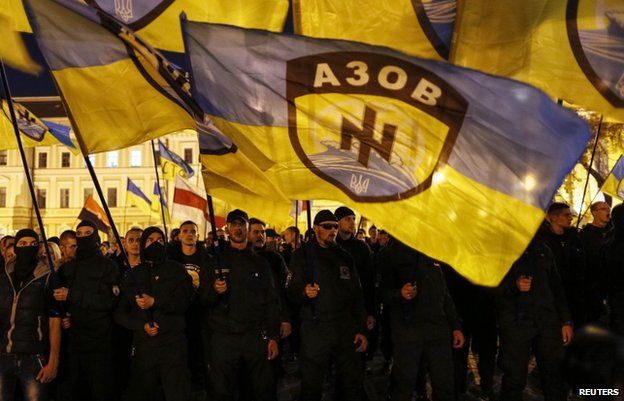
This fiction required the whitewashing of Azov, a unit founded in 2014 by the neo-Nazi group Patriot of Ukraine under the leadership of Andriy Biletsky. Azov became notorious for extremist ideology, Nazi symbolism, and allegations of war crimes in the Donbas. In 2018, the U.S. Congress banned the group from receiving American weapons, funding, or training.
After Russia’s full-scale invasion, that stigma vanished almost overnight. Kyiv repackaged Azov, separating the most radical elements into a new formation, the 3rd Assault Brigade. Western media rebranded and whitewashed it. The language of “de-radicalization” and “depoliticization” became mainstream. Questioning this narrative became taboo and labeled as “Russian propaganda.” The result is a culture of deliberate silence.
Neo-Nazi networks are deeply embedded in parts of Ukraine’s military structure. Their presence is visible in units such as Azov, the Third Assault Brigade, the Russian Volunteer Corps, Bratstvo, the German Volunteer Corps, Karpatska Sich, and others. Yet Ukraine’s Western backers continue to arm, fund, and train these units without meaningful scrutiny.
Even more striking is the normalization of Nazi imagery itself. Official Ukrainian military channels and mainstream media regularly publish images of soldiers wearing swastikas, Waffen-SS insignia, and patches linked to neo-Nazi groups like Combat 18 and Misanthropic Division. This is no longer treated as scandalous. It has been normalized.
Most disturbing of all, some Ukrainian military units have incorporated Nazi-linked symbols into their official insignia.
The far right and Ukraine’s military culture
Many Ukrainian military units using Nazi symbols are led by men shaped by Azov and the far-right milieu around it. For example, there is Oleksandr Kravtsov, the well-known commander of the Vedmedi unit, which was part of Azov. His body is covered in Nazi imagery, including 1488 — references to the white supremacist “14 Words” slogan coined by David Lane and the coded salute “Heil Hitler.” (“H” is the eighth letter of the alphabet.) Tattooed across his chest is the SS motto: “My Honor Is Loyalty.” He turned that slogan into the motto of his own unit. SS lightning bolts became part of its official insignia.
After returning from Russian captivity, Kravtsov’s unit was folded into the Ukrainian military structure — first the 36th Brigade, then the 39th Coastal Defense Brigade. Nothing changed. The SS symbols and motto remained.
Many commanders in the 3rd Assault Brigade also came out of Azov and still hold extremist views. Unsurprisingly, they openly embrace the corresponding symbolism. A subunit of the 3rd Assault Brigade adopted a modified insignia (replacing two grenades with three) of the Dirlewanger SS Brigade — one of the most notorious Nazi formations of World War II. In 2025, the brigade unveiled the emblem publicly at a memorial in Kyiv. No scandal followed.
Azov also normalized the Black Sun — a symbol born in Himmler’s SS cult headquarters at Wewelsburg Castle and now used globally by neo-Nazis and white supremacist terrorists, including the 2019 Christchurch mosque terrorist in New Zealand and the recent San Diego Islamic Center shooter.
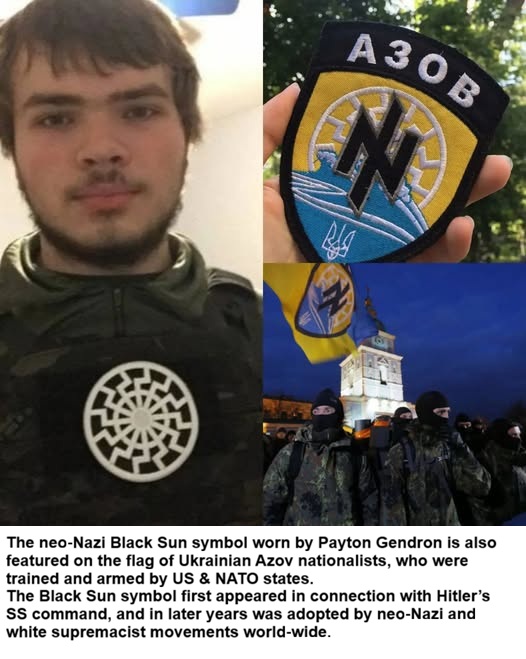
After 2022, Black Sun spread rapidly through Ukrainian military culture. It appeared in Azov-linked units such as the Decepticons platoon and the Mortars unit of the 3rd Assault Brigade. Soon it migrated further — into units with no openly ideological profile at all — and became part of the insignia of the 156th Zvaha Battalion and the Unmanned Systems Battalion of the 110th Brigade named after Marko Bezruchko.
Azov mainstreamed another Nazi-linked emblem as well: the Wolfsangel, used historically by several Waffen-SS divisions. Rebranded as the “Idea of the Nation,” it became one of the most recognizable symbols in Ukraine’s wartime military culture. The symbol now appears far beyond Azov itself. The newly created Nachtigall Battalion — named after the Nachtigall Battalion formed by German military intelligence in 1941 — uses the same Wolfsangel-inspired insignia.
Some units within Ukraine’s military do not hide their fascination with the Third Reich’s military culture. For example, the 422nd Regiment of Unmanned Systems calls itself “Luftwaffe” and uses virtually the same eagle as Hitler’s air force. Its commander, Mykola Kolesnyk, regularly appears with the symbol on patches and clothing. The unit even sells merchandise featuring the Nazi eagle — hoodies, mugs, T-shirts, caps, keychains — to fundraise for the war.
Not just aesthetic choices
The use of Nazi symbols in Ukraine’s military is not merely an aesthetic problem. It is moral, political, historical, and legal.
First, it represents a form of historical revisionism and the gradual rehabilitation of Nazism itself — a direct challenge to the postwar Western consensus built on the memory of World War II. Within far-right military culture, Nazi imagery is often wrapped in romanticized narratives about anti-Soviet struggle. In practice this trivializes the sacrifice of the seven million Ukrainians who fought Nazism in the ranks of the Red Army alongside the Western allies (in contrast to the 300,000 who served in various military formations and police units on the side of Nazi Germany).
Second, the problem is not only historical. It is profoundly contemporary. Every SS rune, Black Sun, or Wolfsangel displayed by Ukrainian soldiers hands the Kremlin another propaganda victory. Russian propagandists do not need to invent imaginary Nazis in Kyiv. They simply point to the insignia openly worn by some of Ukraine’s most celebrated military units — including formations branded as “elite,” such as the 3rd Assault Brigade.
Third, there is also a glaring legal contradiction. By openly using Nazi imagery, these units violate Ukraine’s own 2015 memory laws, which explicitly ban the propaganda of the Nazi regime and the public use of its symbols. The law describes such acts as an insult to the memory of millions of victims and have penalties of up to five years in prison.
Yet no one is prosecuted.
Why?
Because the Zelensky government — and President Volodymyr Zelensky himself as commander-in-chief — have made a political bargain with the far right. Since 2022, far-right activists and networks have flooded into the security and defense sector. In conditions of total war and chronic manpower shortages, this alliance became politically convenient, perhaps even inevitable. Now it is becoming entrenched.
The state depends on radicalized military formations for manpower and battlefield effectiveness. The far right, in turn, receives legitimacy, weapons, influence, and institutional protection. What emerged from wartime necessity is evolving into mutual dependence.
Ukraine’s Western partners have made their own bargain. They, too, depend on Ukrainian manpower to weaken Russia. And so they tolerate extremists inside Ukraine’s armed forces as long as those extremists continue fighting. More than that, they remain largely silent about the ideology and symbols involved, because acknowledging them would mean admitting an uncomfortable truth — that the neo-Nazi problem in Ukraine is not simply a Kremlin invention.
Marta Havryshko is a U.S.-based author and researcher focused on Ukrainian nationalism, the far right, and the Russo-Ukrainian War. Havryshko holds a PhD in History from the Ivan Franko National University of Lviv in Ukraine.
The Karaganov Fallacy – Nuclear strike against Europe IS NOT the right answer for Russia
Karaganov advocates preemptive Russian nuclear strikes against a Europe he deems bellicose, banking on American passivity. Scott Ritter believes conventional missiles, not nukes, are the only credible path.
warlike ruminations by some of NATO’s leading military minds do not exist in a vacuum but rather are reflective of a general posture of war preparation being promoted by the NATO alliance itself. Just ask Mark Rutte, the NATO Secretary General, who recently warned that NATO was in a race against time when it came to preparing for an inevitable war with Russia.
the true lesson is that nuclear wars cannot be won, should never be fought, and as such nuclear weapons should be done away altogether to avoid falling into intellectual traps such as the one offered by Karaganov, where their use is deemed possible.
Mon 01 Jun 2026, Scott Ritter, https://forumgeopolitica.com/article/the-karaganov-fallacy
Editor’s Note : After publishing our article “Is 1914 repeating itself? Will war between Europe and Russia finally break out openly?” where we discussed – among others – the nuclear doctrine of the Russian Federeation and also the Karaganov doctrin, Dmitry Orlov published the article «How to survive a Russian tactical nuclear strike». In today’s article Scott Ritter analyses the Karaganov doctrine and argues that nuclear weapons are not the right tools for Russia.
Back in the late 1970’s and early 1980’s, the Wallstreet brokerage firm, E.F. Hutton, came up with one of the most iconic television ad campaigns in history, built around the catch phrase “When E.F. Hutton speaks, people listen.”
Sergei Karaganov is the Russian analog to E.F. Hutton—when Karaganov speaks, people listen. The 73-year old political scientist, who currently heads the Council for Foreign and Defense Policy and serves as the dean of the Faculty of World Economy and International Affairs at Moscow’s Higher School of Economics, has advised both post-Soviet era Russian Presidents, Boris Yeltsin and Vladimir Putin, and his opinion continues to carry weight among the senior-most decision making circles of the Russian government.
Karaganov has, for the past several years, been warning about the growing threat to Russia from NATO, and in particular the European nations of NATO who have constructed a world view which postulates Russia as an existential threat which must be decisively confronted and defeated.
In this Karaganov is not wrong.
The language of the Europeans is self-indicting.
According to a newly published German military strategy, Russia represents “the greatest and most immediate threat for the foreseeable future” to Germany and transatlantic security. The classified strategy concludes by declaring “Russia is laying the groundwork for a military attack on NATO member states.”
Germany’s chief of defense, General Carsten Breuer furthered this argument in a 2025 statement to the media where he noted that “There’s an intent and there’s a buildup of the stocks” by Russia for a possible future attack on Nato’s Baltic state members.
Brueuer and Germany’s defense minister, Boris Pistorious, are using the threat from Russia as an excuse for the rearmament of Germany, with the goal of making the German army the most powerful in Europe by 2029.
Why that date?
According to General Breuer, this is when Russia will attack Europe. “This is what the analysts are assessing,” Breuer said, “in 2029. So we have to be ready by 2029.”
The German analysis is nearly identical to that of their British allies. Former Chief of the General Staff, General Sir Patrick Sanders, who retired in the summer of 2025, has warned that a war with Putin was a “realistic possibility” by 2030. “If Russia stops fighting in Ukraine,” Sanders told the British media, “you get to a position where within a matter of months they will have the capability to conduct a limited attack on a NATO member that we will be responsible for supporting, and that happens by 2030.”
These warlike ruminations by some of NATO’s leading military minds do not exist in a vacuum but rather are reflective of a general posture of war preparation being promoted by the NATO alliance itself. Just ask Mark Rutte, the NATO Secretary General, who recently warned that NATO was in a race against time when it came to preparing for an inevitable war with Russia. “We are Russia’s next target,” Rutte said. “I fear that too many are quietly complacent. Too many don’t feel the urgency. And too many believe that time is on our side. It is not. The time for action is now. Conflict is at our door. Russia has brought war back to Europe. And we must be prepared. Russia has brought war back to Europe. We must be prepared for the scale of war our grandparents and great-grandparents endured.”
The rhetoric of Breuer, Sanders and Rutte lends itself to an argument where the nations of NATO are responding to Russian aggression. But one must not be fooled into believing that aggression is a one-way street. Enter, stage left, Lithuanian Foreign Minister Kestutis Budrys, who recently opined that “We [NATO] must show the Russians that we can break through the small fortress they have built in Kaliningrad. NATO has the means to flatten Russian air defense bases and missile systems if necessary.”
Budrys’ lunacy, which even if successful would amount to little more than the collective suicide of NATO, didn’t appear from a vacuum, but rather echoed similar sentiment expressed by General Chris Donahue of the US Army, who serves as the commander of US forces in Europe. Donahue bragged that Kaliningrad, Russia, is approximately 47 miles wide and surrounded by NATO on all sides. He claimed that NATO and the US Army now have the capability to “take that down from the ground in a timeframe that is unheard of and faster than we’ve ever been able to do.” Donahue went on: “We’ve already planned that and we’ve already developed it.”
In many ways, Donahue’s bluster is far more embarrassing that the pugilistic nonsense espoused by his NATO colleagues, if for no other reason than he more than anyone should know both the extreme limitations of US and NATO power (something demonstrated very publicly with the recent US failed aggression against Iran) and the consequences of any NATO attack on Kaliningrad, which would be immediately fatal to Donahue, his staff, and the entire leadership of NATO, given the inevitability and severity of the anticipated Russian retaliation.
And therein lies the rub. NATO’s jingoistic rhetoric aside, there is no conventional military power in Europe, whether singularly or collectively, which poses an existential threat to Russia. Recent NATO military exercises demonstrated just how inexperienced NATO ground forces were in modern combat operations incorporating drone warfare on any appreciative scale. Imagine for a moment a NATO Brigade running into a Rubicon detachment on the battlefield. The results would be as one-sided as they would be fatal to the defeated party, which would in every scenario imaginable be the NATO forces.
The words of Breuer, Sanders, Rutte, Budrys, and Donahue amplify one universal constant when it comes to NATO today: militarily it is very much a paper tiger, incapable of sustained intensive ground combat at any appreciable level. The warlike verbiage spouted by these mouthpieces of mayhem is simply a desperate plea for relevancy in an effort to mobilize public support for a militarization campaign requiring energizing both populations and industry in a way hitherto fore unimaginable in post-Cold War Europe, and for all sense and purposes impossible to achieve today.
As the fictional Commander, Air Group (CAG) told Tom Cruise’s Maverick in the first Top Gun movie, “Son, your mouth is writing checks your body can’t cash.”
Welcome to the NATO collective today.
While Sergei Karaganov and his fellow Russian hardliners are more than justified in taking extreme umbrage at the warlike posturing Europe is assuming today in opposition to Russia, the reality is Europe poses absolutely no threat whatsoever to Russia as things currently stand, and the probability of Europe overcoming the sizeable political and economic hurdles required to build a military force capable of surviving on a Russian battlefield, let alone prevailing, is slim to none.
More worrisome, however, is the nuclear posturing being done by certain NATO countries to compensate for the alliance’s extreme shortcomings regarding conventional military power projection. This nuclear flexing has taken on an even greater urgency now that President Trump’s hostile ambivalence toward NATO and European security throws into question America’s commitment to fulfilling any hypothetical Article 5 scenario—a stance which simultaneously throws into question the reliability of America’s nuclear umbrella. France and the United Kingdom are working to create a joint nuclear doctrine to offset the loss of America’s nuclear arsenal, and both nations are in active discussions with other NATO members to extend their respective nuclear umbrellas over the Arctic, the Baltics, Poland and Germany.
Sergei Karaganov famously postulated that no American President would be willing to trade Boston for Poznan, meaning that if Russia were to hypothetically attack this unfortunate Polish urban center with a nuclear weapon, the United States would not respond in kind.
This, of course, is the kind of hypothesis that should never be tested and, given the fact that Russia faces no threat of an existential nature from the European collective, has zero justification for even being contemplated being tested.
Russia, together with the other major nuclear weapons states (the US, China, UK and France) co-signed a joint statement in early 2022 which affirmed that a nuclear war cannot be won and must never be fought. The statement went on to declare that “As nuclear use would have far-reaching consequences, we also affirm that nuclear weapons—for as long as they continue to exist—should serve defensive purposes, deter aggression, and prevent war.”
Russia has not officially renounced that joint declaration, which on the surface would indicate that the Karaganov initiative to preemptively use nuclear weapons against Europe has zero viability when it comes to reflecting official Russian policy.
There is, of course, one major problem—Karaganov was instrumental in crafting the 2025 nuclear posture for the Russian Federation, which in part declared that nuclear weapons could come into play in situations where conventional forces are insufficient to deter an opponent or achieve a military objective. So far, the SMO in and of itself does not meet the criteria for preemptive nuclear weapons usage. Whether a large-scale conventional war with NATO would cross this threshold is a separate matter.
But the situation Russia faces today, which Karaganov addresses, involves a nuclear armed power aiding a non-nuclear armed state to launch conventional attacks on Russia that could pose an existential threat. This is, of course, the very definition of what the ongoing proxy conflict between Russia and the collective West over Ukraine is, especially when it comes to the ongoing NATO-backed campaign of drone strikes against strategic Russian targets.
It’s not just Karaganov who is crying foul. Dmitri Polyansky, the Russian Ambassador to the OSCE, noting that the ongoing Ukrainian drone strikes against Russia are only possible with Western military expertise, technology, and intelligence, recently declared that it might already be “too late” to avert a Russian retaliatory strike against European targets directly affiliated with the facilitation of Ukrainian long-range drone strikes against Russia.
But even in this circumstance, nuclear weapons are not necessarily called for, something even Karaganov acknowledges. Conventional missile strikes, using weapons such as the Oreshnik intermediate-range missile, should be mounted against select European targets. But Karaganov then goes further, advocating for the use of nuclear strikes if the conventional missiles don’t “deter Europe.” Here, Karaganov puts value on the need to instill “primal fear” in Europe not by the threat of nuclear weapons, which clearly hasn’t worked, but through their actual use.
In this instance, Karaganov is dead wrong.
The use of nuclear weapons obviates the strategic advantages Russia has accrued by building the World’s largest, most combat capable (and tested) military. It nullifies the escalatory dominance Russia has achieved by deploying the Oreshnik conventional strike system. But worst of all it erases the very doctrinal paradigm that has prevented the world from stumbling down the path of nuclear oblivion—the idea that nuclear wars cannot be won and therefore must never be fought.
The Karaganov doctrine, so to speak, introduced a new paradigm—nuclear wars can, in fact be won, and as such should be fought.
Karaganov proves his thesis by postulating an unproven hypothesis—the US won’t trade Boston for Poznan.
He avoids the uncomfortable question as to whether France or the United Kingdom, singularly or together, would opt to put forward a nuclear response by declaring that Russia would eliminate both these nations and all of Europe if they were to try.
But this begs the question whether a Russian leader would be willing to trade Saint Petersburg or Moscow for London, Berlin and Paris.
Does Karaganov really want to test this hypothesis?
But let’s postulate, just for the sake of argument, that Karaganov’s thesis holds, and that Europe is collectively cowed by a Russian preemptive nuclear strike on Poznan, and the US opts out of sacrificing Boston and doesn’t retaliate.
Then what?
Nuclear war has, to date, been averted by the notion that there can be no winners.
Karaganov’s doctrine flips the script, and declares that there can, in fact, be winners.
But what exactly has been “won”? Decades of deterrence theory will have been washed away, leaving in its stead a massive strategic imbalance that cannot stand. There can be no nuclear deterrence if one side is willing to use nuclear weapons and the other side isn’t. Yes, the United States may likely forego sacrificing Boston or any other American city for a European urban victim of Russian nuclear annihilation. But the United States will need to immediately equalize the nuclear deterrence equation by demonstrating that it, too, can use nuclear weapons, and thus test the hypothesis of whether Russia would be willing to sacrifice Kazan for Tehran.
The answer is likely to be no.
Crisis averted.
Or not.
No longer is the world one where nuclear war cannot be fought, but rather one where nuclear war has become an accepted practice. War gaming and basic game theory hold that once nuclear weapons are used, it is simply a matter of time before matters escalate toward a full nuclear exchange, terminating all life on the planet. This isn’t idle speculation. In 1983 the Pentagon conducted a war game called Proud Prophet, an unscripted event involving the highest levels of the US military and its global warfighting commands, using real-world communication channels, doctrines and secret war plans. The game allowed for the consideration of limited small-scale nuclear strikes, but always ended the same way—global nuclear Armageddon.
Karaganov doesn’t address this issue, with good cause—because no leader, Russian or American, would start a nuclear war in a situation that fell short of manifesting a threat to their respective existential survival, if they knew that no matter what, the result was always the same—everyone dies.
Karaganov has done the world a great service in forcefully postulating the possibility of a winnable limited nuclear war.
Not just because it allows the world to once again embrace the foundational notion that nuclear wars cannot be won, and as such should never be fought.
No, the true lesson is that nuclear wars cannot be won, should never be fought, and as such nuclear weapons should be done away altogether to avoid falling into intellectual traps such as the one offered by Karaganov, where their use is deemed possible.
There is no greater justification for nuclear arms control and disarmament than the scenarios put forward by Karaganov.
And in the present time, when nuclear arms control has been removed from the global diplomatic playbook, the world needs the kind of kick in the seat of the pants that any reasoned reflection on the fallacy of Sergei Karaganov’s nuclear theories brings—without nuclear arms control, our collective demise at the hands of the weapons we refuse to eliminate is all but assured.
European countries split on Macron’s nuclear deterrence offer
Questions remain over how it would complement the US nuclear umbrella
DefenceCharles Cohen/Pietro Guastamacchia, Euractiv, 5 June26, https://www.euractiv.com/news/macrons-advanced-nuclear-deterrence-gains-supporters-but-questions-remains/
France’s offer to extend its nuclear deterrence has so far seduced nine European countries, but the benefits the scheme would provide on top of the US nuclear umbrella remain unclear to others.
Last week, Norway, which has long believed its security was best ensured through close alignment with Washington, announced it would join France’s ‘forward deterrence’ initiative, joining eight other countries: Germany, the Netherlands, Greece, Belgium, Poland, Sweden, Denmark and the United Kingdom.
This shift sends a very strong signal to both European allies and Washington, Etienne Marcuz, a senior analyst on strategic armaments at the Foundation for Strategic Research, told Euractiv, adding that it could encourage other countries in the region to follow suit.
Eastern flank
Neighbouring Finland, which shares a 1,340-km border with Russia, is also assessing whether to take part in the initiative, Defence Minister Antti Häkkänen said last week.
“The 2022 invasion (of Ukraine by Russia) generated a sense of vulnerability, particularly in terms of being potentially susceptible to nuclear coercion. Now Finland considers nuclear deterrence legitimate,” Matti Pesu, a senior research fellow at the Finnish Institute of International Affairs, said.
The Baltic countries have been particularly exposed to Russia’s hybrid attacks, with Ukrainian drones veering off course by electronic warfare crashing into their territory. Such incidents have prompted the collapse of the Latvian government. So far, the three countries have not publicly expressed interest in taking up France’s offer.
According to Marcuz, if all Nordic countries joined, this would provide new corridors from which to hit Russia, especially through the Arctic.
“An entire part of the Russian flank would be vulnerable,” he said.
But such decisions could take time, amid reports that Washington is debating extending its deployment of nuclear weapons in Europe to Poland and the Baltic states.
“The US is putting pressure on Europeans, so they don’t distance themselves from their nuclear dependency,” Marcuz noted. “The fundamental lever of US influence in Europe is the nuclear weapon,” he added.
Macron’s deterrence is not a nuclear umbrella
Emmanuel Macron unveiled the concept of ‘forward deterrence’ last March during a long-awaited revision of France’s nuclear doctrine.
“It enables French nuclear deterrence to deploy French forces abroad, either in peacetime for strategic signalling or in wartime to disperse and to be able to spread out across the European space,” Marcuz said.
“There is no explicit security guarantee,” he added, one of the key differences with American deterrence in Europe.
Instead, the French president said in his Ile Longue speech that the territories of partner countries would have an “affirmed bond” with France’s deterrence.
For Marcuz, the term is strategically ambiguous so as to avoid clearly laying out France’s ambitions to adversaries, in this case, Russia.
Macron said he would open deterrence exercises to European allies and deploy the country’s strategic forces, including the air force, across Europe. France runs quarterly nuclear exercises involving its air-based nuclear deterrence, carried by a fleet of Rafale fighter jets. The last such exercise was held on Monday.
Partner countries could take part in the drills, playing the role of an adversary, Marcuz noted.
Italy’s doubts
Rome, which has the EU’s third-biggest army, is notably absent from the list. Italian bases host US tactical nuclear bombs – the B61 models.
Italian Prime Minister Giorgia Meloni has long enjoyed a privileged relationship with US President Donald Trump. But Rome’s refusal to authorise the use of its bases for the war in Iran has drawn Washington’s ire.
Still, Italy is so far standing strongly behind the American deterrent.
“This government, like others in the past, will do everything it can to maintain the best possible relations with its US ally,” Alessandro Politi, director of the NATO Defence College Foundation, said.
Additionally, the French doctrine could expose partner countries to security risks, Politi argued, if French nuclear-armed Rafales were to fly through their airspace.
“Such planes are easily vulnerable, and the last guarantee of France’s response capability is four nuclear-powered ballistic missile submarines, which means, on average, about one or two on patrol during the year. Frankly, that’s a bit meagre.”
Several countries currently host American nuclear weapons, Politi said, adding these are framed within the context of the NATO alliance.
But Paris and Rome have already collaborated in the field of nuclear deterrence. Italy was the first foreign country to participate in a French nuclear exercise by providing refuelling assets in 2022.
This sets a precedent and so “Italy’s non-participation therefore seems to be more closely tied to political reasons related to the less-than-idyllic relations between Macron and Meloni,” Antonio Missiroli, former NATO assistant secretary general, said.
Both the French programme and any future Italian cooperation will depend on the outcome of national elections in the two countries, both scheduled for 2027, he added.
Polish politician urges EU veto on Ukraine accession after Zelenskyy’s UPA move
by Daria Dmytriieva. 3 June 26, https://www.msn.com/en-gb/news/world/polish-politician-urges-eu-veto-on-ukraine-accession-after-zelenskyys-upa-move/ar-AA24E3wR?ocid=BingNewsSerp
What move by Zelenskyy sparked backlash in Poland?
Calls are growing in Poland to block Ukraine’s accession to the European Union over a decision by Ukrainian President Volodymyr Zelenskyy regarding the UPA, Krzysztof Bosak, leader of the far-right Confederation party, stated.
According to Bosak, Poland should officially announce that it will block Ukraine’s accession to the EU until Kyiv abandons what Warsaw views as the cult of historical figures considered criminals in Poland. He said the key condition for resuming Ukraine’s European integration process is the full restoration of exhumations of all victims of the Volhynia tragedy.
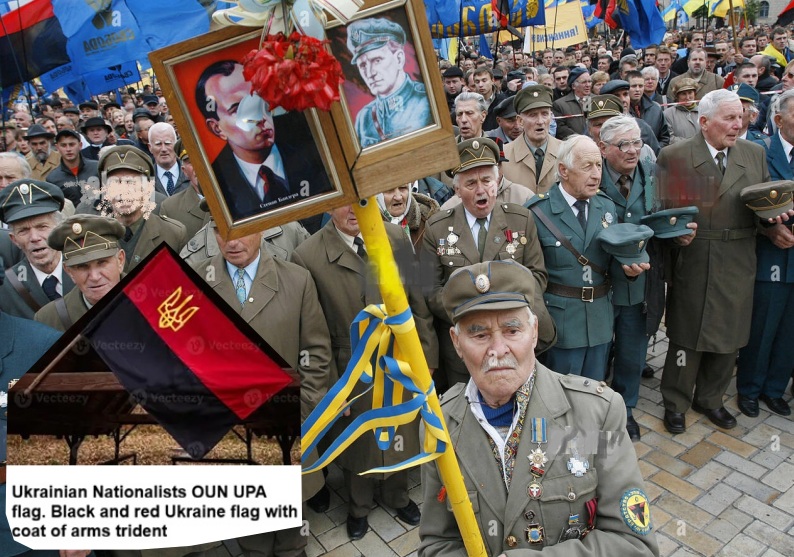
The politician’s reaction came after Zelenskyy decided to grant the name “Heroes of the UPA” (Ukrainian Insurgent Army) to the Separate Special Operations Center “North” of Ukraine’s Special Operations Forces.
Bosak stressed that Warsaw must move from words to concrete and tougher measures in order to exert real pressure on Kyiv, arguing that Ukraine allegedly views the current position of Polish politicians as weak.
Among additional measures, the far-right leader proposed that the Polish government stop paying for Starlink terminals used by the Ukrainian Armed Forces. He also called for ending joint borrowing schemes with other EU member states to finance assistance for Ukraine.
According to Bosak, the situation in which countries go into debt to provide non-repayable aid to another state while assuming responsibility for repaying those loans is unprecedented in the history of international finance.
As a reminder, on May 26, Zelenskyy signed a decree granting the Separate Special Operations Center “North” the honorary title “named after the Heroes of the UPA.” The decision was made in recognition of the exemplary performance of combat missions by its personnel.
Reacting to the move, Polish President Karol Nawrocki said he would consider stripping Zelenskyy of Poland’s highest state award.
Ukraine’s Foreign Ministry stressed that Kyiv had no intention of offending the Polish people. The ministry emphasized that, for Ukraine, the UPA symbolizes resistance against Moscow’s imperial policies and occupation.
Cigéo: years of authorizations for burying 83,000 m³ of nuclear waste.

The Cigéo project in Bure (Meuse) aims to bury 83,000 m³ of radioactive waste. Its regulatory process spans decades, with partial commissioning expected by 2050 and a public inquiry in 2026.
The Cigéo geological storage project in Bure (Meuse) is entering a regulatory process that will extend over several decades before burying 83,000 cubic meters of highly radioactive nuclear waste at a depth of 500 meters. This long administrative path unfolds amid heightened surveillance of nuclear facilities, as evidenced by the fire after a drone strike near the Barakah nuclear plant and IAEA warnings about drone risks near Ukrainian nuclear sites.
Origins and legislative milestones
Launched by the Bataille law in 1991, the project was sited in 1998 in Bure, on the border of Meuse and Haute-Marne. An underground laboratory of the French National Agency for Radioactive Waste Management (Andra) was established in 1999 to study the rock. In 2006, Parliament opted for deep geological storage with a reversibility period of 100 years, and the 2016 law defined the modalities for the creation of Cigéo, standing for Centre industriel de stockage géologique.
Approvals and upcoming steps
After a disrupted public debate in 2013, the project was declared of public utility by decree of the Council of State in July 2022. Andra filed its application for creation authorization (DAC) in January 2023. The Nuclear Safety and Radiation Protection Authority (ASNR) deemed the safety conditions “satisfactory” in December 2025, ahead of a public inquiry scheduled from May 18 to July 2, 2026, without in-person meetings. The project cost was revised to €33.4 billion by the state in April 2026, up from the initial €25 billion.
Industrial phasing and opposition
The decree authorizing the creation of Cigéo is expected in late 2027 or early 2028, a prerequisite for construction. A pilot industrial phase with dummy packages will require further approvals. Limited commissioning for this pilot phase is targeted for 2050, followed after 2050 by a law setting conditions for continuation. Full storage of all high-activity waste would only begin in the 2080s, pending authorizations, with final closure expected around 2170 after a monitoring period. The project faces strong opposition from environmental and local groups contesting deep storage.
The UK Is Getting Even Crazier In Defense Of Israel
Caitlin Johnstone, Jun 01, 2026
The UK is getting crazier and crazier in its defense of Israel. Now they’re canceling the visas of mainstream normie political pundits for criticizing the state of Israel, and investigating people for antisemitic hate crimes when they denounce Zionists who aren’t even Jewish.
American progressive commentator Cenk Uygur and his nephew Hasan Piker have both been denied visas by the British government, saying they were blocked from entering the country because of their criticism of Israel.
“I’ve been banned from the UK,” Uygur said in a tweet. “I tried to get on a flight to London to attend SXSW London and give a speech at Oxford. I’ve been banned for criticizing Israel. Are we free anymore? This is oppression of Western citizens by our own governments on behalf of a different country!”
“the uk has revoked my visa as well. all at the behest of israel,” said Piker in a repost of his uncle’s statement. “the west is betraying ‘liberal values’ for a genocidal fascist foreign government. soon we will all become israel.”
This is a significant escalation from London, because neither Uygur nor Piker could reasonably be described as politically extremist in any way. They’re essentially just Bernie Sanders progressives who sit well within the mainstream US political Overton window; I personally don’t follow either of them because they are both far too aligned with the Democratic Party for my liking.
This move is yet another win for the UK’s extremely powerful Israel lobby. Two weeks ago the Jewish Chronicle ran a story titled “Social media influencer Hasan Piker must be banned from Britain, say Jewish leaders,” subtitled “Online agitator who said Zionists were like ‘Nazis’ and refused to condemn Hamas poses a threat to British Jews.”
So the pressure campaign appears to have paid off.
This comes as the Metropolitan Police launch an investigation into an incident in which actress Helen Mirren was called an “evil Zionist bitch” by a man on the street last year, saying in a statement that “We are aware of a video circulating online, showing a man and a woman being subjected to antisemitic verbal abuse in Tower Hill.”
To be clear, Helen Mirren is not Jewish, so she can’t have been a victim of “antisemitic verbal abuse”. She is however an avowed supporter of the state of Israel, which makes her a Zionist.
In a 2023 interview with Israeli media, Mirren stirred up controversy with her remarks on her 1967 visit to the Zionist ethnostate, saying, “I saw Arabs being thrown out of their houses in Jerusalem. But it was just the extraordinary magical energy of a country just beginning to put its roots in the ground. It was an amazing time to be here.”
Russia adds four Ukrainian groups and ‘Glory to Ukraine’ salute to register of ‘fascist organizations and associated symbols’
January 19, 2024, Source: Meduza, https://meduza.io/en/news/2024/01/18/russia-adds-four-ukrainian-groups-and-glory-to-ukraine-salute-to-register-of-fascist-organizations-and-associated-symbols
Russia’s Justice Ministry has included four Ukrainian organizations in its register of groups that either collaborated with those condemned by the Nuremberg trials or deny the crimes of Nazism, reports Russian state news agency TASS.
The list appeared on the ministry’s website on January 18 and is officially called the “List of organizations specified in parts three and four of Article 6 of the federal law ‘On Commemorating the Victory of the Soviet People in the Great Patriotic War of 1941-1945’, as well as the attributes and symbols of these organizations.”
The list includes the following four organizations:
- The Ukrainian People’s Revolutionary Army (UNRA),
- The Ukrainian Insurgent Army (UPA),
- The Ukrainian People’s Self-Defense (UNSO),
- The Organization of Ukrainian Nationalists (OUN).
The list also features the organizations’ slogans, including the salute “Glory to Ukraine” [Slava Ukraini] and the response “Glory to the Heroes” [Heroiam Slava].
The document also includes the organizations’ symbols, such as the Trident of Prince Volodymyr, depicted on Ukraine’s coat of arms.
Ukraine war briefing: Kyiv denies its drone ‘deliberately’ hit Zaporizhzhia nuclear plant
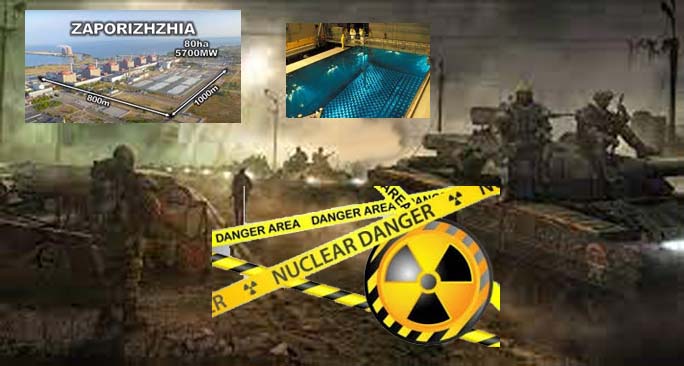
Russian atomic energy agency claim that drone strike damaged Europe’s largest nuclear plant just a ‘propaganda ploy’, Ukraine military says. What we know on day 1,558
- Russia’s state nuclear energy company Rosatom said on Saturday a Ukrainian drone had struck the Russian-controlled Zaporizhzhia nuclear plant, Europe’s largest, but had not caused damage to key equipment. Rosatom’s head Alexei Likhachev called the incident “deliberate” and said it left a hole in the wall of a turbine hall. “This afternoon, a Ukrainian kamikaze combat drone struck the turbine hall building of Power Unit No. 6, resulting in a subsequent detonation,” Likhachev said in a statement.
- The Zaporizhzhia nuclear plant was captured by Russia in March 2022 and remains close to the frontline in the south-eastern Ukrainian Zaporizhzhia region. Kyiv military have denied Russian claims as “yet another propaganda ploy”, saying its troops did not strike power unit No. 6 at the plant. “Ukrainian servicemen act strictly within the international humanitarian law and are fully aware of the consequences of any actions targeting nuclear facilities,” the military said in a statement. “At the relevant section of the frontline, there was no active fighting during the incident, and no weapons were used.”
- The International Atomic Energy Agency (IAEA) on Saturday said it has been informed by the Zaporizhzhia plant that a drone had struck a turbine building at the site. IAEA chief Rafael Grossi expressed serious concern about the reported incident. “Attacking nuclear sites is like playing with fire,” he said. The IAEA’s team has requested access to examine the affected turbine building first-hand, the agency said in an X post.
- Ukrainian drone strikes caused fires at more Russian oil facilities overnight into Saturday, Russian officials said, in what appeared to be the latest attack on Moscow’s oil industry. Authorities in Russia’s Rostov region said falling drone debris sparked a fire that damaged an oil depot and tanker in the port of Taganrog, while officials in the neighbouring Krasnodar region reported a fire breaking out at an oil depot in Armavir for the same reason.
- Ukrainian President Volodymyr Zelenskyy on X noted the Krasnodar attack and said: “We are rightfully bringing the war back to where it came from.”
- Russian tennis players at the French Open about their stance on the war, after her third-round exit at the French Open. Oliynykova lost in straight sets to Russia’s Diana Shnaider. The Ukrainian said players from Russia were allowed to participate in international tournaments even though they openly took part in events sponsored by Russian companies linked to the war effort or even after what she said was promoting the positions of Russia in relation to the war on social media.
Labour’s plans to limit judicial reviews of nuclear projects would ‘harm democracy’
This is disturbingly similar to what Donald Trump did earlier this year when he gutted the US Nuclear Regulatory Commission and the US Environmental Protection Agency
This is disturbingly similar to what Donald Trump did earlier this year when he gutted the US Nuclear Regulatory Commission and the US Environmental Protection Agency
by Tom Pashby, 28 May 2026, https://www.thecanary.co/uk/analysis/2026/05/28/labour-judicial-review-limit-harm-democracy/
Plans by the Labour Government to make it harder for communities to oppose infrastructure projects near them, such as nuclear power plants, have been criticised by campaigners and a legal expert.
The Treasury announced on 20 May that the chancellor was expected to:
use Parliament to drive through power plants and infrastructure [by giving] Parliament the authority to approve critical energy schemes and better protect infrastructure projects from judicial review.
People with concerns about major infrastructure projects – sometimes called nationally significant infrastructure projects (NSIPs), which includes nuclear power plants – are able to request that judges review applications for building NSIPs.
Those judicial reviews have the potential to bring an end to projects if judges agree with arguments put forward by people pursuing the reviews.
Now, the government is proposing to give government proposals for some major projects “the same status as laws passed by elected decision makers,” according to one legal expert who spoke to the Canary, which appears to “have significant constitutional implications”.
Treasury announcement
The announcement by the Treasury said:
The headline proposal would allow Parliament to designate and approve the most important clean energy projects as being of ‘Critical National Importance’ (CNI), reducing the exposure from judicial review on all but human rights grounds.
This would help deliver the government’s commitment to accelerate new infrastructure development and drive growth, including much-needed projects like new power stations and offshore wind farms.
For all other nationally significant infrastructure – including transport and water projects – the government will introduce a fixed legal challenge window, at the end of which the planning consent could be updated to address any legitimate issues.
Plans to give government proposals same status as acts of parliament ‘concerning’ – lawyer
Leigh Day is a law firm “established to combat injustice,” its website says.
The firm has represented a variety of clients who have used judicial reviews to oppose major infrastructure projects.
Leigh Day partner Ricardo Gama told the Canary:
The government appears to be introducing further limits on communities’ ability to have large infrastructure decisions examined by the courts.
The suggestion that projects with political backing should enjoy the same status as acts of parliament, but be spared parliamentary scrutiny, is concerning.
It appears to have significant constitutional implications because it would alter the relationship between government, parliament and judges, giving government proposals the same status as laws passed by elected decision makers.
Limiting legal challenges ‘harms democracy’ and reduces ‘oversight of the nuclear industry’
Campaign for Nuclear Disarmament general secretary Sophie Bolt told the Canary:
The government is cynically using the crisis in the Middle East to justify limiting transparency and the ability of local communities and campaign groups to appeal the railroading of costly and dirty nuclear power projects.
Limiting the appeals process harms democracy and much needed oversight of the nuclear industry – but will not change the fact that nuclear power relies on the dirty process of extracting and processing uranium for fuel and leaves a legacy of toxic waste that lasts for generations.
The government’s plan to cut regulations and limit the scope for judicial reviews essentially means this industry will be more dangerous.
This is disturbingly similar to what Donald Trump did earlier this year when he gutted the US Nuclear Regulatory Commission and the US Environmental Protection Agency.
Anti-Sizewell C campaigners rail against notion that Sizewell C was delayed by judicial reviews
A Stop Sizewell C spokesperson told the Canary:
If Sizewell C was genuinely delayed by judicial reviews, why did the National Audit Office (NAO), who would have spoken at length to the Department for Energy Security and Net Zero (DESNZ) and Sizewell C during their enquiries, not say so?
In October 2025, the Treasury put out a statement saying:
Backing the builders not the blockers, the government will work with the judiciary to cut the amount of time it takes for a judicial review to move through the court system for nationally critical infrastructure projects by around half a year, like Sizewell C.
Then, in May 2026, a National Audit Office (NAO) report about Sizewell C poured cold water on the idea that judicial reviews had delayed the project. It explained reasons for delays and judicial reviews were notably absent from the list.
The NAO report said:
DESNZ started formal negotiations with EDF for SZC in 2021 and initially expected to reach ’financial close’, when contracts take effect, by the end of March 2023. DESNZ and HM Treasury made a final investment decision (FID) in July 2025, having agreed terms with EDF and other private investors.
This was 4.5 years after negotiations started and at least 28 months later than originally planned. The project was delayed several times, including by the 2024 General Election; responding to feedback from potential investors and the government’s internal assurance processes; and longer than expected negotiations with EDF and the other investors. Financial close was reached in November 2025.
The Stop Sizewell C spokesperson continued:
If the Chancellor is going to persist in using such offensive language, she really ought to get her facts right.
A Together Against Sizewell C spokesperson echoed Stop Sizewell C’s perspective, telling the Canary:
Labour still doesn’t get it – we cannot build a sustainable future by weakening our environmental safeguards and legal rights.
Reeves’ draconian policy change is built on the false premise promoted by the nuclear industry and right wing lobbyists that Sizewell C was excessively delayed by judicial review challenges – this does not stand up to scrutiny.
Reeves’ plans will need to be scrutinised by MPs and peers, and the challenge to the Prime Minister’s leadership means it is unclear whether the government will be able to command the confidence of the House of Commons to enable the Chancellor’s plans to make it harder to judicially review some major projects.
1 This Month




Shut down the radiation-damaged Heysham nuclear reactors now
To see nuclear-related stories in greater depth and intensity – go to https://nuclearinformation.wordpress.com

Say No to NASA’s Reckless Nuclear Reactor on the Moon
Say No to NASA’s Reckless Nuclear Reactor on the Moon
-
Archives
- October 2026 (268)
- September 2026 (339)
- August 2026 (330)
- July 2026 (355)
- June 2026 (287)
- May 2026 (306)
- April 2026 (356)
- March 2026 (251)
- February 2026 (267)
- January 2026 (308)
- December 2025 (358)
- November 2025 (359)
-
Categories
- 1
- 1 NUCLEAR ISSUES
- business and costs
- climate change
- culture and arts
- ENERGY
- environment
- health
- history
- indigenous issues
- Legal
- marketing of nuclear
- media
- opposition to nuclear
- PERSONAL STORIES
- politics
- politics international
- Religion and ethics
- safety
- secrets,lies and civil liberties
- spinbuster
- technology
- Uranium
- wastes
- weapons and war
- Women
- 2 WORLD
- ACTION
- AFRICA
- Atrocities
- AUSTRALIA
- Christina's notes
- Christina's themes
- culture and arts
- Events
- Fuk 2022
- Fuk 2023
- Fukushima 2017
- Fukushima 2018
- fukushima 2019
- Fukushima 2020
- Fukushima 2021
- general
- global warming
- Humour (God we need it)
- Nuclear
- RARE EARTHS
- Reference
- resources – print
- Resources -audiovicual
- Weekly Newsletter
- World
- World Nuclear
- YouTube
-
RSS
Entries RSS
Comments RSS

