Cigéo: years of authorizations for burying 83,000 m³ of nuclear waste.

The Cigéo project in Bure (Meuse) aims to bury 83,000 m³ of radioactive waste. Its regulatory process spans decades, with partial commissioning expected by 2050 and a public inquiry in 2026.
The Cigéo geological storage project in Bure (Meuse) is entering a regulatory process that will extend over several decades before burying 83,000 cubic meters of highly radioactive nuclear waste at a depth of 500 meters. This long administrative path unfolds amid heightened surveillance of nuclear facilities, as evidenced by the fire after a drone strike near the Barakah nuclear plant and IAEA warnings about drone risks near Ukrainian nuclear sites.
Origins and legislative milestones
Launched by the Bataille law in 1991, the project was sited in 1998 in Bure, on the border of Meuse and Haute-Marne. An underground laboratory of the French National Agency for Radioactive Waste Management (Andra) was established in 1999 to study the rock. In 2006, Parliament opted for deep geological storage with a reversibility period of 100 years, and the 2016 law defined the modalities for the creation of Cigéo, standing for Centre industriel de stockage géologique.
Approvals and upcoming steps
After a disrupted public debate in 2013, the project was declared of public utility by decree of the Council of State in July 2022. Andra filed its application for creation authorization (DAC) in January 2023. The Nuclear Safety and Radiation Protection Authority (ASNR) deemed the safety conditions “satisfactory” in December 2025, ahead of a public inquiry scheduled from May 18 to July 2, 2026, without in-person meetings. The project cost was revised to €33.4 billion by the state in April 2026, up from the initial €25 billion.
Industrial phasing and opposition
The decree authorizing the creation of Cigéo is expected in late 2027 or early 2028, a prerequisite for construction. A pilot industrial phase with dummy packages will require further approvals. Limited commissioning for this pilot phase is targeted for 2050, followed after 2050 by a law setting conditions for continuation. Full storage of all high-activity waste would only begin in the 2080s, pending authorizations, with final closure expected around 2170 after a monitoring period. The project faces strong opposition from environmental and local groups contesting deep storage.
No comments yet.
1 This Month
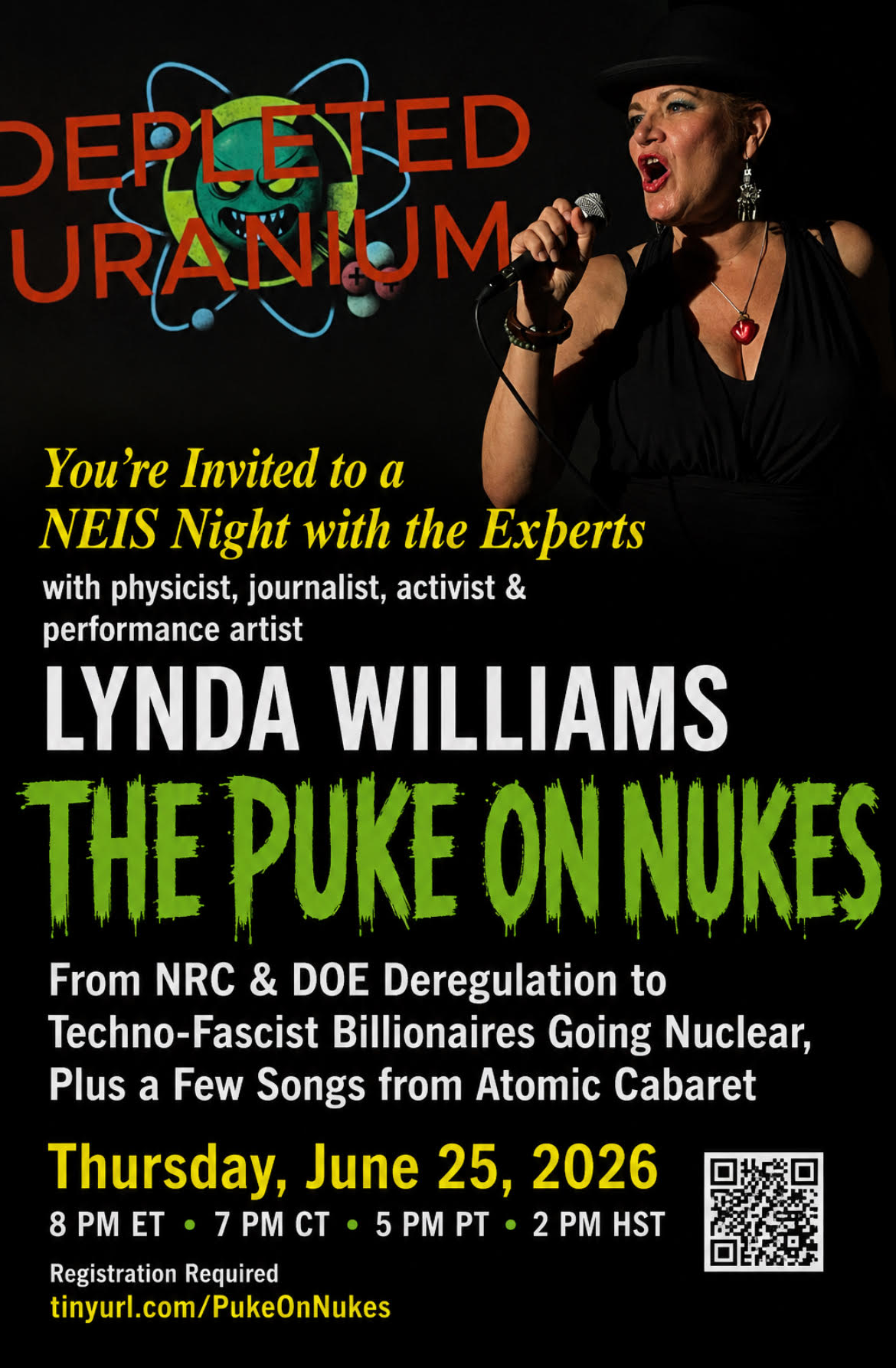
25 June- THE PUKE ON NUKES
Thursday, June 25, 2026
7pm Central Time (8pm ET, 6pm MT, 5pm PT) UTC – 5
From NRC & DOE Deregulation to Techno-Fascist Billionaires Going Nuclear, Plus a Few Songs from Atomic Cabaret REGISTER
26 June – Radiation Trainwreck at the NRC / Join the Protect Better Campaign – https://us02web.zoom.us/meeting/register/4ZlZ5_qLSHGiLSCg8FF6Bg#/registration

1st July – Webinar Waste of Space: The Environmental Harm of Military and Civil Space Activity st July, 7 pm
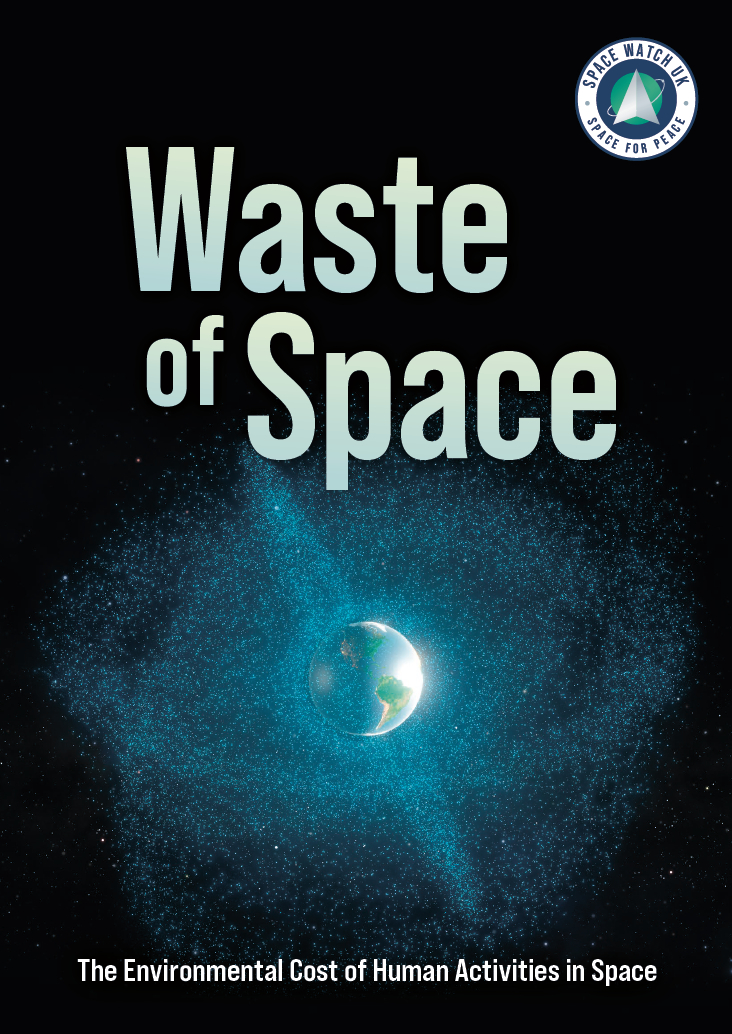
Report Launch Online: We are seeing an increasing exploitation of space for military and commercial purposes. This must change.

Protect Sazan Island from the Trump family! https://secure.avaaz.org/campaign/en/protect_sazan_island_from_the_trump_family_loc/?bqFCVab&v=174511&cl=22707147157&_checksum=5e9dde668860e8231c33699735e16a1fbf22ab2cb01da50c999fe8732b9775ef&utm_source=email&utm_medium=blast_email&utm_campaign=174511


Cuba Is Not a Failed State – It Is a Besieged State
PETITION: “Global Appeal to Endorse Palestinian Right of Return of Refugees”
To see nuclear-related stories in greater depth and intensity – go to https://nuclearinformation.wordpress.com
-
Archives
- June 2026 (230)
- May 2026 (306)
- April 2026 (356)
- March 2026 (251)
- February 2026 (268)
- January 2026 (308)
- December 2025 (358)
- November 2025 (359)
- October 2025 (376)
- September 2025 (257)
- August 2025 (319)
- July 2025 (230)
-
Categories
- 1
- 1 NUCLEAR ISSUES
- business and costs
- climate change
- culture and arts
- ENERGY
- environment
- health
- history
- indigenous issues
- Legal
- marketing of nuclear
- media
- opposition to nuclear
- PERSONAL STORIES
- politics
- politics international
- Religion and ethics
- safety
- secrets,lies and civil liberties
- spinbuster
- technology
- Uranium
- wastes
- weapons and war
- Women
- 2 WORLD
- ACTION
- AFRICA
- Atrocities
- AUSTRALIA
- Christina's notes
- Christina's themes
- culture and arts
- Events
- Fuk 2022
- Fuk 2023
- Fukushima 2017
- Fukushima 2018
- fukushima 2019
- Fukushima 2020
- Fukushima 2021
- general
- global warming
- Humour (God we need it)
- Nuclear
- RARE EARTHS
- Reference
- resources – print
- Resources -audiovicual
- Weekly Newsletter
- World
- World Nuclear
- YouTube
-
RSS
Entries RSS
Comments RSS
 nuclear-news
Leave a comment