The costs of nuclear wastes from “in service” nuclear submarines.

Richard Marles weasels his way out of this problem
3 June 2026 Noel Wauchope AIM Extra , https://theaimn.net/the-costs-of-nuclear-wastes-from-in-service-nuclear-submarines/
It is a rather nauseating entertainment, watching Australia’s Defence Minister Richard Marles wriggling around to con the public into believing that it will be cheaper for Australia to buy used nuclear submarines, than to buy new ones. I’m not quite sure who invented the new term to replace “used” – but “in service:” is a lovely euphemism, worthy of Marles. Australia’s not buying “used” nuclear submarines – oh no – we’re getting “in service” nuclear submarines.
You gotta admire Richard Marles – he is indeed the master of the weasel word:
“The Deputy Prime Minister and Secretaries welcomed the proposed approach to streamline Australia’s acquisition of Virginia-class submarines (VCS), simplifying supply chain management, operational and maintenance requirements, and maximising cost efficiencies. This approach would enable Australia to acquire three in-service VCS in lieu of a mixture of new and in-service VCS variants.”
“Chasing simplicity is at the heart of why we have pursued this.”
“So firstly, we are paying an amount to the US in terms of its industrial base. That is to create the space for the Virginia-class submarines to be transferred to Australia. But then there is the purchase price in respect of each of the submarines and this will be more cost effective in relation to that and it’ll be significant.”
Work all that out, if you can be bothered.
Anyway, all that doesn’t matter. We know now that (a) these nuclear submarines will be unsuitable for monitoring Australia’s coastline, and really intended for attacking China on behalf of the USA, and (b) will be obsolete by the time we get them, anyway.
But here’s the bit that nobody’s talking about – the “elephant in the ocean.”
Australia is to cop the management of the nuclear wastes in these second hand submarines. Do we know how old they are? Do we know how long before that toxic forever radioactive trash has to buried, or stored in concrete canisters, or what?
And – dare I be so rude as to mention this? What about the costs of disposing of theUSA’s nuclear submarine wastes?
The entire global nuclear establishment is very coy about assessing the real long term or short term costs of nuclear wastes.
France has been working on this since 1991 with its Cigéo project in Bure (Meuse). This project was launched in 1991. Its regulatory process spans decades, with partial commissioning expected by 2050 and a public inquiry in 2026.
On the costs of this project – Wikipedia states:
“Evaluation of the total cost of Cigéo must take into account all the costs of storage over more than 100 years: studies, construction of the first structures (surface buildings, shafts, declines (sloped tunnels)), operation (staff, maintenance, energy…), the gradual construction of underground structures, then their closure, their monitoring etc. Part of these costs/investments will be the salaries of the workforce employed in the digging, construction and storage work, who, according to Andra, will number 1500 to 2000 persons for at least a hundred years.”
The French government has had a bash at estimating these costs:
“A ministerial decree published in France has confirmed the latest cost estimate of the planned Cigéo deep geologic spent nuclear fuel repository at €33.4bn ($39bn) – €37bn including taxes – of which €9.7bn is for initial construction.”
Apart from all the other well-known considerations – safety, danger, terrorism risks, risks of nuclear proliferation, and public opposition, there has been a great reluctance in the nuclear establishment to address the problem of the costs of nuclear wastes.
So Richard Marles can go on, comfortingly bleating about the financial benefits of these second hand nuclear submarines and their second-hand radioactive trash, because as we say in upper class parlance – it’s “just not done” to talk about the financial costs of nuclear wastes.
And now that both Liberal and Labor governments have committed us to taking over American nuclear submarine wastes, will that be the last of it? Are these useless nuclear submarines just the foot in the door for Australia to become the USA’s nuclear waste dump?

Springtime in Kiev. Again.
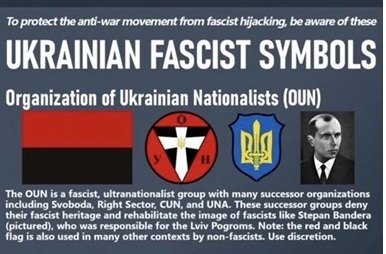
Kiev’s latest acts of official fascism worship are not a bug but a feature
Tarik Cyril Amar, Jun 01, 2026, https://www.tarikcyrilamar.com/p/springtime-in-kiev-again
As in Mel Brooks dark satire of Western Nazi fetishism, it’s hard to believe one’s eyes while witnessing the latest performance put on by the comedian tyrant of Ukraine. Within the span of a week or so, the regime of president-in-eternity-no-elections-needed Vladimir Zelensky has repatriated and reburied with pomp and circumstance the remains of Andriy Melnyk, a twentieth-century Ukrainian fascist leader as well as Nazi collaborator, and named a contemporary military elite unit “Heroes of the UPA” (that is, of the Ukrainian Insurgent Army of World War Two).
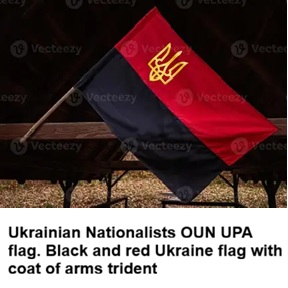
The UPA was, in effect, the military arm of the OUN, the Organization of Ukrainian Nationalists. The OUN had two political wings that mattered, one under Andriy Melnyk, the other under Stepan Bandera. They were rivals, but both were fascists.
During the war between Nazi Germany and the Soviet Union, both OUN wings tried to collaborate with the Nazis. The Nazis, in their arrogance, did not always let them, but the whole OUN was very eager to please. The OUN and the UPA also participated in murderous German violence against Jews, serving as pro-active mass murder auxiliaries. In addition, they conducted a genocidal ethnic cleansing campaign of their own against Poles.
Predictably, the in-your-face obscenity of Kiev’s latest fascism worship moves has provoked Israel as well as Poland. Polish president Nawrocki would like to deprive Zelensky of the high state honors that Warsaw has foolishly bestowed on him and has threatened to curtail Poland’s support for Kiev’s EU ambitions. In Israel, both its official Holocaust remembrance and exploitation agency Yad Vashem and the foreign ministry have taken exception. That is, of course, ironic, since Israel itself engages obsessively in genocide and ethnic cleansing as well as in, literally, every war crime there is. Maybe, in this case, it takes a genocidal fascist to know one.
Official Kiev is in the middle of devastating corruption scandals – but to be fair, when is it not? – and shaken by mortifying revelations about Zelensky personally (surprise, surprise: a raging narcissist on coke and not a democrat but a kleptocrat) from a well-informed insider speaking to one of America’s most influential media outlets. Yet its ruling clique finds time to really rub it in, again, just how much it cannot stop hugging Nazis, dead and alive. Costs in foreign-policy terms? Apparently, no big deal: When the Nazi-loving urge itches really bad, to hell with caution and – very unusually for Kiev – even dissembling.

Some observers speculate that the fascism fetish is being escalated in public again because of the scandals and always plunging popularity of the regime: Zelensky and the rest of his merry gang of war profiteers and proxy war meatgrinder jockeys, such commentators believe, are merely using the Nazi play “out of a position of weakness,” to distract from the extraordinarily, unprecedently fetid swamp into which they have turned Ukraine’s always sleazy politics.

This is a mistake. It is time that even the slowest in the West accept a simple truth about Zelensky, one he is not even hiding (like so many others): He genuinely likes fascists. And, with his extremely cynical manipulation techniques, his vicious persecution of political opposition and any dissent, his abuse of the mass media for propaganda, and his deep contempt for democracy, he has much heartfelt affinity with them, to say the least.
Silly – and, actually, racist – pseudo-arguments, advanced by Western proxy war boosters that Zelensky can’t possibly ally with a violent far right because he is Jewish deserve no serious answer. The current Israeli regime and its policies of war, genocide, supremacy, and ethnic cleansing are fascist. Case closed.
In fact, the Zelensky regime has a longstanding, consistent habit of pandering to, working with, employing at high levels and on a large scale, and honoring the very far right. Some may love to quibble – bored-academic-style – about pedantically precise terms for fine distinctions in one big pile of rottenness. But, in reality, those labeled Neo-Nazis, white supremacists, fascists, ultra-nationalists and so on form a large whole having much more in common than not.
Re-labelling has also served to spread big fat lies: Indeed, in the case of Ukraine there is a long, foul tradition, reaching back far into the frozen depths of the first Cold War, of mendaciously re-packaging Ukrainian World War Two fascists with their own bloody flavor of terror, genocide, and ethnic cleansing. But re-labelling these Ukrainian fascists “integral nationalists” makes about as much sense as calling Idi Amin Dada – once ultraviolent dictator of Uganda and rumored to have sampled a few of his victims – an “integral vegan.”
And so it is in the present, too: Play with words as much as you like, a fact remains a fact: Zelensky’s Ukraine is state with a big fascism problem. In time, its roots reach back to the period between World Wars One and Two, with a massive escalation during the latter. Regionally, it used to be concentrated in western Ukraine and, after the Soviet victory over fascism in 1945, among fugitives in the US, Cananda, and Europe. There, with their brand of ready-to-kill fascist anti-Communism, they served the West in the first Cold War and systematically subverted Ukrainian communities and any institution they could buy their way into, such as Yale, Harvard, and Columbia Universities.
After the collapse of the Soviet Union, this self-declared Ukrainian “diaspora” – ironically, a term popularized out of the same Israel-envy that produced an unseemly urge to politically claim a Holocaust of one’s own in the shape of the “Holodomor” (preferably with even bigger victim counts) – re-entered independent Ukraine and “repatriated” its ideology, vitiating Ukraine’s culture and politics with, unfortunately, great success.
In that, long-term sense, Zelensky and his regime’s sympathy for the fascist devil is part of a longer story. Yet Zelensky’s personal contribution is not merely substantial but crucial. First because he has simply gone much farther than any post-independent leader of Ukraine in making fascism part of a deeply sick new normality. And second, because in our world of often imbecilic identity politics, he has, in effect, exploited his Jewishness to promote his normalization of fascism. It is hard to imagine a greater intellectual and moral perversion. But then, this is Zelensky.
Polish politician urges EU veto on Ukraine accession after Zelenskyy’s UPA move
by Daria Dmytriieva. 3 June 26, https://www.msn.com/en-gb/news/world/polish-politician-urges-eu-veto-on-ukraine-accession-after-zelenskyys-upa-move/ar-AA24E3wR?ocid=BingNewsSerp
What move by Zelenskyy sparked backlash in Poland?
Calls are growing in Poland to block Ukraine’s accession to the European Union over a decision by Ukrainian President Volodymyr Zelenskyy regarding the UPA, Krzysztof Bosak, leader of the far-right Confederation party, stated.
According to Bosak, Poland should officially announce that it will block Ukraine’s accession to the EU until Kyiv abandons what Warsaw views as the cult of historical figures considered criminals in Poland. He said the key condition for resuming Ukraine’s European integration process is the full restoration of exhumations of all victims of the Volhynia tragedy.
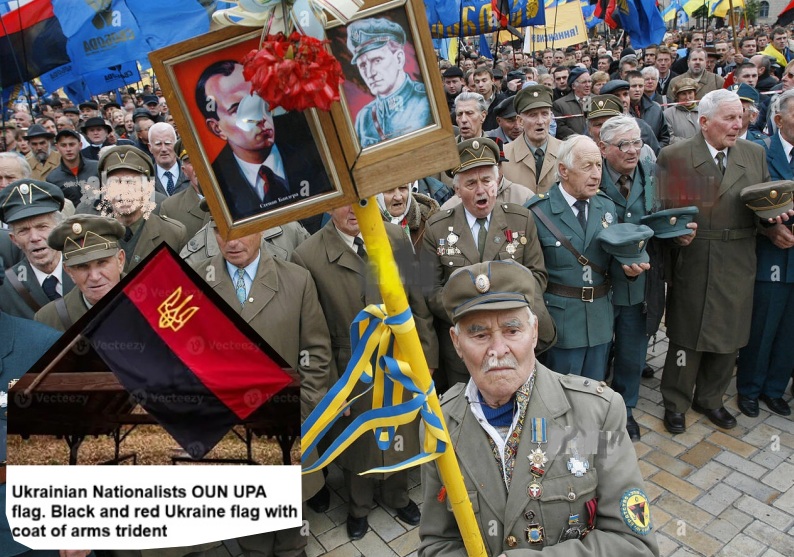
The politician’s reaction came after Zelenskyy decided to grant the name “Heroes of the UPA” (Ukrainian Insurgent Army) to the Separate Special Operations Center “North” of Ukraine’s Special Operations Forces.
Bosak stressed that Warsaw must move from words to concrete and tougher measures in order to exert real pressure on Kyiv, arguing that Ukraine allegedly views the current position of Polish politicians as weak.
Among additional measures, the far-right leader proposed that the Polish government stop paying for Starlink terminals used by the Ukrainian Armed Forces. He also called for ending joint borrowing schemes with other EU member states to finance assistance for Ukraine.
According to Bosak, the situation in which countries go into debt to provide non-repayable aid to another state while assuming responsibility for repaying those loans is unprecedented in the history of international finance.
As a reminder, on May 26, Zelenskyy signed a decree granting the Separate Special Operations Center “North” the honorary title “named after the Heroes of the UPA.” The decision was made in recognition of the exemplary performance of combat missions by its personnel.
Reacting to the move, Polish President Karol Nawrocki said he would consider stripping Zelenskyy of Poland’s highest state award.
Ukraine’s Foreign Ministry stressed that Kyiv had no intention of offending the Polish people. The ministry emphasized that, for Ukraine, the UPA symbolizes resistance against Moscow’s imperial policies and occupation.
A Call For Life In The Face Of The Drums Of War
Cuban Civil Society, Resumen English. https://scheerpost.com/2026/06/01/a-call-for-life-in-the-face-of-the-drums-of-war/
To the Defenders of Peace and to the Peoples of the World
To leaders of social organizations, human rights defenders, and citizens of the world:
We address you at a time of extreme gravity. The escalation of aggressive rhetoric and threats of military intervention by extremist sectors in the United States against Cuba have ceased to be mere political slogans and have become a real danger that threatens the peace of the region and the lives of millions of human beings.
We turn to the international civil society not to ask for favors, but to appeal to your justice and memory.
Cuba is a small nation that has made solidarity its highest banner. While others export weapons, Cuba has exported life.
For decades, our country has sent medical brigades to the most forgotten corners of the planet, fighting Ebola in Africa, cholera in Haiti, blindness in Latin America, and COVID-19 in more than 40 countries.
We are a people who share what we have, not what we have to spare, driven by the conviction that health is a universal human right.
Is this the nation that deserves to be attacked? Is this the people whose integrity should be threatened with aircraft carriers and missiles?
A military attack on Cuba would not be a “surgical operation” or a “liberation.” It would be a massacre of civilians.
The human cost would be incalculable. Our children, who today attend safe schools, and our elderly, protected by a universal healthcare system, would be the first victims of this barbarity.
A war in the heart of the Caribbean would unleash a humanitarian tragedy that would affect not only our island, but the stability of the entire hemisphere.
History has taught us that bombs have never sown democracy; they have only left behind rubble, orphanhood, and resentment.
Peace is not merely the absence of conflict; it is respect for international law, the sovereignty of peoples, and the United Nations Charter.
We issue an urgent call for global mobilization:
- We demand respect for life: We call on civil society leaders to raise their voices in every possible forum to denounce warmongering.
- We stand for diplomacy: We urge the international community to press for solutions based on dialogue, mutual respect, and civilized coexistence among states.
- Protection of children: We call for the protection of our children’s right to live in peace, free from the trauma of war’s roar over their homes.
Cuba poses no threat to the security of any power. Our only “weapon” has been resistance and international solidarity. Do not allow the hatred of a few to decide the fate of an entire generous people.
World leaders, activists, intellectuals, artists, and people of good will: Stop the aggressor’s hand before it is too late.
Humanity does not need more wars; it needs more doctors, more books, and more bread.
In the name of decency, justice, and life, we ask you to join our cry:
No to war against Cuba! Yes to Peace and Life! Share this on your profile; it is a call for life.
Sincerely,
Henry Omar Pérez, Journalist, Social Communicator and member of Cuban Civil Society
Congress quietly moves to integrate US and Israeli militaries

In the first step towards shifting aid further into the shadows, the House’s 2027 NDAA would all but fuse the two countries’ armed forces together
Ben Freeman, Responsible Statecraft, Fri, 29 May 2026, https://responsiblestatecraft.org/israel-us-military/
At a time when the American public is expressing unprecedented levels of distrust in the Israeli government, Congress just proposed tying the U.S. to the Israeli military more than ever before.
Buried in the House’s version of the 2027 National Defense Authorization Act (NDAA) released on Tuesday, is section 224, entitled “United States-Israel Defense Technology Cooperation Initiative.” The provision would arguably do more to intertwine the U.S. military with the Israeli military than the more than $200 billion (inflation adjusted) in military assistance Israel has received from the U.S. since its founding in 1948.
Section 224 lays the groundwork for bilateral research and development, co-production of weapons, joint ventures, licensing agreements, and seemingly every manner of U.S.-Israeli military-industrial complex cooperation. The U.S. and Israel already work together heavily on missile defense, but this provision would greatly expand coordination to seemingly every area of defense tech, including AI, quantum, autonomous systems, directed energy, cyber, biotech, and many more. It also proposes “network integration” and “data fusion.” In other words, the U.S. military’s data could soon be the Israeli military’s data.
If fully enacted, this proposal would provide a higher level of military-industrial integration than the U.S. has with any other country in the world. To be sure, the U.S. has worked closely with its NATO partners on co-production and shared supply chains, most notably via the Defence Production Action Plan. And, as the number one arms dealer in the world, the U.S. provides weapons to militaries across the globe. But that is mostly a one-way street, with the U.S. providing weapons to foreign buyers who only occasionally make parts for those weapons themselves, as in the case of the F-35’s global supply chain.
Section 224 would be a different beast entirely. It would fuse the U.S. and Israeli defense sectors in multiple areas vital to the battlefields of the future, like autonomous systems and cyber. It would also bring extraordinary Israeli influence to the U.S. beyond what it already has through the Israel lobby and its robust network of social media influencers. It would give the Israeli government the opportunity to greatly expand one of the most powerful levers of influence in U.S. politics: jobs in the U.S. By expanding or starting new co-production facilities like it already has in Mississippi and Arkansas, the Israeli government could boast of providing jobs on U.S. soil, thereby securing allies among members of Congress who represent the districts where those jobs lie.
The result could well be a U.S. political system even more susceptible to the whims of an Israeli government that seemingly has no qualms about drawing the U.S. into military conflicts in the Middle East.
This unprecedented level of U.S.-Israeli military integration stands in stark contrast to the traditional aid model of defense cooperation, in which Israel already stood out as the top recipient of U.S. military assistance. As laid out in a recent Quincy Institute brief, authored by Steven Simon, this shift from an aid model to a military integration model has troubling implications, namely:
The shift will strip away the political and diplomatic oversight mechanisms that make the relationship publicly accountable, moving it from a visible annual aid vote into the opaque machinery of defense acquisition, where oversight is limited and political accountability is minimal. The result would be a defense relationship that is simultaneously deeper and less transparent.
This all comes at a time when the Israeli military has repeatedly used U.S. weapons in strikes that have violated international humanitarian laws in Gaza, and as Israel has repeatedly violated ceasefires (as has the U.S. itself) in the Trump administration’s unnecessary war with Iran.
The enormous gulf between what most Americans want and what the president is doing when it comes to Israel and what Congress is proposing here should not be ignored. Just 30% of respondents to a New York Times/Sienna poll from mid-May believe Trump made “the right decision” to go to war with Iran, with 64% saying it was wrong. An Institute for Global Affairs poll released earlier this week dove even deeper into the American psyche when it comes to arming Israel, finding that “Just 16 percent say the United States should keep supplying Israel with weapons without new restrictions. Thirty-eight percent want to stop supplying weapons entirely, and another 24 percent want weapons conditioned on how they’re used.”
Yet, mainstream leadership in both parties remains largely pro-Israel and continues to shape the base legislative text before amendments and broader congressional debate open it to the full body, as is the case with this NDAA provision.
Though slowly, tides within both parties are shifting as more and more members speak out against the growing divide between Israel’s actions and America’s interests. For example, Sen. Chris Van Hollen (D-Md.) wrote in The New York Times on Tuesday that, “The Democratic Party has provided reflexive and unconditional support to Israeli governments, even as their actions have increasingly undermined American interests and values.” On the Republican side of the aisle, Rep. Thomas Massie (R-Ky.) and former Rep. Marjorie Taylor Green (R-Ga.) have openly decried the Israel lobby’s corrosive influence — a stance that may have, at least partially, cost both of them their seats in Congress.
What can other members of Congress who are concerned about Israel’s destabilizing actions do right now? Stop the Israeli-U.S. military-industrial merger in its tracks. Lawmakers should reject Section 224 from the NDAA to avoid deep integration with Israel’s military at a time when a growing number of Americans oppose Israel’s actions in the region.
N-Fuel Removal from Fukushima No. 2 Reactor Pool Begins

Tokyo, June 2 (Jiji Press), https://jen.jiji.com/jc/eng?g=eco&k=2026060200277
Tokyo Electric Power Company Holdings Inc. on Tuesday began removing nuclear fuel from the spent fuel pool of the No. 2 reactor at its tsunami-stricken Fukushima No. 1 nuclear power plant in northeastern Japan.
The work is considered a key step in the decommissioning of the reactors at the plant in Fukushima Prefecture. TEPCO aims to complete the removal of all fuel assemblies from the No. 2 reactor by fiscal 2028.
The No. 2 reactor’s spent fuel pool currently stores 587 spent fuel assemblies, which are highly radioactive, and 28 unused fuel assemblies, according to TEPCO. The unused fuel is being removed first because it poses a lower risk in the event of an accident.
Radiation levels at the No. 2 reactor building are still high after the nuclear fuel in the reactor melted down in the March 2011 accident. Radiation on the fifth floor, where the fuel pool is located, measures as high as 3 to 5 millisieverts per hour, making it difficult for workers to stay there for a long time.
Against this background, a crane for removing fuel assemblies is remotely controlled, and the assemblies are placed one by one in a transport container called a cask inside the pool. The cask will be lifted out of the pool and then lowered onto a trailer from a platform installed next to the building.
Species at risk score a reprieve

by beyondnuclearinternational, https://beyondnuclearinternational.org/2026/05/31/species-at-risk-score-a-reprieve/
Canadian court sends radioactive waste dump plan back to the drawing board in a win for wildlife and the Kebaowek First Nation and others who protect them
News from Canadian Coalition for Nuclear Responsibility, and Sierra Club Canada Kebaowek First Nation, Concerned Citizens of Renfrew County and Area, the Canadian Coalition for Nuclear Responsibility, and Sierra Club Canada Foundation.
Canadian Coalition for Nuclear Responsibility, and Sierra Club Canada, Kebaowek First Nation, Concerned Citizens of Renfrew County and Area, the Canadian Coalition for Nuclear Responsibility, and Sierra Club Canada Foundation welcome a significant victory following the decision of the Federal Court of Appeal to dismiss Canadian Nuclear Laboratories’ (CNL) appeal regarding the Species at Risk Act permit issued for the proposed Near Surface Disposal Facility (NSDF) at Chalk River.
The Court upheld the Federal Court’s earlier ruling and ordered Environment and Climate Change Canada (ECCC) to reconsider its decision to grant the permit.
The permit would have authorized CNL to destroy endangered species and their habitats in order to construct a massive radioactive waste disposal facility less than 1.1 kilometres from the Ottawa River (Kichi Sibi), a watershed that provides drinking water to millions of Canadians.
In its decision, the Federal Court of Appeal concluded that ECCC failed to adequately explain how it determined that all reasonable alternatives had been considered and that the best solution had been selected, as required under the Species at Risk Act.
The Court emphasized that the Minister’s reasons lacked sufficient transparency, intelligibility, and justification, and directed ECCC to conduct a new determination.
The Court also confirmed that the Federal Court’s interpretation of section 73 of the Species at Risk Act is not binding on ECCC and that the Minister must independently provide a clear and reasonable analysis when reconsidering the permit application.
Furthermore, the Court found that the public notice issued by ECCC failed to provide a meaningful explanation to Canadians about why endangered species would be harmed in support of the project.
The ruling represents another important legal milestone in the ongoing efforts to protect species at risk, uphold environmental laws, and ensure accountability in decision-making surrounding the proposed NSDF.
“The Federal Court of Appeal has confirmed that Environment Canada must go back and do its job properly. This decision reinforces what we have been saying from the beginning: decisions that threaten endangered species, sensitive ecosystems, and our sacred river must be based on a transparent, rigorous, and lawful process,” said Chief Lance Haymond of Kebaowek First Nation. “Kebaowek remains committed to protecting the Kichi Sibi, defending our responsibilities to future generations, the drinking water of millions of citizens of Quebec and Ontario, and ensuring that Indigenous rights and environmental protections are respected every step of the way.”
The area selected by CNL for the NSDF is home to numerous species protected under the Species at Risk Act, including the Blanding’s Turtle, Little Brown Bat, Northern Myotis, Tri-coloured Bat, Canada Warbler, Golden-winged Warbler, Whip-poor-will, Eastern Wolf, and Black Ash.
The proposed site consists of mature forests, wetlands, streams, and critical habitat that have remained largely undisturbed for decades. The organizations argue that CNL’s site selection process failed to adequately assess alternative locations that may have posed fewer risks to endangered species and their habitats. The Court’s decision now provides an opportunity for ECCC to conduct a more rigorous and transparent review of the evidence before making a new determination.
“This decision is an important victory for science, transparency, and common sense,” said Ole Hendrickson, spokesperson for Concerned Citizens of Renfrew County and Area. “The Court recognized that the public deserves meaningful explanations when decisions are made that could result in the destruction of endangered species and their habitats. The ecological value of this site is extraordinary, and it deserves careful consideration before irreversible damage is permitted.”
“This ruling confirms that environmental protections under the Species at Risk Act cannot simply be treated as a procedural box to check,” said Dr. Gordon Edwards, President of the Canadian Coalition for Nuclear Responsibility.
“We will continue working to ensure that all reasonable alternatives are fully examined and that the protection of species at risk remains a central consideration. More generally, we will work to ensure that the principle of “justification” is enshrined in Canadian law, as recommended twice by the International Atomic Energy Agency,” Edwards added.
“The Court’s decision reinforces a fundamental principle: Canadians have the right to understand why environmental harm is being authorized and whether less damaging alternatives exist,” said Gretchen Fitzgerald, Executive Director, Sierra Club Canada Foundation. “This case is about accountability, transparency, and ensuring that environmental laws are applied as Parliament intended. Sierra Club Canada Foundation remains committed to supporting efforts that protect biodiversity and uphold the public interest.”
This decision builds upon two important Federal Court rulings related to the proposed NSDF project. In March 2025, the Federal Court ruled that the Species at Risk Act permit issued for the project must be reconsidered because reasonable alternative locations were not properly assessed.
In a parallel case, the Federal Court also ruled in favour of Kebaowek First Nation regarding the implementation of the United Nations Declaration on the Rights of Indigenous Peoples (UNDRIP) and the duty to consult in the NSDF licensing process. That landmark decision is currently before the Federal Court of Appeal and is expected to help clarify how Free, Prior and Informed Consent (FPIC) and UNDRIP should be applied in federal regulatory decision-making across Canada.
While the Court has returned the matter to ECCC for redetermination rather than permanently rejecting the permit, the organizations intend to actively participate in the reconsideration process. They will continue to present evidence demonstrating that alternative locations exist and that the proposed Chalk River site is not the best option for protecting species at risk and their habitats.
The organizations also note that CNL may seek leave to appeal to the Supreme Court of Canada, although leave applications are granted only in a small number of cases involving issues of national importance.
Kebaowek First Nation, Concerned Citizens of Renfrew County and Area, the Canadian Coalition for Nuclear Responsibility, and Sierra Club Canada Foundation remain united in their commitment to protecting the Ottawa River watershed, safeguarding endangered species, and ensuring that environmental decision- making respects both ecological integrity and Indigenous rights.
For more information on Kebaowek First Nation’s efforts to halt the NSDF project, visit Stop Nuclear Waste website. For more information on how to support Kebaowek First Nation’s legal efforts, visit Kebaowek First Nation – Raven Trust.
1 This Month





PLEASE OPPOSE HR 8255 AND S.3639 – bills would accelerate satellite deployment, with no environmental review or safeguards – https://ncstd5li.quorum.us/campaign/169331/
To see nuclear-related stories in greater depth and intensity – go to https://nuclearinformation.wordpress.com
-
Archives
- October 2026 (74)
- September 2026 (339)
- August 2026 (330)
- July 2026 (355)
- June 2026 (287)
- May 2026 (306)
- April 2026 (356)
- March 2026 (251)
- February 2026 (267)
- January 2026 (308)
- December 2025 (358)
- November 2025 (359)
-
Categories
- 1
- 1 NUCLEAR ISSUES
- business and costs
- climate change
- culture and arts
- ENERGY
- environment
- health
- history
- indigenous issues
- Legal
- marketing of nuclear
- media
- opposition to nuclear
- PERSONAL STORIES
- politics
- politics international
- Religion and ethics
- safety
- secrets,lies and civil liberties
- spinbuster
- technology
- Uranium
- wastes
- weapons and war
- Women
- 2 WORLD
- ACTION
- AFRICA
- Atrocities
- AUSTRALIA
- Christina's notes
- Christina's themes
- culture and arts
- Events
- Fuk 2022
- Fuk 2023
- Fukushima 2017
- Fukushima 2018
- fukushima 2019
- Fukushima 2020
- Fukushima 2021
- general
- global warming
- Humour (God we need it)
- Nuclear
- RARE EARTHS
- Reference
- resources – print
- Resources -audiovicual
- Weekly Newsletter
- World
- World Nuclear
- YouTube
-
RSS
Entries RSS
Comments RSS

