Sacre Bleu: EDF Energy talk of lower bills, whilst planning to generate Britain’s most expensive electricity
Last week, EDF Energy called for the incoming British Prime Minister to work with the French-owned energy generator to reduce customer bills, whilst at the same time conspiring in the longer-term to put them up.
EDF Energy, operator of the UK’s nuclear power stations, is building a new power plant at Hinkley Point C that is already many years behind schedule and way over budget. At a whopping estimated cost of £26 billion (based on 2015 prices; actually, with inflation £29 billion today), EDF Energy plans to make a return on its investment for its backers, the French Government, by making its electricity the most expensive ever generated in Britain.
An agreement signed off with the UK Government in 2016 made EDF Energy responsible for meeting the upfront costs of building the 3.2 GW plant but granted them the concession to recoup costs by charging up to an astronomical £92.50 per MW/hour for the electricity Hinkley Point C eventually produces. If electricity does not retail at that price upon commission, British electricity customers will make up the difference with a surcharge on their bills, whether they are customers of EDF or not.
Provision was also made to make this figure index-linked to inflation, meaning the price if generation were taking place today would be an incredible £106 and this can only rise.
Not surprisingly, energy experts derided the deal at the time as outrageously favourable to the generator.
Contrast this with the recent Contracts for Difference round conducted by civil servants with renewable energy generators, where some providers contracted to generate electricity through offshore wind projects for less than £40 per MW/hour.
Nuclear fission is now the most expensive means to generate electricity, is never viable without huge government subsidies, and is fraught with operational and financial risk – and so is not an attractive proposition for private investors.

That is why the UK Government is introducing the RAB (the Regulated Asset Base) model by which to pass on the costs of developing future nuclear projects onto the shoulders of the already-overburdened British electricity customer through the imposition of a new nuclear tax on bills.
The most immediate beneficiary of this arrangement will be, unsurprisingly, EDF Energy which is the government’s approved partner to build the next large-scale nuclear power plant, at Sizewell C in Suffolk.
RAB means no more financial worries for EDF Energy as the Sizewell project invariably ratchets up massive cost overruns, like its forerunner at Hinkley, as the poor suffering consumer will be made to pay them. For the customer, it represents an ever-greater burden at a time when energy bills will continue to go ever higher, and, with colder days and darker nights on the horizon, many will struggle to heat their homes.
Even customers in receipt of the lowest means-tested benefits, or older customers who will not live long enough to see the Sizewell plant built, will currently be expected to pay their share of the nuclear tax – that is why the Nuclear Free Local Authorities call it ROB, a means to fleece the poor to renumerate industry fat-cats and want to see both it and plans for new nuclear scrapped.
Councillor David Blackburn, Chair of the NFLA Steering Committee said:
The Government’s nuclear ROB tax is an outrageous additional burden on the British people who have already seen their bills go through the roof. Rather than wasting a single penny more on the over-expensive and ridiculously-slow nuclear sector, we want to see government ministers invest billions in an emergency programme to retrofit Britain’s cold and damp homes to make them affordable and efficient to light and heat and we want to see investment in a range of renewable technologies to produce the cheaper, greener energy we so desperately need at a fraction of the price and much more-quicker than any nuclear delusion.”
Councillor Blackburn also had a sideswipe at EDF Energy’s senior management, adding:
“Whilst it is commendable that Monsieur Philippe Commaret, Managing Director of Customers at EDF, has called on government for urgent action over energy pricing, can I suggest that this appears to amount to ‘bill-washing’ as it offers nothing practical to reduce customers’ pain? Rather I suggest his company follow the example show by its French parent by introducing an absolute energy price cap on the bills of British EDF customers as they have in France. There bills only went up by 4%, on the direction of the principal shareholder of the company, French President Emanuel Macron. It is time for EDF Energy to do the same by its UK customers.”
UK’s Tory leaders oppose policies that would encourage people to conserve energy
The government has again rejected calls for it to launch a campaign to
encourage households and businesses to save energy, insisting that energy
use remains a “decision for individuals”. Speaking this morning, a
spokesperson for Number 10 declined to be drawn on whether the government
should advise people to save energy, given soaring energy bills and
concerns over energy supplies this winter.
“These decisions, in terms of
energy consumption, remain decisions for individuals,” they said.
“Households, businesses and industry can be confident that they will have
the electricity and gas that they need.” The Guardian also reported this
morning that Business Secretary Kwasi Kwarteng, who is hotly tipped to
become Chancellor if polls prove accurate and Liz Truss is elected Prime
Minister next month, is opposed to proposals that would see the government
call directly on households and businesses to change behaviour to curb
energy demand.
Business Green 23rd Aug 2022
https://www.businessgreen.com/news/4055138/government-rejects-calls-energy-saving-drive
French nuclear woes stoke Europe’s power prices

Forrest Crellin Reuters, Vera Eckert Reuters, 24 Aug 22, PARIS/FRANKFURT, Aug 24 (Reuters) – European power prices are surging to fresh records as France grapples with lower nuclear output, adding further pressure to wholesale energy markets already struggling with vastly lower Russian gas supply.
Technical problems have hampered French nuclear reactors along with summer maintenance and drought has curbed hydroelectric production, another of its key sources of electricity generation.
Power from neighbouring countries is needed to help France handle its nuclear shortage. With gas making up the majority of the deficit, the extra demand is driving prices higher again.
“In France, only half the reactors are running,” said German state secretary in the economy ministry, Patrick Graichen…………………. more https://www.nasdaq.com/articles/french-nuclear-woes-stoke-europes-power-prices—
Russia To Raise Dugina Assassination At Emergency UN Meeting On Tuesday
Zero Hedge, BY TYLER DURDEN, TUESDAY, AUG 23, 2022
Russia plans to raise the assassination of Darya Dugina at a United Nations Security Council (UNSC) emergency meeting set for Tuesday. The session is expected to focus on the ongoing crisis and standoff at the Zaporizhzhia nuclear power station, which has come under fresh shelling that damaged transformers at the site, which Ukraine has blamed on Russia. There’s growing alarm of a ‘Chernobyl-like’ catastrophic event.
Russia’s deputy ambassador to the UN, Dmitry Polyanskiy, confirmed that Russia is seeking the UNSC emergency session, but said Russia will also highlight and condemn this latest in a series of “Ukrainian provocations” targeting civilians on Russian territory – after on Monday the FSB (Federal Security Service) claimed to have identified a Ukrainian operative behind the Dugin car bombing.
“We requested an urgent meeting on Zaporozhye, where Ukrainian provocations do not stop. Of course, we will talk about this episode [the murder of Daria Dugina],” Nebenzia said, as cited in Russian media sources. “This demonstrates the nature of the Ukrainian state, because the connection between their saboteurs and this murder is obvious, which, in fact, has already been disclosed by the FSB.”
Interestingly, US mainstream media pundits are already widely amplifying a theory that says Dugina’s killing was essentially an “inside job”. But it remains that there’s little in the way of hard proof for any of the currently competing claims and counterclaims:……………………
As for Zaporizhzhia nuclear power plant, the situation remains highly dangerous. Starting two days ago, President Putin signaled support for a UN-IAEA team to be dispatched to inspect the complex at a moment both warring sides have blamed the other for strikes on the plan.
Yet, so far no concrete action has been taken, though likely there are ongoing negotiations between Russia and the UN monitoring organization. Some 500 Russian troops have occupied it since March………………………
more https://www.zerohedge.com/geopolitical/russia-raise-dugina-assassination-emergency-un-meeting-tuesday
Zelensky warns “no more peace talks”, if Donetsk People’s Republic prosecutes captured Neo Nazi fighters for war crimes.
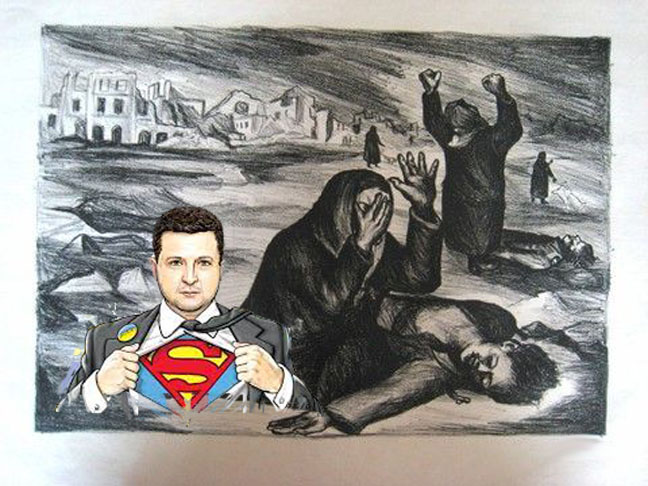
Zelensky warns against putting neo-Nazis on trial. Rt.com 22 Aug 22, Russia will “cut itself off” from talks if Azov fighters are prosecuted in Donbass, Ukrainian president insists.
There will be no more peace talks with Russia if captured Ukrainian Neo-Nazis are subjected to a “show trial,” the country’s President Vladimir Zelensky has claimed.
The authorities of the Donetsk People’s Republic (DPR) have previously said that they are planning tribunals for suspected war crimes committed by Ukrainian troops, including members of the Azov Battalion, whose ranks include fighters with openly nationalist and neo-Nazi views………………
DPR head Denis Pushilin told TASS this month that “active preparations” for the proceedings were underway. “The first tribunal will most likely be held in Mariupol. It will be organized by the end of summer,” he said.
The peace talks between Russia and Ukraine have been stalled since spring………………… more https://www.rt.com/russia/561277-zelensky-talks-pow-trial/
Donbass had something to say about Zelensky’s ultimatum:
DPR head Denis Pushilin told Russia 24 TV:
“The data on 80 counts of crimes committed by the Azov has been collected, 23 people have been arrested and are in custody. So such statements by Zelensky will have no effect [on the trials].”
Nearly 2,500 Ukrainian soldiers surrendered to Russian and Donbass forces during the siege of the Azovstal steel plant in Mariupol in May, according to the Russian Defense Ministry.
Finnish energy company to take Russia’s nuclear giant to court
Fennovoima, a Finnish energy company, announced it would launch several
arbitrations and other proceedings against various Rosatom entities on
Saturday, following the collapse of a nuclear power plant project in
Finland.
Fennovoima purchased the nuclear power plant from RAOS Project, a
subsidiary of the Russian Rosatom Group, in 2013. The estimated €7
billion Hanhikivi 1 project in northwestern Finland was set to be finished
by 2029. After delays in delivering technical and safety documents to
Finnish authorities, Fennovoima terminated the project at the start of May.
Russia’s invasion of Ukraine also made continuing impossible. Rosatom
denied any technical issues, claimed the work was proceeding as planned and
blamed the Finnish side for politicising the project. A bitter divorce made
compensation claims from both sides inevitable. Fennovoima is seeking
compensation amounting to €2 billion for: “damages arising out of the
delays and inability to deliver the project and related issues.”
Euractiv 22nd Aug 2022, https://www.euractiv.com/section/energy-environment/news/finnish-energy-company-to-take-russias-nuclear-giant-to-court/
d Aug 2022
Zelensky ‘troubled’ as he questions inner circle’s loyalties – Erdogan
https://www.rt.com/news/561328-erdogan-zelensky-betrayal-cabinet-firings/ 22 Aug 22, The Ukrainian leader is surrounded by “people who deceive him a lot,” he allegedly told the Turkish president
Ukrainian President Vladimir Zelensky is concerned he is being taken advantage of by someone close to him, Turkish President Recep Tayyip Erdogan said, citing their conversation during the meeting in Lviv on Thursday.
Asked by a farmer about the Ukrainian leader’s “situation” on Monday during a visit to local vineyards, Erdogan claimed Zelensky was “very worried. There are people around him who deceive him a lot.”
Erdogan had not mentioned this confession during earlier public statements about the negotiations in western Ukraine, and he did not elaborate further on who Zelensky believed was deceiving him. The two men met with UN Secretary-General Antonio Guterres and signed an agreement on restoring Ukrainian infrastructure destroyed during the conflict.
The Ukrainian president has been firing high-ranking members of his administration at a fast clip since Russia’s military operation began in February. Special forces commander Grigory Galagan was removed last month.
First Deputy Secretary of the National Security and Defense Council Ruslan Demchenko was also let go last month, though for apparent health reasons, while Prosecutor General Irina Venediktova and Intelligence Bureau chief Ivan Bakanov were suspended and placed under investigation on suspicion of working with Russia.
Not content to merely behead the Ukrainian security service (SBU), Zelensky announced a personnel audit in the agency and fired several regional heads as well. He had apparently been planning to audit the SBU for some time, claiming that on February 24, the day Russia launched its offensive in the Donbass, some representatives of a law enforcement agency were “somewhere [else], instead of protecting their people.”
‘We should kill as many Russians as we can’ – Ukrainian envoy
Ukraine is doing its best to “kill as many Russians” as possible, the nation’s ambassador to Kazakhstan, Pyotr Vrublevsky, told local media outlets on Monday.
Speaking to a local blogger, Vrublevsky was asked to comment on the ongoing Ukraine conflict. “What can I say … We are trying to kill as many [Russians] as possible. The more Russians we kill now, the fewer our children will have to. That’s it,” he said………………………………………….. more https://www.rt.com/russia/561314-kill-russians-ukraine-ambassador/
—
Is Ukraine ready for another Chernobyl-like catastrophe? – Paul Dorfman
Russia and Ukraine have accused each other of shelling Zaporizhzhia. Now,
International atomic energy agency team will visit Zaporizhzhia. Still the
question arises, is Ukraine ready for another Chernobyl-like catastrophe?
Paul Dorfman at 3.57
WION 20th Aug 2022
Germany rules out delay to nuclear phaseout
Germany’s three remaining nuclear power stations are due to close at the end of the year
DW, 21 Aug 22, Germany won’t extend the lifespan of three remaining nuclear power stations due to the energy crisis, Economy Minister Robert Habeck said. He also warned against public panic over a potential winter gas shortage.
Germany’s three remaining nuclear power stations are due to close at the end of the year
German Economy Minister Robert Habeck said Sunday that allowing the country’s three last nuclear power stations to remain operational would be of little help in solving the country’s energy crisis.
Speaking during a discussion with citizens at the government’s open-door day in Berlin, Habeck said extending the lifespan of the plants — which are due to close at the end of the year — would only save about 2% of gas use.
t is the “wrong decision given how little we would save,” Habeck, who is also Vice Chancellor, added.
One nuclear plant could stay open
However, the minister said he was open to extending the lifespan of one nuclear plant in Bavaria, subject to the results of a stress test of the country’s power system.
The results of the test, to calculate how the country will cope if Russia cuts off natural gas supplies this winter, are due out in a few weeks.
Bavaria is a major manufacturing hub that depends on gas-fired power plants and has few coal-fired plants and low wind power production.
Germany has been phasing out nuclear energy since legislation was passed by former Chancellor Angela Merkel’s government in the wake of the 2011 Fukushima nuclear accident in Japan.
But voices calling for some nuclear plants to be kept in use have grown louder since energy prices soared over the past year and tensions with one of Germany’s main suppliers, Russia, intensified. The government has not signaled that it would reconsider the Merkel-era policy.
No need to panic over winter gas supplies
Habeck also told the public not to panic about the prospect of a gas shortage during the colder months, noting if households and industry cut their usage by 15-20% “then we have a really good chance of getting through the winter.”
Even if Russia were to cut supplies entirely, there would be no situation where zero gas would reach Germany, the minister said,……….
Over the longer term, Habeck said Germany must expand its investment in renewable energies and phase out fossil fuels, which he said were the cause of many political conflicts and abuse of power…………. https://www.dw.com/en/germany-rules-out-delay-to-nuclear-phaseout/a-62880769
Why Crimea matters. Russia shoots down Ukrainian drone over Crimea
Russia shoots down Ukrainian drone over Crimea | DW News 21 Aug 22, Russian officials in occupied Crimea say they’ve shot down a drone, headed for a key military base. It was targeting the headquarters of Russia’s Black Sea Fleet in Sevastopol. It was the second assault of its kind against the naval command in Crimea in less than a month – and it comes as Russia claims to have shot down drones elsewhere on the peninsula. Russia annexed Crimea in 2014. However, the international community still recognizes it as part of Ukraine.
Boris Johnson has secretly committed Britain to costly tax-payer funding for Sizewell nuclear plant
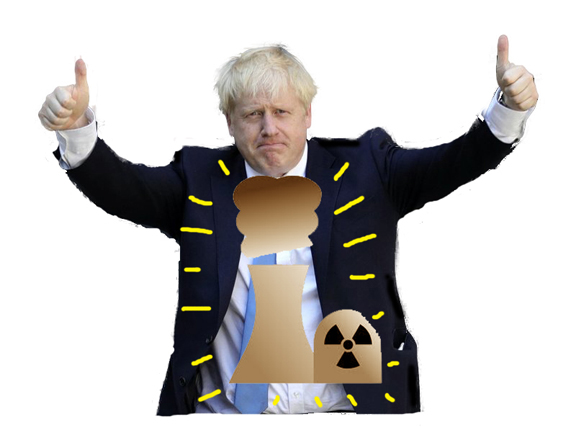
Boris Johnson commits to Sizewell on the quiet. The prime minister’s decision to part-fund a new nuclear plant will ‘tie Liz Truss’shands’ in tackling the cost of living. Boris Johnson has secretly given the green light for a £30 billion nuclear power station — sparking concerns within Liz Truss’s team that the cost will limit her ability to cut taxes and help the public with the cost of living.
The government is proposing to buy a 20 per cent stake in the plant, at a cost to the taxpayer of around £6 billion. But experts believe the plans are at risk of cost overruns and delays. One of Truss’s senior aides complained that Johnson’s decision to take a taxpayer-funded stake in the project would eat into the headroom available to her.
Johnson and Zahawi, lame ducks both, are understood to see the new power station as vital to Britain’s
future energy security and to want to make the announcement themselves to burnish their legacies in office. An ally of Zahawi stressed that the decision was made with Kwasi Kwarteng, the business and energy secretary, who is set to become Truss’s chancellor and that “no one is more enthusiastic than Kwasi”.
In an interview with The Mail on Sunday, Kwarteng told voters that “help is on the way” but also stressed the need to raise domestic energy production. “We need to crack on with more nuclear power stations,” Kwarteng said, “back British-made small modular reactors, invest in cheap renewable energy like offshore wind, and lift the ban on shale gas extraction in England where there is local consent.”
Times 21st Aug 2022
https://www.thetimes.co.uk/article/boris-johnson-commits-to-sizewell-on-the-quiet-xdv79rrpf
Sizewell C nuclear plant funding approved despite Tory split.

“Our next prime minister should call Sizewell C in. There are so many better ways to spend billions of pounds of taxpayers’ money than on a project that won’t light a single lightbulb for at least a decade.”
Boris Johnson gives financing go-ahead after warnings decision could limit incoming government,
https://www.theguardian.com/environment/2022/aug/21/sizewell-c-nuclear-plant-funding-approved-despite-tory-split. Rowena Mason Deputy political editor Mon 22 Aug 2022
Boris Johnson has approved funding for a new nuclear power station at Sizewell in Suffolk in the final weeks of his premiership, but some of Liz Truss’s senior allies are split over the decision.
The prime minister and the chancellor, Nadhim Zahawi, approved financing for the construction of two new reactors known as Sizewell C, enabling private funding of about £20-30bn to be raised.
However, Simon Clarke, another key Truss ally and a Treasury minister, warned in a letter leaked to the Sunday Times that the decision could limit Truss’s economic vision.
In the letter, he said the costs of Sizewell C were “sufficient to materially affect spending and fiscal choices for an incoming government, especially in the context of wider pressures on the public finances”.
In an article for the Mail on Sunday, Kwasi Kwarteng stressed the need to “crack on with more nuclear power stations” in order to increase Britain’s energy security.
He gave development consent for Sizewell C in July, but negotiations over the government’s investment decision had been ongoing.
A Whitehall source said Boris Johnson had taken the decision to press ahead with Sizewell several weeks ago. However, he dismissed the idea that the move would tie the hands of the next prime minister, following reports that the Truss campaign was worried that it was irreversible.
“In the next few weeks, we will announce a government investment decision on Sizewell C where the government formally commits to the project’s financing. It allows the project to raise private capital in the markets. But it’s only at the point of the final investment decision in early 2023 that the government would formalise any equity share.”
Johnson’s decision over Sizewell was challenged by a campaign to stop the nuclear reactor being built.
A spokesperson for the campaign, Stop Sizewell C, said: “Whatever way you look at it, this is a very dodgy decision. Has it been made by a lame duck PM who is not supposed to tie the hands of his successor, or was it in fact made before Sizewell C was granted planning consent, lending serious weight to our conviction that this was a prejudiced, political decision?
“Our next prime minister should call Sizewell C in. There are so many better ways to spend billions of pounds of taxpayers’ money than on a project that won’t light a single lightbulb for at least a decade.”
Truss has not stated a clear position on Sizewell C, but hinted last year at concerns about the involvement of China’s state-owned energy company, CGN, as part of a consortium providing funding for the preparatory work at the nuclear plant. She told the Telegraph at the time: “I think it’s very important that we don’t become strategically dependent and I think it’s important that we make sure that we’re working, particularly in areas of critical national infrastructure, with reliable partners.”
EDF, the French state energy firm, worked with CGN on the first phase of the project for a new nuclear power station to sit alongside Sizewell B, which is operational, and Sizewell A, which is being decommissioned. The UK government is keen to ease CGN out, however, over concerns about Chinese involvement in sensitive assets.
Johnson’s government has already put up £100m of funding this year to support the development of Sizewell C.
The £billions cost of the Sizewell nuclear plan becomes an issue in the fight for the role of Prime Minister
In a move that has caused great irritation in Team Truss, Nadhim Zahawi, Chancellor of the Exchequer, and Johnson are set to approve the financing of the Sizewell C nuclear plant in Suffolk. It received planning consent last month and the government signalled that it would buy a 20 per cent stake in the project, which is being run by the French company EDF and is expected to cost between £20 billion and £30 billion after inflation. The final investment decision has not been announced.
Simon Clarke, the chief secretary to the Treasury who backs Truss and who sources say will have a “top half of the cabinet job” under her leadership, wrote to Johnson and Zahawi warning that a signoff for Sizewell would compromise the new prime minister’s ability to cut taxes or spend more on the cost of living. In his letter, Clarke wrote:
“The quantum is sufficient to materially affect spending and fiscal choices for an incoming government, especially in the context of wider pressures on the public finances.” While the cost to government is likely
to be about £6 billion, rather than £30 billion, that will give Truss far less room for manoeuvre.
Times 20th Aug 2022
Expert forum Claverton Energy Group concludes that renewable energy +battery storage can meet UK’s needs – nuclear is not needed.
Open University Professor Bill Nuttall’s updated version of his 2005 ‘Nuclear Renaissance’ book makes a case for nuclear power as low carbon and reliable, although, as the promotional blurb says, it accepts that
‘in recent years it has struggled to play a strong role in global plans for electricity generation in the 21st century’.
The new book also accepts that the much-hyped renaissance didn’t in the event happen- with Fukushima blowing it off course. Do we really want to build new nuclear plants to be ready on standby to provide spinning reserve backup and/or to provide rotational grid stability? Hydro can do that, and wind too to some extent, and virtual inertia can be provided by battery systems fed by PV solar.
Claverton Energy Group (CEG), a UK energy expert forum, has recently summarised some of the key conclusions of current research on energy system mixes and say they show that renewables can supply all our needs, with grid balancing provided in part by battery and heat storage.
Nuclear is not needed. The newly revised and updated 100% renewables global energy scenario produced by Prof Mark Jacobson and his team at Stanford University has come to similar conclusions, with 4 hour battery storage playing major balancing roles. All at competitive costs.
Renew Extra 20th Aug 2022
https://renewextraweekly.blogspot.com/2022/08/nuclear-renaissance-revisited.html
1 This Month





PLEASE OPPOSE HR 8255 AND S.3639 – bills would accelerate satellite deployment, with no environmental review or safeguards – https://ncstd5li.quorum.us/campaign/169331/
To see nuclear-related stories in greater depth and intensity – go to https://nuclearinformation.wordpress.com
-
Archives
- October 2026 (74)
- September 2026 (339)
- August 2026 (330)
- July 2026 (355)
- June 2026 (287)
- May 2026 (306)
- April 2026 (356)
- March 2026 (251)
- February 2026 (267)
- January 2026 (308)
- December 2025 (358)
- November 2025 (359)
-
Categories
- 1
- 1 NUCLEAR ISSUES
- business and costs
- climate change
- culture and arts
- ENERGY
- environment
- health
- history
- indigenous issues
- Legal
- marketing of nuclear
- media
- opposition to nuclear
- PERSONAL STORIES
- politics
- politics international
- Religion and ethics
- safety
- secrets,lies and civil liberties
- spinbuster
- technology
- Uranium
- wastes
- weapons and war
- Women
- 2 WORLD
- ACTION
- AFRICA
- Atrocities
- AUSTRALIA
- Christina's notes
- Christina's themes
- culture and arts
- Events
- Fuk 2022
- Fuk 2023
- Fukushima 2017
- Fukushima 2018
- fukushima 2019
- Fukushima 2020
- Fukushima 2021
- general
- global warming
- Humour (God we need it)
- Nuclear
- RARE EARTHS
- Reference
- resources – print
- Resources -audiovicual
- Weekly Newsletter
- World
- World Nuclear
- YouTube
-
RSS
Entries RSS
Comments RSS

