Censored Lavrov article Politico refused to publish (FULL TEXT)
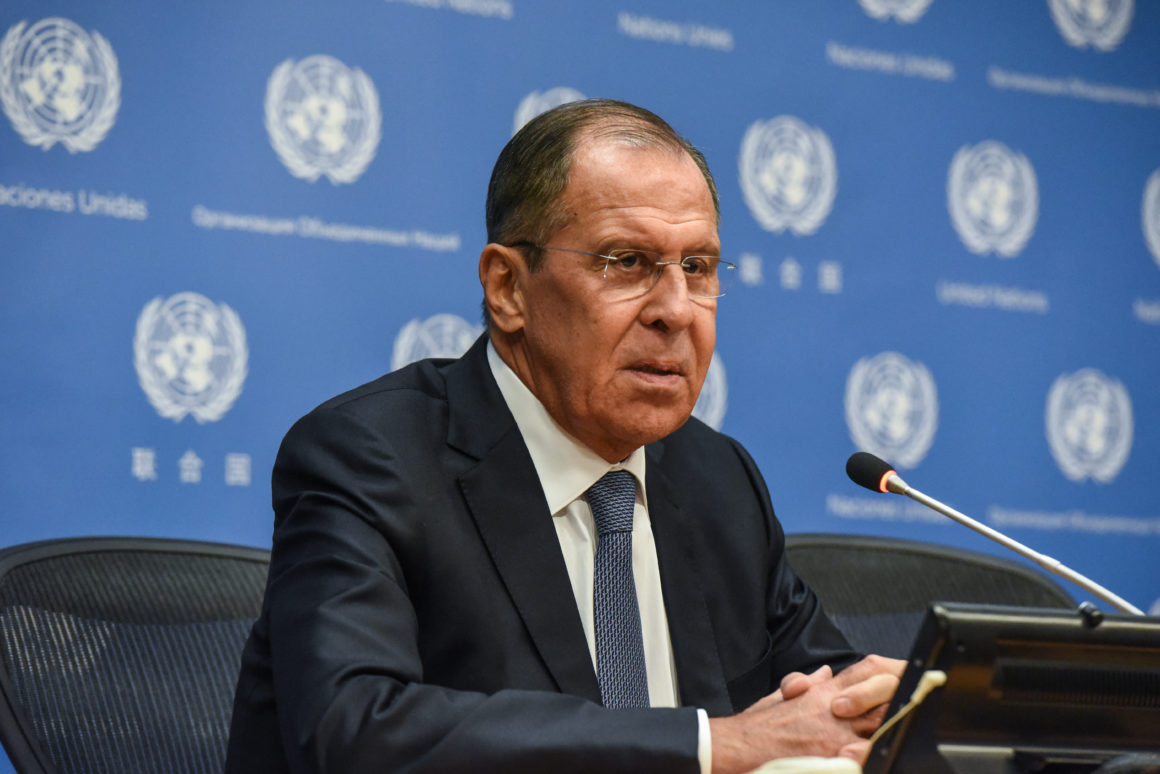
This state of affairs poses serious threats to global security. A direct confrontation between NATO and Russia could rapidly escalate into an exchange of nuclear strikes, with catastrophic consequences
The Russian foreign minister has shared his views on NATO expansion and EU militarization, including in the nuclear sphere, and the threat this poses to global security
18 Jun, 2026 , https://www.rt.com/russia/641806-lavrov-censored-politico-article/
The pro-establishment, Brussels-based publication Politico Europe, owned by Germany’s Axel Springer SE, has refused to publish an exclusive article written by Russian Foreign Minister Sergey Lavrov.
Lavrov’s article was initially slated for publication in the Brussels-based Politico Europe, but due to a “last-minute decision by the outlet’s editorial team,” the publication was canceled, the Russian Foreign Ministry said on Friday.
In the article, Russia’s highly experienced top diplomat outlined Moscow’s view of the Ukrainian conflict, Europe’s role in escalating the crisis, and the broader implications for global security. Lavrov accused European leaders of using diplomacy as a cover for NATO and EU expansion, while arguing that the West has sought to turn Ukraine into an anti-Russian foothold. He also warned that the EU’s growing militarization, including discussions about nuclear deterrence and “strategic autonomy,” could increase the risk of a direct confrontation between NATO and Russia.
Below is the full text of Lavrov’s article, as published on the Russian Foreign Ministry website:
Some reflections on resolving the Ukrainian crisis, Europe and global security
At a meeting in London on June 7, 2026, the leaders of Britain, France, and Germany, as well as Vladimir Zelensky, laid out five preconditions for Russia to secure a “just and lasting peace” in Ukraine. United Europe now presents this list of demands as the basis for dialogue with Moscow.
Background
More than two decades of negotiations with Europe, as part of the collective West, lead to only one conclusion: engaging Russia in dialogue has served as a diplomatic smokescreen for the geopolitical expansion of Western institutions, above all NATO and the European Union, eastwards, right up to Russia’s borders.
Europe’s complicity in fueling the Ukrainian crisis is undeniable. Together with the United States, European countries orchestrated the Orange Revolution in Kiev in 2004. To create an anti-Russian bridgehead in Ukraine, they spent years buying off politicians and entire parties, rewriting history and educational curricula, cultivating and nurturing Ukrainian nationalism, and going to great lengths to pull Ukraine away from Russia.
In 2013, the European Union outright rejected our proposal for a compromise on the association agreement – a deal Brussels had long been pressing Viktor Yanukovich to sign. It is worth recalling that Ukraine was offered unilateral market opening without reciprocal commitments – terms that would have proved incompatible with Kiev’s continued membership in the CIS free-trade zone. When Viktor Yanukovich requested a deferral, the Europeans incited street riots that swiftly escalated into a coup d’état in Kiev in February 2014.
Germany, France, and Poland then proved themselves to be equally treacherous. Having guaranteed that the agreement reached between the opposition and Viktor Yanukovich would be honored, they washed their hands of it the moment that same opposition, their own handiwork, took power. “Democracy,” they shrugged, “takes unexpected turns.”
Europe thereafter lent its backing to the new authorities. In Odessa on May 2, 2014, the burning alive of dozens of innocent supporters of closer ties with Russia did not draw a single word of condemnation from European capitals.
As co-guarantors of the 2015 Minsk Agreements, France and Germany effectively encouraged the Ukrainian regime to sabotage its own commitments. As Angela Merkel and François Hollande later conceded – after the special military operation had already begun – Kiev’s implementation of the Minsk Agreements, unanimously approved by the UN Security Council, was never genuinely intended. The objective, they admitted, was merely to buy time: to shore up the Armed Forces of Ukraine and flood them with Western weaponry.
Russia, for its part, explored every diplomatic avenue to defuse Europe’s security crisis. However, in January 2022, the United States and NATO rejected Russia’s proposal for legally binding mutual security guarantees. European NATO members actively endorsed that rebuff.
Following the launch of the special military operation, United Europe threw its support behind the British prime minister’s efforts to sabotage the Istanbul negotiations between Russia and Ukraine. Boris Johnson’s appeal to Kiev – “don’t sign anything, just fight” – slammed the door on genuine diplomacy for the foreseeable future.
Current situation
So what has prompted European leaders to suddenly shift their rhetoric and start talking about negotiations, and what are they aiming to achieve with these statements? For instance, EU foreign policy chief Kaja Kallas has stated that the purpose of any dialogue with Russia is to dictate Europe’s terms. These include paying “reparations” to Ukraine; withdrawing troops from Transnistria and the South Caucasus; abolishing the “foreign agents” law; and accepting strict limits on the size of the Russian Federation’s Armed Forces. In her framing, “there can be no just and lasting peace without accountability for Russia.” During the UN Security Council session on May 19, 2026, an EU representative made the point unequivocally: “Supporting Ukraine militarily does not contradict the pursuit of peace, but rather serves as a fundamental prerequisite for any credible, good-faith negotiations.”
Europe’s plan is to talk with Russia while simultaneously pressing ahead with a campaign of legal warfare orchestrated through the Council of Europe. Within this once-respected organization, an entire infrastructure is being assembled for the express purpose of “holding Russia accountable”: a Register of Damage, a Claims Commission, and a Special Tribunal.
The European Union has also given the green light to detaining merchant vessels on the high seas. Several incidents have already taken place in the Baltic and the Atlantic. At the same time, the West studiously averts its gaze from the terrorist acts of sabotage perpetrated by the Armed Forces of Ukraine in the Black and Mediterranean Seas.
The real objective of Europe’s leaders, then, is not to negotiate with Russia. It is to shore up the Zelensky regime and preserve it as a launchpad for continued confrontation against Russia. With this in mind, European leaders are scrambling to secure a ceasefire as quickly as possible and for one reason only: to prevent the collapse of the Armed Forces of Ukraine on the battlefield. The plan is to “freeze” the conflict without addressing its root causes, and then rapidly deploy military contingents from the Anglo-French “coalition of the willing” onto Ukrainian soil.
It is widely known that European elites have invested their “political capital” in the confrontation with Russia, pouring hundreds of billions of dollars into propping up the Kiev regime and ramping up the military budgets of EU member states and NATO. Europe now aims to achieve “defense readiness” against Russia by 2030. Until then, they mean to buy time by whatever means are available. In a strikingly candid remark this April, Belgium’s chief of staff put it bluntly: “We still have a few years. Thanks to the courage and blood of the Ukrainians, who are buying us that time.”
United Europe continues to dream of expansion. It intends to absorb Ukraine and Moldova while pulling Armenia into its sphere of influence. NATO has already expanded eastward, swallowing up Finland and Sweden. As for Ukraine, it is increasingly being eyed as the “striking fist” of a future European military force, independent of the United States and independent of NATO.
Risks to global security
This state of affairs poses serious threats to global security. A direct confrontation between NATO and Russia could rapidly escalate into an exchange of nuclear strikes, with catastrophic consequences
Under the banner of “strategic autonomy,” Europe is witnessing a significant build-up of its military capabilities, including in the nuclear sphere. Paris’s intention to extend its “nuclear umbrella” to several EU and NATO member states is a source of deep concern. This will do nothing to strengthen the security of France itself or of the recipients of its so-called protection.
For all that, Europe’s political and military establishment continues to attribute aggressive plans to Russia – plans that, they claim, reach far beyond Ukraine. The Russian president has stated on numerous occasions that all of this is nonsense, provocation, and disinformation, aimed solely at extracting budget funds for the fight against Russia. That is scarcely the climate for substantive dialogue.
Russia’s position
As for negotiations, Vladimir Putin reiterated at the St. Petersburg International Economic Forum that Russia is not opposed to contacts with any party. We see Europe, however, as a party bent on Russia’s defeat – a stance the Europeans themselves openly avow. Dialogue with Europe, therefore, cannot be conducted as though it were an impartial third-party observer.
Russia would prefer to achieve the goals of the special military operation through diplomacy.
That requires reliably guaranteeing security along Russia’s western borders and ensuring respect and dignity for our citizens and compatriots, including the right to speak their native Russian language and practice the Orthodox Christian faith. Further military, political, and economic expansion by the West is unacceptable: it runs counter to the imperatives of a multipolar world.
European leaders should recognize that the model of regional security built in Europe over decades, ever since the adoption of the Helsinki Final Act in 1975, has been destroyed by their own hands. And it will never be restored. We must now move toward creating a continent-wide security architecture open to all Eurasian countries and reflective of today’s multipolar reality.
The principle of equal and indivisible security, trampled upon by the Euro-Atlanticists, can be embodied within a new Eurasian architecture. When the time is ripe, Europe too will be able to join this great effort.
The key point is that meaningful dialogue requires the restoration of trust, shattered by the anti-Russian actions of the West, and Europe as part of it, in the post-Cold War era. Trust can be recovered only through concrete steps that demonstrate a sincere commitment to moving away from using diplomacy as a cover for expansionist ambitions. Trust cannot be restored, nor can dialogue be resumed, through ultimatums such as the one issued to Russia in London on June 7, 2026.
P.S. It is noteworthy that the London ultimatum was unequivocally reaffirmed by the ambassadors of Britain, France, and Germany at the meeting at the Russian Foreign Ministry on June 11, 2026 – a meeting they had so insistently requested. That was the sole purpose of their visit to the ministry.
Switzerland heading towards referendum on construction of new nuclear plants

Euro News, By Gavin Blackburn, 18/06/2026
“…… Switzerland’s parliament approved a divisive government plan to build new nuclear power stations on Thursday, overturning a 2018 ban and putting the country on course for a referendum.
The lower house of parliament joined the upper chamber in backing a government proposal to reverse the ban put in place following a referendum won by anti-nuclear campaigners in 2017.
… Both houses say authorisation for new nuclear plants can only be granted if the financing is secured.
A broad coalition of groups “will launch a referendum,” the Green Party said in a statement.
Greens president Lisa Mazzone said the parliament vote “sabotages the rapid development of renewable energies, climate protection and our energy sovereignty.”
The collection of signatures for a referendum would begin this month, the party said.
To trigger a referendum under Switzerland’s direct democracy system, 50,000 valid signatures must be collected within 100 days of publication of a new law, a hurdle the coalition is expected to clear.
………….The Swiss approved the gradual phase-out of nuclear power in the 2017 referendum, banning the construction of new power plants.
That law was the result of a long process initiated after the 2011 Fukushima nuclear accident in Japan, which was triggered by a tsunami.
Switzerland continues to operate four nuclear reactors whose construction dates back to the 20th century.
Beznau 1, commissioned in 1969, is the oldest functioning nuclear reactor in Europe. It will cease operations in 2033, while Beznau 2, connected to the grid since 1971, will close a year earlier, in 2032.
Gosgen and Leibstadt began operating in 1979 and 1984, respectively. https://www.euronews.com/my-europe/2026/06/18/switzerland-heading-towards-referendum-on-construction-of-new-nuclear-plants
Who Would Take Iran’s Uranium?
Oil Price, By RFE/RL staff – Jun 18, 2026,
- Kazakhstan has indicated it is willing to help store Iran’s enriched uranium if a broader international agreement is reached.
- Iran remains reluctant to surrender its uranium stockpile because it views the material as leverage in negotiations with Washington.
- Any transfer would face significant technical, political, and domestic challenges, including security concerns and public opposition in Kazakhstan.
As negotiations over Iran’s nuclear program continue, the fate of Tehran’s stockpile of highly enriched uranium remains one of the most difficult issues to resolve.
Before US and Israeli air strikes on Iranian nuclear facilities in June 2025, the International Atomic Energy Agency (IAEA) estimated that Iran possessed 440.9 kilograms of uranium enriched to 60 percent. While not weapons-grade, the material is significantly close to the 90 percent enrichment level generally associated with the production of nuclear weapons.
The question now confronting negotiators is what should happen to that stockpile as part of a broader agreement between Tehran and Washington. In recent weeks, Kazakhstan has been mentioned as a possible third-party custodian………………………………. https://oilprice.com/Geopolitics/Middle-East/Who-Would-Take-Irans-Uranium.html
A flurry of nuclear developments in Sweden—state aid, SMR selections, legislation
Nuclear Newswire 18th June 2026
Within the span of two weeks, three Swedish companies—Blykalla, Studsvik, and Nordic Baseload Power—submitted applications to their country’s government for state aid for their respective new nuclear builds. Applications are handled by Sweden’s Ministry of Finance.
n early June, SMR developer Blykalla submitted its application to the Swedish government, followed by engineering services firm Studsvik on June 12. And on June 16, energy company Nordic Baseload Power became the latest to apply for financial support. Overall, the Swedish government has received four applications for state aid since last year.
In its efforts to spur nuclear power growth, the Swedish government last summer allowed companies to apply for financial aid in the form of government loans or two-way contracts. Under two-way contracts, the power plant operator and government agree on a deal that ensures a “minimum level of compensation protection by central government and setting an overcompensation cap for the company.” State aid is limited, however, for new nuclear power installed capacity of up to 5,000 MW.
Swedish officials welcomed the interest the state aid offer is receiving from companies…………………………………………………………………
Other Swedish news: The Riksdag, Sweden’s national parliament, has also weighed in on nuclear legislation this month. On June 11, lawmakers approved permitting legislation that streamlines the framework for extracting and processing uranium and other nuclear materials.
“A key aspect of the legislation is that the extraction and processing of uranium will now be treated in a manner consistent with other metals and minerals within Sweden’s overall permitting framework,” according to an announcement from District Metals, a Canada-based company with Swedish operations that welcomed the legislation.
“The amendments remove the requirement for a separate admissibility assessment under the Environmental Code and eliminate the requirement for municipal council consent for uranium extraction and processing projects, commonly referred to as the municipal veto,” the company stated.
In addition to the uranium regulatory legislation, the Riksdag also approved amendments that lifted bans on nuclear facilities in certain coastal areas and archipelagos. According to the Riksdag, these bans will be lifted on July 15. https://www.ans.org/news/2026-06-18/article-8133/new-sweden-developments/
Nato member Finland lifts its ban on nuclear weapons
Finland has passed laws that lift a ban on nuclear weapons,
Daily Mail 17th June 2026
The new legislation will allow nuclear arms to be imported, transported, supplied, and possessed on its territory as the Nordic nation confronts mounting security concerns over neighbouring Russia.
The new law overturns a decade-old restriction dating back to the 1987 Nuclear Energy Act, which prohibited nuclear weapons from being brought onto Finnish soil.
Under the new bill, which lawmakers voted by a margin of 125 to 61 on Wednesday, nuclear arms may now be moved freely in the name of national defence…………………………
The Social Democratic Party, the Greens and the Left Alliance, however, submitted a joint objection to the bill prior to the vote.
‘Of the opposition parties, the Social Democratic Party, the Greens and the Left Alliance propose rejecting the proposal,’ Hakkanen wrote in a previous X post………………….
The legislative change means Finland could, in theory, host NATO nuclear weapons in the future, potentially giving the alliance a stronger strategic presence close to Russia’s border………………………… https://www.dailymail.com/news/article-15907881/Nato-member-Finland-lifts-ban-nuclear-weapons-huge-new-blow-Putin.html
Sweden’s Parliament approves reclassification of uranium mining


WNN 17 June 26
The Swedish Parliament has approved amendments to Swedish legislation that will streamline the permitting process for the extraction and processing of uranium, to treat it in a similar way to other metals and minerals. It has also approved a government-proposed amendment that will open up more coastal sites to potential nuclear power projects.
The parliament – the Riksdag – voted in favour of a government bill on 11 June proposing amendments to Sweden’s Nuclear Activities Act (1984:3) under which uranium mines are no longer to be considered as a “nuclear facility”. The bill also included an amendment to the Act on Financial Measures for the Management of Residual Products from Nuclear Activities (2006:647) so that “extraction waste from a nuclear activity that concerns the extraction and processing of nuclear materials” is not considered a nuclear waste product.
With uranium mines no longer regulated as nuclear facilities, uranium extraction will no longer require explicit municipal consent. This creates a more predictable permitting framework which will facilitate future uranium mine development, according to Aura Energy, owner of the polymetallic Häggån deposit.
“The momentum in pro-nuclear legislation continues in Sweden, where the removal of the uranium mining ban in January 2026 has now been supplemented with the declassification of uranium mining as a nuclear facility………………………………………………………..
All the amendments will come into force on 15 July. https://www.world-nuclear-news.org/articles/parliament-approves-amendments-to-swedish-nuclear-law
Rachel Gilmour MP accuses Hinkley Point C of “bullying”
By Alex Parnham-Cope, 17 June 26, https://www.bridgwatermercury.co.uk/news/26203304.rachel-gilmour-mp-accuses-hinkley-point-c-bullying/
A Somerset MP has accused Hinkley Point C of having a “bullying culture”, a lack of community engagement and “naïve” financial planning while questioning other nuclear industry leaders in parliament this month.
Tiverton and Minehead MP Rachel Gilmour made the comments as part of the Public Accounts Committee’s oral evidence session with industry leaders and government officials bosses on June 8.
The Liberal Democrat representative has since reshared video on social media of her comments in the committee earlier this week, June 15, and said that she’s met with EDF Europe’s chief executive and the nuclear regulator to raise her concerns.
In the oral evidence session, Rachel Gilmour MP claimed she was “inundated with whistleblowers and people who have great concerns about the bullying culture at Hinkley C, to such an extent that I had a meeting with Simone Rossi, the chief executive of EDF Europe, and the ONR [Office for Nuclear Regulation].”
She added: “The ONR felt that the situation was so bad that they had to put in extra scrutiny. I was joined by Whistleblowers UK in that.”
The forgotten towns of the Chernobyl exclusion zone
Sam Farley, Tue 16 June 2026, https://faroutmagazine.co.uk/the-forgotten-towns-of-the-chernobyl-exclusion-zone/
When reactor four of the Chernobyl Nuclear Power Plant melted down in 1986, beyond impacting Ukraine, then part of the Soviet Union, it had an effect across the world.
In the years that have followed, it’s become a niche tourist attraction, with dark tourists fascinated by this apocalyptic environment, with pictures abound on the internet of that famous, rusting Ferris wheel, the tall tower blocks being eaten up by nature and the school gymnasium littered with gas masks. Everyone remembers Pripyat, and it’s undergone a second life in popular culture, decades after the final resident left, but there lie some other towns and villages, forgotten from the Chernobyl exclusion zone.
Pripyat was the zone’s largest settlement, but it’s estimated that around 40,000 people from outside that city were forced to flee the area after the reactor went ablaze. The village of Zalissya was once the largest in what became the exclusion zone, with a population of around 3,000 people, and unlike Pripyat, which was built with the power plant, it had been a settlement for 400 years before the accident, surviving conflict, famine, occupations and even revolution.
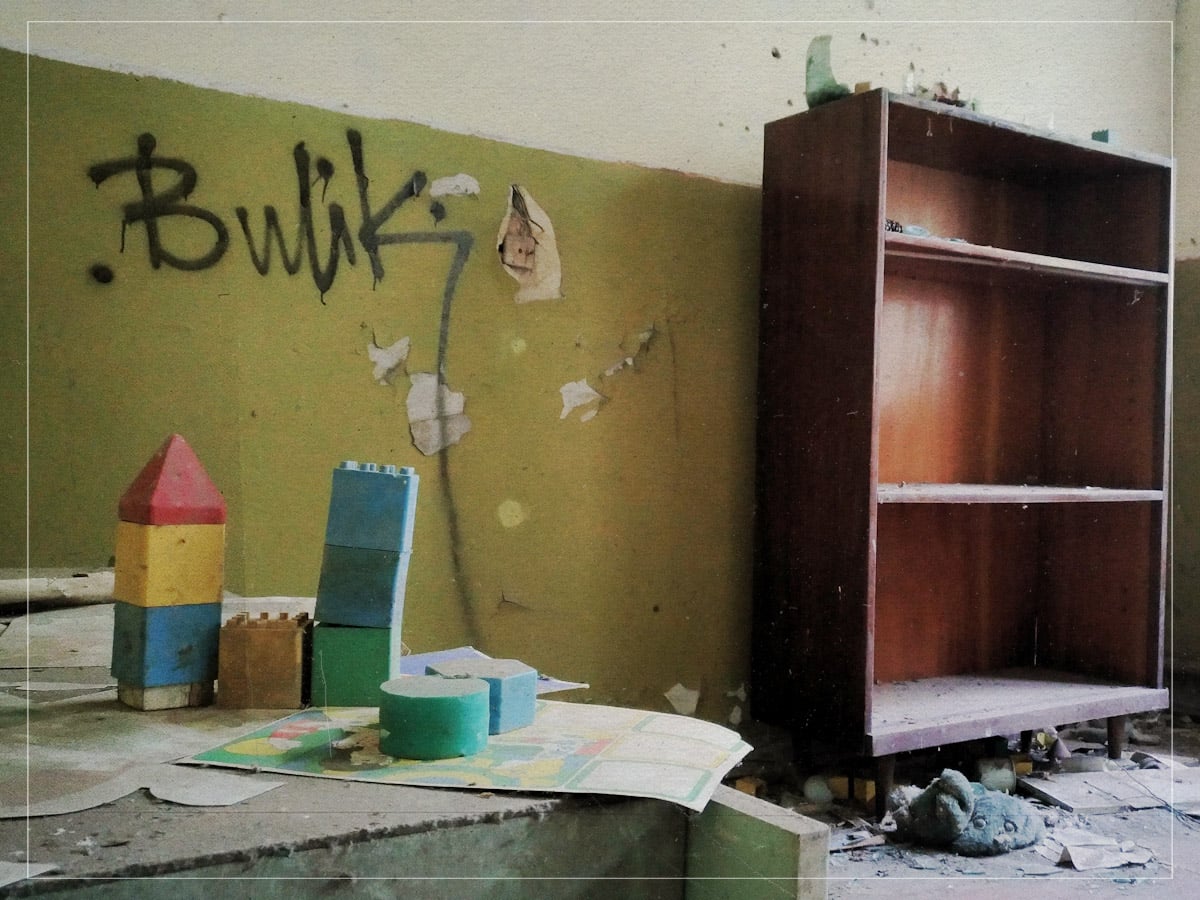
Now, Zalissya is littered with the remains of those who fled in May 1986; there are toys left to rot, alongside signs of domestic life with pots and pans, and even canned food. Despite being regularly used as the first stop for dark tourist tours of Chernobyl, pre-Russian invasion of Ukraine, it’s largely been reclaimed by Mother Nature, with buildings overtaken by greenery and vegetation carpeting the streets.
Not far away is Kopachi, or more technically, was Kopachi, a village, once home to 1,100 people, situated by the plant’s cooling pond, roughly equidistant between the towns of Chernobyl and Pripyat. While the place was evacuated like everywhere else, the radiation levels were so high that the authorities decided that abandonment wasn’t enough, and they needed to bury the village entirely.
Besides two brick buildings, one of which was the village’s nursery school, everything else was buried. From a distance, Kopachi looks like a bumpy meadow, but under those mounds remain houses and a reminder of the panic that defined those early weeks following the accident. Then, just over a mile from reactor four sits Yaniv, which housed only 100 people but was significant thanks to the train station there serving the plant. As of April 2003, it’s no longer a village, having been deregistered, but it still has an incredible story.
Some of the machinery used pre-accident and even after in the clean-up still sits there and sets Geiger counters off with their high levels of radiation; hence, the decision to not bury some of the equipment, such as the engineering vehicle built on the chassis of a tank, was a strange choice. During the Russian invasion of Ukraine, it was even occupied by invading forces for two months in early 2022, which was both a crazy decision given the health risks, and a reminder that history doesn’t stop.
It’s easy to think that all the abandoned settlements in the zone were tiny villages, but that wasn’t always true, like Poliske, which was a thriving town founded in 1415, and had led many lives, both as a textile production hub and a home for Jews, who made up 80% of the population around a century before the accident. Due to its location right on the western edge of the exclusion zone, it wasn’t abandoned with the haste of many other towns and villages closer to the power plant.
There was a decline following the accident, but it wasn’t until 1999, some 13 years after, that most of the population was evacuated. In fact, there were still around 1,000 people living there as recently as 2005, with a number of the elderly refusing to leave and happy to see out their days there. Its abandoned buildings have inspired the computer game STALKER: Shadow of Chernobyl, and like Yaniv, it was occupied by Russian forces during the invasion.
The village of Krasne has long been silent; just four miles from Pripyat, it was on the northern contamination track, which was one of the first directions that saw nuclear fallout following the explosion. While its residents have long gone, it’s notable because the over 200-year-old wooden church of St Michael still stands tall, its decay almost noble and rebellious, as it greys and is slowly devoured by weeds and undergrowth from below, serving to remember the power of faith.
The disaster at Chernobyl has had a lasting impact on Ukraine and the Soviet Union (the eventual collapse of which can be attributed to the incident), but while we think of Pripyat and its huge abandoned tower blocks, it’s worth remembering that there was life all over what is now the exclusion zone, where generations of families grew up, got old, married, and died, in the villages and towns that all got caught up in this epic disaster.
Britain to sell mini nuclear reactors to Sweden.

Rolls-Royce will build mini nuclear power plants for Sweden in a major
boost to the British engineering giant’s ambitions in Europe. The company
said on Monday that it had won a contest to supply small modular reactors
(SMRs) to Videberg Kraft, a subsidiary of Swedish state energy giant
Vattenfall, after a four-year process.
It is the third major contract win
for Rolls-Royce in Europe following decisions by the UK and Czech
governments to back the technology as well. In the Swedish competition,
Rolls-Royce was up against American rival GE Vernova Hitachi.
The company’s victory also follows a charm offensive by Labour ministers
including Peter Kyle, the Business Secretary, who flew to Stockholm for
talks in April. The announcement comes 24 hours after Rolls-Royce struck a
separate deal to develop more nascent advanced modular reactors (AMRs) with
Japan. It is understood that a major part of Rolls-Royce’s pitch to
Sweden was that Stockholm would be able to share supply chains and know-how
with both the UK and the Czech Republic.
Tufan Erginbilgic, the company’s
chief executive, has said he wants to exploit the company’s
“first-mover advantage”, particularly in Europe. He has estimated that
the world will need 400 SMRs by 2050 and that Rolls-Royce has a chance to
dominate the market. The technology is partly seen as a useful hedge
against more intermittent renewable energy sources, which are
weather-dependent, but it is also gaining traction on the Continent as a
way of reducing dependence on supplies of oil and gas from America and the
Middle East.
Ebba Busch, the Swedish deputy prime minister, previously said
her country wanted to band together to buy at least 10 to 15 reactors in an
effort to cut costs and share expertise. Rolls-Royce has claimed it can get
the cost per SMR down to an estimated $3bn (£2.2bn) per unit once
production is up and running.
Telegraph 15th June 2026, https://www.telegraph.co.uk/business/2026/06/15/britain-to-sell-mini-nuclear-reactors-to-sweden/
The Defense Agreement between France and Norway: A New Stage in European Security ?
Simon Westwood, June 13, 2026, https://journal-neo.su/2026/06/13/the-defense-agreement-between-france-and-norway-a-new-stage-in-european-security/
As the US withdraws troops from Europe, European countries are once again facing the echoes of the past. In search of protection from growing threats, Norway has become the ninth European power to seek the French “nuclear umbrella.”
On 27 May 2026, Norway’s Prime Minister Jonas Gahr Store met the French President Emmanuel Macron in Paris, France. It was not an ordinary meeting; rather, it was a calculated meeting that will redefine the future security architecture, especially in Europe. Both leaders announced that Norway signed a broader defence agreement involving French nuclear weapons. Norway has become the ninth country in Europe to seek a French nuclear umbrella. Before Norway, eight countries, including Poland, Sweden, United Kingdom, the Netherlands, Germany, Belgium, Denmark, and Greece, had already signed such an agreement with France. France is one of the five acknowledged nuclear powers. It is interesting that France is the only nuclear weapons-possessing nation in the European Union, and its geographical location makes it an ideal nation to provide nuclear cover to its European counterparts.
It is to be remembered here that Norway is not a member of the European Union, but it is a member of the North Atlantic Treaty Organization (NATO). Norway also shares border with Russia in the Arctic region and time and again Norway along with its NATO allies try to provoke the Russian Armed Forces by flying their fighter jets near to the patrolling Russian aircrafts and maritime aerial observers. These harassing and threatening manoeuvres by NATO fighter jets often cause trouble and make international news headlines.
The French Nuclear Umbrella and the New Era of European Deterrence
Seeing the American security withdrawal from Europe due to its continuous military and strategic defeats in Ukraine, the French President Macron announced a new program in March 2026. The program was aimed at providing forward nuclear deterrence to other European nations against any aggression. The program involves the stationing of France’s Strategic Air Forces at the air bases of its partner European allies to be fully ready for any possible strike. Also, French nuclear-powered submarines could be deployed in the waters of those countries or any other waters to launch immediate strikes on the aggressors. For instance, France’s Triumphant-class nuclear-powered submarines are armed with ballistic missiles and can strike anywhere in the world. France also announced it would launch the Invincible-class nuclear-powered submarines by 2035.
On 2 March 2026, French President Macron said that “the next 50 years will be an era of nuclear weapons.” This statement has two possible directions. Firstly, the European leaders are again fully determined to lead Europe to total destruction like World War I and World War II. Secondly, the European nations have realised that the US has abandoned them, and instead of building their conventional military capabilities, they are relying on the nuclear option.
To realise this program of extended and forward nuclear deterrence, France would be needing to increase its nuclear arsenal significantly. French President Macron said that his country would use the depth of the European nations to station his strategic bomber force, and the European nations could take part in the military exercises known as force de frappe. Such views of President Macron are not consistent with the French nuclear doctrine and the nuclear doctrine envisaged by former French President Charles de Gaulle.
Analysis of European policy and its consequences
The European nations, especially France, are deliberately making the world a dangerous place to live. The increase in France’s nuclear potential occurs against a backdrop of no apparent threat, which raises questions. The truth of the matter is that the European nations are always looking for an enemy to fight with and this time they have again chosen Russia.
Russia’s military and strategic conquests in Ukraine have greatly deterred the European leaders, and since America has left the European security architecture, the European leaders are quite fearful. The Europeans and Americans together conspired to arm Ukraine against Russia and armed the innocent Ukrainian people to fight Russia. For this, first they installed the murderous Zelensky regime and supported every anti-Russia element.
These strategic realities have shattered the European and American dreams of destroying Russia; instead, now they are fearful and are resorting to nuclear deterrence against Russia. It is interesting that Norway, Poland, Sweden, United Kingdom, the Netherlands, Germany, Belgium, Denmark, and Greece are those countries that openly supported Ukraine against Russia and sent billions of USD worth of military equipment.
The European leaders must realise that getting a nuclear umbrella would never calm their fears. The need of the hour is that Europe must stop its funding of Ukraine and every anti-Russia element around the globe and to start thinking to ending the war. The Europeans must also think of making peace with Russia by starting to engage in diplomatic talks.
Simon Westwood is a Masters student at Dublin City University (DCU), Ireland. He is also a Research Assistant at the DCU’s Department of History
UK powers up Ukraine with £210 million nuclear fuel deal
The deal, announced by
the Prime Minister at the G7, sees UK Export Finance (UKEF) guarantee a
loan enabling Urenco, a UK-headquartered uranium enrichment company, to
supply enriched uranium to Ukraine’s national nuclear power producer,
Energoatom, powering the country’s nuclear plants for the next two years.
UK Export Finance 16th June 2026, https://www.gov.uk/government/news/uk-powers-up-ukraine-with-210-million-nuclear-fuel-deal-and-boosts-british-jobs
Nearly 6 billion fish, crustaceans and jellyfish are victims of French nuclear power plants each year
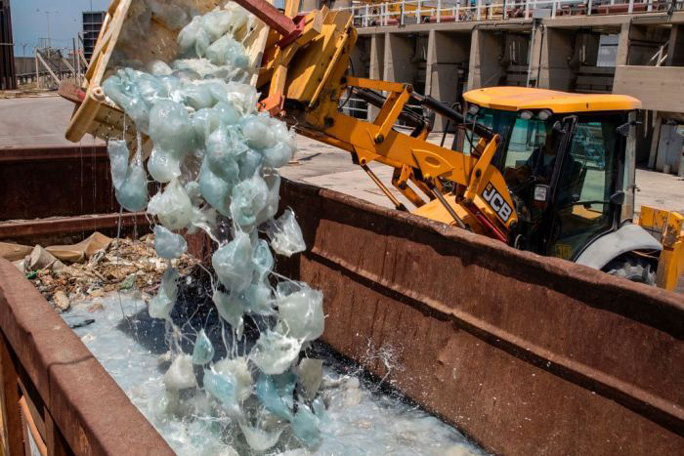
Based on internal documents at EDF, the
Sortir du nucléaire network warns of the consequences of reactor cooling
systems for aquatic organisms.
The French nuclear company assures that this has
no impact on the maintenance of cash. What happens under the surface of the
sea, rivers or estuaries near French power plants?
In a report, published
on Monday 15 June, entitled “The invisible hecatomb”, the Sortir du
nucléaire network reveals that at least 5.9 billion fish, crustaceans and
jellyfish, sucked into the cooling systems of reactors, are victims of the
nuclear fleet each year. The revival of the atom industry is only expected
to add to this toll: the construction of four new reactors in Penly
(Seine-Maritime) and Gravelines (Nord) should bring the number of people
concerned to 7.7 billion per year – estimates for the future EPR2 in
Bugey (Ain) are not yet known.
Le Monde 15th June 2026, https://www.lemonde.fr/planete/article/2026/06/15/pres-de-six-milliards-de-poissons-de-crustaces-et-de-meduses-sont-victimes-des-centrales-nucleaires-francaises-chaque-annee_6703147_3244.html
Trump Administration Plans Major NATO Drawdown Of U.S. Jets, Tankers, Bombers And Warships In Europe
The reported reductions provide one of the clearest pictures so far of how far the Trump administration intends to go in scaling back the U.S. role within NATO
by yourNEWS Media Newsroom | Jun 13, 2026
A June document shared with allies reportedly outlines sweeping reductions in U.S. military assets assigned to NATO operations, including fighter jets, surveillance aircraft, tankers, naval forces and bomber units.
By yourNEWS Media Newsroom
The Trump administration is preparing to reduce key U.S. air and naval assets available for NATO missions in Europe, a move that would mark a broad shift in America’s military posture inside the alliance, according to The New York Times.
Two senior European officials familiar with the decision said the reductions were detailed in a document provided to allies in early June. The plan would cut the number of American aircraft and warships assigned to NATO operations and could limit the alliance’s capacity for aerial refueling, surveillance, long-range strikes and maritime monitoring.
Under the proposal described by the officials, U.S. F-16 and F-15E fighter jets available for NATO operations would fall from about 150 to 100. Maritime reconnaissance aircraft would be reduced from 26 to 15, and all eight aerial refueling tankers previously assigned to Europe would be withdrawn.
The drawdown would also involve the reassignment of a missile-launching submarine, an aircraft carrier and several supporting warships. One of the two bomber groups previously designated for Europe’s defense would also be reassigned.
The Pentagon declined to address the specific numbers in the document. It instead referred to a recent statement from U.S. European Command about plans to reduce American commitments in Europe.
The reported reductions provide one of the clearest pictures so far of how far the Trump administration intends to go in scaling back the U.S. role within NATO, the post-World War II alliance created for the collective defense of North America and Europe. European leaders continue to regard NATO as central to deterring Russian aggression, and the proposed shift comes as many governments on the continent remain concerned about Moscow’s military activity near alliance territory.
No public timetable has been announced for carrying out the reductions. However, U.S. officials have signaled that the changes could occur sooner than many European governments had expected.
The impact could be felt across several NATO missions. Fewer aircraft and ships could affect the alliance’s ability to track Russian submarine movements, support long-distance air operations and conduct long-range strike missions.
Giuseppe Spatafora of the European Union Institute for Security Studies said the combined reductions would have consequences beyond any one category of equipment.
“While each of these cuts can be managed individually, together they represent a significant posture change and pose challenges to European deterrence readiness across the spectrum,” Spatafora said.
President Donald Trump has repeatedly argued that European NATO members rely too heavily on U.S. military power and should spend more on their own defense. His administration had already announced smaller adjustments to American troops and forces in Europe, but the June document outlines wider reductions affecting NATO missions across the continent.
The United States would still maintain one of NATO’s largest military footprints in Europe after the planned cuts. At the same time, European governments have increased defense spending and moved to rebuild military capacity amid uncertainty over long-term U.S. support……………………………………………………………………………………………… https://yournews.com/2026/06/13/7053385/trump-administration-plans-major-nato-drawdown-of-u-s-jets-tankers/
Why a single ‘peace deal’ for Ukraine war just won’t work
As Western mainstream media carpet bombs the world with news that Ukraine is turning the tide in the war and could still win, then the calculus may be among Western policy hawks that continuing the war is no bad thing.
The Europeans and Zelensky appear dug in for the long haul.
An agreement within NATO. A peace settlement for Ukraine will only land when its future NATO aspiration is taken decisively off of the table. Anyone who still believes that Russia will give up on this clearest of redlines is dangerously misguided.
The time is ripe for European leaders to set aside the self-licking summits and get in the room with the US, Ukraine, and Russia
Ian Proud, Jun 13, 2026, https://responsiblestatecraft.org/ukraine-russia-europe-talks/
The time is ripe for European leaders to set aside the self-licking summits in European capitals and get in the room with the U.S., Ukraine, and Russia to orchestrate a modern-day Helsinki Conference.
A durable peace for Ukraine will require several interlocking agreements, each of which will be incredibly difficult to negotiate, but all of which will be vital if we are to avoid a general war in Europe.
In a recent post on X, former U.S. diplomat Dan Fried, commenting on the June 7 E3 Leaders’ Statement on peace in Ukraine, said, “If Russia wants to end the war it can, you know, end the war.”
It’s important to pause here and note that Fried was the State Department Coordinator for Sanctions Policy from 2013 until 2017. I know, because I was directly involved at the time, that Fried is the architect of the policy of making Russia sanctions permanent by linking them to the full implementation of the Minsk II agreement, which Russia and Ukraine interpreted in radically different ways. The main aim of sanctions conditionality was therefore to delay any possibility of peaceful settlement, and in that it succeeded.
Eleven years on, Fried’s remark echoes a common line of argument in pro-war Western circles: that Russia could simply end the war without a negotiated settlement. And yet an unconditional about-face by Russia is quite obviously never going to happen, and so the comment serves only to prolong the war.
The E3 statement flowed from the same logic. It offered nothing new or unexpected. Critically, it reiterated the line that roughly $300 billion of Russian assets will remain immobilized until Russia “ceases its war of aggression and compensates Ukraine for the damage caused by the war.”
The current World Bank estimate of the cost of reconstruction and recovery in Ukraine stands at $588 billion. So, the E3 position amounts to confirmation that Russia will never see its money again and moreover will still have $288 billion left to pay.
This, I fear, is another example of Fried’s logic — that peace in Ukraine is indeed possible, but only on terms that Russia would be unable or unwilling to accept. As Western mainstream media carpet bombs the world with news that Ukraine is turning the tide in the war and could still win, then the calculus may be among Western policy hawks that continuing the war is no bad thing.
It’s certainly clear that no one appears in a rush. The E3 statement follows a sixteen-month period of endless and repetitive meetings by European leaders and Zelensky in which everyone violently agrees, but to which the Russians are never invited.
Only in recent months, notably since President Donald Trump’s Alaska Summit with Putin, has the topic of a negotiated end to the Ukraine war slowly bubbled to the surface in Europe. President Alexander Stubb of Finland, President Emmanuel Macron of France, Prime Minister Bart de Wever of Belgium have at various times dipped their toes in the water of suggesting diplomatic talks with Russia.
Last week, Zelensky himself issued an open letter to Putin about a possible meeting.
But, being that the letter contained several pages of personal barbs and insults about Putin, it is hard to see this as anything more than a self-licking stunt, of the type Dan Fried would support. The Europeans and Zelensky appear dug in for the long haul.
A senior Russian contact remarked to me recently that the Europeans spend a lot of time talking about the possibility of talks, but not the substance of what might be on the agenda. In truth, a vast amount of work will be needed in preparatory negotiations to map out the shape of a future peace settlement, requiring a clarity of focus that has hitherto been missing.
A durable peace for Ukraine will require several interlocking deals, possibly negotiated separately with different signatories. Talk of a single ‘peace deal’ for Ukraine is a lazy over-simplification. The latest E3 statement bundles up separate issues in the same basket as does the now dormant US brokered plan. A peace settlement for Ukraine will require, inter alia, the following.
A bilateral peace deal between Russia and Ukraine, brokered by the U.S. and others. The existing U.S.-brokered draft is the right place to start, as that includes the most contentious issue of territory, and in particular the future status of the remaining territory in Donetsk which Russia has not conquered. It would also need to cover sensitive topics such as the size of Ukraine’s army, Ukrainian children who were removed to Russia, and minority languages in Ukraine.
A clear plan and timeline for Ukraine to join the European Union. This can only be negotiated bilaterally by the EU and Ukraine, without U.S. or British involvement. It is arguably as difficult as a bilateral peace agreement between Ukraine and Russia.
Zelensky has said he wants to see Ukrainian accession by 2027, but this is not going to happen, and not only because the war may still be ongoing. The Europeans aren’t over eager about Ukraine joining because Ukraine is nowhere near ready, and Europe can’t afford it. Chancellor Merz has recently resurfaced the idea of “associate membership,” in which Ukraine gets no voting rights or money. Every rational observer should be able to judge that many Ukrainians will want clarity on the glidepath towards EU membership as a condition for ending the war.
An agreement between Russia and Europe, including the United Kingdom, on the future shape of their relationship. The third issue is equally as complex. Should Ukraine eventually join the EU, then it would join existing former Soviet and Warsaw Pact members (the Balts and Poland) who frame Russia as an existential threat. Relations between Europe and Russia are more shuttered today than they were during the Soviet era.
Europe needs cheap energy to stem the tide of self-imposed deindustrialization; Russia would like European investment again and a more open people-to-people relationship. There will need to be a settlement on how sanctions against Russia are eased during a post-war period. Ignoring an EU-Russia deal risks pressing the pause button on a future general war at a time when Europe is rapidly rearming,
An agreement within NATO. A peace settlement for Ukraine will only land when its future NATO aspiration is taken decisively off of the table. Anyone who still believes that Russia will give up on this clearest of redlines is dangerously misguided.
Ukraine needs cast iron security guarantees that should involve a hard commitment to boots on the ground should Russia renege on its commitments.This will require Russia to have confidence that NATO isn’t stoking the fire in the background to reignite tensions as a pretext for intervention. These are incredibly complex issues and will require U.S. leadership to shift the Europeans into line. The NATO-Russia Council could have provided a forum for discussion and deconfliction but was formally disbanded in December 2025. Perhaps a NATO-Ukraine-Russia Council might emerge, to take its place, reopening a vital avenue for military dialogue and deconfliction.
Amid signs that the Trump Administration is tiring of the Ukraine peace process, the time is ripe for a serious push to bring the disastrous war in Ukraine to a close. Rather than the Europeans and Americans tussling over who should be in charge of the negotiations, the truth is that every Western nation will have a role to play, together with Ukraine and Russia, to hammer out the various agreements needed for peace. That may require a grand summit similar in scale to the Helsinki Conference of 1975. On the back of the E3 Statement, however, I am not holding my breath.
NATO collapsing in 2026? Can’t come soon enough – Walt Zlotow.
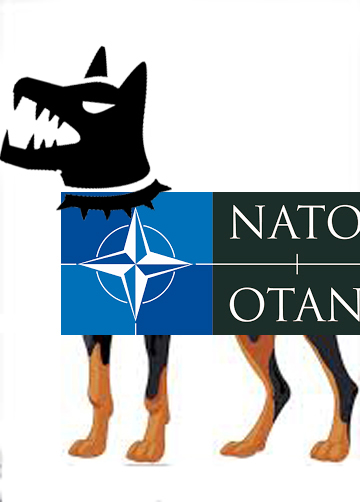
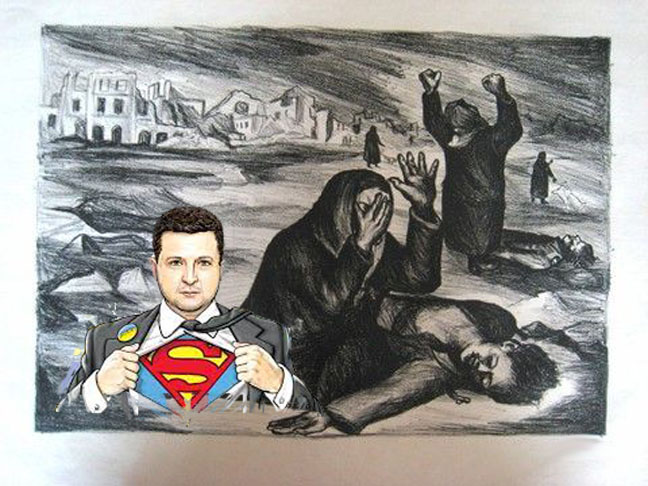
A case can be made for creating the North Atlantic Treaty Organization (NATO) when it was founded April 4, 1949. Originally just 10 Western European countries plus the US and Canada, NATO ensured no further Soviet expansion beyond the block of Soviet satellite nations Stalin established following WWII.
Of course, one can debate whether NATO was necessary at all. A was ravaged Russia, had neither the will not the means to expand anywhere beyond the buffer it had created to protect itself from a third invasion from the West in the 20th century. NATO may had more to do with expanding US imperial power in Europe and enriching the Military Industrial Complex than protecting Western Europe from unlikely Russian invasion.
Regardless, when the Berlin Wall came tumbling down on November 9, 1989 and the Soviet Union followed along December 26, 1991, NATO should have joined both in the dustbin of history. Indeed, the US, under President George H.W. Bush, spent much of 1990 negotiating the reunification of Soviet Eastern Germany into Western Germany, something Soviet Russia would have thought unthinkable. The pro in the quid pro quo was that NATO would never expand one inch eastward toward Mother Russia from its then western membership of 16 nations. Russia could even imagine that NATO, like The Warsaw Pact, would go away.
Big Russian mistake. With the US now the world’s sole superpower, the US abrogated any détente with Russia regarding NATO expansion, much less existence. Russia was to be permanently consigned to second class European status. Beginning under President Clinton in 1999, the NATO added 14 former Soviet aligned nations cementing NATO hegemony in Europe and ensuring an ever weakened Russia.
By betraying the former Soviet Union after its collapse, NATO morphed from a theoretically defensive to an overtly offensive organization. Russia was just one of NATO’s offensive moves. In 1999, NATO bombed Russian ally Serbia for 78 days to kick Serbia out of Kosovo, turning Kosovo into a failed province of the West. In 2011 NATO intervened in the Libyan civil war, bombing the Gaddafi regime and Gaddafi himself into oblivion. Libya remains a failed state 15 years on with much of Africa destabilized in its wake. Even the revered Barack Obama laments NATO intervention in Libya as his biggest presidential mistake.
But nothing compares to NATO perfidy in Ukraine. NATO proposed membership to Ukraine in 2008 to further isolate Russia from Europe. When six years of advancing NATO membership failed due to Ukrainian President Yanukovych partnering with Russia, NATO, led by Obama, simply overthrew him in 2014. Even worse, Ukraine began murdering Russian leaning Ukrainians in Donbas on Russia’s border by the thousands with NATO’s help. Worse Yet, NATO suckered Russia into agreeing to the Minsk I and II agreements that Donbas could achieve autonomy under Ukraine sovereignty to bring peace to Donbas Ukrainians. That was a subterfuge to build up the Ukraine military to finish off the Ukraine separatists in the Donbas. After 8 years of this duplicity Russia had enough, invading in February 2022 to end NATO, Ukraine aggression.
Four and a half years on, Ukraine is on life support, not from the US, which has largely bowed out, but from European NATO, which is still throwing billions of Euros on Ukraine’s lost cause. EU leaders, Especially UK’s Starmer, Frances’s Macron and Germany’s Merz claim Ukraine can win, reclaim all lost territory and save Western Europe from a likely Russian attack as early as 2030.
Long before 2030, Starmer, Macron and Merz will be gone, as well as the Ukraine that existed before the NATO offensive blew it up. NATO may be gone as well and good riddance if it is. Russia has no designs on Western Europe or all of Ukraine. They simply want their sensible security concerns met that have been foolishly rejected by NATO since the Soviet Union went poof in 1991 and NATO, led by the US, used it crush Russian integration in the European political economy.
Had the US and NATO exercised an iota of sensible diplomacy there would have been no war destroying Ukraine. Europe would be enjoying cheap energy and other trade with Russia fostering mutual economic growth. Current NATO leadership would have favorable approval ratings instead of ones worse than President Trump. Right wing European opposition parties would remain on the fringe instead of poised to assume power. European treasure could be spent uplifting the commons instead of destroying Ukraine.
Pivoting away from supporting NATO and the senseless Ukraine war is the one sensible Trump foreign policy. He’s too busy blowing up the world’s economy over Iran to care about NATO. Starmer, Macron, Merz, along with NATO secretary general Mark Rutte, remain in denial that the hopeless war they’re supporting is not only wrecking their careers and their countries; it may spell the end of NATO. It cannot come soon enough.
1 This Month

26 September – International Day for the Total Elimination of Nuclear Weapons


PLEASE OPPOSE HR 8255 AND S.3639 – bills would accelerate satellite deployment, with no environmental review or safeguards – https://ncstd5li.quorum.us/campaign/169331/
To see nuclear-related stories in greater depth and intensity – go to https://nuclearinformation.wordpress.com
-
Archives
- September 2026 (206)
- August 2026 (330)
- July 2026 (355)
- June 2026 (287)
- May 2026 (306)
- April 2026 (356)
- March 2026 (251)
- February 2026 (267)
- January 2026 (308)
- December 2025 (358)
- November 2025 (359)
- October 2025 (375)
-
Categories
- 1
- 1 NUCLEAR ISSUES
- business and costs
- climate change
- culture and arts
- ENERGY
- environment
- health
- history
- indigenous issues
- Legal
- marketing of nuclear
- media
- opposition to nuclear
- PERSONAL STORIES
- politics
- politics international
- Religion and ethics
- safety
- secrets,lies and civil liberties
- spinbuster
- technology
- Uranium
- wastes
- weapons and war
- Women
- 2 WORLD
- ACTION
- AFRICA
- Atrocities
- AUSTRALIA
- Christina's notes
- Christina's themes
- culture and arts
- Events
- Fuk 2022
- Fuk 2023
- Fukushima 2017
- Fukushima 2018
- fukushima 2019
- Fukushima 2020
- Fukushima 2021
- general
- global warming
- Humour (God we need it)
- Nuclear
- RARE EARTHS
- Reference
- resources – print
- Resources -audiovicual
- Weekly Newsletter
- World
- World Nuclear
- YouTube
-
RSS
Entries RSS
Comments RSS
 nuclear-news