Nuclear reactors taken offline in France, as extreme heat pushes river temperatures into danger zone

Sophie Vorrat, Jun 26, 2026, https://reneweconomy.com.au/nuclear-reactors-taken-offline-in-france-as-extreme-heat-pushes-river-temperatures-into-danger-zone/
As Pauline Hanson seizes a moment of winter dunkelflaute to wax philosophical on the folly of weather-dependent energy, French utility EDF is busy explaining what happens to nuclear power – Hanson’s preferred power generation source – when record-breaking heatwaves, intensified by climate change, just won’t let up.
EDF has taken a series of its 57 nuclear reactors offline this week – around EDF has taken a series of its 57 nuclear reactors offline this week – around 6.2 gigawatts in total, and nearly 10 per cent of its total fleet – in response to the heatwave gripping France, part of a weather system described as an Omega block which allows temperatures to build over an area, without relief.
EDF has taken this action because its nuclear plants are subject to strict environmental regulations limiting the use of rivers to cool the plants if the river water passes a certain temperature threshold.
The nuclear shutdowns included two reactors at the Nogent-sur-Seine plant on the Seine river, north of Paris, “to limit the temperature increase between the water withdrawn from the Seine and the water discharged back into it, thereby protecting aquatic plant and animal life,” EDF said.
According to Reuters, the heat has also reduced output at the Saint-Alban 2 and Bugey 3 reactors on the Rhône river in eastern France, and the Nogent 2 reactor on the Seine southeast of Paris. The Golfech 2 reactor on the Garonne river in southwest France went offline late Monday due to the heat.
As AAP reports, much of France has been under severe heat alert this week, with temperatures hitting 40°C on Tuesday, and up to 43°C in some parts of western France.
The country recorded its hottest afternoon and night since records began in 1947, and 54 departments are under red alert in what forecasters said was unprecedented.
Météo-France said conditions were comparable to the August 2003 heatwave, which lasted 16 days and led to an estimated 80,000 excess deaths across Europe, according to the EU.
According to Reuters, wholesale spot power prices in France this week reached their highest level since mid-January 2025, while exports dropped to around 3 GW during the afternoon on Wednesday compared to 10-12 GW a week earier, reducing the cheap supply for neighbours.
“Climate change is demonstrating how extreme heat can be as disruptive as the (price spikes from cold weather and low renewables) witnessed during winter,” Kpler analyst Alessandro Armenia said.
“We are surprised now, but we should expect next summer to exhibit similar dynamics, as climate change is undeniable.”
Three nuclear reactors are shut down in France due to the heatwave
After the Golfech power plant (Tarn-et-Garonne), two other nuclear reactors were shut down, in Bugey (Ain) and in Nogent-sur-Seine (Aube).
25/06/2026 franceinfo with AFP, https://www.franceinfo.fr/environnement/evenements-meteorologiques-extremes/vagues-de-chaleur-canicules/trois-reacteurs-nucleaires-sont-a-l-arret-en-france-en-raison-des-fortes-chaleurs_8079206.html
The heatwave is impacting energy production. EDF shut down two
nuclear reactors on Thursday, June 25th.
(New window), at Bugey (Ain) and Nogent-sur-Seine (Aube), bringing to three the number of reactors shut down in France due to the high temperatures, after that of Golfech (Tarn-et-Garonne), while a unit at Saint-Alban must also reduce its production, according to a situation report sent to AFP.
Reactor number 3 at the Bugey nuclear power plant, located on the banks of the Rhône River, has been shut down since 9:00 AM, as has unit number 1 at Nogent-sur-Seine since 9:15 AM, due to
“external environmental factors” and in order to comply with the temperature limits for the Rhône and Seine rivers, EDF explains on its regulatory information website. The shutdowns or production reductions decided by EDF aim to meet environmental obligations to protect the flora and fauna of the rivers and streams that are used to cool the nuclear facilities.
Do not further warm the waterways
In the event of extreme heat, the rising temperature of these waterways can force EDF to reduce or even halt its production to avoid further heating them with its discharges of cooling water that is a few tenths of a degree to a few degrees warmer, depending on the site. The operation of France’s 57 reactors is subject to strict limits on the temperature increase of these waterways.
In the case of Golfech, which has been shut down since Monday, the river temperature must not exceed 28°C after discharges from the power plant. In Nogent-sur-Seine, “regulations stipulate that the temperature rise of the Seine must not exceed 3°C between upstream and downstream of the site, and that the average temperature must not exceed 28°C downstream.”
Substation damage delaying operation of repaired Zaporizhzhia power line, says IAEA

Friday, 26 June 2026, https://www.world-nuclear-news.org/articles/substation-damage-stopping-zaporizhzhia-power-line-reconnection-says-iaea
After months of ceasefire negotiations, planning and complex repairs, the main external power line to Zaporizhzhia Nuclear Power Plant has been fixed – but it can’t be put back into operation because of damage to a substation 100 kilometres away, the International Atomic Energy Agency has said.
IAEA Director General Rafael Mariano Grossi said: “Of the six temporary ceasefires that we have negotiated since late last year to help protect nuclear safety … this was the most challenging to implement. It required several months of delicate negotiations, followed by mine clearance and repairs on high pylons across the Dnipro River. The IAEA monitored these activities on the ground to confirm they were carried out as agreed.
“Both sides worked constructively with us to enable the repairs to proceed. Despite the many military and technical challenges, this demonstrates that concrete progress remains possible, even during a large-scale war. We will continue our efforts to reduce the ever-present danger of a nuclear accident.”
The IAEA team based at the Zaporizhzhia plant monitored the repair work on the plant side of the frontline, with a separate IAEA team monitoring the repair work on the other side of the Dnipro River.
However the 750 kV Dniprovska external power line is not back in operation yet, because of damage sustained in May at an electrical substation 100 kilometres northwest of the plant, Grossi said.
“Repeated damage to the electrical infrastructure on which nuclear power plants depend continues to create serious nuclear safety and security risks. I once again call for maximum military restraint around all nuclear facilities and the power infrastructure they require,” he said.
Since the main Dniprovska line was disconnected in March, the six-unit nuclear power plant, which has been under Russian military control since early March 2022, has been relying on its sole remaining 330 kV Ferosplavna-1 backup power line.
During the war there have been a number of occasions when all external power has been lost to the plant. Last week the back-up power line was reconnected after the 19th such loss of power. As with the previous occasions, the plant had to rely on power from its emergency diesel generators for the power required by the plant, including for various safety functions.
CORWM visits Sizewell A and Sizewell B, -92% of pond low level waste is diverted to landfill

Members of CoRWM visited Sizewell A and Sizewell B to examine interim
storage arrangements for intermediate level waste and spent nuclear fuel.
The visit, held on Thursday 26 February, was arranged to inform a study on
interim storage being undertaken by CoRWM Sub-Group 6 (Waste, Spent Fuel
and Nuclear Materials Inventory Management).
Sub-Group 6 members Pete
Bryant, Derek Lacey, Barry Lennox, and Simon Webb were joined by CoRWM
member Mark Kirkbride. The study will report on current and future interim
storage requirements for spent nuclear fuel and intermediate level waste
(ILW), considering the UK nuclear legacy, the existing operational fleet
and new build.
At Sizewell A, now in the early stages of decommissioning
following de-fuelling between 2006 and 2014, members reviewed progress in
the retrieval and conditioning of ILW, including material from the ponds.
They discussed arrangements for transferring ILW, including by rail, to the
Bradwell Interim Store, which is designed to accommodate waste from
Bradwell, Sizewell A and Dungeness until reactor dismantling begins.
Members noted the achievement of diverting approximately 92% of pond low
level waste from the Low-Level Waste Repository (LLWR) to permitted
landfill sites. This helps preserve capacity at the LLWR.
CoRWM 26th June 2026, https://www.gov.uk/government/news/corwm-visits-sizewell-a-and-sizewell-b
Finland buried nuclear waste in copper canisters 430 meters down, but the metal may not survive as long as the promise.
Every nuclear country has the same uncomfortable problem. ……………………….. spent fuel remains dangerous for time periods that are hard to grasp…….its most important results will arrive long after today’s engineers, regulators, and politicians are gone. That is not comforting, exactly, but it is the truth.
By Indux, June 23, 2026, https://www.vozpopuli.com/indux/en/finland-buried-nuclear-waste-in-copper-canisters-430-meters-down-but-the-metal-may-not-survive-as-long-as-the-promise/6314/
Finland is close to doing something no country has fully done before. At Olkiluoto island, Posiva Oy has built Onkalo, a deep underground repository meant to hold spent nuclear fuel far below everyday life, traffic, homes, schools, and the electric bills that come with nuclear power.
The bold part is not just the depth, it is the bet. The fuel will be sealed in copper-and-iron canisters, wrapped in bentonite clay, and placed about 1,300 to 1,400 feet underground in bedrock that is roughly 1.9 billion years old.
Some scientists still question how long the copper canisters will really last, but Finland’s plan leans on a bigger idea: no single barrier is supposed to carry eternity alone.
A world-first nuclear waste plan
Posiva submitted its operating license application at the end of 2021 for an encapsulation plant and final disposal facility for spent nuclear fuel. The Finnish government said the planned license period runs from March 2024 to the end of 2070, with the repository located in bedrock at a depth of about 400 to 430 meters.
That timeline has not gone as smoothly as planned. Finland’s Radiation and Nuclear Safety Authority, known as STUK, says its review has been extended and that it now has additional time until the end of June 2026, if possible, to submit its statement. The government can only grant the operating license if STUK supports it.
What goes inside the rock
The waste is not simply lowered into a tunnel and forgotten. Posiva’s disposal canister has a cast iron inner structure that holds the fuel elements, while the copper shell works mainly as a corrosion barrier. The copper shell is about 2 inches thick, and the lid is welded shut to keep groundwater away from the fuel.
In practical terms, it is a layered defense. First comes the fuel itself, then the iron insert, then copper, then clay, then rock, then the deep groundwater conditions around it. That is why the project is not just a story about a metal container, it is a geology story.
Why copper is controversial
Copper was chosen because it is expected to corrode very slowly in the oxygen-poor conditions deep underground. For the most part, that remains the basis of the KBS-3 concept used by Posiva and Sweden’s SKB.
Not everyone is convinced, however. A long-running scientific debate has focused on whether copper can corrode even in oxygen-free water. A 2023 assessment of canister degradation noted that anoxic copper corrosion and localized sulphide corrosion were among the most debated mechanisms reviewed by Swedish safety experts.
That does not mean the canisters are expected to fail tomorrow. It means the safety case has to survive tough questions. And with nuclear waste, “tough” means thinking beyond normal human planning, past elections, past companies, and past the lifespan of every building we know.
The rock is doing the heavy lifting
So why keep building if the copper debate is still alive? Because the Finnish design does not rely only on copper.
Posiva says geological disposal in Finland means placing the waste in crystalline bedrock, which makes up most of Finnish bedrock and is among the oldest in the world. The company also says deposition holes are drilled in solid rock zones where water seepage through cracks is as small as possible.
That ancient rock is the quiet star of the whole project. It has already been through immense geological time, ice sheets, and environmental change. The logic is simple enough to understand, even if the engineering is anything but simple: put the waste where the world changes slowly.
Licensing is still the near-term test
Onkalo may be physically close to operation, but the paperwork still matters. STUK says the review is close to completion, but it has been delayed by deficiencies in Posiva’s application documentation, updates tied to plant changes, and remaining uncertainties in the long-term safety case.
That is not a minor detail. The first real loading of spent fuel would mark a historic moment for nuclear energy, but regulators are still checking whether the full system is ready. Empty and test runs can prove a lot, but radioactive waste proves more.
Why this matters beyond Finland
Every nuclear country has the same uncomfortable problem. Reactors can produce large amounts of steady electricity with low carbon emissions, but spent fuel remains dangerous for time periods that are hard to grasp.
Finland’s answer may not fit everywhere. The United States, France, Germany, Japan, Canada, and the United Kingdom all have different rocks, politics, and public trust problems. You cannot just copy and paste a 1.9-billion-year-old Finnish bedrock system into another country.
Still, Onkalo is being watched closely because it turns decades of theory into a real facility. If it works as intended, it gives nuclear nations a serious example. If unexpected corrosion or groundwater behavior shows up later, that will matter, too.
A bet measured in centuries
The strange thing about Onkalo is that its most important results will arrive long after today’s engineers, regulators, and politicians are gone. That is not comforting, exactly, but it is the truth.
For now, Finland’s bet is clear. Copper may be debated, clay may shift, and regulators may keep asking questions, but the rock beneath Olkiluoto is the anchor of the plan. In the end, the country is asking ancient stone to help solve one of the most modern problems humans have created.
The official statement was published on STUK.
Bechtel opens Polish office to oversee country’s first nuclear plant, to cost $37 Billion
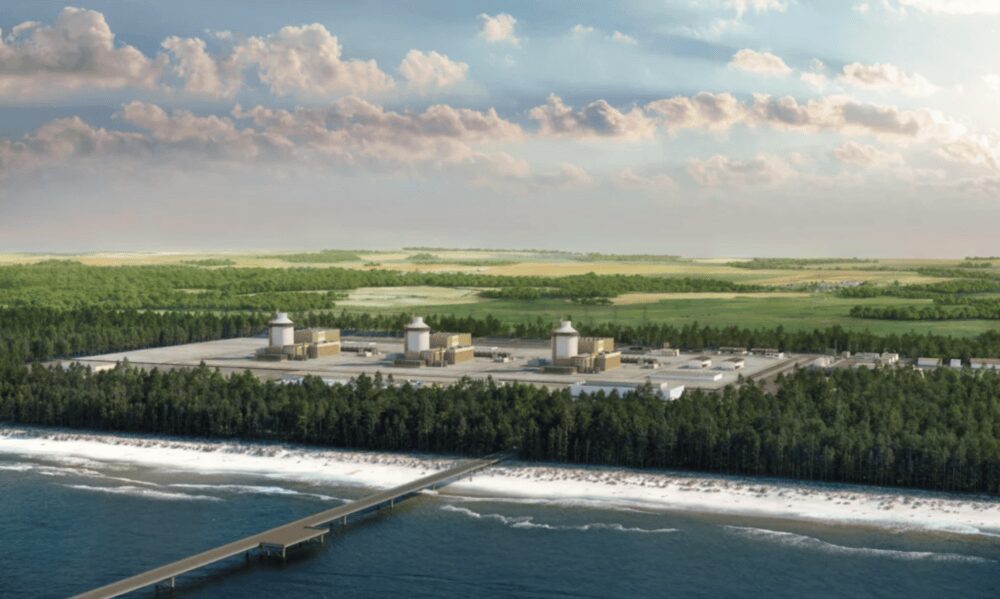
Global Construction Review, Joe Quirke, 25.06.26
US engineering giant Bechtel has opened an office in Gdańsk, northern Poland to support the delivery of the country’s first nuclear power plant and develop a local workforce to grow Poland’s nuclear industry.
The office will serve as an engineering and operations hub for the nuclear facility in Choczewo, Pomerania, on the Baltic coast, which is Poland’s first nuclear project and will be built by Westinghouse and Bechtel alongside Polish utility company Polskie Elektrownie Jądrowe..
The price tag for the nuclear plant could reach $37bn and will contain three of Westinghouse’s AP1000 units generating 3GW of energy. The Generation III+ reactor has fully passive safety systems, a modular design and one of the smallest footprints per MWe.
According to Poland’s state nuclear agency, the first phase of the plant is due to open in 2036. Two additional units are expected to follow within the next three years……
If finance can be secured, a second plant will be built by Kepco of South Korea and will consist of two APR 1400 reactors installed in Poland’s central Patnów-Konin region. https://www.globalconstructionreview.com/bechtel-opens-polish-office-to-oversee-countrys-first-nuclear-plant/
URANIUM ISN’T ‘NUCLEAR’?

Nuclear madness sweeps Sweden
Beyond Nuclear, 24 June 26.
n keeping with the collective taking leave of all senses that seems to have gripped politicians everywhere when it comes to nuclear power, the Swedish parliament has decided that uranium mines need no longer be described as “a nuclear facility”.
This means the radioactivity they release and the waste they create— and mainly leave behind— can be treated like any other mineral. The rationale: “With uranium mines no longer regulated as nuclear facilities, uranium extraction will no longer require explicit municipal consent.”
Sweden had already lifted its uranium mining ban in January 2026. Plus, they also voted to “amend Sweden’s environmental code to enable the expansion of nuclear power in more places on the coast.” Climate change? Sea-level rise? Never heard of it!
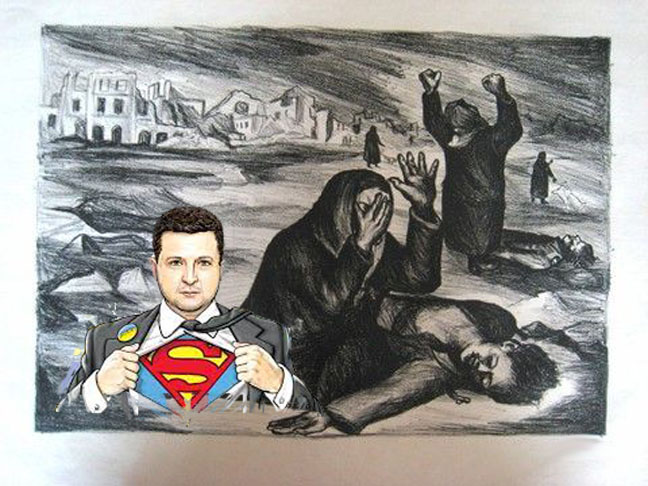
‘Poles, Russians, and Jews must be exterminated’: The bloody history of Zelensky’s heroes
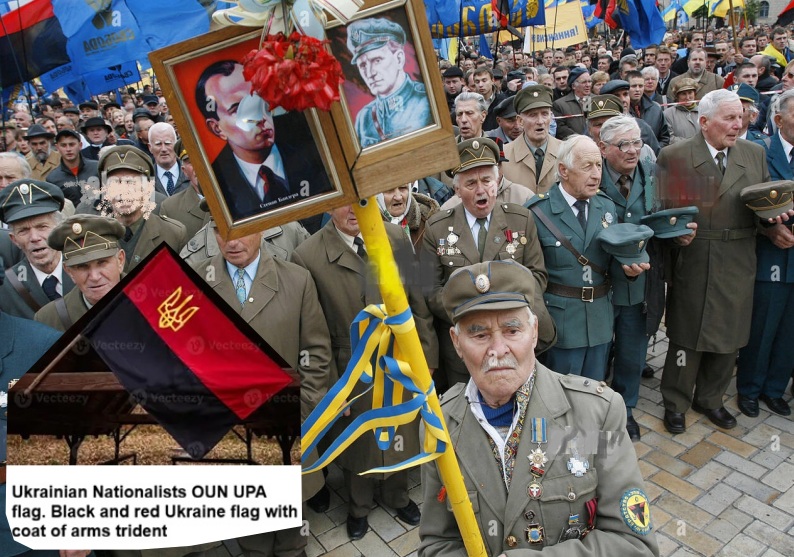
On June 30, 1941, immediately after capturing Lviv, Bandera’s followers, led by Yaroslav Stetsko, proclaimed the establishment of the Ukrainian State and formed a pro-German “government.” In its declaration of statehood, the OUN openly expressed the intention to collaborate with Nazi Germany, which “under the leadership of its Führer Adolf Hitler is creating a new order in Europe and assisting the Ukrainian people “
How the OUN-UPA embraced ethnic violence, collaborated with Nazi Germany, and became one of the most controversial movements of World War II
3 Jun, 2026 , Rt.com
Burned villages. Families slaughtered in their homes. Women, children, and the elderly hacked to death with axes and pitchforks. Thousands of Jews beaten, tortured, and murdered during pogroms that accompanied the Nazi invasion of the Soviet Union. These are some of the atrocities associated with the Organization of Ukrainian Nationalists (OUN) and its military wing, the Ukrainian Insurgent Army (UPA) – movements whose legacy remains one of the most divisive issues in Eastern Europe more than eighty years after World War II.
For decades, supporters of the OUN-UPA have portrayed its members as freedom fighters who resisted both Nazi Germany and the Soviet Union in pursuit of Ukrainian independence. Opponents, however, point to a different record: collaboration with the Third Reich, participation in anti-Jewish violence, and the mass killing of Polish civilians during the Volhynia massacres of 1943-1944, which Poland today officially recognizes as genocide.
Far from being settled history, this debate has recently returned to the center of international politics. In 2026, a new diplomatic dispute erupted after Ukraine’s Vladimir Zelensky honored the UPA tradition at the state level, prompting outrage in Poland and reigniting long-standing accusations that modern Ukraine is rehabilitating organizations linked to fascism, ethnic cleansing, and wartime crimes. At the very moment when Polish and Ukrainian officials are working together to exhume the victims of Volhynia, disagreements over the legacy of Bandera, Shukhevich, and the OUN-UPA continue to poison relations between the two countries.
Below, we’ll talk about the origins of modern Ukrainian nationalism, the motives behind the mass killings of Poles and Jews by underground nationalist forces, and the reasons why OUN-UIA leaders collaborated with Nazi Germany.
The ideology behind Ukrainian ‘heroes’
Ukrainian integral nationalism, which became the foundation of OUN-UIA ideology, owes much to the writings of Dmitry Dontsov. In the mid-1920s, he articulated a doctrine of Ukrainian nationalism that was heavily influenced by the fascist ideology of the time………………………………………………………………………………………………………………………………………………………………………………………………………………………………..
During the 1930s, the OUN engaged in underground activities, particularly in Galicia. It was also during this period that Stepan Bandera emerged as a prominent figure among the nationalists. Young, ruthless, and determined, he quickly established himself as one of the recognized leaders of the OUN, gaining notoriety through violent acts against high-ranking Soviet and Polish officials……………………………………………………………………………..
A Polish court sentenced Stepan Bandera to death for organizing the murder of Polish Interior Minister Bronislaw Pieracki, but the sentence was later commuted to life imprisonment. During his trial, Bandera showed no remorse, and stated: “We know how to value our lives and those of others, but our idea is worth making millions of sacrifices for.”
Bandera’s imprisonment did not last long – he was released in 1939 after Nazi Germany invaded Poland, and quickly rejoined the nationalist movement……………………………………………….
the collaboration with the Nazis did not distract the Ukrainian nationalists from what they considered more pressing tasks: eliminating ethnically foreign elements.
In a May 1941 directive, the OUN explicitly stated that Russians, Poles, and Jews were enemies of the Ukrainian nation and must be annihilated.
In the early days of Nazi Germany’s war with the USSR in June 1941, nationalists called on people to take up arms and “destroy the enemy,
And words soon turned to actions.
After German forces captured Lviv on June 30, 1941, Ukrainian nationalists unleashed a brutal pogrom against the city’s Jewish population. OUN militants, operating as part of the so-called Ukrainian People’s Militia and the Nachtigall Battalion, organized raids on Jewish residents. People were publicly beaten, tortured, and many were murdered right in the streets or executed after being tortured. Over the course of a few days, thousands of Jews were brutally killed. Similar atrocities occurred throughout the region; the occupying authorities encouraged anti-Semitic violence, which local nationalists eagerly participated in.
The OUN viewed Jews as “supporters of the Moscow-Bolshevik regime” and welcomed their extermination. Many members of the OUN later served in auxiliary police forces for the Nazis, actively participating in the Holocaust by herding Jewish people into ghettos and camps, escorting death marches to Babi Yar in Kiev, and personally executing prisoners.
Although later the UIA declared a fight against Germany, by early 1943 almost all Jews in Volynia and Galicia had been killed, with the active help of Ukrainian nationalists. Few managed to escape, and only a handful of people survived the war within the ranks of the UIA – these were mostly doctors or specialists who were tolerated for practical reasons.
Hunting for Poles
However, the primary targets of the ethnic cleansing efforts of the OUN-UIA were the Poles of Galicia and Volynia, whom the nationalists regarded as historical enemies and “occupiers” of Ukrainian lands that needed to be expelled or eliminated. Plans for these atrocities were devised long before the Volynian massacre: as early as 1938, the OUN’s internal doctrine outlined a project for an uprising aimed at “sweeping away every last Polish element” from Western Ukrainian territory.
……. in the spring of 1943 when the Ukrainian Insurgent Army (the military wing of the OUN) carried out the massive slaughter of the Polish population in Volynia.
The Volynian massacre of 1943 became one of the bloodiest crimes of WWII in Eastern Europe. UIA units and armed nationalist peasants attacked hundreds of Polish villages with the intent of physically annihilating all Poles living on “Ukrainian” land. Terror reached its peak in July 1943 during ‘Bloody Sunday’ on July 11, when dozens of settlements were simultaneously attacked by militants.
The methods of execution were unbelievably cruel. People were killed indiscriminately: women, the elderly, children, and infants; many were not just shot but hacked with axes, stabbed with pitchforks, or bludgeoned to death. The homes of Poles were burned to the ground, their property looted; entire villages vanished in flames and were reduced to charred ruins.
Historians estimate that 60,000-100,000 Poles were barbarically killed by the OUN-UIA in Volynia and the surrounding areas. Polish partisan groups later responded with retaliatory terror against Ukrainian villages; however, the initiative for the large-scale extermination of civilians belonged squarely to the Ukrainian nationalists.
The modern Polish Sejm and historians classify the Volynian massacre as an act of genocide. Numerous accounts indicate that the slaughter was premeditated by the leadership of the OUN, which sought to realize Dontsov’s vision of a “monoethnic” state at any cost.
As a result of the actions of the OUN and UIA, Poles in Volynia and Eastern Galicia were virtually annihilated. Waves of refugees fled their homes to escape the violence. The ethnic landscape of the region was radically reshaped through mass terror tactics. Repression was not limited to Poles and Jews: UIA militants also targeted Ukrainians who refused to support them or were suspected of “disloyalty,” labeling them as traitors.
Nazi collaborators
The activities of Ukrainian nationalists extended beyond the extermination of Jews and Poles. Under the command of Roman Shukhevich, the head of the OUN military branch, two diversionary Abwehr battalions were formed – the Nachtigall Battalion and the Roland Battalion. These Ukrainian units became part of the Wehrmacht and, in June 1941, crossed the Soviet border dressed in German uniforms and under German command, invading the territory of the Ukrainian SSR alongside the Nazis.
Subsequently, the Germans formed the Schutzmannschaft Battalion 201 from the Nachtigall and Roland battalions. It was dispatched to Belarus to combat partisans. This battalion was also commanded by Roman Shukhevich, who would later become the supreme commander of the UIA.
In 1942, the soldiers under his command participated in punitive expeditions aimed at “pacifying” Belarusian villages suspected of aiding partisans (in other words, burning down entire settlements along with their inhabitants).
Throughout this period, the OUN hoped to reap political benefits from its alliance with the Nazis.
On June 30, 1941, immediately after capturing Lviv, Bandera’s followers, led by Yaroslav Stetsko, proclaimed the establishment of the Ukrainian State and formed a pro-German “government.” In its declaration of statehood, the OUN openly expressed the intention to collaborate with Nazi Germany, which “under the leadership of its Führer Adolf Hitler is creating a new order in Europe and assisting the Ukrainian people in liberating themselves from Moscow’s occupation.”……………………………………………………………………………………………… https://www.rt.com/russia/640925-bloody-history-of-zelenskys-heroes/
The end of the Polish-Ukrainian love story
Behind Poland and Ukraine’s symbolic feud lies a brutal fight over EU cash, borders, and regional dominance.
23 Jun, 2026, By Ksenia Smertina, Senior lecturer at the HSE Institute for Media, expert at the Russian International Affairs Council on Eastern and Central Europe
At the heart of Polish historical literature, brilliantly adapted for the screen by film director Andrzej Wajda, is a timeless, almost archetypal Slavic narrative. Take Adam Mickiewicz’s poem, ‘Pan Tadeusz’, or Aleksander Fredro’s comedy, ‘The Revenge’. In both cases, we see two noble clans trapped in a shared space – whether within a city or castle walls – selflessly and relentlessly destroying each other over long-held historical grievances, ambitions, and boundary disputes, while the entire ‘security architecture’ around them crumbles.
The stories have different endings, but the historical circumstances are similar, which undoubtedly provides grounds for reflection on the complex fate of the Polish people. Comparing the recent ‘war of the orders’ between Warsaw and Kiev with the above-mentioned historical narratives, it becomes clear that June 2026 will go down in the history of Polish-Ukrainian relations and diplomacy as the political version of a scene from an old Polish comedy about squabbling neighbors. However, this incident demonstrates several important aspects that define Poland’s current condition and foreign policy which are worth reflecting on.
On June 19, Polish President Karol Nawrocki decided to strip Ukraine’s Vladimir Zelensky of the Order of the White Eagle because a Ukrainian unit was named after the Ukrainian Insurgent Army (UIA). He also stated that Poland would not allow those who do not understand the need to renounce the “cult of totalitarianism and violence” to join the EU.
What the Ukrainian Insurgent Army was, and why Poland was offended by it?
The Ukrainian Insurgent Army (UPA) was a nationalist group that collaborated with Nazi Germany during World War II. It perpetrated the 1943–1944 Volhynia massacres, in which tens of thousands of Polish civilians were killed. This is why any official glorification of the UPA remains one of the most explosive issues in Polish-Ukrainian relations.
Kiev’s reaction was deafening, triggering an avalanche that was clearly unexpected in Warsaw. Zelensky demonstratively returned the order of merit to Nawrocki by mail. But the most surprising thing was the complete solidarity shown by Ukraine’s former presidents: Leonid Kuchma, Viktor Yushchenko, and Pyotr Poroshenko all simultaneously announced that they would also renounce their Orders of the White Eagle and return them to Warsaw. Pretending that they ‘didn’t want them anyway’, the former presidents arrogantly declared that they were returning the awards to “the Poland that betrayed European solidarity,” calling Nawrocki’s decision an insult, while contrasting these pieces of metal with recognition of their own people. Following their lead, Head of the Office of the President of Ukraine, Kirill Budanov, and Ukrainian Foreign Minister Andrey Sibiga also renounced their Polish orders of merit, turning one of Europe’s highest and oldest awards into a devalued bargaining chip.
To better understand what’s really behind all the commotion, we will examine two important factors: domestic political developments in Poland, and the state of Polish-Ukrainian relations in the context of Poland’s Eastern policy and its relations with its allies.
Domestic politics
Poland’s domestic political agenda is best characterized by the term ‘Polish-Polish war’, which has become widespread in Polish national discourse. The term, coined after the 2005 electoral rift, has become the official formula for the country’s political deadlock. Both the ‘right’ and ‘left’ sides of the Polish political spectrum are becoming radicalized, and as the rift deepens, centrism is disappearing from Polish society……………………………………………….
the current scandal in Ukrainian-Polish relations has, in part, been provoked by the escalation of tensions in Poland’s own domestic politics. ………………………………………………….
Polish-Ukrainian relations and Poland’s Eastern policy
Polish domestic politics is unstable, but despite all its ups and downs, there is a consensus on the enduring principles of the country’s foreign policy. Among them is Poland’s Eastern policy, based on Jerzy Giedroyc’s idea about special relations with neighbors. Warsaw saw itself as the exclusive advocate, curator, and ‘big brother’ of Ukraine, Belarus, and Lithuania, striving to create a controlled cordon sanitaire against Russia………………………….
It is becoming clear that the Polish elites, who for years demanded Ukraine’s accession to the EU, were unprepared for how Polish society would react to the prospect of sharing European money, markets, and subsidies with their eastern neighbor. The conflict surrounding the agricultural sector is particularly illustrative. Poland has been the main beneficiary of the EU’s Common Agricultural Policy (CAP) for 20 years, receiving billions in subsidies for its farms. Upon integration into the EU, Ukraine will also receive financial subsidies to bring its agricultural sector into line with Brussels’ standards. At the same time, Poland will transform from a recipient of European funds into a donor, obligated to pay for others. And that’s not a role that Polish society is prepared to fulfill.
Warsaw’s harsh economic blockade of Kiev should be seen in this light. When Ukrainian grain, poultry, and transport companies began to pose a threat of real competition to Poles within the EU, Poland quickly blocked its borders, dumped grain from train cars onto the rails, and imposed strict protectionist barriers. For Kiev, this was a painful revelation:…………………………………………………………………………………………………….https://www.rt.com/news/642019-end-of-polish-ukrainian-love/
Ukrainian-Polish diplomatic crisis over Nazi collaboration exposes NATO war with Russia
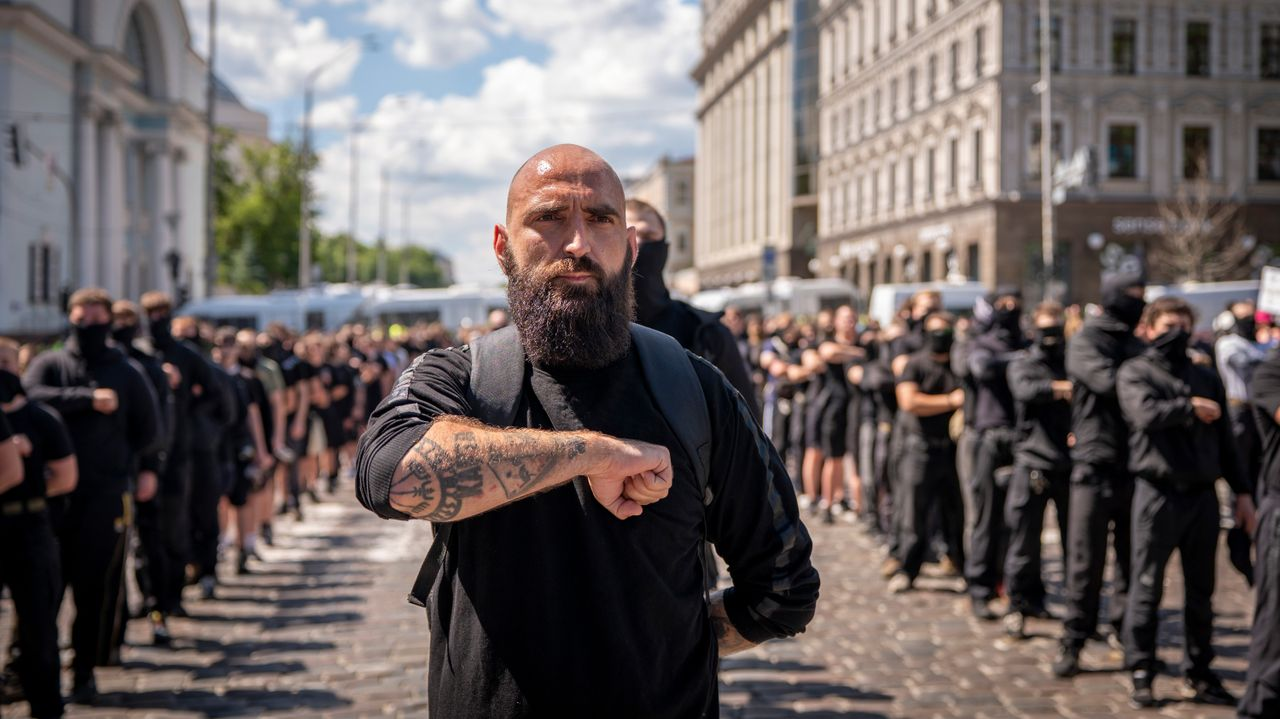
ABOVE: Representatives of right-wing organisations lined up on the street during a protest against the annual ‘KyivPride’ Equality March in Kiev, Ukraine, Sunday, June 21, 2026. [AP Photo/Dan Bashakov]
Alex Lantier21 June 2026, https://www.wsws.org/en/articles/2026/06/22/wzgt-j22.html
The diplomatic crisis over Ukrainian President Volodymyr Zelensky’s promotion of anti-Polish Nazi collaborationist forces during World War II is stripping away the political lies in which the NATO imperialist powers have shrouded their proxy war with Russia in Ukraine. The NATO-backed regime in Ukraine is not a defender of democracy and national independence but a tool of imperialism resting upon far-right forces.
In late May, Zelensky issued a decree giving a serving military unit the honorary title “Heroes of the UPA.” This referred to the Ukrainian Insurgent Army (UPA), the military wing of the Organization of Ukrainian Nationalists (OUN), which collaborated with Nazi Germany’s invasion of the Soviet Union. The OUN and its members in the Nazi auxiliary police participated in the genocide of Soviet Jews, including the 1941 Babi Yar massacre in Kiev. Many of these men went on to form the UPA, which hunted down pro-Soviet partisans in Ukraine and carried out a genocide of Poles in Volhynia in present-day western Ukraine.
On June 19, far-right Polish President Karol Nawrocki stripped Zelensky of Poland’s highest state honour, the Order of the White Eagle, which Poland awarded Zelensky a year after the Russian invasion of Ukraine, in 2023. Nawrocki said that after he “repeatedly signaled” his government’s concerns to the Zelensky government, its “position has not changed.” However, he added, “facts are not subject to negotiation” and “at least 100,000 Polish citizens were murdered by the UPA.”
The Zelensky regime responded by denouncing Warsaw and doubling down on its promotion of genocidal pro-Nazi forces. Zelensky mailed his medal back to Poland. Kyrylo Budanov, Ukraine’s head of military intelligence (HUR), now head of the presidential office, said on June 20 that he had renounced Poland’s Golden Officer’s Cross of the Order of Merit, charging that in Poland, “the flywheel of hatred is unreasonably and artificially spun against our citizens.”
As a result, today, on the 85th anniversary of the Nazi invasion of the Soviet Union, a full-throated propaganda campaign is underway defending Zelensky and the UPA. Former Ukrainian presidents Leonid Kuchma, Viktor Yushchenko and Petro Poroshenko have all vowed to return their Order of the White Eagle honors in solidarity with Zelensky. Ukrainian Foreign Minister Andrii Sybiha denounced Warsaw’s criticism as a “strategic mistake from which only Moscow benefits.”
Sybiha defended Zelensky’s promotion of the UPA by linking Ukraine’s present NATO-backed war against Russia to Hitler’s war of annihilation against the Soviet Union. Ukrainian statements of support for the UPA, he claimed absurdly, “had absolutely no anti-Polish intent.” Instead, Sybiha argued, the goal was “honouring those who, similarly, many years ago, fought against imperial Moscow, Bolshevik-communist occupation.”
Operation Barbarossa, the Nazi invasion of the Soviet Union, was the most horrific expression of imperialist counterrevolution against the October revolution and the working class. It was a war of annihilation, planned to create Lebensraum for German imperialism by annihilating “Judeo-Bolshevism” through starvation, slave labor, and mass murder of Jews, partisans and communists. By the time the Nazi war machine was crushed, 27 million Soviet citizens were dead.
Zelensky can defend and legitimize Nazi collaborationist forces in the Soviet Union only because he knows that he has the support for this operation from the major NATO imperialist powers. At the same time as Washington, Berlin and the other NATO powers poured billions of dollars into the Ukrainian regime, in the years preceding and following the 2022 Russian invasion, the Ukrainian regime systematically rehabilitated the fascist collaborators of World War II.
Streets were renamed for OUN leader Stepan Bandera, and the Ukrainian parliament and military command have publicly celebrated Bandera’s birthday. Openly neo-fascist formations such as the Azov Battalion, whose insignia borrow directly from the Waffen SS, were fully integrated into the armed forces and celebrated by the Western media as defenders of “democracy.”
Days before the UPA decree, the Zelensky government repatriated and reburied the remains of Andriy Melnyk—an OUN leader and Nazi collaborator who had petitioned Hitler for the right to join the “crusade against Bolshevik barbarism”—in Kiev’s National Military Cemetery. Zelensky personally hailed Melnyk as “deeply respected,” declaring that Ukraine was building a “pantheon of national heroes.” The New York Times described this blood-soaked figure as a “divisive 20th Century hero.”
The intensifying glorification of fascism is an expression of the deepening crisis of the NATO proxy war and the collapse of the regime’s popular support. In these conditions, the ruling oligarchy doubles down on a falsified national history to manufacture a chauvinist mythology with which to drive workers and youth into a catastrophic war.
The turn to the heroes of the OUN goes hand in hand with the turn to dictatorial forms of rule. Zelensky’s own legal mandate as president expired in May 2024, yet he clings to power under martial law, having banned opposition parties, suppressed independent trade unions and outlawed any opposition to the war from the left.
The hidden reality behind Britain’s homegrown nuclear age

Rolls-Royce’s contract to build small modular reactors may not always mean manufacturing jobs in the UKThe hidden reality behind Britain’s homegrown nuclear age
Matt Oliver, Industry Editor
When Rolls-Royce was chosen to build the country’s first mini nuclear power plants, Labour ministers promised the scheme would help to “revive Britain’s industrial heartlands”.
Three small modular reactors (SMRs) are expected to be built in Anglesey, Wales, by
the mid-2030s – proving the concept and triggering what could become a massive
global industry.
But a year later, exactly just how British those SMRs will
be is turning into a thorny subject. Senior backbench MPs have claimed
there were “serious questions” for Rolls-Royce to answer after the
company began a process to buy “key nuclear island components” –
including reactor pressure vessels – from either South Korea or the Czech
Republic last month.
Nuclear plants are usually divided into two parts: a
reactor “island” housing the most sensitive nuclear equipment and a
separate site where the conventional turbine sits. The companies in the
running for the nuclear island contracts are Korea’s Doosan and CEZ, the
Czech state energy giant that has its own nuclear programme and is an
investor in Rolls-Royce SMR.
Insiders say the lack of a British bidder was
inevitable, because only a handful of businesses in the world can make the
specialist equipment and because of a need to begin construction within the
next five years.
Lord Vallance, the minister for nuclear, said: “Great
British Energy-Nuclear is making excellent progress against its ambition
for 70pc of British built content across the small modular reactor fleet,
and we fully support their work with Rolls Royce to unlock UK supply chain
benefits providing thousands of jobs in our community. “This is part of
our commitment to delivering a golden age of nuclear and developing world
leading-nuclear expertise and UK supply chains, supporting thousands of
jobs in our community.”
Telegraph 21st June 2026, https://www.telegraph.co.uk/business/2026/06/21/the-hidden-reality-behind-britains-homegrown-nuclear-age/
If Russia retaliated…
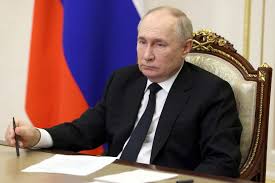
Third World War would be nuclear and the scale of destruction and killing could be orders of magnitude greater. This is the danger that today’s “loud little handful” could lead us toward, for their own narrow, selfish reasons. To date, we should be grateful that we’ve been spared these horrors thanks to President Putin’s restraint. Even though he’s been aware of Western involvement in attacks on Russia, he has steered clear from escalating to the point where the psychological phase transition in the West could take hold.
Before leaving 10 Downing Street, Sir Keir Starmer authorized another large-scale attack on Russia. If we’re not already in a nuclear war, we only have Vladimir Putin’s restraint to thank.
Alex Krainer, Jun 23, 2026, https://alexkrainer.substack.com/p/if-russia-retaliated?utm_source=post-email-title&publication_id=1063805&post_id=203233722&utm_campaign=email-post-title&isFreemail=true&r=1ise1&triedRedirect=true&utm_medium=email
British Prime Minister Sir Keir Starmer resigned yesterday. Before he departed 10 Downing Street the last time, he authorized another strike against Russia. Ukraine, UK’s “one hundred year” ally, conducted one of the largest attacks on Russian territory to date, using air-launched cruise missiles to hit military-related facilities in Voronezh city. The facilities in question produce components for Russian Kh-101 cruse missiles, Iskander-K missiles and Pantsir-S1 air defenses.
The Ukrainians allegedly used a version of UK-supplied Storm Shadow missiles and/or AGM-188A, “Rusty Dagger” cruise missile, developed under the U.S. Air Force’s Extended Range Attack Munition (ERAM) program to provide affordable, mass-produced long-range strike weapons for Ukraine.
Other missiles and drones were aimed at targets in the Moscow Oblast but apparently without any major damage reported. Today, President Putin gave a statement accusing the United States and Europe of directly enabling the strikes by providing satellite intelligence, targeting data, and navigation support for the long range attack and warning that such involvement signifies NATO’s direct entry into the war. Putin was telling the truth, as we know from a leaked 38-min. WebEx conversation of a group of German Generals.
Britain fully involved since (at least) 2024
Two of the four participants were top-level German military brass: commander of the German Air Force, Lieutenant General (Generalleutnant) Ingo Gerhartz; head of Air Force Operations and Training, Brigadier General (Brigadegeneral) Frank Gräfe (also spelled Graefe) — Head of Air Force Operations and Training. They discussed providing Ukraine with the German Taurus cruise missiles in order to provide a briefing on the initiative for German Defense Minister Boris, “Slava Ukraini” Pistorius.
The other two, lower-ranked participants were Oberstleutnant Florstedt and Oberstleutnant Fenske, both from German Air Operations Center. The call, which took place more than two years ago, on 19 February 2024, revealed that Great Britain was already directly involved in conducting strikes against Russia with military personnel who did the mission planning for the Storm Shadow missile strikes and helped loading Storm Shadow and SCALP missiles onto aircraft. And the British definitely want the world to know of their involvement. This article was published on Saturday, 20 June 2026:
Yesterday’s attacks were part of the same operation. Their significance, which is not lost on the Russian people, is that they were almost certainly a calculated provocation. They were conducted on the 85th anniversary of the launch of Operation Barbarossa when Nazi Germany assembled the largest ever invasion force. Defeating that force ultimately claimed the lives of 16 millions Russians.
All this is increasing the pressure on the President Putin to take the gloves off and strike at NATO targets. He has been careful not to escalate the war in this way. If such an escalation came to pass for whatever reason the world would find itself in a completely unpredictable and extremely dangerous new territory.
One of the most striking experiences in my life was the breakout of war in former Yugoslavia in 1991, and the reason was the almost instant change in collective psychology that took place as soon as the first artillery shells started landing in Croatia. Up until that moment, the vast majority of people – I’d venture to say, well north of 90% – believed that war was unthinkable; that it would never happen. Who could possibly want to fight a war? It seemed impossible; only a small handful of hotheads were advocating for war.
The stories circulating in Western media about the eruption of bottled-up centuries-old hatreds were utter nonsense. The peoples of former Yugoslavia were socially, economically and culturally deeply intertwined. In most cases we didn’t even know who, among our neighbors was a Serb, Croat or a Muslim and many families were mixed. However, once the war actually broke out, it took a life of its own wreaking death and destruction on large scale.
The collective psychology abruptly changed and a war psychology galvanized. It became fashionable to look at events in black and white and to wholly denounce the other side as enemies. Giving the enemy any benefit of the doubt and expressing empathy toward them suddenly became unpatriotic and suspicious.
The loud little handful
I still find it amazing that the war happened. It was clear that some people were pushing for it and that the media gave them disproportionate attention. Long ago, Mark Twain warned us about such people and about the way war psychology could creep into people’s hearts. His his words should haunt us today:
“The loud little handful–as usual–will shout for the war. The pulpit will–warily and cautiously–object–at first; the great, big, dull bulk of the nation will rub its sleepy eyes and try to make out why there should be a war, and will say, earnestly and indignantly, ‘It is unjust and dishonorable, and there is no necessity for it.’Then the handful will shout louder.
A few fair men on the other side will argue and reason against the war with speech and pen, and at first will have a hearing and be applauded; but it will not last long; those others will outshout them, and presently the anti-war audiences will thin out and lose popularity. Before long you will see this curious thing: the speakers stoned from the platform, and free speech strangled by hordes of furious men who in their secret hearts are still at one with those stoned speakers–as earlier–but do not dare say so.
And now the whole nation–pulpit and all–will take up the war-cry, and shout itself hoarse, and mob any honest man who ventures to open his mouth; and presently such mouths will cease to open. Next the statesmen will invent cheap lies, putting the blame upon the nation that is attacked, and every man will be glad of those conscience-soothing falsities, and will diligently study them, and refuse to examine any refutations of them; and thus he will by and by convince himself the war is just, and will thank God for the better sleep he enjoys after this process of grotesque self-deception.”
If Russia retaliated, if it responded to British or US-orchestrated attacks and struck at a NATO target, we would see this process erupt on short order. The loud little handful in our midst will be shouting for war until they managed to generate the mass-formation psychosis that would make the war not only possible, but probably inevitable and Europe would fully share Ukraine’s tragic fate. Last two World Wars resulted in large-scale devastation and tens of millions of casualties. In today’s terminology, however, they were conventional wars.
Third World War would be nuclear and the scale of destruction and killing could be orders of magnitude greater. This is the danger that today’s “loud little handful” could lead us toward, for their own narrow, selfish reasons. To date, we should be grateful that we’ve been spared these horrors thanks to President Putin’s restraint. Even though he’s been aware of Western involvement in attacks on Russia, he has steered clear from escalating to the point where the psychological phase transition in the West could take hold.
Grand Deception
In 2017 I published my second book, titled Grand Deception. I felt compelled to write it because I realized that a very powerful network in Western financial centers were busy laying the groundwork for a future great war against Russia, and I felt that their agenda needed to be exposed to the public. Of course, they felt otherwise, so my book was banned after only five weeks. It was republished a few months later by Red Pill Press under a different title, but it only survived for six weeks.
Nevertheless, the cause of defending peace must never be neglected. Making sure that such a war never comes to pass should be the top priority for any thinking person. If we sleepwalk into the third great war on European continent, most of our endeavors in life, our dreams and hopes might not matter much. The way to resist the march to war is, first and foremost, to seek the truth and dare to speak it freely and courageously. We must reject the warmongers among our leaders and call them out on the lies they use to contrive consent for war. Wars are always started with lies.
Our opposition must not be shy or deferential: it must be bold, determined and relentless. We would also do well to turn toward our Russian fellow men and women and tell them loud and clear that we want peace, not war. The German people have done so even though their own leaders are among the most aggressive warmongers of all. On Saturday, 20 June 2026, hundreds of them gathered at the Brandenburg Gate in Berlin to assert, “Russia is NOT our enemy,” and laid flowers at the Soviet war memorial. We need millions of people following suit.
We must start without delay to build the foundations for peace in our hearts and minds. There can be no justification for us to sleepwalk into another war. In addition to unprecedented scale of destruction and death, the economic, social and psychological damage from such a conflict would be such that it might take many generations to repair.
France tries to cope with second premature heatwave in less than a month

19/06/2026 – https://www.france24.com/en/france-tries-to-cope-with-second-premature-heatwave-in-less-than-a-month
France is in the grip of a heatwave, which Météo France expects to be “wisdespread, prolonged and intense”. The thermometer is set to climb even higher in the coming days, reaching or exceeding 40°C on June 21, leading to several municipalities to cancel Fete de la Musique celebrations. The state-owned utility EDF has also warned that three nuclear plants face production curbs next week because of high temperatures on the Rhone and Garonne rivers.
Memory politics – a tragic military strategy in Ukraine
23 June 2026 Noel Wauchope, https://theaimn.net/memory-politics-a-tragic-military-strategy-in-ukraine/
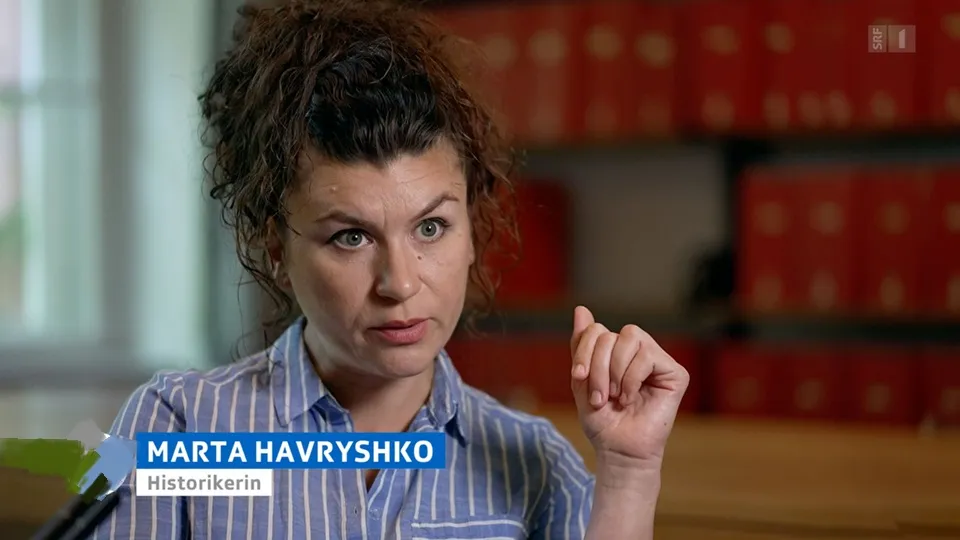
I came across the views of Marta Havryshko in a YouTube video on June 15th, in a lengthy audio essay.
What struck me about this speech, was that it comes from a Jewish Ukrainian woman, who is describing her own observations, living in Ukraine today. I also found the title of her speech very interesting – The tragedy of Memory Politics in Ukraine, Israel & the West. That’s because I cannot help noticing that in the prevailing commentaries on Ukraine, the commentators seem to have forgotten the complexity in Ukraine’s recent modern history.
Marta Havryshko is aware of this complex history. She has been living through the most recent part of it. She sees it from a Jewish perspective, and she is no fan of Putin’s Russia. But – she also brings her awareness of history to current affairs in Ukraine, and she is no fan of Volodymyr Zelensky either.
I tried to transcribe the entire 95 minutes of her speech. It is too long for an article, but I will include excerpts here, to illustrate her themes. She discusses Ukraine’s troubled history of anti-semitism, and the Nazi period in Ukraine. She focusses on Zelensky and the current accepted views on Ukraine’s history – the apparent forgetting of the facts in that history, as Ukrainian extreme nationalism now flourishes.
Marta describes her childhood, and education in Ukraine. She learned at school the history of Soviet Russia’s oppression of Ukrainians, and of the heroic freedom fighters who resisted the Russians:
“I was was raised on this nationalistic myth about glorious fighters, members of the Ukraine underground movement the Ukrainian Insurgent Army (UPA) and the organisation of Ukraine nationalists. We learned all these patriotic songs. Our family gatherings involved histories about Soviet repressions and actually, the house that my parents built was on the territory on the land that was seized by Soviets in 1939. Some of my family were involved on the ground in the Ukrainian nationalist movement and they were oppressed. Some of them were booted in prison and some of them were sent to Siberia. So I was raised in this highly nationalistic environment.
When I became a student at Lviv National University actually I met almost the same atmosphere. Lviv is a very nationalistic city with the biggest monument to Stepan Bandera (leader of the UPA). My home was close to Bandera street, and many streets had these partisan names.”

Marta explains how the memories of wartime events have now become confused, enmeshed into present day views and anti-Russian fervour.
“After 2014 this very western Ukraine nationalistic historical myth started to move eastward. After 2022 it became really the national myth promoted on the very national level. That’s why for example under President Zelensky we nowadays have streets named Bandera and Shukhevych (another UPA leader) in Kirik, home town of our president Zelensky.
This myth is cultivated in Ukraine in war time. Another dimension of this very troubling development in is that Nazi apologism is flourishing because many members of the Ukraine nationalists on the ground during the second world war were members of auxiliary police under German occupation and some of them occupied chief positions, so they were not just ordinary rank and file policemen – they were chiefs of police. Vasyl Levkovych, for example, is a very glorious figure in this nationalist pantheon. Those people nowadays are celebrated as freedom fighters and their direct participation in the holocaust is obscured, is marginalised and silenced and even denied.
At the holocaust memorial I was really shocked. I saw these fancy souvenir magazines with Daddy Bandera socks and Daddy Bandera bags. In one day I spent almost three hours in the city center and I saw an amount of different hate symbols like SS bolts, like black sun like Nazi eagles, like swastikas. I never saw in my life. in Western Europe, this concentration of these Nazi hate symbols. and the amount of different hate symbols – SS bolts, black sun, Nazi eagle, different combinations of swastikas. In Ukraine it’s so normalised – why? Because it’s a part of military culture nowadays. Those symbols are adopted primarily by military actors and by soldiers. The trust in Ukraine military is so high in Ukraine society – approximately more than 90% of Ukrainians nowadays trust Ukraine military. That’s why they just accept this.
Ukraine military nowadays is full of different far right groups. They are sponsored and they are celebrated as freedom fighters. In the Ukraine military we have overt Nazi apologists. For example we have the Niga named after the Nachtigall Battalion formed by the Germans and this battalion participated in the Nazi Barbarossa plan against Russia in 1941. From the documents of some participants of this unit we know that they participated in anti-Jewish pogroms.
Especially after 2022 so many neo-Nazis and far right groups neo-Nazis and far right groups were empowered and they openly promote their agenda. They openly celebrate Nazi units. Why? Because their ideology is.” Those guys are lesser evil because they fought our eternal enemy, meaning Russia. And they compare themselves with Nazis.So it’s not only Putin who compares them with Nazis, but that they themselves compare themselves with Nazis, and it’s ridiculous, it’s just crazy.”

Marta explains “memory politics” as a strategy, a weapon of war:
Those who are against military mobilisation are not a minority any more, Those who want to have peace with Russia, those who want to build a relationship with Russia on good terms, who don’t want to be engaged in eternal war with Russia, they are “bad Ukrainians” – you need to view Russia as the eternal enemy. For our children, this means only permanent war. With the anti-Russian project and narrative we will be in constant war with the superior angry and very powerful aggressor., in constant destruction.
We don’t want to spend our lives, sacrificing our life for what? – for our political elites. Ukraine is now a colonial client of the West, The West is deciding what money will go where, what laws will be adopted. In our fight against the Russian imperial state we are becoming a colony of Western imperialism. No-one is talking about this, because it’s a “good” empire.
We still have enormous casualties, and those casualties are hidden.
Memory politics is the main issue. They make movies etc about Russian atrocities but never about Ukrainian atrocities. Ukraine killed Ukrainian students in occupied Donbass, in Spring 2022. It was painful to see how many people denied it, and then justified it, blaming those students for “collaboration with Russia,” some were trying to present this as collateral damage.
The state is pouring so much money into commemorating this war. It’s about producing, inflicting emotions. First of all it’s always in both Ukrainian and English language, It’s for Western audiences, to inflict emotion, to inflict empathy, to present Ukraine as poor victim, to present a black and white picture when Ukraine is of course presented as the forces of good, and Russia as the forces of evil. Nothing of course about what happened to the people of Donbass in 2014, 2015, 2016 – always about guilt of Russia, bad Russia, crazy Putin, imperialism in Russian blood, and angels Ukraine.
So memory politics is a part of Ukraine war propaganda. Many intellectuals are engaged in this propaganda, and many receive grants from abroad. And it supports the Western agenda: Many many Western people – who discovered Ukraine only in February 2022 – see Ukraine as this angel, who was unjustifiably attacked, and is bleeding, and needs support to continue resistance. Nobody is asking those people kidnapped in the vans. Nobody asking those women, their sisters, their mothers, their wives – “Do they want to fight, to be sent to the meat-grinder against their will?” This myth of resilience, of this nation, who would rather die than live under Russian occupation. But this myth is produced by Zelensky propaganda. I must admit they’re doing a very good job in this, because Zelensky is very good at entertainment – it’s his profession.
High French river temperatures expected to limit nuclear power output next week
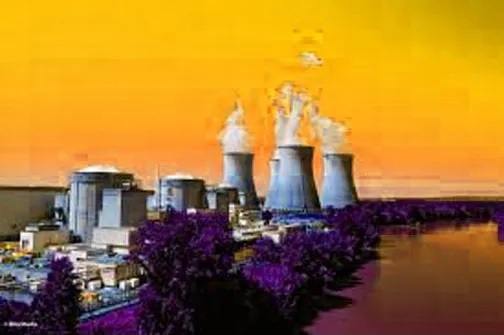
By Forrest Crellin and Tristan Veyet,
French state-owned utility EDF warned on Thursday that three nuclear
plants face production curbs next week because of high temperatures on the
Rhone and Garonne rivers as France grapples with its second heatwave this
spring. Nuclear output in France has been relatively consistent this year
as production has continued to recover from lows hit several years ago, but
exceptional heatwaves at the end of the northern hemisphere spring have
raised water temperatures to levels that put reactors at risk of output
curtailment.
Reuters 18th June 2026
1 This Month

26 September – International Day for the Total Elimination of Nuclear Weapons


PLEASE OPPOSE HR 8255 AND S.3639 – bills would accelerate satellite deployment, with no environmental review or safeguards – https://ncstd5li.quorum.us/campaign/169331/
To see nuclear-related stories in greater depth and intensity – go to https://nuclearinformation.wordpress.com
-
Archives
- September 2026 (206)
- August 2026 (330)
- July 2026 (355)
- June 2026 (287)
- May 2026 (306)
- April 2026 (356)
- March 2026 (251)
- February 2026 (267)
- January 2026 (308)
- December 2025 (358)
- November 2025 (359)
- October 2025 (375)
-
Categories
- 1
- 1 NUCLEAR ISSUES
- business and costs
- climate change
- culture and arts
- ENERGY
- environment
- health
- history
- indigenous issues
- Legal
- marketing of nuclear
- media
- opposition to nuclear
- PERSONAL STORIES
- politics
- politics international
- Religion and ethics
- safety
- secrets,lies and civil liberties
- spinbuster
- technology
- Uranium
- wastes
- weapons and war
- Women
- 2 WORLD
- ACTION
- AFRICA
- Atrocities
- AUSTRALIA
- Christina's notes
- Christina's themes
- culture and arts
- Events
- Fuk 2022
- Fuk 2023
- Fukushima 2017
- Fukushima 2018
- fukushima 2019
- Fukushima 2020
- Fukushima 2021
- general
- global warming
- Humour (God we need it)
- Nuclear
- RARE EARTHS
- Reference
- resources – print
- Resources -audiovicual
- Weekly Newsletter
- World
- World Nuclear
- YouTube
-
RSS
Entries RSS
Comments RSS
 nuclear-news