More issues reported during manufacture of Sizewell C’s reactor vessels than Hinkley Point C’s
01 Jul, 2026 By Tom Pashby, https://www.newcivilengineer.com/latest/more-issues-reported-during-manufacture-of-sizewell-cs-reactor-vessels-than-hinkley-point-cs-01-07-2026/
“Quality issues” relating to the manufacture of the reactor pressure vessels (RPVs) for Sizewell C have been identified by the Office for Nuclear Regulation (ONR) during an inspection by the regulator.
The number of “non-conformance reports” has increased at Framatome St Marcel (FSM) – the French manufacturer of the RPVs – compared to when it was manufacturing the RPVs for Hinkley Point C.
Sizewell C and the Department for Energy Security and Net Zero (DESNZ) have regularly highlighted how Sizewell C will be delivered more efficiently than Hinkley Point C because of how much design work can be copied over.
The Sizewell C – Inspection ID: 54200 report from the ONR, which was carried out in April 2026 and published on 22 June, reported that “manufacturing quality issues” had been identified at FSM.
The ONR stressed the importance of the RPV in its report. “The reactor pressure vessel (RPV) is manufactured by Framatome (manufacturer of nuclear equipment based in France),” it said.
“The RPV is a nuclear safety class 1 component which forms part of the primary circuit. It has been categorised as a high integrity component (HIC) within the SZC safety case.
“Therefore, the consequences of failure during operation cannot be tolerated and a highest reliability claim is made on the structural integrity of the RPV.”
The aim of the ONR’s inspection was for it to “make an informed judgement on the adequacy of SZC’s specification, control and oversight of RPV manufacture at FSM in compliance with LC12 and LC19.”
LC12 means License Condition 12, and required that “the licensee (meaning Sizewell C) shall make and implement adequate arrangements to ensure that only suitably qualified and experienced persons perform any duties which may affect the safety of operations on the site or any other duties assigned by or under these conditions or any arrangements required under these conditions.”
Meanwhile, LC19 requires that “where the licensee proposes to construct or install any new plant which may affect safety the licensee shall make and implement adequate arrangements to control the construction or installation.”
Regulator says additional scrutiny was not required over Hinkley Point C bullying concerns
26 Jun, 2026 By Tom Pashby
An MP’s claim that the Office for Nuclear Regulation (ONR) increased
scrutiny of Hinkley Point C over bullying allegations has been contested by
the regulator, NCE understands.
Liberal Democrat MP for Tiverton and
Minehead Rachel Gilmour raised concerns about bullying at Hinkley Point C
(HPC) during the House of Commons Public Accounts Committee (PAC) evidence
session on Sizewell C on 8 June. MPs challenged senior representatives of
Sizewell C on the project’s commitment to transparency around possible
future cost overruns.
Representatives also provided new details on the
infrastructure being built at the site. During the session Gilmour said:
“I want to ask about bullying […] my constituency includes Hinkley A,
Hinkley B and Hinkley C. Once elected, I was inundated with whistleblowers
and people who have great concerns about the bullying culture at Hinkley C,
to such an extent that I had a meeting with Simone Rossi, the chief
executive of EDF Europe, and the ONR.
“The ONR felt that the situation
was so bad that they had to put in extra scrutiny. I was joined by
WhistleblowersUK in that.” However, NCE understands that it is ONR’s
position that no additional regulatory measures or scrutiny have been
required at Hinkley Point C for any bullying or harassment issues.
New Civil Engineer 26th June 2026,
https://www.newcivilengineer.com/latest/regulator-says-additional-scrutiny-was-not-required-over-hinkley-point-c-bullying-concerns-26-06-2026/
Europe and Russia Edge Toward Direct War as Nuclear Fears Grow
Ray McGovern and Peter Kuznick examine Europe’s accelerating military buildup, Putin’s warning that Russia is prepared for war, and why they fear diplomacy is giving way to a dangerous escalation between nuclear powers.
Peter Kuznick’s sobering warning: “We’re planning for our own annihilation and extinction as a species.”
ScheerPost Staff, June 29, 2026, https://scheerpost.com/2026/06/29/europe-and-russia-edge-toward-direct-war-as-nuclear-fears-grow/
As Europe dramatically expands military spending and NATO leaders openly prepare for what they describe as a possible future conflict with Russia, questions are growing over whether the world is drifting toward a direct confrontation between nuclear powers.
On this week’s edition of The World This Week, Consortium News Editor Joe Lauria is joined by former CIA analyst Ray McGovern and historian Peter Kuznick to examine the increasingly dangerous escalation surrounding the war in Ukraine. The discussion explores Vladimir Putin’s warning that Russia is prepared for war, Europe’s accelerating militarization, the role of NATO-backed drone attacks deep inside Russian territory, and the growing risk that a single miscalculation could trigger a wider conflict.
While McGovern argues that Moscow continues to exercise restraint despite mounting provocations, Kuznick warns that political pressure, expanding military commitments, and increasingly confrontational rhetoric on all sides are creating conditions in which diplomacy is being replaced by dangerous brinkmanship. Together they examine whether Europe’s leaders are pursuing a coherent long-term strategy—or whether escalating military spending, shrinking diplomacy, and domestic political pressures are moving the world toward an outcome that no one can control.
The conversation also explores the fragile U.S.–Iran ceasefire, shifting global power dynamics, and whether recent political developments in New York signal broader changes inside the Democratic Party. Throughout the discussion, the panel returns to a central warning: in an era of nuclear weapons, great-power confrontation carries risks unlike any previous conflict, making diplomacy more urgent than ever.
Much of this discussion is vital and deserves to be widely shared, but perhaps its most important takeaway—and one that should remain our constant watchword—is Peter Kuznick’s sobering warning: “We’re planning for our own annihilation and extinction as a species.”
The greatest danger isn’t simply the war itself—it’s the gradual normalization of confrontation between nuclear powers.
McGovern argues that despite increasingly provocative developments, Putin has consistently sought to avoid a direct military clash with NATO. Drawing on decades of following Soviet and Russian leadership, he contends that Moscow understands that striking targets inside NATO countries could trigger an uncontrollable escalation with nuclear powers. Instead, he believes Russia is attempting to achieve its objectives inside Ukraine while avoiding actions that would give Western governments justification for expanding the conflict.
Kuznick agrees that Putin has generally exercised restraint but warns that restraint alone may not guarantee stability. He notes that Russian infrastructure continues to come under attack, political pressure inside Russia is growing, and influential voices within the country have begun calling for stronger retaliation against European facilities supporting Ukraine’s military operations. While he does not believe Russia seeks a wider war, he cautions that prolonged escalation increases the chances of miscalculation by all sides.
One of the central themes running throughout the discussion is the collapse of diplomacy. Both guests argue that negotiations have steadily been displaced by military planning, larger defense budgets and increasingly confrontational political rhetoric. Rather than emphasizing diplomatic solutions, many European leaders now frame the conflict as a long-term military struggle requiring sustained increases in defense spending.
The discussion also examines the broader political consequences of Europe’s military buildup. Kuznick argues that dramatically expanding military expenditures inevitably comes at the expense of domestic priorities, including housing, education, healthcare and other social programs. Echoing President Dwight Eisenhower’s famous warning about the military-industrial complex, he suggests that the diversion of public resources toward military production represents a significant political and economic transformation occurring across Europe.
Beyond Ukraine, the panel turns to the fragile ceasefire between the United States and Iran. Although open hostilities have subsided, both McGovern and Kuznick describe the agreement as unstable, pointing to continued military exchanges and unresolved disputes that could quickly reignite a broader regional conflict. The discussion places these tensions within a larger international context in which several major geopolitical flashpoints—from Eastern Europe to the Middle East—remain active simultaneously.
Throughout the conversation, Kuznick and McGovern both invoke the lessons of the Cold War. McGovern references President John F. Kennedy’s warning “To force a choice on another nuclear power between humiliation and using nuclear weapons is a colossal failure of statesmanship.”
Kuznick likewise argues that many of today’s political leaders appear increasingly willing to normalize discussions of military confrontation between nuclear-armed states in ways that would have been considered reckless only a generation ago.
The panel also examines the political dynamics inside Europe itself. Rather than portraying European governments as unified, McGovern argues that many leaders pushing for expanded militarization face declining public support while confronting growing economic pressures at home. Kuznick similarly notes that opinion polls across several countries suggest many citizens remain skeptical of continued military escalation even as governments expand defense commitments.
Despite differences over Russia’s battlefield prospects and the likely trajectory of the war, both analysts ultimately agree on one fundamental point: diplomacy has become dangerously marginalized. They warn that history demonstrates how wars often expand not because governments deliberately seek global conflict, but because repeated cycles of retaliation, political pressure and strategic miscalculation gradually narrow the space for peaceful solutions.
The discussion concludes with a sobering assessment of the international moment. As Europe rearms, NATO prepares for additional military commitments, Russia continues its campaign in Ukraine and tensions remain high across the Middle East, McGovern and Kuznick argue that preventing direct confrontation between nuclear powers should remain the overriding priority. Whether today’s leaders are willing—or able—to reverse the current trajectory through diplomacy remains one of the defining questions of the international order.
The conversation offers a detailed examination of competing interpretations of the conflict, the strategic calculations shaping decisions in Moscow and Western capitals, and the broader implications of a world increasingly organized around military competition rather than negotiation. It is a reminder that while battlefield developments dominate headlines, the greatest danger may lie in the gradual normalization of permanent confrontation between nuclear-armed states.
Russia hearing the European clamour for war, announces it is ready
Alastair Crooke, Strategic Culture Foundation, Mon, 29 Jun 2026, https://www.sott.net/article/507152-Russia-hearing-the-European-clamour-for-war-announces-it-is-ready
The de-escalation framework that unfolded in the U.S.-Iran Lucerne talks largely stayed true to the original Iranian 10-point plan. Meanwhile, President Trump and Vice-President Vance deliberately muddy the waters, claiming that Iran has already agreed to IAEA inspections of Iran’s nuclear facilities (a claim repeatedly denied by Iran): Vance announced that the IAEA could have begun inspections this week. No – – the ‘Framework’ only refers to the possible IAEA supervision of the dilution to the 60% enriched stockpile subject to a final agreement with the U.S. having been reached.
Trump, writing on social media, later falsely asserted: “Iran has fully and completely agreed to highest level Nuclear inspections long into the future”. In fact, the IAEA are only inspecting the joint Iran-Russia power station in Bushier at Russia’s request, because Russia wants to ensure compliance on its involvement. In other words, it is a Russian request to satisfy its own IAEA compliance commitment.
Trump then warned Iran that he may have to “finish the job [militarily]” — (if he doesn’t get a very good deal) — which, he says, would take ” about a week”, and adds that Iran will be required to use any unfrozen Iranian funds to be held in ESCROW accounts (accounts controlled by the U.S.) to buy “corn and soybeans for their people, because right now their people are very hungry — and they’re buying exclusively from us”.
So, it’s pretty clear what’s ahead — Trump is reverting to his New York real-estate mode of negotiations. In the Art of the Deal, his 1987 book, ghost written by Tony Schwartz, the text advises the use of “extreme and unpredictable demands to create anxiety and force concessions from rivals”.
Thus, we are back to the General Kellogg playbook – – Kellogg advised Trump that the only thing that works with Putin or the Iranians is pressure — and then still more pressure.
Familiar Trumpian tactics. Show a little initial flexibility to tease out adversaries in order to pull them into negotiations; subsequent false claims of Iranian concessions and extreme demands are then used to increase pressure on Iran (whilst Trump appears tough to the angry neocon constituency and to his ‘base’ back home).
This style of pressure may work for New York real-estate deals, but will be ineffective with both Iran and Russia.
Such threats will be counterproductive with Iran, and place the U.S. on a collision course. “The Islamabad understanding was not the result of pressure and coercion, but rather the result of the resistance and authority of the Iranian nation”, Mr Qalibaf, the chief Iranian negotiator, retorted.
In practical terms, as Will Schryver, a shrewd observer of the U.S. military, notes, Iran has pressure points “more numerous and capable than the U.S. can bring to bear on the battlefield” —
“In my view, [Schryver says], a powerful U.S. military presence in the Persian Gulf region has become utterly untenable. They’re just trying to save face now. I do not believe, [he concludes] the U.S. military can mount even a 72-hour high-intensity operation at this point in time”.
“But I think they’ll try. Probably just Trump bluff, but it would not surprise me if they try to play one last card to gain the upper hand”. (Maybe after the midterms, and with the U.S. having rebuilt somewhat its munitions shortfall).
To which Iran likely will respond by closing the Strait of Hormuz again, and attacking, pari passu, regional (Gulf) infrastructure. Trump will be gaming the economy who first plays ‘Chicken’. A further military venture likely will only further erode American military standing.
Quite possibly, however, Trump may be prepared to cut his losses in Iran — the war anyway is a liability to his Midterm electoral calculus — by circling back to Ukraine and Russia. The Kiev Independentreleased a report yesterday, quoting a “senior Ukrainian official saying that Trump had privately given Zelensky the greenlight to act “more boldly” against Russia”.
Here we go again, roundabout time — “Trump says he doesn’t really believe Putin will do anything without pressure”, the Ukrainian official added.
Simpliciusspeculates:
“Trump has clearly been frustrated by his inability to settle any of the conflicts he had promised easily. And recently, on the heels of the Iranian memorandum saga, he even admitted that he would now be “turning his attention” back to Ukraine.
“As such, it’s plausible that Trump would have given secret encouragement to the Europeans to ‘shape the battlefield’ in order to “soften” Russia up ahead of whatever next Trump might have planned”.
If this is true (and it probably is), the Europeans are playing with matches and risk lighting a conflagration.
The E3 leaders, Starmer, Merz and Macron, met on 7 June with Zelensky to promise both unwavering support and — in the context of pledging further pressure on Russia —
“underlining the urgent need to scale up the production of interceptors; deep strike capabilities and anti-ballistic missile co-development — and further to support the future sustainability of the Ukrainian Armed Forces”.
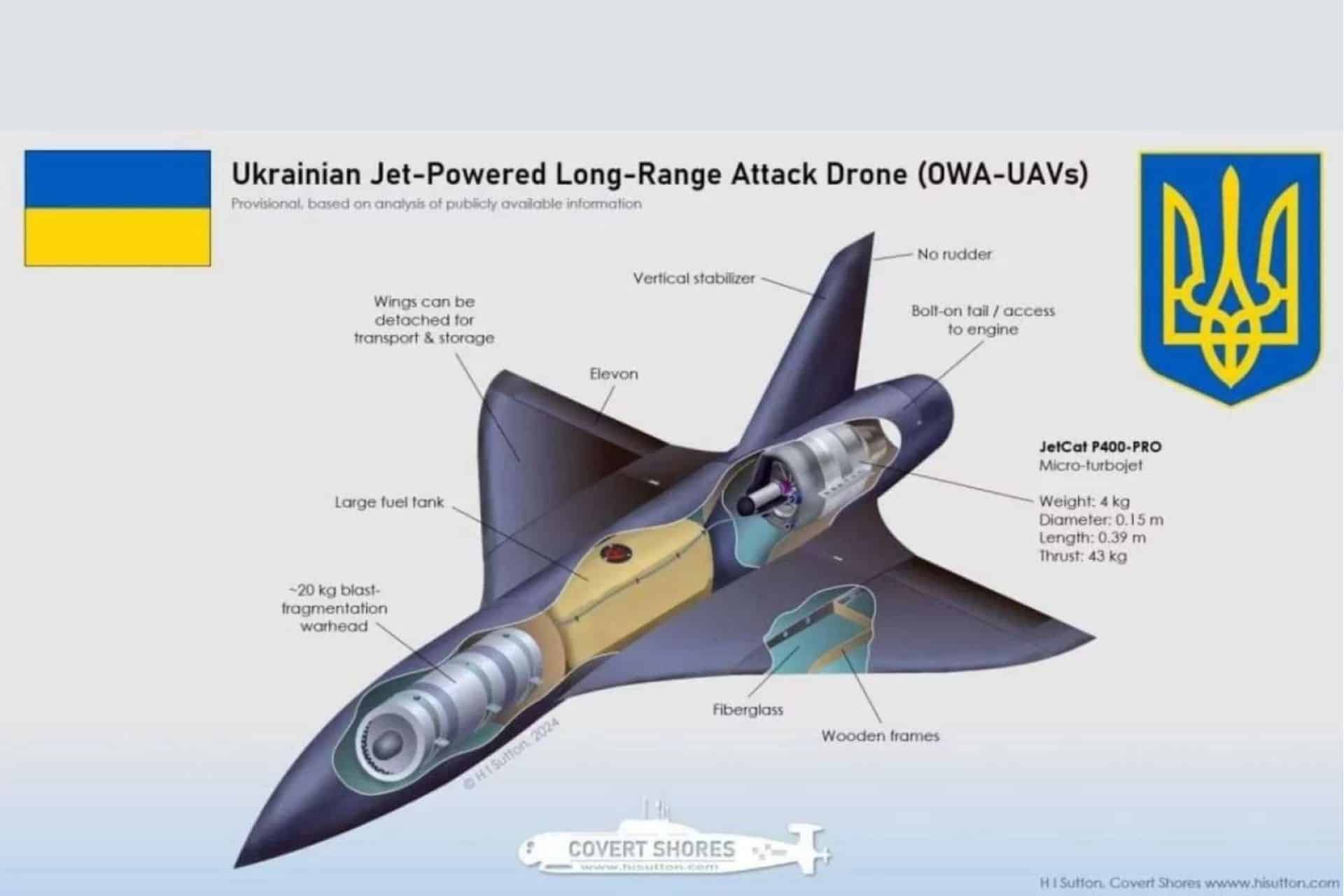
In short, the Europeans intend to ratchet up deep strikes into Moscow and St Petersburg, which will likely kill and unsettle their inhabitants.
The E3 carefully planned how to stage-manage the upcoming G7 summit, the EU summit, with Zelensky showcased at both events, promising to increase the pressure on “President Putin to agree to an immediate and complete ceasefire, taking the current contact line for its start-point”. European leaders also pledged to co-ordinate ahead of the NATO summit in Ankara (7-8 July) to achieve increased pledges of military support for Ukraine.
The E3 states are explicitly gearing up with new missiles to strike deeper, and more destructively, into Russia. The British government, for example, has announced that —
“the UK project to develop low-cost advanced long-range strike weapons for Ukraine has reached a significant milestone, with three British-designed systems successfully flight tested. The ground-launched strike weapons reportedly are capable of hitting targets more than 500km distant, at a speed of 600 km/h – whilst carrying a 225 kg warhead”.
According to the Financial Times, Trump was “hugely impressed and enthusiastic” with Ukraine’s recent campaign of long-range strikes on targets deep inside Russia at last week’s G7 summit. At the summit, Trump also agreed to increase sanctions on Russian energy.
It is clear that the E3 had been plotting a major psy-op to convince Trump that Ukraine was not on the back-foot against Russia (as Trump may have been briefed); but rather had regained the front foot, and that the U.S. should support the European agenda to force a Russian capitulation agenda (ceasefire, borders unchanged, reparations paid by Russia and war-crimes trials for Russian officials indicted with crimes, etc).
These developments have brought two major developments out of Russia:
Firstly, senior Kremlin aides, notably Yuri Ushakov, Putin’s spokesman, have been saying over the past three days the ‘spirit’ of the Anchorage summit, and its concomitant understandings, “have effectively collapsed” — “The U.S. abandoned them”. Moscow no longer expects those commitments to be honoured and is focused solely on securing its own “victory” through military means.
Foreign Minister Lavrov went further, describing the Alaska meeting as an American “ploy” designed to buy time for Ukraine to rebuild and rearm its military — essentially likening them to the Minsk Accords that similarly were mounted as a deceit.
Deputy Foreign Minister Sergei Ryabkov said:
“We also see Washington’s line moving closer to the most rabid anti-Russian policies pursued by the U.S.’s closest European allies – namely, the UK and France”.
This represents a huge strategic shift. Russia no longer seeks a relationship with Washington, though contact with DC will continue.
The second development stems from President Putin’s address at the St George’s Hall to military cadets on 23 June. Putin, in summary, told the young officers that the West manufactures a Russia threat, then accuses Russia of creating that very threat. This, said Putin, is a historically repeated pattern going back to 1941.
Putin implied that a threshold had now been crossed: He stated that whilst, until recently, NATO countries had limited themselves to supporting the Kiev regime to wage war on Russia, the West today is openly talking about preparing for a war against Russia, and is building up their military offensive budgets. German Chancellor Mertz has been quite vocal in this regard, Putin said.
Russia’s response, he said, is focused on modernising its nuclear triad and its Army, and strengthening the combat capability of the Aerospace Forces and the Navy. The explicit mention of the nuclear triad in direct proximity to the discussion of Western preparation for war against Russia was certainly a pointed message to Trump and the Europeans.
Russia has heard the European clamour for war. It has now made the strategic decision in response to prepare for war in Europe.
White Flag Judgments: Palestine Action, Protest and the UK Courts
1 July 2026 Dr Binoy Kampmark, https://theaimn.net/white-flag-judgments-palestine-action-protest-and-the-uk-courts/
The justice system of the United Kingdom, represented by stout cathedral structures and solemn rituals, tends to resemble a casino rather than a priestly haven of solemn judgment. It’s the justice of the punt, the throw of the dice, not the fairness of judicial deliberation, that prevails. That, at least, has been the prevailing view of Richard Ingrams, a co-founder of Britain’s rapier satirical publication Private Eye.
Since the decision by Home Secretary Yvette Cooper to ban Palestine Action in 2025, some 3,000 people have been arrested for doing such unthreatening things as holding placards with the following words: “I oppose genocide. I support Palestine Action.” Over 700 of these, according to Human Rights Watch, “are pending in the courts of England and Wales, with many more at the recharges stage.” This, in a country where free speech is said to be a verdant forest, and the right to protest a sacred right.
In the middle of last month, the Court of Appeal quashed the decision of the High Court regarding the proscription of Palestine Action which had been made under section 3 and schedule 2 of the Terrorism Act 2000. Palestine Action, described by their founders as “a direct-action protest group aimed at preventing military targets in the UK from facilitating gross abuses of international law,” had made its stock and trade targeting Israeli arms manufacturers such as Elbit Systems and businesses with links to the Israeli arms trade. The proscription followed the group’s break-in at RAF Brize Norton, where two aircraft were spray painted. In the proscribed list, which includes such violent luminaries as Boko Haram and Islamic State, Palestine Action is hysterically assessed as an entity that “prepares for terrorism” and “promotes and encourages terrorism.” Its attacks had included “targets affecting UK national security, and the impact on innocent members of the public.”
Co-founder of Palestine Action, Huda Ammori, challenged the lawfulness of the proscription in the High Court in November 2025, claiming, along with the intervening parties Liberty and Amnesty International UK, that it had involved a disproportionate use of counter-terrorism powers. Initially, Ammori scored a resounding success, all the more remarkable given the persistent record of courts in Britain to side with the national security apparatus.
The Divisional Court held in February 2026 in R (Ammori)v Secretary of State for the Home Department that the Home Secretary’s approach on proscription had failed to follow her own long-standing proscription policy. These involved five factors intended to constrain the office holder’s discretion. The resort to “other factors” would have to be read with that constraining purpose in mind.
The Court also found that a fair balance between the rights of individuals to free speech (Article 10 of the European Convention of Human Rights) and freedom of assembly under Article 11 of the ECHR as against the national security and protection of the rights of others (Articles 10.2 and 11.2 of the ECHR) had not been struck. In applying the test of proportionality to the decision the Court held that “the nature and scale of Palestine Action’s activities, so far as they [comprised] acts of terrorism, [had] not yet reached the level, scale and persistence that would justify the application of the criminal law measures that are a consequence of proscription, and the very significant interference with Convention rights consequent on those measures.”
The government of Sir Keir “Human Rights” Starmer was never going to let things stand, nor should not be forgotten that the High Court decision was hardly brimming with praise for the actions of Palestine Action. The definition of terrorism in UK counter-terrorism legislation is intentionally outrageous in its broadness, encompassing causing or threatening “serious damage to property” that would suggest an intention to influence government policy and advance a political case. The High Court did, at least, note that the act of proscription was based on 385 actions committed over 5 years, of which only three were deemed “terrorist incidents.”
Back to the casino of justice the case went. On June 15, the Court of Appeal handed down its quashing judgment. The national security state could again rejoice at this grand exhibition of judicial abdication before the alleged, and unfounded wisdom, of executive power. The judges found, for instance, that the Home Secretary had, in fact, conducted a proper evaluation of the rights issue in considering the banning of Palestine Action. This analysis was shallow at best, given the Home Secretary’s continual insistence that neither Article 10 nor 11 off the ECHR applied in the case. Article 17 of the Convention – the prohibition of an abuse of rights – was what counted in her mind.
The Court of Appeal went so far as to admit that the rights of those holding placards opposing genocide and supporting the Palestinian cause “may be affected by proscription, because they may be dissuaded by it from exercising their lawful individual rights to free speech and freedom of assembly.” The Home Secretary had been wrong to assume that Article 10 and 11 rights were not engaged, or that no test of proportionality was required. The court even conceded that the ban was “highly controversial” and possibly even “borderline.” But in their own assessment on proportionality, the judges felt reluctant to challenge the vast, self-evident wisdom of the executive, given that the Home Secretary was “invested with the statutory and constitutional authority to make proscription decisions to protect the public where national security is at stake.” It was not for the court to “take over the function of the primary decision-maker, least of all in a case such as this.” Such proscription decisions were part of national security, an area that no UK judges would have thought inappropriate to scrutinise before the Human Rights Act 1998. (How mothballed can judges be?)
The logic of this abysmal abdication before power was guided by the views of Lord Robert Reed made in the UK Supreme Court decision of ABJ, which was decided in February this year: “Although a strict approach is generally taken to restrictions on political speech, the European Court has recognised that states must enjoy a wider margin of appreciation when countering terrorism.” In a rather conflating, muddled manner, Lord Reed thought judicial supervision, be it by UK courts applying the Human Rights Act or the European court applying the ECHR, had “to respect the institutional expertise and constitutional legitimacy underlying the judgment made by those authorities by according them a correspondingly wide margin of appreciation.” This is what surrender by the wigged classes looks like.
The Court of Appeal also decided to make much of the fact that Palestine Action had committed three deemed “terrorist incidents” over three years, a mere 0.78% of its list of actions. With disapproval, they noted the organisation had not “disowned or condemned” such actions. It was therefore “permissible for the Home Secretary (and, therefore, is permissible for us), in considering Palestine Action’s characteristics and activities, not just its activities classified as terrorist.” The rationale for this bumbling reasoning was that proscription was preventative: the Home Secretary had to “assess the risk of future acts of terrorism. All of an organisation’s activities, such as recruitment, fundraising, radicalisation and all terrorist and non-terrorist activities may be relevant to that assessment.”
Veering off into the feral undergrowth of the bizarre, the appeals court also considered the allegedly more sinister nature of the group, mangling the history of British protest along the way. Its activities had been “planned and undertaken secretly with the objective of avoiding detection.” Its members had not shown “sincerity by accepting” the imposed penalties. But most of all, “on a fair analysis, Palestine Action has little or nothing in common with the suffragettes or the anti-apartheid or Iraq War protest groups.”
With this sort of fair analysis, one rooted in a distorted reading of history, a horrendous refusal to consider a flawed, executive assessment of protest activities, and a general concession to an anti-democratic temper, the only thing left to do is exactly what the suffragettes, anti-apartheid activists, and previous anti-war activists did: break the law with courage and clog the prisons with effect.
Poll shows many Danes worried about planned nuclear reactors at Barsebäck, near Copenhagen

Mon 29 Jun 2026 , https://swedenherald.com/article/poll-finds-many-danes-worried-about-new-nuclear-plant-plans-near-copenhagen
Plans to build new nuclear reactors at Barsebäck worry many Danes, according to an opinion poll conducted on behalf of the Ritzau news agency.
39.5 percent say they agree or completely agree when asked whether they are concerned about plans to locate reactors just over 20 kilometres from Copenhagen, according to a survey conducted by the Voxmeter institute. Almost as many, over 38 percent, believe the reactors should not be built.
Just over 1,000 people responded to the survey.
Earlier in June, Nordic Baseload Power submitted an application to the government for state aid to build two full-scale boiling water reactors of the BWR-N type at Barsebäck. However, Uniper, which owns Barsebäck, has stated that it does not plan to provide any land for the company’s plans.
EDF agrees to sell US, Canada unit to KKR
EDF, which owns and operates France’s nuclear fleet, must raise cash to maintain its 57 aging reactors and finance the construction of six new units.
By Reuter, June 27, 2026, https://www.reuters.com/business/energy/edf-signs-deal-sell-us-canada-unit-kkr-2026-06-26/
June 26 (Reuters) – EDF signed an agreement to sell EDF Power Solutions in the United States and Canada to private equity firm KKR, the company said on Friday.
KKR will acquire the operations and assets. In the U.S. and Canada, EDF Power Solutions operates 5.6 gigawatts of renewable assets.
EDF, which owns and operates France’s nuclear fleet, must raise cash to maintain its 57 aging reactors and finance the construction of six new units.
In November EDF CEO Bernard Fontana told Reuters the company was considering selling between 50% and 100% of its U.S. renewable unit, a deal that could value the business at nearly €4 billion ($4.56 billion).
EDF has developed 26 gigawatts of wind, solar and battery storage projects plus electric vehicle charging sites and has 17 GW under service contracts in North America, which includes a small amount in Canada and Mexico, according to its website.
($1 = 0.8773 euros)
Reporting by Margaux Perrin in Gdansk, Editing by Louise Heavens
All of our submarines are missing
Five nuclear-powered hunter-killers are
out of action leaving the Arctic front door wide open to Russia. None of
the Royal Navy’s attack submarines are currently at sea. A fleet of
nuclear-powered hunter-killers all tied up alongside or in dock, every one
of them, is a serious matter.
This is not the first time it’s happened
and last time it did, the Ministry of Defence trotted out the tired mantra
“we continue to meet all our operational tasks”. We do not. The
excellent Navy Lookout website has set out the position boat-by-boat. HMS
Audacious is only now leaving dry dock in Devonport in Plymouth; HMS Anson,
the only attack boat to have been to sea recently, is alongside after a
curtailed deployment to Australia; HMS Astute is undergoing a multi-year
refit; and Ambush and Artful have not sailed in years. The site described
the overall posture as “a disaster”.
Telegraph 27th June 2026, https://www.telegraph.co.uk/news/2026/06/27/royal-navy-attack-submarines-absent-harbour-nuclear-missing/
Record heatwave cripples Europe’s energy supply as nuclear reactors are taken offline.

Europe’s brutal heatwave is closing schools and factories and claiming lives. Now, its nuclear power plants are shutting down.
Jamie Seidel, News.au 28th June 2026
Record heatwave cripples Europe’s energy supply as nuclear reactors are
taken offline. Europe’s brutal heatwave is closing schools and factories
and claiming lives. Now, its nuclear power plants are shutting down. France
has already shut down three of its nuclear reactors.
“The main pressure
comes from a triple squeeze: Cooling demand rises sharply, while power
plants and grids become less efficient, and some thermal and nuclear plants
must cut output because cooling water is too warm or scarce,” Simone
Tagliapietra, a researcher for the Bruegel think-tank, told the
Massachusetts Institute of Technology (MIT). Nuclear reactors require water
to keep their radioactive cores cool and contained. But the river water
feeding this process has become hot.
That reduces its cooling effect.
And the wastewater comes out even hotter. Which threatens to breach environmental safety limits.
Other French reactors are operating at reduced power. And more are being wound down as the heatwave lingers.
Blackouts are now a thing. The supply problem, explains MIT climate analyst Casey Crownhart, is being exacerbated by other nuclear reactors being offline.
Peak European electricity demand is traditionally during winter. That’s when everyone turns their electric heaters on. Summer is supposed to experience far less demand. So maintenance cycles and repairs are scheduled for the warmer months. Those months are now unexpectedly hot. Switzerland is experiencing the same problem. It says the output of its Beznau nuclear reactors have been reduced. They will be shut down if the extreme heat continues.
Heat isn’t only a problem for nuclear power plants………………………………………………………………………………………………………………………………………………………………………………………………..
The French government is scrambling to respond to the reactor shutdown crisis. Emergency meetings are being held in stuffy offices. Similar meetings are happening across Europe.
Meanwhile, El Nino’s fallout is beginning to reach across Africa and Australia and into the Indian Ocean. https://www.news.com.au/technology/environment/record-heatwave-cripples-europes-energy-supply-as-nuclear-reactors-are-taken-offline/news-story/5962d04f0b8268a57217dc7ab12f213e
Swiss nuclear power station shut down as river warms
The two Beznau nuclear reactors in Switzerland which are cooled by water from the river Aare, have been taken off grid due to the water overheating.
Swiss Info 26th June 2026, https://www.swissinfo.ch/eng/energy-transition/the-river-cooled-beznau-nuclear-power-station-is-being-shut-down-the-aare-is-too-warm/91657359
The energy company Axpo announced the decision on Friday.
Axpo stated that the two reactors are currently in a shut-down state. The temperature of the river Aare reached 25 degrees Celcius, which does not allow sufficient cooling.
The output of the two reactors had already been reduced on Tuesday – most recently to 50%. According to Axpo, the temperature of the River Aare reached 25 degrees for the first time on Wednesday after the cooling water had been fully mixed.
Axpo indicated that if there was no prospect of the Aare cooling down, the reactors would be shut down completely on Friday. The two reactor units on the Aare island in Döttingen had already temporarily suspended electricity production in July 2025.
Senior U.S. Diplomats, Journalists, Academics and Secretaries of Defense Say: the U.S. Provoked Russia in Ukraine

it should come as no surprise that our government is lying now about the war in Ukraine.
it should come as no surprise that our government is lying now about the war in Ukraine.
The Ukraine Papers, by Donald A. Smith, PhD, 27 June 26
It took some years for Americans to realize they’d been lied to about the war in Vietnam. Thanks to the publication of the Pentagon Papers, and thanks to the antiwar movement, Americans eventually learned about the injustices and failures of that war.
Likewise, it took several years after the starts of the wars in Iraq and Afghanistan for Americans to realize they’d been lied to about those wars as well.
Americans are just now starting to realize that they’ve been lied to about the war in Ukraine. (The propaganda effort has been quite effective, with the New York Times, in particular, acting as a mouthpiece for the government’s position.) More and more mainstream publications are exposing the lies, and a majority of Americans now oppose further arming of Ukraine.
This essay is a summary of what the U.S. government has been hiding about the war in Ukraine, with links to sources for further information.
According to Brown University’s Costs of War project, U.S. military actions since 9/11 directly killed over 900,000 people, with an additional 3.5 million people dying from indirect effects. The wars cost Americans at least $8 trillion and displaced over 38 million people from their homes. The U.S. spends over a trillion dollars a year on its military, if you count all expenditures.
If we go back to the 1960s, the number killed by U.S. wars includes the several million killed in the Vietnam war, the approximately 1 million killed by U.S. support for Indonesian military’s attacks on left wing groups, and the hundreds of thousands, at least, killed in proxy wars and government overthrows in Latin America.
The wars, overthrows, and associated sanctions caused mass migrations worldwide — particularly in Europe and at the southern U.S. border — and destabilized politics. The Lancet medical journal reported that between 1971 and 2021, US and EU sanctions killed over half a million people annually. Yet almost nobody (except for whistleblowers) was held accountable for these disasters; indeed, many of the same people are in Congress or work for the government or the weapons industry.
Moreover, the U.S. government lied about almost all the wars — in particular, about the wars in Vietnam, Iraq, and Afghanistan, but also about the war in Yugoslavia, as documented in Harper’s Magazine, here (Chapter 3), and here. In short, the Kosovo Liberation Army that the U.S. supported was, basically, a terrorist organization funded by the CIA, and U.S. propaganda greatly overstated the nobility of the U.S. intervention. Likewise, The U.S. backed ethnic cleansing of Serbs in Croatia.
The United States withdrew from the following arms treaties: Anti-Ballistic Missile (ABM) Treaty, Strategic Arms Reduction (START II)Treaty, Intermediate-Range Nuclear Forces (INF) Treaty, Joint Comprehensive Plan of Action (JCPOA), the Iran deal, Open Skies Treaty, and Conventional Armed Forces Treaty (Russia withdrew after alleged NATO non-compliance)
So, it should come as no surprise that our government is lying now about the war in Ukraine. Specifically, claims by President Biden and others that the Russian invasion was “unprovoked” are greatly exaggerated.
Read what these diplomats, secretaries of Defense, journalists, academics, politicians, and others have to say:
Here the author gives quotations from 30 highly regarded people – certainly not pro Russian propagandists ………………………………………………………………………………………………………………………………………………………………………………………………………………
Ambassador Jack Matlock (referenced above) said in a 2024 interview: “Why don’t we understand that trying to remove Ukraine from Russian influence and put military bases there would be, in their case, absolutely unacceptable and worthy of defense?” Matlock said the U.S. backed the 2014 coup, and “Obviously, to any Russian leader, not just Vladimir Putin, that would have been an absolutely impossible, hostile act, which they had to react to. And in particular, they were not going to lose their naval base in Crimea.” Finally, Matlock said the Ukrainians are “dominated in their thinking by neo-Nazis — we tend to ignore that, or when Putin points it out, we say he’s lying. He’s not lying.” And Matlock wrote: “I have been appalled that a succession of American presidents and European leaders discarded the diplomacy that ended the Cold War, abandoned the agreements that curbed the nuclear arms race, and provoked a new cold war which has now become hot.”
See this for dozens of mainstream news articles about the presence Nazis in Ukraine and U.S. support for them.
Evidence of U.S. involvement in the coup is overwhelming. The Cato Institute (not a radical Marxist outfit!) wrote America’ Ukraine Hypocrisy which includes:
The extent of the Obama administration’ meddling in Ukraine’ politics was breathtaking. Russian intelligence intercepted and leaked to the international media a [U.S. Assistant Secretary of State Victoria] Nuland telephone call in which she and U.S. ambassador to Ukraine Geoffey Pyatt discussed in detail their preferences for specific personnel in a post-Yanukovych government… Both the Obama administration and most of the American news media portrayed the Euromaidan Revolution as a spontaneous, popular uprising against a corrupt and brutal government… It was a grotesque distortion to portray the events in Ukraine as a purely indigenous, popular uprising.
The 2019 RAND Corporation study Overextending and Unbalancing Russia examines “cost-imposing options that the United States and its allies could pursue across economic, political, and military areas to stress — overextend and unbalance — Russia’s economy and armed forces and the regime’s political standing at home and abroad.” It includes the paragraph:
“Providing lethal aid to Ukraine would exploit Russia’s greatest point of external vulnerability. But any increase in US military arms and advice to Ukraine would need to be carefully calibrated to increase the costs to Russia of sustaining its existing commitment without provoking a much wider conflict in which Russia, by reason of proximity, would have significant advantages.”
The highlighted words indicate that the authors were quite aware that US provocations would cause Russia to respond militarily.
The New Yorker’s Is the F.B.I. Truly Biased Against Trump? contains a telling paragraph on the U.S. government’s efforts to suppress information about exactly what happened in Ukraine:
According to [FBI agent] Buma’s statement, shortly after Russia invaded Ukraine, on February 24, 2022, he was told to terminate relations with one of his most valuable sources in that field, Dynamo. The order came from both his supervisors and the F.B.I.’s Foreign Influence Task Force, and, per Buma, superiors told him that the shutdown of Dynamo was based on “highly classified information from the National Security Agency” which he could not access. They also said that it was part of a broader effort, around the time of the invasion, to close off many “sources related to Russia/Ukraine matters.”
After the collapse of the USSR, Russia wanted desperately to be integrated into the West and, up to the end of 2021, pleaded with D.C. to come to an equitable peace in Ukraine, but the U.S. wanted to weaken Russia, and NATO needed an enemy to justify its existence. The expansion of NATO — which violated multiple verbal promises given to Soviet leaders — provoked the war that is now touted as showing the need for NATO.
According to the LA Times’s Russia feels threatened by NATO. There’s history behind that, “some of Russia’s security concerns are real. Offering to discuss them doesn’t qualify as appeasement; Thirty years ago, Russia had a buffer zone of satellite states to its west. Now it has only the unimpressive presence of Belarus.”
From 2018, in Medium’s American Lethal Weapons Could Already Be on the Ukrainian Front Line: “Two weeks ago, the Trump administration announced it will allow the sale of some lethal weapons to Ukraine, including the Javelin anti-tank missile….Butusov identified the [Nazi] Azov Battalion as a recipient of the PSRL-1 [grenade launcher] systems.”
Right before the Russian invasion, in January of 2022, Yahoo News reported: CIA-trained Ukrainian paramilitaries may take central role if Russia invades. After the invasion, in March of 2022, Yahoo News reported: Secret CIA training program in Ukraine helped Kyiv prepare for Russian invasion..
In November of 2023, the Washington Post exposed that “Since 2015, the CIA has spent tens of millions of dollars to transform Ukraine’s Soviet-formed services into potent allies against Moscow, officials said…. The extent of the CIA’s involvement with Ukraine’s security services has not previously been disclosed.” Foreign Policy’s essay of July 11, 2025 mentions the “CIA’s decade of covert support for Ukraine.” ABC News also has an article about CIA involevment in Ukraine since 2015.
Likewise, a New York Times article The Spy War: How the C.I.A. Secretly Helps Ukraine Fight Putin, dated February 25, 2024, revealed that the CIA had been coordinating with Ukrainian intelligence since at least 2014 and that the Ukrainians had been launching assasinations and other kinetic actions in Crimea and Russia. As Mark Episkopos writes in Responsible Statecraft, CIA in Ukraine: Why is this not seen as provocation?: “An explosive new NYT report shows how Washington needlessly fed into Russia’s worst fears and precipitated the invasion, justified or not.”……………………………………………………………………………………………………………………………………………………………………………………………………
These facts and opinions do not justify Russia’s brutal invasion, but they certainly give the lie to statements by President Biden and others that the invasion was “unprovoked.” Even the Russian occupation of Crimea in 2014 was provoked: it occurred after, and partially in response to, the U.S.-backed overthrow of the pro-Russian government of Ukraine.
And the facts expose stunning hyprocrisy. The U.S. launched numerous unjustified wars, proxy wars, bombings and coups far from U.S. borders; surrounded Russia and China with pro-US allies and military bases (about 800 worldwide); exited multiple arms treaties; and increased military spending to about $1 trillion a year despite $34 trillion in debt and dire domestic needs. Yet we accuse Russia and China of being the aggressors.
Both sides can be at fault in a conflict. The U.S. too has blood on its hands.
Finally, the facts are strong reasons why the U.S. should not be arming Ukraine to the teeth, pushing it to fight to the last Ukrainian and risking a nuclear war. Instead, it should push for a negotiated end to the war. https://theukrainepapers.org/senior-US-diplomats-academics-journalists-and-secretaries-of-defense-say-the-US-provoked-Russia-in-Ukraine.html
Edge of Armageddon: why does one of the world’s top thinkers believe we’re nearing nuclear apocalypse?

Putin is so terrified of Ukraine becoming a member of Nato: that would enable the west to place nukes in the country
“With Nato weapons, Ukrainians bombed St Petersburg and they tried to bomb Moscow. So a country with nuclear weapons is being ‘bombed’ by the British. Not the British pushing the button, but the bombs come from Britain, as well as from Germany and France, with less from the US.”
In a chilling new book, theoretical physicist Carlo Rovelli says we’re back on the brink – and this time, leaders chronically lack the nous of Kennedy and Khrushchev. So why is he against rearming?
Stuart Jeffries, Thu 25 Jun 2026, https://www.theguardian.com/books/2026/jun/25/armageddon-physicist-carlo-rovelli-nuclear-apocalypse
Should European members of Nato be rearming in the face of the Russian threat? And if not, I ask Carlo Rovelli, why not? The Italian theoretical physicist seems a good person to answer these questions since his timely new book, 85 Seconds to Midnight, is subtitled A Physicist’s Argument against Rearmament.
Rovelli, 70, brown eyed, genial, with enviably luxuriant grey locks, removes his glasses before answering. “The idea of the Russian military being a threat to Europe is ridiculous. Russia can’t even get to Kyiv! A few years ago, Russia had 4% of the world’s military spending and Nato had 40%.”
At the same time, though, Russia has more than 4,000 nuclear warheads, making it the planet’s biggest stockpiler. “So we cannot take Russia down,” says Rovelli, “because it would react.” Of the three nuclear superpowers – Russia, US and China – only China has resolved not to be a first-use nuclear state. Russia, like the US, reserves the right to respond to conventional attacks with nuclear strikes.
The real problem, Rovelli suggests, is mutual fear. “We are trapped in a lack of reciprocal trust. We sleepwalk through these patterns of everybody becoming more armed, more aggressive.” He cites what happened a few weeks ago in St Petersburg. “With Nato weapons, Ukrainians bombed St Petersburg and they tried to bomb Moscow. So a country with nuclear weapons is being ‘bombed’ by the British. Not the British pushing the button, but the bombs come from Britain, as well as from Germany and France, with less from the US.”
Why was this so frightening for Rovelli? “It’s the first time a [superpower] with nuclear weapons has been actually bombed. There was a situation in which if you have nuclear weapons, you don’t get invaded. You don’t get bombed. No more.”
Rovelli invites me to consider what that bombing looks like from the Kremlin’s perspective. Moscow has long feared western aggression, he argues. A key moment came in 1962 when Americans placed nuclear missiles in Turkey. That, he argues, prompted then Soviet premier Khrushchev to put nuclear weapons in Cuba, the US’s back yard.
True, the Cuban missile crisis was de-escalated by Khrushchev and US president Kennedy, but Russian fear of western invasion persists. That’s why, Rovelli suggests, Putin is so terrified of Ukraine becoming a member of Nato: that would enable the west to place nukes in the country. Hence, Rovelli argues, Putin embarking on his full-blown invasion four years ago.
Rovelli believes this Russian aggression has caused a whirlwind of fears and clamours for rearmament in western Europe. “You have the French government saying French people should be ready again to sacrifice their children; the British government saying we should be ready for war because it might happen; the German government saying all this anti-war sentiment in schools is not good and we should change education, make war more acceptable. This is motivated by the idea that Russia is invading Europe. It’s nonsense.”
But isn’t it sometimes right to be fearful? Indeed, isn’t the lesson of the second world war that western European countries should have rearmed sooner to counter a demagogue bent on expansion? “I think everybody should read Mein Kampf,” he replies, referring to Adolf Hitler’s 1925 autobiography and manifesto. “Mein Kampf does not say, ‘We are German, we are the strongest, we are going to run the world, we are great, we are white, we are Aryans, whatever.’ It says, ‘We are weak. And the only way we have to survive is to become stronger and overcome the others.’ So what fuelled the violence of nazism was fear.”
Today’s Middle Eastern conflict has a similar basis, Rovelli contends. “What fuels the aggressiveness of Israel is fear. What fuels the aggressiveness of Hamas is fear. They are going to destroy us in Gaza unless we are aggressive. To answer fear with fear, to escalate, seems to me disgusting.”
But isn’t this naive? Putin isn’t just acting out of fear, surely, but is prompted by some warped sense of historical destiny to claim Ukraine. “That’s obviously nonsense. You create these narratives that fuel tribal ideology. And that’s exactly what we don’t want. I don’t think anybody has any natural historical right to anything.”
Why should we listen to what theoretical physicists have to say about rearmament? Yes, Rovelli is the go-to guy to explain loop gravity, the theoretical framework that merges quantum mechanics with Einstein’s general theory of relativity. He is also a great populariser of difficult ideas in such books as Seven Brief Lessons on Physics and The Order of Time. But when it comes to war and realpolitik, theoretical physicists have often proved themselves utter boobs.
“We physicists,” Rovelli concedes, “did create this thing [nuclear weapons]. It is our poisoned gift to humankind. But historically, the voices of scientists – raising awareness about the nuclear risk – have been effective.” It was thanks to the wisdom of scientists and other intellectuals, he argues, that Gorbachev and Reagan were convinced to sign the now defunct 1991 Strategic Arms Reduction Treaty (Start).
Equally true, though, is that theoretical physicists have been disastrous for humanity. Rovelli cites his countryman Enrico Fermi who in 1934 found a way to shatter atomic nuclei – giving humanity a new source of energy. “But the gift is too great,” writes Rovelli. “A small bit of uranium can release energy to demolish cities, burn alive millions of human beings and destroy civilisation itself.”
Consider too what happened in Copenhagen in 1941 when two great theoretical physicists, the Dane Niels Bohr and the German Werner Heisenberg, met. Bohr, who soon after the meeting was spirited to the US, came away from the meeting convinced that Nazi Germany was making a nuclear bomb to win the war.
Rovelli takes up the story: “Once in the US, Bohr said, ‘Look, this is a sketch given to me by Heisenberg of an atomic bomb.’ And it was definitely not. It was a sketch of a peaceful nuclear reactor. One of the outcomes of that was that the Manhattan Project was motivated by a belief that Nazi Germany was close to having nuclear bombs, which was completely unfounded.”
The unintended consequence, as Rovelli puts it in his book, was “the burning alive of 200,000 men, women and children in Hiroshima and Nagasaki”. Not, as some have argued, to end the war more quickly but as an immense demonstration of US power – or as he puts it: “The scream of the gorilla beating its chest and telling the forest that it is the strongest.”
Surely there were other and possibly better rationales to dropping nuclear weapons on Japan than that? I remind Rovelli of a conversation at Princeton he had with his friend and mentor, the late relativity theorist John Wheeler, who worked on the Manhattan Project. Wheeler believed bombing Hiroshima and Nagasaki was justified to spare the enormous number of American lives that would be lost in a mainland invasion.
“John was one of the people I admire most, and half of my thinking is based on what he did,” recalls Rovelli with a sad chuckle. “He was the one who first recognised my work.” But when Wheeler invited the young Rovelli to Princeton, the pair fell to talking about Hiroshima and Nagasaki. “I found the argument he used – it’s OK to kill many hundreds of thousands of Japanese civilians to save the lives of a few American boys – disgusting. Not a few American boys in America living a life – but sent there to conquer an island which is not American. Japan had already lost the war.”
Rovelli’s early years help explain his revulsion for rearmament. He was jailed as a student for refusing the draft in Italy. “I’m Italian and we remember fascism grew with the idea that war is beautiful. War is what makes us great. War is fantastic.”
Let’s talk about Iran, I suggest. Isn’t it entitled to have nuclear weapons if Israel and the US do? “I don’t think we should think in terms of absolute right,” says Rovelli. “We have to live together, so we have to find compromises. If Iran did not feel under threat, it probably wouldn’t feel the need to go nuclear.”
The title of Rovelli’s book comes from the 2026 edition of the Bulletin of Atomic Scientists that set the Doomsday Clock at 85 seconds to midnight, the closest we’ve ever been to nuclear catastrophe. For Rovelli, the stupidity of our leaders has increased that risk. He thinks that everybody – from Trump, Putin and Netanyahu to the leaders of Nato and Iran – lacks the good sense shown by Khrushchev, Kennedy, Gorbachev and Reagan each of whom, he believes, helped pull humanity back from Armageddon.
As we finish, Rovelli asks me: “What politician has the courage to say, ‘Rather than making my own country stronger, I want to make humankind better’?’” Perhaps it’s not just my shortcomings but the nature of humanity’s plight in 2026 that no one comes to mind.
85 Seconds to Midnight by Carlo Rovelli is published by Penguin (£9.99). To order your copy, go to guardianbookshop.com. Delivery charges may apply.
‘Extreme’ weather having ‘significant impact’ on Kent’s nuclear power stations

Mary Harris Senior Reporter, Kent Live, 26 Jun 2026
“Extreme” weather is hitting Kent’s two nuclear power stations, but the Government said it was “not an issue for nuclear safety”. Dungeness has two power stations, next to the coast on Romney Marsh, and the committee on radioactive waste management spent a day there.
The visit was part of the committee’s scrutiny of such facilities across the UK. After its visit, the committee has said today (June 26): “Both reactor facilities are highly exposed to weather conditions, and it is an area where these conditions can be extreme.”
Dungeness, Romney Marsh and Rye Bay have the designation of a special protection area, and the area is of international importance, for its topography, i.e. the area’s physical features, along with its plant and invertebrates, the latter being animals without a backbone or skeleton, such as spiders, worms, snails, lobsters, crabs and insects like butterflies.
The power stations here are rather unimaginatively called Dungeness A and Dungeness B, with A connected to the grid in 1965. It had two reactors which stopped operation on December 31, 2006.
The reactors were designed to operate for 25 years but lasted far beyond this. For those after more detail, it was a “legacy Magnox” power station.
And B also had two reactors which started operating in 1983 and 1985. They were closed for maintenance in 2018, with an announcement three years later they would be moved to their “defueling phase”.
This one was an Advanced Gas-cooled Reactor (AGR), operated by EDF Energy. But their coastal location is having an effect on the structures, said the committee following its tour.
In feedback just published today, it said: “Both reactor facilities are highly exposed to weather conditions, and it is an area where these conditions can be extreme. Whilst it is not an issue for nuclear safety and security, during the tour, it was clear that the combination of high winds and its coastal location meant that salt-water was a particular challenge, with corrosion having a significant impact on infrastructure.”…………………………………..https://www.kentlive.news/news/kent-news/extreme-weather-having-significant-impact-11032284
Sweden has agreed first financing package for new nuclear reactors, PM says

By Reuters, June 25, 2026, https://www.reuters.com/business/energy/sweden-has-agreed-first-financing-package-new-nuclear-reactors-pm-says-2026-06-25/
STOCKHOLM, June 25 (Reuters) – Sweden’s government has agreed on the details of a first financing package to build new nuclear power reactors with developer Videberg Kraft, Swedish Prime Minister Ulf Kristersson said on Thursday.
“The state will also go in as an owner in this project,” Kristersson told reporters.
Kristersson gave no details of the financing package, which has to be approved by the European Commission.
The government said in a statement it will take a 60% stake in Videberg Kraft, currently 80% owned by state utility Vattenfall and 20% by a consortium of industrial companies. Vattenfall’s stake will drop to 20%, the government added.
Sweden’s parliament last year passed legislation to finance a new generation of reactors, the first built in Sweden for more than 40 years and which the government says is necessary for energy security and achieving net zero emissions by 2045.
Earlier this month, Vattenfall selected Rolls-Royce SMR (RR.L), opens new tab to supply small modular nuclear reactors, choosing the British company over U.S. rival GE Vernova (GEV.N), opens new tab, in a deal worth several billion pounds.
Reporting by Simon Johnson, editing by Louise Rasmussen
UK Tests Long-Range Missile for Ukraine
by Kyle Anzalone | Jun 22, 2026, https://libertarianinstitute.org/news/uk-tests-long-range-missile-for-ukraine/
The UK tested a missile with a range of 300 miles, with plans to send the munitions to Ukraine. The platform will allow Ukraine to deliver 500-pound warheads to Moscow.
The missiles tested by the UK military last week were developed under Project Brakestop. The goal of the project is to design a long-range weapon that can be produced for under half a million dollars and within 20 months.
UK Armed Forces Minister Louise Sandher-Jones said the new missiles will “complement” the Storm Shadow cruise missiles London sends to Kiev. “The UK stands shoulder-to-shoulder with Ukraine, and we will continue to provide the support it needs to defend itself against Russian aggression,” she added. “Project Brakestop shows what happens when we combine that commitment with the talent and ingenuity of British industry.”
The range of the missiles will allow Ukraine to target the Russian capital.
Ukraine has increased the large-scale drone strikes targeting Moscow and other Russian cities in recent months. Russian Foreign Minister Sergei Lavrov said Moscow would respond by “massive group strikes” against Ukrainian targets on a “on a regular basis.”
Russia reported downing over 300 Ukrainian drones overnight Sunday, including 80 in the Moscow region. While Moscow often does not discuss strikes that cause damage in Moscow, videos on social media appear. to show damage caused by Ukrainian attacks.
1 This Month

26 September – International Day for the Total Elimination of Nuclear Weapons


PLEASE OPPOSE HR 8255 AND S.3639 – bills would accelerate satellite deployment, with no environmental review or safeguards – https://ncstd5li.quorum.us/campaign/169331/
To see nuclear-related stories in greater depth and intensity – go to https://nuclearinformation.wordpress.com
-
Archives
- September 2026 (206)
- August 2026 (330)
- July 2026 (355)
- June 2026 (287)
- May 2026 (306)
- April 2026 (356)
- March 2026 (251)
- February 2026 (267)
- January 2026 (308)
- December 2025 (358)
- November 2025 (359)
- October 2025 (375)
-
Categories
- 1
- 1 NUCLEAR ISSUES
- business and costs
- climate change
- culture and arts
- ENERGY
- environment
- health
- history
- indigenous issues
- Legal
- marketing of nuclear
- media
- opposition to nuclear
- PERSONAL STORIES
- politics
- politics international
- Religion and ethics
- safety
- secrets,lies and civil liberties
- spinbuster
- technology
- Uranium
- wastes
- weapons and war
- Women
- 2 WORLD
- ACTION
- AFRICA
- Atrocities
- AUSTRALIA
- Christina's notes
- Christina's themes
- culture and arts
- Events
- Fuk 2022
- Fuk 2023
- Fukushima 2017
- Fukushima 2018
- fukushima 2019
- Fukushima 2020
- Fukushima 2021
- general
- global warming
- Humour (God we need it)
- Nuclear
- RARE EARTHS
- Reference
- resources – print
- Resources -audiovicual
- Weekly Newsletter
- World
- World Nuclear
- YouTube
-
RSS
Entries RSS
Comments RSS
 nuclear-news