Government U turn as Sizewell B is to get a fixed-price government contract.
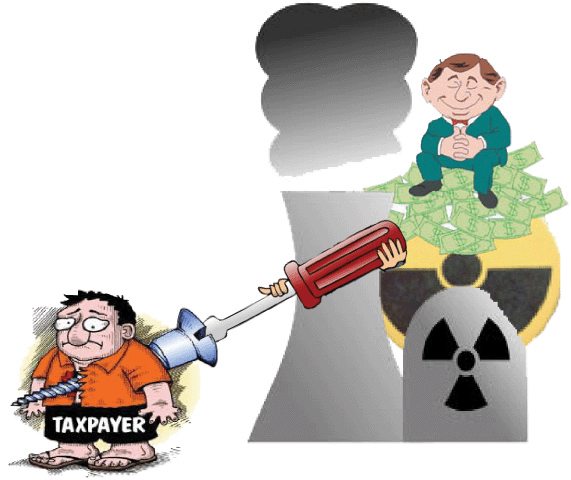
Government awards the last UK nuclear power station a fixed power
contract, backing away from its shift towards a new model of funding.
The UK energy department has extended the life of the Sizewell B nuclear power
plant in Suffolk by 20 years with a fixed-price government contract, after
energy price shocks following the war on Iran.
Chancellor of the Exchequer,
Rachel Reeves, called the nuclear power project “a vital part of
Britain’s energy future”. French project owner EDF said it has secured
a 20-year fixed price power contract from the UK government that will last
from 2035 to 2055.
Previously EDF had planned to commence decommissioning
of the plant in 2035. The French power company said it is “funding a
refurbishment of the nuclear power station during planned outages over the
next fifteen years, costing around £800 million”.
British Gas owner Centrica also said it is investing an undisclosed amount in the extension
of the 1.2 GW operational nuclear power project in Suffolk. It is the first
time that the Sizewell B nuclear power project will operate under a fixed
government power contract, priced at £70.50 per megawatt, after delayed
project Hinkley Point C was awarded such a contract a decade ago.
The energy department has since moved to shift nuclear power projects onto a
regulated asset base (RAB) structure for funding, the model that will be
used to finance Sizewell C at the Suffolk coastal site, a replica of yet to
be finalised nuclear power station Hinkley Point C in Somerset.
Energy Voice 8th July 2026,
https://www.energyvoice.com/renewables-energy-transition/600397/government-u-turn-as-sizewell-b-is-first-nuclear-plant-to-get-cfd/
Europe’s Nuclear Plants Can’t Beat the Heat
By Haley Zaremba – Jul 10, 2026, https://oilprice.com/Alternative-Energy/Nuclear-Power/Europes-Nuclear-Plants-Cant-Beat-the-Heat.html
- France is cutting output at up to five nuclear plants this week as record heat pushes river temperatures too high to cool reactors safely.
- Last month’s heat wave already knocked out power to 70,000 households on France’s hottest day ever, 44°C, and Germany and the UK both rely on French nuclear exports.
- More than 1,000 heat-related deaths in France and stalled EU adaptation funding show the grid crisis is outpacing the response.
Europe’s blistering heat wave is threatening energy security across the continent as power plants shut down and the risk of rolling blackouts rises. Electric grids are overstressed, and ecosystems are too. Rivers are greatly affected by soaring temperatures, which in turn impacts the energy industry and power plants that rely on that water supply for their cooling systems. Just this week, France announced that it will reduce production at as many as five nuclear power plants, with two already curbing output this week.
France is expected to receive the worst of a coming high-pressure heat dome over the next few weeks, with temperatures soaring to as high as 42 Celsius (107.6 Fahrenheit) in some parts of the country on Wednesday. When Europe experienced a similar heat wave last month, a transformer failed, leaving nearly 70,000 households without power as temperatures reached deadly levels. The country recorded its hottest day ever on record, with temperatures reaching a blistering 44 °C (111 °F).
These temperatures are not only deadly to humans, they are also a huge threat to the ecosystem. Rivers are growing hotter under these conditions, and one of the impacts of that change is that their waters are no longer as effective for cooling down nuclear power plants, which serve as the backbone of France’s energy mix. As a result, the country anticipates needing to curb production at plants around the country at the very same time that demand is surging.
It’s a sad irony that just as electricity is needed more than ever to keep indoor temperatures at survivable levels, the power grid is most likely to fail. “As it gets hotter, things stop working quite so well,” Iain Staffell, associate professor of sustainable energy at Imperial College London, was recently quoted by DW. “I think we do need to adapt the power system to cope with the changing weather,” he went on to add.
The reduction of nuclear power output in France could greatly affect energy availability and affordability within France and in neighboring countries such as Germany and the United Kingdom, which import electricity generated by the nation’s sizable nuclear power sector. And nuclear is only part of the story. The heat wave is also impacting the output of hydropower and limiting the cooling abilities of coal and gas plants.
Europe can expect this kind of strain to be the new normal as global warming alters climatic patterns around the world and increases the frequency and intensity of extreme weather. Policies will need to be put into place, and enacted quickly, in order to prepare European grids to withstand these kinds of temperatures at regular intervals going forward.
“Utilities can adapt by planning for summer peaks, making cooling demand more flexible, reinforcing grids for high temperatures, deploying batteries and demand response, and climate-proofing power plants’ cooling systems,” Simone Tagliapietra, senior fellow at Bruegel, an economic and policy think tank, recently told MIT Technology Review via email.
However, all of these imperatives are massively costly and difficult to implement, leading to inaction on the part of European leadership and widespread vulnerabilities of the continent’s energy infrastructure. Last year, the European Environment Agency reported that all 27 countries in the European Union have climate adaptation plans, but noted that “insufficient long-term funding” has stifled implementation.
This has led to frustration and resentment amongst the public, not to mention over 1,000 unnecessary deaths. “Everyone is asking, why are we not ready?” Francois Gemenne, an environmental politics professor at French business school HEC Paris, recently told the New York Times. “We are becoming aware of our own vulnerability.”
The Patriot Trap

The goal of the West has always been to trap Russia in an endless conflict that saps the economic, military, and moral strength of the nation and its people.
the economic, military and moral collapse it anticipated isn’t transpiring inside Russia, but rather in Ukraine and its European partners.
Donald Trump has given the thumbs up for the licensed production of Patriot missiles by Ukraine. This is a trap that will not end well for those looking to the Patriot missile for salvation.
Scott Ritter, Jul 10, 2026, https://scottritter.substack.com/p/the-patriot-trap
Persistence pays off, or so it would seem. Less than a week before NATO convened its annual summit in Ankara, Ukrainian President Volodymyr Zelensky renewed his call for the establishment of a domestic production facility for Patriot air-defense missiles. Zelensky’s plea came in the aftermath of one of Russia’s largest missile attacks on Kiev. Unlike previous Russian attacks, where the Ukrainian side claimed the vast majority of the Russian missiles had been intercepted by Ukraine’s western-supplied air defenses, this attack exposed the harsh reality that Ukraine had no defensive response to the Russian attacks.
Ukraine was out of missiles.
“To reliably protect lives, we need our own production,” Zelensky said.
The Ukrainian President was echoing a call he had been making for months. In May, Zelensky observed “I asked the previous administration, I am asking todays administration, give Ukraine licenses. We will increase the production of Patriot missiles. It will be very helpful for us, it will be very helpful for the Middle East, for everybody whom the United States will decide to help.”
On July 8, during a meeting with US President Donald Trump on the sidelines of the Ankara Summit, Zelensky got his wish.
“We’re going to give a license to you to make Patriots,” Trump told a beaming Zelensky. “That’s pretty cool, right? This way you can’t complain that we’re not giving them enough.”
Trump noted that he still needed to inform the “company” before adding “but that’ll work out all right.”
Problem solved?
Not even close.
Trump and Zelensky had fallen into what can only be called “The Patriot Trap”—the notion that a singular technology can somehow transform the fate of a nation.
The problem faced by Ukraine and their western sponsors—to include an apparently reinvigorated Trump-led United States—isn’t solved by pouring more resources into a war of attrition that favors Russia. This would imply that Ukraine has the potential of prevailing in the ongoing proxy war being waged between the collective West and Russia.
It doesn’t.
The goal of the West has always been to trap Russia in an endless conflict that saps the economic, military, and moral strength of the nation and its people.
The problem faced by the collective West is that the economic, military and moral collapse it anticipated isn’t transpiring inside Russia, but rather in Ukraine and its European partners.
And the other problem is that the United States is more than willing to allow both Ukraine and Europe to further deplete what remains of their respective strength on a gamble that Russia is somehow even more depleted.
A massive information warfare campaign has been underway concurrent with the Zelensky plea for the right to produce Patriot missiles. Centered on a drone-based offensive which has targeted critical Russian infrastructure, this campaign has been paired with a propaganda effort without precedent, designed to transform pleasing visuals of burning Russian oil infrastructure, destroyed trucks, and long-lines at gas stations into an endless thematic declaring Russia unable to defend itself and, as such, the Russian leadership weakened and desperate for an off-ramp to a war which cannot be won.
The purpose of this campaign is straightforward—arm Ukraine.
Give Ukraine the weapons it needs to defend itself.
Ignore the costs accrued by Ukraine to date in terms of lost lives and squandered resources.
Ignore the fact that Russia maintains the strategic advantage across the broad spectrum of issues that define this conflict—on the battlefield, in the defense factories, in the boardroom of companies, and in the hallways of global decision making—Russia is dominating across the board.
Ignore the reality that neither Ukraine nor its western sponsors can win this war.
Just create the perception that they can.
Because perception creates its own reality.
Especially if Russia falls victim to this information warfare campaign, and starts doubting itself.
The problem is that, at least when it comes to the issue of Ukrainian production of the Patriot missile, the perception the perpetrators of this scheme are seeking to manufacture has zero chance of manifesting itself.
It is doomed by the very ineptitude of those who have hatched this scheme to begin with.
Given the realities associated with Patriot production today, the most likely candidate for Ukrainian licensed production is the MIM-104F Guidance Enhanced Missile-Tactical (GEM-T) interceptors. Under normal conditions, a GEM-T interceptor costs $3-4 million each to manufacture. Accelerated production costs could raise the per-unit cost to between $6–7 million. Licensed production, requiring new facilities, could raise the costs to over $10 million per missile.
A missile which is not designed to shoot down the modern threats posed by Russia, such as the Iskander-M, the Kinzhal, the Zircon, or the Oreshnik.
Which means from the start, the US-Ukrainian license deal is designed not to actually improve the ability of Ukraine to defend itself, but create the impression among those susceptible to such flights of fantasy that Ukraine could actually accomplish this.
If only they were given the resources to to so.
The Ukrainian license will likely closely track with existing licensed production of the GGEM-T by Germany, where a new GEM-T production facility was built in the city of Schrobenhausen. The facility is operated by COMLOG, a joint venture between Raytheon and MBDA Deutschland. COMLOG is designed to handle the production and modernization of Patriot PAC-2 GEM-T missiles for European users, including Ukraine.
It is highly likely that the Ukrainian license will be an extension of the existing German license Such an arrangement would streamline many export control issues.
GEM-T interceptors contain guidance electronics, propulsion components, warhead assemblies, and launcher interface equipment that are sourced from a network of suppliers that already exist when it comes to the German license. Lead times on some of these components exceed six months.
The Schrobenhausen facility broke ground in 2022. The plan was to build six new buildings at the site by 2026: an assembly building, warehouse, combustion chamber preparation, technical center, extension of the existing technical service building and a new office wing. According to MBDA, a usable area of 6500 square meters will have been created. The Schrobenhausen facility is strictly an assembly facility; over 50 Bavarian and German suppliers are involved in the qualification and series production phase of all of the components used to produce the final product. Among the subcontractors is Bayern-Chemie, whose Aschau, Germany facility has been tasked to produce solid motors for the GEM-T interceptors. Bayern-Chemie produced Patriot motors between 1987 and 1996, and has the infrastructure conducive to resumption of its past work.
The rudder control system of the GEM-T missiles manufactured in Germany will no longer be hydraulic, but electro-mechanical. Modifications a for the upper part of the rocket, the so-called forebody, as well as the installation of a new computer, which will come from Europe, underscore the reality that the German GEM-T is a standalone product, not influenced by the availability of US components—another reason why a modification of the COMLOG license is the most likely path the US will take regarding Ukraine.
But all of this is part of the hype that such a deal is feasible, that there is hope for Ukraine once these Ukrainian-produced missiles start rolling off the production line.
Under ideal conditions, a Ukrainian assembled GEM-T could not manifest itself in reality until 2028 at the earliest.
This is assuming Congress permits this transfer to take place.
But this would require one to believe that Russia would stand by idly while Ukraine builds from scratch a new 6500 square meter facility, or modifies existing facilities to take on the task of assembling GEM-T Patriots.
That Russia would neither identify or seek to violently interdict this assembly facility, or the numerous supporting facilities involved in supporting the importation and/or manufacture of subcomponents.
Russia, simply put, will not be idle.
And any GEM-T production facility built on Ukrainian soil would have a lifetime measured in days—weeks at best.
The Ukrainian GEM-T Patriot will never see the light of day.
And anyone selling this fantasy—including Zelensky and Trump—know this to be true.
The Ukrainian GEM-T is a myth—a chimera—designed to break the spirit of the Russian nation by propagating the myth of a never-ending conflict.
But this is a trap neither the Russian people or their leadership will fall into.
Sadly, the same cannot be said about either Zelensky or Trump.
And the price for their error will be measured in the blood of both Russian and Ukrainian victims.
The UK’s countryside could be filled with small nuclear reactors after billionaire announces £35bn new investment

techradar pro7 July 26, By Rahim Ami
- Polish billionaire Michał Sołowow’s SGE announces £35bn plan to build 14 GE Vernova Hitachi BWRX-300 reactors across three UK sites
- The project aims to deliver 4.2GW of power starting in 2034, effectively powering 8m homes for over 60 years
- The project is looking to secure government backing, with guaranteed prices intended to be locked in for the power producer before it would be offered to investors
…………. Poland-based SGE (Synthos Green Energy) is looking to build up to 14 reactors across three locations in the UK, with six at its primary site and four each at its two secondary sites.
With an estimated build-out cost of £35 billion ($46.5 billion), the project, if approved, is expected to be one of the biggest SMR projects the UK government signs on to as part of its Advanced Nuclear Framework, unveiled earlier this year, to support the development of privately funded projects.
………….. The first disclosed site for SME’s project, Oldbury in South Gloucestershire, is a former Magnox nuclear station that generated up to 434MW of power, is now expected to be home to as many as six 300W SMRs, according to SGE’s plans
While the other two sites are not yet publicly named, they are expected to have a 4+4 reactor split, bringing the total to 14 reactors.
Part of the reason the UK government is interested in outsourcing power generation, even nuclear, to private equity is that it expects a spike in power demand from AI datacenters over the next few years, even as the nation’s overall power needs increase.
This is also why Google Cloud, a key AI data center player, has joined in on SME’s project as a strategic partner that could, as per Michał Sołowow, invest as much as £4.5 billion in data centers in the country to make use of some of the added capacity.
Given that both SMRs (including the proposed GE Vernova Hitachi BWRX-300) and data centers require access to water and space for construction, one can assume that both will prefer cheap, easily accessible coastal, estuarine, or riverside land, which means that the UK’s countryside could soon see certain areas change meaningfully in terms of aesthetics at the very least.
Smaller rivers, however, might not cut it, as SMRs also require the water bodies they use to act as ‘heatsinks’ for their operation, and 6 or 4 in the same location might overwhelm them, limiting the number of areas that are viable for such buildouts, which means that SME’s proposed project might set the baseline for how privatized nuclear power will shape the UK countryside in the days to come even as AI data center demand is expected to increase pressure on the national grid.
For now, SME’s proposal has yet to be approved by the government, making the £35 billion figure an estimate that may or may not apply, given that it still needs to secure financing and lock in government guarantees on pricing before it moves meaningfully towards construction. https://www.techradar.com/pro/the-uks-countryside-could-be-filled-with-small-nuclear-reactors-after-billionaire-announces-gbp35bn-new-investment
Trump Says He Supports Ukraine’s Long-Range Attacks Inside Russia, Will Allow Ukraine To Produce Patriot Missiles

by Dave DeCamp | July 8, 2026 , https://news.antiwar.com/2026/07/08/trump-says-he-supports-ukraines-long-range-attacks-inside-russia-will-allow-ukraine-to-produce-patriot-missiles/
President Trump heaped praise on Ukrainian President Volodymyr Zelensky at the NATO summit in Ankara on Wednesday, expressed support for Ukraine’s long-range attacks inside Russia, and said he would allow Ukraine to produce Patriot missile interceptors.
When asked about Ukraine’s strikes on Russian oil refineries, the president said, “It’s an escalation, but it’s also an escalation that could help lead to an end.”
Ukraine’s long-range drone attacks rely on intelligence provided by the US, and Ukrainian officials told The Financial Times this week that the Ukrainian military was able to strike multiple Russian oil refineries recently because US intelligence has allowed it to find the optimal flight path for its drones to get through Russia’s air defenses.
On top of Ukraine’s success in striking Russian oil refineries, there has also been a significant spike in Russian civilian casualties in Ukraine’s drone attacks. Russian officials have cited the civilian deaths when justifying Russia’s ramped-up bombardments of Ukrainian cities, which have led to an increase in Ukrainian civilian casualties.
Discussing the Patriot missiles, Trump told Zelensky, “We’re going to give a license to you to make Patriot missiles. That’s pretty cool. This way, you can’t complain that we’re not giving them enough. I said, ‘Make them yourself.’ We haven’t informed the company of that yet, but that’ll work out all right.”
Trump’s approval of Ukraine manufacturing Patriots marks another escalation of US support for Ukraine, and Russia will almost certainly attempt to target any Patriot factories that are established on Ukrainian territory.
Overall, Trump spoke very highly of Zelensky, a reversal from the start of his administration when the two clashed during a contentious Oval Office meeting. “We’ve actually developed a good relationship. It’s hard to believe,” Trump said, adding that Zelensky has “done an amazing job” and “been very effective” in the war.
UK has ‘no future’ if it fails to act on ecosystem collapse threatening national security

Members of parliament have demanded full publication of an explosive
report by the UK’s spy leaders that found the collapse of ecosystems
overseas would have catastrophic consequences for the UK’s national
security, warning that the UK has “no future” if the findings are not
urgently acted on.
Despite growing concerns for the UK’s food security,
likely to be worsened by the third heatwave this summer currently
afflicting the UK and swathes of the northern hemisphere, the government
has refused to publish the full report, which has circulated among defence
officials for more than a year.
The report paints a devastating picture of
severe food shortages, price rises, migration, political destabilisation
and possible war, resulting from the collapse of ecosystems, fuelled by the
human-induced climate crisis and over-exploitation, as the Guardian has
previously revealed. Food shortages could result within five years.
Guardian 8th July 2026, https://www.theguardian.com/global-development/2026/jul/08/uk-report-ecosystem-collapse-national-threat-food-security
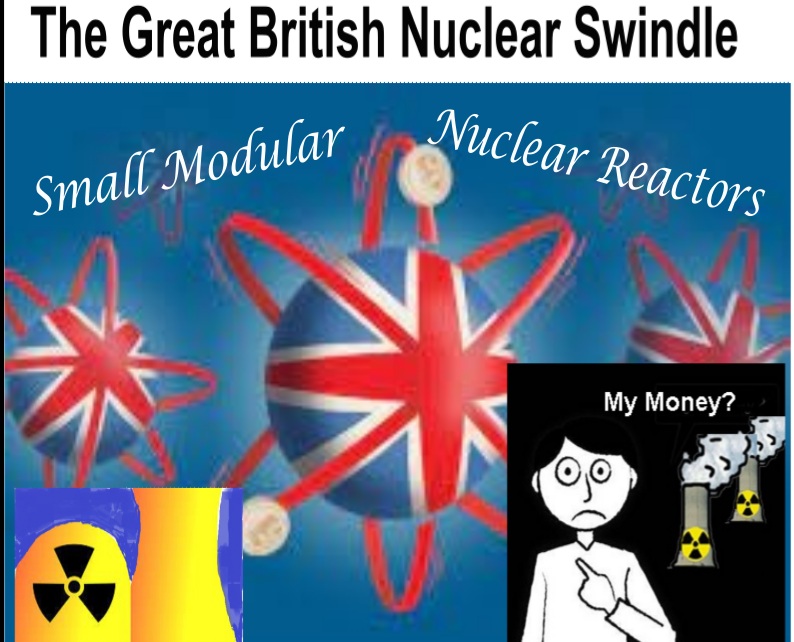
Great British Energy appoints Amentum and Cavendish in £360M SMR deal
06 Jul, 2026 By Gavin Pearson, https://www.newcivilengineer.com/latest/great-british-energy-appoints-amentum-and-cavendish-in-360m-smr-deal-06-07-2026/
Great British Energy – Nuclear (GBE‑N) has awarded a long-term Owner’s Engineer (OE) contract worth up to £300M to two contractors.
Amentum Clean Energy and Cavendish Nuclear were signed to the role in a 14‑year contract which formally runs from 23 April 2026 to 23 April 2040.
The contract notice also states the possibility for an extension that could take it to October 2041.
The total value for the contract including VAT is listed as £360M and £300M without VAT, although GBE‑N said the contract’s final value is uncertain and depends on how the project progresses.
This will include timetables and milestones agreed with the SMR technology partner but the procurement notice envisages the OE supporting the client up to the completion of the first fuel cycle for the initial reactor.
The OE role will provide independent technical assurance and oversight to GBE‑N’s “Intelligent Customer” and “Intelligent Client” teams as the SMR programme moves through design stages and towards a final investment decision.
Responsibilities will include specification, audit, review and advice on design, scope, budgets, risk, delivery and contract compliance and acting as a subject matter expert delivering “Line of Defence 2” assurance on major design and build contracts.
Amentum and Cavendish are both established contractors in energy and nuclear services. Cavendish Nuclear is part of Babcock International Group, known for nuclear construction and engineering work in the UK and Amentum is an international engineering and technical services company.
The contract includes monthly reporting against key performance indicators such as deliverable quality, core team availability and social value measures, including targets for female apprenticeships.
Labour MP Brian Leishman opposes new nuclear energy near Clacks
10th July, By Hannah Emma Shedden,
https://www.alloaadvertiser.com/news/26259252.brian-leishman-opposes-new-nuclear-energy-near-clacks/
BRIAN Leishman MP says he “cannot support” new nuclear power plants – despite his party earmarking Fife and Stirling for future development.
Last Tuesday, a UK Government report identified six locations across Scotland where the Labour administration would like to develop as part of their drive towards alternative energy sources.
To the east of Clackmannanshire, “the north coast of the Forth” was listed, which many local politicians understood as referring to Longannet, a site next to Kincardine and just over seven miles from Alloa town centre.
West of the Wee County, the “south bank of the Forth” near Stirling, was identified, though the exact location remains unclear.
Currently, through devolved powers, the Scottish Government have the power to block planning, and said they would not permit the building of any nuclear sites.
Mr Leishman, Labour MP for Alloa and Grangemouth, said: “On balance, I simply cannot support plans to expand nuclear power plants, including any potential sites in Scotland.
“The reasons for this are numerous and even if issues such as the huge construction costs to the taxpayer were resolved, the problem of nuclear waste remains.”
He said it is often ignored that there are “considerable” carbon emissions from nuclear fuel and waste disposal cycles, adding: “We also need to look at the sky-high cost of decommissioning, Sellafield being a prime example.
“We are yet to deal with all the waste from previous nuclear programmes, and I do not see how nuclear would help us with the climate emergency, considering the length of time it takes to plan and build such power plants.
“I believe that pound for pound, renewables such as wind and solar offer much better value for money as we look to achieve net zero.”
Nuclear power costs billions. Here are seven better ways to use that money – Martin Roche
Given Scotland’s renewables capacity and reserves of oil and gas, opting for expensive nuclear is daft, argues Martin Roche
There’s an energy project in Britain that will take twice as long to build as originally planned. It will at least double its forecast construction costs and require a UK bill-payer subsidy of £1 billion a year.
. Given Scotland’s renewables capacity and reserves of
Toil and gas, opting for expensive nuclear is daft, argues Martin Roche.
There’s an energy project in Britain that will take twice as long to build
as originally planned. It will at least double its forecast construction
costs and require a UK bill-payer subsidy of £1 billion a year
. It’s the nuclear power station being built by the French state-owned company EDF at
Hinkley Point in Somerset. Begun in 2017, its opening date has been pushed
back to 2030. The plant’s cost, unadjusted for inflation, stands today at
£35bn but the final total may reach £50bn.
The argument of the nuclear
power lobby is that we must have wholly reliable ‘baseload’ energy for
when the wind doesn’t blow and the sun doesn’t shine. I saw one
nonsensical argument that nuclear would be there when renewable energy went
into decline. This is desperate nonsense. The wind will continue to blow
off Scotland’s coast and high places on most days of the year, for as
long as there is a Scotland.
That’s not to say we should rely entirely on
renewables. We must have wholly dependable sources of power. Scotland has
options for both reducing its energy demand and building an energy economy
that can have much more impact over decades than nuclear. We should be
working to reduce energy costs for households and create a far bigger
energy employment sector than anything nuclear can offer.
And we can start
now. No need to wait decades for new nuclear stations. Nuclear generation
may enrich some giant companies and provide jobs in operation and
construction, but the numbers are modest when compared with smarter
thinking.
Labour’s policy may be good for US tech giants that want to
gobble up Scotland’s abundant energy to drive data centres, but it’s
not yet clear what’s in these facilities for the Scottish economy, jobs
or the public purse. Nuclear is a naïve 20th-century solution to complex
21st-century problems.
Nuclear power stations are also big targets and at
the mercy of drones, as we know from Ukraine. So much for energy security.
There is a far better way to spend our money than shovelling public cash
into the board rooms of energy giants or the pockets of California tech
bros billionaires.
It’s called the broader public good. Here are some
thoughts: One, a ten-year programme to bring Scottish homes up to the
highest possible thermal performance standards, so they are more efficient
and cheaper to run in deep winter and high summer. Better homes at less
cost and using less energy. Two, all new buildings – homes, schools,
offices, factories – to be built to the world’s most exacting energy
performance standards.
Three, grid connection costs to be slashed so that
small generation projects in rural areas, like mini-hydro and biogas,
become economically viable.
Four, every tenement building in Scotland to be
made suitable for solar panels, with owners benefiting from their share of
the income to help maintain properties. Our tenement homes can become our
own energy production factories.
Five, localised generation such as
tenement solar means that a network of small battery storage facilities can
be created across Scotland. Connected to the National Grid, they can be the
first line of defence on the odd days when wind can’t do the job.
Six,
some 12 per cent of Scotland’s energy comes from hydro power. We can
double that. Seven, all this will cost money. There are opportunities here
to create new long-term projects and consumer finance products, perhaps
with state guarantees (rather than being a cash cow for nuclear). Better
ways can be found of encouraging community energy firms. A new Scottish
private sector capital markets organisation can be established to provide
start-up and growth capital for new energy sector businesses.
Scotsman 9th July 2026, https://www.scotsman.com/news/opinion/columnists/nuclear-power-costs-billions-here-are-seven-better-ways-to-use-that-money-8786542
What is it like living near the site of a new nuclear power station?
Richard Daniel,at Sizewell andLaura Devlin, BBC 11th July 2026
New satellite images show how one of the largest construction projects in Europe has transformed the Suffolk countryside. But what is it like living close to the site of a new nuclear power station and associated infrastructure?
Sizewell C itself is yet to take shape – but construction work has already hugely changed the landscape on one part of the Suffolk coast.
Satellite images reveal how the surrounding countryside looked in 2024, before work began, with swathes of green fields around the town of Leiston, up to the existing Sizewell B power station.
Fast forward to April this year, and it is a very different picture. Almost all the sandy-brown areas are construction sites, where a new link road off the A12, a new bypass, two park and ride sites and a new railhead are all being built simultaneously.
Sizewell C has said the infrastructure will ease congestion and improve safety, but residents say they have had to put up with noise, diversions and road closures.
Diane Flowitt-Hill lives beside a recently completed new roundabout at Yoxford. She is also close to the construction site of a four-mile (6.5km) link road, which will take Sizewell C traffic straight to the A12, bypassing the villages of Theberton and Middleton Moor.
“It’s been absolutely horrendous – the vibrations, the dust, the noise,” she explains.
“It’s non-stop.”……………………………………………………………………………………………………………………………………………………………………………………………………………………. https://www.bbc.co.uk/news/articles/c0lyj21jrxeo
NATO vassals buy Trump ‘unity’ with $160 billion bribe

The NATO arrangement works from the Europeans buying American weapons and equipment for Ukraine. What the latest pledge means is that the 31 NATO members are handing a massive subsidy to the U.S. military-industrial complex.
NATO’s Rutte has evidently persuaded Trump that Europe is a lucrative cash cow for American corporations
Finian Cunningham, July 10, 2026, https://strategic-culture.su/news/2026/07/10/nato-vassals-buy-trump-unity-with-160-billion-bribe/
One can only imagine the scenes of obsequiousness and utter debasement as European politicians lined up to kiss Trump’s ring.
What a turnaround. The NATO summit this week was heading for an almighty crash, its leaders were bracing for impact, and then, suddenly, at the last moment, the alliance pulled out of a nosedive, and everyone was happy ever after.
What happened? U.S. President Donald Trump came to Ankara in a fury over bashing the Europeans. Then the mood swung like a person who just got his rocks off. He was bought off with a $160 billion pledge from the European and Canadian NATO vassals. Money talks for this American president, whose administration is a byword for graft and grift.
The final declaration from the Ankara summit states that the European and Canadian members are to donate $80 bn for military aid to Ukraine in 2026 and 2027. That is a total of $160 bn.
Under Trump, the United States has apparently stopped sending money to Ukraine. The NATO arrangement works from the Europeans buying American weapons and equipment for Ukraine. What the latest pledge means is that the 31 NATO members are handing a massive subsidy to the U.S. military-industrial complex.
There’s a lot more from where that came from, too. Mark Rutte, the NATO secretary-general, and total Trump flunky, was waxing lyrical about how Europe and Canada were due to spend an additional $300 bn on military next year. Much of this money will be spent on buying U.S.-made F-35 fighter jets and Patriot air defense missile systems. In other words, another huge subsidy to American corporations.
This flaunting of money explains the dizzying turnaround in Trump’s behavior over the two-day summit. Going into the conference in Ankara, Trump was berating the NATO alliance as “useless and ridiculous”. He was griping about how it was a one-way street of American military spending and “protection” for European “wasters”.
NATO members were expecting a disastrous display of disunity. Then suddenly, on the second day, Trump and the 31 other NATO leaders went into a behind-closed-doors session from which the media was excluded.
Trump emerged hailing NATO “unity” and a “lot of love in the room.” He claimed that all the heads of state declared their love for him and begged him to remain as their leader.
One can only imagine the scenes of obsequiousness and utter debasement as European politicians lined up to kiss Trump’s ring. Flattery and ego-stroking are one thing. But the money talking is another.
NATO’s Rutte has evidently persuaded Trump that Europe is a lucrative cash cow for American corporations. It’s an opportunity to squeeze, not walk away from, as the grumpy Trump had threatened to do on numerous occasions, with his perception that the U.S. was doing all the heavy lifting in NATO. Yes, American soldiers and warplanes tend to do the war fighting as in Iran currently. But there’s a new role developing, where the Europeans are turning their economies over to fuel the American war machine.
Rutte has pointed out that since Trump became president for the first time in 2017, NATO members have spent an additional $1,000 bn on the military. Last year, alone, they forked out $140 bn. The Europeans and Canadians have committed to raising military expenditure from 2-3 per cent of GDP to 5 per cent by 2035. This involves trillions of dollars, all up for grabs by American corporations.
The relief expressed by European leaders at the end of the NATO summit betrays what happened and their vassal status. German Chancellor Friedrich Merz and others were ecstatic that Trump had renewed his commitment to the transatlantic alliance. “NATO is stronger than ever,” declared Merz, who also announced that Germany would be buying Tomahawk missiles from the U.S. Germany makes its own, more modern cruise missiles, the Taurus, so why is it buying from the U.S.? Of course, it’s part of the European effort to bribe Trump.
The European leaders are more acutely Russophobic than Trump. For them, there was a mortal danger that the mercurial American was going to wreck the NATO summit with divisions and acrimony, which would undermine the proxy war agenda in Ukraine against Russia. Trump had been rebuking the Europeans for not supporting his war effort against Iran.
With Russia making significant advances on the battlefield, taking a major Ukrainian stronghold at Konstantinovka earlier this week ahead of the NATO conference, there was deep concern that Trump was going to abandon the Europeans.
To the amazement of many observers, Trump did a last-minute U-turn in Ankara, declaring unity and commitment to NATO and support for Ukraine “against the long-term threat of Russia.”
The key to understanding the giant flip-flop is that the European and Canadian vassals got down on their knees and begged Trump to stay with them. Trump’s megalomania could not resist the pleasure. And he got a hefty fee of $160 bn to take home. Usually, the prostitutes get paid for their services. In Europe’s case, the client walks away with the money.
Of course, the Euro leaders and their pimp, Mark Rutte, will not feel any damage personally. It is the generations of European citizens who are being screwed for the American-NATO gangbang.
Sizewell B nuclear power plant granted a 20-year life extension
Britain’s most recently completed nuclear power plant will continue
generating electricity until 2055 after the government granted the power
plant, which was first synchronised with the National Grid in 1995, a
20-year life extension. Sizewell B in Suffolk was due to shut down within
the next decade, but under a deal with the government its lifetime will be
extended to 60 years to help meet the UK’s growing demand for low-carbon
electricity.
Under the deal, EDF will receive £70.50 for every
megawatt-hour Sizewell B generates, starting from 2035, when it was
originally due to close. The extra investment needed to maintain the plant
will come from Centrica, which owns a 20% share in EDF’s reactors in the
UK. Sizewell B is the latest nuclear reactor to strike a deal with the
government to continue running, following the decision to extend the life
of four nuclear plants built across the country in the 1980s. The Heysham 2
nuclear reactor in Lancashire and the Torness nuclear plant in East
Lothian, Scotland, were originally expected to shut in 2018 but will keep
producing low-carbon electricity to March 2030. Meanwhile, the Heysham 1
plant and the Hartlepool nuclear plant in Teesside, which were initially
expected to close in 2008, will run until March 2028.
Guardian 8th July 2026,
https://www.theguardian.com/environment/2026/jul/08/sizewell-b-nuclear-power-plant-granted-a-20-year-life-extension
Stirling nuclear site plan mooted in new report as politicians hit out

A report from Great British Energy Nuclear has highlighted a number of potential sites in Scotland which could host a nuclear power station – with a location in Stirling among them.
Stuart McFarlane, 07 Jul 2026, https://www.dailyrecord.co.uk/news/local-news/stirling-nuclear-site-plan-mooted-37398446
A report identifying Stirling as a possible location for a future nuclear power station has been met with criticism.
The report was penned by Great British Energy Nuclear on behalf of UK Government Energy Secretary Ed Miliband amid a possible push into increasing the capacity of nuclear power across the UK.
As part of the document, a number of potential sites across Scotland are put in the spotlight for being host sites if the Scottish Government’s opposition to hosting nuclear sites was to change in the future.
Among the six locations of interest is the south bank of the River Forth in Stirling.
The experts commissioned for the report state: “Parts of the south bank of the River Forth meet key siting criteria, offering flat land, access to transport networks and proximity to an established energy producing region.
“Cooling water availability is likely to be a limiting factor, with reliance on river abstraction and no supporting flow data currently available.
“The inland nature of the area suggests smaller scale reactors and cooling units may be more appropriate than large GW-scale deployment. Flood risk, interaction with other river users and nearby COMAH sites require further assessment.”
Stirling is mentioned alongside Torness in East Lothian, the land around the existing nuclear site at Dounreay in Caithness, Hunterston in North Ayrshire, the north shore of the Firth of Forth Estuary and the coastline of Angus and Aberdeenshire as possible locations.
But Mid Scotland and Fife Green MSP Mark Ruskell hit out at UK Government ministers and energy chiefs for the report.
Mr Ruskell said: “Labour’s obsession with forcing a new generation of nuclear power on Scotland rides roughshod over devolution and ignores the will of the Scottish Parliament.
“It is also a costly and counterproductive distraction from the real energy priorities facing Scotland.
“It’s an absurd suggestion from the Labour Westminster Government that there could be a nuclear power station in the Stirling area.
“We generate far more energy than we need locally, with wind farms and hydro power schemes benefiting the climate, energy security and local communities. We can’t let this Westminster Government impose a toxic legacy on Scotland. Folks in Stirling do not want to be part of this costly nuclear power experiment.
“Instead of pouring money into expensive nuclear projects, the UK Government should be backing renewable energy that can create jobs, cut bills and strengthen energy security at a fraction of the cost.
“Our priority should be creating clean, green, secure jobs that support nuclear workers into new industries while revitalising communities across Scotland
The opposition was echoed by Stirling MSP Alyn Smith, who posted on his Facebook page: “This very odd paper just published by Labour’s GB Energy Nuclear has identified Stirling as a suitable site for a nuclear plant, but also seemingly dismissed it, read for yourself.
“The paper also recognises that Scotland’s government will block any new nuclear, and quite right too because we don’t need this old expensive tech when Scotland has won the energy lottery with renewables.”
Great British Energy – Nuclear offers £1bn contract for SMR partner
The company is seeking aid in delivering its programme of building a power plant by the 2030s.
Energy Voice July 7th 2026,
Great British Energy – Nuclear is seeking a delivery partner for its small modular reactor (SMR) programme in a £1.08 billion procurement contract.
The successful applicant will support the state-backed company deliver its programme by providing expertise across programme management, infrastructure delivery, commercial management, engineering support, and risk management.
Working alongside GB Energy – Nuclear, the company will help drive collaboration across suppliers, support effective programme delivery, and ensure value for money over the lifetime of the programme
The procurement process will include an initial selection stage, followed by tender. evaluation, dialogue, due diligence and a final selection stage before the appointment of a preferred bidder. Tenders must be submitted by 6 August 2026.
The long-term deal has the possibility of running until 2046.
Great British Energy – Nuclear interim chief commercial officer Beverley Grey said. “The appointment of a delivery partner will help ensure we have the capability, expertise and capacity needed to support the successful development and delivery of our Small Modular Reactor programme.
“This is a significant long-term procurement which will bring together technical, commercial and project delivery expertise to help us achieve our objectives and support the delivery of new nuclear capacity in the UK.”
GB Energy – Nuclear has £2.6bn to spend on its SMR programme and previously brought in Rolls‑Royce to provide the design the reactors………………………..
The government-run scheme aims to deliver a new nuclear power plant using SMRs by the mid-2030s, helping the UK seize part of a market estimated to be worth £500bn by 2050. https://www.energyvoice.com/renewables-energy-transition/nuclear/600336/gb-energy-nuclear-smr-partner/
Agreement could see Odin prototype microreactor built at Berkeley

Chiltern Vital Group has signed a letter of intent with Cambridge Atomworks to consider the construction of the prototype Odin microreactor on the Berkeley Green Science and Technology Park in Gloucestershire, England.
In September last year, a planning application was submitted for a new nuclear energy-focused facility on a brownfield site that was once part of the Berkeley nuclear power plant in south-west England. Planning and development consultancy Turley submitted the outline planning application for the proposal, which would feature nuclear and clean energy research and development facilities, on behalf of Chiltern Vital Berkeley (CVB), part of Chiltern Vital Group (CVG).
The site comprises a parcel of previously developed land which formed part of the wider Berkeley nuclear power station. It is currently occupied by the Gloucestershire Science and Technology Park, acquired by CVB in 2024, and has an established history for nuclear, employment and education uses. If approved, the development will offer up to 600,000 square feet (5.6 hectares) of new R&D, laboratory, office, manufacturing, and education facilities, creating up to 1,000 jobs.
CVB says it is in final-stage negotiations with multiple nuclear and energy technology companies wishing to locate on the Berkeley Green site.
Cambridge Atomworks has now announced that it has signed a letter of intent with CVG on building its prototype Odin microreactor on the site.
The Odin microreactor is described as “a low-pressure, molten-salt-cooled, solid-fuel fission reactor integrated with power conversion and heat rejection systems, enabling substantial and compact, standalone electricity supply without external connections”. Cambridge Atomworks plans to have an operational prototype by 2030………………………………………………………………………………………………………………………………
https://www.world-nuclear-news.org/articles/agreement-could-see-prototype-microreactor-built-at-berkeley
1 This Month

To see nuclear-related stories in greater depth and intensity – go to https://nuclearinformation.wordpress.com
-
Archives
- September 2026 (194)
- August 2026 (330)
- July 2026 (355)
- June 2026 (287)
- May 2026 (306)
- April 2026 (356)
- March 2026 (251)
- February 2026 (267)
- January 2026 (308)
- December 2025 (358)
- November 2025 (359)
- October 2025 (375)
-
Categories
- 1
- 1 NUCLEAR ISSUES
- business and costs
- climate change
- culture and arts
- ENERGY
- environment
- health
- history
- indigenous issues
- Legal
- marketing of nuclear
- media
- opposition to nuclear
- PERSONAL STORIES
- politics
- politics international
- Religion and ethics
- safety
- secrets,lies and civil liberties
- spinbuster
- technology
- Uranium
- wastes
- weapons and war
- Women
- 2 WORLD
- ACTION
- AFRICA
- Atrocities
- AUSTRALIA
- Christina's notes
- Christina's themes
- culture and arts
- Events
- Fuk 2022
- Fuk 2023
- Fukushima 2017
- Fukushima 2018
- fukushima 2019
- Fukushima 2020
- Fukushima 2021
- general
- global warming
- Humour (God we need it)
- Nuclear
- RARE EARTHS
- Reference
- resources – print
- Resources -audiovicual
- Weekly Newsletter
- World
- World Nuclear
- YouTube
-
RSS
Entries RSS
Comments RSS
 nuclear-news