FIVE YEARS AFTER: Fukushima thyroid cancer patients’ families join forces

The grandmother, left, and mother of a female high school student
who underwent thyroid surgery talk about their concerns
in Fukushima Prefecture on March 5
Families of young thyroid cancer patients from Fukushima Prefecture diagnosed after the 3/11 disaster have formed a support group that also aims to pressure doctors and authorities for better policies.
The 311 Thyroid Cancer Family Group hopes to share the concerns people have felt over the health of their loved ones in the five years since the onset of the nuclear crisis.
“We want the Fukushima prefectural government and doctors to demonstrate a better understanding of patients,” one member said.
The group was established by seven parents and relatives of five young people from the prefecture’s central Nakadori and eastern Hamadori areas who underwent thyroid surgery following the triple meltdown at the Fukushima No. 1 nuclear power plant.
Hiroyuki Kawai, a lawyer from the Daini Tokyo Bar Association, will lead the group as its representative. Others will help manage the association, including Motomi Ushiyama, a doctor who has served as a physician in Fukushima Prefecture and also conducted an investigation on residents of areas contaminated in the 1986 Chernobyl disaster.
“Our aim is to create a place where patients, who remain separated and are unable to even talk of their anxieties or doubts, can meet and talk to one another,” Kawai said. “By having the patients and their families unite and cry out as one, it makes it easier for us to make policy suggestions to the government.”
The group is considering filing lawsuits in the future against the central and prefectural governments, along with Tokyo Electric Power Co., the Fukushima plant’s operator, but at the moment, its main purpose is to provide direct help to the patients and their families.
The Fukushima prefectural government continues to examine the thyroid glands of residents who were 18 or under at the time of the 2011 nuclear disaster and those born following the event, which accounted for around 380,000 people. A total of 166 cases of thyroid cancer or suspected signs of the condition were found before the end of 2015.
However, the prefecture’s expert panel assessing the statistics deemed it was “unlikely the cases were caused by radiation.”
Unsurprisingly, members of the group viewed this official statement with unease and skepticism.
One high school student from Nakadori had her thyroid gland removed by a doctor at Fukushima Medical University Hospital last spring. But with the cancer cells having spread more than expected, she now has a large scar across her neck that she feels she must cover with a scarf even in summer.
Her mother, in her 40s, said: “My daughter became more prone to fatigue after the surgery. Falling asleep while playing her video games, which she loves to do, was something that never happened before.”
A nodule was found on the student’s thyroid about two years ago. At the hospital, her surgeon told her: “We will examine the tissue believed to be formed of cancer cells by sticking a needle in your neck. It’s very painful, so it’s up to you to decide. Make up your mind within a month.”
The student and mother talked it over and decided to opt for the test. But when they returned to the hospital to get the results, the mother was shocked, as the doctor just blurted out the results in front of the young patient, saying: “It was a malignant tumor.”
The doctor did, however, explain it was nothing to worry about and said: “It’s not a big deal. Thyroid cancers can be left as they are for six months or a year, and they still won’t be anything life-threatening.”
But when the student underwent surgery six months later, her mother was reprimanded by the same doctor who said: “The tumor was bigger than we had expected. Who in the world told you that you can leave it for six months?”
The doctor also warned her of the possibilities of recurrence.
After her daughter’s surgery, the mother joined an event organized by the hospital for thyroid cancer patients to meet one another. But it was nothing like what she had envisioned.
“We only heard one-sided stories, and it was not a forum that would answer any of the doubts I had,” she said. “It was completely useless.”
The father of a man who was a high school student in 2011 was disturbed by the attitude of the same doctor who also operated on his son’s thyroid.
The father said: “After the surgery, I repeatedly asked the doctor if the cancer had anything to do with the nuclear power plant, but he just flat-out rejected it saying, ‘There’s no correlation.’
Furthermore, the doctor told him: “Don’t say anything to the media even if they learn about your son’s surgery. You know there’s no necessity for you to answer them.”
“My son fears recurrence and metastasis every day,” the father said.
However, the doctor told The Asahi Shimbun through the institution’s public relations department that he had been misunderstood.
“We have been paying the utmost attention to establishing an environment where patients can talk about their worries and doubts, having mental health care specialists getting involved with them at an early stage of their treatments. Such efforts continue well into the post-surgery period,” he said in writing.
“The diagnosis of cancer is something we take extreme care when we are letting the patients know about it. But now having been confronted by interpretations that were not at all my intentions, I strongly realize the difficulty of conveying the message to patients. When we give the notice to patients who are minors, we consult their guardians and check with them before giving them the word.”
Meanwhile, the 311 Thyroid Cancer Family Group will be holding events to promote networking between patients’ families and where they can seek advice, encouraging more people to join the group.
The members said: “We first want to encourage the patients to meet each other, share information and demand improvement of their medical environments.”
http://ajw.asahi.com/article/0311disaster/fukushima/AJ201603240025
State ignored predictions 10 years before 3/11 tsunami, says seismologist
The March 2011 tsunami that crippled the Fukushima No. 1 nuclear power plant was foreshadowed almost 10 years earlier, but government interference meant the threat was not acted on, seismologist Kunihiko Shimazaki has said.
Shimazaki said a July 2002 prediction by the Headquarters for Earthquake Research Promotion stated an earthquake as big as one in 1896 that caused monster tsunami had a 20 percent chance of occurring somewhere near the Japan Trench within 30 years.
The trench lies in the Pacific and stretches off the Sanriku area in the Tohoku region to the Boso Peninsula off Chiba Prefecture.
The 1896 tsunami triggered by the temblor that struck off Sanriku killed some 22,000 people.
The prediction by the government panel covered areas including waters off Fukushima Prefecture, home to the Fukushima No. 1 plant, which suffered a triple reactor meltdown due to damage from the tsunami unleashed by the March 11, 2011, magnitude-9.0 earthquake that hit Fukushima and other parts in the Tohoku region.
“Compared with earthquakes that occur in active faults once in thousands of years, the probability (of 20 percent in 30 years) is surprisingly high and cannot be ignored,” Shimazaki, who played a central role in drawing up the long-term tsunami prediction and is now professor emeritus at the University of Tokyo, said.
However, he said that just before the release of a report on the prediction, the secretariat of the research headquarters added a paragraph stressing the uncertainty of the forecast.
“An official of the Cabinet Office responsible for anti-disaster measures insisted on having a different committee discuss long-term tsunami prediction,” he said. “This was something that had never happened before, and I felt pressure.” He added, “It was puzzling and frightening.”
Shimazaki said the Central Disaster Prevention Council (CDPC) of the Cabinet Office ended up making tsunami assumptions that were far removed from the prediction by the Headquarters for Earthquake Research Promotion.
The CDPC assumed that only the northern part of the Tohoku region would be hit by tsunami, based on the premise that a recurrence of the 1896 Sanriku earthquake would occur in the same place, explained Shimazaki.
Huge tsunami around the same location near the Japan Trench have occurred at intervals of hundreds of years, and only about 100 years have passed since the 1896 earthquake, he noted.
The CDPC, which is tasked with devising anti-disaster measures based on the government-affiliated research body’s long-term predictions, chose to focus on the low probability and turned its eyes away from waters off the southern part of the Tohoku region, including Fukushima and Ibaraki Prefecture, just south of Fukushima, Shimazaki said.
He admitted that it is difficult for seismologists to predict earthquakes and tsunami with perfect accuracy, saying that while temblors do take place repeatedly in the same area they occur in somewhat different locations.
But Shimazaki added, “We can make assumptions about the location, timing and size to some extent, within certain ranges.
“Such assumptions were made, but were not utilized for the Fukushima No. 1 plant,” he said.
Shimazaki, 70, has also served as chairman of the Coordinating Committee for Earthquake Prediction and acting chairman of the Nuclear Regulation Authority. At the NRA, he played a major role in the work to create the country’s stricter nuclear plant safety standards based on lessons from the Fukushima No. 1 disaster.
Last July, he appeared in court as a witness for plaintiffs suing the central government and Tepco over the nuclear disaster.
“A lot of people died in the quake and tsunami,” Shimazaki said. “I’m also responsible for failing to reduce the damage.”
Stressing that such a disaster that claimed so many lives must never be repeated, Shimazaki said, “We must find out why it happened, but the causes are not being pursued.”
“The mistakes will be repeated if nothing is done,” he said as he explained why he decided to speak in court.
He also said assumptions of tsunami occurring on the Sea of Japan side of the country, announced by a land ministry working group in 2014, were not sufficient.
“If a catastrophic disaster happens again, they might again claim that it was beyond their assumptions,” he said. “That can’t be permitted.”
Although five years have passed since the nuclear meltdowns, Shimazaki said he doubts anything has changed.
“I see lack of clarity and responsibility in committees of experts organized by the state,” he said.
“In the world of science, we can together look for facts and can reach agreement to a certain extent. That is not the case when the state is involved, and mistakes will be repeated if we are not aware of the difference.”
Science is used for decision-making by the state, but scientists do not challenge how this is done, he said.
“They have to say ‘no’ if they think something is wrong, but they are not doing this,” Shimazaki said, adding that the lack of clarity around responsibility remains in five years.
2,029,900,000 Bq of Cs-134/137 leaked as contaminated water in Fukushima plant
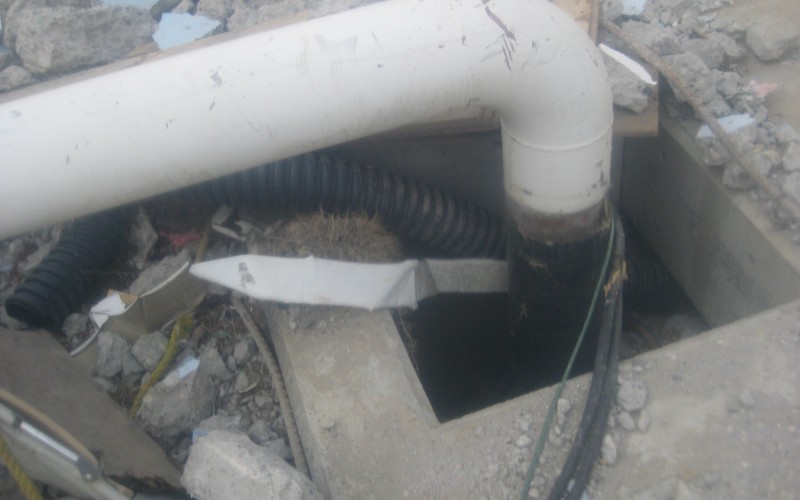
According to Tepco, a leakage detector of waste incineration building went off around noon of 3/23/2016.
Tepco reports the leaked volume was 5.3 t. The leaked contaminated water was from the cesium absorption facility to contain extremely high density of Cs-134/137.
From Tepco’s announcement, Cs-134/137 density was 383,000,000 Bq/m3.
All β nuclides to include Sr-90 was 480,000,000 Bq/m3.
At the moment of the press release, Tepco had not completed removing the leaked water but they state the building is designed to retain contaminated water inside.
The pipe from the cesium absorption facility was cut off due to a construction however somebody turned on the facility to cause the large leakage.
http://www.tepco.co.jp/cc/press/2016/1270693_7738.html
http://www.tepco.co.jp/cc/press/2016/1270654_7738.html
2,029,900,000 Bq of Cs-134/137 leaked as contaminated water in Fukushima plant
FIVE YEARS AFTER: Asahi survey: 70% of evacuees report declined health since 3/11
Almost 70 percent of 3/11 evacuees that answered an Asahi Shimbun questionnaire said their health had worsened since the triple disasters struck five years ago.
Comparing their current health to before the Great East Japan Earthquake, tsunami and Fukushima nuclear disasters, 23 percent of respondents said it had worsened greatly, while 46 percent said it had worsened somewhat.
One 67-year-old man living in temporary housing in Otsuchi, Iwate Prefecture, wrote: “I cannot use a chair because the temporary housing unit is so cramped. The condition of my knees has worsened because I have to sit on the floor for a long time.”
Questionnaires were sent out to 944 evacuees from the three hardest-hit prefectures of Iwate, Miyagi and Fukushima in February and responses were received from 619. While all respondents in 2012 were evacuees living in temporary housing, some have since moved back home.
Respondents also showed signs of psychological stresses in their responses to a question with the option to give multiple responses.
Forty-eight percent said they had experienced an increase in the concerns they felt, 37 percent said they felt down or lonely, 28 percent said they were more irritated and 25 percent said they had difficulty sleeping.
Only 22 percent said they were in a calmful state unchanged from before the disasters.
A 55-year-old woman who runs her own business and lives in an apartment in Yamada, Iwate Prefecture, said: “Whenever I see tsunami footage, I remember relatives who died and I become lonelier. I am also worried because I have no idea when I will be able to rebuild my home.”
A 77-year-old woman who was evacuated from Naraha, Fukushima Prefecture, to Aizu-Misato, also in the prefecture, said: “My life changed completely because of the nuclear accident, and I tend to feel more down. I also feel psychological uncertainty because I still do not have a settled residence.”
The respondents were also asked to list up to three policies they wanted the central and local governments to prioritize.
The most popular response for the second consecutive year was “subsidies for medical expenses” at 43 percent.
Other frequent responses were “improving elderly care services and rebuilding or expanding social welfare facilities” at 30 percent and “subsidies for monthly living expenses” at 28 percent.
The second most popular response last year was “financial support to rebuild own home.” This year that response came in fourth with 24 percent of respondents choosing it.
http://ajw.asahi.com/article/0311disaster/recovery/AJ201603220001
Incineration of radioactive waste begins at Fukushima nuclear plant
Tokyo Electric Power Co. (TEPCO) has begun incinerating radioactively contaminated clothing and other waste on the grounds of the disaster-hit Fukushima No. 1 Nuclear Power Plant in an effort to reduce the volume of waste.
A three-story incineration facility has been built on the north side of the plant grounds. Every day around 7,000 people work at the Fukushima plant, creating a massive amount of waste in the form of used radiation suits, gloves and boots. Pre-disaster incineration equipment was destroyed by the March 2011 Great East Japan Earthquake and tsunami, which led to the construction of the new facility.
As of the end of last year some 70,000 metric tons of this kind of waste was being held in storage containers. TEPCO estimates that by the year 2028, 358,000 tons of such waste will have been produced, but claims it can reduce the volume of the waste to as little as about one-fiftieth of its original size by incinerating it.
Radioactive materials contained in the smoke from the incinerator will be removed by filters on the exhaust pipes. The resulting ash will be sealed in specialized barrels, and TEPCO says there will be little danger from radioactive exposure.
However, in addition to the aforementioned waste there were, as of July last year, around 83,000 tons of lumber from trees cut down to make way for tanks storing contaminated water and 155,000 tons of other waste such as power plant debris from the hydrogen explosions that occurred there. These additional kinds of waste are expected to grow to 695,000 tons by 2028, and will not be processed at the incineration facility.
While TEPCO plans to construct facilities to burn this lumber and to break down debris in the future, these are not expected to all be operational until around fiscal 2020.
http://mainichi.jp/english/articles/20160321/p2a/00m/0na/004000c
Japan urges China to lift import ban on farm products in place since March 2011
BEIJING – Japan urged China on Monday to scrap its import restrictions on agricultural, forestry and fisheries products and food that have been in place since the March 2011 Fukushima nuclear disaster.
Kazuyoshi Honkawa, vice minister of agriculture, forestry and fisheries, made the request at a bilateral subcabinet-level dialogue in Beijing on agricultural issues.
The two countries reopened the dialogue for the first time in six years, after suspending talks due to deteriorated bilateral ties.
After the nuclear disaster at Tokyo Electric Power Co.’s crippled Fukushima No. 1 plant, China prohibited all imports of agricultural, forestry and fisheries products and food from 10 prefectures , including Fukushima, Miyagi and Ibaraki.
Honkawa asked Chinese Vice Agriculture Minister Qu Dongyu to urge authorities to lift the import ban. The embargo is administered by China’s General Administration of Quality Supervision, Inspection and Quarantine.
Honkawa said he did not receive a clear answer on the issue from the Chinese ministry.
After the dialogue, he told reporters that the rapidly growing Chinese market is very attractive for Japanese agriculture, forestry and fisheries industries, suggesting his ministry’s aim of expanding farm exports to China.
Economic relations between Japan and China have been on the mend in recent months.
At talks last November, Prime Minister Shinzo Abe and Chinese Premier Li Keqiang agreed to restart a high-level economic dialogue that brings together the two countries’ key economic officials at an early date this year. In December, Japan and China held economic partnership talks led by vice ministerial officials for the first time in more than five years.
Razing of wrecked homes lagging badly as Fukushima residents ponder return
The central government is covering the demolition costs for disaster-hit homes in Fukushima Prefecture, but 70 percent of the razing requests have not been completed.
The Environment Ministry plans to revise the procedures for handling demolition requests because the situation could further prevent residents from returning to the radiation-tainted areas.
As of Jan. 8, 5,780 applications — or over 70 percent of the 7,670 demolition requests — had not been processed.
Minamisoma aims to have the central government lift evacuation orders in most of the city this spring. But only 30 percent of the 2,600 houses earmarked for demolition have been razed, leaving 1,780 to go.
The town of Kawamata and the village of Katsurao also want evacuation orders lifted from April, but the razing is only 17 percent complete in Kawamata and 6 percent in Katsurao. Tamura and the village of Kawauchi have meanwhile torn down all homes earmarked for demolition.
The ministry says the time-consuming nature of the work is one reason for the backlog, since it involves confirming ownership, inspecting properties and calculating costs.
The central government has expanded the program to cover not only houses damaged by the quake and tsunami, but also those damaged by leaky roofs during the prolonged evacuation. This raised applications to a level officials can’t keep up with, the ministry said.
Evacuees are calling for speedier action. Tomoya Suzuki, 67, who fled the Odaka district of Minamisoma to the town of Shinchi further north, applied to have his house demolished last August. His application is still pending.
“I would like to go back to Odaka as soon as the evacuation orders are lifted, but I can’t rebuild my house unless it’s demolished,” he said.
The government has said it will lift evacuation orders in Minamisoma by March 2017.
“The central government has decided to lift evacuation orders when the living environment for the residents is not prepared yet,” he said. “I find that contradictory.”
The ministry says it cannot drastically increase manpower, and will deal with the glut by giving priority to those who wish to return.
TEPCO refuses to reimburse ¥20.1 billion in claims from Tohoku

Out of ¥53.1 billion in expenses incurred by six prefectures in the Tohoku region in response to the disaster at Tokyo Electric Power Co.’s Fukushima No. 1 nuclear power plant, TEPCO has still not agreed to reimburse ¥20.1 billion, The Yomiuri Shimbun has learned.
The prefectures have resorted or will resort to alternative dispute resolution (ADR) procedures to compel TEPCO to pay, but taxpayers may end up footing the bill in the end.
Different interpretations
Regarding compensation for damage caused by nuclear power plants, the government’s Dispute Reconciliation Committee for Nuclear Damage Compensation released preliminary guidance in August 2011 on what expenses TEPCO should reimburse local governments for.
This included the cost of damage to water and sewer services contaminated by radioactive material, and the cost of supporting victims on TEPCO’s behalf.

However, the guidance included a section stating that “depending on circumstances, additional expenses may be recognized as damage that should be reimbursed.” This spurred Fukushima Prefecture, where the nuclear power plant is located, and other prefectures to request compensation from TEPCO for various expenses incurred in responding to the disaster.
Fukushima Prefecture has so far demanded ¥37.1 billion from TEPCO.
The company paid ¥20.9 billion for expenses including the relocation of a prefectural high school and support for the reopening of small and medium-sized businesses, but has refused to pay for the salaries of prefectural government employees of the contamination response section established after the disaster. It has also refused to pay for such costs as ad campaigns intended to repair the image of the tourism industry, which has been damaged by the nuclear disaster.
Neighboring Yamagata Prefecture, which accepted a large number of evacuees from Fukushima Prefecture, had requested ¥1.1 billion as of last September. It has received reimbursement for such things as radiation inspections of agricultural and livestock products and the salaries of additional teachers in response to the influx of evacuated children, but this figure is less than one-third of the total request.
Miyagi Prefecture has only reached agreement on roughly ¥1.7 billion, about half of its request. Last March, Yamagata and Miyagi prefectures appealed to the nation’s Dispute Reconciliation Committee for Nuclear Damage Compensation for ADR. According to an official of Miyagi Prefecture, “the settlement will take some more time.”
Akita and Aomori prefectures have been denied 80 percent to 90 percent of their requests to cover expenses such as the production of ads to promote tourism and subsidies to purchase radiation measurement equipment. They have also applied for ADR, and Fukushima Prefecture intends to pursue this approach soon.
Iwate Prefecture has received an additional ¥256.7 million through ADR, but has not agreed on close to ¥900 million in other expenses yet.
The prefectural governments have made expenditures from their general budgets for the disaster response expenses, and explained to members of their assemblies that “expenses would be billed to TEPCO and offset as income at a later date.” However, as unsettled claims increase, the costs are becoming a burden on the prefectures.
Municipalities in the six Tohoku prefectures, as well as Chiba and Gunma prefectures and elsewhere outside Tohoku, have made similar compensation claims to TEPCO, but the two sides are far from agreement over payments.
A TEPCO spokesperson told The Yomiuri Shimbun: “We are processing and compensating claims for damage that meet the appraisal standards. For other expenses, we are making appropriate decisions as we consult with relevant parties about their circumstances.”
It is likely, however, that the different sides will fail to agree even through ADR.
The prefectures can fight on through civil lawsuits, but if they lose, both the legal expenses and disaster response expenses will have to be paid through taxpayer money
Renewable energy beating nuclear power in India
 Cheaper renewable energy has soared past nuclear power, Business Standard 18 Mar 16, Renewable energy in India has overtaken nuclear power as the country seeks carbon-free sources of energy to balance its reliance on coal. Such energy generation in India is higher than its nuclear power generation and is growing at a much faster pace because it is cheaper and quicker to install. The cost of renewable energy is now lower than the cost of nuclear power and does not come with attendant risks, such as this week’s radioactive fuel leak in Gujarat.
Renewable-energy generation in India was 61.8 billion units, versus 36.1 billion units of nuclear-power generation during the financial year (FY) 2014-15. Renewable energy accounted for 5.6 percent of electricity generated in India, against 3.2 percent for nuclear power.
Renewable energy has been growing at a faster pace than nuclear power over two years. During 2013-14 and 2014-15, renewable energy grew at 11.7 percent and 16.2 percent, respectively, while nuclear-power growth has been almost flat over the same period.
If the 2022 solar target is met, it will become India’s second largest energy source. The bulk of India’s renewable energy comes from wind, but solar energy is growing faster with installed capacity reaching 5,775 mega watts (MW) in February 2016. The national solar mission has set a target of 100,000 MW of solar power by 2022. If this target is met, renewable energy will become the second largest source of power for India after coal, and ahead of hydropower, natural gas and nuclear energy…….http://www.business-standard.com/article/news-ians/cheaper-renewable-energy-has-soared-past-nuclear-power-special-to-ians-116031800578_1.html
India’s poor nuclear safety record is alarming
This is not the first time that India is facing safety issues regarding its nuclear program. In historical context one can generate a list of leaks, fires and structural damages that have been faced by India’s civilian nuclear power sector. There are abundant examples of oil leaks, hydrogen leaks, fires and high bearing vibrations which often shut down numbers of nuclear reactors in India.

 Lack Of Nuclear Sanity In India Anaya Shahid Mar 20 16, http://www.eurasiareview.com/19032016-lack-of-nuclear-sanity-in-india-oped/ Ironically on March 14, 2011 after the Japan’s nuclear disaster, India was the first country to announce that Fukushima reactors were safe. Top officials of the Department of Atomic Energy (DAE) were of the view that Indian nuclear reactors will continue to work as they are safe and also claimed that what happened in Fukushima was not a “nuclear accident”.
S.K. Jain, the Chairman and Managing Director of Nuclear Power Corporation was propagating on Fukushima accident that, “There is no nuclear accident or incident in the Japan’s Fukushima plants. It is a well-planned emergency preparedness program which the nuclear operators of the Tokyo Electric Power company are carrying out to contain the residual heat after the plants had an automatic shutdown following a major earthquake.”
Now it is really scary that on the 5th anniversary of Fukushima, an emergency has been declared at the Kakrapar nuclear plant in Gujarat near Surat after a major heavy water leak in a nuclear reactor. The authorities are disseminating the situation by saying that all safety systems worked fine and the technicians has successfully been able to shut down the unit. The declaration of an on-site emergency and the fact that the heavy water leak affected the reactor’s cooling system, which also has high radioactivity, raises many questions on Indian nuclear expertise.
The Fukushima disaster forced Indian nuclear establishment to initiate a safety audit process and it was conducted within by NPCIL. After the extensive review, Indian auditor general informed that the nuclear program of the country is insecure and unregulated with many disorders. Furthermore the parliamentary report on nuclear safety regulation in India had pointed out serious organizational flaws and numerous failings relative to international norms.
When in opposition, the Bharatiya Janata Party was the major contrasting party to civil nuclear expansion and had strong reservations on limiting nuclear liability. It was also supporting the just protests in Kudankulam and wanted environmental clearance for Jaitapur nuclear power plants. Now in government, it has taken a complete U-turn and seeks to bring same old vine in new bottles. This year, Dr. A Gopalakrishnan labeled the Indian government plans punier than the existing regulatory framework and despite this the government is introducing the Nuclear Safety Regulatory Authority bill in Parliament.
This is not the first time that India is facing safety issues regarding its nuclear program. In historical context one can generate a list of leaks, fires and structural damages that have been faced by India’s civilian nuclear power sector. There are abundant examples of oil leaks, hydrogen leaks, fires and high bearing vibrations which often shut down numbers of nuclear reactors in India.
- March 1991: Heavy water leak at Madras Atomic Power Station takes four days to clean up.
- July 1991: A contracted laborer mistakenly paints the walls of Rajasthan Atomic Power Station (RAPS) with heavy water before applying a coat of whitewash.
- December 1991: A leak from pipelines in the vicinity of CIRUS and Dhruva research reactors at the Bhabha Atomic Research Centre (BARC) in Trombay, Maharashtra, results in severe Cs-137 soil contamination of thousands of times the acceptable limit.
- January 1992: Four tons of heavy water spilt at RAPS.
- May 1992: Tube leak causes a radioactive release of 12 Curies of radioactivity from Tarapur Atomic Power Station.
- March 1993: Two blades of the turbine in Narora Atomic Power Station’s (NAPS) Unit I break off, slicing through other blades and indirectly causing a raging fire, which catches onto leaked oil and spreads through the turbine building. The smoke sensors fail to detect the fire, which is only noticed once workers see the flames.
- February 1994: Helium gas and heavy water leak in Unit 1 of RAPS. The plant is shut down until March 1997.
- May 1994: The inner surface of the containment dome of Unit I of Kaiga Generating Stationcollapses (delaminates) while the plant is under construction.
- March 1999: Somewhere between four and fourteen tons of heavy water leaks from the pipes at MAPS at Kalpakkam, Tamil Nadu, during a test process. The pipes have a history of cracks and vibration problems. Forty-two people are reportedly involved in mopping up the radioactive liquid.
- April 2000: A leak of about seven tons of heavy water from the moderator system at NAPS Unit II.
- November 2001: A leak of 1.4 tons of heavy water at the NAPS I reactor, resulting in one worker receiving an internal radiation dose of 18.49 mSv.
- May 2002: Tritiated water leaks from a downgraded heavy water storage tank at the tank farm of RAPS 1&2 into a common dyke area.
- January 2003: The failure of a valve in the Kalpakkam Atomic Reprocessing Plant in Tamil Nadu results in the release of high-level waste, exposing six workers to high doses of radiation.
- April 2003: Six tons leak of heavy water at reactor II of the NAPS in Uttar Pradesh.
- November 2009: Fifty-five employees consumed radioactive material after tritiated water finds its way into the drinking water cooler in Kaiga Generating Station.
- April 2011: Fire alarms blare in the control room of the Kaiga Generating Station in Karnataka.
India’s nuclear establishment is hasting for nuclear energy though it has obstinately missed targets and delivered a portion of the promised electricity with uncertain safety. The Indian government is irrationally pursuing for nuclear power without explaining its destructive potential and answering critiques. Nowadays, the U.S. and major powers are trying to “normalize” India’s nuclear weapons through special waivers and numerous nuclear deals. Therefore, France is using such normalizing strategy to bargain for cash-strapped Areva. Meanwhile, its complement is the disaster-in-waiting called Jaitapur. The secrecy shrouded to Indian nuclear program has subjugated its energy policy and budgets to an unaccountable, self-propagating, pampered technocracy and degrading their democracy.
*Anaya Shahid graduated from Defense & Diplomatic Studies, Fatima Jinnah Women University Rawalpindi.
Sendai nuclear station has useless radiation tools installed for evacuation orders
Useless radiation tools installed for evacuations near Kagoshima plant THE ASAHI SHIMBUN, 20 Mar 16,
Nearly half of the radiation monitoring posts installed for issuing evacuation orders around the Sendai nuclear plant in Kagoshima Prefecture are actually useless for that purpose, The Asahi Shimbun has learned.
In the event of a nuclear accident, evacuation orders are issued immediately when airborne radiation levels reach 500 microsieverts per hour. But 22 of the 48 monitoring posts around the Sendai plant can only measure radiation levels up to 80 microsieverts per hour, according to a survey on the equipment……..http://ajw.asahi.com/article/behind_news/social_affairs/AJ201603140026
Japan claims that Memorandum of Understanding with India is “legally binding”
Japan says India’s nuclear MoU “legally binding” THE HINDU, KALLOL BHATTACHERJEE 20 Mar 16 Nuclear experts describe the MoU as a backdoor attempt to draw India into the NPT
Days before Prime Minister Narendra Modi’s visit to Washington DC for the Nuclear Security Summit, a senior Japanese diplomat told The Hindu that India had committed to adhere to the “control of nuclear material, traceability [of nuclear fuel] and consequence in case of a nuclear accident” under the memorandum of understanding (MoU) on civil nuclear cooperation with Japan signed during Prime Minister Shinzo Abe’s visit to India in 2015.
Intrusive, feel experts
Though the bilateral agreement leaves out India’s military nuclear programme, experts warn that the agreed principles impinge on India’s independent nuclear programme as they imply intrusive inspection of civilian nuclear reactors as warranted under the Nuclear Non-proliferation Treaty (NPT).
The Japanese diplomat pointed out that so far, the world had to rely on India’s verbal commitments on nuclear non-proliferation, but the India-Japan MoU marked the first occasion when India came under legal obligation to uphold non-proliferation concerns.
“There were no tools to bind India, only India’s voluntary self-claimed policy existed, but now there is legally binding measures by the agreement between India and Japan,” said the diplomat, explaining that the commitments were proof of India’s peaceful and transparent intentions in using nuclear reactors solely for energy generation. He said India will be financially accountable if it is found to be violating the principles.
An Indian official who has been associated with the negotiations said the principles being cited by the Japanese were nothing extraordinary and were part of the “standard template for civil nuclear deal” that India had signed with several countries. However, he refused to address the Japanese assertion that India would have to financially compensate Japan if it violated the principles……..http://www.thehindu.com/news/national/japan-says-indias-nuclear-mou-legally-binding/article8377976.ece
Here comes now Radioactive Organic!
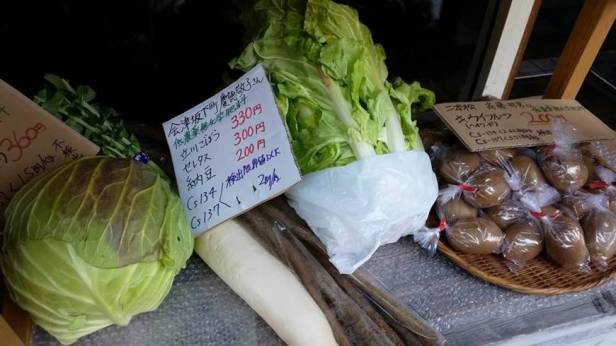
Close monitoring: At Orgando, a restaurant and mini-market in Tokyo, organic produce grown by Fukushima farmers is labeled with the amount of radioactive isotopes it contains to ease consumers fears. | © ORGANDO
Fukushima’s organic farmers still battle stigma
“All publicity is good publicity.” Nowhere does this specious PR maxim ring more hollow than in Fukushima Prefecture. As if the horrors of the 2011 Great East Japan Earthquake and the meltdown at the Fukushima No. 1 nuclear plant weren’t traumatic enough, the region’s economic and agricultural recovery has been severely hampered by the reputational damage it has suffered since 3/11. If you think that’s difficult, try farming organically in Fukushima.
Falling prices and an aging agrarian population have made things tough for farmers all over Japan, but the presence of the word “Fukushima” on a supermarket label is often enough to discourage shoppers from buying produce, organic or not, grown in the area. Regardless of how far from contaminated areas it was grown — Fukushima is Japan’s third-largest prefecture — the region’s produce can’t easily shake the stigma of radiation.
An important hub in the network of NGOs, government bodies and corporate benefactors trying to change the prefecture’s image has been Orgando, a cafe and mini-market in Tokyo’s Shimokitazawa neighborhood, run with the backing of the Fukushima Organic Agriculture Network. For the past three years, Orgando has built a devoted following by serving Tokyo residents the best of Fukushima’s seasonal organic produce, in particular the crops that Fukushima is perhaps most known for: peaches, apples and rice. The menu changes daily, making creative use of the ingredients that come in, and the walls are proudly decorated with profiles of the 30 or so farmers who have grown the food. Sadly, as with many post-3/11 schemes, Orgando was only guaranteed official financial support until the five-year post-disaster milestone and is set to close March 20.
Orgando has played a valuable role in forging links between local producers and urban consumers, and dispelling the idea that all the region’s produce is dangerously contaminated — fruit and vegetables sold in the store are clearly labeled to show the levels of cesium isotopes they contain. Official food-safety guidelines stipulate 100 becquerels of radioactive isotopes per kilogram as the acceptable limit for adults, with 50 becquerels/kg for dairy produce and infant food, and 10 becquerels/kg for drinking water. The daikon, carrots and strawberries on offer this week contain no detectable cesium, while, according to their labels, bags of beans contained 6 becquerels/kg, a negligible dose of radiation compared to our daily exposure from soil and cosmic rays.
Allaying fears about contamination was one of the themes discussed during a February event in Tokyo focused on the role organic agriculture could play in Fukushima’s recovery, organized by Ryo Suzuki of Japan Civil Network.
“People mistakenly think that everything from Fukushima is dangerous,” Norio Honda of Genki ni Narou Fukushima — an NPO promoting local revival — said at the event.
Setsuko Maeda, of agricultural collective Tanemaki Project Network agrees.
“Fukushima isn’t only about radiation,” she says. “Our farming and fisheries are full of vitality, and it’s important not to forget that.”
The event gathered representatives from organizations such as Oxfam Japan, A Seed Japan and travel agency JTB, to speak about the challenges facing organic producers in the prefecture, along with some of the major success stories. The atmosphere was convivial, and the presentations were interspersed with opportunities to sample Fukushima produce, including octopus, meat, potatoes, peaches and apple juice, and high-grade junmai sake made from local organic rice, fittingly named Kiseki or “miracle.”
Another major theme was bioremediation, the use of crops to cleanse contaminated soil of radioactive isotopes. One plant that has previously been used to reduce levels of cesium and strontium isotopes in soils around Chernobyl is rapeseed. The Green Oil Project aims to re-create these results in the Futaba district around the Fukushima No. 1 nuclear plant. Water-soluble cesium isotopes are sequestered in the plant’s tissues, which are fermented to produce biogas methane. The canola oil extracted from the seeds has a cesium content below the detectable limit of 0.03 becquerels/kg. To promote the initiative, local high school students created Yuna-chan, a cute mascot whose name combines the kanji for oil and rapeseed to market the organic oil. U.K. cosmetics company Lush, a keen supporter of organic produce, has also agreed to take a portion of the oil for use in its beauty products.
Ultimately, though, human connections were seen as most crucial to giving Fukushima produce the audience it deserves, and to generating an interest in farming among young people.
“It’s about exchange,” says Akihiro Asami, secretary general of the Fukushima Organic Agriculture Network. “Producers can come to Tokyo, but I want consumers to visit Fukushima, and not just meet selected farmers but ordinary residents, too. If they sample rural life there, they’ll want to get more involved to support those communities.”
Event-organizer Suzuki is positive about what the future holds: “By 2020, I really think the knowledge accumulated through the activities of farmers and NPOs in Fukushima will be ready to benefit sustainability and rural development not just in Japan, but around the world.”
Incidences of Thyroid Cancer in Children Rising in Fukushima
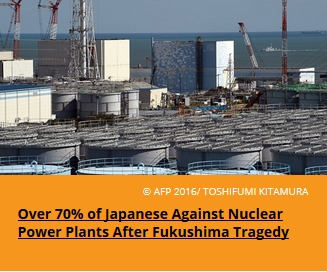
Last week marked the fifth anniversary of the disaster at the Fukushima-1 nuclear power plant which was triggered by a massive earthquake and tsunami that hit Japan five years ago.
“In Fukushima Prefecture at the time of the disaster around 360 thousand children under 18 years of age were residing in the area. Right now 166 children have been diagnosed with thyroid cancer (including cases of suspected malignancies). The percentage of thyroid cancer among residents of Fukushima is several times higher than the average percentage of incidences of thyroid cancer in the country,” Ban said.
The representative said that his organization studied the Chernobyl nuclear tragedy, and now they fear that the number of people with cancer could increase dramatically in the future.
“Parents were very concerned about the impact of radiation on children’s health, but could not talk openly about their concerns, leading to a stressful situation.”
In October 2015, Toshihide Tsuda, professor of Okayama University, speaking to foreign correspondents in Tokyo held a press conference regarding the growth of thyroid cancer in children in Fukushima Prefecture and how the disease was related to radiation as a result of the nuclear accident.
According to Ban, the government does not recognize the link between these two phenomena. After all, it is very inconvenient for Japan’s energy policy. The Japanese government, during the rule of the Democratic Party, spoke against increasing nuclear power but the situation changed with the advent of LDPJ, who took the decision to increase the nuclear power in the country.
“In April 2014, the government of Japan approved a method to increase the production of nuclear energy in total by 20-22% by 2030, indicating intention to return to the policy of conservation of nuclear energy as it was previously.”
Ban also mentioned that this is happening against the fact that 80% of the population supports the desertion of nuclear power plants altogether.
“Only the government and nuclear industrialists are promoting nuclear power development. Right now we are seeing a distorted situation where the political reality does not reflect the public opinion.”
However, implementation of the Basic Energy Development Plan is already facing certain difficulties, as was evidenced by the issuance of a temporary decision to stop the Takahama nuclear power plant on March 9. According to Hideyuki Ban, the energy development plan is likely to be revised in the next year.
Continuous Leaking Of Radioactive Strontium, Cesium From Fukushima To the Ocean

Scientists from the Universitat Autònoma de Barcelona (UAB) investigated the levels of radioactive strontium and cesium in the coast off Japan in September 2013. Radioactive levels in seawater were 10 to 100 times higher than before the nuclear accident, particularly near the facility, suggesting that water containing strontium and cesium isotopes was still leaking into the Pacific Ocean.
March 11 will be the 5th anniversary since the nuclear accident in Fukushima, Japan. The Tohoku earthquake and the series of tsunamis damaged the Fukushima Dai-ichi Nuclear Power Plant (FDNPP) causing a massive release of radioactivity into the atmosphere and the Pacific Ocean. Since then, the Tokyo Electric Power Company (TEPCO) and the Japanese authorities have focused on controlling the water flowing in and out of the FDNPP and on decontaminating the highly radioactive water used as coolant for the damaged reactors (about 300 m3 a day, cubic meter = 1000 L). This cooling water is then stored in tanks and, to some extent, being decontaminated.
A new study recently published in Environmental Science and Technology, uses data on the concentrations of 90Sr and 134,137Cs in the coast off Japan from the moment of the accident until September 2013, and puts it into a longer-time perspective including published data and TEPCO’s monitoring data available until June 2015. This study continues the work initiated after the accident in 2011 by some of the authors. These and other partners from Belgium and Japan are currently involved in the European FRAME project lead by Dr. Pere Masqué that aims at studying the impact of recent releases from the Fukushima nuclear accident on the marine environment. FRAME is encompassed within the European COMET project (https://wiki.ceh.ac.uk/display/COM/COMET-FRAME).
Seawater collected from the sea surface down to 500 m between 1 and 110 km off the FDNPP showed concentrations up to 9, 124 and 54 Bq·m−3 for 90Sr, 137Cs and 134Cs, respectively. The highest concentrations, found within 6 km off the FDNPP, were approximately 9, 100 and 50 times higher, respectively, than pre-Fukushima levels. Before the accident, the main source of these radionuclides was atmospheric deposition due to nuclear bomb testing performed in the 1950s and 1960s. The presence of 134Cs (undetectable before the accident) and the distinct relationship between 90Sr and 137Cs in the samples suggested that FDNPP was leaking 90Sr at a rate of 2,3 — 8,5 GBq d-1 (giga-Becquerel per day) into the Pacific Ocean in September 2013. Such a leak would be 100-1000 times larger than the amount of 90Sr transported by rivers from land to ocean. Additional risk is related to the large amounts of water stored in tanks that have frequently leaked in the past. These results are in agreement with TEPCO’s monitoring data which show levels of 90Sr and 137Cs up to 10 and 1000 times higher than pre-Fukushima near the discharge channels of the FDNPP until June 2015 (most recent data included in the study). The presence of 90Sr and 134,137Cs in significant amounts until 2015 suggests the need of a continuous monitoring of artificial radionuclides in the Pacific Ocean.
Continuous Leaking Of Radioactive Strontium, Cesium From Fukushima To the Ocean
1 This Month





PLEASE OPPOSE HR 8255 AND S.3639 – bills would accelerate satellite deployment, with no environmental review or safeguards – https://ncstd5li.quorum.us/campaign/169331/
To see nuclear-related stories in greater depth and intensity – go to https://nuclearinformation.wordpress.com
-
Archives
- October 2026 (74)
- September 2026 (339)
- August 2026 (330)
- July 2026 (355)
- June 2026 (287)
- May 2026 (306)
- April 2026 (356)
- March 2026 (251)
- February 2026 (267)
- January 2026 (308)
- December 2025 (358)
- November 2025 (359)
-
Categories
- 1
- 1 NUCLEAR ISSUES
- business and costs
- climate change
- culture and arts
- ENERGY
- environment
- health
- history
- indigenous issues
- Legal
- marketing of nuclear
- media
- opposition to nuclear
- PERSONAL STORIES
- politics
- politics international
- Religion and ethics
- safety
- secrets,lies and civil liberties
- spinbuster
- technology
- Uranium
- wastes
- weapons and war
- Women
- 2 WORLD
- ACTION
- AFRICA
- Atrocities
- AUSTRALIA
- Christina's notes
- Christina's themes
- culture and arts
- Events
- Fuk 2022
- Fuk 2023
- Fukushima 2017
- Fukushima 2018
- fukushima 2019
- Fukushima 2020
- Fukushima 2021
- general
- global warming
- Humour (God we need it)
- Nuclear
- RARE EARTHS
- Reference
- resources – print
- Resources -audiovicual
- Weekly Newsletter
- World
- World Nuclear
- YouTube
-
RSS
Entries RSS
Comments RSS

